Adhyaya 173
Śiva’s Battlefield Manifestation and Vyāsa’s Śatarudrīya Exposition (शिवप्रादुर्भावः शतरुद्रीयव्याख्यानम्)
Upa-parva: Droṇa-vadha-anantara Śiva-stuti (Post-Droṇa Episode: Arjuna’s Vision and Vyāsa’s Śiva Discourse)
Dhṛtarāṣṭra asks Sañjaya what occurred after Droṇa’s fall. Sañjaya reports that, amid the Kauravas’ disarray, Arjuna witnesses a radiant, fire-like person moving ahead of him, brandishing a blazing trident; in the direction that figure advances, Arjuna’s opponents break and fall, while Arjuna’s own arrows seem to follow behind. Arjuna asks the unexpectedly arrived Vyāsa to identify this ‘supreme person.’ Vyāsa declares the figure to be Śaṅkara—Īśāna, Mahādeva—describing his forms, attendants (pārṣadas), and unrivaled power in the three worlds. Vyāsa then unfolds an extended litany of Rudra’s names and attributes, recounts emblematic deeds (notably the disruption of Dakṣa’s sacrifice and the destruction of the three asura cities), and articulates Śiva’s cosmic identifications (time, death, elements, deities) and salvific capacity for those who take refuge. The discourse includes a phalaśruti-like promise: hearing/reciting this fourfold stotra (Śatarudrīya) is portrayed as purificatory and success-conferring. Vyāsa concludes by urging Arjuna to proceed without fear of defeat, given divine support, and then departs.
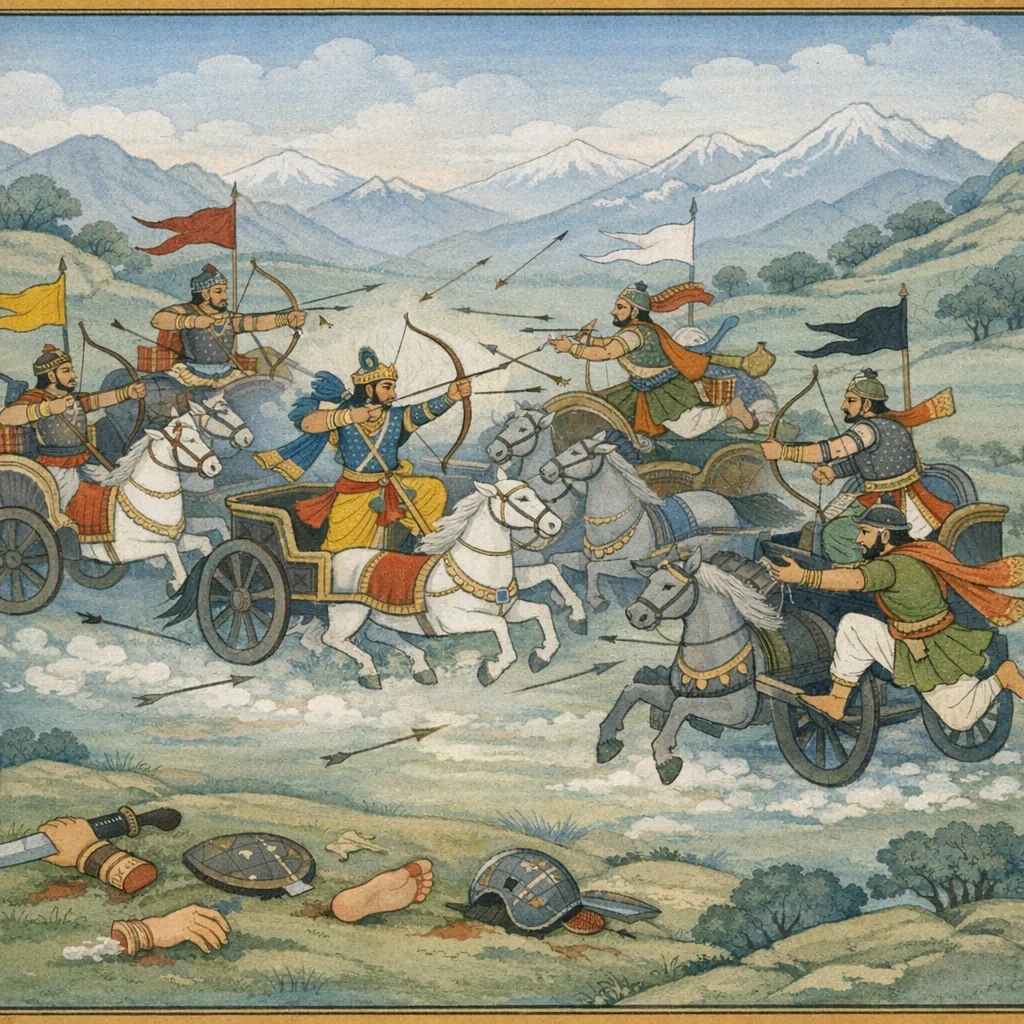
Chapter Arc: द्रोण-पर्व के रण-कोलाहल में कौरवों के छः श्रेष्ठ रथी—दुर्योधन, दुःशासन, द्रोण, कर्ण, शल्य और शकुनि—एक साथ संगठित होकर सात्यकि को लक्ष्य बनाते हैं; मानो एक ही शिकार पर छह सिंह टूट पड़ें। → स्वर्ण-रजत-विभूषित रथों, घुड़सवारों और गजों की परिक्रमा में सात्यकि को ‘कोष्ठबद्ध’ कर दिया जाता है; सिंहनाद और तर्जना के बीच चारों ओर से बाण-वर्षा होती है। रणभूमि कटे हुए भुजाओं और अंगों से भर उठती है—हाथी-सूँड़-सी मोटी भुजाएँ सर्पों-सी बिखरी दिखती हैं। इसी उथल-पुथल में धृष्टद्युम्न अपनी प्रचण्ड गति से सेना को द्रवित करता हुआ आगे बढ़ता है। → उलूक (शकुनि-पुत्र) घायल होकर भी श्रीकृष्ण पर प्रहार का साहस करता है और पृथ्वी को भर देने वाला नाद करता है; उसी क्षण शकुनि अपने रथ से कूदकर उलूक के रथ पर चढ़ जाता है—पिता-पुत्र का यह संयोग कौरव-पक्ष की जिद और प्रतिशोध को एकाग्र कर देता है। → धृष्टद्युम्न शत्रु-सेना को भगाकर देव-समूह में इन्द्र की भाँति शोभित होता है; पाण्डव-पक्ष में शंखनाद उठता है—यमौ (नकुल-सहदेव), युयुधान (सात्यकि) और भीमसेन सहित प्रमुख वीर अपनी ध्वनि से मनोबल को स्थिर करते हैं। थके हुए अर्जुन भी विशाल क्षय करते हुए कौरव-प्रतिकार को रोकते हैं। → रण का पलड़ा क्षणिक रूप से पाण्डवों की ओर झुकता है, पर कौरवों के शीर्ष रथियों का संगठित दबाव बना रहता है—अगला प्रहार किस पर टूटेगा, यह अनिश्चित है।
Shlokas
Verse 1
अत-४#-#का+ - दुर्योधन, दुःशासन, द्रोण, कर्ण, शल्य और शकुनि--ये ही छः श्रेष्ठ रथी यहाँ ग्रहण किये गये हैं। एकसप्तत्याधिकशततमो< ध्याय: सात्यकिसे दुर्योधनकी, अर्जुनसे शकुनि और उलूककी तथा धृष्टद्युम्नससे कौरव-सेनाकी पराजय संजय उवाच तततस्ते प्राद्रवन् सर्वे त्वरिता युद्धदुर्मदा: । अमृष्यमाणा: संरब्धा युयुधानरथं प्रति,संजय कहते हैं--राजन्! तत्पश्चात् वे समस्त रणदुर्मद योद्धा बड़ी उतावलीके साथ अमर्ष और क्रोधमें भरकर युयुधानके रथकी ओर दौड़े
Sañjaya said: “O King, thereafter all those warriors, intoxicated with the frenzy of battle, rushed forward in haste. Unable to endure the affront and inflamed with anger, they charged toward the chariot of Yuyudhāna (Sātyaki).”
Verse 2
ते रथै: कल्पितै राजन हेमरूप्यविभूषितै: । सादिभिश्न गजैश्लैव परिवद्रु: समन््तत:ः,नरेश्वर! उन्होंने सोने-चाँदीसे विभूषित एवं सुसज्जित रथों, घुड़सवारों और हाथियोंके द्वारा चारों ओरसे सात्यकिको घेर लिया
Sañjaya said: O King, they surrounded Sātyaki on every side with well-appointed chariots adorned with gold and silver, and with cavalry and elephants.
Verse 3
अथीैनं कोष्ठकीकृत्य सर्वतस्ते महारथा: । सिंहनादांस्ततश्नक्रुस्तर्जयन्ति सम सात्यकिम्,इस प्रकार सब ओरसे सात्यकिको कोष्ठबद्ध-सा करके वे महारथी योद्धा सिंहनाद करने और उन्हें डाँट बताने लगे
Sañjaya said: Then those great chariot-warriors hemmed Sātyaki in on every side, as though enclosing him in a tight enclosure; and raising lion-like roars, they began to intimidate and taunt him together.
Verse 4
ते भ्यवर्षञछरैस्तीक्ष्णै: सात्यकिं सत्यविक्रमम् । त्वरमाणा महावीरा माधवस्य वधैषिण:,इतना ही नहीं, मधुवंशी सात्यकिका वध करनेकी इच्छासे उतावले हो वे महावीर सैनिक उन सत्यपराक्रमी सात्यकिपर तीखे बाणोंकी वर्षा करने लगे
Sañjaya said: Then those great warriors, eager and hastening to slay Sātyaki of true prowess—thinking thereby to strike at Mādhava’s cause—showered him with sharp arrows.
Verse 5
तान् दृष्टवा पततस्तूर्ण शैनेय: परवीरहा । प्रत्यगृह्नान्महाबाहु: प्रमुऊचन् विशिखान् बहून्,तब शत्रुवीरोंका संहार करनेवाले महाबाहु शिनिपौत्र सात्यकिने उन लोगोंको अपनेपर धावा करते देख स्वयं भी तुरंत ही बहुत-से बाणोंका प्रहार करते हुए उनका स्वागत किया
Sañjaya said: Seeing them rushing in swiftly, Śaineya Sātyaki—slayer of enemy champions—met their onslaught head-on. The mighty-armed warrior welcomed them by releasing a great many arrows, answering force with disciplined counterforce amid the demands of battle.
Verse 6
तत्र वीरो महेष्वास: सात्यकिर्युद्धदुर्मद: । निचकर्त शिरांस्युग्रै: शरै: संनतपर्वभि:,वहाँ महाधनुर्धर रणदुर्मद वीर सात्यकिने झुकी हुई गाँठवाले भयंकर बाणोंद्वारा बहुतेरे शत्रु-योद्धाओंके मस्तक काट डाले
Sañjaya said: There, the heroic Sātyaki—an eminent archer, intoxicated with the fury of battle—severed the heads of many foes with fierce arrows whose joints were bent, cutting them down amid the relentless violence of war.
Verse 7
हस्तिहस्तान् हयग्रीवा बाहुनपि च सायुधान् | क्षुरप्रै: शातयामास तावकानां स माधव:,उन मधुवंशी वीरने आपकी सेनाके हाथियोंके शुण्डदण्डों, घोड़ोंकी गर्दनों तथा योद्धाओंकी आयुधोंसहित भुजाओंको भी क्षुरप्रोंद्ारा काट डाला
Sañjaya said: That Mādhava (Kṛṣṇa), using razor‑edged arrows, hewed down the trunk-hands of the elephants, the necks of the horses, and even the arms of the warriors together with their weapons—thus shattering the fighting strength of your troops. The scene underscores the grim ethics of war: skill and resolve are deployed not for sport but to decisively disable the enemy’s capacity to harm, even as the violence reveals the terrible cost of adharma-driven conflict.
Verse 8
पतितैश्नामरैश्वैव श्वेतच्छत्रैश्ष भारत । बभूव धरणी पूर्णा नक्षत्रैद्यौरिव प्रभो,भरतनन्दन! प्रभो! वहाँ गिरे हुए चामरों और श्वेत छत्रोंसे भरी हुई भूमि नक्षत्रोंसे युक्त आकाशके समान जान पड़ती थी
Sañjaya said: O Bhārata, the earth became strewn with fallen yak-tail fans and white royal parasols. O lord, O joy of the Bharatas, the ground looked like the star-filled sky.
Verse 9
एतेषां युयुधानेन युध्यतां युधि भारत । बभूव तुमुल: शब्द: प्रेतानां क्रनदतामिव,भारत! युद्धस्थलमें युयुधानके साथ जूझते हुए इन योद्धाओंका भयंकर आर्तनाद प्रेतोंके करुण-क्रन्दन-सा प्रतीत होता था
Sanjaya said: O Bharata, as these warriors fought in the thick of battle against Yuyudhāna, a dreadful, tumultuous roar arose—like the pitiful wailing of the dead.
Verse 10
तेन शब्देन महता पूरिताभूद् वसुन्धरा । रात्रि: समभवच्चैव तीव्ररूपा भयावहा,उस महान् कोलाहलसे भरी हुई वह रणभूमि और रात्रि अत्यन्त उग्र एवं भयंकर जान पड़ती थी
Sañjaya said: By that tremendous roar the very earth seemed filled and overwhelmed. And the night, too, came upon them as fierce in aspect and laden with terror—making the battlefield appear all the more dreadful in the wake of the tumult.
Verse 11
दीर्यमाणं बल॑ दृष्टवा युयुधानशराहतम् । श्रुत्वा च विपुलं नादं निशीथे लोमहर्षणे,राजन! युयुधानके बाणोंसे आहत हुई अपनी सेनामें भगदड़ पड़ी देख और उस रोमांचकारी निशीथकालमें वह महान् कोलाहल सुनकर रथियोंमें श्रेष्ठ आपके पुत्र दुर्योधनने अपने सारथिसे बारंबार कहा--“जहाँ यह कोलाहल हो रहा है, वहाँ मेरे घोड़ोंको हाँक ले चलो”
Sañjaya said: Seeing his army thrown into confusion and breaking apart, struck by the arrows of Yuyudhāna, and hearing in the terrifying midnight hours a vast, hair-raising roar, O King, Duryodhana—best among the chariot-warriors—repeatedly told his charioteer: “Drive my horses toward the place where this uproar is rising.”
Verse 12
सुतस्तवाब्रवीद् राजन् सारथिं रथिनां वर: । यत्रैष शब्दस्तत्राश्वांश्वोदयेति पुनः पुन:,राजन! युयुधानके बाणोंसे आहत हुई अपनी सेनामें भगदड़ पड़ी देख और उस रोमांचकारी निशीथकालमें वह महान् कोलाहल सुनकर रथियोंमें श्रेष्ठ आपके पुत्र दुर्योधनने अपने सारथिसे बारंबार कहा--“जहाँ यह कोलाहल हो रहा है, वहाँ मेरे घोड़ोंको हाँक ले चलो”
Sañjaya said: O King, your son—foremost among chariot-warriors—repeatedly addressed his charioteer: “Drive the horses to the place where this tumult is rising.”
Verse 13
तेन संचोद्यमानस्तु ततस्तांस्तुरगोत्तमान् | सूत: संचोदयामास युयुधानरथं प्रति,उसका आदेश पाकर सारथिने उन श्रेष्ठ घोड़ोंको सात्यकिके रथकी ओर हाँक दिया
Urged on by him, the charioteer then drove those excellent horses forward, steering them toward the chariot of Yuyudhāna (Sātyaki).
Verse 14
ततो दुर्योधन: क्रुद्धो दृढ्धन्वा जितक्लम: । शीघ्रहस्तश्चित्रयोधी युयुधानमुपाद्रवत्,तदनन्तर दृढ़ धनुर्थधर, श्रमविजयी, शीघ्रतापूर्वक हाथ चलानेवाले और विचित्र रीतिसे युद्ध करनेवाले दुर्योधनने क्रोधमें भरकर सात्यकिपर धावा किया
Sañjaya said: Then Duryodhana, inflamed with anger—firm in his bowmanship, unwearied, swift-handed, and fighting with varied stratagems—rushed to attack Yuyudhāna (Sātyaki).
Verse 15
ततः पूर्णायतोत्सृष्टे: शरैः शोणितभोजनै: । दुर्योधन द्वादशभिर्माधव: प्रत्यविध्यत,तब मधुवंशी युयुधानने धनुषको पूर्णतः खींचकर छोड़े गये बारह रक्तभोजी बाणोंद्वारा दुर्योधनको घायल कर दिया
Sañjaya said: Then Mādhava, drawing his bow to the full, loosed blood-drinking shafts and struck Duryodhana with twelve arrows.
Verse 16
दुर्योधनस्तेन तथा पूर्वमेवार्दित: शरै: | शैनेयं दशभिर्बाणै: प्रत्यविध्यदमर्षित:,सात्यकिने जब पहले ही अपने बाणोंसे दुर्योधनको पीड़ित कर दिया, तब उसने भी अमर्षमें भरकर उन्हें दस बाण मारे
Sañjaya said: Duryodhana, already struck and pained by his arrows, flared up in wrath and in return pierced Śaineya with ten shafts.
Verse 17
ततः समभवद् युद्ध तुमुलं भरतर्षभ । पज्चालानां च सर्वेषां भरतानां च दारुणम्,भरतश्रेष्ठ! तदनन्तर समस्त पांचालों और भरतवंशियोंका वहाँ भयंकर युद्ध होने लगा
Sañjaya said: Then there arose a tumultuous battle, terrible in its ferocity, between all the Pāñcālas and the Bhāratas, O bull among the Bhāratas.
Verse 18
शैनेयस्तु रणे क्रुद्धस्तव पुत्र महारथम् । सायकानामशीत्या तु विव्याधोरसि भारत
Sañjaya said: Enraged in the press of battle, Śaineya struck your son—the great chariot-warrior—with eighty arrows, piercing him in the chest, O Bhārata.
Verse 19
भारत! रणभूमिमें कुपित हुए सात्यकिने आपके महारथी पुत्रकी छातीमें अस्सी सायकोंद्वारा प्रहार किया ।। ततो<स्य वाहान् समरे शरैर्निन्ये यमक्षयम् । सारथिं च रथात् तूर्ण पातयामास पत्रिणा,फिर समरांगणमें अपने बाणोंद्वारा घायल करके उसके घोड़ोंको यमलोक पहुँचा दिया और एक पंखयुक्त बाणसे मारकर उसके सारथिको भी तुरंत ही रथसे नीचे गिरा दिया
Sañjaya said: Then in that battle Sātyaki struck down his foe’s horses with arrows, sending them to Yama’s abode; and with a swift, feathered shaft he at once felled the charioteer from the chariot.
Verse 20
हताश्वे तु रथे तिष्ठन् पुत्रस्तव विशाम्पते । मुमोच निशितान् बाणान् शैनेयस्य रथं प्रति
Sañjaya said: O lord of the people, even when the horses of his chariot had been slain, your son stood firm upon the car and loosed keen arrows toward the chariot of Śaineya.
Verse 21
प्रजानाथ! तब आपका पुत्र उस अश्वहीन रथपर खड़ा हो सात्यकिके रथकी ओर पैने बाण छोड़ने लगा ।। शरान् पञ्चाशततस्तांस्तु शैनेय: कृतहस्तवत् । चिच्छेद समरे राजन प्रेषितांस्तनयेन ते,राजन! परंतु आपके पुत्रद्वारा छोड़े गये पचास बाणोंको समरांगणमें सात्यकिने एक सिद्धहस्त योद्धाकी भाँति काट डाला
Sañjaya said: O King, in the thick of battle Śaineya (Sātyaki), like a consummate master of weapons, cut down those fifty arrows that had been shot by your son.
Verse 22
अथापरेण भल्लेन मुष्टिदेशे महद् धनु: । चिच्छेद तरसा युद्धे तव पुत्रस्य माधव:,तत्पश्चात् उन मधुवंशी वीरने एक-दूसरे भल्लसे युद्धभूमिमें आपके पुत्रके विशाल धनुषको मुट्ठी पकड़नेकी जगहसे वेगपूर्वक काट दिया
Sañjaya said: Then, with another sharp arrow, Mādhava (Kṛṣṇa) swiftly severed in the midst of battle the great bow of your son at the very place where it was gripped.
Verse 23
विरथो विधनुष्कश्न सर्वलोकेश्वर: प्रभु: । आरुरोह रथं तूर्ण भास्वरं कृतवर्मण:,तब सम्पूर्ण जगत्का स्वामी शक्तिशाली वीर दुर्योधन धनुष और रथसे हीन होकर तुरंत ही कृतवर्माके तेजस्वी रथपर आरूढ़ हो गया
Sañjaya said: Then Duryodhana—though a mighty lord, famed as a ruler among men—found himself without a chariot and without his bow, and quickly mounted the radiant chariot of Kṛtavarman.
Verse 24
दुर्योधने परावृत्ते शैनेयस्तव वाहिनीम् | द्रावयामास विशिखैर्निशामध्ये विशाम्पते,प्रजानाथ! उस आधीरातके समय दुर्योधनके पराड्मुख हो जानेपर सात्यकिने आपकी सेनाको अपने बाणोंद्वारा खदेड़ना आरम्भ किया
Sañjaya said: When Duryodhana had turned back in retreat, Śaineya (Sātyaki) began to drive your army away with a storm of arrows in the middle of the night, O lord of men.
Verse 25
शकुनिश्चार्जुनं राजन् परिवार्य समन्तत:ः । रथैरनेकसाहसैर्गजैश्ञापि सहस्रश:
Sañjaya said: O King, Śakuni surrounded Arjuna on every side—pressing in with many thousands of chariots, and with elephants too, in their thousands.
Verse 26
तथा हयसहसैश्न नानाशस्त्रैरवाकिरत् । राजन! उधर शकुनिने कई हजार रथों, सहस्रों हाथियों और सहखौरों घोड़ोंद्वारा अर्जुनको चारों ओरसे घेरकर उनपर नाना प्रकारके शस्त्रोंकी वर्षा प्रारम्भ कर दी || २५३ || ते महास्त्राणि सर्वाणि विकिरन्तो<र्जुनं प्रति
Sañjaya said: In the same way, with countless horses and weapons of many kinds, they showered missiles. O King, then Śakuni, surrounding Arjuna on all sides with many thousands of chariots, thousands of elephants, and thousands of horses, began a fierce rain of diverse weapons against him. Thus they hurled every great weapon toward Arjuna.
Verse 27
तान्यर्जुन: सहस्राणि रथवारणवाजिनाम्
Sañjaya said: Arjuna struck down those thousands—of chariots, elephants, and horses—pressing the battle with relentless force.
Verse 28
ततस्तु समरे शूर: शकुनि: सीबलस्तदा
Sañjaya said: Then, in the midst of the battle, the valiant Śakuni of the Saubala line advanced.
Verse 29
विव्याध निशितैर्बाणैरर्जुनं प्रहसन्निव । पुनश्चैव शतेनास्य संरुरोध महारथम्
Sañjaya said: Smiling as though in derision, he pierced Arjuna with sharp arrows; and again, with a hundred more, he checked and hemmed in that great chariot-warrior.
Verse 30
उस समय समरभूमिमें सुबलकुमार शूरवीर शकुनिने हँसते हुए-से तीखे बाणोंद्वारा अर्जुनको बींध डाला। फिर सौ बाण मारकर उनके विशाल रथको अवरुद्ध कर दिया ।। तमर्जुनस्तु विंशत्या विव्याध युधि भारत । अथेतरान् महेष्वासांस्त्रिभिस्त्रिभिरविध्यत,भारत! उस युद्धके मैदानमें अर्जुनने शकुनिको बीस बाण मारे और अन्य महाधनुर्धरोंको तीन-तीन बाणोंसे घायल कर दिया
Sanjaya said: Then, on the battlefield, Shakuni—the valiant son of Suvala—seemed to laugh as he pierced Arjuna with sharp arrows. Next, striking with a hundred shafts, he checked the movement of Arjuna’s great chariot. But Arjuna, O Bharata, retaliated in the fight by wounding Shakuni with twenty arrows, and he also struck the other mighty bowmen with three arrows each—an answer in kind that upheld the warrior’s code of measured, skillful reprisal amid the chaos of war.
Verse 31
निवार्य तान् बाणगणैर्युधि राजन् धनंजय: । जघान तावकान् योधान् वज्रपाणिरिवासुरान्,राजन! युद्धस्थलमें अर्जुनने अपने बाण-समूहोंद्वारा आपके उन योद्धाओंको रोककर जैसे वज्रपाणि इन्द्र असुरोंका संहार करते हैं, उसी प्रकार उन सबका वध कर डाला
Sañjaya said: O King, in the thick of battle Dhanañjaya (Arjuna), checking those warriors with volleys of arrows, struck down your fighters—just as Vajrapāṇi Indra destroys the Asuras.
Verse 32
भुजैश्छिन्नैर्महीपाल हस्तिहस्तोपमैर्मथे । समाकीर्णा मही भाति पज्चास्यैरिव पन्नगै:,भूपाल! हाथीकी सूँड़के समान मोटी एवं कटी हुई भुजाओंसे आच्छादित हुई वह रणभूमि पाँच मुँहवाले सर्पोंसे ढठकी हुई-सी जान पड़ती थी
Sañjaya said: O king, the battlefield was strewn with severed arms—thick like the trunks of elephants—so that the earth appeared as though it were covered with five-hooded serpents.
Verse 33
शिरोभि: सकिरीटैश्व सुनसैश्चारुकुण्डलै: । संदष्टौष्ठ पुटै: क्रुद्धस्तथैवोद्धूतलोचनै:,जिनपर किरीट शोभा देता था, जो सुन्दर नासिका और मनोहर कुण्डलोंसे विभूषित थे, जिन्होंने क्रोधपूर्वक अपने ओठोंको दाँतोंसे दबा रखा था, जिनकी आँखें बाहर निकल आयी थीं तथा जो निष्क एवं चूड़ामणि धारण करते और प्रिय वचन बोलते थे, क्षत्रियोंके वे मस्तक वहाँ कटकर गिरे हुए थे। उनके द्वारा रणभूमिकी वैसी ही शोभा हो रही थी, मानो वहाँ कमल बिछा दिये गये हों
Sañjaya said: On the battlefield lay severed heads—still adorned with shining crowns, fine noses, and beautiful earrings. Their lips were clenched between their teeth in rage, and their eyes were fixed in a fierce, startled glare. Thus the fallen kṣatriya heads, once associated with noble speech and royal ornaments, now became grim emblems of war’s cost, turning the field’s ‘splendor’ into a terrible parody of beauty.
Verse 34
निष्कचूडामणिधरै: क्षत्रियाणां प्रियंवदै: । पड़कजैरिव विन्यस्तै: पतितैर्विबभौ मही,जिनपर किरीट शोभा देता था, जो सुन्दर नासिका और मनोहर कुण्डलोंसे विभूषित थे, जिन्होंने क्रोधपूर्वक अपने ओठोंको दाँतोंसे दबा रखा था, जिनकी आँखें बाहर निकल आयी थीं तथा जो निष्क एवं चूड़ामणि धारण करते और प्रिय वचन बोलते थे, क्षत्रियोंके वे मस्तक वहाँ कटकर गिरे हुए थे। उनके द्वारा रणभूमिकी वैसी ही शोभा हो रही थी, मानो वहाँ कमल बिछा दिये गये हों
Sañjaya said: The earth shone with the fallen heads of kṣatriyas—men who wore gold ornaments and crest-jewels and were known for speaking pleasing words—strewn about as if lotus-flowers had been laid upon the ground. The image heightens the tragic irony of war: those once adorned and courteous are reduced to lifeless trophies, and the battlefield’s ‘beauty’ is a grim, ethically charged spectacle born of slaughter.
Verse 35
कृत्वा तत् कर्म बीभत्सुरुग्रमुग्रपराक्रम: । विव्याध शकुनिं भूय: पञ्चभिननतपर्वभि:
Sañjaya said: Having done that dreadful deed, Arjuna—fierce, of terrible prowess—again pierced Śakuni with five arrows whose joints would not bend, driving the assault onward in the grim momentum of battle.
Verse 36
अताडयदुलूकं च त्रिभिरेव तथा शरै: । भयंकर पराक्रमी अर्जुनने वह वीरोचित कर्म करके झुकी हुई गाँठवाले पाँच बाणोंद्वारा पुनः शकुनिको घायल किया। साथ ही तीन बाणोंसे उलूकको भी व्यथित कर दिया ।। ३५ न््] उलूकस्तु तथा विद्धों वासुदेवमताडयत्
Sañjaya said: Arjuna, the formidable hero, struck Ulūka as well with only three arrows. Ulūka, though thus wounded, retaliated by shooting at Vāsudeva (Kṛṣṇa). The passage shows the relentless exchange of blows in war—valor answered by counter-valor—and the moral strain of battle, where even the wounded persist in aggression and the charioteer, a guiding presence, becomes a direct target.
Verse 37
अर्जुन: शकुनेश्चापं सायकैरच्छिनद् रणे
Sañjaya said: In the thick of battle, Arjuna severed Śakuni’s bow with his arrows—an act that shows disciplined martial skill and the ethical aim of disabling an opponent’s power to harm rather than indulging in needless cruelty.
Verse 38
ततो रथादवप्लुत्य सौबलो भरतर्षभ
Sañjaya said: Then the Saubala (Śakuni) leapt down from his chariot—O bull among the Bharatas—and sprang into action, a sudden shift from chariot-war to close engagement amid the turmoil of battle.
Verse 39
तावेकरथमारूढौ पितापुत्रौ महारथौ
Sañjaya said: Those two—father and son, both great chariot-warriors—mounted a single chariot together, moving as one in the press of battle. The line underscores the intimate bond of lineage and duty, even as war compels kin to act with disciplined resolve under moral strain.
Verse 40
तौ तु विद्ध्वा महाराज पाण्डवो निशितै:शरै:
Sañjaya said: O great king, the Pāṇḍava, having struck those two with razor-sharp arrows, pressed the battle forward—an image of relentless martial resolve within the grim duties of war.
Verse 41
अनिलेन यथाभ्राणि विच्छिन्नानि समन्तत:
Sañjaya said: “Just as clouds are scattered in all directions by the wind,”—evoking the battlefield’s sudden dispersal and disarray, where even the mighty are broken apart by forces beyond their control, and the moral weight of war is felt in the fragility of formations and lives.
Verse 42
तद् बल॑ भरतश्रेष्ठ वध्यमानं तदा निशि
Sañjaya said: “O best of the Bharatas, that army, being cut down and destroyed in the darkness of night, …” (the narration continues), highlighting the grim ethical tension of nocturnal slaughter amid the chaos of war.
Verse 43
उत्सृज्य वाहान् समरे चोदयन्तस्तथा परे
Sañjaya said: In that battle, some abandoned their mounts, while others—on the opposing side as well—kept driving their steeds forward, pressing on amid the chaos of war.
Verse 44
विजित्य समरे योधांस्तावकान् भरतर्षभ
Sañjaya said: “O bull among the Bharatas, having conquered your warriors in battle….”
Verse 45
धृष्टद्युम्नो महाराज द्रोणं विद्ध्वा त्रिभि: शरै:
Sañjaya said: O King, Dhr̥ṣṭadyumna, having struck Droṇa with three arrows, pressed the attack—an episode that underscores the grim momentum of battle where even the most revered teacher is treated as a combatant once the bounds of war have been crossed.
Verse 46
तन्निधाय धनुर्भूमौ द्रोण: क्षत्रियमर्दन:
Sañjaya said: Having laid his bow down upon the ground, Droṇa—crusher of warriors—paused, a gesture that signals a decisive shift in the battle’s moral and emotional tenor: the momentary setting aside of the weapon hints at exhaustion, restraint, or an inward turning amid the relentless demands of kṣatriya-duty.
Verse 47
धृष्टद्युम्नं ततो द्रोणो विद्ध्वा सप्तभिराशुगै:
Sañjaya said: Then Droṇa, striking Dhṛṣṭadyumna with seven swift-flying arrows, pressed the battle forward—an act that reflects the relentless, duty-bound ferocity of the war, where mastery in arms is used without pause against a foremost foe.
Verse 48
त॑ निवार्य शरैस्तूर्ण धृष्टद्युम्नो महारथ:
Sañjaya said: Swiftly checking them with a volley of arrows, Dhṛṣṭadyumna—the great chariot-warrior—held the onrush at bay. In the moral atmosphere of the battle, the line highlights disciplined restraint and tactical responsibility: force is met with measured counterforce to protect one’s side and uphold one’s duty as a commander.
Verse 49
व्यधमत् कौरवीं सेनामासुरीं मघवानिव । महारथी धृष्टद्युम्नने तुरंत ही अपने बाणोंद्वारा द्रोणाचार्यको रोककर कौरव-सेनाका उसी प्रकार विनाश आरम्भ किया, जैसे इन्द्र आसुरी सेनाका संहार करते हैं ।। ४८ ई ।। वध्यमाने बले तस्मिंस्तव पुत्रस्य मारिष
Sanjaya said: The great chariot-warrior Dhrishtadyumna, swiftly checking Droṇācārya with his own arrows, began to crush the Kaurava host—like Maghavan (Indra) destroying the army of the Asuras. The verse frames Dhrishtadyumna’s assault not as mere rage but as a decisive act within the war’s moral tension: restraining a formidable teacher-warrior and turning the battle’s momentum toward the destruction of the opposing force.
Verse 50
उभयो: सेनयोर्मथ्ये नराश्रृद्धिपवाहिनी
Sañjaya said: Between the two armies there surged a human torrent—an ever-swelling stream of warriors—pressing forward in the midst of battle.
Verse 51
द्रावयित्वा तु तत् सैन्यं धृष्टद्युम्न: प्रतापवान्
Sañjaya said: Having routed that army, the valiant Dhṛṣṭadyumna—ablaze with martial prowess—drove the opposing forces into flight, pressing the battle forward in the grim momentum of war.
Verse 52
अथ दथ्मुर्महाशड्खान् धृष्टद्युम्नशिखण्डिनौ
Sañjaya said: Then Dhṛṣṭadyumna and Śikhaṇḍin blew their great conch-shells, sounding a signal of resolve and readiness as the battle’s momentum pressed forward.
Verse 53
जित्वा रथसहस््राणि तावकानां महारथा: । सिंहनादरवांश्वक्रु: पाण्डवा जितकाशिन:,प्रजानाथ! विजयसे उललसित होनेवाले रणोन्मत्त पाण्डव महारथी आपके पुत्र दुर्योधन, कर्ण, द्रोणाचार्य तथा शूरवीर अश्वत्थामाके देखते-देखते आपकी सेनाके सहस्रों रथियोंको परास्त करके सिंहनाद करने लगे
Sañjaya said: Having vanquished thousands of chariots belonging to your side, the Pāṇḍava great chariot-warriors—exultant in victory—raised lion-like battle-cries, O lord of the people. In the ethical frame of the epic, the shout marks not mere pride but the surge of morale after overcoming overwhelming force, intensifying the tragic momentum of the war where prowess and duty collide with mounting destruction.
Verse 54
पश्यतस्तव पुत्रस्य कर्णस्य च रणोत्कटा: । तथा द्रोणस्य शूरस्य द्रौणेश्वैव विशाम्पते,प्रजानाथ! विजयसे उललसित होनेवाले रणोन्मत्त पाण्डव महारथी आपके पुत्र दुर्योधन, कर्ण, द्रोणाचार्य तथा शूरवीर अश्वत्थामाके देखते-देखते आपकी सेनाके सहस्रों रथियोंको परास्त करके सिंहनाद करने लगे
Sañjaya said: O lord of the people, O king of men—before the very eyes of your son (Duryodhana), of Karṇa, and likewise of the heroic Droṇa and Droṇa’s son (Aśvatthāman), the battle-maddened Pāṇḍava great chariot-warriors routed thousands of your chariot-fighters and then roared like lions in triumph. The scene underscores how prowess and momentum in war can overturn even the confidence of renowned commanders, reminding the listener that power without righteous grounding is fragile amid the moral turbulence of battle.
Verse 171
इति श्रीमहाभारते द्रोणपर्वणि घटोत्कचवधपर्वणि रात्रियुद्धे संकुलयुद्धे एकसप्तत्यधिकशततमो<ध्याय:
Thus, in the Śrī Mahābhārata, within the Droṇa Parva—specifically in the section on the slaying of Ghaṭotkaca—here ends the one-hundred-and-seventy-first chapter, describing the night-battle and the confused, densely entangled fighting. This colophon marks a turning point in the tale: after the dharmic strain of warfare in darkness and the tumult of chaotic combat, the text formally closes the chapter, underscoring how war’s disorder grows fiercer when waged in night and frenzy.
Verse 263
अर्जुन योधयन्ति स्म क्षत्रिया: कालचोदिता: । वे कालप्रेरित क्षत्रिय अर्जुनपर बड़े-बड़े अस्त्रोंकी वर्षा करते हुए उनके साथ युद्ध करने लगे
Sañjaya said: Driven onward by the compulsion of Time, the kṣatriya warriors set upon Arjuna and engaged him in battle, showering him with mighty missiles—an image of war where human will is pressed into the larger, fated momentum of destruction.
Verse 366
ननाद च महानादं पूरयन्निव मेदिनीम् | इस प्रकार घायल होनेपर उलूकने भगवान् श्रीकृष्णपर प्रहार किया और पृथ्वीको गुँजाते हुए-से बड़े जोरसे गर्जना की
Sañjaya said: He let out a mighty roar, as though filling the whole earth with its reverberation. Even while wounded, Ulūka struck at Bhagavān Śrī Kṛṣṇa and, with a thunderous cry, made the ground seem to resound—an image of war’s ferocity where rage and bravado surge despite injury, yet stand in stark contrast to Kṛṣṇa’s steady, dharmic composure amid violence.
Verse 373
निनन््ये च चतुरो वाहान् यमस्य सदन प्रति । उस समय अर्जुनने रणभूमिमें अपने बाणोंद्वारा शकुनिका धनुष काट दिया और उसके चारों घोड़ोंको भी यमलोक भेज दिया
Sañjaya said: Arjuna, in the heat of battle, cut down Śakuni’s bow with his arrows and then dispatched his four horses toward Yama’s abode—an image of swift, decisive martial action where skill in war becomes an instrument of inevitable death on the battlefield.
Verse 386
उलूकस्य रथं तूर्णमारुरोह विशाम्पते । प्रजापालक भरतश्रेष्ठ! तब सुबलपुत्र शकुनि अपने रथसे कूदकर तुरंत ही उलूकके रथपर जा चढ़ा
Sañjaya said: O lord of the people, O protector of subjects, best of the Bharatas—then Śakuni, the son of Subala, leapt down from his own chariot and, without delay, mounted Ulūka’s chariot. In the press of war, this swift change of chariot signals urgent tactical coordination and the readiness to abandon personal position for immediate advantage.
Verse 396
पार्थ सिषिचतुर्बाणैर्गिरिं मेघाविवाम्बुभि: । एक रथपर आरूढ़ हुए पिता और पुत्र दोनों महारथियोंने अर्जुनपर उसी प्रकार बाणोंकी वर्षा आरम्भ कर दी, जैसे दो मेघखण्ड अपने जलसे किसी पर्वतको सींच रहे हों
Sañjaya said: The father and the son—both great warriors, mounted on a single chariot—began to drench Pārtha (Arjuna) with volleys of arrows, as two masses of cloud water a mountain with their rain. Thus, in war’s fury, kinship and restraint were eclipsed by martial resolve, and Arjuna became the focus of concentrated, coordinated violence.
Verse 403
विद्रावयंस्तव चमूं शतशो व्यधमच्छरै: । महाराज! परंतु पाण्डुनन्दन अर्जुनने उन दोनोंको तीखे बाणोंसे घायल करके आपकी सेनाको भगाते हुए उसे सैकड़ों बाणोंसे छिन्न-भिन्न कर दिया
Sañjaya said: O King, as he routed your army, Arjuna—the son of Pāṇḍu—wounded those two with sharp arrows and, driving your forces into flight, tore the host apart with hundreds of shafts. The scene lays bare war’s grim ethic: disciplined skill displays prowess, yet it unfolds amid violence’s tragic necessity and the collapse of armies before superior strategy.
Verse 416
विच्छिन्नानि तथा राजन् बलान्यासन् विशाम्पते । प्रजापालक नरेश! जैसे हवा बादलोंको चारों ओर उड़ा देती है, उसी प्रकार अर्जुनने आपकी सेनाओं को छिजन्न-भिन्न कर दिया
Sañjaya said: “O King, O lord of the people, your forces were thus shattered and scattered. Just as the wind drives clouds apart in every direction, so did Arjuna break up your armies, leaving them fragmented and disordered.”
Verse 426
प्रदुद्राव दिश: सर्वा वीक्षमाणं भयार्दितम् । भरतश्रेष्ठ उस समय रात्रिमें अर्जुनद्वारा मारी जाती हुई आपकी सेना भयसे पीड़ित हो सम्पूर्ण दिशाओंकी ओर देखती हुई भाग चली
Sañjaya said: Stricken with fear, the army—glancing in every direction for safety—broke and fled on all sides. In the night, as Arjuna cut them down, panic overcame them and their order collapsed into a desperate rout.
Verse 433
सम्भ्रान्ता: पर्यधावन्त तस्मिंस्तमसि दारुणे | कुछ लोग अपने वाहनोंको समरांगणमें ही छोड़कर भाग चले। दूसरे लोग उन्हें तेजीसे हॉँकते हुए भागे और कितने ही सैनिक भ्रान्त होकर उस दारुण अन्धकारमें चारों ओर चक्कर काटते रहे
Sañjaya said: In that dreadful darkness, the warriors, seized by panic and confusion, ran about in all directions. Some abandoned their chariots and mounts right on the battlefield and fled; others drove their vehicles at full speed to escape; and many, bewildered, kept circling aimlessly in the grim obscurity—showing how fear can dissolve discipline and order in war.
Verse 443
दभ्मतुर्मुदिती शड्खौ वासुदेवधनंजयौ । भरतश्रेष्ठ! रणभूमिमें आपके योद्धाओंको जीतकर प्रसन्नतासे भरे हुए भगवान् श्रीकृष्ण और अर्जुन अपना-अपना शंख बजाने लगे
Sañjaya said: O best of the Bharatas, on the battlefield, after overcoming your warriors, Vāsudeva (Śrī Kṛṣṇa) and Dhanañjaya (Arjuna), filled with joy, blew their respective conches. That sound was not mere triumph, but a deliberate proclamation of resolve and righteous purpose beneath the moral weight of war.
Verse 453
चिच्छेद धनुषस्तूर्ण ज्यां शरेण शितेन ह । महाराज! उधर धृष्टद्युम्नने तीन बाणोंसे द्रोणाचार्यको बींधकर तुरंत ही तीखे बाणसे उनके धनुषकी प्रत्यंचा काट डाली
Sañjaya said: O King, Dṛṣṭadyumna swiftly struck Droṇācārya with three arrows and, in that same instant, with a keen shaft severed the bowstring of his bow. In the war’s moral tension, the deed shows tactical urgency—disarming a formidable teacher-warrior to check further slaughter—yet it also lays bare the tragic necessity of violence when dharma is contested on the battlefield.
Verse 463
आददेअन्यद् धनु: शूरो वेगवत् सारवत्तरम् । तब क्षत्रियमर्दन शूरवीर द्रोणाचार्यने उस धनुषको भूमिपर रखकर दूसरा अत्यन्त प्रबल और वेगशाली धनुष हाथमें लिया
Sañjaya said: The heroic warrior took up another bow—more forceful, swifter, and better suited for battle. Setting aside the former weapon, he chose a stronger means to continue the fight, showing the relentless escalation typical of righteous war when duty is fixed and the contest has turned uncompromising.
Verse 473
सारथिं पजञ्चभिर्बाणै राजन् विव्याध संयुगे । राजन! तत्पश्चात द्रोणने युद्धस्थलमें धृष्टद्युम्मको सात बाणोंसे बींधकर उनके सारथिको पाँच बाँणोंसे घायल कर दिया
Sañjaya said: O King, in the thick of battle he pierced the charioteer with five arrows. Then Droṇa struck Dṛṣṭadyumna with seven arrows and wounded his charioteer with five more. The episode shows how, in war’s fury, blows fall not only on the chief warrior but also on those who sustain the machinery of battle—revealing the grim ethical tension between martial necessity and the ideal of righteous conduct.
Verse 493
प्रावर्तत नदी घोरा शोणितौघतरड्)िणी । माननीय नरेश! इस प्रकार जब आपके पुत्रकी उस सेनाका वध होने लगा, तब वहाँ रक्तराशिके प्रवाहसे तरंगित होनेवाली एक भयंकर नदी बह चली
Sañjaya said: “A dreadful river began to flow there, its waves formed by torrents of blood. O venerable king, when the slaughter of your son’s army commenced in this manner, the battlefield itself seemed to pour forth a terrifying stream, rippling with the current of piled-up blood.”
Verse 503
यथा वैतरणी राजन् यमराजपुरं प्रति । राजन! दोनों सेनाओंके बीचमें बहनेवाली वह नदी मनुष्यों, घोड़ों और हाथियोंको भी बहाये लिये जाती थी, मानो वैतरणी नदी यमराजपुरीकी ओर जा रही हो
Sañjaya said: “O King, just as the river Vaitaraṇī flows toward the city of Yama, so too did that river running between the two armies sweep away men, horses, and elephants—turning the battlefield into a passage toward death itself.”
Verse 513
अभ्यराजत तेजस्वी शक्रो देवगणेष्विव । उस सेनाको भगाकर प्रतापी धृष्टद्युम्न देवताओंके समूहमें तेजस्वी इन्द्रके समान सुशोभित होने लगे
Sanjaya said: “The radiant and valiant Dhrishtadyumna, after routing that army, shone forth like Indra among the hosts of gods. Having broken the enemy’s formation and scattered their forces, he stood out in the midst of his warriors with the same commanding brilliance that Indra displays among the celestials.”
Verse 523
यमौ च युयुधानश्च पाण्डवश्व वृकोदर: । तदनन्तर धृष्टद्युम्न, शिखण्डी, नकुल, सहदेव, सात्यकि तथा पाण्डुपुत्र भीमसेनने भी अपने महान् शंखको बजाया
Sanjaya said: Then the twin sons (Nakula and Sahadeva), and Yuyudhāna (Sātyaki), and the Pāṇḍava Vṛkodara (Bhīma) sounded their great conches. After them, Dhṛṣṭadyumna, Śikhaṇḍī, Nakula, Sahadeva, and Sātyaki, and Bhīmasena—the son of Pāṇḍu—also blew their mighty conch-shells. The resounding conches proclaimed resolve and solidarity on the battlefield.
Verse 2736
प्रत्यवारयदायस्त: प्रकुर्वन् विपुलं क्षयम् । यद्यपि अर्जुन कौरव-सेनाका महान् संहार करते-करते थक गये थे, तो भी उन्होंने उन सहसौरों रथों, हाथियों और घुड़सवारोंकी सेनाको आगे बढ़नेसे रोक दिया
Sanjaya said: Though Arjuna had grown weary while repeatedly inflicting a vast slaughter upon the Kaurava host, he still checked the advance of those thousands of chariots, elephants, and cavalry. Even in exhaustion, his resolve did not slacken; he continued to restrain the enemy’s forward surge, fulfilling his warrior-duty amid the harsh necessity of battle.
Frequently Asked Questions
Arjuna confronts attribution: whether battlefield success is solely personal agency or requires recognition of a larger, supra-human causality; the chapter resolves this by framing victory as compatible with effort but illuminated by divine support.
The chapter teaches that disciplined action benefits from epistemic humility and refuge in a stabilizing metaphysical order; devotion functions as an interpretive ethic that restrains ego and contextualizes power.
Yes. The discourse presents the Śatarudrīya-style stotra as purifying and success-conferring: hearing/reciting it is described as removing faults and fear and as leading to honor in Rudra’s sphere after overcoming adversities.