Adhyaya 169
द्रोणनिन्दाश्रवणं तथा सात्यकि–पार्षतविवादः (Hearing the reproach of Droṇa and the Sātyaki–Pārṣata dispute)
Upa-parva: Sātyaki–Pārṣata Saṃvāda (Reproach and Restraint Episode)
Dhṛtarāṣṭra opens by emphasizing Droṇa’s legitimate learning—Vedas with auxiliaries and the direct science of archery grounded in discipline—then asks Sañjaya how the assembled archers reacted when the Pāñcāla prince reproached Droṇa. Sañjaya reports widespread silence and embarrassment; Arjuna reacts with tearful indignation. Sātyaki delivers a sharp denunciation of the reproach as improper toward a teacher, escalating into threats of immediate punishment. Pārṣata replies with counter-accusations, defending his prior conduct and reframing the war’s moral landscape by citing earlier injustices and contested killings (including Bhūriśravā and Bhīṣma), arguing that dharma and adharma are difficult to discern in wartime. Sātyaki moves toward violence; Bhīma restrains him at Vāsudeva’s urging, while Sahadeva appeals to friendship and mutual dependence between Pāṇḍavas, Vṛṣṇis, and Pāñcālas. Pārṣata, still defiant, invites confrontation; the leaders intervene to prevent an internal rupture, and the coalition returns to facing the external enemy.
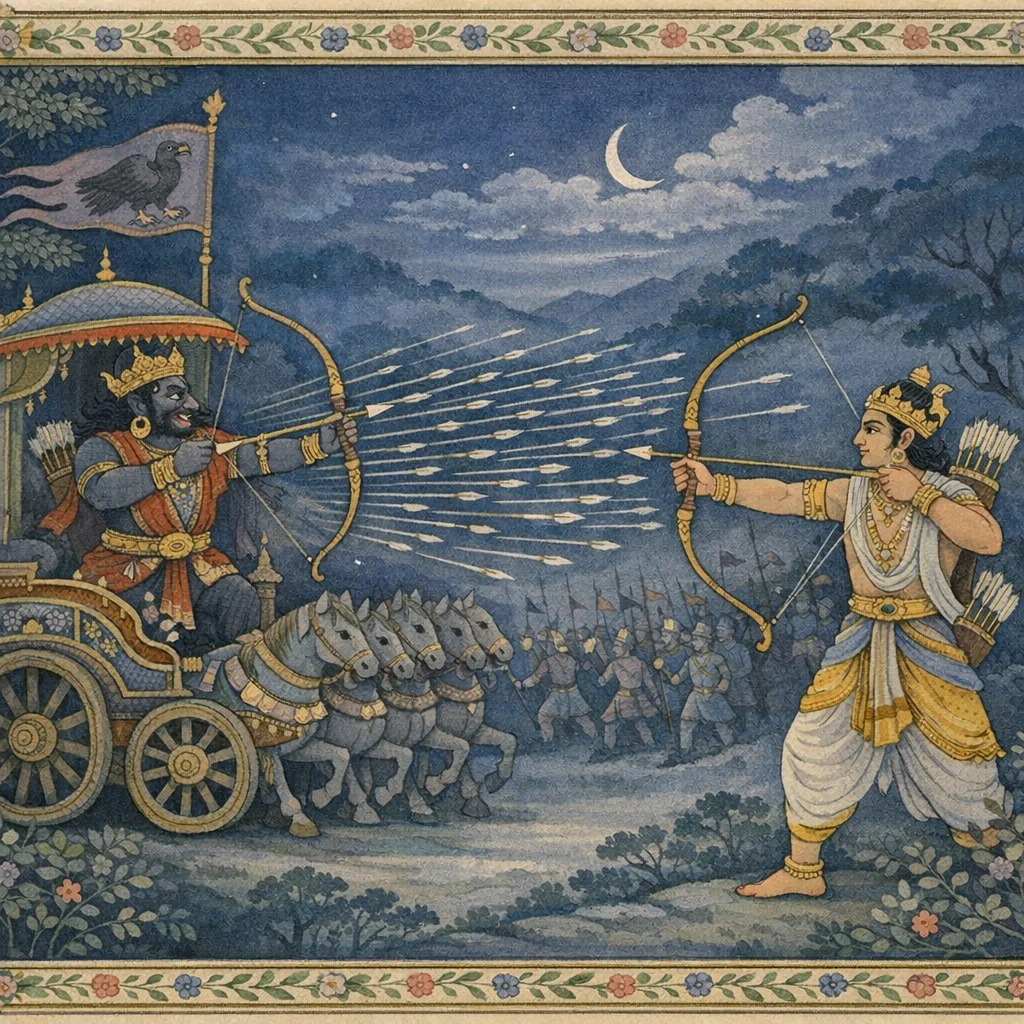
Chapter Arc: रात्रि-युद्ध की धधकती पृष्ठभूमि में सहदेव राधेय कर्ण पर बाण-वर्षा कर उसे ललकारता है—पर अँधेरे में भी धर्म-युद्ध की मर्यादा डगमगाने लगती है। → सहदेव के नौ और फिर झुकी गाँठवाले दस तीक्ष्ण बाण कर्ण को घायल करते हैं, किंतु कर्ण प्रत्युत्तर में शत-बाणों से सहदेव के रथ, धनुष और बल को दबा देता है। इसी बीच शल्य की वाणी—‘विशिष्ट रथियों से मत भिड़’—सहदेव के मन में संशय और विवशता भरती है; उधर अर्जुन के तीव्र संहार से कौरव-सेना में भगदड़ फैलती है। → कर्ण द्वारा सहदेव की निर्णायक पराजय के साथ ही शल्य विराट के भाई शतानीक का वध करता है और विराट को भी रण में परास्त कर देता है; उसी समय अर्जुन की ओर से उठती प्रचंड मारक-लहर कौरवों की पंक्तियाँ तोड़ देती है, और राक्षसराज अलम्बुष आठ-चक्र रथ पर चढ़कर अर्जुन से टकराने को आगे बढ़ता है। → पांडव-पक्ष में सहदेव का दबना और विराट-पक्ष का टूटना क्षणिक अँधेरा रचता है, पर अर्जुन की गति युद्ध-धारा को फिर पांडवों की ओर मोड़ देती है; कौरवों के लिए राहत की आशा अब अलम्बुष के प्रहार पर टिक जाती है। → अलम्बुष अर्जुन के मस्तक पर सैकड़ों बाणों की वर्षा करता हुआ निकट आता है—रात्रि-रण में यह टक्कर किसका तेज़ बुझाएगी?
Shlokas
Verse 1
/ अपर बक। है २ >> सप्तषष्ट्याधिेकशततमो< ध्याय: कर्णके द्वारा सहदेवकी पराजय, शल्यके द्वारा विराटके भाई शतानीकका वध और विराटकी पराजय तथा अर्जुनसे पराजित होकर अलम्बुषका पलायन संजय उवाच सहदेवमथायान्तं द्रोणप्रेप्सु विशाम्पते । कर्णो वैकर्तनो युद्धे वारयामास भारत,संजय कहते हैं--प्रजानाथ! भरतनन्दन! द्रोणाचार्यकी लक्ष्य करके आते हुए सहदेवको युद्धस्थलमें वैकर्तन कर्णने रोका
Sanjaya said: O lord of men, O descendant of Bharata—when Sahadeva advanced, intent on reaching Drona, Karna, Vaikartana, the son of the charioteer, checked him on the battlefield. Thus, in the press of war, a warrior’s chosen objective is met by an opposing duty: to block, protect, and contest the path of one who seeks a decisive strike.
Verse 2
सहदेवस्तु राधेयं विद्ध्वा नवभिराशुगै: । पुनर्विव्याध दशभिर्विशिखैर्नतपर्वभि:
Sanjaya said: Sahadeva, having struck Radheya with nine swift-flying arrows, pierced him again with ten more shafts whose joints were not bent—an unbroken, relentless counterstroke amid the fierce duties of battle.
Verse 3
सहदेवने राधापुत्र कर्णको नौ बाणोंसे बींधकर झुकी हुई गाँठवाले दस बाणोंद्वारा पुनः घायल कर दिया ।। त॑ं कर्ण: प्रतिविव्याध शतेन नतपर्वणाम् । सज्यं चास्य धनु: शीघ्र चिच्छेद लघुहस्तवत्
Sanjaya said: Sahadeva struck Radha’s son Karna with nine arrows, and then wounded him again with ten arrows whose joints were bent. Karna, in return, pierced Sahadeva with a hundred arrows with lowered joints, and swiftly cut his strung bow, as though with effortless skill. The episode underscores the relentless reciprocity of battlefield violence—prowess answering prowess—where personal valor is displayed, yet the moral cost of war continues to mount.
Verse 4
कर्णने बदलेमें झुकी हुई गाँठवाले सौ बाण मारे और शीघ्रतापूर्वक हाथ चलानेवाले वीर योद्धाकी भाँति उसने उनके प्रत्यंचासहित धनुषको भी शीघ्र ही काट दिया ।। ततोडन्यद् धनुरादाय माद्रीपुत्र: प्रतापवान् । कर्ण विव्याध विंशत्या तदद्भुतमिवाभवत्,तदनन्तर प्रतापी माद्रीकुमार सहदेवने दूसरा धनुष हाथमें लेकर कर्णको बीस बाणोंसे घायल कर दिया। वह अद्भुत-सा कार्य हुआ
Sanjaya said: Karna struck back with a hundred arrows—hard-knotted and forceful—and, with the swift precision of a master archer, he quickly severed Sahadeva’s bow along with its bowstring. Then the valiant son of Madri took up another bow and pierced Karna with twenty arrows; it appeared almost wondrous. The passage highlights the relentless momentum of battle and the warrior’s duty to respond with skill and resolve, even amid escalating violence.
Verse 5
तस्य कर्णो हयान् हत्वा शरै: संनतपर्वभि: । सारथिं चास्य भल््लेन द्रुतं निन्ये यमक्षयम्,तब कर्णने झुकी हुई गाँठवाले बाणोंसे सहदेवके घोड़ोंको मारकर एक भल्लका प्रहार करके उनके सारथिको भी शीघ्र ही यमलोक पहुँचा दिया
Sanjaya said: Karna, having slain his horses with arrows whose joints were bent, then with a single bhalla-shaft swiftly sent his charioteer to Yama’s imperishable realm. The scene underscores the ruthless efficiency of battlefield skill, where mastery in arms overrides ordinary bonds of service and protection amid the collapse of chariot-war order.
Verse 6
विरथ: सहदेवस्तु खड््गं चर्म समाददे । तदप्यस्य शरै: कर्णो व्यधमत् प्रहसन्निव,रथहीन हो जानेपर सहदेवने ढाल और तलवार हाथमें ले ली; परंतु कर्णने हँसते हुए-से बाण मारकर उनकी उस तलवारके भी टुकड़े-टुकड़े कर डाले
Sañjaya said: When Sahadeva was left without his chariot, he seized a sword and shield. Yet Karṇa, as though laughing, struck with his arrows and shattered even that weaponry—showing how, in the brutal logic of battle, courage and resolve can be overwhelmed by superior force and skill.
Verse 7
अथ गुर्वी महाघोरां हेमचित्रां महागदाम् । प्रेषयामास संक्रुद्धों वैकर्तनरथं प्रति
Sañjaya said: Then, in a surge of wrath, he hurled a massive, terrifying great mace—adorned with gold—toward the chariot of Vaikartana. The moment underscores how anger on the battlefield drives warriors to unleash heavy, lethal weapons, intensifying the spiral of violence and peril.
Verse 8
तब सहदेवने अत्यन्त कुपित होकर एक सुवर्णजटित अत्यन्त भयंकर विशाल गदा सूर्यपुत्र कर्णके रथपर दे मारी ।। तामापतन्ती सहसा सहदेवप्रचोदिताम् । व्यष्टम्भयच्छरै: कर्णो भूमौ चैनामपातयत्,सहदेवके द्वारा चलायी हुई उस गदाको सहसा अपने ऊपर आती देख कर्णने बहुत-से बाणोंद्वारा उसे स्तम्भित कर दिया और पृथ्वीपर गिरा दिया
Sañjaya said: Then Sahadeva, inflamed with fierce anger, hurled a vast and terrifying mace, inlaid with gold, onto the chariot of Karna, the son of the Sun. Seeing that mace rushing at him, Karna checked its force with a shower of arrows and brought it down to the earth. The episode underscores the warrior’s duty to meet violence with disciplined skill rather than uncontrolled rage, even amid the chaos of battle.
Verse 9
गदां विनिहतां दृष्टवा सहदेवस्त्वरान्वित: । शक्ति चिक्षेप कर्णाय तामप्यस्याच्छिनच्छरै:,अपनी गदाको असफल होकर गिरी हुई देख सहदेवने बड़ी उतावलीके साथ कर्णपर शक्ति चलायी; किंतु उसने बाणोंद्वारा उस शक्तिको भी काट डाला
Sañjaya said: Seeing his mace struck down and lying useless, Sahadeva, driven by urgency, hurled a śakti-weapon at Karṇa. Yet Karṇa, unwavering in the press of battle, cut that weapon down as well with his arrows—showing how, in war, courage must be joined to skill, and how even a righteous warrior’s effort can be thwarted by a superior counter.
Verse 10
ससम्भ्रमं ततस्तूर्णमवप्लुत्य रथोत्तमात् । सहदेवो महाराज दृष्ट्वा कर्ण व्यवस्थितम्,रथचक्रं प्रगृह्माजी मुमोचाधिरथिं प्रति । महाराज! तब सहदेव अपने उस उत्तम रथसे शीघ्र ही वेगपूर्वक कूद पड़े और युद्धस्थलमें अधिरथपुत्र कर्णको सामने खड़ा देख रथका एक चक्का लेकर उसके ऊपर चला दिया
Sañjaya said: Then, in sudden urgency, Sahadeva swiftly leapt down from his excellent chariot. O King, seeing Karṇa, the son of Adhiratha, standing firm on the battlefield, he seized a chariot-wheel and hurled it at him. The moment underscores the fierce improvisation of war, where resolve and quick action replace formal weaponry, and where personal valor is tested amid escalating violence.
Verse 11
|| तदापतद् वै सहसा कालचक्रमिवोद्यतम्
Sañjaya said: Then, all at once, it came crashing down—like the upraised wheel of Time itself—swift, irresistible, and ominous, as though fate had turned to strike without delay.
Verse 12
तस्मिंस्तु निहते चक्रे सूतजेन महात्मना
Sañjaya said: When that wheel had been struck down by the great-hearted son of a charioteer, the course of the battle turned—an emblem of how, in war, a single decisive act can unsettle even the mightiest and expose the fragile dependence of power on its instruments.
Verse 13
ईषादण्डकयोक्त्रांश्व युगानि विविधानि च | हस्त्यज्ञानि तथाश्रांश्व मृतांश्व॒ पुरुषान् बहुन्
Sañjaya said: “There were seen the shafts and poles, the yokes and reins, and many kinds of harness; and also the elephant-drivers, and many men—wounded and dead.”
Verse 14
चिक्षेप कर्णमुद्दिश्य कर्णस्तान् व्यधमच्छरै: । महामनस्वी सूतपुत्र कर्णके द्वारा उस रथचक्रके नष्ट कर दिये जानेपर ईषादण्ड, जोते, नाना प्रकारके जूए, हाथीके कटे हुए अंग, मरे घोड़े और बहुत-सी मृत मनुष्योंकी लाशें कर्णको लक्ष्य करके चलायीं; परंतु कर्णने अपने बाणोंद्वारा उन सबकी धज्जियाँ उड़ा दीं ।। स निरायुधमात्मान ज्ञात्वा माद्रवतीसुत:
Sañjaya said: A missile was hurled aiming at Karna, but Karna shattered it with his arrows. Then the son of Mādravatī, realizing himself to be without weapons, found himself in a perilous state amid the press of battle.
Verse 15
तमभिद्रुत्य राधेयो मुहूर्तादू भरतर्षभ
Sañjaya said: Rādheya (Karna), rushing straight at him, O bull among the Bharatas, within a short while closed in upon him.
Verse 16
मा युध्यस्व रणेडथीर विशिष्टे रथिभि: सह
Sañjaya said: “O steadfast one, do not engage in battle in this fight—especially not together with those eminent chariot-warriors.”
Verse 17
अथैनं धनुषो5ग्रेण तुदन् भूयो5ब्रवीद् वच:
Sañjaya said: Then, prodding him again with the tip of his bow, he spoke once more—pressing his point with renewed insistence amid the harsh urgency of war.
Verse 18
एषोअर्जुनो रणे तूर्ण युध्यते कुरुभि: सह । तत्र गच्छस्व माद्रेय गृहं वा यदि मन्यसे
Sañjaya said: “Here is Arjuna—he is fighting swiftly in the battle, together with the Kurus. Go there, O son of Mādrī; or, if you think it better, return home.”
Verse 19
तदनन्तर धनुषकी नोकसे उन्हें पीड़ा देते हुए कर्णने पुनः: इस प्रकार कहा--'माद्रीपुत्र! ये अर्जुन कौरवोंके साथ रणभूमिमें शीघ्रतापूर्वक युद्ध कर रहे हैं। तू उन्हींके पास चला जा अथवा तेरा मन हो तो घरको लौट जा! ।। एवमुक््त्वा तु तं कर्णो रथेन रथिनां वर: । प्रायात् पाज्चालपाण्डूनां सैन्यानि प्रदहन्निव,सहदेवसे ऐसा कहकर रथियोंमें श्रेष्ठ कर्ण पांचालों और पाण्डवोंकी सेनाओंको दग्ध करता हुआ-सा रथके द्वारा उनकी ओर वेगपूर्वक चल दिया
Sañjaya said: Thereafter, Karna—pressing him hard—spoke again in this manner: “Son of Madri! Arjuna is swiftly engaging the Kauravas in battle on the field. Go to him at once; or, if you prefer, return home.” Having said this to Sahadeva, Karna, the foremost of chariot-warriors, drove his chariot forward with great speed, seeming to scorch the armies of the Panchalas and the Pandavas as he advanced.
Verse 20
वध प्राप्तं तु माद्रेयं नावधीत् समरेडरिहा । कुन्त्या: स्मृत्वा वचो राजन् सत्यसंधो महायशा:,यद्यपि सहदेव उस समय वध करने योग्य अवस्थामें पहुँच गये थे, तो भी कुन्तीको दिये हुए वचनको याद करके समरांगणमें शत्रुसूदन सत्यप्रतिज्ञ एवं महायशस्वी कर्णने उनका वध नहीं किया
Sañjaya said: Though the son of Mādrī (Sahadeva) had come into a condition fit to be slain, the foe-slayer Karṇa did not kill him on the battlefield, O King. Remembering the word he had given to Kuntī, that truth-bound and greatly renowned warrior restrained himself—placing fidelity to his promise above the immediate advantage of war.
Verse 21
सहदेवस्ततो राजन् विमना: शरपीडित: । कर्णवाक्छरतप्तक्ष जीवितान्निरविद्यत,राजन्! तदनन्तर सहदेव कर्णके बाणोंसे पीड़ित और उसके वचनरूपी बाणोंसे संतप्त एवं खिन्नचित्त हो अपने जीवनसे विरक्त हो गये
Sañjaya said: Then, O King, Sahadeva—downcast and tormented by arrows—his eyes burning as though scorched by Karṇa’s arrow-like words, grew weary of life itself.
Verse 22
आरुरोह रथं चापि पाञज्वाल्यस्य महात्मन: । जनमेजयस्य समरे त्वरायुक्तो महारथ:
Sañjaya said: The great warrior, urged on by haste, mounted the chariot of the noble Pāñjvālya in the battle against Janamejaya.
Verse 23
फिर वे महारथी सहदेव बड़ी उतावलीके साथ महामना पांचालराजकुमार जनमेजयके रथपर आरूढ़ हो गये ।। विराट सहसेन तु द्रोणं वै द्रतमागतम् । मद्रराज: शरौघेण च्छादयामास धन्विनम्,द्रोणाचार्यपर वेगपूर्वक आक्रमण करनेवाले सेनासहित धनुर्धर राजा विराटको मद्रराज शल्यने अपने बाणसमूहोंसे आच्छादित कर दिया
Sañjaya said: Then the great warrior Sahadeva, in great haste, mounted the chariot of Janamejaya, the prince of Pañcāla. Virāṭa, with his troops, rushed swiftly toward Droṇa; but Śalya, king of Madra, covered that bowman Virāṭa with a dense shower of arrows, checking his impetuous advance.
Verse 24
तयो: समभवद् युद्ध समरे दृढ्धन्विनो: । यादृशं हाभवद् राजन् जम्भवासवयो: पुरा,राजन! फिर तो समरांगणमें उन दोनों सुदृढ़ धनुर्धर योद्धाओंमें वैसा ही घोर युद्ध होने लगा, जैसा कि पूर्वकालमें इन्द्र और जम्भासुरमें हुआ था
Sañjaya said: O King, then a fierce battle arose on the battlefield between those two steadfast archers—like the terrible combat that once took place in ancient times between Indra (Vāsava) and the demon Jambha.
Verse 25
मद्रराजो महाराज विराटं वाहिनीपतिम् । आजमलछेने त्वरितस्तूर्ण शतेन नतपर्वणाम्,महाराज! मद्रराज शल्यने सेनापति राजा विराटको बड़ी उतावलीके साथ झुकी हुई गाँठवाले सौ बाण मारकर तुरंत घायल कर दिया
Sañjaya said: O King, the ruler of Madra—Śalya—swiftly closed in on Virāṭa, the commander of the host, and at once wounded him with a hundred arrows whose joints were bent, in the fierce press of battle.
Verse 26
प्रतिविव्याध तं राजन् नवभिर्निशितै: शरै: । पुनश्चैनं त्रिसप्तत्या भूयश्चैव शतेन तु
Sañjaya said: O King, he struck him back with nine keen arrows; again he pierced him with seventy-three more, and yet again with a full hundred.
Verse 27
राजन्! तब विराटने मद्रराजको पहले नौ, फिर तिहत्तर और पुनः सौ तीखे बाणोंसे घायल करके बदला चुकाया ।। तस्य मद्राधिपो हत्वा चतुरो रथवाजिन: । सूतं ध्वजं च समरे शराभ्यां संन्यपातयत्,तदनन्तर मद्रराजने विराटके रथके चारों घोड़ोंको मारकर दो बाणोंसे समरांगणमें सारथि और ध्वजको भी काट गिराया
Sañjaya said: O King, then Virata repaid the Madra ruler in kind—first wounding him with nine sharp arrows, then with seventy-three, and again with a hundred. In response, the lord of Madra slew Virata’s four chariot-horses and, with two arrows, struck down in the battle both the charioteer and the standard.
Verse 28
हताश्चात् तु रथात् तूर्णमवप्लुत्य महारथ: । तस्थौ विस्फारयंश्वापं विमुछ्चंश्व शिताउ्छरान्,तब उस अश्वहीन रथसे तुरंत ही कूदकर महारथी राजा विराट धनुषकी टंकार करते और तीखे बाणोंको छोड़ते हुए भूमिपर खड़े हो गये
Sañjaya said: Then, when his horses had been slain, the great chariot-warrior leapt down swiftly from the chariot. Standing firm upon the ground, he made his bow resound and kept releasing keen arrows.
Verse 29
शतानीकस्ततो दृष्टवा भ्रातरं हतवाहनम् | रथेनाभ्यपतत् तूर्ण सर्वलोकस्य पश्यत:,तत्पश्चात् शतानीक अपने भाईके वाहनको नष्ट हुआ देख सब लोगोंके देखते-देखते शीघ्र ही रथके द्वारा उनके पास आ पहुँचे
Sañjaya said: Then Śatānīka, seeing his brother’s mount and chariot destroyed, rushed swiftly toward him in his own chariot—before the eyes of all the warriors.
Verse 30
शतानीकमथायान्तं मद्रराजो महामृथे । विशिखेैर्बहुभिरविद्ध्वा ततो निन्ये यमक्षयम्,उस महासमरमें वहाँ आते हुए शतानीकको बहुत-से बाणोंद्वारा घायल करके मद्रराज शल्यने उन्हें यमलोक पहुँचा दिया
Sañjaya said: In that great clash, the king of Madra, Śalya, struck the advancing Śatānīka with many arrows and, having thus wounded him, sent him to Yama’s imperishable realm.
Verse 31
तस्मिंस्तु निहते वीरे विराटो रथसत्तम: । आरुरोह रथं तूर्ण तमेव ध्वजमालिनम्
Sañjaya said: When that heroic warrior had been slain, Virāṭa—the foremost of chariot-fighters—swiftly mounted that very chariot adorned with its banner.
Verse 32
वीर शतानीकके मारे जानेपर रथियोंमें श्रेष्ठ विराट तुरंत ही ध्वज-मालासे विभूषित उसी रथपर आरूढ़ हो गये ।। ततो विस्फार्य नयने क्रोधाद् द्विगुणविक्रम: । मद्रराजरथं तूर्ण छादयामास पत्रिभि:,तब क्रोधसे आँखें फाड़कर दूना पराक्रम दिखाते हुए विराटने अपने बाणोंद्वारा मद्रराजके रथको शीघ्र ही आच्छादित कर दिया
Sañjaya said: Then Virāṭa, his eyes widened in wrath and his prowess seemingly doubled, swiftly covered the chariot of the king of Madra with a dense shower of arrows.
Verse 33
ततो मद्राधिप: क्रुद्ध/ शरेणानतपर्वणा । आजपघानोरसि दृढं विराट वाहिनीपतिम्
Sañjaya said: Then the lord of Madra, enraged, struck the commander of Virāṭa’s forces firmly on the chest in the thick of battle with an arrow whose joints were unbroken.
Verse 34
इससे कुपित हुए मद्रराज शल्यने झुकी हुई गाँठवाले एक बाणसे सेनापति विराटकी छातीमें गहरी चोट पहुँचायी ।। सो5तिविद्धों महाराज रथोपस्थ उपाविशत् । कश्मलं चाविशत् तीव्रं विराटो भरतर्षभ,महाराज! भरतभूषण! राज विराट अत्यन्त घायल होकर रथके पिछले भागमें धम्म-से बैठ गये और उन्हें तीव्र मूच्छने दबा लिया
Sañjaya said: Enraged, Shalya, the king of Madra, loosed a knotty, downward-bending arrow and struck Virāṭa with a deep wound in the chest. Severely pierced, O king, Virāṭa sank down upon the rear of his chariot-seat; a fierce faintness and bewilderment overcame him, O bull among the Bharatas.
Verse 35
सारथिस्तमपोवाह समरे शरविक्षतम् | ततः सा महती सेना प्राद्रवन्निशि भारत
Sañjaya said: The charioteer then carried him away from the battlefield, wounded by arrows. After that, O Bhārata, that vast army broke into flight in the night.
Verse 36
तां दृष्टवा विद्रुतां सेनां वासुदेवधनंजयौ
Sañjaya said: Seeing that army in flight, Vāsudeva and Dhanañjaya marked the rout—an ominous turn in the battle, where courage and duty are tested amid collapsing ranks.
Verse 37
प्रयातौ तत्र राजेन्द्र यत्र शल्यो व्यवस्थित: । राजेन्द्र! उस सेनाको भागती देख श्रीकृष्ण और अर्जुन उसी ओर चल दिये, जहाँ राजा शल्य खड़े थे ।। तौतु प्रत्युद्ययौ राजन् राक्षसेन्द्रो हालम्बुष:
Sañjaya said: O king, Kṛṣṇa and Arjuna moved toward that very place where King Śalya stood in position. But as they advanced, the lord of the Rākṣasas, Hālampuṣa, came forth to confront them.
Verse 38
तुरड्रममुखैर्युक्ते पिशाचै्घोरदर्शनि:,उसके उस रथमें घोड़ोंक समान मुखवाले भयंकर पिशाच जुते हुए थे। उसपर लाल रंगकी आर्द्र पताका फहरा रही थी। उस रथको लाल रंगके फूलोंकी मालासे सजाया गया था। वह भयंकर रथ काले लोहेका बना था और उसके ऊपर रीछकी खाल मढ़ी हुई थी
Sanjaya said: That chariot was yoked with frightful piśācas whose faces resembled horses. Upon it a damp, crimson banner streamed, and the car was adorned with garlands of red flowers. The dreadful chariot itself was fashioned of dark iron, and over it was spread a bearskin—an ominous display meant to terrify and proclaim ruthless intent amid the chaos of war.
Verse 39
लोहितार्द्रपताक॑ त॑ रक्तमाल्यविभूषितम् | कार्ष्णायसमयं घोरमृक्षचर्मसमावृतम्,उसके उस रथमें घोड़ोंक समान मुखवाले भयंकर पिशाच जुते हुए थे। उसपर लाल रंगकी आर्द्र पताका फहरा रही थी। उस रथको लाल रंगके फूलोंकी मालासे सजाया गया था। वह भयंकर रथ काले लोहेका बना था और उसके ऊपर रीछकी खाल मढ़ी हुई थी
Sañjaya said: That chariot bore a damp crimson banner fluttering aloft and was adorned with garlands of red flowers. Terrifying in aspect, it was fashioned of black iron and covered over with a bear-skin—an ominous war-vehicle whose very appearance proclaimed ferocity and dread on the battlefield.
Verse 40
रौद्रेण चित्रपक्षेण विवृताक्षेण कूजता । ध्वजेनोच्छितदण्डेन गृध्रराजेन राजता
Sañjaya said: “It shone with a fierce, variegated-winged, wide-eyed, clamoring lord of vultures—its banner raised high upon an uplifted staff—an ominous emblem that intensified the dread of the battlefield.”
Verse 41
रुरोधार्जुनमायान्तं प्रभञ्जनमिवाद्रिराट्
Sañjaya said: The mountain-king stood firm and checked Arjuna as he advanced, like a great mountain halting the onrush of a tempest.
Verse 42
अतितीव्रं महद् युद्ध नरराक्षसयोस्तदा,भारत! उस समय वहाँ मनुष्य और राक्षसमें बड़े जोरसे महान् संग्राम होने लगा, जो समस्त दर्शकोंका आनन्द बढ़ानेवाला और गीध, कौए, बगले, उल्लू, कंक तथा गीदड़ोंको हर्ष प्रदान करनेवाला था
Sañjaya said: O Bhārata, at that time a most fierce and mighty battle arose there between the man and the rākṣasa—an encounter that heightened the excitement of the onlookers, while gladdening the carrion-eaters: vultures, crows, herons, owls, kanka-birds, and jackals.
Verse 43
द्रष्टणां प्रीतिजनन सर्वेषां तत्र भारत । गृध्रकाकबलोलूककड़्कगोमायुहर्षणम्,भारत! उस समय वहाँ मनुष्य और राक्षसमें बड़े जोरसे महान् संग्राम होने लगा, जो समस्त दर्शकोंका आनन्द बढ़ानेवाला और गीध, कौए, बगले, उल्लू, कंक तथा गीदड़ोंको हर्ष प्रदान करनेवाला था
O Bhārata, that battle delighted all who watched there, and gladdened the carrion-eaters—vultures, crows, herons, owls, kanka-birds, and jackals.
Verse 44
तमर्जुन: शतेनैव पत्रिणां समताडयत् | नवभिश्ष शितैर्बाणैर्थ्वजं चिच्छेद भारत
Sañjaya said: Arjuna struck him with a full hundred feathered arrows, and then, O Bhārata, with nine keen shafts he severed his banner.
Verse 45
भरतनन्दन! अर्जुनने सौ बाणोंसे उस राक्षसको घायल कर दिया और नौ तीखे बाणोंसे उसकी ध्वजा काट डाली ।। सारथिं च त्रिभिणिस्त्रिभिरेव त्रिवेणुकम् । धनुरेकेन चिच्छेद चतुर्भि श्वतुरो हयान्,फिर तीन बाणोंसे उसके सारथिको, तीनसे ही रथके त्रिवेणुकी, एकसे उसके धनुषको और चार बाणोंसे चारों घोड़ोंको काट डाला
Sañjaya said: O scion of Bharata, Arjuna struck that rākṣasa with a hundred arrows and, with nine keen shafts, cut down his banner. Then, with three arrows he felled the charioteer, with three more he severed the chariot’s triveṇuka (a triple-yoked/three-part fitting), with a single arrow he cut the bow, and with four arrows he brought down the four horses.
Verse 46
पुन: सज्यं कृतं चापं तदप्यस्य द्विधाच्छिनत् । विरथस्योद्यतं खड््ग॑ं शरेणास्य द्विधाकरोत्,जब उसने पुनः दूसरे धनुषपर प्रत्यंचा चढ़ायी तो अर्जुनने उसके भी दो टुकड़े कर दिये। रथहीन होनेपर उस राक्षसने जब खड़्ग उठाया, तब अर्जुनने एक बाण मारकर उसके भी दो खण्ड कर डाले
Again he strung his bow, but Arjuna cut that too in two. And when Alambusha, now without his chariot, raised his sword, Arjuna with a single arrow split the blade into two.
Verse 47
अथीैनं निशितैरबणिश्षतुर्भिर्भरतर्षभ | पार्थोड्विध्यद् राक्षसेन्द्रं स विद्ध: प्राद्रवद् भयात्,भरतश्रेष्ठ! तत्पश्चात् कुन्तीकुमार अर्जुनने चार तीखे बाणोंद्वारा उस राक्षसराजको बींध डाला। उन बाणोंसे विद्ध होकर अलम्बुष भयके मारे भाग गया
Sañjaya said: Then, O bull among the Bharatas, Pārtha (Arjuna) pierced that lord of the Rākṣasas with four sharp arrows. Wounded by them and shaken at heart, the demon-king fled in fear, O best of the Bharatas.
Verse 48
त॑ विजित्यार्जुनस्तूर्ण द्रोणान्तिकमुपाययौ । किरजञज्शरगणान् राजन् नरवारणवाजिषु,राजन! उसे परास्त करके अर्जुन मनुष्यों, हाथियों तथा घोड़ोंपर बाणसमूहोंकी वर्षा करते हुए तुरंत ही द्रोणाचार्यके समीप चले गये
Sañjaya said: Having overcome him, Arjuna swiftly advanced toward Droṇa. O King, as he moved, he rained volleys of arrows upon the warriors—men, elephants, and horses.
Verse 49
वध्यमाना महाराज पाण्डवेन यशस्विना । सैनिका न्यपतन्नुर्व्या वातनुन्ना इव द्रुमा:,महाराज! उन यशस्वी पाण्डुकुमारके द्वारा मारे जाते हुए आपके सैनिक आँधीके उखाड़े हुए वृक्षोंके समान धड़ाधड़ पृथ्वीपर गिर रहे थे
Sañjaya said: O King, as they were being cut down by the illustrious Pāṇḍava, your soldiers kept collapsing onto the earth in rapid succession—like trees felled by a driving storm.
Verse 50
तेषु तूत्साद्यमानेषु फाल्गुनेन महात्मना । सम्प्राद्रवद् बल॑ सर्व पुत्राणां ते विशाम्पते,प्रजानाथ! जब इस प्रकार महात्मा अर्जुनके द्वारा उनका संहार होने लगा, तब आपके पुत्रोंकी सारी सेना भाग चली
Sañjaya said: As those warriors were being cut down by the great-souled Phālguna (Arjuna), all the forces of your sons broke and fled in panic, O lord of the people.
Verse 113
शरैरनेकसाहसैराच्छिनत् सूतनन्दन: । उठे हुए कालचक्रके समान सहसा अपने ऊपर गिरते हुए उस रथचक्रको सूतनन्दन कर्णने कई हजार बाणोंसे काट गिराया
Sañjaya said: With many thousands of arrows, Karṇa—the charioteer’s son—swiftly cut down the chariot-wheel that was falling upon him, rising like the wheel of Time itself. The image underscores the war’s merciless momentum: even when fate seems to descend, mastery in arms and unflinching resolve become the means of survival and continued duty on the battlefield.
Verse 143
वार्यमाणस्तु विशिखै: सहदेवो रणं जहौ । तत्पश्चात् माद्रीकुमार सहदेवने अपने-आपको आयुधोंसे रहित समझकर कर्णके बाणोंसे अवरुद्ध हो उस रणभूमिको त्याग दिया
Sahadeva, though striving to stand his ground, was checked by volleys of arrows and withdrew from the fight. Thereafter the son of Mādrī—Sahadeva—judging himself to be without effective weapons and hemmed in by Karṇa’s shafts, abandoned that battlefield. The episode underscores the harsh ethics of war: valor is praised, yet survival and tactical withdrawal become unavoidable when one is disarmed and overpowered.
Verse 153
अब्रवीत् प्रहसन् वाक््यं सहदेवं विशाम्पते । भरतश्रेष्ठ! प्रजानाथ! तदनन्तर राधापुत्र कर्णने दो घड़ीतक सहदेवका पीछा करके उनसे हँसते हुए इस प्रकार कहा--
Sañjaya said: Smiling, Karṇa addressed Sahadeva with words of mockery. O lord of the people, O best of the Bharatas—after that, the son of Rādhā pursued Sahadeva for a short while and, laughing, spoke to him in this manner. The scene frames the moral tension of war: valor and pursuit are mixed with derision, showing how pride and contempt can accompany martial success.
Verse 166
इस प्रकार श्रीमह्याभारत द्रोणपर्वके अन्तर्गत घटोत्कचवधपर्वमें रात्रियुद्धके प्रसंगमें दुर्योधनका पलायनविषयक एक सौ छाछठवाँ अध्याय पूरा हुआ,सदृशैर्युध्य माद्रेय वचो मे मा विशड्किथा: । “ओ अधीर बालक! तू युद्धस्थलमें विशिष्ट रथियोंके साथ संग्राम न करना। माद्रीकुमार! अपने समान योद्धाओंके साथ युद्ध किया कर। मेरी इस बातपर संदेह न करना”
Sañjaya said: “O son of Mādrī, fight only with those who are your equals; do not engage in battle with superior chariot-warriors. Do not doubt my words.” In the night-fighting episode within the Ghaṭotkaca-slaying section of the Droṇa Parva, this chapter concludes with counsel meant to restrain reckless valor and to preserve order and prudence amid the chaos of war.
Verse 167
इति श्रीमहाभारते द्रोणपर्वणि घटोत्कचवधपर्वणि रात्रियुद्धे अलम्बुषपराभवे सप्तषष्ट्यधिकशततमो<ध्याय:
Thus, in the Śrī Mahābhārata, within the Droṇa Parva—specifically in the section on the slaying of Ghaṭotkaca—this concludes the chapter describing the night-battle and the defeat of Alambuṣa. (Chapter 167 ends.)
Verse 356
वध्यमाना शरशतै: शल्येनाहवशोभिना । भरतनन्दन! समरांगणमें बाणोंसे क्षत-विक्षत हुए राजा विराटको उनका सारथि दूर हटा ले गया। तब संग्राममें शोभा पानेवाले शल्यके सैकड़ों सायकोंसे पीड़ित हुई वह विशाल सेना उस रात्रिके समय भाग खड़ी हुई
Sañjaya said: “O descendant of Bharata, as King Virāṭa was struck by hundreds of arrows from Śalya, who shone in battle, the king—torn and wounded by shafts upon the field—was drawn away to a distance by his charioteer. Then that vast army, harried by Śalya’s hundreds of missiles and unsteadied in the night, broke and fled.”
Verse 373
अष्टचक्रसमायुक्तमास्थाय प्रवरं रथम् । राजन्! उस समय राक्षसराज अलम्बुष आठ पहियोंसे युक्त श्रेष्ठ रथपर आरूढ़ हो उन दोनोंका सामना करनेके लिये आगे बढ़ आया
Sañjaya said: “O King, at that moment the rākṣasa-king Alambuṣa mounted a splendid chariot fitted with eight wheels and advanced to confront those two.”
Verse 403
स बभौ राक्षसो राजन् भिन्नाउज्जनचयोपम: । उसकी ध्वजापर विचित्र पंख और फैले हुए नेत्रोंवाला भयंकर गृध्रराज अपनी बोली बोलता था। उससे उपलक्षित उस ऊँचे डंडेवाले कान्तिमान् ध्वजसे कटे-छटे कोयलेके पहाड़के समान वह राक्षस बड़ी शोभा पा रहा था
Sañjaya said: “O King, that rākṣasa appeared splendid—like a shattered mountain of black collyrium. Upon his banner a dreadful king of vultures, with strange wings and wide-spread eyes, seemed to cry out in its own voice; and marked by that lofty, radiant standard, the rākṣasa shone on the field like a mountain of charcoal hewn and splintered.”
Verse 413
किरन् बाणगणान् राजन् शतशोडर्जुनमूर्थनि । राजन! अर्जुनके मस्तकपर सैकड़ों बाणसमूहोंकी वर्षा करते हुए उस राक्षसने अपनी ओर आते हुए अर्जुनको उसी प्रकार रोक दिया, जैसे गिरिराज हिमालय प्रचण्ड वायुको रोक देता है
Sañjaya said: “O King, showering volleys of arrows—by the hundreds—upon Arjuna’s head, that rākṣasa checked Arjuna as he advanced straight toward him, just as Himālaya, lord of mountains, holds back a fierce wind.”
Frequently Asked Questions
Whether public reproach and threatened retaliation are legitimate responses within war, especially when the target is a revered teacher (Droṇa) and when coalition partners disagree on what constitutes adharma.
The chapter underscores that dharma in conflict is context-sensitive and easily politicized; therefore restraint, disciplined speech, and alliance ethics are necessary to prevent self-destructive internal fragmentation.
No explicit phalaśruti is stated here; the meta-level function is practical-ethical, illustrating how discourse, shame, and restraint operate as stabilizing forces within a fragile wartime alliance.