Adhyaya 115
धृतराष्ट्र-संजय-संवादः — सात्यकि-अलम्बुसयोर्युद्धवर्णनम् (Dhṛtarāṣṭra–Saṃjaya Dialogue; Account of Sātyaki vs Alambusa)
Upa-parva: Sātyaki–Alambusa Saṃgrāma (Strategic Engagement) Sub-episode
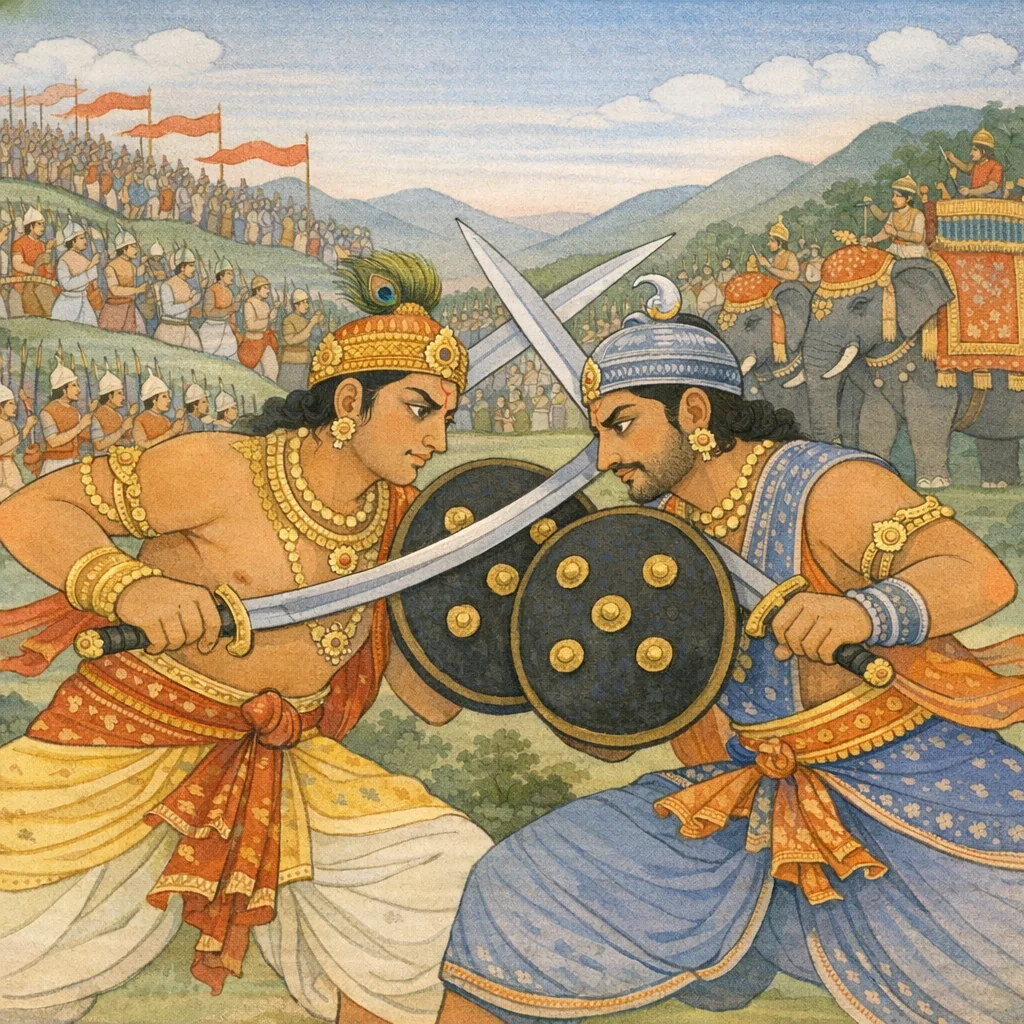
Dhṛtarāṣṭra opens with grief and reputational collapse, stating that his radiance and renown fall day by day as many of his warriors are slain; he interprets events as a reversal wrought by time. He notes Arjuna’s forceful penetration of the Kuru host—described as formidable even to celestial beings—supported by Kṛṣṇa, Bhīma, and the Śini-bull (Sātyaki). Dhṛtarāṣṭra’s sorrow intensifies as he imagines kings, including the Saindhavas, being overwhelmed, and he questions whether Saindhava can survive after offending Arjuna and coming into his sight; by inference he suspects Saindhava’s end and requests a precise report of what occurred. Saṃjaya then narrates Sātyaki’s battlefield movement and his disruptive effectiveness against Kuru ranks. Alambusa confronts Sātyaki, initiating a closely watched engagement. Alambusa strikes Sātyaki with multiple arrows; Sātyaki responds by cutting down incoming missiles, counterstriking, and disabling Alambusa’s chariot team. The exchange escalates into targeted, decisive actions: Sātyaki kills Alambusa’s charioteer with a powerful arrow, then resumes pursuit of the broader operational objective by moving again toward Arjuna while Kuru fighters—including those rallied under Duḥśāsana—attempt to surround and check him. Sātyaki holds them back with a dense missile screen and further disables Duḥśāsana’s mounts, sustaining allied momentum amid concentrated resistance.
Chapter Arc: संजय धृतराष्ट्र से युद्धभूमि का दृश्य खोलते हैं—अंजनकुल में उत्पन्न, स्निग्ध-नील मेघ के समान विशालकाय हाथियों की गर्जना और उनके बीच पाण्डव-सेना का उन्मत्त आवेग। → पाञ्चालराजकुमार धृष्टद्युम्न और राजा वसुदान पाण्डवानी को पुकारकर आगे बढ़ने का आदेश देते हैं; उधर दीर्घबाहु वीर के बाण-वर्ष से कौरव-पक्ष के सैनिक भयभीत होकर रणभूमि छोड़ने लगते हैं। इसी बीच सात्यकि, धर्मराज के शासन से धनंजय (अर्जुन) की पदवी/मार्ग का अनुसरण करते हुए, रथ मोड़कर बाह्लिकदेशीय सैनिकों की ओर बढ़ने का निश्चय करता है। → सात्यकि का कृतवर्मा से घोर संग्राम—कृतवर्मा क्रोध में भरकर सात्यकि के वक्षस्थल में दस तीक्ष्ण बाण धँसाता है; प्रत्युत्तर में सात्यकि कृतवर्मा का धनुष काटकर उसकी दाहिनी भुजा पर शस्त्र-प्रहार करता है, और युद्ध का केंद्र एक ही द्वंद्व में सिमटकर प्रचंड हो उठता है। → आघात-प्रतिघात के बाद सात्यकि अचानक द्रोणाचार्य को छोड़कर रथ हाँकने वाले से दिशा बदलने को कहता है—रणनीति बदलती है, लक्ष्य बदलता है, और पाण्डव-पक्ष की गति एक नए मोर्चे की ओर मुड़ जाती है। → सात्यकि का द्रोण को छोड़कर सहसा प्रस्थान—अब वह किसे साधने जा रहा है, और इस मोड़ का द्रोण-व्यूह पर क्या प्रभाव पड़ेगा?
Shlokas
Verse 1
#ीफा+ () आजमस+- > अंजनके कुलमें उत्पन्न हुए हाथियोंका लक्षण इस प्रकार बतलाया गया है-- स्निग्धनीलाम्बुदप्रख्या बलिनो विपुलै: करै: । सुविभक्तमहाशीर्षा: करिणो5ज्जनवंशजा: ।। “स्निग्ध एवं नील-वर्णके मेघोंकी घटाके समान काले, बलवान, विशाल शुण्डदण्डसे सुशोभित तथा सुन्दर विभागयुक्त विशाल मस्तकवाले हाथी अंजनकुलकी संतानें हैं।' त्रयोदशाधिकशततमो< ध्याय: सात्यकिका द्रोण और हक साथ युद्ध करते हुए काम्बोजोंकी पास पहुँचना संजय उवाच प्रयाते तव सैन्यं तु युयुधाने युयुत्सया । धर्मराजो महाराज स्वेनानीकेन संवृत:
Sanjaya said: When your army had advanced, and Yuyudhāna (Sātyaki) was eager to fight, King Dharmarāja—O great king—stood surrounded by his own division. The scene frames Yudhiṣṭhira’s steadfastness amid the forward surge of war, suggesting a ruler’s duty to remain composed and protected while directing righteous conduct in battle.
Verse 2
तत: पाञउ्चालराजस्य पुत्र: समरदुर्मद:,तदनन्तर समरभूमिमें उन्मत्त होकर लड़नेवाले पांचालराजकुमार धृष्टद्युम्न तथा राजा वसुदानने पाण्डवसेनामें पुकारकर कहा--'योद्धाओ! आओ , दौड़ो और शीचघ्रतापूर्वक प्रहार करो, जिससे रणदुर्मद सात्यकि सुखपूर्वक आगे जा सकें; क्योंकि बहुत-से कौरव महारथी इन्हें पराजित करनेका प्रयत्न करेंगे”
Sañjaya said: Then the son of the king of Pāñcāla—Dṛṣṭadyumna, fierce and battle-intoxicated—together with King Vasudāna, called out to the Pāṇḍava army on the battlefield: “Warriors, come! Run forward and strike swiftly, so that the impetuous Sātyaki may advance in safety; for many Kaurava great chariot-fighters will strive to defeat him.”
Verse 3
प्राक्रोशत् पाण्डवानीके वसुदानश्च पार्थिव: । आगच्छत प्रहरत द्रुतं विपरिधावत,तदनन्तर समरभूमिमें उन्मत्त होकर लड़नेवाले पांचालराजकुमार धृष्टद्युम्न तथा राजा वसुदानने पाण्डवसेनामें पुकारकर कहा--'योद्धाओ! आओ , दौड़ो और शीचघ्रतापूर्वक प्रहार करो, जिससे रणदुर्मद सात्यकि सुखपूर्वक आगे जा सकें; क्योंकि बहुत-से कौरव महारथी इन्हें पराजित करनेका प्रयत्न करेंगे”
Sañjaya said: In the Pāṇḍava host, King Vasudāna cried aloud, calling to the warriors, “Come on! Run forward and strike quickly!” The call was both tactical and heartening: amid the battle’s confusion, they were urged to act decisively and together, so that their champion—Sātyaki, fierce in combat—might advance without being overwhelmed by the many Kaurava great chariot-warriors who sought to bring him down.
Verse 4
यथा सुखेन गच्छेत सात्यकिर्युद्धदुर्मद: । महारथा हि बहवो यतिष्यन्त्यस्य निर्जये,तदनन्तर समरभूमिमें उन्मत्त होकर लड़नेवाले पांचालराजकुमार धृष्टद्युम्न तथा राजा वसुदानने पाण्डवसेनामें पुकारकर कहा--'योद्धाओ! आओ , दौड़ो और शीचघ्रतापूर्वक प्रहार करो, जिससे रणदुर्मद सात्यकि सुखपूर्वक आगे जा सकें; क्योंकि बहुत-से कौरव महारथी इन्हें पराजित करनेका प्रयत्न करेंगे”
Sañjaya said: “So that Sātyaki—intoxicated with the ardor of battle—may advance with ease, (our warriors should press on and strike swiftly); for many great chariot-warriors will indeed strive to bring about his defeat.”
Verse 5
इति ब्रुवन्तो वेगेन निपेतुस्ते महारथा: । वयं प्रतिजिगीषन्तस्तत्र तान् समभिद्रुता:,सेनापतिकी पूर्वोक्त बात दुहराते हुए सभी पाण्डव महारथी बड़े वेगसे वहाँ आ पहुँचे। उस समय हमलोगोंने भी उन्हें जीतनेकी अभिलाषासे उनपर धावा कर दिया
Sañjaya said: “Saying so, those great chariot-warriors rushed forward with speed. And we too, desiring to conquer them, charged straight at them there.”
Verse 6
(बाणशब्दरवान् कृत्वा विमिश्रान् शड्खनिस्वनै: । युयुधानरथं दृष्टवा तावका अभिदुद्रुवु: ।।) युयुधानके रथको देखकर आपके सैनिक शंखध्वनिसे मिश्रित बाणोंका शब्द प्रकट करते हुए उनके सामने दौड़े आये ।। ततः: शब्दो महानासीद् युयुधानरथं प्रति । आकीर्यमाणा धावन्ती तव पुत्र॒स्य वाहिनी
Sañjaya said: Seeing the chariot of Yuyudhāna, your troops rushed forward against him, raising a roar of arrows—its clamor mingled with the blare of conches. Then a great tumult arose directed toward Yuyudhāna’s chariot, as the army of your son surged on, pressing in and charging.
Verse 7
तस्यां विदीर्यमाणायां शिने: पौत्रो महारथ:
Sañjaya said: As that formation was being torn apart, the grandson of Śini—the great chariot-warrior—advanced to act.
Verse 8
अथान्यानपि राजेन्द्र नानाजनपदेश्वरान्
Sañjaya said: “O best of kings, there were also other rulers—lords of many different realms—present there as well.”
Verse 9
शतमेकेन विव्याध शतेनैकं च पत्रिणाम्,वे एक बाणसे सैकड़ों वीरोंको और सैकड़ों बाणोंसे एक-एक वीरको घायल करने लगे। जिस प्रकार भगवान् पशुपति पशुओंका संहार कर डालते हैं, उसी प्रकार सात्यकिने हाथीसवारों और हाथियोंको, घुड़सवारों और घोड़ोंको तथा घोड़े और सारथिसहित रथियोंको मार डाला
Sañjaya said: With a single arrow he pierced a hundred, and with a hundred arrows he struck down each of a hundred warriors. As Paśupati destroys the beasts, so Sātyaki cut down elephant-riders with their elephants, horsemen with their horses, and chariot-warriors with their horses and charioteers—an overwhelming slaughter in the fury of battle.
Verse 10
द्विपारोहान ड्विपांश्चैव हयारोहान् हयांस्तथा । रथिन:ः साश्वसूतांश्व जघानेश: पशूनिव,वे एक बाणसे सैकड़ों वीरोंको और सैकड़ों बाणोंसे एक-एक वीरको घायल करने लगे। जिस प्रकार भगवान् पशुपति पशुओंका संहार कर डालते हैं, उसी प्रकार सात्यकिने हाथीसवारों और हाथियोंको, घुड़सवारों और घोड़ोंको तथा घोड़े और सारथिसहित रथियोंको मार डाला
Sañjaya said: Sātyaki cut down the elephant-riders and the elephants themselves, the horsemen and the horses as well, and the chariot-warriors together with their horses and charioteers—like Īśa (Śiva), Lord of beasts, who destroys animals.
Verse 11
त॑ तथाद्भुतकर्माणं शरसम्पातवर्षिणम् | न केचनाभ्यधावन् वै सात्यकिं तव सैनिका:,इस प्रकार बाणधाराकी वर्षा करनेवाले उस अद्भुत पराक्रमी सात्यकिके सामने जानेका साहस आपके कोई सैनिक न कर सके
Sañjaya said: Before that Sātyaki—whose deeds were wondrous, and who rained down a torrent of arrows—none of your soldiers could muster the courage to rush against him.
Verse 12
ते भीता मृद्यमानाश्ष प्रमृष्टा दीर्घबाहुना । आयोधनं जहुर्वीरा दृष्टवा तमतिमानिनम्,उस महाबाहु वीरने अपने बाणोंसे रौंदकर आपके सारे सिपाहियोंको मसल डाला। वे वीर सिपाही ऐसे डर गये कि उस अत्यन्त मानी शूरवीरको देखते ही युद्धका मैदान छोड़ देते थे
Sañjaya said: Struck down and crushed in the fighting, and utterly routed by that long-armed warrior, those heroes—seized by fear—abandoned the battlefield the moment they beheld him, so overbearing in his pride and prowess.
Verse 13
तमेकं॑ बहुधापश्यन् मोहितास्तस्य तेजसा । रथैरविमथितैश्वैव भग्ननीडैश्व मारिष
Sanjaya said: Seeing that single warrior appear as though in many forms, the fighters were bewildered by the blaze of his energy. O revered one, their chariots were left unshaken and intact, yet their formations and supports were broken—like nests shattered—under the pressure of his overwhelming prowess.
Verse 14
चक्रैविमथितैश्छत्रैर्ध्वजैश्न विनिपातितै: । अनुकर्ष: पताकाभि: शिरस्त्राणै: सकाउ्चनै:
Sañjaya said: “There was a dragging and sweeping along of the battlefield’s emblems—umbrellas crushed by chariot-wheels, standards struck down and fallen, banners trailing on the ground, and helmets with their golden ornaments—signs of the violent overturning of royal order in war, where the marks of honor are reduced to debris amid the clash of arms.”
Verse 15
बाहुभिश्वन्दनादिग्धैः साड्गदैश्व विशाम्पते । हस्तिहस्तोपमैश्वापि भुजज्राभोगसंनिभै:
Sañjaya said: “O lord of men, they were armed with clubs, their mighty arms smeared with sandal and other unguents; and their limbs—like the trunks of elephants, like the coiling folds of great serpents—seemed fashioned for crushing combat.”
Verse 16
प्रायाद् द्रोणरथं प्रेप्सुर्युयुधानस्य पृष्ठत: । संजय कहते हैं--महाराज! जब युयुधान युद्धकी इच्छासे आपकी सेनाकी ओर बढ़े, उस समय अपने सैनिकोंसे घिरे हुए धर्मराज युधिष्छिर द्रोणाचार्यके रथका सामना करनेके लिये उनके पीछे-पीछे गये,ऊरुभि: पृथिवी च्छन्ना मनुजानां नराधिप । माननीय नरेश! सारे कौरव-सैनिक सात्यकिके तेजसे मोहित हो अकेले होनेपर भी उन्हें अनेक रूपोंमें देखने लगे। वहाँ बहुसंख्यक रथ चूर-चूर हो गये थे। उनकी बैठकें टूट- फूट गयी थीं। पहियोंके टुकड़े-टुकड़े हो गये थे। छत्र और ध्वज छिन्न-भिन्न होकर धरतीपर पड़े थे। अनुकर्ष, पताका, शिरस्त्राण, सुवर्णभूषित अंगदयुक्त चन्दनचर्चित भुजाएँ, हाथीकी सूँड़ तथा सर्पोंके शरीरके समान मोटे-मोटे ऊरु सब ओर बिखरे पड़े थे। नरेश्वर! मनुष्योंके विभिन्न अंगों तथा रथके पूर्वोक्त अवयवोंसे वहाँकी भूमि आच्छादित हो गयी थी || १३-- १५३ || शशाड्कसंनिभैश्वैव वदनैश्लारुकुण्डलै:
Sanjaya said: O king, when Yuyudhāna (Sātyaki), eager for battle, advanced toward your army, Dharmarāja Yudhiṣṭhira—surrounded by his own troops—followed close behind him, intending to confront Droṇa’s chariot. And, O lord of men, the earth there was covered with the thighs and limbs of fallen warriors—so great was the slaughter that the ground itself seemed hidden beneath human bodies.
Verse 17
गजैश्न बहुधा छिन्नै: शयानै: पर्वतोपमै:
Sañjaya said: And the elephants—many of them cut down in various ways—lay strewn upon the ground, resembling mountains. The scene shows how war reduces even the mightiest to lifeless heaps, revealing the terrible cost of violence and the fragility of worldly power.
Verse 18
रराजातिभृशं भूमिर्विकीर्णैरिव पर्वतै: । अनेकों टुकड़ोंमें कटकर धराशायी हुए पर्वताकार गजराजोंसे वहाँकी भूमि इस प्रकार अत्यन्त शोभासम्पन्न हो रही थी, मानो वहाँ बहुत-से पर्वत बिखरे हुए हों ।। तपनीयमरयैयोंक्त्रैरमुक्ताजालवि भूषितै:,कितने ही घोड़े सुनहरी रस्सियों तथा मोतीकी जालियोंसे विभूषित विचित्र आच्छादन वस्त्रोंस विशेष शोभायमान हो रहे थे। महाबाहु सात्यकिके द्वारा रौंदे जाकर वे धरतीपर पड़े थे और उनके प्राण-परखेरू उड़ गये
Sañjaya said: The earth shone exceedingly, as if strewn with mountains, because of the huge lordly elephants that had been cut down into many pieces and lay collapsed. Many horses too—adorned with golden reins and decorated with nets of pearls—lay on the ground, their lives driven out, trampled down by the mighty-armed Sātyaki. The scene underscores the terrible cost of war: even what is splendidly ornamented becomes, in a moment, a sign of ruin when dharma is eclipsed by slaughter.
Verse 19
उरश्छदैर्विचित्रैश्व व्यशो भन््त तुरज्भमा: | गतसत्त्वा महीं प्राप्य प्रमृष्टा दीर्घबाहुना,कितने ही घोड़े सुनहरी रस्सियों तथा मोतीकी जालियोंसे विभूषित विचित्र आच्छादन वस्त्रोंस विशेष शोभायमान हो रहे थे। महाबाहु सात्यकिके द्वारा रौंदे जाकर वे धरतीपर पड़े थे और उनके प्राण-परखेरू उड़ गये
Sañjaya said: The horses, adorned with variegated breast-guards and splendid coverings, had been making a brilliant display. But, trampled down by the long-armed Sātyaki, they fell upon the earth, their life-breath departed—an image of war’s ruthless momentum, where even the finest ornaments cannot shield living beings from the consequences of violent conflict.
Verse 20
नानाविधानि सैन्यानि तव हत्वा तु सात्वतः । प्रविष्टस्तावकं सैन्यं द्रावयित्वा चमूं भूशम्,इस प्रकार आपकी नाना प्रकारकी सेनाओंका संहार करके तथा बहुत-से सैनिकोंको भगाकर सात्यकि आपकी सेनाके भीतर घुस गये
Sañjaya said: After slaying many kinds of your troops, the Sātvata warrior (Sātyaki) forced his way into your army; having routed the host and driven the soldiers into flight, he pressed on through the battlefield. The report underscores the grim ethic of kṣatriya-war: prowess is measured by breaking enemy formations, yet the cost is the destruction and panic of countless men.
Verse 21
ततस्तेनैव मार्गेण येन यातो धनंजय: । इयेष सात्यकिर्गन्तुं ततो द्रोणेन वारित:,तदनन्तर जिस मार्गसे अर्जुन गये, उसीसे सात्यकिने भी जानेका विचार किया; परंतु द्रोणाचार्यने उन्हें रोक दिया
Then, by that very route along which Dhanañjaya (Arjuna) had gone, Sātyaki resolved to proceed as well; but at that moment Droṇa stopped him. The verse highlights how, in the press of war, even a righteous intention to follow and support an ally is constrained by the opposing commander’s strategic duty and power.
Verse 22
भारद्वाजं समासाद्य युयुधानश्न सात्यकि: । न न्यवर्तत संक़्रुद्धो वेलामिव जलाशय:,अत्यन्त क्रोधमें भरे हुए सत्यकनन्दन युयुधान द्रोणाचार्यके पास पहुँचकर रुक तो गये; परंतु पीछे नहीं लौटे। जैसे क्षुब्ध जलाशय अपनी तटभूमितक पहुँचकर फिर पीछे नहीं लौटता है
Sañjaya said: Reaching Bhāradvāja’s son (Droṇa), Yuyudhāna Sātyaki—utterly inflamed with wrath—did not turn back. Like a storm-tossed body of water that surges up to its shoreline and yet does not retreat, he pressed on, driven by the momentum of anger and resolve amid the moral pressure of war.
Verse 23
निवार्य तु रणे द्रोणो युयुधानं महारथम् । विव्याध निशितैर्बाणै: पञ्चभिर्मर्मभेदिभि:,द्रोणाचार्यने रणक्षेत्रमें महारथी युयुधानको रोककर मर्मस्थलको विदीर्ण कर देनेवाले पाँच पैने बाणोंसे उन्हें घायल कर दिया
Sañjaya said: In the thick of battle, Droṇa checked the great chariot-warrior Yuyudhāna and struck him with five sharp arrows that pierced vital points.
Verse 24
सात्यकिस्तु रणे द्रोणं राजन् विव्याध सप्तभि: । हेमपुड्खै: शिलाधौतै: कड्कबर्हिणवाजितै:,राजन्! तब सात्यकिने भी समरांगणमें शानपर चढ़ाकर तेज किये हुए सुवर्णमय पाँखवाले तथा कंक और मोरकी पाँखोंसे संयुक्त हुए सात बाणोंद्वारा द्रोणाचार्यको क्षत- विक्षत कर डाला
Sanjaya said: O King, in the thick of battle Sātyaki pierced Droṇācārya with seven arrows—shafts fitted with golden feathers, burnished as if polished on stone, and adorned with the plumes of the heron and the peacock.
Verse 25
त॑ षड़्भि: सायकैद्रोण: साश्वयन्तारमार्दयत् | सतं न ममृषे द्रोणं युयुधानो महारथ:,फिर दट्रोणने छः बाण मारकर घोड़ों और सारथिसहित सात्यकिको पीड़ित कर दिया। द्रोणाचार्यके इस पराक्रमको महारथी युयुधान सहन न कर सके
Sañjaya said: Droṇa struck Sātyaki with six arrows, wounding him along with his horses and charioteer. The great chariot-warrior Yuyudhāna could not endure Droṇa’s display of might.
Verse 26
सिंहनादं ततः कृत्वा द्रोणं विव्याध सात्यकि: । दशभि: सायकैश्चान्यै: पड़भिरष्टाभिरेव च,उन्होंने सिंहनाद करके लगातार दस, छ: और आठ बाणोंद्वारा टद्रोणाचार्यको गहरी चोट पहुँचायी
Sañjaya said: Then, after uttering a lion-like battle-cry, Sātyaki pierced Droṇācārya with arrows—first with ten, and then again with six and with eight more—striking him hard in the midst of the righteous yet devastating clash of kinsmen.
Verse 27
युयुधान: पुनद्रोणं विव्याध दशभि: शरै: । एकेन सारथिं चास्य चतुर्भिश्चतुरो हयान्
Sañjaya said: Yuyudhāna once again struck Droṇa with ten arrows; with a single arrow he also pierced Droṇa’s charioteer, and with four more he wounded the four horses.
Verse 28
तं द्रोण: साश्चयन्तारं सरथध्वजमाशुगै:
Sañjaya said: Droṇa, seeing him with his swift horses and his chariot marked by its banner, assailed him with rapid, keen-flying arrows.
Verse 29
तथैव युयुधानो<पि द्रोणं बहुभिराशुगैः
Sañjaya said: In the same manner, Yuyudhāna too assailed Droṇa with many swift-flying missiles.
Verse 30
तवाचार्यों रणं हित्वा गत: कापुरुषो यथा,यदि मां त्वं रणे हित्वा न यास्याचार्यवद् द्रुतम् “माधव! तुम्हारे आचार्य अर्जुन तो कायरके समान युद्धका मैदान छोड़कर चले गये हैं। मैं युद्ध कर रहा था तो भी मुझे छोड़कर मेरी परिक्रमा करते हुए चल दिये। तुम भी अपने आचार्यके समान तुरंत ही समरांगणमें मुझे छोड़कर चले नहीं जाओगे तो युद्धमें तत्पर रहते हुए मेरे हाथसे आज जीवित बचकर नहीं जा सकोगे'
Sañjaya said: “Your teacher has abandoned the battle and gone away like a coward. If you too, leaving me in the fight, do not quickly depart like your teacher, then you will not escape alive today from my hands while I remain intent on battle.”
Verse 31
युध्यमानं च मां हित्वा प्रदक्षिणमवर्तत । त्वं हि मे युध्यतो नाद्य जीवन् यास्यसि माधव
Sañjaya said: “Leaving me though I was still engaged in combat, he wheeled about to the right in a respectful circling movement. For you, O Mādhava—fighting against me today—shall not depart alive.”
Verse 32
सात्यकिरुवाच धनंजयस्य पदवीं धर्मराजस्य शासनात्
Sañjaya said: Sātyaki declared that, in obedience to Dharmarāja’s command, he would take the very path of Dhanañjaya (Arjuna)—aligning his action with rightful authority and loyal duty amid the pressures of war.
Verse 33
गच्छामि स्वस्ति ते ब्रह्मन्ू न मे कालात्ययो भवेत् | आचार्यनुगतो मार्ग: शिष्यैरन्वास्थते सदा
Sañjaya said: “I shall go; may well-being be yours, O Brahmin. May I not lose time. The path taken by the teacher is always followed and upheld by the disciples.”
Verse 34
तस्मादेव व्रजाम्याशु यथा मे स गुरुर्गत: । सात्यकिने कहा--ब्रह्मम! आपका कल्याण हो। मैं धर्मराजकी आज्ञासे धनंजयके मार्गपर जा रहा हूँ। आप ऐसा करें, जिससे मुझे विलम्ब न हो। शिष्यगण तो सदासे ही अपने आचार्यके मार्गका ही अनुसरण करते आये हैं। अतः जिस प्रकार मेरे गुरुजी गये हैं, उसी प्रकार मैं भी शीघ्र ही चला जाता हूँ || ३२-३३ $ ।। संजय उवाच एतावदुक्त्वा शैनेय आचार्य परिवर्जयन्
Sanjaya said: Having spoken thus, the son of Shini (Satyaki) resolved to depart at once, saying in effect: “Therefore I shall go quickly, just as my teacher has gone. O Brahmin, may you be well. By the command of Dharmaraja I am proceeding on the path taken by Dhananjaya. Do what is needed so that I am not delayed. Disciples have always followed the very course taken by their preceptor; therefore, as my guru has gone, so too I shall depart without delay.” Having said this, Shaineya turned away from the teacher and moved on.
Verse 35
द्रोण: करिष्यते यत्नं सर्वथा मम वारणे
Sañjaya said: “Droṇa will certainly exert every effort to restrain me (to prevent my advance).”
Verse 36
एतदालोक्यते सैन्यमावन्त्यानां महाप्रभम्,“यह अवन्न्तिनिवासियोंकी अत्यन्त तेजस्विनी सेना दिखायी देती है। इसके बाद यह दाक्षिणात्योंकी विशाल सेना है। उसके पश्चात् यह बाह्िकोंकी विशाल वाहिनी है
Sañjaya said: “Behold this exceedingly radiant and formidable host of the Avantis. Next is seen the vast army of the southern peoples; and after that, the great battalion of the Bāhlīkas.”
Verse 37
अस्यानन्तरतस्त्वेतद् दाक्षिणात्यं महद् बलम् । तदनन्तरमेतच्च बाह्विकानां महद् बलम्,“यह अवन्न्तिनिवासियोंकी अत्यन्त तेजस्विनी सेना दिखायी देती है। इसके बाद यह दाक्षिणात्योंकी विशाल सेना है। उसके पश्चात् यह बाह्िकोंकी विशाल वाहिनी है
Sañjaya said: “Immediately after that, this great force of the Dakṣiṇātyas (southern warriors) is seen; and after them, this great host of the Bāhvikas comes into view.”
Verse 38
बाह्विकाभ्याशतो युक्त कर्णस्य च महद् बलम् | अन्योन्येन हि सैन्यानि भिन्नान्येतानि सारथे,“बाह्लिकोंके पास ही उनसे जुड़ी हुई कर्णकी बड़ी भारी सेना खड़ी है। सारथे! ये सारी सेनाएँ एक-दूसरीसे भिन्न हैं
Sañjaya said: “Close by Bāhlīka stands Karṇa’s vast and formidable force, drawn up in close array. O charioteer, these armies here are separated into distinct bodies, each set apart from the other.”
Verse 39
अन्योन्यं समुपाश्रित्य न त्यक्ष्यन्ति रणाजिरम् | एतदन्तरमासाद्य चोदयाश्चान् प्रहष्टयत्,“ये सब-की-सब एक-दूसरीका सहारा लेकर युद्धके लिये डटी हुई हैं। ये कभी भी समरांगणका परित्याग नहीं करेंगी। तुम इन्हींके बीचमें होकर प्रसन्नतापूर्वक अपने घोड़ोंको आगे बढ़ाओ
Sañjaya said: “All these armies, relying upon one another, will not abandon the field of battle. Enter the space between them and, with a glad heart, urge the horses forward, O charioteer.”
Verse 40
मध्यमं जवमास्थाय वह मामत्र सारथे | बाह्लिका यत्र दृश्यन्ते नानाप्रहरणोद्यता:
Sañjaya said: “Taking up a moderate speed, drive me here, O charioteer—toward the place where the Bāhlīkas are seen, standing ready with weapons of many kinds.”
Verse 41
'सारथे! मध्यम वेगका आश्रय लेकर तुम मुझे वहाँ ले चलो, जहाँ नाना प्रकारके अस्त्र- शस्त्र लिये युद्धके लिये उद्यत हुए बाह्लिकदेशीय सैनिक दिखायी देते हैं ।। दाक्षिणात्याश्व बहव: सूतपुत्रपुरोगमा: । हस्त्यश्वरथसम्बाधं यच्चानीकं॑ विलोक्यते
Sañjaya said: “O charioteer, proceed at a moderate speed and take me to that place where the soldiers from the Bāhlīka region can be seen—arrayed for battle, bearing weapons of many kinds. There, too, are many southern horses, with the son of a charioteer at their head; and one can behold a battle-formation densely packed with elephants, horses, and chariots.”
Verse 42
एतावदुक्त्वा यन्तारं ब्राह्म॒णं परिवर्जयन्
Sañjaya said: Having spoken only this much, he turned away, deliberately setting aside the brāhmaṇa who served as his charioteer—an act that showed his resolve hardening amid war, where urgency and wrath can eclipse customary reverence and restraint.
Verse 43
स व्यतीयाय यत्रोग्रं कर्णस्य च महद् बलम् | सारथिसे ऐसा कहकर सात्यकि ब्राह्मण द्रोणाचार्यको छोड़ते हुए सबको लाँधकर उस स्थानपर जा पहुँचे जहाँ कर्णकी भयंकर एवं विशाल सेना खड़ी थी ।। ४२ $ ।। त॑ं द्रोणोडनुययौ क्रुद्धो विकिरन् विशिखान् बहून्
Sañjaya said: Enraged, Droṇa pursued him, showering many arrows. In the press of war, a bold breakthrough drew instant retaliation from the master who felt his command and honor challenged, turning the field into a test of resolve, discipline, and the limits of righteous conduct amid violence.
Verse 44
कर्णस्य सैन्यं सुमहदभिहत्य शितै: शरै:
Sañjaya said: With keen, sharp arrows he struck down Karṇa’s very large army and shattered the opposing force—an image of relentless battlefield skill, even as the moral weight of slaughter remains implicit within the epic’s larger dharmic frame.
Verse 45
प्राविशद् भारतीं सेनामपर्यन्तां च सात्यकि: । सात्यकि कर्णकी विशाल वाहिनीको अपने पैने बाणोंद्वारा घायल करके अपार कौरवी सेनामें घुस गये ।। प्रविष्टे युयुधाने तु सैनिकेषु द्रुतेषु च
Sañjaya said: Sātyaki forced his way into the vast Bhārata host, seemingly without end. With keen arrows he struck down and wounded the opposing ranks and drove deep into the Kaurava army; and when Yuyudhāna had thus entered, the soldiers around him broke and fled in haste.
Verse 46
अमर्षी कृतवर्मा तु सात्यकिं पर्यवारयत् | सात्यकिके प्रवेश करते ही सारे कौरव-सैनिक भागने लगे। तब क्रोधमें भरे हुए कृतवर्मने उन्हें आ घेरा ।। तमापतन्तं विशिखै: षड्भिराहत्य सात्यकि:
Sañjaya said: Enraged, Kṛtavarmā closed in around Sātyaki to check his advance. But as Kṛtavarmā rushed upon him, Sātyaki struck him with six arrows.
Verse 47
ततः पुन: षोडशभिरन्नतपर्वभिराशुगै:
Sanjaya said: Then again, with sixteen swift arrows whose joints were bent (crooked-shafted), he renewed the assault—pressing the attack with speed and precision amid the relentless violence of the battle.
Verse 48
स ताड्यमानो विशिखेैर्बहुभिस्तिग्मतेजनै:
Sañjaya said: He was being struck again and again by many arrows, sharp and blazing in their force—an image of the battlefield’s relentless pressure, where endurance and resolve are tested amid the harsh demands of war.
Verse 49
सात्वतेन महाराज कृतवर्मा न चक्षमे । महाराज! सात्यकिके प्रचण्ड तेजवाले बहुसंख्यक बाणोंद्वारा घायल होनेपर कृतवर्मा सहन न कर सका |। स वत्सदन्तं संधाय जिह्मुगानलसंनिभम्
Sanjaya said: O King, Kṛtavarmā of the Sātvata line could not endure it. Struck by Sātyaki’s many arrows, blazing with fierce energy, Kṛtavarmā lost patience and restraint. He then fixed an arrow called Vatsadanta, resembling a crooked serpent and fire, preparing a fierce counterstroke in the heat of battle.
Verse 50
स तस्य देहावरणं भित्त्वा देह च सायक:
Sañjaya said: The arrow, piercing through his bodily covering (armor), struck his very body—an image of the battle’s ruthless precision, where protection and prowess alike are tested and life is laid bare before the consequences of war.
Verse 51
सपुड्खपत्र: पृथिवीं विवेश रुधिरोक्षित: । वह बाण सात्यकिके शरीर और कवच दोनोंको विदीर्ण करके खूनसे लथपथ हो पंख एवं पत्रसहित धरतीमें समा गया ।। ५० ई ।। अथास्य बहुभिराणैरच्छिनत् परमास्त्रवित्
Sañjaya said: The arrow, still bearing its feathers and shaft, sank into the earth, drenched in blood. Having torn through Sātyaki’s body and his armor alike, it—smeared with gore—disappeared into the ground. Then the supreme wielder of missiles struck at him again, cutting him with many arrows.
Verse 52
विव्याध च रणे राजन् सात्यकिं सत्यविक्रमम्
Sañjaya said: O King, in the thick of battle he pierced Sātyaki—whose prowess never proved false—marking the relentless escalation of violence, where even the most steadfast warriors become targets under the demands and compulsions of war.
Verse 53
ततः प्रशीर्णे धनुषि शक््त्या शक्तिमतां वर:
Sañjaya said: Then, when the bow had been shattered, the foremost among the mighty took up a spear, meeting force with force as the battle’s fury pressed on.
Verse 54
ततोअन््यत् सुदृढं चाप॑ं पूर्णमायम्य सात्यकि:
Sañjaya said: Then Sātyaki, drawing another bow—firm and unyielding—pulled it to its full stretch, preparing to continue the fight with unwavering resolve.
Verse 55
व्यसृजद् विशिखांस्तूर्ण शतशो5थ सहसत्रश: । सरथं कृतवर्माणं समन्तात् पर्यवारयत्,तदनन्तर दूसरे सुदृढ़ धनुषको अच्छी तरह खींचकर सात्यकिने तुरंत ही सैकड़ों और हजारों बाणोंकी वर्षा की और रथसहित कृतवर्माको सब ओरसे ढक दिया
Sañjaya said: Sātyaki swiftly released barbed arrows—by the hundreds and then by the thousands—and from every side he hemmed in Kṛtavarmā, covering him along with his chariot. The scene underscores the relentless momentum of battle, where martial skill and resolve can momentarily overwhelm an opponent, even as the larger struggle continues to test restraint and righteousness amid violence.
Verse 56
छादयित्वा रणे राजन हार्दिक्यं स तु सात्यकि: | अथास्य भल्लेन शिर: सारथे: समकृन्तत,राजन! रणक्षेत्रमें इस प्रकार कृतवर्माको आच्छादित करके सात्यकिने एक भल्ल द्वारा उसके सारथिका सिर काट दिया
Sañjaya said: O King, having covered (overwhelmed) Hārdikya in the battle, Sātyaki then, with a sharp arrow, severed the head of his charioteer. Thus the combat intensifies into ruthless, targeted violence, where victory is pursued even through the killing of supporting warriors, reflecting the grim ethical erosion that accompanies prolonged war.
Verse 57
स पपात हत: सूतो हार्दिक्यस्य महारथात् । ततस्ते यन्तृरहिता: प्राद्रवंस्तुरगा भूशम्,उनके द्वारा मारा गया सारथि कृतवर्मके विशाल रथसे नीचे गिर पड़ा। फिर तो सारथिके बिना उसके घोड़े बड़े जोरसे भागने लगे
Sañjaya said: The charioteer, slain, fell from the great chariot of Hārdikya (Kṛtavarmā). Then, bereft of their driver, the horses bolted violently across the ground amid the turmoil of war.
Verse 58
अथ भोजस्तु सम्भ्रान्तो निगृहा[ तुरगान् स्वयम् | तस्थौ वीरो धनुष्पाणिस्तत् सैन्यान्यभ्यपूजयन्,इससे कृतवर्माको बड़ी घबराहट हुई; परंतु वह वीर स्वयं ही घोड़ोंको काबूमें करके हाथमें धनुष ले युद्धके लिये डट गया। उसके इस कर्मकी सभी सैनिकोंने भूरि-भूरि प्रशंसा की
Then Kṛtavarmā of the Bhojas, thrown into confusion, reined in the horses himself; and the hero, bow in hand, stood fast for battle. All the soldiers praised his deed again and again.
Verse 59
स मुहूर्तमिवाश्वस्य सदश्चान् समनोदयत् । व्यपेतभीरमित्राणामावहत् सुमहद् भयम्,उसने थोड़ी ही देरमें आश्वस्त होकर अपने उत्तम घोड़ोंको आगे बढ़ाया तथा स्वयं निर्भय रहकर शत्रुओंके हृदयमें महान् भय उत्पन्न कर दिया
Sañjaya said: In but a brief moment he regained his composure and urged his excellent horses forward. Himself fearless, he brought great dread upon the hearts of the foe.
Verse 60
सात्यकिश्वाभ्यगात् तस्मात् स तु भीममुपाद्रवत् | युयुधानो5पि राजेन्द्र भोजानीकाद् विनि:सृतः
Sañjaya said: Sātyaki too advanced from that place; but then he rushed upon Bhīma. And Yuyudhāna as well—O king—having broken out from the Bhoja contingent, pressed forward into the fray.
Verse 61
प्रययौ त्वरितस्तूर्ण काम्बोजानां महाचमूम् । स तत्र बहुभि: शूरै: संनिरुद्धो महारथै:
Sañjaya said: He swiftly hastened toward the great army-division of the Kāmbojas. There he was hemmed in on all sides by many heroic warriors—mighty chariot-fighters—who sought to check his advance amid the press of battle.
Verse 62
न चचाल तदा राजन् सात्यकि: सत्यविक्रम: । राजेन्द्र यही अवसर पाकर सात्यकि वहाँसे आगे निकल गये। तब कृतवमनि भीमसेनपर धावा किया। कृतवर्माकी सेनासे निकलकर युयुधान तुरंत ही काम्बोजोंकी विशाल वाहिनीके पास आ पहुँचे। वहाँ बहुत-से शूरवीर महारथियोंने उन्हें आगे बढ़नेसे रोक दिया। महाराज! तो भी उस समय सत्यपराक्रमी सात्यकि विचलित नहीं हुए ।| ६०-६१ ह || संधाय च चमूं द्रोणो भोजे भारं निवेश्य च
Sañjaya said: O King, at that time Sātyaki—whose valor was true and unwavering—did not falter. Even amid the press of battle and the attempts to check his advance, he remained steady in purpose and courage, embodying the warrior’s resolve to fulfill his dharma without yielding to fear or confusion.
Verse 63
अभ्यधावदू रणे यत्तो युयुधानं युयुत्सया । द्रोणाचार्यने अपनी बिखरी हुई सेनाको एकत्र करके उसकी रक्षाका भार कृतवर्माको सौंपकर समरांगणमें सात्यकिके साथ युद्ध करनेकी इच्छासे उद्यत हो उनके पीछे-पीछे दौड़े | ६२ई ।। तथा तमनुधावन्तं युयुधानस्य पृष्ठत:
Sañjaya said: Eager for battle, he charged across the battlefield, intent on fighting Yuyudhāna (Sātyaki). And as he pursued him, he ran close behind Yuyudhāna’s back—pressing the chase in the heat of war. The scene underscores the relentless momentum of combat, where duty to one’s side and the urge to subdue a formidable opponent drive commanders into direct pursuit.
Verse 64
न्यवारयन्त संदहृष्टा: पाण्डुसैन्ये बृहत्तमा: । इस प्रकार उन्हें युयुधानके पीछे दौड़ते देख पाण्डव-सेनाके प्रमुख वीर हर्षमें भरकर द्रोणाचार्यको रोकनेका प्रयत्न करने लगे ।। ६३ $ ।। समासाद्य तु हार्दिक्यं रथानां प्रवरं रथम्
Sañjaya said: The foremost heroes in the Pāṇḍava host, filled with exhilaration, tried to check Droṇācārya when they saw him pursuing Yuyudhāna. Then, closing in upon Hārdikya, they confronted that excellent chariot among chariots—seeking to restrain the onrush and uphold their side’s duty in the chaos of battle.
Verse 65
पञज्चाला विगतोत्साहा भीमसेनपुरोगमा: । परंतु रथियोंमें श्रेष्ठ महारथी कृतवर्मके पास पहुँचकर भीमसेनको आगे करके आक्रमण करनेवाले पांचालोंका उत्साह नष्ट हो गया || ६४ $ ।। विक्रम्य वारिता राजन् वीरेण कृतवर्मणा,राजन्! वीर कृतवर्मने पराक्रम करके उनको रोक दिया। वे सभी वीर कुछ-कुछ शिथिल एवं अचेत-से हो रहे थे तो भी अपनी विजयके लिये प्रयत्नशील थे; परंतु कृतवर्मानि सब ओरसे उनके ऊपर बाणसमूहोंकी वर्षा करके उनके वाहनोंको व्याकुल कर दिया
Sañjaya said: The Pañcālas, with Bhīmasena at their head, had their ardour broken. For when they advanced—placing Bhīma in front—to attack the foremost of chariot-warriors, the great charioteer Kṛtavarmā, their confidence collapsed. O King, that valiant Kṛtavarmā, displaying prowess, checked them. Though those heroes became somewhat slack and dazed, they still strove for victory; but Kṛtavarmā, showering volleys of arrows from every side, threw their mounts and vehicles into confusion.
Verse 66
सात्वतेन महाराज शतधाभिव्यशीर्यत । तदनन्तर सात्यकिके रथके समीप महान् कोलाहल मच गया। महाराज! चारों ओरसे दौड़कर आती हुई आपके पुत्रकी सेना सात्यकिके बाणोंसे आच्छादित हो सैकड़ों टुकड़ियोंमें बँटकर तितत-बितर हो गयी,यतमानांश्व तान् सर्वानीषद्विगतचेतस: । अभितस्तान् शरौघेण क्लान्तवाहानकारयत् राजन्! वीर कृतवर्मने पराक्रम करके उनको रोक दिया। वे सभी वीर कुछ-कुछ शिथिल एवं अचेत-से हो रहे थे तो भी अपनी विजयके लिये प्रयत्नशील थे; परंतु कृतवर्मानि सब ओरसे उनके ऊपर बाणसमूहोंकी वर्षा करके उनके वाहनोंको व्याकुल कर दिया
Sañjaya said: O King, the Sātvata warrior shattered your son’s forces into hundreds of fragments. Then, near Sātyaki’s chariot, a great uproar arose. Rushing in from all sides, your son’s army—covered over by Sātyaki’s arrows—broke apart and scattered. Though still striving for victory, they became somewhat dazed; and Sātyaki, hemming them in with torrents of shafts, wearied and distressed their mounts and vehicles. At that moment the hero Kṛtavarman, by his prowess, checked them. Even as those warriors fought on for triumph, Kṛtavarman rained arrows from every side and threw their conveyances into confusion.
Verse 67
निगृहीतास्तु भोजेन भोजानीकेप्सवो रणे | अतिष्ठन्नार्यवद् वीरा: प्रार्थयन्तो महद्यश:,कृतवर्माद्वारा रोके जानेपर वे पाण्डव वीर रणक्षेत्रमें महान् यशकी इच्छा करते हुए उसीकी सेनाके साथ युद्धकी अभिलाषा करके श्रेष्ठ पुरुषोंके समान डटकर खड़े हो गये
Sañjaya said: But when they were checked in battle by Bhoja (Kṛtavarman), those heroes who sought to break the Bhoja ranks stood their ground like noble men—desiring great fame and longing to fight against that very army.
Verse 76
सप्त वीरान् महेष्वासानग्रानीकेष्वपोथयत् । उस सेनाके छिलन्न-भिन्न होते ही शिनिके महारथी पौत्रने सेनाके मुहानेपर खड़े हुए सात महाधनुर्धर वीरोंको मार गिराया
Sañjaya said: As the army’s front ranks were being cut and shattered, the grandson of Śini—the great chariot-warrior—stood firm at the very mouth of the formation and struck down seven foremost heroes, mighty archers who led the vanguard. The scene underscores the ruthless momentum of battle, where leadership and valor are tested amid the ethical weight of mass slaughter.
Verse 83
शरैरनलसंकाशैरनिन्ये वीरान् यमक्षयम् | राजेन्द्र! तदनन्तर विभिन्न जनपदोंके स्वामी अन्यान्य वीर राजाओंको भी उन्होंने अपने अग्निसदृश बाणोंद्वारा यमलोक पहुँचा दिया
Sañjaya said: With arrows blazing like fire, he sent the warriors to Yama’s imperishable realm. O best of kings, thereafter he also dispatched other heroic rulers—lords of various provinces—by means of those fire-like shafts, driving the battle onward with relentless, lethal force.
Verse 112
इस प्रकार श्रीमहाभारत द्रोणपर्वके अन्तर्गत जयद्रथवधपर्वमें सात्यकिका कौरव-सेनामें प्रवेशविषयक एक सौ बारहवाँ अध्याय पूरा हुआ
Sañjaya said: Thus ends the one hundred and twelfth chapter of the Jayadratha-slaying section within the Droṇa Parva of the Śrī Mahābhārata, describing Sātyaki’s entry into the Kaurava army. The closing formula marks a transition in the war narrative, emphasizing the relentless momentum of duty-bound combat and the grave moral weight of actions undertaken amid the pursuit of victory and vengeance.
Verse 113
इति श्रीमहाभारते द्रोणपर्वणि जयद्रथवधपर्वणि सात्यकिक््रवेशे त्रयोदशाधिकशततमो< ध्याय:,इस प्रकार श्रीमहाभारत द्रोणपर्वके अन्तर्गत जयद्रथवधपर्वमें यात्यकिप्रवेशविषयक एक सौ तेरहवाँ अध्याय पूरा हुआ
Sañjaya said: Thus ends the one hundred and thirteenth chapter in the Droṇa Parva of the Śrī Mahābhārata, within the section concerning the slaying of Jayadratha, specifically the episode describing Sātyaki’s entry. The colophon marks the close of this unit of narration, situating the events within the larger ethical crisis of war where vows, loyalty, and the urgency of rescuing allies drive the unfolding conflict.
Verse 166
पतितैर्ऋषभाक्षाणां सा बभावति मेदिनी । वृषभके समान बड़े-बड़े नेत्रोंवाले वीरोंके सीरे हुए मनोहर कुण्डलमण्डित चन्द्रमा-जैसे मुखोंसे वहाँकी भूमि अत्यन्त शोभा पा रही थी
Sañjaya said: The earth became resplendent, strewn with the fallen heroes whose eyes were like those of mighty bulls. Their severed heads—adorned with beautiful earrings and bearing moon-like faces—made the battlefield ground appear strangely splendid, underscoring the grim moral irony of war: outward beauty and valor are rendered meaningless when dharma collapses into slaughter.
Verse 273
ध्वजमेकेन बाणेन विव्याध युधि मारिष । माननीय नरेश! तदनन्तर युयुधानने पुनः दस बाण मारकर द्रोणाचार्यको घायल कर दिया। फिर एक बाणसे उनके सारथिको, चारसे चारों घोड़ोंको और एक बाणसे उनकी ध्वजाको युद्धस्थलमें बींध डाला
Sañjaya said: O revered king, in the thick of battle he pierced the banner with a single arrow. Then Yuyudhāna again loosed ten arrows and wounded Droṇācārya. Next, with one arrow he struck down Droṇa’s charioteer, with four he felled the four horses, and with one more he pierced the banner on the battlefield.
Verse 286
त्वरन् प्राच्छादयद् बाणैः शलभानामिव व्रजै: । इसके बाद द्रोणाचार्यने उतावले होकर टिट्ठीदलोंके समान अपने शीघ्रगामी बाणोंद्वारा घोड़े, सारथि, रथ और ध्वजसहित सात्यकिको आच्छादित कर दिया
Sañjaya said: Hastening, Droṇācārya showered Sātyaki with a dense volley of arrows, covering him as swarms of locusts blanket the sky—an image of overwhelming force in the relentless ethics of battlefield duty, where mastery and resolve are tested without pause.
Verse 296
आच्छादयदसम्भ्रान्तस्ततो द्रोण उवाच ह । इसी प्रकार सात्यकिने भी बिना किसी घबराहटके बहुत-से शीघ्रगामी बाणोंकी वर्षा करके द्रोणाचार्यको ढक दिया। तब द्रोणाचार्य बोले--
Sañjaya said: Unshaken and composed, he covered Droṇa with a dense shower of swift-flying arrows. In the same manner, Sātyaki too—without the least panic—rained many rapid shafts and enveloped Droṇācārya. Then Droṇa spoke.
Verse 313
यदि मां त्वं रणे हित्वा न यास्याचार्यवद् द्रुतम् “माधव! तुम्हारे आचार्य अर्जुन तो कायरके समान युद्धका मैदान छोड़कर चले गये हैं। मैं युद्ध कर रहा था तो भी मुझे छोड़कर मेरी परिक्रमा करते हुए चल दिये। तुम भी अपने आचार्यके समान तुरंत ही समरांगणमें मुझे छोड़कर चले नहीं जाओगे तो युद्धमें तत्पर रहते हुए मेरे हाथसे आज जीवित बचकर नहीं जा सकोगे'
Sañjaya said: “If you do not abandon me in the midst of battle and flee swiftly like your teacher did—O Mādhava!—then you will not escape alive today from my hands while I remain intent on fighting. Your teacher Arjuna, like a coward, left the battlefield; even while I was engaged in combat, he withdrew, circling around me and departing. If you too do not quickly leave me here in the arena of war as your teacher did, you will not survive.”
Verse 353
यत्तो याहि रणे सूत शृणु चेदं॑ वच: परम् | 'सूत! द्रोणाचार्य मुझे रोकनेके लिये सब प्रकारसे प्रयत्न करेंगे, अतः तुम रफणक्षेत्रमें सावधान होकर चलो और मेरी यह दूसरी बात भी सुन लो
Sañjaya said: “Drive with full attention in the midst of battle, O charioteer, and listen to this supreme instruction. Droṇācārya will strive by every means to stop me; therefore, remain vigilant as you move across the battlefield, and hear this further counsel of mine.”
Verse 416
नानादेशसमुत्थैश्ष पदातिभिरधिष्ितम् । “जहाँ सूतपुत्र कर्णको आगे करके बहुत-से दाक्षिणात्य योद्धा खड़े हैं, हाथी, घोड़ों और रथोंसे भरी हुई जो वह सेना दृष्टिगोचर हो रही है, उसमें अनेक देशोंके पैदल सैनिक मौजूद हैं; तुम वहाँ भी मेरे रथको ले चलो'
Sañjaya said: “It is occupied by foot-soldiers drawn from many different regions. There, with Karṇa—the charioteer’s son—placed in the forefront, many warriors from the southern lands stand ready. The army that comes into view, packed with elephants, horses, and chariots, also contains infantry from numerous countries. Drive my chariot there as well.”
Verse 433
युयुधानं महाभागं गच्छन्तमनिवर्तिनम् । युद्धसे पीछे न हटनेवाले महाभाग युयुधानको आगे बढ़ते देख द्रोणाचार्य कुपित हो उठे और वे बहुत-से बाणोंकी वर्षा करते हुए कुछ दूरतक उनके पीछे-पीछे दौड़े
Sañjaya said: Seeing the illustrious Yuyudhāna advancing without turning back from battle, Droṇācārya was seized with anger; showering him with many arrows, he ran after him for some distance. The scene highlights the warrior’s steadfast resolve on the battlefield and the teacher-warrior’s fierce determination to check an unstoppable advance.
Verse 466
चतुर्भिश्चतुरोअस्याश्वानाजघानाशु वीर्यवान् | उसे आते देख पराक्रमी सात्यकिने छ: बाणोंद्वारा उसे चोट पहुँचाकर चार बाणोंसे उसके चारों घोड़ोंको शीघ्र ही घायल कर दिया
Sañjaya said: Seeing him advance, the mighty Sātyaki swiftly struck—wounding him with six arrows and, with four more, quickly disabling his four horses. The scene underscores the ruthless precision of battlefield skill, where valor is measured not only by courage but by decisive action that turns the tide of combat.
Verse 473
सात्यकि: कृतवर्माणिं प्रत्यविध्यत् स्तनान्तरे । तदनन्तर पुनः झुकी हुई गाँठवाले सोलह बाण मारकर सात्यकिने कृतवर्माकी छातीमें गहरी चोट पहुँचायी
Sañjaya said: Sātyaki struck Kṛtavarmā in the space between the breasts. Immediately afterward, he again released sixteen knot-jointed (crooked) arrows, inflicting a deep wound in Kṛtavarmā’s chest. The scene underscores the relentless escalation of combat in the Kurukṣetra war, where prowess and resolve drive warriors to ever more forceful blows, even as the ethical weight of violence continues to accumulate.
Verse 493
आकृष्य राजजन्नाकर्णाद् विव्याधोरसि सात्यकिम् | राजन्! वक्रमतिसे चलनेवाले अग्निके समान तेजस्वी वत्सदन््त नामक बाणको धनुषपर रखकर कृतवर्मने उसे कानतक खींचा और उसके द्वारा सात्यकिकी छातीमें प्रहार किया
Sañjaya said: O King, Kṛtavarmā drew the bowstring back to his ear and pierced Sātyaki in the chest. Setting upon his bow a blazing arrow named Vatsadanta—brilliant like fire and swift in its course—he pulled it to the ear and struck Sātyaki’s breast.
Verse 516
समार्गणगणं राजन् कृतवर्मा शरासनम् । राजन्! कृतवर्मा उत्तम अस्त्रोंका ज्ञाता है। उसने बहुत-से बाण चलाकर बाणसमूहोंसहित सात्यकिके शरासनको काट दिया
Sañjaya said: O King, Kṛtavarmā, a master of excellent weapons, showered many arrows and, amid those clustered flights of shafts, cut down Sātyaki’s bow.
Verse 523
दशभिर्विशिखैस्ती #णैरभिक्रुद्धः स्तनान्तरे । नरेश्वर! इसके बाद क्रोधमें भरे हुए कृतवर्माने सत्यपराक्रमी सात्यकिकी छातीमें पुनः दस पैने बाणोंद्वारा गहरा आघात किया
Sañjaya said: O King, then Kṛtavarmā, inflamed with anger, struck the truly valiant Sātyaki once again, driving ten sharp arrows deep into his chest.
Verse 536
जघान दक्षिणं बाहुं सात्यकि: कृतवर्मण: । धनुष कट जानेपर शक्तिशाली शूरवीरोंमें श्रेष्ठ सात्यकिने कृतवर्माकी दाहिनी भुजापर शत्तिद्वारा ही प्रहार किया
Sañjaya said: In the heat of battle, Sātyaki struck down Kṛtavarman’s right arm. When the bow was cut away, the mighty Sātyaki—foremost among warriors—smote Kṛtavarman’s right arm with the śakti (spear).
Verse 3436
प्रयात: सहसा राजन् सारथिं चेदमब्रवीत् । संजय कहते हैं--राजन्! ऐसा कहकर सात्यकि सहसा द्रोणाचार्यको छोड़कर चल दिये और सारथिसे इस प्रकार बोले--
Sañjaya said: O King, having spoken thus, Sātyaki at once departed, leaving Droṇācārya behind, and then addressed his charioteer in these words—
Frequently Asked Questions
Dhṛtarāṣṭra’s dilemma is interpretive and ethical: he confronts the collapse of his side’s fortunes and oscillates between fatalism (kāla’s reversal) and accountability, seeking confirmation about Saindhava’s fate while recognizing that prior actions have produced present consequences.
The chapter contrasts assumption with disciplined reporting: grief-driven inference can distort judgment, while careful narration clarifies causality and sequence. It also illustrates how individual agency operates within larger forces—strategy, alliances, and time—without reducing outcomes to a single factor.
No explicit phalaśruti appears within this chapter’s verses. Its meta-function is structural: it uses the Dhṛtarāṣṭra–Saṃjaya frame to situate battlefield detail inside a reflective discourse on consequence, perception, and the burdens of rulership during crisis.