Adhyaya 97
Chatra–Upānah Dāna: Origin Narrative (Jamadagni–Reṇukā–Sūrya Saṃvāda)
Upa-parva: Dāna-Dharma and Śrāddha-Upacāra (Chatra–Upānah Episode)
Yudhiṣṭhira asks Bhīṣma who instituted, and for what purpose, the gifting of an umbrella and footwear in śrāddha-dharma, noting that these items are also given in other meritorious rites. Bhīṣma agrees to explain the custom’s provenance, merit (puṇya), and claimed inexhaustible result (akṣayyatā) through an itihāsa. The chapter opens the embedded narrative: Jamadagni (a Bhārgava ṛṣi) practices archery; Reṇukā repeatedly retrieves his arrows. During intense midday heat, Reṇukā pauses briefly in tree shade due to bodily distress and fear of her husband’s displeasure. Jamadagni becomes angry at the delay; Reṇukā explains that the sun’s heat obstructed her. Jamadagni then resolves to strike down Sūrya with fiery astral power. Sūrya approaches in a brahmin-like form and argues his indispensability: he draws essences with rays, returns them as rain, enabling food production; from food arise life, rites, gifts, marriages, sacrifices, wealth, and human enterprises. The discourse reframes solar heat as part of a necessary ecological cycle, inviting restraint and a recognition of interdependence—preparing the ground for why protection from heat (umbrella, footwear) becomes meritorious in ritual gifting.
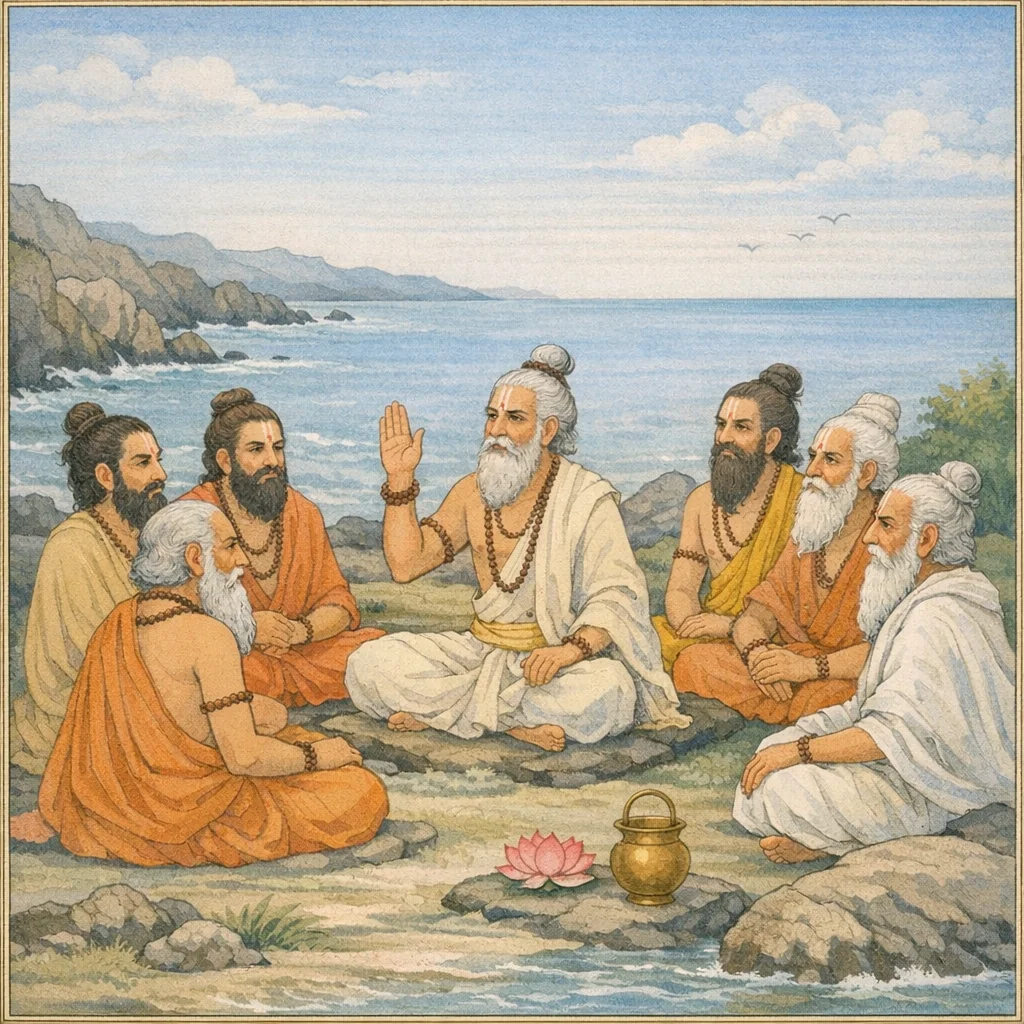
Chapter Arc: ब्रह्मसर-तीर्थ के पवित्र परिसर में अगस्त्य-परंपरा से जुड़ा एक प्रसंग उठता है—कमल (पुष्कर) के कारण हुआ ‘स्तैन्य’ (चोरी) और उसके दूरगामी फल। → कथा स्मरण कराती है कि पूर्वकाल में राजर्षि और द्विजर्षि भी तीर्थ-यात्रा और पुण्य-लाभ की लालसा में एकत्र हुए थे; प्रभास के पश्चिमी तट पर ऋषि-समूह मंत्रणा करता है कि समस्त पृथ्वी के पुण्यतीर्थों का भ्रमण किया जाए। इसी पृष्ठभूमि में ‘पुष्कर-हरण’ जैसा छोटा-सा अपराध भी धर्म-व्यवस्था को हिला देने वाला बनकर उभरता है। → कवि/वक्ता शपथ-विधि के रूप में तीखे शाप-वाक्य उच्चारित करता है—‘जिसने तुम्हारा कमल चुराया हो’ उसके लिए सामाजिक-धार्मिक बहिष्कार, अपमान और पतन के विधान; साथ ही यह भी कि जो इस शास्त्र/विधि का अध्ययन करे, वह ब्रह्मलोक का अधिकारी हो। शपथ की धार अपराध को केवल चोरी नहीं, तीर्थ-देवता/आश्रय-धर्म के विरुद्ध द्रोह बना देती है। → अध्याय शपथ-विधि की मर्यादा स्थापित करता है: तीर्थ-सम्पदा (कमल/पुष्कर) का अपहरण महापातक-तुल्य है; और धर्म-रक्षा हेतु शास्त्राध्ययन, वेदाध्ययन, पुण्यशीलता—इनका फल ब्रह्मलोक-प्राप्ति बताया जाता है।
Shlokas
Verse 1
(दक्षिणात्य अधिक पाठके १३ “लोक मिलाकर कुल १४६६ “लोक हैं) #फमशा रत (0) असऔ आसन > पोष्यवर्ग चतुर्नवतितमो< ध्याय: ब्रह्मसरतीर्थमें अगस्त्यजीके कमलोंकी चोरी होनेपर ब्रद्मर्षियों और राजर्षियोंकी धर्मोपदेशपूर्ण शपथ तथा धर्मज्ञानके उद्देश्यसे चुराये हुए कमलोंका वापस देना भीष्म उवाच अनत्रैवोदाहरन्तीममितिहासं पुरातनम् | यद् वृत्तं तीर्थयात्रायां शपथ प्रति तच्छूणु,भीष्मजी कहते हैं--युधिष्ठिर! इसी विषयमें एक प्राचीन इतिहासका उदाहरण दिया जाता है। तीर्थयात्राके प्रसंगमें इसी तरहकी शपथको लेकर जो एक घटना घटित हुई थी, उसे बताता हूँ, सुनो
Bhishma said: “In this very connection, an ancient historical example is cited. Listen to what happened during a pilgrimage, concerning an oath.”
Verse 2
पुष्करार्थ कृतं स्तैन्यं पुरा भरतसत्तम । राजर्षिभिमीहाराज तथैव च द्विजर्षिभि:,भरतवंशशिरोमणे! महाराज! पूर्वकालमें कुछ राजर्षियों और ब्रह्मर्षियोंने भी इसी प्रकार कमलोंके लिये चोरी की थी
Bhishma said: “O best of the Bharatas, O great king—long ago, even royal sages, and likewise Brahmin sages, committed theft for the sake of obtaining lotuses.”
Verse 3
ऋषय: समेता: पश्चिमे वै प्रभासे समागता मन्त्रममन्त्रयन्त । चराम सर्वा पृथिवीं पुण्यतीर्था तन्न: काम॑ हन्त गच्छाम सर्वे,पश्चिम समुद्रके तटपर प्रभास तीर्थमें बहुत-से ऋषि एकत्र हुए थे। उन समागत महर्षियोंने आपसमें यह सलाह की कि हमलोग अनेक पुण्यतीर्थोंसे भरी हुई समूची पृथ्वीकी यात्रा करें। यह हम सभी लोगोंकी अभिलाषा है। अत: सब लोग साथ-ही-साथ यात्रा प्रारम्भ कर दें
Bhishma said: “In the western region at Prabhāsa, many sages assembled together. Having gathered, they consulted among themselves: ‘Let us travel over the whole earth, rich with sacred fords and holy places. This is our shared desire; come, let us all set out together.’”
Verse 4
शुक्रोउज़िराश्वैव कविश्व विद्वां- स्तथा ह्ुगस्त्यो नारदपर्वतौ च | भगुर्वसिष्ठ: कश्यपो गौतमश्न विश्वामित्रो जमदग्निश्व राजन्,राजन! ऐसा निश्चय करके शुक्र, अंगिरा, विद्वान् कवि, अगस्त्य, नारद, पर्वत, भृगु, वसिष्ठ, कश्यप, गौतम, विश्वामित्र, जमदग्नि, गालव मुनि, अष्टक, भरद्वाज, अरुन्धती, वालखिल्यगण, शिबि, दिलीप, नहुष, अम्बरीष, राजा ययाति, धुन्धुमार और पूरु--ये सभी राजर्षि तथा ब्रह्मर्षि वज्रधारी महानुभाव वृत्रहन्ता शतक्रतु इन्द्रको आगे करके यात्राके लिये निकले और सभी तीर्थोमें घूमते हुए माघ मासकी पूर्णिमा तिथिको पुण्यसलिला कौशिकी नदीके तटपर जा पहुँचे
Bhishma said: Having reached a firm resolve, Shukra, Angiras, the learned seer Kavi, Agastya, Narada and Parvata, Bhrigu, Vasistha, Kashyapa, Gautama, Vishvamitra, and Jamadagni—along with Galava, Ashtaka, Bharadvaja, Arundhati, the band of Valakhilyas, and the royal sages Shibi, Dilipa, Nahusha, Ambarisha, King Yayati, Dhundhumara, and Puru—all set out on a sacred journey. Placing Indra—wielder of the thunderbolt, slayer of Vritra, performer of a hundred sacrifices—at their head, they wandered through the holy fords, and on the full-moon day of the month of Magha they arrived at the bank of the auspiciously watered river Kaushiki.
Verse 5
ऋषिस्तथा गालवो<थाष्टकश्न भरद्वाजो5रुन्धती वालखिल्या: । शिबिर्दिलीपो नहुषो<म्बरीषो राजा ययातिर्धुन्धुमारो5थ पूरु:,राजन! ऐसा निश्चय करके शुक्र, अंगिरा, विद्वान् कवि, अगस्त्य, नारद, पर्वत, भृगु, वसिष्ठ, कश्यप, गौतम, विश्वामित्र, जमदग्नि, गालव मुनि, अष्टक, भरद्वाज, अरुन्धती, वालखिल्यगण, शिबि, दिलीप, नहुष, अम्बरीष, राजा ययाति, धुन्धुमार और पूरु--ये सभी राजर्षि तथा ब्रह्मर्षि वज्रधारी महानुभाव वृत्रहन्ता शतक्रतु इन्द्रको आगे करके यात्राके लिये निकले और सभी तीर्थोमें घूमते हुए माघ मासकी पूर्णिमा तिथिको पुण्यसलिला कौशिकी नदीके तटपर जा पहुँचे
Bhishma said: “And likewise the sages—Gālava, Āṣṭaka, Bharadvāja, Arundhatī, and the Vālakhilya seers—together with the royal sages Śibi, Dilīpa, Nahuṣa, Ambārīṣa, King Yayāti, Dhundhumāra, and Pūru—having formed this firm resolve, set out on a sacred journey, placing Indra, the wielder of the thunderbolt and slayer of Vṛtra, at their head. Roaming through the holy fords, they finally reached the bank of the holy-flowing Kauśikī River on the full-moon day of the month of Māgha.”
Verse 6
जम्मु: पुरस्कृत्य महानुभावं शतक्रतुं वृत्रहण नरेन्द्रा: । तीर्थानि सर्वाणि परि भ्रमन्तो माघ्यां ययु: कौशिकी पुण्यतीर्थाम्,राजन! ऐसा निश्चय करके शुक्र, अंगिरा, विद्वान् कवि, अगस्त्य, नारद, पर्वत, भृगु, वसिष्ठ, कश्यप, गौतम, विश्वामित्र, जमदग्नि, गालव मुनि, अष्टक, भरद्वाज, अरुन्धती, वालखिल्यगण, शिबि, दिलीप, नहुष, अम्बरीष, राजा ययाति, धुन्धुमार और पूरु--ये सभी राजर्षि तथा ब्रह्मर्षि वज्रधारी महानुभाव वृत्रहन्ता शतक्रतु इन्द्रको आगे करके यात्राके लिये निकले और सभी तीर्थोमें घूमते हुए माघ मासकी पूर्णिमा तिथिको पुण्यसलिला कौशिकी नदीके तटपर जा पहुँचे
Bhishma said: Placing at their head the illustrious Indra—he of a hundred sacrifices, the slayer of Vritra—the kings set out on pilgrimage. Roaming through all the sacred fords (tīrthas), they finally reached the holy Kauśikī, a sanctifying river and pilgrimage-site, on the auspicious full-moon day of the month of Māgha.
Verse 7
सर्वेषु तीर्थेष्ववधूतपापा जम्मुस्ततो ब्रह्मसर: सुपुण्यम् । देवस्य तीर्थे जलमग्निकल्पा विगाह्ा ते भुक्तबिसप्रसूना:,इस प्रकार वहाँके तीर्थोंमें स्नानके द्वारा अपने पाप धो करके ऋषिगण उस स्थानसे परम पवित्र ब्रह्मसर तीर्थमें गये। उन अग्निके समान तेजस्वी ऋषियोंने वहाँके जलमें स्नान करके कमलके फूलोंका आहार किया
Bhīṣma said: Having washed away their sins by bathing at all the sacred fords, the sages then went on from the Yamunā to the supremely holy Brahmasaras. There, at the deity’s tīrtha, those ascetics—radiant like fire—immersed themselves in the water and sustained themselves on lotus-stalks and lotus-flowers.
Verse 8
केचिद् बिसान्यखनंस्तत्र राज- न्नन्ये मृणालान्यखनंस्तत्र विप्रा: । अथापश्यन् पुष्कर ते ट्वियन्तं हृदादगस्त्येन समुद्धृतं तत्,राजन! कुछ ऋषि वहाँ कमल खोदने लगे। कुछ ब्राह्मण मृणाल उखाड़ने लगे। इसी बीचमें अगस्त्यजीने उस पोखरेसे जितना कमल उखाड़कर रखा था, वह सब सहसा गायब हो गया। इस बातको सबने देखा
Bhishma said: “O King, some there began digging up lotus-stalks, while other brahmins dug out the tender lotus-fibres. Then they all saw that the great quantity of lotus which Agastya had already pulled up from the lake suddenly vanished. This unexpected disappearance was witnessed by everyone.”
Verse 9
तानाह सर्वन्ृषिमुख्यानगस्त्य: केनादत्तं पुष्करं मे सुजातम् । युष्मान् शंके पुष्करं दीयतां मे न वै भवन्तो हर्तुमर्हन्ति पद्मम्,तब अगस्त्यजीने उन समस्त ऋषियोंसे पूछा--'किसने मेरे सुन्दर कमल ले लिये। मैं आप सब लोगोंपर संदेह करता हूँ। मेरे कमल लौटा दीजिये। आप-जैसे साधु पुरुषोंको कमलोंकी चोरी करना कदापि उचित नहीं है
Bhishma said: Agastya addressed all the foremost sages: “Who has taken my well-born, beautiful lotus? I suspect you all. Return my lotus to me. Men of your sanctity are not fit to take away a lotus by theft.”
Verse 10
शृणोमि कालो हिंसते धर्मवीर्य सो<थयं प्राप्तो वर्तते धर्मपीडा । पुराधर्मो वर्तते नेह यावत् तावद् गच्छाम: सुरलोकं॑ चिराय,'सुनता हूँ कि काल धर्मकी शक्तिको नष्ट कर देता है। वही काल इस समय प्राप्त हुआ है। तभी तो धर्मको हानि पहुँचायी जा रही है--अस्तेय-धर्मका हनन हो रहा है। अतः इस जगतमें अधर्मका विस्तार न हो इसके पहले ही हम चिरकालके लिये स्वर्गलोकमें चले जायेँ
Bhīṣma said: “I hear that Time (kāla) strikes down the very strength of dharma. That same Time has now arrived; therefore dharma is being oppressed and injured. Before adharma spreads in this world and before the ancient order of dharma disappears here, let us depart to the world of the gods (svarga) for a long while.”
Verse 11
पुरा वेदान् ब्राह्मुणा ग्राममध्ये घुष्टस्वरा वृषलान् श्रावयन्ति | पुरा राजा व्यवहारेण धर्मान् पश्यत्यहं परलोक॑ व्रजामि,“ब्राह्मणलोग गाँवके बीचमें उच्चस्वरसे वेदपाठ करके शूट्रोंको सुनाने लगें तथा राजा व्यावसायिक दृष्टिसे धर्मको देखने लगें, इसके पहले ही मैं परलोकमें चला जाऊँ
Bhishma said: “May I depart to the next world before such a time arrives—when Brahmins, raising their voices in the middle of the village, recite the Vedas so as to make them heard by the śūdras, and when the king begins to judge dharma merely through the lens of worldly business and litigation. Before these distortions of sacred order and royal duty take hold, let me go to the other world.”
Verse 12
पुरा वरान् प्रत्यवरान् गरीयसो यावन्नरा नावमंस्यन्ति सर्वे तमोत्तरं यावदिदं न वर्तते तावद् व्रजामि परलोकं॑ चिराय,“जबतक सभी श्रेष्ठ मनुष्य महान् पुरुषोंकी नीचोंके समान अवहेलना नहीं करते हैं तथा जबतक इस संसारमें अज्ञानजनित तमोगुणका बाहुल््य नहीं हो जाता, इसके पहले ही मैं चिरकालके लिये परलोक चला जाऊँ
Bhishma said: “Before the time comes when people no longer honor the truly great and begin to slight them as though they were inferior, and before this world is overwhelmed by darkness born of ignorance, I shall depart for the other world for a long while.”
Verse 13
पुरा प्रपश्यामि परेण मर्त्यान् बलीयसा दुर्बलान् भुज्यमानान् | तस्माद् यास्यामि परलोक॑ चिराय न हात्सहे द्रष्टमिह जीवलोकम्,“भविष्यकालमें बलवान मनुष्य दुर्बलोंको अपने उपभोगमें लायेंगे, इस बातको मैं अभीसे देख रहा हूँ। इसलिये मैं दीर्घकालके लिये परलोकमें चला जाऊँ। यहाँ रहकर इस जीवजगत्की ऐसी दुरवस्था मैं नहीं देख सकता”
Bhishma said: “Even now I foresee that, in times to come, mortals who are stronger will subdue and exploit the weak. Therefore I shall depart to the other world for a long while; I cannot bear to remain here and witness such a wretched condition in the realm of the living.”
Verse 14
तमाहुरारता ऋषयो महर्षि न ते वयं पुष्करं चोरयाम: । मिथ्याभिषंगो भवता न कार्य: शपाम तीक्ष्णै: शपथैर्महर्षे,यह सुनकर सभी महर्षि घबरा उठे और अगस्त्यजीसे बोले--“महर्षे! हमने आपके कमल नहीं चुराये हैं। आपको झूठा कलंक नहीं लगाना चाहिये। हम अपनी सफाई देनेके लिये कठोर-से-कठोर शपथ खा सकते हैं'
The sages, alarmed, addressed the great seer: “O Maharshi, we have not stolen your lotus. You should not fasten a false accusation upon us. To clear ourselves, we are ready to swear even the most severe oaths.”
Verse 15
ते निश्चितास्तत्र महर्षयस्तु सम्पश्यन्तो धर्ममेतं नरेन्द्रा: । ततो5शपन्त शपथान् पर्ययेण सहैव ते पार्थिव पुत्रपौत्रै:,पृथ्वीनाथ! तदनन्तर वे महर्षि तथा नरेशगण वहाँ कुछ निश्चय करके इस धर्मपर दृष्टि रखते हुए पुत्रों और पौत्रोंसहित बारी-बारीसे शपथ खाने लगे
Bhishma said: There, the great seers and the kings, having reached a firm resolve and keeping this dharma clearly in view, then proceeded to take solemn oaths in turn—each together with his sons and grandsons. O lord of the earth, thereafter the sages and the company of rulers, having thus determined their course, bound themselves by these vows with their lineages, so that the observance of dharma would be secured across generations.
Verse 16
भूगुरुवाच प्रत्याक्रोशेदिहाक्रुष्टस्ताडित: प्रतिताडयेत् । खादेच्च पृष्ठमांसानि यस्ते हरति पुष्करम्,भगु बोले--मुने! जिसने आपके कमलकी चोरी की है, वह गाली सुनकर बदलेमें गाली दे और मार खाकर बदलेमें स्वयं भी मारे तथा दूसरेकी पीठके मांस खाय अर्थात् उपर्युक्त पापोंका भागी हो
Bhṛgu said: “If abused here, let him abuse in return; if struck, let him strike back. Let the one who has stolen your lotus even eat the flesh from another’s back—meaning, let him become a sharer in the very sins just described.”
Verse 17
वसिष्ठ उवाच अस्वाध्यायपरो लोके श्वानं च परिकर्षतु । पुरे च भिक्षुर्भवतु यस्ते हरति पुष्करम्,वसिष्ठने कहा--जिसने आपके कमल चुराये हो, वह स्वाध्यायसे विमुख हो जाय। कुत्ता साथ लेकर शिकार खेले और गाँव-गाँव भीख माँगता फिरे
Vasiṣṭha said: “May the one who steals your lotus become, in this world, a person turned away from sacred study. Let him drag about with a dog, and in towns let him live as a beggar.”
Verse 18
कश्यप उवाच सर्वत्र सर्व पणतु न्यासे लोभं करोतु च । कूटसाक्षित्वमभ्येतु यस्ते हरति पुष्करम्,कश्यपने कहा--जो आपका कमल चुरा ले गया हो, वह सब जगह सब तरहकी वस्तुओंकी खरीद-विक्री करे। किसीकी धरोहरको हड़प लेनेका लोभ करे और झूठी गवाही दे, अर्थात् उपर्युक्त पापोंका भागी हो
Kashyapa said: “May the one who has stolen your lotus be driven everywhere into every kind of trading and bartering; may he develop greed to appropriate what has been entrusted as a deposit; and may he fall into the sin of giving false testimony—thus becoming a participant in these stated misdeeds.”
Verse 19
गौतम उवाच जीवत्वहंकृतो बुद्ध्या विषमेणासमेन सः । कर्षको मत्सरी चास्तु यस्ते हरति पुष्करम्,गौतम बोले--जिसने आपके कमलकी चोरी की हो, वह अहंकारी, बेईमान और अयोग्यका साथ करनेवाला, खेती करनेवाला और ईरष्ययुक्त होकर जीवन व्यतीत करे
Gautama said: “May the one who steals your lotus live on with a mind made arrogant by ego—crooked and unequal in conduct—becoming a farmer and remaining envious.”
Verse 20
अंगिरा उवाच अशुचिर्त्रह्मकूटो<स्तु श्वानं च परिकर्षतु । ब्रह्महानिकृतिश्चास्तु यस्ते हरति पुष्करम्,अंगिराने कहा--जो आपका कमल ले गया हो, वह अपवित्र, वेदको मिथ्या बतानेवाला, ब्रह्महत्यारा और अपने पापोंका प्रायश्चित्त न करनेवाला हो। इतना ही नहीं, वह कुत्तोंकोी साथ लेकर शिकार खेलता फिरे, अर्थात् उपर्युक्त पापोंका भागी हो
Aṅgirā said: “May the one who has taken away your lotus become impure; may he be a reviler of the Veda; may he be marked as a slayer of a brāhmaṇa; and may he drag dogs about with him—bearing the stain and consequence of such sins.”
Verse 21
धुन्धुमार उवाच अकृतज्ञस्तु मित्राणां शूद्रायां च प्रजायतु । एक: सम्पन्नमश्चातु यस्ते हरति पुष्करम्,धुन्धुमारने कहा--जिसने आपके कमलोंकी चोरी की हो, वह अपने मित्रोंका उपकार न माने। शूद्र जातिकी स्त्रीसे संतान उत्पन्न करे और अकेला ही स्वादिष्ट अन्न भोजन करे। अर्थात् इन पापोंके फलका भागी बने
Dhundhumāra said: “Let the one who has stolen your lotus become ungrateful toward his friends; let him beget children through a woman of the Śūdra class; and let him, though prosperous, eat rich food all alone.”
Verse 22
प्ूरुर्वाच चिकित्सायां प्रचरतु भार्यया चैव पुष्यतु । श्वशुरात्तस्य वृत्ति: स्थाद् यस्ते हरति पुष्करम्,पूरु बोले--जों आपका कमल चुरा ले गया हो, वह चिकित्साका व्यवसाय (वैद्य या डॉक्टरका पेशा) करे। स्त्रीकी कमाई खाय और ससुरालके धनपर गुजारा करे
Pūru said: “Let the one who stole your lotus make his living by the practice of medicine. Let him be maintained by his wife’s earnings, and let his livelihood depend upon his father-in-law’s household.”
Verse 23
दिलीप उवाच उदपानप्लवे ग्रामे ब्राह्मणो वृषलीपति: । तस्य लोकान् स व्रजतु यस्ते हरति पुष्करम्,दिलीप बोले--जो आपका कमल चुराकर ले गया हो, वह एक कूएँपर सबके साथ पानी भरनेवाले गाँवमें रहकर शूद्र जातिकी स्त्रीसे सम्बन्ध रखनेवाले ब्राह्मणको मृत्युके पश्चात् जिन दुःखदायी लोकोंमें जाना पड़ता है, उन्हींमें जाय
Dilip said: “May the one who has stolen your lotus go to those very sorrow-laden realms after death that await a Brahmin who lives in a village where people draw water together at a common well and who keeps a relationship with a Śūdra woman.”
Verse 24
शुक्र उवाच वृथामांसं समश्नातु दिवा गच्छतु मैथुनम् । प्रेष्यो भवतु राज्ञश्च यस्ते हरति पुष्करम्,शुक्रने कहा--जो आपका कमल चुराकर ले गया हो, उसे मांस खानेका, दिनमें मैथुन करनेका और राजाकी नौकरी करनेका पाप लगे
Śukra said: “Let the one who steals your lotus incur these degrading consequences: let him eat meat without purpose, let him engage in sexual intercourse by day, and let him become a menial servant of a king.”
Verse 25
जगदग्निरुवाच अनध्यायेष्वधीयीत मित्र श्राद्धे च भोजयेत् । श्राद्धे शूद्रस्य चाश्रीयाद् यस्ते हरति पुष्करम्,जमदग्नि बोले--जिसने आपके कमल लिये हों, वह निषिद्ध कालमें अध्ययन करे। मित्रको ही श्राद्धमें जिमावे तथा स्वयं भी शूद्रके श्राद्धमें भोजन करे
Jamadagni said: “Let the one who has taken away your lotus undertake study even during forbidden times; let him feed only a ‘friend’ at the śrāddha; and let him even accept a meal at a Śūdra’s śrāddha.”
Verse 26
शिबिरुवाच अनाहितान्निग्नियतां यज्ञे विध्नं करोतु च । तपस्विभिर्विरुध्येच्च यस्ते हरति पुष्करम्,शिबिने कहा--जो आपका कमल चुरा ले गया हो; वह अग्निहोत्र किये बिना ही मर जाय, यज्ञमें विघ्म डाले और तपस्वी जनोंके साथ विरोध करे, अर्थात् इन सब पापोंके फलका भागी हो
Śibi said: “May the one who stole your lotus perish without ever performing the Agnihotra; may he bring obstruction upon the yajña; and may he stand in opposition to the ascetics—thus becoming a sharer in the fruits of these sins.”
Verse 27
ययातिरुवाच अनृतौ च व्रती चैव भार्यायां स प्रजायतु । निराकरोतु वेदांश्व॒ यस्ते हरति पुष्करम्,ययातिने कहा--जिसने आपके कमलोंकी चोरी की हो, वह व्रतधारी होकर भी ऋतुकालसे अतिरिक्त समयमें स्त्री-समागम करे और वेदोंका खण्डन करे, अर्थात् इन सब पापोंके फलका भागी हो
Yayāti said: “May the one who steals your lotus beget offspring upon his wife at an improper time, even while posing as a vow-observer; and may he become a denier of the Vedas—thus becoming a sharer in the fruits of these sins.”
Verse 28
नहुष उवाच अतिथिर्ग॑हसंस्थो<स्तु कामवृत्तस्तु दीक्षित: । विद्यां प्रयच्छतु भूतो यस्ते हरति पुष्करम्,नहुष बोले--जिसने आपके कमलोंका अपहरण किया हो, वह संन्यासी होकर भी घरमें रहे। यज्ञकी दीक्षा लेकर भी इच्छाचारी हो और वेतन लेकर विद्या पढ़ाये, अर्थात् इन सब पापोंके फलका भागी हो
Nahuṣa said: “May the one who has stolen your lotus-flowers become a renunciant and yet remain lodged within a house; may he be consecrated for sacrifice and yet live by whim and desire; and may he teach knowledge for wages—thus incurring the share of sinful results born of such hypocritical, dharma-violating ways of life.”
Verse 29
अम्बरीष उवाच नृशंसस्त्यक्तधर्मो<स्तु स्त्रीषु ज्ञातिषु गोषु च निहन्तु ब्राह्मणं चापि यस्ते हरति पुष्करम्,अम्बरीषने कहा--जो आपका कमल ले गया हो, वह क्रूरस्वभावका हो जाय। स्त्रियों, बन्धु-बान्धवों और गौओंके प्रति अपने धर्मका पालन न करे तथा ब्रह्महत्याके पापका भागी हो
Ambarīṣa said: “May the one who has taken away your lotus become cruel and forsake dharma—failing in his duties toward women, toward his kinsmen, and toward cows—and may he even incur the sin of killing a brāhmaṇa.”
Verse 30
नारद उवाच गृहज्ञानी बहि:शास्त्रं पठतां विस्वरं पदम् । गरीयसो<5वजानातु यस्ते हरति पुष्करम्,नारदजीने कहा--जिसने आपके कमलोंका अपहरण किया हो, वह देहरूपी घरको ही आत्मा समझे। मर्यादाका उल्लंघन करके शास्त्र पढ़े। स्वरहीन पदका उच्चारण करे और गुरुजनोंका अपमान करता रहे, अर्थात् उपर्युक्त पापोंका भागी बने
Narada said: “May the one who has stolen your lotus become a man who mistakes the body—this ‘house’—for the Self; who studies sacred texts while transgressing proper bounds; who recites verses without correct intonation; and who persists in disrespecting venerable elders and teachers.”
Verse 31
नाभाग उवाच अनृतं भाषतु सदा सद्भिश्वैव विरुध्यतु । शुल्केन तु ददत्कन्यां यस्ते हरति पुष्करम्,नाभाग बोले--जिसने आपके कमल चुराये हों, उसे सदा झूठ बोलनेका, संतोंके साथ विरोध करनेका और कीमत लेकर कन्या बेचनेका पाप लगे
Nābhāga said: “May the one who has stolen your lotus be condemned to speak falsehood always, to remain in conflict with the virtuous, and to incur the sin of giving away a maiden for a price—as though selling her.”
Verse 32
कविरुवाच पदभ्यां स गां ताडयतु सूर्य च प्रतिमेहतु । शरणागतं संत्यजतु यस्ते हरति पुष्करम्,कविने कहा--जिसने आपका कमल लिया हो, उसे गौको लात मारनेका, सूर्यकी ओर मुँह करके पेशाब करनेका और शरणागतको त्याग देनेका पाप लगे
Kavi said: “Let the one who has taken away your lotus incur the sin of kicking a cow with his feet, of urinating while facing the Sun, and of abandoning a person who has sought refuge.”
Verse 33
विश्वामित्र उवाच करोतु भृतको<वर्षा राज्ञश्नास्तु पुरोहित: । ऋषच्विगस्तु हायाज्यस्य यस्ते हरति पुष्करम्,विश्वामित्र बोले--जो आपका कमल चुरा ले गया हो, वह वैश्यका भृत्य होकर उसीके खेतमें वर्षा होनेमें बाधा उपस्थित करे। राजाका पुरोहित हो और यज्ञके अनधिकारीका यज्ञ करानेके लिये ऋत्विक् बने, अर्थात् इन पापोंके फलका भागी हो
Viśvāmitra said: “Let the one who stole your lotus become a hired servant and yet bring about drought in his master’s fields, obstructing rainfall. Let him become the king’s priest, and let him also serve as the officiating priest (ṛtvij) for one unfit to be offered sacrifice—thus sharing in the consequences of these sins.”
Verse 34
पर्वत उवाच ग्रामे चाधिकृत: सो5स्तु खरयानेन गच्छतु । शुन: कर्षतु वृत्त्यर्थे यस्ते हरति पुष्करम्
Parvata said: “Let him be appointed to an office in the village, and let him go about on a donkey-cart. Let him, for the sake of his livelihood, be made to plough with dogs—he who steals your lotus.”
Verse 35
पर्वतने कहा--जो आपका कमल ले गया हो, वह गाँवका मुखिया हो जाय, गधेकी सवारीपर चले तथा पेट भरनेके लिये कुत्तोंकी साथ लेकर शिकार खेले ।। भरद्वाज उवाच सर्वपापसमादान नृशंसे चानृते च यत् । तत् तस्यास्तु सदा पाप॑ यस्ते हरति पुष्करम्,भरद्वाजने कहा--जिसने आपके कमलोंकी चोरी की हो, उस पापीको निर्दयी और असत्यवादी मनुष्योंमें रहनेवाला सारा-का-सारा पाप सदा ही प्राप्त होता रहे
Bharadvāja said: “May all the sin that belongs to the cruel and the untruthful—every burden of wrongdoing—ever fall upon that person who steals your lotus.”
Verse 36
अद्टक उवाच स राजास्त्वकृतप्रज्ञ: कामवृत्तश्न पापकृत् । अधर्मेणाभिशास्तूर्वी यस्ते हरति पुष्करम्,अष्टक बोले--जो आपका कमल ले गया हो, वह राजा मन्दबुद्धि, स्वेच्छाचारी और पापात्मा होकर अधर्मपूर्वक इस पृथ्वीका शासन करे
Aṣṭaka said: “May that king—undiscerning, driven by desire, and a doer of sin—rule this earth by unrighteous means, he who has taken away your lotus.”
Verse 37
गालव उवाच पापिषछेभ्यो हानर्घाह: स नरो<स्तु स्वपापकृत् । दत्त्वा दानं कीर्तयतु यस्ते हरति पुष्करम्,गालव बोले--जो आपका कमल चुरा ले गया हो, वह महापापियोंसे भी बढ़कर अनादरणीय हो, स्वजनोंका भी अपकार करे तथा दान देकर अपने ही मुखसे उसका बखान करे
Gālava said: “May that man who steals your lotus be deemed even more contemptible than the worst sinners—one who, through his own evil deeds, brings harm even upon his own people. And even if he gives gifts in charity, let him be the sort who proclaims that giving with his own mouth, seeking praise rather than acting with true righteousness.”
Verse 38
अरुन्धत्युवाच श्वश्वापवादं मदतु भर्तुर्भवतु दुर्मना: । एका स्वादु समश्नातु या ते हरति पुष्करम्,अरुन्धती बोलीं--जिस स्त्रीने आपका कमल लिया हो, वह अपने सासकी निन्दा करे, पतिके लिये अपने मनमें दुर्भावना रखे और अकेली ही स्वादिष्ट भोजन किया करे, अर्थात् इन सब पापोंकी फलभागिनी बने
Arundhatī said: “May the woman who has taken your lotus become one who speaks ill of her mother-in-law, who harbors ill-will toward her husband, and who eats tasty food all by herself—thus becoming the bearer of the fruits of these sins.”
Verse 39
वालखिल्या ऊचु: एकपादेन वृत्त्यर्थ ग्रामद्वारे स तिष्ठतु धर्मज्ञस्त्यक्तधर्मास्तु यस्ते हरति पुष्करम्,बालखिल्य बोले--जो आपका कमल ले गया हो, वह अपनी जीविकाके लिये गाँवके दरवाजेपर एक पैरसे खड़ा रहे और धर्मको जानते हुए भी उसका परित्याग करे
The Vālakhilya sages said: “Let the one who has taken away your lotus stand at the village gate on one foot to earn his livelihood; though he knows what dharma is, let him be one who has abandoned dharma.”
Verse 40
शुनःसख उवाच अग्निहोत्रमनादृत्य स सुखं स्वपतु द्विज: । परिव्राट् कामवृत्तो<स्तु यस्ते हरति पुष्करम्,शुन:सख बोले--जो आपका कमल ले गया हो, वह द्विज होकर भी सबेरे और शामको अग्निहोत्रकी अवहेलना करके सुखसे सोये तथा संन्यासी होकर भी मनमाना बर्ताव करे, अर्थात् उपर्युक्त पापोंके फलका भागी हो
Śunaḥsakha said: “Let that brahmin who has stolen your lotus sleep at ease even after neglecting the daily agnihotra. And though he bears the outward mark of a wandering renunciant, let him live by mere whim and desire—thus becoming a sharer in the consequences of the sins just described.”
Verse 41
युरभ्युवाच बालजेन निदानेन कांस्यं भवतु दोहनम् । दुह्मोत परवत्सेन या ते हरति पुष्करम्,सुरभि बोली--जो गाय आपका कमल ले गयी हो, उसके पैर बालोंकी रस्सीसे बाँधे जाय, उसके दूधके लिये ताँबे मिले हुए धातुका दोहनपात्र हो और वह दूसरे गायके बछड़ेसे दुही जाय
Yū said: “Let the milking-vessel be of bronze; let the cow that has taken away your lotus be milked by means of another cow’s calf; and let her feet be bound with a rope made of hair.”
Verse 42
भीष्म उवाच ततस्तु तैः शपथै: शप्यमानै- ननिविधैर्बहुभि: कौरवेन्द्र । सहस्राक्षो देवराट् सम्प्रहृष्ट: समीक्ष्य तं कोपनं विप्रमुख्यम्,भीष्मजी कहते हैं--कौरवेन्द्र! इस प्रकार जब सब लोग नाना प्रकारकी अनेकानेक शपथ कर चुके, तब सहस्र नेत्रधारी देवराज इन्द्र बड़े प्रसन्न हुए और उन विप्रवर अगस्त्यको कुपित हुआ देख उनके सामने प्रकट हो गये
Bhishma said: “O lord of the Kurus, when the people had thus bound themselves by many and varied solemn oaths, Indra—the thousand-eyed king of the gods—became greatly pleased. Seeing that foremost of brahmins, Agastya, in a wrathful mood, Indra manifested himself before him.”
Verse 43
अथाब्रवीन्मघवा प्रत्ययं स्वं समाभाष्य तमृषिं जातरोषम् | ब्रह्मषिदिंवर्षिनृपर्षिम ध्ये यं त॑ं निबोधेह ममाद्य राजन्,राजन! ब्रह्मर्षियों, देवर्षियों तथा राजर्षियोंके बीचमें कुपित हुए महर्षि अगस्त्यको सम्बोधित करके देवराज इन्द्रने जो अपना अभिप्राय व्यक्त किया, उसे आज तुम मेरे मुखसे यहाँ सुनो
Bhishma said: Then Maghavan (Indra), addressing that sage Agastya who had become inflamed with anger, expressed his own intention. O king, now hear from my mouth what Indra said to him—Agastya—amidst the assembly of Brahmarishis, Devarishis, and Rajarishis.
Verse 44
शक्र उवाच अध्वर्यवे दुहितरं ददातु छन््दोगे वा चरितब्रह्मचर्ये । अथर्वणं वेदमधीत्य वि्र: स््नायीत य: पुष्करमाददाति,इन्द्र बोले--ब्रह्मय)! जो आपका कमल ले गया हो, वह ब्रह्मचर्य व्रतको पूर्ण करके आये हुए यजुर्वेदी अथवा सामवेदी विद्वानको कन्यादान दे। अथवा वह ब्राह्मण अथर्ववेदका अध्ययन पूरा करके शीघ्र ही स्नातक बन जाय
Śakra said: “Let the man who has taken away the lotus give his daughter in marriage to a learned Adhvaryu (a Yajurvedic priest), or to a Chāndoga (a Sāmavedic chanter) who has completed the discipline of brahmacarya. Or else, having fully studied the Atharvaveda, let that man—O hero—promptly become a snātaka (a graduate who has completed the student’s vow).”
Verse 45
सर्वान् वेदानधीयीत पुण्यशीलो<स्तु धार्मिक: । ब्रह्मण: सदनं यातु यस्ते हरति पुष्करम्
Śakra said: “May the one who takes away your lotus become a man of holy conduct and righteousness; may he study all the Vedas, and may he attain the abode of Brahmā.”
Verse 46
जिसने आपके कमलोंका अपहरण किया हो, वह सम्पूर्ण वेदोंका अध्ययन करे। पुण्यात्मा और धार्मिक हो, तथा मृत्युके पश्चात् वह ब्रह्माजीके लोकमें जाय ।। अगस्त्य उवाच आशीवव॑ददस्त्वया प्रोक्त: शपथो बलसूदन । दीयतां पुष्करं महा[मेष धर्म: सनातन:,अगस्त्यने कहा--बलसूदन! आपने जो शपथ की है, वह तो आशीर्वादस्वरूप है। अतः आपने ही मेरे कमल लिये हैं, कृपया उन्हें मुझे दे दीजिये। यही सनातन धर्म है
Agastya said: “O Balasūdana, the ‘oath’ you have uttered is in truth a blessing. Therefore it is you who have taken my lotuses; please give them back to me. This is the eternal dharma—truthfulness and the rightful return of what belongs to another.”
Verse 47
इन्द्र रवाच न मया भगवल्लॉमभाद्धूतं पुष्करमद्य वै । धर्मास्तु श्रोतुकामेन ह्तं न क्रोद्भयुमहसि
Indra said: “O venerable one, today I have not taken away Puṣkara from Lomaśa. If you are eager to hear about dharma, you should not, out of anger or fear, seize it away.”
Verse 48
इन्द्र बोले--भगवन्! मैंने लोभवश कमलोंको नहीं लिया था। आपलोगोंके मुखसे धर्मकी बातें सुनना चाहता था, इसीलिये इन कमलोंका अपहरण कर लिया था। अतः ६ (7. / एज धर्मश्रुतिसमुत्कर्षो धर्मसेतुरनामय: । आर्षो वै शाश्वतो नित्यमव्ययो<यं मया श्रुतः,आज मैंने आपलोगोंके मुखसे उस आर्ष सनातन धर्मका श्रवण किया है जो नित्य अविकारी, अनामय और संसार-सागरसे पार उतारनेके लिये पुलके समान है। इससे धार्मिक श्रुतियोंका उत्कर्ष सिद्ध होता है
Indra said: “Revered sir, I did not take the lotuses out of greed. I seized these lotuses only because I wished to hear teachings on dharma from your own lips. And today I have indeed heard from you that ancient, rishi-proclaimed, eternal dharma—everlasting, unchanging, free from affliction—like a bridge that carries one across the ocean of worldly existence. Thus the excellence and supremacy of the sacred teachings on dharma are confirmed.”
Verse 49
तदिदं गृह्ुतां विद्वन् पुष्करं द्विजसत्तम | अतिक्रमं मे भगवन क्षन्तुमर्हस्यनिन्दित,द्विजश्रेष्ठ! विद्वन! अब आप अपने ये कमल लीजिये। भगवन्! अनिन्दनीय महर्षे! मेरा अपराध क्षमा कीजिये
Agastya said: “O learned one, best among Brahmins, please accept this lotus. O venerable, blameless sage, you ought to forgive my transgression.”
Verse 50
इत्युक्त: स महेन्द्रेण तपस्वी कोपनो भूशम् । जग्राह पुष्करं धीमान् प्रसन्नश्चाभवन्मुनि:,महेन्द्रके ऐसा कहनेपर वे क्रोधी तपस्वी बुद्धिमान् अगस्त्य मुनि बड़े प्रसन्न हुए और उन्होंने इन्द्रके हाथसे अपने कमल ले लिये
Thus addressed by Mahendra (Indra), the austere sage—though fierce in temper—became greatly pleased. The wise muni Agastya accepted the lotus (Puṣkara) from Indra’s hand, his anger subsiding into gracious satisfaction.
Verse 51
प्रययुस्ते ततो भूयस्तीर्थानि वनगोचरा: । पुण्येषु तीर्थेषु तथा गात्राण्याप्लावयन्त ते,तदनन्तर उन सब लोगोंने वनके मार्गोंसे होते हुए पुनः तीर्थयात्रा आरम्भ की और पुण्यतीर्थोमें जा-जाकर गोते लगाकर स्नान किया
Then those forest-dwelling wanderers set out once again for the sacred fords (tīrthas). Going from one holy tīrtha to another, they immersed their bodies in the waters and bathed—renewing themselves through pilgrimage and purification.
Verse 52
आख्यानं य इदं युक्त: पठेत् पर्वणि पर्वणि । न मूर्ख जनयेत् पुत्र॑ न भवेच्च निराकृति:,जो प्रत्येक पर्वके अवसरपर एकाग्रचित्त हो इस पवित्र आख्यानका पाठ करता है, वह कभी मूर्ख पुत्रको नहीं जन्म देता है, तथा स्वयं भी किसी अंगसे हीन या असफलमनोरथ नहीं होता है
Agastya said: Whoever, with disciplined attention, recites this sacred narrative at each proper occasion (parva after parva), will not beget a foolish son; and he himself will not become deficient in body or frustrated in his aims.
Verse 53
न तमापत् स्पृशेत् काचिद् विज्वरो नजरावह: । विरजा: श्रेयसा युक्त: प्रेत्य स्वर्गमवाप्तुयात्,उसके ऊपर कोई आपत्ति नहीं आती। वह चिन्तारहित होता है। उसके ऊपर जरावस्थाका आक्रमण नहीं होता। वह रागशून्य होकर कल्याणका भागी होता है तथा मृत्युके पश्चात् स्वर्गलोकमें जाता है
Agastya said: No calamity touches such a person; he remains free from feverish distress, and the onslaught of old age does not overtake him. Being without passion and aligned with the highest good, he attains heaven after death.
Verse 54
यश्च शास्त्रमधीयीत ऋषिभि: परिपालितम् | स गच्छेद् ब्रह्मणो लोकमव्ययं च नरोत्तम,नरश्रेष्ठल जो ऋषियोंद्वारा सुरक्षित इस शास्त्रका अध्ययन करता है, वह अविनाशी ब्रह्मधामको प्राप्त होता है
Agastya said: “That best of men who studies this sacred teaching—preserved and safeguarded by the seers—attains the imperishable world of Brahman.”
Verse 93
इस प्रकार श्रीमह्याभारत अनुशासनपर्वके अन्तर्गत दानधर्मपर्वमें गृणालकी चोरीका उपाख्यानविषयक तिरानबेवाँ अध्याय पूरा हुआ
Thus ends the ninety-third chapter of the Dāna-dharma section within the Anuśāsana Parva of the sacred Mahābhārata, dealing with the illustrative tale concerning the theft of Gṛṇālakī.
Verse 94
इति श्रीमहाभारते अनुशासनपर्वणि दानधर्मपर्वणि शपथविधिनाम चतुर्नवतितमो<ध्याय:
Thus, in the Śrī Mahābhārata, within the Anuśāsana Parva—specifically in the section on the dharma of gifts (dāna-dharma)—ends the ninety-fourth chapter, dealing with the proper procedures and rules concerning oaths. The colophon marks the close of a didactic unit that frames ethical conduct through regulated speech and solemn vows.
Frequently Asked Questions
Jamadagni’s anger at Reṇukā’s delay—caused by extreme solar heat—escalates toward harming Sūrya, creating a conflict between immediate grievance and recognition of a cosmic function essential to life and rites.
Sūrya frames himself as a necessary causal link: rays gather essences, rain returns them, food arises, and from food proceed life and ritual-social institutions; this argues for measured judgment and respect for systemic interdependence.
In the excerpt, Bhīṣma signals that he will explain akṣayyatā (inexhaustible merit) and puṇya associated with the practice, but the explicit phalaśruti formulation is not yet stated in the verses provided.