Adhyaya 96
आदि पर्व, अध्याय 96 — काश्यकन्याहरणं, शाल्वसमागमः, अम्बावचनं च (Kāśī princesses taken; encounter with Śālva; Ambā’s declaration)
Upa-parva: Ambopākhyāna / Kāśī-Svayaṃvara Episode (Bhīṣma’s abduction of the Kāśī princesses)
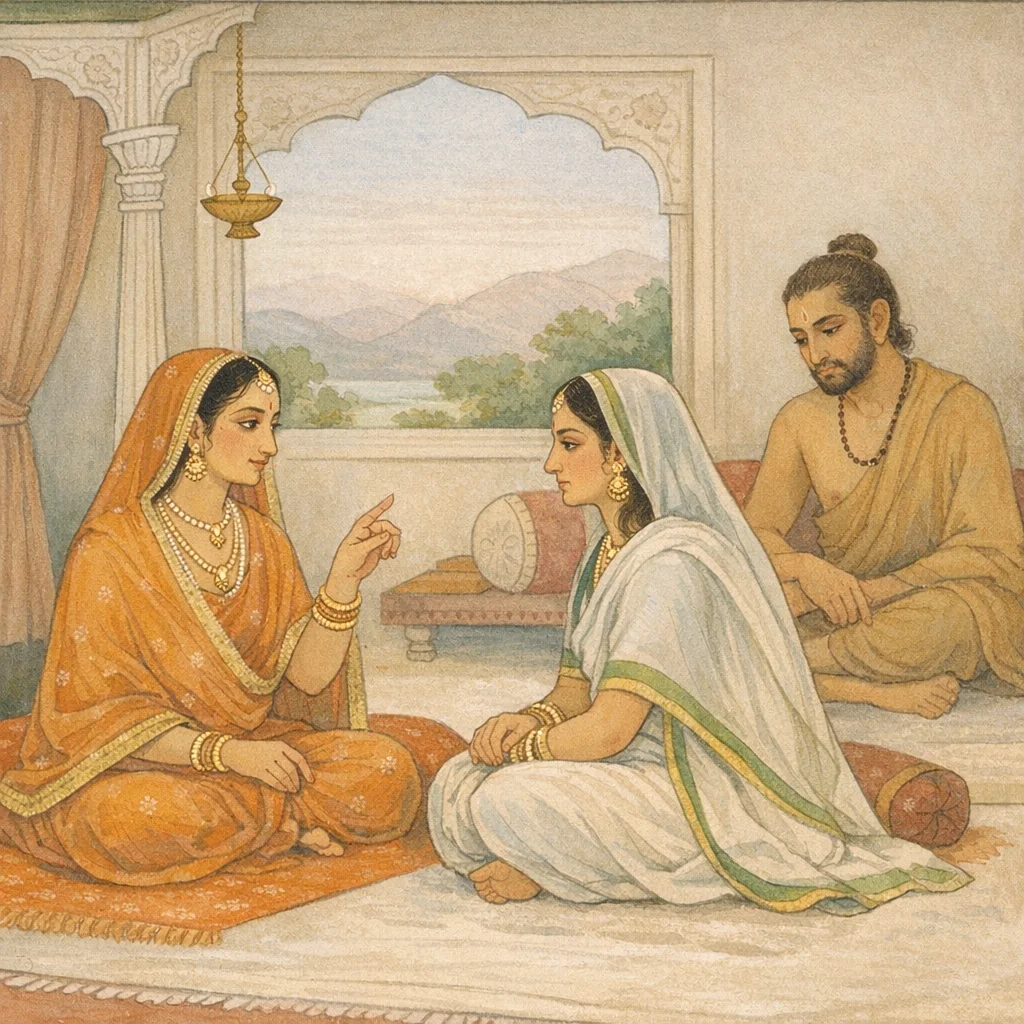
Vaiśaṃpāyana narrates that after Citrāṅgada’s death, Bhīṣma governs the Kuru kingdom on Satyavatī’s direction and resolves to arrange Vicitravīrya’s marriage. Hearing of the Kāśī king’s three daughters holding a svayaṃvara at Vārāṇasī, Bhīṣma travels there with maternal permission. Amid the proclamation of many royal names, he asserts a unilateral selection and announces to assembled rulers his intent to take the princesses by force if opposed, explicitly situating the act within kṣatriya practice and the hierarchy of marriage forms. The gathered kings pursue; a tumulous engagement follows in which Bhīṣma intercepts volleys, counters with controlled precision, and defeats the coalition. Śālva then challenges Bhīṣma; after an intense exchange, Bhīṣma disables Śālva’s tactical capacity (including charioteer and horses) and releases him alive, after which other kings disperse. Bhīṣma returns to Hastināpura with the princesses and gives them to Vicitravīrya, but the eldest, Ambā, states in the learned assembly that she had already chosen Śālva in her mind and was previously accepted by him; she requests dharmic rectification. Bhīṣma deliberates with Veda-versed brāhmaṇas and permits Ambā to depart, while Ambikā and Ambālikā are married to Vicitravīrya by proper rite. Vicitravīrya enjoys marital life for seven years, then succumbs to illness; Bhīṣma performs the funerary rites in accordance with Satyavatī’s counsel, closing the chapter on succession secured yet ethically complicated by Ambā’s unresolved claim.
Chapter Arc: शौनकादि ऋषियों के समक्ष सूत यह स्पष्ट करते हैं कि ‘अफ-एक्राच्छ/ऋचेयु, अन्वग्भानु, अनाधृष्टि’ एक ही व्यक्ति के नाम-भेद हैं—वंश-परम्परा की स्मृति को ठीक-ठीक बाँधने का आग्रह। → श्रोता संक्षेप से संतुष्ट नहीं होता—‘लघ्वर्थसंयुक्त’ कथा प्रिय है, पर तृप्ति नहीं देती; वह प्रजापति दक्ष से मनु तक और आगे पूरु-भरत-पाण्डु वंश की कड़ी को विस्तार से सुनने की याचना करता। → वंश-धारा के बीच पाण्डु-गृह का निर्णायक क्षण उभरता है: पाण्डु कुन्ती से कहता है कि माद्री ‘सपत्न्यनपत्या’ है—उसके लिए संतान उत्पन्न कराई जाए; कुन्ती ‘एवमस्तु’ कहकर माद्री को वह विद्या (देव-आह्वान) प्रदान करती है। → वंश-परम्परा आगे बढ़ती है—पूरु की पत्नी कौसल्या से जनमेजय; ऋक्ष का तक्षक-पुत्री ज्वाला से विवाह और मतिनार का जन्म; युधिष्ठिर का देविका से विवाह और यौधेय का जन्म—वंश का प्रवाह स्थिर रूप से स्थापित होता है। → अध्याय के अंत में महाभारत-श्रवण की महिमा का संकेत (पवित्र, यशस्वी, आयुष्यवर्धक) देकर कथा को आगे के विस्तृत वंश-वर्णन/आख्यान के लिए उकसाया जाता है।
Shlokas
Verse 1
अफ-एक्रा्छ - ऋचेयु, अन्वग्भानु और अनाधृष्टि एक ही व्यक्तिके नाम हैं। पञ्चनवतितमो< ध्याय: दक्ष प्रजापतिसे लेकर पूरुवंश, भरतवंश एवं पाण्डुवंशकी परम्पराका वर्णन जनमेजय उवाच श्रुतस्त्वत्तो मया ब्रह्मन् पूर्वेषां सम्भवो महान् । उदाराश्षापि वंशे5स्मिन् राजानो मे परिश्रुता:,जनमेजय बोले--ब्रह्मन! मैंने आपके मुखसे पूर्ववर्ती राजाओंकी उत्पत्तिका महान् वृत्तान्त सुना। इस पूरुवंशमें उत्पन्न हुए उदार राजाओंके नाम भी मैंने भलीभाँति सुन लिये
Janamejaya said: “O Brahmin, from your lips I have heard the great account of the origins of the ancient kings. I have also clearly heard the names of the noble rulers born in this lineage.”
Verse 2
किंतु लघ्वर्थसंयुक्त प्रियाख्यानं न मामति । प्रीणात्यतो भवान् भूयो विस्तरेण ब्रवीतु मे,परंतु संक्षेपसे कहा हुआ यह प्रिय आख्यान सुनकर मुझे पूर्णतः तृप्ति नहीं हो रही है। अत: आप पुनः विस्तारपूर्वक मुझसे इसी दिव्य कथाका वर्णन कीजिये। दक्ष प्रजापति और मनुसे लेकर उन सब राजाओंका पवित्र जन्म-प्रसंग किसको प्रसन्न नहीं करेगा?
Janamejaya said: “Yet this beloved account, though meaningful even in brief, does not fully satisfy me. Therefore, please tell it to me again in greater detail. Who would not be delighted to hear the sacred birth-accounts of those kings, beginning from Dakṣa Prajāpati and Manu?”
Verse 3
एतामेव कथां दिव्यामाप्रजापतितो मनो: । तेषामाजनन पुण्यं कस्य न प्रीतिमावहेत्,परंतु संक्षेपसे कहा हुआ यह प्रिय आख्यान सुनकर मुझे पूर्णतः तृप्ति नहीं हो रही है। अत: आप पुनः विस्तारपूर्वक मुझसे इसी दिव्य कथाका वर्णन कीजिये। दक्ष प्रजापति और मनुसे लेकर उन सब राजाओंका पवित्र जन्म-प्रसंग किसको प्रसन्न नहीं करेगा?
Janamejaya said: “This very divine narrative—from Prajāpati down to Manu—has been told. The holy account of the births of those kings, who would not be delighted by it? Yet, having heard this beloved story only in brief, I do not feel fully satisfied. Therefore, please describe to me again, in fuller detail, this same sacred tale. Beginning with Prajāpati Dakṣa and Manu, whose heart would not be pleased by the pure episode of the births of all those kings?”
Verse 4
सद्धर्मगुणमाहात्म्यैरभिवर्धितमुत्तमम् । विष्ट भ्य लोकांस्त्रीनेषां यश: स्फीतमवस्थितम्,उत्तम धर्म और गुणोंके माहात्म्यसे अत्यन्त वृद्धिको प्राप्त हुआ इन राजाओंका श्रेष्ठ और उज्ज्वल यश तीनों लोकोंमें व्याप्त हो रहा है
Janamejaya said: “Through the greatness of true dharma and noble virtues, the excellent fame of these kings has grown exceedingly; it stands firm and expansive, pervading the three worlds.”
Verse 5
गुणप्रभाववीर्यौज:सत्त्वोत्साहवतामहम् । न तृप्यामि कथां शृण्वन्नमृतास्वादसम्मिताम्,ये सभी नरेश उत्तम गुण, प्रभाव, बल-पराक्रम, ओज, सत्त्व (धैर्य) और उत्साहसे सम्पन्न थे। इनकी कथा अमृतके समान मधुर है, उसे सुनते-सुनते मुझे तृप्ति नहीं हो रही है
Janamejaya said: “As I listen to this account of kings endowed with noble qualities—splendour, influence, valour, vital energy, steadfast courage, and ardent zeal—I do not feel satisfied. Their story is as sweet as the taste of nectar; the more I hear it, the more my longing to hear continues.”
Verse 6
वैशम्पायन उवाच शृणु राजन् पुरा सम्यड्मया द्वैपायनाच्छुतम् । प्रोच्यमानमिदं कृत्स्नं स्ववंशजननं शुभम्,वैशम्पायनजीने कहा--राजन्! पूर्वकालमें मैंने महर्षि कृष्णद्वैपायनके मुखसे जिसका भलीभाँति श्रवण किया था, वह सम्पूर्ण प्रसंग तुम्हें सुनाता हूँ। अपने वंशकी उत्पत्तिका वह शुभ वृत्तान्त सुनो
Vaiśampāyana said: O King, listen. Long ago I heard this in full and correctly from Dvaipāyana himself. I shall now recount to you, in its entirety, this auspicious account of the begetting and rise of your own lineage.
Verse 7
दक्षाददितिरदितेविंवस्वान् विवस्वतो मनुर्मनो-रिला इलाया: पुरूरवा: पुरूरवस आयुरायुषो नहुषो नहुषाद ययाति:; ययाते्द्धे भारयें बभूवतु:
Vaiśampāyana said: From Dakṣa was born Aditi; from Aditi, Vivasvān (the Sun); from Vivasvān, Manu; from Manu, Ilā; from Ilā, Purūravā; from Purūravā, Āyu; from Āyu, Nahuṣa; from Nahuṣa, Yayāti. And from Yayāti, in his wife Iḍḍhā, sons were born. Thus the royal lineage is being traced in orderly succession, emphasizing the continuity of dharma through generations.
Verse 8
उशनसो दुहिता देवयानी; वृषपर्वणश्न दुहिता शर्मिष्ठा नाम,दक्षसे अदिति, अदितिसे विवस्वान् (सूर्य), विवस्वानसे मनु, मनुसे इला, इलासे पुरूरवा, पुरूरवासे आयु, आयुसे नहुष और नहुषसे ययातिका जन्म हुआ। ययातिकी दो पत्नियाँ थीं पहली शुक्राचार्यकी पुत्री देवयानी तथा दूसरी वृषपर्वाकी पुत्री शर्मिष्ठा
Vaiśampāyana said: Uśanas (Śukra) had a daughter named Devayānī, and Vṛṣaparvan had a daughter named Śarmiṣṭhā. From Dakṣa was born Aditi; from Aditi, Vivasvān (the Sun); from Vivasvān, Manu; from Manu, Ilā; from Ilā, Purūravā; from Purūravā, Āyu; from Āyu, Nahuṣa; and from Nahuṣa was born Yayāti. Yayāti had two wives: first Devayānī, the daughter of Śukrācārya, and second Śarmiṣṭhā, the daughter of Vṛṣaparvan. The passage situates Yayāti within a sacred lineage and frames his marriages as pivotal alliances that later raise questions of duty, desire, and the consequences of choices within family and polity.
Verse 9
अत्रानुवंशशलोको भवति-- यदुं च तुर्वसुं चैव देवयानी व्यजायत । ट्रह्ूं चानुं च पूरुं च शर्मिष्ठा वार्षपर्वणी,यहाँ उनके वंशका परिचय देनेवाला यह श्लोक कहा जाता है-- देवयानीने यदु और तुर्वसु नामवाले दो पुत्रोंको जन्म दिया और वृषपर्वाकी पुत्री शर्मिष्ठाने 2 अव अनु तथा पूरु--ये तीन पुत्र उत्पन्न किये
Here a genealogical verse is recited: Devayānī bore two sons, Yadu and Turvasu; and Śarmiṣṭhā, the daughter of Vṛṣaparvan, bore three sons—Druhyu, Anu, and Pūru. The narrative marks the branching of royal lineages, showing how dynastic continuity and rightful succession are preserved through acknowledged offspring and remembered ancestry.
Verse 10
तत्र :; पूरो: पौरवा:,इनमें यदुसे यादव और पूरुसे पौरव हुए
Vaiśampāyana said: “There, from Yadu arose the Yādavas, and from Pūru arose the Pauravas.” The narration marks the branching of royal lineages, establishing the genealogical foundations that later shape claims to legitimacy, duty, and succession in the epic.
Verse 11
पूरोस्तु भार्या कौसलया नाम । तस्यामस्य जज्ञे जनमेजयो नाम; यस्त्रीनश्वमेधानाजहार, विश्वजिता चेष्टवा वनं विवेश,पूरुकी पत्नीका नाम कौसल्या था (उसीको पौष्टी भी कहते हैं)। उसके गर्भसे पूरुके जनमेजय नामक पुत्र हुआ (इसीका दूसरा नाम प्रवीर है); जिसने तीन अश्वमेध यज्ञोंका अनुष्ठान किया था और विश्वजित् यज्ञ करके वानप्रस्थ आश्रम ग्रहण किया था
Vaiśampāyana said: Puru had a wife named Kausalyā. Through her he begot a son named Janamejaya. That Janamejaya performed three Aśvamedha sacrifices; and, having also completed the Viśvajit sacrifice, he withdrew to the forest, embracing the life of disciplined renunciation. The passage highlights a royal ideal in which power is legitimized by sacrifice and then relinquished through voluntary retreat.
Verse 12
जनमेजय: खल्ल्वनन्तां नामोपयेमे माधवीम् । तस्यामस्य जज्ञे प्राचिन्चान; यः प्राचीं दिशं जिगाय यावत् सूर्योदयात्, ततस्तस्य प्राचिन्वत्त्वम्,जनमेजयने मधुवंशकी कन्या अनन्ताके साथ विवाह किया था। उसके गर्भसे उनके प्राचिन्वान् नामक पुत्र उत्पन्न हुआ। उसने उदयाचलसे लेकर सारी प्राची दिशाको एक ही दिनमें जीत लिया था; इसीलिये उसका नाम प्राचिन्वान् हुआ
Vaiśampāyana said: King Janamejaya married a Mādhavī maiden named Anantā. From her he begot a son called Prācinvān. That son conquered the entire eastern quarter in a single day, from the moment of sunrise onward; therefore he came to be known as Prācinvān—“the one of the East.”
Verse 13
प्राचिन्वान् खल्वश्मकीमुपयेमे यादवीम् । तस्थामस्य जज्ञे संयाति:,प्राचिन्वानने यदुकुलकी कन्या अश्मकीको अपनी पत्नी बनाया। उसके गर्भसे उन्हें संयाति नामक पुत्र प्राप्त हुआ
Vaiśampāyana said: Prācinvān married Aśmakī, a maiden of the Yādava lineage. From her he begot a son named Saṃyāti. The passage continues the genealogical account, presenting marriage and progeny as the lawful means by which dynastic continuity is maintained.
Verse 14
संयाति: खलु दृषद्धतो दुहितरं वराड़ीं नामोपयेमे । तस्यामस्य जज्ञे अहंयाति: ।। १४ ।। संयातिने दृषद्वान्की पुत्री वरांगीसे विवाह किया। उसके गर्भसे उन्हें अहंयाति नामक पुत्र हुआ
Vaiśampāyana said: Saṁyāti indeed married Varāḍī, the daughter of Dṛṣaddhata. From her was born to him a son named Ahaṁyāti.
Verse 15
अहंयाति: खलु कृतवीर्यदुहितरमुपयेमे भानुमतीं नाम । तस्यामस्य जज्ञे सार्वभौम:,अहंयातिने कृतवीर्यकुमारी भानुमतीको अपनी पत्नी बनाया। उसके गर्भसे अहंयातिके सार्वभौम नामक पुत्र उत्पन्न हुआ
Vaiśampāyana said: Ahaṁyāti indeed married Bhānumatī, the daughter of Kṛtavīrya. From her, a son named Sārvabhauma was born to Ahaṁyāti.
Verse 16
सार्वभौम: खलु जित्वा जहार कैकेयीं सुनन्दां नाम | तामुपयेमे । तस्यामस्य जज्ञे जयत्सेनो नाम,सार्वभौमने युद्धमें जीतकर केकयकुमारी सुनन्दाका अपहरण किया और उसीको अपनी पत्नी बनाया। उससे उनको जयत्सेन नामक पुत्र प्राप्त हुआ
Vaiśampāyana said: Having conquered in battle, Sārvabhauma carried off a princess of Kekaya named Sunandā and took her as his wife. From her, a son named Jayatsena was born to him.
Verse 17
जयत्सेनो खलु वैदर्भीमुपयेमे सुश्रवां नाम । तस्यामस्य जज्ञे अवाचीन:,जयत्सेनने विदर्भराजकुमारी सुश्रवासे विवाह किया। उसके गर्भसे उनके अवाचीन नामक पुत्र हुआ
Vaiśampāyana said: Jayatsena indeed married a princess of Vidarbha named Suśravā. From her was born to him a son named Avācīna.
Verse 18
अवाचीनोऊ<पि वैदर्भीमपरामेवोपयेमे मर्यादां नाम | तस्यामस्य जज्ञे अरिह: ।। १८ ।। अवाचीनने भी विदर्भराजकुमारी मर्यादाके साथ विवाह किया, जो आगे बतायी जानेवाली देवातिथिकी पत्नीसे भिन्न थी। उसके गर्भसे उन्हें “अरिह” नामक पुत्र हुआ
Vaiśampāyana said: Although Avācīna had already taken a wife, he married another princess of Vidarbha named Maryādā—distinct from the wife Devātithi who will be mentioned later. From Maryādā he begot a son named Ariha.
Verse 19
अरिह: खल्वाज्जीमुपयेमे । तस्यामस्य जज्ञे महाभौम:,अरिहने अंगदेशकी राजकुमारीसे विवाह किया और उसके गर्भसे उन्हें महाभौम नामक पुत्र प्राप्त हुआ
Vaiśampāyana said: Ariha indeed married Jīm. From her, a son was born to him, named Mahābhauma.
Verse 20
महाभौम: खलु प्रासेनजितीमुपयेमे सुयज्ञा नाम | तस्यामस्य जज्ञे अयुतनायी; यः पुरुषमेधानामयुतमानयत्, तेनास्यायुतनायित्वम्,महाभौमने प्रसेनजितकी पुत्री सुयज्ञासे विवाह किया। उसके गर्भसे उन्हें अयुतनायी नामक पुत्र प्राप्त हुआ; जिसने दस हजार पुरुषमेध “यज्ञ' किये। अयुत यज्ञोंका आनयन (अनुष्ठान) करनेके कारण ही उनका नाम अयुतनायी हुआ
Vaiśampāyana said: Mahābhauma indeed married Prāsenajitī, named Suyajñā. From her he had a son called Ayutanāyī, who conducted ten thousands of Puruṣamedha sacrifices; and because he brought about an ayuta—ten thousand—of such rites, he came to be known as Ayutanāyī.
Verse 21
अयुतनायी खलु पृथुश्रवसो दुहितरमुपयेमे कामां नाम । तस्यामस्य जज्ञे अक्रोधन:,अयुतनायीने पृथुश्रवाकी पुत्री कामासे विवाह किया, जिसके गर्भसे अक्रोधनका जन्म हुआ
Vaiśampāyana said: Ayutanāyī married the daughter of Pṛthuśravas, named Kāmā. From her, a son was born to him—Akrodhana (“the one free from anger”).
Verse 22
स खलु कालिड्रीं करम्भां नामोपयेमे | तस्यामस्य जज्ञे देवातिथि:,अक्रोधनने कलिंगदेशकी राजकुमारी करम्भासे विवाह किया। जिसके गर्भसे उनके देवातिथि नामक पुत्रका जन्म हुआ
Vaiśampāyana said: He indeed married a woman named Karambhā of the Kāliḍrī lineage. From her, a son named Devātithi was born to him.
Verse 23
देवातिथि: खलु वैदेहीमुपयेमे मर्यादां नाम | तस्यामस्य जज्ञे अरिहो नाम ।॥। २३ || देवातिथिने विदेहराजकुमारी मर्यादासे विवाह किया, जिसके गर्भसे अरिह नामक पुत्र उत्पन्न हुआ
Vaiśampāyana said: Devātithi indeed married a princess of Videha named Maryādā. Through her, a son of his was born, named Ariha.
Verse 24
अरिह: खल्वाड्रेयीमुपयेमे सुदेवां नाम । तस्यां पुत्रमजीजनदृक्षम्,अरिहने अंगराजकुमारी सुदेवाके साथ विवाह किया और उसके गर्भसे ऋक्ष नामक पुत्रको जन्म दिया
Vaiśampāyana said: Ariha married Āḍreyī, the princess named Sudevā. Through her he begot a son named Ṛkṣa, and thus the royal line continued in due order.
Verse 25
ऋक्ष: खलु तक्षकदुहितरमुपयेमे ज्वालां नाम । तस्यां पुत्र॑ मतिनारं नामोत्पादयामास,ऋक्षने तक्षककी पुत्री ज्वालाके साथ विवाह किया और उसके गर्भसे मतिनार नामक पुत्रको उत्पन्न किया
Vaiśampāyana said: Ṛkṣa indeed married Jvālā, the daughter of Takṣaka; and through her he begot a son named Matināra, born within a lawful union.
Verse 26
मतिनार: खलु सरस्वत्यां गुणसमन्वितं द्वादशवार्षिकं सत्रमाहरत् | समाप्ते च सत्रे सरस्वत्य-भिगम्य तं भर्तारें वरयामास । तस्यां पुत्रमजीजनत् तंसुं नाम,मतिनारने सरस्वतीके तटपर उत्तम गुणोंसे युक्त द्वादशवार्षिक यज्ञका अनुष्ठान किया। उसके समाप्त होनेपर सरस्वतीने उनके पास आकर उन्हें पतिरूपमें वरण किया। मतिनारने उसके गर्भसे तंसु नामक पुत्र उत्पन्न किया
Vaiśampāyana said: Matināra performed on the Sarasvatī a twelve-year sacrificial session (satra), endowed with excellence and proper qualities. When that rite was completed, the goddess Sarasvatī approached him and chose him as her husband. From her he begot a son named Taṃsu.
Verse 27
अत्रानुवंशशलोको भवति-- तंसुं सरस्वती पुत्र मतिनारादजीजनत् | ईलिनं जनयामास कालिंग्यां तंसुरात्मजम्,यहाँ वंशपरम्पराका सूचक श्लोक इस प्रकार है-- सरस्वतीने मतिनारसे तंसु नामक पुत्र उत्पन्न किया और तंसुने कलिंगराजकुमारीके गर्भसे ईलिन नामक पुत्रको जन्म दिया
Vaiśampāyana said: “Here is the genealogical verse that marks the succession of the lineage: Sarasvatī bore a son named Taṃsu from Matināra; and Taṃsu, in turn, begot his son Ilina from a princess of Kaliṅga.”
Verse 28
ईलिनस्तु रथन्तर्या दुष्यन्ताद्यान् पञज्च पुत्रानजीजनत्,ईलिनने रथन्तरीके गर्भसे दुष्यन्त आदि पाँच पुत्र उत्पन्न किये
Vaiśampāyana said: From Īlina, Rathantarī gave birth to five sons, beginning with Duṣyanta. The narration marks the orderly continuation of lineage, emphasizing the dharmic importance of progeny and succession in the royal line.
Verse 29
दुष्यन्त: खलु विश्वामित्रदुहितरं शकुन्तलां नामोपयेमे | तस्यामस्य जज्ञे भरत: ।। २९ || दुष्यन्तने विश्वामित्रकी पुत्री शकुन्तलाके साथ विवाह किया; जिसके गर्भसे उनके पुत्र भरतका जन्म हुआ
Vaiśampāyana said: King Duṣyanta indeed married Śakuntalā, the daughter of Viśvāmitra. From her, a son was born to him—Bharata—whose birth affirms the continuity of righteous kingship and the moral weight of honoring marital and paternal responsibility.
Verse 30
अत्रानुवंशशलोकौ भवत:-- भस्त्रा माता पितु: पुत्रो येन जात: स एव सः । भरस्व पुत्र दुष्पन्त मावमंस्था: शकुन्तलाम्,यहाँ वंशपरम्पराके सूचक दो श्लोक हैं-- “माता तो भाथी (धौंकनी)-के समान है। वास्तवमें पुत्र पिताका ही होता है; जिससे उसका जन्म होता है, वही उस बालकके रूपमें प्रकट होता है। दुष्यन्त! तुम अपने पुत्रका भरण-पोषण करो; शकुन्तलाका अपमान न करो
Here are two genealogical verses that mark the line of descent: “The mother is like a bellows; in truth the son belongs to the father. He from whom the child is begotten is the very one who appears in the form of that child. Therefore, Duṣyanta, support and raise your son; do not dishonor Śakuntalā.” The passage presses a moral claim: acknowledge paternity, protect the child, and refrain from unjustly shaming the mother.
Verse 31
रेतोधा: पुत्र उन्नयति नरदेव यमक्षयात् | त्वं चास्य धाता गर्भस्य सत्यमाह शकुन्तला,'गर्भाधान करनेवाला पिता ही पुत्ररूपमें उत्पन्न होता है। नरदेव! पुत्र यमलोकसे पिताका उद्धार कर देता है। तुम्हीं इस गर्भके आधान करनेवाले हो। शकुन्तलाका कथन सत्य है”
Vaiśampāyana said: “O king, the father who bestows the seed is, as it were, raised up again in the form of the son. A son delivers his father from the realm of Yama (death) and from decline there. You are indeed the begetter of this child; Śakuntalā speaks the truth.”
Verse 32
ततो5स्य भरतत्वम् । भरत: खलु काशेयीमुपयेमे सार्वसेनीं सुनन्दां नाम । तस्यामस्य जज्ञे भुमन्यु:,आकाशवाणीने भरण-पोषणके लिये कहा था, इसलिये उस बालकका नाम भरत हुआ। भरतने राजा सर्वसेनकी पुत्री सुनन्दासे विवाह किया। वह काशीकी राजकुमारी थी। उसके गर्भसे भरतके भुमन्यु नामक पुत्र हुआ
Then he came to be known as Bharata. Indeed, Bharata married Sunandā, the Sārvasenī princess of Kāśī. Through her, a son named Bhumanyu was born to him. The tradition explains that a heavenly voice had spoken of the child’s being ‘to be borne and nourished’ (bharaṇa–poṣaṇa), and therefore the boy received the name Bharata—linking his identity to the duty of sustaining and protecting.
Verse 33
भुमन्यु: खलु दाशाहीमुपयेमे विजयां नाम । तस्यामस्य जज्ञे सुहोत्र:,भुमन्युने दशार्हकन्या विजयासे विवाह किया; जिसके गर्भसे सुहोत्रका जन्म हुआ
Vaiśampāyana said: Bhumanyu indeed married a Dāśārha maiden named Vijayā. From her, a son named Suhotra was born to him. The verse continues the dynastic narration, underscoring the legitimacy of lineage through lawful marriage and progeny.
Verse 34
सुहोत्र: खल्विक्ष्वाकुकन्यामुपयेमे सुवर्णा नाम | तस्यामस्य जज्ञे हस्ती; य इदं हास्तिनपुरं स्थापयामास । एतदस्य हास्तिनपुरत्वम्,सुहोत्रने इक्ष्वाकुकुलकी कन्या सुवर्णासे विवाह किया। उसके गर्भसे उन्हें हस्ती नामक पुत्र हुआ; जिसने यह हस्तिनापुर नामक नगर बसाया था। हस्तीके बसानेसे ही यह नगर 'हास्तिनपुर” कहलाया
Vaiśampāyana said: Suhotra indeed married an Ikṣvāku princess named Suvarṇā. From her he begot a son, Hastī, who founded this city of Hāstinapura. It is because Hastī established it that the city came to be known as Hāstinapura.
Verse 35
हस्ती खलु त्रैगर्तीमुपयेमे यशोधरां नाम | तस्यामस्य जज्ञे विकुण्ठनो नाम ।। ३५ || हस्तीने त्रिगर्तराजकी पुत्री यशोधराके साथ विवाह किया और उसके गर्भसे विकुण्ठन नामक पुत्र उत्पन्न हुआ
Vaiśampāyana said: Hastī married a woman of the Trigarta country named Yaśodharā. From her, a son was born to him, known as Vikuṇṭhana—thus continuing the royal lineage through lawful marriage and progeny.
Verse 36
विकुण्ठन: खलु दाशाहीमुपयेमे सुदेवां नाम | तस्यामस्य जज्ञे अजमीढो नाम ।। ३६ || विकुण्ठनने दशाहकुलकी कन्या सुदेवासे विवाह किया और उसके गर्भसे उन्हें अजमीढ नामक पुत्र प्राप्त हुआ
Vaiśampāyana said: Vikuṇṭhana indeed married a Dāśāha maiden named Sudevā. From her, a son was born to him, named Ajāmīḍha. The passage continues the genealogical account, presenting marriage and progeny as the lawful means by which dynastic continuity is maintained.
Verse 37
अजमीढस्य चतुर्विशं पुत्रशतं बभूव कैकेय्यां गान्धार्या विशालायामक्षायां चेति । पृथक् पृथक् वंशधरा नृपतय: । तत्र वंशकर: संवरण:,अजमीढके कैकेयी, गान्धारी, विशाला तथा ऋक्षासे एक सौ चौबीस पुत्र हुए। वे सब पृथक्-पृथक् वंशप्रवर्तक राजा हुए। इनमें राजा संवरण कुरुवंशके प्रवर्तक हुए
Vaiśampāyana said: Ajāmīḍha had one hundred and twenty-four sons, born of Kaikeyī, Gāndhārī, Viśālā, and Akṣā. Each became, in his own line, a bearer and continuer of a royal dynasty. Among them, Saṃvaraṇa is singled out as the one who established the principal lineage—becoming the progenitor through whom the Kuru line is carried forward.
Verse 38
संवरण: खलु वैवस्वतीं तपतीं नामोपयेमे । तस्यामस्य जज्ञे कुरु:,संवरणने सूर्यकन्या तपतीसे विवाह किया; जिसके गर्भसे कुरुका जन्म हुआ
Vaiśaṃpāyana said: Saṃvaraṇa married Tapatī, the daughter of Vivasvān (the Sun). From her, Kuru was born to him—thus establishing the Kuru lineage that becomes central to the Mahābhārata’s moral and dynastic history.
Verse 39
कुरु: खलु दाशाहीमुपयेमे शुभाड़ीं नाम । तस्यामस्य जज्ञे विदूर:,कुरुने दशारहकुलकी कन्या शुभांगीसे विवाह किया। उसके गर्भसे विदूर नामक पुत्र हुआ
Vaiśampāyana said: Kuru indeed married a Dāśārha maiden named Śubhāṅgī. From her, a son was born to him, named Vidūra.
Verse 40
विदूरस्तु माधवीमुपयेमे सम्प्रियां नाम । तस्या-मस्य जज्ञे अनश्वा नाम,विदूरने मधुवंशकी कन्या सम्प्रियासे विवाह किया; जिसके गर्भसे अनश्वा नामक पुत्र प्राप्त हुआ
Vaiśampāyana said: Vidūra married a beloved woman of the Mādhava lineage named Sampriyā. From her, a son was born to him, named Anaśvā.
Verse 41
अनश्वा खलु मागधीमुपयेमे अमृतां नाम | तस्यामस्य जज्ञे परिक्षित्,अनश्वाने मगधराजकुमारी अमृताको अपनी पत्नी बनाया। उसके गर्भसे परिक्षित् नामक पुत्र उत्पन्न हुआ
Vaiśampāyana said: Anāśvā married a woman of Magadha named Amṛtā. From her, a son named Parīkṣit was born to him.
Verse 42
परिक्षित् खलु बाहुदामुपयेमे सुयशां नाम | तस्यामस्य जज्ञे भीमसेन:,परिक्षितने बाहुदराजकी पुत्री सुयशाके साथ विवाह किया; जिसके गर्भसे भीमसेन नामक पुत्र हुआ
Vaiśampāyana said: Indeed, Parīkṣit married a woman named Suyaśā, of the Bāhuda lineage. From her, a son was born to him, named Bhīmasena.
Verse 43
भीमसेन: खलु कैकेयीमुपयेमे कुमारी नाम | तस्यामस्य जज्ञे प्रतिश्रवा नाम ।। ४३ ।। भीमसेनने केकयदेशकी राजकुमारी कुमारीको अपनी पत्नी बनाया; जिसके गर्भसे प्रतिश्रवाका जन्म हुआ
Vaiśampāyana said: Bhīmasena indeed married a princess of the Kekaya country named Kumārī. From her, a son was born to him, named Pratiśravā.
Verse 44
प्रतिश्रवस: प्रतीप: खलु । शैब्यामुपयेमे सुनन्दां नाम । तस्यां पुत्रानुत्पादयामास देवापिं शान्तनुं बाह्लीकं चेति,प्रतिश्रवासे प्रतीप उत्पन्न हुआ। उसने शिबि-देशकी राजकन्या सुनन्दासे विवाह किया और उसके गर्भसे देवापि, शान्तनु तथा बाह्नीक--इन तीन पुत्रोंको जन्म दिया
Vaiśampāyana said: From Pratiśravas was born Pratīpa indeed. Pratīpa married Sunandā, a princess of the Śibi country. Through her he begot three sons—Devāpi, Śāntanu, and Bāhlīka—thus continuing the royal line in a lawful and orderly succession.
Verse 45
देवापि: खलु बाल एवारण्यं विवेश । शान्तनुस्तु महीपालो बभूव,देवापि बाल्यावस्थामें ही वनको चले गये, अत: शान्तनु राजा हुए
Vaiśampāyana said: Devāpi, while still a mere boy, entered the forest and withdrew from worldly life. Therefore Śāntanu became the protector-king of the earth. The passage underscores how a renunciation or removal from royal duty can shift the burden of kingship to another, highlighting the ethical necessity of stable succession for the welfare of the realm.
Verse 46
अत्रानुवंशशलोको भवति-- य॑ यं कराभ्यां स्पृशति जीर्ण स सुखमश्ुते ॥ पुनर्युवा च भवति तस्मात् त॑ शान्तनुं विदु:ः ॥। इति तदस्य शान्तनुत्वम्,शान्तनुके विषयमें यह अनुवंशश्लोक उपलब्ध होता है-- वे जिस-जिस बूढ़ेको अपने दोनों हाथोंसे छू देते थे, वह बड़े सुख और शान्तिका अनुभव करता था तथा पुनः नौजवान हो जाता था। इसीलिये लोग उन्हें शान्तनुके रूपमें जानने लगे। यही उनके शान्तनु नाम पड़नेका कारण हुआ
Vaiśampāyana said: Here a traditional genealogical verse is recited: ‘Whomever the aged king touches with both hands, that person experiences well-being and peace, and becomes young again.’ Therefore people came to know him as Śāntanu. Thus is explained the meaning behind his name—his power to bestow calm and renewal.
Verse 47
शान्तनु: खलु गड्ां भागीरथीमुपयेमे । तस्यामस्यथ जज्ञे देववब्रतो नाम: यमाहुर्भीष्ममिति,शान्तनुने भागीरथी गंगाको अपनी पत्नी बनाया; जिसके गर्भसे उन्हें देवव्रत नामक पुत्र प्राप्त हुआ, जिसे लोग “भीष्म' कहते हैं
Vaiśampāyana said: King Śāntanu indeed married Gaṅgā, the Bhāgīrathī. From her he then had a son named Devavrata, whom people call Bhīṣma. The verse situates Bhīṣma’s birth within a lawful royal marriage and signals the ethical weight of lineage and vows that will later define his dharma.
Verse 48
भीष्फ:ः खलु॒ पितु:ः प्रियचिकीर्षया सत्यवतीं मातरमुदवाहयत्; यामाहुर्गन्धकालीति,भीष्मने अपने पिताका प्रिय करनेकी इच्छासे उनके साथ माता सत्यवतीका विवाह कराया; जिसे गन्धकाली भी कहते हैं
Vaiśampāyana said: Indeed Bhīṣma, wishing to do what was dear to his father, arranged the marriage of Satyavatī—also spoken of as Gandhakālī—with his father. The episode highlights Bhīṣma’s deliberate self-effacement and filial duty, placing the father’s welfare and dynastic continuity above personal preference.
Verse 49
तस्यां पूर्व कानीनो गर्भ: पराशराद् द्वैधायनो5$भवत् । तस्यामेव शान्तनोरन्यौ द्वौ पुत्रौो बभूवतु:,सत्यवतीके गर्भसे पहले कन्यावस्थामें महर्षि पराशरसे द्वैपायन व्यास उत्पन्न हुए थे। फिर उसी सत्यवतीके राजा शान्तनुद्वारा दो पुत्र और हुए
Vaiśampāyana said: Earlier, while Satyavatī was still unmarried, she conceived a son by the sage Parāśara—Dvaidhāyana (Vyāsa). Later, from that same Satyavatī, King Śāntanu had two other sons.
Verse 50
विचित्रवीर्यक्षित्राडदक्ष॒ । तयोरप्राप्तपयौवन एव चित्राड़दो गन्धर्वेण हत:; विचित्रवीर्यस्तु राजा5डसीत्,जिनका नाम था, विचित्रवीर्य और चित्रांगद। उनमेंसे चित्रांगद युवावस्थामें पदार्पण करनेसे पहले ही एक गन्धर्वके द्वारा मारे गये; परंतु विचित्रवीर्य राजा हुए
Vaiśaṃpāyana said: The two were named Vicitravīrya and Citrāṅgada. Of them, Citrāṅgada was slain by a Gandharva before he had even reached youth; but Vicitravīrya became king.
Verse 51
विचित्रवीर्य: खलु कौसल्यात्मजे अम्बिकाम्बालिके काशिराजदुहितरावुपयेमे ।। ५१ || विचित्रवीर्यने अम्बिका और अम्बालिकासे विवाह किया। वे दोनों काशिराजकी पुत्रियाँ थीं और उनकी माताका नाम कौसल्या था
Vaiśampāyana said: Indeed, Vicitravīrya married Ambikā and Ambālikā, the two daughters of the king of Kāśī.
Verse 52
विचित्रवीर्यस्त्वनपत्य एव विदेहत्वं प्राप्त: | ततः: सत्यवत्यचिन्तयन्मा दौष्यन्तो वंश उच्छेदं व्रजेदिति,विचित्रवीर्यके अभी कोई संतान नहीं हुई थी, तभी उनका देहावसान हो गया। तब सत्यवतीको यह चिन्ता हुई कि *राजा दुष्यन्तका यह वंश नष्ट न हो जाय”
Vaiśampāyana said: Vicitravīrya died without leaving any offspring. Then Satyavatī became anxious, thinking, “May the line of Duṣyanta not come to extinction.”
Verse 53
सा द्वैपायनमृषिं मनसा चिन्तयामास । स तस्या: पुरत: स्थित:, कि करवाणीति [,उसने मन-ही-मन द्वैपायन महर्षि व्यासका चिन्तन किया। फिर तो व्यासजी उसके आगे प्रकट हो गये और बोले--'क्या आज्ञा है?”
She silently contemplated the sage Dvaipāyana (Vyāsa) in her mind. At once he appeared before her, standing in her presence, and asked, “What shall I do for you?”
Verse 54
सा तमुवाच--भ्राता तवानपत्य एव स्वर्यातों विचित्रवीर्य: । साध्वपत्यं तस्योत्पादयेति,सत्यवतीने उनसे कहा--“बेटा! तुम्हारे भाई विचित्रवीर्य संतानहीन अवस्थामें ही स्वर्गवासी हो गये। अतः उनके वंशकी रक्षाके लिये उत्तम संतान उत्पन्न करो”
She said to him: “Your brother Vicitravīrya has gone to heaven while still without offspring. Therefore, to protect and continue his lineage, beget worthy children for him.”
Verse 55
स तथेत्युक्त्वा त्रीन् पुत्रानुत्पादयामास; धृतराष्ट्रं पाण्डुं विदुरं चेति,उन्होंने “तथास्तु”/ कहकर धुृतराष्ट्र, पाण्डु और विदुर--इन तीन पुत्रोंको उत्पन्न किया
Vaiśampāyana said: Having replied, “So be it,” he brought forth three sons—Dhṛtarāṣṭra, Pāṇḍu, and Vidura.
Verse 56
तत्र धृतराष्ट्रस्य राज्ञ: पुत्रशतं बभूव गान्धार्या वरदानाद् द्वैधायनस्थ,उनमेंसे राजा धृतराष्ट्रके गान्धारीके गर्भसे व्यासजीके दिये हुए वरदानके प्रभावसे सौ पुत्र हुए
There, King Dhṛtarāṣṭra came to have a hundred sons through Gāndhārī, as a result of the boon granted by Dvaidhāyana (Vyāsa).
Verse 57
तेषां धृतराष्ट्रस्य पुत्राणां चत्वार: प्रधाना बभूवु:; दुर्योधनो दुःशासनो विकर्णश्षित्रसेनक्षेति,धृतराष्ट्रके उन सौ पुत्रोंमें चार प्रधान थे-दुर्योधन, दुःशासन, विकर्ण और चित्रसेन
Vaiśampāyana said: Among Dhṛtarāṣṭra’s sons, four emerged as the principal ones—Duryodhana, Duḥśāsana, Vikarṇa, and Citrāsena.
Verse 58
पाण्डोस्तु द्वे भार्ये बभूवतु: कुन्ती पृथा नाम माद्री च इत्युभे स्त्रीरत्ने,पाण्डुकी दो पत्नियाँ थीं; कुन्तिभोजकी कन्या पृथा और माद्री। ये दोनों ही स्त्रियोंमें रत्नस्वरूपा थीं
Vaiśampāyana said: Pāṇḍu had two wives—Kuntī, also known as Pṛthā, and Mādrī. Both were regarded as jewel-like women, distinguished in virtue and excellence.
Verse 59
अथ पाणए्डुमुगययां चरन् मैथुनगतमृषिमपश्यन्मृग्यां वर्तमानम्ू । तथैवाद्भुतमनासादितकामरसमतृप्तं च बाणेनाजघान,एक दिन राजा पाण्डुने शिकार खेलते समय एक मृगरूपधारी ऋषिको मृगीरूपधारिणी अपनी पत्नीके साथ मैथुन करते देखा। वह अद्भुत मृग अभी काम-रसका आस्वादन नहीं कर सका था। उसे अतृप्त अवस्थामें ही राजाने बाणसे मार दिया
Vaiśampāyana said: While King Pāṇḍu was roaming on a hunt, he saw a ṛṣi who had assumed the form of a stag, engaged in intercourse with his doe-form wife. In a moment of startled, reckless impulse, the king shot him with an arrow—killing him while he was still unsated, before he had even fully tasted the pleasure of desire. The episode frames a grave ethical lapse: the violence of the hunt, when joined with heedlessness and failure to discern the sacred, becomes a direct transgression against dharma and sets in motion the consequences that follow.
Verse 60
स बाणविद्ध उवाच पाण्डम--चरता धर्ममिमं॑ येन त्वयाभिकज्ञेन कामरसस्याहमनवाप्तकामरसो निहतस्तस्मात् त्वमप्येतामवस्थामासाद्यानवाप्तकामरस: पज्चत्वमाप्स्यसि क्षिप्रमेवेति । स विवर्णरूपस्तथा पाण्डु:ः शापं परिहरमाणो नोपासर्पत भार्ये | वाक््यं चोवाच --,बाणसे घायल होकर उस मुनिने पाण्डुसे कहा--'राजन्! तुम भी इस मैथुन धर्मका आचरण करनेवाले तथा काम-रसके ज्ञाता हो, तो भी तुमने मुझे उस दशामें मारा है, जब कि मैं काम-रससे तृप्त नहीं हुआ था। इस कारण इसी अवस्थामें पहुँचकर काम-रसका आस्वादन करनेसे पहले ही शीघ्र मृत्युको प्राप्त हो जाओगे।” यह सुनकर राजा पाण्डु उदास हो गये और शापका परिहार करते हुए पत्नियोंके सहवाससे दूर रहने लगे। उन्होंने कहा--
Struck by the arrow, the ascetic said to Pāṇḍu: “O king, you are one who practices this dharma (of household life) and you understand the taste of desire; yet you have slain me at a moment when I had not attained fulfillment of that desire. Therefore, you too—reaching this very condition—will quickly meet death before tasting the pleasure of desire.” Hearing this, King Pāṇḍu became pale and despondent; seeking to avert the curse, he refrained from approaching his wives. Then he spoke.
Verse 61
स्वचापल्यादिदं प्राप्तवानहं शृूणोमि च नानपत्यस्य लोका: सन््तीति । सा त्वं मदर्थ पुत्रानुत्पादयेति कुन्तीमुवाच । सा तथोक्ता पुत्रानुत्पादयामास । धर्माद् युधिष्ठिरं मारुताद् भीमसेन॑ शक्रादर्जुनमिति,देवियो! अपनी चपलताके कारण मुझे यह शाप मिला है। सुनता हूँ, संतानहीनको पुण्यलोक नहीं प्राप्त होते हैं। अतः तुम मेरे लिये पुत्र उत्पन्न करो।” यह बात उन्होंने कुन्तीसे कही। उनके ऐसा कहनेपर कुन्तीने तीन पुत्र उत्पन्न किये--धर्मराजसे युधिष्ठिरको वायुदेवसे भीमसेनको और इन्द्रसे अर्जुनको जन्म दिया
Vaiśampāyana said: “Because of my own heedlessness I have incurred this curse; and I hear that one who has no offspring does not attain the meritorious worlds. Therefore, for my sake, you should beget sons.” Thus he spoke to Kuntī. Addressed in this way, Kuntī bore sons—Yudhiṣṭhira from Dharma, Bhīmasena from Māruta (Vāyu), and Arjuna from Śakra (Indra).
Verse 62
तां संहृष्ट: पाण्डुरुवाच-- इयं ते सपत्न्यनपत्या; साध्वस्या अपत्यमुत्पाद्यतामिति । एवमस्त्विति कुन्ती तां विद्यां माद्रया: प्रायच्छत्,इससे पाण्डुको बड़ी प्रसन्नता हुई। उन्होंने कुन्तीसे कहा--“यह तुम्हारी सौत माद्री तो संतानहीन ही रह गयी, इसके गर्भसे भी सुन्दर संतान उत्पन्न होनेकी व्यवस्था करो।” 'ऐसा ही हो" कहकर कुन्तीने अपनी वह विद्या (जिससे देवता आकृष्ट होकर चले आते थे) माद्रीको भी दे दी
Vaishampayana said: Delighted, King Pandu spoke to Kunti, “This co-wife of yours, Madri, remains without offspring; therefore, let suitable means be arranged so that she too may beget children.” Kunti replied, “So be it,” and she imparted to Madri that sacred knowledge by which divine beings could be invoked. The episode frames a household ethic of shared responsibility: the continuation of the lineage is treated as a duty, and Kunti’s consent and generosity prevent rivalry from hardening into injustice.
Verse 63
माद्रयामश्चिभ्यां नकुलसहदेवावुत्पादितौ,माद्रीके गर्भसे अश्विनीकुमारोंने नकुल और सहदेवको उत्पन्न किया
Vaiśaṃpāyana said: From Mādrī, through the twin Aśvin gods, the brothers Nakula and Sahadeva were brought forth. Thus, by divine agency, Mādrī conceived and gave birth to Nakula and Sahadeva—completing the line of the Pāṇḍavas and underscoring how destiny and dharma operate through both human intention and higher powers.
Verse 64
माद्रीं खल्वलंकृतां दृष्टवा पाण्डुर्भावं चक्रे च तां स्पृष्टवैव विदेहत्वं प्राप्त:,एक दिन माद्रीको शृंगार किये देख पाण्डु उसके प्रति आसक्त हो गये और उसका स्पर्श होते ही उनका शरीर छूट गया। तदनन्तर वहाँ चिताकी आगमें स्थित पतिके शवके साथ माद्री चितापर आरूढ़ हो गयी और कुन्तीसे बोली--“बहिन! मेरे जुड़वें बच्चोंके भी लालन- पालनमें तुम सदा सावधान रहना”
Vaiśampāyana said: Seeing Mādrī adorned, Pāṇḍu was overcome with desire; and the very moment he touched her, death came upon him, and his body fell lifeless. Thereafter, as her husband’s corpse lay upon the blazing funeral pyre, Mādrī mounted the pyre with him and said to Kuntī: “Sister, be ever vigilant in the nurturing and upbringing of my twin sons as well.”
Verse 65
तत्रैनं चिताग्निस्थं माद्री समन्वारुरोह उवाच कुन्तीम; यमयोरप्रमत्तया त्वया भवितव्यमिति,एक दिन माद्रीको शृंगार किये देख पाण्डु उसके प्रति आसक्त हो गये और उसका स्पर्श होते ही उनका शरीर छूट गया। तदनन्तर वहाँ चिताकी आगमें स्थित पतिके शवके साथ माद्री चितापर आरूढ़ हो गयी और कुन्तीसे बोली--“बहिन! मेरे जुड़वें बच्चोंके भी लालन- पालनमें तुम सदा सावधान रहना”
Vaiśampāyana said: There, seeing him lying amid the fire of the funeral pyre, Mādrī mounted the pyre after him and spoke to Kuntī: “Sister, you must remain ever vigilant in rearing and protecting my twin sons.”
Verse 66
ततस्ते पाण्डवा: कुन्त्या सहिता हास्तिनपुर-मानीय तापसैर्भीष्मस्य च विदुरस्य च निवेदिता: । सर्ववर्णानां च निवेद्यान्तर्हितास्तापसा बभूवु: प्रेक्ष्य-माणानां तेषाम्,इसके बाद तपस्वी मुनियोंने कुन्तीसहित पाण्डवोंको वनसे हस्तिनापुरमें लाकर भीष्म तथा विदुरजीको सौंप दिया। साथ ही समस्त प्रजावर्गके लोगोंको भी सारे समाचार बताकर वे तपस्वी उन सबके देखते-देखते वहाँसे अन्तर्धान हो गये
Then those Pāṇḍavas, accompanied by Kuntī, were brought to Hāstinapura by the ascetic sages and formally entrusted to Bhīṣma and to Vidura. After also informing the people of all social orders of the news, the sages vanished from sight even as everyone watched.
Verse 67
तच्च वाक्यमुपश्रुत्य भगवतामन्तरिक्षात् पुष्पवृष्टि: पपात; देवदुन्दुभयश्च प्रणेदु:,उन ऐश्वर्यशशाली मुनियोंकी बात सुनकर आकाशसे फूलोंकी वर्षा होने लगी और देवताओंकी दुन्दुभियाँ बज उठीं
Hearing those words of the venerable sages, a shower of flowers fell from the sky, and the drums of the gods resounded.
Verse 68
प्रतिगृहीताश्च पाण्डवा: पितुर्निधनमावेदयन् तस्यौर्ध्वदेहिकं न्यायतश्न कृतवन्तः । तांस्तत्र निवसतः पाण्डवान् बाल्यात् प्रभृति दुर्योधनो नामर्षयत्,भीष्म और धृतराष्ट्रके द्वारा अपना लिये जानेपर पाण्डवोंने उनसे अपने पिताकी मृत्युका समाचार बताया, तत्पश्चात् पिताकी और्ध्वदेहिक क्रियाको विधिपूर्वक सम्पन्न करके पाण्डव वहीं रहने लगे। दुर्योधनको बाल्यावस्थासे ही पाण्डवोंका साथ रहना सहन नहीं हुआ
Vaiśampāyana said: When the Pāṇḍavas had been received into the care of Bhīṣma and Dhṛtarāṣṭra, they informed them of their father’s death. Thereafter, they duly performed the prescribed post-funeral rites for him and continued living there. But Duryodhana, from childhood onward, could not bear the Pāṇḍavas residing alongside him.
Verse 69
पापाचारो राक्षसीं बुद्धिमश्रितोडनेकैरुपायैरुद्धतुं च व्यवसित:; भावित्वाच्चार्थस्य न शकितास्ते समुद्धर्तुम्,पापाचारी दुर्योधन राक्षसी बुद्धिका आश्रय ले अनेक उपायोंसे पाण्डवोंकी जड़ उखाड़नेका प्रयत्न करता रहता था। परंतु जो होनेवाली बात है, वह होकर ही रहती है; इसलिये दुर्योधन आदि पाण्डवोंको नष्ट करनेमें सफल न हो सके
Vaiśampāyana said: Duryodhana, given to sinful conduct and having adopted a demonic cast of mind, remained determined to uproot the Pāṇḍavas by many stratagems. Yet what is destined to occur comes to pass; therefore he and his party were not able to destroy them.
Verse 70
ततश्न धृतराष्ट्रेण व्याजेन वारणावतमनुप्रेषिता गमनमरोचयन्,इसके बाद धृतराष्ट्रने किसी बहानेसे पाण्डवोंको जब वारणावत नगरमें जानेके लिये प्रेरित किया, तब उन्होंने वहाँसे जाना स्वीकार कर लिया
Then, when Dhṛtarāṣṭra, under a pretext, urged the Pāṇḍavas to go to the city of Vāraṇāvata, they consented to depart—an outward compliance that masks the moral tension of being maneuvered by deceitful counsel.
Verse 71
तत्रापि जतुगृहे दग्धुं समारब्धा न शकिता विदुरमन्त्रितेनेति,वहाँ भी उन्हें लाक्षागृहमें जला डालनेका प्रयत्न किया गया; किंतु पाण्डवोंके विदुरजीकी सलाहके अनुसार काम करनेके कारण विरोधीलोग उनको दग्ध करनेमें समर्थ न हो सके
There too, an attempt was made to burn them in the house of lac; yet the plotters could not succeed in consuming them by fire, because the Pāṇḍavas acted in accordance with Vidura’s prudent counsel.
Verse 72
तस्माच्च हिडिम्बमन्तरा हत्वा एकचक्रां गता:,पाण्डव वारणावतसे अपनेको छिपाते हुए चल पड़े और मार्ममें हिडिम्ब राक्षसका वध करके वे एकचक्रा नगरीमें जा पहुँचे
Vaiśampāyana said: After slaying Hiḍimba on the way, the Pāṇḍavas proceeded to Ekacakrā. Having left Vāraṇāvata, they travelled in concealment to protect their lives and purpose; and, by killing the rākṣasa Hiḍimba en route, they reached the city of Ekacakrā.
Verse 73
तस्यामप्येकचक्रायां बक॑ नाम राक्षसं हत्वा पाउचालनगरमधिगता:,एकचक्रामें भी बक नामवाले राक्षसका संहार करके वे पांचाल नगरमें चले गये
Vaiśampāyana said: Even in Ekacakrā, after slaying the rākṣasa named Baka, they (the Pāṇḍavas) proceeded onward and reached the city of the Pāñcālas—having removed a grave menace to the people and then continuing their journey in concealment.
Verse 74
तत्र द्रौपदी भार्यामविन्दन्, स्वविषयं चाभिजग्मु:,वहाँ पाण्डवोंने द्रौपदीको पत्नीरूपमें प्राप्त किया और फिर अपनी राजधानी हस्तिनापुरमें लौट आये
There the Pāṇḍavas won Draupadī as their lawful wife, and thereafter they returned to their own realm—back to their capital, Hastināpura—marking the transition from the contest’s outcome to the restoration of their public standing and household order.
Verse 75
कुशलिन:ः पुत्रांश्ोत्पादयामासु: । प्रतिविन्ध्यं युधिष्ठिर,, सुतसोमं वृकोदर:, श्रुतकीर्तिमर्जुन,, शतानीकं॑ नकुल:, श्रुतकर्माणं सहदेव इति,वहाँ कुशलपूर्वक रहते हुए उन्होंने द्रौपदीसे पाँच पुत्र उत्पन्न किये। युधिष्ठिरने प्रतिविन्ध्यको, भीमसेनने सुतसोमको, अर्जुनने श्रुतकीर्तिको, नकुलने शतानीकको और सहदेवने श्रुतकर्माको जन्म दिया
Vaiśampāyana said: Living in well-being and proper order, they begot five sons through Draupadī. Yudhiṣṭhira begot Prativindhya; Bhīma (Vṛkodara) begot Sutasoma; Arjuna begot Śrutakīrti; Nakula begot Śatānīka; and Sahadeva begot Śrutakarmā. The passage underscores the restoration of household stability and lineage (a key dharmic duty) even amid the larger epic’s looming conflict.
Verse 76
युधिष्ठटिरस्तु गोवासनस्य शैब्यस्य देविकां नाम कनन््यां स्वयंवरे लेभे । तस्यां पुत्र जनयामास यौधेयं नाम,युधिष्ठिरने शिबिदेशके राजा गोवासनकी पुत्री देविकाको स्वयंवरमें प्राप्त किया और उसके गर्भसे एक पुत्रको जन्म दिया; जिसका नाम यौधेय था। भीमसेनने भी काशिराजकी कन्या बलन्धराके साथ विवाह किया; उसे प्राप्त करनेके लिये बल एवं पराक्रमका शुल्क रखा गया था अर्थात् यह शर्त थी कि जो अधिक बलवान् हो, वही उसके साथ विवाह कर सकता है। भीमसेनने उसके गर्भसे एक पुत्र उत्पन्न किया, जिसका नाम सर्वग था
Vaiśampāyana said: Yudhiṣṭhira, for his part, won in a svayaṃvara the maiden named Devikā, daughter of Govāsana of the Śaibya line. Through her he begot a son named Yaudheya. The episode underscores the socially sanctioned form of marriage by public choice/contest and the continuation of lineage through lawful union.
Verse 77
भीमसेनो<डपि काश्यां बलन्धरां नामोपयेमे वीर्य-शुल्काम् । तसयां पुत्र सर्वगं नामोत्पादयामास,युधिष्ठिरने शिबिदेशके राजा गोवासनकी पुत्री देविकाको स्वयंवरमें प्राप्त किया और उसके गर्भसे एक पुत्रको जन्म दिया; जिसका नाम यौधेय था। भीमसेनने भी काशिराजकी कन्या बलन्धराके साथ विवाह किया; उसे प्राप्त करनेके लिये बल एवं पराक्रमका शुल्क रखा गया था अर्थात् यह शर्त थी कि जो अधिक बलवान् हो, वही उसके साथ विवाह कर सकता है। भीमसेनने उसके गर्भसे एक पुत्र उत्पन्न किया, जिसका नाम सर्वग था
Vaiśampāyana said: Bhīmasena too, in Kāśī, won in marriage a maiden named Balandharā, whose hand was set at the price of valor—only the mightiest could claim her. Through her he begot a son named Sarvaga. The episode underscores the Kṣatriya ethos in which marriage alliances are tied to proven strength and public contest, while also marking the continuation of lineage through duly sanctioned union.
Verse 78
अर्जुन: खलु द्वारवतीं गत्वा भगिनीं वासुदेवस्थ सुभद्रां भद्रभाषिणीं भार्यामुदावहत् । स्वविषयं चाभ्याजगाम कुशली । तस्यां पुत्रमभिमन्युमतीव गुणसम्पन्नं दयितं वासुदेवस्थाजनयत्,अर्जुनने द्वारकामें जाकर मंगलमय वचन बोलनेवाली वासुदेवकी बहिन सुभद्राको पत्नीरूपमें प्राप्त किया और उसे लेकर कुशलपूर्वक अपनी राजधानीमें चले आये वहाँ उसके गर्भसे अत्यन्त गुणसम्पन्न अभिमन्यु नामक पुत्रको उत्पन्न किया; जो वसुदेवनन्दन भगवान् श्रीकृष्णको बहुत प्रिय था
Vaiśampāyana said: Arjuna indeed went to Dvāravatī and took as his wife Subhadrā, the sister of Vāsudeva (Kṛṣṇa), a lady of auspicious and gracious speech. Then, safe and well, he returned to his own realm. From her he begot a son named Abhimanyu—exceedingly endowed with virtues—who was dear to Vāsudeva. The passage highlights a dharmic household alliance grounded in kinship, consented union, and the continuation of a noble lineage through a son praised for character rather than mere power.
Verse 79
नकुलस्तु चैद्यां करेणुमतीं नाम भार्यामुदावहत् । तस्यां पुत्र निरमित्रं नामाजनयत्,नकुलने चेदिनरेशकी पुत्री करेणुमतीको पत्नीरूपमें प्राप्त किया और उसके गर्भसे निरमित्र नामक पुत्रको जन्म दिया
Vaiśampāyana said: Nakula married a Cedi princess named Kareṇumatī. From her he begot a son named Niramitra.
Verse 80
सहदेवो5पि माद्रीमेव स्वयंवरे विजयां नामोपयेमे मद्गराजस्य झ्युतिमतो दुहितरम् । तस्यां पुत्रमजनयत् सुहोत्रं नाम,सहदेवने भी मद्रदेशकी राजकुमारी विजयाको स्वयंवरमें प्राप्त किया। वह मद्रराज द्युतिमानकी पुत्री थी। उसके गर्भसे उन्होंने सुहोत्र नामक पुत्रको जन्म दिया
Vaiśampāyana said: Sahadeva too, in a svayaṃvara, won as his bride a princess named Vijayā, the daughter of Dyutimān, king of Madra. Through her he begot a son named Suhotra.
Verse 81
भीमसेनस्तु पूर्वमेव हिडिम्बायां राक्षसं घटोत्कचं पुत्रमुत्पादयामास,भीमसेनने पहले ही हिडिम्बाके गर्भसे घटोत्कच नामक राक्षसजातीय पुत्रको उत्पन्न किया
Vaiśampāyana said: Bhīmasena had already earlier begotten upon Hiḍimbā a son named Ghaṭotkaca, a child of rākṣasa lineage.
Verse 82
इत्येत एकादश पाण्डवानां पुत्रा: ॥ तेषां वंशकरो5भिमन्यु:,इस प्रकार ये पाण्डवोंके ग्यारह पुत्र हुए। इनमेंसे अभिमन्युका ही वंश चला
Thus are enumerated the eleven sons of the Pāṇḍavas. Among them, it is Abhimanyu who becomes the continuer of the lineage.
Verse 83
स विराटस्य दुहितरमुपयेमे उत्तरां नाम । तस्यामस्य परासुर्गभोडभवत् । तमुत्सड्गेन प्रतिजग्राह पृथा नियोगात् पुरुषोत्तमस्य वासुदेवस्य, षाण्मासिकं गर्भमहमेनं जीवयिष्यामीति,अभिमन्युने विराटकी पुत्री उत्तराके साथ विवाह किया था। उसके गर्भसे अभिमन्युके एक पुत्र हुआ; जो मरा हुआ था। पुरुषोतम भगवान् श्रीकृष्णके आदेशसे कुन्तीने उसे अपनी गोदमें ले लिया। उन्होंने यह आश्वासन दिया कि छः: महीनेके इस मरे हुए बालकको मैं जीवित कर दूँगा
Vaiśampāyana said: Abhimanyu married Uttarā, the daughter of King Virāṭa. From her he had a child in the womb, but the embryo became lifeless. Then Pṛthā (Kuntī), acting under the command of Vāsudeva, the Supreme Person, took that six-month-old fetus upon her lap and declared, “I shall restore this child to life.”
Verse 84
स भगवता वासुदेवेनासंजातबलवीर्य-पराक्रमो&5कालजातो<स्त्राग्निना दग्धस्तेजसा स्वेन संजीवित: । जीवयित्वा चैनमुवाच--परिक्षीणे कुले जातो भवत्वयं परिक्षिन्नामेति,परिक्षित् खलु माद्रवरती नामोपयेमे त्वन्मातरम् | तस्यां भवान् जनमेजय: ॥। ८५ || अश्वत्थामाके अस्त्रकी अग्निसे झुलसकर वह असमयमें (समयसे पहले) ही पैदा हो गया था। उसमें बल, वीर्य और पराक्रम नहीं था। परंतु भगवान् श्रीकृष्णने उसे अपने तेजसे जीवित कर दिया। इसको जीवित करके वे इस प्रकार बोले--“इस कुलके परिक्षीण (नष्ट) होनेपर इसका जन्म हुआ है; अतः यह बालक परिक्षित् नामसे विख्यात हो”। परिक्षितने तुम्हारी माता माद्रवतीके साथ विवाह किया, जिसके गर्भसे तुम जनमेजय नामक पुत्र उत्पन्न हुए
Vaiśaṃpāyana said: That child—born out of season and scorched by the fire of a weapon, and thus lacking strength, vigor, and heroic prowess—was revived by the Blessed Vāsudeva through his own divine radiance. Having restored him to life, he declared: “Since he is born when the lineage has become exhausted, let this boy be known by the name Parikṣit.” Indeed, Parikṣit later married your mother, named Mādravatī; and from her you, Janamejaya, were born.
Verse 85
परिक्षित् खलु माद्रवरती नामोपयेमे त्वन्मातरम् | तस्यां भवान् जनमेजय: ॥। ८५ || अश्वत्थामाके अस्त्रकी अग्निसे झुलसकर वह असमयमें (समयसे पहले) ही पैदा हो गया था। उसमें बल, वीर्य और पराक्रम नहीं था। परंतु भगवान् श्रीकृष्णने उसे अपने तेजसे जीवित कर दिया। इसको जीवित करके वे इस प्रकार बोले--“इस कुलके परिक्षीण (नष्ट) होनेपर इसका जन्म हुआ है; अतः यह बालक परिक्षित् नामसे विख्यात हो”। परिक्षितने तुम्हारी माता माद्रवतीके साथ विवाह किया, जिसके गर्भसे तुम जनमेजय नामक पुत्र उत्पन्न हुए
Vaiśampāyana said: “Indeed, Parīkṣit married your mother, who was known as Mādravaratī. From her, you were born—Janamejaya.” In this lineage-summary, the narrator anchors Janamejaya’s identity in lawful marriage and succession, underscoring continuity of dharma after the devastation of the Kuru war.
Verse 86
भवतो वषुष्टमायां द्वौ पुत्रौ जज्ञाते; शतानीक: शड्कुकर्णश्र । शतानीकस्य वैदेह्ां पुत्र उत्पन्नो5श्व-मेधदत्त इति,तुम्हारी पत्नी वषुष्टमाके गर्भसे दो पुत्र उत्पन्न हुए हैं--शतानीक और शंकुकर्ण। शतानीककी पत्नी विदेहराजकुमारीके गर्भसे उत्पन्न हुए पुत्रका नाम है अश्वमेधदत्त
Vaiśampāyana said: “From your wife Vaṣuṣṭamā, two sons were born—Śatānīka and Śaṅkukārṇa. And to Śatānīka, by his wife, the princess of Videha, a son was born named Aśvamedhadatta.” The passage continues the dynastic narration, emphasizing legitimate lineage and the orderly transmission of family responsibility (dharma) through marriage and progeny.
Verse 87
एष पूरोर्वश: पाण्डवानां च कीर्तितः; धन्य: पुण्य: परमपवित्र: सततं श्रोतव्यो ब्राह्मणैर्नियम-वद्धिरनन्तरं क्षत्रियैः स्वधर्मनिरतैः प्रजापालन-तत्परैरवैश्यैरपि च श्रोतव्योडधिगम्यश्न तथा शूद्रैरपि त्रिवर्णशुश्रूषुभि: श्रद्दधानैरिति,यह पूरु तथा पाण्डवोंके वंशका वर्णन किया गया; जो धन और पुण्यकी प्राप्ति करानेवाला एवं परम पवित्र है, नियमपरायण ब्राह्मणों, अपने धर्ममें स्थित प्रजापालक क्षत्रियों, वैश्यों तथा तीनों वर्णोंकी सेवा करनेवाले श्रद्धालु शूद्रोंकी भी सदा इसका श्रवण एवं स्वाध्याय करना चाहिये
Vaiśampāyana said: “Thus has the lineage of Pūru—and of the Pāṇḍavas—been recounted. It is auspicious, merit-bestowing, and supremely purifying. It should always be heard by Brahmins devoted to discipline; likewise by Kṣatriyas steadfast in their own duty and intent on protecting the people; it should also be heard and studied by Vaiśyas; and likewise by Śūdras too—those faithful ones who are devoted to serving the three higher varṇas.”
Verse 88
इतिहासमिमं पुण्यमशेषत: श्रावयिष्यन्ति ये नरा: श्रोष्यन्ति वा नियतात्मानो विमत्सरा मैत्रा वेद-परास्तेडपि स्वर्गजित: पुण्यलोका भवन्ति सततं देवब्राह्मणमनुष्याणां मान्या: सम्पूज्याश्व॒,जो पुण्यात्मा मनुष्य मनको वशमें करके ईर्ष्या छोड़कर सबके प्रति मैत्रीभावको रखते हुए वेदपरायण हो इस सम्पूर्ण पुण्यमय इतिहासको सुनावेंगे अथवा सुनेंगे वे स्वर्गलोकके अधिकारी होंगे और देवता, ब्राह्मण तथा मनुष्योंके लिये सदैव आदरणीय तथा पूजनीय होंगे
Vaiśampāyana said: Those people who, with disciplined minds, free from envy, and maintaining friendliness toward all, will recite this wholly auspicious history in full—or will listen to it—being devoted to the Veda as well, attain the right to heaven and dwell in meritorious worlds. They become ever worthy of honor and worship among gods, Brahmins, and human beings.
Verse 89
पर हीद॑ भारतं भगवता व्यासेन प्रोक्ते पावन ये ब्राह्मणादयो वर्णा: श्रद्दधाना अमत्सरा मैत्रा वेदसम्पन्ना: श्रोष्यन्ति, तेडपि स्वर्गजित: सुकृतिनो5शोच्या: कृताकृते भवन्ति,जो ब्राह्मण आदि वर्णोके लोग मात्सर्यरहित, मैत्रीभावसे संयुक्त और वेदाध्ययनसे सम्पन्न हो श्रद्धापूर्वक भगवान् व्यासके द्वारा कहे हुए इस परम पावन महाभारत ग्रन्थको सुनेंगे, वे भी स्वर्गके अधिकारी और पुण्यात्मा होंगे तथा उनके लिये इस बातका शोक नहीं रह जायगा कि उन्होंने अमुक कर्म क्यों किया और अमुक कर्म क्यों नहीं किया
Vaiśampāyana said: Those of the social orders beginning with the brāhmaṇas who, with faith, free from envy, endowed with friendliness, and grounded in Vedic learning, listen to this supremely purifying Bhārata as proclaimed by the venerable Vyāsa—even they become winners of heaven and possessors of merit. For them there remains no grief over what was done or left undone, for their hearing itself becomes a source of spiritual assurance and moral completeness.
Verse 90
भवति चात्र श्लोक:-- इदं हि वेदैः समितं पवित्रमपि चोत्तमम् | धन्यं यशस्यमायुष्यं श्रोतव्यं नियतात्मभि:,इस विषयमें यह श्लोक प्रसिद्ध है-- “यह महाभारत वेदोंके समान पवित्र, उत्तम तथा धन, यश और आयुकी प्राप्ति करानेवाला है। मनको वशमें रखनेवाले साधु पुरुषोंको सदैव इसका श्रवण करना चाहिये”
Vaiśaṃpāyana said: “And here a verse is recited: This (Mahābhārata) is, as it were, gathered together with the Vedas—pure and indeed supreme. It is auspicious, fame-bestowing, and conducive to long life. Therefore it should be listened to by those who have mastered their minds.”
Verse 95
इति श्रीमहाभारते आदिपर्वणि सम्भवपर्वणि पूरुवंशानुकीर्तने पञ्चनवतितमो<ध्याय:
Thus, in the Śrī Mahābhārata, within the Ādi Parva—specifically the Sambhava Parva—this concludes the ninety-fifth chapter, devoted to the recounting of the lineage of Pūru.
Frequently Asked Questions
The dilemma is the clash between strategic dynastic necessity (securing heirs through marriage) and the legitimacy of a bride’s prior choice/acceptance, forcing Bhīṣma to weigh kṣatriya prerogative against consent-based dharma claims.
The chapter models dharma as deliberative: power can establish outcomes in the short term, but ethical adjudication—through counsel, precedent, and restraint—remains necessary to preserve legitimacy and reduce future moral debt.
No explicit phalaśruti is stated here; the meta-function is causal, positioning Ambā’s declaration and Bhīṣma’s decision as ethically charged antecedents that inform later narrative developments and the epic’s broader dharma inquiry.