Adhyaya 14
Inauspicious Omens and Arjuna’s Return from Dvārakā
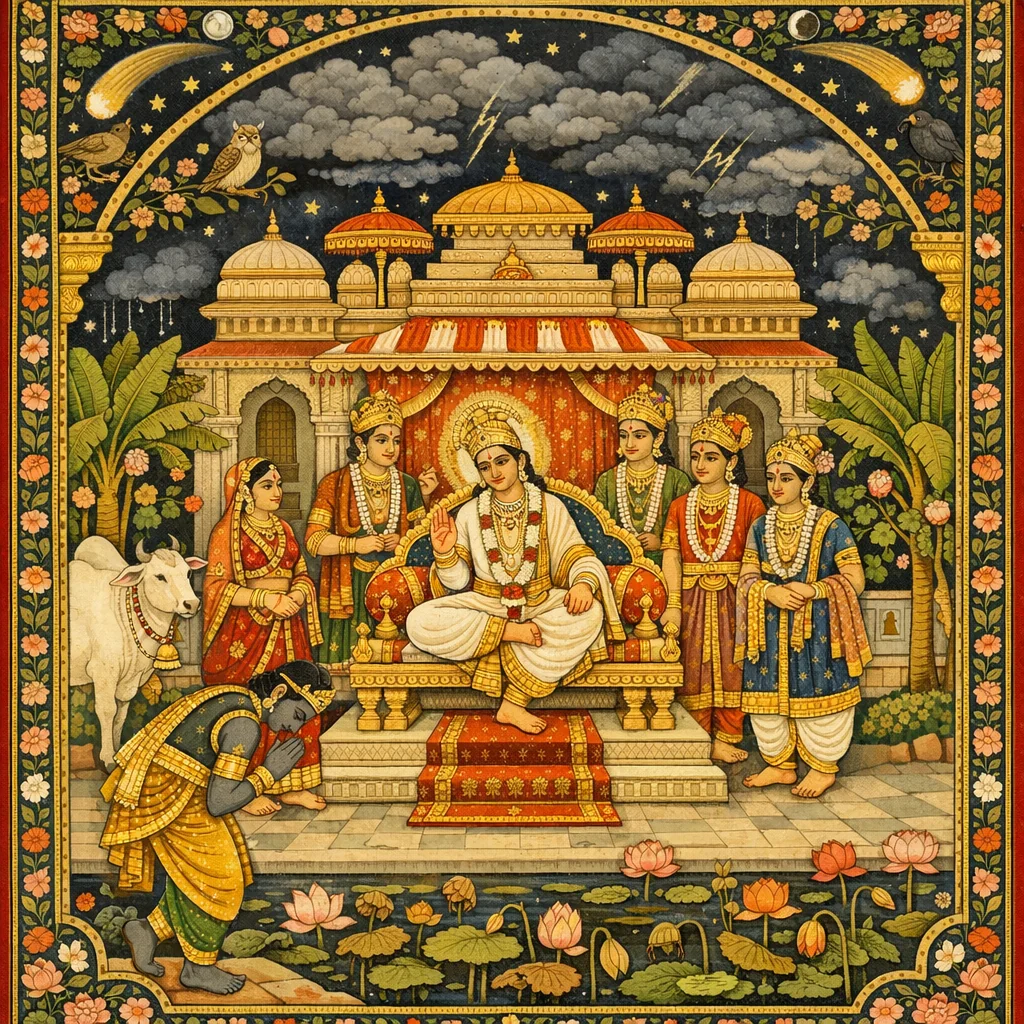
Amid Hastināpura’s post-war tension and dependence on Śrī Kṛṣṇa, Arjuna departs for Dvārakā to meet the Lord and learn His forthcoming intentions. Months pass without his return, and Mahārāja Yudhiṣṭhira senses a disturbance in kāla itself: seasons go awry, social virtue declines, and ominous portents appear in animals, weather, celestial signs, rivers, and even the temple Deities. He reads these not as private anxiety but as a world-scale calamity—perhaps the sign, as Nārada had hinted, that the Lord is withdrawing the presence of His lotus feet from the earth. At last Arjuna returns, shattered and drained of luster, confirming Yudhiṣṭhira’s fears. The chapter closes with Yudhiṣṭhira’s compassionate yet searching inquiry into the welfare of the Yadus and Kṛṣṇa’s associates, and whether Arjuna’s dejection stems from social failure or from the unbearable possibility of separation from Kṛṣṇa, setting the stage for the next chapter’s revelations about Dvārakā and the Lord’s departure.
Shlokas
Verse 1
सूत उवाच सम्प्रस्थिते द्वारकायां जिष्णौ बन्धुदिदृक्षया । ज्ञातुं च पुण्यश्लोकस्य कृष्णस्य च विचेष्टितम् ॥ १ ॥
Śrī Sūta Gosvāmī said: Arjuna, the conqueror (Jishnu), set out for Dvārakā to see his kinsmen and friends, and also to learn of the forthcoming divine pastimes of the Lord, Śrī Kṛṣṇa, famed in sacred praise.
Verse 2
व्यतीता: कतिचिन्मासास्तदा नायात्ततोऽर्जुन: । ददर्श घोररूपाणि निमित्तानि कुरूद्वह: ॥ २ ॥
A few months passed, yet Arjuna did not return. Then Mahārāja Yudhiṣṭhira, foremost of the Kurus, began to behold fearful and inauspicious omens.
Verse 3
कालस्य च गतिं रौद्रां विपर्यस्तर्तुधर्मिण: । पापीयसीं नृणां वार्तां क्रोधलोभानृतात्मनाम् ॥ ३ ॥
He perceived that the course of eternal Time had turned fierce, and that the laws of the seasons were overturned. The people had grown more sinful—hearts steeped in anger, greed, and falsehood—embracing base and impure means of livelihood.
Verse 4
जिह्मप्रायं व्यवहृतं शाठ्यमिश्रं च सौहृदम् । पितृमातृसुहृद्भ्रातृदम्पतीनां च कल्कनम् ॥ ४ ॥
Ordinary dealings became tainted with deceit, and even friendship was mixed with duplicity. In family life there were constant misunderstandings—between fathers, mothers, and sons, among well-wishers and brothers—and even between husband and wife there was strain and quarrel.
Verse 5
निमित्तान्यत्यरिष्टानि काले त्वनुगते नृणाम् । लोभाद्यधर्मप्रकृतिं दृष्ट्वोवाचानुजं नृप: ॥ ५ ॥
As time went on, exceedingly inauspicious omens appeared among men. Seeing their adharma-born nature—greed, anger, pride, and the like—King Yudhiṣṭhira spoke to his younger brother.
Verse 6
युधिष्ठिर उवाच सम्प्रेषितो द्वारकायां जिष्णुर्बन्धुदिदृक्षया । ज्ञातुं च पुण्यश्लोकस्य कृष्णस्य च विचेष्टितम् ॥ ६ ॥
Yudhiṣṭhira said: I sent Jishnu (Arjuna) to Dvārakā to see his kinsmen and friends, and also to learn the plan of work and the course of the līlās of Bhagavān Śrī Kṛṣṇa, who is praised by sacred fame (puṇya-śloka).
Verse 7
गता: सप्ताधुना मासा भीमसेन तवानुज: । नायाति कस्य वा हेतोर्नाहं वेदेदमञ्जसा ॥ ७ ॥
Bhīmasena, seven months have now passed since he departed, yet he has not returned. I do not know with certainty what the reason is there.
Verse 8
अपि देवर्षिणादिष्ट: स कालोऽयमुपस्थित: । यदात्मनोऽङ्गमाक्रीडं भगवानुत्सिसृक्षति ॥ ८ ॥
Has the time foretold by Devarṣi Nārada now arrived—when Bhagavān is about to withdraw His earthly pastimes (līlā) and depart?
Verse 9
यस्मान्न: सम्पदो राज्यं दारा: प्राणा: कुलं प्रजा: । आसन्सपत्नविजयो लोकाश्च यदनुग्रहात् ॥ ९ ॥
Only by His causeless mercy have we attained royal opulence, virtuous wives, life itself, our lineage and subjects, victory over rivals, and a place in higher worlds.
Verse 10
पश्योत्पातान्नरव्याघ्र दिव्यान् भौमान् सदैहिकान् । दारुणान् शंसतोऽदूराद्भयं नो बुद्धिमोहनम् ॥ १० ॥
O tiger among men, behold these dreadful portents—celestial, earthly, and bodily—so perilous in themselves; they bewilder our minds and foretell danger close at hand.
Verse 11
ऊर्वक्षिबाहवो मह्यं स्फुरन्त्यङ्ग पुन: पुन: । वेपथुश्चापि हृदये आराद्दास्यन्ति विप्रियम् ॥ ११ ॥
The left side of my body—thighs, arms, and eyes—keeps quivering again and again, and my heart trembles in fear; all this foretells unwelcome events.
Verse 12
शिवैषोद्यन्तमादित्यमभिरौत्यनलानना । मामङ्ग सारमेयोऽयमभिरेभत्यभीरुवत् ॥ १२ ॥
See, O Bhīma: the she-jackal cries toward the rising sun as if spewing fire, and this dog barks at me without fear.
Verse 13
शस्ता: कुर्वन्ति मां सव्यं दक्षिणं पशवोऽपरे । वाहांश्च पुरुषव्याघ्र लक्षये रुदतो मम ॥ १३ ॥
O Bhīmasena, tiger among men: auspicious animals like cows now pass on my left, while low creatures like asses circle on my right; and my horses seem to weep at the sight of me.
Verse 14
मृत्युदूत: कपोतोऽयमुलूक: कम्पयन् मन: । प्रत्युलूकश्च कुह्वानैर्विश्वं वै शून्यमिच्छत: ॥ १४ ॥
Behold—this pigeon seems like a messenger of death. The shrieks of the owls and their answering cries make my heart tremble, as if they long to turn the whole universe into emptiness.
Verse 15
धूम्रा दिश: परिधय: कम्पते भू: सहाद्रिभि: । निर्घातश्च महांस्तात साकं च स्तनयित्नुभि: ॥ १५ ॥
See how smoke encircles the sky like a ring. The earth, with its mountains, is throbbing. Hear the mighty thunder without clouds, and behold lightning in the clear blue.
Verse 16
वायुर्वाति खरस्पर्शो रजसा विसृजंस्तम: । असृग् वर्षन्ति जलदा बीभत्समिव सर्वत: ॥ १६ ॥
A harsh, violent wind is blowing, hurling dust and spreading darkness. Clouds everywhere seem to rain down dreadful calamity, as though it were a shower of blood.
Verse 17
सूर्यं हतप्रभं पश्य ग्रहमर्दं मिथो दिवि । ससङ्कुलैर्भूतगणैर्ज्वलिते इव रोदसी ॥ १७ ॥
Look—the sun’s radiance is struck down, and the heavenly bodies seem to clash in the sky. Bewildered beings appear as if aflame and weeping; heaven and earth seem to burn.
Verse 18
नद्यो नदाश्च क्षुभिता: सरांसि च मनांसि च । न ज्वलत्यग्निराज्येन कालोऽयं किं विधास्यति ॥ १८ ॥
Rivers and tributaries, ponds and reservoirs—and even the mind—are all disturbed. Fire will not ignite even with ghee. What strange, extraordinary time is this? What is about to happen?
Verse 19
न पिबन्ति स्तनं वत्सा न दुह्यन्ति च मातर: । रुदन्त्यश्रुमुखा गावो न हृष्यन्त्यृषभा व्रजे ॥ १९ ॥
The calves do not drink from the teats, nor do the mother cows yield milk. The cows stand weeping, their faces wet with tears, and even the bulls in Vraja find no joy in the pastures.
Verse 20
दैवतानि रुदन्तीव स्विद्यन्ति ह्युच्चलन्ति च । इमे जनपदा ग्रामा: पुरोद्यानाकराश्रमा: । भ्रष्टश्रियो निरानन्दा: किमघं दर्शयन्ति न: ॥ २० ॥
The Deities in the temples seem to be weeping, sweating, and as if about to depart. Cities and villages, gardens, mines, and hermitages have lost their beauty and all joy. What calamity are these omens showing us?
Verse 21
मन्य एतैर्महोत्पातैर्नूनं भगवत: पदै: । अनन्यपुरुषश्रीभिर्हीना भूर्हतसौभगा ॥ २१ ॥
I think these great disturbances foretell a grave loss of the world’s good fortune. The earth was blessed to bear the footprints of the Lord’s lotus feet; these signs indicate that this will be so no longer.
Verse 22
इति चिन्तयतस्तस्य दृष्टारिष्टेन चेतसा । राज्ञ: प्रत्यागमद् ब्रह्मन् यदुपुर्या: कपिध्वज: ॥ २२ ॥
O Brāhmaṇa, as Mahārāja Yudhiṣṭhira, his mind troubled by the inauspicious signs, was thus reflecting, Arjuna—bearing the monkey banner—returned from the city of the Yadus, Dvārakā.
Verse 23
तं पादयोर्निपतितमयथापूर्वमातुरम् । अधोवदनमब्बिन्दून् सृजन्तं नयनाब्जयो: ॥ २३ ॥
When he fell at the King’s feet, the King saw a dejection never witnessed before. His face was lowered, and tears slipped from his lotus eyes.
Verse 24
विलोक्योद्विग्नहृदयो विच्छायमनुजं नृप: । पृच्छति स्म सुहृन्मध्ये संस्मरन्नारदेरितम् ॥ २४ ॥
Seeing Arjuna pale with anxiety at heart, the King, recalling the signs spoken by the sage Nārada, questioned him in the midst of friends.
Verse 25
युधिष्ठिर उवाच कच्चिदानर्तपुर्यां न: स्वजना: सुखमासते । मधुभोजदशार्हार्हसात्वतान्धकवृष्णय: ॥ २५ ॥
Mahārāja Yudhiṣṭhira said: My dear brother, in the city of Ānarta are our kinsmen—Madhu, Bhoja, Daśārha, Ārha, Sātvata, Andhaka and the Vṛṣṇis of the Yadu line—passing their days in happiness?
Verse 26
शूरो मातामह: कच्चित्स्वस्त्यास्ते वाथ मारिष: । मातुल: सानुज: कच्चित्कुशल्यानकदुन्दुभि: ॥ २६ ॥
Tell me, dear brother: is our revered maternal grandsire Śūrasena in well-being? And are our maternal uncle Vasudeva (Ānakadundubhi) and his younger brothers all safe and sound?
Verse 27
सप्त स्वसारस्तत्पत्न्यो मातुलान्य: सहात्मजा: । आसते सस्नुषा: क्षेमं देवकीप्रमुखा: स्वयम् ॥ २७ ॥
His seven wives, headed by Devakī—who are all sisters—are they themselves, their sons, and their daughters-in-law all living in peace and happiness?
Verse 28
कच्चिद्राजाहुको जीवत्यसत्पुत्रोऽस्य चानुज: । हृदीक: ससुतोऽक्रूरो जयन्तगदसारणा: ॥ २८ ॥ आसते कुशलं कच्चिद्ये च शत्रुजिदादय: । कच्चिदास्ते सुखं रामो भगवान् सात्वतां प्रभु: ॥ २९ ॥
Are King Ugrasena—whose son was the wicked Kaṁsa—and his younger brother still alive? Are Hṛdīka and his son Kṛtavarmā, as well as Akrūra, Jayanta, Gada, Sāraṇa, Śatrujit and the others, all in good health? And how is Balarāma, Bhagavān, lord of the Sātvatas and protector of the devotees—does He dwell in happiness?
Verse 29
कच्चिद्राजाहुको जीवत्यसत्पुत्रोऽस्य चानुज: । हृदीक: ससुतोऽक्रूरो जयन्तगदसारणा: ॥ २८ ॥ आसते कुशलं कच्चिद्ये च शत्रुजिदादय: । कच्चिदास्ते सुखं रामो भगवान् सात्वतां प्रभु: ॥ २९ ॥
Does King Ugrasena—whose wicked son was Kaṁsa—and his younger brother still live? Are Hṛdīka and his son Kṛtavarmā dwelling in happiness? Are Akrūra, Jayanta, Gada, Sāraṇa, Śatrujit and the rest all well? And how is Lord Balarāma, Bhagavān, protector of the devotees and master of the Sātvatas—does He abide in joy?
Verse 30
प्रद्युम्न: सर्ववृष्णीनां सुखमास्ते महारथ: । गम्भीररयोऽनिरुद्धो वर्धते भगवानुत ॥ ३० ॥
How is Pradyumna, the great chariot-warrior of all the Vṛṣṇis—does he dwell in happiness? And does Aniruddha, the plenary expansion of Bhagavān, of profound prowess, prosper in well-being?
Verse 31
सुषेणश्चारुदेष्णश्च साम्बो जाम्बवतीसुत: । अन्ये च कार्ष्णिप्रवरा: सपुत्रा ऋषभादय: ॥ ३१ ॥
Are Suṣeṇa, Cārudeṣṇa, Sāmba the son of Jāmbavatī, and Ṛṣabha and the other foremost sons of Śrī Kṛṣṇa—together with their own sons—all faring well?
Verse 32
तथैवानुचरा: शौरे: श्रुतदेवोद्धवादय: । सुनन्दनन्दशीर्षण्या ये चान्ये सात्वतर्षभा: ॥ ३२ ॥ अपि स्वस्त्यासते सर्वे रामकृष्णभुजाश्रया: । अपि स्मरन्ति कुशलमस्माकं बद्धसौहृदा: ॥ ३३ ॥
Likewise, the attendants of Śauri (Kṛṣṇa)—Śrutadeva, Uddhava and others—and Nanda, Sunanda and the other foremost sātvatas, liberated leaders who are sheltered by the arms of Rāma and Kṛṣṇa: are they all safe and well in their respective services? And do they, bound to us by enduring friendship, remember our welfare?
Verse 33
तथैवानुचरा: शौरे: श्रुतदेवोद्धवादय: । सुनन्दनन्दशीर्षण्या ये चान्ये सात्वतर्षभा: ॥ ३२ ॥ अपि स्वस्त्यासते सर्वे रामकृष्णभुजाश्रया: । अपि स्मरन्ति कुशलमस्माकं बद्धसौहृदा: ॥ ३३ ॥
Likewise, the attendants of Śauri (Kṛṣṇa)—Śrutadeva, Uddhava and others—and Nanda, Sunanda and the other foremost sātvatas, liberated leaders who are sheltered by the arms of Rāma and Kṛṣṇa: are they all safe and well in their respective services? And do they, bound to us by enduring friendship, remember our welfare?
Verse 34
भगवानपि गोविन्दो ब्रह्मण्यो भक्तवत्सल: । कच्चित्पुरे सुधर्मायां सुखमास्ते सुहृद्वृत: ॥ ३४ ॥
Is Bhagavān Govinda—dear to the brāhmaṇas and ever affectionate to His devotees—happily residing in Dvārakā Purī, in the sacred Sudharmā assembly, surrounded by friends?
Verse 35
मङ्गलाय च लोकानां क्षेमाय च भवाय च । आस्ते यदुकुलाम्भोधावाद्योऽनन्तसख: पुमान् ॥ ३५ ॥ यद्बाहुदण्डगुप्तायां स्वपुर्यां यदवोऽर्चिता: । क्रीडन्ति परमानन्दं महापौरुषिका इव ॥ ३६ ॥
For the auspiciousness, protection, and flourishing of all worlds, the Ādi-Puruṣa—the primeval Lord, friend of Ananta (with Balarāma)—abides within the “ocean” of the Yadu dynasty.
Verse 36
मङ्गलाय च लोकानां क्षेमाय च भवाय च । आस्ते यदुकुलाम्भोधावाद्योऽनन्तसख: पुमान् ॥ ३५ ॥ यद्बाहुदण्डगुप्तायां स्वपुर्यां यदवोऽर्चिता: । क्रीडन्ति परमानन्दं महापौरुषिका इव ॥ ३६ ॥
Shielded by the Lord’s mighty arms in their own city and honored there, the Yadus sport in supreme bliss, as if they were residents of Vaikuṇṭha.
Verse 37
यत्पादशुश्रूषणमुख्यकर्मणा सत्यादयो द्व्यष्टसहस्रयोषित: । निर्जित्य सङ्ख्ये त्रिदशांस्तदाशिषो हरन्ति वज्रायुधवल्लभोचिता: ॥ ३७ ॥
By the foremost service of attending the Lord’s lotus feet, the queens of Dvārakā, headed by Satyabhāmā, moved the Lord to conquer the devas in battle; thus they enjoy blessings befitting the beloved of the thunderbolt-bearer, Indra.
Verse 38
यद्बाहुदण्डाभ्युदयानुजीविनो यदुप्रवीरा ह्यकुतोभया मुहु: । अधिक्रमन्त्यङ्घ्रिभिराहृतां बलात् सभां सुधर्मां सुरसत्तमोचिताम् ॥ ३८ ॥
The foremost Yadu heroes, sustained by the might of Śrī Kṛṣṇa’s arms, remain ever fearless; thus they stride with their feet across the Sudharmā assembly hall—fit for the best of devas, yet taken from them by force.
Verse 39
कच्चित्तेऽनामयं तात भ्रष्टतेजा विभासि मे । अलब्धमानोऽवज्ञात: किं वा तात चिरोषित: ॥ ३९ ॥
My brother Arjuna, are you in good health? You appear to have lost your bodily luster. Is it because of your long stay in Dvārakā that others have disrespected or neglected you?
Verse 40
कच्चिन्नाभिहतोऽभावै: शब्दादिभिरमङ्गलै: । न दत्तमुक्तमर्थिभ्य आशया यत्प्रतिश्रुतम् ॥ ४० ॥
Has anyone hurt you with harsh, inauspicious words or threatened you? Did you fail to give charity to one who asked, or fail to keep a promise after giving someone hope?
Verse 41
कच्चित्त्वं ब्राह्मणं बालं गां वृद्धं रोगिणं स्त्रियम् । शरणोपसृतं सत्त्वं नात्याक्षी: शरणप्रद: ॥ ४१ ॥
You are the giver of shelter, the protector of those who deserve protection—brāhmaṇas, children, cows, the aged, the sick, and women. Did anyone come to you for refuge, yet you failed to grant protection?
Verse 42
कच्चित्त्वं नागमोऽगम्यां गम्यां वासत्कृतां स्त्रियम् । पराजितो वाथ भवान्नोत्तमैर्नासमै: पथि ॥ ४२ ॥
Have you approached a woman of blameworthy conduct, or failed to properly honor a worthy woman? Or, on the road, were you defeated by someone equal to you or inferior?
Verse 43
अपि स्वित्पर्यभुङ्क्थास्त्वं सम्भोज्यान् वृद्धबालकान् । जुगुप्सितं कर्म किञ्चित्कृतवान्न यदक्षमम् ॥ ४३ ॥
Did you fail to care for the elderly and the boys who deserved to dine with you—leaving them behind and eating alone? Or have you committed some abominable, unforgivable mistake?
Verse 44
कच्चित् प्रेष्ठतमेनाथ हृदयेनात्मबन्धुना । शून्योऽस्मि रहितो नित्यं मन्यसे तेऽन्यथा न रुक् ॥ ४४ ॥
O lord, do you feel empty for all time because you have been bereft of your most intimate friend of the heart, Lord Śrī Kṛṣṇa? O brother Arjuna, I can see no other cause for your dejection.
Frequently Asked Questions
In the Bhāgavata worldview, kāla operates under the Lord, and the Lord’s manifest presence stabilizes dharma and prosperity. Yudhiṣṭhira’s omens span nature (seasons, rivers, celestial disorder), society (greed, deceit, family quarrel), and worship (Deities ‘weeping’), indicating a comprehensive withdrawal of auspiciousness (śrī). Because Nārada had already hinted at the Lord concluding His earthly līlā, Yudhiṣṭhira reads the converging signs as the world reacting to that impending separation.
Traditional reading allows both. Literally, they function as narrative indicators of a cosmic transition into Kali-yuga, where order (ṛta) becomes disrupted. Symbolically, they externalize the inner truth that without the Lord’s manifest līlā, human conduct decays and even sacred spaces feel bereft. The Bhāgavata uses omens to show that dharma is not merely social policy but a resonance with divine presence.
The Yadus are Kṛṣṇa’s dynastic community in Dvārakā, including clans and allies (Madhu, Bhoja, Daśārha, Sātvata, Andhaka, etc.). Yudhiṣṭhira’s catalog underscores Dvārakā as the Lord’s protective ‘ocean’ for His devotees and highlights the relational theology of the Bhāgavata: Kṛṣṇa’s presence is known through His devotees, family, and associates, not only through abstract divinity.
A dhārmic king diagnoses suffering by first examining possible breaches of duty (dharma): failure in charity, truthfulness, protection of the vulnerable, or moral conduct. Yet the questioning is also rhetorical and compassionate—Yudhiṣṭhira cannot find any plausible mundane cause sufficient to explain Arjuna’s collapse, directing the reader to the real cause: separation from Kṛṣṇa and the end of His manifest pastimes.