Adhyaya 1
स्त्रीपर्व १: धृतराष्ट्रशोकः संजयाश्वासनं च (Strī Parva 1: Dhṛtarāṣṭra’s Lament and Saṃjaya’s Consolation)
Upa-parva: Strī-parva Prathama Adhyāya (Dhṛtarāṣṭra-śoka–Saṃjaya-āśvāsana)
Janamejaya inquires about the reactions following Duryodhana’s death and the annihilation of forces, including the status of Yudhiṣṭhira, Kṛpa, and others, and asks for the subsequent report delivered by Saṃjaya. Vaiśaṃpāyana describes Dhṛtarāṣṭra as devastated—likened to a tree with severed branches—silent and overwhelmed by grief until Saṃjaya approaches. Saṃjaya urges him to recognize the scale of destruction (many akṣauhiṇīs lost), to accept that grief offers no practical aid, and to proceed with pretakārya (funerary rites) for fathers, sons, grandsons, kin, friends, and teachers. Dhṛtarāṣṭra collapses and then speaks: he laments being bereft—sonless, allyless, blind, dispossessed—and expresses regret for ignoring counsel from elders and sages; he recalls advice urging restraint and condemns his own failure to listen. Saṃjaya responds with admonitory ethics: grief does not restore outcomes; earlier indulgence and partiality enabled destructive associates and policies; one should act prudently early to avoid later remorse; anger should be abandoned through reason. The chapter ends by noting that, after Saṃjaya’s reassurance, Vidura continues with deliberate instruction, moving the scene toward reflective governance ethics.
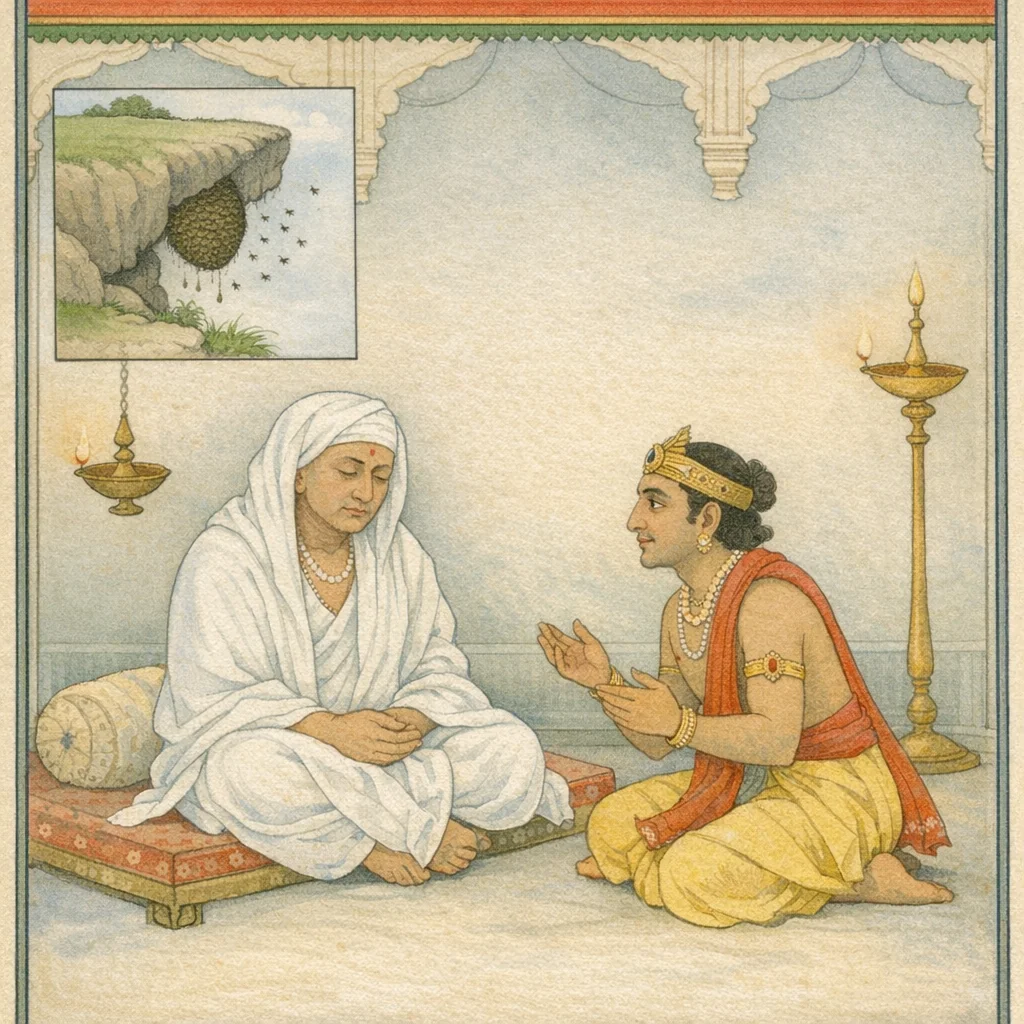
Chapter Arc: धृतराष्ट्र, पुत्र-विनाश के धुएँ में घिरे, संजय से पूछते हैं—धर्मपुत्र युधिष्ठिर और कृपाचार्य आदि बचे हुए प्रमुख जन अब क्या कर रहे हैं? → संजय मौन-सा, ध्यानमग्न और शोक-भार से दबा हुआ धृतराष्ट्र के पास आता है। धृतराष्ट्र अपने दुःख को कर्म-फल के प्रश्न में बदल देता है—‘मुझे तो कोई पूर्व दुष्कृत याद नहीं, फिर यह दारुण फल क्यों?’ शोक के साथ आत्म-आरोप और भाग्य-चिन्ता बढ़ती जाती है। → धृतराष्ट्र का अंतर्द्वंद्व चरम पर पहुँचता है: ‘अवश्य ही मैंने पूर्वजन्मों में कोई महान पाप किया होगा, जिससे विधाता ने मुझे इस दुःख में नियुक्त किया।’ संजय दृष्टान्त देकर समझाता है—जो केवल मधु (लाभ/सुख) देखकर प्रपात (पतन/विनाश) नहीं देखता, वह अंततः शोक में डूबता है; धृतराष्ट्र का मोह और पक्षपात उसी मधु-लोभ की तरह था। → संजय शोक को नीति में ढालता है—विनाश के कारणों की ओर संकेत करता है और धृतराष्ट्र को आत्म-निग्रह, विवेक और स्वीकार की ओर ले जाता है। कथा-धारा युद्धोत्तर शोक-परिवेश में स्थिर होती है, जहाँ अब ‘जीवितों का आचरण’ और ‘मृतकों का विलाप’ केंद्र बनने वाला है। → धृतराष्ट्र के प्रश्न खुले रह जाते हैं—युधिष्ठिर की मनःस्थिति क्या है, और स्त्रियों का विलाप तथा कुरु-वंश का अंतिम संस्कार-यात्रा किस रूप में फूटेगी?
Shlokas
Verse 1
दक्षिण भारतीय पाठसे लिये गये कं.“ उमा कक ९ सौप्तिकपर्वकी कुल श्लोकसंख्या ८१०॥। फल (0) आस॑अत+- ॥। ३० श्रीपरमात्मने नम: ।। श्रीमहाभारतम् स्त्रीपर्व जलप्रदानिकपर्व प्रथमो< ध्याय: धृतराष्ट्रका विलाप और संजयका उनको सान्त्वना देना नारायणं नमस्कृत्य नरं चैव नरोत्तमम् | देवीं सरस्वतीं व्यासं ततो जयमुदीरयेत् ।। अन्तर्यामी नारायणस्वरूप भगवान् श्रीकृष्ण, (उनके नित्य सखा) नरस्वरूप नरश्रेष्ठ अर्जुन, (उनकी लीला प्रकट करनेवाली) भगवती सरस्वती और (उनकी लीलाओंका संकलन करनेवाले) महर्षि वेदव्यासको नमस्कार करके जय (महाभारत)-का पाठ करना चाहिये। जनमेजय उवाच हते दुर्योधने चैव हते सैन्ये च सर्वशः । धृतराष्ट्रो महाराज श्रुत्वा किमकरोन्मुने,जनमेजयने पूछा--मुने! दुर्योधन और उसकी सारी सेनाका संहार हो जानेपर महाराज धृतराष्ट्रने जब इस समाचारको सुना तो क्या किया? इति श्रीमहाभारते स्त्रीपर्वणि जलप्रदानिकपर्वणि धृतराष्ट्रविशोककरणे प्रथमो5ध्याय:
Janamejaya said: “O sage, when Duryodhana had been slain and his entire army utterly destroyed, what did King Dhṛtarāṣṭra do upon hearing this news?”
Verse 2
तथैव कौरवो राजा धर्मपुत्रो महामना: । कृपप्रभृतयश्चैव किमकुर्वत ते त्रय:,इसी प्रकार कुरुवंशी राजा महामनस्वी धर्मपुत्र युधिष्ठिरने तथा कृपाचार्य आदि तीनों महारथियोंने भी इसके बाद क्या किया?
Janamejaya asked: “Likewise, what did the Kuru king, the noble-minded Dharmaputra (Yudhiṣṭhira), and those three great warriors beginning with Kṛpa do thereafter?”
Verse 3
अश्वृत्थाम्न: श्रुतं कर्म शापादन्योन्यकारितात् । वृत्तान्तमुत्तरं ब्रूहि यदभाषत संजय:,अश्व॒त्थामाको श्रीकृष्णसे और पाण्डवोंको अश्वत्थामासे जो परस्पर शाप प्राप्त हुए थे, वहाँतक मैंने अश्वत्थामाकी करतूत सुन ली। अब उसके बादका वृत्तान्त बताइये कि संजयने धृतराष्ट्रसे क्या कहा?
Janamejaya said: “I have heard of Aśvatthāman’s deed and of the mutual curses that arose from that imprecation. Now tell me what happened next—what further account did Sañjaya relate (to Dhṛtarāṣṭra)?”
Verse 4
वैशम्पायन उवाच हते पुत्रशते दीनं छिन्नशाखमिव द्रुमम् । पुत्रशोकाभिसंतप्तं धृतराष्ट्र महीपतिम्,वैशम्पायनजी बोले--राजन्! अपने सौ पुत्रोंके मारे जानेपर राजा धृतराष्ट्रकी दशा वैसी ही दयनीय हो गयी, जैसे समस्त शाखाओंके कट जानेपर वृक्षकी हो जाती है। वे पुत्रोंके शोकसे संतप्त हो उठे
Vaiśampāyana said: When his hundred sons had been slain, King Dhṛtarāṣṭra became utterly wretched—like a tree whose branches have been cut away. Scorched by grief for his sons, the lord of the earth was overwhelmed by sorrow.
Verse 5
ध्यानमूकत्वमापन्नं चिन्तया समभिप्लुतम् । अभिगम्य महाराज संजयो वाक्यमब्रवीत्,महाराज! उन्हीं पुत्रोंका ध्यान करते-करते वे मौन हो गये, चिन्तामें डूब गये। उस अवस्थामें उनके पास जाकर संजयने इस प्रकार कहा--
Overwhelmed by anxious reflection, the king had fallen into a silence born of deep contemplation. Approaching him in that state, Sañjaya addressed him with words meant to draw him back from grief and into mindful attention to what must now be faced.
Verse 6
कि शोचसि महाराज नास्ति शोके सहायता । अक्षौहिण्यो हताश्चाष्टी दश चैव विशाम्पते,“महाराज! आप क्यों शोक कर रहे हैं? इस शोकमें जो आपकी सहायता कर सके, आपका दु:ख बँटा ले, ऐसा भी तो कोई नहीं बच गया है। प्रजानाथ! इस युद्धमें अठारह अक्षौहिणी सेनाएँ मारी गयी हैं
Vaiśampāyana said: “Why do you grieve, O great king? In this grief there is no helper left—no one remains who can share or lessen your sorrow. O lord of the people, in this war eighteen akṣauhiṇīs of armies have been slain.”
Verse 7
निर्जनेयं वसुमती शून्या सम्प्रति केवला । नानादिग्भ्य: समागम्य नानादेश्या नराधिपा:
Vaiśampāyana said: “This earth has become deserted—now utterly empty and void. Yet kings, coming together from many directions and belonging to many different lands, have assembled.”
Verse 8
पितृणां पुत्रपौत्राणां ज्ञातीनां सुहृदां तथा । गुरूणां चानुपूर्व्येण प्रेतकार्याणि कारय,“राजन! अब आप क्रमशः अपने चाचा, ताऊ, पुत्र, पौत्र, भाई-बन्धु, सुहृद् तथा गुरुजनोंके प्रेतकार्य सम्पन्न कराइये”
Vaiśampāyana said: “O King, have the funerary rites performed, in due order, for your fathers and forefathers, for sons and grandsons, for kinsmen and well-wishers, and also for your teachers.” The verse underscores the ethical necessity of honoring the dead—especially after catastrophic violence—by restoring social and spiritual order through prescribed rites.
Verse 9
वैशम्पायन उवाच तच्छुत्वा करुणं वाक्यं पुत्रपौत्रवधार्दित: । पपात भुवि दुर्थधर्षो वाताहत इव द्रुम:,वैशम्पायनजी कहते हैं--नरेश्वर! संजयकी यह करुणाजनक बात सुनकर बेटों और पोतोंके वधसे व्याकुल हुए दुर्जय राजा धृतराष्ट्र आँधीके उखाड़े हुए वृक्षकी भाँति पृथ्वीपर गिर पड़े
Vaiśampāyana said: Hearing Sañjaya’s heart-rending words, the king Dhṛtarāṣṭra—tormented by the slaughter of his sons and grandsons—collapsed upon the earth, like a tree struck down by a violent wind. The scene underscores how the fruits of war return as unbearable grief, even to those who once clung to power and partiality.
Verse 10
धृतराष्ट उवाच हतपुत्रो हतामात्यो हतसर्वसुह्ृज्जन: । दुःखं नूनं भविष्यामि विचरन् पृथिवीमिमाम्
Dhṛtarāṣṭra said: “Bereft of my sons, bereft of my ministers, and with all my well-wishers slain, I shall surely become a man of sorrow, wandering upon this very earth.”
Verse 11
धृतराष्ट्र बोले--संजय! मेरे पुत्र, मन््त्री और समस्त सुहृद् मारे गये। अब तो अवश्य ही मैं इस पृथ्वीपर भटकता हुआ केवल दु:ख-ही-दुःख भोगूँगा ।। कि नु बन्धुविहीनस्य जीवितेन ममाद्य वै । लूनपक्षस्य इव मे जराजीर्णस्य पक्षिण:,जिसकी पाँखें काट ली गयी हों, उस जराजीर्ण पक्षीके समान बन्धु-बान्धवोंसे हीन हुए मुझ वृद्धको अब इस जीवनसे क्या प्रयोजन है?
Dhṛtarāṣṭra said: “Sañjaya! My sons, my ministers, and all my well-wishers have been slain. Now, surely, I shall wander upon this earth and taste nothing but sorrow upon sorrow. What use is life to me today, bereft of kin? Like an aged bird whose wings have been cut, what purpose can this life serve for me—an old man deprived of relatives and friends?”
Verse 12
हृतराज्यो हतबन्धुर्हतचक्षुश्व वै तथा । न भ्राजिष्ये महाप्राज्ञ क्षीणरश्मिरिवांशुमान्
Dhṛtarāṣṭra said: “Bereft of my kingdom, my kinsmen slain, and my sight destroyed as well, O greatly wise one, I shall no longer shine—like the sun whose rays have been drained away.”
Verse 13
महामते! मेरा राज्य छिन गया, बन्धु-बान्धव मारे गये और आँखें तो पहलेसे ही नष्ट हो चुकी थीं। अब मैं क्षीण किरणोंवाले सूर्यके समान इस जगतमें प्रकाशित नहीं होऊँगा ।। न कृतं सुहृदां वाक्यं जामदग्न्यस्य जल्पत: । नारदस्य च देवर्षे: कृष्णद्वैपायनस्य च,मैंने सुहृदोंकी बात नहीं मानी, जमदग्निनन्दन परशुराम, देवर्षि नारद तथा श्रीकृष्णद्वैधायन व्यास सबने हितकी बात बतायी थी, पर मैंने किसीकी नहीं सुनी
Dhṛtarāṣṭra said: “O wise one! My kingdom has been taken away; my kinsmen and relatives have been slain; and my eyes had already been destroyed long ago. Now I shall not shine in this world—like the sun whose rays have grown faint. I did not heed the counsel of my well-wishers: Paraśurāma, son of Jamadagni, the divine seer Nārada, and Kṛṣṇa Dvaipāyana Vyāsa. Though they spoke for my good, I listened to none.”
Verse 14
सभामध्ये तु कृष्णेन यच्छेयो5भिहितं मम । अलं वैरेण ते राजन पुत्र: संगृह्तामिति
Dhṛtarāṣṭra said: “In the royal assembly, Kṛṣṇa declared to me what was truly for my good: ‘Enough of enmity, O King; restrain your son.’” The line underscores the ethical demand to curb destructive hostility and to place responsibility on the ruler to govern his own household before it consumes the realm.
Verse 15
तच्च वाक्यमकृत्वाहं भृशं तप्यामि दुर्मति: । श्रीकृष्णने सारी सभाके बीचमें मेरे भलेके लिये कहा था--“राजन्! वैर बढ़ानेसे आपको क्या लाभ है? अपने पुत्रोंको रोकिये।। उनकी उस बातको न मानकर आज मैं अत्यन्त संतप्त हो रहा हूँ। मेरी बुद्धि बिगड़ गयी थी ।। न हि श्रोतास्मि भीष्मस्य धर्मयुक्त प्रभाषितम्
Dhritarashtra said: “Having failed to act upon that counsel, I am now tormented beyond measure—fool that I was. In the midst of the assembly, Shri Krishna spoke for my welfare: ‘O King, what gain is there for you in inflaming enmity? Restrain your sons.’ Because I did not accept his words, today I burn with deep remorse; my judgment had become perverted. Nor did I truly listen to Bhishma’s righteous, dharma-grounded advice.”
Verse 16
दुःशासनवधं श्रुत्वा कर्णस्य च विपर्ययम्
Dhṛtarāṣṭra said: “Having heard of Duḥśāsana’s slaying, and also of Karṇa’s disastrous reversal of fortune, …” The line conveys the king’s shock and moral disorientation as the consequences of adharma in the Kuru war return upon his sons and allies.
Verse 17
न स्मराम्यात्मन: किंचित् पुरा संजय दुष्कृतम्
Dhṛtarāṣṭra said: “Sañjaya, I do not recall that in earlier times I ever committed any wrongdoing of my own.”
Verse 18
नूनं व्यपकृतं किंचिन्मया पूर्वेषु जन्मसु
Surely, in former births I must have committed some wrongdoing; it is because of that past fault that this crushing calamity has come upon me now.
Verse 19
परिणामश्न वयस: सर्वबन्धुक्षयश्व मे,अब मेरा बुढ़ापा आ गया, सारे बन्धु-बान्धवोंका विनाश हो गया और दैववश मेरे सुहृदों तथा मित्रोंका भी अन्त हो गया। भला, इस भूमण्डलमें अब मुझसे बढ़कर महान् दुःखी दूसरा कौन होगा?
Dhṛtarāṣṭra said: “The inevitable change of age has overtaken me; all my kinsmen have been destroyed. And by the force of fate, even my well-wishers and friends have met their end. Tell me—upon this whole earth, who could be more grievously afflicted than I?”
Verse 20
सुहन्मित्रविनाश श्व दैवयोगादुपागत: । को<न्यो<$स्ति दुःखिततरो मत्तो5न्यो हि पुमान् भुवि,अब मेरा बुढ़ापा आ गया, सारे बन्धु-बान्धवोंका विनाश हो गया और दैववश मेरे सुहृदों तथा मित्रोंका भी अन्त हो गया। भला, इस भूमण्डलमें अब मुझसे बढ़कर महान् दुःखी दूसरा कौन होगा?
Verse 21
तन्मामद्यैव पश्यन्तु पाण्डवा: संशितव्रता: । विवृतं ब्रह्मलोकस्य दीर्घमध्वानमास्थितम्,इसलिये कठोर व्रतका पालन करनेवाले पाण्डवलोग मुझे आज ही ब्रह्मलोकके खुले हुए विशाल मार्गपर आगे बढ़ते देखें
Dhṛtarāṣṭra said: “Let the Pāṇḍavas, steadfast in their austere vows, see me this very day—having set forth upon the long road, the open and exalted path that leads to Brahmaloka.”
Verse 22
वैशमग्पायन उवाच तस्य लालप्यमानस्य बहुशोकं वितन्वतः । शोकापहां नरेन्द्रस्य संजयो वाक्यमब्रवीत्,वैशम्पायनजी कहते हैं--राजन्! इस प्रकार राजा धृतराष्ट्र जब बहुत शोक प्रकट करते हुए बारंबार विलाप करने लगे, तब संजयने उनके शोकका निवारण करनेके लिये यह बात कही--
Verse 23
शोकं राजन व्यपनुद श्रुतास्ते वेदनिश्चया: । शास्त्रागमाश्च विविधा वृद्धेभ्यो नृपसत्तम
Vaiśaṃpāyana said: O King, cast away your grief. You have already heard the settled conclusions of the Vedas, and you have also received from elders the diverse teachings of the śāstras and traditional authorities. Therefore, O best of kings, do not let sorrow overpower your discernment.
Verse 24
यथा यौवनजं दर्पमास्थिते त॑ं सुते नूप
Vaiśaṃpāyana said: “Just as youthful pride takes hold of a son—O king—so too did that arrogance settle in him,” indicating how immaturity and self-conceit can cloud judgment and lead one away from restraint and right conduct.
Verse 25
न त्वया सुद्दां वाक््यं॑ ब्रुवतामवधारितम् । “नरेश्वर! जब आपका पुत्र दुर्योधन जवानीके घमंडमें आकर मनमाना बर्ताव करने लगा, तब आपने हितकी बात बतानेवाले सुहृदोंके कथनपर ध्यान नहीं दिया ।। स्वार्थश्व न कृत: कश्चिल्लुब्धेन फलगृद्धिना
Vaiśaṃpāyana said: “You did not heed the firm counsel spoken by those who advised you. O king, when your son Duryodhana, intoxicated by the pride of youth, began to act according to his own will, you paid no attention to the words of well-wishing friends who spoke for your good. Indeed, a greedy man, craving the fruits of gain, accomplishes no true good—neither for others nor even for himself.”
Verse 26
असिनैवैकधारेण स्वबुद्धया तु विचेष्टितम् प्रायशो<वृत्तसम्पन्ना: सततं पर्युपासिता:
Vaiśaṃpāyana said: “With a sword’s single sharp edge, and by their own resolve, they acted and strove; for the most part, those endowed with proper conduct were continually attended upon and served.”
Verse 27
उसके मनमें लोभ था और वह राज्यका सारा लाभ स्वयं ही भोगना चाहता था, इसलिये उसने दूसरे किसीको अपने स्वार्थका सहायक या साझीदार नहीं बनाया। एक ओर धारवाली तलवारके समान अपनी ही बुद्धिसे सदा काम लिया। प्रायः जो अनाचारी मनुष्य थे, उन्हींका निरन्तर साथ किया ।। यस्य दुःशासनो मन्त्री राधेयश्व दुरात्मवान् । शकुनिश्चैव दुष्टात्मा चित्रसेनश्व दुर्मति:
He was driven by greed and wished to enjoy the entire profit of kingship alone; therefore he made no one else a helper or partner in his self-interest. Like a sharp-edged sword, he relied only on his own counsel, and he kept company chiefly with men of corrupt conduct. Of such a man, Duḥśāsana was the minister; and Rādheya (Karna), wicked-souled; and Śakuni too, of depraved nature; and Citrasena, of perverse intellect.
Verse 28
कुरुवृद्धस्य भीष्मस्य गान्धार्या विदुरस्यथ च,“महाराज! महाबाहो! भरतनन्दन! कुरुकुलके ज्ञानवृद्ध पुरुष भीष्म, गान्धारी, विदुर, द्रोणाचार्य, शरद्वानके पुत्र कृपाचार्य, श्रीकृष्ण, बुद्धिमान् देवर्षि नारद, अमिततेजस्वी वेदव्यास तथा अन्य महर्षियोंकी भी बातें आपके पुत्रने नहीं मानी
Vaiśaṃpāyana said: “O King, mighty-armed descendant of Bharata! Your son did not heed even the counsel of the elders and the wise of the Kuru line—Bhīṣma, Gāndhārī, Vidura, Droṇa, Kṛpa the son of Śaradvat, Śrī Kṛṣṇa, the discerning divine seer Nārada, the radiant sage Vedavyāsa, and other great ṛṣis. Thus, rejecting righteous advice, he chose a path that led to ruin.”
Verse 29
द्रोणस्प च महाराज कृपस्य च शरद्वत: । कृष्णस्य च महाबाहो नारदस्य च धीमत:,“महाराज! महाबाहो! भरतनन्दन! कुरुकुलके ज्ञानवृद्ध पुरुष भीष्म, गान्धारी, विदुर, द्रोणाचार्य, शरद्वानके पुत्र कृपाचार्य, श्रीकृष्ण, बुद्धिमान् देवर्षि नारद, अमिततेजस्वी वेदव्यास तथा अन्य महर्षियोंकी भी बातें आपके पुत्रने नहीं मानी
Vaiśaṃpāyana said: “O King, and O mighty-armed one! Your son did not heed the counsel of Drona, of Kripa the son of Śaradvat, of Krishna, and of the wise divine seer Narada.” In the ethical frame of the Strī Parva’s lamentation, this line underscores how the refusal to listen to venerable, well-wishing elders and sages becomes a moral cause of ruin, intensifying the tragedy that follows the war.
Verse 30
ऋषीणां च तथान्येषां व्यासस्यामिततेजस: । न कृतं तेन वचन तव पुत्रेण भारत,“महाराज! महाबाहो! भरतनन्दन! कुरुकुलके ज्ञानवृद्ध पुरुष भीष्म, गान्धारी, विदुर, द्रोणाचार्य, शरद्वानके पुत्र कृपाचार्य, श्रीकृष्ण, बुद्धिमान् देवर्षि नारद, अमिततेजस्वी वेदव्यास तथा अन्य महर्षियोंकी भी बातें आपके पुत्रने नहीं मानी
Vaiśaṃpāyana said: “O Bhārata, your son did not act upon the counsel given by the sages and by others—nor even by the mighty Vyāsa of immeasurable splendor.”
Verse 31
न धर्म: सत्कृत: वक्षिन्नित्यं युद्धमभीप्सता । अल्पबुद्धिरहंकारी नित्यं युद्धमिति ब्रुवन् । क्रूरो दुर्मर्षणो नित्यमसंतुष्टश्ष वीर्यवान्
Vaiśaṃpāyana said: “One who is ever intent on war does not honor dharma, yet he speaks as though he will expound it. Of little understanding and full of pride, he keeps declaring, ‘War, always war!’—cruel, hard to endure, perpetually dissatisfied, and yet powerful.”
Verse 32
“वह सदा युद्धकी ही इच्छा रखता था; इसलिये उसने कभी किसी धर्मका आदरपूर्वक अनुष्ठान नहीं किया। वह मन्दबुद्धि और अहंकारी था; अतः नित्य युद्ध-युद्ध ही चिल्लाया करता था। उसके हृदयमें क्रूरता भरी थी। वह सदा अमर्षमें भरा रहनेवाला, पराक्रमी और असंतोषी था (इसीलिये उसकी दुर्गति हुई है) ।। श्रुतवानसि मेधावी सत्यवांश्वैव नित्यदा । न मुहान्तीदृशा: सन््तो बुद्धिमन्तो भवादृशा:,“आप तो शास्त्रोंके विद्वान, मेधावी और सदा सत्यमें तत्पर रहनेवाले हैं। आप-जैसे बुद्धिमान् एवं साधु पुरुष मोहके वशीभूत नहीं होते हैं
Vaiśaṃpāyana said: He was always intent only on war; therefore he never performed any act of dharma with reverence. Dull-witted and arrogant, he would constantly cry out for “war, war.” Cruelty filled his heart. Ever seething with resentment, though powerful, he remained dissatisfied—hence his ruin. But you are learned in the sacred teachings, intelligent, and ever devoted to truth; wise and virtuous men like you are not overcome by delusion.
Verse 33
न धर्म: सत्कृतः कश्षित् तव पुत्रेण मारिष । क्षपिता: क्षत्रिया: सर्वे शत्रूणां वर्धितं यश:,“मान्यवर नरेश! आपके उस पुत्रने किसी भी धर्मका सत्कार नहीं किया। उसने सारे क्षत्रियोंका संहार करा डाला और शत्रुओंका यश बढ़ाया
Vaiśaṃpāyana said: “O venerable one, your son showed reverence to no principle of dharma. He brought about the destruction of all the kṣatriyas and, by his deeds, increased the fame of his enemies.”
Verse 34
मध्यस्थो हि त्वमप्यासीर्न क्षमं किज्चिदुक्तवान् । दुर्धरेण त्वया भारस्तुलया न सम॑ धृत:,“आप भी मध्यस्थ बनकर बैठे रहे, उसे कोई उचित सलाह नहीं दी। आप दुर्धर्ष वीर थे -- आपकी बात कोई टाल नहीं सकता था, तो भी आपने दोनों ओरके बोझेको समभावसे तराजूपर रखकर नहीं तौला
Verse 35
आदावेव मनुष्येण वर्तितव्यं यथाक्षमम् | यथा नातीतमर्थ वै पश्चात्तापेन युज्यते,“मनुष्यको पहले ही यथायोग्य बर्ताव करना चाहिये, जिससे आगे चलकर उसे बीती हुई बातके लिये पश्चात्ताप न करना पड़े
From the very outset, a person should conduct oneself as well as one is able; so that later one is not bound to remorse over what has already passed.
Verse 36
पुत्रगृद्धया त्वया राजन् प्रियं तस्य चिकीर्षितम् । पश्चात्तापमिमं प्राप्तो न त्वं शोचितुमरहसि,“राजन! आपने पुत्रके प्रति आसक्ति रखनेके कारण सदा उसीका प्रिय करना चाहा, इसीलिये इस समय आपको यह पश्चात्तापका अवसर प्राप्त हुआ है; अत: अब आप शोक न करें
Verse 37
मधु य: केवल दृष्टवा प्रपातं नानुपश्यति । स भ्रष्टो मधुलो भेन शोचत्येवं यथा भवान्,“जो केवल ऊँचे स्थानपर लगे हुए मधुको देखकर वहाँसे गिरनेकी सम्भावनाकी ओरसे आँख बंद कर लेता है, वह उस मधुके लालचसे नीचे गिरकर इसी तरह शोक करता है, जैसे आप कर रहे हैं
He who, seeing only the honey high up, refuses to consider the danger of a fall—such a man, driven by greed for that honey, slips down and then grieves in the very same way that you are grieving now. The saying warns that fixation on immediate gain, while ignoring foreseeable risk and consequence, ends in inevitable sorrow.
Verse 38
अर्थान्न शोचन् प्राप्नोति न शोचन् विन्दते फलम् | न शोचन् श्रियमाप्रोति न शोचन् विन्दते परम्,“शोक करनेवाला मनुष्य अपने अभीष्ट पदार्थोंको नहीं पाता है, शोकपरायण पुरुष किसी फलको नहीं हस्तगत कर पाता है। शोक करनेवालेको न तो लक्ष्मीकी प्राप्ति होती है और न उसे परमात्मा ही मिलता है
One who does not succumb to grief attains the desired ends; free from lamentation, he secures the fruits of action. Unconsumed by sorrow, he gains prosperity, and without grief he also reaches the highest good. In the aftermath of devastation, the verse urges steadiness of mind: grief, though natural, becomes an obstacle when it overwhelms duty, effort, and spiritual orientation.
Verse 39
स्वयमुत्पादयित्वाग्निं वस्त्रेण परिवेष्टयन् । दहाुमानो मनस्तापं भजते न स पण्डित:,“जो मनुष्य स्वयं आग जलाकर उसे कपड़ेमें लपेट लेता है और जलनेपर मन-ही-मन संतापका अनुभव करता है, वह बुद्धिमान् नहीं कहा जा सकता है
Vaiśaṃpāyana said: “A man who himself kindles a fire, wraps it in cloth, and then—when it burns him—suffers inward anguish, cannot be called wise.”
Verse 40
त्वयैव ससुतेनायं वाक्यवायुसमीरित: । लोभाज्येन च संसिक्तो ज्वलित: पार्थपावक:,“पुत्रसहित आपने ही अपने लोभरूपी घीसे सींचकर और वचनरूपी वायुसे प्रेरित करके पार्थरूपी अग्निको प्रज्वलित किया था
Vaiśaṃpāyana said: It was you yourself—together with your son—who fanned this fire of the Pārtha with the wind of provocative words, and who fed it with the ghee of greed, until it blazed. The verse frames the catastrophe of the war not as fate alone but as a human-made conflagration, ignited by counsel, desire, and deliberate incitement.
Verse 41
तस्मिन् समिद्धे पतिता: शलभा इव ते सुता: । तान् वै शराग्निनिर्दग्धान्न त्वं शोचितुमहसि,“उसी प्रज्वलित अग्निमें आपके सारे पुत्र पतंगोंके समान पड़ गये हैं। बाणोंकी आगमें जलकर भस्म हुए उन पुत्रोंके लिये आपको शोक नहीं करना चाहिये
Vaiśaṃpāyana said: “When that fire was blazing, your sons fell into it like moths. Since they were burned to ashes by the fire of arrows, you ought not to grieve for them.”
Verse 42
यच्चाश्रुपातात् कलिलं वदनं वहसे नृप । आशान्त्रदृष्टमेतद्धि न प्रशंसन्ति पण्डिता:,“नरेश्वरर आप जो आँसुओंकी धारासे भीगा हुआ मुँह लिये फिरते हैं, यह अशास्त्रीय कार्य है। विद्वान् पुरुष इसकी प्रशंसा नहीं करते हैं
Vaiśaṃpāyana said: “O king, the face you carry, muddied and drenched by the fall of tears—this is not sanctioned by the śāstras. The wise do not commend such conduct.”
Verse 43
विस्फुलिड्रा इव होतान् दहन्ति किल मानवान् | जहीहि मन्युं बुद्धया वै धारयात्मानमात्मना,“ये शोकके आँसू आगकी चिनगारियोंके समान इन मनुष्योंको नि:संदेह जलाया करते हैं; अतः आप शोक छोड़िये और बुद्धिके द्वारा अपने मनको स्वयं ही सुस्थिर कीजिये”
Vaiśaṃpāyana said: “Tears of grief, like sparks of fire, truly burn and consume people. Therefore, abandon wrath and sorrow; with clear understanding, steady your mind by your own self-control.”
Verse 44
वैशम्पायन उवाच एवमाश्वासितस्तेन संजयेन महात्मना । विदुरो भूय एवाह बुद्धिपूर्व परंतप,वैशम्पायनजी कहते हैं--शत्रुओंको संताप देनेवाले जनमेजय! महात्मा संजयने जब इस प्रकार राजा धृतराष्ट्रको आश्वासन दिया, तब विदुरजीने भी पुनः सान्त्वना देते हुए उनसे यह विचारपूर्ण वचन कहा
Vaiśampāyana said: Thus reassured by that great-souled Saṃjaya, Vidura once again spoke—addressing the king with words formed through careful judgment, meant to steady him amid grief and the ruin brought by war.
Verse 73
सहैव तव पुत्रेण सर्वे वै निधनं गता: । “इस समय यह पृथ्वी निर्जन होकर केवल सूनी-सी दिखायी देती है। नाना देशोंके नरेश विभिन्न दिशाओंसे आकर आपके पुत्रके साथ ही सब-के-सब कालके गालमें चले गये हैं
Vaiśaṃpāyana said: “Along with your son, all of them indeed have gone to their death.” The statement underscores the totality of the ruin brought by the war: not only the prince but the assembled kings and warriors who aligned with him have been swallowed by Time, leaving the world bereft and morally shaken by the consequences of adharma and destructive ambition.
Verse 156
दुर्योधनस्य च तथा वृषभस्येव नर्दतः । हाय! अब मैं भीष्मजीकी धर्मयुक्त बात नहीं सुन सकूँगा। साँड़के समान गर्जनेवाले दुर्योधनके वीरोचित वचन भी अब मेरे कानोंमें नहीं पड़ सकेंगे
Dhṛtarāṣṭra laments: “Alas! I shall no longer be able to hear Bhīṣma’s words, grounded in dharma; nor will the heroic speech of Duryodhana—roaring like a bull—ever again fall upon my ears.” The line underscores a father’s grief and belated recognition of the moral and martial voices silenced by the war’s ruin.
Verse 166
द्रोणसूर्योपरागं च हृदयं मे विदीर्यते । दुःशासन मारा गया, कर्णका विनाश हो गया और द्रोणरूपी सूर्यपर भी ग्रहण लग गया, यह सब सुनकर मेरा हृदय विदीर्ण हो रहा है
Dhṛtarāṣṭra said: “My heart is being torn apart. Hearing that Duḥśāsana has been slain, that Karṇa has met destruction, and that even the sun-like Droṇa has been eclipsed, I am shattered within.”
Verse 173
यस्येदं फलमद्येह मया मूढेन भुज्यते । संजय! इस जन्ममें पहले कभी अपना किया हुआ कोई ऐसा पाप मुझे नहीं याद आ रहा है, जिसका मुझ मूढ़को आज यहाँ यह फल भोगना पड़ रहा है
Dhṛtarāṣṭra said: “Sañjaya, I—deluded as I am—am suffering this consequence here today. Yet in this very life I cannot recall having committed any such sin earlier by my own hand for which I should now be forced to endure this result.”
Verse 186
येन मां दुःखभागेषु धाता कर्मसु युक्तवान् । अवश्य ही मैंने पूर्वजन्मोंमें कोई ऐसा महान् पाप किया है, जिससे विधाताने मुझे इन दुःखमय कर्मोंमें नियुक्त कर दिया है
Dhṛtarāṣṭra said: “There must be some deed by which the Ordainer has bound me to a share of sorrow. Surely, in former births I committed some great sin; therefore the Disposer has appointed me to these painful courses of action.”
Verse 236
सृञ्जये पुत्रशोकार्ते यदूचु्मुनय: पुरा । “नृपश्रेष्ठ राजन! आपने बड़े-बूढ़ोंके मुखसे वे वेदोंके सिद्धान्त, नाना प्रकारके शास्त्र एवं आमम सुने हैं, जिन्हें पूर्वकालमें मुनियोंने राजा सूंजयको पुत्रशोकसे पीड़ित होनेपर सुनाया था, अत: आप शोक त्याग दीजिये
Vaiśaṃpāyana said: “O king, you have heard from the mouths of elders those established conclusions of the Vedas and the many teachings of the śāstras—those very consolations that, in ancient times, sages spoke to King Sṛñjaya when he was tormented by grief for his son. Therefore, abandon your sorrow.”
Verse 273
शल्यश्न येन वै सर्व शल्यभूतं कृतं जगत् । “दुःशासन, दुरात्मा राधापुत्र कर्ण, दुष्टात्मा शकुनि, दुर्बुद्धि चित्रसेन तथा जिन्होंने सारे जगत्को शल्यमय (कण्टकाकीर्ण) बना दिया था वे शल्य--ये ही लोग दुर्योधनके मन्त्री थे
Vaiśaṃpāyana said: By those very men—who became like thorns and made the whole world a field of pain—namely Duḥśāsana, the wicked-souled Karṇa son of Rādhā, the evil-minded Śakuni, and the ill-counseling Citrasena, and others, the world was rendered ‘full of barbs.’ These thorn-like men were indeed the ministers and close advisers of Duryodhana, whose counsel intensified cruelty and drove events toward ruin.
Frequently Asked Questions
The dilemma is how a ruler should respond after irreversible collective loss: whether to remain immobilized by grief and self-pity or to assume responsibility through prescribed duties, ethical reflection, and restraint of anger.
Grief is not a means of repair; discernment and duty are. Saṃjaya teaches that earlier choices—partiality, greed, and ignored counsel—produce consequences, and that the appropriate response is reasoned composure and performance of obligations.
No explicit phalaśruti is stated here; the meta-function is transitional—moving from lamentation to normative instruction—signaled by Saṃjaya’s didactic counsel and the closing note that Vidura continues the ethical discourse.