Adhyaya 4
अध्याय ४ — दुर्योधनस्य असंधि-निश्चयः (Duryodhana’s Refusal of Reconciliation)
Upa-parva: Duryodhana–Gautama–Kṛpa Saṃvāda (Counsel on Saṃdhi vs. Suyuddha)
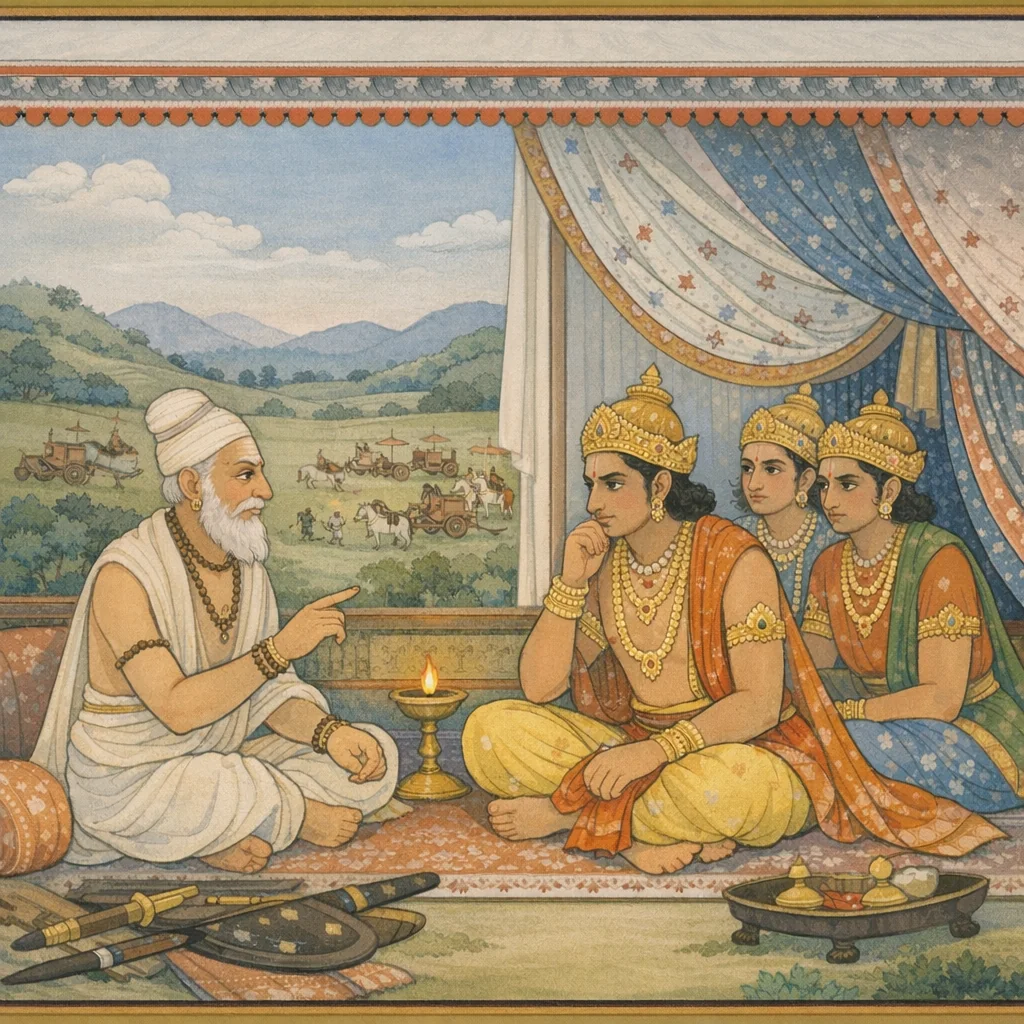
Saṃjaya reports that, after Gautama’s counsel, Duryodhana pauses in heated silence and then addresses Kṛpa. He acknowledges the advice as affectionate and beneficial in form, yet states it is psychologically and politically unacceptable. He argues that the Pāṇḍavas cannot trust him after the loss of their kingdom through dice, and that Kṛṣṇa, committed to Pārtha welfare and affronted by prior insult, would not endorse Duryodhana’s proposals. He enumerates enduring injuries: Draupadī’s public distress, Abhimanyu’s death, and the settled vows of Bhīma, the twins, Dhṛṣṭadyumna, and Śikhaṇḍin—making de-escalation infeasible. Duryodhana then advances a kṣatriya-ethical rationale: unstable worldly happiness, the pursuit of kīrti through battle, and the disrepute of dying at home. He frames battlefield death as a sanctioned path associated with heroic precedent and celestial reward, notes the ‘debt’ owed to fallen allies, and concludes that only a decisive engagement can answer his situation. The assembled kṣatriyas approve, regain morale, and the Kauravas relocate and ritually refresh near the Sarasvatī, preparing to continue operations.
Chapter Arc: संजय धृतराष्ट्र को रणभूमि का भयावह दृश्य सुनाते हैं—महात्माओं के टूटे रथ, गिरे हुए अश्व, और हाथियों की लाशों से भरा वह युद्ध-स्थल, मानो रुद्र का क्रीड़ांगन हो। → कौरव-सेना के विमुख होने और मनोबल टूटने पर कृपाचार्य दुर्योधन के पास आते हैं; वे अर्जुन को ‘चार-दाँत वाले गजराज’ की तरह सेना में घुसते देखे जाने का वर्णन करते हैं और बताते हैं कि ध्वजिनी का नेतृत्व नष्ट-सा हो गया है—ऐसी दशा में युद्ध का आग्रह आत्मघात है। → कृपाचार्य बृहस्पति-नीति का निर्णायक सूत्र रखते हैं—जब अपना बल घट रहा हो या सम हो, तब संधि खोजनी चाहिए; बढ़ते शत्रु से विग्रह नहीं, नीति यही है। वे दुर्योधन को स्पष्ट कहते हैं कि संधि ही क्षेम है, और यह उपदेश कायरता या प्राण-रक्षा के लोभ से नहीं, हित-बुद्धि से है। → कृपाचार्य यह भी जोड़ते हैं कि यदि श्रीकृष्ण युधिष्ठिर, अर्जुन और भीमसेन से जो कहेंगे, वे अवश्य मानेंगे—अर्थात संधि का द्वार अभी खुला है; दुर्योधन को समय रहते पहल करनी चाहिए। → दुर्योधन इस कठोर, हितकारी सलाह को स्वीकार करेगा या अपनी प्रतिज्ञा और अहंकार के वशीभूत होकर युद्ध को ही चुन लेगा—यही अनिश्चितता अगले प्रसंग की ओर धकेलती है।
Shlokas
Verse 1
नआऔका-<> 7 जल चतुथों5 ध्याय: कृपाचार्यका दुर्योधनको संधिके लिये समझाना संजय उवाच पतितान् रथनीडांश्व रथांश्वापि महात्मनाम् रणे च निहतान् नागान् दृष्टवा पत्तींश्ष मारिष,संजय कहते हैं--माननीय नरेश! उस समय रणभूमिमें महामनस्वी वीरोंके रथ और उनकी बैठकें टूटी पड़ी थीं। सवारोंसहित हाथी और पैदल सैनिक मार डाले गये थे। वह युद्धस्थल रुद्रदेवकी क्रीडाभूमि श्मशानके समान अत्यन्त भयानक जान पड़ता था और वहाँ लाखों नरेशोंका नामोनिशान मिट गया था। यह सब देखकर जब आपके पुत्र दुर्योधनका मन शोकमें डूब गया और उसने युद्धसे मुँह मोड़ लिया, कुन्तीपुत्र अर्जुनका पराक्रम देखकर समस्त सेनाएँ जब भयसे अत्यन्त व्याकुल हो उठीं और भारी दु:खमें पड़कर चिन्तामग्न हो गयीं, उस समय मथे जाते हुए सैनिकोंका जोर-जोरसे आर्तनाद सुनकर तथा राजाओंके चिह्नस्वरूप ध्वज आदिको युद्धस्थलमें क्षत-विक्षत हुआ देखकर प्रौढ़ अवस्था और उत्तम स्वभावसे युक्त तेजस्वी कृपाचार्यके मनमें बड़ी दया आयी। भरतवंशी नरेश! वे बातचीत करनेमें अत्यन्त कुशल थे। उन्होंने राजा दुर्योधनके निकट जाकर उसकी दीनता देखकर इस प्रकार कहा--
Sañjaya said: O venerable king, seeing on the battlefield the fallen chariots and their platforms of great-souled warriors, and seeing elephants and foot-soldiers slain in the fight, the scene appeared dreadful—like a cremation-ground, as if it were Rudra’s playground. Beholding this devastation, Duryodhana’s heart sank into grief and he turned away from the war; and when the armies, terrified by Arjuna’s prowess, became deeply shaken and anxious, Kṛpa—mature in years, noble in disposition, and skilled in counsel—was moved by compassion. Approaching Duryodhana in his dejection, he began to speak to him.
Verse 2
आयोधन चातिघोरें रुद्रस्याक्रीड संनिभम् । अप्रख्यातिं गतानां तु राज्ञां शतसहस्रश:,संजय कहते हैं--माननीय नरेश! उस समय रणभूमिमें महामनस्वी वीरोंके रथ और उनकी बैठकें टूटी पड़ी थीं। सवारोंसहित हाथी और पैदल सैनिक मार डाले गये थे। वह युद्धस्थल रुद्रदेवकी क्रीडाभूमि श्मशानके समान अत्यन्त भयानक जान पड़ता था और वहाँ लाखों नरेशोंका नामोनिशान मिट गया था। यह सब देखकर जब आपके पुत्र दुर्योधनका मन शोकमें डूब गया और उसने युद्धसे मुँह मोड़ लिया, कुन्तीपुत्र अर्जुनका पराक्रम देखकर समस्त सेनाएँ जब भयसे अत्यन्त व्याकुल हो उठीं और भारी दु:खमें पड़कर चिन्तामग्न हो गयीं, उस समय मथे जाते हुए सैनिकोंका जोर-जोरसे आर्तनाद सुनकर तथा राजाओंके चिह्नस्वरूप ध्वज आदिको युद्धस्थलमें क्षत-विक्षत हुआ देखकर प्रौढ़ अवस्था और उत्तम स्वभावसे युक्त तेजस्वी कृपाचार्यके मनमें बड़ी दया आयी। भरतवंशी नरेश! वे बातचीत करनेमें अत्यन्त कुशल थे। उन्होंने राजा दुर्योधनके निकट जाकर उसकी दीनता देखकर इस प्रकार कहा--
Sañjaya said: “O King, that battlefield had become exceedingly dreadful, like a playground of Rudra (Śiva) in his fierce aspect. There, in their hundreds of thousands, kings were reduced to obscurity—their fame and very trace erased amid the ruin of war.”
Verse 3
इस प्रकार श्रीमह्याभारत शल्यपर्वमें कौरवसेनाका पलायनविषयक तीसरा अध्याय पूरा हुआ,विमुखे तव पुत्रे तु शोकोपहतचेतसि । भृशोदिग्नेषु सैन्येषु दृष्टवा पार्थस्य विक्रमम् संजय कहते हैं--माननीय नरेश! उस समय रणभूमिमें महामनस्वी वीरोंके रथ और उनकी बैठकें टूटी पड़ी थीं। सवारोंसहित हाथी और पैदल सैनिक मार डाले गये थे। वह युद्धस्थल रुद्रदेवकी क्रीडाभूमि श्मशानके समान अत्यन्त भयानक जान पड़ता था और वहाँ लाखों नरेशोंका नामोनिशान मिट गया था। यह सब देखकर जब आपके पुत्र दुर्योधनका मन शोकमें डूब गया और उसने युद्धसे मुँह मोड़ लिया, कुन्तीपुत्र अर्जुनका पराक्रम देखकर समस्त सेनाएँ जब भयसे अत्यन्त व्याकुल हो उठीं और भारी दु:खमें पड़कर चिन्तामग्न हो गयीं, उस समय मथे जाते हुए सैनिकोंका जोर-जोरसे आर्तनाद सुनकर तथा राजाओंके चिह्नस्वरूप ध्वज आदिको युद्धस्थलमें क्षत-विक्षत हुआ देखकर प्रौढ़ अवस्था और उत्तम स्वभावसे युक्त तेजस्वी कृपाचार्यके मनमें बड़ी दया आयी। भरतवंशी नरेश! वे बातचीत करनेमें अत्यन्त कुशल थे। उन्होंने राजा दुर्योधनके निकट जाकर उसकी दीनता देखकर इस प्रकार कहा--
Sanjaya said: When your son turned away from the battle, his mind overwhelmed by grief, and when the armies, seeing the prowess of Partha (Arjuna), became intensely agitated with fear, the situation on the field shifted toward despair and disarray—setting the stage for counsel to the shaken king and a renewed reflection on duty amid catastrophe.
Verse 4
ध्यायमानेषु सैन्येषु दुःखं प्राप्तेषु भारत । बलानां मथ्यमानानां श्रुत्वा निनदमुत्तमम्,संजय कहते हैं--माननीय नरेश! उस समय रणभूमिमें महामनस्वी वीरोंके रथ और उनकी बैठकें टूटी पड़ी थीं। सवारोंसहित हाथी और पैदल सैनिक मार डाले गये थे। वह युद्धस्थल रुद्रदेवकी क्रीडाभूमि श्मशानके समान अत्यन्त भयानक जान पड़ता था और वहाँ लाखों नरेशोंका नामोनिशान मिट गया था। यह सब देखकर जब आपके पुत्र दुर्योधनका मन शोकमें डूब गया और उसने युद्धसे मुँह मोड़ लिया, कुन्तीपुत्र अर्जुनका पराक्रम देखकर समस्त सेनाएँ जब भयसे अत्यन्त व्याकुल हो उठीं और भारी दु:खमें पड़कर चिन्तामग्न हो गयीं, उस समय मथे जाते हुए सैनिकोंका जोर-जोरसे आर्तनाद सुनकर तथा राजाओंके चिह्नस्वरूप ध्वज आदिको युद्धस्थलमें क्षत-विक्षत हुआ देखकर प्रौढ़ अवस्था और उत्तम स्वभावसे युक्त तेजस्वी कृपाचार्यके मनमें बड़ी दया आयी। भरतवंशी नरेश! वे बातचीत करनेमें अत्यन्त कुशल थे। उन्होंने राजा दुर्योधनके निकट जाकर उसकी दीनता देखकर इस प्रकार कहा-- इति श्रीमहा भारते शल्यपर्वणि कृपवाक्ये चतुर्थो5ध्याय:
Sañjaya said: O Bhārata (Dhṛtarāṣṭra), when the armies were sunk in anxious reflection and had fallen into distress, and as the forces were being churned and crushed in the press of battle, hearing the mighty tumult and cries rising from that turmoil—
Verse 5
अभिन्ञानं नरेन्द्राणां विक्षतं प्रेक्ष्य संयुगे । कृपाविष्ट: कृपो राजन् वयःशीलसमन्वित:,संजय कहते हैं--माननीय नरेश! उस समय रणभूमिमें महामनस्वी वीरोंके रथ और उनकी बैठकें टूटी पड़ी थीं। सवारोंसहित हाथी और पैदल सैनिक मार डाले गये थे। वह युद्धस्थल रुद्रदेवकी क्रीडाभूमि श्मशानके समान अत्यन्त भयानक जान पड़ता था और वहाँ लाखों नरेशोंका नामोनिशान मिट गया था। यह सब देखकर जब आपके पुत्र दुर्योधनका मन शोकमें डूब गया और उसने युद्धसे मुँह मोड़ लिया, कुन्तीपुत्र अर्जुनका पराक्रम देखकर समस्त सेनाएँ जब भयसे अत्यन्त व्याकुल हो उठीं और भारी दु:खमें पड़कर चिन्तामग्न हो गयीं, उस समय मथे जाते हुए सैनिकोंका जोर-जोरसे आर्तनाद सुनकर तथा राजाओंके चिह्नस्वरूप ध्वज आदिको युद्धस्थलमें क्षत-विक्षत हुआ देखकर प्रौढ़ अवस्था और उत्तम स्वभावसे युक्त तेजस्वी कृपाचार्यके मनमें बड़ी दया आयी। भरतवंशी नरेश! वे बातचीत करनेमें अत्यन्त कुशल थे। उन्होंने राजा दुर्योधनके निकट जाकर उसकी दीनता देखकर इस प्रकार कहा--
Sañjaya said: O King, seeing on the battlefield the royal insignia—standards and marks of kingship—torn and shattered amid the clash of arms, Kṛpa, endowed with mature age and noble conduct, was overcome with compassion. In that moment, the ruin of kingly emblems and the suffering of warriors stirred in him a humane response, setting the stage for counsel meant to steady a mind shaken by grief and fear.
Verse 6
अब्रवीत् तत्र तेजस्वी सोडभिसृत्य जनाधिपम् । दुर्योधनं मन्युवशाद् वाक््यं वाक्यविशारद:,संजय कहते हैं--माननीय नरेश! उस समय रणभूमिमें महामनस्वी वीरोंके रथ और उनकी बैठकें टूटी पड़ी थीं। सवारोंसहित हाथी और पैदल सैनिक मार डाले गये थे। वह युद्धस्थल रुद्रदेवकी क्रीडाभूमि श्मशानके समान अत्यन्त भयानक जान पड़ता था और वहाँ लाखों नरेशोंका नामोनिशान मिट गया था। यह सब देखकर जब आपके पुत्र दुर्योधनका मन शोकमें डूब गया और उसने युद्धसे मुँह मोड़ लिया, कुन्तीपुत्र अर्जुनका पराक्रम देखकर समस्त सेनाएँ जब भयसे अत्यन्त व्याकुल हो उठीं और भारी दु:खमें पड़कर चिन्तामग्न हो गयीं, उस समय मथे जाते हुए सैनिकोंका जोर-जोरसे आर्तनाद सुनकर तथा राजाओंके चिह्नस्वरूप ध्वज आदिको युद्धस्थलमें क्षत-विक्षत हुआ देखकर प्रौढ़ अवस्था और उत्तम स्वभावसे युक्त तेजस्वी कृपाचार्यके मनमें बड़ी दया आयी। भरतवंशी नरेश! वे बातचीत करनेमें अत्यन्त कुशल थे। उन्होंने राजा दुर्योधनके निकट जाकर उसकी दीनता देखकर इस प्रकार कहा--
Sañjaya said: Then the radiant one—skilled in speech—approached the lord of men, King Duryodhana, and, driven by indignation (at the turn of events), addressed him with fitting words. In the ethical shadow of the battlefield’s ruin and the army’s despair, this approach signals an elder’s attempt to steady a shaken ruler and redirect him from grief and collapse toward resolve and duty as he understands it.
Verse 7
दुर्योधन निबोधेदं यत् त्वां वक्ष्यामि कौरव । श्रुत्वा कुरु महाराज यदि ते रोचतेडनघ,“कुरुवंशी महाराज दुर्योधन! मैं इस समय तुमसे जो कुछ कहता हूँ, उसे ध्यान देकर सुनो। अनघ! मेरी बात सुनकर यदि तुम्हें रुचे तो उसके अनुसार कार्य करो
Sanjaya said: “Duryodhana, O Kaurava, understand this—listen attentively to what I am about to tell you. Having heard it, O great king, act accordingly if it pleases you, O blameless one.”
Verse 8
न युद्धधर्माच्छेयान् वै पन्था राजेन्द्र विद्यते यं समाश्रित्य युद्धयन्ते क्षत्रिया: क्षत्रियर्षभ,राजेन्द्र! क्षत्रियशिरोमणे! युद्धधर्मसे बढ़कर दूसरा कोई कल्याणकारी मार्ग नहीं है, जिसका आश्रय लेकर क्षत्रिय लोग युद्धमें तत्पर रहते हैं
Sañjaya said: “O best of kings, there is truly no path more beneficial than the dharma of battle. Relying upon that very code, O bull among kṣatriyas, the warrior class engages in combat.”
Verse 9
पुत्रो भ्राता पिता चैव स्वस्रनीयो मातुलस्तथा । सम्बन्धिबान्धवाश्रैव योद्धया वै क्षत्रजीविना,'क्षत्रियधर्मसे जीवन-निर्वाह करनेवाले पुरुषके लिये पुत्र, भ्राता, पिता, भानजा, मामा, सम्बन्धी तथा बन्धु-बान्धव--इन सबके साथ युद्ध करना कर्तव्य है
Sañjaya said: For a man who lives by the kṣatriya calling—whose livelihood is sustained by the duties of warriorhood—it is indeed a duty to fight even against one’s own: son, brother, father, sister’s son, maternal uncle, and other relatives and kinsmen. In the harsh ethic of kṣatriya-dharma, personal ties do not exempt one from the obligations of battle when war has become the ordained course.
Verse 10
वधे चैव परो धर्मस्तथाधर्म: पलायने । ते सम घोरां समापन्ना जीविकां जीवितार्थिन:,'युद्धमें शत्रुकोी मारना या उसके हाथसे मारा जाना दोनों ही उत्तम धर्म है और युद्धसे भागनेपर महान् पाप होता है। सभी क्षत्रिय जीवन-निर्वाहकी इच्छा रखते हुए उसी घोर जीविकाका आश्रय लेते हैं
Verse 11
'ऐसी दशामें मैं यहाँ तुम्हारे लिये कुछ हितकी बात बताऊँगा। अनघ! पितामह भीष्म, आचार्य द्रोण, महारथी कर्ण, जयद्रथ तथा तुम्हारे सभी भाई मारे जा चुके हैं। तुम्हारा पुत्र लक्ष्मण भी जीवित नहीं है। अब दूसरा कौन बच गया है, जिसका हमलोग आश्रय ग्रहण करें
Sanjaya said: “In such a desperate situation, I will tell you something for your welfare. O blameless one! Grandfather Bhishma, the teacher Drona, the great chariot-warrior Karna, Jayadratha, and all your brothers have been slain. Your son Lakshmana too is no longer alive. Now who else remains, on whom can we take refuge?”
Verse 12
जयद्रथे च निहते तव भ्रातृषु चानघ । लक्ष्मणे तव पुत्रे च किं शेषं पर्युपास्महे,'ऐसी दशामें मैं यहाँ तुम्हारे लिये कुछ हितकी बात बताऊँगा। अनघ! पितामह भीष्म, आचार्य द्रोण, महारथी कर्ण, जयद्रथ तथा तुम्हारे सभी भाई मारे जा चुके हैं। तुम्हारा पुत्र लक्ष्मण भी जीवित नहीं है। अब दूसरा कौन बच गया है, जिसका हमलोग आश्रय ग्रहण करें
Sanjaya said: “When Jayadratha has been slain, and your brothers too, O blameless one—and when your son Lakshmana also is no more—what remains for us to rely upon? Whom else can we now look to for refuge?”
Verse 13
तदत्र प्रतिवक्ष्यामि किंचिदेव हितं वच: । हते भीष्मे च द्रोणे च कर्णे चैव महारथे,येषु भारं समासाद्य राज्ये मतिमकुर्महि । ते संत्यज्य तनूर्याता: शूरा ब्रह्म॒ुविदां गतिम् “जिनपर युद्धका भार रखकर हम राज्य पानेकी आशा करते थे, वे शूरवीर तो शरीर छोड़कर ब्रह्म॒वेत्ताओंकी गतिको प्राप्त हो गये
Sañjaya said: “Here I shall reply with a few words meant for your good. Bhīṣma has been slain, Droṇa has been slain, and Karṇa too—the great chariot-warrior. Those on whom we placed the burden of the war, fixing our minds on winning the kingdom through them—those heroes, abandoning their bodies, have gone to the destiny of the knowers of Brahman.”
Verse 14
वयं त्विह विना भूता गुणवद्धिर्महारथै: । कृपणं वर्तयिष्याम पातयित्वा नृपान् बहून्ू,“इस समय हमलोग यहाँ भीष्म आदि गुणवान् महारथियोंके सहयोगसे वंचित हो गये हैं और बहुत-से नरेशोंको मरवाकर दयनीय स्थितिमें आ गये हैं
Sañjaya said: “Here we are now left bereft of the support of those virtuous great chariot-warriors—Bhīṣma and the rest. Having caused many kings to fall, we must go on in a pitiable condition.”
Verse 15
सर्वैरथ च जीवद्धिरबीभत्सुरपराजित: । कृष्णनेत्रो महाबाहुर्देवेरपि दुरासद:,“जब सब लोग जीवित थे, तब भी अर्जुन किसीके द्वारा पराजित नहीं हुए। श्रीकृष्ण- जैसे नेताके रहते हुए महाबाहु अर्जुन देवताओं के लिये भी दुर्जय हैं
Sañjaya said: Even while all those warriors were still alive, Abhībhatsu (Arjuna) was never defeated by anyone. With Kṛṣṇa as his guide and leader, the mighty-armed Arjuna is unassailable—even for the gods. The statement underscores that righteous strength, when directed by wise counsel and aligned with dharma, becomes nearly invincible in the moral and strategic arena of war.
Verse 16
इन्द्रकार्मुकतुल्या भमिन्द्रकेतुमिवोच्छितम् । वानरं केतुमासाद्य संचचाल महाचमू:,“उनका वानरध्वज इन्द्रधनुषके तुल्य बहुरंगा और इन्द्रध्वजके समान अत्यन्त ऊँचा है। उसके पास पहुँचकर हमारी विशाल सेना भयसे विचलित हो उठती है
Sañjaya said: “His monkey-banner, many-hued like Indra’s rainbow and towering like Indra’s standard, stands aloft. Drawing near that emblem, our vast host is shaken—its confidence disturbed by fear.”
Verse 17
सिंहनादाच्च भीमस्य पाञज्चजन्यस्वनेन च । गाण्डीवस्य च निर्घोषात् सम्मुहान्ते मनांसि न:,'भीमसेनके सिंहनाद, पांचजन्य शंखकी ध्वनि और गाण्डीव धनुषकी टंकारसे हमारा दिल दहल उठता है
Sañjaya said: “At Bhīma’s lion-like roar, at the blare of the Pāñcajanya conch, and at the thunderous twang of the Gāṇḍīva bow, our hearts are thrown into confusion.” In the moral atmosphere of the war, these sounds signify not mere noise but the surge of righteous resolve that shakes the opposing side’s confidence.
Verse 18
चरन्तीव महाविद्युन्मुष्णन्ती नयनप्रभाम् । अलातमिव चाविद्धं गाण्डीवं समदृश्यत,“जैसे चमकती हुई महाविद्युत् नेत्रोंकी प्रभाको छीनती-सी दिखायी देती है तथा जैसे अलातचक्र घूमता देखा जाता है, उसी प्रकार अर्जुनके हाथमें गाण्डीव धनुष भी दृष्टिगोचर होता है
Sañjaya said: Arjuna’s Gāṇḍīva appeared as though it were a great lightning-flash, stealing the very radiance of the eyes; and like a whirling firebrand traced in a circle, it was seen spinning in swift motion—an image of irresistible martial energy on the battlefield.
Verse 19
जाम्बूनदविचित्रं च धूयमानं महद् धनु: । दृश्यते दिक्षु सर्वासु विद्युदभ्रधनेष्विव,'अर्जुनके हाथमें डोलता हुआ उनका सुवर्णजटित महान् धनुष सम्पूर्ण दिशाओंमें वैसा ही दिखायी देता है, जैसे मेघोंकी घटामें बिजली
Sañjaya said: “That great bow, richly inlaid with Jāmbūnada gold and swaying as it is brandished, is seen in every direction—like lightning flashing amid dense masses of clouds.”
Verse 20
श्वेताक्ष॒ वेगसम्पन्ना: शशिकाशसमप्रभा: । पिबन्त इव चाकाशं रथे युक्तास्तु वाजिन:,“उनके रथमें जुते हुए घोड़े श्वेत वर्णवाले, वेगशशाली तथा चन्द्रमा और कासके समान उज्ज्वल कान्तिसे सुशोभित हैं। वे ऐसी तीव्र गतिसे चलते हैं, मानो आकाशको पी जायूँगे
Sañjaya said: The horses yoked to the chariot were white-eyed, endowed with great speed, and radiant like the moon and the pale kāśa blossoms. They surged forward so swiftly that it seemed as though they would drink up the very sky—an image that heightens the war-scene’s intensity and the awe inspired by martial power.
Verse 21
उह्ममानांश्व॒ कृष्णेन वायुनेव बलाहका: । जाम्बूनदविचित्राज्ा वहन्ते चार्जुनं रणे,'जैसे वायुकी प्रेरणासे बादल उड़ते फिरते हैं, वैसे ही भगवान् श्रीकृष्णद्वारा हाँके जाते हुए घोड़े, जो सुनहरे साजोंसे सजे होनेके कारण अंगोंमें विचित्र शोभा धारण करते हैं, रणभूमिमें अर्जुनकी सवारी ढोते हैं
Sañjaya said: Just as clouds are driven onward by the wind, so Arjuna’s horses—urged on by Kṛṣṇa—swept across the battlefield. Adorned with gleaming golden trappings, they bore Arjuna into the fight, displaying a striking splendor even amid the violence of war.
Verse 22
तावकं तद् बलं राजन्नर्जुनो<स्त्रविशारद: । गहन शिशिरापाये ददाहाग्निरिवोल्बण:,“राजन! अर्जुन अस्त्रविद्यामें कुशल हैं, उन्होंने तुम्हारी सेनाको उसी प्रकार भस्म किया है, जैसे भयंकर आग ग्रीष्म-ऋतुमें बहुत बड़े जंगलको जला डालती है
Sañjaya said: “O King, Arjuna—master of weapons—has consumed that army of yours, burning it down like a fierce fire that, at the end of winter, sets a dense forest ablaze.” The image underscores the overwhelming, almost elemental force of skilled warfare when guided by resolve, and it frames the destruction as swift and inexorable rather than merely personal hatred.
Verse 23
गाहमानमनीकानि महेन्द्रसदृशप्रभम् | धनंजयमपश्याम चतुर्दष्टमिव द्विपम्,“देवराज इन्द्रके समान तेजस्वी अर्जुनको हम चार दाँतवाले गजराजके समान अपनी सेनामें प्रवेश करते देखते हैं
Sañjaya said: “We saw Dhanañjaya (Arjuna), radiant like Mahendra (Indra), plunging into the battle-formations—like a mighty elephant with four tusks entering the midst of an army.”
Verse 24
विक्षोभयन्तं सेनां ते त्रासयन्तं च पार्थिवान् | धनंजयमपश्याम नलिनीमिव कुठ्जरम्,“जैसे मतवाला हाथी तालाबमें घुसकर उसे मथ डालता है, उसी प्रकार हमने अर्जुनको तुम्हारी सेनाको मथते और राजाओंको भयभीत करते देखा है
Sañjaya said: “We saw Dhanañjaya (Arjuna) churning your army into turmoil and striking fear into the kings—like an elephant in rut entering a lotus-pond and violently stirring it up.”
Verse 25
त्रासयन्तं तथा योधान् धनुर्घोषेण पाण्डवम् । भूय एनमपश्याम सिंहं मृगगणानिव,'जैसे सिंह मृगोंके झुंडको भयभीत कर देता है, उसी प्रकार पाण्डुकुमार अर्जुन अपने धनुषकी टंकारसे तुम्हारे समस्त योद्धाओंको बारंबार भयभीत करते दिखायी दिये हैं
Sañjaya said: “We kept seeing that Pāṇḍava (Arjuna) again and again—terrifying the warriors with the thunder of his bow—just as a lion strikes fear into herds of deer.”
Verse 26
सर्वलोकमहेष्वासौ वृषभौ सर्वधन्विनाम् । आमुक्तकवचौ कृष्णौ लोकमध्ये विचेरतु:,“अपने अंगोंमें कवच धारण किये श्रीकृष्ण और अर्जुन, जो सम्पूर्ण विश्वके महाधनुर्धर और सम्पूर्ण धनुर्धरोंमें श्रेष्ठ हैं, योद्धाओंके समूहमें निर्भय विचरते हैं
Sañjaya said: Krishna and Arjuna—those two foremost heroes, the very bulls among all archers and great bowmen renowned throughout the worlds—moved fearlessly in the midst of the host, their armor fastened upon their limbs. The verse underscores their moral and martial steadiness: protected by discipline and preparedness, they stand as exemplars of resolute duty amid the chaos of war.
Verse 27
अद्य सप्तदशाहानि वर्तमानस्यथ भारत । संग्रामस्थातिघोरस्य वध्यतां चाभितो युधि,“भारत! परस्पर मार-काट मचाते हुए दोनों ओरसे योद्धाओंके इस अत्यन्त भयंकर संग्रामको आरम्भ हुए आज सत्रह दिन हो गये
Sañjaya said: “O Bhārata (Dhṛtarāṣṭra), today marks the seventeenth day since this exceedingly dreadful battle began—where, on every side in the fighting, warriors are being slain amid mutual slaughter.”
Verse 28
वायुनेव विधूतानि तव सैन्यानि सर्वतः । शरदम्भोदजालानि व्यशीर्यन्त समनन््तत:,'जैसे हवा शरद्-ऋतुके बादलोंको छिन्न-भिन्न कर देती है, उसी प्रकार अर्जुनकी मारसे तुम्हारी सेनाएँ सब ओर तितर-बितर हो गयी हैं
Sañjaya said: “Just as the wind in autumn tears apart and scatters masses of clouds, so too your armies, struck down in battle, were broken and dispersed in every direction.”
Verse 29
तां नावमिव पर्यस्तां वातधूतां महार्णवे । तव सेनां महाराज सव्यसाची व्यकम्पयत्,“महाराज! जैसे महासागरमें हवाके थपेड़े खाकर नाव डगमगाने लगती है, उसी प्रकार सव्यसाची अर्जुनने तुम्हारी सेनाको कँपा डाला है
Sanjaya said: “O great king, just as a boat on the vast ocean, struck and tossed by gusting winds, begins to reel, so has Arjuna—the ambidextrous master of the bow—shaken your army.” The image underscores the moral and psychological collapse that can overtake a force when confronted by superior skill and resolve in the midst of war.
Verse 30
क्व नु ते सूतपुत्रो5 भूत् क्व नु द्रोण: सहानुग: । अहं क्व च क्व चात्मा ते हार्दिक्यश्व तथा क्व नु,“उस दिन जयद्रथको अर्जुनके बाणोंका निशाना बनते देखकर भी तुम्हारा कर्ण कहाँ चला गया था? अपने अनुयायियोंके साथ आचार्य द्रोण कहाँ थे? मैं कहाँ था? तुम कहाँ थे? कृतवर्मा कहाँ चले गये थे और भाइयोंसहित तुम्हारा भ्राता दुःशासन भी कहाँ था?
Sañjaya said: “Where, then, was your charioteer-born son Karṇa? Where was Droṇa with his followers? Where was I, and where were you yourself? And where, indeed, was Hārdikya (Kṛtavarmā)?” (He presses Dhṛtarāṣṭra with a moral reproach: even while Jayadratha was being targeted by Arjuna’s arrows, the Kaurava leaders—who bore responsibility for protecting their ally and upholding their pledged duty in war—were absent or ineffective.)
Verse 31
दुःशासनश्र ते भ्राता भ्रातृभि: सहित: क्व नु । बाणगोचरसम्प्राप्त॑ प्रेक्ष्य चैव जयद्रथम्,“उस दिन जयद्रथको अर्जुनके बाणोंका निशाना बनते देखकर भी तुम्हारा कर्ण कहाँ चला गया था? अपने अनुयायियोंके साथ आचार्य द्रोण कहाँ थे? मैं कहाँ था? तुम कहाँ थे? कृतवर्मा कहाँ चले गये थे और भाइयोंसहित तुम्हारा भ्राता दुःशासन भी कहाँ था?
Sañjaya said: “And where indeed was your brother Duḥśāsana, accompanied by his brothers? Even while watching Jayadratha come within the range of Arjuna’s arrows, where were they?”
Verse 32
सम्बन्धिनस्ते भ्रातृश्च सहायान् मातुलांस्तथा | सर्वान् विक्रम्प मिषतो लोकमाक्रम्य मूर्थनि,“राजन! तुम्हारे सम्बन्धी, भाई, सहायक और मामा सब-के-सब देख रहे थे तो भी अर्जुनने उन सबको अपने पराक्रमद्वारा परास्त करके सब लोगोंके मस्तकपर पैर रखकर जयद्रथको मार डाला। अब और कौन बचा है जिसका हम भरोसा करें? यहाँ कौन ऐसा पुरुष है जो पाण्डुपुत्र अर्जुनपर विजय पायेगा?
Sañjaya said: “O King, though your kinsmen—your brothers, allies, and maternal uncles—were all watching, Arjuna overpowered them all by his prowess and, trampling over the heads of men, slew Jayadratha. Who remains now on whom we may place our trust? Who here is the man that can win victory over Arjuna, the son of Pāṇḍu?”
Verse 33
जयद्रथो हतो राजन् कि नु शेषमुपास्महे | को हीह स पुमानस्ति यो विजेष्यति पाण्डवम्,“राजन! तुम्हारे सम्बन्धी, भाई, सहायक और मामा सब-के-सब देख रहे थे तो भी अर्जुनने उन सबको अपने पराक्रमद्वारा परास्त करके सब लोगोंके मस्तकपर पैर रखकर जयद्रथको मार डाला। अब और कौन बचा है जिसका हम भरोसा करें? यहाँ कौन ऐसा पुरुष है जो पाण्डुपुत्र अर्जुनपर विजय पायेगा?
Sañjaya said: “O King, Jayadratha has been slain. On whom, then, are we to rely as what remains? Who indeed is there here—what man—who can overcome the Pāṇḍava (Arjuna)?”
Verse 34
तस्य चास्त्राणि दिव्यानि विविधानि महात्मन: । गाण्डीवस्य च निर्घोषो धैर्याणि हरते हि न:,“महात्मा अर्जुनके पास नाना प्रकारके दिव्यास्त्र हैं। उनके गाण्डीव धनुषका गम्भीर घोष हमारा धैर्य छीन लेता है
Sañjaya said: “That great-souled Arjuna possesses many kinds of celestial weapons; and the deep, thunderous roar of his Gāṇḍīva bow truly steals away our courage.”
Verse 35
नष्टचन्द्रा यथा रात्रि: सेनेयं हतनायका । नागभग्नद्रुमा शुष्का नदीवाकुलतां गता,'जैसे चन्द्रमाके उदित न होनेपर रात्रि अन्धकारमयी दिखायी देती है, उसी प्रकार हमारी यह सेना सेनापतिके मारे जानेसे श्रीहीन हो रही है। हाथीने जिसके किनारेके वृक्षोंको तोड़ डाला हो, उस सूखी नदीके समान यह व्याकुल हो उठी है
Sañjaya said: “Just as a night appears dark when the moon is lost, so too this army of ours—its commander slain—has become bereft of splendor and confidence. Like a dried-up river whose bank-trees have been shattered by elephants, it has fallen into agitation and disorder.”
Verse 36
ध्वजिन्यां हतनेत्रायां यथेष्टे श्वेतवाहन: । चरिष्यति महाबाहु: कक्षेष्वग्निरिव ज्वलन्,“हमारी इस विशाल वाहिनीका नेता नष्ट हो गया है। ऐसी दशामें घास-फ़ूसके ढेरमें प्रजवलित होनेवाली आगके समान श्वेत घोड़ोंवाले महाबाहु अर्जुन इस सेनाके भीतर इच्छानुसार विचरेंगे
Verse 37
सात्यकेश्वैव यो वेगो भीमसेनस्य चो भयो: । दारयेच्च गिरीन् सर्वान् शोषयेच्चैव सागरान्,“उधर सात्यकि और भीमसेन दोनों वीरोंका जो वेग है, वह सारे पर्वतोंको विदीर्ण कर सकता है। समुद्रोंको भी सुखा सकता है
Sañjaya said: The sheer momentum and force of both Sātyaki and Bhīmasena is such that it could split all mountains and even dry up the oceans. In the ethical frame of the war, this is a heightened praise of their martial energy—power that, when yoked to righteous purpose, becomes decisive, yet also reminds the listener of how destructive unrestrained might can be.
Verse 38
उवाच वाक्य यद् भीम: सभामध्ये विशाम्पते । कृतं तत् सफल तेन भूयश्नैव करिष्यति,'प्रजानाथ! द्यूतसभामें भीमसेनने जो बात कही थी, उसे उन्होंने सत्य कर दिखाया और जो शेष है, उसे भी वे अवश्य ही पूर्ण करेंगे
Sanjaya said: O lord of the people, the words that Bhima spoke in the midst of the royal assembly—he has made them come true by his deeds. And what still remains, he will surely accomplish as well. The narrative underscores the moral force of a vowed word: in the crucible of war, Bhima’s earlier oath in the dice-hall is shown not as mere anger, but as a binding commitment pursued to restore justice and answer humiliation with accountable action.
Verse 39
प्रमुखस्थे तदा कर्णे बल॑ पाण्डवरक्षितम् | दुरासदं तदा गुप्तं व्यूढं गाण्डीवधन्चना,“जब कर्णके साथ युद्ध चल रहा था, उस समय कर्ण सामने ही था तो भी पाण्डवोंद्वारा रक्षित सेना उसके लिये दुर्जय हो गयी; क्योंकि गाण्डीवधारी अर्जुन व्यूहरचनापूर्वक उसकी रक्षा कर रहे थे
Verse 40
युष्माभिस्तानि चीर्णानि यान्यसाधूनि साधुषु । अकारणकृतान्येव तेषां व: फलमागतम्,'पाण्डव साधुपुरुष हैं तो भी तुमलोगोंने अकारण ही उनके साथ जो बहुत-से अनुचित बर्ताव किये हैं, उन्हींका यह फल तुम्हें मिला है
Sanjaya said: The wrongful acts you committed against the righteous—done without any just cause—have now returned to you as their inevitable consequence. Since the Pāṇḍavas are men of virtue, your unprovoked misconduct toward them has ripened into this very result you are suffering.
Verse 41
आत्मनोडर्थे त्वया लोको यत्नतः सर्व आहृत: । स ते संशायितस्तात आत्मा वै भरतर्षभ,“भरतश्रेष्ठ! तुमने अपनी रक्षाके लिये ही प्रयत्नपूर्वक सारे जगत्के लोगोंको एकत्र किया था, किंतु तुम्हारा ही जीवन संशयमें पड़ गया है
Sañjaya said: “O bull among the Bharatas, for the sake of your own security you had, with great effort, gathered people from all quarters. Yet now, dear one, it is your very life that has fallen into uncertainty.”
Verse 42
रक्ष दुर्योधनात्मानमात्मा सर्वस्य भाजनम् | भिन्ने हि भाजने तात दिशो गच्छति तद्गतम्,“दुर्योधन! अब तुम अपने शरीरकी रक्षा करो; क्योंकि आत्मा (शरीर) ही समस्त सुखोंका भाजन है। जैसे पात्रके फ़ूट जानेपर उसमें रखा हुआ जल चारों ओर बह जाता है, उसी प्रकार शरीरके नष्ट होनेसे उसपर अवलम्बित सुखोंका भी अन्त हो जाता है
Sañjaya said: “Protect yourself, Duryodhana; for the embodied self—the body—is the vessel of all enjoyments. When a vessel is broken, what it contained runs off in every direction; so too, when the body is destroyed, the pleasures that depend upon it come to an end.”
Verse 43
हीयमानेन वै सन्धि: पर्येष्टव्य:ः समेन वा । विग्रहो वर्धमानेन मतिरेषा बृहस्पते:,“बृहस्पतिकी यह नीति है कि जब अपना बल कम या बराबर जान पड़े तो शत्रुके साथ संधि कर लेनी चाहिये। लड़ाई तो उसी वक्त छेड़नी चाहिये, जब अपनी शक्ति शत्रुसे बढ़ी- चढ़ी हो
Sañjaya said: “When one’s strength is declining—or even when it is merely equal—one should seek a treaty. But when one’s power is on the rise, then one should choose open conflict. Such, they say, is the counsel of Bṛhaspati.”
Verse 44
ते वयं पाण्डुपुत्रेभ्यो हीना सम बलशक्तित: । तदत्र पाण्डवै: सार्ध सन्धिं मन्ये क्षमं प्रभो,“हमलोग बल और शक्तिमें पाण्डवोंसे हीन हो गये हैं। अतः प्रभो! इस अवस्थामें पाण्डवोंके साथ संधि कर लेना ही उचित समझता हूँ
Sañjaya said: “We have become inferior to the sons of Pāṇḍu in equal measure of strength and power. Therefore, O lord, in this situation I judge it proper to make a treaty with the Pāṇḍavas.”
Verse 45
न जानीते हि य: श्रेय: श्रेयसश्चावमन्यते । सक्षिप्रं भ्रश्यते राज्यान्न च श्रेयोडनुविन्दते,“जो राजा अपनी भलाईकी बात नहीं समझता और श्रेष्ठ पुरुषोंका अपमान करता है, वह शीघ्र ही राज्यसे भ्रष्ट हो जाता है। उसे कभी कल्याणकी प्राप्ति नहीं होती
Sañjaya said: The king who neither understands what truly leads to his welfare nor respects those who embody the higher good quickly falls away from his kingdom; and he never attains lasting well-being. The verse frames political ruin as the ethical consequence of ignoring sound counsel and scorning the virtuous.
Verse 46
प्रणिपत्य हि राजानं राज्यं यदि लभेमहि । श्रेय: स्यान्न तु मौढ्येन राजन् गन्तु: पराभवम्,“राजन! यदि राजा युधिष्ठिरके सामने नतमस्तक होकर हम अपना राज्य प्राप्त कर लें तो यही श्रेयस्कर होगा। मूर्खतावश पराजय स्वीकार करनेवालेका कभी भला नहीं हो सकता
Sañjaya said: “O King, if by bowing down before the king (Yudhiṣṭhira) we could regain our kingdom, that would be the wiser and more beneficial course. But to march on, out of sheer folly, toward an acknowledged defeat—there can be no good in that.”
Verse 47
वैचित्रवीर्यवचनात् कृपाशीलो युधिष्ठिर: । विनियुज्जीत राज्ये त्वां गोविन्दवचनेन च,'युधिष्ठिर दयालु हैं। वे राजा धृतराष्ट्र और भगवान् श्रीकृष्णके कहनेसे तुम्हें राज्यपर प्रतिष्ठित कर सकते हैं
Sañjaya said: “At the word of Dhṛtarāṣṭra (descended from Vicitravīrya), the compassionate Yudhiṣṭhira—also at Govinda’s urging—could install you in the kingship.”
Verse 48
यद् ब्रूयाद्धि हृषीकेशो राजानमपराजितम् । अर्जुनं भीमसेनं च सर्वे कुर्युरसंशयम्
Sanjaya said: Whatever Hṛṣīkeśa (Kṛṣṇa) were to tell the unconquered king, and Arjuna and Bhīmasena as well—everyone would carry it out, without doubt. The verse underscores Kṛṣṇa’s moral authority and the trust his counsel commands amid the pressures of war.
Verse 49
“भगवान् श्रीकृष्ण किसीसे पराजित न होनेवाले राजा युधिष्ठिर, अर्जुन और भीमसेनसे जो कुछ भी कहेंगे, वे सब लोग उसे नि:संदेह स्वीकार कर लेंगे ।। नातिक्रमिष्यते कृष्णो वचनं कौरवस्य तु । धृतराष्ट्रस्य मन्ये5हं नापि कृष्णस्य पाण्डव:,“कुरुराज धृतराष्ट्रकी बात श्रीकृष्ण नहीं टालेंगे और श्रीकृष्णकी आज्ञाका उल्लंघन युधिष्ठिर नहीं कर सकेंगे, ऐसा मेरा विश्वास है
Sanjaya said: Whatever the Blessed Krishna may say to King Yudhishthira—unconquered in resolve—as well as to Arjuna and Bhimasena, they will all accept it without doubt. I believe Krishna will not set aside the word of Dhritarashtra, the lord of the Kurus; and likewise the Pandava (Yudhishthira) will not be able to transgress Krishna’s command. Thus, authority and restraint—rooted in dharma and political obligation—are shown to bind both sides even amid the pressures of war.
Verse 50
एतत् क्षेममहं मन्ये न च पार्थश्च विग्रहम् । नत्वां ब्रवीमि कार्पण्यान्न प्राणपरिरक्षणात्
Sañjaya said: “I consider this course to be the safer and more wholesome one, and I do not think that Pārtha should enter into a quarrel. I say this to you not out of cowardly faint-heartedness, nor from any desire to save my own life.”
Verse 51
पथ्यं राजन् ब्रवीमि त्वां तत्परासु: स्मरिष्यसि । “राजन! मैं इस संधिको ही तुम्हारे लिये कल्याणकारी मानता हूँ। पाण्डवोंके साथ किये जानेवाले युद्धको नहीं। मैं कायरता या प्राण-रक्षाकी भावनासे यह सब नहीं कहता हूँ। तुम्हारे हितकी बात बता रहा हूँ। तुम मरणासन्न अवस्थामें मेरी यह बात याद करोगे || ५० न! इति वृद्धों विलप्यैतत् कृप: शारद्वतो वच: । दीर्घमुष्णं च नि:श्वस्य शुशोच च मुमोह च,शरद्वानके पुत्र वृद्ध कृपाचार्य इस प्रकार विलाप करके गरम-गरम लंबी साँस खींचते हुए शोक और मोहके वशीभूत हो गये
Sañjaya said: “O King, I tell you what is wholesome and truly for your good; when you are at the very edge of life, you will remember this.” Having lamented thus, the aged Kṛpa—son of Śāradvat—replied, “No.” Then, drawing long, hot breaths, he sank into grief and bewilderment.
Frequently Asked Questions
Whether a ruler should pursue reconciliation for collective welfare when advised by elders, or continue a destructive course because trust has collapsed and prior harms make ethical and political restoration appear unattainable.
The chapter illustrates how unresolved wrongdoing and public injury can harden positions beyond pragmatic repair, and how role-based ethics (kṣatra-dharma) may be invoked to prioritize honor and reputation over compromise.
No explicit phalaśruti is stated; the meta-significance lies in its function as a late-war justification discourse that clarifies character motivation and the ethical vocabulary used to rationalize continued conflict.