Adhyaya 2
Daiva–Puruṣakāra Saṃvāda (Kṛpa’s Counsel on Destiny and Human Effort)
Upa-parva: Kṛpa–Nīti Discourse on Daiva and Puruṣakāra (Sauptika Parva, Adhyāya 2 context)
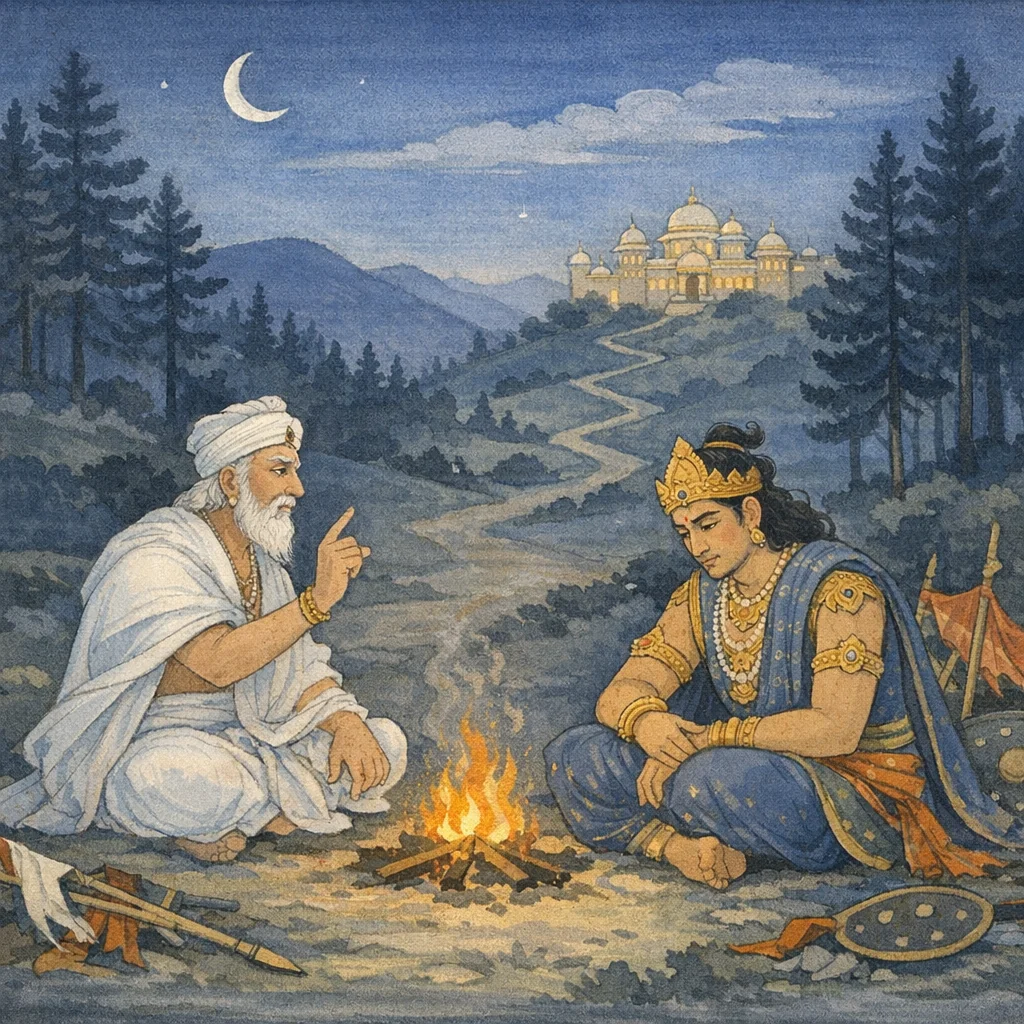
This chapter presents Kṛpa’s systematic argument that human outcomes are bound to two operative causes: daiva (destiny/circumstance) and puruṣakāra (initiative/effort). He rejects one-sided explanations—neither fate alone nor effort alone reliably produces results—arguing instead for their conjunction. Through agricultural analogies, he explains that rain without cultivation and cultivation without rain are both insufficient, making success contingent on coordinated conditions. Kṛpa then differentiates prudent diligence from sloth, noting that the wise exert themselves while recognizing uncertainty, whereas the idle disparage exertion. He observes that effort can still fail due to adverse conditions, and that unearned gain attracts social censure. The discourse turns to governance: proper initiative includes reverence to the divine, ethical intent, and especially consultation with elders and competent advisors; he proposes approaching Dhṛtarāṣṭra, Gāndhārī, and Vidura for guidance. Finally, Kṛpa critiques Duryodhana’s earlier policy failures—ignoring well-wishers and engaging in hostility against more virtuous opponents—framing the present crisis as the consequence of deficient deliberation and ethically compromised motivation.
Chapter Arc: रात्रि के रक्त-धुएँ के बाद, अश्वत्थामा के भीतर प्रतिशोध की ज्वाला धधकती है; तभी कृपाचार्य उसे रोककर कहते हैं—जो वचन तुमने कहा, उसे मैंने सुन लिया, पर पहले विचार करो कि कर्तव्य क्या है। → कृप ‘दैव’ और ‘पुरुषकार’ के द्वंद्व को सामने रखते हैं—मनुष्य दोनों से बँधा है; न केवल दैव से कार्य सिद्ध होते हैं, न केवल कर्म से, सिद्धि उनके योग से आती है। वे चेताते हैं कि मोह में पड़ा मनुष्य हित-अहित का निर्णय खो देता है, इसलिए सत्पुरुषों से सलाह लेना ही रक्षा है। → कृप का निर्णायक उपदेश: जब बुद्धि भ्रमित हो जाए, तब सुहृदों/विद्वानों से पूछो; वे कारण-निर्णय करके जैसी सलाह दें, वैसा ही करना चाहिए—और दैव-पुरुषार्थ में दैव की प्रबलता को पहचानकर भी पुरुषार्थ से विमुख न हो। → अध्याय का निष्कर्ष ‘आचरण-नीति’ बनता है—कार्य आरम्भ किए बिना प्रयोजन सिद्ध नहीं होता; यदि पुरुषार्थ के बाद भी सिद्धि न मिले तो उसे दैव-आघात मानकर अनावश्यक आत्मदाह/विवाद न करो। → कृप का प्रस्ताव उभरता है—चलो धृतराष्ट्र, गांधारी और महामति विदुर से पूछें; अब प्रश्न है कि यह सलाह अश्वत्थामा के उग्र संकल्प को मोड़ेगी या उसे और घातक दिशा देगी।
Shlokas
Verse 1
/ द्वितीयो5 ध्याय: कृपाचार्यका अश्वत्थामाको दैवकी प्रबलता बताते कर्तव्यके विषयमें सत्पुरुषोंसे सलाह लेनेकी प्रेरणा कृप उवाच श्रुतं ते वचनं सर्व यद् यदुक्त त्वया विभो । ममापि तु वच: किंचिच्छृणुष्वाद्य महाभुज,तब कृपाचार्यने कहा--शक्तिशाली महाबाहो! तुमने जो-जो बात कही है, वह सब मैंने सुन ली। अब कुछ मेरी भी बात सुनो
Kripa said: “Mighty one, I have heard in full whatever you have said. Now, O strong-armed hero, listen today to a few words from me as well.”
Verse 2
आबद्धा मानुषा: सर्वे निबद्धा: कर्मणोर्द्दयो: । दैवे पुरुषकारे च परं ताभ्यां न विद्यते,सभी मनुष्य प्रारब्ध और पुरुषार्थ दो प्रकारके कर्मोंसे बँधे हुए हैं। इन दोके सिवा दूसरा कुछ नहीं है इति श्रीमहाभारते सौप्तिकपर्वणि द्रौणिकृपसंवादे द्वितीयोडध्याय:
Kṛpa said: All human beings are bound—indeed tightly bound—by two kinds of causality in action: destiny (what is ordained) and personal effort (what one undertakes). Beyond these two, there is no third factor to appeal to. In the ethical atmosphere of the Sauptika narrative, this reflection frames responsibility and inevitability together: human outcomes arise from the tension between what is fated and what is chosen.
Verse 3
न हि दैवेन सिध्यन्ति कार्याण्येकेन सत्तम । न चापि कर्मणैकेन द्वाभ्यां सिद्धस्तु योगत:
Kṛpa said: “O best of men, undertakings do not succeed by fate alone; nor do they succeed by human effort alone. Success is truly achieved through the proper conjunction of both.”
Verse 4
सत्पुरुषोंमें श्रेष्ठ अश्वत्थामन्! केवल दैव या प्रारब्धसे अथवा अकेले पुरुषार्थसे भी कार्योंकी सिद्धि नहीं होती है। दोनोंके संयोगसे ही सिद्धि प्राप्त होती है ।। ताभ्यामुभाभ्यां सर्वार्था निबद्धा अधमोत्तमा: । प्रवृत्ताश्वैव दृश्यन्ते निवृत्ताश्विव सर्वश:,उन दोनोंसे ही उत्तम-अधम सभी कार्य बँधे हुए हैं। उन्हींसे प्रवृत्ति और निवृत्ति- सम्बन्धी कार्य होते देखे जाते हैं
Kṛpa said: “O Aśvatthāman, best among the noble—success in undertakings does not arise from fate (or what has already begun to bear fruit) alone, nor from human effort alone. Accomplishment is attained only from the conjunction of both. From these two are bound all ends—high and low alike; and by them, everywhere, one sees actions of engagement as well as actions of withdrawal.”
Verse 5
पर्जन्य: पर्वते वर्षन् किन्नु साधयते फलम् । कृष्टे क्षेत्रे तथा वर्षन् किन्न साधयते फलम्,बादल पर्वतपर वर्षा करके किस फलकी सिद्धि करता है? वही यदि जोते हुए खेतमें वर्षा करे तो वह कौन-सा फल नहीं उत्पन्न कर सकता?
Kṛpa said: “When rain falls upon a mountain, what fruit does it truly accomplish? But when that same rain falls upon a ploughed field, what fruit is there that it cannot bring forth?” In context, the saying urges that effort and resources yield results only when directed to a prepared and worthy ground—an ethical reminder to place one’s support, counsel, and strength where it can become constructive rather than wasted.
Verse 6
उत्थान चाप्यदैवस्य हानुत्थानं च दैवतम् । व्यर्थ भवति सर्वत्र पूर्वस्तत्र विनिश्चय:,दैवरहित पुरुषका पुरुषार्थ व्यर्थ है और पुरुषार्थशून्य दैव भी व्यर्थ हो जाता है। सर्वत्र ये दो ही पक्ष उठाये जाते हैं। इन दोनोंमें पहला पक्ष ही सिद्धान्तभूत एवं श्रेष्ठ है (अर्थात् दैवके सहयोगके बिना पुरुषार्थ नहीं काम देता है)
Kṛpa said: “Effort without the support of destiny comes to nothing; and destiny, when unaccompanied by effort, is equally fruitless. Everywhere people argue these two positions, but here the settled conclusion is that the former is the sounder and higher view: without the concurrence of fate, mere human striving does not succeed.”
Verse 7
सुवृष्टे च यथा देवे सम्यक क्षेत्रे च कर्षिते । बीजं महागुणं भूयात् तथा सिद्धिर्हि मानुषी,जैसे मेघने अच्छी तरह वर्षा की हो और खेतको भी भलीभाँति जोता गया हो, तब उसमें बोया हुआ बीज अधिक लाभदायक हो सकता है। इसी प्रकार मनुष्योंकी सारी सिद्धि दैव और पुरुषार्थके सहयोगपर ही अवलम्बित है
Kṛpa said: “Just as seed becomes highly fruitful when the gods send timely rain and the field has been properly ploughed, so too human success arises only from the conjunction of divine favor and personal effort.”
Verse 8
तयोर्देवं विनिश्ित्य स्वयं चैव प्रवर्तते | प्राज्ञा: पुरुषकारेषु वर्तन्ते दाक्ष्यमाश्रिता:,इन दोनोंमें दैव बलवान् है। वह स्वयं ही निश्चय करके पुरुषार्थकी अपेक्षा किये बिना ही फल-साधमननमें प्रवृत्त हो जाता है, तथापि विद्वान् पुरुष कुशलताका आश्रय ले पुरुषार्थमें ही प्रवृत्त होते हैं
Between those two, it is Fate (daiva) that proves stronger: having, as it were, determined the outcome by itself, it sets the process of results in motion without waiting upon human effort. Yet the wise, taking refuge in skill and practical competence, still engage in deliberate human endeavor—choosing action and strategy even under the shadow of destiny.
Verse 9
इस प्रकार श्रीमह्याभारत सौप्तिकपर्वमें अश्वत्थामाकी मन्त्रणाविषयक पहला अध्याय पूरा हुआ,ताभ्यां सर्वे हि कार्यार्था मनुष्याणां नरर्षभ | विचेष्टन्त: सम दृश्यन्ते निवृत्तास्तु तथैव च नरश्रेष्ठ! मनुष्योंके प्रवृत्ति और निवृत्ति-सम्बन्धी सारे कार्य दैव और पुरुषार्थ दोनोंसे ही सिद्ध होते देखे जाते हैं
Sanjaya said: O bull among men, all human undertakings are seen to be accomplished through both of these—destiny and personal effort. Whether people are actively striving or have withdrawn from action, their outcomes alike appear to arise from the joint working of fate and human endeavor. Thus, neither mere exertion nor mere resignation alone can fully account for what comes to pass.
Verse 10
कृत: पुरुषकारश्न सो5पि दैवेन सिध्यति । तथास्य कर्मण: कर्तुरभिनिर्वर्ततेी फलम्,किया हुआ पुरुषार्थ भी दैवके सहयोगसे ही सफल होता है तथा दैवकी अनुकूलतासे ही कर्ताको उसके कर्मका फल प्राप्त होता है
Kṛpa said: Even effort that has been duly made by a person succeeds only with the support of destiny. Likewise, it is only when fate is favorable that the doer truly obtains the fruit of his actions. In this moment of counsel amid the aftermath of war, the verse frames human agency as real yet limited, urging humility and ethical sobriety: outcomes are not secured by exertion alone, and one must not mistake power or planning for guaranteed success.
Verse 11
उत्थानं च मनुष्याणां दक्षाणां दैववर्जितम् । अफल दृश्यते लोके सम्यगप्युपपादितम्,चतुर मनुष्योंद्वारा अच्छी तरह सम्पादित किया हुआ पुरुषार्थ भी यदि दैवके सहयोगसे वंचित है तो वह संसारमें निष्फल होता दिखायी देता है
Kṛpa said: Even the energetic striving of capable people, if deprived of the support of destiny, is seen in this world to become fruitless—though it may have been carried out with full care and competence. The verse underscores a sober ethical reflection in the war’s aftermath: human effort matters, yet outcomes can still be overturned by forces beyond one’s control, urging humility and restraint in judging success or failure.
Verse 12
तत्रालसा मनुष्याणां ये भवन्त्यमनस्विन: । उत्थान ते विगर्हन्ति प्राज्ञानां तन्न रोचते,मनुष्योंमें जो आलसी और मनपर काबू न रखनेवाले होते हैं, वे पुरुषार्थकी निन्दा करते हैं। परंतु विद्वानोंको यह बात अच्छी नहीं लगती
Here, those men who are indolent and lack mastery over their minds disparage effort and purposeful striving. But such contempt for initiative does not find favor with the wise, for the discerning uphold disciplined exertion as the proper course.
Verse 13
प्रायशो हि कृतं कर्म नाफलं दृश्यते भुवि । अकृत्वा च पुनर्दु:खं कर्म पश्येन्महाफलम्,प्राय: किया हुआ कर्म इस भूतलपर कभी निष्फल होता नहीं देखा जाता है; परंतु कर्म न करनेसे दुःखकी प्राप्ति ही देखनेमें आती है; अतः कर्मको महान् फलदायक समझना चाहिये
Kṛpa said: “In this world, an action that is undertaken is generally not seen to be fruitless. But when one refrains from acting, one again sees only the coming of suffering. Therefore, one should regard action as yielding great results.”
Verse 14
चेष्टामकुर्वल्लैभते यदि किंचिद् यदृच्छया । यो वा न लभते कृत्वा दुर्दर्शा तावुभावषि,यदि कोई पुरुषार्थ न करके दैवेच्छासे ही कुछ पा जाता है अथवा जो पुरुषार्थ करके भी कुछ नहीं पाता, इन दोनों प्रकारके मनुष्योंका मिलना बहुत कठिन है
Kṛpa said: “If someone, without making any effort, happens to gain something merely by chance, or if another, even after exerting himself, gains nothing—encountering either of these two kinds of persons is exceedingly rare.”
Verse 15
शवक्नोति जीवितुं दक्षो नालस: सुखमेधते । दृश्यन्ते जीवलोकेडस्मिन् दक्षा: प्रायो हितैषिण:,पुरुषार्थमें लगा हुआ दक्ष पुरुष सुखसे जीवन-निर्वाह कर सकता है; परंतु आलसी मनुष्य कभी सुखी नहीं होता है। इस जीव-जगतमें प्राय: तत्परतापूर्वक कर्म करनेवाले ही अपना हित साधन करते देखे जाते हैं
Kṛpa said: “A capable and diligent man can sustain his life and even prosper in happiness; but an indolent person never becomes happy. In this world of living beings, it is generally seen that those who are efficient and actively engaged in effort are the ones who secure their own welfare.”
Verse 16
यदि दक्ष: समारम्भात् कर्मणो नाश्लुते फलम् | नास्य वाच्यं भवेत् किंचिल्लब्धव्यं वाधिगच्छति,यदि कार्य-दक्ष मनुष्य कर्मका आरम्भ करके भी उसका कोई फल नहीं पाता है तो उसके लिये उसकी कोई निन्दा नहीं की जाती अथवा वह अपने प्राप्तव्य लक्ष्यको पा ही लेता है
If a capable man, even after undertaking an action, does not obtain its fruit, no blame should be spoken against him; or else, in due course, he surely reaches what is meant to be attained. In the ethical frame of the war’s aftermath, Kṛpa stresses that failure of outcome does not by itself prove fault in the agent, and that steadfast competence tends toward eventual attainment.
Verse 17
अकृत्वा कर्म यो लोके फलं विन्दति घिछित: । स तु वक्तव्यतां याति द्वेष्पो भवति भूयश:,परंतु जो इस जगत्में कोई काम न करके बैठा-बैठा फल भोगता है; वह प्राय: निन्दित होता है और दूसरोंके द्वेषका पात्र बन जाता है
Kṛpa said: In this world, whoever enjoys some reward without having done the work that earns it becomes a subject of reproach; again and again he is branded blameworthy and turns into an object of others’ hatred. The verse underscores a social-ethical law: unearned gain corrodes one’s standing and invites resentment, especially in a time when duty and effort are under scrutiny.
Verse 18
एवमेतदनादृत्य वर्तते यस्त्वतो5न्यथा । स करोत्यात्मनो5नर्थनिष बुद्धिमतां नयः:,इस प्रकार जो पुरुष इस मतका अनादर करके इसके विपरीत बर्ताव करता है अर्थात् जो दैव और पुरुषार्थ दोनोंके सहयोगको न मानकर केवल एकके भरोसे ही बैठा रहता है, वह अपना ही अनर्थ करता है, यही बुद्धिमानोंकी नीति है
Kṛpa said: “So it is. But the man who disregards this principle and acts otherwise—refusing to accept the joint working of destiny and human effort and relying on only one of them—brings misfortune upon himself. This is the settled policy of the wise.”
Verse 19
हीन॑ पुरुषकारेण यदि दैवेन वा पुनः । कारणाभ्यामथैताभ्यामुत्थानमफलं भवेत्,पुरुषार्थहीन दैव अथवा दैवहीन पुरुषार्थ--इन दो ही कारणोंसे मनुष्यका उद्योग निष्फल होता है
If a man is deficient either in personal effort or again in destiny, then because of either of these two causes his rising up—his enterprise and exertion—becomes fruitless. The verse underscores an ethical realism: success in action requires both human initiative and favorable fate; lacking either, even vigorous striving may fail.
Verse 20
हीनं पुरुषकारेण कर्म त्विह न सिद्धयति । दैवतेभ्यो नमस्कृत्य यस्त्वर्थान् सम्यगीहते
A deed that lacks human effort does not succeed here. But one who first bows to the divine powers and then strives rightly for his aims—acting with proper judgment and resolve—can bring his undertaking to fulfillment.
Verse 21
सम्यगीहा पुनरियं यो वृद्धानुपसेवते
Kṛpa said: “This is indeed the proper course again—whoever attends upon and serves the elders.”
Verse 22
उत्थायोत्थाय हि सदा प्रष्टव्या वृद्धसम्मता:
Again and again, one should rise and continually seek counsel from those elders who are widely acknowledged as wise; for in moments of peril and moral uncertainty, guidance grounded in experience steadies one’s conduct and decision.
Verse 23
वृद्धानां वचन श्रुत्वा यो<भ्युत्थानं प्रयोजयेत्
Kṛpa said: “Having heard the counsel of elders, whoever urges (others) to rise up and take action…” (This line frames an ethical expectation: respect for senior guidance should lead to prompt, disciplined initiative rather than hesitation.)
Verse 24
रागात् क्रोधाद् भयाल्लो भाद् यो<र्थानीहति मानव:
Kṛpa said: “A man who pursues worldly gains under the sway of attachment, anger, fear, or greed loses moral clarity; such desire-driven striving becomes ethically compromised and leads toward ruin.”
Verse 25
सो<यं दुर्योधनेनार्थों लुब्धेनादीर्घदर्शिना,वार्यमाणो5करोद् वैरं पाण्डवैर्गुणवत्तरै: । दुर्योधन लोभी और अदूरदर्शी था। उसने मूर्खतावश न तो किसीका समर्थन प्राप्त किया और न स्वयं ही अधिक सोच-विचार किया। उसने अपना हित चाहनेवाले लोगोंका अनादर करके दुष्टोंक साथ सलाह की और सबके मना करनेपर भी अधिक गुणवान् पाण्डवोंके साथ वैर बाँध लिया
Thus it was that Duryodhana—greedy and lacking far-sighted judgment—brought this disastrous outcome upon himself: though repeatedly restrained and advised against it, he chose to forge enmity with the Pāṇḍavas, who were richer in virtue and excellence. The verse underscores how contempt for well-wishers and short-sighted counsel, driven by craving, ripens into ruinous conflict.
Verse 26
असमर्थ्य समारब्धो मूढत्वादविचिन्तित: । हितबुद्धीननादृत्य सम्मन्त्रयासाधुभि: सह
Kṛpa said: “Lacking the capacity to carry it through, you nevertheless began this undertaking—out of delusion and without due reflection. Disregarding those of sound counsel, you took advice together with the wicked.”
Verse 27
पूर्वमप्यतिदु:शीलो न धैर्य कर्तुमहति
Kṛpa said: “Even earlier he was of exceedingly ill conduct; he is not fit to maintain steadiness or self-control.”
Verse 28
तपत्यर्थे विपन्ने हि मित्राणां न कृतं वच: । पहले भी वह बड़े दुष्ट स्वभावका था। धैर्य रखना तो वह जानता ही नहीं था। उसने मित्रोंकी बात नहीं मानी; इसलिये अब काम बिगड़ जानेपर पश्चात्ताप करता है ।। अनुवर्तामहे यत्तु तं वयं पापपूरुषम्
Kṛpa said: “When the enterprise has collapsed, he burns with remorse, for he did not carry out the counsel of his friends. Even earlier he was of thoroughly wicked disposition; he never knew how to hold to patience. He ignored his allies’ advice, and therefore, now that the plan has gone awry, he suffers regret. Yet we, for our part, have continued to follow that sinful man.”
Verse 29
अनेन तु ममाद्यापि व्यसनेनोपतापिता
“Even today I am still tormented by this calamity.”
Verse 30
बुद्धिश्चिन्तयते किंचित् स्वं श्रेयो नावबुद्धयते । इस संकटसे सर्वथा संतप्त होनेके कारण मेरी बुद्धि आज बहुत सोचने-विचारनेपर भी अपने लिये किसी हितकर कार्यका निर्णय नहीं कर पाती है ।। मुहता तु मनुष्येण प्रष्टव्या: सुह्ददो जना:
Kṛpa said: “My mind turns things over, yet it cannot discern what would truly be best for me. Burned on every side by this crisis, even after much reflection today my understanding cannot decide upon any course that would be beneficial. Therefore, in such a moment a person should consult trusted well-wishers.”
Verse 31
ततोअस्य मूल कार्याणां बुद्धया निश्चित्य वै बुध:
Then the wise man, having reflected with clear discernment, firmly determined the fundamental course of action to be undertaken in this matter.
Verse 32
ते वयं धृतराष्ट्रं च गान्धारीं च समेत्य ह
Then we, having gone together to Dhṛtarāṣṭra and to Gāndhārī, indeed (approached them).
Verse 33
ते पृष्टास्तु वदेयुर्यच्छेयो न: समनन्तरम्
If they are questioned, they should state what is truly best for us—immediately and without delay. Kripa urges that, in this crisis, counsel must be prompt and directed toward the group’s welfare rather than hesitation or self-justification.
Verse 34
तदस्माभि: पुनः कार्यमिति मे नैष्ठिकी मति: । हमारे पूछनेपर वे लोग अब हमारे लिये जो श्रेयस्कर कार्य बतावें, वही हमें करना चाहिये; मेरी बुद्धिका तो यही दृढ़ निश्चय है ।। ३३ $ ।। अनारम्भात् तु कार्याणां नार्थ: सम्पद्यते क्वचित्,कार्यको आरम्भ न करनेसे कहीं कोई भी प्रयोजन सिद्ध नहीं होता है; परंतु पुरुषार्थ करनेपर भी जिनका कार्य सिद्ध नहीं होता है, वे निश्चय ही दैवके मारे हुए हैं। इसमें कोई अन्यथा विचार नहीं करना चाहिये
Kṛpa said: “Therefore, it is for us to act again—this is my steadfast conviction. For if one does not even begin an undertaking, no purpose is ever accomplished anywhere. Yet those whose aims do not succeed even after exertion are surely struck down by fate; on this point there should be no doubt.”
Verse 35
कृते पुरुषकारे तु येषां कार्य न सिद्धयति । दैवेनोपहतास्ते तु नात्र कार्या विचारणा,कार्यको आरम्भ न करनेसे कहीं कोई भी प्रयोजन सिद्ध नहीं होता है; परंतु पुरुषार्थ करनेपर भी जिनका कार्य सिद्ध नहीं होता है, वे निश्चय ही दैवके मारे हुए हैं। इसमें कोई अन्यथा विचार नहीं करना चाहिये
Kṛpa said: When effort is truly made, yet the intended task does not succeed for certain people, they are indeed struck down by fate. But without undertaking action, no purpose is ever accomplished. On this point, there is no need for further debate—one must act, while recognizing that outcomes may still be overruled by destiny.
Verse 206
दक्षो दाक्षिण्यसम्पन्नो न स मोघधैर्विहन्यते । पुरुषार्थके बिना तो यहाँ कोई कार्य सिद्ध नहीं हो सकता। जो दैवको मस्तक झुकाकर सभी कार्योके लिये भलीभाँति चेष्टा करता है, वह दक्ष एवं उदार पुरुष असफलताओंका शिकार नहीं होता
Kṛpa said: “A capable man, endowed with graciousness, is not struck down by futile wavering. Without human effort, no undertaking here reaches success. But the person who bows his head to destiny and still strives properly in every task—such a competent and noble man is not ruined by setbacks.”
Verse 213
आपृच्छति च यच्छेय: करोति च हित॑ वच: । यह भलीभाँति चेष्टा उसीकी मानी जाती है जो बड़े-बूढ़ोंकी सेवा करता है, उनसे अपने कल्याणकी बात पूछता है और उनके बताये हुए हितकारक वचनोंका पालन करता है
Kṛpa said: “Esteemed is the conduct of that person who serves elders, asks them what leads to true welfare, and then acts in accordance with their beneficial counsel.”
Verse 226
ते सम योगे पर मूलं तन्मूला सिद्धिरुच्यते । प्रतिदिन सबेरे उठ-उठकर वृद्धजनोंद्वारा सम्मानित पुरुषोंसे अपने हितकी बात पूछनी चाहिये; क्योंकि वे अप्राप्तकी प्राप्ति करानेवाले उपायके मुख्य हेतु हैं। उनका बताया हुआ वह उपाय ही सिद्धिका मूल कारण कहा जाता है
Kṛpa said: “In that proper discipline of conduct lies the highest root; and success is said to have that as its very foundation. Therefore, one should rise early each day and respectfully consult venerable elders about what is truly beneficial; for they are the principal cause of the means by which the unattained is attained. The method taught by them is called the root-cause of accomplishment.”
Verse 236
उत्थानस्य फलं सम्यक् तदा स लभते5चिरात् | जो वृद्ध पुरुषोंका वचन सुनकर उसके अनुसार कार्य आरम्भ करता है, वह उस कार्यका उत्तम फल शीघ्र ही प्राप्त कर लेता है
Kṛpa said: “One who, heeding the counsel of experienced elders, promptly sets about the task at hand, soon attains the proper and excellent fruit of that effort.”
Verse 246
अनीशक्षावमानी च स शीतघ्र॑ भ्रश्यते श्रिय: । अपने मनको वशगमें न रखते हुए दूसरोंकी अवहेलना करनेवाला जो मानव राग, क्रोध, भय और लोभसे किसी कार्यकी सिद्धिके लिये चेष्टा करता है, वह बहुत जल्दी अपने ऐश्वर्यसे भ्रष्ट हो जाता है
Kṛpa said: A man who lacks self-mastery and is given to contempt for others quickly falls from prosperity. When, without keeping his own mind under control, he strives to accomplish some end under the sway of passion, anger, fear, and greed, he soon becomes deprived of his wealth and power.
Verse 266
वार्यमाणो5करोद् वैरं पाण्डवैर्गुणवत्तरै: । दुर्योधन लोभी और अदूरदर्शी था। उसने मूर्खतावश न तो किसीका समर्थन प्राप्त किया और न स्वयं ही अधिक सोच-विचार किया। उसने अपना हित चाहनेवाले लोगोंका अनादर करके दुष्टोंक साथ सलाह की और सबके मना करनेपर भी अधिक गुणवान् पाण्डवोंके साथ वैर बाँध लिया
Though repeatedly restrained and advised, he nevertheless chose enmity with the Pāṇḍavas, who were superior in virtue and excellence. The verse underscores how greed and short-sightedness, coupled with contempt for well-wishers, can drive a person to reject sound counsel and embrace ruinous hostility against the truly worthy.
Verse 283
अस्मानप्यनयस्तस्मात् प्राप्तोडयं दारुणो महान् | हमलोग जो उस पापीका अनुसरण करते हैं, इसीलिये हमें भी यह अत्यन्त दारुण अनर्थ प्राप्त हुआ है
Because we chose to follow that sinful course, this great and terribly cruel calamity has now fallen upon us as well. Kr̥pa underscores the moral logic of consequence: complicity in adharma draws suffering not only to the principal wrongdoer but also to those who align themselves with him.
Verse 303
तत्रास्य बुद्धिर्विनयस्तत्र श्रेयश्व॒ पश्यति । जब मनुष्य मोहके वशीभूत हो हिताहितका निर्णय करनेमें असमर्थ हो जाय, तब उसे अपने सुहृदोंसे सलाह लेनी चाहिये। वहीं उसे बुद्धि और विनयकी प्राप्ति हो सकती है और वहीं उसे अपने हितका साधन भी दिखायी देता है
Kṛpa said: “There, in the counsel of trusted well-wishers, a person gains clear understanding and humility; and there he also comes to perceive what is truly beneficial. When a man is overpowered by delusion and becomes unable to judge what is wholesome and unwholesome, he should seek advice from his friends—through them he regains discernment and is shown the path to his own good.”
Verse 316
तेअत्र पृष्टा यथा ब्रूयुस्तत् कर्तव्यं तथा भवेत् | पूछनेपर वे विद्वान् हितैषी अपनी बुद्धिसे उसके कार्योंके मूल कारणका निश्चय करके जैसी सलाह दें, वैसा ही उसे करना चाहिये
Kṛpa said: “When questioned in this matter, whatever counsel the wise and well-wishing give, that should be taken as the course of action and carried out accordingly.”
Verse 326
उपपृच्छामहे गत्वा विदुरं च महामतिम् । अतः हमलोग राजा धुृतराष्ट्र, गान्धारी देवी तथा परम बुद्धिमान् विदुरजीके पास चलकर पूछें
Kṛpa said: “Let us go and inquire of Vidura, the great-minded one. Therefore, let us approach King Dhṛtarāṣṭra, Queen Gāndhārī, and the supremely wise Vidura, and seek counsel.” In the aftermath of violence and confusion, the verse frames an ethical turn toward sober guidance—seeking the judgment of the wise and the elders rather than acting from fear, pride, or haste.
Frequently Asked Questions
The dilemma concerns whether to attribute outcomes to fate or to personal agency, and how to act responsibly when effort may still fail—balancing diligence with humility and avoiding both fatalism and reckless overconfidence.
Sustained, competent effort guided by ethical intent and wise counsel is the recommended norm; success is most likely when initiative aligns with favorable conditions, and failure should be interpreted without collapsing into either blame-only or fate-only explanations.
No explicit phalaśruti is stated; the chapter’s meta-function is normative—establishing a practical-ethical framework for action and consultation that supports later decisions in the post-war narrative.