Adhyaya 195
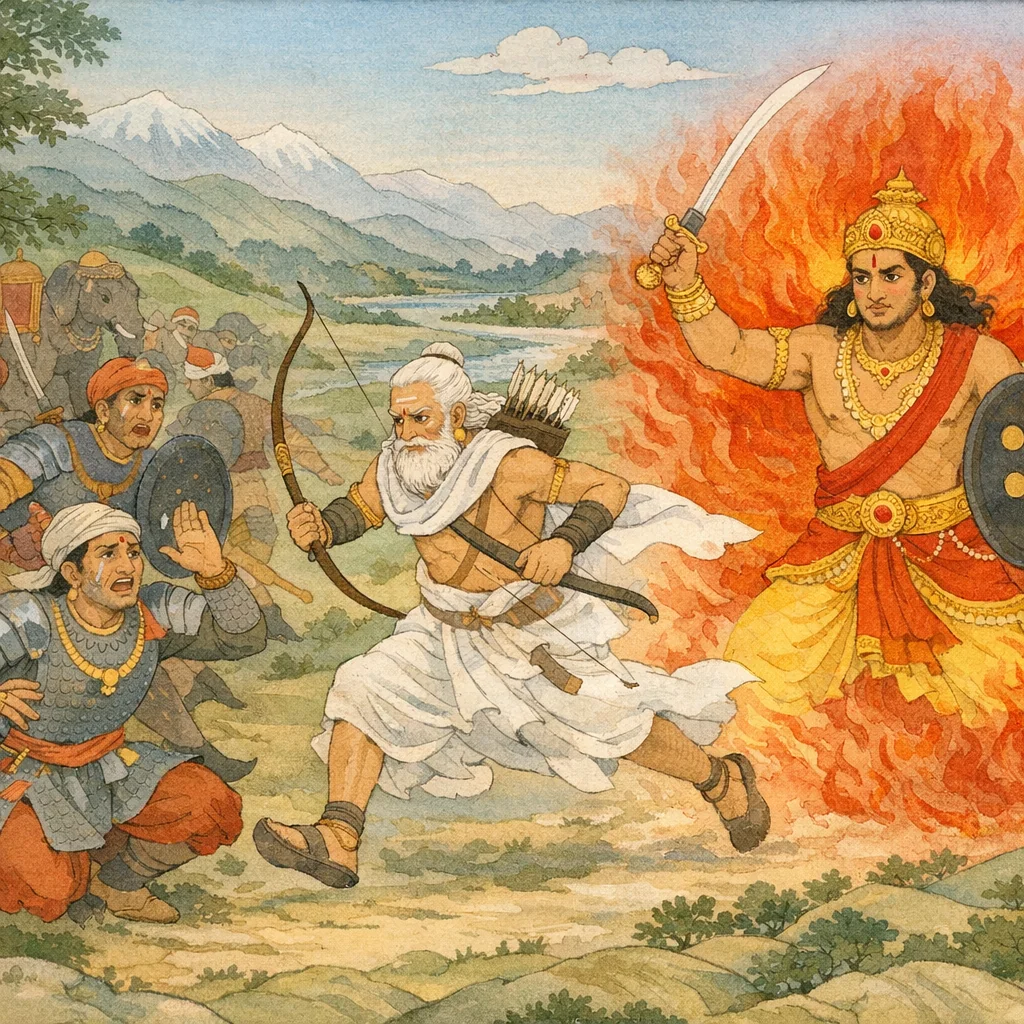
Chapter Arc: कौरव-पक्ष की पंक्तियाँ शत्रुओं के उत्कर्ष को देखकर बार-बार काँप उठती हैं—आँखें आँसुओं से भरी, मन भय से रिक्त, और सेना का धैर्य टूटता हुआ। → हतोत्साह सैनिक आर्तस्वर में अपने नरेश के चारों ओर घिर आते हैं; बचे-खुचे गणों को समेटकर कृतवर्मा जैसे योद्धा अवशिष्ट दलों के साथ आगे बढ़ते हैं, पर रणभूमि पर द्रोणाचार्य का प्रचण्ड पराक्रम सबको दबा देता है—वृद्ध होकर भी सोलह वर्ष के समान रण में विचरते हुए। → द्रोण अपने ‘दैवविहित’ अंत को पहचानकर दिव्यास्त्र त्यागते हैं और रण में प्रायोपवेशन-सा भाव धारण करते हैं; उसी क्षण अश्वत्थामा भीतर-भीतर अग्नि की तरह भड़क उठता है—ईंधन पाकर धधकती ज्वाला के समान। → अध्याय का अंत अश्वत्थामा के क्रोध के उभार और कौरव-सेना की भयाक्रांत विघटन-स्थिति को स्थिर करता है—द्रोण के आसन्न पतन की छाया स्पष्ट हो जाती है, और नेतृत्व का संकट गहराता है। → अश्वत्थामा का यह ज्वलंत क्रोध आगे किस दिव्य प्रतिशोध/अस्त्र-प्रयोग में फूटेगा—यही प्रश्न अगले प्रसंग को खींच ले जाता है।
Shlokas
Verse 1
#5०3८६>- | # (नारायणास्त्रमोक्षपर्व) त्रिनवत्यधिकशततमो< ध्याय: कौरव-सैनिकों तथा सेनापतियोंका भागना, अभ्रृत्थामाके पूछनेपर कृपाचार्यका उसे द्रोणवधका वृत्तान्त सुनाना संजय उवाच ततो द्रोणे हते राजन् कुरव: शस्त्रपीडिता: । हतप्रवीरा विध्यस्ता भूशं शोकपरायणा:,संजय कहते हैं--महाराज! द्रोणाचार्यके मारे जानेपर शस्त्रोंके आघातसे पीड़ित हुए कौरव अपने प्रमुख वीरोंके मारे जानेसे भारी विध्वंसको प्राप्त हो अत्यन्त शोकमग्न हो गये
Sañjaya said: “O King, when Droṇa had been slain, the Kuru warriors—wounded and harried by the blows of weapons—found their foremost heroes fallen. Shattered and thrown into ruin, they became wholly given over to grief.”
Verse 2
उदीर्णाश्व परान् दृष्टवा कम्पमाना: पुन: पुन: । अश्रुपूर्णेक्षणास्त्रस्ता दीनास्त्वासन् विशाम्पते,प्रजानाथ! शत्रुओंको उत्कर्ष प्राप्त करते देख वे दीन और भयभीत हो बारंबार काँपने और नेत्रोंसे आँसू बहाने लगे
Sanjaya said: Seeing the enemy’s horses and warriors surging forward, they began to tremble again and again. Their eyes filled with tears; frightened and dejected, O lord of the people, they stood overwhelmed—watching the foes gain the upper hand.
Verse 3
विचेतसो हतोत्साहा: कश्मलाभिहतौजस: । आर्तस्वरेण महता पुत्र ते पर्यवारयन्,उनकी चेतना लुप्त-सी हो गयी थी। मोहवश उनका तेज और बल नष्ट हो चला था। वे हतोत्साह होकर अत्यन्त आर्तस्वरसे विलाप करते हुए आपके पुत्रको घेरकर खड़े हो गये
Sañjaya said: Bereft of clear awareness and drained of resolve, their strength and vigor shattered by bewilderment, they raised a loud, anguished cry and closed ranks around your son. The scene shows how delusion in war can collapse courage and judgment, driving men to desperate, protective clustering rather than principled action.
Verse 4
रजस्वला वेपमाना वीक्षमाणा दिशो दश । अश्रुकण्ठा यथा दैत्या हिरण्याक्षे पुरा हते,पूर्वकालमें हिरण्याक्षके मारे जानेपर दैत्योंकी जैसी अवस्था हुई थी, वैसी ही उनकी भी हो गयी। वे धूल-धूसर शरीरसे काँपते हुए दसों दिशाओंकी ओर देख रहे थे। आँसुओंसे उनका गला भर आया
Sañjaya said: Covered with dust and shaken with fear, they kept looking in all ten directions. Their throats choked with tears—just as the Daityas once were when Hiraṇyākṣa had been slain in ancient times. The comparison underscores how the fall of a powerful protector can collapse morale and drive even the strong into panic and grief amid the chaos of war.
Verse 5
स तै: परिवृतो राजा त्रस्तैः क्षुद्रमृुगैरिव । अशवनुवन्नवस्थातुमपायात् तनयस्तव,डरे हुए क्षुद्र मृगोंके समान उन सैनिकोंसे घिरा हुआ आपका पुत्र राजा दुर्योधन वहाँ खड़ा न रह सका। वह भागकर अन्यत्र चला गया
Sañjaya said: Surrounded by those troops, your son—the king—could not stand his ground. Like a great beast hemmed in by frightened little deer, Duryodhana lost the steadiness required of a ruler in battle and fled away to another place. The scene underscores how fear and shaken morale can overturn royal resolve and battlefield duty (kṣatriya-dharma).
Verse 6
क्षुत्पिपासापरिम्लानास्ते योधास्तव भारत । आदित्येनेव संतप्ता भृशं॑ विमनसो5भवन्,भारत! आपके सभी सैनिक भूख-प्याससे व्याकुल एवं मलिन हो रहे थे, मानो सूर्यने उन्हें अपनी प्रचण्ड किरणोंसे झुलस दिया हो। वे अत्यन्त उदास हो गये थे
Sañjaya said: “O Bhārata, your warriors, worn down by hunger and thirst, became dull and dispirited. Scorched, as it were, by the blazing sun, they fell into deep dejection.”
Verse 7
भास्करस्थेव पतन समुद्रस्थेव शोषणम् । विपर्यासं यथा मेरोव[सवस्येव निर्जयम्,राजन! जैसे सूर्यका पृथ्वीपर गिर पड़ना, समुद्रका सूख जाना, मेरुपर्वतका उलटी दिशामें चला जाना और इन्द्रका पराजित हो जाना असम्भव है, उसी प्रकार द्रोणाचार्यका मारा जाना भी असम्भव समझा जाता था; परंतु द्रोणाचार्यके उस असहनीय वधको सम्भव हुआ देख सारे कौरव थर्रा उठे और भयके मारे भागने लगे
Sanjaya said: “O King, just as it is impossible for the Sun to fall from the sky, for the ocean to dry up, for Mount Meru to reverse its course, or for Indra (Vāsava) to be defeated—so too was the slaying of Droṇācārya regarded as impossible. Yet when that unbearable killing was seen to have occurred, the Kauravas were shaken with terror and fled in fear.”
Verse 8
अमर्षणीयं तद् दृष्टवा भारद्वाजस्य पातनम् | त्रस्तरूपतरा राजन् कौरवा: प्राद्रवन् भयात्,राजन! जैसे सूर्यका पृथ्वीपर गिर पड़ना, समुद्रका सूख जाना, मेरुपर्वतका उलटी दिशामें चला जाना और इन्द्रका पराजित हो जाना असम्भव है, उसी प्रकार द्रोणाचार्यका मारा जाना भी असम्भव समझा जाता था; परंतु द्रोणाचार्यके उस असहनीय वधको सम्भव हुआ देख सारे कौरव थर्रा उठे और भयके मारे भागने लगे
Sanjaya said: Seeing that unbearable fall of Bhāradvāja’s son (Droṇa), the Kauravas—more terrified than before—trembled, O King, and fled in fear. What had been deemed impossible, like the sun falling to earth or the ocean drying up, had come to pass; and the shock of that reversal broke their resolve on the battlefield.
Verse 9
गान्धारराज: शकुनिस्त्रस्तस्त्रस्ततरैः सह । हतं रुक्मरथं श्रुत्वा प्राद्रवत् सहितो रथै:
Sañjaya said: Hearing that Rukmaratha had been slain, Śakuni, the king of Gandhāra—already shaken with fear—fled in haste along with others who were even more terrified, and with their chariots. The verse underscores how, in war, the fall of a notable warrior can swiftly unravel morale and drive even leaders into panic, revealing the ethical cost of violence: fear spreads faster than courage when confidence collapses.
Verse 10
सुवर्णमय रथवाले आचार्य द्रोणके मारे जानेका समाचार सुनकर गान्धारराज शकुनि त्रस्त हो उठा और अत्यन्त डरे हुए अपने रथियोंके साथ युद्धभूमिसे भाग चला ।। वरूथिनीं वेगवतीं विद्रुतां सपताकिनीम् । परिगृहा महासेनां सूतपुत्रो5पयाद् भयात्,सूतपुत्र कर्ण भी ध्वजा-पताकाओंसे सुशोभित एवं बड़े वेगसे भागी हुई अपनी विशाल सेनाको साथ ले भयके मारे वहाँसे भाग खड़ा हुआ
Sañjaya said: Taking along his great host—its battle-formations broken, rushing in flight, yet still marked with banners and standards—the charioteer’s son Karṇa withdrew from that place out of fear. Hearing the report that Ācārya Droṇa had been slain, Śakuni, king of Gāndhāra, was shaken with alarm and, terrified, fled the battlefield with his charioteers. The verse underscores how, when a central pillar of command falls, even renowned warriors can be driven into retreat, revealing the fragility of confidence built on external support rather than inner steadiness in dharma.
Verse 11
रथनागाश्वकलिलां पुरस्कृत्य तु वाहिनीम् । मद्राणामी श्वर: शल्यो वीक्षमाणो5पयाद् भयात्,मद्रराज शल्य भी रथ, हाथी और घोड़ोंसे भरी हुई अपनी सेनाको आगे करके भयके मारे इधर-उधर देखते हुए भागने लगे
Sañjaya said: Placing his army—thick with chariots, elephants, and horses—out in front, Śalya, the lord of the Madras, withdrew in fear, glancing about in all directions as he fled. The scene underscores how, amid the chaos of war, even renowned kings can be shaken, and fear can drive a leader to abandon steadiness and responsibility.
Verse 12
हतप्रवीरैर्भूयिष्ठैर्धजैर्बहुपताकिभि: । वृत:ः शारद्वतोड5गच्छत् कष्ट कष्टमिति ब्रुवन्,शरद्वानके पुत्र कृपाचार्य बहुसंख्यक ध्वजा-पताकाओंसे सुशोभित बहुत-से सैनिकोंद्वारा घिरे हुए थे। उनकी सेनाके प्रमुख वीर मारे गये थे। वे भी “हाय! बड़े कष्टकी बात है, बड़े कष्टकी बात है' ऐसा कहते हुए युद्धभूमिसे खिसक गये
Sañjaya said: Surrounded by many standards and by troops bearing numerous banners—though the foremost heroes of his force had been slain—Śāradvata (Kṛpa) withdrew from the battlefield, repeatedly lamenting, “Alas, what a grievous calamity! Alas, what a grievous calamity!” The scene underscores the moral weight of war: even seasoned elders, seeing the fall of leading warriors, are shaken into retreat and sorrow, revealing the human cost beneath martial display.
Verse 13
भोजानीकेन शिष्टेन कलिकड्जारट्टबाह्लिकै: । कृतवर्मा वृतो राजन् प्रायात् सुजवनै्हयै:,राजन्! कृतवर्मा भी भोजवंशियोंकी अवशिष्ट सेना तथा कलिंग, अरट्ट और बाह्लिकोंकी विशाल वाहिनी साथ ले अत्यन्त वेगशाली घोड़ोंसे जुते हुए रथके द्वारा भाग निकला
Sañjaya said: O King, Kṛtavarmā, surrounded by the remaining Bhoja troops and by the forces of the Kaliṅgas, the Araṭṭas, and the Bāhlikas, withdrew swiftly—fleeing in a chariot yoked with exceedingly fast horses. In the moral atmosphere of the war, the verse underscores the instinct for survival and tactical retreat amid collapse, contrasting personal preservation with the wider devastation and the responsibilities of warriors and allies.
Verse 14
पदातिगणसंयुक्तस्त्रस्तो राजन् भयार्दित: । उलूकः: प्राद्रवत् तत्र दृष्टवा द्रोणं निपातितम्,नरेश्वर! द्रोणाचार्यको वहाँ मारा गया देख उलूक भी भयसे पीड़ित हो थर्रा उठा और पैदल योद्धाओंके साथ जोर-जोरसे भागने लगा
Sañjaya said: O King, shaken and overwhelmed by fear, Ulūka—surrounded by bands of foot-soldiers—fled swiftly from that place when he saw Droṇa brought down. The fall of the revered teacher on the battlefield sends a moral shock through the ranks, and fear spreads where confidence had rested on his presence.
Verse 15
दर्शनीयो युवा चैव शौर्येण कृतलक्षण: । दुःशासनो भृशोद्विग्न: प्राद्रवद् गजसंवृत:,जिसके शरीरमें शौर्यके चिह्न बन गये थे, वह दर्शनीय युवक दुःशासन भी भयसे अत्यन्त उद्विग्न हो अपनी गजसेनाके साथ भाग खड़ा हुआ
Sañjaya said: The handsome young warrior Duḥśāsana—whose body bore the marks earned through acts of valor—became exceedingly shaken with fear and fled, surrounded by his elephant-troops. The verse underscores how, amid the moral and physical chaos of war, even those famed for prowess can be overtaken by panic and retreat.
Verse 16
रथानामयुतं गृह त्रिसाहस््रं च दन्तिनाम् । वृषसेनो ययोौ तूर्ण दृष्टवा द्रोणं निपातितम्,द्रोणाचार्य धराशायी हो गये, यह देखकर वृषसेन भी दस हजार रथों और तीन हजार हाथियोंकी सेना साथ ले तुरंत वहाँसे चल दिया
Sañjaya said: Taking with him ten thousand chariots and three thousand elephants, Vṛṣasena set out at once, having seen that Droṇa had been struck down. The episode underscores how the fall of a single preeminent commander instantly reshapes the battlefield, compelling swift, duty-driven responses from allied leaders amid the moral turbulence of war.
Verse 17
गजाश्वरथसंयुक्तो वृतश्चवैव पदातिभि: । दुर्योधनो महाराज प्रायात् तत्र महारथ:,महाराज! हाथी, घोड़े और रथोंकी सेनासे युक्त तथा पैदल सैनिकोंसे घिरा हुआ महारथी दुर्योधन भी रणभूमिसे भाग चला
Sañjaya said: O King, the great chariot-warrior Duryodhana too advanced from there, supported by a force of elephants, horses, and chariots, and surrounded by infantry. The scene underscores how, amid the moral pressure of battle, even a ruler’s movement on the field depends upon the protection and cohesion of his troops.
Verse 18
संशप्तकगणान् गृह हतशेषान् किरीटिना । सुशर्मा प्राद्रवद् राजन् दृष्टवा द्रोणं निपातितम्,राजन! द्रोणाचार्यको रणभूमिमें गिराया गया देख अर्जुनके मारनेसे बचे हुए संशप्तकोंको साथ ले सुशर्मा वहाँसे भाग निकला
Sañjaya said: O King, taking with him the remaining Saṁśaptaka warriors who had survived Arjuna’s slaughter, Suśarmā fled from that place when he saw Droṇa brought down on the battlefield. The moment marks how the fall of a revered teacher shatters morale and turns vowed aggression into retreat, revealing the ethical weight that a leader’s death carries in war.
Verse 19
गजान् रथान् समारुहा व्युदस्य च हयाञ्जना: । प्राद्रवन् सर्वतः संख्ये दृष्टवा रुक्मरथं हतम्,युद्धस्थलमें सुवर्णमय रथवाले द्रोणका वध हुआ देख बहुतेरे सैनिक हाथियों और रथोंपर आरूढ़ हो तथा कितने ही योद्धा अपने घोड़ोंको भी छोड़कर सब ओरसे पलायन करने लगे
Sanjaya said: Seeing the warrior of the golden chariot slain on the battlefield, many men—some mounting elephants and chariots, and others even abandoning their horses—fled in every direction amid the press of war. The moment signals how quickly morale collapses when a revered commander falls, and how fear can overpower duty in the chaos of battle.
Verse 20
त्वरयन्तः पितृनन्ये भ्रातृनन्येड5थ मातुलान् । पुत्रानन्ये वयस्यांश्व प्राद्रवन् कुरवस्तदा,कुछ कौरव पिता, ताऊ और चाचा आदिको, कुछ भाइयोंको, कुछ मामाओंको तथा कितने ही पुत्रों और मित्रोंको जल्दीसे भागनेकी प्रेरणा देते हुए उस समय मैदान छोड़कर चल दिये
Sañjaya said: At that time, the Kurus fled the field—some urging their fathers to hurry away, others their brothers, and others their maternal uncles; and some, too, were pressing their sons and friends to run. The scene reveals how, when fear overwhelms resolve, even bonds of kinship become instruments of flight rather than duty in battle.
Verse 21
चोदयन्तश्न सैन्यानि स्वस्त्रीयांश्ष॒ तथापरे । सम्बन्धिनस्तथान्ये च प्राद्रवन्त दिशो दश,कितने ही योद्धा अपनी सेनाओंको, दूसरे लोग भानजोंको और कितने ही अपने सगे- सम्बन्धियोंको भागनेकी आज्ञा देते हुए दसों दिशाओंकी ओर भाग खड़े हुए
Sañjaya said: Urging their own troops onward, and others calling out to their womenfolk, while still others shouting to their kinsmen, they fled in panic—scattering toward all ten directions. The scene reflects the moral collapse that can overtake an army when fear overrides duty and order, turning a battlefield into a flight for survival.
Verse 22
प्रकीर्णकेशा विध्वस्ता न द्वावेकत्र धावत: । नेदमस्तीति मन्वाना हतोत्साहा हतौजस:,उन सबके बाल बिखरे हुए थे। वे गिरते-पड़ते भाग रहे थे। दो सैनिक एक साथ या एक ओर नहीं भागते थे। उन्हें विश्वास हो गया था कि अब यह सेना नहीं बचेगी; इसीलिये उनके उत्साह और बल नष्ट हो गये थे
Verse 23
उत्सृज्य कवचानन्ये प्राद्रवंस्तावका विभो । अन्योन्यं ते समाक्रोशन् सैनिका भरतर्षभ,भरतश्रेष्ठ! प्रभो! आपके कितने ही सैनिक कवच उतारकर एक-दूसरेको पुकारते हुए भाग रहे थे
Sañjaya said: O mighty lord, many of your warriors, casting off their armor, fled in panic; and, O bull among the Bharatas, the soldiers cried out to one another as they ran—an image of fear overwhelming discipline and the warrior’s code amid the press of war.
Verse 24
तिष्ठ तिछतेति न च ते स्वयं तत्रावतस्थिरे । धुर्यानिन्मुच्य च रथाद्धतसूतात् स्वलंकृतान् । अधिरुहा हयान् योधा: क्षिप्रं पद्धिरचोदयन्,कुछ योद्धा दूसरोंसे 'ठहरो, ठहरो' कहते, परंतु स्वयं नहीं ठहरते थे। कितने ही योद्धा सारथिशून्य रथसे सजे-सजाये घोड़ोंको खोलकर उनपर सवार हो जाते और पैरोंसे ही शीघ्रतापूर्वक उन्हें हाँकने लगते थे
Sañjaya said: Though they kept shouting, “Stand! Stand!”, they themselves did not halt there. Some warriors, finding their chariots bereft of charioteers, unyoked the well-adorned horses from the pole and, mounting them, drove them swiftly onward using only their feet. The scene reveals the panic and inconsistency of men in battle—urging restraint in others while being swept away by fear and urgency themselves.
Verse 25
द्रवमाणे तथा सैन्ये त्रस्तरूपे हतौजसि । प्रतिस्रोत इव ग्राहो द्रोणपुत्र: परानियात्,इस प्रकार जब सारी सेना भयभीत हो बल और उत्साह खोकर भाग रही थी, उसी समय द्रोणपुत्र अश्वत्थामा शत्रुओंकी ओर बढ़ा आ रहा था, मानो कोई ग्राह नदीके प्रवाहके प्रतिकूल जा रहा हो
Sañjaya said: As the army fled in panic—its appearance terrified, its strength and spirit broken—Droṇa’s son (Aśvatthāmā) advanced toward the enemy, like a crocodile forcing its way upstream against the current. The image underscores a lone, relentless counter-movement amid collective collapse, highlighting the fierce resolve that can arise in war even when the wider host loses courage.
Verse 26
तस्यासीत् सुमहद् युद्ध शिखण्डिप्रमुखैर्गणै: । प्रभद्रकैश्न॒ पाञज्चालैश्लेदिभिश्व॒ सकेकयै:,इससे पहले अश्व॒त्थामाका उन प्रभद्रक, पांचाल, चेदि और केकय आदि गणोंके साथ महान् युद्ध हो रहा था, जिनका प्रधान नेता शिखण्डी था (इसीलिये उसे पिताकी मृत्युका समाचार नहीं ज्ञात हुआ।)
Sañjaya said: At that time a very great battle was taking place for him, against the companies led chiefly by Śikhaṇḍin—namely the Prabhadrakas, the Pāñcālas, the Cedis, and the Kekayas. Engrossed in that fierce engagement, he did not come to know earlier of his father’s death.
Verse 27
हत्वा बहुविधा: सेना: पाण्डूनां युद्धदुर्मदः । कथंचित् संकटान्मुक्तो मत्तद्विरदविक्रम:,मतवाले हाथीके समान पराक्रमी रणदुर्मद अश्वत्थामा पाण्डवोंकी विविध सेनाओंका संहार करके किसी प्रकार उस युद्ध-संकटसे मुक्त हुआ था
Sañjaya said: Having slain the Pāṇḍavas’ forces of many kinds, Aśvatthāmā—intoxicated with the frenzy of battle and possessing the prowess of a maddened elephant—somehow managed to escape from that perilous crisis of war. The verse underscores the brutal momentum of combat and the moral tension between martial prowess and the devastation it brings.
Verse 28
द्रवमाणं बल॑ दृष्टयवा पलायनकृतक्षणम् । दुर्योधनं समासाद्य द्रोणपुत्रोडब्रवीदिदम्,इतनेहीमें उसने देखा कि सारी कौरव-सेना भागी जा रही है और सभी लोग पलायन करनेमें उत्साह दिखा रहे हैं। तब द्रोणपुत्रने दुर्योधनके पास जाकर इस प्रकार पूछा --
Sañjaya said: Seeing the army in disarray, rushing about and poised to flee, Droṇa’s son approached Duryodhana and spoke these words. The moment underscores how fear and wavering resolve can spread through a force, compelling leaders and commanders to confront the moral and strategic crisis of retreat versus steadfastness.
Verse 29
किमियं द्रवते सेना त्रस्तरूपेव भारत । द्रवमाणां च राजेन्द्र नावस्थापयसे रणे,“भरतनन्दन! क्यों यह सेना भयभीत-सी होकर भागी जा रही है? राजेन्द्र! इस भागती हुई सेनाको आप युद्धमें ठहरानेका प्रयत्न क्यों नहीं करते?
Sañjaya said: “O Bhārata, why is this army fleeing as if seized by terror? And you, O king of kings—why do you not try to halt these running troops in the midst of battle?”
Verse 30
त्वं चापि न यथापूर्व प्रकृतिस्थो नराधिप । कर्णप्रभृतयश्चेमे नावतिष्ठन्ति पार्थिव,“नरेश्वर! तुम भी पहलेके समान स्वस्थ नहीं दिखायी देते। भूपाल! ये कर्ण आदि वीर भी रणभूमिमें खड़े नहीं हो रहे हैं। इसका क्या कारण है?
Sanjaya said: “O king, you too do not appear as composed and steady as before. And these warriors, beginning with Karna, are not holding their ground on the battlefield. What is the reason for this?”
Verse 31
अन्येष्वपि च युद्धेषु नैव सेनाद्रवत् तदा । कच्चित् क्षेमं महाबाहो तव सैन्यस्थ भारत,“अन्य संग्रामोंमें भी आपकी सेना इस प्रकार नहीं भागी थी। महाबाहु भरतनन्दन! आपकी सेना सकुशल तो है न?
Sanjaya said: “Even in other battles your army never fled like this then. O mighty-armed scion of Bharata, is your force—those stationed in your ranks—safe and intact?”
Verse 32
कस्मिन्निदं हते राजन् रथसिंहे बल॑ तव । एतामवस्थां सम्प्राप्तं तन्ममाचक्ष्व कौरव,“राजन्! कुरुनन्दन! किस सिंहके समान पराक्रमी रथीके मारे जानेपर आपकी यह सेना इस दुरवस्थाको पहुँच गयी है। यह मुझे बताइये”
Sañjaya said: “O King, when which lion-like chariot-warrior was slain did your army fall into this condition? O Kaurava, tell me that.”
Verse 33
तत्तु दुर्योधन: श्रुत्वा द्रोणपुत्रस्य भाषितम् | घोरमप्रियमाख्यातुं नाशक्नोत् पार्थिवर्षभ:,द्रोणपुत्र अश्वत्थामाकी यह बात सुनकर नृपश्रेष्ठ दुर्योधन यह घोर अप्रिय समाचार स्वयं उससे न कह सका
Sanjaya said: Hearing the words spoken by Droṇa’s son, King Duryodhana—best of rulers—could not bring himself to announce that dreadful and unwelcome news.
Verse 34
भिन्ना नौरिव ते पुत्रो मग्न: शोकमहार्णवे । बाष्पेणापिहितो दृष्ट्वा द्रोणपुत्रं रथे स्थितम्,मानो आपके पुत्रकी नाव मझधारमें टूट गयी थी और वह शोकके समुद्रमें डूब रहा था। रथपर बैठे हुए द्रोणकुमारको देखकर उसके नेत्रोंमें आँसू भर आये थे
Sañjaya said: Your son was like a boat shattered midstream, sinking in the vast ocean of grief. On seeing Droṇa’s son standing upon his chariot, his eyes were veiled with tears—his composure broken by sorrow amid the relentless pressures of war and duty.
Verse 35
ततः शारद्वधतं राजा सव्रीडमिदमब्रवीत् । शंसात्र भद्र ते सर्व यथा सैन्यमिदं द्रुतम्,उस समय राजा दुर्योधनने कृपाचार्यसे संकोचपूर्वक कहा--“गुरुदेव! आपका कल्याण हो। आप ही वह सब समाचार बता दीजिये, जिससे यह सब सेना भागी जा रही है!
Sañjaya said: Then the king, ashamed, spoke these words: “O venerable one, may you be well. Tell me here everything exactly as it is—how it is that this entire army is fleeing in haste.”
Verse 36
अथ शारद्वतो राजन्नार्तिमार्च्छन् पुन: पुनः । शशंस द्रोणपुत्राय यथा द्रोणो निपातित:,राजन्! उस समय शरद्वानके पुत्र कृपाचार्य बारंबार पीड़ाका अनुभव करते हुए जिस प्रकार द्रोणाचार्य मारे गये थे, वह समाचार उनके पुत्रको सुनाने लगे
Sañjaya said: Then, O king, Śāradvata (Kṛpa), repeatedly overcome by anguish, reported to Droṇa’s son how Droṇa had been brought down. The moment underscores the moral shock of a revered teacher’s fall in war and the way grief becomes a messenger that fuels further retaliation.
Verse 37
कृप उवाच वयं द्रोणं पुरस्कृत्य पृथिव्यां प्रवरं रथम् । प्रावर्तयाम संग्रामं पडचालैरेव केवलम्,कृपाचार्य बोले--वत्स! हमलोगोंने भूमण्डलके श्रेष्ठ महारथी आचार्य द्रोणको आगे करके केवल पांचालोंके साथ युद्ध आरम्भ किया था
Kṛpa said: “Placing Droṇa at our head—the foremost chariot-warrior upon the earth—we set the battle in motion, engaging only with the Pāñcālas.”
Verse 38
ततः प्रवत्ते संग्रामे विमिश्रा: कुरुसोमका: । अन्योन्यमभिगर्जान्त: शस्त्रैदेहानपातयन्,युद्ध आरम्भ हो जानेपर कौरव तथा सोमकयोद्धा परस्पर मिश्रित हो गये और एक- दूसरेके निकट गर्जना करते हुए शस्त्रोंद्वारा अपने-अपने शत्रुओंके शरीरोंको धराशायी करने लगे
When the battle had fully begun, the Kuru warriors and the Somaka fighters became intermingled in close combat. Roaring at one another at close quarters, they struck with weapons and began to bring down the bodies of their respective foes—an image of war’s momentum, where valor and fury surge while the moral cost of slaughter silently accumulates.
Verse 39
वर्तमाने तथा युद्धे क्षीयमाणेषु संयुगे । धार्तरिष्टेषु संक़ुद्ध: पिता ते<स्त्रमुदैरयत्,इस प्रकार युद्ध चालू होनेपर जब कौरवयोद्धा क्षीण होने लगे, तब तुम्हारे पिताने अत्यन्त कुपित होकर ब्रह्मास्त्र प्रकट किया
As the battle raged on and, in the thick of the fighting, the warriors of Dhṛtarāṣṭra’s side were being worn down, your father—seized by fierce anger—brought forth a mighty weapon (the Brahmāstra).
Verse 40
ततो द्रोणो ब्राह्ममस्त्रं विकुर्वाणो नरर्षभ: । व्यहनच्छात्रवान् भल्लै: शतशो5थ सहस्रश:
Then Droṇa, that bull among men, set the Brahmā-weapon into active operation. With razor-headed arrows he struck down the helmeted warriors—by the hundreds, and then by the thousands—showing how the escalation of divine weaponry in war turns valor into mass destruction and tests the bounds of righteous conduct.
Verse 41
ब्रह्मास्त्र प्रकट करते हुए नरश्रेष्ठ द्रोणने सैकड़ों और हजारों भल्लोंद्वारा शत्रु-सैनिकोंका संहार कर डाला ।। पाण्डवा: केकया मत्स्या: पञ्चालाश्न विशेषत: । संख्ये द्रोणरथं प्राप्पय व्यनशन् कालचोदिता:,पाण्डव, केकय, मत्स्य तथा विशेषतः पांचाल योद्धा कालसे प्रेरित हो युद्धमें द्रोणाचार्यके रथके पास आकर नष्ट हो गये
Kṛpa said: As Droṇa—the foremost among men—made the Brahmāstra manifest, he cut down the enemy’s soldiers in battle with hundreds and thousands of sharp arrows. The Pāṇḍavas, the Kekayas, the Matsyas, and especially the Pañcālas, driven onward by Time’s compulsion, came up to Droṇa’s chariot in the thick of combat and were destroyed. The verse frames the slaughter not merely as martial prowess but as the grim unfolding of fate (kāla) within a war where even the valorous are swept into inevitable ruin.
Verse 42
सहसतं नरसिंहानां द्विसाहस्नं च दन्तिनाम् । द्रोणो ब्रह्मास्त्रयोगेन प्रेषयामास मृत्यवे,द्रोणाचार्यने ब्रह्मास्त्रके प्रयोगद्वारा मनुष्योंमें सिंहके समान पराक्रमी एक हजार श्रेष्ठ योद्धाओं तथा दो हजार हाथियोंको मौतके हवाले कर दिया
Kṛpa said: “By employing the Brahmāstra, Droṇa dispatched to death a thousand lion-like warriors among men and two thousand elephants.” The statement underscores the terrifying escalation of violence when divine weapons are used in human war, raising an ethical tension between battlefield necessity and the catastrophic, disproportionate cost in lives.
Verse 43
आकर्णपलित: श्यामो ववसाशीतिपञ्चक: । रणे पर्यचरद द्रोणो वृद्धः षोडशवर्षवत्,जिनकी अंग-कान्ति श्याम थी, जिनके कानोंतकके बाल पक गये थे तथा जो चार सौ वर्षकी अवस्था पूरे कर चुके थे, वे बूढ़े द्रोणाचार्य रणभूमिमें सोलह वर्षके तरुणकी भाँति सब ओर विचरते रहे
Kṛpa said: Though Drona was dark-hued, with hair turned grey up to his ears, and though he was advanced in years, on the battlefield the aged teacher moved about in every direction like a sixteen-year-old youth. The verse underscores the awe inspired by disciplined prowess and unwavering resolve in war, while also hinting at the moral tension of venerable elders expending their remaining strength in a fratricidal conflict.
Verse 44
क्लिश्यमानेषु सैन्येषु वध्यमानेषु राजसु । अमर्षवशमापतन्ना: पजचला विमुखा5भवन्,जब इस प्रकार सेनाएँ कष्ट पाने लगीं तब बहुत-से नरेश कालके गालमें जाने लगे, तब अमर्षमें भरे हुए पांचाल युद्धसे विमुख हो गये
Kṛpa said: “When the armies were being worn down and many kings were being slain, the Pāñcālas—overpowered by wounded pride and indignation—turned away from the fight.”
Verse 45
तेषु किंचित् प्रभग्नेषु विमुखेषु सपत्नजित् । दिव्यमस्त्रं विकुर्वाणो बभूवार्क इवोदित:
When some among them had been broken and turned away in retreat, the conqueror of foes began to wield a divine weapon, blazing forth like the newly risen sun—reviving his side’s momentum and intensifying the moral pressure of battle through overwhelming force.
Verse 46
वे कुछ हतोत्साह होकर जब युद्धसे विमुख हो गये, तब दिव्य अस्त्र प्रकट करनेवाले शत्रुविजयी द्रोणाचार्य उदित हुए सूर्यके समान प्रकाशित होने लगे ।। स मध्यं प्राप्य पाण्डूनां शररश्मि: प्रतापवान् । मध्यंगत इवादित्यो दुष्प्रेक्ष्यस्ते पिताभवत्,पाण्डव-सेनाके बीचमें आकर बाणमयी रश्मियोंसे सुशोभित तुम्हारे प्रतापी पिता द्रोण दोपहरके सूर्यकी भाँति तपने लगे। उस समय उनकी ओर देखना कठिन हो रहा था
When they, their spirit broken, turned away from the fight, then Droṇa—revealer of divine weapons and conqueror of foes—shone forth like the risen sun. Entering the very center of the Pāṇḍava host, your mighty father, wreathed in rays of arrows, blazed like the midday sun; at that moment he was hard to look upon. The scene underscores how a single warrior’s disciplined mastery and resolve can reverse the morale of armies, even as it intensifies the ethical weight of war’s devastation.
Verse 47
ते दहामाना द्रोणेन सूर्येणेव विराजता । दग्धवीर्या निरुत्साहा बभूवुर्गतचेतस:
‘Scorched by Droṇa—who blazed like the sun—they lost the strength of their valor. Their spirit broken and their minds unsteady, they became dispirited and inwardly shaken.’
Verse 48
प्रकाशमान सूर्यके समान तेजस्वी द्रोणाचार्यद्वारा दग्ध किये जाते हुए पांचालोंके बल और पराक्रम भी दग्ध हो गये थे। वे उत्साहशून्य तथा अचेत हो गये थे ।। तान् दृष्टवा पीडितान् बाणैद्रोणेन मधुसूदन: । जयैषी पाण्डुपुत्राणामिदं वचनमब्रवीत्,उन सबको द्रोणाचार्यके बाणोंद्वारा पीड़ित देख पाण्डवोंकी विजय चाहनेवाले मधुसूदन भगवान् श्रीकृष्णने इस प्रकार कहा--
As the radiant Droṇa blazed like the shining sun, the Pañcālas—being scorched by him—found not only their bodies but even their strength and valor consumed. Their spirit collapsed; they became stunned and helpless. Seeing them tormented by Droṇa’s arrows, Madhusūdana (Śrī Kṛṣṇa), intent on securing victory for the sons of Pāṇḍu, spoke these words—framing the next counsel amid the moral pressure of war, where courage, clarity, and right strategy must be restored when allies are overwhelmed.
Verse 49
नैष जातु नरै: शक्यो जेतुं शस्त्रभृतां वर: । अपि वृत्रहणा संख्ये रथयूथपयूथप:,'ये द्रोणाचार्य शस्त्रधारियोंमें श्रेष्ठ एवं रथयूथ-पतियोंके भी यूथपति हैं। इन्हें युद्धमें मनुष्य कदापि नहीं जीत सकते। देवराज इन्द्रके लिये भी इनपर विजय पाना असम्भव है
Kṛpa said: “This foremost of weapon-bearers can never be conquered by men. Indeed, in the press of battle even Vṛtrahan (Indra), the slayer of Vṛtra, would find it impossible to overcome him—Drona, who is a leader of leaders among the chiefs of chariot-squadrons.”
Verse 50
ते यूयं धर्ममुत्सृूज्य जयं रक्षत पाण्डवा: । यथा व: संयुगे सर्वान् न हन्याद् रुक्मवाहन:
Kṛpa said: “Setting aside considerations of dharma for the moment, you Pāṇḍavas must safeguard victory—so that Rukmavāhana may not, in the press of battle, slay all of you.”
Verse 51
“अतः पाण्डव! तुमलोग धर्मका विचार छोड़कर विजयकी रक्षाका प्रयत्न करो, जिससे सुवर्णमय रथवाले द्रोणाचार्य युद्धस्थलमें तुम सब लोगोंका संहार न कर सकें ।। अश्वत्थाम्नि हते नैष युध्येदिति मतिर्मम । हतं त॑ संयुगे कश्चिदाख्यात्वस्मै मृषा नर:,“मेरा ऐसा विश्वास है कि अभश्वत्थामाके मारे जानेपर ये युद्ध नहीं कर सकते; अतः कोई मनुष्य इनसे झूठे ही कह दे कि *“युद्धमें अश्वत्थामा मारा गया”
Kripa urges the Pāṇḍavas to set aside scruples about dharma for the moment and focus on safeguarding victory, so that Droṇa—riding a golden chariot—does not slaughter them all on the battlefield. He adds his conviction that if Droṇa believes Aśvatthāmā has been killed, Droṇa will no longer fight; therefore someone should falsely report to him in war, “Aśvatthāmā has been slain.” The verse foregrounds a grim ethical tension: the pressure of survival and strategic necessity pushing warriors toward deception against a teacher whose power seems otherwise unstoppable.
Verse 52
एतन्नारोचयद् वाक्यं कुन्तीपुत्रो धनंजय: । अरोचयंस्तु सर्वेडन्ये कृच्छेण तु युधिष्ठिर:,कुन्तीकुमार अर्जुनको यह बात अच्छी नहीं लगी। परंतु और सब लोगोंको जँच गयी। युधिष्ठिर बड़ी कठिनाईसे इसके लिये तैयार हुए
Kṛpa said: This proposal did not please Dhanaṃjaya Arjuna, the son of Kuntī. Yet it appealed to all the others; only Yudhiṣṭhira accepted it with great reluctance, constrained by the harsh demands of the moment. The line underscores a moral tension: even among the righteous, consent in war can arise from necessity rather than wholehearted approval.
Verse 53
भीमसेनस्तु सव्रीडमब्रवीत् पितरं तव । अश्वत्थामा हत इति तं नाबुध्यत ते पिता,तब भीमसेनने लजाते-लजाते तुम्हारे पितासे कहा--“अश्व॒त्थामा मारा गया!। परंतु उनकी इस बातपर तुम्हारे पिताको विश्वास नहीं हुआ
Bhīmasena, though ashamed, said to your father, “Aśvatthāmā has been slain.” Yet your father did not accept those words as true. The moment underscores the moral strain of war: speech is used as a weapon, and even when uttered with hesitation, a deceptive claim tests the boundaries of dharma and trust.
Verse 54
स शड्कमानस्तन्मि थ्या धर्मराजमपृच्छत । हतं वाप्यहतं वा5<जौ त्वां पिता पुत्रवत्सल:,उनके मनमें यह संदेह हुआ कि यह समाचार झूठा है; अतः तुम्हारे पुत्रवत्सल पिताने युद्धभूमिमें धर्मराज युधिष्ठिरसे पूछा कि “अश्वत्थामा मारा गया या नहीं”
Suspecting that the report might be false, he questioned Dharmarāja (Yudhiṣṭhira). Your father—tenderly attached to his son—asked you on the battlefield: “Is Aśvatthāmā slain, or is he not?” The moment underscores how, amid war, truth becomes morally charged: a father’s love seeks certainty, while the demand for a decisive answer presses upon dharma itself.
Verse 55
तमतथ्यभये मग्नो जये सक्तो युधिष्ठिर: । अश्वत्थामानमायोधे हतं दृष्टया महागजम्,युधिष्ठिर असत्यके भयमें डूबे होनेपर भी विजयमें आसक्त थे, अतः मालवनरेश इन्द्रवर्माके पर्वताकार महान् गजराज अअभश्वत्थामाको भीमसेनके द्वारा युद्धस्थलमें मारा गया देख द्रोणाचार्यके पास जाकर वे उच्चस्वरसे इस प्रकार बोले--
Kṛpa said: Though Yudhiṣṭhira was sinking into fear born of untruth, he remained intent on victory. Having seen in the battlefield the mighty elephant—named Aśvatthāman—slain, he went to Droṇācārya and spoke aloud. The moment frames a moral fracture: the pressure of war and the desire to win begin to outweigh Yudhiṣṭhira’s habitual commitment to truth, setting the stage for a strategically charged utterance meant to shake Droṇa’s resolve.
Verse 56
भीमेन गिरिवर्ष्माणं मालवस्यथेन्द्रवर्मण: । उपसृत्य तदा द्रोणमुच्चैरिदमुवाच ह,युधिष्ठिर असत्यके भयमें डूबे होनेपर भी विजयमें आसक्त थे, अतः मालवनरेश इन्द्रवर्माके पर्वताकार महान् गजराज अअभश्वत्थामाको भीमसेनके द्वारा युद्धस्थलमें मारा गया देख द्रोणाचार्यके पास जाकर वे उच्चस्वरसे इस प्रकार बोले--
Kṛpa said: “When Bhīma had slain the Mālava king Indravarman’s mountain-bodied lordly elephant on the battlefield, he approached Droṇa and, raising his voice, spoke these words.” The scene underscores how, amid the moral strain of war, reports of violent reversals are carried swiftly to commanders, shaping counsel and strategy while testing the boundaries of righteous conduct.
Verse 57
यस्यार्थे शस्त्रमादत्से यमवेक्ष्य च जीवसि । पुत्रस्ते दयितो नित्यं सो5श्वत्थामा निपातित:,“आचार्य! तुम जिसके लिये हथियार उठाते हो और जिसका मुँह देखकर जीते हो, वह तुम्हारा सदाका प्यारा पुत्र अश्वत्थामा पृथ्वीपर मार गिराया गया है। जैसे वनमें सिंहका बच्चा सोता है, उसी प्रकार वह रणभूमिमें मरा पड़ा है”
Kṛpa said: “For whose sake you take up weapons, and upon whose face you live—your ever-beloved son, Aśvatthāmā, has been struck down. He lies slain upon the battlefield, like a lion’s cub asleep in the forest.”
Verse 58
शेते विनिहतो भूमौ वने सिंहशिशुर्यथा,“आचार्य! तुम जिसके लिये हथियार उठाते हो और जिसका मुँह देखकर जीते हो, वह तुम्हारा सदाका प्यारा पुत्र अश्वत्थामा पृथ्वीपर मार गिराया गया है। जैसे वनमें सिंहका बच्चा सोता है, उसी प्रकार वह रणभूमिमें मरा पड़ा है”
Kṛpa said: “He lies slain upon the ground, like a lion’s cub in the forest.” In this moment the simile heightens the shock and pathos of the battlefield: the fallen is portrayed not as weak, but as a young, noble, and formidable being cut down. The line functions as a moral jolt—war reduces even the cherished and valorous to lifeless bodies on the earth, confronting the hearer with grief, attachment, and the harsh consequences of martial duty.
Verse 59
जानन्नप्यनृतस्याथ दोषान् स द्विजसत्तमम् | अव्यक्तमब्रवीद् राजा हत: कुछ्जर इत्युत,असत्य बोलनेके दोषोंको जानते हुए भी राजा युधिष्ठिरने द्विजश्रेष्ठ द्रोणसे वैसी बात कह दी। फिर वे अस्फुट स्वरमें बोले--“वास्तवमें इस नामका हाथी मारा गया”
Though fully aware of the moral fault in speaking untruth, King Yudhiṣṭhira said to Droṇa, the best of Brahmins, words that conveyed that message. Then, speaking indistinctly—so that the truth would not be clearly heard—he added: “In fact, it is an elephant of this name that has been slain.” The verse highlights the ethical fracture caused by war: a king famed for truthfulness resorts to ambiguity to achieve a strategic end, and the very manner of speech becomes part of the moral compromise.
Verse 60
स त्वां निहतमाक्रन्दे श्रुत्वा संतापतापित: । नियम्य दिव्यान्यस्त्राणि नायुध्यत यथा पुरा,इस प्रकार युद्धमें तुम्हारे मारे जानेकी बात सुनकर वे शोकाग्निके तापसे संतप्त हो उठे और अपने दिव्यास्त्रोंका प्रयोग बंद करके उन्होंने पहलेके समान युद्ध करना छोड़ दिया
Hearing the cry on the battlefield that you had been slain, he was scorched by the heat of grief. Restraining his celestial missiles, he ceased to fight as he had before—his prowess checked by sorrow and shock.
Verse 61
त॑ दृष्टवा परमोद्धिग्नं शोकातुरमचेतसम् । पांचालराजस्य सुत: क्रूरकर्मा समाद्रवत्,उन्हें अत्यन्त उद्विग्न, शोकाकुल और अचेत हुआ देख पांचालराजका क्रूरकर्मा पुत्र धृष्टद्यम्म उनकी ओर दौड़ा
Seeing him utterly shaken—overwhelmed by grief and bereft of clear awareness—the fierce-deeded son of the king of Pāñcāla, Dhṛṣṭadyumna, rushed toward him. The verse underscores how, amid the moral chaos of war, intense sorrow can unseat discernment and provoke swift, forceful reactions from others.
Verse 62
त॑ं दृष्टवा विहितं मृत्युं लोकतत्त्वविचक्षण: । दिव्यान्यस्त्राण्यथोत्सज्य रणे प्रायमुपाविशत्,लोकतत्त्वके ज्ञानमें निपुण आचार्य अपनी दैवविहित मृत्युरूप धृष्टद्युम्मनको सामने देख दिव्यास्त्रोंका परित्याग करके आमरण उपवासका नियम ले रणभूमिमें बैठ गये
Seeing before him the death ordained for him, the teacher—keenly discerning the true nature of the world—cast aside his celestial weapons and, on the battlefield itself, sat down undertaking prāya (a vow of fasting unto death). The verse frames a moral turning-point: when one recognizes the inevitability of fate and the limits of violence, renunciation and acceptance can be chosen even amid war.
Verse 63
ततो<सस््य केशान् सव्येन गृहीत्वा पाणिना तदा । पार्षतः क्रोशमानानां वीराणामच्छिनच्छिर:,तब उस द्रुपदपुत्रने समस्त वीरोंके पुकार-पुकारकर मना करनेपर भी उनकी बातें अनसुनी करके बायें हाथसे आचार्यके केश पकड़ लिये और दाहिने हाथसे उनका सिर काट लिया
Then, seizing his hair with his left hand, Pārṣata (Dhṛṣṭadyumna) at that moment—disregarding the cries and protests of the warriors—cut off his head. The act is presented as a grim fulfillment of enmity and vow within the chaos of war, raising a stark ethical tension between battlefield necessity and the transgression involved in killing a revered teacher.
Verse 64
न हन्तव्यो न हन्तव्य इति ते सर्वतो<ब्रुवन् । तथैव चार्जुनो वाहादवरुहनैनमाद्रवत्,वे सब वीर चारों ओरसे यही कह रहे थे कि “न मारो, न मारो”। अर्जुन भी यही कहते हुए अपने रथसे उतरकर उसकी ओर दौड़ पड़े
From all sides the warriors cried out, “Do not kill him—do not kill!” Arjuna too, repeating the same plea, leapt down from his chariot and rushed toward him—seeking to restrain the act and uphold the demand for mercy amid the fury of battle.
Verse 65
उद्यम्य त्वरितो बाहुं ब्रुवाणश्व॒ पुनः पुन: । जीवन्तमानयाचार्य मा वधीरिति धर्मवित्,वे धर्मके ज्ञाता हैं, अतः अपनी एक बाँह उठाकर बड़ी उतावलीके साथ बारंबार यह कहने लगे कि “आचार्यको जीते-जी ले आओ, मारो मत”
Kṛpa, a knower of dharma, quickly raised his arm and repeatedly urged: “Bring the teacher back alive—do not kill him.” In the midst of battle, he frames the command as an ethical restraint, insisting that even an enemy who is one’s revered preceptor must be captured rather than slain.
Verse 66
तथा निवार्यमाणेन कौरवैरर्जुनेन च । हत एव नृशंसेन पिता तव नरर्षभ,नरश्रेष्ठ) इस प्रकार कौरवों तथा अर्जुनके रोकनेपर भी उस नृशंसने तुम्हारे पिताकी हत्या कर ही डाली
Even though the Kauravas and Arjuna tried to restrain him, that ruthless man still went through with it and killed your father—O bull among men. The statement underscores the moral shock of a killing carried out despite attempts to prevent it, highlighting the collapse of restraint and compassion amid war.
Verse 67
सैनिकाश्न ततः सर्वे प्राद्रवन्त भयार्दिता: । वयं चापि निरुत्साहा हते पितरि तेडनघ,अनघ! इस प्रकार तुम्हारे पिताके मारे जानेपर समस्त सैनिक भयसे पीड़ित होकर भाग चले हैं और हमलोग उत्साहशून्य होकर लौटे आ रहे हैं
Kṛpa said: “Then all the soldiers, stricken with fear, fled in every direction. And we too, O blameless one, have become devoid of spirit now that your father has been slain.”
Verse 68
संजय उवाच तच्छुत्वा द्रोणपुत्रस्तु निधनं पितुराहवे । क्रोधमाहारयत् तीव्रं पदाहत इवोरग:,संजय कहते हैं--राजन! युद्धमें इस प्रकार पिताके मारे जानेका वृत्तान्त सुनकर द्रोणपुत्र अश्वत्थामा पैरोंसे ठुकराये हुए सर्पके समान अत्यन्त कुपित हो उठा
Sanjaya said: O King, hearing that his father had been slain in battle, Drona’s son (Aśvatthāmā) was seized by a fierce wrath—like a serpent trampled underfoot—his mind turning from restraint to vengeful fury amid the moral chaos of war.
Verse 69
ततः क्रुद्धो रणे द्रौणिभभृशं जज्वाल मारिष । यथेन्धनं महत् प्राप्य प्राज्वलद्धव्यवाहन:
Sañjaya said: Then, in the midst of battle, the son of Droṇa—consumed by anger—blazed forth with fierce intensity, O revered one, like the sacrificial fire that flares up powerfully when it obtains abundant fuel. The verse frames wrath as a force that, once fed by circumstances, can swell into a consuming blaze on the battlefield.
Verse 70
माननीय नरेश! जैसे अग्निदेव सूखे काठकी बहुत बड़ी राशि पाकर प्रचण्डरूपसे प्रज्वलित हो उठते हैं, उसी प्रकार रणभूमिमें अश्वत्थामा अत्यन्त क्रोधसे जलने लगा ।। तल॑ तलेन निष्षिष्य दन्तैर्दन्तानुपास्पृशत् । निःश्वसन्नुरगो यद्धल्लोहिताक्षो5भवत् तदा,उसने हाथसे हाथ मलकर दाँतोंसे दाँत पीसे और फुफकारते हुए सर्पके समान वह लंबी साँसें खींचने लगा, उस समय उसकी आँखें लाल हो गयी थीं
Sanjaya said: “O revered king, just as Fire, finding a vast heap of dry wood, flares up into a fierce blaze, so on the battlefield Ashvatthama began to burn with overwhelming wrath. Rubbing palm against palm, grinding his teeth, and hissing like a serpent as he drew long breaths, his eyes turned red.” The passage underscores how anger, once fed by circumstances, can rapidly intensify and overtake discernment in war.
Verse 193
इति श्रीमहाभारते द्रोणपर्वणि नारायणास्त्रमोक्षपर्वण्यश्रवृत्थामक्रो थे त्रिनवत्यधिकशततमो<ध्याय:
Thus ends, in the Śrī Mahābhārata, within the Droṇa Parva, the section concerning the discharge of the Nārāyaṇa weapon—namely, the one-hundred-and-ninety-third chapter, describing Aśvatthāman’s wrath. This colophon signals a transition: the narrative frames the unleashing of a terrible divine missile as an ethical crisis in war, where anger and escalation threaten to overrun restraint and dharma.