Adhyaya 127
दुर्योधन-कर्ण-संवादः (Duryodhana–Karna Dialogue on Vyūha-bheda and Daiva)
Upa-parva: Droṇa-parva (War-Day Discourse on Vyūha-bheda and Daiva)
Sañjaya reports that Duryodhana, provoked by Droṇa’s earlier urging, turns his mind fully to battle yet speaks in agitation to Karṇa. He points to Arjuna (with Kṛṣṇa) breaching a formation designed by the ācārya and laments that Jayadratha has fallen despite the presence of leading warriors. Duryodhana interprets the breach as evidence of Droṇa’s partiality toward Arjuna: he suggests Droṇa ‘gave a gate’ to the favored disciple and granted Jayadratha safety, which in turn amplified destruction among the Kaurava ranks, including losses among Duryodhana’s brothers. Karṇa replies by instructing Duryodhana not to censure the teacher; he attributes the reversal to daiva (fate) rather than a failure of effort, asserting that even sustained exertion can be nullified by destiny. Karṇa broadens the argument: human beings should perform their duty without hesitation, yet success is established in daiva; he recalls prior stratagems used against the Pāṇḍavas and notes that outcomes nonetheless turned by fate. The chapter closes with Sañjaya noting the appearance of Pāṇḍava divisions and the recommencement of intense, intermingled chariot-and-elephant combat between the armies.
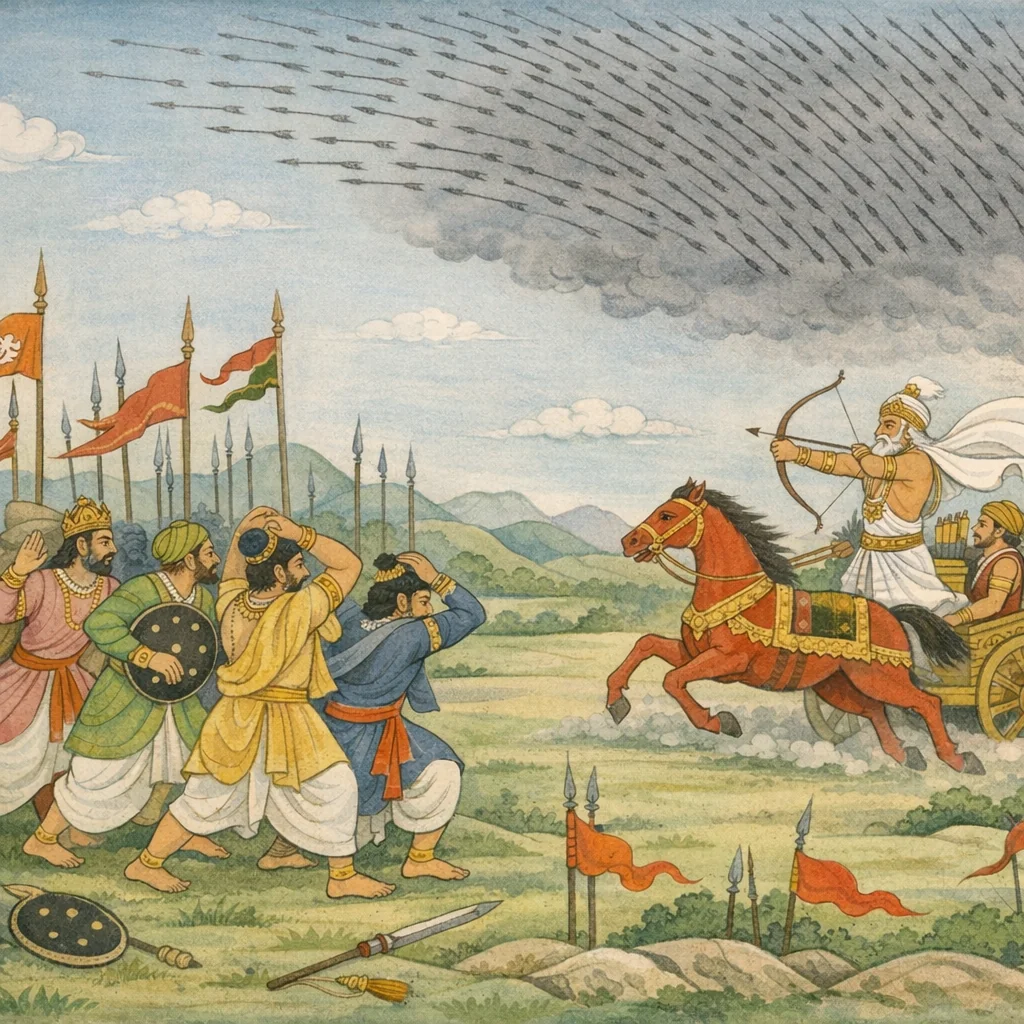
Chapter Arc: जयद्रथ-वध के उन्मत्त प्रवाह के बीच रणभूमि पर भारद्वाजपुत्र द्रोण लाल अश्वों से जुते रथ पर चढ़, चित्त एकाग्र कर पाण्डव-पक्ष की ओर मध्यम वेग से बढ़ते हैं—मानो स्वयं युद्ध का नियम बनकर उतर आए हों। → द्रोण, धृतराष्ट्र के ‘प्रिय-हित’ के लिए प्रतिज्ञाबद्ध होकर, चित्रपुङ्ख तीक्ष्ण बाणों से सोमक, सृञ्जय, केकय आदि पाण्डव-सहायकों को काटने लगते हैं; पाण्डव-सेना के अग्रभाग में अस्त्र-शस्त्रों की वर्षा, ध्वजों का टूटना, यन्ताओं का गिरना और रथों का छिन्न-भिन्न होना घमासान को बढ़ाता है। → द्रोण ‘बृहत्क्षत्र’ को विशेष कर (कौरव-पक्ष की रक्षा/उत्साह हेतु) रण में दिव्य, सुदुर्जय ब्राह्मास्त्र का प्रादुर्भाव करते हैं; फिर अपना नाम उच्चारित कर सहस्रों बाणों से पाण्डवेयों को आच्छादित कर देते हैं—क्षण भर को युद्ध का आकाश ही शर-मेघ बन जाता है। → पाण्डव-पक्ष के अनेक वीर प्रतिरोध करते हैं—तोमर, शक्ति आदि अस्त्रों का प्रहार होता है, पर द्रोण उन्हें शिलीमुखों से काट गिराते हैं; विशेषतः चेदि-प्रधान योद्धाओं को यमलोक भेजते हुए वे कौरव-सेना के लिए मार्ग खोलते हैं और रण-तट पर अपना पराक्रम स्थिर कर देते हैं। → द्रोण की शर-वृष्टि थमती नहीं—पाण्डव-पक्ष के शेष महारथी अब किस उपाय से इस ब्राह्म-तेज की दीवार को भेदेंगे?
Shlokas
Verse 1
इस प्रकार श्रीमह्माभारत द्रोणपर्वके अन्तर्गत जयद्रथवधपर्वमें सात्यकिका प्रवेश और दोनों सेनाओंका घमासान युद्धविषयक एक सौ चौबीसवाँ अध्याय पूरा हुआ ॥/ १२४ ॥/ (दाक्षिणात्य अधिक पाठके २ श्लोक मिलाकर कुल ४९ श्लोक हैं।) ऑपन-माज छा अऑफि-आकऋाल-ण पजञ्चविशर्त्याधिकशततमो< ध्याय: द्रोणाचार्यके द्वारा बृहत्क्षत्र, धृष्टकेतु, जरासन्धपुत्र सहदेव तथा धृष्टद्युम्नकुमार क्षत्रधर्माका वध और चेकितानकी पराजय संजय उवाच अपराह्ने महाराज संग्राम: सुमहान भूत् । पर्जन्यसमनिर्घोष: पुनद्रोणस्य सोमकै:,संजय कहते हैं--महाराज! अपराह्नकालमें सोमकोंके साथ द्रोणाचार्यका पुनः महान् संग्राम छिड़ गया, जिसमें मेघोंकी गर्जनाके समान गम्भीर सिंहनाद हो रहा था
Sañjaya said: “O King, in the late afternoon a very great battle flared up again between Droṇa and the Somakas, resounding with a deep roar like thunderclouds.”
Verse 2
शोणाश्वृं रथमास्थाय नरवीर: समाहित: । समरे< भ्यद्रवत् पाण्डूनू जवमास्थाय मध्यमम्,नरखवीर द्रोण लाल घोड़ोंवाले रथपर आरूढ़ हो चित्तको एकाग्र करके मध्यम वेगका आश्रय ले समरभूमिमें पाण्डवोंपर टूट पड़े
Sañjaya said: Mounting his chariot drawn by chestnut-red horses, the heroic warrior—his mind composed and intent—charged into the battle and rushed toward the Pāṇḍavas, advancing at a measured, middle pace. The verse underscores disciplined aggression in war: not reckless fury, but controlled resolve directed toward one’s chosen objective.
Verse 3
तव प्रियहिते युक्तो महेष्वासो महाबल: । चित्रपुड्खै: शितैर्बाणै: कलशोत्तमसम्भव:,(जघान सोमकान् राजन् सृ०जयान् केकयानपि ।) राजन! आपके प्रिय और हित-साधनमें लगे हुए महाधनुर्धर महाबली उत्तम कलशजन्मा द्रोणाचार्यने अपने विचित्र पंखोंवाले पैने बाणोंद्वारा सोमकों, सूंजयों तथा केकयोंका संहार आरम्भ किया
Sanjaya said: Engaged in securing what was dear and beneficial to you, the mighty, great archer—Drona, born from the excellent vessel—began to strike down the Somakas, the Sṛñjayas, and the Kekayas with sharp arrows fitted with variegated feathers. The verse underscores how loyalty to a king’s interests, when expressed through martial prowess, can intensify the destructive momentum of war.
Verse 4
वरान् वरान् हि योधानां विचिन्वन्निव भारत । आक्रीडत रणे राजन् भारद्वाज: प्रतापवान्,भरतवंशी नरेश! प्रतापी द्रोणाचार्य मानो उस युद्धस्थलमें प्रधान-प्रधान योद्धाओंको चुन रहे हों, इस प्रकार उनके साथ खेल-सा कर रहे थे
Sañjaya said: O Bhārata, in that battle the mighty Bhāradvāja (Droṇa) seemed to be selecting, one after another, the foremost warriors; and, O King, he fought as though the field of war were a mere sport-ground—displaying power that treated deadly combat like play, and thereby intensifying the moral weight of the slaughter.
Verse 5
तमभ्ययाद् बृहत्क्षत्र: केकयानां महारथ: । भ्रातृणां नूप पज्चानां श्रेष्ठ समरकर्कश:,नरेश्वर! उस समय रणकर्कश केकय महारथी वृहत्क्षत्र, जो अपने पाँचों भाइयोंमें सबसे बड़े थे, द्रोणाचार्यका सामना करनेके लिये आगे बढ़े
Sañjaya said: Then Bṛhatkṣatra, the great chariot-warrior of the Kekayas—fierce and unyielding in battle, and the eldest among his five royal brothers—advanced to confront Droṇācārya. The scene underscores the warrior’s duty to step forward in the crisis of war, even against a formidable teacher-general, placing clan honor and battlefield responsibility above personal safety.
Verse 6
विमुज्चन् विशिखांस्ती क्षणनाचार्य भृशमार्दयत् | महामेघो यथा वर्ष विमुञ्चन् गन्धमादने,उन्होंने गन्धमादन पर्वतपर पानी बरसानेवाले महामेघके समान पैने बाणोंकी वर्षा करके आचार्य द्रोणको अत्यन्त पीड़ित कर दिया
Sañjaya said: In a moment he loosed a shower of sharp arrows and grievously afflicted the preceptor Droṇa—like a great rain-cloud pouring down torrents upon Gandhamādana. The simile underscores the overwhelming, impersonal force of martial skill when unleashed in battle, even against a revered teacher.
Verse 7
तस्य द्रोणो महाराज स्वर्णपुड्खान् शिलाशितान् । प्रेषयामास संक़्रुद्ध: सायकान् दश पठ्च च,महाराज! तब द्रोणने अत्यन्त कुपित हो सानपर चढ़ाकर तेज किये हुए सोनेके पंखवाले पंद्रह बाणोंका बृहत्क्षत्रपर प्रहार किया
Sañjaya said: Then Droṇa, O King, inflamed with anger, discharged at him fifteen arrows—stone-whetted and fitted with golden feathers—sending them forth with deadly intent. The scene underscores how wrath on the battlefield sharpens violence and accelerates the spiral of retaliation, even among the foremost warriors.
Verse 8
तांस्तु द्रोणविनिर्मुक्तान् क्रुद्धाशीविषसंनिभान् | एकैकं पज्चभिर्बाणैर्युधि चिच्छेद हृष्टवत्,द्रोणाचार्यके छोड़े हुए रोषभरे विषधर सर्पोंके समान उन भयंकर बाणोंमेंसे प्रत्येकको बृहत्क्षत्रने युद्धमें पाँच-पाँच बाण मारकर प्रसन्नतापूर्वक काट डाला
Verse 9
तदस्य लाघवं दृष्टवा प्रहस्य द्विजपुड्रव: । प्रेषयामास विशिखानष्टौ संनतपर्वण:,उनकी इस फुर्तीको देखकर विप्रवर द्रोणने हँसते हुए झुकी हुई गाँठवाले आठ बाणोंका प्रहार किया
Sañjaya said: Seeing his swift agility, Droṇa—the foremost among the twice-born—laughed, and then discharged eight arrows, each with well-bent joints, striking with practiced precision amid the press of battle.
Verse 10
तान् दृष्टवा पततस्तूर्ण द्रोणचापच्युतान् शरान् । अवारयच्छरैरेव तावद्धिनिशितैमचे,द्रोणाचार्यके धनुषसे छूटे हुए उन बाणोंको शीघ्र ही अपने ऊपर आते देख वृहत्क्षत्रने उतने ही तीखे बाणोंद्वारा उन्हें युद्धस्थलमें काट गिराया
Sañjaya said: Seeing those arrows, swiftly released from Droṇa’s bow, rushing toward him, Vṛhatkṣatra at once checked them—cutting them down on the battlefield with an equal number of razor-sharp shafts. The scene underscores the relentless reciprocity of war: skill answers skill, and survival depends on alertness and disciplined mastery rather than rage.
Verse 11
ततो5भवन्महाराज तव सैन्यस्य विस्मय: । बृहत्क्षत्रेण तत् कर्म कृत॑ दृष्टवा सुदुष्करम्,महाराज! इससे आपकी सेनाको बड़ा आश्चर्य हुआ। बृहत्क्षत्रद्वारा किये हुए उस अत्यन्त दुष्कर कर्मको देखकर उनकी अपेक्षा अपनी विशेषता प्रकट करते हुए द्रोणाचार्यने रणक्षेत्रमें परम दुर्जय दिव्य ब्रह्मास्त्र प्रकट किया
Sañjaya said: “Then, O King, your army was struck with astonishment on seeing that exceedingly difficult feat accomplished by Bṛhatkṣatra. In response—seeking to display his own superior prowess—Droṇācārya revealed on the battlefield a supremely irresistible, divine Brahmāstra.”
Verse 12
ततो दोणो महाराज बृहत्क्षत्रं विशेषयन् । प्रादुश्चक्रे रणे दिव्यं ब्राह्ममस्त्रं सुदुर्जयम्,महाराज! इससे आपकी सेनाको बड़ा आश्चर्य हुआ। बृहत्क्षत्रद्वारा किये हुए उस अत्यन्त दुष्कर कर्मको देखकर उनकी अपेक्षा अपनी विशेषता प्रकट करते हुए द्रोणाचार्यने रणक्षेत्रमें परम दुर्जय दिव्य ब्रह्मास्त्र प्रकट किया
Sañjaya said: Then Droṇa, O great king, seeking to outshine the mighty warrior Bṛhatkṣatra, manifested on the battlefield a divine Brahmā-weapon—an invincible missile—thereby astonishing your army and escalating the moral gravity of the combat through the resort to supreme celestial force.
Verse 13
कैकेयो<स्त्रं समालोक्य मुक्त द्रोणेन संयुगे । ब्रह्मास्त्रेणैव राजेन्द्र ब्राह्ममस्त्रमशातयत्,राजेन्द्र! युद्धभूमिमें द्रोणाचार्यके द्वारा चलाये हुए ब्रह्मास्त्रको देखकर केकयनरेशने ब्रह्मास्त्रद्वारा ही उसे शान्त कर दिया
Sañjaya said: “O king, seeing the Brahmā-weapon released by Droṇa in the thick of battle, the ruler of the Kaikeyas quelled that Brahmā-astra by deploying a Brahmā-astra of his own.”
Verse 14
ततोओस््त्रे निहते ब्राह्मे बृहत्क्षत्रस्तु भारत । विव्याध ब्राह्माणं षष्ट्या स्वर्णपुड्खै: शिलाशितै:
Sañjaya said: When the Brahmā-weapon had been neutralized, O Bhārata, Bṛhatkṣatra then struck the Brāhmaṇa with sixty arrows—gold-feathered and stone-whetted. The scene underscores how, once divine missiles are checked, the combatants revert to relentless human violence, pressing the battle without restraint even against one identified by sacred status.
Verse 15
भरतनन्दन! ब्रह्मास्त्रका निवारण हो जानेपर बृहत्क्षत्रने सानपर चढ़ाकर तेज किये हुए सोनेके पंखोंसे युक्त साठ बाणोंद्वारा ब्राह्मण द्रोणाचार्यको वेध दिया ।। त॑ द्रोणो द्विपदां श्रेष्ठो नाराचेन समार्पयत् । स तस्य कवचं भिन्त्वा प्राविशद् धरणीतलम्,तब मनुष्योंमें श्रेष्ठ द्रोणने उनपर नाराच चलाया। वह नाराच बृहत्क्षत्रका कवच विदीर्ण करके धरतीमें समा गया
Sañjaya said: O descendant of Bharata, once the countering of the Brahmāstra had been accomplished, Bṛhatkṣatra—having set his arrows upon the whetstone and sharpened them—pierced the Brahmin teacher Droṇa with sixty shafts fitted with golden wings. Then Droṇa, best among men, answered him with a nārāca. That iron-pointed missile split Bṛhatkṣatra’s armor and sank into the earth. The passage underscores the grim reciprocity of battle: even after the restraint of a supreme weapon, the combatants return to conventional arms, where skill and duty drive relentless retaliation.
Verse 16
कृष्णसर्पो यथा मुक्तो वल्मीकं नृपसत्तम । तथात्यगान्महीं बाणो भित्त्वा कैकेयमाहवे,नृपश्रेष्ट जैसे काला साँप बाँबीमें प्रवेश करता है, उसी प्रकार द्रोणाचार्यके धनुषसे छूटा हुआ वह बाण युद्धस्थलमें केकयराजकुमार बृहत्क्षत्रको विदीर्ण करके पृथ्वीमें घुस गया
Verse 17
सो5तिविद्धों महाराज कैकेयो द्रोणसायकै: । क्रोधेन महता5<विष्टो व्यावृत्य नयने शुभे,महाराज! द्रोणाचार्यके बाणोंसे अत्यन्त घायल हो जानेपर केकयराजकुमारको बड़ा क्रोध हुआ। वे अपनी दोनों सुन्दर आँखें फाड़-फाड़कर देखने लगे
Sañjaya said: O King, the Kaikeya prince, pierced again and again by Droṇa’s arrows, was seized by a great wrath. Turning about, he stared with his beautiful eyes widened—his anger flaring amid the violence of battle, where wounded pride and the impulse for retaliation drive warriors toward further harm.
Verse 18
द्रोणं विव्याध सप्तत्या स्वर्णपुड्खै: शिलाशितै: । सारथिं चास्य बाणेन भृशं मर्मस्वताडयत्,उन्होंने सानपर चढ़ाकर तेज किये हुए सुवर्ण-पंखयुक्त सत्तर बाणोंसे द्रोणाचार्यको बींध डाला और एक बाणद्धारा उनके सारथिके मर्मस्थानोंमें गहरी चोट पहुँचायी
Sañjaya said: He pierced Droṇācārya with seventy arrows whose golden fletchings were honed sharp upon stone. With another shaft he struck Droṇa’s charioteer hard in the vital spots—an image of the war’s ruthless precision, where even attendants become targets and skill is used for lethal ends rather than restraint.
Verse 19
द्रोणस्तु बहुभिवविद्धों बृहत्क्षत्रेण मारिष । असृजद् विशिखांस्तीक्ष्णान् कैकेयस्य रथं प्रति,माननीय नरेश! जब बृहत्क्षत्रने बहुसंख्यक बाणोंसे द्रोणाचार्यको क्षत-विक्षत कर दिया, तब उन्होंने केकयनरेशके रथपर तीखे सायकोंकी वर्षा आरम्भ कर दी
Sañjaya said: O venerable one, when Droṇa had been pierced and wounded by many arrows shot by Bṛhatkṣatra, he retaliated by releasing a fierce shower of sharp shafts against the chariot of the king of the Kaikeyas. The scene underscores the grim reciprocity of battlefield conduct—injury answered by counterstroke—within the relentless code of war.
Verse 20
व्याकुलीकृत्य त॑ द्रोणो बृहत्क्षत्र महारथम् | अश्रांश्षतुर्भिन्यवधीच्चतुरो5स्य पतत्त्रिभि:
Sañjaya said: Having thrown that great chariot-warrior Bṛhatkṣatra into confusion, Droṇa struck him down—first by cutting off his four arrows with four of his own, and then by severing his four winged shafts. The episode underscores the grim precision of battlefield skill, where mastery is used not for personal malice but as a decisive instrument within the larger, morally fraught duty of war.
Verse 21
द्रोणाचार्यने महारथी बृहत्क्षत्रको व्याकुल करके अपने चार बाणोंद्वारा उनके चारों घोड़ोंको मार डाला ।। सूतं चैकेन बाणेन रथनीडादपातयत् । द्वाभ्यां ध्वजं च च्छत्र॑ च च्छित्वा भूमावपातयत्,फिर एक बाणसे मारकर सारथिको रथकी बैठकसे नीचे गिरा दिया और दो बाणोंसे उनके ध्वज और छत्रको भी पृथ्वीपर काट गिराया
Sañjaya said: With a single arrow Droṇācārya struck down the charioteer from the chariot-seat; and with two more arrows he severed the banner and the royal parasol, casting them to the ground. In the ethics of kṣatriya warfare, this is a display of overwhelming mastery meant to break an opponent’s morale and battlefield standing by stripping the visible signs of command and protection.
Verse 22
ततः साधुविसूृष्टेन नाराचेन द्विजर्षभ: । हृद्यविध्यद् बृहत्क्षत्रं स च्छिन्नहृदयो5पतत्,तदनन्तर अच्छी तरह चलाये हुए नाराचसे द्विजश्रेष्ठ द्रोणने बृहत्क्षत्रकी छाती छेद डाली। वक्ष:स्थल विदीर्ण होनेके कारण बृहत्क्षत्र धरतीपर गिर पड़े
Sañjaya said: Then Droṇa, the bull among Brahmins, loosed a well-aimed nārāca arrow and pierced Bṛhatkṣatra in the region of the heart. With his heart torn, Bṛhatkṣatra fell to the earth. The scene underscores the grim inevitability of battlefield karma: skill and resolve decide outcomes, while the ethical weight of violence remains a constant shadow over the warriors’ fame.
Verse 23
बृहत्क्षत्रे हते राजन् केकयानां महारथे । शैशुपालिरभिक्रुद्धों यन्तारमिदमब्रवीत्,राजन! केकय महारथी बृहत्क्षत्रके मारे जानेपर शिशुपालपुत्र धृष्टकेतुने अत्यन्त कुपित हो अपने सारथिसे इस प्रकार कहा--
Sañjaya said: O King, when the great chariot-warrior Bṛhatkṣatra of the Kekayas had been slain, the son of Śiśupāla, inflamed with anger, spoke these words to his charioteer—signaling how grief and wrath quickly drive a warrior toward further violence on the battlefield.
Verse 24
सारथे याहि यत्रैष द्रोणस्तिष्ठति देशित: । विनिघ्नन् केकयान् सर्वान् पज्चालानां च वाहिनीम्,'सारथे! जहाँ ये द्रोणाचार्य कवच धारण किये खड़े हैं और समस्त केकयों तथा पांचाल-सेनाका संहार कर रहे हैं, वहीं चलो"
Sañjaya said: “Charioteer, drive to the place where Droṇa stands, fully armed and stationed as directed, cutting down all the Kekayas and striking the Pañcāla host as well.” The line underscores the grim momentum of battle: tactical urgency overrides compassion, and the charioteer is commanded to carry the warrior toward the very center of slaughter, where Droṇa’s prowess is turning the tide.
Verse 25
तस्य तद् वचन श्रुत्वा सारथी रथिनां वरम् । द्रोणाय प्रापयामास काम्बोजैर्जवनै्हयै:,उनकी वह बात सुनकर सारथिने काम्बोजदेशीय (काबुली) वेगशाली घोड़ोंद्वारा रथियोंमें श्रेष्ठ धृष्टकेतुको द्रोणाचार्यके निकट पहुँचा दिया
Sañjaya said: Hearing his words, the charioteer conveyed Dhṛṣṭaketu—foremost among chariot-warriors—to Droṇācārya, driving with swift horses of Kāmboja and Yavana breed. The verse underscores disciplined obedience within the chain of command amid war, where a messenger’s duty is fulfilled promptly and without distortion.
Verse 26
धष्टकेतुश्न चेदीनामृूष भोडतिबलोदित: । वधायाभ्यद्रवद् द्रोणं पतड़ इव पावकम्,अत्यन्त बलसम्पन्न चेदिराज धुृष्टकेतु द्रोणाचार्यका वध करनेके लिये उनकी ओर उसी प्रकार दौड़ा, जैसे फतिंगा आगपर टूट पड़ता है
Sañjaya said: Dhṛṣṭaketu, the foremost of the Cedis, exceedingly powerful and fully roused, rushed toward Droṇa with the intent to slay him—like a moth hurtling into a blazing fire. The scene underscores the war’s grim ethic: heroic resolve and loyalty can drive a warrior into near-certain destruction when duty and vengeance eclipse prudence.
Verse 27
सो<विध्यत तदा द्रोणं षष्ट्या साश्चरथध्वजम् | पुनश्चान्यै: शरैस्ती&णै: सुप्तं व्याप्र॑ तुदल्निव,उसने घोड़े, रथ और ध्वजसहित द्रोणाचार्यको उस समय साठ बाणोंसे वेध दिया। फिर सोते हुए शेरको पीड़ित करते हुए-से उसने अन्य तीखे बाणोंद्वारा भी आचार्यको घायल कर दिया
Sañjaya said: Then he pierced Droṇa with sixty arrows, striking him along with his horses, chariot, and banner. Again, with other sharp shafts, he further wounded the Teacher—like one tormenting a sleeping tiger—intensifying the violence of the assault even against so formidable a warrior.
Verse 28
तस्य द्रोणो धरनुर्मध्ये क्षुपप्रेण शितेन च । चकर्त गार्ध्रपत्रेण यतमानस्य शुष्मिण:,तब द्रोणाचार्यने गीधकी पाँखवाले तीखे क्षुरप्रद्धारा विजयके लिये प्रयत्न करनेवाले बलवान धृष्टकेतुके धनुषको बीचसे ही काट दिया
Sañjaya said: As the mighty Dhṛṣṭaketu strove for victory, Droṇa, with a razor-headed, keen arrow feathered like a vulture, struck and severed his bow at the very middle. In the moral atmosphere of the war, the act shows the teacher-warrior’s mastery and tactical intent: to disable an opponent’s means of fighting rather than merely to kill, asserting control through skill amid the relentless demands of dharma-yuddha.
Verse 29
अथान्यद् धनुरादाय शैशुपालिमीहारथ: । विव्याध सायकैद्रोणं कड़कबर्हिणवाजितै:,यह देख महारथी शिशुपालकुमारने दूसरा धनुष हाथमें लेकर कंक और मोरकी पाँखोंसे युक्त बाणोंद्वारा द्रोणाचार्यकोी घायल कर दिया
Sañjaya said: Then the great chariot-warrior, the son of Śiśupāla, taking up another bow, struck Droṇācārya with arrows adorned with the feathers of a heron and a peacock. In the thick of battle, the episode highlights how even revered teachers become direct targets when the demands of war override personal reverence, and how martial excellence is displayed through swift adaptation and relentless assault.
Verse 30
तस्य द्रोणो हयान् हत्वा चतुर्भिश्चतुर: शरै: । सारथेश्ष॒ शिर: कायाच्चकर्त प्रहसन्निव,द्रोणाचार्यने चार बाणोंसे धृष्टकेतुके चारों घोड़ोंको मारकर उनके सारथिके भी मस्तकको हँसते हुए-से काटकर धड़से अलग कर दिया
Sañjaya said: Drona, having slain his four horses with four arrows, then severed the charioteer’s head from his body—as though with a grim, derisive smile. The scene underscores the ruthless efficiency of battlefield skill, where mastery of arms is deployed without hesitation, and the moral weight of war is felt in the swift destruction of both combatant resources and the human agent who guides them.
Verse 31
अथैनं पज्चविंशत्या सायकानां समार्पयत् । अवप्लुत्य रथाच्चैद्यो गदामादाय सत्वर:
Sañjaya said: Then he struck him with a volley of twenty-five arrows. Leaping down from his chariot, the king of Cedi swiftly seized his mace—shifting from missile warfare to close combat in the heat of battle, where courage and resolve are tested as much as skill.
Verse 32
तामापतन्तीमालोक्य कालरात्रिमिवोद्यताम्,वह गदा लोहेकी बनी हुई और भारी थी। उसमें सोने जड़े हुए थे, उसे उठी हुई कालरात्रिके समान अपने ऊपर गिरती देख द्रोणाचार्यने कई हजार पैने बाणोंसे उसके टुकड़े-टकड़े कर दिये
Sanjaya said: Seeing that heavy iron mace, inlaid with gold, rushing down upon him like the upraised Night of Doom, Dronacharya, with thousands of keen arrows, shattered it into many pieces. The episode underscores how, amid the fury of war, mastery and alertness can neutralize even a seemingly irresistible blow—yet it also highlights the escalating destructiveness that overtakes righteous restraint on the battlefield.
Verse 33
अश्मसारमरयी गुर्वी तपनीयविभूषिताम् । शरैरनेकसाहसैर्भारद्वाजो5च्छिनच्छितै:,वह गदा लोहेकी बनी हुई और भारी थी। उसमें सोने जड़े हुए थे, उसे उठी हुई कालरात्रिके समान अपने ऊपर गिरती देख द्रोणाचार्यने कई हजार पैने बाणोंसे उसके टुकड़े-टकड़े कर दिये
Sañjaya said: The mace, forged of iron-hard metal, exceedingly heavy, and adorned with gold, came crashing down like a dreadful night descending. Seeing it falling upon him, Droṇācārya, the son of Bharadvāja, shattered it into fragments with many thousands of keen arrows—showing how, in the fury of war, skill and presence of mind can neutralize even overwhelming force.
Verse 34
सा छिज्ना बहुभिर्बाणैभरिद्वाजेन मारिष | गदा पपात कौरव्य नादयन्ती धरातलम्,माननीय कौरवनरेश! द्रोणाचार्यद्वारा अनेक बाणोंसे छिन्न-भिन्न की हुई वह गदा भूतलको निनादित करती हुई धमसे गिर पड़ी
Sanjaya said: O venerable one, that mace—shattered into pieces by many arrows shot by Bharadvāja’s son (Droṇācārya)—fell with a heavy crash, making the very ground resound. The scene underscores how, in the fury of war, even a warrior’s chief weapon can be rendered powerless by superior skill, reminding the listener of the fragility of martial pride and the swift reversals that overtake those driven by wrath and rivalry.
Verse 35
गदां विनिहतां दृष्टवा धृष्टकेतुरमर्षण: । तोमरं व्यसृजद् वीर: शक्ति च कनकोज्ज्वलाम्,अपनी गदाको नष्ट हुई देख अमर्षमें भरे हुए वीर धृष्टकेतुने द्रोणाचार्यपर तोमर तथा स्वर्णभूषित तेजस्विनी शक्तिका प्रहार किया
Sañjaya said: Seeing his mace struck down, the valiant Dhṛṣṭaketu, inflamed with indignation, hurled a javelin and also a spear blazing with golden brilliance—driven by the warrior’s code that answers loss with renewed effort amid the harsh ethics of battle.
Verse 36
तोमरं पज्चभिर्भित्त्वा शक्ति चिच्छेद पठचभि: । तौ जम्मतुर्महीं छिन्नौ सर्पाविव गरुत्मता,द्रोणाचार्यने तोमरको पाँच बाणोंसे छिन्न-भिन्न करके पाँच बाणोंद्वारा धृष्टकेतुकी शक्तिके भी टुकड़े-टुकड़े कर दिये। वे दोनों अस्त्र गरुड़के द्वारा खण्डित किये हुए दो सर्पोंके समान पृथ्वीपर गिर पड़े
Sañjaya said: Having shattered the tomara with five arrows, Droṇācārya then cut Dhṛṣṭaketu’s śakti into pieces with another five. Both weapons, severed, fell to the earth like two serpents broken by Garuḍa—showing the swift, decisive mastery of arms that turns an opponent’s force into futility amid the relentless ethics of battlefield duty.
Verse 37
ततो<स्य विशिखं तीक्ष्णं वधाय वधकाड्क्षिण: । प्रेषयामास समरे भारद्वाज: प्रतापवान्,तत्पश्चात् अपने वधकी इच्छा रखनेवाले धृष्टकेतुके वधके लिये प्रतापी द्रोणाचार्यने समरभूमिमें उसके ऊपर एक बाणका प्रहार किया
Sanjaya said: Then the valiant son of Bharadvāja (Droṇa), intent on slaying him who sought to kill, loosed in that battle a sharp arrow aimed for death. The episode underscores the grim reciprocity of battlefield intent—where the will to kill invites an answering, lethal resolve within the codes of war.
Verse 38
स तस्य कवचं भित्त्वा हृदयं चामितौजस: । अभ्यगाद् धरणीं बाणो हंस: पद्मवनं यथा,जैसे हंस कमलवनमें प्रवेश करता है, उसी प्रकार वह बाण अमित तेजस्वी धृष्टकेतुके कवच और वक्ष:स्थलको विदीर्ण करके धरतीमें समा गया
Sañjaya said: Having pierced his armor and even the heart of that warrior of immeasurable splendor, the arrow sank into the earth—like a swan gliding into a lotus-grove. The image underscores the terrible ease with which lethal skill moves in war, where valor and protection can be undone in an instant.
Verse 39
पतद्ं हि ग्रसेच्चाषो यथा क्षुद्रं बुभुक्षित: । तथा द्रोणो5ग्रसच्छूरो धृष्टकेतुं महाहवे,जैसे भूखा हुआ नीलकण्ठ छोटे फतिंगेकी खा जाता है, उसी प्रकार शूरवीर द्रोणाचार्यने उस महासमरमें धृष्टकेतुको अपने बाणोंका ग्रास बना लिया
Sañjaya said: “Just as a hungry blue-throated bird swiftly swallows a small insect, so the heroic Droṇa, in that great battle, made Dhṛṣṭaketu the prey of his arrows—overpowering and consuming his resistance with decisive force.”
Verse 40
निहते चेदिराजे तु तत् खण्डं पित्रयमाविशत् । अमर्षवशमापन्न: पुत्रो5स्य परमास्त्रवित्,चेदिराजके मारे जानेपर उत्तम अस्त्रोंका ज्ञाता उसका पुत्र अमर्षके वशीभूत हो पिताके स्थानपर आकर डट गया
Sañjaya said: When the king of Cedi was slain, his son—master of the highest weapons—overcome by intolerant wrath, stepped into his father’s place and stood firm in battle. The scene underscores how grief and anger can harden into renewed violence, as filial duty and vengeance merge on the battlefield.
Verse 41
तमपि प्रहसन् द्रोण: शरैर्निन्ये यमक्षयम् । महाव्यात्रो महारण्ये मृगशावं यथा बली,परंतु हँसते हुए द्रोणाचार्यने उसे भी अपने बाणोंद्वारा उसी प्रकार यमलोक पहुँचा दिया, जैसे बलवान् महाव्यात्र विशाल वनमें किसी हिरनके बच्चेको दबोच लेता है
Sañjaya said: Smiling even as he fought, Droṇa sent that warrior to Yama’s imperishable realm with his arrows—just as a powerful great tiger in a vast forest seizes a young deer. The verse underscores the grim asymmetry of battlefield power: martial excellence, when joined to relentless resolve, can turn combat into a one‑sided act of killing, raising the ethical tension between duty in war and compassion toward the vulnerable.
Verse 42
तेषु प्रक्षीयमाणेषु पाण्डवेयेषु भारत । जरासंधसुतो वीर: स्वयं द्रोणमुपाद्रवत्,भरतनन्दन! उन पाण्डवयोद्धाओंके इस प्रकार नष्ट होनेपर जरासंधके वीर पुत्र सहदेवने स्वयं ही द्रोणाचार्यपर धावा किया
Sañjaya said: “O Bhārata, as the Pāṇḍava warriors were being steadily worn down and destroyed, the valiant son of Jarāsandha—Sahadeva—personally rushed to attack Droṇācārya.”
Verse 43
सतु द्रोणं महाबाहु: शरधाराभिराहवे । अदृश्यमकरोत् तूर्ण जलदो भास्करं यथा,जैसे बादल आकाशमें सूर्यको ढक लेता है, उसी प्रकार महाबाहु सहदेवने युद्धस्थलमें अपने बाणोंकी धाराओंसे द्रोणाचार्यको तुरंत ही अदृश्य कर दिया
Sañjaya said: Then the mighty-armed Sahadeva, in the thick of battle, swiftly made Droṇācārya as though invisible by pouring upon him continuous streams of arrows—just as a cloud veils the sun. The image underscores how, in war, even the greatest teacher can be momentarily overpowered by sheer force and tactical intensity, reminding the listener that prowess and circumstance can eclipse status, while the combatants remain bound to their chosen duties.
Verse 44
तस्य तल्लाघवं दृष्ट्वा द्रोण: क्षत्रियमर्दन: । व्यसृजत् सायकांस्तूर्ण शतशो5थ सहस्रश:,उसकी वह फुर्ती देखकर क्षत्रियोंका संहार करनेवाले द्रोणाचार्यने शीघ्र ही उसपर सैकड़ों और सहस्रों बाणोंकी वर्षा आरम्भ कर दी
Sañjaya said: Seeing his swift agility, Droṇa—renowned as a crusher of warriors—at once let fly a storm of arrows, hundreds and then thousands, intent on checking that prowess amid the fury of battle.
Verse 45
छादयित्वा रणे द्रोणो रथस्थं रथिनां वरम् । जारासंधिं जघानाशु मिषतां सर्वधन्विनाम्,इस प्रकार रणक्षेत्रमें द्रोणाचार्यने सम्पूर्ण धनुर्धरोंक देखत-देखते रथपर बैठे हुए रथियोंमें श्रेष्ठ जरासंधकुमारको अपने बाणोंद्वारा आच्छादित करके उसे शीघ्र ही कालके गालमें डाल दिया
Sañjaya said: In the thick of battle, Droṇa showered the foremost of chariot-warriors—Jarāsandha’s son—who stood upon his chariot, completely covering him with arrows; and, before the eyes of all the bowmen, he swiftly struck him down, sending him to death. The verse underscores the grim decisiveness of war, where mastery of arms and command can end a life in an instant, even under the witness of many.
Verse 46
यो यः सम नीयते तत्र तं द्रोणो हान्तकोपम: । आदत्त सर्वभूतानि प्राप्ते काले यथान्तक:,जैसे काल आनेपर यमराज समस्त प्राणियोंको ग्रस लेता है, उसी प्रकार कालके समान द्रोणाचार्यने जो-जो वीर उनके सामने पहुँचा, उसे-उसे मौतके हवाले कर दिया
Sañjaya said: “Whomever they brought before him there, Droṇa—like Death itself in wrath—seized and struck down. Just as, when the appointed time arrives, the Ender (Yama/Death) takes all living beings, so did Droṇācārya consign each warrior who came into his presence to death.”
Verse 47
ततो द्रोणो महाराज नाम विश्राव्य संयुगे । शरैरनेकसाहसी: पाण्डवेयान् समावृणोत्,महाराज! तदनन्तर द्रोणाचार्यने युद्धस्थलमें अपना नाम सुनाकर अनेक सहस्र बाणोंद्वारा पाण्डव-सैनिकोंको ढक दिया
Sañjaya said: Then Droṇa, O King, proclaiming his own name amid the battle, covered the Pāṇḍava forces on every side with volleys of countless arrows. The scene underscores the terrifying momentum of a master warrior whose fame itself becomes a weapon, intensifying the moral pressure of war where prowess and duty collide with mounting destruction.
Verse 48
ते तु नामाड़किता बाणा द्रोणेनास्ता: शिलाशिता: । नरान् नागान् हयांश्वैव निजघ्नु: शतशो मृधे,द्रोणाचार्यके चलाये हुए वे बाण सानपर चढ़ाकर तेज किये गये थे। उनपर आचार्यके नाम खुदे हुए थे। उन्होंने समरभूमिमें सैकड़ों मनुष्यों, हाथियों और घोड़ोंका संहार कर डाला
Sañjaya said: Those arrows, launched by Droṇa—sharpened and honed upon the whetstone and bearing his very name engraved upon them—cut down in the press of battle hundreds of men, elephants, and horses. The verse underscores the terrifying efficiency of martial skill: a teacher’s perfected weaponry becomes an impersonal force that devastates all ranks of life on the field, raising the ethical tension between prowess and the human cost of war.
Verse 49
ते वध्यमाना द्रोणेन शक्रेणेव महासुरा: । समकम्पन्त पड्चाला गाव: शीतार्दिता इव,जैसे सर्दीसे पीड़ित हुई गौएँ थर-थर काँपती हैं और जैसे देवराज इन्द्रकी मार खाकर बड़े-बड़े असुर काँपने लगते हैं, उसी प्रकार द्रोणाचार्यके बाणोंसे विद्ध होकर पांचालसैनिक काँप उठे
Sañjaya said: Struck down by Droṇa’s assault, the Pāñcāla warriors trembled—like great Asuras shaken by Indra’s blows, and like cattle shivering when afflicted by winter’s cold. The verse underscores the overwhelming force of Droṇa’s weapons and the fear and disarray they spread across the battlefield.
Verse 50
ततो निष्ठानको घोर: पाण्डवानामजायत । द्रोणेन वध्यमानेघु सैन्येषु भरतर्षभ,भरतश्रेष्ठ! फिर तो द्रोणाचार्यके द्वारा मारी जाती हुई पाण्डवोंकी सेनाओंमें घोर आर्तनाद होने लगा
Sañjaya said: Then, O bull among the Bharatas, a dreadful outcry arose among the Pāṇḍavas’ forces as Droṇa continued to cut them down. The scene underscores the moral weight of war: even when fought under the banner of duty, the slaughter of armies inevitably produces terror, grief, and the collapse of ordinary human composure.
Verse 51
प्रताप्पमाना: सूर्येण हन््यमाना श्व॒ सायकै: । अन्यपद्यन्त पञज्चालास्तदा संत्रस्तचेतस:,भरतनन्दन! उस समय ऊपरसे तो सूर्य तपा रहे थे और रणभूमिमें द्रोणाचार्यके सायकोंकी मार पड़ रही थी। उस अवस्थामें पांचाल वीर मन-ही-मन अत्यन्त भयभीत एवं व्याकुल हो उठे
Sañjaya said: Scorched by the sun overhead and struck down by volleys of arrows, the Pāñcāla warriors, their minds seized by fear, then fell into confusion and distress. The verse underscores how, in war, external hardship and relentless assault together can shatter morale and drive even valiant fighters into panic.
Verse 52
मोहिता बाणजालेन भारद्वाजेन संयुगे । ऊरुग्राहगृहीतानां पजचलानां महारथा:,उस युद्धस्थलमें भरद्वाजनन्दन द्रोणाचार्यके बाण-समूहोंसे आहत हो पांचाल महारथी मूर्छित हो रहे थे। उनकी जाँघें अकड़ गयी थीं
Sañjaya said: In the thick of battle, the great chariot-warriors of the Pāñcālas, bewildered and overwhelmed by the net of arrows released by Bhāradvāja’s son (Droṇa), were rendered helpless—like men seized by a grip upon the thighs—stunned and collapsing under the force of his assault. The scene underscores how martial prowess, when driven by the demands of war, can reduce even renowned heroes to powerless suffering.
Verse 53
चेदयश्न महाराज सृजजया: काशिकोसला: । अभ्यद्रवन्त संह्ृष्टा भारद्वाजं युयुत्सया,महाराज! उस समय चेदि, सृंजय, काशी और कोसल प्रदेशोंके सैनिक हर्ष और उत्साहमें भरकर युद्धकी अभिलाषासे द्रोणाचार्यपर टूट पड़े
Sañjaya said: O great king, the Cedis, the Sṛñjayas, and the warriors of Kāśī and Kośala—filled with exhilaration—rushed upon Bhāradvāja (Droṇa), driven by the desire to fight. The scene underscores how collective zeal and martial ambition surge in war, even against a revered teacher, as duty to one’s side overrides personal reverence.
Verse 54
ब्रुवन्तश्न॒ रणेडन्योन्यं चेदिपडचालसूञ्जया: । घ्नत द्रोणं घ्नत द्रोणमिति ते द्रोणमभ्ययु:,“'ट्रोणाचार्यको मार डालो, द्रोणाचार्यको मार डालो” परस्पर ऐसा कहते हुए चेदि, पांचाल और सूंजय वीरोंने द्रोणाचार्यपर धावा किया
Sañjaya said: Calling out to one another amid the clash of battle—“Strike down Droṇa! Strike down Droṇa!”—the warriors of Cedi, Pāñcāla, and the Sūñjayas surged forward and charged at Droṇācārya. The verse highlights the collective resolve of allied forces to remove a formidable commander, showing how, in war, strategic necessity can harden into a single-minded cry that overrides personal reverence for a teacher.
Verse 55
यतन्तः पुरुषव्याप्रा: सर्वशक््त्या महाद्युतिम् । निनीषवो रणे द्रोणं यमस्य सदन प्रति,वे पुरुषसिंह वीर समरांगणमें महातेजस्वी आचार्य द्रोणको यमराजके घर भेज देनेकी इच्छासे अपनी सारी शक्ति लगाकर प्रयत्न करने लगे
Sañjaya said: Striving with all their might, those heroic men exerted themselves in battle, intent on sending the radiant Droṇa to Yama’s abode—seeking, in the ruthless logic of war, to end the life of the venerable teacher on the field.
Verse 56
यतमानांस्तु तान् वीरान् भारद्वाज: शिलीमुखै: । यमाय प्रेषयामास चेदिमुख्यान् विशेषत:,इस प्रकार प्रयत्नमें लगे हुए उन वीरोंको विशेषतः चेदि देशके प्रमुख योद्धाओंको ट्रोणाचार्यने अपने बाणोंद्वारा यमलोक भेज दिया
Sañjaya said: As those heroes strove on in battle, Bhāradvāja (Droṇācārya) with his sharp arrows dispatched them to Yama’s realm—most especially the foremost warriors of the Cedi country. The verse underscores the grim moral atmosphere of war: even valor and effort, when met by superior martial skill, culminate in death, and the battlefield becomes a place where human striving is measured against fate and the inexorable law of mortality.
Verse 57
तेषु प्रक्षीयमाणेषु चेदिमुख्येषु सर्वश: । पज्चाला: समकम्पन्त द्रोणसायकपीडिता:,चेदि देशके प्रधान वीर जब इस प्रकार नष्ट होने लगे, तब द्रोणाचार्यके बाणोंसे पीड़ित हुए पांचालयोद्धा थर-थर काँपने लगे
Sañjaya said: As the foremost warriors of Cedi were being steadily cut down on every side, the Pāñcāla fighters—tormented by Droṇa’s arrows—began to tremble. The scene underscores how, in the press of war, even renowned allies can be shaken when a master of arms relentlessly applies force, and how fear spreads when protection and morale collapse.
Verse 58
प्राक्रोशन् भीमसेन ते धृष्टद्युम्नं च भारत । दृष्टवा द्रोणस्य कर्माणि तथारूपाणि मारिष,माननीय भरतनन्दन! वे द्रोणके वैसे पराक्रमको देखकर भीमसेन तथा धृष्टद्युम्नको पुकारने लगे
Sañjaya said: “O Bhārata, seeing Droṇa’s deeds—so formidable and of such a kind—those men began to cry out, calling for Bhīmasena and for Dhṛṣṭadyumna.”
Verse 59
ब्राह्मणेन तपो नूनं चरितं दुश्चरं महत् । तथा हि युधि संक्रुद्धों दहति क्षत्रियर्षभान्
Sañjaya said: “Surely this brāhmaṇa has practiced a great and arduous austerity; for, when enraged in battle, he burns down the foremost of kṣatriyas.”
Verse 60
और परस्पर कहने लगे--“इस ब्राह्मणने निश्चय ही कोई बड़ी भारी दुष्कर तपस्या की है, तभी तो यह युद्धमें अत्यन्त क़ुद्ध होकर श्रेष्ठ क्षत्रियोंको दग्ध कर रहा है ।। धर्मो युद्ध क्षत्रियस्य ब्राह्मणस्य परं॑ तप: । तपस्वी कृतविद्यश्ष प्रेक्षितेनापि निर्देहित्,'युद्ध करना तो क्षत्रियका धर्म है। तप करना ही ब्राह्मणका उत्तम धर्म माना गया है। यह तपस्वी और अस्त्रविद्याका दिद्वान् ब्राह्मण अपने दृष्टिपातमात्रसे दग्ध कर सकता है!
Sañjaya said: Then they began saying to one another, “Surely this brahmin has performed some great and arduous austerity; that is why, in the battle, blazing with anger, he is burning up the finest kṣatriyas. Fighting is the kṣatriya’s duty, but austerity is held to be the brahmin’s highest calling. Yet this brahmin—an ascetic and a master of weapon-lore—can incinerate even with a mere glance.”
Verse 61
द्रोणाग्निमस्त्रसंस्पर्श प्रविष्टा: क्षत्रियर्षभा: । बहवो दुस्तरं घोरं यत्रादहुन्त भारत,भारत! उस युद्धमें बहुत-से क्षत्रियशिरोमणि वीर अस्त्ररूपी दाहक स्पर्शवाले द्रोणाचार्यरूपी भयंकर एवं दुस्तर अग्निमें प्रविष्ट होकर भस्म हो गये
Sañjaya said: Many bull-like heroes among the kṣatriyas, entering that dreadful and hard-to-cross fire of Droṇa—whose scorching touch was his weapons—were burned up there, O Bhārata. The verse frames Droṇa’s martial prowess as an all-consuming blaze, underscoring how, in war, even the foremost warriors can be reduced to ashes when confronted by overwhelming force.
Verse 62
यथाबलं यथोत्साहं यथासत्त्वं महाद्युति: | मोहयन् सर्वभूतानि दोणो हन्ति बलानि नः,पांचालसैनिक कहने लगे--“महातेजस्वी द्रोण अपने बल, उत्साह और धैर्यके अनुसार समस्त प्राणियोंको मोहित करते हुए हमारी सेनाओंका संहार कर रहे हैं!
Sañjaya said: “In keeping with his strength, his ardor, and his steadfast resolve, the radiant Droṇa—bewildering all beings—continues to cut down our forces.”
Verse 63
तेषां तद् वचन श्रुत्वा क्षत्रधर्मा व्यवस्थित: । अर्धचन्द्रेण चिच्छेद क्षत्रधर्मा महाबल:
Sañjaya said: Hearing their words, the mighty warrior—steadfast in the dharma of the kṣatriya—cut (the opponent/weapon) with a crescent-headed arrow, acting with firm resolve in the code of battle.
Verse 64
क्रोधसंविग्नमनसो द्रोणस्य सशरं धनु: । उनकी यह बात सुनकर क्षत्रधर्मा युद्धके लिये द्रोणाचार्यके सामने आकर खड़ा हो गया। उस महाबली वीरने अर्धचन्द्राकार बाण मारकर क्रोधसे उद्विग्न मनवाले द्रोणाचार्यके धनुष और बाणको काट दिया ।। ६३ $ || स संरब्धतरो भूत्वा द्रोण: क्षत्रियमर्दन:
Sañjaya said: The bow of Droṇa, with its arrow still set, was cut down while his mind was shaken by anger. Then Droṇa—ever a crusher of warriors—became still more enraged, as the code of battle and the fierce momentum of war drove both sides toward escalating retaliation.
Verse 65
अन्यत् कार्मुकमादाय भास्वरं वेगवत्तरम् । तत्राधाय शरं तीक्ष्णं परानीकविशातनम्
Sañjaya said: Taking up another bow—radiant and swifter in its force—he set upon it a keen arrow, one capable of cutting down the enemy’s ranks. The scene underscores the relentless escalation of martial skill in war, where prowess is directed toward the destruction of opposing forces, raising the ethical tension between duty in battle and the human cost of violence.
Verse 66
आकर्णपूर्णमाचार्यो बलवानभ्यवासृजत् । स हत्वा क्षत्रधर्माणं जगाम धरणीतलम्
Sañjaya said: The mighty Ācārya drew his bow to the ear and released the arrow with full force. Striking down the warrior who was upholding the kṣatriya code, he fell and went down upon the earth—an image of how, in war, even those acting within their duty can be brought low by superior skill and fate.
Verse 67
इससे क्षत्रियोंका मर्दन करनेवाले द्रोणाचार्य अत्यन्त कुपित हो उठे और अत्यन्त वेगशाली तथा प्रकाशमान दूसरा धनुष हाथमें लेकर उन्होंने एक तीखा बाण अपने धनुषपर रखा, जो शत्रुसेनाका विनाश करनेवाला था। बलवान् आचार्यने कानतक धनुषको खींचकर उस बाणको छोड़ दिया। वह बाण क्षत्रधर्माका वध करके धरतीमें समा गया ।। ६४-- ६६ || स भिन्नहृदयो वाहान्न्यपतन्मेदिनीतले । ततः सैन्यान्यकम्पन्त धृष्टद्युम्नसुते हते,क्षत्रधर्मा हृदय विदीर्ण हो जानेके कारण रथसे पृथ्वीपर गिर पड़ा। इस प्रकार धृष्टद्युम्नकुमारके मारे जानेपर सारी सेनाएँ भयसे काँपने लगीं
Sanjaya said: With his heart split asunder, he fell from the chariot onto the earth. When the son of Dhṛṣṭadyumna was slain, the armies trembled in fear—an ominous sign of how a single death can shake the morale of an entire host and deepen the ethical darkness of war.
Verse 68
अथ द्रोणं समारोहच्चेकितानो महाबल: । स द्रोणं दशभिर्विद्ध्वा प्रत्यविद्धयत् स्तनान्तरे
Sañjaya said: Then the mighty Cekitāna charged straight at Droṇa. Piercing Droṇa with ten arrows, he struck back in return, wounding him in the region between the breasts. The scene underscores the relentless reciprocity of battlefield violence, where prowess and retaliation eclipse restraint, even against a revered teacher-warrior.
Verse 69
चतुर्भि: सारथिं चास्य चतुर्भिश्चतुरों हयान् | तदनन्तर महाबली चेकितानने द्रोणाचार्यपर चढ़ाई की। उन्होंने दस बाणोंसे द्रोणको घायल करके उनकी छातीमें गहरी चोट पहुँचायी। साथ ही चार बाणोंसे उनके सारथिको और चार ही बाणोंद्वारा उनके चारों घोड़ोंको भी बींध डाला || ६८ इ ।। तमाचार्यस्त्रिभि्बाणैर्बाह्वोरुगसि चार्पयत्
Sañjaya said: Then the mighty Cekitāna pressed his attack against Droṇācārya. Striking Droṇa with ten arrows, he inflicted a deep wound in his chest; and at the same time, with four arrows he pierced Droṇa’s charioteer, and with four more he struck down the four horses. The scene underscores the ruthless precision of battlefield skill, where disabling the chariot becomes as decisive as wounding the warrior himself.
Verse 70
तस्य सूते हते ते5श्वा रथमादाय विद्रुता:
Sañjaya said: When his charioteer was slain, those horses, taking the chariot with them, bolted away—an image of how, in the chaos of war, even the finest martial order collapses when its guiding hand is removed.
Verse 71
समरे शरसंवीता भारद्वाजेन मारिष | चेकितानके सारथिके मारे जानेपर वे घोड़े उनका रथ लेकर भाग चले। आर्य! द्रोणाचार्यने समरांगणमें उनके शरीरोंको बाणोंसे भर दिया था || ७० ई ।। चेकितानरथं दृष्टवा हताश्च॑ं हतसारथिम्,जिसके घोड़े और सारथि मार दिये गये थे, चेकितानके उस रथको देखकर तथा रणक्षेत्रमें एकत्र हुए चेदि, पांचाल तथा सूंजय वीरोंपर दृष्टिपात करके द्रोणाचार्यने उन सबको चारों ओर भगा दिया। आर्य! उस समय उनकी बड़ी शोभा हो रही थी
Sanjaya said: Seeing Cekitāna’s chariot—its horses and charioteer slain—and surveying the gathered warriors of the Cedis, the Pāñcālas, and the Sṛñjayas on the battlefield, Droṇa, the illustrious son of Bharadvāja, drove them back on every side in that great fight, filling their bodies with arrows. The scene displays the grim ethic of kṣatriya warfare: mastery and resolve can rout even valiant hosts, yet victory is purchased through relentless injury and fear.
Verse 72
तान् समेतान् रणे शूरांश्नेदिपणचालसृञ्जयान् | समन्ताद् द्रावयन् द्रोणो बह्मशोभत मारिष,जिसके घोड़े और सारथि मार दिये गये थे, चेकितानके उस रथको देखकर तथा रणक्षेत्रमें एकत्र हुए चेदि, पांचाल तथा सूंजय वीरोंपर दृष्टिपात करके द्रोणाचार्यने उन सबको चारों ओर भगा दिया। आर्य! उस समय उनकी बड़ी शोभा हो रही थी
Sañjaya said: Seeing that chariot of Cekitāna whose horses and charioteer had been slain, and casting his gaze upon the assembled heroes of the Cedi, Pañcāla, and Sṛñjaya forces on the battlefield, Droṇācārya drove them back on every side. O revered one, at that moment he shone with a formidable, almost sacred splendor—his prowess asserting itself amid the harsh demands of war.
Verse 73
आकर्णपलित: श्यामो ववसाशीतिपञ्चक: । रणे पर्यचरद् द्रोणो वृद्ध: षोडशवर्षवत्,जिनके कानतकके बाल पक गये थे, शरीरकी कान्ति श्याम थी तथा जो पचासी (या चार सौ) वर्षोकी अवस्थाके बूढ़े थे, वे द्रोणाचार्य रणक्षेत्रमें सोलह वर्षके नवजवानकी भाँति विचर रहे थे
Sañjaya said: Though his hair had turned grey around the ears, though his complexion was dark, and though he was advanced in years—eighty-five—old Droṇa moved about the battlefield like a sixteen-year-old youth. The verse underscores how, in the grip of war-duty and martial resolve, age and bodily decline are eclipsed by trained discipline and fierce commitment to one’s chosen cause.
Verse 74
अथ द्रोणं महाराज विचरन्तमभीतवत् | वज्हस्तममन्यन्त शत्रव: शत्रुसूदनम्,महाराज! रणभूमिमें निर्भय-से विचरते हुए शत्रुसूदन द्रोणको शत्रुओंने वज्रधारी इन्द्र समझा
Sañjaya said: “O King, as Droṇa moved about the battlefield fearlessly, the enemy warriors took that foe-slayer to be Indra himself, the wielder of the thunderbolt.”
Verse 75
ततोडब्रवीन्महाबाहुर्द्रपदो बुद्धिमान् नूप । लुब्धो<यं क्षत्रियान् हन्ति व्याघ्र: क्षुद्रमृगानिव,नरेश्वर! उस समय महाबाहु बुद्धिमान राजा ट्रपदने कहा--'जैसे बाघ छोटे मृगोंको मारता है, उसी प्रकार यह व्याध-तुल्य ब्राह्मण क्षत्रियोंका संहार कर रहा है
Then the mighty-armed, wise King Drupada spoke: “This man, driven by greed, is slaughtering the Kṣatriyas—just as a tiger kills small deer.” The remark frames the killing not as righteous warfare but as predatory violence, condemning the motive and the imbalance of power behind the act.
Verse 76
कृच्छान् दुर्योधनो लोकान् पाप: प्राप्स्यति दुर्मति: । यस्य लोभाद् विनिहता: समरे क्षत्रियर्षभा:,'दुर्बुद्धि पापी दुर्योधन अत्यन्त कष्टप्रद लोकोंमें जायगा, जिसके लोभसे इस समरांगणमें बहुत-से क्षत्रियशिरोमणि वीर मारे गये हैं
Sañjaya said: The sinful, evil-minded Duryodhana will attain worlds of extreme hardship, for through whose greed many bull-like heroes among the kṣatriyas have been slain in this battle. The verse frames the war’s devastation as the moral consequence of unchecked covetousness, assigning ethical responsibility to the instigator whose desire overrode dharma.
Verse 77
शतश: शेरते भूमौ निकृत्ता गोवृषा इव । रुधिरेण परीताड़्ा श्वशृूगालादनीकृता:,'सैकड़ों योद्धा कटकर गाय-बैलोंके समान धरतीपर सो रहे हैं। इन सबके शरीर खूनसे लथपथ हो गये हैं और ये कुत्तों तथा सियारोंके भोजन बन गये हैं"
Sañjaya said: “By the hundreds they lie upon the earth, hewn down like cattle and bulls. Smeared and soaked in blood, they have become food for dogs and jackals.” The verse starkly exposes the moral cost of war: when dharma collapses into slaughter, human bodies are reduced to carrion, and the battlefield becomes a place where dignity and rites are denied.
Verse 78
एवमुक्त्वा महाराज द्रुपदो5क्षौहिणीपति: । पुरस्कृत्य रणे पार्थान् द्रोणमभ्यद्रवद् द्रतम्,महाराज! ऐसा कहकर एक अक्षौहिणी सेनाके स्वामी राजा ट्रुपदने रणक्षेत्रमें कुन्तीके पुत्रोंको आगे करके तुरंत ही द्रोणाचार्यपर धावा बोल दिया
Sañjaya said: “Having spoken thus, O King, Drupada—the commander of an akṣauhiṇī—placed the sons of Pṛthā at the fore in the battle and swiftly charged straight at Droṇa.” The verse highlights a deliberate tactical choice: advancing under the prominence of the Pāṇḍavas while directing immediate aggression toward the formidable teacher-general, Droṇa.
Verse 125
इति श्रीमहाभारते द्रोणपर्वणि जयद्रथवधपर्वणि द्रोणपराक्रमे पजञ्चविंशत्यधिकशततमो< ध्याय:,इस प्रकार श्रीमहाभारत द्रोणपर्वके अन्तर्गत जयद्रथवधपर्वमें द्रोगपराक्रमाविषयक एक यौ पचीसवाँ अध्याय पूरा हुआ
Sañjaya said: Thus, in the Śrī Mahābhārata, within the Droṇa Parva, in the sub-section concerning the slaying of Jayadratha, in the episode describing Droṇa’s prowess, the one-hundred-and-twenty-fifth chapter is concluded. This colophon marks the close of a narrative unit within the war-book, framing the events as part of a larger moral and historical account of duty, strategy, and the consequences of martial action.
Verse 313
भारद्वाजाय चिक्षेप रुषितामिव पन्नगीम् | तत्पश्चात् उन्होंने धृष्टकेतुको पचीस बाण मारे। उस समय धृष्टकेतुने शीघ्रतापूर्वक रथसे कूदकर गदा हाथमें ले ली और रोषमें भरी हुई सर्पिणीके समान उसे द्रोणाचार्यपर दे मारा
Sanjaya said: He hurled it at Bhāradvāja’s son (Droṇa) like an enraged she-serpent. After that, he struck Dhṛṣṭaketu with twenty-five arrows. Then Dhṛṣṭaketu quickly leapt down from his chariot, seized a mace in his hand, and—like a serpentess swollen with wrath—flung it at Droṇācārya. The scene shows how, in the press of war, anger drives warriors from measured combat into sudden, perilous escalation, where courage and rashness stand side by side.
Verse 693
ध्वजं सप्तभिरुन्मथ्य यन्तारमवधीत् त्रिभि: । तब आचार्यने उनकी दोनों भुजाओं और छातीमें कुल तीन बाण मारे। फिर सात सायकोंद्वारा उनकी ध्वजाके टुकड़े-टुकड़े करके तीन बाणोंसे सारथिका वध कर दिया
Sañjaya said: The Ācārya shattered the enemy’s banner with seven arrows and, with three more, slew the charioteer. Then he struck the warrior’s two arms and chest with three shafts. Again, with seven keen missiles he cut the banner into pieces, and with three arrows he killed the driver of the chariot—systematically crippling the opponent’s means of command, movement, and resistance in the ruthless logic of battle.
Frequently Asked Questions
Whether a ruler should attribute battlefield failure to a commander’s bias or accept limits of control: Duryodhana’s impulse to blame Droṇa conflicts with norms of respecting the ācārya and maintaining strategic unity during crisis.
Karṇa articulates a pragmatic fatalism: one must act with full resolve and without hesitation, yet outcomes may be overturned by daiva; therefore counsel should preserve duty-performance and cohesion rather than escalate internal blame.
No explicit phalaśruti appears; the chapter’s meta-level function is interpretive—embedding a theory of causation (daiva constraining effort) to contextualize reversals within the broader war narrative.