Adhyaya 18
उच्चैःश्रवसः वर्णविपणः तथा नागशापः (Uccaiḥśravas Color-Wager and the Nāga Curse)
Upa-parva: Āstīka Parva (Serpent-Sacrifice Context: Kadru–Vinata Wager and Nāga Curse)
This chapter presents a tightly linked causal chain. Sauti narrates that the emergence/appearance of the illustrious horse Uccaiḥśravas becomes the occasion for Kadru to question Vinatā about its color. Vinatā asserts the horse is white, while Kadru claims it is black-maned, and they formalize a wager whose penalty is servitude (dāsī-bhāva). Kadru then attempts to secure victory by instructing her serpent sons to become hair-like black strands on the horse, thereby falsifying the visible evidence. When the serpents refuse to comply, Kadru pronounces a future curse: during King Janamejaya’s serpent-sacrifice (sarpasatra), fire will consume them. The narrative then expands to a cosmic-ethical register: Pitāmaha hears the curse and, together with the gods, assents to its function, citing the excessive proliferation and dangerous venom of serpents as a threat to creatures. As a balancing measure for the welfare of beings, Pitāmaha grants Kaśyapa a knowledge/discipline (viṣahaṇī vidyā) to counteract venom, introducing a protective technology alongside the destructive trajectory of the curse. The chapter thus juxtaposes deception versus truthful perception, the binding power of wagers, and the governance logic that frames mass harm and remedial knowledge within a single moral economy.
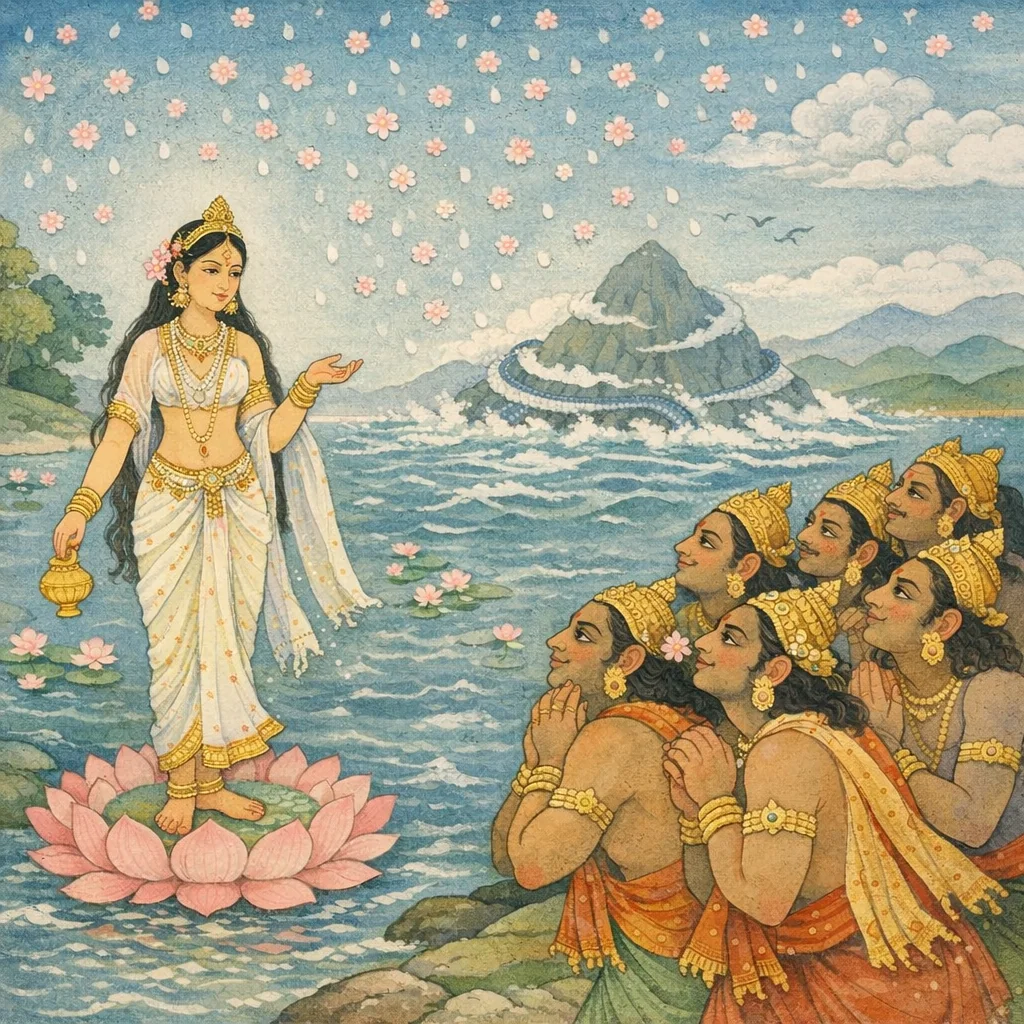
Chapter Arc: उग्रश्रवा शौनक को देवताओं-दानवों के महासंकल्प की ओर ले जाते हैं—समुद्र-मन्थन, जहाँ एक ही कर्म से रत्न भी निकलेंगे और वैर भी। → मन्दर पर्वत को मथानी बनाकर समुद्र-तट पर लाया जाता है; ब्रह्मा की प्रेरणा और नारायण का आदेश कर्म को गति देता है। अनन्त (शेष) उठकर पर्वत-स्थापन में सहायक बनते हैं; समुद्र (अपां पति) भी कहता है कि मन्दर-भ्रमण के मर्दन को वह सह लेगा। मन्थन आरम्भ होते ही प्रकृति उथल-पुथल होती है—पुष्प-वृष्टि, किन्नर-अप्सराओं और देवों की उपस्थिति, और आशा-लोभ का बढ़ता ज्वार। → समुद्र से सोम (चन्द्र) जैसे दिव्य रत्न प्रकट होते हैं; पर अमृत-लक्ष्मी की चाह में दानवों का मन और अधिक अधीर होता जाता है। तभी नारायण मोहिनी-माया धारण कर अद्भुत स्त्री-रूप में प्रकट होते हैं और दानव-दैत्य उसी पर मोहित होकर अमृत उसे सौंप देते हैं। → मोहिनी के आकर्षण में दानवों की बुद्धि ढक जाती है; अमृत का अधिकार उनके हाथ से फिसलने लगता है और देव-पक्ष के लिए विजय का द्वार खुलता है। → मोहिनी अब अमृत का वितरण कैसे करेगी—और दानवों को कब, कैसे बोध होगा कि वे छल में पड़ चुके हैं?
Shlokas
Verse 1
ऑपनआ कराता बछ। अं अष्टादशो<् ध्याय: देवताओं और 30020 22026 लिये समुद्रका मन्थन, अनेक रत्नोंके साथ उत्पत्ति और भगवानका मोहिनीरूप धारण करके दैत्योंके हाथसे अमृत ले लेना सौतिरुवाच ततो<भ्रशिखराकारैर्गिरिशृड्रैरलंकृतम् । मन्दरं पर्वतवरं लताजालसमाकुलम्,उग्रश्रवाजी कहते हैं--शौनकजी! तदनन्तर सम्पूर्ण देवता मिलकर पर्वतश्रेष्ठ मन्दराचलको उखाड़नेके लिये उसके समीप गये। वह पर्वत श्रेत मेघखण्डोंके समान प्रतीत होनेवाले गगनचुम्बी शिखरोंसे सुशोभित था। सब ओर फैली हुई लताओंके समुदायने उसे आच्छादित कर रखा था। उसपर चारों ओर भाँति-भाँतिके विहंगम कलरव कर रहे थे। बड़ी-बड़ी दाढ़ोंवाले व्याप्र-सिंह आदि अनेक हिंसक जीव वहाँ सर्वत्र भरे हुए थे। उस पर्वतके विभिन्न प्रदेशोंमें किन्नरगण, अप्सराएँ तथा देवतालोग निवास करते थे। उसकी ऊँचाई ग्यारह हजार योजन थी और भूमिके नीचे भी वह उतने ही सहस्र योजनोंमें प्रतिष्ठित था। जब देवता उसे उखाड़ न सके, तब वहाँ बैठे हुए भगवान् विष्णु और ब्रह्माजीसे इस प्रकार बोले--
Śaunaka said: “Thereafter they approached Mandara, the foremost of mountains—adorned with peaks rising like the crests of clouds and thickly overgrown with networks of creepers.” The verse sets a solemn, purposeful tone: the gods turn to a mighty natural support for a righteous aim, suggesting that great undertakings require both collective effort and the harnessing of nature’s strength under dharmic intent.
Verse 2
नानाविहगसंघुष्टं नानादंष्टिसमाकुलम् । किन्नरैरप्सरोभिश्न देवैरपि च सेवितम्,उग्रश्रवाजी कहते हैं--शौनकजी! तदनन्तर सम्पूर्ण देवता मिलकर पर्वतश्रेष्ठ मन्दराचलको उखाड़नेके लिये उसके समीप गये। वह पर्वत श्रेत मेघखण्डोंके समान प्रतीत होनेवाले गगनचुम्बी शिखरोंसे सुशोभित था। सब ओर फैली हुई लताओंके समुदायने उसे आच्छादित कर रखा था। उसपर चारों ओर भाँति-भाँतिके विहंगम कलरव कर रहे थे। बड़ी-बड़ी दाढ़ोंवाले व्याप्र-सिंह आदि अनेक हिंसक जीव वहाँ सर्वत्र भरे हुए थे। उस पर्वतके विभिन्न प्रदेशोंमें किन्नरगण, अप्सराएँ तथा देवतालोग निवास करते थे। उसकी ऊँचाई ग्यारह हजार योजन थी और भूमिके नीचे भी वह उतने ही सहस्र योजनोंमें प्रतिष्ठित था। जब देवता उसे उखाड़ न सके, तब वहाँ बैठे हुए भगवान् विष्णु और ब्रह्माजीसे इस प्रकार बोले--
Śaunaka said: “It was resounding with the calls of many kinds of birds, and crowded with creatures of many fearsome fangs. It was frequented and inhabited by Kinnaras, Apsarases, and even the gods.”
Verse 3
एकादश सहस्राणि योजनानां समुच्छितम् । अधो भूमे: सहस्रेषु तावत्स्वेव प्रतिक्ठितम्,उग्रश्रवाजी कहते हैं--शौनकजी! तदनन्तर सम्पूर्ण देवता मिलकर पर्वतश्रेष्ठ मन्दराचलको उखाड़नेके लिये उसके समीप गये। वह पर्वत श्रेत मेघखण्डोंके समान प्रतीत होनेवाले गगनचुम्बी शिखरोंसे सुशोभित था। सब ओर फैली हुई लताओंके समुदायने उसे आच्छादित कर रखा था। उसपर चारों ओर भाँति-भाँतिके विहंगम कलरव कर रहे थे। बड़ी-बड़ी दाढ़ोंवाले व्याप्र-सिंह आदि अनेक हिंसक जीव वहाँ सर्वत्र भरे हुए थे। उस पर्वतके विभिन्न प्रदेशोंमें किन्नरगण, अप्सराएँ तथा देवतालोग निवास करते थे। उसकी ऊँचाई ग्यारह हजार योजन थी और भूमिके नीचे भी वह उतने ही सहस्र योजनोंमें प्रतिष्ठित था। जब देवता उसे उखाड़ न सके, तब वहाँ बैठे हुए भगवान् विष्णु और ब्रह्माजीसे इस प्रकार बोले--
“It rose to a height of eleven thousand yojanas; and beneath the earth as well it was fixed for the same number of thousands.” (Śaunaka’s words, describing the vast Mandara mountain—so immense that its visible height is matched by its deep foundation—setting the scene for the gods’ attempt to uproot it and their subsequent appeal to Viṣṇu and Brahmā.)
Verse 4
तमुद्धर्तुमशक्ता वै सर्वे देवगणास्तदा । विष्णुमासीनमभ्येत्य ब्रह्माणं चेदमब्रुवन्,उग्रश्रवाजी कहते हैं--शौनकजी! तदनन्तर सम्पूर्ण देवता मिलकर पर्वतश्रेष्ठ मन्दराचलको उखाड़नेके लिये उसके समीप गये। वह पर्वत श्रेत मेघखण्डोंके समान प्रतीत होनेवाले गगनचुम्बी शिखरोंसे सुशोभित था। सब ओर फैली हुई लताओंके समुदायने उसे आच्छादित कर रखा था। उसपर चारों ओर भाँति-भाँतिके विहंगम कलरव कर रहे थे। बड़ी-बड़ी दाढ़ोंवाले व्याप्र-सिंह आदि अनेक हिंसक जीव वहाँ सर्वत्र भरे हुए थे। उस पर्वतके विभिन्न प्रदेशोंमें किन्नरगण, अप्सराएँ तथा देवतालोग निवास करते थे। उसकी ऊँचाई ग्यारह हजार योजन थी और भूमिके नीचे भी वह उतने ही सहस्र योजनोंमें प्रतिष्ठित था। जब देवता उसे उखाड़ न सके, तब वहाँ बैठे हुए भगवान् विष्णु और ब्रह्माजीसे इस प्रकार बोले--
At that time, all the hosts of gods, being unable to uproot it, approached Viṣṇu as he sat there, and also Brahmā, and spoke these words. The verse underscores a recurring ethical pattern in the epic: when collective strength and pride prove insufficient, one turns—humbly and rightly—to higher wisdom and divine guidance rather than persisting in futile force.
Verse 5
भवन्तावत्र कुर्वीतां बुद्धि नैःश्रेयसीं पराम् मन्दरोद्धरणे यत्न: क्रियतां च हिताय न:,“आप दोनों इस विषयमें कल्याणमयी उत्तम बुद्धि प्रदान करें और हमारे हितके लिये मन्दराचल पर्वतको उखाड़नेका यत्न करें”
Śaunaka said: “May you two, here and now, grant us the highest insight that leads to ultimate good. And for our welfare, please undertake the effort of ‘uprooting Mandara’—that is, make the decisive exertion needed to bring forth what is beneficial.”
Verse 6
सौतिरुवाच तथेति चाब्रवीदू विष्णुर्ब्रह्मणा सह भार्गव । अचोदयदमेयात्मा फणीन्द्रं पद्मलोचन:,उग्रश्रवाजी कहते हैं--भूगुनन्दन! देवताओंके ऐसा कहनेपर ब्रह्माजीसहित भगवान् विष्णुने कहा--“तथास्तु (ऐसा ही हो)'। तदनन्तर जिनका स्वरूप मन, बुद्धि एवं प्रमाणोंकी पहुँचसे परे है, उन कमलनयन भगवान् विष्णुने नागराज अनन्तको मन्दराचल उखाड़नेके लिये आज्ञा दी
Ugraśravas (Sauti) said: “So be it,” spoke Lord Viṣṇu, together with Brahmā, O Bhārgava. Then that lotus-eyed Lord Viṣṇu—whose true nature is immeasurable and beyond the reach of mind, intellect, and ordinary proofs—commanded the king of serpents (Ananta) to set about uprooting Mount Mandara. The episode underscores divine assent to a collective purpose and the orderly delegation of cosmic tasks for the welfare of gods and the world.
Verse 7
ततो<5नन्तः समुत्थाय ब्रह्म॒णा परिचोदित: । नारायणेन चाप्युक्तस्तस्मिन् कर्मणि वीर्यवान्,जब ब्रह्माजीने प्रेरणा दी और भगवान् नारायणने भी आदेश दे दिया, तब अतुलपराक्रमी अनन्त (शेषनाग) उठकर उस कार्यमें लगे
Then Ananta (Śeṣa), urged on by Brahmā and also instructed by Nārāyaṇa, rose up; that mighty one set himself to the appointed task. The passage underscores that even the most powerful act rightly when aligned with divine ordinance and purposeful duty rather than personal impulse.
Verse 8
अथ पर्वतराजानं तमनन्तो महाबल: । उज्जहार बलाद् ब्रह्मनू सवनं सवनौकसम्,ब्रह्म! फिर तो महाबली अनन्तने जोर लगाकर गिरिराज मन्दराचलको वन और वनवासी जन्तुओंसहित उखाड़ लिया
Śaunaka said: Then the mighty Ananta, exerting sheer force, uprooted that king of mountains—Mandara—along with its forests and all the creatures dwelling in those forests. The episode underscores overwhelming divine strength harnessed for a cosmic purpose, where even the stability of nature can be moved when the larger order (dharma and the gods’ work) requires it.
Verse 9
ततस्तेन सुरा: सार्ध समुद्रमुपतस्थिरे । तमूचुरमृतस्यार्थे निर्मथिष्पयामहे जलम्,तत्पश्चात् देवतालोग उस पर्वतके साथ समुद्रतटपर उपस्थित हुए और समुद्रसे बोले --'हम अमृतके लिये तुम्हारा मन््थन करेंगे।! यह सुनकर जलके स्वामी समुद्रने कहा --“यदि अमृतमें मेरा भी हिस्सा रहे तो मैं मन्दराचलको घुमानेसे जो भारी पीड़ा होगी, उसे सह लूँगा”
Then the gods, together with him, approached the Ocean. They said to him, “For the sake of obtaining amṛta (the nectar of immortality), we will churn you, the waters.” The episode frames a moral negotiation: even a cosmic undertaking meant for the common good proceeds only through consent and a fair share for all parties who must bear the burden.
Verse 10
अपां पतिरथोवाच ममाप्यंशो भवेत् ततः । सोढास्मि विपुल॑ मर्द मन्दरभ्रमणादिति,तत्पश्चात् देवतालोग उस पर्वतके साथ समुद्रतटपर उपस्थित हुए और समुद्रसे बोले --'हम अमृतके लिये तुम्हारा मन््थन करेंगे।! यह सुनकर जलके स्वामी समुद्रने कहा --“यदि अमृतमें मेरा भी हिस्सा रहे तो मैं मन्दराचलको घुमानेसे जो भारी पीड़ा होगी, उसे सह लूँगा”
Śaunaka said: Then the Lord of the Waters (the Ocean) replied, “Let there be a share for me as well in that (nectar). If so, I will endure the immense strain and crushing pain that will arise from the churning and turning of Mount Mandara.” In the narrative, the gods, seeking amṛta, negotiate with the Ocean: cooperation is granted on the condition of a just share, highlighting reciprocity and fairness even in cosmic enterprises.
Verse 11
ऊचुश्न कूर्मराजानमकूपारे सुरासुरा: । अधिष्ठानं गिरेरस्य भवान् भवितुमहति,तब देवताओं और असुरोंने (समुद्रकी बात स्वीकार करके) समुद्रतलमें स्थित कच्छपराजसे कहा--“भगवन्! आप इस मन्दराचलके आधार बनिये'
The gods and the asuras, having agreed to the undertaking in the ocean, addressed the royal Tortoise in the boundless waters: “O Lord, you are worthy to become the supporting base for this mountain.” The verse highlights cooperative resolve for a great task and the ethical recognition of fitness (arhatā) for responsibility.
Verse 12
कूर्मेण तु तथेत्युक्त्वा पृष्ठमस्य समर्पितम् | तं शैलं तस्य पृष्ठस्थं वज्नेणेन्द्रो न्यपीडयत्,तब कच्छपराजने “तथास्तु” कहकर मन्दराचलके नीचे अपनी पीठ लगा दी। देवराज इन्द्रने उस पर्वतको वज्रद्वारा दबाये रखा
The Tortoise (Kūrma), saying “So be it,” offered his own back as a support. Upon that mountain resting on his back, Indra pressed down with the thunderbolt, holding it steady—an act of divine restraint that prevents chaos and enables the gods’ undertaking to proceed in an ordered way.
Verse 13
मन्थानं मन्दरं कृत्वा तथा नेत्र च वासुकिम् । देवा मथितुमारब्धा: समुद्र निधिमम्भसाम्
Śaunaka said: Making Mount Mandara their churning-rod and Vāsuki their churning-cord, the gods began to churn the ocean—the vast treasury of waters—seeking its hidden riches through united effort.
Verse 14
अमृतार्थे पुरा ब्रह्मंस्तथैवासुरदानवा: । एकमन्तमुप श्लिष्टा नागराज्ञों महासुरा:
Śaunaka said: “Formerly, O Brahman, seeking the nectar of immortality, the Asuras and Dānavas likewise drew close in secret to the Nāga-king—those mighty demons—(to enlist his support).”
Verse 15
विबुधा: सहिता: सर्वे यत: पुच्छे ततः स्थिता: । ब्रह्मन! इस प्रकार पूर्वकालमें देवताओं, दैत्यों और दानवोंने मन्दराचलको मथानी और वासुकि नागको डोरी बनाकर अमृतके लिये जलनिधि समुद्रको मथना आरम्भ किया। उन महान् असुरोंने नागराज वासुकिके मुखभागको दृढ़तापूर्वक पकड़ रखा था और जिस ओर उसकी पूँछ थी उधर सम्पूर्ण देवता उसे पकड़कर खड़े थे || १३-१४ $ ।। अनन्तो भगवान् देवो यतो नारायणस्तत: । शिर उत्तक्षिप्प नागस्य पुन: पुनरवाक्षिपत्,भगवान् अनन्तदेव उधर ही खड़े थे, जिधर भगवान् नारायण थे। वे वासुकि नागके सिरको बार-बार ऊपर उठाकर झटकते थे
Śaunaka said: All the gods, assembled together, stood on the side where the serpent’s tail was. And the blessed god Ananta stood on the very side where Nārāyaṇa was; again and again he lifted up the serpent’s head and then pressed it down. In the churning of the ocean for amṛta, the scene underscores ordered cooperation under divine guidance: each party takes its appointed position, and the cosmic task proceeds through disciplined, coordinated effort rather than mere force.
Verse 16
वासुकेरथ नागस्य सहसा55क्षिप्यत: सुरै: । सधूमा: सार्चिषो वाता निष्पेतुरसकृन्मुखात्,तब देवताओंद्वारा बार-बार खींचे जाते हुए वासुकि नागके मुखसे निरन्तर धूएँ तथा आगकी लपटोंके साथ गर्म-गर्म साँसें निकलने लगीं
Śaunaka said: As the gods suddenly and repeatedly tugged at the serpent Vāsuki, hot gusts of breath—laden with smoke and streaked with flames—kept bursting forth again and again from his mouth. The scene underscores how coercion and strain in a great undertaking can unleash destructive forces, affecting all participants in the act.
Verse 17
ते धूमसड्घा: सम्भूता मेघसड्घा: सविद्युतः । अभ्यवर्षन् सुरगणान् श्रमसंतापकर्शितान्,वे धूमसमुदाय बिजलियोंसहित मेघोंकी घटा बनकर परिश्रम एवं संतापसे कष्ट पानेवाले देवताओंपर जलकी धारा बरसाते रहते थे
Those masses of smoke, having gathered and transformed into clusters of clouds flashing with lightning, poured down rain upon the hosts of gods who had been worn down by toil and scorched by distress—bringing them relief amid their hardship.
Verse 18
तस्माच्च गिरिकूटाग्रात् प्रच्युता: पुष्पवृष्टय: । सुरासुरगणान् सर्वान् समन््तात् समवाकिरन्,उस पर्वतशिखरके अग्रभागसे सम्पूर्ण देवताओं तथा असुरोंपर सब ओरसे फूलोंकी वर्षा होने लगी (सा तु नारायणी माया धारयन्ती कमण्डलुम् । आस्यमानेषु दैत्येषु पड्क््त्या च प्रति दानवै: । देवानपाययद् देवी न दैत्यांस्ते च चुक्रुशु: ।।) भगवान् नारायणकी वह मूर्तिमती माया हाथमें कलश लिये अमृत परोसने लगी। उस समय दानवोंसहित दैत्य पंगत लगाकर बैठे ही रह गये, परंतु उस देवीने देवताओंको ही अमृत पिलाया; दैत्योंको नहीं दिया, इससे उन्होंने बड़ा कोलाहल मचाया। इति श्रीमहाभारते आदिपर्वणि आस्तीकपर्वणि अमृतमन्थनेडष्टादशो5ध्याय: ।। १८ || इस प्रकार श्रीमह्याभारत आदिपर्वके अन्तर्गत आस्तीकपर्वमें अमृतमन्थनविषयक अठारहवाँ अध्याय पूरा हुआ
Then, from the very crest of the mountain peak, showers of flowers fell, strewing all the hosts of gods and asuras on every side. In the same episode, Nārāyaṇa’s embodied Māyā, holding a water-pot, began to serve the nectar: while the daityas and dānavas sat in rows, she gave amṛta only to the devas and not to the demons. Deprived of their expected share, the asuras raised a great outcry—showing how desire and entitlement, when unchecked by dharma, turn even a cosmic boon into conflict.
Verse 19
बभूवात्र महानादो महामेघरवोपम: । उदधेर्मथ्यमानस्य मन्दरेण सुरासुरै:,देवताओं और असुरोंद्वारा मन्दराचलसे समुद्रका मन््थन होते समय वहाँ महान् मेघोंकी गम्भीर गर्जनाके समान जोर-जोरसे शब्द होने लगा
Śaunaka said: As the gods and the asuras churned the ocean with Mount Mandara, a tremendous roar arose there—deep and rolling like the thunder of great rain-clouds—signaling the vast, world-shaking force unleashed when rival powers unite in a single, driven enterprise.
Verse 20
तत्र नाना जलचरा विनिष्पिष्टा महाद्रिणा । विलयं समुपाजग्मु: शतशो लवणाम्भसि,उस समय उस महान पर्वतके द्वारा सैकड़ों जलचर जन्तु पिस गये और खारे पानीके उस महासागरमें विलीन हो गये
There, hundreds of diverse aquatic creatures were crushed beneath that mighty mountain and, in the salty waters of the great sea, they perished and dissolved away. The scene underscores how overwhelming force, when unleashed without restraint, brings sudden destruction upon the vulnerable.
Verse 21
वारुणानि च भूतानि विविधानि महीधर: । पातालतलवासीनि विलयं समुपानयत्,मन्दराचलने वरुणालय (समुद्र) तथा पातालतलमें निवास करनेवाले नाना प्रकारके प्राणियोंका संहार कर डाला
Śaunaka said: The mountain-bearer brought about destruction for the many kinds of beings belonging to Varuṇa, and for those dwelling in the subterranean regions of Pātāla. In the course of the Mandara-churning, even the creatures of the oceanic realm and the netherworld were swept into ruin—an episode that underscores how cosmic enterprises, though aimed at a higher gain, can entail collateral suffering for lesser beings.
Verse 22
तस्मिंश्व भ्राम्यमाणेडद्रौ संघृष्यन्त: परस्परम् । न्यपतन् पतगोपेता: पर्वताग्रान्महाद्रुमा:,जब वह पर्वत घुमाया जाने लगा, उस समय उसके शिखरसे बड़े-बड़े वृक्ष आपसमें टकराकर उनपर निवास करनेवाले पक्षियोंसहित नीचे गिर पड़े
As that mountain was being whirled about, the great trees on its summit—rubbing and crashing against one another—fell down, along with the birds that dwelt upon them. The scene underscores how violent, uncontrolled force, even when applied for a larger purpose, can bring collateral harm to innocent life and the natural order.
Verse 23
तेषां संघर्षजश्वाग्निरचिंर्भि: प्रज्वलन् मुहुः । विद्युद्धिरिव नीला भ्रमावृणोन्मन्दरं गिरिम्,उनकी आपसकी रगड़से बार-बार आग प्रकट होकर ज्वालाओंके साथ प्रज्वलित हो उठी और जैसे बिजली नीले मेघको ढक ले, उसी प्रकार उसने मन्दराचलको आच्छादित कर लिया
Śaunaka describes how, from their mutual friction, fire repeatedly sprang forth and blazed up with tongues of flame; and just as lightning veils a dark-blue cloud, so that fire spread over and covered Mount Mandara. The image underscores how uncontrolled collision and agitation can quickly generate destructive force that overwhelms even what seems firm and immovable.
Verse 24
ददाह कुज्जरांस्तत्र सिंहांश्नैव विनिर्गतान् । विगतासूनि सर्वाणि सत्त्वानि विविधानि च,उस दावानलने पर्वतीय गजराजों, गुफाओंसे निकले हुए सिंहों तथा अन्यान्य सहस्रों जन्तुओंको जलाकर भस्म कर दिया। उस पर्वतपर जो नाना प्रकारके जीव रहते थे, वे सब अपने प्राणोंसे हाथ धो बैठे
Śaunaka said: There, the raging forest-fire burned the mountain elephants, the lions that had come out of their caves, and countless other kinds of creatures. On that mountain, all the diverse beings that dwelt there were deprived of life—an image of indiscriminate destruction that underscores how uncontrolled violence consumes the innocent along with the guilty.
Verse 25
तमग्निममरश्रेष्ठ: प्रदहन्तमितस्तत: । वारिणा मेघजेनेन्द्र:ः शमयामास सर्वश:,तब देवराज इन्द्रने इधर-उधर सबको जलाती हुई उस आगको मेघोंके द्वारा जल बरसाकर सब ओरसे बुझा दिया
Śaunaka said: Then Indra, the foremost among the immortals, seeing that fire blazing and consuming everything in all directions, caused rain to fall from cloud-born waters and extinguished it completely on every side. The episode underscores the ethical ideal that unchecked destruction must be restrained by rightful power used for protection and the restoration of balance.
Verse 26
ततो नानाविधास्तत्र सुख्ुवु:ः सागराम्भसि । महाद्रुमाणां निर्यासा बहवश्लौषधीरसा:,तदनन्तर समुद्रके जलमें बड़े-बड़े वृक्षोंके भाँति-भाँतिके गोंद तथा ओषधियोंके प्रचुर रस चू-चूकर गिरने लगे
Then, in the waters of the ocean, many kinds of exudations began to ooze forth—resins from great trees and abundant juices of medicinal herbs—flowing and dripping into the sea. The narration evokes a wondrous, almost cosmic churning of nature, where the world’s substances emerge in profusion, suggesting the ocean as a vast receptacle into which the essences of life and healing are gathered.
Verse 27
तेषाममृतवीर्याणां रसानां पयसैव च । अमरत्वं सुरा जग्मु: काउ्चनस्य च नि:स्रवात्,वृक्षों और ओषधियोंके अमृततुल्य प्रभावशाली रसोंके जलसे तथा सुवर्णमय मन्दराचलकी अनेक दिव्य प्रभावशाली मणियोंसे चूनेवाले रससे ही देवतालोग अमरत्वको प्राप्त होने लगे
Śaunaka said: From the milk-like waters and the potent, nectar-equivalent juices of those trees and herbs—and also from the oozing essence that flowed from the golden (Mount) Mandara—the gods began to attain immortality. The passage underscores how contact with divinely charged substances, obtained through extraordinary means, is portrayed as conferring deathlessness upon the devas.
Verse 28
ततस्तस्य समुद्रस्य तज्जातमुदकं पय: । रसोत्तमैविमिश्र॑ च तत: क्षीरादभूद्ू घृतम्,उन उत्तम रसोंके सम्मिश्रणसे समुद्रका सारा जल दूध बन गया और दूधसे घी बनने लगा
Śaunaka said: “Then the water that had arisen in that ocean turned into milk; and, being blended with the finest essences, from that milk ghee came into being.” The narration highlights a wondrous transformation in which the world’s substances are refined into purer forms, suggesting an ethical ideal of moving from the ordinary toward the excellent through proper mixture, maturation, and elevation of quality.
Verse 29
ततो ब्रह्माणमासीनं देवा वरदमन्रुवन् । भ्रान्ता: सम सुभृशं ब्रह्मन् नोद्भवत्यमृतं च तत्,तब देवतालोग वहाँ बैठे हुए वरदायक ब्रह्माजीसे बोले--'ब्रह्मन! भगवान् नारायणके अतिरिक्त हम सभी देवता और दानव बहुत थक गये हैं; किंतु अभीतक वह अमृत प्रकट नहीं हो रहा है। इधर समुद्रका मन्थन आरम्भ हुए बहुत समय बीत चुका है”
Then the gods addressed Brahmā, who was seated there and known as the granter of boons: “O Brahman, we are utterly exhausted; yet that nectar has still not arisen. Much time has passed since the churning of the ocean began.”
Verse 30
विना नारायणं देवं सर्वेडन्ये देवदानवा: । चिरारब्धमिदं चापि सागरस्यापि मन्थनम्,तब देवतालोग वहाँ बैठे हुए वरदायक ब्रह्माजीसे बोले--'ब्रह्मन! भगवान् नारायणके अतिरिक्त हम सभी देवता और दानव बहुत थक गये हैं; किंतु अभीतक वह अमृत प्रकट नहीं हो रहा है। इधर समुद्रका मन्थन आरम्भ हुए बहुत समय बीत चुका है”
Śaunaka said: “Without the god Nārāyaṇa, all the others—gods and Dānavas alike—have grown utterly weary. And though the churning of the Ocean has been underway for a long time, the nectar has still not appeared.”
Verse 31
ततो नारायणं देवं ब्रह्मा वचनमब्रवीत् । विधत्स्वैषां बल॑ं विष्णो भवानत्र परायणम्,यह सुनकर ब्रह्माजीने भगवान् नारायणसे यह बात कही--'सर्वव्यापी परमात्मन्! इन्हें बल प्रदान कीजिये, यहाँ एकमात्र आप ही सबके आश्रय हैं!
Then Brahmā addressed the divine Nārāyaṇa: “O Viṣṇu, grant these beings strength. In this matter, you alone are their ultimate refuge.” The passage frames divine power not as arbitrary force, but as support bestowed for the upholding of cosmic order and rightful purpose.
Verse 32
विष्णुरुवाच बलं॑ ददामि सर्वेषां कर्मतद् ये समास्थिता: । क्षोभ्यतां कलश: सर्वैर्मन्दर: परिवर्त्यताम्,श्रीविष्णु बोले--जो लोग इस कार्यमें लगे हुए हैं, उन सबको मैं बल दे रहा हूँ। सब लोग पूरी शक्ति लगाकर मन्दराचलको घुमावें और इस सागरको क्षुब्ध कर दें
Viṣṇu said: “I grant strength to all who have steadfastly taken up this task. Let the ocean be churned by everyone together; let Mandara be turned with full effort.” In context, the verse underscores divine support for disciplined, collective action undertaken with resolve, where power is bestowed not for idle display but to sustain a shared undertaking.
Verse 33
सौतिर्वाच नारायणवच: श्रुत्वा बलिनस्ते महोदथे: । तत् पय:ः सहिता भूयश्नचक्रिरे भूशभाकुलम्,उग्रश्रवाजी कहते हैं--शौनकजी! भगवान् नारायणका वचन सुनकर देवताओं और दानवोंका बल बढ़ गया। उन सबने मिलकर पुनः वेगपूर्वक महासागरका वह जल मथना आरम्भ किया और उस समस्त जलराशिको अत्यन्त क्षुब्ध कर डाला
Sauti said: Hearing the words of Nārāyaṇa, the strength and resolve of those mighty ones increased. Then, joining together once more, they began to churn the great ocean with renewed force, violently agitating the entire mass of its waters. The episode underscores how a righteous directive, when accepted collectively, can restore courage and coordinated effort even amid daunting undertakings.
Verse 34
तत:ः शतसहसांशुर्म थ्यमानात्तु सागरात् । प्रसन्नात्मा समुत्पन्न: सोम: शीतांशुरुज्ज्वल:,फिर तो उस महासागरसे अनन्त किरणोंवाले सूर्यके समान तेजस्वी, शीतल प्रकाशसे युक्त, श्वैतवर्ण एवं प्रसन्नात्मा चन्द्रमा प्रकट हुआ
Then, as the great ocean was being churned, Soma—the Moon—arose from it: radiant with cool beams, bright like a sun of countless rays, and serene in nature. The episode underscores that from sustained, disciplined effort (even amid turmoil) can emerge gifts that soothe and stabilize the world, not merely those that dazzle it.
Verse 35
श्रीरनन्तरमुत्पन्ना घृतात् पाण्डुरवासिनी । सुरादेवी समुत्पन्ना तुरग: पाण्डुरस्तथा,तदनन्तर उस घृतस्वरूप जलसे श्वेतवस्त्रधारिणी लक्ष्मीदेवीका आविर्भाव हुआ। इसके बाद सुरादेवी और श्वेत अश्व प्रकट हुए
Śaunaka said: Thereafter, from the clarified butter arose Śrī (Lakṣmī), dwelling in white radiance. Next manifested Surādevī, and likewise a white horse. The narration highlights the orderly emergence of auspicious powers and supports from the cosmic churning, suggesting that prosperity, sacred exhilaration, and strength appear as gifts of a rightly conducted, collective endeavor.
Verse 36
कौस्तुभस्तु मणिर्दिव्य उत्पन्नो घृत्सम्भव: । मरीचिविकच: श्रीमान् नारायण उरोगत:,फिर अनन्त किरणोंसे समुज्ज्वल दिव्य कौस्तुभभणिका उस जललसे प्रादुर्भाव हुआ, जो भगवान् नारायणके वक्ष:स्थलपर सुशोभित हुई
Śaunaka said: “Then the divine jewel Kaustubha arose—born from the churning’s rich essence—radiant with spreading rays and splendid in beauty. It came to rest upon Nārāyaṇa’s chest, where it shone as an emblem of His sovereignty and auspiciousness.”
Verse 37
(पारिजातकश्न तत्रैव सुरभिश्न महामुने । जज्ञाते तौ तदा ब्रह्मन् सर्वकामफलप्रदौ ।।) श्री: सुरा चैव सोमश्च तुरगश्च मनोजव: । यतो देवास्ततो जग्मुरादित्यपथमाश्रिता:,ब्रह्म! महामुने! वहाँ सम्पूर्ण कामनाओंका फल देनेवाले पारिजात वृक्ष एवं सुरभि गौकी उत्पत्ति हुई। फिर लक्ष्मी, सुरा, चन्द्रमा तथा मनके समान वेगशाली उच्चै:श्रवा घोड़ा >-ये सब सूर्यके मार्ग आकाशका आश्रय ले, जहाँ देवता रहते हैं, उस लोकमें चले गये
Śaunaka said: “O great sage, O Brahman—there itself were born the Pārijāta tree and the Surabhī cow, both bestowers of the fruits of all desires. Then Lakṣmī, Sura (the divine liquor), Soma (the Moon), and the swift-minded horse (Ucchaiḥśravas) departed to the realm where the gods dwell, taking refuge in the Sun’s path (the celestial course).” In narrative terms, the verse continues the account of wondrous emergences (ratnas) and their rightful allocation to the divine sphere. Ethically, it underscores a cosmic order in which extraordinary powers and boons are not left ungoverned but are situated within a regulated, dharmic domain.
Verse 38
धन्वन्तरिस्ततो देवो वपुष्मानुदतिष्ठत । श्वेत कमण्डलुं बिशभ्रदमृतं यत्र तिषतति,इसके बाद दिव्य शरीरधारी धन्वन्तरि देव प्रकट हुए। वे अपने हाथमें श्वेत कलश लिये हुए थे, जिसमें अमृत भरा था
Then the god Dhanvantari arose, radiant in a divine body. In his hand he bore a white water-pot, within which the nectar of immortality was contained—an appearance that signals the gods’ hope for restoration and the moral tension that follows when a life-giving boon becomes the object of contention.
Verse 39
एतदत्यद्भुतं दृष्टवा दानवानां समुत्थित: । अमृतार्थे महान् नादो ममेदमिति जल्पताम्,यह अत्यन्त अद्भुत दृश्य देखकर दानवोंमें अमृतके लिये कोलाहल मच गया। वे सब कहने लगे “यह मेरा है, यह मेरा है”
Śaunaka said: Seeing this exceedingly wondrous sight, a great uproar arose among the Dānavas, driven by the desire for amṛta. Each clamored possessively, saying, “This is mine! This is mine!”—revealing how greed and rivalry flare up when a coveted prize appears.
Verse 40
श्वेतर्दन्तै क्षतुर्भिस्तु महाकायस्तत: परम् | ऐरावतो महानागो5भवद् वज्रभूता धृतः,तत्पश्चात् श्वेत रंगके चार दाँतोंसे सुशोभित विशालकाय महानाग ऐरावत प्रकट हुआ, जिसे वज्रधारी इन्द्रने अपने अधिकारमें कर लिया
Śaunaka said: “Thereafter there appeared the great elephant Airāvata—of vast body and adorned with four white tusks. The wielder of the thunderbolt, Indra, took him under his authority.”
Verse 41
अतिनिर्मथनादेव कालकूटस्तत: पर: । जगदावृत्य सहसा सधूमो5ग्निरिव ज्वलन्,तदनन्तर अत्यन्त वेगसे मथनेपर कालकूट महाविष उत्पन्न हुआ, वह धूमयुक्त अग्निकी भाँति एकाएक सम्पूर्ण जगत्को घेरकर जलाने लगा
Śaunaka said: From that intense churning there then arose Kālakūṭa, the dreadful poison. In an instant it spread over the world, blazing like a smoke-laden fire, as though to scorch all creation—an image of how uncontrolled force, even when born from a shared enterprise, can become a universal peril demanding restraint and responsibility.
Verse 42
त्रैलोक्यं मोहितं यस्य गन्धमाप्राय तद् विषम् । प्राग्रसललोकरक्षार्थ ब्रह्मणो वचनाच्छिव:,उस विषकी गन्ध सूँघते ही त्रिलोकीके प्राणी मूर्च्छिंत हो गये। तब ब्रह्माजीके प्रार्थना करनेपर भगवान् श्रीशंकरने त्रिलोकीकी रक्षाके लिये उस महान् विषको पी लिया
Śaunaka said: “So potent was that poison that merely smelling its odor threw the beings of the three worlds into delusion and collapse. Then, at Brahmā’s request, Śiva—seeking to protect all creatures—drank that terrible poison.”
Verse 43
दधार भगवान् कण्ठे मन्त्रमूर्तिमिहेश्वरः । तदाप्रभूति देवस्तु नीलकण्ठ इति श्रुति:,मन्त्रमूर्ति भगवान् महेश्वरने विषपान करके उसे अपने कण्ठमें धारण कर लिया। तभीसे महादेवजी नीलकण्ठके नामसे विख्यात हुए, ऐसी जनश्रुति है
Śaunaka said: The Lord, Īśvara, held the mantra-formed (deadly) substance in his throat. From that time onward, it is traditionally heard that the god became renowned by the name Nīlakaṇṭha (“Blue-throated”).
Verse 44
एतत् तदद्धुतं दृष्टवा निराशा दानवा: स्थिता: । अमृतार्थे च लक्ष्म्यर्थे महान्तं वैरमाश्रिता:,ये सब अदभुत बातें देखकर दानव निराश हो गये और अमृत तथा लक्ष्मीके लिये उन्होंने देवताओंके साथ महान् वैर बाँध लिया
Seeing that astonishing event, the Dānavas stood disheartened. Driven by the desire for amṛta and for Lakṣmī, they embraced a great enmity toward the Devas—showing how craving for power and prosperity can harden into hostility and adharma.
Verse 45
ततो नारायणो मायां मोहिनीं समुपाश्रित: । स्त्रीरूपमद्भुतं कृत्वा दानवानभिसंश्रित:,उसी समय भगवान् विष्णुने मोहिनी मायाका आश्रय ले मनोहारिणी स्त्रीका अद्भुत रूप बनाकर, दानवोंके पास पदार्पण किया
Then Nārāyaṇa resorted to the enchanting power of illusion called Mohinī. Assuming a wondrous and captivating female form, he approached the Dānavas—using stratagem rather than force to redirect events and restrain unrighteous power.
Verse 46
ततस्तदमृतं तस्यै ददुस्ते मूढचेतस: । स्त्रिये दानवदैतेया: सर्वे तदूग़तमानसा:,समस्त दैत्यों और दानवोंने उस मोहिनीपर अपना हृदय निछावर कर दिया। उनके चित्तमें मूढ़ता छा गयी। अतः उन सबने स्त्रीरूपधारी भगवानको वह अमृत सौंप दिया
Then those Daityas and Dānavas, their minds clouded by delusion and infatuation, handed that nectar over to her—the woman-form (Mohinī). Having surrendered their judgment to desire, they entrusted the very prize of their striving to the one who would deprive them of it, revealing how loss of self-control leads to ethical and practical ruin.
Frequently Asked Questions
The dilemma centers on whether an outcome may be secured through engineered appearance rather than truth: Kadru’s attempt to compel her sons to falsify evidence contrasts with Vinatā’s straightforward claim, revealing the ethical cost of winning by deception.
Speech-acts (promises, wagers, curses) are portrayed as morally and causally operative; private intent can scale into collective consequence, and governance—human or cosmic—must pair restraint of harm with protective knowledge for the welfare of beings.
No explicit phalaśruti is stated; the meta-commentary is implicit in the narrative framing: the curse is positioned as instrumentally affirmed for population welfare, while viṣahaṇī vidyā functions as an embedded rationale for remedial learning within the epic’s causal history.