Adhyaya 28
वंशवर्णनम्, अनिरुद्धविवाहः, तथा बलराम-रुक्मी द्यूतविवादः
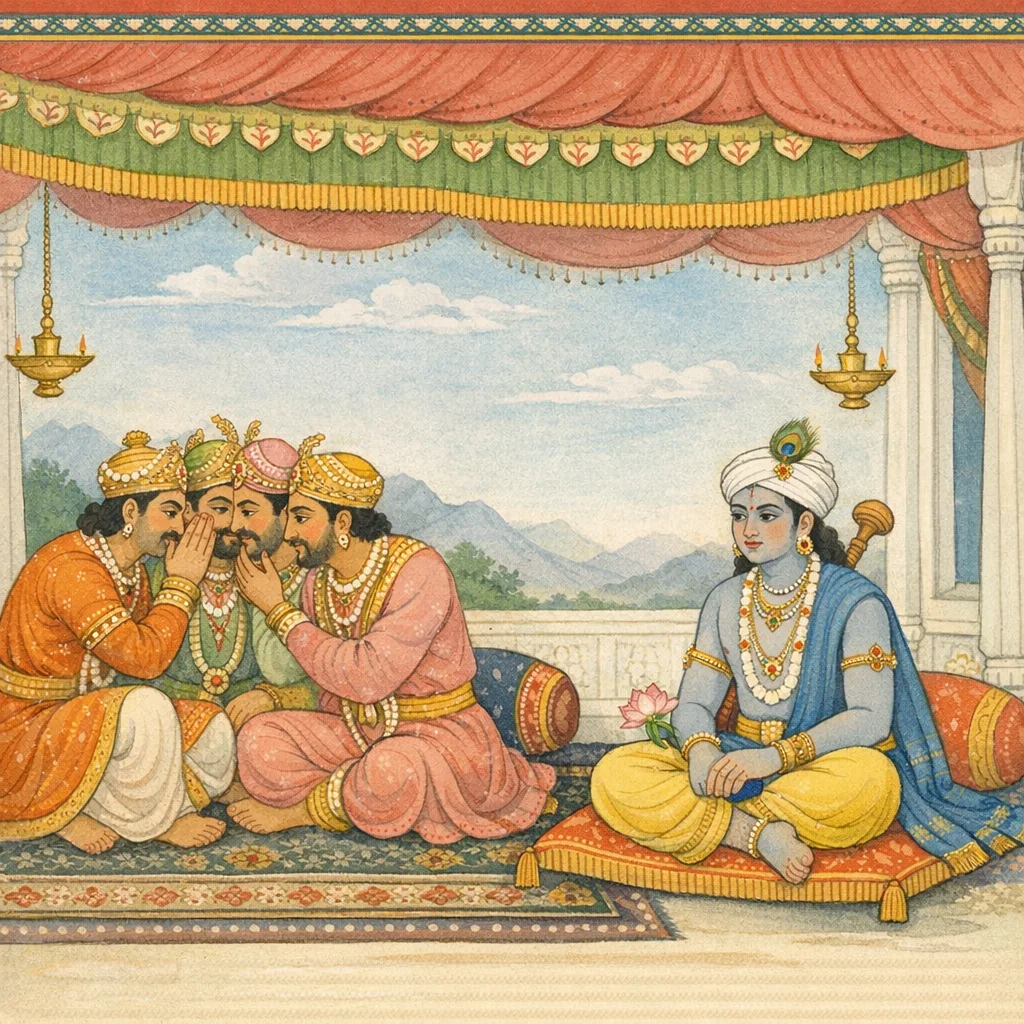
Parashara recounts to Maitreya Sri Krishna’s dynastic line and Rukmini’s children (Charuvinda and others), briefly noting Krishna’s other queens such as Kalindi and his acceptance of sixteen thousand women. From Pradyumna’s marriage Aniruddha is born, and during Aniruddha’s wedding the remaining enmity between Rukmi and Shauri comes to light. After the wedding, at Rukmi’s instigation, the king of Kalinga and other rulers begin a dice match with Balarama; Balarama first loses, then wins on a great stake. Rukmi proclaims a false victory, but a heavenly voice judges, “By dharma and strength, Balarama has won.” Enraged, Balarama kills Rukmi with a blow of the gaming board, breaks the Kalinga king’s teeth, and routs the other kings. Krishna keeps silent, mindful of Rukmini and Balarama’s feelings; in the end Kesava brings the newly married Aniruddha back to Dvaraka.
Shlokas
Verse 1
चारुदेष्णं सुदेष्णं च चारुदेहं च वीर्यवान् सुषेणं चारुगुप्तं च भद्रचारुं तथा परम्
Then (in that lineage) were born Cārudeṣṇa and Sudeṣṇa; and the valiant Cārudeha; also Suṣeṇa, Cārugupta, and Bhadracāru—these, and others beyond them, were thus reckoned in succession.
Verse 2
चारुविन्दं सुचारुं च चारुं च बलिनां वरम् रुक्मिण्य् अजनयत् पुत्रान् कन्यां चारुमतीं तथा
Rukmiṇī bore sons—Cāruvinda, Sucāru, Cāru, and Balin, the foremost among the mighty; and she also bore a daughter, Cārumatī.
Verse 3
अन्याश् च भार्याः कृष्णस्य बभूवुः सप्त शोभनाः कालिन्दी मित्रविन्दा च सत्या नाग्नजिती तथा
And there were also seven other illustrious wives of Kṛṣṇa—Kālindī, Mitravindā, Satyā, and Nāgnajitī as well.
Verse 4
देवी जाम्बवती चापि रोहिणी कामरूपिणी मद्रराजसुता चान्या सुशीला शीलमण्डना
There was also Devi Jāmbavatī; and Rohiṇī, who could assume forms at will. Another was Suśīlā, daughter of the king of Madra—an ornament of noble conduct and virtue.
Verse 5
सात्राजिती सत्यभामा लक्ष्मणा चारुहासिनी षोडशासन् सहस्राणि स्त्रीणाम् अन्यानि चक्रिणः
Sātrājitī, Satyabhāmā, Lakṣmaṇā, and Cāruhāsinī—these were among the Lord who bears the discus; and besides them, there were sixteen thousand other women as his wives.
Verse 6
प्रद्युम्नो ऽपि महावीर्यो रुक्मिणस् तनयां शुभाम् स्वयंवरस्थां जग्राह सा च तं तनयं हरेः
Pradyumna too—mighty in valor—won at her svayaṃvara the auspicious daughter of Rukmiṇī; and she, in turn, chose him, the son of Hari.
Verse 7
तस्याम् अस्याभवत् पुत्रो महाबलपराक्रमः अनिरुद्धो रणे रुद्धो वीर्योदधिर् अरिंदमः
From her, to him, was born a son—Aniruddha—mighty in strength and heroic in prowess; even when hemmed in by battle he stood firm, an ocean of valor, a crusher of foes.
Verse 8
तस्यापि रुक्मिणः पौत्रीं वरयाम् आस केशवः दौहित्राय ददौ रुक्मी तां स्पर्धन्न् अपि शौरिणा
Keśava too sought in marriage the granddaughter of Rukmī; yet Rukmī—though still nursing rivalry with Śauri—gave her instead to his own daughter’s son, his maternal grandson.
Verse 10
विवाहे तत्र निर्वृत्ते प्राद्युम्नेः सुमहात्मनः कलिङ्गराजप्रमुखा रुक्मिणं वाक्यम् अब्रुवन्
When the wedding of the great-souled Pradyumna had been duly completed, the kings—led by the ruler of Kaliṅga—addressed Rukmī with words that set the next events in motion.
Verse 11
अनक्षज्ञो हली द्यूते तथास्य व्यसनं महत् न जयामो बलं कस्माद् द्यूते नैनं महाद्युते
‘Hali (Balarāma) knows nothing of the dice-game, yet his craving for it is immense. Why, then, do we not defeat him by force? In this great match of gambling, we shall not overcome him by play.’
Verse 12
तथेति तान् आह नृपान् रुक्मी बलसमन्वितः सभायां सह रामेण चक्रे द्यूतं च वै तदा
Rukmī said to those kings, “So be it”; and, relying on his own strength, he then arranged a game of dice in the royal assembly together with Rāma (Balarāma).
Verse 13
सहस्रम् एकं निष्काणां रुक्मिणा विजितो बलः द्वितीये ऽपि पणे चान्यत् सहस्रं रुक्मिणा जितः
In a wager of a thousand niṣkas, Bala (Balarāma) was defeated by Rukmī; and in the second stake as well, Rukmī won another thousand.
Verse 14
ततो दशसहस्राणि निष्काणां पणम् आददे बलभद्रो ऽजयत् तानि रुक्मी द्यूतविदां वरः
Then the stake was set at ten thousand niṣkas; Balabhadra won them. Yet Rukmī—hailed as the foremost among gamblers—continued the contest in proud confidence.
Verse 15
ततो जहास स्वनवत् कलिङ्गाधिपतिर् द्विज दन्तान् विदर्शयन् मूढो रुक्मी चाह मदोद्धतः
Then, O brāhmaṇa, the lord of Kaliṅga burst into loud laughter, baring his teeth; and the deluded Rukmī too spoke, his mind unsteady with the intoxication of pride.
Verse 16
अविद्यो ऽयं मया द्यूते बलदेवः पराजितः मुधैवाक्षावलेपान्धो यो ऽवमेने ऽक्षकोविदान्
“In my ignorance I defeated Baladeva at dice. Blinded by the swagger of the gaming-board, I foolishly looked down upon those who truly understood the art of dice.”
Verse 17
दृष्ट्वा कलिङ्गराजानं प्रकाशदशनाननम् रुक्मिणं चापि दुर्वाक्यं कोपं चक्रे हलायुधः
Seeing the king of Kaliṅga with his grim, bared-teeth visage, and hearing Rukmī’s harsh, insolent words, Halāyudha (Balarāma) was stirred into wrath.
Verse 18
ततः कोपपरीतात्मा निष्ककोटिं हलायुधः ग्लहं जग्राह रुक्मी च तदर्थे ऽक्षान् अपातयत्
Then Halāyudha (Balarāma), his mind engulfed by anger, staked a wager worth a koti of niṣkas; and for that very wager Rukmī cast the dice.
Verse 19
अजयद् बलदेवस् तं प्राहोच्चैस् तं जितं मया मयेति रुक्मी प्राहोच्चैर् अलीकोक्तैर् अलं बल
Baladeva defeated him. Yet Rukmī cried aloud with false words, “I have won—yes, I have won!” Then it was said, “Enough, O Bala.”
Verse 20
त्वयोक्तो ऽयं ग्लहः सत्यं न मयैषो ऽनुमोदितः एवं त्वया चेद् विजितं मया न विजितं कथम्
Truly, this wager was proposed by you; I did not assent to it. If, as you claim, you have won, how could I not have won as well?
Verse 21
अथान्तरिक्षे वाग् उच्चैः प्राह गम्भीरनादिनी बलदेवस्य तं कोपं वर्धयन्ती महात्मनः
Then, from mid-air, a loud voice with a deep resonance spoke, further inflaming the righteous wrath of the great-souled Balarāma.
Verse 22
जितं बलेन धर्मेण रुक्मिणा भाषितं मृषा अनुक्त्वापि वचः किंचित् कृतं भवति कर्मणा
Victory is won by strength joined with dharma; yet what Rukmī has spoken is false. Even without uttering a single word, a deed is fulfilled through action.
Verse 23
ततो बलः समुत्थाय कोपसंरक्तलोचनः जघानाष्टापदेनैव रुक्मिणं स महाबलः
Then Balarāma rose, his eyes reddened with wrath, and that mighty one struck Rukmī down with nothing more than the gaming-board itself.
Verse 24
कलिङ्गराजं चादाय विस्फुरन्तं बलाद् बलः बभञ्ज दन्तान् कुपितो यैः प्रकाशं जहास सः
Seizing the king of Kaliṅga as he writhed, Bala, in wrath, shattered his teeth by sheer force; and by the flash of that bared whiteness, the king seemed to laugh—grimly and against his will.
Verse 25
आकृष्य च महास्तम्भं जातरूपमयं बलः जघान ये ऽन्ये तत्पक्षाः भूभृतः कुपितो बलः
Then Bala, wrathful, dragged forth a massive pillar of gold and with it struck down the other mountain-like kings who stood upon the opposing side.
Verse 26
ततो हाहाकृतं सर्वं पलायनपरं द्विज तद् राजमण्डलं सर्वं बभूव कुपिते बले
Then, O twice-born, all was filled with cries of alarm and everyone turned to flight; when Bala’s wrath surged forth, the whole royal circle fell into confusion.
Verse 27
बलेन निहतं श्रुत्वा रुक्मिणं मधुसूदनः नोवाच किंचिन् मैत्रेय रुक्मिणीबलयोर् भयात्
Hearing that Rukmin had been struck down by Bala, Madhusūdana, O Maitreya, spoke not a word, mindful of the delicate tension between Rukmiṇī and Balarāma.
Verse 28
ततो ऽनिरुद्धम् आदाय कृतोद्वाहं द्विजोत्तम द्वारकाम् आजगामाथ यदुचक्रं स केशवः
Then, O best of brahmins, Keśava, lord of the Yadu host, took Aniruddha after the marriage was duly completed and returned to Dvārakā.
Frequently Asked Questions
It functions as a divine court: it declares that victory belongs to ‘bala joined with dharma,’ exposing Rukmī’s false claim and framing Balarāma’s ensuing punishment as a restoration of moral order rather than mere rage.
Parāśara explains Kṛṣṇa’s restraint as sensitivity to relational dharma—avoiding a deeper rupture between Rukmiṇī (connected to Rukmī) and Balarāma—showing the Lord’s governance through measured speech as well as action.