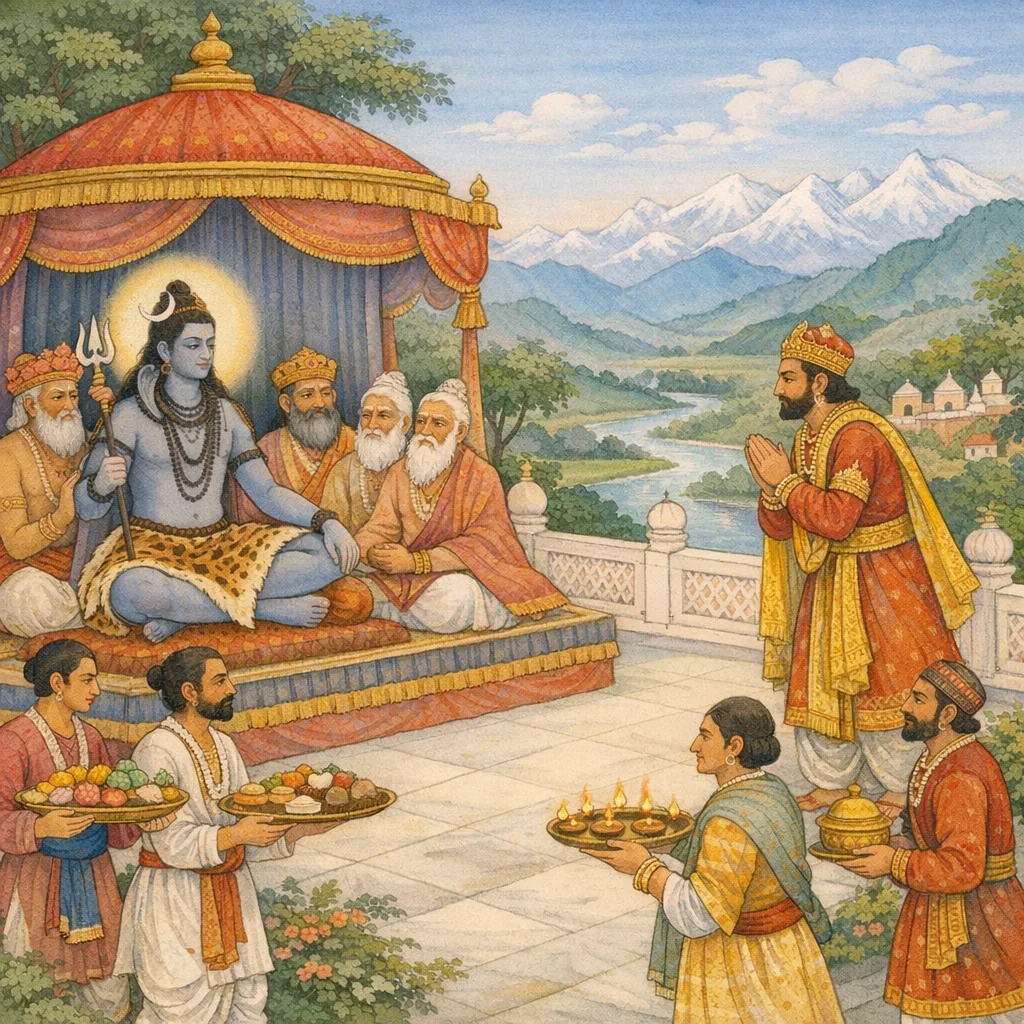
गिरिराजस्य शिवनिमन्त्रणम् / The Mountain-King Invites Śiva (Hospitality to Śiva and the Devas)
Adhyāya 53 presents a transition scene: the assembled devas and sages, led by Viṣṇu and others, complete their obligatory rites and proceed toward the mountain. The mountain-king (Himālaya/Girirāja) performs purification by ritual bath (snāna), worships his chosen deity, gathers townsmen and kinsmen, and joyfully goes to the settlement to host the divine company. After honoring Śambhu/Maheśāna, he petitions Śiva to stay for some days in his house along with the gods. He praises the transformative power of Śiva’s darśana and declares the host blessed by Śiva’s arrival with the devas. The devas and sages approve, extolling the mountain-lord’s merit and fame, saying none in the three worlds equals his virtue because Maheśāna—Parabrahman and refuge of the good—has come to his door out of compassion for devotees. They further praise the delightful dwelling, the manifold honors, and the extraordinary foods, implying that where Devī Śivāmbikā is present there is no scarcity and every offering becomes abundant and complete. The chapter thus frames hospitality as ritualized bhakti, sanctifying domestic space through the presence of Śiva–Śakti.
Shlokas
Verse 1
ब्रह्मोवाच । अथ विष्ण्वादयो देवा मुनयश्च तपोधनाः । कृत्वावश्यककर्माणि यात्रां सन्तेनिरे गिरेः
Brahmā said: Then Viṣṇu and the other gods, along with the sages rich in austerity, having completed their requisite duties, set forth on their journey toward the mountain.
Verse 2
ततो गिरिवरः स्नात्वा स्वेष्टं सम्पूज्य यत्नतः । पौरबन्धून्समाहूय जनवासं ययौ मुदा
Then the excellent lord of the mountain bathed, and with due care worshipped his chosen deity. Summoning his kinsmen and townsmen, he joyfully proceeded to the place of habitation (the settlement).
Verse 3
तत्र प्रभुम्प्रपूज्याथ चक्रे सम्प्रार्थनां मुदा । कियद्दिनानि सन्तिष्ठ मद्गेहे सकलैस्सह
Thereupon, having duly worshipped the Lord, he joyfully made a humble entreaty: “Stay for some days in my house, together with all (your companions).”
Verse 4
विलोकनेन ते शम्भो कृतार्थोहं न संशयः । धन्यश्च यस्य मद्गेहे आयातोऽसि सुरैस्सह
O Śambhu, by merely beholding You I have attained fulfillment—of this there is no doubt. Blessed indeed is he into whose house You have come, together with the gods.
Verse 5
ब्रह्मोवाच । इत्युक्त्वा बहु शैलेशः करौ बद्ध्वा प्रणम्य च । प्रभुन्निमन्त्रयामास सह विष्णुसुरादिभिः
Brahmā said: Having spoken thus, the great Lord of the mountains, joining his hands in reverence and bowing down, invited the Supreme Lord, together with Viṣṇu and the gods and others.
Verse 6
अथ ते मनसा गत्वा शिव संयुतमादरात् । प्रत्यूचुर्मुनयो देवा हृष्टा विष्णुसुरादिभिः
Then, having approached with their minds—reverently coming into the presence of Śiva, united with the Divine—the sages and the gods replied with joy, together with Viṣṇu and the other celestials.
Verse 7
देवा ऊचुः । धन्यस्त्वं गिरिशार्दूल तव कीर्तिर्महीयसी । त्वत्समो न त्रिलोकेषु कोपि पुण्यतमो जनः
The Devas said: “Blessed are you, O Śiva, tiger among the lords of mountains. Great indeed is your fame. In the three worlds there is no one equal to you—no being more supremely meritorious than you.”
Verse 8
यस्य द्वारि महेशानः परब्रह्म सतां गतिः । समागतस्सदासैश्च कृपया भक्तवत्सलः
At whose very doorway Maheśāna—Śiva Himself, the Supreme Brahman and the ultimate refuge of the righteous—has arrived, accompanied by His attendants; out of compassion He stands there, ever affectionate toward His devotees.
Verse 9
जनावासोतिरम्यश्च सम्मानो विविधः कृतः । भोजनानि त्वपूर्वाणि न वर्ण्यानि गिरीश्वर
The lodging arranged for the people was exceedingly delightful, and many kinds of honors were offered. And the foods—rare and unprecedented—were such, O Lord of the Mountain, that they cannot be adequately described.
Verse 10
चित्रन्न खलु तत्रास्ति यत्र देवी शिवाम्बिका । परिपूर्णमशेषञ्च यवं धन्या यदागताः
Surely, wherever the Goddess Śivāmbikā is present, there is wondrous food and abundance. Everything becomes complete and lacking in nothing; and those who arrive there are truly blessed.
Verse 11
ब्रह्मोवाच । इत्थम्परस्परन्तत्र प्रशंसाभवदुत्तमा । उत्सवो विविधो जातो वेदसाधुजयध्वनिः
Brahmā said: “Thus, there arose among them mutual and excellent praise. Many kinds of festivities began there, resounding with the victorious acclamations of the Vedas and the righteous.”
Verse 12
अभून्मङ्गलगानञ्च ननर्ताप्सरसांगणः । नुतिञ्चक्रुर्मागधाद्या द्रव्यदानमभूद्बहु
Auspicious songs were sung, and the hosts of Apsarās danced. The Māgadhas and other bards offered hymns of praise, and abundant gifts of wealth were bestowed.
Verse 13
तत आमन्त्रय देवेशं स्वगेहमगमद्गिरिः । भोजनोत्सवमारेभे नानाविधिविधानतः
Then Giri (Himālaya), having respectfully taken leave of the Lord of the Devas (Śiva), returned to his own home and began a festive banquet, arranging it according to many proper rites and procedures.
Verse 14
भोजनार्थं प्रभुम्प्रीत्यानयामास यथोचितम् । परिवारसमेतं च सकुतूहलमीश्वरम्
For the purpose of serving food, she joyfully led the Lord in the proper manner—bringing along the Supreme Īśvara, curious and pleased, together with His attendants.
Verse 15
प्रक्षाल्य चरणौ शम्भोर्विष्णोर्मम वरादरात् । सर्वेषाममराणाञ्च मुनीनाञ्च यथार्थतः
“By my excellent boon, I truly washed the feet of Śambhu (Śiva) and of Viṣṇu, and likewise the feet of all the devas and the sages, in proper accordance with truth.”
Verse 16
परेषाञ्च गतानाञ्च गिरीशो मण्डपान्तरे । आसयामास सुप्रीत्या तांस्तान्बन्धुभिरन्वितः
When the other guests had departed, Lord Girīśa (Śiva), within the pavilion, joyfully seated those who remained—together with their relatives—moved by affectionate delight.
Verse 17
सुरसैर्विविधान्नैश्च तर्पयामास तान्गिरिः । बुभुजुर्निखिलास्ते वै शम्भुना विष्णुना मया
Then the Mountain (Himālaya) satisfied them with celestial beings and with many kinds of foods. Indeed, all of them partook of that feast—together with Śambhu (Śiva), with Viṣṇu, and with me (the narrator).
Verse 18
तदानीम्पुरनार्यश्च गालीदानम्व्यधुर्मुदा । मृदुवाण्या हसन्त्यश्च पश्यन्त्यो यत्नतश्च तान्
Just then, the women of the city, delighted, began to shower taunts as if offering them as a gift—speaking gently yet laughing—while carefully watching those men.
Verse 19
ते भुक्त्वाचम्य विधिवद्गिरिमामन्त्र्य नारद । स्वस्थानम्प्रययुस्सर्वे मुदितास्तृप्तिमागताः
Having eaten, and then duly performing ācamana, they respectfully took leave of the Mountain (Himālaya). O Nārada, all of them then departed to their own abodes, joyful and fully satisfied.
Verse 20
इत्थन्तृतीये घस्रेऽपि मानितास्तेऽभवन्मुने । गिरीश्वरेण विधिवद्दानमानादरादिभिः
Thus, O sage, even on the third day they were duly honoured by Girīśvara (Lord Śiva), with proper observances—through gifts, respectful reception, reverent regard, and the like.
Verse 21
चतुर्थे दिवसे प्राप्ते चतुर्थीकर्म शुद्धितः । बभूव विधिवद्येन विना खण्डित एव सः
When the fourth day arrived, the rite of the fourth day (caturthī-karma) was duly completed with purification; yet he remained broken and incomplete, as if deprived of the proper, ordained wholeness.
Verse 22
उत्सवो विविधश्चासीत्साधुवादजयध्वनिः । बहुदानं सुगानञ्च नर्त्तनम्विविधन्तथा
Many kinds of festive celebrations were held; cries of “Well done!” and sounds of victory resounded. There was abundant giving of gifts, sweet singing, and likewise many forms of dance.
Verse 23
पञ्चमे दिवसे प्राप्ते सर्वे देवा मुदान्विताः । विज्ञप्तिञ्चक्रिरे शैलं यात्रार्थमतिप्रेमतः
When the fifth day arrived, all the gods—filled with joy—lovingly submitted their petition to the Mountain (Himālaya), seeking permission and arrangements for the journey.
Verse 24
तदाकर्ण्य गिरीशश्चोवाच देवान् कृताञ्जलिः । कियद्दिनानि तिष्ठन्तु कृपाङ्कुर्वन्तु मां सुराः
Hearing this, Lord Girīśa (Śiva), with folded hands, addressed the gods: “Let them remain here for some days; O devas, show compassion to me.”
Verse 26
इत्थम्व्यतीयुर्दिवसा बहवो वसतां च तत् । सप्तर्षीन्प्रेषयामासुर्गिरीशान्ते ततस्सुराः
Thus many days passed while they dwelt there. Then the gods dispatched the Seven Sages to the presence of Girīśa, Lord Śiva.
Verse 27
ते तं सम्बोधयामासुर्मेनाञ्च समयोचितम् । शिवतत्त्वम्परम्प्रोचुः प्रशंसन्विधिवन्मुदा
Then they addressed him, and also Menā, in words befitting the occasion; and with joyful propriety they praised Śiva and expounded the supreme principle of Śiva—Śiva-tattva.
Verse 28
अङ्गीकृतं परेशेन तत्तद्बोधनतो मुने । यात्रार्थमगमच्छम्भुश्शैलेशं सामरादिकः
O sage, the Supreme Lord accepted that request so as to instruct the devotees in those matters; then Śambhu set out on pilgrimage and went to Śaileśa, accompanied by the gods and others.
Verse 29
यात्राङ्कुर्वति देवेशे स्वशैलं सामरे शिवे । उच्चै रुरोद सा मेना तमुवाच कृपानिधिम्
When the Lord of the gods, Śiva, was setting out toward His own mountain for the battle, Menā wept aloud and then addressed Him—the very treasure-house of compassion.
Verse 30
मेनोवाच । कृपानिधे कृपाङ्कृत्वा शिवां सम्पालयिष्यसि । सहस्रदोषं पार्वत्या आशुतोषः क्षमिष्यसि
Menā said: “O treasure-house of compassion, having shown mercy you will protect Śivā (Pārvatī). O Āśutoṣa, you will forgive even a thousand faults of Pārvatī.”
Verse 31
त्वत्पादाम्बुजभक्ता च मद्वत्सा जन्मजन्मनि । स्वप्ने ज्ञाने स्मृतिर्नास्ति महादेवं प्रभुम्बिना
May my dear child remain a devotee of Your lotus-feet, birth after birth. Whether in dream or in waking awareness, may there be no remembrance at all apart from Mahādeva, the supreme Lord.
Verse 32
त्वद्भक्तिश्रुतिमात्रेण हर्षाश्रुपुलकान्विता । त्वन्निन्दया भवेन्मौना मृत्युंजय मृता इव
O Mṛtyuñjaya, merely by hearing of devotion to You, I am filled with joy—tears well in my eyes and my body thrills with gooseflesh. But when I hear You reviled, I fall silent, as though dead.
Verse 33
ब्रह्मोवाच । इत्युक्त्वा मेनका तस्मै समर्प्य स्वसुतान्तदा । अत्युच्चै रोदनङ्कृत्वा मूर्च्छामाप तयोः पुरः
Brahmā said: Having spoken thus, Menakā then entrusted her own daughter to him. Crying aloud in great grief, she fell into a swoon before them both.
Verse 34
अथ मेनाम्बोधयित्वा तामामन्त्र्य गिरिस्तथा । चकार यात्रान्देवैश्च महोत्सवपुरस्सरम्
Then, having awakened Menā and respectfully taken leave of her, the Mountain-king (Himālaya) too set out on the journey together with the devas, preceded by a grand festival celebration.
Verse 35
अथ ते निर्जरास्सर्वे प्रभुणा स्वगणैस्सह । यात्राम्प्रचक्रिरे तूष्णीं गिरिम्प्रति शिवं दधुः
Then all those deathless beings (the devas), together with their lord and his own attendants, set out in silence, fixing their hearts on Śiva and proceeding toward the mountain.
Verse 36
हिमाचलपुरीबाह्योपवने हर्षितास्सुराः । सेश्वरास्सोत्सवास्तस्थुः पर्यैषन्त शिवागमम्
In the grove outside the city of Himācala, the gods—joyful, together with their presiding lords, and in a festive spirit—stood waiting, eagerly anticipating the arrival of Lord Śiva.
Verse 37
इत्युक्ता शिवसद्यात्रा देवैस्सह मुनीश्वर । आकर्णय शिवयात्रां विरहोत्सवसंयुताम्
O best of sages, thus was the sacred and auspicious pilgrimage of Śiva described, together with the gods. Now listen to the account of Śiva’s pilgrimage—joined with the celebration of separation—through which devotion ripens in longing for the Lord.
Verse 53
इति श्रीशिवमहापुराणे द्वितीयायां रुद्रसंहितायां तृतीये पार्वती खण्डे शिवयात्रावर्णनं नाम त्रिपञ्चाशत्तमोऽध्यायः
Thus ends the fifty-third chapter, called “The Description of Śiva’s Pilgrimage,” in the third section—the Pārvatī-khaṇḍa—of the second division, the Rudra-saṃhitā, of the revered Śrī Śiva Mahāpurāṇa.
Frequently Asked Questions
The mountain-king (Girirāja/Himālaya) ritually prepares, welcomes Śiva together with Viṣṇu, the devas, and sages, and formally invites the Lord to stay in his house for several days.
Śiva is identified as parabrahman yet bhaktavatsala; his voluntary arrival at a devotee’s door sacralizes the household and makes hospitality itself a mode of worship and merit.
Śiva as Śambhu/Maheśāna (parabrahman, refuge of the virtuous) and Devī Śivāmbikā, whose presence is linked to completeness and abundance in offerings and provisions.