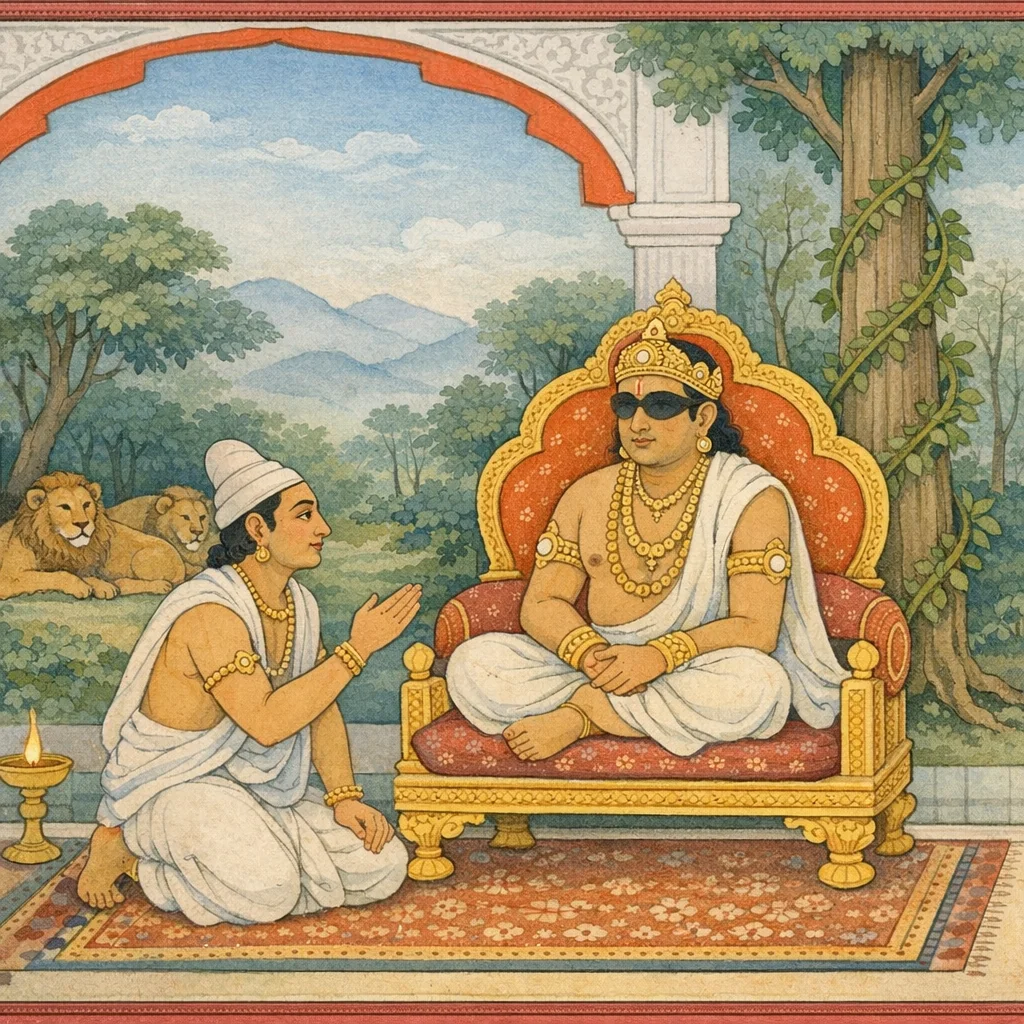
Adhyaya 36
हंस–साध्यसंवादः, वाक्-निग्रहः, महाकुल-लक्षणम्, शान्ति-उपायः (Hamsa–Sādhya Dialogue; Restraint of Speech; Marks of Noble Lineage; Means to Peace)
Upa-parva: Vidura-nīti (Counsel of Vidura) — Hamsa–Sādhya Saṃvāda and Mahākula-vicāra
Vidura introduces an ancient itihāsa: the Sādhya deities question a great ṛṣi moving in the form of a haṃsa. The haṃsa teaches emotional discipline—steadfastness, calm, adherence to truth and dharma, and mastery over attachment/aversion—emphasizing that harsh speech injures like weapons and should be avoided. The discourse develops a graded ethic of speech: silence can be superior, yet if one speaks, one should prioritize truth, then pleasantness, then dharmic appropriateness. It asserts that character is shaped by one’s associations and that withdrawal from harmful tendencies yields liberation from suffering. The chapter then shifts to Vidura answering Dhṛtarāṣṭra on what constitutes “mahākula”: noble families are defined by tapas, self-control, Brahmanical learning, proper rites, righteous marriages, and sustained generosity; lineages decline through violations involving ritual neglect, misuse of sacred property, and disrespect toward Brāhmaṇas. Further, it defines reliable friendship as fear-free trust, warns against fickle temperament, and notes the corrosive effects of grief and agitation. Dhṛtarāṣṭra asks for the state of being “undisturbed”; Vidura prescribes peace through knowledge and austerity, sense-restraint, abandonment of greed, service to teachers, and renunciation. The closing counsel urges cohesion among kin—using metaphors of trees standing together against wind—framing unity and ethical restraint as prerequisites for stability.
Chapter Arc: धृतराष्ट्र के सभागृह में विदुर नीति का शंखनाद करते हैं—स्वायम्भुव मनु के कहे ‘सत्रह’ राजधर्म-सूत्रों का स्मरण कराते हुए, मानो अंधे राजा के भीतर की दृष्टि जगाने का अंतिम प्रयत्न। → विदुर एक-एक कर उन आचरणों का चित्र खींचते हैं जो राज्य और कुल को भीतर से खा जाते हैं—अतिमान, अतिवाद, क्रोध, आत्मविनाश की प्रवृत्ति, मित्रद्रोह; और फिर ऐसे कर्म जिनकी तुलना ब्रह्महत्या-समान पापों से की जाती है। नीति अब उपदेश नहीं, चेतावनी बन जाती है। → विदुर का रूपक-प्रहार: धृतराष्ट्र-पुत्र ‘वन’ हैं और पाण्डव ‘वन के सिंह’—सिंहों के बिना वन नष्ट होता है, और वन के बिना सिंह भी टिकते नहीं। साथ ही लता-शालवृक्ष का बिंब: धृतराष्ट्र (पुत्रों सहित) लता हैं, पाण्डव महाशाल—लता महावृक्ष के आश्रय बिना बढ़ नहीं सकती। → विदुर नीति का निष्कर्ष रखते हैं—राजा को हित के लिए त्याग का क्रम जानना चाहिए (कुलार्थे पुरुषं त्यजेत्…): छोटे हित के लिए बड़े हित को बचाना; और राज्य-धर्म में क्रोध, पक्षपात, और दुर्योधन-आसक्ति का परित्याग कर पाण्डवों के साथ समन्वय करना ही कुल-रक्षा है। → धृतराष्ट्र के सामने निर्णायक प्रश्न लटकता रह जाता है—क्या वे पुत्रमोह छोड़कर नीति स्वीकार करेंगे, या उसी मोह से युद्ध का द्वार खोल देंगे?
Shlokas
Verse 1
पम्प बछ। अंक सप्तत्रिशोड्ध्याय: धृतराष्ट्रके प्रति विदुरजीका हितोपदेश विदुर उवाच सप्तदशेमान् राजेन्द्र मनु: स्वायम्भुवोडब्रवीत् | वैचित्रवीर्य पुरुषानाकाशं मुष्टिभिर्ष्नत:,विदुरजी कहते हैं--राजेन्द्र! विचित्रवीर्यनन्दन! स्वायम्भुव मनुने इन सत्रह प्रकारके पुरुषोंको आकाशपर मुक्कोंसे प्रहार करनेवाले, न झुकाये जा सकनेवाले, वर्षाकालीन इन्द्रधनुषको झुकानेकी चेष्टा करनेवाले तथा पकड़में न आनेवाली सूर्यकी किरणोंको पकड़नेका प्रयास करनेवाले बतलाया है (अर्थात् इनके सभी उद्यमोंको निष्फल कहा है)
Vidura said: “O king, descendant of Vichitravīrya! Svāyambhuva Manu spoke of seventeen kinds of men whose efforts are as futile as striking the sky with fists, trying to bend the unbendable rainbow of the rainy season, or attempting to seize the sun’s ungraspable rays. In other words, their undertakings are doomed to fail, and a wise ruler should recognize such self-defeating courses of action.”
Verse 2
दानवेन्द्रस्य च धनुरनाम्यं नमतो<ब्रवीत् । अथो मरीचिन: पादानग्राह्मान् गृह्लतस्तथा,विदुरजी कहते हैं--राजेन्द्र! विचित्रवीर्यनन्दन! स्वायम्भुव मनुने इन सत्रह प्रकारके पुरुषोंको आकाशपर मुक्कोंसे प्रहार करनेवाले, न झुकाये जा सकनेवाले, वर्षाकालीन इन्द्रधनुषको झुकानेकी चेष्टा करनेवाले तथा पकड़में न आनेवाली सूर्यकी किरणोंको पकड़नेका प्रयास करनेवाले बतलाया है (अर्थात् इनके सभी उद्यमोंको निष्फल कहा है)
Vidura said: “O king, son of Vicitravīrya! Svāyambhuva Manu has described such people as those who strike at the sky with their fists, who try to bend what cannot be bent—like Indra’s rainbow in the rainy season—and who attempt to seize the sun’s rays that cannot be grasped. In other words, their efforts are declared futile.”
Verse 3
यश्चाशिष्यं शास्ति वै यश्व तुष्येद् यश्चातिवेलं भजते द्विषन्तम् । स्त्रियश्व॒ यो रक्षति भद्रम श्लुते यशक्षायाच्यं याचते कत्थते च,पाश हाथमें लिये यमराजके दूत इन सत्रह पुरुषोंको नरकमें ले जाते हैं, जो शासनके अयोग्य पुरुषपर शासन करता है, मर्यादाका उल्लंघन करके संतुष्ट होता है, शत्रुकी सेवा करता है, रक्षणके अयोग्य स्त्रीकी रक्षा करनेका प्रयत्न करता तथा उसके द्वारा अपने कल्याणका अनुभव करता है, याचना करनेके अयोग्य पुरुषसे याचना करता है तथा आत्मप्रशंसा करता है, अच्छे कुलमें उत्पन्न होकर भी नीच कर्म करता है, दुर्बल होकर भी सदा बलवानसे वैर रखता है, श्रद्धाहीनको उपदेश करता है, न चाहनेयोग्य (शास्त्रनिषिद्ध) वस्तुको चाहता है, श्वशुर होकर पुत्रवधूके साथ परिहास पसंद करता है तथा पुत्रवधूसे एकान्तवास करके भी निर्भय होकर समाजमें अपनी प्रतिष्ठा चाहता है, परस्त्रीमें अपने वीर्यका आधान करता है, मर्यादाके बाहर स्त्रीकी निन््दा करता है, किसीसे कोई वस्तु पाकर भी “याद नहीं है” ऐसा कहकर उसे दबाना चाहता है, माँगनेपर दान देकर उसके लिये अपनी श्लाघा करता है और झूठको सही साबित करनेका प्रयास करता है
Vidura says that Yama’s noose-bearing messengers drag to hell those men who invert moral order: one who disciplines a person unfit to be disciplined and takes pleasure in it; one who violates proper limits to seek satisfaction; one who serves an enemy; one who tries to “protect” a woman who ought not to be entrusted with protection and then imagines he has gained welfare thereby; and one who begs from a person from whom it is improper to beg, while also boasting of himself. This verse belongs to a wider ethical catalogue warning that such perversions of propriety and self-glorifying conduct lead to ruin.
Verse 4
यश्चाभिजात: प्रकरोत्यकार्य यश्चाबलो बलिना नित्यवैरी । अश्रद्धधानाय च यो ब्रवीति यश्चाकाम्यं कामयते नरेन्द्र,पाश हाथमें लिये यमराजके दूत इन सत्रह पुरुषोंको नरकमें ले जाते हैं, जो शासनके अयोग्य पुरुषपर शासन करता है, मर्यादाका उल्लंघन करके संतुष्ट होता है, शत्रुकी सेवा करता है, रक्षणके अयोग्य स्त्रीकी रक्षा करनेका प्रयत्न करता तथा उसके द्वारा अपने कल्याणका अनुभव करता है, याचना करनेके अयोग्य पुरुषसे याचना करता है तथा आत्मप्रशंसा करता है, अच्छे कुलमें उत्पन्न होकर भी नीच कर्म करता है, दुर्बल होकर भी सदा बलवानसे वैर रखता है, श्रद्धाहीनको उपदेश करता है, न चाहनेयोग्य (शास्त्रनिषिद्ध) वस्तुको चाहता है, श्वशुर होकर पुत्रवधूके साथ परिहास पसंद करता है तथा पुत्रवधूसे एकान्तवास करके भी निर्भय होकर समाजमें अपनी प्रतिष्ठा चाहता है, परस्त्रीमें अपने वीर्यका आधान करता है, मर्यादाके बाहर स्त्रीकी निन््दा करता है, किसीसे कोई वस्तु पाकर भी “याद नहीं है” ऐसा कहकर उसे दबाना चाहता है, माँगनेपर दान देकर उसके लिये अपनी श्लाघा करता है और झूठको सही साबित करनेका प्रयास करता है
Vidura says: “O king, these too are among the blameworthy who are dragged toward hell: one who, though well-born, commits what ought not to be done; one who, though weak, maintains constant enmity with the strong; one who offers instruction to a faithless listener; and one who desires what is not to be desired—things forbidden or unfit. Such conduct violates propriety and dharma, and therefore brings ruin rather than welfare.”
Verse 5
वध्यावहासं श्वशुरो मन्यते यो वध्वा वसन्नभयो मानकाम: । परक्षेत्रे निर्वपति स्वबीजं स्त्रियं च य: परिवदते&तिवेलम्,पाश हाथमें लिये यमराजके दूत इन सत्रह पुरुषोंको नरकमें ले जाते हैं, जो शासनके अयोग्य पुरुषपर शासन करता है, मर्यादाका उल्लंघन करके संतुष्ट होता है, शत्रुकी सेवा करता है, रक्षणके अयोग्य स्त्रीकी रक्षा करनेका प्रयत्न करता तथा उसके द्वारा अपने कल्याणका अनुभव करता है, याचना करनेके अयोग्य पुरुषसे याचना करता है तथा आत्मप्रशंसा करता है, अच्छे कुलमें उत्पन्न होकर भी नीच कर्म करता है, दुर्बल होकर भी सदा बलवानसे वैर रखता है, श्रद्धाहीनको उपदेश करता है, न चाहनेयोग्य (शास्त्रनिषिद्ध) वस्तुको चाहता है, श्वशुर होकर पुत्रवधूके साथ परिहास पसंद करता है तथा पुत्रवधूसे एकान्तवास करके भी निर्भय होकर समाजमें अपनी प्रतिष्ठा चाहता है, परस्त्रीमें अपने वीर्यका आधान करता है, मर्यादाके बाहर स्त्रीकी निन््दा करता है, किसीसे कोई वस्तु पाकर भी “याद नहीं है” ऐसा कहकर उसे दबाना चाहता है, माँगनेपर दान देकर उसके लिये अपनी श्लाघा करता है और झूठको सही साबित करनेका प्रयास करता है
Vidura warns of conduct that drags a person toward ruin: a father-in-law who treats his daughter-in-law as an object of jest, who lives with her in undue intimacy yet remains fearless and still craves social honor; one who sows his own seed in another’s field (i.e., violates another’s marriage); and one who maligns a woman beyond all bounds. In the ethical frame of the Udyoga Parva, these are cited as grave breaches of maryādā (social and moral limits) that invite severe consequences.
Verse 6
यश्नापि लब्ध्वा न स्मरामीति वादी दत्त्वा च यः कत्थति याच्यमान: । यश्चासतः सत्त्वमुपानयीत एतान् नयन्ति निरयं पाशहस्ता:,पाश हाथमें लिये यमराजके दूत इन सत्रह पुरुषोंको नरकमें ले जाते हैं, जो शासनके अयोग्य पुरुषपर शासन करता है, मर्यादाका उल्लंघन करके संतुष्ट होता है, शत्रुकी सेवा करता है, रक्षणके अयोग्य स्त्रीकी रक्षा करनेका प्रयत्न करता तथा उसके द्वारा अपने कल्याणका अनुभव करता है, याचना करनेके अयोग्य पुरुषसे याचना करता है तथा आत्मप्रशंसा करता है, अच्छे कुलमें उत्पन्न होकर भी नीच कर्म करता है, दुर्बल होकर भी सदा बलवानसे वैर रखता है, श्रद्धाहीनको उपदेश करता है, न चाहनेयोग्य (शास्त्रनिषिद्ध) वस्तुको चाहता है, श्वशुर होकर पुत्रवधूके साथ परिहास पसंद करता है तथा पुत्रवधूसे एकान्तवास करके भी निर्भय होकर समाजमें अपनी प्रतिष्ठा चाहता है, परस्त्रीमें अपने वीर्यका आधान करता है, मर्यादाके बाहर स्त्रीकी निन््दा करता है, किसीसे कोई वस्तु पाकर भी “याद नहीं है” ऐसा कहकर उसे दबाना चाहता है, माँगनेपर दान देकर उसके लिये अपनी श्लाघा करता है और झूठको सही साबित करनेका प्रयास करता है
Vidura says: Those whom Yama’s noose-bearing messengers drag to hell include the man who, after receiving a benefit, denies it by saying, “I do not remember,” the one who gives only when begged and then boasts of his gift, and the one who tries to pass falsehood off as truth. Such conduct—ingratitude, self-advertising charity, and the deliberate distortion of truth—violates dharma and leads to ruin.
Verse 7
यस्मिन् यथा वर्तते यो मनुष्य- स्तस्मिंस्तथा वर्तितव्यं स धर्म: | मायाचारो मायया वर्तितव्य: साध्वाचार: साधुना प्रत्युपेय:,जो मनुष्य अपने साथ जैसा बर्ताव करे, उसके साथ वैसा ही बर्ताव करना चाहिये-- यही नीतिधर्म है। कपटका आचरण करनेवालेके साथ कपटपूर्ण बर्ताव करे और अच्छा बर्ताव करनेवालेके साथ साधुभावसे ही बर्ताव करना चाहिये
As a man behaves, so should one behave toward him—this is dharma in practical statecraft. Deceit should be met with counter-deceit, and good conduct should be answered with straightforward goodness.
Verse 8
जरा रूप॑ हरति हि धैर्यमाशा मृत्यु: प्राणान् धर्मचर्यामसूया । कामो हट्िियं वृत्तमनार्यसेवा क्रोध: श्रियं सर्वमेवाभिमान:,बुढ़ापा रूपका, आशा बथैर्यका, मृत्यु प्राणोंका, दूसरोंके गुणोंमें दोषदृष्टि धर्मांचरणका, काम लज्जाका, नीच पुरुषोंकी सेवा सदाचारका, क्रोध लक्ष्मीका और अभिमान सर्वस्वका ही नाश कर देता है
Vidura teaches that certain inner and outer forces steadily strip a person of their best possessions. Old age takes away beauty; hope, when it turns into clinging expectation, erodes steadiness; death removes the life-breath; fault-finding envy destroys the practice of dharma; desire ruins modesty; serving ignoble people undermines good conduct; anger destroys prosperity; and pride can wipe out everything. The warning is ethical and practical: guard the mind, because moral collapse often begins with these subtle thieves.
Verse 9
धृतराष्ट उवाच शतायुरुक्त: पुरुष: सर्ववेदेषु वै यदा । नाप्रोत्यथ च तत् सर्वमायु: केनेह हेतुना,धृतराष्ट्रने कहा--विदुर! जब सभी वेदोंमें पुरुषको सौ वर्षकी आयुवाला बताया गया है, तब वह किस कारणसे अपनी पूर्ण आयुको नहीं पाता?
Dhṛtarāṣṭra said: “Vidura, when in all the Vedas a man is spoken of as having a lifespan of a hundred years, why is it that he does not, in fact, attain that full span here? What is the cause?”
Verse 10
विदुर उवाच अतिमानो5तिवादश्न तथात्यागो नराधिप । क्रोधश्चात्मविधित्सा च मित्रद्रोहश्च॒ तानि घट्,विदुरजी बोले--राजन्! आपका कल्याण हो। अत्यन्त अभिमान, अधिक बोलना, त्यागका अभाव, क्रोध, अपना ही पेट पालनेकी चिन्ता और मित्रद्रोह--ये छः: तीखी तलवारें देहधारियोंकी आयुको काटती हैं। ये ही मनुष्योंका वध करती हैं, मृत्यु नहीं
Vidura said: “O king, excessive pride, excessive talk, refusal to renounce what should be renounced, anger, the anxious drive to secure one’s own livelihood at any cost, and betrayal of friends—these six are like sharp swords that cut down the lifespan of embodied beings. It is these that truly kill people, not death itself.”
Verse 11
एत एवासयस्तीक्ष्णा कृन्तन्त्यायूंषि देहिनाम् एतानि मानवान् घ्नन्ति न मृत्युर्भद्रमस्तु ते,विदुरजी बोले--राजन्! आपका कल्याण हो। अत्यन्त अभिमान, अधिक बोलना, त्यागका अभाव, क्रोध, अपना ही पेट पालनेकी चिन्ता और मित्रद्रोह--ये छः: तीखी तलवारें देहधारियोंकी आयुको काटती हैं। ये ही मनुष्योंका वध करती हैं, मृत्यु नहीं
Vidura said: “O King, may you be well. These very sharp ‘blades’—the inner vices—cut down the lifespan of embodied beings. It is these that truly slay human beings, not Death itself.”
Verse 12
विश्वस्तस्यैति यो दारान् यश्चापि गुरुतल्पग: । वृषलीपतिर्द्धिजो यश्व॒ पानपश्चैव भारत,भारत! जो अपने ऊपर विश्वास करनेवाले पुरुषकी स्त्रीके साथ समागम करता है, जो गुरुस्त्रीगामी है, ब्राह्मण होकर शूद्रा सत्रीके साथ विवाह करता है, शराब पीता है तथा जो ब्राह्गगपर आदेश चलानेवाला, ब्राह्मणोंकी जीविका नष्ट करनेवाला, ब्राह्मणोंको सेवाकार्यके लिये इधर-उधर भेजनेवाला और शरणागतकी हिंसा करनेवाला है--ये सब-के- सब ब्रह्महत्यारेके समान हैं; इनका संग हो जानेपर प्रायश्षित्त करे--यह वेदोंकी आज्ञा है
Vidura says: O Bhārata, one who violates the wife of a man who trusts him, one who goes to the teacher’s bed (i.e., commits adultery with the guru’s wife), a twice-born man who takes a Śūdra woman as his wife, and one who drinks intoxicants—such people are to be regarded as equal to a slayer of a brāhmaṇa. Association with them is treated as a grave moral contamination, for which expiation is enjoined by sacred law.
Verse 13
आदेशकृद् वृत्तिहन्ता द्विजानां प्रेषकश्न यः । शरणागतहा चैव सर्वे ब्रह्महण: समा: । एतै: समेत्य कर्तिाव्यं प्रायश्षित्तमिति श्रुति:,भारत! जो अपने ऊपर विश्वास करनेवाले पुरुषकी स्त्रीके साथ समागम करता है, जो गुरुस्त्रीगामी है, ब्राह्मण होकर शूद्रा सत्रीके साथ विवाह करता है, शराब पीता है तथा जो ब्राह्गगपर आदेश चलानेवाला, ब्राह्मणोंकी जीविका नष्ट करनेवाला, ब्राह्मणोंको सेवाकार्यके लिये इधर-उधर भेजनेवाला और शरणागतकी हिंसा करनेवाला है--ये सब-के- सब ब्रह्महत्यारेके समान हैं; इनका संग हो जानेपर प्रायश्षित्त करे--यह वेदोंकी आज्ञा है
Vidura declares that certain acts place a person on the same moral level as a slayer of a brāhmaṇa: one who arrogantly issues commands over brāhmaṇas, one who destroys their livelihood, one who dispatches them as servants on errands, and one who kills a person who has sought refuge. The Vedic teaching, he says, is that if one has associated with such people, one must undertake expiation (prāyaścitta).
Verse 14
गृहीतवाक्यो नयविद् वदान्य: शेषान्नभोक्ता हाविहिंसकश्न । नानर्थकृत्याकुलितः कृतज्ञः सत्यो मृदुः स्वर्गमुपैति विद्वान्,बड़ोंकी आज्ञा माननेवाला, नीतिज्ञ, दाता, यज्ञशेष अन्नका भोजन करनेवाला, हिंसारहित, अनर्थपूर्ण कार्योंसे दूर रहनेवाला, कृतज्ञ, सत्यवादी और कोमल स्वभाववाला विद्वान स्वर्गगामी होता है
Vidura says: The wise person who heeds the counsel of elders, understands right policy, is generous, eats only the food that remains after offerings, is free from violence, is not entangled in purposeless and harmful pursuits, is grateful, truthful, and gentle in disposition—such a learned one attains heaven.
Verse 15
सुलभा: पुरुषा राजन् सततं प्रियवादिन: । अप्रियस्य तु पथ्यस्य वक्ता श्रोता च दुर्लभ:,राजन! सदा प्रिय वचन बोलनेवाले मनुष्य तो सहजमें ही मिल सकते हैं; किंतु जो अप्रिय होता हुआ हितकारी हो, ऐसे वचनके वक्ता और श्रोता दोनों ही दुर्लभ हैं
Vidura said: “O King, men who constantly speak what is pleasing are easy to find. But one who can speak what is beneficial though unpleasant—and one who can truly listen to such counsel—both are rare.”
Verse 16
यो हि धर्म समाश्रित्य हित्वा भर्तु: प्रियाप्रिये । अप्रियाण्याह पथ्यानि तेन राजा सहायवान्,जो धर्मका आश्रय लेकर तथा स्वामीको प्रिय लगेगा या अप्रिय--इसका विचार छोड़कर अप्रिय होनेपर भी हितकी बात कहता है, उसीसे राजाको सच्ची सहायता मिलती है
He who, taking refuge in dharma, sets aside concern for whether his lord will find it pleasing or displeasing, and speaks what is wholesome even when it is unwelcome—through such a person a king gains true support.
Verse 17
त्यजेत् कुलार्थे पुरुष ग्रामस्यार्थे कुलं त्यजेत् ग्रामं जनपदस्यार्थ आत्मार्थे पृथिवीं त्यजेत्
For the sake of the family’s welfare, a person should be ready to give up an individual; for the welfare of a village, one should give up a family; for the welfare of a country, one should give up a village; and for the sake of one’s own highest good, one should even renounce the whole earth.
Verse 18
कुलकी रक्षाके लिये एक मनुष्यका, ग्रामकी रक्षाके लिये कुलका, देशकी रक्षाके लिये गाँवका और आत्माके कल्याणके लिये सारी पृथ्वीका त्याग कर देना चाहिये ।। आपदर्थे धन रक्षेद् दारान् रक्षेद् धनैरपि । आत्मानं सतत रक्षेद् दारैरपि धनैरपि,आपत्तिके लिये धनकी रक्षा करे, धनके द्वारा भी स्त्रीकी रक्षा करे और स्त्री एवं धन दोनोंके द्वारा सदा अपनी रक्षा करे
Vidura teaches a hierarchy of prudent sacrifice and self-preservation: for the safety of a lineage one may give up an individual; for the safety of a village one may give up a family; for the safety of a realm one may give up a village; and for the welfare of one’s own soul one may even renounce the whole earth. In times of calamity one should safeguard wealth; with wealth one should protect one’s wife and household; yet above both wife and wealth one must always protect oneself—one’s life and inner well-being—using even wealth and family ties as means when necessary.
Verse 19
द्यूतमेतत् पुराकल्पे दृष्टं वैरकरं नृणाम् । तस्माद् द्यूतं न सेवेत हास्यार्थमपि बुद्धिमान्,पूर्वकालमें जूआ खेलना मनुष्योंमें वैर डालनेका कारण देखा गया है; अतः बुद्धिमान् मनुष्य हँसीके लिये भी जूआ न खेले
Vidura said: “From ancient times this gambling has been seen to breed enmity among men. Therefore a wise person should not resort to gambling—not even for amusement.”
Verse 20
उक्त मया द्यूतकाले5पि राजन् नेदं युक्ते वचन प्रातिपेय । तदौषध॑ पथ्यमिवातुरस्य न रोचते तव वैचित्रवीर्य,प्रतीपनन्दन! विचित्रवीर्यकुमार! राजन! मैंने जूएका खेल आरम्भ होते समय भी कहा था कि यह ठीक नहीं है, किंतु रोगीको जैसे दवा और पथ्य अच्छे नहीं लगते, उसी तरह मेरी वह बात भी आपको अच्छी नहीं लगी
Vidura said: “O King, I spoke even at the time of the dice-game: ‘This course is not proper, and this counsel should be accepted.’ But just as medicine and a wholesome regimen do not appeal to a sick man, so my advice did not please you, O son of Vicitravīrya, delight of Pratīpa’s line.”
Verse 21
काकैरिमांश्रित्रबर्हान् मयूरान् पराजयेथा: पाण्डवान् धार्राष्ट्रे: । हित्वा सिंहान् क्रोष्टकान् गूहमान: प्राप्ते काले शोचिता त्वं॑ नरेन्द्र,नरेन्द्र! आप कौओंके समान अपने पुत्रोंके द्वारा विचित्र पंखवाले मोरोंक सदृश पाण्डवोंको पराजित करनेका प्रयत्न कर रहे हैं; सिंहोंको छोड़कर सियारोंकी रक्षा कर रहे हैं: समय आनेपर आपको इसके लिये पश्चात्ताप करना पड़ेगा
Vidura warns the king: “With crows—your own sons—you are trying to defeat the Pāṇḍavas, who are like peacocks with splendid plumage. Abandoning lions, you are sheltering jackals. When the decisive time arrives, you will grieve for this choice, O king.”
Verse 22
यस्तात न क्रुध्यति सर्वकालं भृत्यस्य भक्तस्य हिते रतस्य । तस्मिन् भृत्या भर्तरि विश्वसन्ति न चैनमापत्सु परित्यजन्ति,तात! जो स्वामी सदा हितसाधनमें लगे रहनेवाले अपने भक्त सेवकपर कभी क्रोध नहीं करता, उसपर भृत्यगण विश्वास करते हैं और उसे आपत्तिके समय भी नहीं छोड़ते
“My son, the master who never, at any time, grows angry with a devoted servant—one who is faithful and intent on his lord’s good—wins the trust of his attendants; and they do not abandon such a master even in times of calamity.”
Verse 23
न भृत्यानां वृत्तिसंरोधनेन राज्यं धनं॑ संजिघक्षेदपूर्वम् । त्यजन्ति होन॑ वज्चिता वै विरुद्धा: स्निग्धा हामात्या: परिहीनभोगा:,सेवकोंकी जीविका बंद करके दूसरोंके राज्य और धनके अपहरणका प्रयत्न नहीं करना चाहिये; क्योंकि अपनी जीविका छिन जानेसे भोगोंसे वंचित होकर पहलेके प्रेमी मन्त्री भी उस समय विरोधी बन जाते हैं और राजाका परित्याग कर देते हैं
Vidura advises that a king should not try to seize another’s kingdom and wealth by first cutting off the livelihood of his own servants. When their means of living are taken away and they are deprived of enjoyment, even ministers who were formerly affectionate and loyal become hostile in that crisis and abandon the ruler.
Verse 24
कृत्यानि पूर्व परिसंख्याय सर्वा- ण्यायव्यये चानुरूपां च वृत्तिम् । संगृह्लीयादनुरूपान् सहायान् सहायसाध्यानि हि दुष्कराणि,पहले कर्तव्य एवं आय-व्यय और उचित वेतन आदिका निश्चय करके फिर सुयोग्य सहायकोंका संग्रह करे, क्योंकि कठिनसे कठिन कार्य भी सहायकोंद्वारा साध्य होते हैं
Vidura advises that one should first enumerate all duties to be done, then determine income and expenditure and fix remuneration in a fitting manner. Only after such planning should one gather capable assistants suited to the task—for even the most difficult undertakings are accomplished through the help of assistants.
Verse 25
अभिप्रायं यो विदित्वा तु भर्तु: सर्वाणि कार्याणि करोत्यतन्द्री । वक्ता हितानामनुरक्त आर्य: शक्तिज्ञ आत्मेव हि सोडनुकम्प्य:,जो सेवक स्वामीके अभिप्रायको समझकर आलस्यरहित हो समस्त कार्योंको पूरा करता है, जो हितकी बात कहनेवाला, स्वामिभक्त, सज्जन और राजाकी शक्तिको जाननेवाला है, उसे अपने समान समझकर उसपर कृपा करनी चाहिये
Vidura said: The servant who, having understood his master’s intention, carries out all tasks without laziness; who speaks what is beneficial; who is devoted to his lord; who is noble in conduct; and who understands the ruler’s true capacity—such a person deserves to be treated as one’s own self and shown compassionate favor.
Verse 26
वाक्यं तु यो नाद्रियते<नुशिष्ट: प्रत्याह यश्चापि नियुज्यमान: । प्रज्ञाभिमानी प्रतिकूलवादी त्याज्य: स तादृक् त्वरयैव भृत्य:
A servant who, even after being instructed, does not respect his master’s words; who, when assigned a task, talks back and resists; who is proud of his own cleverness and speaks in opposition—such a servant should be dismissed without delay.
Verse 27
जो सेवक स्वामीके आज्ञा देनेपर उनकी बातका आदर नहीं करता, किसी काममें लगाये जानेपर अस्वीकार कर देता है, अपनी बुद्धिपर गर्व करने और प्रतिकूल बोलनेवाले उस भृत्यको शीघ्र ही त्याग देना चाहिये ।। अस्तब्धमक्लीबमदीर्घ॑सूत्रं सानुक्रोशं शलक्ष्णमहार्यमन्यै: । अरोगजातीयमुदारवाक्यं दूतं वदन्त्यष्टगुणोपपन्नम्
Vidura advises that a servant who, when his master gives an order, does not respect those words; who refuses when assigned to a task; who prides himself on his own intellect and speaks in opposition, should be dismissed without delay. In contrast, an ideal envoy is said to possess eight qualities: he is not arrogant, not cowardly or unmanly, not prone to delay, compassionate, refined and courteous in manner, not easily swayed by others, sound in health and lineage, and one who speaks with dignity and generosity—such a messenger is fit to be entrusted with delicate missions in a time of political crisis.
Verse 28
अहंकाररहित, कायरताशून्य, शीघ्र काम पूरा करनेवाला, दयालु, शुद्धहृदय, दूसरोंके बहकावेमें न आनेवाला, नीरोग और उदार वचनवाला--इन आठ गुणोंसे युक्त मनुष्यको “दूत” बनानेयोग्य बताया गया है ।। न विश्वासाज्जातु परस्य गेहे गच्छेन्नरश्षेतयानो विकाले । न चत्वरे निशि तिषेन्निगूढो न राजकाम्यां योषितं प्रार्थयीत,सावधान मनुष्य विश्वास करके असमयमें कभी किसी दूसरेके घर न जाय, रातमें छिपकर चौराहेपर न खड़ा हो और राजा जिस स्त्रीको चाहता हो, उसे प्राप्त करनेका यत्न न करे
Vidura says: A man fit to be appointed as an envoy should possess eight qualities—freedom from pride, absence of cowardice, prompt completion of tasks, compassion, purity of heart, resistance to being led astray by others, good health, and generous, well-chosen speech. Further, even when trusting someone, he should never go to another’s house at an improper time; he should not stand concealed at a crossroads at night; and he should not seek a woman desired by the king. These restraints protect the messenger’s integrity, safety, and the dignity of the royal mission.
Verse 29
न निल्नवं मन्त्रगतस्य गच्छेत् संसृष्टमन्त्रस्य कुसड्भतस्य । नचब्रूयान्नाश्वसिमि त्वयीति सकारणं व्यपदेशं तु कुर्यात्,दुष्ट सहायकोंवाला राजा जब बहुत लोगोंके साथ मन्त्रणा-समितिमें बैठकर सलाह ले रहा हो, उस समय उसकी बातका खण्डन न करे; “मैं तुमपर विश्वास नहीं करता” ऐसा भी न कहे, अपितु कोई युक्तिसंगत बहाना बनाकर वहाँसे हट जाय
Vidura advises that one should not openly oppose a king who is deliberating in council amid many—especially when the king is entangled in secret counsel and influenced by bad associates. Nor should one bluntly declare, “I do not trust you.” Instead, one should withdraw from that setting by offering a reasonable, well-framed pretext—preserving safety, dignity, and the possibility of future right counsel.
Verse 30
घृणी राजा पुंश्चली राजभृत्य: पुत्रो भ्राता विधवा बालपुत्रा । सेनाजीवी चोद्धृत भूतिरेव व्यवहारेषु वर्जनीया: स्युरेते,अधिक दयालु राजा, व्यभिचारिणी स्त्री, राजकर्मचारी, पुत्र, भाई, छोटे बच्चोंवाली विधवा, सैनिक और जिसका अधिकार छीन लिया गया हो, वह पुरुष--इन सबके साथ लेन-देनका व्यवहार न करे
Vidura advises that one should be cautious in worldly dealings and avoid entering financial or legal transactions with certain persons whose position, dependence, or instability can easily lead to dispute: a king who is excessively sentimental, a promiscuous woman, a servant of the king, one’s own son or brother, a widow burdened with young children, a soldier who lives by war, and a person whose property or rights have been taken away. The ethical point is prudence: compassion and kinship do not remove the risks of partiality, coercion, or litigation in matters of exchange and contracts.
Verse 31
अष्टौ गुणा: पुरुषं दीपयन्ति प्रज्ञा च कौल्यं च श्रुतं दमश्न । पराक्रमश्चाबहुभाषिता च दानं यथाशक्ति कृतज्ञता च,ये आठ गुण पुरुषकी शोभा बढ़ाते हैं--बुद्धि, कुलीनता, शास्त्रज्ञान, इन्द्रियनिग्रह, पराक्रम, अधिक न बोलनेका स्वभाव, यथाशक्ति दान और कृतज्ञता
Vidura teaches that eight qualities make a person shine in society and in the path of dharma: clear intelligence, noble lineage and conduct, learning from sacred tradition, self-control, courageous energy, restraint in speech, generosity according to one’s capacity, and gratitude. These virtues, he implies, are the true ornaments that sustain ethical life amid political tension.
Verse 32
एतान् गुणांस्तात महानुभावा- नेको गुण: संश्रयते प्रसहा । राजा यदा सत्कुरुते मनुष्यं सर्वान् गुणानेष गुणो बिभर्ति,तात! एक गुण ऐसा है, जो इन सभी महत्त्वपूर्ण गुणोंपर हठात् अधिकार कर लेता है। राजा जिस समय किसी मनुष्यका सत्कार करता है, उस समय यह गुण (राजसम्मान) उपर्युक्त सभी गुणोंसे बढ़कर शोभा पाता है
Vidura said: “Dear one, among these great and noble qualities, there is a single quality that forcefully takes them all into its shelter. When a king honors a person, that very honor becomes the bearer of all virtues—outshining and, as it were, gathering them together in the eyes of the world.”
Verse 33
गुणा दश स्नानशीलं भजन्ते बलं॑ रूप॑ स्वरवर्णप्रशुद्धि: । स्पर्शश्न गन्धश्न विशुद्धता च श्री: सौकुमार्य प्रवराश्न नार्य:,नित्य स्नान करनेवाले मनुष्यको बल, रूप, मधुरस्वर, उज्जवल वर्ण, कोमलता, सुगन्ध, पवित्रता, शोभा, सुकुमारता और सुन्दरी स्त्रियाँ--पे दस लाभ प्राप्त होते हैं
Vidura teaches that one who is steadfast in daily bathing gains ten benefits: strength, pleasing appearance, a sweet voice, a clear and radiant complexion, agreeable touch, pleasant fragrance, purity within and without, auspicious splendor, delicacy of body, and the favor of excellent women.
Verse 34
गुणाश्न षण्मित भुक्त भजन्ते आरोग्यमायुश्च बल॑ सुखं च | अनाविलं चास्य भवत्यपत्यं न चैनमाद्यून इति क्षिपन्ति,थोड़ा भोजन करनेवालेको निम्नांकित छ: गुण प्राप्त होते हैं--आरोग्य, आयु, बल और सुख तो मिलते ही हैं, उसकी संतान उत्तम होती है तथा “यह बहुत खानेवाला है” ऐसा कहकर लोग उसपर आक्षेप नहीं करते
Vidura teaches that one who eats in measured quantity gains six benefits: health, long life, strength, and happiness; moreover, such a person’s offspring is unblemished, and society does not reproach him as an excessive eater.
Verse 35
अकर्मशीलं च महाशनं च लोकद्विष्टं बहुमायं नृशंसम् | अदेशकालज्ञमनिष्टवेष- मेतान् गृहे न प्रतिवासयेत,अकर्मण्य, बहुत खानेवाले, सब लोगोंसे वैर करनेवाले, अधिक मायावी, क्रूर, देश- कालका ज्ञान न रखनेवाले और निन्दित वेष धारण करनेवाले मनुष्यको कभी अपने घरमें न ठहरने दे
Vidura advises that one should not give lodging in one’s home to people who are idle and unwilling to work, gluttonous, hated by society, excessively deceitful, cruel, ignorant of what is proper to place and time, and who wear a disreputable guise.
Verse 36
कदर्यमाक्रोशकमश्रुतं च वनौकसं धूर्तममान्यमानिनम् । निष्ठरिणं कृतवैरं कृतघ्न- मेतान् भृशार्तोडपि न जातु याचेत्,बहुत दुःखी होनेपर भी कृपण, गाली बकनेवाले, मूर्ख, जंगलमें रहनेवाले, धूर्त, नीचसेवी, निर्दयी, वैर बाँधनेवाले और कृतघ्नसे कभी सहायताकी याचना नहीं करनी चाहिये
Vidura teaches that even in extreme distress one should never beg for help from certain kinds of people: the miserly, the abusive, the ignorant and uncultured, the wild-dwelling rustic, the deceitful, those who crave respect while showing none to others, the hard-hearted, those who nurse enmity, and the ungrateful.
Verse 37
संक्लिष्टकर्माणमतिप्रमादं नित्यानृतं चादृढभक्तिकं च । विसृष्टरागं पटुमानिनं चा- प्येतानू न सेवेत नराधमान् षट्,क्लेशप्रद कर्म करनेवाले, अत्यन्त प्रमादी, सदा असत्यभाषण करनेवाले, अस्थिर भक्तिवाले, स्नेहसे रहित, अपनेको चतुर माननेवाले--इन छः प्रकारके अधम पुरुषोंकी सेवा न करे इति श्रीमहाभारते उद्योगपर्वणि प्रजागरपर्वणि विदुरहितवाक्ये सप्तत्रिंशो5ध्याय: ।। ३७ |। इस प्रकार श्रीमह्ाभारत उद्योगपर्वके अन्तर्गत प्रजायरपर्वमें विदुर-हितवाक्यविषयक सैंतीसवाँ अध्याय पूरा हुआ
Vidura said: One should not associate with or serve these six base men: those whose actions bring affliction, those sunk in extreme negligence, those who habitually speak falsehood, those whose devotion and loyalty are unstable, those devoid of affection, and those who pride themselves on being clever. Such service only yields suffering and moral decline.
Verse 38
सहायबन्धना हार्था: सहायाश्चार्थबन्धना: । अन्योन्यबन्धनावेतौ विनान्योन्यं न सिद्धयत:,धनकी प्राप्ति सहायककी अपेक्षा रखती है और सहायक धनकी अपेक्षा रखते हैं; ये दोनों एक-दूसरेके आश्रित हैं, परस्परके सहयोग बिना इनकी सिद्धि नहीं होती
Vidura says: Wealth is gained and preserved through the bond of capable allies, and allies in turn depend upon wealth for their support and effectiveness. These two—resources and assistance—are mutually dependent; without reciprocal cooperation, neither truly succeeds.
Verse 39
उत्पाद्य पुत्राननृणां श्व कृत्वा वृत्तिं च तेभ्योडनुविधाय कांचित् । स्थाने कुमारी: प्रतिपाद्य सर्वा अरण्यसंस्थो<थ मुनिर्बुभूषेत्,पुत्रोंको उत्पन्न कर उन्हें ऋणके भारसे मुक्त करके उनके लिये किसी जीविकाका प्रबन्ध कर दे; अपनी सभी कन्याओंका योग्य वरके साथ विवाह कर दे तत्पश्चात् वनमें मुनिवृत्तिसे रहनेकी इच्छा करे
Vidura says: After begetting sons, freeing them from the burden of debt, and providing them with a suitable means of livelihood; after giving all one’s daughters in marriage, in due time, to worthy husbands—only then should a man withdraw to the forest, wishing to live the disciplined life of a sage. Renunciation is not an escape from duty, but fitting only after obligations are fulfilled.
Verse 40
हितं यत् सर्वभूतानामात्मनश्न सुखावहम् | तत् कुयदीश्वरे होतन्मूलं सर्वार्थसिद्धये,जो सम्पूर्ण प्राणियोंक लिये हितकर और अपने लिये भी सुखद हो, उसे ईश्वरार्पणबुद्धिसे करे; सम्पूर्ण सिद्धियोंका यही मूलमन्त्र है
Vidura teaches that one should undertake only that action which benefits all living beings and also brings wholesome good to oneself, and then perform it with the intention of offering it to the Lord. Such God-offered, welfare-oriented action is the root principle from which the fulfillment of all worthy aims and true success arise.
Verse 41
वृद्धि: प्रभावस्तेजश्न सत्त्वमुत्थानमेव च । व्यवसायश्न यस्य स्यात् तस्यावृत्तिभयं कुतः,जिसमें बढ़नेकी शक्ति, प्रभाव, तेज, पराक्रम, उद्योग और (अपने कर्तव्यका) निश्चय है, उसे अपनी जीविकाके नाशका भय कैसे हो सकता है?
Vidura said: For one who possesses the power to grow, personal influence, inner radiance, steadfast courage, energetic initiative, and firm resolve in one’s duty—how could there be any fear that his livelihood will fail? Such qualities themselves become the safeguard against want, because they continually generate right effort and rightful means of sustenance.
Verse 42
पश्य दोषान् पाण्डवैविंग्रहे त्वं यत्र व्यथेयुरपि देवा: सशक्रा: । पुत्रैरवैर नित्यमुद्विग्नवासो यश:प्रणाशो द्विषतां च हर्ष:,पाण्डवोंके साथ युद्ध करनेमें जो दोष हैं, उनपर दृष्टि डालिये; उनसे संग्राम छिड़ जानेपर इन्द्र आदि देवताओंको भी कष्ट ही उठाना पड़ेगा। इसके सिवा पुत्रोंके साथ वैर, नित्य उद्वेगपूर्ण जीवन, कीर्तिका नाश और शत्रुओंको आनन्द होगा
Vidura said: “Look carefully at the faults inherent in taking up hostilities with the Pāṇḍavas—once such a war is unleashed, even the gods, with Indra at their head, would be pained by it. Moreover, it would mean enmity with your own sons, a life of constant anxiety, the ruin of your good fame, and joy for your enemies.”
Verse 43
भीष्मस्य कोपस्तव चैवेन्द्रकल्प द्रोणस्य राज्ञश्न युधिष्ठिरस्य । उत्सादयेल्लोकमिमं प्रवृद्ध: श्वेतो ग्रहस्ति्यगिवापतन् खे,इन्द्रके समान पराक्रमी महाराज! आकाशमें तिरछा उदित हुआ धूमकेतु जैसे सारे संसारमें अशान्ति और उपद्रव खड़ा कर देता है, उसी तरह भीष्म, आप, द्रोणाचार्य और राजा युधिष्ठिरका बढ़ा हुआ कोप इस संसारका संहार कर सकता है
Vidura warns the king: if the wrath of Bhishma, of you—O Indra-like one—of Drona, and of King Yudhishthira swells unchecked, it could devastate this world. Just as a pale comet appearing slantwise across the sky is taken as an omen that stirs unrest and calamity everywhere, so too would their intensified anger become a cause of universal ruin.
Verse 44
तव पुत्रशतं चैव कर्ण: पञ्च च पाण्डवा: । पृथिवीमनुशासेयुरखिलां सागराम्बराम्,आपके सौ पुत्र, कर्ण और पाँच पाण्डव--ये सब मिलकर समुद्रपर्यन्त सम्पूर्ण पृथ्वीका शासन कर सकते हैं
Vidura says: “Your hundred sons, and Karṇa, and the five Pāṇḍavas—together they could govern the entire earth, bounded by the ocean. Such is the strength and capacity present on both sides; therefore, choose concord and righteous policy rather than letting this power be squandered in a ruinous war.”
Verse 45
धार्तराष्ट्रा वनं राजन् व्याप्रा: पाण्डुसुता मता: । मा वनं छिन्धि सव्याप्रं मा व्याप्रानू नीनशन् वनात्,राजन्! आपके पुत्र वनके समान हैं और पाण्डव उसमें रहनेवाले व्याप्र हैं। आप व्याप्रोंसहित समस्त वनको नष्ट न कीजिये तथा वनसे उन व्याप्रोंको दूर न भगाइये
O king! Your sons are like a forest, and the sons of Pandu are like tigers dwelling in that forest. Do not destroy the whole forest together with its tigers, and do not drive those tigers out of the forest.
Verse 46
न स्याद् वनमृते व्याप्रान् व्याप्रा न स्पुरनते वनम् । वन हि रक्ष्यते व्याघ्रैव्याच्रान् रक्षति काननम्,व्याप्रोंके बिना वनकी रक्षा नहीं हो सकती तथा वनके बिना व्याप्र नहीं रह सकते; क्योंकि व्याप्र वनकी रक्षा करते हैं और वन व्याप्रोंकी
A forest cannot endure without tigers, and tigers cannot thrive without the forest. For tigers protect the forest, and the forest, in turn, shelters and preserves the tigers.
Verse 47
न तथेच्छन्ति कल्याणान् परेषां वेदितुं गुणान् यथीैषां ज्ञातुमिच्छन्ति नैर्गुण्यं पापचेतस:,जिनका मन पापोंमें लगा रहता है, वे लोग दूसरोंके कल्याणमय गुणोंको जाननेकी वैसी इच्छा नहीं रखते, जैसी कि उनके अवगुणोंको जाननेकी रखते हैं
Those whose minds are fixed on sin do not wish to recognize the auspicious virtues of others; rather, they are far more eager to discover and publicize others’ faults.
Verse 48
अर्थसिद्धि परामिच्छन् धर्ममेवादितकश्चरेत् । न हि धर्मादपैत्यर्थ: स्वर्गलोकादिवामृतम्,जो अर्थकी पूर्ण सिद्धि चाहता हो, उसे पहले धर्मका ही आचरण करना चाहिये। जैसे स्वर्गसे अमृत दूर नहीं होता, उसी प्रकार धर्मसे अर्थ अलग नहीं होता
Vidura said: One who seeks the highest fulfillment of worldly success should first practice dharma alone. For wealth does not truly depart from dharma—just as nectar is not separated from the heavenly world.
Verse 49
यस्यात्मा विरत: पापात् कल्याणे च निवेशित: । तेन सर्वमिदं बुद्ध प्रकृतिरविकृतिश्व या,जिसकी बुद्धि पापसे हटाकर कल्याणमें लगा दी गयी है, उसने संसारमें जो भी प्रकृति और विकृति है--उस सबको जान लिया है
Vidura said: One whose inner self has turned away from sin and has been firmly placed in what is wholesome—O wise one—has truly understood all that exists in this world: both the natural order of things and the ways it becomes distorted.
Verse 50
यो धर्ममर्थ कामं च यथाकालं निषेवते । धर्मार्थकामसंयोगं सोअमुत्रेह च विन्दति,जो समयानुसार धर्म, अर्थ और कामका सेवन करता है, वह इस लोक और परलोकमें भी धर्म, अर्थ और कामको प्राप्त करता है
Vidura teaches that the person who pursues dharma, material prosperity, and legitimate pleasure in their proper season and proportion gains the harmonious union of these three aims both here in this world and hereafter.
Verse 51
संनियच्छति यो वेगमुत्थितं क्रोधहर्षयो: । स श्रियो भाजनं राजन् यश्चापत्सु न मुह्ृति,राजन! जो क्रोध और हर्षके उठे हुए वेगको रोक लेता है और आपत्तिमें भी मोहको प्राप्त नहीं होता, वही राजलक्ष्मीका अधिकारी होता है
Vidura said: O King, the one who restrains the surge that rises from anger and from exhilaration, and who does not lose clarity in times of calamity—he alone is a fit vessel for royal fortune and prosperity.
Verse 52
बल॑ पञ्चविध॑ नित्यं पुरुषाणां निबोध मे । यत् तु बाहुबलं नाम कनिष्ठं बलमुच्यते
Vidura said: “Understand from me that the strength of human beings is always of five kinds. Of these, what is called mere strength of the arms is spoken of as the lowest form of strength.”
Verse 53
अमात्यलाभो १द्रं ते द्वितीयं बलमुच्यते । तृतीयं धनलाभं॑ तु बलमाहुर्मनीषिण:
Vidura says: “The gaining of capable ministers is, for you, the first form of strength; the second is said to be military power. But the wise declare the third strength to be the acquisition of wealth.”
Verse 54
यत् त्वस्य सहजं राजन पितृपैतामहं बलम् । अभिजातबलं नाम तच्चतुर्थ बल॑ स्मृतम्
“But, O King, the strength that is natural to a man—derived from his father and forefathers, the inherited might of his lineage—is called ‘inborn strength’ (abhijāta); it is remembered as the fourth kind of strength.”
Verse 55
येन त्वेतानि सर्वाणि संगृूहीतानि भारत । यद् बलानां बल श्रेष्ठ तत् प्रज्ञाबलमुच्यते
“O Bhārata, that by which all these things are comprehended and held together—whatever is the finest strength among all strengths—is called the strength of wisdom (prajñā).”
Verse 56
राजन्! आपका कल्याण हो, मनुष्योंमें सदा पाँच प्रकारका बल होता है; उसे सुनिये। जो बाहुबल नामक प्रथम बल है, वह निकृष्ट बल कहलाता है; मन्त्रीका मिलना दूसरा बल है; मनीषीलोग धनके लाभको तीसरा बल बताते हैं और राजन! जो बाप-दादोंसे प्राप्त हुआ मनुष्यका स्वाभाविक बल (कुटुम्बका बल) है, वह “अभिजात” नामक चौथा बल है। भारत! जिससे इन सभी बलोंका संग्रह हो जाता है तथा जो सब बलोंमें श्रेष्ठ बल है, वह पाँचवाँ 'बुद्धिका बल' कहलाता है ।। महते यो5पकाराय नरस्य प्रभवेन्नर: । तेन वैरं समासज्य दूरस्थो<स्मीति नाश्वसेत्,जो मनुष्यका बहुत बड़ा अपकार कर सकता है, उस पुरुषके साथ वैर ठानकर इस विश्वासपर निश्चिन्त न हो जाय कि मैं उससे दूर हूँ (वह मेरा कुछ नहीं कर सकता)
Vidura says: “O King, may you be well. In human life there are always five kinds of strength—listen to them. First is bodily might, the strength of the arm; it is called the lowest kind of strength. Second is the gain of capable ministers and counsel. Third, the wise declare, is the acquisition of wealth. Fourth is the inborn strength that comes from one’s lineage and inherited family support—called ‘abhijāta’, noble birth. But, O Bhārata, that by which all these strengths are gathered and directed, and which is superior to every other strength, is the fifth: the strength of intelligence. Therefore, if a man is capable of doing great harm to another, one should not rashly enter into enmity with him and then relax in the belief, ‘I am far away; he cannot touch me.’”
Verse 57
स्त्रीषु राजसु सर्पेषु स्वाध्यायप्रभुशत्रुषु । भोगेष्वायुषि विश्वासं कः प्राज्ञ: कर्तुमहति,ऐसा कौन बुद्धिमान होगा, जो स्त्री, राजा, साँप, पड़े हुए पाठ, सामर्थ्यशाली व्यक्ति, शत्रु, भोग और आयुपर पूर्ण विश्वास कर सकता है?
“In women, in kings, in serpents, in one’s recitation/learning (svādhyāya), in powerful masters, in enemies, in pleasures, and even in the span of life itself—what truly wise person could place complete trust?”
Verse 58
प्रज्ञाशरेणा भिह तस्य जन्तो- श्रविकित्सका: सन्ति न चौषधानि । न होममन्त्रा न च मड्बलानि नाथर्वणा नाप्यगदा: सुसिद्धा:,जिसको बुद्धिके बाणसे मारा गया है, उस जीवके लिये न कोई वैद्य है, न दवा है, न होम, न मन्त्र, न कोई मांगलिक कार्य, न अथर्ववेदोक्त प्रयोग और न भलीभाँति सिद्ध जड़ी बूटी ही है
Vidura says: “For one struck down by the arrow of wisdom, there is no physician and no medicine. Neither sacrificial rites with their mantras, nor auspicious ceremonies, nor Atharvanic spells, nor even well-proven antidotal herbs can avail. For true awakening—when insight pierces delusion—cannot be undone by ritual, charm, or remedy; it turns one decisively away from wrongdoing and toward dharma.”
Verse 59
सर्पश्चाग्निश्व सिंहश्व कुलपुत्रश्न भारत । नावज्ञेया मनुष्येण सर्वे होतेडतितेजस:,भारत! मनुष्योंको चाहिये कि वह साँप, अग्नि, सिंह और अपने कुलमें उत्पन्न व्यक्तिका अनादर न करे; क्योंकि ये सभी बड़े तेजस्वी होते हैं
Vidura advises: “O Bhārata, a person should never treat with contempt a serpent, fire, a lion, or even one born in one’s own lineage. All of these possess overwhelming power, and disrespect toward them can swiftly bring harm.”
Verse 60
अग्निस्तेजो महल्लोके गूढस्तिष्ठति दारुषु । न चोपयुद्धक्ते तद् दारु यावन्नोद्दीप्यते परै:
Vidura said: “Fire—mighty energy in this world—lies hidden within wood. Yet that wood does not blaze forth by itself; it does not ‘fight’ or act until others kindle it. In the same way, latent power or anger remains contained unless provoked—therefore do not become the one who ignites destruction.”
Verse 61
संसारमें अग्नि एक महान् तेज है, वह काठमें छिपी रहती है; किंतु जबतक दूसरे लोग उसे प्रज्वलित न कर दें, तबतक वह उस काठको नहीं जलाती ।। स एव खलूु दारुभ्यो यदा निर्मथ्य दीप्यते | तद् दारु च वन चान्यन्निर्दहत्याशु तेजसा,वही अग्नि यदि काष्ठसे मथकर उद्दीप्त कर दी जाती है तो वह अपने तेजसे उस काठको, जंगलको तथा दूसरी वस्तुओंको भी जल्दी ही जला डालती है
Vidura says: “Fire is a mighty power that lies hidden within wood; as long as no one kindles it, it does not burn that very wood. But when the same fire is brought forth by churning the sticks, it flares up and, by its brilliance, quickly consumes the wood itself, the forest, and whatever else is near. The ethical warning is clear: latent forces—especially anger, hostility, or conflict—may remain harmless while unprovoked, but once deliberately stirred, they can rapidly destroy their very source and spread ruin far beyond the original cause.”
Verse 62
एवमेव कुले जाता: पावकोपमतेजस: । क्षमावन्तो निराकारा: काष्ठेडग्निरिव शेरते,इसी प्रकार अपने कुलमें उत्पन्न वे अग्निके समान तेजस्वी पाण्डव क्षमाभावसे युक्त और विकारशून्य हो काष्ठमें छिपी अग्निकी तरह गुप्तरूपसे (अपने गुण एवं प्रभावको छिपाये हुए) स्थित हैं
So too, born in their noble lineage, the Pāṇḍavas—radiant like fire—remain patient and outwardly unassuming. Free from show and agitation, they lie concealed like fire hidden within wood, keeping their strength and influence veiled until the time calls it forth.
Verse 63
लताधर्मा त्वं सपुत्र: शाला: पाण्डुसुता मता: । न लता वर्धते जातु महाद्रुममनाश्रिता,अपने पुत्रोंसहित आप लताके समान हैं और पाण्डव महान् शालवृक्षके सदृश हैं; महान् वृक्षका आश्रय लिये बिना लता कभी बढ़ नहीं सकती
Vidura said: “You, together with your sons, are like a creeping vine, while the sons of Pāṇḍu are regarded as great śāla trees. A vine never truly grows unless it takes support from a mighty tree.”
Verse 64
वन राजंस्तव पुत्रो55म्बिकेय सिंहान् वने पाण्डवांस्तात विद्धि । सिंहैर्विहीनं हि वनं विनश्येत् सिंहा विनश्येयु्रते वनेन,राजन! अम्बिकानन्दन! आपके पुत्र एक वन हैं और पाण्डवोंको उसके भीतर रहनेवाले सिंह समझिये। तात! सिंहसे सूना हो जानेपर वन नष्ट हो जाता है और वनके बिना सिंह भी नष्ट हो जाते हैं
Vidura said: “O King, O son of Ambikā, understand this: your son is like a forest, and the Pāṇḍavas are like the lions dwelling within that forest. A forest, bereft of lions, is ruined; and lions too perish without the forest. Therefore, the welfare of both depends on their mutual protection and coexistence.”
Frequently Asked Questions
How a ruler and court should respond to provocation and factional hostility: whether to retaliate through harsh speech and anger or to preserve dharma through restraint, truthful-beneficial communication, and cohesion among kin.
Ethical speech and self-mastery are presented as strategic and spiritual necessities: one should avoid injurious words, choose associations carefully, define nobility by conduct, and cultivate peace through austerity, sense-control, and relinquishing greed.
No explicit phalaśruti formula appears in this excerpt; the chapter’s meta-function is didactic—positioning nīti as preventive governance and as a pathway to śānti, thereby aligning practical counsel with broader mokṣa-oriented discipline.