Adhyaya 168
Śānti-parva 168: Śoka-nivṛtti-buddhi (The Cognition that Reduces Grief) and Piṅgalā’s Nairāśya
Upa-parva: Mokṣa-dharma (Liberation Teachings) — Grief, Detachment, and Nairāśya
Yudhiṣṭhira asks Bhīṣma to articulate the “best dharma for āśramins” and, more pointedly, the mental orientation by which one does not succumb to grief when confronted with loss (wealth, spouse, child, father). Bhīṣma replies that dharma is broadly applicable and fruitful, then emphasizes vairāgya arising from insight into the instability of worldly systems. He introduces an ancient exemplum: a brāhmaṇa consoles King Senajit, arguing that beings are entangled in suffering, that ownership-claims ("mine") are cognitively constructed, and that meetings and separations resemble logs converging and diverging in the ocean. The discourse maps cyclical alternation of sukha/duḥkha, critiques reliance on friends, enemies, wealth, or mere cleverness as guarantees of happiness, and recommends steadiness: accept what arrives without inner defeat, restrain desire, and abandon the roots of fear and sorrow. The chapter culminates in Piṅgalā’s gāthā: expectation (āśā) is a primary generator of distress, while nairāśya (hope-abandonment) is described as “supreme happiness,” enabling peaceful sleep and composure. Bhīṣma concludes that such reasoned instruction stabilizes Senajit into contentment.
Chapter Arc: युद्धोत्तर शान्ति के बीच युधिष्ठिर विदुर-नीति की धारा में त्रिवर्ग (धर्म-अर्थ-काम) का निर्णायक प्रश्न उठाते हैं—इन तीनों में मन को किस पर टिकाया जाए कि जीवन-विजय हो? → सभा-सा संवाद बनता है: नकुल-सहदेव जैसे धर्मार्थ-कुशल भ्राता भी बोलते हैं, पर बहस का ताप तब बढ़ता है जब भीमसेन कामना को मूल प्रेरक बताकर धर्म और अर्थ की जड़ों तक चुनौती दे देते हैं—क्या बिना काम के कोई तप, कोई प्रयत्न, कोई धर्म-आचरण संभव है? → भीम का तीक्ष्ण प्रतिपादन—‘नाकामः कामयत्यर्थं नाकामो धर्ममिच्छति… तस्मात् कामो विशिष्यते’—त्रिवर्ग की परम्परागत श्रेणी-व्यवस्था को उलट देता है; वह कहता है कि ऋषियों का तप भी किसी-न-किसी कामना से संयुक्त है, इसलिए प्रेरणा-शक्ति के रूप में काम प्रधान है। → युधिष्ठिर (धर्मसुत) वक्ताओं की बातों को सुनकर उनकी प्रशंसा करते हैं, पर संतोष नहीं मानते; वे आगे ‘परं धर्मम्’ जानने हेतु पुनः प्रश्न करते हैं—त्रिवर्ग के पार कौन-सा धर्म है जो आसक्ति और नियति (होनी) के बीच भी मन को स्थिर रखे। → युधिष्ठिर का अगला प्रश्न संवाद को अगले अध्याय की ओर धकेलता है—कामना-प्रेरित कर्म और ‘जो होनहार है वही होता है’ जैसी नियति-ध्वनि के बीच अंतिम मानदण्ड क्या है?
Shlokas
Verse 1
(दाक्षिणात्य अधिक पाठका ३ “लोक मिलाकर कुल ८९३ “लोक हैं) नम शा+ (0) आज अत+- सप्तषष्ट्यांधेकशततमो< ध्याय: धर्म, अर्थ और कामके विषयमें विदुर तथा पाण्डवोंके पृथक्-पृथक् विचार तथा अन्तमें युधिष्ठिरका निर्णय वैशम्पायन उवाच इत्युक्तवति भीष्मे तु तूष्णींभूते युधिष्ठिर: । पप्रच्छावसथं गत्वा भ्रातृन् विदुरपठचमान्,वैशम्पायनजी कहते हैं--जनमेजय! यह कहकर जब भीष्मजी चुप हो गये, तब राजा युधिष्ठिरने घर जाकर अपने चारों भाइयों तथा पाँचवें विदुरजीसे प्रश्न किया --
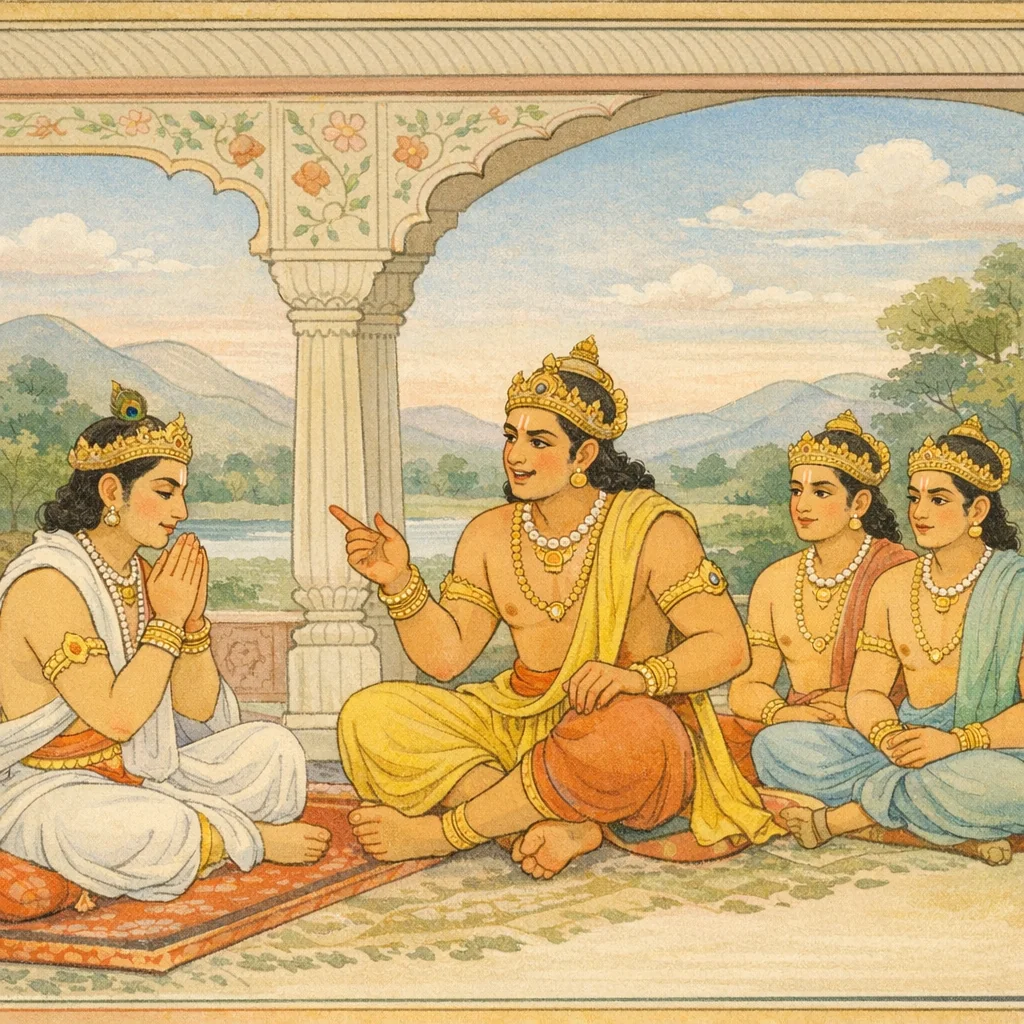
Vaiśampāyana said: When Bhīṣma had finished speaking and fell silent, Yudhiṣṭhira went back to his residence and questioned his brothers—with Vidura as the fifth among them. The scene marks a reflective pause after Bhīṣma’s instruction, as Yudhiṣṭhira seeks counsel within his own circle to clarify the right course in matters of dharma, artha, and kāma.
Verse 2
धर्मे चार्थे च कामे च लोकवृत्ति: समाहिता । तेषां गरीयान् कतमो मध्यम: को लघुश्न कः,“'लोगोंकी प्रवृत्ति प्राय: धर्म, अर्थ और कामकी ओर होती है। इन तीनोंमें कौन सबसे श्रेष्ठ कौन मध्यम और कौन लघु है?”
Vaiśampāyana said: “People’s ordinary inclinations are generally directed toward dharma (right conduct), artha (material welfare), and kāma (desire and enjoyment). Among these three, which is the greatest, which is the middle, and which is the least?”
Verse 3
कम्मिंश्षात्मा निधातव्यस्त्रिवर्गविजयाय वै । संहृष्टा नै्ठिकं वाक्यं यथावद् वक्तुमर्हथ,“इन तीनोंपर विजय पानेके लिये विशेषत: किसमें मन लगाना चाहिये। आप सब लोग हर्ष और उत्साहके साथ इस प्रश्नका यथावत्रूपसे उत्तर दें और वही बात कहें, जिसपर आपकी पूरी आस्था हो”
Vaiśampāyana said: “In what, above all, should the mind be firmly placed so that one may conquer the three aims of life? Be glad and resolute, and answer this question correctly—state that teaching in which you have complete and settled conviction.”
Verse 4
ततोड<र्थगतितत्त्वज्ञ: प्रथमं प्रतिभानवान् | जगाद विदुरो वाक्य धर्मशास्त्रमनुस्मरन्,तब अर्थकी गति और तत्त्वको जाननेवाले प्रतिभाशाली विदुरजीने धर्मशास्त्रका स्मरण करके सबसे पहले कहना आरम्भ किया
Then Vidura—keenly discerning the true principles and the course of practical affairs, and gifted with insight—began to speak first, calling to mind the teachings of the Dharmaśāstras. The narrative signals that what follows is counsel grounded in ethical law and prudent statecraft rather than impulse or factional interest.
Verse 5
विदुर उवाच बाहुश्रुत्यं तपस्त्याग: श्रद्धा यज्ञक्रिया क्षमा । भावशुद्धिर्दया सत्यं संयमश्चात्मसम्पद:,विदुरजी बोले--राजन्! बहुत-से शास्त्रोंका अनुशीलन, तपस्या, त्याग, श्रद्धा, यज्ञकर्म, क्षमा, भावशुद्धि, दया, सत्य और संयम--ये सब आत्माकी सम्पत्ति हैं
Vidura said: O King, wide learning in the scriptures, austerity, renunciation, faith, the performance of sacrificial duties, forbearance, purity of inner disposition, compassion, truthfulness, and self-restraint—these are the true riches of the self.
Verse 6
एतदेवाभिपद्यस्व मा ते5भूच्चलितं मन: । एतन्मूलौ हि धर्माथवितदेकपदं हि मे,युधिष्ठिर! तुम इन्हींको प्राप्त करो। इनकी ओरसे तुम्हारा मन विचलित नहीं होना चाहिये। धर्म और अर्थकी जड़ ये ही हैं। मेरे मतमें ये ही परम पद हैं
Vidura says: “Make this alone your chosen course; let not your mind be shaken away from it. For from this very foundation arise both dharma and artha. In my judgment, O Yudhiṣṭhira, this alone is the highest station to be attained.”
Verse 7
धर्मेणैवर्षयस्तीर्णा धर्मे लोका: प्रतिष्ठिता: । धर्मेण देवा ववृधुर्धर्मे चार्थ: समाहित:,धर्मसे ही ऋषियोंने संसार-समुद्रको पार किया है। धर्मपर ही सम्पूर्ण लोक टिके हुए हैं। धर्मसे ही देवताओंकी उन्नति हुई है और धर्ममें ही अर्थकी भी स्थिति है
Vidura declares that it is by dharma alone that the seers have crossed the ocean of worldly existence. All worlds stand established upon dharma; by dharma the gods have prospered, and within dharma even artha—material well-being and orderly prosperity—finds its proper place and stability.
Verse 8
धर्मो राजन् गुण: श्रेष्ठो मध्यमो हार्थ उच्यते । कामो यवीयानिति च प्रवदन्ति मनीषिण:,राजन! धर्म ही श्रेष्ठ गुण है, अर्थको मध्यम बताया जाता है और काम सबकी अपेक्षा लघु है; ऐसा मनीषी पुरुष कहते हैं
Vidura said: “O King, among the aims and qualities that guide life, Dharma is declared the highest. Artha (material prosperity and statecraft) is spoken of as the middle. Kāma (desire and pleasure) is the least. Such is the considered judgment of the wise.”
Verse 9
तस्माद् धर्मप्रधानेन भवितव्यं यतात्मना । तथा च सर्वभूतेषु वर्तितव्यं यथात्मनि,अतः मनको वशमें करके धर्मको अपना प्रधान ध्येय बनाना चाहिये और सम्पूर्ण प्राणियोंके साथ वैसा ही बर्ताव करना चाहिये, जैसा हम अपने लिये चाहते हैं
Therefore, one who has mastered oneself should make dharma the foremost aim; and toward all beings one should act as one would wish to be treated oneself.
Verse 10
वैशमग्पायन उवाच समाप्तवचने तस्मिन्नर्थशास्त्रविशारद: । पार्थो धर्मार्थतत्त्वज्ञो जगौ वाक््यं प्रचोदित:
Vaiśaṃpāyana said: When that expert in statecraft had finished speaking, Pārtha—knower of the true principles of dharma and worldly welfare—was prompted to respond and spoke these words.
Verse 11
वैशम्पायनजी कहते हैं--जनमेजय! विदुरजीकी बात समाप्त होनेपर धर्म और अर्थके तत्त्वको जाननेवाले अर्थशास्त्रविशारद अर्जुनने युधिष्ठिरकी आज्ञा पाकर कहा ।। अजुन उवाच कर्मभूमिरियं राजन्निह वार्ता प्रशस्यते । कृषिर्वाणिज्यगोरक्षं शिल्पानि विविधानि च,अर्जुन बोले--राजन्! यह कर्म-भूमि है। यहाँ जीविकाके साधनभूत कर्मोकी ही प्रशंसा होती है। खेती, व्यापार, गोपालन तथा भाँति-भाँतिके शिल्प--ये सब अर्थप्राप्तिके साधन हैं
Vaiśaṃpāyana said: “O Janamejaya! When Vidura had finished speaking, Arjuna—versed in the science of polity and knowing the true principles of dharma and artha—at Yudhiṣṭhira’s command spoke: ‘O King, this is a land of work and duty. Here, the means of livelihood are what people praise. Agriculture, trade, the protection and rearing of cattle, and the many kinds of crafts—these are the instruments by which wealth is obtained.’”
Verse 12
अर्थ इत्येव सर्वेषां कर्मणामव्यतिक्रम: । न हाते<र्थन वर्तेते धर्मकामाविति श्रुति:,अर्थ ही समस्त कर्मोकी मर्यादाके पालनमें सहायक है। अर्थके बिना धर्म और काम भी सिद्ध नहीं होते--ऐसा श्रुतिका कथन है
Arjuna said: “Artha (material means) is the indispensable regulator that keeps all undertakings from straying. Indeed, the śruti declares that without artha, neither dharma (righteous duty) nor kāma (legitimate enjoyment) can properly function.”
Verse 13
विषयैरर्थवान् धर्ममाराधयितुमुत्तमम् । काम च चरितुं शक्तो दुष्प्रापमकृतात्मभि:,धनवान मनुष्य धनके द्वारा उत्तम धर्मका पालन और अजितेन्द्रिय पुरुषोंके लिये दुर्लभ कामनाओंकी प्राप्ति कर सकता है
Arjuna said: “A man of wealth, by means of material resources and the objects of enjoyment, is able to cultivate and uphold the highest dharma; and he is also capable of pursuing desires—desires that are hard to attain for those who lack self-mastery.”
Verse 14
अर्थस्यावयवावेतौ धर्मकामाविति श्रुति: । अर्थसिद्धया विनिर्वृत्तावुभावेती भविष्यत:,श्रुतिका कथन है कि धर्म और काम अर्थके ही दो अवयव हैं। अर्थकी सिद्धिसे उन दोनोंकी भी सिद्धि हो जायगी
Arjuna said: “Scriptural teaching declares that dharma and kāma are two constituent parts of artha. When artha is successfully secured, the fulfillment of both dharma and kāma will naturally follow.”
Verse 15
तदगतार्थ हि पुरुषं विशिष्टततरयोनय: । ब्रह्माणमिव भूतानि सततं पर्युपासते,जैसे सब प्राणी सदा ब्रह्माजीकी उपासना करते हैं, उसी प्रकार उत्तम जातिके मनुष्य भी सदा धनवान् पुरुषकी उपासना किया करते हैं
Arjuna said: “Indeed, people of superior birth and standing continually attend upon a man who has attained his purpose (i.e., one who is prosperous and influential), just as all beings constantly revere Brahmā. The world, moved by advantage and dependence, gravitates toward power and wealth.”
Verse 16
जटाजिनधरा दान्ता: पड़्कदिग्धा जितेन्द्रिया: । मुण्डा निस्तन्तवश्वापि वसन्त्यर्थार्थिन: पृथक्,जटा और मृगचर्म धारण करनेवाले जितेन्द्रिय संयतचित्त शरीरमें पंक धारण किये मुण्डितमस्तक नैछ्ठिक ब्रह्मचारी भी अर्थकी अभिलाषा रखकर पृथक्-पृथक् निवास करते हैं
Arjuna said: “Even those who wear matted locks and animal skins—self-controlled, having conquered the senses—who smear their bodies with mud, shave their heads, and keep a strict vow of brahmacarya, still live apart, each in his own place, driven by a desire for artha.”
Verse 17
काषायवसनाश्रान्ये श्मश्रुला हीनिषेविण: । विद्वांसश्वैव शान्ताश्न मुक्ता: सर्वपरिग्रहै:,सब प्रकारके संग्रहसे रहित, संकोचशील, शान्त, गेरुआ वस्त्रधारी, दाढ़ी-मूँछ बढ़ाये विद्वान् पुरुष भी धनकी अभिलाषा करते देखे गये हैं। कुछ दूसरे प्रकारके ऐसे लोग हैं जो स्वर्ग पानेकी इच्छा रखते हैं; और कुलपरम्परागत नियमोंका पालन करते हुए अपने-अपने वर्ण तथा आश्रमके धर्मोंका अनुष्ठान कर रहे हैं; किंतु वे भी धनकी इच्छा रखते हैं
Arjuna said: “I have seen even learned men—quiet, self-restrained, clad in ochre robes, wearing beard and moustache, living on scant fare, and free from every kind of possession—still cherishing a desire for wealth.”
Verse 18
अर्थार्थिन: सन्ति केचिदपरे स्वर्गकांक्षिण: । कुलप्रत्यागमाश्चैके स्वं स्वं धर्ममनुछिता:,सब प्रकारके संग्रहसे रहित, संकोचशील, शान्त, गेरुआ वस्त्रधारी, दाढ़ी-मूँछ बढ़ाये विद्वान् पुरुष भी धनकी अभिलाषा करते देखे गये हैं। कुछ दूसरे प्रकारके ऐसे लोग हैं जो स्वर्ग पानेकी इच्छा रखते हैं; और कुलपरम्परागत नियमोंका पालन करते हुए अपने-अपने वर्ण तथा आश्रमके धर्मोंका अनुष्ठान कर रहे हैं; किंतु वे भी धनकी इच्छा रखते हैं
Arjuna said: “Some people are seekers of wealth; others long for heaven. Some, adhering to the inherited customs of their lineage, diligently perform their respective duties. Yet even among those who appear restrained, quiet, and learned—living with outward signs of renunciation—there are many who still desire wealth.”
Verse 19
आस्तिका नास्तिकाश्नैव नियता: संयमे परे । अप्रज्ञानं तमोभूतं प्रज्ञानं तु प्रकाशिता,दूसरे बहुत-से आस्तिक-नास्तिक संयम नियम-परायण पुरुष हैं जो अर्थके इच्छुक होते हैं। अर्थकी प्रधानताको न जानना तमोमय अज्ञान है। अर्थकी प्रधानताका ज्ञान प्रकाशमय है
Arjuna said: “There are many—both believers and non-believers—who are disciplined and devoted to strict self-restraint. Yet, when one fails to recognize what is truly primary, that lack of discernment becomes ignorance steeped in darkness. True discernment, by contrast, is luminous: it reveals the right priority and guides conduct toward what is genuinely meaningful.”
Verse 20
भृत्यान् भोगैर्द्धिषो दण्डैयों योजयति सो<र्थवान् | एतन्मतिमतां श्रेष्ठ मत॑ं मम यथातथम् | अनयोस्तु निबोध त्वं वचनं वाक्यकण्ठयो:,धनवान् वही है जो अपने भृत्योंको उत्तम भोग और शत्रुओंको दण्ड देकर उनको वशमें रखता है। बुद्धिमानोंमें श्रेष्ठ महाराज! मुझे तो यही मत ठीक जँचता है। अब आप इन दोनोंकी बात सुनिये। इनकी वाणी कण्ठतक आ गयी है, अर्थात् ये दोनों भाई बोलनेके लिये उतावले हो रहे हैं
Arjuna said: “He is truly prosperous who keeps his dependents devoted through worthy enjoyments and restrains his enemies through punishment. O best of the wise, this is the view that seems right to me, just as it is. Now listen to the words of these two—both have their speech risen to the throat, meaning they are eager and pressing to speak.”
Verse 21
वैशम्पायन उवाच ततो धर्मार्थकुशलौ माद्रीपुत्रावनन्तरम् । नकुल: सहदेवश्न वाक्यं जगदतु: परम्,वैशम्पायनजी कहते हैं--राजन्! तदनन्तर धर्म और अर्थके ज्ञानमें कुशल माद्रीकुमार नकुल और सहदेवने अपनी उत्तम बात इस प्रकार उपस्थित की
Vaiśampāyana said: Then, immediately thereafter, Mādrī’s two sons—Nakula and Sahadeva, both skilled in understanding dharma and artha—set forth their excellent statement. In the unfolding counsel, their words are presented as measured guidance, joining moral duty (dharma) with practical welfare (artha).
Verse 22
नकुलसहदेवावूचतुः आसीनश्न शयानश्ष विचरन्नपि वा स्थित: । अर्थयोगं दृढं कुर्याद् योगैरुच्चावचैरपि,नकुल-सहदेव बोले--महाराज! मनुष्यको बैठते, सोते, घूमते-फिरते अथवा खड़े होते समय भी छोटे-बड़े हर तरहके उपायोंसे धनकी आयको सुदृढ़ बनाना चाहिये
Nakula and Sahadeva said: “O King, whether one is seated, lying down, moving about, or even standing still, one should steadily strengthen the means of livelihood and prosperity—by employing methods of every kind, both minor and major.”
Verse 23
अस्मिंस्तु वै विनिर्वत्ते दुर्लभे परमप्रिये । इह कामानवाप्रोति प्रत्यक्ष नात्र संशय:,धन अत्यन्त प्रिय और दुर्लभ वस्तु है। इसकी प्राप्ति अथवा सिद्धि हो जानेपर मनुष्य संसारमें अपनी सम्पूर्ण कामनाएँ पूर्ण कर सकता है, इसका सभीको प्रत्यक्ष अनुभव है-- इसमें संशय नहीं है
Vaiśampāyana said: “When that exceedingly dear and hard-to-obtain thing—wealth—has been secured, a person can, here in the world, attain the objects of desire. This is directly evident to all; there is no doubt about it.”
Verse 24
योरर्रथों धर्मेण संयुक्तो धर्मो यश्चार्थसंयुत: । तद्धि त्वामृतसंवादं तस्मादेताौ मताविह,जो धन धर्मसे युक्त हो और जो धर्म धनसे सम्पन्न हो, वह निश्चितरूपसे आपके लिये अमृतके समान होगा, यह हम दोनोंका मत है
Vaiśampāyana said: “That wealth which is joined with dharma, and that dharma which is supported by wealth—this, indeed, will be for you like a nectar-like counsel. Therefore, here this is the settled view held by us both.”
Verse 25
अनर्थस्य न कामो<स्ति तथार्थो5धर्मिण: कुत: । तस्मादुद्धिजते लोको धर्मार्थाद् यो बहिष्कृत:,निर्धन मनुष्यकी कामना पूर्ण नहीं होती और धर्महीन मनुष्यको धन भी कैसे मिल सकता है। जो पुरुष धर्मयुक्त अर्थसे वज्चित है, उससे सब लोग उद्विग्न रहते हैं
Vaiśampāyana said: “For one who lacks wealth, there can be no fulfillment of desire; and for one who is unrighteous, how could there be wealth at all? Therefore, the world is disturbed and wary of that person who is excluded from righteous prosperity—one who has no dharma-grounded means of livelihood.”
Verse 26
तस्माद् धर्मप्रधानेन साध्यो<र्थ: संयतात्मना । विश्वस्तेषु हि भूतेषु कल्पते सर्वमेव हि,इसलिये मनुष्य अपने मनको संयममें रखकर जीवनमें धर्मको प्रधानता देते हुए पहले धर्माचरण करके ही फिर धनका साधन करे; क्योंकि धर्मपरायण पुरुषपर ही समस्त प्राणियोंका विश्वास होता है और जब सभी प्राणी विश्वास करने लगते हैं तब मनुष्यका सारा काम स्वत: सिद्ध हो जाता है
Therefore, a self-controlled person should pursue material aims only by giving primacy to dharma—first practicing righteousness and only then seeking wealth. For all beings place their trust in one who is devoted to dharma; and when trust is established among all, a person’s undertakings come to fruition of their own accord.
Verse 27
धर्म समाचरेत् पूर्व ततो<र्थ धर्मसंयुतम् ततः काम चरेत् पश्चात् सिद्धार्थ: स हि तत्परम्,अतः सबसे पहले धर्मका आचरण करे; फिर धर्मयुक्त धनका संग्रह करे। इसके बाद दोनोंकी अनुकूलता रखते हुए कामका सेवन करे। इस प्रकार त्रिवर्गका संग्रह करनेसे मनुष्य सफलमनोरथ हो जाता है
Vaiśampāyana said: One should first practice dharma; then acquire wealth in a manner aligned with dharma. After that, maintaining harmony with both, one may pursue kāma (legitimate enjoyment). By thus gathering the three aims of life in proper order, a person becomes successful in purpose and fulfilled in aspiration.
Verse 28
वैशग्पायन उवाच विरेमतुस्तु तद् वाक्यमुक्त्वा तावश्चिनो:सुतौ । भीमसेनस्तदा वाक्यमिदं वक्तुं प्रचक्रमे,वैशम्पायनजी कहते हैं--जनमेजय! इतना कहकर नकुल और सहदेव चुप हो गये। तब भीमसेनने इस तरह कहना आरम्भ किया
Vaiśampāyana said: Having spoken those words, the two sons of the Aśvins—Nakula and Sahadeva—fell silent. Then Bhīmasena began to speak in this manner, taking up the discussion that bears upon right conduct and the proper course to be followed.
Verse 29
भीमयेन उवाच नाकाम: कामयत्यर्थ नाकामो धर्ममिच्छति । नाकाम: कामयानो<स्ति तस्मात् कामो विशिष्यते,भीमसेन बोले--धर्मराज! जिसके मनमें कोई कामना नहीं है, उसे न तो धन कमानेकी इच्छा होती है और न धर्म करनेकी ही। कामनाहीन पुरुष तो काम (भोग) भी नहीं चाहता है; इसलिये त्रिवर्गमें काम ही सबसे बढ़कर है
Bhīma said: “One who is free from desire does not seek wealth, nor does he even wish to pursue dharma. A desireless man is not found as one who seeks enjoyment; therefore, among the three aims of life, kāma (desire/pleasure) is held to be the most decisive.”
Verse 30
कामेन युक्ता ऋषयस्तपस्येव समाहिता: । पलाशफलमूलादा वायुभक्षा: सुसंयता:
Sages, impelled by desire, became as intent and absorbed as if engaged in austerity. Living on palāśa leaves, fruits, and roots—or even subsisting on air alone—they remained firmly self-restrained.
Verse 31
किसी-न-किसी कामनासे संयुक्त होकर ही ऋषि-लोग तपस्यामें मन लगाते हैं। फल, मूल और पत्ते चबाकर रहते हैं। वायु पीकर मन और इन्द्रियोंका संयम करते हैं ।। वेदोपवेदेष्वपरे युक्ता: स्वाध्यायपारगा: । श्राद्धयज्ञक्रियायां च तथा दानप्रतिग्रहे,कामनासे ही लोग वेद और उपवेदोंका स्वाध्याय करते तथा उसमें पारज्गत विद्वान् हो जाते हैं। कामनासे ही श्राद्धकर्म, यज्ञकर्म, दान और प्रतिग्रहमें लोगोंकी प्रवृत्ति होती है
Bhīma says that even ascetics apply themselves to austerity while joined to some desire: they live by chewing fruits, roots, and leaves, and by ‘drinking the wind’ they restrain mind and senses. Likewise, others devote themselves to the Vedas and auxiliary sciences and become masters of recitation and study; and people engage in rites for ancestors, sacrificial acts, giving, and even accepting gifts—driven, in each case, by desire.
Verse 32
वणिज: कर्षका गोपा: कारव: शिल्पिनस्तथा । देवकर्मकृतश्लैव युक्ता: कामेन कर्मसु,व्यापारी, किसान, ग्वाले, कारीगर और शिल्पी तथा देवसम्बन्धी कार्य करनेवाले लोग भी कामनासे ही अपने-अपने कर्मोमें लगे रहते हैं
Bhīṣma said: “Merchants, farmers, cowherds, artisans and craftsmen—and even those who perform rites and services connected with the gods—are all set to their respective occupations under the impulse of desire. In the world, activity is commonly driven by want and expectation, and people engage in work seeking the fruits they long for.”
Verse 33
समुद्रं वा विशन्त्यन्ये नरा: कामेन संयुता: । कामो हि विविधाकार: सर्व कामेन संततम्,कामनासे युक्त हुए दूसरे मनुष्य समुद्रमें भी घुस जाते हैं। कामनाके विविध रूप हैं तथा सारा कार्य ही कामनासे व्याप्त है
Driven by desire, some people even plunge into the ocean. Desire indeed assumes many forms, and all human activity is pervaded and propelled by desire.
Verse 34
नास्ति नासीन्नाभविष्यद् भूतं कामात्मकात् परम् | एतत् सारं महाराज धर्मार्थावत्र संस्थितौ,सभी प्राणी कामना रखते हैं। उससे भिन्न कामना-रहित प्राणी न कहीं है, न कभी था और न भविष्यमें होगा ही; अत: यह काम ही त्रिवर्गका सार है। महाराज! धर्म और अर्थ भी इसीमें स्थित हैं
O great king, there is no being—there never was, nor will there ever be—beyond the nature of kāma (desire). Therefore kāma is the very essence of the three aims. O Maharaja, even dharma and artha are established within it.
Verse 35
नवनीतं यथा दध्नस्तथा कामोडर्थधर्मत: । श्रेयस्तैलं हि पिण्याकाद् घृतं श्रेय उदश्वित: । श्रेय: पुष्पफलं काष्ठात् कामो धर्मार्थियोर्वर:,जैसे दहीका सार माखन है, उसी प्रकार धर्म और अर्थका सार काम है। जैसे खलीसे श्रेष्ठ तेल है, तक्रसे श्रेष्ठ घी है और वृक्षके काष्ठसे श्रेष्ठ उसका फूल और फल है, उसी प्रकार धर्म और अर्थ दोनोंसे श्रेष्ठ काम है
Just as butter is the essence of curd, so kāma (desire) is the essence of dharma and artha. As oil is superior to oil-cake, as ghee is superior to buttermilk, and as a tree’s flowers and fruits are superior to its mere wood, so kāma is superior to both dharma and artha.
Verse 36
पुष्पतो मथ्विव रस: काम आशभ्यां तथा स्मृतः । कामो धर्मार्थयोर्योनि: कामश्चाथ तदात्मक:,जैसे फ़ूलसे उसका मधु-तुल्य रस श्रेष्ठ है, उसी प्रकार धर्म और अर्थसे काम श्रेष्ठ माना गया है। काम धर्म और अर्थका कारण है, अतः वह धर्म और अर्थरूप है
As honey is the finest essence drawn from a flower, so kāma (desire) is remembered as the superior essence in relation to dharma and artha. Kāma is the womb and source from which dharma and artha arise; therefore kāma, in a sense, is of their very nature.
Verse 37
नाकामतो ब्राह्मुणा: स्वन्नमर्थान् नाकामतो ददति ब्राह्मणेभ्य: । नाकामतो विविधा लोकचेष्टा तस्मात् काम: प्राक् त्रिवर्गस्य दृष्ट:,बिना किसी कामनाके ब्राह्मण अच्छे अन्नका भी भोजन नहीं करते और बिना कामनाके कोई ब्राह्मणोंको धनका दान नहीं करते हैं। जगतके प्राणियोंको जो नाना प्रकारकी चेष्टा होती है वह बिना कामनाके नहीं होती; अतः त्रिवर्गमें कामका ही प्रथम एवं प्रधान स्थान देखा गया है
Without kāma, even Brahmins do not partake of fine food; and without kāma, no one gives wealth to Brahmins. The many kinds of striving seen among beings in the world do not arise without desire. Therefore, among the three aims, kāma is seen as coming first and as the principal driving force.
Verse 38
सुचारुवेषाभिरलंकृताभि- मंदोत्कटाभि: प्रियदर्शनाभि: । रमस्व योषाभिरुपेत्य काम॑ कामो हि राजन् परमो भवेन्न:,अतः राजन! आप कामका अवलम्बन करके सुन्दर वेषवाली, आभूषणोंसे विभूषित तथा देखनेमें मनोहर एवं मदमत्त युवतियोंके साथ विहार कीजिये। हमलोगोंको इस जगतमें कामको ही श्रेष्ठ मानना चाहिये
Therefore, O king, take refuge in kāma and seek delight—approach and sport with women who are beautifully dressed, adorned with ornaments, pleasing to behold, and intoxicated with youthful ardor. For in this world, O king, we should regard kāma as the highest good.
Verse 39
बुद्धिर्ममैषा परिखास्थितस्य मा भूद् विचारस्तव धर्मपुत्र । स्यात् संहितं सद्धिरफल्गुसारं ममेति वाक्यं परमानृशंसम्,धर्मपुत्र! मैंने गहराईमें पैठकर ऐसा निश्चय किया है। मेरे इस कथनमें आपको कोई अन्यथा विचार नहीं करना चाहिये। मेरा यह वचन उत्तम, कोमल, श्रेष्ठ, तुच्छतारहित एवं सारभूत है; अतः श्रेष्ठ पुरुष भी इसे स्वीकार कर सकते हैं
“This is my settled understanding, formed after I have gone down into the depths of the matter. O Dharmaputra, you should not entertain any contrary suspicion about it. My statement is well-knit and sound, free from pettiness, and full of substance; it is supremely compassionate—such that even the good and discerning can accept it.”
Verse 40
धर्मार्थकामा: सममेव सेव्या यो होकभक्त: स नरो जघन्य: । तयोस्तु दाक्ष्यं प्रवदन्ति मध्य॑ स उत्तमो यो5भिरतस्त्रिवर्गे,मेरे विचारसे धर्म, अर्थ और काम तीनोंका एक साथ ही सेवन करना चाहिये। जो इनमेंसे एकका ही भक्त है, वह मनुष्य अधम है, जो दोके सेवनमें निपुण है, उसे मध्यम श्रेणीका बताया गया है और जो त्रिवर्गमें समानरूपसे अनुरक्त है, वह मनुष्य उत्तम है
“Dharma, artha, and kāma should be pursued together in due balance. A man devoted to only one of these is deemed the lowest; one skilled in pursuing two is called middling; but he who is equally engaged in all three aims of life is regarded as the best.”
Verse 41
प्राज्ञ: सुहृच्चन्दनसारलिप्तो विचित्रमाल्याभरणैरुपेत: । ततो वच: संग्रहविस्तरेण प्रोक्त्वाथ वीरान् विरराम भीम:,बुद्धिमान, सुहृद, चन्दनसारसे चर्चित तथा विचित्र मालाओं और आभूषणोंसे विभूषित भीमसेन उन वीर बन्धुओंसे संक्षेप और विस्तारपूर्वक पूर्वोिक्त वचन कहकर चुप हो गये
“Wise Bhīma—an affectionate friend, anointed with the essence of sandalwood and adorned with variegated garlands and ornaments—then addressed those heroic kinsmen, speaking both succinctly and at length as the occasion required; having thus delivered his words, he fell silent.”
Verse 42
ततो मुहूर्तादथ धर्मराजो वाक्यानि तेषामनुचिन्त्य सम्यक् । उवाच वाचावितथं स्मयन् वै लब्धश्रुतां धर्मभूृतां वरिष्ठ:,जिन्होंने महात्माओंके मुखसे धर्मका उपदेश सुना है, उन धर्मात्माओंमें श्रेष्ठ धर्मराज युधिष्ठिरने दो घड़ीतक पूर्व वक्ताओंके वचनोंपर भलीभाँति विचार करके मुसकराते हुए यह यथार्थ बात कही
“Then, after a short while, the king of Dharma—having carefully reflected on the words spoken by them—smiled and spoke truthfully. Yudhiṣṭhira, foremost among the righteous and one who had received instruction in dharma from great souls, now gave his considered reply.”
Verse 43
युधिछिर उवाच निःसंशयं निश्चितधर्मशास्त्रा: सर्वे भवन्तो विदितप्रमाणा: । विज्ञातुकामस्य ममेह वाक्य- मुक्त यद्धै नैष्ठिकं तच्छुतं मे । इदं त्ववश्यं गदतो ममापि वाक््यं निबोधध्वमनन्यभावा:,युधिष्ठिर बोले--बन्धुओ! इसमें संदेह नहीं कि आपलोग धर्मशास्त्रोंके सिद्धान्तोंपर विचार करके एक निश्चयपर पहुँच चुके हैं। आपलोगोंको प्रमाणोंका भी ज्ञान प्राप्त है। मैं सबके विचार जानना चाहता था, इसलिये मेरे सामने यहाँ आपलोगोंने जो अपना-अपना निश्चित सिद्धान्त बताया है, वह सब मैंने ध्यानसे सुना है। अब आप, मैं जो कुछ कह रहा हूँ, मेरी उस बातको भी अनन्यचित्त होकर अवश्य सुनिये
Yudhiṣṭhira said: “Without doubt, all of you have reached firm conclusions after examining the teachings of the Dharmaśāstras, and you are well acquainted with the authoritative means of proof. Since I wished to learn your views, I have listened carefully to each of the settled doctrines you have presented here. Now, please listen with undivided attention to what I, too, am about to say.”
Verse 44
यो वै न पापे निरतो न पुण्ये नार्थ न धर्मे मनुजो न कामे । विमुक्तदोष: समलोष्टकाञज्चनो विमुच्यते दुःखसुखार्थसिद्धे:,जो न पापमें लगा हो और न पुण्यमें, न तो अर्थोपार्जनमें तत्पर हो न धर्ममें, न काममें ही। वह सब प्रकारके दोषोंसे रहित मनुष्य दुःख और सुखको देनेवाली सिद्धियोंसे सदाके लिये मुक्त हो जाता है, उस समय मिट्टीके ढेले और सोनेमें उसका समान भाव हो जाता है
Yudhiṣṭhira said: The person who is not engrossed in sin or in merit, not driven by the pursuit of wealth, not even attached to religious duty as a means, and not absorbed in sensual desire—being freed from all faults—becomes released from those attainments that yield pleasure and pain. In that liberated state, he regards a clod of earth and gold with equal vision.
Verse 45
भूतानि जातिस्मरणात्मकानि जराविकारैश्न समन्वितानि । भूयश्व तैस्तै: प्रतिबोधितानि मोक्ष प्रशंसन्ति न तं च विद्य:,जो पूर्वजन्मकी बातोंको स्मरण करनेवाले तथा वृद्धावस्थाके विकारसे मुक्त हैं, वे मनुष्य नाना प्रकारके सांसारिक दुःखोंके उपभोगसे निरन्तर पीड़ित हो मुक्तिकी ही प्रशंसा करते हैं, परंतु हमलोग उस मोक्षके विषयमें जानते ही नहीं
Yudhiṣṭhira said: “There are beings who remember their former births and are not afflicted by the distortions of old age. Repeatedly awakened and instructed by various experiences, they praise liberation alone. But we do not truly know that liberation.”
Verse 46
स्नेहेन युक्तस्य न चास्ति मुक्ति- रिति स्वयम्भूर्भगवानुवाच । बुधाश्न निर्वाणपरा भवन्ति तस्मान्न कुर्यात् प्रियमप्रियं च,स्वयम्भू भगवान् ब्रह्माजीका कथन है कि जिसके मनमें आसक्ति है, उसकी कभी मुक्ति नहीं होती। आसक्तिशून्य ज्ञानी मनुष्य ही मोक्षको प्राप्त होते हैं; अतः मुमुक्षु पुरुषको चाहिये कि वह किसीका प्रिय अथवा अप्रिय न करे
Yudhiṣṭhira said: “The Blessed Self-born (Brahmā) has declared: ‘For one bound by attachment (sneha), there is no liberation.’ The wise, being intent on nirvāṇa, attain release; therefore a seeker of freedom should not act from personal liking or disliking—should not make anyone ‘dear’ or ‘hated’ in his conduct.”
Verse 47
एतत् प्रधानं च न कामकारो यथा नियुक्तोडस्मि तथा करोमि । भूतानि सर्वाणि विधिरन्नियुद्धक्ते विधिर्बलीयानिति वित्त सर्वे,इस प्रकार विचार करना ही मोक्षका प्रधान उपाय है, स्वेच्छाचार नहीं। विधाताने मुझे जिस कार्यमें लगा दिया है, मैं उसे ही करता हूँ। विधाता सभी प्राणियोंको विभिन्न कार्योंके लिये प्रेरित करता है। अतः आप सब लोगोंको ज्ञात होना चाहिये कि विधाता ही प्रबल है
Yudhiṣṭhira said: “This reflection is the foremost means toward liberation—not acting from mere whim. As I have been appointed, so I act. The Ordainer directs all beings toward their respective tasks; therefore, let all of you understand that destiny—the divine ordinance—is the stronger force.”
Verse 48
न कर्मणा55प्रोत्यनवाप्यमर्थ यद्भावि तद्वै भवतीति वित्त । त्रिवर्गहीनो5पि हि विन्दते<र्थ तस्मादहो लोकहिताय गुहाम्
Yudhiṣṭhira said: “No gain can be secured by mere effort if it is not meant to be attained; what is destined to occur indeed comes to pass—know this as certain. Even one who lacks the three aims of life may still obtain wealth; therefore, alas, for the welfare of the world, this truth lies hidden (like a cave), difficult for people to recognize.”
Verse 49
मनुष्य कर्मद्वारा अप्राप्य अर्थ नहीं पा सकता। जो होनहार है, वही होता है; इस बातको तुम सब लोग जान लो। मनुष्य त्रिवर्गसे रहित होनेपर भी आवश्यक पदार्थको प्राप्त कर लेता है; अतः मीक्षप्राप्तिका गूढ़ उपाय (ज्ञान) ही जगत्का वास्तविक कल्याण करनेवाला है ।। वैशग्पायन उवाच ततस्तदग्र्यं वचन॑ मनोनुगं समस्तमाज्ञाय ततो हि हेतुमत् । तदा प्रणेदुश्चव जहर्षिरे च ते कुरुप्रवीराय च चक्रिरेडज्जलिम्,वैशम्पायनजी कहते हैं--जनमेजय! राजा युधिष्ठिरकी कही हुई बात बड़ी उत्तम, युक्तियुक्त और मनमें बैठनेवाली हुई। उसे पूर्णरूपसे समझकर वे सब भाई बड़े प्रसन्न हो हर्षनाद करने लगे। उन सबने कुरुकुलके प्रमुख वीर युधिष्ठिरको अञज्जलि बाँधकर प्रणाम किया
Vaiśampāyana said: Then, having fully understood that excellent statement—reasonable and agreeable to the mind—they all became delighted. They raised a joyful acclaim, and with hands joined in reverence they paid homage to Yudhiṣṭhira, the foremost hero of the Kurus. (The teaching affirmed is that human beings cannot secure results merely by action; what is destined comes to pass. Even one lacking the three aims of life may obtain necessities; therefore the subtle means to liberation—true knowledge—is the world’s real welfare.)
Verse 50
सुचारुवर्णाक्षरचारु भूषितां मनोनुगां निर्धुतवाक्यकण्टकाम् । निशम्य तां पार्थिव पार्थभाषितां गिरं नरेन्द्रा: प्रशशंसुरेव ते,जनमेजय! युधिष्ठिरकी उस वाणीमें किसी प्रकारका दोष नहीं था। वह अत्यन्त सुन्दर स्वर और व्यज्जनके संनिवेशसे विभूषित तथा मनके अनुरूप थी, उसे सुनकर समस्त राजाओंने युधिष्ठिरकी भूरि-भूरि प्रशंसा की
Vaiśaṃpāyana said: O Janamejaya, when the kings heard that speech spoken by Yudhiṣṭhira—adorned with beautifully arranged syllables and letters, flowing in harmony with the mind, and cleansed of any thorn-like harshness or fault in expression—they praised it greatly.
Verse 51
स चापि तान् धर्मसुतो महामना- स्तदा प्रतीतान् प्रशशंस वीर्यवान् | पुनश्न पप्रच्छ सरिद्वरासुतं ततः परं धर्ममहीनचेतसम्,पराक्रमी धर्मपुत्र महामना युधिष्ठिरे भी उन समस्त विश्वासपात्र नरेशों एवं बन्धुजनोंकी प्रशंसा की और पुनः उदारचेता गड़ानन्दन भीष्मजीके पास आकर उनसे उत्तम धर्मके विषयमें प्रश्न किया
Vaiśaṃpāyana said: Then the high-souled son of Dharma, the valiant Yudhiṣṭhira, praised those trusted kings and kinsmen who had shown their loyalty. After that, with an untroubled and generous mind, he again approached Bhīṣma, the son of the best of rivers, and questioned him about the higher and more excellent principles of dharma.
Verse 166
इस प्रकार श्रीमयहाभारत थान्तिपर्वके अन्तर्गत आपद्धर्मपर्वमें खड॒गकी उत्पत्तिका कथनविषयक एक सौ छाछठवाँ अध्याय पूरा हुआ
Thus ends the one hundred and sixty-sixth chapter of the Āpaddharma section within the Śānti Parva of the sacred Mahābhārata, dealing with the account of the origin of the sword.
Verse 167
इति श्रीमहाभारते शान्तिपर्वणि आपद्धर्मपर्वणि षड्जगीतायां सप्तषष्ट्यधिकशततमो<ध्याय:
Thus, in the Śrī Mahābhārata, within the Śānti Parvan—specifically the section on conduct in times of distress (Āpaddharma Parvan)—ends the one-hundred-and-sixty-seventh chapter, known as the “Ṣaḍja-gītā.”
Frequently Asked Questions
How to remain mentally stable and ethically grounded when confronted with bereavement and loss, without collapsing into śoka driven by attachment and expectation.
Grief is intensified by mamatva and āśā; by recognizing inevitable separation, restraining desire, and practicing equanimity toward sukha/duḥkha, one attains a steadier mind oriented toward liberation.
Rather than a formal phalaśruti, the chapter offers pragmatic validation: the exemplum concludes with Senajit becoming composed and content, presenting psychological stabilization as the immediate ‘fruit’ of the teaching.