Adhyaya 21
Adhyāya 21 — Duryodhanasya bāṇavarṣaḥ (Duryodhana’s Arrow-Storm and the Dust-Obscured Engagements)
Upa-parva: Duryodhana-Pāṇḍava Saṃgrāma-varṇana (Battle Description: Duryodhana’s Arrow-Storm and Multiple Duels)
Saṃjaya reports to Dhṛtarāṣṭra that Duryodhana, positioned on his chariot, becomes nearly unendurable in combat, likened to Rudra in force. The terrain appears ‘made of arrows’ as volleys blanket the field; no Pāṇḍava soldier, horse, elephant, or chariot remains untouched. Duryodhana strikes major opponents with counted shafts—Yudhiṣṭhira, Bhīma, Sahadeva, Nakula, Dhṛṣṭadyumna, the Draupadeyas, and Sātyaki—and breaks Sahadeva’s bow, prompting Sahadeva and Nakula to counterattack. The narrative then widens into simultaneous engagements: Droṇa’s son checks Bhīma; Śakuni pressures Yudhiṣṭhira until Sahadeva removes the king from immediate danger; Yudhiṣṭhira returns to wound Śakuni; Ulūka duels Nakula; Kṛtavarmā contests Sātyaki; Duryodhana cuts Dhṛṣṭadyumna’s bow and continues the fight. Dust from weapons, chariot wheels, and elephants’ breath darkens the sun-path; visibility collapses, then partially clears, revealing ordered single combats amid a broader tumult marked by the continuous sound of falling arrows.
Chapter Arc: शल्यपर्व के पूर्व अध्याय के उपसंहार के तुरंत बाद रणभूमि में दृश्य बदलता है—कौरव-व्यूह के प्रभग्न होते ही महाबली कृतवर्मा अकेले-सा, पर्वत-सा अडिग खड़ा होकर शत्रुसेना को थाम लेता है। → कृतवर्मा की गर्जना और स्थिरता से भागते हुए कौरव योद्धा लौटने लगते हैं; पाण्डव-पक्ष में पांचाल-सैनिकों में क्षणिक कंपकंपी फैलती है। उसी क्षण शिनिनन्दन सात्यकि आगे बढ़कर कृतवर्मा को ललकारता है, और दोनों पक्षों के लिए यह प्रतिष्ठा का संग्राम बन जाता है—‘मृत्यु को ही निवर्तन’ मानकर लौटे हुए कौरव पाण्डवों से भिड़ते हैं। → सात्यकि कृतवर्मा द्वारा धनुष-छेदन से क्रुद्ध होकर तीव्र आक्रमण करता है; प्रत्युत्तर में कृतवर्मा भीषण बाण-वर्षा करता है। युद्ध के चरम पर सात्यकि के प्रहार से कृतवर्मा के अश्व और सारथि मारे जाते हैं और अंततः उसकी छाती में गहरी चोट लगती है—वह रथहीन होकर धरती की ओर गिर पड़ता है। → कृतवर्मा के रथ-विहीन होने से कौरव-पक्ष का एक बड़ा संबल डगमगाता है; फिर भी धूल और कोलाहल के कारण समग्र सेना को तत्काल स्थिति का बोध नहीं होता। इसी बीच दुर्योधन अपनी सेना को निकट से भागती देख अकेले ही वेग से टूट पड़ता है और पलायन को रोकने का प्रयास करता है। → कृतवर्मा के पतन और दुर्योधन के एकाकी प्रतिरोध के बीच रण का पलड़ा किस ओर झुकेगा—क्या कौरव-सेना फिर संगठित होगी या पाण्डव-धक्का निर्णायक बन जाएगा?
Shlokas
Verse 1
इस प्रकार श्रीमह्याभारत शल्यपर्वमें शास्रका वधविषयक बीसवाँ अध्याय पूरा हुआ ॥/ २० ॥ एकविशोड< ध्याय: सात्यविद्दारा क्षेमधूर्तिका वध, कृतवर्माका युद्ध और उसकी पराजय एवं कौरवसेनाका पलायन संजय उवाच तस्मिंस्तु निहते शूरे शाल्वे समितिशो भने । तवाभज्यद् बलं वेगाद् वातेनेव महाद्रुम:,संजय कहते हैं--राजन! युद्धमें शोभा पानेवाले शूरवीर शाल्वके मारे जानेपर आपकी सेनाके पाँव उखड़ गये। जैसे वेगपूर्वक चली हुई वायुके झोंकेसे कोई विशाल वृक्ष उखड़ गया हो
Sañjaya said: O King, when the heroic Śālva—who lent splendor to the battle—was slain, your army’s resolve broke and it reeled in sudden panic, like a great tree torn up by a violent gust of wind.
Verse 2
तत् प्रभग्नं बल॑ दृष्टवा कृतवर्मा महारथ: । दधार समरे शूर: शत्रुसैन्यं महाबल:,अपनी सेनाका व्यूह भंग हुआ देखकर महाबलवान् महारथी शूरवीर कृतवर्माने समरांगणमें शत्रुकी सेनाको आगे बढ़नेसे रोक दिया
Sañjaya said: Seeing his own army’s formation shattered, the mighty warrior Kṛtavarmā—heroic and a great charioteer—held firm in the battle and checked the enemy host from pressing forward.
Verse 3
सनिवृत्तास्तु ते शूरा दृष्टवा सात्वतमाहवे । शैलोपमं स्थिरं राजन् कीर्यमाणं शरैर्युधि,राजन! कृतवर्माको युद्धस्थलमें डटा हुआ देख वे भागे हुए शूरमा भी लौट आये। युद्धस्थलमें बाणोंकी वर्षसि आच्छादित होनेपर भी वह सात्वतवंशी वीर पर्वतके समान अविचलभावसे खड़ा था
O King, seeing Kṛtavarmā of the Sātvata line standing fast upon the battlefield, even the warriors who had fled turned back again. Though showered with arrows in the fight, he stood unshaken, like a mountain.
Verse 4
ततः प्रववृते युद्ध कुरूणां पाण्डवैः सह । निवृत्तानां महाराज मृत्युं कृत्वा निवर्तनम्,महाराज! तदनन्तर लौटे हुए कौरवोंका पाण्डवोंके साथ मृत्युको ही युद्धसे निवृत्तिकी सीमा नियत करके घोर संग्राम होने लगा
Sañjaya said: Then the battle between the Kurus and the Pāṇḍavas flared up again. O great king, those who had turned back did so with death itself set as the limit of withdrawal—so the fighting resumed in a grim spirit where only dying marked the end.
Verse 5
तत्राश्चर्यम भूद् युद्धे सात्वतस्य परैः सह । यदेको वारयामास पाण्डुसेनां दुरासदाम्
Sañjaya said: In that battle, a marvel occurred in the fight between the Sātvata hero and his foes—how, standing alone, he held back the formidable army of the Pāṇḍavas.
Verse 6
वहाँ कृतवर्माका शत्रुओंके साथ होनेवाला युद्ध अत्यन्त आश्चर्यजनक प्रतीत होता था; क्योंकि उसने अकेले ही दुर्जय पाण्डव-सेनाकी प्रगति रोक दी थी ।। तेषामन्योन्यसुहदां कृते कर्मणि दुष्करे । सिंहनाद: प्रह्ृष्टानां दिविस्पूक् सुमहान भूत्,एक-दूसरेका हित चाहनेवाले कौरवसैनिक कृतवमकि द्वारा यह दुष्कर पराक्रम किये जानेपर अत्यन्त हर्षमें भर गये। उनका महान् सिंहनाद आकाशमें गूँज उठा
Sañjaya said: When Kṛtavarman accomplished that difficult feat for the sake of those Kauravas who wished one another’s welfare, the delighted warriors raised a mighty lion-roar that seemed to touch the heavens. In the grim dharma of war, his solitary stand—checking the advance of the otherwise hard-to-overcome Pāṇḍava host—became a rallying point for comradeship and martial resolve, even as it intensified the violence of the day.
Verse 7
तेन शब्देन वित्रस्ता: पउचाला भरतर्षभ | शिनेर्नप्ता महाबाहुरन्वपद्यत सात्यकि:,भरतश्रेष्ठ] उनकी उस गर्जनासे पांचाल-सैनिक थर्रा उठे। उस समय शिनिपौत्र महाबाहु सात्यकि उन शत्रुओंका सामना करनेके लिये आये
Sañjaya said: At that roar, the Pāñcāla troops were shaken with fear, O bull among the Bharatas. Then Sātyaki—the mighty-armed grandson of Śini—advanced to meet and confront those foes.
Verse 8
स समासाद्य राजान क्षेमधूर्ति महाबलम् । सप्तभिर्निशितैर्बाणैरनयद् यमसादनम्,उन्होंने आते ही महाबली राजा क्षेमधूर्तिको सात पैने बाणोंसे मारकर यमलोक पहुँचा दिया
Sañjaya said: Closing in upon the mighty king Kṣemadhūrti, he struck him with seven razor-sharp arrows and sent him to Yama’s abode—thus ending his life on the battlefield in the relentless course of war.
Verse 9
तमायान्तं महाबाहुं प्रवपन्तं शितान् शरान् । जवेनाभ्यपतद् धीमान् हार्दिक्य: शिनिपुजड्भवम्,तीखे बाणोंकी वर्षा करते हुए शिनिपौत्र महाबाहु सात्यकिको आते देख बुद्धिमान् कृतवर्मा बड़े वेगसे उनका सामना करनेके लिये आ पहुँचा
Sañjaya said: Seeing the mighty-armed Sātyaki—the descendant of Śini—advancing while showering sharp arrows, the wise Kṛtavarmā, son of Hṛdīka, rushed forward at great speed to confront him. The scene underscores the relentless momentum of battle, where valor and duty drive warriors to meet force with force, even as the ethical weight of violence remains implicit in every encounter.
Verse 10
सात्वतौ च महावीर्यो धन्विनौ रथिनां वरौ । अन्योन्यमभ्यधावेतां शस्त्रप्रवरधारिणी
Sañjaya said: The two Sātvata heroes—both of great prowess, both foremost among chariot-warriors and masters of the bow—charged at one another, each bearing excellent weapons. The scene underscores the grim dharma of the battlefield: valor and skill are displayed in direct confrontation, even when it leads to mutual destruction.
Verse 11
फिर तो उत्तम अस्त्र-शस्त्र धारण करनेवाले, रथियोंमें श्रेष्ठ, महापराक्रमी, धनुर्धर वीर सात्वतवंशी सात्यकि और कृतवर्मा एक-दूसरेपर धावा करने लगे ।। पाण्डवा: सहपज्चाला याधाश्षान्ये नृपोत्तमा: । प्रेक्षका: समपद्यन्त तयोघोरे समागमे
Sañjaya said: Then the heroic bowmen Sātyaki and Kṛtavarmā—both of the Sātvata line, foremost among chariot-warriors, bearing excellent weapons and blazing with great prowess—rushed at one another to strike. The Pāṇḍavas, together with the Pañcālas, the Yādavas, and other best of kings, gathered as spectators to witness their dreadful encounter.
Verse 12
उन दोनोंके घोर संग्राममें पांचालोंसहित पाण्डव और दूसरे नृपश्रेष्ठ योद्धा दर्शक होकर तमाशा देखने लगे ।। नाराचैववत्सदन्तैश्व वृष्ण्यन्धकमहारथौ । अभिजलन्नतुरन्योन्यं प्रह्षशाविव कुज्जरौ
Sañjaya said: In that dreadful clash between the two, the Pāṇḍavas along with the Pāñcālas—and other foremost kings and warriors—stood as spectators, watching as though it were a spectacle. The great chariot-warriors of the Vṛṣṇis and the Andhakas, hurling nārāca arrows and calf-tooth–shaped shafts, assailed one another in battle, exultant like two rutting elephants.
Verse 13
वृष्णि और अन्धकवंशके वे दोनों वीर महारथी हर्षमें भरकर लड़ते हुए दो हाथियोंके समान एक-दूसरेपर नाराचों और वत्सदन्तोंका प्रहार करने लगे ।। चरन्तौ विविधान् मार्गान् हार्दिक्यशिनिपुड्वौ | मुहुरन्तर्दधाते तौ बाणवृष्ट्या परस्परम्,कृतवर्मा और सात्यकि दोनों नाना प्रकारके पैंतरे दिखाते हुए विचरते थे और बारंबार बाणोंकी वर्षा करके वे एक-दूसरेको अदृश्य कर देते थे
Sañjaya said: Those two heroic great chariot-warriors of the Vṛṣṇi and Andhaka line, exultant in the fury of combat, struck at one another like two elephants—assailing each other with iron arrows and sharp, tusk-like shafts. Moving with many kinds of feints and changing lines of attack, the foremost of the Hārdikya and the Śini clans—Kṛtavarmā and Sātyaki—again and again concealed each other from sight by showers of arrows.
Verse 14
चापवेगबलोद्धूतान् मार्गणान् वृष्णिसिंहयो: । आकाशे समपश्याम पतजड्भानिव शीघ्रगान्,वृष्णिवंशके उन दोनों सिंहोंके धनुषके वेग और बलसे चलाये हुए शीघ्रगामी बाणोंको हम आकाशगमें छाये हुए टिड्डीदलोंके समान देखते थे
Sañjaya said: “We beheld in the sky the swift arrows, driven forth by the force and speed of the bows of those two lion-like heroes of the Vṛṣṇi line, appearing like swarms of locusts spreading across the heavens.”
Verse 15
तमेक॑ सत्यकर्माणमासाद्य हृदिकात्मज: । अविध्यन्निशितैर्बाणिश्षतुर्भिश्चतुरो हयान्,कृतवर्माने अद्वितीय वीर सत्यपराक्रमी सात्यकिके पास पहुँचकर चार पैने बाणोंसे उनके चारों घोड़ोंको घायल कर दिया
Sañjaya said: Closing in upon Sātyaki—renowned for truthful deeds—Kṛtavarmā, the son of Hṛdīka, struck with four sharp arrows and wounded his four horses.
Verse 16
स दीर्घबाहु: संक्रुद्धस्तोत्रार्दित इव द्विप: । अष्टभि: कृतवर्माणमविद्धयत् परमेषुभि:,तब महाबाहु सात्यकिने अंकुशोंकी चोट खाये हुए गजराजके समान अत्यन्त क्रोधमें भरकर आठ उत्तम बाणोंद्वारा कृतवर्माको घायल कर दिया
Sañjaya said: Then that long-armed hero, inflamed with wrath, like a mighty elephant tormented by the goad, struck Kṛtavarmā with eight superb arrows.
Verse 17
ततः पूर्णायतोत्सृष्टे: कृतवर्मा शिलाशितै: । सात्यकिं त्रिभिराहत्य धनुरेकेन चिच्छिदे,यह देख कृतवर्माने धनुषको पूर्णतः खींचकर छोड़े गये और शिलापर तेज किये हुए तीन बाणोंसे सात्यकिको घायल करके एकसे उनके धनुषको काट डाला
Sañjaya said: Then Kṛtavarmā, releasing his arrows drawn to the full, struck Sātyaki with three shafts sharpened on stone; and with a single arrow he cut Sātyaki’s bow.
Verse 18
निकृत्तं तद् धनुः श्रेष्ठमपास्य शिनिपुज्भव: । अन्यदादत्त वेगेन शैनेय: सशरं धनु:,उस कटे हुए श्रेष्ठ धनुषको फेंककर शिनिप्रवर सात्यकिने बाणसहित दूसरे धनुषको वेगपूर्वक हाथमें ले लिया
Sañjaya said: Casting aside that excellent bow which had been cut, Śaineya—Sātyaki, the foremost of the Śini line—swiftly seized another bow already furnished with arrows.
Verse 19
तदादाय धनु: श्रेष्ठ वरिष्ठ: सर्वधन्विनाम् आरोप्य च धनु: शीघ्र॑ं महावीयों महाबल:,सम्पूर्ण धनुर्धरोंमें श्रेष्ठ महाबली एवं महापराक्रमी युयुधानने उस उत्तम धनुषको लेकर शीघ्र ही उसपर बाण चढ़ाया और कृतवमकि द्वारा अपने धनुषका काटा जाना सहन न करके उन अतिरथी वीरने कुपित हो शीघ्रतापूर्वक उसपर आक्रमण किया
Sañjaya said: Taking up that excellent bow—the finest among all archers—he swiftly strung it. The mighty and powerful warrior, renowned for great valor, prepared at once for renewed combat, refusing to endure the humiliation of having his bow cut and moving to strike back in anger.
Verse 20
अमृष्यमाणो धनुषश्छेदनं कृतवर्मणा । कुपितो5तिरथ: शीघ्रं कृतवर्माणमभ्ययात्,सम्पूर्ण धनुर्धरोंमें श्रेष्ठ महाबली एवं महापराक्रमी युयुधानने उस उत्तम धनुषको लेकर शीघ्र ही उसपर बाण चढ़ाया और कृतवमकि द्वारा अपने धनुषका काटा जाना सहन न करके उन अतिरथी वीरने कुपित हो शीघ्रतापूर्वक उसपर आक्रमण किया
Sañjaya said: Unable to endure that his bow had been cut by Kṛtavarmā, the mighty warrior—an atiratha—became enraged and swiftly charged at Kṛtavarmā.
Verse 21
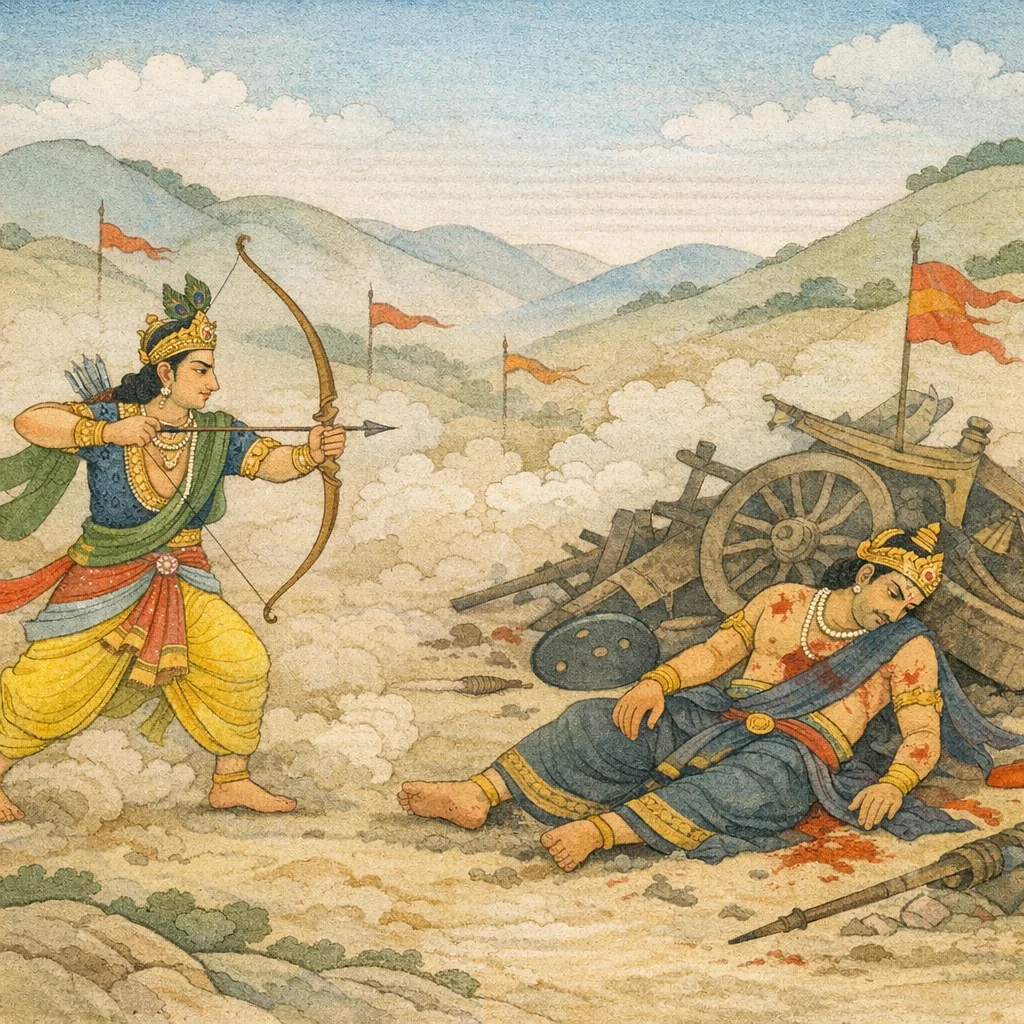
ततः सुनिशितैर्बाणैर्दशभि: शिनिपुड्रव: । जघान सूत॑ चाश्वांश्व ध्वजं च कृतवर्मण:,तत्पश्चात् शिनिप्रवर सात्यकिने अत्यन्त तीखे दस बाणोंके द्वारा कृतवर्माके ध्वज, सारथि और घोड़ोंको नष्ट कर दिया इति श्रीमहा भारते शल्यपर्वणि सात्यकिकृतवर्मयुद्धे एकविंशो 5ध्याय:
Then Sātyaki, foremost of the Śinis, with ten keen arrows struck down Kritavarman’s banner, and slew his charioteer and horses as well.
Verse 22
ततो राजन् महेष्वास: कृतवर्मा महारथ: । हताश्वसूतं सम्प्रेक्ष्य रथं हेमपरिष्कृतम्,राजन! महाधनुर्धर महारथी कृतवर्मा अपने सुवर्ण-भूषित रथको घोड़े और सारथिसे रहित देख महान् रोषसे भर गया। मान्यवर! फिर उसने शिनिप्रवर सात्यकिको मार डालनेकी इच्छासे एक शूल उठाकर उसे अपनी भुजाओंके सम्पूर्ण वेगसे चला दिया
Sañjaya said: Then, O King, Kritavarman—the great bowman, a mighty chariot-warrior—seeing his gold-adorned chariot bereft of horses and charioteer, was seized by fierce wrath. Intent on slaying Sātyaki, foremost of the Śinis, he lifted a spear and hurled it with the full force of his arms.
Verse 23
रोषेण महता<<विष्ट: शूलमुद्यम्य मारिष | चिक्षेप भुजवेगेन जिधघांसु: शिनिपुड़वम्,राजन! महाधनुर्धर महारथी कृतवर्मा अपने सुवर्ण-भूषित रथको घोड़े और सारथिसे रहित देख महान् रोषसे भर गया। मान्यवर! फिर उसने शिनिप्रवर सात्यकिको मार डालनेकी इच्छासे एक शूल उठाकर उसे अपनी भुजाओंके सम्पूर्ण वेगसे चला दिया
Sañjaya said: O revered one, overwhelmed by mighty wrath, he raised a spear and hurled it with the force of his arms, intent on killing the bull among the Śinis.
Verse 24
तच्छूलं सात्वतो हाजोौ निर्भिद्य निशितै: शरै: । चूर्णितं पातयामास मोहयन्निव माधवम्,परंतु सात्यकिने युद्धस्थलमें अपने पैने बाणोंद्वारा उस शूलको काटकर चकनाचूर कर दिया और कृतवर्माकों मोहमें डालते हुए-से उस चूर-चूर हुए शूलको पृथ्वीपर गिरा दिया
Sañjaya said: The Sātvata warrior pierced and shattered that spear with his keen arrows and, as though bewildering Mādhava himself, caused the splintered weapon to fall to the earth.
Verse 25
ततो5परेण भल््लेन हृद्येनं समताडयत् | स युद्धे युयुधानेन हताश्वो हतसारथि:
Then, with another sharp bhalla-arrow, he struck him in the region of the heart. In that battle, Yuyudhāna (Sātyaki) left him with his horses slain and his charioteer killed.
Verse 26
तस्मिन् सात्यकिना वीरे द्वैरथे विरथीकृते
Sañjaya said: When that heroic warrior, fighting from his chariot, was stripped of his chariot by Sātyaki and made a chariotless fighter, the balance of battle shifted—showing how, in war, prowess and strategy can in an instant take from a man the very means by which he upholds his station and honor on the field.
Verse 27
पुत्रस्य तव चात्यर्थ विषाद: समजायत
Sañjaya said: An overwhelming grief arose in you concerning your son—an intense sorrow that seized your heart amid these tidings of war.
Verse 28
हताश्व॑ं च समालक्ष्य हतसूतमरिंदम
Sañjaya said: Seeing that the chariot had lost its horses and that its charioteer had been slain, O subduer of foes, he recognized the battle’s desperate turn—showing that in war prowess is tested not only by strength, but by the collapse of support and order.
Verse 29
तमारोप्य रथोपस्थे मिषतां सर्वधन्विनाम्
Sañjaya said: Lifting him up and placing him upon the seat of the chariot—while all the bowmen looked on—(they proceeded), a stark image of the battlefield’s public scrutiny, where honor, duty, and the visible handling of the fallen become part of the war’s moral and psychological contest.
Verse 30
शैनेयेडधिछिते राजन् विरथे कृतवर्मणि
Sañjaya said: O King, when Śaineya (Sātyaki) was struck down and Kṛtavarman was left without his chariot, the battle’s balance shifted amid the chaos of the night-fighting, revealing how swiftly fortune turns in war.
Verse 31
तत् परे नान्वबुध्यन्त सैन्येन रजसा वृता:
Sañjaya said: But the others could not understand what was happening, for they were enveloped by the dust raised by the army. In the moral haze of battle, even clear signs and sound judgment are obscured by confusion and the press of violence.
Verse 32
दुर्योधनस्तु सम्प्रेक्ष्य भग्नं स्वबलमन्तिकात्
Sañjaya said: Seeing from nearby that his own army had been shattered, Duryodhana confronted the grim truth of the battle’s turning—where pride and ambition meet the consequences of adharma and misrule.
Verse 33
पाण्डूंश्न सर्वान् संक्रुद्धों धृष्टद्युम्नं च पार्षतम्,माननीय नरेश! उस समय क्रोधमें भरा हुआ आपका महाबली पुत्र दुर्धर्ष दुर्योधन सावधान हो बिना किसी घबराहटके समस्त पाण्डवों, द्रुपदपुत्र धृष्टद्युम्न, शिखण्डी, द्रौपदीके पाँचों पुत्रों, पांचालों, केकयों, सोमकों और सूंजयोंपर पैने बाणोंकी वर्षा करने लगा तथा निर्भय होकर युद्धभूमिमें डटा रहा
Sañjaya said: O venerable king, at that time your mighty son Duryodhana—hard to assail—was inflamed with anger. Remaining alert and unshaken, he showered sharp arrows upon all the Pāṇḍavas, upon Dhṛṣṭadyumna the son of Drupada, upon Śikhaṇḍin, upon the five sons of Draupadī, and upon the Pāñcālas, Kekayas, Somakas, and Sṛñjayas. Fearless, he held his ground on the battlefield.
Verse 34
शिखण्डिनं द्रौपदेयान् पठ्चालानां च ये गणा: । केकयान् सोमकांश्वैव सृज्जयांश्वैव मारिष,माननीय नरेश! उस समय क्रोधमें भरा हुआ आपका महाबली पुत्र दुर्धर्ष दुर्योधन सावधान हो बिना किसी घबराहटके समस्त पाण्डवों, द्रुपदपुत्र धृष्टद्युम्न, शिखण्डी, द्रौपदीके पाँचों पुत्रों, पांचालों, केकयों, सोमकों और सूंजयोंपर पैने बाणोंकी वर्षा करने लगा तथा निर्भय होकर युद्धभूमिमें डटा रहा
Sañjaya said: “(He assailed) Śikhaṇḍin, the sons of Draupadī, and the various companies of the Pāñcālas—along with the Kekayas, the Somakas, and the Sṛñjayas, O venerable one.”
Verse 35
असम्भ्रमं दुराधर्ष: शितैर्बाणैरवाकिरत् । अतिष्ठदाहवे यत्त: पुत्रस्तव महाबल:,माननीय नरेश! उस समय क्रोधमें भरा हुआ आपका महाबली पुत्र दुर्धर्ष दुर्योधन सावधान हो बिना किसी घबराहटके समस्त पाण्डवों, द्रुपदपुत्र धृष्टद्युम्न, शिखण्डी, द्रौपदीके पाँचों पुत्रों, पांचालों, केकयों, सोमकों और सूंजयोंपर पैने बाणोंकी वर्षा करने लगा तथा निर्भय होकर युद्धभूमिमें डटा रहा
Sañjaya said: Your mighty son—hard to assail—without agitation, showered the battlefield with sharp arrows. Fully intent on combat, he stood his ground in the fight, unshaken amid the clash of arms.
Verse 36
यथा यज्ञे महानन्निर्मन्त्रपूत: प्रकाशवान् | तथा दुर्योधनो राजा संग्रामे सर्वतो5भवत्,जैसे यज्ञमें मन्त्रोंद्वारा पवित्र हुए महान् अग्निदेव प्रकाशित होते हैं, उसी प्रकार संग्राममें राजा दुर्योधन सब ओरसे देदीप्यमान हो रहा था
Sañjaya said: “Just as, in a sacrifice, the great fire—purified by sacred mantras—shines forth in brilliance, so too did King Duryodhana in the battle blaze on every side.”
Verse 37
त॑ परे नाभ्यवर्तन्त मर्त्या मृत्युमिवाहवे । अथान्यं रथमास्थाय हार्दिक्य: समपद्यत,जैसे मरणधर्मा मनुष्य अपनी मृत्युका उल्लंघन नहीं कर सकते, उसी प्रकार युद्धभूमिमें शत्रुसैनिक राजा दुर्योधनका सामना न कर सके। इतनेहीमें कृतवर्मा दूसरे रथपर आरूढ़ होकर वहाँ आ पहुँचा
On the battlefield the foes did not dare close with him, just as mortal men cannot overstep their own death. Then Kṛtavarmā, son of Hārdikya, mounted another chariot and came to that place.
Verse 266
समपद्यत सर्वेषां सैन्यानां सुमहद् भयम् । उस द्वैरथ युद्धमें सात्यकिद्वारा वीर कृतवर्मके रथहीन हो जानेपर आपके सारे सैनिकोंके मनमें महान् भय समा गया
A very great fear seized the hearts of all the armies. In that chariot-duel, when Sātyaki caused the valiant Kṛtavarmā to become chariotless, your entire host was overwhelmed by dread.
Verse 273
हतसूते हताश्वे तु विरथे कृतवर्मणि । जब कृतवर्माके घोड़े और सारथि मारे गये तथा वह रथहीन हो गया, तब आपके पुत्र दुर्योधनके मनमें बड़ा खेद हुआ
When Kṛtavarman’s charioteer and horses had been slain and he was left without a chariot, your son Duryodhana was seized by deep regret.
Verse 286
अभ्यधावत् कृपो राजन् जिधघांसु: शिनिपुज्भवम् | शत्रुदमन नरेश! कृतवर्माके घोड़ों और सारथिको मारा गया देख कृपाचार्य सात्यकिको मार डालनेकी इच्छासे वहाँ दौड़े हुए आये
Sañjaya said: “O King, Kripa rushed forward, intent on killing the descendant of the Śinis. O ruler who subdues foes, seeing that Kṛtavarmā’s horses and charioteers had been slain, the preceptor Kṛpa ran there with the resolve to strike down Sātyaki.”
Verse 296
अपोवाह महाबाहुं तूर्णणायोधनादपि । फिर सम्पूर्ण धनुर्धरोंके देखते-देखते महाबाहु कृतवर्माको अपने रथपर बिठाकर वे उसे तुरंत ही युद्धस्थलसे दूर हटा ले गये
Sañjaya said: The mighty-armed warrior swiftly carried the mighty-armed Kṛtavarmā away from the battle itself. Then, before the very eyes of the fully armed bowmen, he seated Kṛtavarmā upon his own chariot and immediately withdrew him far from the field of combat—an act of protective duty amid the ruthless demands of war.
Verse 303
दुर्योधनबलं सर्व पुनरासीत् पराड्मुखम् । राजन! जब सात्यकि युद्धके लिये डटे रहे और कृतवर्मा रथहीन होकर भाग गया, तब दुर्योधनकी सारी सेना पुनः युद्धसे विमुख हो वहाँसे पलायन करने लगी
Sañjaya said: O King, when Sātyaki stood firm, resolved to fight, and Kṛtavarmā—bereft of his chariot—fled, then all of Duryodhana’s forces once again turned away from battle and began to retreat from that place. The scene underscores how courage and steadfastness can steady one side, while fear and loss of support can unravel an army’s resolve.
Verse 313
तावकाः: प्रद्रुता राजन् दुर्योधनमृते नृपम् । परंतु सेनाद्वारा उड़ायी हुई धूलसे आच्छादित होनेके कारण शत्रुओंके सैनिक कौरव- सेनाके भागनेकी बात न जान सके। राजन! राजा दुर्योधनके सिवा, आपके सभी योद्धा वहाँसे भाग गये
Sañjaya said: O King, your troops fled in rout—except for King Duryodhana. Yet, because the dust raised by the moving armies covered everything, the enemy’s soldiers could not discern that the Kaurava host was retreating. O King, apart from Duryodhana, all your warriors abandoned that place.
Verse 326
जवेनाभ्यपतत् तूर्ण सर्वाश्वैको न्न्यवारयत् । दुर्योधन अपनी सेनाको निकटसे भागती देख बड़े वेगसे शत्रुओंपर टूट पड़ा और उन सबको अकेले ही शीघ्रतापूर्वक रोकने लगा
Sañjaya said: Seeing his own army fleeing at close quarters, Duryodhana rushed forward with great speed against the enemy and, though alone, swiftly checked them all with his chariot and horses. The moment underscores the warrior-king’s resolve to halt panic and restore order, even at personal risk, in the midst of a collapsing battle-line.
Verse 2536
कृतवर्मा कृतस्तेन धरणीमन्वपद्यत । इसके बाद उन्होंने कृतवर्माकी छातीमें एक भल्लद्वारा गहरी चोट पहुँचायी। तब वह युयुधानद्वारा घोड़ों और सारथिसे रहित किया हुआ कृतवर्मा रथ छोड़कर युद्धस्थलमें पृथ्वीपर खड़ा हो गया
Sañjaya said: Struck down by him, Kṛtavarmā fell upon the earth. Thereafter, he was dealt a deep wound in the chest by a sharp arrow; and, deprived by Yuyudhāna of his horses and charioteer, Kṛtavarmā abandoned his chariot and stood on the battlefield upon the ground—an image of how, in war, prowess is tested not only by weapons but by the loss of support and position.
Frequently Asked Questions
The chapter juxtaposes protective duty and aggressive duty: leaders must preserve key persons (e.g., Sahadeva extracting the king) while sustaining strategic pressure through retaliation and continued engagement. The tension lies in deciding when withdrawal is prudent stewardship versus a lapse in kṣātra obligation.
Effectiveness in crisis depends on maintaining agency under degraded information. The text underscores how tempo, morale signaling, and weapon-disablement can reshape outcomes even when visibility and coordination fail.
No explicit phalaśruti is stated in the provided passage. The meta-commentary operates indirectly through Saṃjaya’s evaluative comparisons (e.g., Rudra-like force) and through the analytic detailing of cause-and-effect (arrows and dust producing disorientation, then re-emergence of ordered duels).