Adhyaya 67
पुनर्द्यूत-समाह्वानम् (Renewed Summons to the Dice-Game and Exile Wager)
Upa-parva: Dyūta (Akṣa) Anuvṛtti — Renewed Dice-Wager and Exile-Stipulation Episode
Vaiśaṃpāyana reports that Prātikāmī approaches Yudhiṣṭhira with Dhṛtarāṣṭra’s instruction: the assembly is prepared and the dice are set; the king summons him to play again. Yudhiṣṭhira articulates a deterministic register—beings meet auspicious and inauspicious outcomes by ordinance (dhātu-niyoga)—and claims inability to refuse an elder’s summons to dice, even knowing it is ruinous. He returns with his brothers, distressing allies and well-wishers. The text emphasizes compulsion by fate and social pressure, as the warriors sit again for play “for the destruction of all,” pressed by daiva. Śakuni proposes a single, comprehensive stake: whichever side loses will undertake twelve years of forest dwelling in skins, followed by a thirteenth year living incognito; discovery during the thirteenth triggers a renewed twelve-year forest term. Restoration of sovereignty is promised upon successful completion. Assembly members criticize the failure of kin to restrain Yudhiṣṭhira, but he proceeds from shame and commitment to dharma-as-summons. The chapter closes with acceptance of the wager and Śakuni’s immediate pronouncement of Yudhiṣṭhira’s defeat, establishing exile as the outcome.
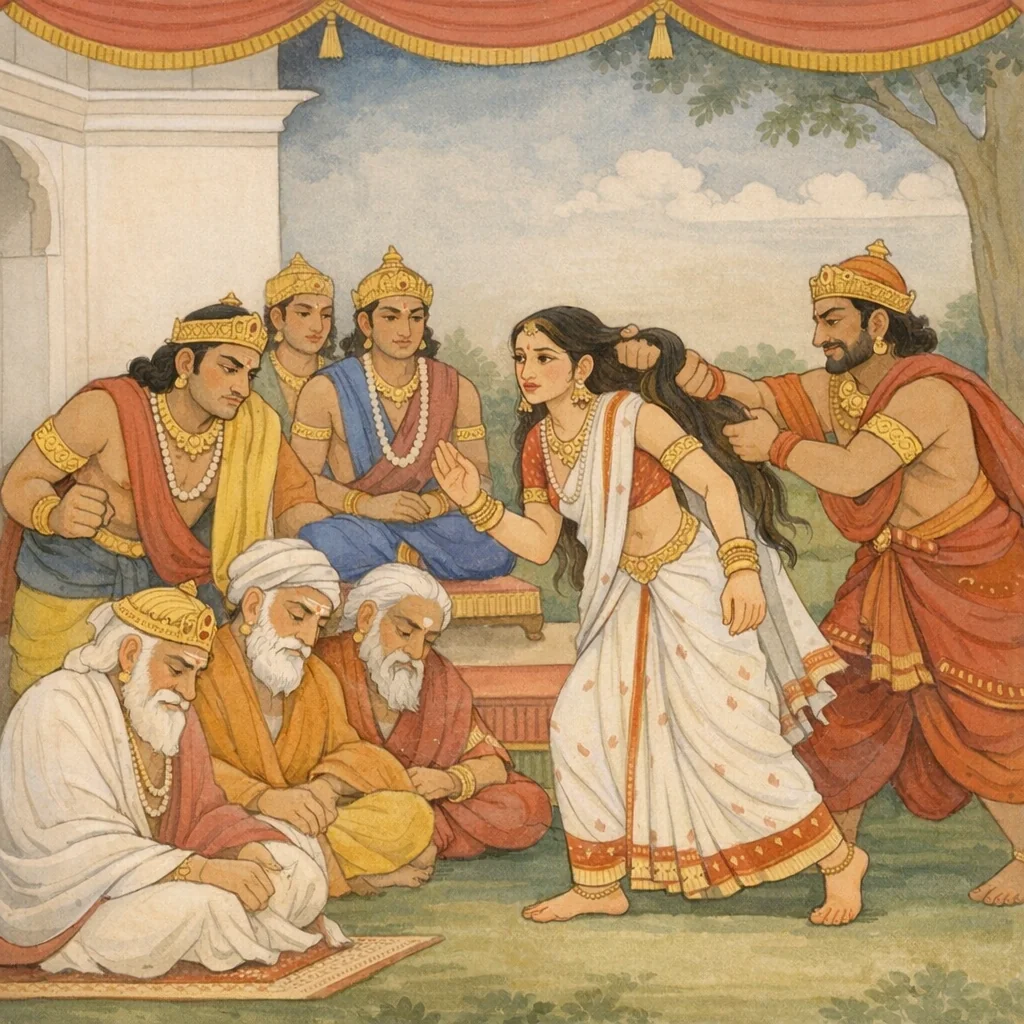
Chapter Arc: द्यूत-सभा में विजय के मद से दुर्योधन प्रातिकामी को आदेश देता है—‘द्रौपदी को यहाँ लाओ; पाण्डवों से भय नहीं।’ यह आदेश ही सभा को धर्म-संकट के द्वार पर ला खड़ा करता है। → प्रातिकामी द्रौपदी के पास जाकर राजाज्ञा सुनाता है। द्रौपदी प्रतिप्रश्न करती है—पहले यह निश्चित हो कि युधिष्ठिर ने स्वयं को पहले हारा या मुझे; पराधीन होकर क्या वह पत्नी को दाँव पर लगा सकता है? दूत यह प्रश्न सभा में सुनाता है; सभासद अधोमुख हो जाते हैं, कोई स्पष्ट उत्तर नहीं देता। दुर्योधन के पक्ष की हठ और सभा की मौन-भीरुता तनाव को तीव्र करती है। → द्रौपदी के न आने पर दुःशासन बलपूर्वक उसके केश पकड़कर—जो राजसूय के अवभृथ-स्नान के मंत्रपूत जल से अभिषिक्त थे—उसे सभा में घसीट लाता है। रजस्वला, अस्त-व्यस्त वस्त्रों में अपमानित द्रौपदी को देखकर भीम का क्रोध उफन पड़ता है; भीष्म धर्म के ‘सूक्ष्म’ होने का हवाला देकर निर्णय देने में असमर्थता प्रकट करते हैं। → अध्याय का निष्कर्ष किसी न्याय-निर्णय में नहीं, बल्कि ‘अनिर्णय’ में है—द्रौपदी का प्रश्न सभा के सामने खड़ा रह जाता है, और धर्म के स्तम्भ माने जाने वाले भीष्म जैसे वृद्ध भी स्पष्ट उत्तर नहीं दे पाते। अपमान की घटना घट चुकी है; प्रतिकार की आग भीतर-भीतर सुलगती है। → सभा का मौन और भीम का उग्र संकल्प भविष्य के भयानक प्रतिशोध की भूमिका रचते हैं—क्या द्रौपदी के प्रश्न का उत्तर मिलेगा, या अधर्म की यह विजय आगे और गहरी होगी?
Shlokas
Verse 1
अफ्-४-क+ सप्तषष्टितमो< ध्याय: प्रातिकामीके बुलानेसे न आनेपर दुःशासनका सभामें द्रोपदीको केश पकड़कर घसीटकर लाना एवं सभासदोंसे द्रौपदीका प्रश्न वैशम्पायन उवाच धिगस्तु क्षत्तारमिति ब्रुवाणो दर्पेण मत्तो धृतराष्ट्रस्य पुत्र: । अवैक्षत प्रातिकामी सभाया- मुवाच चैनं परमार्यमध्ये,वैशम्पायनजी कहते हैं--जनमेजय! धृतराष्ट्रपुत्र दुर्योधन गर्वसे उन्मत्त हो रहा था। उसने “विदुरको धिक्कार है” ऐसा कहकर प्रातिकामीकी ओर देखा और सभामें बैठे हुए श्रेष्ठ पुरुषोंक बीच उससे कहा
Vaiśampāyana said: “Intoxicated with pride, the son of Dhṛtarāṣṭra, uttering ‘Shame upon the chamberlain (Vidura)!’, looked toward Prātikāmin and, in the assembly amid the foremost of men, addressed him.”
Verse 2
दुर्योधन उवाच प्रातिकामिन् द्रौपदीमानयस्व न ते भयं विद्यते पाण्डवेभ्य: | क्षत्ता हायं विवदत्येव भीतो न चास्माकं॑ वृद्धिकाम: सदैव,दुर्योधन बोला--प्रातिकामिन्! तुम द्रौपदीको यहाँ ले आओ। तुम्हें पाण्डवोंसे कोई भय नहीं है। ये विदुर तो डरपोक हैं, अतः सदा ऐसी ही बातें कहा करते हैं। ये कभी हमलोगोंकी वृद्धि नहीं चाहते
Duryodhana said: “Prātikāmin, bring Draupadī here. You have nothing to fear from the Pāṇḍavas. This chamberlain Vidura argues only because he is afraid, and he never truly wishes for our prosperity.”
Verse 3
वैशग्पायन उवाच एवमुक्त: प्रातिकामी स सूत: प्रायाच्छीघ्रं राजवचो निशम्य । प्रविश्य च श्वेव हि सिंहगोएछ्ठं समासदन्महिषीं पाण्डवानाम्,वैशम्पायनजी कहते हैं--जनमेजय! दुर्योधनके ऐसा कहनेपर राजाकी आज्ञा शिरोधार्य करके वह सूत प्रातिकामी शीघ्र चला गया एवं जैसे कुत्ता सिंहकी माँदमें घुसे, उसी प्रकार उस राजभवनमें प्रवेश करके वह पाण्डवोंकी महारानीके पास गया
Vaiśampāyana said: Thus addressed, Prātikāmī—the charioteer-messenger—on hearing the king’s command, set out at once. Entering the royal residence like a dog slipping into a lion’s den, he approached the chief queen of the Pāṇḍavas.
Verse 4
प्रातिकाम्युवाच युधिष्ठिरो द्यूतमदेन मत्तो दुर्योधनो द्रौपदि त्वामजैषीत् । सा त्वं प्रपद्यस्व धृतराष्ट्रस्य वेश्म नयामि त्वां कर्मणे याज्ञसेनि,प्रातिकामी बोला--ट्रपदकुमारी! धर्मराज युधिष्ठिर जूएके मदसे उन्मत्त हो गये थे। उन्होंने सर्वस्व हारकर आपको दाँवपर लगा दिया। तब दुर्योधनने आपको जीत लिया। याज्ञसेनी! अब आप धुृतराष्ट्रके महलमें पधारें। मैं आपको वहाँ दासीका काम करवानेके लिये ले चलता हूँ
Prātikāmin said: “Draupadī, Yudhiṣṭhira, intoxicated by the frenzy of gambling, staked you after losing everything. Duryodhana has now won you. Therefore submit yourself to Dhṛtarāṣṭra’s palace; I am taking you there to be put to service, O Yājñasenī.”
Verse 5
द्रौपहयुवाच कथं त्वेवं वदसि प्रातिकामिन् को हि दीव्येद् भार्यया राजपुत्र: । मूढो राजा द्यूतमदेन मत्तो हाभून्नान्यत् कैतवमस्य किंचित्,द्रौोपदीने कहा--प्रातिकामिन! तू ऐसी बात कैसे कहता है? कौन राजकुमार अपनी पत्नीको दाँवपर रखकर जूआ खेलेगा? क्या राजा युधिष्ठिर जूएके नशेमें इतने पागल हो गये कि उनके पास जुआरियोंको देनेके लिये दूसरा कोई धन नहीं रह गया?
Draupadī said: “How can you speak like this, Prātikāmin? What prince would gamble, staking his own wife? Has King Yudhiṣṭhira become so deluded—intoxicated by the madness of dice—that he had nothing else left to offer the gamblers? Surely this is nothing but deceit.”
Verse 6
प्रातिकाग्युवाच यदा नाभूत् कैतवमन्यदस्य तदादेवीत् पाण्डवोडजातशत्रु: । न्यस्ताः पूर्व भ्रातरस्तेन राज्ञा स्वयं चात्मा त्वमथो राजपुत्रि,प्रातिकामी बोला--राजकुमारी! जब जुआरियोंको देनेके लिये दूसरा कोई धन नहीं रह गया, तब अजातशत्रु पाण्डुनन्दन युधिष्ठिर इस प्रकार जूआ खेलने लगे। पहले तो उन्होंने अपने भाइयोंको दाँवपर लगाया, उसके बाद अपनेको और अन्तमें आपको भी दाँवपर रख दिया
Prātikāmin said: “When he had nothing else left with which to continue the deceitful game, Ajātaśatru, the Pāṇḍava king, proceeded to stake. First, that king wagered his brothers; then he wagered himself; and finally, O princess, he staked you as well.”
Verse 7
द्रौपहुुवाच गच्छ त्वं कितवं गत्वा सभायां पृच्छ सूतज । कि नु पूर्व पराजैषीरात्मानमथवा नु माम्,द्रौोपदीने कहा--सूतपुत्र! तुम सभामें उन जुआरी महाराजके पास जाओ और जाकर यह पूछो कि “आप पहले अपनेको हारे थे या मुझे?”
Draupadī said: “Go to that gambler; enter the assembly hall and ask the charioteer’s son this: ‘What did you lose first—your own self, or me?’”
Verse 8
एतज्ज्ञात्वा समागच्छ ततो मां नय सूतज । ज्ञात्वा चिकीर्षितमहं राज्ञो यास्यामि दुःखिता,सूतनन्दन! यह जानकर आओ। तब मुझे ले चलो। राजा क्या करना चाहते हैं? यह जानकर ही मैं दु:खिनी अबला उस सभामें चलूँगी
“When you have learned this, come back; then lead me there, O son of the charioteer. Only after knowing what the king intends will I—though afflicted and distressed—go to that assembly.”
Verse 9
वैशम्पायन उवाच सभां गत्वा स चोवाच द्रौपद्यास्तद् वचस्तदा । युधिष्ठिरं नरेन्द्राणां मध्ये स्थितमिदं वच:,वैशम्पायनजी कहते हैं--जनमेजय! प्रातिकामीने सभामें जाकर राजाओंके बीचमें बैठे हुए युधिष्ठिरसे द्रौधदीकी वह बात कह सुनायी। उसने कहा--'द्रौपदी आपसे पूछना चाहती है कि किस-किस वस्तुके स्वामी रहते हुए आप मुझे हारे हैं? आप पहले अपनेको हारे हैं या मुझे?”
Vaiśampāyana said: Then he went into the royal assembly and, standing before Yudhiṣṭhira seated amid the kings, conveyed Draupadī’s message: “Draupadī asks you—while being lord of what did you lose me? Did you first lose yourself, or did you lose me first?”
Verse 10
कस्येशो न: पराजैषीरिति त्वामाह द्रौपदी । कि नु पूर्व पराजैषीरात्मानमथवापि माम्,वैशम्पायनजी कहते हैं--जनमेजय! प्रातिकामीने सभामें जाकर राजाओंके बीचमें बैठे हुए युधिष्ठिरसे द्रौधदीकी वह बात कह सुनायी। उसने कहा--'द्रौपदी आपसे पूछना चाहती है कि किस-किस वस्तुके स्वामी रहते हुए आप मुझे हारे हैं? आप पहले अपनेको हारे हैं या मुझे?”
Vaiśampāyana said: Draupadī asks you this: “While being lord of what did you lose me? Tell me—did you first lose yourself, or did you also lose me?”
Verse 11
युधिष्ठिरस्तु निश्चेता गतसत्त्व इवाभवत् | नतं सूतं प्रत्युवाच वचन साध्वसाधु वा,राजन! उस समय युधिष्ठिर अचेत और निष्प्राण-से हो रहे थे, अतः उन्होंने प्रातिकामीको भला-बुरा कुछ भी उत्तर नहीं दिया
Vaiśampāyana said: Yudhiṣṭhira, however, was utterly bewildered, as if his very vitality had departed. To the charioteer who stood with head bowed, he gave no reply at all—neither a gracious word nor a harsh one.
Verse 12
दुर्योधन उवाच इहैवागत्य पाज्चाली प्रश्नमेनं प्रभाषताम् | इहैव सर्वे शृण्वन्तु तस्याश्वैतस्थ यद् वच:
Duryodhana said: “Let Pāñcālī come here and answer this question. Let everyone here listen to whatever words she speaks on this very matter.”
Verse 13
तब दुर्योधन बोला--सूतपुत्र! जाकर कह दो, द्रौपदी यहीं आकर अपने इस प्रश्नको पूछे। यहीं सब सभासद् उसके प्रश्न और युधिष्ठिरके उत्तरको सुनें ।। वैशम्पायन उवाच स गत्वा राजभवन दुर्योधनवशानुग: । उवाच द्रौपदी सूत: प्रातिकामी व्यथान्वित:,वैशम्पायनजी कहते हैं--जनमेजय! प्रातिकामी दुर्योधनके वशमें था, इसलिये वह राजभवनमें जाकर द्रौपदीसे व्यथित होकर बोला
Vaiśampāyana said: Acting under Duryodhana’s control, Prātikāmī the sūta went to the royal residence. Distressed, he addressed Draupadī—conveying the command that she should come into the assembly and raise her question there, so that all the courtiers might hear both her challenge and Yudhiṣṭhira’s reply.
Verse 14
प्रातिकाम्युवाच सभ्यास्त्वमी राजपुत्र्याह्दयन्ति मन्ये प्राप्त: संक्षय: कौरवाणाम् । न वै समृद्धि पालयते लघीयान् यस्त्वां सभां नेष्यति राजपुत्रि,प्रातिकामीने कहा--राजकुमारी! वे (दुर्योधन आदि) सभासद् तुम्हें सभामें ही बुला रहे हैं। मुझे तो ऐसा जान पड़ता है, अब कौरवोंके विनाशका समय आ गया है। जो (दुर्योधन) इतना गिर गया है कि तुम्हें सभामें बुलानेका साहस करता है, वह कभी अपने धन-वैभवकी रक्षा नहीं कर सकता
Prātikāmin said: “Princess, the men of the assembly are calling for you to be brought into the hall itself. To me it seems the hour of ruin has now arrived for the Kauravas. For one who has sunk so low as to drag you into the royal court, O princess, can never preserve his prosperity and splendor.”
Verse 15
द्रौपहुुवाच एवं नूनं व्यदधात् संविधाता स्पर्शावुभौ स्पृशतो वृद्धबालौ । धर्म त्वेक॑ परम॑ प्राह लोके स न: शमं धास्यति गोप्यमान:,द्रौपदीने कहा--सूतपुत्र! निश्चय ही विधाताका ऐसा ही विधान है। बालक और वृद्ध सबको सुख-दु:ख प्राप्त होते हैं। जगतमें एकमात्र धर्मको ही श्रेष्ठ बतलाया जाता है। यदि हम उसका पालन करें तो वह हमारा कल्याण करेगा
Draupadī said: “Surely the Ordainer has arranged it so: both kinds of touch—pleasant and painful—come to all, the old and the young alike. Yet in this world it is Dharma alone that is declared supreme. If we preserve it and live by it, it will bring us peace and well-being.”
Verse 16
सो<यं धर्मो मात्यगात् कौरवान् वै सभ्यान् गत्वा पृच्छ धर्म्य वचो मे । ते मां ब्रूयुर्निश्चितं तत् करिष्ये धर्मात्मानो नीतिमन्तो वरिष्ठा:,मेरे इस धर्मका उल्लंघन न हो, इसलिये तुम सभामें बैठे हुए कुरुवंशियोंके पास जाकर मेरी यह धर्मानुकूल बात पूछो--“इस समय मुझे क्या करना चाहिये?” वे धर्मात्मा, नीतिज्ञ और श्रेष्ठ महापुरुष मुझे जैसी आज्ञा देंगे, मैं निश्चय ही वैसा करूँगी
Draupadī said: “So that my conduct may not fall away from dharma, go to the Kauravas who are seated in the assembly and ask them this righteous question of mine: ‘What should I do at this moment?’ Whatever those foremost men—upright in dharma and skilled in policy—decide and tell me, I shall certainly do.”
Verse 17
श्रुत्वा सूतस्तद्वचो याज्ञसेन्या: सभां गत्वा प्राह वाक््यं तदानीम् | अधोमुखास्ते न च किंचिदूचु- निर्बिन्ध॑ त॑ धार्तराष्ट्रस्य बुद्ध्वा,द्रौपदीका यह कथन सुनकर सूत प्रातिकामीने पुनः सभामें जाकर द्रौपदीके प्रश्नको दुहराया; किंतु उस समय दुर्योधनके उस दुराग्रहको जानकर सभी नीचे मुँह किये बैठे रहे, कोई कुछ भी नहीं बोला
Vaiśampāyana said: Hearing the words of Yājñasenī (Draupadī), the messenger Prātikāmin returned to the royal assembly and repeated her question. But, recognizing the obstinate resolve of the son of Dhṛtarāṣṭra (Duryodhana), all sat with faces lowered; not one of them spoke a word.
Verse 18
वैशम्पायन उवाच युधिष्ठिरस्तु तच्छुत्वा दुर्योधनचिकीर्षितम् । द्रौपद्या: सम्मतं दूतं प्राहिणोद् भरतर्षभ,वैशम्पायनजी कहते हैं--जनमेजय! दुर्योधन क्या करना चाहता है, यह सुनकर युधिष्ठिरने द्रौपदीके पास एक ऐसा दूत भेजा, जिसे वह पहचानती थी और उसीके द्वारा यह संदेश कहलाया, 'पांचालराजकुमारी! यद्यपि तुम रजस्वला और नीवीको नीचे रखकर एक ही वस्त्र धारण कर रही हो, तो भी उसी दशामें रोती हुई सभामें आकर अपने श्वशुरके सामने खड़ी हो जाओ
Vaiśampāyana said: O bull among the Bharatas, Yudhiṣṭhira, having heard what Duryodhana intended, dispatched to Draupadī a messenger acceptable to her—one she would recognize—so that through him the message might be conveyed.
Verse 19
एकवस्त्रा त्वधोनीवी रोदमाना रजस्वला । सभामागम्य पाज्चालि श्वशुरस्याग्रतो भव,वैशम्पायनजी कहते हैं--जनमेजय! दुर्योधन क्या करना चाहता है, यह सुनकर युधिष्ठिरने द्रौपदीके पास एक ऐसा दूत भेजा, जिसे वह पहचानती थी और उसीके द्वारा यह संदेश कहलाया, 'पांचालराजकुमारी! यद्यपि तुम रजस्वला और नीवीको नीचे रखकर एक ही वस्त्र धारण कर रही हो, तो भी उसी दशामें रोती हुई सभामें आकर अपने श्वशुरके सामने खड़ी हो जाओ
Vaiśampāyana said: “Pāñcālī—though you wear but a single garment, your lower cloth loosened, and though you are in your menstrual time—come weeping into the assembly hall and stand before your father-in-law.”
Verse 20
अथ त्वामागतां दृष्टवा राजपुत्रीं सभां तदा । सभ्या: सर्वे विनिन्देरन् मनोभिर्धुतराष्ट्रजम्,“तुम-जैसी राजकुमारीको सभामें आयी देख सभी सभासद् मन-ही-मन इस दुर्योधनकी निन्दा करेंगे”
Then, seeing you—the princess—arrive in the royal assembly at that time, all the members of the court would inwardly condemn the son of Dhṛtarāṣṭra (Duryodhana).
Verse 21
स गत्वा त्वरितं दूत: कृष्णाया भवन नृप । न्यवेदयन्मतं धीमान् धर्मराजस्य निश्चितम्,राजन! वह बुद्धिमान् दूत तुरंत द्रौपदीके भवनमें गया। वहाँ उसने धर्मराजका निश्चित मत उसे बता दिया
Vaiśampāyana said: O king, the messenger went swiftly to Kṛṣṇā (Draupadī)’s residence and, being prudent, reported to her the firm and settled decision of Dharmarāja (Yudhiṣṭhira).
Verse 22
पाण्डवाश्व महात्मानो दीना दुःखसमन्विता: । सत्येनातिपरीताड्डा नोदीक्षन्ते सम किंचन,इधर महात्मा पाण्डव सत्यके बन्धनसे बँधकर अत्यन्त दीन और दुःखमग्न हो गये। उन्हें कुछ भी सूझ नहीं पड़ता था
Vaiśampāyana said: The high-souled Pāṇḍavas, tightly bound by the fetters of truth and crushed by harsh compulsion, sank into utter dejection and sorrow. In that state they could discern no course of action and no remedy.
Verse 23
ततस्त्वेषां मुखमालोक्य राजा दुर्योधन: सूतमुवाच ह्ृष्ट: । इहैवैतामानय प्रातिकामिन् प्रत्यक्षमस्या: कुरवो ब्रुवन्तु,उनके दीन मुँहकी ओर देखकर राजा दुर्योधन अत्यन्त प्रसन्न हो सूतसे बोला --'प्रातिकामिन्! तुम द्रौपदीको यहीं ले आओ। उसके सामने ही धर्मात्मा कौरव उसके प्रश्नोंका उत्तर देंगे”
Then King Duryodhana, seeing their downcast faces, spoke with delight to the charioteer: “Prātikāmin, bring her here at once. Let the Kuru elders answer her questions directly, in her very presence.”
Verse 24
ततः: सूतस्तस्य वशानुगामी भीतश्च कोपाद् द्रपदात्मजाया: । विहाय मान पुनरेव सभ्या- नुवाच कृष्णां किमहं ब्रवीमि
Vaiśampāyana said: Then the sūta, compelled to act under his master’s control and frightened by the wrath of Draupadī, set aside his pride and addressed the assembled courtiers again, saying to Kṛṣṇā (Draupadī), “What am I to say?”
Verse 25
तदनन्तर दुर्योधनके वशमें रहनेवाले प्रातिकामीने द्रौपदीके क्रोधसे डरते हुए अपने मान-सम्मानकी परवा न करके पुनः सभासदोंसे पूछा-- मैं द्रौपदीको क्या उत्तर दूँ?” ।। दुर्योधन उवाच दुःशासनैष मम सूतपुत्रो वृकोदरादुद्धिजतेडल्पचेता: । स्वयं प्रगृह्मानय याज्ञसेनीं कि ते करिष्यन्त्यवशा: सपत्ना:,दुर्योधन बोला--दुःशासन! यह मेरा सेवक सूतपुत्र प्रातिकामी बड़ा मूर्ख है। इसे भीमसेनका डर लगा हुआ है। तुम स्वयं द्रौपदीको यहाँ पकड़ लाओ। हमारे शत्रु पाण्डव इस समय हमलोगोंके वशगमें हैं। वे तुम्हारा क्या कर लेंगे
Duryodhana said: “Duḥśāsana, this charioteer’s son—my attendant—is small-minded and frightened of Vṛkodara (Bhīma). You yourself seize Yājñasenī (Draupadī) and bring her here. What can our rivals, the Pāṇḍavas, do to you now, when they are powerless and under our control?”
Verse 26
ततः समुत्थाय स राजपुत्र: श्र॒त्वा भ्रातु: शासन रक्तदृष्टि: । प्रविश्य तद् वेश्म महारथाना- मित्यब्रवीद् द्रौपदी राजपुत्रीम्,भाईका यह आदेश सुनकर राजकुमार दुःशासन उठ खड़ा हुआ और लाल आँख किये वहाँसे चल दिया। महारथी पाण्डवोंके महलमें प्रवेश करके उसने राजकुमारी द्रौपदीसे इस प्रकार कहा--
Then the prince Duḥśāsana rose at once on hearing his brother’s command; his eyes reddened with anger, he went from there. Entering the residence of the great chariot-warriors—the Pāṇḍavas—he addressed Princess Draupadī in these words.
Verse 27
एह्रोहि पाञज्चालि जितासि कृष्णे दुर्योधनं पश्य विमुक्तलज्जा | कुरून् भजस्वायतपतन्रनेत्रे धर्मेण लब्धासि सभां परैहि,'पांचालि! आओ, आओ, तुम जूएमें जीती जा चुकी हो। कृष्णे! अब लज्जा छोड़कर दुर्योधनकी ओर देखो। कमलके समान विशाल नेत्रोंवाली द्रौपदी! हमने धर्मके अनुसार तुम्हें प्राप्त किया है, अतः तुम कौरवोंकी सेवा करो। अभी राजसभामें चली चलो”
Duryodhana said: “Come here, Pāñcālī—come. You have been won in the game of dice, O Kṛṣṇā (Draupadī). Cast off your shame and look upon Duryodhana. O lotus-petaled, wide-eyed one, we have obtained you according to (what we claim as) dharma; therefore serve the Kurus. Come into the royal assembly.”
Verse 28
ततः समुत्थाय सुदुर्मना: सा विवर्णमामृज्य मुखं करेण । आर्ता प्रदुद्राव यतः स्त्रियस्ता वृद्धस्य राज्ञ: कुरुपुड्रवस्थ,यह सुनकर द्रौपदीका हृदय अत्यन्त दु:खित होने लगा। उसने अपने मलिन मुखको हाथसे पोंछा। फिर उठकर वह आर्त अबला उसी ओर भागी, जहाँ बूढ़े महाराज धृतराष्ट्रकी स्त्रियाँ बैठी हुई थीं
Then she rose, her mind overwhelmed with grief. Wiping her pale, discolored face with her hand, the distressed woman ran toward the place where the wives of the aged king—Dhṛtarāṣṭra, the foremost of the Kurus—were seated.
Verse 29
ततो जवेनाभिससार रोषाद् दुःशासनस्तामभिगर्जमान: । दीर्घेषु नीलेष्वथ चोर्मिमत्सु जग्राह केशेषु नरेन्द्रपत्नीम्
Then, in a surge of speed and anger, Duḥśāsana rushed at her, roaring loudly. Seizing the king’s wife by her long, dark, wavy hair, he laid violent hands upon Draupadī.
Verse 30
तब दुःशासन भी रोषसे गर्जता हुआ बड़े वेगसे उसके पीछे दौड़ा। उसने महाराज युधिष्ठिरकी पत्नी द्रौपदीके लम्बे, नीले और लहराते हुए केशोंको पकड़ लिया ।। ये राजसूयावभूथे जलेन महाक्रतौ मन्त्रपूतेन सिक्ता: । ते पाण्डवानां परिभूय वीर्य बलात् प्रमृष्टा धृतराष्ट्रजेन
Then Duḥśāsana, roaring in wrath, rushed after her at great speed and seized Draupadī—King Yudhiṣṭhira’s wife—by her long, dark, flowing hair. Those very locks that had been sprinkled with mantra-purified water at the grand sacrifice’s Rājasūya avabhṛtha were now, after the Pāṇḍavas’ prowess had been insulted, forcibly defiled by Dhṛtarāṣṭra’s son.
Verse 31
जो केश राजसूय महायज्ञके अवभृथस्नानमें मन्त्रपूत जलसे सींचे गये थे, उन्हींको दुःशासनने पाण्डवोंके पराक्रमकी अवहेलना करके बलपूर्वक पकड़ लिया ।। स तां पराकृष्य सभासमीप- मानीय कृष्णामतिदीर्घकेशीम् । दुःशासनो नाथवतीमना थव- च्चकर्ष वायु: कदलीमिवार्ताम्
Those locks that had been sprinkled with mantra-purified water at the avabhṛtha bath of the great Rājasūya sacrifice—those very locks Duḥśāsana seized by force, scorning the Pāṇḍavas’ prowess. Dragging her, he brought Kṛṣṇā (Draupadī), of exceedingly long hair, up near the assembly; Duḥśāsana hauled her—though she had a lord to protect her—like the wind dragging a stricken banana plant.
Verse 32
लंबे-लंबे केशोंवाली वह द्रौपदी यद्यपि सनाथा थी, तो भी दुःशासन उस बेचारी आर्त अबलाको अनाथकी भाँति घसीटता हुआ सभाके समीप ले आया और जैसे वायु केलेके वृक्षको झकझोरकर झुका देता है, उसी प्रकार वह द्रौपदीको बलपूर्वक खींचने लगा ।। सा कृष्यमाणा नमिताड़्यष्टि: शनैरुवाचाथ रजस्वलास्मि । एकं च वासो मम मन्दबुद्धे सभां नेतुं नाहसि मामनार्य,दुःशासनके खींचनेसे द्रौपदीका शरीर झुक गया। उसने धीरेसे कहा--'ओ मन्दबुद्धि दुष्टात्मा दुःशासन! मैं रजस्वला हूँ तथा मेरे शरीरपर एक ही वस्त्र है। इस दशामें मुझे सभामें ले जाना अनुचित है”
As she was being dragged, her slender body bent low. Then Draupadī spoke softly: “I am in my monthly course, and I have only a single garment upon me. O dull-witted one—O ignoble man—you have no right to take me into the assembly.”
Verse 33
ततोअब्रवीत् तां प्रसभं निगृहा केशेषु कृष्णेषु तदा स कृष्णाम् | कृष्णं च जिष्णुं च हरिं नरं च त्राणाय विक्रोशति याज्ञसेनी,यह सुनकर दुःशासन उसके काले-काले केशोंको और जोरसे पकड़कर कुछ बकने लगा; इधर यज्ञसेनकुमारी कृष्णाने अपनी रक्षाके लिये सर्वपापहारी, सर्वविजयी, नरस्वरूप भगवान् श्रीकृष्णको पुकारने लगी
Then he, seizing her violently by her dark hair, spoke to Draupadī with force. In that moment Yājñasenī cried out for protection—calling upon Kṛṣṇa, upon Jishṇu (Arjuna), upon Hari, and upon Nara—invoking the powers of righteousness and divine guardianship against the outrage being committed in the assembly.
Verse 34
दुशासन उवाच रजस्वला वा भव याज्ञसेनि एकाम्बरा वाप्यथवा विवस्त्रा । द्यूते जिता चासि कृतासि दासी दासीषु वासश्न॒ यथोपजोषम्,दुःशासन बोला--द्रौपदी! तू रजस्वला, एकवस्त्रा अथवा नंगी ही क्यों न हो, हमने तुझे जूएमें जीता है; अतः तू हमारी दासी हो चुकी है, इसलिये अब तुझे हमारी इच्छाके अनुसार दासियोंमें रहना पड़ेगा
Duḥśāsana said: “Yājñasenī, whether you are in your monthly course, clothed in a single garment, or even unclothed—you have been won in the game of dice. Therefore you have become a slave; now you must dwell among the slave-women as I please.”
Verse 35
वैशम्पायन उवाच प्रकीर्णकेशी पतितार्धवस्त्रा दुःशासनेन व्यवधूयमाना । ह्लवीमत्यमर्षेण च दहमाना शनैरिदं वाक्यमुवाच कृष्णा,वैशम्पायनजी कहते हैं-जनमेजय! उस समय द्रौपदीके केश बिखर गये थे। दुःशासनके झकझोरनेसे उसका आधा वस्त्र भी खिसककर गिर गया था। वह लाजसे गड़ी जाती थी और भीतर-ही-भीतर क्रोधसे दग्ध हो रही थी। उसी दशामें वह धीरेसे इस प्रकार बोली
Vaiśampāyana said: O Janamejaya, at that time Draupadī’s hair was dishevelled, and her garment, shaken and dragged by Duḥśāsana, had slipped half away. Overwhelmed by shame and inwardly burning with fierce indignation, she spoke these words softly.
Verse 36
द्रौपहुुवाच इमे सभायामुपनीतशास्त्रा: क्रियावन्त: सर्व एवेन्द्रकल्पा: । गुरुस्थाना गुरवश्वैव सर्वे तेषामग्रे नोत्सहे स्थातुमेवम्,द्रौपदीने कहा--अरे दुष्ट! ये सभामें शास्त्रोंके विद्वान, कर्मठ और इन्द्रके समान तेजस्वी मेरे पिताके समान सभी गुरुजन बैठे हुए हैं। मैं उनके सामने इस रूपमें खड़ी होना नहीं चाहती
Draupadī said: “Here in this royal assembly are men trained in the scriptures—capable in action, all of them radiant like Indra. They are elders worthy of a teacher’s seat, all of them venerable. Before such persons, I do not have the heart to stand in this condition.”
Verse 37
नृशंसकर्म स्त्वमनार्यवृत्त मा मा विवस्त्रां कुरु मा विकर्षी: । न मर्षयेयुस्तव राजपुत्रा: सेन्द्राक्ष देवा यदि ते सहाया:,क्रूरकर्मा दुराचारी दुःशासन! तू इस प्रकार मुझे न खींच, न खींच, मुझे वस्त्रहीन मत कर। इन्द्र आदि देवता भी तेरी सहायताके लिये आ जाय, तो भी मेरे पति राजकुमार पाण्डव तेरे इस अत्याचारको सहन नहीं कर सकेंगे
You, whose deeds are cruel and whose conduct is ignoble—do not, do not strip me; do not drag me. Even if the gods, with Indra at their head, were to come to your aid, the royal sons, the Pāṇḍavas—my husbands—would not be able to endure this outrage of yours.
Verse 38
धर्मे स्थितो धर्मसुतो महात्मा धर्मश्न सूक्ष्मो निपुणोपलक्ष्य: । वाचापि भर्तु: परमाणुमात्र- मिच्छामि दोष॑ न गुणान् विसृज्य,धर्मपुत्र महात्मा युधिष्ठिर धर्ममें ही स्थित हैं। धर्मका स्वरूप बड़ा सूक्ष्म है। सूक्ष्म बुद्धिवाले धर्मपालनमें निपुण महापुरुष ही उसे समझ सकते हैं। मैं अपने पतिके गुणोंको छोड़कर वाणीद्वारा उनके परमाणुतुल्य छोटे-से-छोटे दोषको भी कहना नहीं चाहती
Vaiśampāyana said: “The great-souled son of Dharma, Yudhiṣṭhira, stands firmly established in dharma. Dharma is subtle in its true nature, and only those of fine discernment, skilled in its observance, can recognize it. Even by speech I do not wish to point out even an atom’s measure of fault in my husband, setting aside his virtues.”
Verse 39
इदं त्वकार्य कुरुवीरमध्ये रजस्वलां यत् परिकर्षसे माम् । न चापि वक्षित् कुरुतेअत्र कुत्सां ध्रुवं तवेदं मतमभ्युपेता:,अरे! तू इन कौरववीरोंके बीचमें जो मुझ रजस्वला स्त्रीको खींचकर लिये जा रहा है, यह अत्यन्त पापपूर्ण कृत्य है। मैं देखती हूँ यहाँ कोई भी मनुष्य तेरे इस कुकर्मकी निन्दा नहीं कर रहा है। निश्चय ही ये सब लोग तेरे मतमें हो गये
This is a wrongful deed, committed in the midst of the Kuru heroes—that you drag me away, a woman in my menstrual period. And I see that here no one speaks out or voices condemnation of this disgraceful act. Surely, all of them have accepted your view and sided with your intent.
Verse 40
धिगस्तु नष्ट: खलु भारतानां धर्मस्तथा क्षत्रविदां च वृत्तम् | यत्र हातीतां कुरुधर्मवेलां प्रेक्षन्ति सर्वे कुरव: सभायाम्,अहो! धिककार है! भरतवंशके नरेशोंका धर्म निश्चय ही नष्ट हो गया तथा क्षत्रियधर्मके जाननेवाले इन महापुरुषोंका सदाचार भी लुप्त हो गया; क्योंकि यहाँ कौरवोंकी धर्ममर्यादाका उल्लंघन हो रहा है, तो भी सभामें बैठे हुए सभी कुरुवंशी चुपचाप देख रहे हैं
Shame—indeed, the dharma of the kings of Bharata’s line has been destroyed, and the proper conduct of those great men who know the kṣatriya code has vanished; for here the bounds of Kuru dharma are being violated, and yet all the Kurus seated in the assembly look on in silence.
Verse 41
द्रोणस्य भीष्मस्य च नास्ति सत्त्व॑ क्षत्तुस्तथैवास्य महात्मनोडपि । राज्ञस्तथा हीममधर्ममुग्रं न लक्षयन्ते कुरुवृद्धमुख्या:,जान पढ़ता है द्रोणाचार्य, पितामह भीष्म, महात्मा विदुर तथा राजा धृतराष्ट्रमें अब कोई शक्ति नहीं रह गयी है; तभी तो ये कुरुवंशके, बड़े-बूढ़े महापुरुष राजा दुर्योधनके इस भयानक पापाचारकी ओर दृष्टिपात नहीं कर रहे हैं
Vaiśampāyana said: In Droṇa and Bhīṣma there is no longer the strength to act; nor even in that great-souled Kṣattṛ (Vidura). Likewise in the king, Dhṛtarāṣṭra. Therefore the foremost elders of the Kurus do not take notice of the dreadful, chilling adharma—this fierce wrongdoing—being carried out (under Duryodhana’s sway).
Verse 42
(इमं प्रश्नमिमे ब्रूत सर्व एव सभासद: । जितां वाप्यजितां वा मां मन्यध्वे सर्वभूमिपा: ।।) मेरे इस प्रश्चका सभी सभासद् उत्तर दें। राजाओ! आपलोग क्या समझते हैं? धर्मके अनुसार मैं जीती गयी हूँ या नहीं? वैशम्पायन उवाच तथा ब्रुवन्ती करुणं सुमध्यमा भर्तन् कटाक्ष: कुपितानपश्यत् | सा पाण्डवान् कोपपरीतदेहान् संदीपयामास कटाक्षपातै:,वैशम्पायनजी कहते हैं-जनमेजय! इस प्रकार करुण स्वरमें विलाप करती सुमध्यमा द्रौपदीने क्रोधमें भरे हुए अपने पतियोंकी ओर तिरछी दृष्टिसे देखा। पाण्डवोंके अंग-अंगमें क्रोधकी अग्नि व्याप्त हो गयी थी। द्रौपदीने अपने कटाक्षद्वारा देखकर उनकी क्रोधाग्निको और भी उद्दीप्त कर दिया
“Let all the members of this assembly answer this question of mine. O kings who rule the earth, what do you judge according to dharma—have I been won, or have I not been won?” Vaiśampāyana said: As she spoke thus in a piteous voice, the slender-waisted Draupadī cast sidelong glances at her husbands and saw them burning with anger. The Pāṇḍavas’ bodies were already seized by wrath, and by the fall of her sharp looks she fanned that fire still further.
Verse 43
ह्ृतेन राज्येन तथा धनेन रत्नैश्व मुख्यर्न तथा बभूव । यथा त्रपाकोपसमीरितेन कृष्णाकटाक्षेण बभूव दुःखम्,राज्य, धन तथा मुख्य-मुख्य रत्नोंको हार जानेपर भी पाण्डवोंको उतना दु:ख नहीं हुआ था, जितना कि द्रौपदीके लज्जा एवं क्रोधयुक्त कटाक्षपातसे हुआ था
Vaiśampāyana said: The Pāṇḍavas did not feel such anguish even when their kingdom was taken away, along with their wealth and their finest jewels, as they felt from Kṛṣṇā’s (Draupadī’s) glance—charged with shame and stirred by anger.
Verse 44
दुःशासनश्लापि समीक्ष्य कृष्णा- मवेक्षमाणां कृपणान् पतींस्तान् । आधूय वेगेन विसंज्ञकल्पा मुवाच दासीति हसन् सशब्दम्,द्रौपदीको अपने दीन पतियोंकी ओर देखती देख दुःशासन उसे बड़े वेगसे झकझोरकर जोर-जोरसे हँसते हुए 'दासी” कहकर पुकारने लगा। उस समय द्रौपदी मूर्च्छित-सी हो रही थी
Vaiśampāyana said: Duḥśāsana too, seeing Kṛṣṇā (Draupadī) looking toward those wretched husbands of hers, shook her violently; and while she was as if fainting, he laughed loudly and called out to her, “Slave-girl!”
Verse 45
कर्णस्तु तद्वाक्यमतीव हृष्ट: सम्पूजयामास हसन् सशब्दम् | गान्धारराज: सुबलस्य पुत्र- स्तथैव दुःशासनमभ्यनन्दत्,कर्णको बड़ी प्रसन्नता हुई। उसने खिलखिलाकर हँसते हुए दुःशासनके उस कथनकी बड़ी सराहना की। सुबलपुत्र गान्धारराज शकुनिने भी दुःशासनका अभिनन्दन किया
Vaiśampāyana said: Karṇa, greatly delighted by those words, applauded them, laughing aloud. In the same way, the king of Gāndhāra—Śakuni, son of Subala—also expressed approval of Duḥśāsana.
Verse 46
सभ्यास्तु ये तत्र बभूवुरन्ये ताभ्यामृते धार्तराष्ट्रेण चैव । तेषामभूद् दुःखमतीव कृष्णां दृष्टवा सभायां परिकृष्यमाणाम्,उस समय वहाँ जितने सभासद् उपस्थित थे, उनमेंसे कर्ण, शकुनि और दुर्योधनको छोड़कर अन्य सब लोगोंको सभामें इस प्रकार घसीटी जाती हुई द्रौपदीकी दुर्दशा देखकर बड़ा दुःख हुआ
Vaiśampāyana said: Of all the other courtiers who were present there—except those two and Dhṛtarāṣṭra—great anguish arose in them when they saw Kṛṣṇā (Draupadī) being dragged about in the assembly hall.
Verse 47
भीष्म उवाच न धर्मसौक्ष्म्यात् सुभगे विवेक्तु शवनोमि ते प्रश्नमिम॑ यथावत् । अस्वाम्यशक्त: पणितुं परस्वं स्त्रियाश्व भर्तुर्वशतां समीक्ष्य,उस समय भीष्मने कहा--सौभाग्यशालिनी बहू! धर्मका स्वरूप अत्यन्त सूक्ष्म होनेके कारण मैं तुम्हारे इस प्रश्नचका ठीक-ठीक विवेचन नहीं कर सकता। जो स्वामी नहीं है वह पराये धनको दाँवपर नहीं लगा सकता, परंतु स्त्रीको सदा अपने स्वामीके अधीन देखा जाता है, अतः: इन सब बातोंपर विचार करनेसे मुझसे कुछ कहते नहीं बनता
Bhishma said: “O fortunate lady, because the true nature of dharma is exceedingly subtle, I am not able to analyze your question correctly and in full. One who is not the rightful master has no authority to stake another’s property; yet a woman is traditionally regarded as being under her husband’s control. Considering these competing principles, I find myself unable to give a definitive ruling.”
Verse 48
त्यजेत सर्वा पृथिवीं समृद्धां युधिष्ठटिरो धर्ममथो न जह्यात् उक्त जितो5स्मीति च पाण्डवेन तस्मान्न शक््नोमि विवेक्तुमेतत्,मेरा विश्वास है कि धर्मराज युधिष्ठिर धन-समृद्धिसे भरी हुई इस सारी पृथ्वीको त्याग सकते हैं, किंतु धर्मको नहीं छोड़ सकते। इन पाण्डुनन्दनने स्वयं कहा है कि मैं अपनेको हार गया; अतः मैं इस प्रश्नका विवेचन नहीं कर सकता
Bhīṣma said: “Yudhiṣṭhira could renounce even this entire prosperous earth, yet he would not abandon dharma. And since this son of Pāṇḍu has himself declared, ‘I have been won/defeated,’ I am therefore unable to adjudicate this matter.”
Verse 49
द्यूतेडद्धितीय: शकुनिनरिषु कुन्तीसुतस्तेन निसृष्टकाम: । न मन्यते तां निकृतिं युधिष्ठिर- स्तस्मान्न ते प्रश्नमिमं ब्रवीमि,यह शकुनि मनुष्योंमें द्यूतविद्याका अद्वितीय जानकार है। इसीने कुन्तीनन्दन युधिष्ठिरको प्रेरित करके उनके मनमें तुम्हें दाँवपर रखनेकी इच्छा उत्पन्न की है, परंतु युधिष्ठिर इसे शकुनिका छल नहीं मानते; इसीलिये मैं तुम्हारे इस प्रश्नका विवेचन नहीं कर पाता हूँ
Bhishma said: “Among men, Shakuni is unrivalled in the art of gambling. It is he who has stirred the son of Kunti, Yudhishthira, and set his desire in motion—so that he has come to the point of staking you. Yet Yudhishthira does not regard this as Shakuni’s deceit. Therefore, I cannot properly expound upon the question you have asked.”
Verse 50
द्रौपहुवाच आहूय राजा कुशलैरनार्य॑- दुष्टात्मभिनैकृतिकेः सभायाम् । द्यूतप्रियैनातिकृतप्रयत्न: कस्मादयं नाम निसृष्टकाम:,द्रौोपदीने कहा--जूआ खेलनेमें निपुण, अनार्य, दुष्टात्मा, कपटी तथा चद्यूतप्रेमी धूर्तोने राजा युधिष्ठिरको सभामें बुलाकर जूएका खेल आरम्भ कर दिया। इन्हें जूआ खेलनेका अधिक अभ्यास नहीं है। फिर इनके मनमें जूएकी इच्छा क्यों उत्पन्न की गयी?
Draupadī said: “In the assembly, the king was summoned by men skilled (in deceit), ignoble, wicked-souled, and treacherous—gambling-loving schemers—and the game of dice was set in motion. He is not one who has long practiced gambling; then why, indeed, was this desire for play let loose within him?”
Verse 51
अशुद्धभावैरनिकृतिप्रवृत्तै- रबुध्यमान: कुरुपाण्डवाग्रय: । सम्भूय सर्वैश्व॒ जितो5पि यस्मात् पश्चादयं कैतवमभ्युपेत:,जिनके हृदयकी भावना शुद्ध नहीं है, जो सदा छल और कपटमें लगे रहते हैं, उन समस्त दुरात्माओंने मिलकर इन भोले-भाले कुरु-पाण्डव-शिरोमणि महाराज युधिष्ठिरको पहले जूएमें जीत लिया है, तत्पश्चात् ये मुझे दाँवपर लगानेके लिये विवश किये गये हैं
Bhīṣma said: “Because men of impure intent—ever engaged in deceit and fraud—joined together and first defeated the guileless foremost of the Kurus and Pāṇḍavas, King Yudhiṣṭhira, in the game of dice, this further act of cheating has now been taken up afterward.”
Verse 52
तिष्ठन्ति चेमे कुरव: सभाया- मीशा: सुतानां च तथा स्नुषाणाम् | समीक्ष्य सर्वे मम चापि वाक््यं विब्रूत मे प्रश्रमिमं यथावत्,ये कुरुवंशी महापुरुष जो सभामें बैठे हुए हैं, सभी पुत्रों और पुत्रवधुओंके स्वामी हैं (सभीके घरमें पुत्र और पुत्रवधुएँ हैं), अतः ये सब लोग मेरे कथनपर अच्छी तरह विचार करके इस प्रश्नका ठीक-ठीक विवेचन करें
Bhīṣma said: “Here in this assembly stand these Kurus—lords of their sons and likewise of their daughters-in-law. Therefore, let all of you carefully consider my words and then answer me, explaining this question correctly and in due order.”
Verse 53
(न सा सभा यत्र न सन्ति वृद्धा नते वृद्धा ये न वदन्ति धर्मम् नासौ धर्मों यत्र न सत्यमस्ति न तत् सत्यं यच्छलेनानुविद्धम् ।।) वह सभा नहीं है जहाँ वृद्ध पुरुष न हों, वे वृद्ध नहीं हैं जो धर्मकी बात न बतावें, वह धर्म नहीं है जिसमें सत्य न हो और वह सत्य नहीं है जो छलसे युक्त हो। वैशम्पायन उवाच तथा ब्रुवन्तीं करुणं रुदन्ती- मवेक्षमाणां कृपणान् पतींस्तान् । दुःशासन: परुषाण्यप्रियाणि वाक्यान्युवाचामधुराणि चैव,वैशम्पायनजी कहते हैं--जनमेजय! इस प्रकार द्रौपदी करुणस्वरमें बोलकर रोती हुई अपने दीन पतियोंकी ओर देखने लगी। उस समय दुःशासनने उसके प्रति कितने ही अप्रिय कठोर एवं कटुवचन कहे
“That is no assembly where elders are not present. Those are not truly elders who do not speak of dharma. That is not dharma in which truth is absent; and that is not truth which is tainted by deceit.” Vaiśampāyana said: “O Janamejaya, as Draupadī spoke thus in a voice of anguish, weeping and looking toward her wretched husbands, Duḥśāsana addressed her with many harsh, unwelcome, and bitter words.”
Verse 54
तां कृष्यमाणां च रजस्वलां च स्रस्तोत्तरीयामतदर्हमाणाम् । वृकोदर: प्रेक्ष्य युधिष्ठिरं च चकार कोपं परमार्तरूप:,कृष्णा रजस्वलावस्थामें घसीटी जा रही थी, उसके सिरका कपड़ा सरक गया था, वह इस तिरस्कारके योग्य कदापि नहीं थी। उसकी यह दुरवस्था देखकर भीमसेनको बड़ी पीड़ा हुई। वे युधिष्ठिरकी ओर देखकर अत्यन्त कुपित हो उठे
Vaiśampāyana said: Seeing Kṛṣṇā being dragged while she was in her menstrual period—her upper garment slipping loose—though she was wholly undeserving of such humiliation, Vṛkodara (Bhīma) was seized with intense anguish. Looking toward Yudhiṣṭhira, he flared up in fierce anger, pained to the core by the violation of dignity and dharma before his eyes.
Verse 66
इस प्रकार श्रीमहाभारत सभापर्वके अन्तर्गत झ्टूतपर्वमें विदुरवाक्यविषयक छाछठवाँ अध्याय पूरा हुआ
Thus ends the sixty-sixth chapter of the Dyūta section within the Sabhā Parva of the Śrī Mahābhārata, devoted to Vidura’s counsel—marking the close of his ethical admonitions in this portion of the narrative.
Verse 67
इति श्रीमहा भारते सभापर्वणि द्यूतपर्वणि द्रौपदीप्रश्ने सप्तषष्टितमो5ध्याय:
Thus ends the sixty-seventh chapter in the Sabha Parva of the Śrī Mahābhārata, within the Dyūta (Gambling) section, in the episode concerning Draupadī’s question—marking the close of a pivotal inquiry into justice, status, and dharma amid the moral collapse of the dice-hall.
Frequently Asked Questions
Yudhiṣṭhira must choose between refusing a harmful, manipulated contest (preventing predictable ruin) and fulfilling what he treats as obligatory compliance with a royal/elder summons and public procedure.
The chapter illustrates how dharma can be distorted when reduced to mere form (summons, wager, etiquette) without prudential discernment, and how social pressures can masquerade as moral necessity.
No explicit phalaśruti appears here; the meta-commentary is implicit through narrator framing and the sabhā’s reaction, positioning the episode as a case study in institutional failure and constrained agency.