Adhyaya 93
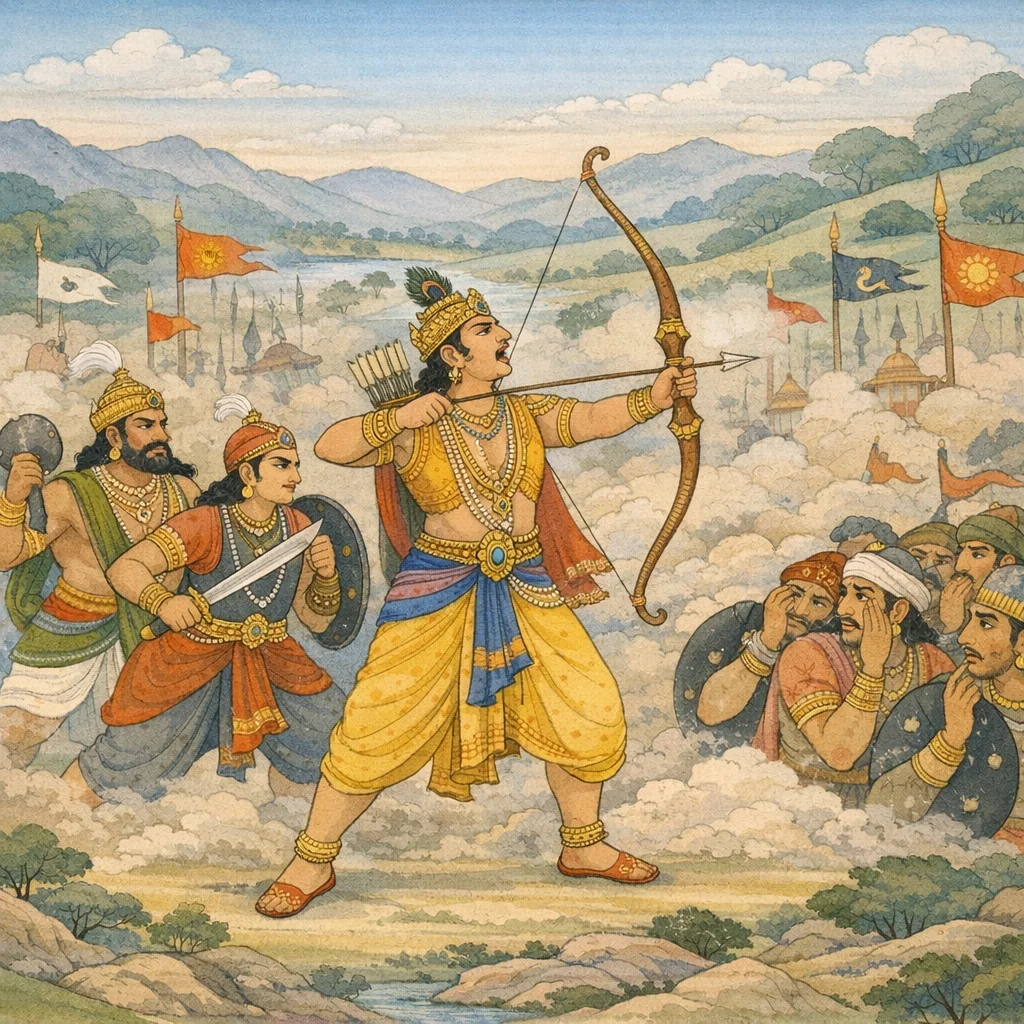
Chapter Arc: धृतराष्ट्र का प्रश्न—कर्ण-अर्जुन के उस निर्णायक संग्राम के बाद, जब ‘सबके लिये भयानक दिन’ उपस्थित था, बाणों की आग से दग्ध कौरव-सेना किस दशा में भागी और संजय ने क्या देखा? → कर्ण के गिरते ही पाण्डव-सेना का उत्साह उफनता है; अर्जुन का सिंहनाद कौरवों के हृदय में महाभय भर देता है। कौरव-पंक्तियाँ कटती-बिखरती हैं; सैनिक यह मानकर घबराते हैं कि अर्जुन और भीम विशेषतः उन्हीं का पीछा कर रहे हैं। भीम धृष्टद्युम्न को आगे रखकर पैदल-सेना का संहार करता हुआ मोर्चे पर अडिग खड़ा होता है, और पाण्डवों का पीछा ‘क्रुद्ध वृषभों’ की तरह तीव्र हो उठता है। → सूतपुत्र कर्ण के मारे जाने पर कौरव-सेना का मनोबल टूटता है—हतप्रवीर, विध्वस्त, निशित शरों से निकृत्त होकर राजपुत्रों सहित दल भयात् दुद्रव हो उठते हैं; उसी क्षण अर्जुन गाण्डीव को विख्यात वेग से व्याक्षिप्त कर भागते हुए दलों पर प्रहार करता है और पाण्डव-आक्रमण सर्वत्र छा जाता है। → संजय धृतराष्ट्र को बताता है कि कर्ण-वध के बाद कौरव-सेना का क्रम टूट गया; पाण्डवों ने भागते दलों का पीछा कर उन्हें तितर-बितर किया। युद्धभूमि पर ‘क्षत्रियधर्म’ की कठोर व्याख्या उभरती है—रण में मृत्यु को वीरों के लिये सुखद-गति कहा जाता है, पर जीवितों के लिये वही मृत्यु असह्य शोक बनकर फैलती है। → कौरव पक्ष के बचे हुए प्रमुख योद्धा अपने छिन्न-भिन्न सैन्य को समेटने और अगले प्रतिकार की योजना बनाने को विवश हैं—अब नेतृत्व किसके हाथ में टिकेगा और पाण्डवों की धावा-धार को कौन रोकेगा?
Shlokas
Verse 1
इस प्रकार श्रीमह्ााभारत कर्णपर्वमें शल्यका युद्धसे प्रत्यागमनविषयक बानबेवाँ अध्याय पूरा हुआ ॥/ ९२ ॥। ऑपन--माज बछ। अकाल त्रिनवतितमो<्थ्याय: भीमसेनद्वारा पचीस हजार पैदल सैनिकोंका वध, अर्जुनद्वारा रथसेनाका विध्वंस, कौरव-सेनाका पलायन और दुर्योधनका उसे रोकनेके लिये विफल प्रयास धृतराष्ट्र रवाच तस्मिंस्तु कर्णार्जुनयोर्विमर्दे दग्धस्य रौद्रेडहनि विद्रुतस्य । बभूव रूपं कुरुसृञजयानां बलस्य बाणोन्मथितस्य कीदृक्
Sanjaya said: Thus ends the ninety-second chapter of the Karna Parva of the great Mahabharata, describing Shalya’s return from the battlefield. Now begins the ninety-third chapter: Bhimasena’s slaughter of twenty-five thousand foot-soldiers, Arjuna’s destruction of the chariot-corps, the flight of the Kaurava army, and Duryodhana’s futile attempt to stop that rout. Dhritarashtra said: In that fierce clash between Karna and Arjuna—on that dreadful day, when the army had been scorched and driven into flight—what was the condition of the forces of the Kurus and the Srinjayas, shaken and torn apart by showers of arrows?
Verse 2
धृतराष्ट्रने पूछा--संजय! कर्ण और अर्जुनके उस संग्राममें, जबकि सबके लिये भयानक दिन उपस्थित हुआ था, बाणोंकी आगसे दग्ध और उन्मथित होकर भागती हुई कौरव-सेना तथा सूृंजय-सेनाकी कैसी अवस्था हुई? ।। संजय उवाच शृणु राजन्नवहितो यथा वृत्तों महाक्षय: । घोरो मनुष्यदेहानामाजी च गजवाजिनाम्,संजयने कहा--राजन्! उस युद्धस्थलमें मनुष्यके शरीरों, हाथियों और घोड़ोंका जैसा घोर एवं महान् विनाश हुआ, वह सब सावधान होकर सुनिये
Sanjaya said: O King, listen with full attention as I recount what occurred—the dreadful, vast destruction on the battlefield: the ruin of human bodies, and of elephants and horses as well.
Verse 3
यत्र कर्णे हते पार्थ: सिंहनादमथाकरोत् । तदा तव सुतान् राजन्नाविवेश महद् भयम्,महाराज! कर्णके मारे जानेपर अर्जुनने महान् सिंहनाद किया, उस समय आपके पुत्रोंके मनमें बड़ा भारी भय समा गया
Sañjaya said: When Karṇa had been slain, Pārtha (Arjuna) let out a lion-like roar. At that moment, O King, a great fear entered the hearts of your sons.
Verse 4
न संधातुमनीकानि न चैवाशु पराक्रमे । आसीद् बुद्धि्ते कर्णे तव योधस्य कहिचित्
Sañjaya said: “At no time, O Karṇa, did your warrior show the presence of mind either to regroup the battle-formations or to act with swift, decisive valor.”
Verse 5
जब कर्णका वध हो गया, तब आपके किसी भी योद्धाका मन कदापि जल्दी पराक्रम दिखानेमें नहीं लगा और न सेनाको संगठित रखनेकी ओर ही किसीका ध्यान गया ।। वणिजो नावि भिन्नायामगाधे विप्लवे यथा । अपारे पारमिच्छन्तो हते द्वीपे किरीटिना,अगाध एवं अपार समुद्रमें तूफान उठनेपर जब जहाज फट जाता है, उस समय पार जानेकी इच्छावाले व्यापारियोंकी जैसी अवस्था होती है, वही दशा किरीटधारी अर्जुनके द्वारा द्वीपस्वरूप कर्णके मारे जानेपर कौरवोंकी हुई
Sanjaya said: O King, when Karna was slain, none among your warriors found the heart to display swift valor, nor did anyone turn his mind to keeping the army in order. Just as merchants, longing to cross, are thrown into helpless confusion when their ship is shattered in a storm on a deep and boundless sea, so too did the Kauravas become disoriented when the diadem-wearing Arjuna killed Karna—who stood like an island of support amid the battle’s flood.
Verse 6
सूतपुत्रे हते राजन् वित्रस्ता: शस्त्रविक्षता: | अनाथा नाथमिच्छन्तो मृगा: सिंहैरिवार्दिता:,राजन! सूतपुत्रका वध हो जानेपर सिंहसे पीड़ित हुए मृगोंक समान कौरव-सैनिक भयभीत हो उठे। वे अस्त्र-शस्त्रोंस घायल हो गये थे और अनाथ होकर अपने लिये कोई रक्षक चाहते थे
Sañjaya said: “O King, when the charioteer’s son was slain, the Kaurava soldiers were thrown into panic. Wounded and torn by weapons, they became like deer harried by lions—leaderless and helpless, longing for a protector.”
Verse 7
भग्नश्ड्जा वृषा यद्वद् भग्नदंष्टा इवोरगा: । प्रत्यपायाम सायाह्ले निर्जिता: सव्यसचिना,हम सब लोग सायंकालमें सव्यसाची अर्जुनसे परास्त होकर शिबिरकी ओर लौटे थे। उस समय हमारी दशा उन बैलोंके समान हो रही थी, जिनके सींग तोड़ दिये गये हों। हम उन सर्पोके समान हो गये थे, जिनके विषैले दाँत नष्ट कर दिये गये हों
Sañjaya said: At evening, defeated by Savyasācin (Arjuna), we withdrew toward the camp. Our plight was like that of bulls with broken horns, and like serpents with shattered fangs—alive, yet stripped of the power to strike.
Verse 8
हतप्रवीरा विध्वस्ता निकृत्ता निशितै: शरै: । सूतपुत्रे हते राजन पुत्रास्ते दुद्रुवुर्भयात्,राजन! सूतपुत्रके मारे जानेपर पैने बाणोंसे क्षत-विक्षत एवं पराजित हुए आपके पुत्र भयके मारे भागने लगे। उनके प्रमुख वीर रणभूमिमें मारे जा चुके थे
Sañjaya said: O King, when the son of the charioteer had been slain, your sons—already bereft of their foremost heroes, shattered and cut down by sharp arrows—fled in fear.
Verse 9
विस््रस्तयन्त्रकवचा: कांदिग्भूता विचेतस: । अन्योन्यमवमृदनन्तो वीक्षमाणा भयार्दिता:,उनके यन्त्र और कवच गिर गये थे। वे अचेत होकर यह भी नहीं सोच पाते थे कि हम भागकर किस दिशामें जायँ? एक-दूसरेको कुचलते और चारों ओर देखते हुए भयसे पीड़ित हो गये थे
Sañjaya said: Their war-engines and armor had fallen away. Bewildered and senseless, they could not even decide in which direction to flee. Crushing one another in their panic and looking about on every side, they were overwhelmed by fear.
Verse 10
मामेव नूनं बीभत्सुममिव च वृकोदर: । अभियातीति मन्वाना:ः पेतुर्मम्लुश्च सम्भ्रमात्,“निश्चय अर्जुन मेरा ही पीछा कर रहे हैं। भीमसेन मेरी ही ओर चढ़े आ रहे हैं" ऐसा मानते हुए कौरव-सैनिक घबराहटमें पड़कर गिर जाते थे। वे सब-के-सब उदास हो गये थे
Sañjaya said: Concluding in their minds, “Surely Arjuna (the Terrible One) is pursuing me alone, and Bhīma (the Wolf-bellied) is charging straight at me,” the Kaurava soldiers, seized by panic, stumbled and fell. Their confidence collapsed, and they became wholly dejected.
Verse 11
हयानन्ये गजानन्ये रथानन्ये महारथा: । आरुहा जवसम्पन्ना: पदातीन् प्रजहुर्भयात्,कुछ लोग घोड़ोंपर, कुछ हाथियोंपर और कुछ दूसरे महारथी रथोंपर आरूढ़ हो भयके मारे बड़े वेगसे भागने लगे। उन्होंने पैदल सैनिकोंको वहीं छोड़ दिया
Sañjaya said: Some mounted horses, others elephants, and other great chariot-warriors climbed into their chariots; driven by fear, they fled at great speed, abandoning the foot-soldiers on the field.
Verse 12
कुण्जरै: स्यन्दना: क्षुण्णा: सादिनश्न महारथै: । पदातिसंघाश्षा श्वौचै: पलायद्िर्भयार्दितै:,भयभीत होकर भागते हुए हाथियोंने रथोंको चकनाचूर कर दिया। विशाल रथपर बैठे हुए महारथियोंने घुड़सवारोंको कुचल दिया और अश्वसमुदायोंने पैदलसमूहोंके कचूमर निकाल दिये
Sanjaya said: In the panic of flight, elephants crushed chariots to pieces; great chariot-warriors trampled down the horsemen; and terrified horses, bolting in fear, mangled the masses of foot-soldiers. Thus, in the chaos of battle, fear itself became a weapon, turning each arm of the army against the other and multiplying destruction beyond deliberate intent.
Verse 13
व्यालतस्करसंकीर्णे सार्थहीना यथा वने । सूतपुत्रे हते राजंस्तव योधास्तथाभवन्,राजन! जैसे सर्पों और चोरों-बटमारोंसे भरे हुए वनमें अपने दलसे बिछुड़े हुए लोग अनाथ हो भारी विपत्तिमें पड़ जाते हैं, सूतपुत्र कर्णके मारे जानेपर आपके योद्धाओंकी भी वैसी ही दशा हो गयी
O king, as men who, separated from their company in a forest swarming with serpents and bandits, become helpless and fall into grievous peril—so did your warriors fare when the charioteer’s son, Karna, was slain.
Verse 14
हतारोहा यथा नागाश्छिन्नहस्ता यथा नरा: । सर्वे पार्थमयं लोकं सम्पश्यन्तो भयार्दिता:,जिनके सवार मारे गये हों वे हाथी और जिनके हाथ काट लिये गये हों वे मनुष्य जैसी दुरवस्थामें पड़ जाते हैं वैसी ही दशामें पड़कर समस्त कौरव भयसे पीड़ित हो सारे जगत्को अर्जुनमय देखने लगे
As riderless elephants and as men with severed hands fall into wretched plight, so did all the Kauravas: tormented by fear, they looked about and beheld the whole world as Arjuna-filled, as though Arjuna stood everywhere.
Verse 15
सम्प्रेक्ष्य द्रवत: सर्वान् भीमसेनभयार्दितान् । दुर्योधनो5थ स्वं सूतं हा हा कृत्वेदमब्रवीत्,महाराज! उस समय अपने समस्त योद्धाओंको भीमसेनके भयसे व्याकुल हो भागते देख दुर्योधनने हाहाकार करके अपने सारथिसे कहा--
Sanjaya said: O great king, then Duryodhana, seeing all his warriors fleeing in panic, stricken by fear of Bhimasena, cried out “Alas! Alas!” and spoke to his own charioteer—
Verse 16
नातिक्रमेच्च मां पार्थो धनुष्पाणिमवस्थितम् । जघने सर्वसैन्यानां शनैरश्वान् प्रचोदय
Sanjaya said: “Let Partha (Arjuna) not overtake me while I stand ready with bow in hand. From the rear of all the armies, urge the horses forward—slowly.”
Verse 17
'सूत! तुम धीरे-धीरे रथ आगे बढ़ाओ। मैं सम्पूर्ण सेनाओंके पीछे जब हाथमें धनुष लेकर खड़ा होऊँगा, उस समय अर्जुन मुझे लाँधकर आगे नहीं बढ़ सकते ।। युध्यमानं हि कौन्तेयं हनिष्यामि न संशय: । नोत्सहेन्मामतिक्रान्तुं वेलामिव महोदधि:,“यदि वे मुझसे युद्ध करेंगे तो मैं उन्हें निःसंदेह मार गिराऊँगा। जैसे महासागर अपनी तटभूमिको लाँधघकर आगे नहीं बढ़ता, उसी प्रकार वे भी मुझे लाँध नहीं सकते
“Sūta, drive the chariot forward slowly. When I stand behind the whole host with bow in hand, Arjuna will not be able to pass beyond me and press on. If the son of Kuntī fights me, I shall surely strike him down—there is no doubt. As the great ocean cannot overstep its own shore, so he cannot overstep me.”
Verse 18
अद्यार्जुनं सगोविन्दं मानिनं च वृकोदरम् । हन्यां शिष्टांस्तथा शत्रून् कर्णस्यानृण्यमाप्नुयाम्,“आज मैं अर्जुन, श्रीकृष्ण और उस घमंडी भीमसेनको तथा बचे-खुचे दूसरे शत्रुओंको भी मार डालूँ, तभी कर्णके ऋणसे मुक्त हो सकता हूँ”
Sañjaya said: “Today I would slay Arjuna together with Govinda (Krishna), and also the proud Vṛkodara (Bhima), and likewise the remaining enemies; only then might I become free of my debt to Karna.”
Verse 19
तच्छुत्वा कुरुराजस्य शूरार्यसदृशं वचः । सूतो हेमपरिच्छन्नान् शनैरश्वानचोदयत्,कुरुराज दुर्योधनकी वह श्रेष्ठ शूरवीरोंके योग्य बात सुनकर सारथिने सोनेके साज- बाजसे सजे हुए घोड़ोंको धीरे-धीरे आगे बढ़ाया
Sañjaya said: Hearing the Kuru king’s words—befitting noble heroes—the charioteer gently urged forward the horses, adorned with golden trappings.
Verse 20
रथाश्चनागहीनास्तु पादातास्तव मारिष | पजञ्चविंशतिसाहसारा युद्धायैव व्यवस्थिता:,माननीय नरेश! उस समय रथों, घोड़ों और हाथियोंसे रहित आपके केवल पचीस हजार पैदल सैनिक ही युद्धके लिये डटे हुए थे
Sañjaya said: “O venerable one, at that time your foot-soldiers—deprived of chariots and elephants—stood firm, twenty-five thousand in number, arrayed solely for battle.”
Verse 21
तान् भीमसेन: संक्रुद्धो धृष्टद्युम्नश्व पार्षत: । बलेन चतुरज्गेण संवृत्याजघ्नतु: शरै:,उन सबको क्रोधमें भरे हुए भीमसेन और ट्रुपदकुमार धृष्टद्युम्नने अपनी चतुरंगिणी सेनाद्वारा चारों ओरसे घेरकर बाणोंसे मारना आरम्भ किया
Sañjaya said: Enraged, Bhīmasena and Dhṛṣṭadyumna, the son of Pārṣata (Drupada), surrounded them on all sides with their fourfold army and began striking them down with volleys of arrows.
Verse 22
प्रत्ययुध्यन्त समरे भीमसेनं सपार्षतम् । पार्थपार्षतयो श्वान्ये जगृहुस्तत्र नामनी,वे भी समरांगणमें भीमसेन और धृष्टद्युम्मनका डटकर सामना करने लगे। उनमेंसे कितने ही योद्धा भीमसेन और धृष्टद्युम्नके नाम ले-लेकर उन्हें युद्धके लिये ललकारने लगे
Sañjaya said: In that battle they stood firm and fought back against Bhīmasena together with his companion-warriors. Others there, crying out the names of “Bhīma” and the champion of the Pārtha side (Dhṛṣṭadyumna), challenged them aloud and called them to combat.
Verse 23
अक्रुध्यत रणे भीमस्तैस्तदा पर्यवस्थितै: । सो<वतीर्य रथात्तूर्ण गदापाणिरयुध्यत,उस समय भीमसेन रणमें कुपित हो उठे और तुरंत ही रथसे नीचे उतरकर हाथमें गदा ले वहाँ खड़े हुए पैदल-सैनिकोंके साथ युद्ध करने लगे
Sañjaya said: Then Bhīma, angered in the midst of battle by those troops standing firm before him, swiftly descended from his chariot and, mace in hand, began to fight on foot against the assembled infantry.
Verse 24
न तान् रथस्थो भूमिष्ठान् धमपिक्षी वृकोदर: । योधयामास कौन्तेयो भुजवीर्यव्यपाश्रय:,कुन्तीनन्दन भीमसेन युद्धधर्मका पालन करनेवाले थे, इसलिये उन्होंने स्वयं रथपर बैठकर भूमिपर खड़े हुए पैदल-सैनिकोंके साथ युद्ध नहीं किया। उन्हें अपने बाहुबलका पूरा भरोसा था
Bhīmasena, Kuntī’s son—Vṛkodara—relying on the strength of his arms and observing the dharma of war, did not fight from his chariot against the foot-soldiers standing on the ground.
Verse 25
जातरूपपरिच्छन्नां प्रगृह् महतीं गदाम् | अवधीत्तावकान् सर्वान् दण्डपाणिरिवान्तक:,वे दण्डपाणि यमराजके समान सुवर्णजटित विशाल गदा हाथमें लेकर आपके समस्त सैनिकोंका वध करने लगे
Sañjaya said: Taking up a massive mace adorned with gold, he began to strike down all your troops, like Yama the Punisher (Death) bearing the rod of chastisement.
Verse 26
पदातिनो<पि संत्यज्य प्रियं जीवितमात्मन: । भीममभ्यद्रवन् संख्ये पतड़ा ज्वलनं यथा,वे पैदल सैनिक भी अपने प्यारे प्राणोंका मोह छोड़कर उस युद्धस्थलमें भीमसेनकी ओर उसी प्रकार दौड़े, जैसे पतंग आगपर टूट पड़ते हैं
Sañjaya said: Even the foot-soldiers, casting aside their own dear life, rushed toward Bhīma on the battlefield—just as moths fling themselves into a blazing fire.
Verse 27
आसाद्य भीमसेन तु संरब्धा युद्धदुर्मदा: । विनेशु: सहसा दृष्टवा भूतग्रामा इवान्तकम्,जैसे प्राणियोंके समुदाय यमराजको देखते ही प्राण त्याग देते हैं, उसी प्रकार वे रोषभरे रणदुर्मद सैनिक भीमसेनसे टक्कर लेकर सहसा नष्ट हो गये
Sañjaya said: Rushing to engage Bhīmasena, those soldiers—frenzied with wrath and intoxicated by the arrogance of battle—were suddenly destroyed, as living beings perish the moment they behold Death itself.
Verse 28
श्येनवद् विचरन् भीमो गदाहस्तो महाबल: । पञ्चविंशतिसाहस्रांस्तावकान् समपोथयत्,हाथमें गदा लिये बाजके समान विचरते हुए महाबली भीमसेनने आपके उन पचीसों हजार सैनिकोंको मार गिराया
Sañjaya said: Mighty Bhīma, mace in hand, ranged through the battlefield like a hawk in swift, circling flight, and he crushed twenty-five thousand of your warriors.
Verse 29
हत्वा तत्पुरुषानीक॑ भीम: सत्यपराक्रम: । धृष्टय्युम्नं पुरस्कृत्य तस्थौ तत्र महाबल:,सत्यपराक्रमी महाबली भीमसेन उस पैदल सेनाका संहार करके धृष्टद्युम्नको आगे किये वहीं खड़े रहे
Sañjaya said: Having slain that body of infantry, Bhīma—whose valor never fails—stood his ground there, placing Dhṛṣṭadyumna in front.
Verse 30
धनंजयो रथानीकमभ्यवर्तत वीर्यवान् | माद्रीपुत्रौ तु शकुनिं सात्यकिश्व महारथ:
Sañjaya said: The valiant Dhanañjaya (Arjuna) advanced against the enemy’s chariot-division. Meanwhile, the two sons of Mādrī (Nakula and Sahadeva), along with the great chariot-warrior Sātyaki, moved to confront Śakuni.
Verse 31
तस्याश्वसादीन् सुबहूंस्ते निहत्य शितै: शरै:ः
Sañjaya said: Having slain many of his horses and other attendants with keen arrows, he pressed the attack further.
Verse 32
धनंजयो<पि चाभ्येत्य रथानीकं तव प्रभो
Sañjaya said: “O lord, Dhanañjaya (Arjuna) too advanced and came up against your chariot-division.”
Verse 33
कृष्णसारथिमायान्तं दृष्टवा श्वेतहयं रथम्
Sañjaya said: Seeing the chariot drawn by white horses approaching, with Kṛṣṇa as its charioteer, they recognized the arrival of Arjuna’s divinely guided car—a sight that signals not merely martial power but the presence of discerning counsel and righteous strategy amid the chaos of war.
Verse 34
विप्रहीणरथाश्रैव शरैक्ष॒ परिकर्षिता:
Sañjaya said: Deprived of their chariots and dragged about by volleys of arrows, the warriors were thrown into helplessness—an image of how, in war, pride and position collapse when one’s supports are shattered.
Verse 35
हत्वा तान् पुरुषव्याप्र: पज्चालानां महारथ:
Sañjaya said: Having slain them, the great chariot-warrior of the Pāñcālas—energetic and fully engaged in manly exertion—continued the battle. The line underscores the relentless momentum of war, where prowess and duty in combat are narrated alongside the grave moral weight of taking lives.
Verse 36
पुत्र: पाउ्चालराजस्य धृष्टद्युम्नो महामना: । भीमसेन पुरस्कृत्य नचिरात् प्रत्यदृश्यत
Sañjaya said: The high-souled Dhṛṣṭadyumna, son of the king of the Pāñcālas, placing Bhīmasena at the fore, soon came back into view—reappearing in the battle’s tumult with renewed resolve and leadership.
Verse 37
महाथनुर्धर: श्रीमानमित्रगणतापन: । पांचालराजकुमार, पांचाल महारथी और महामनस्वी पुरुषसिंह धृष्टद्युम्मन उन पैदल सैनिकोंका संहार करके भीमसेनको आगे किये शीघ्र ही वहाँ दिखायी दिये। वे महाधनुर्धर, तेजस्वी और शत्रुसमूहोंको संताप देनेवाले हैं ।। पारावतसवर्णाश्वं कोविदारमयध्वजम्
Sañjaya said: The illustrious great bowman, who scorches the ranks of foes—Pāñcāla’s prince, the Pāñcāla mahāratha, the high-souled lion among men, Dhṛṣṭadyumna—having cut down those foot-soldiers and set Bhīmasena at the fore, swiftly appeared there. A mighty archer was he, radiant in prowess, a tormentor of the enemy host—seen with horses the color of a dove and a banner fashioned of kovidāra-wood.
Verse 38
धृष्टद्युम्नं रणे दृष्टवा त्वदीया: प्रादवन् भयात् । धृष्टद्युम्नके रथके घोड़े कबूतरके समान रंगवाले थे, उनकी ध्वजापर कचनारके वृक्षका चिह्नन था। धृष्टद्युम्नको रणमें उपस्थित देख आपके योद्धा भयसे भाग खड़े हुए ।। गान्धारराजं शीघ्रास्त्रमनुसृत्य यशस्विनौ
Seeing Dhṛṣṭadyumna in the thick of battle, your men ran in fear. The horses of Dhṛṣṭadyumna’s chariot were the color of a dove, and upon his banner was the emblem of the kacanāra tree. At the sight of him on the field, your warriors fled, seized by terror.
Verse 39
चेकितान: शिखण्डी च द्रौपदेयाश्ष॒ मारिष
Sañjaya said: “Cekitāna, Śikhaṇḍī, and the sons of Draupadī as well, O venerable one.”
Verse 40
ते सर्वे तावकान प्रेक्ष्य द्रयतो5पि पराड्मुखान्
Sañjaya said: Seeing all your men turning their backs and fleeing in haste, he marked their rout plainly.
Verse 41
सेनावशेषं तं दृष्टवा तव सैन्यस्य पाण्डव:,विश्रुतं त्रिषु लोकेषु व्याक्षिपद् गाण्डिवं धनु: । नरेश्वर! उस समय वहाँ खड़े हुए बलवान् पराक्रमी सव्यसाची पाण्डुपुत्र अर्जुन आपकी सेनाका कुछ भाग अवशिष्ट देखकर कुपित हो उठे और अपने त्रिलोकविख्यात गाण्डीवधनुषकी टंकार करते हुए आपकी रथसेनापर जा चढ़े
Sañjaya said: Seeing that only a remnant of your army remained, the Pāṇḍava Arjuna—renowned in the three worlds—grew wrathful, seized his bow Gāṇḍīva, and, with its famed twang, surged forward against your chariot-forces.
Verse 42
व्यवस्थित: सव्यसाची चुक्रोध बलवान् नृप । धनंजयो रथानीकमभ्यवर्तत वीर्यवान्
Sañjaya said: O King, the mighty Arjuna, famed as the ambidextrous archer, steadied himself; his wrath kindled, the valiant Dhanañjaya surged forward against the massed chariot-division.
Verse 43
तत एनाञ्शरब्रातैः सहसा समवाकिरत्
Sañjaya said: Then, all at once, he showered him with a dense volley of arrows.
Verse 44
तमसा संवृतेनाथ न सम किंचिद् व्यदृश्यत । उन्होंने अपने बाणसमूहोंद्वारा उन सबको सहसा आच्छादित कर दिया। उस समय सब ओर अन्धकार फैल गया; अतः कुछ भी दिखायी नहीं देता था ।। ४३ $ ।। अन्धकारीकृते लोके रजोभूते महीतले
Sañjaya said: When everything was enveloped in darkness, O lord, nothing at all could be seen clearly. As the world was made dark and the surface of the earth turned into a haze of dust, visibility vanished on every side.
Verse 45
योधा: सर्वे महाराज तावका: प्राद्रवन् भयात् | महाराज! इस प्रकार जब जगतमें अँधेरा छा गया और भूतलपर धूल-ही-धूल उड़ने लगी, तब आपके समस्त योद्धा भयभीत होकर भाग गये ।। ४४ ई ।। सम्भज्यमाने सैन्ये तु कुरुराजो विशाम्पते
Sañjaya said: O great king, all your warriors, seized by fear, fled. As darkness spread and dust rose thick over the earth, the Kaurava host lost its steadiness and broke into flight.
Verse 46
परानभिमुखांश्रैव सुतस्ते समुपाद्रवत् । ततो दुर्योधन: सर्वानाजुहावाथ पाण्डवान्
Sañjaya said: Your son rushed straight at those who were facing him. Then Duryodhana called out, challenging all the Pāṇḍavas.
Verse 47
युद्धाय भरतश्रेष्ठ देवानिव पुरा बलि: । प्रजानाथ! आपकी सेनामें भगदड़ मच जानेपर आपके पुत्र कुरुराज दुर्योधनने अपने सामने खड़े हुए शत्रुओंपर धावा किया। भरतश्रेष्ठ! जैसे पूर्वकालमें राजा बलिने देवताओंको युद्धके लिये ललकारा था, उसी प्रकार दुर्योधनने भी समस्त पाण्डवोंका युद्धके लिये आह्वान किया ।। त एनमभिगर्जन्त: सहिता: समुपाद्रवन्
Sanjaya said: O best of the Bharatas, when panic and rout broke out in your army, your son—Duryodhana, king of the Kurus—charged straight at the enemies standing before him. As in ancient times King Bali challenged the gods to battle, so too did Duryodhana summon all the Pandavas to fight. Then, roaring together, they advanced upon him in a body.
Verse 48
नानाशस्त्रभृतः क्रुद्धा भर्त्सयन्तो मुहुर्मुहु: । तब नाना प्रकारके अस्त्र-शस्त्र धारण किये कुपित पाण्डव-सैनिक एक साथ गर्जना करते हुए वहाँ दुर्योधनपर टूट पड़े और बारंबार उसे फटकारने लगे ।। दुर्योधनो5प्यसम्भ्रान्तस्तान् रणे निशितै: शरै:,इससे दुर्योधनको तनिक भी घबराहट नहीं हुई। वह रणभूमिमें कुपित हो पैने बाणोंसे शत्रुपक्षके सैकड़ों और हजारों योद्धाओंका संहार करने लगा। वह सब ओर घूम-घूमकर पाण्डव-सेनाके साथ जूझ रहा था
Sanjaya said: Enraged warriors bearing many kinds of weapons repeatedly reviled him again and again. Yet Duryodhana, unshaken and without confusion, met them on the battlefield with razor-sharp arrows—standing his ground amid the storm of abuse and assault, and answering fury with relentless martial force.
Verse 49
तत्रावधीत्तत: क्रुद्ध शशशो5थ सहस्रश: । तत् सैन्यं पाण्डवेयानां योधयामास सर्वतः,इससे दुर्योधनको तनिक भी घबराहट नहीं हुई। वह रणभूमिमें कुपित हो पैने बाणोंसे शत्रुपक्षके सैकड़ों और हजारों योद्धाओंका संहार करने लगा। वह सब ओर घूम-घूमकर पाण्डव-सेनाके साथ जूझ रहा था
There, Duryodhana, wrathful, slew hundreds and thousands of warriors of the enemy host with his keen arrows. Wheeling about on every side, he fought the Pandava army everywhere.
Verse 50
तत्राद्भुतमपश्याम तव पुत्रस्य पौरुषम् । यदेक: सहितान् सर्वान् रणेड्युध्यत पाण्डवान्,राजन! वहाँ हमलोगोंने आपके पुत्रका यह अद्भुत पुरुषार्थ देखा कि उसने अकेले ही रणभूमिमें एक साथ आये हुए समस्त पाण्डवोंका डटकर सामना किया
Sanjaya said: “There we witnessed the astonishing valor of your son: for, O King, he alone stood firm in battle and fought against all the Pāṇḍavas who had come together.”
Verse 51
ततो<पश्यन्महात्मा स स्वसैन्यं भूशदु:खितम् । ततो<वस्थाप्य राजेन्द्र कृतबुद्धिस्तवात्मज:
Sanjaya said: Then that great-souled warrior, seeing his own army plunged into intense distress, steadied himself again. O best of kings, your son, having made up his mind, took his stand—resolute amid the suffering of his troops.
Verse 52
हर्षयन्निव तान् योधानिदं वचनमत्रवीत् । राजेन्द्र! उस समय आपके बुद्धिमान पुत्र महामनस्वी दुर्योधनने अपनी सेनाको जब बहुत दुःखी देखा, तब उन सबको सुस्थिर करके उनका हर्ष बढ़ाते हुए इस प्रकार कहा - [५१६ || नतं देशं प्रपश्यामि यत्र याता भयाद्दिता:
Sañjaya said: As though gladdening those warriors, he spoke these words. O king, at that time your wise son, the high-souled Duryodhana, seeing his army greatly distressed, steadied them all and, increasing their courage and joy, addressed them in this manner.
Verse 53
गतानां यत्र वै मोक्ष: पाण्डवात् कि गतेन व: । अल्पं च बलमेतेषां कृष्णौ च भृशविक्षतौ
Sañjaya said: “Where those who have fallen attain release, what can be gained by going against the Pāṇḍavas? Their force is small, and both Kṛṣṇas are grievously wounded.”
Verse 54
अद्य सर्वान् हनिष्यामि ध्रुवोी हि विजयो भवेत् | 'योद्धाओ! तुम भयसे पीड़ित हो रहे हो। परंतु मैं ऐसा कोई स्थान नहीं देखता, जहाँ तुम भागकर जाओ और वहाँ जानेपर तुम्हें पाण्डुपुत्र अर्जुन या भीमसेनसे छुटकारा मिल जाय। ऐसी दशामें तुम्हारे भागनेसे क्या लाभ है? इन शत्रुओंके पास थोड़ी-सी ही सेना बच गयी है। श्रीकृष्ण और अर्जुन भी बहुत घायल हो चुके हैं; अत: आज मैं इन सब लोगोंको मार डालूँगा। हमारी विजय अवश्य होगी ।। विप्रयातांस्तु वो भिन्नान् पाण्डवा: कृतकिल्बिषान्
Sañjaya said: “Today I shall slay them all; for victory will surely be ours. But as for you—scattered, broken, and turning away in flight—the Pāṇḍavas will strike you down, for you have incurred guilt by your wrongdoing.”
Verse 55
अनुसृत्य वधिष्यन्ति श्रेयान् न: समरे वध: । “यदि तुम अलग-अलग होकर भागोगे तो पाण्डव तुम सब अपराधियोंका पीछा करके तुम्हें मार डालेंगे। ऐसी दशामें युद्धमें मारा जाना ही हमारे लिये श्रेयस्कर है ।। सुखं सांग्रामिको मृत्यु: क्षत्रधर्मेण युध्यताम्
Sañjaya said: “If you scatter and flee separately, the Pāṇḍavas will pursue you as offenders and kill you. In such a situation, it is better for us to fall in battle. For those who fight in accordance with kṣatriya-duty, death on the battlefield is a fitting—indeed, an easy—end.”
Verse 56
शृणुध्व॑ क्षत्रिया: सर्वे यावन्त: स्थ समागता:,“तुम जितने क्षत्रिय वीर यहाँ आये हो सभी कान खोलकर सुन लो। जब प्राणियोंका अन्त करनेवाला यमराज शूरवीर और कायर दोनोंको ही मार डालता है, तब मेरे-जैसा क्षत्रियव्रतका पालन करनेवाला होकर भी कौन ऐसा मूर्ख होगा, जो युद्ध नहीं करेगा?
Sañjaya said: “Hear, all you kṣatriyas who have gathered here! When Yama, the ender of all beings, strikes down the brave and the coward alike, who—while keeping the kṣatriya vow as I do—could be so foolish as to refuse battle?”
Verse 57
यदा शूरं च भीरुं च मारयत्यन्तको यम: । को नु मूढो न युध्येत मादृश: क्षत्रियव्रत:,“तुम जितने क्षत्रिय वीर यहाँ आये हो सभी कान खोलकर सुन लो। जब प्राणियोंका अन्त करनेवाला यमराज शूरवीर और कायर दोनोंको ही मार डालता है, तब मेरे-जैसा क्षत्रियव्रतका पालन करनेवाला होकर भी कौन ऐसा मूर्ख होगा, जो युद्ध नहीं करेगा?
Sañjaya said: “When Yama—the Ender who brings beings to their close—strikes down both the brave and the fearful alike, then who, being bound by the warrior’s vow as I am, would be so deluded as to refuse battle?”
Verse 58
द्विषतो भीमसेनस्य क्रुद्धस्य वशमेष्यथ । पितामहैराचरितं न धर्म हातुमरहथ,“हमारा शत्रु भीमसेन क्रोधमें भरा हुआ है। यदि भागोगे तो उसके वशमें पड़कर मारे जाओगे; अतः अपने बाप-दादोंके द्वारा आचरणमें लाये हुए क्षत्रिय-धर्मका परित्याग न करो
Sañjaya said: “Bhīmasena, your enemy, is blazing with anger. If you flee, you will fall into his power and be slain. Therefore, do not abandon the kṣatriya-dharma practiced and upheld by your forefathers.”
Verse 59
न ह्ाधर्मो5स्ति पापीयान् क्षत्रियस्थ पलायनात् | न युद्धधर्माच्छेयो हि पन्था: स्वर्गस्य कौरवा: । अचिरेण हता लोकान् सद्यो योधा: समश्चुत,“कौरववीरो! क्षत्रियके लिये युद्धसे पीठ दिखाकर भागनेसे बढ़कर दूसरा कोई महान् पाप नहीं है तथा युद्धधर्मके पालनसे बढ़कर दूसरा कोई स्वर्गकी प्राप्तिका कल्याणकारी मार्ग भी नहीं है; अतः योद्धाओ! तुम युद्धमें मारे जाकर शीघ्र ही उत्तम लोकोंके सुखका अनुभव करो”
Sañjaya said: “For a kṣatriya there is no sin more grievous than fleeing the battlefield. Nor is there any path to heaven more beneficial than adherence to the warrior’s duty in war, O Kauravas. Therefore, warriors—once slain, you will swiftly attain the higher worlds and at once partake of their joys.”
Verse 60
संजय उवाच एवं ब्रुवति पुत्रे ते सैनिका भृशविक्षता: । अनवेक्ष्यैव तद्वाक्यं प्राद्रवन् सर्वतो दिश:,संजय कहते हैं--महाराज! आपका पुत्र इस प्रकार व्याख्यान देता ही रह गया; किंतु अत्यन्त घायल हुए सैनिक उसकी बातपर ध्यान दिये बिना ही सम्पूर्ण दिशाओंमें भाग गये
Sañjaya said: “O King, while your son was still speaking in this manner, the soldiers—grievously wounded—paid no heed to his words at all and fled in every direction.”
Verse 93
इति श्रीमहा भारते कर्णपर्वणि कौरवसैन्यपलायने त्रिनवतितमो<5ध्याय:
Thus, in the sacred Mahābhārata, within the Karṇa Parva, ends the ninety-third chapter, concerning the flight and rout of the Kaurava army.
Verse 303
जवेनाभ्यपतन् हृष्टा घ्नन्तो दौर्योधनं बलम् । दूसरी ओर पराक्रमी अर्जुनने रथसेनापर आक्रमण किया। माद्रीकुमार नकुल-सहदेव और महारथी सात्यकि हर्षमें भरकर दुर्योधनकी सेनाका संहार करते हुए बड़े वेगसे शकुनिपर टूट पड़े
Sañjaya said: Rejoicing, they rushed forward with great speed, striking down the forces of Duryodhana. On another flank, the mighty Arjuna launched an assault upon the chariot-divisions. Madri’s sons, Nakula and Sahadeva, and the great chariot-warrior Sātyaki—filled with exhilaration—slaughtered Duryodhana’s troops and, with tremendous momentum, fell upon Śakuni.
Verse 316
समभ्यधावंस्त्वरितास्तत्र युद्धम भून्महत् । वे अपने पैने बाणोंद्वारा उसके बहुत-से घुड़सवारोंको मारकर तुरंत ही उसकी ओर भी दौड़े। फिर तो वहाँ बड़ा भारी युद्ध होने लगा
Sañjaya said: They rushed forward in haste, and there a great battle arose. With their sharp arrows they quickly slew many of his horsemen and then charged straight toward him; thus the encounter swelled into a fierce and weighty clash of arms.
Verse 326
विश्रुतं त्रिषु लोकेषु गाण्डीवं व्याक्षिपद् धनु: । प्रभो! अर्जुन भी आपकी रथसेनाके समीप जाकर त्रिभुवनविख्यात गाण्डीव धनुषकी टंकार करने लगे
Sañjaya said: The famed bow Gāṇḍīva—renowned in the three worlds—was drawn and brandished. O Lord, Arjuna, moving close to your chariot-division, began to sound the thunderous twang of that world-celebrated bow.
Verse 333
अर्जुन चापि योद्धारं त्वदीया: प्राद्रवन् भयात् । श्रीकृष्ण जिसके सारथि हैं, उस श्वेत घोड़ोंवाले रथ और अर्जुन-जैसे रथी योद्धाको आते देख आपके सैनिक भयसे भागने लगे
Sañjaya said: Seeing Arjuna approaching in that chariot drawn by white horses—whose charioteer is Śrī Kṛṣṇa—and beholding a warrior-charioteer equal to Arjuna, your troops, seized by fear, began to flee.
Verse 346
पजञ्चविंशतिसाहस्रा: कालमार्छन् पदातय: । बहुतोंके रथ नष्ट हो गये और कितने ही बाणोंकी मारसे अत्यन्त घायल हो गये। इस प्रकार पचीस हजार पैदल सैनिक कालके गालमें चले गये
Sañjaya said: Twenty-five thousand foot-soldiers went to Death. Many chariots were destroyed, and many warriors were grievously wounded by volleys of arrows—thus vast numbers were swallowed by the war’s relentless violence.
Verse 383
नचिरात् प्रत्यदृश्येतां माद्रीपुत्रो ससात्यकी । गान्धारराज शकुनि शीघ्रतापूर्वक अस्त्र चला रहा था, यशस्वी माद्रीकुमार नकुल- सहदेव और सात्यकि तुरंत ही उसका पीछा करते दिखायी दिये
Sañjaya said: Before long, the son of Mādrī—together with Sātyaki—came back into view. The Gandhāra king Śakuni, driven by haste, was rapidly deploying his weapons; and the illustrious Mādrī’s sons, Nakula and Sahadeva, along with Sātyaki, were immediately seen pursuing him.
Verse 393
हत्वा त्वदीयं सुमहत् सैन्यं शड्खांस्तथाधमन् | माननीय नरेश! चेकितान, शिखण्डी और द्रौपदीके पाँचों पुत्र आपकी विशाल सेनाका विनाश करके शंख बजाने लगे
Sañjaya said: “Having slain a very great portion of your army, they blew their conches. O venerable king, Cekitāna, Śikhaṇḍī, and Draupadī’s five sons—after bringing ruin upon your vast host—began to sound their conches in triumph.”
Verse 403
अभ्यवर्तन्त संरब्धान् वृषाञ्जित्वा यथा वृषा: । उन सबने आपके सैनिकोंको पीठ दिखाकर भागते देख उनका उसी प्रकार पीछा किया, जैसे साँड़ रोषमें भरे हुए दूसरे साँड्रोंको जीतकर उन्हें खदेड़ने लगते हैं
Sañjaya said: Seeing your soldiers turn their backs and flee, they pursued them relentlessly—just as enraged bulls, having overpowered rival bulls, drive them away in triumph.
Verse 423
विश्रुतं त्रिषु लोकेषु व्याक्षिपद् गाण्डिवं धनु: । नरेश्वर! उस समय वहाँ खड़े हुए बलवान् पराक्रमी सव्यसाची पाण्डुपुत्र अर्जुन आपकी सेनाका कुछ भाग अवशिष्ट देखकर कुपित हो उठे और अपने त्रिलोकविख्यात गाण्डीवधनुषकी टंकार करते हुए आपकी रथसेनापर जा चढ़े
Sañjaya said: “O king, at that time the mighty and valiant Arjuna—Pāṇḍu’s son, famed as Savyasācī—seeing that a portion of your army still remained, flared up in wrath. Making the thunderous twang of his world-renowned Gāṇḍīva bow resound through the three worlds, he charged straight upon your chariot-forces.”
Verse 553
मृतो दुःखं न जानीते प्रेत्य चानन्त्यम श्रुते । 'क्षत्रियधर्मके अनुसार युद्ध करनेवाले वीरोंकी संग्राममें सुखपूर्वक मृत्यु होती है। वहाँ मरे हुएको मृत्युके दुःखका अनुभव नहीं होता और परलोकमें जानेपर उसे अक्षय सुखकी प्राप्ति होती है
Sañjaya said: One who has died does not know the pain of death; and having passed beyond, he attains unending blessedness. For the hero who fights in accordance with the kṣatriya’s duty, death in battle is held to be a fortunate end: the fallen does not experience the anguish of dying, and on reaching the next world he gains imperishable happiness.