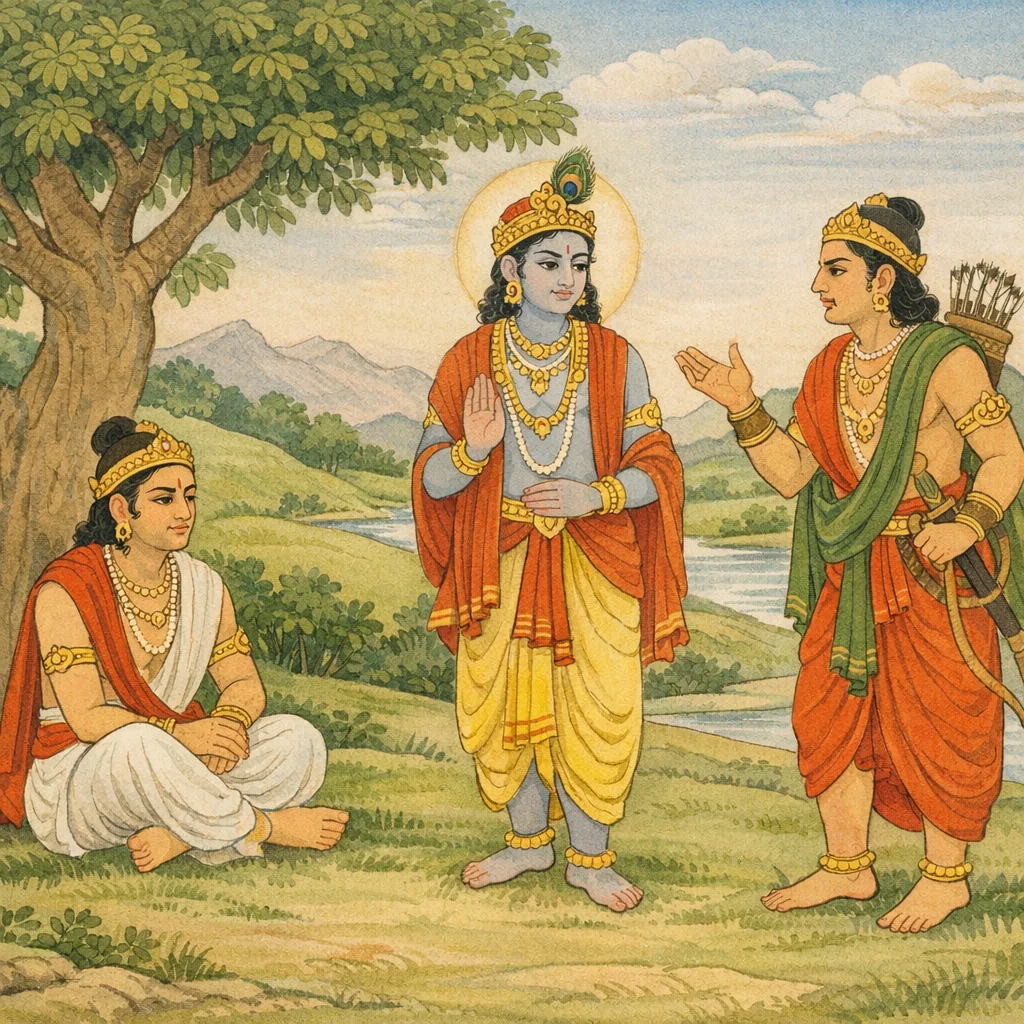
Adhyaya 70
Chapter Arc: रणभूमि से हटकर एक कोस दूर बैठे युधिष्ठिर के पास अर्जुन आता है—पर शोक नहीं, ज्वाला लेकर; और वाणी से ही युद्ध छेड़ देता है। → अर्जुन युधिष्ठिर को कायरता और द्यूत-आसक्ति का कटु स्मरण कराता है—राज्य को ‘अक्ष’ के पाप से कलुषित बताता है, सहदेव की पूर्व चेतावनियों का उल्लेख करता है, और कहता है कि केवल भीम ही उसे धिक्कारने का अधिकारी है क्योंकि वही लोकवीरों से जूझ रहा है और हाथियों के शत-शत संहार कर रहा है। यह वाक्य-शर युधिष्ठिर के धैर्य को तोड़ने लगता है; भाई-भाई के बीच धर्म और अपमान की खाई गहरी होती जाती है। → अर्जुन की प्रतिज्ञा-रक्षा की उग्रता और युधिष्ठिर के प्रति अपमानजनक वचन ऐसे बिंदु पर पहुँचते हैं जहाँ भ्रातृवध/आत्मघात का संकट उपस्थित हो जाता है—और तभी श्रीकृष्ण मध्यस्थ बनकर अर्जुन को प्रतिज्ञा-भंग, भ्रातृवध तथा आत्मघात—तीनों से बचाने हेतु उसे रोकते हैं और युधिष्ठिर को भी सांत्वना देकर संतुष्ट करते हैं। → कृष्ण की नीति से क्रोध का विष उतरता है: अर्जुन अपने अपराध-बोध के साथ युधिष्ठिर के चरणों में प्रणाम कर क्षमा-याचना करता है; ‘सत्य-संरक्षण’ के नाम पर हुए व्यतिक्रम को क्षम्य मानने की प्रार्थना होती है। युधिष्ठिर, जो स्वयं धर्म-राज हैं, भाई की शरणागति स्वीकार कर मन को स्थिर करते हैं; सेना-मनोरथ फिर युद्ध की ओर लौटता है। → क्षमा के बाद भी रण का प्रश्न शेष है—कर्ण के विरुद्ध प्रतिज्ञा और अगले आघात की तैयारी के साथ कथा पुनः युद्ध-चक्र में प्रवेश करती है।
Shlokas
Verse 1
ऑपनआक्ात बछ। 2 सप्ततितमो<ध्याय: भगवान् श्रीकृष्णका अर्जुनको प्रतिज्ञा-भंग, भ्रातृवध तथा आत्मघातसे बचाना और युधिष्ठिरको सान्त्वना देकर संतुष्ट करना संजय उवाच इत्येवमुक्तस्तु जनार्दनेन पार्थ: प्रशस्याथ सुहृद्वचस्तत् । ततोडब्रवीदर्जुनो धर्मराज- मनुक्तपूर्व परुषं प्रसहा,संजय कहते हैं--राजन्! भगवान् श्रीकृष्णके ऐसा कहनेपर कुन्तीकुमार अर्जुनने हितैषी सखाके उस वचनकी बड़ी प्रशंसा की। फिर वे हठपूर्वक धर्मराजके प्रति ऐसे कठोर वचन कहने लगे, जैसे उन्होंने पहले कभी नहीं कहे थे
Sanjaya said: “O King, when Janardana (Krishna) had spoken thus, Arjuna, the son of Kunti, warmly praised that well-wishing, friendly counsel. Then, however, Arjuna began to address Dharmaraja (Yudhishthira) with harsh words—words he had never spoken before—uttering them with force and stubborn insistence.”
Verse 2
अजुन उवाच मा त्वं राजन् व्याहर व्याहरस्व यस्तिष्ठसे क्रोशमात्रे रणाद् वै । भीमस्तु मार्महति गर्हणाय यो युध्यते सर्वलोकप्रवीरै:
Arjuna said: “O King, do not speak so—rather, speak as one who stands only a krosa’s distance from the battle. Bhima strikes at the vital points, inviting censure; for he is fighting against heroes renowned throughout all the worlds.”
Verse 3
अर्जुन बोले--राजन! तू तो स्वयं ही युद्धसे भागकर एक कोस दूर आ बैठा है, अतः तू मुझसे न बोल, न बोल। हाँ, भीमसेनको मेरी निन्दा करनेका अधिकार है, जो कि समस्त संसारके प्रमुख वीरोंके साथ अकेले ही जूझ रहे हैं ।। काले हि शत्रून् परिपीड्य संख्ये हत्वा च शूरान् पृथिवीपतींस्तान् । रथप्रधानोत्तमनागमुख्यान् सादिप्रवेकानमितांश्व वीरान्,जो यथासमय शत्रुओंको पीड़ा देते हुए युद्धस्थलमें उन समस्त शौर्यसम्पन्न भूपतियों, प्रधान-प्रधान रथियों, श्रेष्ठ गजराजों, प्रमुख अश्वारोहियों, असंख्य वीरों, सहस्रसे भी अधिक हाथियों, दस हजार काम्बोजदेशीय अश्वों तथा पर्वतीय वीरोंका वध करके जैसे मृगोंको मारकर सिंह दहाड़ रहा हो, उसी प्रकार भयंकर सिंहनाद करते हैं, जो वीर भीमसेन हाथमें गदा ले रथसे कूदकर उसके द्वारा रणभूमिमें हाथी, घोड़ों एवं रथोंका संहार करते हैं तथा ऐसा अत्यन्त दुष्कर पराक्रम प्रकट कर रहे हैं जैसा कि तू कभी नहीं कर सकता, जिनका पराक्रम इन्द्रके समान है, जो उत्तम खड़्ग, चक्र और धनुषके द्वारा हाथी, घोड़ों, पैदल- योद्धाओं तथा अन्यान्य शत्रुओंको दग्ध किये देते हैं और जो पैरोंसे कुचलकर दोनों हाथोंसे वैरियोंका विनाश करते हैं, वे महाबली, कुबेर और यमराजके समान पराक्रमी एवं शत्रुओंकी सेनाका बलपूर्वक संहार करनेमें समर्थ भीमसेन ही मेरी निन्दा करनेके अधिकारी हैं। तू मेरी निन्दा नहीं कर सकता; क्योंकि तू अपने पराक्रमसे नहीं, हितैषी सुहृदोंद्वारा सदा सुरक्षित होता है
Arjuna said: “O king, you yourself fled the battle and sat down a full krośa away; therefore do not speak to me—do not speak. Only Bhīmasena has the right to censure me, for he alone is grappling with the foremost heroes of the world. At the proper moment he presses the enemies hard in the fight, slays those valiant kings—chief chariot-warriors, the best of elephants, leading horsemen, and countless fighters—and, like a lion roaring after bringing down deer, he raises a dreadful lion’s cry. Leaping from his chariot with mace in hand, he wreaks destruction among elephants, horses, and chariots, displaying a feat of courage so difficult that you could never accomplish it. His might is like Indra’s: with sword, discus, and bow he burns down elephants, horses, foot-soldiers, and other foes; trampling with his feet and striking with both arms, he annihilates enemies. That mighty Bhīma—powerful like Kubera and Yama, able to crush the enemy host—alone may reproach me. You cannot reproach me, for you are protected not by your own valor but always by well-wishing friends.”
Verse 4
य: कुञज्जराणामधिकं सहस्् हत्वा नद्दंस्तुमुलं सिंहनादम् । काम्बोजानामयुतं पर्वतीयान् मृगान् सिंहो विनिहत्येव चाजौ,जो यथासमय शत्रुओंको पीड़ा देते हुए युद्धस्थलमें उन समस्त शौर्यसम्पन्न भूपतियों, प्रधान-प्रधान रथियों, श्रेष्ठ गजराजों, प्रमुख अश्वारोहियों, असंख्य वीरों, सहस्रसे भी अधिक हाथियों, दस हजार काम्बोजदेशीय अश्वों तथा पर्वतीय वीरोंका वध करके जैसे मृगोंको मारकर सिंह दहाड़ रहा हो, उसी प्रकार भयंकर सिंहनाद करते हैं, जो वीर भीमसेन हाथमें गदा ले रथसे कूदकर उसके द्वारा रणभूमिमें हाथी, घोड़ों एवं रथोंका संहार करते हैं तथा ऐसा अत्यन्त दुष्कर पराक्रम प्रकट कर रहे हैं जैसा कि तू कभी नहीं कर सकता, जिनका पराक्रम इन्द्रके समान है, जो उत्तम खड़्ग, चक्र और धनुषके द्वारा हाथी, घोड़ों, पैदल- योद्धाओं तथा अन्यान्य शत्रुओंको दग्ध किये देते हैं और जो पैरोंसे कुचलकर दोनों हाथोंसे वैरियोंका विनाश करते हैं, वे महाबली, कुबेर और यमराजके समान पराक्रमी एवं शत्रुओंकी सेनाका बलपूर्वक संहार करनेमें समर्थ भीमसेन ही मेरी निन्दा करनेके अधिकारी हैं। तू मेरी निन्दा नहीं कर सकता; क्योंकि तू अपने पराक्रमसे नहीं, हितैषी सुहृदोंद्वारा सदा सुरक्षित होता है
Arjuna said: “He who, after slaying more than a thousand elephants, roars a dreadful lion-cry amid the tumult of battle; who has cut down ten thousand Kamboja horses and the mountain fighters, like a lion striking down deer in the field—he, at the proper moment, tormenting the enemy, has destroyed on the battlefield those valorous kings, the foremost chariot-warriors, the best lordly elephants, the leading horsemen, and countless heroes. That warrior Bhimasena, grasping his mace and leaping down from his chariot, lays waste to elephants, horses, and chariots, displaying a feat of strength so hard that you could never accomplish it. His prowess is like Indra’s; with excellent sword, discus, and bow he burns down elephants, horses, foot-soldiers, and other foes; trampling with his feet and crushing with both arms, he brings enemies to ruin. That mighty Bhima—equal in power to Kubera and Yama, capable of forcibly annihilating the enemy host—alone is entitled to censure me. You cannot censure me, for you are protected not by your own valor, but always by well-wishing friends.”
Verse 5
सुदुष्करं कर्म करोति वीर: कर्तु यथा नाहसि त्वं कदाचित् | रथादवप्लुत्य गदां परामृशं- स्तया निहन्त्यश्वरथद्विपान् रणे,जो यथासमय शत्रुओंको पीड़ा देते हुए युद्धस्थलमें उन समस्त शौर्यसम्पन्न भूपतियों, प्रधान-प्रधान रथियों, श्रेष्ठ गजराजों, प्रमुख अश्वारोहियों, असंख्य वीरों, सहस्रसे भी अधिक हाथियों, दस हजार काम्बोजदेशीय अश्वों तथा पर्वतीय वीरोंका वध करके जैसे मृगोंको मारकर सिंह दहाड़ रहा हो, उसी प्रकार भयंकर सिंहनाद करते हैं, जो वीर भीमसेन हाथमें गदा ले रथसे कूदकर उसके द्वारा रणभूमिमें हाथी, घोड़ों एवं रथोंका संहार करते हैं तथा ऐसा अत्यन्त दुष्कर पराक्रम प्रकट कर रहे हैं जैसा कि तू कभी नहीं कर सकता, जिनका पराक्रम इन्द्रके समान है, जो उत्तम खड़्ग, चक्र और धनुषके द्वारा हाथी, घोड़ों, पैदल- योद्धाओं तथा अन्यान्य शत्रुओंको दग्ध किये देते हैं और जो पैरोंसे कुचलकर दोनों हाथोंसे वैरियोंका विनाश करते हैं, वे महाबली, कुबेर और यमराजके समान पराक्रमी एवं शत्रुओंकी सेनाका बलपूर्वक संहार करनेमें समर्थ भीमसेन ही मेरी निन्दा करनेके अधिकारी हैं। तू मेरी निन्दा नहीं कर सकता; क्योंकि तू अपने पराक्रमसे नहीं, हितैषी सुहृदोंद्वारा सदा सुरक्षित होता है
Arjuna said: “That hero performs a deed exceedingly hard to accomplish—such as you are never capable of doing. Leaping down from his chariot, seizing his mace, he strikes down horses, chariots, and elephants in the battle. Only Bhīmasena—whose might is like Indra’s, who crushes foes and breaks the enemy host by sheer force—has the standing to censure me. You cannot censure me, for you are preserved not by your own valor but always by well-wishing friends.”
Verse 6
वरासिना चापि नराश्चकुज्जरां- स्तथा रथाड्रैर्धनुषा दहत्यरीन् | प्रमृद्य पद्भ्यामहितान् निहन्ति पुनस्तु दोर्भ्या शतमन्युविक्रम:,जो यथासमय शत्रुओंको पीड़ा देते हुए युद्धस्थलमें उन समस्त शौर्यसम्पन्न भूपतियों, प्रधान-प्रधान रथियों, श्रेष्ठ गजराजों, प्रमुख अश्वारोहियों, असंख्य वीरों, सहस्रसे भी अधिक हाथियों, दस हजार काम्बोजदेशीय अश्वों तथा पर्वतीय वीरोंका वध करके जैसे मृगोंको मारकर सिंह दहाड़ रहा हो, उसी प्रकार भयंकर सिंहनाद करते हैं, जो वीर भीमसेन हाथमें गदा ले रथसे कूदकर उसके द्वारा रणभूमिमें हाथी, घोड़ों एवं रथोंका संहार करते हैं तथा ऐसा अत्यन्त दुष्कर पराक्रम प्रकट कर रहे हैं जैसा कि तू कभी नहीं कर सकता, जिनका पराक्रम इन्द्रके समान है, जो उत्तम खड़्ग, चक्र और धनुषके द्वारा हाथी, घोड़ों, पैदल- योद्धाओं तथा अन्यान्य शत्रुओंको दग्ध किये देते हैं और जो पैरोंसे कुचलकर दोनों हाथोंसे वैरियोंका विनाश करते हैं, वे महाबली, कुबेर और यमराजके समान पराक्रमी एवं शत्रुओंकी सेनाका बलपूर्वक संहार करनेमें समर्थ भीमसेन ही मेरी निन्दा करनेके अधिकारी हैं। तू मेरी निन्दा नहीं कर सकता; क्योंकि तू अपने पराक्रमसे नहीं, हितैषी सुहृदोंद्वारा सदा सुरक्षित होता है
Arjuna said: “With excellent swords and with his bow as well, he burns down the foes—men, lordly elephants, and chariot-warriors. Trampling hostile enemies underfoot, he again destroys them with his own arms—his prowess like that of Indra. Only such a Bhīmasena, capable of crushing the enemy host by sheer force, is fit to censure me; you cannot, for you are protected not by your own valor but always by well-wishing friends.”
Verse 7
महाबलो वैश्रवणान्तकोपम: प्रसहा[ हन्ता द्विषतामनीकिनीम् । स भीमसेनो<हति गर्हणां मे नत्वं नित्यं रक्ष्ससे यः सुहृद्धिः,जो यथासमय शत्रुओंको पीड़ा देते हुए युद्धस्थलमें उन समस्त शौर्यसम्पन्न भूपतियों, प्रधान-प्रधान रथियों, श्रेष्ठ गजराजों, प्रमुख अश्वारोहियों, असंख्य वीरों, सहस्रसे भी अधिक हाथियों, दस हजार काम्बोजदेशीय अश्वों तथा पर्वतीय वीरोंका वध करके जैसे मृगोंको मारकर सिंह दहाड़ रहा हो, उसी प्रकार भयंकर सिंहनाद करते हैं, जो वीर भीमसेन हाथमें गदा ले रथसे कूदकर उसके द्वारा रणभूमिमें हाथी, घोड़ों एवं रथोंका संहार करते हैं तथा ऐसा अत्यन्त दुष्कर पराक्रम प्रकट कर रहे हैं जैसा कि तू कभी नहीं कर सकता, जिनका पराक्रम इन्द्रके समान है, जो उत्तम खड़्ग, चक्र और धनुषके द्वारा हाथी, घोड़ों, पैदल- योद्धाओं तथा अन्यान्य शत्रुओंको दग्ध किये देते हैं और जो पैरोंसे कुचलकर दोनों हाथोंसे वैरियोंका विनाश करते हैं, वे महाबली, कुबेर और यमराजके समान पराक्रमी एवं शत्रुओंकी सेनाका बलपूर्वक संहार करनेमें समर्थ भीमसेन ही मेरी निन्दा करनेके अधिकारी हैं। तू मेरी निन्दा नहीं कर सकता; क्योंकि तू अपने पराक्रमसे नहीं, हितैषी सुहृदोंद्वारा सदा सुरक्षित होता है
Arjuna said: “Mighty Bhīmasena—whose power is like that of Vaiśravaṇa (Kubera) and Antaka (Yama)—can, by sheer force, destroy the armies of the hostile. He alone has the standing to censure me. But you do not: for you are continually protected by well-wishing friends rather than upheld by your own prowess.”
Verse 8
महारथान् नागवरान् हयांश्न पदातिमुख्यानपि च प्रमथ्य । एको भीमो धार्त॑राष्ट्रेषु मग्नः स मामुपालब्धुमरिंदमो5हति,जो शत्रुपक्षके महारथियों, गजराजों, घोड़ों और प्रधान-प्रधान पैदल योद्धाओंको भी रौंदकर दुर्योधनकी सेनाओंमें घुस गये हैं, वे एकमात्र शत्रुदमन भीमसेन ही मुझे उलाहना देनेके अधिकारी हैं
Having crushed the great chariot-warriors, the best of elephants, the horses, and even the foremost foot-soldiers, Bhīma alone has plunged deep into the Dhārtarāṣṭra ranks. That enemy-subduer alone is fit to reproach me—because his rebuke would arise from proven valor and unwavering commitment to the cause in the midst of righteous war.
Verse 9
कलिड्वड्भराज़निषादमागधान् सदामदानीलबलाहकोपमान् | निहन्ति यः शत्रुगजाननेकान् स मामुपालब्धुमरिंदमो5हति,जो कलिंग, वंग, अंग, निषाद और मगध देशोंमें उत्पन्न सदा मदमत्त रहनेवाले तथा काले मेघोंकी घटाके समान दिखायी देनेवाले शत्रुपक्षीय अनेकानेक हाथियोंका संहार करते हैं, वे शत्रुदमन भीमसेन ही मुझे उलाहना देनेके अधिकारी हैं
Arjuna said: “He who slays the many enemy elephants—those from Kaliṅga, Vaṅga, Aṅga, Niṣāda, and Magadha—ever intoxicated and appearing like masses of dark rain-clouds: that Bhīmasena, the tamer of foes, alone has the right to reproach me.”
Verse 10
स युक्तमास्थाय रथं हि काले भर्नुर्विधुन्चन् शरपूर्णमुष्टि: । सृजत्यसौ शरवर्षाणि वीरो महाहवे मेघ इवाम्बुधारा:,वीरवर भीमसेन यथासमय जुते हुए रथपर आरूढ़ हो धनुष हिलाते हुए मुद्टीभर बाण निकालते और जैसे मेघ जलकी धारा गिराते हैं, उसी प्रकार महासमरमें बाणोंकी वर्षा करते हैं
At the proper moment he mounts his well-yoked chariot; shaking his bow, his fist filled with arrows, that hero releases showers of shafts in the great battle—like a cloud pouring down streams of rain.
Verse 11
शतान्यष्टौ वारणानामपश्य॑ विशातितै: कुम्भकराग्रहस्तै: । भीमेनाजौ निहतान्यद्य बाणै: स मां क्रूरं वक्तुमर्हत्यरिघ्न:,मैंने देखा है आज भीमसेनने युद्धस्थलमें अपने बाणोंद्वारा शत्रुपक्षके आठ सौ हाथियोंको उनके कुम्भस्थल, शुण्ड और शुण्डाग्रभाग काटकर मार डाला है, वे शत्रुहन्ता भीमसेन ही मुझसे कठोर वचन कहनेके अधिकारी हैं
Arjuna said: “I have seen today, on the battlefield, eight hundred elephants slain by Bhīma with his arrows—after their temples, trunks, and the tips of their trunks were cut down. That very Bhīma, the destroyer of foes, alone has the right to speak harsh words to me.”
Verse 12
(नकुलेन राजन् गजवाजियोधा हताश्न शूरा: सहसा समेत्य । त्यक्त्वा प्राणान् समरे युद्धकाड्क्षी स मामुपालब्धुमरिंदमो $हति ।। राजन! नकुलने समरभूमिमें प्राणोंका मोह छोड़कर सहसा आगे बढ़-बढ़कर बहुत-से हाथी, घोड़े और शूरवीर योद्धाओंका वध किया है। युद्धकी अभिलाषा रखनेवाला वह शत्रुदमन वीर भी मुझे उलाहना दे सकता है। कृतं कर्म सहदेवेन दुष्करं यो युध्यते परसैन्यावमर्दी । न चाब्रवीत् किंचिदिहागतो बली पश्यान्तरं तस्य चैवात्मनश्न ।। सहदेवने भी दुष्कर कर्म किया है। शत्रुसेनाका मर्दन करनेवाला वह बलवान वीर निरन्तर युद्धमें लगा रहता है। वह भी यहाँ आया था, किंतु कुछ भी न बोला। देख ले, तुझमें और उसमें कितना अन्तर है। धष्टद्युम्न: सात्यकिद्रौपदेया युधामन्युश्लोत्तमौजा: शिखण्डी । एते च सर्वे युधि सम्प्रपीडिता- स्ते मामुपालब्धुमर्हन्ति न त्वम् ।।) धष्टद्युम्न, सात्यकि, द्रौपदीके पुत्र, युधामन्यु, उत्तमौजा और शिखण्डी--ये सभी वीर युद्धमें अत्यन्त पीड़ा सहन करते आये हैं; अतः ये ही मुझे उपालम्भ दे सकते हैं, तू नहीं। बल॑ तु वाचि द्विजसत्तमानां क्षात्रं बुधा बाहुबलं वदन्ति । त्वं वाग्बलो भारत निष्ठरश्न त्वमेव मां वेत्थ यथाबलो5हम्,भरतनन्दन! ज्ञानी पुरुष कहते हैं कि श्रेष्ठ ब्राह्मणोंका बल उनकी वाणीमें होता है और क्षत्रियका बल उनकी दोनों भुजाओंमें; परंतु तेरा बल केवल वाणीमें है, तू निष्ठुर है; मैं जैसा बलवान हूँ, उसे तू ही अच्छी तरह जानता है
Arjuna said: “O King, Nakula—eager for battle—has rushed forward again and again, casting away concern for his own life, and has slain many elephant-riders, horsemen, and heroic warriors. That enemy-subduing hero has the right to reproach me. Sahadeva too has accomplished a difficult deed: he keeps fighting, crushing the opposing host. He came here and yet spoke nothing; look at the difference between him and you. Dhrishtadyumna, Satyaki, the sons of Draupadi, Yudhamanyu, Uttamaujas, and Shikhandi—all these have endured extreme hardship in the fight; they may rebuke me, but you may not. The wise say that the strength of the best Brahmins lies in speech, while a Kshatriya’s strength lies in the power of his arms. But your strength, O Bharata, is only in words; you are harsh. You alone know well what my true strength is.”
Verse 13
यते हि नित्यं तव कर्तुमिष्टें दारै: सुतैर्जीवितेनात्मना च । एवं यन्मां वाग्विशिखेन हंसि त्वत्त: सुखं न वयं विद्य किंचित्,मैं सदा स्त्री, पुत्र जीवन और यह शरीर लगाकर तेरा प्रिय कार्य सिद्ध करनेके लिये प्रयत्नशील रहता हूँ। ऐसी दशामें भी तू मुझे अपने वाग्बाणोंसे मार रहा है; हमलोग तुझसे थोड़ा-सा भी सुख न पा सके
Arjuna said: “I strive unceasingly to accomplish what is dear to you—staking my wife, my sons, my very life, and my own self. Yet even so, you strike me with arrows of speech. From you we have known not even the slightest happiness.”
Verse 14
मां मावमंस्था द्रौपदीतल्पसंस्थो महारथान् प्रतिहन्मि त्वदर्थे । तेनातिशड्की भारत निष्ठुरोडसि त्वत्त: सुखं नाभिजानामि किंचित्,तू द्रौोपदीकी शय्यापर बैठा-बैठा मेरा अपमान न कर मैं तेरे ही लिये बड़े-बड़े महारथियोंका संहार कर रहा हूँ। इसीसे तू मेरे प्रति अधिक संदेह करके निष्ठुर हो गया है। तुझसे कोई सुख मिला हो, इसका मुझे स्मरण नहीं है
Arjuna said: “Do not insult me while you sit upon Draupadī’s couch. For your sake I am striking down great chariot-warriors. Yet because of that, O Bhārata, you have grown excessively suspicious of me and harsh. I do not recall having received any happiness from you at all.”
Verse 15
प्रोक्त: स्वयं सत्यसंधेन मृत्यु- स्तव प्रियार्थ नरदेव युद्धे । वीर: शिखण्डी द्रौपदो5सौ महात्मा मयाभिगुप्तेन हतश्न तेन,नरदेव! तेरा प्रिय करनेके लिये सत्यप्रतिज्ञ भीष्मजीने युद्धमें महामनस्वी वीर द्रपदकुमार शिखण्डीको अपनी मृत्यु बताया था। मेरे ही द्वारा सुरक्षित होकर शिखण्डीने उन्हें मारा है
Arjuna said: “O king, for your sake Bhīṣma himself—steadfast in the truth of his vow—declared in battle the manner of his death: that the heroic Śikhaṇḍī, the high-souled son of Drupada, would be the cause. Protected by me, Śikhaṇḍī indeed struck him down. Thus, O king, it was done to fulfill your desire.”
Verse 16
न चाभिनन्दामि तवाधिराज्यं यतस्त्वमक्षेष्वहिताय सक्त: । स्वयं कृत्वा पापमनार्यजुष्ट - मस्माभिर्वा तर्तुमिच्छस्यरींस्त्वम्,मैं तेरे राज्यका अभिनन्दन नहीं करता; क्योंकि तू अपना ही अहित करनेके लिये जूएमें आसक्त है। स्वयं नीच पुरुषोंद्वारा सेवित पापकर्म करके अब तू हमलोगोंके द्वारा शत्रुसेनारूपी समुद्रको पार करना चाहता है
Arjuna said: “I do not applaud your overlordship, for you are addicted to dice to your own ruin. Having yourself committed a sinful deed, one embraced by the ignoble, you now wish to have us ferry you across the ocean-like host of enemies.”
Verse 17
अक्षेषु दोषा बहवो विधर्मा: श्रुतास्त्वया सहदेवो<ब्रवीद् यान् । तान् नैषि त्वं त्यक्तुमसाधुजुष्टां- स्तेन सम सर्वे निरयं प्रपन्ना:,जूआ खेलनेमें बहुत-से पापमय दोष बताये गये हैं, जिन्हें सहदेवने तुझसे कहा था और तूने सुना भी था, तो भी तू उन दुर्जनसेवित दोषोंका परित्याग न कर सका; इसीसे हम सब लोग नरकतुल्य कष्टमें पड़ गये
Arjuna said: “In gambling there are many sinful faults—acts opposed to dharma—which Sahadeva had spoken to you, and which you had heard. Yet you could not abandon those vices, frequented by the wicked. Because of that, all of us have fallen into a hell-like misery.”
Verse 18
सुखं त्वत्तो नाभिजानीम किंचिद् यतस्त्वमक्षैदेवितुं सम्प्रवृत्त: । स्वयं कृत्वा व्यसन पाण्डव त्व- मस्मांस्तीव्रा: श्रावयस्यद्य वाच:,पाण्डुकुमार! तुझसे थोड़ा-सा भी सुख मिला हो--यह हम नहीं जानते हैं; क्योंकि तू जूआ खेलनेके व्यसनमें पड़ा हुआ है। स्वयं यह दुर्व्यससन करके अब तू हमें कठोर बातें सुना रहा है
We know of no happiness that has ever come to us from you, for you have given yourself over to the vice of gambling with dice. Having yourself brought about this calamity, O son of Pāṇḍu, you now assail us today with harsh and cutting words.
Verse 19
शेतेअस्माभिननिहता शत्रुसेना छिन्नैगत्रिर्भूमितले नदन्ती । त्वया हि तत् कर्म कृतं नृशंसं यस्माद् दोष:कौरवाणां वधश्न,हमारे द्वारा मारी गयी शत्रुओंकी सेना अपने कटे हुए अंगोंके साथ पृथ्वीपर पड़ी-पड़ी कराह रही है। तूने वह क्रूरतापूर्ण कर्म कर डाला है, जिससे पाप तो होगा ही; कौरववंशका विनाश भी हो जायगा
Arjuna said: “The enemy host, slain by us, lies on the ground with severed limbs, groaning in agony. Yet it is you who have brought about that merciless deed—by which sin will surely accrue, and the destruction of the Kauravas will also come to pass.”
Verse 20
हता उदीच्या निहता: प्रतीच्या नष्टा: प्राच्या दाक्षिणात्या विशस्ता: | कृतं कर्माप्रतिरूपं महद्वि- स्तेषां योधैरस्मदीयैश्न युद्धे,उत्तर दिशाके वीर मारे गये, पश्चिमके योद्धाओंका संहार हो गया, पूर्वदेशके क्षत्रिय नष्ट हो गये और दक्षिणदेशीय योद्धा काट डाले गये। शत्रुओंके और हमारे पक्षके बड़े-बड़े योद्धाओंने युद्धमें ऐसा पराक्रम किया है, जिसकी कहीं तुलना नहीं है
Arjuna said: “The heroes of the northern quarter have been slain; the warriors of the west have been struck down; the kṣatriyas of the east have perished; and the fighters of the south have been cut to pieces. In this battle, both the enemy’s champions and our own great warriors have performed a mighty deed of valor—one without any equal.”
Verse 21
त्वं देवितात्वत्कृते राज्यनाश- स्त्वत्सम्भवं नो व्यसन नरेन्द्र । मास्मान् क्र्रैवाक््प्रतोदैस्तुदंस्त्व॑ भूयो राजन् कोपयेस्त्वल्पभाग्य:,नरेन्द्र! तू भाग्यहीन जुआरी है। तेरे ही कारण हमारे राज्यका नाश हुआ और तुझसे ही हमें घोर संकटकी प्राप्ति हुई। राजन! अब तू अपने वचनरूपी चाबुकोंसे हमें पीड़ा देते हुए फिर कुपित न कर
Arjuna said: “O king, you are ill-fated. Because of you our kingdom was ruined, and from you arose the calamity that has befallen us. O Rajan, do not wound us with the whip of harsh words and do not provoke us to anger again.”
Verse 22
संजय उवाच एता वाच: परुषा: सव्यसाची स्थिरप्रज्ञ: श्रावयित्वा तु रूक्षा: बभूवासौ विमना धर्मभीरु: कृत्वा प्राज्ञ: पातकं किंचिदेवम्,संजय कहते हैं--राजन्! सव्यसाची अर्जुन धर्मभीरु हैं। उनकी बुद्धि स्थिर है तथा वे उत्तम ज्ञानसे सम्पन्न हैं। उस समय राजा युधिष्ठिरको वैसी रूखी और कठोर बातें सुनाकर वे ऐसे अनमने और उदास हो गये, मानो कोई पातक करके इस प्रकार पछता रहे हों
Sañjaya said: O King, Arjuna—renowned as Savyasācī—steadfast in understanding, wise, and fearful of wrongdoing, after making Yudhiṣṭhira hear such harsh and abrasive words, became dejected and downcast, as though a discerning man were repenting after committing some sin.
Verse 23
तदानुतेपे सुरराजपुत्रो विनि:श्वसंश्षासिम थोद्धबर्ह । तमाह कृष्ण: किमिदं पुनर्भवान् विकोशमाकाशनिभं॑ करोत्यसिम्
Then the son of the lord of the gods grew troubled and, breathing hard, drew forth his sword. Seeing him bare the blade—shining like the sky—Kṛṣṇa addressed him: “Why, again, do you unsheathe your sword?”
Verse 24
इत्येवमुक्त: पुरुषोत्तमेन सुदु:ःखित: केशवमर्जुनो5ब्रवीत्
Sañjaya said: Thus addressed by Puruṣottama, Arjuna—overwhelmed with deep sorrow—spoke again to Keśava. The moment marks a moral turning point: after hearing the Lord’s counsel, the warrior’s grief and ethical tension still surge, compelling him to respond and seek clarity amid the demands of righteous war.
Verse 25
निशम्य तत् पार्थवचोडब्रवीदिदं धनंजयं धर्मभूतां वरिष्ठ:,अर्जुनका यह वचन सुनकर धर्मात्माओंमें श्रेष्ठ श्रीकृष्णने उनसे कहा--'पार्थ! राजा युधिष्ठिरको “तू” ऐसा कहकर तुम इतने घोर दु:खमें क्यों डूब गये? शत्रुसूदन! क्या तुम आत्मघात करना चाहते हो? किरीटधारी वीर! साधुपुरुषोंने कभी ऐसा कार्य नहीं किया है
Sañjaya said: Hearing those words of Pārtha (Arjuna), Śrī Kṛṣṇa—foremost among the righteous—spoke to Dhanañjaya: “Pārtha, why have you sunk into such terrible grief merely because you addressed King Yudhiṣṭhira as ‘you’? O slayer of foes, do you wish to destroy yourself? O crowned hero, the good and noble have never acted in such a way.”
Verse 26
राजानमेनं त्वमितीदमुक्त्वा कि कश्मलं प्राविश: पार्थ घोरम् । त्वं चात्मानं हन्तुमिच्छस्वरिघ्न नेदं सद्धिः सेवितं वै किरीटिन्,अर्जुनका यह वचन सुनकर धर्मात्माओंमें श्रेष्ठ श्रीकृष्णने उनसे कहा--'पार्थ! राजा युधिष्ठिरको “तू” ऐसा कहकर तुम इतने घोर दु:खमें क्यों डूब गये? शत्रुसूदन! क्या तुम आत्मघात करना चाहते हो? किरीटधारी वीर! साधुपुरुषोंने कभी ऐसा कार्य नहीं किया है
Sañjaya said: Having addressed King Yudhiṣṭhira with the familiar “you,” why, O Pārtha, have you fallen into such dreadful despondency? O slayer of foes, do you now wish to kill yourself? O diadem-wearing hero, this is not a course ever followed by the righteous and the good.
Verse 27
धर्मात्मानं भ्रातरं ज्येष्ठमद्य खड्गेन चैनं यदि हन्या नृवीर । धर्माद् भीतस्तत् कथं नाम ते स्यात् किंचोत्तरं वाकरिष्यस्त्वमेव,“नरवीर! यदि आज धर्मसे डरकर तुमने अपने बड़े भाई इन धर्मात्मा युधिष्ठिरको तलवारसे मार डाला होता तो तुम्हारी कैसी दशा होती और इसके बाद तुम क्या करते?
Sañjaya said: “O hero among men, if today—out of fear of dharma—you had struck down with your sword your eldest brother, the righteous-souled Yudhiṣṭhira, what would have become of you? And after such a deed, what answer could you yourself possibly give, and what could you do next?”
Verse 28
सूक्ष्मो धर्मो दुर्विदश्षापि पार्थ विशेषतोऊज्जै: प्रोच्यमानं निबोध । हत्वा55त्मानमात्मना प्राप्तुयास्त्वं वधाद् भ्रातुर्नरक॑ चातिघोरम्,“कुन्तीनन्दन! धर्मका स्वरूप सूक्ष्म है। उसको जानना या समझना बहुत कठिन है। विशेषत: अज्ञानी पुरुषोंके लिये तो उसका जानना और भी मुश्किल है। अब मैं जो कुछ कहता हूँ उसे ध्यान देकर सुनो, भाईका वध करनेसे जिस अत्यन्त घोर नरककी प्राप्ति होती है, उससे भी भयानक नरक तुम्हें स्वयं ही अपनी हत्या करनेसे प्राप्त हो सकता है
Sanjaya said: “Dharma is subtle and difficult to discern, O Partha—especially for those who lack true understanding. Therefore listen carefully to what I declare with emphasis: if you were to kill yourself by your own hand, you could fall into a hell even more dreadful than the exceedingly terrible hell incurred by slaying one’s own brother.”
Verse 29
ब्रवीहि वाचाद्य गुणानिहात्मन- स्तथा हतात्मा भवितासि पार्थ | तथास्तु कृष्णेत्यभिनन्द्य तद्बचो धनंजय: प्राह धनुर्विनाम्य
Sañjaya said: “Speak now, in words, of the qualities of your own self; then, O Pārtha, you will become ‘hatātmā’—your pride and self-will struck down.” Hearing this, Dhanañjaya (Arjuna) approved the counsel, saying, “So be it, O Kṛṣṇa,” and, bending his bow in readiness, he spoke—signaling disciplined submission to guidance amid the moral strain of war.
Verse 30
न मादृशो यो नरदेव विद्यते धनुर्धरो देवमृते पिनाकिनम्
Sañjaya said: “O king, there is no archer like me among men—except the god Pinākin (Śiva) himself.”
Verse 31
मया हि राजन् सदिगीश्वरा दिशो विजित्य सर्वा भवतः कृता वशे
Sañjaya said: “O King, I indeed conquered all the quarters—together with their guardian lords—and brought them entirely under your control.”
Verse 32
पाणौ पृषत्का निशिता ममैव धनुश्व सज्यं विततं सबाणम्
Sañjaya said: “In my very hand are sharp, well-honed arrows; and my bow too is strung, drawn taut, and ready with its shafts.”
Verse 33
हता उदीच्या निहताः: प्रतीच्या: प्राच्या निरस्ता दाक्षिणात्या विशस्ता:,“मेरे द्वारा उत्तर दिशाके वीर मारे गये, पश्चिमके योद्धाओंका संहार हो गया, पूर्वदेशके क्षत्रिय नष्ट हो गये और दक्षिणदेशीय योद्धा काट डाले गये। संशप्तकोंका भी थोड़ा-सा ही भाग शेष रह गया है। मैंने सारी कौरव-सेनाके आधे भागको स्वयं ही नष्ट किया है। राजन! देवताओंकी सेनाके समान प्रकाशित होनेवाली भरतवंशियोंकी यह विशाल वाहिनी मेरे ही हाथों मारी जाकर रणभूमिमें सो रही है
Sañjaya said: “The warriors of the northern quarter have been slain; those of the western quarter have been struck down; the kṣatriyas of the eastern lands have been routed and destroyed; and the fighters of the southern regions have been cut to pieces. Only a small remnant of the Saṁsaptakas remains. I myself have destroyed half of the entire Kaurava host. O King, this vast army of the Bhāratas—shining like the army of the gods—has been felled by my own hand and now lies asleep upon the battlefield.”
Verse 34
संशप्तकानां किंचिदेवास्ति शिष्टं सर्वस्य सैन्यस्य हतं मयार्धम् । शेते मया निहता भारतीयं चमू राजन् देवचमूप्रकाशा,“मेरे द्वारा उत्तर दिशाके वीर मारे गये, पश्चिमके योद्धाओंका संहार हो गया, पूर्वदेशके क्षत्रिय नष्ट हो गये और दक्षिणदेशीय योद्धा काट डाले गये। संशप्तकोंका भी थोड़ा-सा ही भाग शेष रह गया है। मैंने सारी कौरव-सेनाके आधे भागको स्वयं ही नष्ट किया है। राजन! देवताओंकी सेनाके समान प्रकाशित होनेवाली भरतवंशियोंकी यह विशाल वाहिनी मेरे ही हाथों मारी जाकर रणभूमिमें सो रही है
Sanjaya said: “Of the Saṁśaptakas, only a small remnant remains. I myself have destroyed half of the entire army. O King, this vast host of the Bharatas—shining like the army of the gods—lies on the battlefield, slain by my hand.”
Verse 35
ये चास्त्रज्ञास्तानहं हन्मि चास्त्रै- स्तस्माल्लोकान्नेह करोमि भस्मसात् | जैत्रं रथं भीममास्थाय कृष्ण याव: शीघ्र सूतपुत्र॑ निहन्तुम्,“जो अस्त्रविद्याके ज्ञाता हैं, उन्हींको मैं अस्त्रोंद्वारा मारता हूँ; इसीलिये मैं यहाँ सम्पूर्ण लोकोंको भस्म नहीं करता हूँ। श्रीकृष्ण! अब हम दोनों विजयशाली एवं भयंकर रथपर बैठकर सूतपुत्रका वध करनेके लिये शीघ्र ही चल दें
Sañjaya said: “Those who truly know the science of weapons—those are the ones I strike down with weapons; therefore I do not here reduce all the worlds to ashes. O Kṛṣṇa, let us both quickly set out, mounting the victorious and formidable chariot, to slay the charioteer’s son.”
Verse 36
राजा भवत्वद्य सुनिर्व॒तो$यं कर्ण रणे नाशयितास्मि बाणै: । इत्येवमुक्त्वा पुनराह पार्थो युधिष्ठिरं धर्मभूतां वरिष्ठम्,“आज ये राजा युधिष्ठिर संतुष्ट हों। मैं रणभूमिमें अपने बाणोंद्वारा कर्णका नाश कर डालूँगा।” यों कहकर अर्जुन पुनः धर्मात्माओंमें श्रेष्ठ युधिष्ठिससे बोले--
Sañjaya said: “Let this king (Yudhiṣṭhira) be fully satisfied today. In battle I shall destroy Karṇa with my arrows.” Having spoken thus, Pārtha (Arjuna) again addressed Yudhiṣṭhira, the foremost among the righteous.
Verse 37
अद्यापुत्रा सूतमाता भवित्री कुन्ती वाथो वा मया तेन वापि । सत्यं वदाम्यद्य न कर्णमाजौ शरैरहत्वा कवचं विमोक्ष्ये,“आज मेरेद्वारा सूतपुत्रकी माता पुत्रहीन हो जायगी अथवा मेरी माता कुन्ती ही कर्णके द्वारा मुझ एक पुत्रसे हीन हो जायगी। मैं सत्य कहता हूँ, आज युद्धस्थलमें अपने बाणोंद्वारा कर्णको मारे बिना मैं कवच नहीं उतारूँगा
Sañjaya said: “Today either the charioteer’s son’s mother will be left without her son, or else my own mother Kuntī will be deprived—through Karṇa—of me, her one remaining son. I speak the truth: today, on the battlefield, I will not cast off my armor until I have struck down Karṇa with my arrows.”
Verse 38
संजय उवाच इत्येवमुक्त्वा पुनरेव पार्थो युधिष्ठिरं धर्मभृतां वरिष्ठम् । विमुच्य शस्त्राणि भरनुर्विसृज्य कोशे च खड्गं विनिधाय तूर्णम्
Sañjaya said: Having spoken thus, Pārtha (Arjuna) once again addressed Yudhiṣṭhira, the foremost among upholders of dharma. Then, casting aside his weapons and letting go of his bow, he swiftly placed his sword back into its scabbard—an outward act of restraint and deference amid the pressures of war.
Verse 39
स व्रीडया नम्रशिरा: किरीटी युधिष्ठिरं प्राउजलिरभ्युवाच । प्रसीद राजन् क्षम यन्मयोक्तं काले भवान् वेत्स्यति तन्नमस्ते
With shame, the diademed warrior bowed his head and, joining his palms, addressed Yudhiṣṭhira: “Be gracious, O King; forgive what I have spoken. In time you will understand it. To you, my salutations.”
Verse 40
संजय कहते हैं--महाराज! किरीटधारी कुन्तीकुमार अर्जुन धर्मात्माओंमें श्रेष्ठ युधिष्ठिससे पुन: ऐसा कहकर शस्त्र खोल, धनुष नीचे डाल और तलवारको तुरंत ही म्यानमें रखकर लज्जासे नतमस्तक हो हाथ जोड़ पुनः उनसे इस प्रकार बोले--'राजन्! आप प्रसन्न हों। मैंने जो कुछ कहा है, उसके लिये क्षमा करें। समयपर आपको सब कुछ मालूम हो जायगा। इसलिये आपको मेरा नमस्कार है' ।। प्रसाद्य राजानममित्रसाहं स्थितो<ब्रवीच्चैव पुन: प्रवीर: । नेदं चिरात् क्षिप्रमिदं भविष्य- त्यावर्ततेड्सावभियामि चैनम्,इस प्रकार शत्रुओंका सामना करनेमें समर्थ राजा युधिष्ठिरको प्रसन्न करके प्रमुख वीर अर्जुन खड़े होकर फिर बोले--“महाराज! अब कर्णके वधमें देर नहीं है। यह कार्य शीघ्र ही होगा। वह इधर ही आ रहा है; अतः मैं भी उसीपर चढ़ाई कर रहा हूँ
Sanjaya said: “O King! Arjuna, the Kunti-born hero who wears the diadem, after speaking thus again to Yudhishthira—the foremost among the righteous—unfastened his weapons, lowered his bow, and quickly sheathed his sword. With head bowed in shame, hands joined in reverence, he spoke once more: ‘O King, be pleased. Forgive whatever I have said. In due time you will know everything. Therefore, I bow to you.’ Having thus pacified Yudhishthira, the mighty king who can withstand enemies, the great warrior Arjuna stood and said again: ‘This will not take long; it will be accomplished swiftly. He is turning back and coming this way—so I too advance against him.’
Verse 41
याम्येष भीम॑ समरात् प्रमोकुं सर्वात्मना सूतपुत्रं च हन्तुम् । तव प्रियार्थ मम जीवितं हि ब्रवीमि सत्यं तदवेहि राजन्,“राजन! मैं अभी भीमसेनको संग्रामसे छुटकारा दिलाने और सब प्रकारसे सूतपुत्र कर्णका वध करनेके लिये जा रहा हूँ। मेरा जीवन आपका प्रिय करनेके लिये ही है। यह मैं सत्य कहता हूँ। आप इसे अच्छी तरह समझ लें”
Sañjaya said: “I am going now—to free Bhīma from the press of battle and, with my whole being, to bring about the death of Karṇa, the charioteer’s son. My life exists only to serve what is dear to you. I speak the truth; understand this well, O King.”
Verse 42
इति प्रयास्यन्नुपगृह्म पादौ समुत्थितो दीप्ततेजा: किरीटी । एतच्छुत्वा पाण्डवो धर्मराजो भ्रातुर्वाक्यं परुषं फाल्गुनस्य
Sañjaya said: “So saying, and as he was about to depart, the diademed Arjuna—radiant in splendor—rose up after clasping (in reverence) the feet. Hearing this harsh speech of his brother Phālguna (Arjuna), the Pāṇḍava king Dharmarāja (Yudhiṣṭhira) …”
Verse 43
कृतं मया पार्थ यथा न साधु येन प्राप्तं व्यसनं व: सुघोरम्,“कुन्तीनन्दन! अवश्य ही मैंने अच्छा कर्म नहीं किया है, जिससे तुमलोगोंपर अत्यन्त भयंकर संकट आ पड़ा है। मैं कुलान्तकारी नराधम पापी, पापमय दुर्व्यसनमें आसक्त, मूढ़बुद्धि, आलसी और डरपोक हूँ; इसलिये आज तुम मेरा यह मस्तक काट डालो
Sanjaya said: “O Partha, what I have done was not right; because of it, a most dreadful calamity has come upon you. O son of Kunti, surely I did not perform a good deed—by which an exceedingly terrible संकट has fallen on you all. I am a wretch, a sinner who brings ruin upon the family line, addicted to sinful vices, dull-witted, slothful, and cowardly. Therefore, today cut off this head of mine.”
Verse 44
तस्माच्छिरश्छिन्धि ममेदमद्य कुलान्तकस्याधमपूरुषस्य । पापस्य पापव्यसनान्वितस्य विमूढबुद्धेरलसस्य भीरो:,“कुन्तीनन्दन! अवश्य ही मैंने अच्छा कर्म नहीं किया है, जिससे तुमलोगोंपर अत्यन्त भयंकर संकट आ पड़ा है। मैं कुलान्तकारी नराधम पापी, पापमय दुर्व्यसनमें आसक्त, मूढ़बुद्धि, आलसी और डरपोक हूँ; इसलिये आज तुम मेरा यह मस्तक काट डालो
Sañjaya said: “Therefore, cut off my head today—mine, the head of a wretch who brings ruin upon his own lineage: a vile man, sinful, addicted to sinful vices, of deluded understanding, indolent, and cowardly.”
Verse 45
वृद्धावमन्तु: परुषस्य चैव कि ते चिरं मे हानुसृत्य रूक्षम् । गच्छाम्यहं वनमेवाद्य पाप: सुखं भवान् वर्ततां मद्वधिहीन:,“मैं बड़े बूढ़ोंका अनादर करनेवाला और कठोर हूँ। तुम्हें मेरी रूखी बातोंका दीर्घकालतक अनुसरण करनेकी क्या आवश्यकता है। मैं पापी आज वनमें ही चला जा रहा हूँ। तुम मुझसे अलग होकर सुखसे रहो
Sanjaya said: “I am one who shows contempt for elders, and I am harsh as well. Why should you keep following my rough words for so long? I, a sinner, am going today to the forest alone. You should live happily, free from the burden of my death.”
Verse 46
योग्यो राजा भीमसेनो महात्मा क्लीबस्य वा मम किं राज्यकृत्यम् । न चापि शक्त: परुषाणि सोढूुं पुनस्तवेमानि रुषान्वितस्य,“महामनस्वी भीमसेन सुयोग्य राजा होंगे। मुझ कायरको राज्य लेनेसे क्या काम है? अब पुनः मुझमें तुम्हारे रोषपूर्वक कहे हुए इन कठोर वचनोंको सहनेकी शक्ति नहीं है
Sañjaya said: “The great-souled Bhīmasena is fit to be king. What business have I—a coward—with taking up the burden of sovereignty? Nor am I able to endure these harsh words of yours again, spoken in anger.”
Verse 47
भीमोअस्तु राजा मम जीवितेन न कार्यमद्यावमतस्य वीर । इत्येवमुक्त्वा सहसोत्पपात राजा ततस्तच्छयनं विहाय
Sañjaya said: “Let Bhīma be king; I have no need of life today, O hero, if I am to be deemed slain.” Having spoken thus, the king sprang up at once, abandoning that couch. The utterance conveys a warrior’s ethic of honor: life is not worth clinging to when one’s martial standing is treated as already forfeited, and decisive action must follow words.
Verse 48
इयेष निर्गन्तुमथो वनाय त॑ वासुदेव: प्रणतो5भ्युवाच
Sañjaya said: When he resolved to depart for the forest, Vāsudeva—bowing in reverence—addressed him. The moment marks a moral turning-point: withdrawal and renunciation are met not with force, but with respectful counsel, showing that even in crisis one should be guided by humility and right speech rather than coercion.
Verse 49
“वीर! भीमसेन राजा हों। आज इतना अपमान हो जानेपर मुझे जीवित रहनेकी आवश्यकता नहीं है।' ऐसा कहकर राजा युधिष्ठिर सहसा पलंग छोड़कर वहाँसे नीचे कूद पड़े और वनमें जानेकी इच्छा करने लगे। तब भगवान् श्रीकृष्णने उनके चरणोंमें प्रणाम करके इस प्रकार कहा ।। राजन् विदितमेतद् वै यथा गाण्डीवधन्चन: । प्रतिज्ञा सत्यसंधस्य गाण्डीवं प्रति विश्रुता
Sañjaya said: King Yudhiṣṭhira, stung by humiliation, sprang down from his couch and, in despair, wished to withdraw to the forest, feeling life itself no longer worth living. Then Bhagavān Śrī Kṛṣṇa bowed at his feet and spoke: “O King, it is well known how the wielder of the Gāṇḍīva acts; the vow of the truth-bound one is famed in relation to the Gāṇḍīva.” The moment frames a moral crisis—whether wounded pride should drive renunciation and rupture of duty—and Kṛṣṇa’s intervention redirects the king toward steadiness, restraint, and dharma amid the pressures of war.
Verse 50
“राजन! आपको तो यह विदित ही है कि गाण्डीवधारी सत्यप्रतिज्ञ अर्जुनने गाण्डीव धनुषके विषयमें कैसी प्रतिज्ञा कर रखी है? उनकी वह प्रतिज्ञा प्रसिद्ध है ।। ब्रूयाद् य एवं गाण्डीवमन्यस्मै देयमित्युत । वध्यो5स्य स पुमॉल्लोके त्वया चोक्तोडयमीदृशम्
Sañjaya said: “O King, you already know well what vow Arjuna—bearer of the Gāṇḍīva and true to his pledges—has made concerning the Gāṇḍīva bow. That vow is widely known: whoever says, ‘The Gāṇḍīva should be given to someone else,’ that man becomes, in this world, one who deserves to be slain. And you have spoken words of just that kind.”
Verse 51
“जो अर्जुनसे यह कह दे कि “तुम्हें अपना गाण्डीवधनुष दूसरेको दे देना चाहिये” वह मनुष्य इस जगतमें उनका वध्य है।” आपने आज अर्जुनसे ऐसी ही बात कह दी है ।। ततः सत्यां प्रतिज्ञां तां पार्थेन प्रतिरक्षता । मच्छन्दादवमानो<यं कृतस्तव महीपते
Sañjaya said: “Then, O king, while Partha was safeguarding that true vow, this affront was committed by you against my wish.” The remark points to a moral breach: Arjuna’s solemn pledge about his Gāṇḍīva is being tested, and the king’s words are framed as an insult that violates the ethical boundary set by that vow.
Verse 52
गुरूणामवमानो हि वध इत्यभिधीयते । “अतः भूपाल! अर्जुनने अपनी उस सच्ची प्रतिज्ञाकी रक्षा करते हुए मेरी आज्ञासे आपका यह अपमान किया; क्योंकि गुरुजनोंका अपमान ही उनका वध कहा जाता है ।। तस्मात् त्वं वै महाबाहो मम पार्थस्य चोभयो:
Sañjaya said: “For the dishonouring of one’s elders and teachers is itself spoken of as a kind of ‘slaying’. Therefore, O king, Arjuna—while safeguarding his truthful vow—has, by my command, inflicted this humiliation upon you; for to insult venerable gurus is regarded as their destruction.”
Verse 53
शरणं त्वां महाराज प्रपन्नौ स्व उभावपषि
Sañjaya said: “O great king, we both have come to you for refuge, surrendering ourselves to your protection.”
Verse 54
राधेयस्याद्य पापस्य भूमि: पास्यति शोणितम्
Sañjaya said: “Today the earth will drink the blood of Radheya—Karna—whose deeds are sinful.”
Verse 55
सत्यं ते प्रतिजानामि हतं विद्ध्यद्य सूतजम् । यस्येच्छसि वधं तस्य गतमप्यस्य जीवितम्
Sañjaya said: “I swear to you in truth—know that the charioteer’s son has been slain today. The one whose death you desire—his life too has already departed.”
Verse 56
“आज पृथ्वी पापी राधापुत्र कर्णके रक्तका पान करेगी। मैं आपसे सच्ची प्रतिज्ञा करके कहता हूँ, समझ लीजिये कि अब सूतपुत्र कर्ण मार दिया गया। आप जिसका वध चाहते हैं, उसका जीवन समाप्त हो गया” ।। इति कृष्णवच: श्रुत्वा धर्मराजो युधिष्ठिर: । ससम्भ्रमं हृषीकेशमुत्थाप्य प्रणतं तदा
Sañjaya said: “Today the earth will drink the blood of the sinful Karṇa, the son of Rādhā. I tell you with a true vow—understand that Karṇa, the charioteer’s son, has now been slain. The one whose death you desire—his life has come to an end.” Hearing these words spoken by Kṛṣṇa, Dharmarāja Yudhiṣṭhira, in sudden agitation, raised up Hṛṣīkeśa (Kṛṣṇa) who was bowed down, and then offered reverence.
Verse 57
कृताञ्जलिस्ततो वाक्यमुवाचानन्तरं वच: । भगवान् श्रीकृष्णका यह वचन सुनकर धर्मराज युधिष्ठिरने अपने चरणोंमें पड़े हुए हृषीकेशको वेगपूर्वक उठाकर फिर दोनों हाथ जोड़कर यह बात कही-- ।। एवमेव यथा<<त्थ त्वमस्येषो5तिक्रमो मम,“गोविन्द! आप जैसा कहते हैं, वह ठीक है। वास्तवमें मुझसे यह नियमका उल्लंघन हो गया है। माधव! आपने अनुनयद्वारा मुझे संतुष्ट कर दिया और संकटके समुद्रमें डूबनेसे बचा लिया। अच्युत! आज आपके द्वारा हमलोग घोर विपत्तिसे बच गये
Sañjaya said: With folded hands, Yudhiṣṭhira spoke next. Hearing the words spoken by the Blessed Śrī Kṛṣṇa, King Yudhiṣṭhira quickly raised Hṛṣīkeśa, who had fallen at his feet; then, joining his palms again, he said: “Just as you have said, so it is. Govinda, what you state is true—indeed, I have transgressed the rule. Mādhava, by your gentle persuasion you have satisfied me and saved me from sinking in an ocean of distress. Achyuta, today it is through you that we have been rescued from a terrible calamity.”
Verse 58
अनुनीतो<स्मि गोविन्द तारितश्नास्मि माधव । मोचिता व्यसनाद् घोराद् वयमद्य त्वयाच्युत,“गोविन्द! आप जैसा कहते हैं, वह ठीक है। वास्तवमें मुझसे यह नियमका उल्लंघन हो गया है। माधव! आपने अनुनयद्वारा मुझे संतुष्ट कर दिया और संकटके समुद्रमें डूबनेसे बचा लिया। अच्युत! आज आपके द्वारा हमलोग घोर विपत्तिसे बच गये
Sanjaya said: “O Govinda, what you say is right. In truth, I have transgressed the rule. O Mādhava, by your gentle persuasion you have satisfied me and saved me from sinking in an ocean of peril. O Acyuta, today it is by you that we have been delivered from a dreadful calamity.”
Verse 59
भवन्तं नाथमासाद्य हावां व्यसनसागरात् । घोरादद्य समुत्तीर्णावुभावज्ञानमोहितौ,“आज आपको अपना रक्षक पाकर हम दोनों संकटके भयानक समुद्रसे पार हो गये। हम दोनों ही अज्ञानसे मोहित हो रहे थे; परंतु आपकी बुद्धिरूपी नौकाका आश्रय लेकर दुःख-शोकके समुद्रसे मन्त्रियोंसहित पार हो गये। अच्युत! हम आपसे ही सनाथ हैं!
Sañjaya said: “Having found you as our protector, we two have today crossed over the dreadful ocean of calamity. We were both deluded by ignorance; but taking refuge in the boat of your discerning wisdom, we have crossed—together with the ministers—the sea of sorrow and grief. O Acyuta, it is through you alone that we are not helpless.”
Verse 60
त्वदबुद्धिप्लवमासाद्य दुःखशोकार्णवाद् वयम् | समुत्तीर्णा: सहामात्या: सनाथा: सम त्वयाच्युत,“आज आपको अपना रक्षक पाकर हम दोनों संकटके भयानक समुद्रसे पार हो गये। हम दोनों ही अज्ञानसे मोहित हो रहे थे; परंतु आपकी बुद्धिरूपी नौकाका आश्रय लेकर दुःख-शोकके समुद्रसे मन्त्रियोंसहित पार हो गये। अच्युत! हम आपसे ही सनाथ हैं!
Sañjaya said: “Taking refuge in the boat of your wisdom, we have crossed over the ocean of sorrow and grief. Along with our ministers, we have safely come through; for by you, O Acyuta, we are no longer helpless—we have a protector.”
Verse 69
इस प्रकार श्रीमह्ाभारत कर्णपर्वमें श्रीकृष्ण और अर्जुनका संवादविषयक उनहत्तरवाँ अध्याय पूरा हुआ
Thus ends the sixty-ninth chapter of the Karṇa Parva of the Śrī Mahābhārata, dealing with the dialogue between Śrī Kṛṣṇa and Arjuna. The closing formula marks the completion of a section in which counsel, duty, and the moral weight of war are framed through their exchange.
Verse 70
इति श्रीमहाभारते कर्णपर्वणि युधिष्ठिरसमा श्वासने सप्ततितमो5ध्याय:
Thus ends the seventieth chapter of the Karṇa Parva of the Śrī Mahābhārata, in the section concerning the consoling and reassurance of Yudhiṣṭhira. Sanjaya’s narration marks the formal close of this chapter, framing the events within the moral weight of war and the need to steady Yudhiṣṭhira’s resolve amid grief and responsibility.
Verse 236
ब्रवीहि मां त्वं पुनरुत्तरं वच- स्तथा प्रवक्ष्याम्यहमर्थसिद्धये । देवराजकुमार अर्जुनको उस समय बड़ा पश्चात्ताप हुआ। उन्होंने लंबी साँस खींचते हुए फिरसे तलवार खींच ली। यह देख भगवान् श्रीकृष्णने कहा--'अर्जुन! यह क्या? तुम आकाशके समान निर्मल इस तलवारको पुनः क्यों म्यानसे बाहर निकाल रहे हो? तुम मुझे मेरी बातका उत्तर दो। मैं तुम्हारा अभीष्ट अर्थ सिद्ध करनेके लिये पुनः कोई योग्य उपाय बताऊँगा'
Sañjaya said: “Tell me once more your reply; then I shall speak accordingly, so that your intended purpose may be fulfilled.” In that moment Arjuna, seized by remorse, drew his sword again. Seeing it, Śrī Kṛṣṇa restrained him and said: “Arjuna! What is this? Why do you once more draw from its sheath that sword, pure as the sky? Answer me; and I shall again set forth a fitting means by which your rightful aim may be accomplished, without your falling into rash, self-destructive action.”
Verse 243
अहं हनिष्ये स्वशरीरमेव प्रसह्य येनाहितमाचरं वै | पुरुषोत्तम भगवान् श्रीकृष्णके इस प्रकार पूछनेपर अर्जुन अत्यन्त दुःखी हो उनसे इस प्रकार बोले--'भगवन्! मैंने जिसके द्वारा हठपूर्वक भाईका अपमानरूप अहितकर कार्य कर डाला है, अपने उस शरीरको ही अब नष्ट कर डालूँगा”
When the Purushottama, Bhagavān Śrī Kṛṣṇa, questioned him thus, Arjuna, plunged in grief, replied: “Lord! By this very body I have, in stubbornness, committed a harmful deed—the disgraceful insult of my brother. Therefore now I shall destroy this body itself.”
Verse 296
युधिष्टिरं धर्मभृतां वरिष्ठ शृणुष्व राजन्निति शक्रसूनु: । “अतः पार्थ! अब तुम यहाँ अपनी ही वाणीद्वारा अपने गुणोंका वर्णन करो। ऐसा करनेसे यह मान लिया जायगा कि तुमने अपने ही हाथों अपना वध कर लिया।” यह सुनकर अर्जुनने उनकी बातका अभिनन्दन करते हुए कहा--'श्रीकृष्ण! ऐसा ही हो'। फिर इन्द्रकुमार अर्जुन अपने धनुषको नवाकर धर्मात्माओंमें श्रेष्ठ युधिष्ठिससे इस प्रकार बोले --'राजन! सुनिये
Sañjaya said: “O Yudhishthira, foremost among the upholders of dharma, listen, O King,” thus spoke Arjuna, the son of Indra. In that exchange Arjuna was urged to proclaim his own virtues in his own words—so that, by that very self-assertion, it might be taken as though he had slain himself by his own hand. Hearing this, Arjuna accepted the proposal and said: “Śrī Kṛṣṇa, so be it.” Then Indra’s son Arjuna, bowing his bow, addressed the righteous Yudhishthira with reverence: “O King, hear…”
Verse 303
अहं हि तेनानुमतो महात्मना क्षणेन हन्यां सचराचरं जगत् । “नरदेव! पिनाकधारी भगवान् शंकरको छोड़कर दूसरा कोई भी मेरे समान धनुर्धर नहीं है। उन महात्मा महेश्वरने मेरी वीरताका अनुमोदन किया है। मैं चाहूँ तो क्षणभरमें चराचर प्राणियोंसहित सम्पूर्ण जगत्को नष्ट कर डालूँ
“O king of men! Save for Bhagavān Śaṅkara, bearer of the Pināka, there is no other archer equal to me. The great-souled Maheśvara has approved my prowess. If I so desire, in a single moment I can destroy the entire world, together with all beings, moving and unmoving.”
Verse 326
पादौ च मे सरथौ सध्वजौ च न मादृशं युद्धगतं जयन्ति । “मेरे ही हाथमें तीखे तीर और बाण तथा प्रत्यंचासहित विशाल धनुष हैं। मेरे चरणोंमें रथ और ध्वजाके चिह्न हैं। मेरे-जैसा वीर यदि युद्धभूमिमें पहुँच जाय तो उसे शत्रु जीत नहीं सकते
Sañjaya said: “In my hand are sharp arrows and a mighty bow with its string. Upon my feet are the marks of a chariot and a banner. When a warrior like me reaches the field of battle, enemies cannot overcome him.”
Verse 426
उत्थाय तस्माच्छयनादुवाच पार्थ ततो दुःखपरीतचेता: । इस प्रकार जानेके लिये उद्यत हो राजा युधिष्ठिरके चरण छूकर उद्दीप्त तेजवाले किरीटधारी अर्जुन उठ खड़े हुए। इधर अपने भाई अर्जुनका पूर्वोक्तरूपसे कठोर वचन सुनकर पाण्घुपुत्र धर्मराज युधिष्ठिर दुःखसे व्याकुलचित्त होकर उस शय्यासे उठ गये और अर्जुनसे इस प्रकार बोले--
Sañjaya said: Then Yudhiṣṭhira—his mind overwhelmed with sorrow—rose from that couch and spoke to Pārtha (Arjuna). In the strain of war, where brotherly duty is tested, the dharma-minded king, shaken by Arjuna’s earlier harsh words, yet had to answer with restraint and responsibility, weighing private pain against the demands of righteous conduct in a time of crisis.
Verse 523
व्यतिक्रममिमं राजन् सत्यसंरक्षणं प्रति । “इसलिये महाबाहो! राजन! मेरे और अर्जुन दोनोंके सत्यकी रक्षाके लिये किये गये इस अपराधको आप क्षमा करें
Sañjaya said: “O King, this transgression was committed with the aim of safeguarding truth. Therefore, O mighty-armed one, O ruler, please forgive this offence—done to protect the pledged truth of both myself and Arjuna.”
Verse 536
क्षन्तुमहसि मे राजन् प्रणतस्याभियाचत: । “महाराज! हम दोनों आपकी शरणमें आये हैं और मैं चरणोंमें गिरकर आपसे क्षमा- याचना करता हूँ; आप मेरे अपराधको क्षमा करें
Sañjaya said: “O King, please forgive me. I bow down and earnestly beg you—pardon my offence.”
Verse 3136
स राजसूयश्न समाप्तदक्षिण: सभा च दिव्या भवतो ममौजसा । “राजन! मैंने सम्पूर्ण दिशाओं और दिक्पालोंको जीतकर आपके अधीन कर दिया था। पर्याप्त दक्षिणाओंसे युक्त राजसूययज्ञका अनुष्ठान तथा आपकी दिव्य सभाका निर्माण मेरे ही बलसे सम्भव हुआ है
Sañjaya said: “That Rājasūya sacrifice, complete with its due gifts, and that wondrous royal assembly of yours—both were made possible by my own strength. O King, having conquered all the quarters and the guardians of the directions, I brought them under your authority. The performance of the Rājasūya with ample sacrificial fees, and the construction of your divine hall, were achievable only through my power.”