Adhyaya 145
धृष्टद्युम्नस्य द्रोणाभिमुख्यं तथा सात्यकि-कर्ण-समागमः (Dhṛṣṭadyumna’s advance toward Droṇa and the Sātyaki–Karṇa confrontation)
Upa-parva: Droṇa-vadha-prasaṅga (Night engagement around Droṇa’s protection and counter-assaults)
Sañjaya reports that, amid an intensely tumultuous and fear-inducing engagement, Dhṛṣṭadyumna repeatedly draws and readies his bow, advancing upon Droṇa’s ornamented chariot with the explicit intention of ending the ācārya’s command. The Pāñcālas and Pāṇḍavas move to support and encircle him, while Droṇa’s side responds by surrounding and defending Droṇa with coordinated missile fire. Dhṛṣṭadyumna strikes Droṇa with five arrows and roars; Droṇa answers with a heavier volley, cutting Dhṛṣṭadyumna’s bow, forcing a re-armament. Dhṛṣṭadyumna launches a formidable arrow toward Droṇa, but Karṇa intercepts and slices it into multiple parts before it reaches the chariot, then joins others in concentrated attacks on Dhṛṣṭadyumna. Dhṛṣṭadyumna retaliates under pressure, kills Drumasena by decapitation, and breaks Karṇa’s bow, provoking Karṇa’s intensified counter-barrage. As multiple Kaurava champions converge, Sātyaki arrives to relieve Dhṛṣṭadyumna’s crisis, initiating a fierce, balanced duel with Karṇa. Sātyaki wounds Vṛṣasena; Karṇa, believing his son incapacitated, increases pressure on Sātyaki. The chapter closes with the broader battlefield swelling in violence and sound—especially the distant, unmistakable resonance of Arjuna’s Gāṇḍīva—prompting Karṇa to counsel Duryodhana on exploiting the moment by targeting Sātyaki and Dhṛṣṭadyumna and dispatching Śakuni (Saubala) with a large force against the Pāṇḍavas.
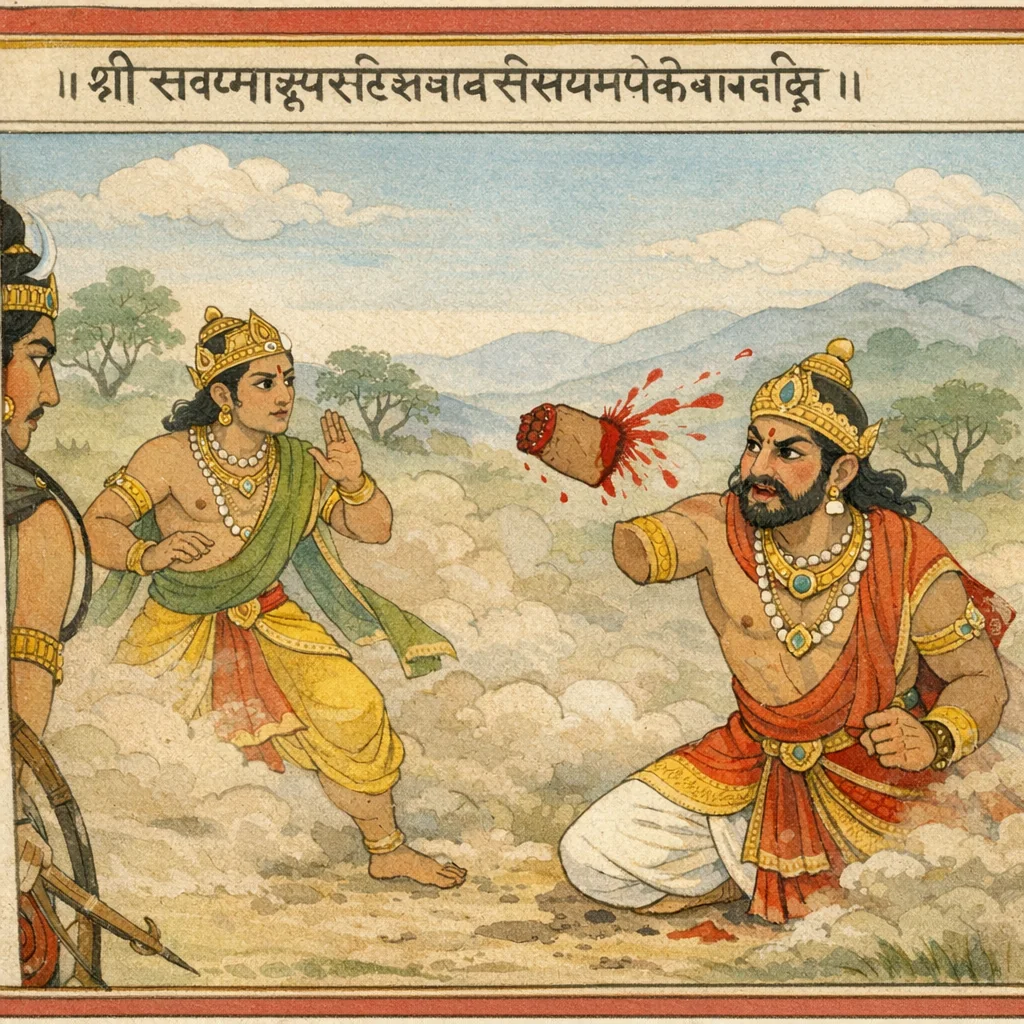
Chapter Arc: रणभूमि में भूरिश्रवा सात्यकि को पकड़ कर वध के लिए उद्यत है; उसी क्षण अदृश्य-वेग से किरीटी अर्जुन का बाण उठता है और प्रहार करने को उठी भुजा कटकर भूमि पर सर्प-सी गिरती है। → एकभुज भूरिश्रवा क्रोध और अपमान से दहक उठता है—वह सात्यकि को छोड़कर अर्जुन को धिक्कारता है कि यह ‘वार्ष्णेय’ (सात्यकि) को बचाने हेतु किया गया क्षुद्र कर्म है, जो वासुदेव-मत के अनुरूप नहीं। क्षत्रिय-समाज और रथी-समूह इस विवाद को सुनते हैं; युद्ध का नियम, प्रतिज्ञा और मित्र-रक्षा—तीनों टकराते हैं। → भूरिश्रवा, प्रतिज्ञा-भंग और अपमान की आग में, युद्ध से विरत होकर प्रायोपवेशन/योग-ध्यान का आश्रय लेता है—नेत्र सूर्य में, मन शीतल जल में समाहित कर ‘महोपनिषद्’ के भाव में स्थित होता है; उसी समय सात्यकि, अपने पूर्व अपमान/प्रतिज्ञा की स्मृति से प्रेरित होकर, उस विरक्त-स्थित शत्रु का वध कर देता है। → देव, सिद्ध, चारण और मनुष्य विस्मित होते हैं—एक ओर भूरिश्रवा का तपोमय अंत, दूसरी ओर रण-धर्म की कठोरता। अर्जुन की प्रतिज्ञा-रक्षा (सात्यकि की रक्षा) और सात्यकि का प्रतिशोध—दोनों के कारण यह वध ‘धर्म’ के प्रश्न को और तीखा कर देता है; युद्ध का नैतिक ध्रुव डगमगाता है। → भूरिश्रवा-वध के बाद प्रतिज्ञाओं की श्रृंखला और तीव्र होती है—अपमान का बदला लेने की प्रतिज्ञा और अगले प्रतिशोध की छाया रणभूमि पर उतर आती है।
Shlokas
Verse 1
(दाक्षिणात्य अधिक पाठके १६ श्लोक मिलाकर कुल ७३ ३ “लोक हैं।) #.१०3८६>-> हु #+ ३. पृथ्वीपर घुमाना। २. प्रतिद्वन्द्यीकी ओर बढ़ना। 3. पीछे लौटना। ४. पछाड़ना। ५. पृथ्वीपर पटकना। ६. उछलकर खड़ा होना। ७. पीठ लगाना। त्रिचत्वारिशर्दाधिकशततमो< ध्याय: भूरिश्रवाका अर्जुनको उपालम्भ देना, अर्जुनका उत्तर और आमरण अनशनके लिये बैठे हुए भूरिश्रवाका सात्यकिके द्वारा वध संजय उवाच स बाहुर्न्यपतद् भूमौ सखड्ग: सशुभाज़द: । आदधज्जीवलोकस्य दुःखमद्भुतमुत्तम:,संजय कहते हैं--राजन! भूरिश्रवाकी सुन्दर बाजूबंदसे विभूषित वह उत्तम बाँह समस्त प्राणियोंके मनमें अद्भुत दुःखका संचार करती हुई खड्गसहित कटकर पृथ्वीपर गिर पड़ी इस प्रकार श्रीमहाभारत द्रोणपर्वके अन्तर्गत जयद्रथवधपर्वमें थूरिश्रवाका वधविषयक एक सौ तैतालीसवाँ अध्याय पूरा हुआ ॥/ १४३ ॥। (दाक्षिणात्य अधिक पाठके ८३ “लोक मिलाकर कुल ८०३ श्लोक हैं।) फल न (0) आफजअत+- चतुश्नत्वारिशर्दाधिकशततमो< ध्याय: सात्यकिके भूरिश्रवाद्वारा अपमानित होनेका कारण तथा वृष्णिवंशी वीरोंकी प्रशंसा धृतराष्ट उवाच अजितो द्रोणराधेयविकर्णकृतवर्मभि: । तीर्ण: सैन्यार्णवं वीर: प्रतिश्रुत्य युधिषछ्ठिरे
Sañjaya said: O King, that noble arm—adorned with a splendid armlet—was severed and fell to the earth, still holding the sword. Its fall sent a strange and overwhelming grief through the hearts of living beings, for it marked a shocking turn in the battle’s moral order: prowess and honor were being undone by the brutal finality of war.
Verse 2
प्रहरिष्यन् हृतो बाहुरदृश्येन किरीटिना । वेगेन न्न्यपतद् भूमौ पठ्चास्य इव पन्नग:,प्रहार करनेके लिये उद्यत हुई वह भुजा अलक्ष्य अर्जुनके बाणसे कटकर पाँच मुखवाले सर्पकी भाँति बड़े वेगसे पृथ्वीपर गिर पड़ी
Sañjaya said: As that arm was raised to strike, it was severed by the unseen, swift shot of the diademed Arjuna; and with great force it fell to the earth, like a five-hooded serpent. The image underscores the ruthless precision of battle—where intent to harm is instantly checked by superior skill—while also hinting at the moral gravity of violence that, once unleashed, returns with terrifying consequence.
Verse 3
स मोघं कृतमात्मानं दृष्टवा पार्थेन कौरव: । उत्सृज्य सात्यकिं क्रोधाद् गर्हयामास पाण्डवम्,कुन्तीकुमार अर्जुनके द्वारा अपनेको असफल किया हुआ देख कुरुवंशी भूरिश्रवाने कुपित हो सात्यकिको छोड़कर पाण्डुनन्दन अर्जुनकी निन्दा करते हुए कहा
Sañjaya said: Seeing himself rendered futile—his effort made fruitless—by Pārtha (Arjuna), the Kaurava (Bhūriśravas), in anger, released Sātyaki and began to censure the Pāṇḍava, Arjuna. The moment frames how wrath in battle can shift a warrior from immediate combat to moral accusation, turning personal frustration into blame.
Verse 4
(स विबाहुर्महाराज एकपक्ष इवाण्डज: । एकचक्रो रथो यद्धद् धरणीमास्थितो नृपः । उवाच पाण्डवं चैव सर्वक्षत्रस्थ शृण्वतः ।।) महाराज! वे राजा भूरिश्रवा एक बाँहसे रहित हो एक पाँखके पक्षी और एक पहियेके रथकी भाँति पृथ्वीपर खड़े हो सम्पूर्ण क्षत्रियोंके सुनते हुए पाण्डुपुत्र अर्जुनसे बोले। भूरिश्रवा उवाच नृशंसं बत कौन्तेय कर्मेदे कृतवानसि । अपश्यतो विषक्तस्य यन्मे बाहुमचिच्छिद:,भूरिश्रवा बोले--कुन्तीकुमार! तुमने यह बड़ा कठोर कर्म किया है; क्योंकि मैं तुम्हें देख नहीं रहा था और दूसरेसे युद्ध करनेमें लगा हुआ था, उस दशामें तुमने मेरी बाँह काट दी है
Bhūrishravā said: “Alas, O son of Kuntī, you have done a cruel deed. For while I was not looking and was engaged in combat with another, you cut off my arm.”
Verse 5
कि नु वक्ष्यसि राजानं धर्मपुत्रं युधिष्ठिरम् । कि कुर्वाणो मया संख्ये हतो भूरिश्रवा रणे,तुम धर्मपुत्र राजा युधिष्ठिरसे क्या कहोगे? यही न कि “भूरिश्रवा किसी और कार्यमें लगे थे और मैंने उसी दशामें उन्हें युद्धमें मार डाला है”
Bhūriśravā said: “What will you say to King Yudhiṣṭhira, the son of Dharma? Will you say that Bhūriśravā was slain by me in battle while he was engaged in something else?”
Verse 6
इदमिन्द्रेण ते साक्षादुपदिष्टं महात्मना । अस्त्रं रुद्रेण वा पार्थ द्रोणेनाथ कृपेण वा,पार्थ! इस अस्त्र-विद्याका उपदेश तुम्हें साक्षात् महात्मा इन्द्रने दिया है, या रुद्र, द्रोण अथवा कृपाचार्यने?
Bhūriśravā pressed Arjuna about the source of his dreadful weapon-lore: “Was this very missile taught to you directly by the great Indra? Or by Rudra? Or by Droṇa? Or by Kṛpa, O Pārtha?”
Verse 7
ननु नामास्त्रधर्मज्ञस्त्वं लोके5 भ्यधिक: परै: । सोथ्युध्यमानस्य कथं रणे प्रहृतवानसि,तुम तो इस लोकमें दूसरोंसे अधिक अस्त्र-धर्मके ज्ञाता हो, फिर जो तुम्हारे साथ युद्ध नहीं कर रहा था, उसपर संग्राममें तुमने कैसे प्रहार किया?
Bhūriśravā said: “Surely you are famed in this world as surpassing others in knowledge of the dharma that governs weapons and battle. How then did you strike, in the midst of war, one who was not even rising to fight against you?”
Verse 8
न प्रमत्ताय भीताय विरथाय प्रयाचते । व्यसने वर्तमानाय प्रहरन्ति मनस्विन:,मनस्वी पुरुष असावधान, डरे हुए, रथहीन, प्राणों-की भिक्षा माँगनेवाले तथा संकटमें पड़े हुए मनुष्यपर प्रहार नहीं करते हैं
Bhūriśravā said: “Men of true spirit do not strike one who is heedless, or frightened, or deprived of his chariot, or begging for his life—nor one already caught in calamity. Such a blow is not valor but a breach of warrior-ethics.”
Verse 9
इदं तु नीचाचरितमसत्पुरुषसेवितम् | कथमाचरितं पार्थ पापकर्म सुदुष्करम्,पार्थ! यह नीच पुरुषोंद्वारा आचरित और दुष्ट पुरुषोंद्वारा सेवित अत्यन्त दुष्कर पापकर्म तुमने कैसे किया?
Bhūriśravā said: “This deed is base in conduct, the haunt of ignoble men. How, O Pārtha, did you come to perform so grievous and most difficult a sin?”
Verse 10
आर्येण सुकरं त्वाहुरार्यकर्म धनंजय । अनार्यकर्म त्वार्येण सुदुष्करतमं भुवि,धनंजय! श्रेष्ठ पुरुषके लिये श्रेष्ठ कर्म ही सुकर बताया गया है। नीच कर्मका आचरण तो इस पृथ्वीपर उसके लिये अत्यन्त दुष्कर माना गया है
Bhūriśravā said: “O Dhanañjaya, people say that for a noble person, noble action is easy to perform. But for that same noble person, to engage in ignoble conduct is the most difficult thing on earth.”
Verse 11
येषु येषु नरव्यात्र यत्र यत्र च वर्तते । आशु तच्छीलतामेति तदिदं त्वयि दृश्यते,नरव्याप्र! मनुष्य जहाँ-जहाँ जिन-जिन लोगोंके समीप रहता है, उसमें शीघ्र ही उन लोगोंका शीलस्वभाव आ जाता है; यही बात तुममें भी देखी जाती है
Bhūrīśravā said: “O tiger among men, wherever a person dwells and with whomever he keeps company, he swiftly takes on their disposition and conduct. That very truth is seen in you as well, O tiger among men.”
Verse 12
कथं हि राजवंश्यस्त्वं कौरवेयो विशेषत: । क्षत्रधर्मादपक्रान्त: सुवृत्तश्नरितव्रत:,अन्यथा राजाके वंशज और विशेषत: कुरुकुलमें उत्पन्न होकर भी तुम क्षत्रिय-धर्मसे कैसे गिर जाते? तुम्हारा शील-स्वभाव तो बहुत उत्तम था और तुमने श्रेष्ठ व्रतोंका पालन भी किया था
“How is it that you—of royal lineage, and born especially among the Kauravas—have fallen away from the kṣatriya’s dharma? Your conduct was once most excellent, and you observed noble vows.”
Verse 13
इदं तु यदत्तिक्षुद्रं वार्ष्णेयार्थे कृतं त्वया । वासुदेवमतं नूनं नैतत् त्वय्युपपद्यते,तुमने सात्यकिको बचानेके लिये जो यह अत्यन्त नीच कर्म किया है, यह निश्चय ही वसुदेवनन्दन श्रीकृष्णका मत है, तुममें यह नीच विचार सम्भव नहीं है
“But this act of yours—so utterly base—done for the sake of the Vārṣṇeya (Kṛṣṇa’s cause), must surely be in accordance with Vāsudeva’s counsel. Such a low intention does not truly befit you.”
Verse 14
को हि नाम प्रमत्ताय परेण सह युध्यते । ईदृशं व्यसन दद्यादू यो न कृष्णसखो भवेत्,कौन ऐसा मनुष्य है, जो दूसरेके साथ युद्ध करनेवाले असावधान योद्धाको ऐसा संकट प्रदान कर सकता है। जो श्रीकृष्णका मित्र न हो, उससे ऐसा कर्म नहीं बन सकता
Bhūriśravā said: “Who indeed would fight against an opponent who is heedless, and then inflict upon him such a calamity? Such a deed could not be accomplished by one who is not a friend of Kṛṣṇa.”
Verse 15
व्रात्या: संक्लिष्टकर्माण: प्रकृत्यैव च गर्लहिता: । वृष्ण्यन्धका: कथं पार्थ प्रमाणं भवता कृता:,कुन्तीनन्दन! वृष्णि और अन्धकवंशके लोग तो संस्कारभ्रष्ट हिंसा-प्रधान कर्म करनेवाले और स्वभावसे ही निन्दित हैं। फिर उनको तुमने प्रमाण कैसे मान लिया?
Bhūriśravā said: “The Vṛṣṇis and Andhakas are outcast-like men, tainted in their deeds, and by nature themselves blameworthy. O Pārtha, O son of Kuntī, how is it that you have taken them as an authority and standard of right conduct?”
Verse 16
अर्जुन उवाच व्यक्त हि जीर्यमाणो<5पि बुद्धि जरयते नर:,अर्जुन बोले--प्रभो! यह स्पष्ट है कि मनुष्यके बूढ़े होनेके साथ-साथ उसकी बुद्धि भी बूढ़ी हो जाती है। तुमने इस समय जो कुछ कहा है, वह सब व्यर्थ है। तुम सम्पूर्ण इन्द्रियोंके नियन्ता भगवान् श्रीकृष्णको और मुझ पाण्डुपुत्र अर्जुनको भी जानते हो, तो भी हमारी निन््दा करते हो
Arjuna said: “It is evident that as a man grows old, his understanding too becomes aged and impaired. Therefore, what you have just spoken is futile. You know Kṛṣṇa, the Lord who governs all the senses, and you know me as well—Arjuna, the son of Pāṇḍu—yet you still speak in a manner that amounts to censuring us.”
Verse 17
अनर्थकमिदं सर्व यत् त्वया व्यादह्वतं प्रभो । जानन्नेव हषीकेशं गर्हसे मां च पाण्डवम्,अर्जुन बोले--प्रभो! यह स्पष्ट है कि मनुष्यके बूढ़े होनेके साथ-साथ उसकी बुद्धि भी बूढ़ी हो जाती है। तुमने इस समय जो कुछ कहा है, वह सब व्यर्थ है। तुम सम्पूर्ण इन्द्रियोंके नियन्ता भगवान् श्रीकृष्णको और मुझ पाण्डुपुत्र अर्जुनको भी जानते हो, तो भी हमारी निन््दा करते हो
Arjuna said: “Lord, all that you have just uttered is pointless. Even though you know Hṛṣīkeśa (Kṛṣṇa), the master of the senses, and you know me, Arjuna the son of Pāṇḍu, you still censure us.”
Verse 18
संग्रामाणां हि धर्मज्ञ: सर्वशास्त्रार्थपारग: । न चाधर्ममहं कुर्या जानंश्वैव हि मुहासे,मैं संग्रामके धर्मोंको जानता हूँ और सम्पूर्ण वेद-शास्त्रोंके अर्थज्ञानमें पारंगत हूँ। मैं किसी प्रकार अधर्म नहीं कर सकता; यह जानते हुए भी तुम मेरे विषयमें मोहित हो रहे हो
I know the dharma of warfare and have mastered the meaning of all the Vedas and the sacred treatises. I cannot commit adharma; yet even knowing this, you are still deluded about me.
Verse 19
युध्यन्ति क्षत्रिया: शत्रून् स्वै: स्वैः परिवृता नरा: । भ्रातृभि: पितृभि: पुत्रैस्तथा सम्बन्धिबान्धवै:
Arjuna said: “Kshatriya warriors fight their enemies while surrounded by their own men—by brothers, fathers, and sons, and likewise by relatives and kinsmen.”
Verse 20
स कथं सात्यकिं शिष्यं सुखसम्बन्धमेव च,(निकृष्यमाणं तं दृष्टवा कथं शत्रुवशं गतम् । त्वया विकृष्यमाणं च दृष्टवानस्मि निष्क्रियम् ।।) सात्यकि मेरा शिष्य और सुखप्रद सम्बन्धी है। वह मेरे ही लिये अपने दुस्त्यज प्राणोंका मोह छोड़कर युद्ध कर रहा है। राजन! रणदुर्मद सात्यकि युद्धस्थलमें मेरी दाहिनी भुजाके समान है। उसे तुम्हारे द्वारा कष्ट पाते देख मैं कैसे उसकी उपेक्षा कर सकता था। मैंने देखा है तुम उसे घसीट रहे थे और वह शत्रुके अधीन होकर निश्चेष्ट हो गया था
Arjuna said: “How could I abandon Sātyaki—my disciple and a dear kinsman—when I saw him being dragged and brought under the enemy’s control? I myself witnessed you pulling him away, and he had become helpless and motionless. He has cast off attachment even to his hard-to-surrender life and fights for my sake; in the fury of battle he stands at my right hand like my own arm. Seeing him suffer at your hands, how could I possibly ignore him?”
Verse 21
अस्मदर्थ च युध्यन्तं त्यक्त्वा प्राणान् सुदुस्त्यजान् । मम बाहुं रणे राजन् दक्षिण युद्धदुर्मदम्,(निकृष्यमाणं तं दृष्टवा कथं शत्रुवशं गतम् । त्वया विकृष्यमाणं च दृष्टवानस्मि निष्क्रियम् ।।) सात्यकि मेरा शिष्य और सुखप्रद सम्बन्धी है। वह मेरे ही लिये अपने दुस्त्यज प्राणोंका मोह छोड़कर युद्ध कर रहा है। राजन! रणदुर्मद सात्यकि युद्धस्थलमें मेरी दाहिनी भुजाके समान है। उसे तुम्हारे द्वारा कष्ट पाते देख मैं कैसे उसकी उपेक्षा कर सकता था। मैंने देखा है तुम उसे घसीट रहे थे और वह शत्रुके अधीन होकर निश्चेष्ट हो गया था
Arjuna said: “For my sake Sātyaki fights, casting aside attachment even to those life-breaths so hard to relinquish. O King, in the fury of battle he is like my own right arm on the field. When I saw him being dragged, fallen under the enemy’s power and rendered helpless as you pulled him, how could I possibly ignore his distress?”
Verse 22
न चात्मा रक्षितव्यो वै राजन् रणगतेन हि । यो यस्य युज्यते<र्थेषु स वै रक्ष्यो नराधिप,राजन! रणभूमिमें गये हुए वीरके लिये केवल अपनी ही रक्षा करना उचित नहीं है। नरेश्वर! जो जिसके कार्योमें संलग्न होता है, वह अवश्य ही उसके द्वारा रक्षणीय हुआ करता है
Arjuna said: “O King, for one who has entered the battlefield, it is not proper to think only of protecting oneself. O lord of men, whoever is engaged in another’s cause and duties is, by that very relation, bound to be protected by the one whose cause he serves.”
Verse 23
तै रक्ष्यममाणै: स नृपो रक्षितव्यो महामृधे । यद्यहं सात्यकिं पश्ये वध्यमानं महारणे,इसी प्रकार उन सुरक्षित होनेवाले सुहृदोंका भी कर्तव्य है कि वे महासमरमें अपने राजाकी रक्षा करें। यदि मैं इस महायुद्धमें सात्यकिको अपने सामने मरते देखता तो उसके वियोगसे मुझे अनर्थकारी पाप लगता। इसीलिये मैंने उसकी रक्षा की है। अतः तुम मुझपर क्यों क्रोध करते हो?
“Those who are being protected have, in that great clash of arms, the duty to protect their king in return. If, in this mighty battle, I were to see Sātyaki being slain before my eyes, the grief of separation would weigh on me as a ruin-bringing sin. Therefore I protected him—why, then, are you angry with me?”
Verse 24
ततस्तस्य वियोगेन पाप॑ मेडनर्थतो भवेत् | रक्षितश्न मया यस्मात् तस्मात् क्रुध्यसि कि मयि,इसी प्रकार उन सुरक्षित होनेवाले सुहृदोंका भी कर्तव्य है कि वे महासमरमें अपने राजाकी रक्षा करें। यदि मैं इस महायुद्धमें सात्यकिको अपने सामने मरते देखता तो उसके वियोगसे मुझे अनर्थकारी पाप लगता। इसीलिये मैंने उसकी रक्षा की है। अतः तुम मुझपर क्यों क्रोध करते हो?
“Then, by being separated from him, a sin that brings calamity would fall upon me. Since I have protected him, why, for that reason, are you angry with me? In the same way, those loyal friends who are under protection also have the duty, in the great battle, to safeguard their king. If, in this mighty war, I were to see Sātyaki die before my eyes, his loss would weigh on me as a ruinous fault; therefore I protected him. So why do you direct your wrath at me?”
Verse 25
यच्च मे गर्हसे राजन्नन्येन सह संगतम् | अहं त्वया विनिकृतस्तत्र मे बुद्धिविभ्रम:,राजन्! आप जो यह कहकर मेरी निन्दा कर रहे हैं कि “अर्जुन! मैं दूसरेके साथ युद्धमें लगा हुआ था, उस दशामें तुमने मेरे साथ छल किया” आपकी इस बातसे मेरी बुद्धिमें भ्रम पैदा हो गया है
O King, when you censure me on the charge that, while you were engaged in combat with another, I dealt with you deceitfully, your accusation throws my understanding into confusion—forcing me to question what is truly righteous conduct amid the stratagems of war.
Verse 26
कवचं धुन्वतस्तुभ्यं रथं चारोहत: स्वयम् । धनुर्ज्या कर्षतश्चैव युध्यतः सह शत्रुभि:,तुम स्वयं कवच हिलाते हुए रथपर चढ़े थे, धनुषकी प्रत्यंचा खींचते थे और अपने बहुसंख्यक शत्रुओंके साथ युद्ध कर रहे थे। इस प्रकार रथ, हाथी, घुड़सवार और पैदलोंसे भरे हुए सिंहनादकी भैरव गर्जनासे व्याप्त गम्भीर सैन्य-समुद्रमें जहाँ अपने और शत्रुपक्षके एकत्र हुए लोगोंका परस्पर युद्ध चल रहा था, तुम्हारी सात्यकिके साथ मुठभेड़ हुई थी। ऐसे तुमुल युद्धमें किसी भी एक योद्धाका एक ही योद्धाके साथ संग्राम कैसे माना जा सकता है?
Arjuna said: “You yourself, shaking your armour, mounted your chariot; you drew the bowstring and fought amid the enemy host. In such a tumult—where chariots, elephants, horsemen, and foot-soldiers surged like a deep sea and the clash of gathered forces raged on—how can anyone claim that this was a ‘single combat’ of one warrior with one warrior, as though the battle were isolated from the surrounding mêlée?”
Verse 27
एवं रथगजाकीर्णे हयपत्तिसमाकुले । सिंहनादोद्धतरवे गम्भीरे सैन्यसागरे,तुम स्वयं कवच हिलाते हुए रथपर चढ़े थे, धनुषकी प्रत्यंचा खींचते थे और अपने बहुसंख्यक शत्रुओंके साथ युद्ध कर रहे थे। इस प्रकार रथ, हाथी, घुड़सवार और पैदलोंसे भरे हुए सिंहनादकी भैरव गर्जनासे व्याप्त गम्भीर सैन्य-समुद्रमें जहाँ अपने और शत्रुपक्षके एकत्र हुए लोगोंका परस्पर युद्ध चल रहा था, तुम्हारी सात्यकिके साथ मुठभेड़ हुई थी। ऐसे तुमुल युद्धमें किसी भी एक योद्धाका एक ही योद्धाके साथ संग्राम कैसे माना जा सकता है?
Arjuna said: “In that deep ocean of armies—choked with chariots and elephants, crowded with horsemen and foot-soldiers, and made dreadful by the swelling roar of lion-like battle-cries—where the gathered warriors of both sides were locked in mutual slaughter, you had a direct encounter with Sātyaki. In such a tumult, how can it be claimed that this was a ‘single combat’ of one warrior against one warrior?”
Verse 28
स्वै: परैश्न समेतेभ्य: सात्वतेन च संगमे । एकस्यैकेन हि कथं संग्राम: सम्भविष्यति,तुम स्वयं कवच हिलाते हुए रथपर चढ़े थे, धनुषकी प्रत्यंचा खींचते थे और अपने बहुसंख्यक शत्रुओंके साथ युद्ध कर रहे थे। इस प्रकार रथ, हाथी, घुड़सवार और पैदलोंसे भरे हुए सिंहनादकी भैरव गर्जनासे व्याप्त गम्भीर सैन्य-समुद्रमें जहाँ अपने और शत्रुपक्षके एकत्र हुए लोगोंका परस्पर युद्ध चल रहा था, तुम्हारी सात्यकिके साथ मुठभेड़ हुई थी। ऐसे तुमुल युद्धमें किसी भी एक योद्धाका एक ही योद्धाके साथ संग्राम कैसे माना जा सकता है?
Arjuna said: “In the clash where one’s own men and the enemy’s forces were gathered together, and where you also encountered Sātyaki, how can it be claimed that there was a ‘battle’ of just one warrior against one warrior? In such a tumult of war, with many combatants converging, the notion of a single, isolated duel is not credible.”
Verse 29
बहुभि: सह संगम्य निर्जित्य च महारथान् | श्रान्तश्न श्रान्तवाहश्न विमना: शस्त्रपीडित:,सात्यकि बहुत-से योद्धाओंके साथ युद्ध करके कितने ही महारथियोंको पराजित करनेके बाद थक गया था। उसके घोड़े भी परिश्रमसे चूर-चूर हो रहे थे और वह अस्त्र- शस्त्रोंसे पीड़ित हो खिन्नचित्त हो गया था
Arjuna said: “After joining battle with many warriors and overcoming numerous great chariot-fighters, Sātyaki has become exhausted. His horses too are worn out from strain, and he, afflicted by the blows of weapons, has grown dispirited and downcast.”
Verse 30
ईदृशं सात्यकिं संख्ये निर्जित्य च महारथम् । अधिकत्वं विजानीषे स्ववीर्यवशमागतम्,ऐसी अवस्थामें महारथी सात्यकिको युद्धमें जीतकर तुम यह समझने लगे कि मैं सात्यकिसे बड़ा वीर हूँ और वह मेरे पराक्रमसे वशमें आ गया है
Arjuna said: “Having thus defeated Sātyaki in the battle—he, a great chariot-warrior—you have come to think yourself superior, imagining that he has been brought under your control by your own prowess.”
Verse 31
यदिच्छसि शिरश्नलास्य असिना हन्तुमाहवे | तथा कृच्छूगतं चैव सात्यकिं क: क्षमिष्यति,इसलिये तुम युद्धस्थलमें तलवारसे उसका सिर काट लेना चाहते थे। सात्यकिको वैसे संकटमें देखकर मेरे पक्षका कौन वीर सहन करेगा?
Arjuna said: “If you truly wished to strike him down in battle with your sword and sever his head, then who among our warriors could bear to see Sātyaki brought into such peril? Seeing him in distress would be intolerable for our side.”
Verse 32
त्वं वै विगर्हयात्मानमात्मानं यो न रक्षसि । कथं करिष्यसे वीर यो वा त्वां संश्रयेज्जन:,तुम अपनी ही निन््दा करो, जो कि अपनी भी रक्षातक नहीं कर सकते। वीरवर! फिर जो तुम्हारे आश्रयमें होगा, उसकी रक्षा कैसे कर सकोगे?
“You are indeed censuring yourself—since you cannot even protect your own self. O hero, how then will you be able to protect anyone who comes to you seeking refuge and support?”
Verse 33
संजय उवाच एवमुक्तो महाबाहुर्यूपकेतुर्महायशा: । युयुधानं समुत्सृज्य रणे प्रायमुपाविशत्,संजय कहते हैं--राजन्! अर्जुनके ऐसा कहनेपर यूपके चिह्नसे युक्त ध्वजावाले महायशस्वी महाबाहु भूरिश्रवा सात्यकिको छोड़कर रणभूमिमें आमरण अनशनका नियम लेकर बैठ गये
Sañjaya said: Thus addressed, the mighty-armed and greatly renowned warrior whose banner bore the emblem of a sacrificial post (yūpa) released Yuyudhāna and, on the battlefield itself, sat down undertaking prāya—an austere vow to fast unto death.
Verse 34
शरानास्तीर्य सव्येन पाणिना पुण्यलक्षण: । यियासुर्ब्रह्य लोकाय प्राणान् प्राणेष्वधाजुहोत्,पवित्र लक्षणोंवाले भूरिश्रवाने बायें हाथसे बाण बिछाकर ब्रह्मलोकमें जानेकी इच्छासे प्राणायामके द्वारा प्राणोंको प्राणोंमें ही होम दिया
Sañjaya said: The virtuous Bhūriśravā, spreading arrows with his left hand as a sacred seat, and desiring to depart for Brahmaloka, offered his vital breaths into the vital breaths themselves—performing an inner oblation through disciplined breath-control.
Verse 35
सूर्य चक्षु: समाधाय प्रसन्न सलिले मन: । ध्यायन् महोपनिषदं योगयुक्तो5भवन्मुनि:,वे नेत्रोंको सूर्यमें और प्रसन्न मनको जलमें समाहित करके महोपनिषत्प्रतिपादित परब्रह्मका चिन्तन करते हुए योगयुक्त मुनि हो गये
Sañjaya said: Fixing his gaze upon the sun and settling his tranquil mind upon the clear water, the sage—absorbed in yoga—meditated on the Supreme Brahman as taught in the great Upaniṣadic wisdom.
Verse 36
ततः स सर्वसेनायां जन: कृष्णधनंजयौ । गर्हयामास तं॑ चापि शशंस पुरुषर्षभम्,तदनन्तर सारी कौरव-सेनाके लोग श्रीकृष्ण और अर्जुनकी निन्दा तथा नरश्रेष्ठ भूरिश्रवाकी प्रशंसा करने लगे
Sañjaya said: Then, throughout the whole army, the people began to censure Kṛṣṇa and Dhanañjaya (Arjuna), and, on the other hand, they praised that bull among men. In the charged moral air of the battlefield, public judgment turns swiftly—condemning what seems unfair while extolling valor and fidelity to warriorly honor.
Verse 37
निन्द्यमानौ तथा कृष्णौ नोचतु: किंचिदप्रियम् । ततः प्रशस्यमानश्नव नाहृष्यद् यूपकेतन:
Sañjaya said: Though the two Kṛṣṇas were being censured, they did not utter a single harsh or displeasing word. And when they were praised, Yūpaketana did not become elated—remaining steady amid blame and acclaim.
Verse 38
उनके द्वारा निन्दित होनेपर भी श्रीकृष्ण और अर्जुनने कोई अप्रिय बात नहीं कही तथा प्रशंसित होनेपर भी यूपकेतु भूरिश्रवाने हर्ष नहीं प्रकट किया ।। तांस्तथावादिनो राजन पुत्रांस्तव धनंजय: । अमृष्यमाणो मनसा तेषां तस्य च भाषितम्,राजन्! आपके पुत्र जब भूरिश्रवाकी ही भाँति निन्दाकी बातें कहने लगे, तब अर्जुन उनके तथा भूरिश्रवाके उस कथनको मन-ही-मन सहन न कर सके
Sañjaya said: Even when they were reviled, Kṛṣṇa and Arjuna did not reply with any harsh or improper word; and even when praised, Yūpaketu Bhūriśravas did not display exultation, O king. But when your sons began speaking in that same censorious manner, Dhanañjaya (Arjuna), unable to endure in his heart the words spoken by them and by Bhūriśravas, inwardly bristled with resentment.
Verse 39
असंक्रुद्धमना वाच: स्मारयन्निव भारत | उवाच पाण्डुतनय: साक्षेपमिव फाल्गुन:,भरतनन्दन! पाण्डुपुत्र अर्जुनके मनमें तनिक भी क्रोध नहीं हुआ। उन्होंने मानो पुरानी बातें याद दिलाते हुए, कौरवोंपर आक्षेप करते हुए-से कहा--
Sañjaya said: O Bhārata, the son of Pāṇḍu—Phālguna (Arjuna)—with a mind not at all inflamed by anger, spoke as though reminding them of former matters, and as though casting a pointed reproach upon the Kauravas. The verse highlights a warrior’s restraint: even amid battle, Arjuna’s words arise from recollection and moral censure rather than uncontrolled wrath.
Verse 40
मम सर्वेडपि राजानो जानन्त्येव महाव्रतम् । न शक्यो मामको हन्तुं यो मे स्थादू बाणगोचरे,“सब राजा मेरे इस महान् व्रतको जानते ही हैं कि जो कोई मेरा आत्मीयजन मेरे बाणोंकी पहुँचके भीतर होगा, वह किसी शत्रुके द्वारा मारा नहीं जा सकता
Sañjaya said: “All the kings already know my great vow: no enemy can slay any one of my own people, so long as he remains within the range of my arrows.”
Verse 41
यूपकेतो निरीक्ष्यैतन्न मार्महसि गर्लितुम् न हि धर्ममविज्ञाय युक्त गर्हयितुं परम्,'यूपध्वज भूरिश्रवाजी! इस बातपर ध्यान देकर आपको मेरी निन्दा नहीं करनी चाहिये। धर्मके स्वरूपको जाने बिना दूसरे किसीकी निन््दा करना उचित नहीं है
Sañjaya said: “O Yūpaketu, having considered this matter, you should not censure me. For without understanding what dharma truly is, it is not proper to reproach another.”
Verse 42
आत्तशस्त्रस्य हि रणे वृष्णिवीरं जिघांसत: । यदहं बाहुमच्छैत्सं न स धर्मो विगर्हित:,“आप तलवार हाथमें लेकर रणभूमिमें वृष्णिवीर सात्यकिका वध करना चाहते थे। उस दशामें मैंने जो आपकी बाँह काट डाली है, वह आश्रितररक्षारूप धर्म निन्दित नहीं है
Sañjaya said: “For you, weapon in hand on the battlefield, were intent on killing the Vṛṣṇi hero Sātyaki. In that situation, the act by which I cut off your arm is not a blameworthy deed; it is a righteous act performed to protect one who had sought refuge.”
Verse 43
न्यस्तशस्त्रस्य बालस्य विरथस्य विवर्मण: । अभिमन्योर्व॑धं तात धार्मिक: को नु पूजयेत्,तात! बालक अभिमन्यु शस्त्र, कवच और रथसे हीन हो चुका था, उस दशामें जो उसका वध किया गया, उसकी कौन धार्मिक पुरुष प्रशंसा कर सकता है
Sañjaya said: “O dear one, when the boy Abhimanyu had laid down his weapons and was left without chariot and without armour, who among righteous men could possibly praise the killing of him in that condition?”
Verse 44
(दुर्योधनस्य क्षुद्रस्यथ न प्रमाणेडवतिष्ठत: । सौमदत्तेरव॑ध: साधु: स वै साहाय्यकारिण: ।। “जो शास्त्रीय मर्यादामें स्थित नहीं रहता, उस नीच दुर्योधनकी सहायता करनेवाले सोमदत्तकुमार भूरिश्रवाका जो इस प्रकार वध हुआ है, वह ठीक ही है। अस्मदीया मया रक्ष्या: प्राणबाध उपस्थिते । ये मे प्रत्यक्षतों वीरा हन्येरन्निति मे मति: ।। “मेरा यह दृढ़ निश्चय है कि मुझे प्राण-संकट उपस्थित होनेपर आत्मीय जनोंकी रक्षा करनी चाहिये; विशेषत: उन वीरोंकी जो मेरी आँखोंके सामने मारे जा रहे हों। सात्यकिश्न वश॑ नीत: कौरवेण महात्मना । ततो मयैतच्चरितं प्रतिज्ञारक्षणं प्रति ।। “कुरुवंशी महामना भूरिश्रवाने सात्यकिको अपने वशमें कर लिया था। इसीसे अपनी प्रतिज्ञाकी रक्षाके लिये मैंने यह कार्य किया है'। संजय उवाच पुनश्चव कृपया5<विष्टो बहु तत्तद् विचिन्तयन् उवाच चैनं कौरव्यमर्जुन: शोकपीडित: ।। संजय कहते हैं--राजन्! फिर बहुत-सी भिन्न-भिन्न बातें सोचकर अर्जुन दयासे द्रवित और शोकसे पीड़ित हो उठे तथा कुरुवंशी भूरिश्रवासे इस प्रकार बोले। अजुन उवाच धिगस्तु क्षत्रधर्म तु यत्र त्वं पुरुषेश्चर: । अवस्थामीदृशीं प्राप्त: शरण्य: शरणप्रद: । अर्जुनने कहा--उस क्षत्रिय-धर्मको धिक्कार है, जहाँ दूसरोंको शरण देनेवाले आप- जैसे शरणागतवत्सल नरेश एसी अवस्थाको जा पहुँचे हैं। को हि नाम पुमॉल्लोके मादृश: पुरुषोत्तम: । प्रहरेत् त्वद्विधं त्वद्य प्रतिज्ञा यदि नो भवेत् ।।) यदि पहलेसे प्रतिज्ञा न की गयी होती तो संसारमें मेरे-जैसा कौन श्रेष्ठ पुरुष आप-जैसे गुरुजनपर आज ऐसा प्रहार कर सकता था। एवमुक्त: स पार्थेन शिरसा भूमिमस्पृशत् । पाणिना चैव सब्येन प्राहिणोदस्य दक्षिणम्,कुन्तीकुमार अर्जुनके ऐसा कहनेपर भूरिश्रवाने अपने मस्तकसे भूमिका स्पर्श किया। बायें हाथसे अपना दाहिना हाथ उठाकर अर्जुनके पास फेंक दिया
Arjuna said: “Since that petty Duryodhana does not stand within the bounds of rightful conduct, the slaying of Somadatta’s son (Bhūriśravas)—as one who aided him—was indeed fitting. When life is in danger, it is my firm resolve to protect my own people—especially those heroes who are being struck down before my very eyes. Bhūriśravas, the high-souled Kuru, had brought Sātyaki under his control; therefore, to safeguard my vow, I acted in this way.” Sañjaya said: “O King, then Arjuna—overcome with compassion, thinking over many matters, and afflicted with grief—spoke again to the Kuru Bhūriśravas: ‘Shame upon that kṣatriya code by which you, a lord among men—one who grants refuge and is worthy to be sought for refuge—have come to such a state. If there had been no prior vow, who in this world, even one like me, could strike today a venerable man such as you?’ Thus addressed by Pārtha, Bhūriśravas touched the earth with his head, and with his left hand he lifted up and cast away his right arm toward Arjuna.
Verse 45
एतत् पार्थस्य तु वचस्तत: श्र॒ुत्वा महाद्युति: । यूपकेतुर्महाराज तूष्णीमासीदवाड्मुख:,महाराज! पार्थकी उपर्युक्त बात सुनकर यूप-चिह्लित ध्वजावाले महातेजस्वी भूरिश्रवा नीचे मुँह किये मौन रह गये
Hearing these words spoken by Pārtha, the radiant warrior Yūpaketu—O King—fell silent, his face lowered.
Verse 46
अर्जुन उवाच या प्रीतिर्थर्मराजे मे भीमे च बलिनां वरे । नकुले सहदेवे च सा मे त्वयि शलाग्रज,उस समय अर्जुनने कहा--शलके बड़े भाई भूरिश्रवाजी! मेरा जो प्रेम धर्मराज युधिष्ठिर, बलवानोंमें श्रेष्ठ भीमसेन, नकुल और सहदेवमें है, वही आपमें भी है
Arjuna said: “The affection I bear for Dharmarāja Yudhiṣṭhira, for Bhīma—the foremost among the strong—and for Nakula and Sahadeva, that same affection I bear for you as well, O elder brother of Śala. Even amid the fury of battle, I acknowledge kinship-like regard and the claims of honor that bind noble warriors.”
Verse 47
मया त्वं समनुज्ञात: कृष्णेन च महात्मना । गच्छ पुण्यकृताललोकान् शिबिरौशीनरो यथा,मैं और महात्मा भगवान् श्रीकृष्ण आपको यह आज्ञा देते हैं कि आप उशीनरपुत्र शिबिके समान पुण्यात्मा पुरुषोंके लोकोंमे जायेँ
Arjuna said: “You have been granted leave by me, and also by the great-souled Krishna. Go now to the worlds attained by the doers of merit—like Śibi, the son of Uśīnara.”
Verse 48
वासुदेव उवाच ये लोका मम विमला: सकृद् विभाता ब्रह्माद्ये: सुरवृषभैरपीष्यमाणा: । तान् क्षिप्रं ब्रज सतताग्निहोत्रयाजिन् मत्तुल्यो भव गरुडोत्तमाड्यान:,भगवान् श्रीकृष्ण बोले--निरन्तर अग्निहोत्रद्वारा यजन करनेवाले भूरिश्रवाजी! मेरे जो निरन्तर प्रकाशित होनेवाले निर्मल लोक हैं और ब्रह्मा आदि देवेश्वर भी जहाँ जानेकी सदैव अभिलाषा रखते हैं, उन्हीं लोकोंमें आप शीघ्र पधारिये और मेरे ही समान गरुड़की पीठपर बैठकर विचरनेवाले होइये
Vāsudeva said: “Go quickly to those stainless worlds of Mine, ever radiant, which even Brahmā and the foremost of the gods continually long to attain. O performer of unceasing Agnihotra, enter them at once; become like Me—one who moves seated upon the excellent Garuḍa.”
Verse 49
संजय उवाच उत्थित: स तु शैनेयो विमुक्त: सौमदत्तिना । खड्गमादाय चिच्छित्सु: शिरस्तस्य महात्मन:,संजय कहते हैं--राजन्! सोमदत्तकुमार भूरिश्रवाके छोड़ देनेपर शिनिपौत्र सात्यकि उठकर खड़े हो गये। फिर उन्होंने तलवार लेकर महामना भूरिश्रवाका सिर काट लेनेका निश्चय किया
Sañjaya said: “O King! When Bhūriśravas, the son of Somadatta, released him, Sātyaki, descendant of Śini, rose to his feet. Then, taking up his sword, he resolved to cut off the head of the high-souled Bhūriśravas.”
Verse 50
निहतं पाण्डुपुत्रेण प्रसक्त भूरिदक्षिणम् इयेष सात्यकिह्न्तुं शलाग्रजमकल्मषम्
Sañjaya said: “When Bhūridakṣiṇa—deeply engaged in the fight—was slain by a son of Pāṇḍu, Śalā’s elder brother, the blameless warrior, resolved to kill Sātyaki.”
Verse 51
निकृत्तभुजमासीनं छिन्नहस्तमिव द्विपम् । शलके बड़े भाई प्रचुर दक्षिणा देनेवाले भूरिश्रवा सर्वथा निष्पाप थे। पाण्डुपुत्र अर्जुनने उनकी बाँह काटकर उनका वध-सा ही कर दिया था और इसीलिये वे आमरण अनशनका निश्चय लेकर ध्यान आदि अन्य कार्योमें आसक्त हो गये थे। उस अवस्थामें सात्यकिने बाँह कट जानेसे सूँड़ कटे हाथीके समान बैठे हुए भूरिश्रवाको मार डालनेकी इच्छा की || ५०६ || क्रोशतां सर्वसैन्यानां निन्द्यमान: सुदुर्मना:,उस समय समस्त सेनाके लोग चिल्ला-चिल्लाकर सात्यकिकी निन्दा कर रहे थे। परंतु सात्यकिकी मनोदशा बहुत बुरी थी। भगवान् श्रीकृष्ण तथा महात्मा अर्जुन भी उन्हें रोक रहे थे। भीमसेन, चक्ररक्षक युधामन्यु और उत्तमौजा, अश्वत्थामा, कृपाचार्य, कर्ण, वृषसेन तथा सिंधुराज जयद्रथ भी उन्हें मना करते रहे, किंतु समस्त सैनिकोंके चीखने-चिल्लानेपर भी सात्यकिने उस व्रतधारी भूरिश्रवाका वध कर ही डाला
Sañjaya said: Bhūriśravas, his arm severed, sat there like an elephant whose trunk has been cut off. As all the warriors cried out and condemned the act, Sātyaki—his mind darkened and agitated—pressed on with the intent to kill him. Though Kṛṣṇa and Arjuna, and many others on both sides, tried to restrain him, Sātyaki, unmoved by the outcry of the entire host, slew the vow-observing Bhūriśravas—an act widely judged blameworthy because it struck a disarmed, ascetic-minded foe.
Verse 52
वार्यमाण: स कृष्णेन पार्थेन च महात्मना । भीमेन चक्ररक्षाभ्याम श्वत्थाम्ना कृपेण च,उस समय समस्त सेनाके लोग चिल्ला-चिल्लाकर सात्यकिकी निन्दा कर रहे थे। परंतु सात्यकिकी मनोदशा बहुत बुरी थी। भगवान् श्रीकृष्ण तथा महात्मा अर्जुन भी उन्हें रोक रहे थे। भीमसेन, चक्ररक्षक युधामन्यु और उत्तमौजा, अश्वत्थामा, कृपाचार्य, कर्ण, वृषसेन तथा सिंधुराज जयद्रथ भी उन्हें मना करते रहे, किंतु समस्त सैनिकोंके चीखने-चिल्लानेपर भी सात्यकिने उस व्रतधारी भूरिश्रवाका वध कर ही डाला
Sañjaya said: Though he was being restrained by Kṛṣṇa and by the great-souled Pārtha (Arjuna), and also by Bhīma, by the two protectors of the chariot-wheel, and by Aśvatthāman and Kṛpa, he did not desist. The scene underscores a moral crisis on the battlefield: even when eminent warriors urge restraint, the momentum of wrath and the pressure of public outcry can drive a fighter toward an act that will be judged against dharma—especially when the opponent is under a vow and has been rendered vulnerable.
Verse 53
कर्णेन वृषसेनेन सैन्धवेन तथैव च । विक्रोशतां च सैन्यानामवधीत् तं धृतव्रतम्,उस समय समस्त सेनाके लोग चिल्ला-चिल्लाकर सात्यकिकी निन्दा कर रहे थे। परंतु सात्यकिकी मनोदशा बहुत बुरी थी। भगवान् श्रीकृष्ण तथा महात्मा अर्जुन भी उन्हें रोक रहे थे। भीमसेन, चक्ररक्षक युधामन्यु और उत्तमौजा, अश्वत्थामा, कृपाचार्य, कर्ण, वृषसेन तथा सिंधुराज जयद्रथ भी उन्हें मना करते रहे, किंतु समस्त सैनिकोंके चीखने-चिल्लानेपर भी सात्यकिने उस व्रतधारी भूरिश्रवाका वध कर ही डाला
Sañjaya said: Even as Karṇa, Vṛṣasena, and Jayadratha (the lord of Sindhu) protested, and as the armies cried out in alarm, Sātyaki nevertheless slew that steadfast man of vowed conduct. The moment is ethically charged: the battlefield’s collective outcry and the attempts of great warriors to restrain him highlight how rage and the momentum of violence can overwhelm the restraints of dharma, even when the victim is known for ascetic resolve and disciplined vows.
Verse 54
प्रायोपविष्टाय रणे पार्थेन छिन्नबाहवे । सात्यकि: कौरवेयाय खड्गेनापाहरच्छिर:,रणभूमिमें अर्जुनने जिनकी भुजा काट डाली थी तथा जो आमरण उपवासका व्रत लेकर बैठे थे, उन भूरिश्रवापर सात्यकिने खड़्गका प्रहार किया और उनका सिर काट लिया
Sañjaya said: When Bhūriśravas—his arm severed in battle by Pārtha (Arjuna)—sat down on the battlefield undertaking the vow of fasting unto death, Sātyaki struck him with a sword and cut off his head. The moment is ethically charged: it depicts the collapse of restraint amid war, where a warrior engaged in a death-vow is slain, raising questions about dharma, vengeance, and the limits of righteous conduct in combat.
Verse 55
-7““«मन्धनी0 ५ पी एक /ि ” कक कक * ब्की . नाभ्यनन्दन्त सैन्यानि सात्यकिं तेन कर्मणा । अर्जुनेन हतं॑ पूर्व यज्जघान कुरूद्गबहम्,अर्जुनने पहले जिन्हें मार डाला था, उन कुरुश्रेष्ठ भूरिश्रवाका सात्यकिने जो वध किया, उनके उस कर्मसे सैनिकोंने उनका अभिनन्दन नहीं किया
Sañjaya said: The armies did not rejoice at that deed of Sātyaki—because he slew Bhūriśravas, the foremost of the Kurus, who had already been struck down earlier by Arjuna. In the moral atmosphere of the battle, this act was seen not as a clean victory but as a troubling killing of one already disabled, and thus it drew no acclaim from the soldiers.
Verse 56
सहस्राक्षसमं चैव सिद्धचारणमानवा: । भूरिश्रवसमालोक्य युद्धे प्रायगतं हतम्
Sañjaya said: Seeing Bhūriśravas—brought in battle to the very brink of death and then slain—Siddhas, Cāraṇas, and men, and even beings like Indra, looked on in astonishment. Thus the fall of a great warrior became a moral spectacle for the worlds, calling all to reflect on the cost of wrath and the frailty of life amid war.
Verse 57
पक्षवादांश्व सुबहून् प्रावदंस्तव सैनिका:,आपके सैनिकोंने सात्यकिके पक्ष और विपक्षमें बहुत-सी बातें कहीं। अन्तमें वे इस प्रकार बोले--“इसमें सात्यकिका कोई अपराध नहीं है। होनहार ही ऐसी थी। इसलिये आपलोगोंको अपने मनमें क्रोध नहीं करना चाहिये; क्योंकि क्रोध ही मनुष्योंके लिये अधिक दुःखदायी होता है
Sañjaya said: Your soldiers argued at length, setting forth many points for and against Sātyaki. In the end they concluded: “Sātyaki bears no fault in this matter; such was what had to come to pass. Therefore do not harbor anger in your hearts, for anger itself brings the greatest suffering to human beings.”
Verse 58
न वार्ष्णेयस्यापराधो भवितव्यं हि तत् तथा । तस्मान्मन्युर्न व: कार्य: क्रोधो दुः:खतरो नृणाम्,आपके सैनिकोंने सात्यकिके पक्ष और विपक्षमें बहुत-सी बातें कहीं। अन्तमें वे इस प्रकार बोले--“इसमें सात्यकिका कोई अपराध नहीं है। होनहार ही ऐसी थी। इसलिये आपलोगोंको अपने मनमें क्रोध नहीं करना चाहिये; क्योंकि क्रोध ही मनुष्योंके लिये अधिक दुःखदायी होता है
Sañjaya said: “This is not an offence of the Vārṣṇeya (Sātyaki); it had to happen just so. Therefore do not give place to resentment, for anger is a deeper source of suffering for human beings.”
Verse 59
हन्तव्यश्वैव वीरेण नात्र कार्या विचारणा । विहितो हास्य धात्रैव मृत्यु: सात्यकिराहवे,“वीर सात्यकिके द्वारा ही भूरिश्रवा मारे जानेवाले थे। विधाताने युद्धस्थलमें ही सात्यकिको उनकी मृत्यु निश्चित कर दिया था; इसलिये इसमें विचार नहीं करना चाहिये
Sañjaya said: “He was indeed to be slain by the hero; there is no room for deliberation here. For the Creator Himself had already ordained his death on the battlefield.”
Verse 60
सात्यकिरुवाच न हन्तव्यो न हन्तव्य इति यन्मां प्रभाषत । धर्मवादैरधर्मिष्ठा धर्मकज्चुकमास्थिता:,सात्यकि बोले--धर्मका चोला पहनकर खड़े हुए अधर्मपरायण पापात्माओ! इस समय धर्मकी बातें बनाते हुए तुमलोग जो मुझसे बारंबार कह रहे हो कि “न मारो, न मारो' उसका उत्तर मुझसे सुन लो
Sātyaki said: “You who cling to adharma while standing clad in the garb of dharma! At this moment you keep telling me again and again, ‘Do not kill, do not kill,’ sheltering behind pious talk—now hear my reply.”
Verse 61
यदा बाल: सुभद्राया: सुतः शस्त्रविना कृत: । युष्माभिनििहतो युद्धे तदा धर्म: क्व वो गत:,जब तुमलोगोंने सुभद्राके बालक पुत्र अभिमन्युको युद्धमें शस्त्रहीन करके मार डाला था, उस समय तुम्हारा धर्म कहाँ चला गया था?
Sañjaya said: “When Subhadrā’s young son was rendered weaponless and then slain by you in battle, where had your dharma gone at that moment?”
Verse 62
मया त्वेतत् प्रतिज्ञातं क्षेपे कस्मिंश्षिदेव हि । यो मां निष्पिष्य संग्रामे जीवन् हन्यात् पदा रुषा
Sañjaya said: “I had indeed made this vow—on some occasion or other—that whoever, after crushing me in battle, should still be alive and then strike me down in anger with his foot…”
Verse 63
चेष्टमानं प्रतीघाते सभुजं मां सचक्षुष:,मेरी बाँहें मौजूद हैं और मैं अपने ऊपर किये गये आघातका बदला लेनेकी निरन्तर चेष्टा करता आया हूँ तो भी तुमलोग आँख रहते हुए भी यदि मुझे मरा हुआ मान लेते हो, तो यह तुम्हारी बुद्धिकी मन्दताका परिचायक है। कुरुश्रेष्ठ वीरो! मैंने तो भूरिश्रवाका वध करके बदला चुकाया है, जो सर्वथा उचित है
Sañjaya said: “My arms are still with me, and I have continually striven to repay the blow dealt to me. Yet if you, though having eyes, still regard me as one already slain, that only reveals the dullness of your understanding. O foremost heroes of the Kurus! I have indeed discharged my vengeance by killing Bhūriśravas—and that, in my view, was wholly proper.”
Verse 64
मन्यध्वं मृत इत्येवमेतद् वो बुद्धिलाघवम् । युक्तो हास्य प्रतीघात: कृतो मे कुरुपुड्रवा:,मेरी बाँहें मौजूद हैं और मैं अपने ऊपर किये गये आघातका बदला लेनेकी निरन्तर चेष्टा करता आया हूँ तो भी तुमलोग आँख रहते हुए भी यदि मुझे मरा हुआ मान लेते हो, तो यह तुम्हारी बुद्धिकी मन्दताका परिचायक है। कुरुश्रेष्ठ वीरो! मैंने तो भूरिश्रवाका वध करके बदला चुकाया है, जो सर्वथा उचित है
Sañjaya said: “If you think, ‘He is surely dead,’ that only shows the shallowness of your judgment. O foremost of the Kurus, retaliation was indeed fitting in this case; I have taken due revenge.”
Verse 65
यत् तु पार्थन मां दृष्टवा प्रतिज्ञामभिरक्षता | सखडूगो<स्य हतो बाहुरेतेनैवास्मि वज्चित:,कुन्तीकुमार अर्जुनने अपनी प्रतिज्ञाकी रक्षा करते हुए जो मुझे संकटमें देखकर भूरिश्रवाकी तलवारसहित बाँह काट डाली, इसीसे मैं भूरिश्रवाको मारनेके यशसे वंचित रह गया
But when Pārtha (Arjuna), seeing me in distress, acted to uphold his vow, he cut off Bhūriśravas’s arm together with the sword. By that very act I was deprived of the glory of slaying Bhūriśravas myself.
Verse 66
भवितव्यं हि यद् भावि दैवं चेष्टयतीव च । सो<यं हतो विमर्देडस्मिन् किमत्राधर्मचेष्टितम्,जो होनहार होती है, उसके अनुकूल ही दैव चेष्टा कराता है। इसीके अनुसार इस संग्राममें भूरिश्रवा मारे गये हैं। इसमें अधर्मपूर्ण चेष्टा क्या है?
Sañjaya said: “What is destined to occur will indeed occur, and Fate itself seems to set actions in motion accordingly. Thus, in this very clash, Bhūriśravas has been slain in keeping with that destiny. What, then, is there here that can be called an unrighteous act?”
Verse 67
अपि चायं पुरा गीत: श्लोको वाल्मीकिना भुवि । न हन्तव्या: स्त्रिय इति यद् ब्रवीषि प्लवड्भम,महर्षि वाल्मीकिने पूर्वकालमें ही इस भूतलपर एक श्लोकका गान किया है। जिसका भावार्थ इस प्रकार है--“वानर! तुम जो यह कहते हो कि स्त्रियोंका वध नहीं करना चाहिये, उसके उत्तरमें मेरा यह कहना है कि उद्योगी मनुष्यके लिये सदा सब समय वह कार्य करने ही योग्य माना गया है, जो शत्रुओंको पीड़ा देनेवाला हो”
Sañjaya said: “Moreover, long ago on this very earth, Vālmīki sang this verse: ‘Women are not to be slain.’ O monkey-warrior, since you speak thus, the reply is this: for one who is resolute and striving, that deed is always held to be fit which brings suffering to the enemies.”
Verse 68
सर्वकालं मनुष्येण व्यवसायवता सदा । पीडाकरममित्राणां यत् स्यात् कर्तव्यमेव तत्,महर्षि वाल्मीकिने पूर्वकालमें ही इस भूतलपर एक श्लोकका गान किया है। जिसका भावार्थ इस प्रकार है--“वानर! तुम जो यह कहते हो कि स्त्रियोंका वध नहीं करना चाहिये, उसके उत्तरमें मेरा यह कहना है कि उद्योगी मनुष्यके लिये सदा सब समय वह कार्य करने ही योग्य माना गया है, जो शत्रुओंको पीड़ा देनेवाला हो”
Sañjaya said: “At all times, for a person of firm resolve and enterprise, that deed alone is to be done which brings affliction to one’s enemies.”
Verse 69
संजय उवाच एवमुक्ते महाराज सर्वे कौरवपुड्रवा: । न सम किंचिदभाषन्त मनसा समपूजयन्,संजय कहते हैं--महाराज! सात्यकिके ऐसा कहनेपर समस्त श्रेष्ठ कौरवोंने उसके उत्तरमें कुछ नहीं कहा। वे मन-ही-मन उनकी प्रशंसा करने लगे
Sañjaya said: “O King, when this had been spoken, all the foremost among the Kauravas gave no reply at all. Instead, in their hearts they silently honored him—approving his words and praising his stance.”
Verse 70
मन्त्राभिपूतस्य महाध्वरेषु यशस्विनो भूरिसहस्रदस्य च । मुनेरिवारण्यगतस्य तस्य न तत्र कश्चिद् वधमभ्यनन्दत,बड़े-बड़े यज्ञोंमें मन्त्रयुक्त अभिषेकसे जो पवित्र हो चुके थे, यज्ञोंमें कई हजार स्वर्णमुद्राओंकी दक्षिणा देते थे, जिनका यश सर्वत्र फैला हुआ था और जो वनवासी मुनिके समान वहाँ बैठे हुए थे, उन भूरिश्रवाके वधका किसीने भी अभिनन्दन नहीं किया
Sañjaya said: “No one there approved the killing of Bhūriśravas—renowned for having been consecrated by mantra in great sacrificial rites, famed for giving thousands in gifts at yajñas, and seated like an ascetic sage dwelling in the forest. His death, though occurring amid the fury of war, was felt as ethically troubling rather than worthy of celebration.”
Verse 71
वर देनेवाले भूरिश्रवाका नीले केशोंसे अलंकृत तथा कबूतरके समान लाल नेत्रोंवाला वह कटा हुआ सिर ऐसा जान पड़ता था, मानो अश्वमेधके मेध्य अश्वका कटा हुआ मस्तक अग्निकुण्डके भीतर रखा गया हो
Sañjaya said: The severed head of Bhūriśravas—renowned as a giver of boons—adorned with dark hair and bearing reddish eyes like those of a pigeon, appeared as though the cut head of the consecrated horse of an Aśvamedha sacrifice had been placed within the fire-pit.
Verse 72
स तेजसा शस्त्रकृतेन पूतो महाहवे देहवरं विसृज्य । आक्रामदूर्ध्व वरदो वराहों व्यावृत्त्य धर्मेण परेण रोदसी,वरदायक तथा वर पानेके योग्य भूरिश्रवाने उस महायुद्धमें शस्त्रके तेजसे पवित्र हो अपने उत्तम शरीरका परित्याग करके उत्कृष्ट धर्मके द्वारा पृथ्वी और आकाशको लाँघकर ऊर्ध्वलोकमें गमन किया
Sañjaya said: Purified in that great battle by the fiery power of weapons, he cast off his excellent body. Then, worthy of boons and a giver of boons, Bhūriśravā rose upward—having, by supreme dharma, crossed beyond earth and sky to the higher worlds.
Verse 73
सुनीलकेशं वरदस्य तस्य शूरस्य पारावतलोहिताक्षम् | अश्वस्य मेध्यस्य शिरो निकृत्तं न्यस्तं हविर्धानमिवान्तरेण
Sañjaya said: “The head of that heroic, boon-giving one—dark-maned and with eyes red like a pigeon—had been cut off and set down apart, as if it were an oblation placed in the offering-vessel.”
Verse 143
इति श्रीमहाभारते द्रोणपर्वणि जयद्रथवधपर्वणि भूरिश्रवोवधे त्रिचत्वारिंशदधिकशततमो< ध्याय:
Thus ends the one-hundred-and-forty-third chapter of the Droṇa Parva in the Śrī Mahābhārata—within the section on the slaying of Jayadratha—specifically the episode concerning the death of Bhūriśravas.
Verse 153
एवमुक्तो रणे पार्थों भूरिश्रवसमब्रवीत् | रणभूमिमें भूरिश्रवाके ऐसा कहनेपर अर्जुनने उससे कहा
Thus addressed amid the clash of battle, Pārtha (Arjuna) replied to Bhūriśravas.
Verse 196
वयस्यैरथ मित्रैश्व ते च बाहुं समाश्रिता: । क्षत्रियलोग अपने-अपने भाई, पिता, पुत्र, सम्बन्धी, बन्धु-बान्धवों, समान अवस्थावाले साथी और मित्रोंसे घिरकर शत्रुओंके साथ युद्ध करते हैं। वे सब लोग उस प्रधान योद्धाके बाहुबलके अश्रित होते हैं
Arjuna said: “Surrounded by their own brothers, fathers, sons, relatives, kinsmen, and companions of the same age—together with friends—kṣatriyas enter battle against their enemies. Yet all of them depend upon the strength of the arm of that foremost warrior, taking shelter in his might.”
Verse 563
अपूजयन्त त॑ देवा विस्मितास्ते5स्य कर्मभि: । युद्धमें प्रायोपवेशन करनेवाले, इन्द्रके समान पराक्रमी भूरिश्रवाको मारा गया देख सिद्ध, चारण, मनुष्य और देवताओंने उनका गुणगान किया; क्योंकि वे भूरिश्रवाके कर्मोंसे आश्चर्यचकित हो रहे थे
Sañjaya said: “The gods honored him, astonished at his deeds. Seeing Bhūriśravas—heroic like Indra—slain while he had undertaken the fast unto death on the battlefield, the Siddhas, Cāraṇas, humans, and gods praised his virtues, for they were struck with wonder at the greatness of his conduct.”
Verse 623
स मे वध्यो भवेच्छत्रुर्यद्यपि स्यान्मुनिव्रत: । मैंने तो पहलेसे ही यह प्रतिज्ञा कर रखी है कि जिसके द्वारा कभी भी मेरा तिरस्कार हो जायगा अथवा जो संग्रामभूमिमें मुझे पटककर जीते-जी रोषपूर्वक मुझे लात मारेगा, वह शत्रु मुनियोंके समान मौनव्रत लेकर ही क्यों न बैठा हो, अवश्य मेरा वध्य होगा
Sañjaya said: “That enemy shall be slain by me. I have already made this vow: whoever at any time insults me, or whoever in the battlefield throws me down and, while I yet live, kicks me in wrath—though he may sit observing the silent vows of sages—must still be counted my rightful target for death.”
Frequently Asked Questions
The narrative frames the tension between eliminating a decisive commander for strategic necessity and the ethical weight of targeting a revered teacher-figure (ācārya), while both sides justify escalation through duty-based reasoning.
Collective outcomes in crisis are shaped less by isolated prowess than by coordination, timely intervention, and the cascading effects of intent; agency operates within networks of protection, counsel, and consequence.
No explicit phalaśruti is presented here; the chapter functions as narrative-ethical documentation, where significance arises from situating tactical decisions within the epic’s broader inquiry into duty, leadership, and moral cost.