Adhyaya 128
द्रोणपर्व — अध्याय 128: दुर्योधनस्य परसेनाप्रवेशः (Duryodhana’s Incursion and the Tumult of Battle)
Upa-parva: Duryodhana–Pāṇḍava-saṃnipāta (Strategic Clash Episode) — Droṇa-parva context
Saṃjaya reports to Dhṛtarāṣṭra a widespread, high-intensity engagement between Kuru and Pāṇḍava–Pāñcāla forces. The chapter emphasizes combined-arms collision: elephants clash at close quarters, cavalry strike cavalry, infantry press in dense formations, and chariot-warriors exchange volleys, producing a bloodied, chaotic battlefield. Combatants are portrayed as moving toward ‘paraloka’ through lethal missile and weapon exchanges, with the narrative using genealogical and clan identifiers to mark who is present. Duryodhana, described as fearless yet burdened by grief after Jayadratha’s death, resolves upon a potentially fatal advance and drives into the Pāṇḍava host with loud chariot-roar. His assault causes localized disarray among Pāṇḍava troops; key figures (Bhīma, the Mādrī sons, Virāṭa, Drupada, Śikhaṇḍin, Dhṛṣṭadyumna, Yudhiṣṭhira, Sātyaki, the Draupadeyas, and Ghaṭotkaca) are specifically noted as being struck by his arrows. Yudhiṣṭhira counters by cutting Duryodhana’s bow and wounding him, prompting a momentary rumor of Duryodhana’s death, after which Droṇa appears and the battle expands again with renewed clashes.
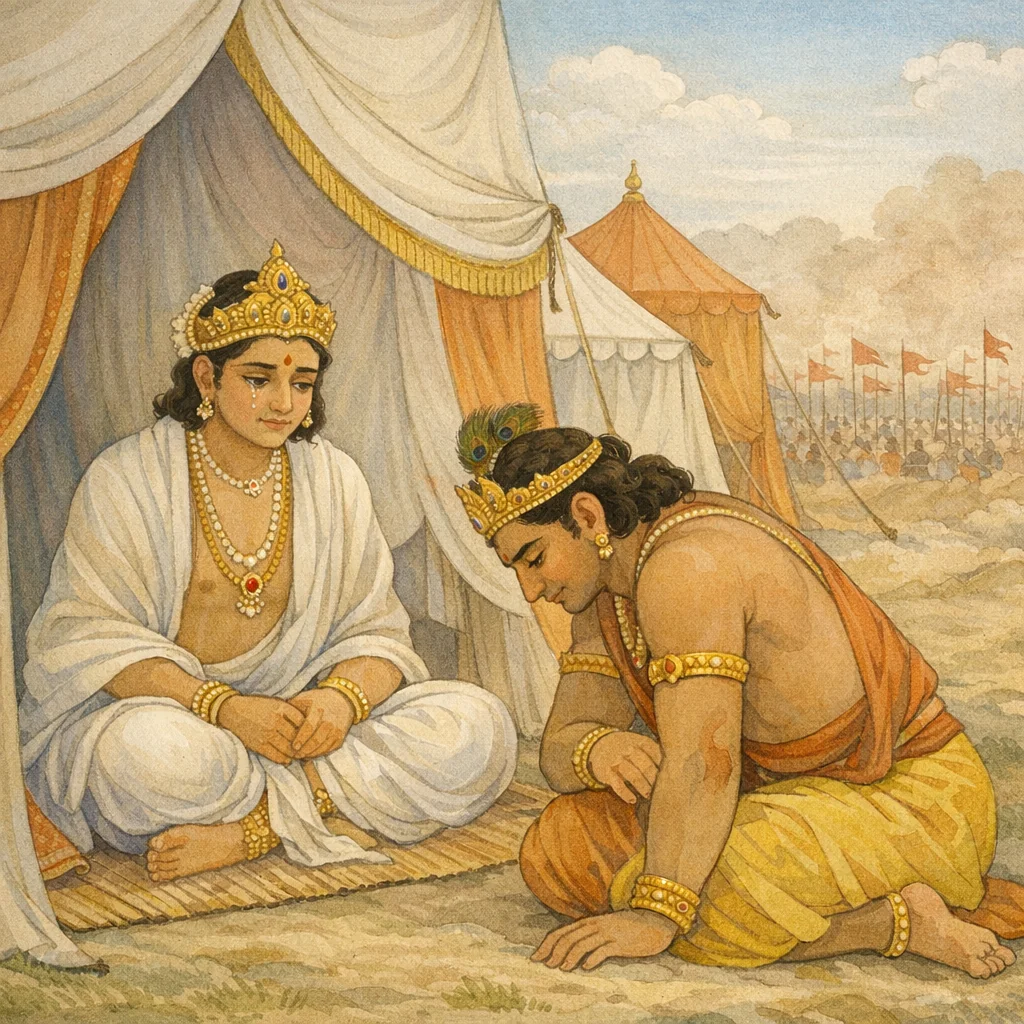
Chapter Arc: युगान्त-प्रलय के समान घोर संग्राम में, द्रोण का पराक्रम बढ़ता जाता है; पाण्डव-पक्ष पर संकट छा जाता है और धर्मराज युधिष्ठिर लोक-निन्दा के भय से भीतर-ही-भीतर काँप उठते हैं—अर्जुन और सात्यकि का दर्शन न होने से उनकी शान्ति छिन जाती है। → युधिष्ठिर की चिन्ता युद्ध-स्थिति से अधिक ‘धर्म’ और ‘लोक-मत’ की कसौटी पर चढ़ जाती है: द्रोण की गर्जना, पाञ्चालों का क्षय, पाण्डवों का वध—इन सबके बीच वे अर्जुन के गाण्डीव-नाद और हनुमान-चिह्नित ध्वज की कल्पना/स्मृति से भी आश्वस्त नहीं हो पाते। वे भीमसेन को बुलाते हैं, और रथ को भीम के निकट लाने की आज्ञा दी जाती है, मानो कोई त्वरित, कठोर निर्णय लेने का क्षण आ पहुँचा हो। → भीमसेन धर्मराज की ऐसी ‘कश्मल’ अवस्था देखकर चकित होकर पूछता है—“राजन्, ऐसी घबराहट मैंने पहले कभी नहीं देखी।” युधिष्ठिर म्लानमुख, दीर्घ श्वास लेते, अश्रुपूरित नेत्रों से भीम को आदेश/योजना बताने को उद्यत होते हैं; भीम प्रतिज्ञा करता है कि उनके लिए कोई कार्य असाध्य नहीं। → अध्याय का निष्कर्ष युद्ध-रणनीति से अधिक मनो-रणनीति में है: युधिष्ठिर का भय शब्दों में उतरता है और भीम का धैर्य-दान उन्हें निर्णय की ओर ढकेलता है—रथ, सारथि, और आज्ञा-पालन की तत्परता के साथ पाण्डव-शिविर में एक निर्णायक कदम की तैयारी बनती है। → युधिष्ठिर आँसुओं के साथ भीमसेन को जो विशिष्ट आज्ञा/उपाय बताने वाले हैं, वही अगले प्रसंग का द्वार बनकर लटक जाता है—क्या यह आदेश द्रोण-वध की दिशा में कोई कठोर नीति है?
Shlokas
Verse 1
(दाक्षिणात्य अधिक पाठका $ “लोक मिलाकर कुल ७८ ३ “लोक हैं।) शीस््नश्शा >> | भ्निध्र्राइध्य षड्विशरत्याधेकशततमो< ध्याय: युधिष्ठिरका चिन्तित होकर भीमसेनको अर्जुन और सात्यकिका पता लगानेके लिये भेजना संजय उवाच व्यूहेष्वालोड्यमानेषु पाण्डवानां ततस्तत: । सुदूरमन्वयु: पार्था: पजचाला: सह सोमकै:,संजय कहते हैं--राजन्! जब द्रोणाचार्य पाण्डवोंके व्यूहोंको इस प्रकार जहाँ-तहाँसे रौंदने लगे, तब पार्थ, पांचाल तथा सोमक योद्धा उनसे बहुत दूर हट गये
Sañjaya said: O King, as Droṇa kept churning and crushing through the Pāṇḍavas’ battle-formations here and there, the sons of Pṛthā—along with the Pañcālas and the Somakas—were driven to withdraw far away.
Verse 2
वर्तमाने तथा रीद्रे संग्रामे लोमहर्षणे । संक्षये जगतस्तीव्रे युगान्त इव भारत,भरतनन्दन! वह रोमांचकारी भयंकर संग्राम प्रलयकालमें होनेवाले जगत्के भीषण संहार-सा उपस्थित हुआ था
Sañjaya said: As that fierce and hair-raising battle raged on, the terrible destruction there appeared like the world’s end itself, O Bhārata—like a cataclysmic dissolution overwhelming all beings.
Verse 3
द्रोणे युधि पराक्रान्ते नर्दमाने मुहुर्मुहुः । पज्चालेघु च क्षीणेषु वध्यमानेषु पाण्डुषु,जब द्रोणाचार्य युद्धमें पराक्रम प्रकट करके बारंबार गर्जना कर रहे थे, पांचाल वीरोंका विनाश हो रहा था और पाण्डव-सैनिक मारे जा रहे थे, उस समय धर्मराज युधिष्ठिरको कोई भी अपना आश्रय या रक्षक नहीं दिखायी दिया। राजेन्द्र! वे सोचने लगे कि यह कैसे होगा?
Sañjaya said: When Droṇa, displaying mighty prowess in battle, kept roaring again and again, and when the Pāñcāla warriors were being worn down and the Pāṇḍava forces were being slain, at that time Dharmarāja Yudhiṣṭhira could see no refuge or protector of his own. O best of kings, he began to ponder: “How can this be?”
Verse 4
नापश्यच्छरणं किज्चिद् धर्मराजो युधिष्ठिर: । चिन्तयामास राजेन्द्र कथमेतद् भविष्यति,जब द्रोणाचार्य युद्धमें पराक्रम प्रकट करके बारंबार गर्जना कर रहे थे, पांचाल वीरोंका विनाश हो रहा था और पाण्डव-सैनिक मारे जा रहे थे, उस समय धर्मराज युधिष्ठिरको कोई भी अपना आश्रय या रक्षक नहीं दिखायी दिया। राजेन्द्र! वे सोचने लगे कि यह कैसे होगा?
Sañjaya said: Dharmarāja Yudhiṣṭhira could see no refuge at all. O king, he began to ponder: “How will this turn out?”—for Droṇācārya was repeatedly roaring and displaying his prowess in battle, the Pāñcāla heroes were being destroyed, and the Pāṇḍava soldiers were falling.
Verse 5
ततो वीक्ष्य दिश: सर्वा: सव्यसाचिदिदृक्षया । युधिष्ठिरों ददर्शाथ नैव पार्थ न माधवम्,तदनन्तर युधिष्ठिरने सव्यसाची अर्जुनको देखनेकी इच्छासे सम्पूर्ण दिशाओंमें दृष्टि दौड़ायी; परंतु उन्हें कहीं भी अर्जुन और सात्यकि नहीं दिखायी दिये
Sañjaya said: Then, scanning all directions in his eagerness to behold Savyasācin (Arjuna), Yudhiṣṭhira looked about—but he could see neither Pārtha (Arjuna) nor Mādhava (Kṛṣṇa).
Verse 6
सो<5पश्यन् नरशार्दूलं वानरर्षभलक्षणम् | गाण्डीवस्य च निर्घोषमशृण्वन् व्यथितेन्द्रिय:,वानरश्रेष्ठ हनुमानके चिह्से युक्त ध्वजवाले पुरुषसिंह अर्जुनको न देखकर और उनके गाण्डीवका गम्भीर घोष न सुनकर उनकी सारी इन्द्रियाँ व्यथित हो उठीं
Sañjaya said: Not seeing that tiger among men—Arjuna—marked by the emblem of the foremost of monkeys (Hanumān) on his banner, and not hearing the deep, resounding roar of his Gāṇḍīva bow, his senses became distressed.
Verse 7
अपश्यन् सात्यकिं चापि वृष्णीनां प्रवरं रथम् । चिन्तयाभिपरीताज्े धर्मराजो युधिषछ्िर:,वृष्णिवंशके प्रमुख महारथी सात्यकिको भी न देखनेके कारण धर्मराज युधिष्ठिरका एक-एक अंग चिन्ताकी आगसे संतप्त हो उठा
Sañjaya said: Not seeing Sātyaki either—the foremost chariot-warrior among the Vṛṣṇis—Dharmarāja Yudhiṣṭhira was overwhelmed by anxious foreboding; his whole being seemed seized and scorched by worry. In the moral atmosphere of the war, the absence of a righteous ally becomes a sign of danger, shaking even the steadfast king’s composure.
Verse 8
नाध्यगच्छत् तदा शान्तिं तावपश्यन् नरोत्तमौ | लोकोपक्रोशभीरुत्वाद् धर्मराजो महामना:
Sañjaya said: At that time the high-minded Dharmarāja, fearing the outcry and reproach of the people, could not attain peace of mind while he kept seeing those two best of men before him.
Verse 9
महामनस्वी धर्मराज युधिष्ठटिर लोकनिन्दाके डरसे बहुत डरते थे। अतः नरश्रेष्ठ अर्जुन और सात्यकिको न देखनेसे उस समय उन्हें तनिक भी शान्ति नहीं मिली ।। अचिन्तयन्महाबाहु: शैनेयस्य रथं प्रति । पदवीं प्रेषितश्वैव फाल्गुनस्थ मया रणे,महाबाहु युधिष्ठिर सात्यकिके रथके विषयमें मन-ही-मन इस प्रकार चिन्ता करने लगे --अहो! मैंने ही रणक्षेत्रमें मित्रोंको अभय देनेवाले सत्यवादी शिनिपौत्र सात्यकिको अर्जुनके मार्गपर जानेके लिये भेजा था। इसलिये यह मेरा हृदय जो पहले एकहीकी चिन्तामें निमग्न था, अब दो व्यक्तियोंके लिये चिन्तित होकर दो भागोंमें बँट गया है
Sañjaya said: Fearing the blame of the world, Dharmarāja Yudhiṣṭhira found not even a moment’s peace when he could not see Arjuna—the best of men—nor Sātyaki. The mighty-armed king kept turning his thoughts toward the chariot of Śaineya (Sātyaki), reflecting, “Alas! It was I, on the battlefield, who sent Sātyaki—truthful and a giver of fearlessness to friends—to follow the very track of Phālguna (Arjuna).” Thus the king’s mind, once fixed on a single anxiety, split in two, burdened now with concern for both Arjuna and Sātyaki amid the peril and reproach of war.
Verse 10
शैनेय: सात्यकि: सत्यो मित्राणामभयंकर: । तदिदं होकमेवासीद् द्विधा जात॑ ममाद्य वै,महाबाहु युधिष्ठिर सात्यकिके रथके विषयमें मन-ही-मन इस प्रकार चिन्ता करने लगे --अहो! मैंने ही रणक्षेत्रमें मित्रोंको अभय देनेवाले सत्यवादी शिनिपौत्र सात्यकिको अर्जुनके मार्गपर जानेके लिये भेजा था। इसलिये यह मेरा हृदय जो पहले एकहीकी चिन्तामें निमग्न था, अब दो व्यक्तियोंके लिये चिन्तित होकर दो भागोंमें बँट गया है
Sañjaya said: “Śaineya Sātyaki—truthful and a giver of fearlessness to his friends—(is on my mind). Today my very heart has truly become divided in two; for what was earlier a single, fixed concern has now split into two anxieties.”
Verse 11
सात्यकिश्न हि विज्ञेय: पाण्डवश्न धनंजय: । सात्यकिं प्रेषयित्वा तु पाण्डवस्य पदानुगम्
Sañjaya said: Know that Sātyaki is indeed there, and the Pāṇḍava Dhanañjaya (Arjuna) as well. Having dispatched Sātyaki, Arjuna then followed in his footsteps—moving in loyal pursuit of his ally amid the press of war.
Verse 12
करिष्यामि प्रयत्नेन भ्रातुरनन््वेषणं यदि
Sañjaya said: “If it is possible, I shall, with earnest effort, undertake the search for my brother.”
Verse 13
भ्रातुरन्वेषणं कृत्वा धर्मपुत्रो युधिष्ठिर:
Sañjaya said: Having undertaken the search for his brother, Yudhiṣṭhira—the son of Dharma—proceeded with the grave sense of duty that binds kinship and righteousness even amid the turmoil of war.
Verse 14
लोकापवादभीरुत्वात् सो*हं पार्थ वृकोदरम्
Sañjaya said: “Out of fear of public reproach, O Pārtha, I—thus constrained—[spoke/acted regarding] Vṛkodara.”
Verse 15
यथैव च मम प्रीतिरर्जुने शत्रुसूदने,'शत्रुसूदन अर्जुनपर जैसा मेरा प्रेम है, वैसा ही रणदुर्मद वृष्णिवंशी वीर सात्यकिपर भी है। मैंने शिनिवंशका आनन्द बढ़ानेवाले सात्यकिको महान् कार्यभार सौंप रखा था
Sañjaya said: “Just as my affection rests upon Arjuna, the slayer of foes, so too it rests upon the battle-intoxicated hero Sātyaki of the Vṛṣṇi line. To that delight of the Śini clan I had entrusted a great and weighty responsibility.”
Verse 16
तथैव वृष्णिवीरे5पि सात्वते युद्धदुर्मदे । अतिभारे नियुक्तश्न मया शैनेयनन्दन:,'शत्रुसूदन अर्जुनपर जैसा मेरा प्रेम है, वैसा ही रणदुर्मद वृष्णिवंशी वीर सात्यकिपर भी है। मैंने शिनिवंशका आनन्द बढ़ानेवाले सात्यकिको महान् कार्यभार सौंप रखा था
Sañjaya said: “In the same way, I bear that very affection also toward the Vṛṣṇi hero Sātyaki of the Sātvata line, who is intoxicated with the ardor of battle. I had entrusted the son of Śini—who brings joy to his lineage—with a very heavy responsibility.”
Verse 17
स तु मित्रोपरोधेन गौरवात्तु महाबल: । प्रविष्टो भारतीं सेनां मकर: सागरं यथा,“उन महाबली सात्यकिने मित्रके अनुरोधसे और अपने लिये गौरवकी बात समझकर समुद्रमें मगरकी भाँति कौरवीसेनामें प्रवेश किया था
Sañjaya said: Compelled by a friend’s earnest request, and deeming it a matter of honor, the mighty warrior entered the Kaurava host—like a makara plunging into the sea.
Verse 18
असौ हि श्रूयते शब्द: शूराणामनिवर्तिनाम् । मिथ: संयुध्यमानानां वृष्णिवीरेण धीमता,“बुद्धिमान् वृष्णिवंशी वीर सात्यकिके साथ परस्पर युद्ध करनेवाले उन शूरवीरोंका वह महान् कोलाहल सुनायी पड़ता है, जो युद्धसे कभी पीछे नहीं हटते हैं
Sañjaya said: “That very roar is heard—the tumult of warriors who never turn back from battle—clashing with one another, as they fight against the wise Vṛṣṇi hero.”
Verse 19
प्राप्तकालं सुबलवन्निश्चितं बहुधा हि मे । तत्रैव पाण्डवेयस्य भीमसेनस्य धन्विन:
Sañjaya said: “To me it has become clear—again and again—that the decisive moment has arrived, and that the mighty archer Bhīmasena, the son of the Pāṇḍavas, is firmly resolved in this very matter.”
Verse 20
न चाप्यसहां भीमस्य विद्यते भुवि किंचन,“इस भूतलपर कोई ऐसा कार्य नहीं है, जो भीमसेनके लिये असहा हो। ये अपने बाहुबलका आश्रय ले रणक्षेत्रमें प्रययनशील होकर भूमण्डलके समस्त धनुर्धरोंका अनायास ही सामना करनेमें समर्थ हैं
Sañjaya said: “On this earth there is nothing that Bhīma cannot endure. Relying on the strength of his own arms, he advances into the battlefield and is capable of facing, with ease, all the bowmen of the world.”
Verse 21
शक्तो होष रणे यत्तः पृथिव्यां सर्वधन्विनाम् । स्वबाहुबलमास्थाय प्रतिव्यूहितुमजजसा,“इस भूतलपर कोई ऐसा कार्य नहीं है, जो भीमसेनके लिये असहा हो। ये अपने बाहुबलका आश्रय ले रणक्षेत्रमें प्रययनशील होकर भूमण्डलके समस्त धनुर्धरोंका अनायास ही सामना करनेमें समर्थ हैं
He is able, when he exerts himself in battle, to withstand on this earth all bowmen; relying on the strength of his own arms, he can repel the arrayed formations with ease.
Verse 22
यस्य बाहुबलं सर्वे समाश्रित्य महात्मन: । वनवासान्निवृत्ता: सम न च युद्धेषु निर्जिता:,“इस महामनस्वी वीरके बाहुबलका आश्रय लेकर हम सब भाई वनवाससे सकुशल लौटे हैं और युद्धोंमें कभी पराजित नहीं हुए हैं
Sañjaya said: Relying upon the mighty strength of that great-souled hero’s arms, we all returned safely from our exile in the forest, and in battles we were never defeated.
Verse 23
इतो गते भीमसेने सात्वतं प्रति पाण्डवे । सनाथौ भवितारीौ हि युधि सात्वतफाल्गुनौ,'यहाँसे सात्यकिके पथपर पाण्डुपुत्र भीमसेनके जानेपर युद्धस्थलमें डटे हुए सात्यकि और अर्जुन सनाथ हो जायूँगे
Sañjaya said: “When Bhīmasena, the son of Pāṇḍu, has gone from here toward Sātyaki, then in the midst of battle Sātyaki and Arjuna will surely become well-supported—no longer isolated, but strengthened by an ally’s presence.”
Verse 24
काम त्वशोचनीयौ तौ रणे सात्वतफाल्गुनौ | रक्षितौ वासुदेवेन स्वयं शस्त्रविशारदौ,“निश्चय ही सात्यकि और अर्जुन रणक्षेत्रमें शोकके योग्य नहीं हैं; क्योंकि वे दोनों स्वयं तो शस्त्रविद्यामें कुशल हैं ही, भगवान् श्रीकृष्णके द्वारा भी पूर्णरूपसे सुरक्षित हैं
Sañjaya said: “Sātyaki and Arjuna are not to be mourned for on the battlefield; for both are themselves skilled in the science of weapons, and they are also fully protected by Vāsudeva, Lord Kṛṣṇa.”
Verse 25
अवश्यं तु मया कार्यमात्मन: शोकनाशनम् | तस्माद् भीम॑ नियोक्ष्यामि सात्वतस्य पदानुगम्,“तथापि मुझे अपने मानसिक दुःखको निवारण करनेके लिये ऐसी व्यवस्था अवश्य करनी चाहिये। इसलिये मैं भीमसेनको सात्यकिके मार्गका अनुगामी अवश्य बनाऊँगा
Sañjaya said: “Yet I must certainly do what will dispel the sorrow within myself. Therefore I shall set Bhīma to follow in the footsteps of the Sātvata (Sātyaki), making him proceed along that very course.”
Verse 26
ततः प्रतिकृतं मन्ये विधान सात्यकिं प्रति । एवं निश्चित्य मनसा धर्मपुत्रो युधिषछ्िर:
Sañjaya said: “Then, I think, a fitting counter-measure was devised against Sātyaki. Having thus resolved in his mind, Dharmaputra Yudhiṣṭhira took his decision, guided by dharma amid the pressures of war.”
Verse 27
धर्मराजवच: श्रुत्वा सारथि्हयकोविद:
Sañjaya said: Having heard the words of Dharmarāja (Yudhiṣṭhira), the charioteer—skilled in the management of horses—replied with practical readiness and disciplined composure, as the moral strain of war demanded.
Verse 28
भीमसेनमनुप्राप्य प्राप्तकालमचिन्तयत्
Sañjaya said: Having come upon Bhīmasena, he reflected at once, recognizing that the decisive moment had arrived. In the press of war, he set aside hesitation and considered what action the situation demanded.
Verse 29
कश्मलं प्राविशद् राजा बहु तत्र समादिशन् | भीमसेनके पास पहुँचकर राजा युधिष्ठिर समयोचित कर्तव्यका चिन्तन करने लगे और वहाँ बहुत कुछ कहते हुए वे मूर्छित-से हो गये || २८ ई ।। स कश्मलसमाविष्टो भीममाहूय पार्थिव:
Sañjaya said: The king was seized by grievous moral bewilderment; issuing many directions there, he went to Bhīmasena. King Yudhiṣṭhira began to reflect on the duty fit for that moment; speaking much in that state, he became as if faint. Thus, overwhelmed by confusion and distress, the earthly king summoned Bhīma.
Verse 30
यः सदेवान् सगन्धर्वान् दैत्यांश्ैकरथो5जयत्
Sañjaya said: “He who, fighting alone in a single chariot, overcame even the gods, the Gandharvas, and the Daityas.”
Verse 31
ततोअब्रवीद् धर्मराजं भीमसेनस्तथागतम्
Sañjaya said: Then Bhīmasena addressed Dharmarāja (Yudhiṣṭhira), who had come there—amid the strain of war, where duty and resolve must be reaffirmed through counsel among brothers.
Verse 32
पुरातिदुःखदीर्णानां भवान् गतिरभूद्धि न:
Sañjaya said: “For us—long afflicted and torn by sorrow—you have indeed been our refuge and guiding course.”
Verse 33
उत्तिष्वोत्तिष्ठ राजेन्द्र शाधि कि करवाणि ते । “पहले जब कभी हमलोग अत्यन्त दुःखसे अधीर हो उठते थे, तब आप ही हमें सहारा दिया करते थे। राजेन्द्र! उठिये, उठिये, आज्ञा दीजिये, मैं आपकी क्या सेवा करूँ? ।। ३२३ || न हयूसाध्यमकार्य वा विद्यते मम मानद
Sañjaya said: “Rise, O best of kings—rise! Command me: what shall I do for you? In earlier times, whenever we were overwhelmed and unsteady with intense sorrow, it was you who used to support and steady us. Now, O king, stand up and give your order—how may I serve you?”
Verse 34
तमब्रवीदश्रुपूर्ण: कृष्णसर्प इव श्वसन्
Sañjaya said: With eyes brimming with tears, he spoke—breathing hard like a black serpent—his grief and fury tightening into words amid the moral ruin of war.
Verse 35
यथा शड्खस्य निर्घोष: पाउ्चजन्यस्य श्रूयते,“भैया! इस समय पांचजन्य शंखकी जैसी ध्वनि सुनायी देती है और यशस्वी वासुदेवने क्रोधमें भरकर उस शंखको जिस तरह बजाया है, उससे जान पड़ता है, आज तुम्हारा भाई अर्जुन निश्चय ही मारा जाकर रणभूमिमें सो रहा है
Sañjaya said: “Brother, just as the thunderous blast of the conch Pāñcajanya is heard, so now a sound like Pāñcajanya is being heard. And the renowned Vāsudeva has blown that conch in such a wrath-filled manner that it seems certain today that your brother Arjuna has been slain and lies upon the battlefield.”
Verse 36
पूरितो वासुदेवेन संरब्धेन यशस्विना । नूनमद्य हतः शेते तव भ्राता धनंजय:,“भैया! इस समय पांचजन्य शंखकी जैसी ध्वनि सुनायी देती है और यशस्वी वासुदेवने क्रोधमें भरकर उस शंखको जिस तरह बजाया है, उससे जान पड़ता है, आज तुम्हारा भाई अर्जुन निश्चय ही मारा जाकर रणभूमिमें सो रहा है
Blown full by the renowned Vāsudeva in burning wrath, that conch filled the air with its roar. “Surely today your brother Dhanañjaya—Arjuna—has been slain and lies upon the battlefield.”
Verse 37
तस्मिन् विनिहते नून॑ युध्यतेड्सौ जनार्दन: । यस्य सच्त्ववतो वीर्य ह्युपजीवन्ति पाण्डवा:,“उसके मारे जानेपर स्वयं भगवान् श्रीकृष्ण ही युद्ध कर रहे हैं। जिस शक्तिशाली वीरके पराक्रमका भरोसा करके हम समस्त पाण्डव जी रहे हैं, भयके अवसरोंपर हम उसी प्रकार जिसका आश्रय लेते हैं, जैसे देवता देवराज इन्द्रका, वही शूरवीर अर्जुन सिंधुराज जयद्रथको अपने वशमें करनेके लिये कौरव-सेनामें घुसा है
Sañjaya said: “Now that he has been slain, Janārdana (Kṛṣṇa) himself is surely fighting. It is by relying on the prowess of that mighty, steadfast hero that the Pāṇḍavas continue to live and endure; in moments of fear they take refuge in him just as the gods rely on Indra. That valiant Arjuna has plunged into the Kaurava host to bring the king of Sindhu, Jayadratha, under his power.”
Verse 38
यं भयेष्वभिगच्छन्ति सहस्राक्षमिवामरा: । स शूर: सैन्धवप्रेप्सुरन्वयाद् भारतीं चमूम्,“उसके मारे जानेपर स्वयं भगवान् श्रीकृष्ण ही युद्ध कर रहे हैं। जिस शक्तिशाली वीरके पराक्रमका भरोसा करके हम समस्त पाण्डव जी रहे हैं, भयके अवसरोंपर हम उसी प्रकार जिसका आश्रय लेते हैं, जैसे देवता देवराज इन्द्रका, वही शूरवीर अर्जुन सिंधुराज जयद्रथको अपने वशमें करनेके लिये कौरव-सेनामें घुसा है
Sañjaya said: “He whom we approach in moments of peril, just as the immortals resort to Sahasrākṣa (Indra), that very heroic Arjuna—seeking to seize the Sindhu-king Jayadratha—has pressed forward and entered the Bharata host (the Kaurava army).”
Verse 39
तस्य वै गमनं विद्यो भीम नावर्तन॑ पुनः । श्यामो युवा गुडाकेशो दर्शनीयो महारथ:,'भीमसेन! हमें उसके जानेका ही पता है, पुनः लौटनेका नहीं। अर्जुनकी अंगकान्ति श्याम है। वह नवयुवक, निद्रापर विजय पानेवाला, देखनेमें सुन्दर और महारथी है
Sañjaya said: “O Bhīma, know only this much—he has gone; there is no certainty of his returning again. Arjuna is dark-hued in radiance, a youthful hero, the conqueror of sleep, pleasing to behold, and a great chariot-warrior.”
Verse 40
व्यूढोरस्को महाबाहहुर्मत्तद्विरदविक्रम: । चकोननेत्रस्ताम्रास्यो द्विषतां भयवर्धन:,“उसकी छाती चौड़ी और भुजाएँ बड़ी-बड़ी हैं। उसका पराक्रम मतवाले हाथीके समान है, आँखें चकोरके नेत्रोंक समान विशाल हैं और उसके मुख एवं ओषछ्ठ लाल-लाल हैं। वह शत्रुओंका भय बढ़ाता है
“Broad-chested and mighty-armed, his onrush is like that of a maddened elephant. His eyes are wide like a cakora bird’s, and his face and lips are ruddy. He swells the fear of his foes.”
Verse 41
(मम प्रियहितार्थ च शक्रलोकादिहागत: । वृद्धोपसेवी धृतिमान् कृतज्ञ: सत्यसड्रर: ।। प्रविष्टो महतीं सेनामपर्यन्तां धनंजय: । प्रविष्टे च चमूं घोरामर्जुने शत्रुनाशने ।। प्रेषित: सात्वतो वीर: फाल्गुनस्य पदानुग: । तस्याभिगमनं जाने भीम नावर्तन॑ पुनः ।।) “अर्जुन मेरे प्रिय और हितके लिये इन्द्रलोकसे यहाँ आया है। वह वृद्धजनोंका सेवक, धैर्यवान, कृतज्ञ तथा सत्यप्रतिज्ञ है। वह धनंजय शत्रुओंकी विशाल एवं अपार सेनामें घुसा है। शत्रुनाशन अर्जुनके उस भयंकर सेनामें प्रवेश करनेपर मैंने सात्वतवीर सात्यकिको उसके चरणोंका अनुगामी बनाकर भेजा है। भीमसेन! सात्यकिके भी मुझे जानेका ही पता है, लौटनेका नहीं। तदिदं मम भद्रें ते शोकस्थानमरिंदम । अर्जुनार्थे महाबाहो सात्वतस्य च कारणात्,“शत्रुदमन महाबाहु भीम! तुम्हारा कल्याण हो। यही मेरे शोकका कारण है। अर्जुन और सात्यकिके लिये ही मैं दुःखी हो रहा हूँ। जैसे बारंबार घी डालनेसे आग प्रज्वलित हो उठती है, उसी प्रकार मेरी शोकाग्नि बढ़ती जाती है। मैं अर्जुनका कोई चिह्न नहीं देखता, इसीसे मुझपर मोह छा रहा है
Sañjaya said: “For my own dear one’s welfare Arjuna has come here from Indra’s world. He is devoted to serving elders, steadfast in courage, grateful, and unwavering in his pledged resolve. That Dhanañjaya has plunged into the vast, boundless host of the enemy. And when the foe-destroying Arjuna entered that dreadful battle-array, I sent the Sātvata hero Sātyaki to follow in Phālguna’s footsteps. Of Sātyaki’s going I am aware, O Bhīma—but not of his return.”
Verse 42
वर्धते हविषेवाग्निरिध्यमान: पुन: पुन: । तस्य लक्ष्म न पश्यामि तेन विन्दामि कश्मलम्,“शत्रुदमन महाबाहु भीम! तुम्हारा कल्याण हो। यही मेरे शोकका कारण है। अर्जुन और सात्यकिके लिये ही मैं दुःखी हो रहा हूँ। जैसे बारंबार घी डालनेसे आग प्रज्वलित हो उठती है, उसी प्रकार मेरी शोकाग्नि बढ़ती जाती है। मैं अर्जुनका कोई चिह्न नहीं देखता, इसीसे मुझपर मोह छा रहा है
Sañjaya said: “My grief swells again and again, like a fire that flares when fed with oblations. I see no sign of him; therefore confusion and despondency (kaśmala) seize me.”
Verse 43
त॑ विद्धि पुरुषव्यात्रं सात्वतं च महारथम् | सतं महारथं पश्चादनुयातस्तवानुजम्,“उन सात्वतवंशी पुरुषसिंह महारथी सात्यकिका भी पता लगाओ। वे तुम्हारे छोटे भाई महारथी अर्जुनके पीछे गये हैं
Sañjaya said: “Know him to be that tiger among men—Sātyaki of the Sātvata line, a great chariot-warrior. That foremost of great warriors has gone after your younger brother, following close behind him.”
Verse 44
तमपश्यन्महाबाहुमहं विन्दामि कश्मलम् | पार्थे तस्मिन् हते चैव युध्यते नूनमग्रणी:,“उन महाबाहु सात्यकिको न देखनेके कारण भी मैं भारी घबराहटमें पड़ गया हूँ। पार्थके मारे जानेपर अवश्य ही सात्यकि भी आगे होकर युद्ध कर रहे हैं
“Not seeing that mighty-armed hero, I am seized by bewilderment and dread. And if that Pārtha has indeed been slain, then surely the leader (Sātyaki) is fighting on at the front.”
Verse 45
सहायोनास्य वै कश्रित् तेन विन्दामि कश्मलम् | तस्मिन् कृष्णो हते नून॑ं युध्यते युद्धकोविद:,“उनका कोई दूसरा सहायक नहीं है। इससे मुझे बड़ी घबराहट हो रही है। निश्चय ही उनके मारे जानेपर युद्धकलाकोविद भगवान् श्रीकृष्ण युद्ध कर रहे हैं
Sañjaya said: “He has no ally at all; therefore I am seized with distress and confusion. Surely, now that Kṛṣṇa has been slain, the one skilled in the arts of war is fighting on.”
Verse 46
न हि मे शुध्यते भावस्तयोरेव परंतप । स तत्र गच्छ कौन्तेय यत्र यातो धनंजय:,“परंतप! अर्जुन और सात्यकिके जीवनके विषयमें जो मेरे मनमें संशय उत्पन्न हो गया है, वह दूर नहीं हो रहा है। अतः कुन्तीनन्दन! तुम वहीं जाओ, जहाँ अर्जुन और महापराक्रमी सात्यकि गये हैं। धर्मज्ञ! मैं तुम्हारा बड़ा भाई हूँ। यदि तुम मेरी आज्ञाका पालन करना उचित मानते हो तो ऐसा ही करो। तुम्हें अर्जुनकी उतनी खोज नहीं करनी है, जितनी सात्यकिकी। पार्थ! सात्यकिने मेरा प्रिय करनेकी इच्छासे सव्यसाची अर्जुनके उस दुर्गम एवं भयंकर पथका अनुसरण किया है, जो अजितात्मा पुरुषोंके लिये अगम्य है
Sañjaya said: “O scorcher of foes, my mind does not become clear regarding those two; my doubt about them does not subside. Therefore, O son of Kuntī, go there—where Dhanañjaya (Arjuna) has gone.”
Verse 47
सात्यकिश्न महावीर्य: कर्तव्यं यदि मनन््यसे । वचन मम धर्मज्ञ भ्राता ज्येष्ठो भवामि ते,“परंतप! अर्जुन और सात्यकिके जीवनके विषयमें जो मेरे मनमें संशय उत्पन्न हो गया है, वह दूर नहीं हो रहा है। अतः कुन्तीनन्दन! तुम वहीं जाओ, जहाँ अर्जुन और महापराक्रमी सात्यकि गये हैं। धर्मज्ञ! मैं तुम्हारा बड़ा भाई हूँ। यदि तुम मेरी आज्ञाका पालन करना उचित मानते हो तो ऐसा ही करो। तुम्हें अर्जुनकी उतनी खोज नहीं करनी है, जितनी सात्यकिकी। पार्थ! सात्यकिने मेरा प्रिय करनेकी इच्छासे सव्यसाची अर्जुनके उस दुर्गम एवं भयंकर पथका अनुसरण किया है, जो अजितात्मा पुरुषोंके लिये अगम्य है
Sañjaya said: “Sātyaki too is a great hero. If you judge it right to act, then heed my words, O knower of dharma: I am your elder brother. Go there where Arjuna and the mighty Sātyaki have gone.”
Verse 48
न ते<र्जुनस्तथा ज्ञेयो ज्ञातव्य: सात्यकिर्यथा । चिकीर्षुर्मत्प्रियं पार्थ स यात: सव्यसाचिन: । पदवीं दुर्गमां घोरामगम्यामकृतात्मभि:,“परंतप! अर्जुन और सात्यकिके जीवनके विषयमें जो मेरे मनमें संशय उत्पन्न हो गया है, वह दूर नहीं हो रहा है। अतः कुन्तीनन्दन! तुम वहीं जाओ, जहाँ अर्जुन और महापराक्रमी सात्यकि गये हैं। धर्मज्ञ! मैं तुम्हारा बड़ा भाई हूँ। यदि तुम मेरी आज्ञाका पालन करना उचित मानते हो तो ऐसा ही करो। तुम्हें अर्जुनकी उतनी खोज नहीं करनी है, जितनी सात्यकिकी। पार्थ! सात्यकिने मेरा प्रिय करनेकी इच्छासे सव्यसाची अर्जुनके उस दुर्गम एवं भयंकर पथका अनुसरण किया है, जो अजितात्मा पुरुषोंके लिये अगम्य है
Sañjaya said: “You need not seek Arjuna in the same way; rather, Satyaki is the one who must be found. O Partha, wishing to do what is dear to me, he has gone after Arjuna the ambidextrous along a path that is hard and terrifying—one that is inaccessible to men who have not mastered themselves.”
Verse 49
दृष्टवा कुशलिनौ कृष्णौ सात्वतं चैव सात्यकिम् । संविदं चैव कुर्यास्त्वं सिंहनादेन पाण्डव
Sañjaya said: “When you see Kṛṣṇa and the Vṛṣṇi hero Sātyaki safe and well, O Pāṇḍava, you should also exchange words with them—and proclaim it with a lion-like shout.”
Verse 113
सात्वतस्यापि कं युद्धे प्रेषयिष्ये पदानुगम् । “इस समय सात्यकिका भी पता लगाना चाहिये और पाण्डुपुत्र अर्जुनका भी। मैंने पाण्डुपुत्र अर्जुनके पीछे तो सात्यकिको भेज दिया। अब सात्यकिके पीछे किसको युद्धभूमिमें भेजूँगा?
Sañjaya said: “And whom shall I send into the battle as a tracker to follow even Sātvata (Sātyaki) step by step? For Sātyaki too must be found out—along with Arjuna, the son of Pāṇḍu. I have already dispatched Sātyaki to go after Arjuna; now, who is to be sent after Sātyaki on the battlefield?”
Verse 126
युयुधानमनन्विष्य लोको मां गर्हयिष्यति । “यदि मैं युयुधानकी खोज न कराकर प्रयत्नपूर्वक केवल अपने भाई अर्जुनका ही अन्वेषण करूँगा तो संसार मेरी निन््दा करेगा,'पाण्डुनन्दन! जब तुम भगवान् श्रीकृष्ण, अर्जुन तथा सात्वतवंशी वीर सात्यकिको सकुशल देखना, तब उच्च स्वरसे सिंहनाद करके मुझे इसकी सूचना दे देना” ।। इति श्रीमहाभारते द्रोणपर्वणि जयद्रथवधपर्वणि युधिष्ठिरचिन्तायां षड्विंशत्यधिकशततमो<ध्याय:
Sañjaya said: “If I do not go in search of Yuyudhana, the world will blame me. If, with deliberate effort, I seek only my own brother Arjuna and do not have Yuyudhana looked for, people will condemn me.” O son of Pandu, when you see Lord Krishna, Arjuna, and the Sātvata hero Sātyaki safe and well, then raise a lion-roar aloud and inform me of it.
Verse 133
परित्यजति वार्ष्णेयं सात्यकिं सत्यविक्रमम् । “सब लोग यही कहेंगे कि धर्मपुत्र युधिष्ठिर अपने भाईकी खोज करके वृष्णिवंशी वीर सत्यपराक्रमी सात्यकिकी उपेक्षा कर रहे हैं
Sañjaya said: “(People will say that) Dharmaputra Yudhiṣṭhira, in searching for his brother, is neglecting Sātyaki—the Vṛṣṇi hero of proven, unfailing valor.”
Verse 146
पदवीं प्रेषयिष्यामि माधवस्य महात्मन: । “मुझे लोकनिन्दासे बड़ा भय मालूम होता है। अतः कुन्तीनन्दन भीमसेनको मैं महामनस्वी सात्यकिका पता लगानेके लिये भेजूँगा
Sañjaya said: “I shall dispatch scouts to trace the path and whereabouts of the great-souled Mādhava (Kṛṣṇa).”
Verse 193
गमनं रोचते महां यत्र यातौ महारथौ । “इस समय जो कर्तव्य प्राप्त है, उसपर मैंने अनेक प्रकारसे प्रबल विचार कर लिया है। जहाँ महारथी अर्जुन और सात्यकि गये हैं, वहीं धनुर्धर वीर पाण्डुनन्दन भीमसेनको भी जाना चाहिये--यही मुझे ठीक जँचता है
Sañjaya said: “It seems best to me that we should proceed to the very place where the two great chariot-warriors have gone.”
Verse 266
यन्तारमब्रवीद् राजा भीम॑ प्रति नयस्व माम् । 'ऐसा करके ही मैं समझूँगा कि मैंने सात्यकिके प्रति समुचित कर्तव्यका पालन किया है।' मन-ही-मन ऐसा निश्चय करके धर्मपुत्र राजा युधिष्ठिरने अपने सारथिसे कहा--“मुझे भीमके पास ले चलो”
Sañjaya said: The king (Yudhiṣṭhira) addressed his charioteer, “Take me to Bhīma.” Having resolved inwardly, “Only by doing this will I know that I have fulfilled my proper duty toward Sātyaki,” the dharma-minded king gave this command.
Verse 273
रथं हेमपरिष्कारं भीमान्तिकमुपानयत् । धर्मराजकी बात सुनकर अश्वसंचालनमें कुशल सारथिने उनके सुवर्णभूषित रथको भीमसेनके निकट पहुँचा दिया
Sañjaya said: The charioteer, skilled in handling horses, having heard the command of Dharmarāja, brought that chariot—adorned with golden ornaments—close to Bhīmasena.
Verse 293
अब्रवीद् वचन राजन कुन्तीपुत्रो युधिष्ठिर: । राजन! इस प्रकार मोहाविष्ट हुए कुन्तीपुत्र राजा युधिष्ठिरने भीमसेनको सम्बोधित करके इस प्रकार कहा--
Sañjaya said: “O King, Yudhiṣṭhira, Kuntī’s son, spoke these words. O King, thus overwhelmed by delusion, the Kuntī-born ruler Yudhiṣṭhira addressed Bhīmasena and spoke in this manner.”
Verse 303
तस्य लक्ष्म न पश्यामि भीमसेनानुजस्य ते । 'भीमसेन! जिन्होंने एकमात्र रथकी सहायतासे देवताओंसहित गन्धर्वों और दैत्योंपर भी विजय पायी थी, उन्हीं तुम्हारे छोटे भाई अर्जुनका आज मुझे कोई चिह्न नहीं दिखायी देता है”
Sañjaya said: “I see no sign of your younger brother, Arjuna. O Bhīmasena—he who, with the aid of a single chariot, once overcame the Gandharvas and the Daityas together with the gods—today I can discern no mark of him at all.”
Verse 313
नेवाद्राक्षं न चाऔष॑ तव कश्मलमीदृशम् । तब वैसी अवस्थामें पड़े हुए धर्मराज युधिष्ठिरसे भीमसेनने कहा--“राजन्! आपकी ऐसी घबराहट तो पहले मैंने न कभी देखी थी और न सुनी ही थी
Sañjaya said: “Never before have I seen—nor have I even heard of—such bewilderment in you.” Thus, when Dharmarāja Yudhiṣṭhira had fallen into that condition, Bhīmasena addressed him: “O King, I have never earlier seen or heard of such panic in you.”
Verse 333
आज्ञापय कुरुश्रेष्ठ मा च शोके मन: कृथा: । “मानद! इस संसारमें ऐसा कोई कार्य नहीं है, जो मेरे लिये असाध्य हो अथवा जिसे मैं आपकी आज्ञा मिलनेपर न करूँ। कुरुश्रेष्ठ। आज्ञा दीजिये। अपने मनको शोकमें न डालिये'
Sañjaya said: “Command me, O best of the Kurus; do not let your mind sink into grief. There is no task in this world that is impossible for me, nor anything I would fail to do once I have received your order.”
Verse 343
भीमसेनमिदं वाक््यं प्रम्लानवदनो नृप: । तब राजा युधिष्ठिर म्लानमुख हो काले सर्पके समान लंबी साँसें खींचते हुए नेत्रोंमें आँसू भरकर भीमसेनसे इस प्रकार बोले--
Sañjaya said: Then King Yudhiṣṭhira, his face drained of color, spoke these words to Bhīmasena. With a downcast countenance, he drew long, heavy breaths like a dark serpent, and with tears filling his eyes, he addressed Bhīma.
Frequently Asked Questions
The chapter frames a dilemma of agency under grief: Duryodhana’s resolve to enter the enemy host ‘as if to die’ raises the question of whether personal vow-driven valor can ethically override the commander’s responsibility to preserve strategic stability and minimize avoidable loss.
It illustrates that intent and emotion (grief, anger, desire for renown) materially shape decision-making in crisis; dharmic evaluation therefore requires attention not only to stated duty but also to the downstream consequences of leadership choices on collective welfare.
No explicit phalaśruti appears in this chapter’s verses; its significance is primarily narrative and analytic—documenting how recognition (gotra/kula naming), morale shifts (rumor of death), and command interventions (Droṇa’s arrival) function within the epic’s war-chronicle.