Adhyaya 108
कर्णभीमयुद्धम् (Karna–Bhīma Combat Report)
Upa-parva: Karna–Bhīma Yuddha (Duel Episode) within Droṇa-parva
Dhṛtarāṣṭra opens by expressing astonishment that Bhīmasena can contest Karṇa, whom he praises as capable of resisting even highly empowered opponents. He requests Saṃjaya to explain how the duel unfolded and whether victory seemed imminent for either side. Dhṛtarāṣṭra’s speech then broadens into anxiety about Kaurava decline, attributing impending ruin to Duryodhana’s poor policy and misjudgment of the Pāṇḍavas’ resilience, while recalling past instances where Karṇa was checked by the Pāṇḍavas. Saṃjaya narrates the engagement: Karṇa strikes Bhīma with volleys; Bhīma counters by cutting Karṇa’s bow and dropping the charioteer. Karṇa escalates by seizing and casting a radiant śakti; Bhīma intercepts and breaks it in mid-air with multiple arrows. Both exchange dense arrow-showers, taunts, and roars, likened to battling bulls, tigers, and elephants. Bhīma again disrupts Karṇa’s equipment and kills his horses. Seeing Karṇa pressured, Duryodhana orders Durjaya to attack Bhīma and eliminate Bhīma’s ally Tūbaraka; Durjaya engages briefly but Bhīma swiftly kills Durjaya along with his chariot team. Karṇa then circles the fallen ally and continues the fight, remaining engaged despite being pierced by Bhīma’s missiles, closing the chapter on an unresolved but tactically significant exchange.
Chapter Arc: अपराह्न के रोमांचकारी संग्राम में संजय धृतराष्ट्र को बताता है कि पांचाल-सेना द्रोण को मार गिराने के उन्माद से गर्जना करती हुई शरवर्षा करती चली आती है—और युद्ध का केंद्र स्वयं आचार्य द्रोण बन जाते हैं। → केकय-वीर बृहत्क्षत्र और अन्य महारथी द्रोण पर टूट पड़ते हैं; धृष्टकेतु जैसे धनुर्धर काल के समान मुख बाए आक्रमण करते हैं। पर द्रोण की गति, लक्ष्य-भेदन और रथ-चालन से पाण्डव-पक्ष की रक्षा-रेखा हिलती है और आचार्य का रुख युधिष्ठिर की ओर मुड़ता जाता है। → द्रोण सिंह की भाँति युधिष्ठिर का पीछा करते हैं; पाण्डव-सेना में ‘हाहाकार’ मचता है। युधिष्ठिर का रथ-भंग/रथ का संकट उसे असहाय-सा कर देता है और क्षण भर को ऐसा लगता है मानो धर्मराज स्वयं युद्ध की लपटों में घिर जाएंगे। → युधिष्ठिर किसी प्रकार प्राण-रक्षा और पुनर्संयोजन की ओर बढ़ते हैं; पाण्डव-पक्ष द्रोण के वेग को रोकने हेतु अपने महारथियों को आगे करता है, जिससे तत्काल विनाश टलता है, पर द्रोण का दबाव बना रहता है। → द्रोण का युधिष्ठिर-वध का संकल्प और उनकी तीव्र पीछा-गति अगले प्रसंग के लिए भयावह प्रश्न छोड़ती है—क्या धर्मराज को बचाने हेतु पाण्डव कोई असाधारण उपाय करेंगे?
Shlokas
Verse 1
भी्नआ+ज () अमन षर्डाधिकभशततमोब< ध्याय: द्रोण और उनकी सेनाके साथ पाण्डव-सेनाका स द्ध तथा द्रोणाचार्यके साथ युद्ध करते समय रथ-भंग जानेपर युधिष्ठिरका पलायन ध्ृतराष्ट्र उवाच अर्जुने सैन्धवं प्राप्ते भारद्वाजेन संवृता: । पंचाला: कुरुभि: सार्थ किमकुर्वत संजय,धृतराष्ट्रने पूछा--संजय! जब अर्जुन सिन्धुराज जयद्रथके समीप पहुँच गये, तब द्रोणाचार्यद्वारा रोके हुए पाड्चाल-सैनिकोंने कौरवोंके साथ क्या किया?
Dhṛtarāṣṭra said: “Sañjaya, when Arjuna had reached the Sindhu-king (Jayadratha), what did the Pañcālas—held in check by Bhāradvāja’s son (Droṇa)—do together with the Kurus?”
Verse 2
संजय उवाच अपराह्न महाराज संग्रामे लोमहर्षणे । पज्चालानां कुरूणां च द्रोणद्यूतमवर्तत,संजय कहते हैं--महाराज! उस दिन अपराह्न-कालमें, जब रोमांचकारी युद्ध चल रहा था, पांचालों और कौरवोंमें द्रोणाचार्यको दाँवपर रखकर द्यूत-सा होने लगा
Sañjaya said: O King, in the afternoon, while the battle raged in a hair-raising fury, a gamble-like contest arose between the Pāñcālas and the Kurus—one in which Droṇa himself became the stake.
Verse 3
पज्चाला हि जिधघांसन्तो द्रोणं संहृष्टचेतस: । अभ्यमुजञ्चन्त गर्जन्त: शरवर्षाणि मारिष,माननीय नरेश! पांचाल-सैनिक द्रोणको मार डालनेकी इच्छासे प्रसन्नचित्त होकर गर्जना करते हुए उनके ऊपर बाणोंकी वर्षा करने लगे
Sañjaya said: The Pañcālas, intent on slaying Droṇa, their minds exultant, roared aloud and poured down showers of arrows upon him—O honored king.
Verse 4
ततस्तु तुमुलस्तेषां संग्रामो<वर्तताद्भुत: । पज्चालानां कुरूणां च घोरो देवासुरोपम:,तदनन्तर उन पांचालों और कौरवोंमें घोर देवासुर-संग्रामके समान अद्भुत एवं भयंकर युद्ध होने लगा
Sañjaya said: Then, between the Pāñcālas and the Kurus, a tumultuous battle arose—marvellous in its scale yet dreadful—like the legendary clash of gods and demons.
Verse 5
सर्वे द्रोणरथं प्राप्प पज्चाला: पाण्डवै: सह । तदनीकं बिभित्सन्तो महास्त्राणि व्यदर्शयन्,समस्त पांचाल पाण्डवोंके साथ द्रोणाचार्यके रथके समीप जाकर उनकी सेनाके व्यूहका भेदन करनेकी इच्छासे बड़े-बड़े अस्त्रोंका प्रदर्शन करने लगे
Sañjaya said: Then all the Pāñcālas, together with the Pāṇḍavas, drew near to Droṇa’s chariot. Intent on breaking through that battle-array and disrupting his host, they began to display and unleash mighty weapons.
Verse 6
द्रोणस्य रथपर्यन्तं रथिनो रथमास्थिता: । कम्पयन्तो<भ्यवर्तन्त वेगमास्थाय मध्यमम्,वे पांचाल रथी रथपर बैठकर मध्यम वेगका आश्रय ले पृथ्वीको कँपाते हुए टद्रोणाचार्यके रथके अत्यन्त निकट जाकर उनका सामना करने लगे
Sañjaya said: The chariot-warriors, mounted on their cars, advanced to the very edge of Droṇa’s chariot. Moving at a measured, middle pace, they pressed on with such force that the earth seemed to tremble, closing in to confront Droṇācārya at close quarters.
Verse 7
तमभ्ययादू बृहत्क्षत्र: केकयानां महारथ: । प्रवपन् निशितान् बाणान् महेन्द्राशनिसंनिभान्,केकयदेशके महारथी वीर बृहत्क्षत्रने महेन्द्रके वज़्के समान तीखे बाणोंकी वर्षा करते हुए वहाँ द्रोणाचार्यपर धावा किया
Sañjaya said: Then Bṛhatkṣatra, the great chariot-warrior of the Kekayas, charged, showering keen arrows like Indra’s thunderbolt.
Verse 8
तंतु प्रत्युद्ययौ शीघ्र क्षेमधूर्तिमहायशा: । विमुज्चन् निशितान् बाणान् शतशो5थ सहस्रश:,उस समय महायशस्वी क्षेमधूर्ति सैकड़ों और हजारों तीखे बाण छोड़ते हुए शीघ्रतापूर्वक बृहत्क्षत्रका सामना करनेके लिये गये
Sañjaya said: Then the illustrious Kṣemadhūrti swiftly advanced to meet him, releasing sharp arrows—by the hundreds and then by the thousands—pressing the battle forward with relentless force.
Verse 9
धेष्टकेतुश्न चेदीनामृषभोडतिबलोदित: । त्वरितो< भ्यद्रवद् द्रोणं महेन्द्र इव शम्बरम्,अत्यन्त बलसे विख्यात चेदिराज धृष्टकेतुने भी बड़ी उतावलीके साथ द्रोणाचार्यपर धावा किया, मानो देवराज इन्द्रने शम्बरासुरपर चढ़ाई की हो
Sañjaya said: Dhṛṣṭaketu, the foremost bull among the Cedis, exceedingly mighty and roused to action, rushed swiftly at Droṇa—like Mahendra (Indra) charging against the demon Śambara.
Verse 10
तमापतन्तं सहसा व्यादितास्यमिवान्तकम् | वीरधन्वा महेष्वासस्त्वरमाण: समभ्ययात्,मुँह बाये हुए कालके समान सहसा आक्रमण करनेवाले धृष्टकेतुका सामना करनेके लिये महाधनुर्धर वीरधन्वा बड़े वेगसे आ पहुँचे
Sañjaya said: Seeing him rushing in suddenly—like Death itself with gaping jaws—Vīradhvan, the great archer, hurried forward at speed to confront the oncoming attacker.
Verse 11
युधिष्ठटिरं महाराजं जिगीषुं समवस्थितम् । सहानीकं ततो दोणो न््यवारयत वीर्यवान्,तदनन्तर पराक्रमी द्रोणाचार्यने विजयकी इच्छासे सेनासहित खड़े हुए महाराज युधिष्ठिरको आगे बढ़नेसे रोक दिया
Sañjaya said: Then the mighty Droṇa checked King Yudhiṣṭhira—who stood ready with his troops, intent on victory—and prevented him from advancing.
Verse 12
नकुलं कुशल युद्धे पराक्रान्तं पराक्रमी । अभ्यगच्छत् समायान्तं विकर्णस्ते सुत: प्रभो
Sañjaya said: O lord, your son Vikarṇa—himself a valiant warrior—advanced to meet Nakula, skilled in battle and coming forward with great prowess.
Verse 13
प्रभो! आपके पराक्रमी पुत्र विकर्णने वहाँ आते हुए पराक्रमशाली युद्धकुशल नकुलका सामना किया ।। सहदेवं तथा<<यान्तं दुर्मुख: शत्रुकर्षण: । शरैरनेकसाहस्रै: समवाकिरदाशुगै:,शत्रुसूदन दुर्मुखने अपने सामने आते हुए सहदेवपर कई हजार बाणोंकी वर्षा की
Sañjaya said: As Sahadeva advanced, Durmukha—renowned for harassing his foes—showered him with many thousands of swift arrows.
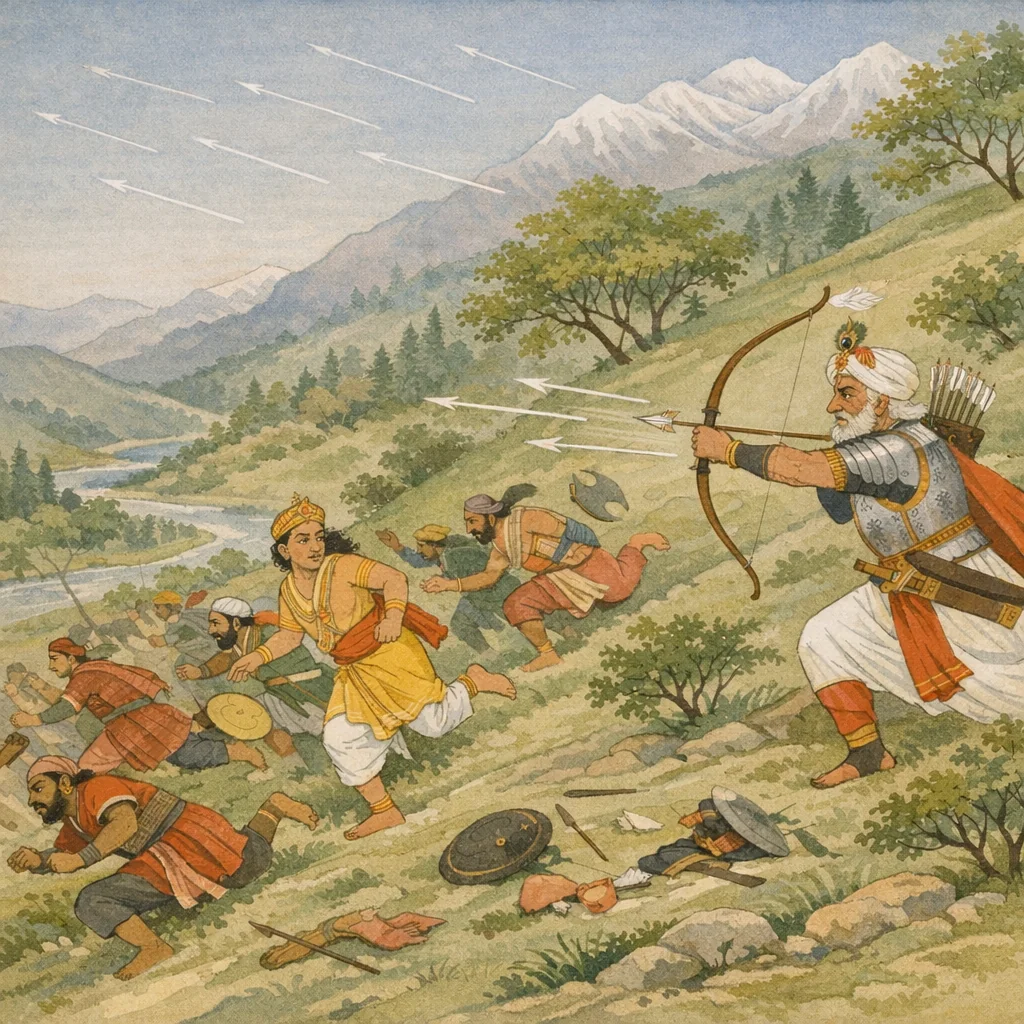
Verse 14
सात्यकिं तु नरव्याघ्रं व्याप्रदत्तस्त्ववारयत् | शरै: सुनिशितैस्तीकषणै: कम्पयन् वै मुहुर्मुहु:,व्याप्रदत्तने अत्यन्त तेज किये हुए तीखे बाणोंद्वारा बारंबार शत्रुसेनाको कम्पित करते हुए वहाँ पुरुषसिंह सात्यकिको आगे बढ़नेसे रोका
Sañjaya said: But Vyāpradatta checked Sātyaki, that tiger among men. With razor-sharp, keen arrows he repeatedly shook the opposing host, and thus prevented Sātyaki from pressing forward.
Verse 15
द्रौपदेयान् नरव्याप्रान् मुडचत: सायकोत्तमान् | संरब्धान् रथिन: श्रेष्ठान् सौमदत्तिरवारयत्,मनुष्योंमें व्याप्रके समान पराक्रमी तथा श्रेष्ठ रथी द्रौपदीके पाँचों पुत्र कुपित होकर शत्रुओंपर उत्तम बाणोंकी वर्षा कर रहे थे। सोमदत्तकुमार शलने उन सबको रोक दिया
Sañjaya said: Draupadī’s five sons—tiger-like among men, foremost of chariot-warriors—were enraged and rained excellent arrows upon the foe; but Śalya, Somadatta’s son, checked them all.
Verse 16
भीमसेनं तदा क्रुद्धं भीमरूपो भयानक: । प्रत्यवारयदायान्तमार्ष्यशृड्धिर्महारथ:,भयंकर रूपधारी एवं भयानक महारथी ऋष्यशुंग-कुमार अलम्बुषने उस समय क्रोधमें भरकर आते हुए भीमसेनको रोका
Sañjaya said: Then, as Bhīmasena—wrathful—came rushing on, the dreadful great chariot-warrior Ārṣyaśṛṅgi (Alambuṣa, son of Ṛṣyaśṛṅga), assuming a terrifying form, checked him and held him back.
Verse 17
तयो: समभवद् युद्ध नरराक्षसयोर्मथे । यादृगेव पुरा वृत्तं रामरावणयोरनप,राजन! पूर्वकालमें जिस प्रकार श्रीराम और रावणका संग्राम हुआ था, उसी प्रकार उस रणक्षेत्रमें मानव भीमसेन तथा राक्षस अलम्बुषका युद्ध हुआ
Sañjaya said: Between those two, in the thick of battle, there arose a fight between a man and a rākṣasa. O King, it was like the ancient combat of Rāma and Rāvaṇa; so on that field the human Bhīmasena and the rākṣasa Alambuṣa engaged in war.
Verse 18
ततो युधिष्छिरो द्रोणं नवत्या नतपर्वणाम् | आजप्ने भरतगश्रेष्ठ: सर्वमर्मसु भारत,भरतनन्दन! तदनन्तर भरतभूषण युधिष्ठिरने झुकी हुई गाँठवाले नब्बे बाणोंसे द्रोणाचार्यके सम्पूर्ण मर्मस्थानोंमें आधात किया
Sañjaya said: Then Yudhiṣṭhira, the best of the Bharatas, struck Droṇācārya with ninety arrows whose joints were bent, hitting him in all his vital points.
Verse 19
त॑ द्रोणग: पञचविंशत्या निजघान स्तनान्तरे । रोषितो भरतश्रेष्ठ कौन्तेयेन यशस्विना,भरतश्रेष्ठ! यशस्वी कुन्तीकुमारके क्रोध दिलानेपर द्रोणाचार्यने उनकी छातीमें पचीस बाण मारे
Sañjaya said: Enraged, Droṇa—provoked by the illustrious son of Kuntī—struck him in the chest with twenty-five arrows.
Verse 20
भूय एव तु विंशत्या सायकानां समाचिनोत् | साश्व॒सूतध्वजं द्रोण: पश्यतां सर्वधन्विनाम्,फिर द्रोणने सम्पूर्ण धनुर्धरोंके देखते-देखते घोड़े, सारथि और ध्वजसहित युधिष्ठिरको बीस बाण मारे
Sañjaya said: Then again Droṇa, before the eyes of all the bowmen, struck (the king) with twenty arrows, so that his horses, charioteer, and banner were all hit as well.
Verse 21
तान् शरान् द्रोणमुक्तांस्तु शरवर्षेण पाण्डव: । अवारयत धर्मात्मा दर्शयन् पाणिलाघवम्,धर्मात्मा पाण्डुनन्दन युधिष्ठिरने अपने हाथोंकी फुर्ती दिखाते हुए द्रोणाचार्यके छोड़े हुए उन बाणोंको अपनी बाण-वर्षाद्वारा रोक दिया
Sañjaya said: The righteous Pāṇḍava (Yudhiṣṭhira), displaying the swift skill of his hands, checked those arrows released by Droṇa by showering a counter-volley of his own. Even amid the violence of battle, his conduct is framed as dharmic—disciplined, controlled, and purposeful rather than reckless.
Verse 22
ततो द्रोणो भृशं क्रुद्धो धर्मराजस्य संयुगे । चिच्छेद समरे धन्वी धनुस्तस्य महात्मन:,तब धनुर्धर द्रोणाचार्य उस युद्धस्थलमें महात्मा धर्मराज युधिष्ठिरपर अत्यन्त कुपित हो उठे। उन्होंने समरांगणमें युधिष्ठिरके धनुषको काट दिया ॥ 77४ ७ ४87. ९
Then Droṇa, inflamed with intense anger against Dharmarāja in the thick of battle, the bowman, in the midst of the fight, cut down the bow of that great-souled king. The moment underscores how wrath can drive even eminent warriors to target an opponent’s capacity to act, turning the contest into a test of restraint and steadfastness amid dharma’s pressures in war.
Verse 23
अथीनं छिन्नधन्वानं त्वरमाणो महारथ: । शरैरनेकसाहसी: पूरयामास सर्वतः,धनुष काट देनेके पश्चात् महारथी द्रोणाचार्यने बड़ी उतावलीके साथ कई हजार बाणोंकी वर्षा करके उन्हें सब ओरसे ढक दिया
Sañjaya said: Then the great chariot-warrior, acting in haste, showered him—now deprived of his bow—with countless shafts, filling and covering him from every side. The scene underscores the ruthless momentum of battle, where advantage is pressed immediately and the fallen are given little respite.
Verse 24
अदृश्यं वीक्ष्य राजानं भारद्वाजस्य सायकै: । सर्वभूतान्यमन्यन्त हतमेव युधिषछ्िरम्,राजा युधिष्ठिरको द्रोणाचार्यके बाणोंसे अदृश्य हुआ देख समस्त प्राणियोंने उन्हें मारा गया ही मान लिया
Sañjaya said: Seeing King Yudhiṣṭhira become invisible—lost to sight amid the arrows of Bhāradvāja’s son (Droṇa)—all beings concluded that he had surely been slain. The moment captures how, in the fog of war, perception hardens into certainty, and rumor and fear can eclipse truth, intensifying the moral pressure upon leaders and armies alike.
Verse 25
केचिच्चैनममन्यन्त तथैव विमुखीकृतम् । हतो राजेति राजेन्द्र ब्राह्मणेन महात्मना,राजेन्द्र! कुछ लोग ऐसा समझते थे कि युधिष्ठिर पराजित होकर भाग गये। कुछ लोगोंकी यही धारणा थी कि महामनस्वी ब्राह्मण द्रोणाचार्यके हाथसे राजा युधिष्ठिर मार डाले गये
Sañjaya said: Some thought that he (Yudhiṣṭhira) had been routed and driven to turn away in flight. Others, O best of kings, believed that the king had been slain by the great-souled brāhmaṇa (Droṇa). The report reveals how, amid the confusion of battle, perception and rumor eclipse certainty, and how the fall of a righteous ruler becomes an ethical shock that unsettles the whole field.
Verse 26
स कृच्छूं परम॑ प्राप्तो धर्मराजो युधिष्ठिर: । त्यक्त्वा तत् कार्मुकं छिन्न॑ भारद्वाजेन संयुगे
Sañjaya said: King Yudhiṣṭhira, steadfast in dharma, was driven into extreme distress on the battlefield; for his bow had been cut down in the fight by Bhāradvāja (Droṇa), and he was forced to abandon it—an image of the righteous king brought low by the harsh necessities and reversals of war.
Verse 27
ततस्तान् सायकांस्तत्र द्रोणनुन्नानू सहस्रश:
Sañjaya said: Then, on that battlefield, those arrows—driven forth by Droṇa—were released in their thousands, intensifying the violence of the encounter and underscoring how a single master of arms can magnify the scale of destruction in war.
Verse 28
छित्त्वा तु तान् शरान् राजन् क्रोधसंरक्तलोचन:
Sañjaya said: “O King, having cut down those arrows, with eyes reddened by wrath…”
Verse 29
शक्ति जग्राह समरे गिरीणामपि दारिणीम् । स्वर्णदण्डां महाघोरामष्टघण्टां भयावहाम्
Sañjaya said: In the midst of battle, he seized a śakti-weapon—so formidable that it could cleave even mountains—its shaft of gold, exceedingly dreadful, fitted with eight bells, and terrifying to behold.
Verse 30
राजन्! उस समरांगणमें क्रोधसे लाल आँखें किये युधिष्ठिरने द्रोणके उन बाणोंको काटकर एक शक्ति हाथमें ली, जो पर्वतोंको भी विदीर्ण कर देनेवाली थी। उसमें सोनेका डंडा और आठ घंटियाँ लगी थीं। वह अत्यन्त घोर शक्ति मनमें भय उत्पन्न करनेवाली थी ।। समुत्क्षिप्प च तां हृष्टो ननाद बलवद् बली । नादेन सर्वभूतानि त्रासयन्निव भारत
Sañjaya said: O King, on that battlefield Yudhiṣṭhira, his eyes reddened with wrath, cut down Droṇa’s arrows and seized a śakti-weapon in his hand—one capable of rending even mountains. It had a golden shaft and was fitted with eight bells. That exceedingly dreadful śakti seemed to generate fear in the mind. Lifting it up in exhilaration, the mighty warrior roared loudly, as though with that roar he were terrifying all beings, O Bhārata.
Verse 31
भारत! उसे चलाकर हर्षमें भरे हुए बलवान युधिष्ठिरने बड़े जोरसे सिंहनाद किया। उन्होंने उस सिंहनादसे सम्पूर्ण भूतोंमें भय-सा उत्पन्न कर दिया ।। शक्ति समुद्यतां दृष्टवा धर्मराजेन संयुगे । स्वस्ति द्रोणाय सहसा सर्वभूतान्यथाब्रुवन्,युद्धस्थलमें धर्मराजके द्वारा उठायी हुई उस शक्तिको देखकर समस्त प्राणी सहसा बोल उठे--'द्रोणाय स्वस्ति (ट्रोणाचार्यका कल्याण हो)”
O Bhārata! Mighty Yudhiṣṭhira, filled with exultation, whirled the Śakti and with great force uttered a lion-roar, as though he cast fear into all beings. Seeing that Śakti raised in battle by Dharmarāja (Yudhiṣṭhira), all creatures suddenly cried out together: “May Droṇa be safe; may good befall Droṇācārya.”
Verse 32
सा राजभुजनिर्मुक्ता निर्मुक्तोरगसंनिभा । प्रज्वालयन्ती गगनं दिश: सप्रदिशस्तथा
Sañjaya said: Released from the king’s arm, that Śakti—like a serpent newly freed from its slough—blazed forth, seeming to set the sky alight, and the quarters and the intermediate quarters as well.
Verse 33
तामापतन्तीं सहसा दृष्टवा द्रोणो विशाम्पते
Sañjaya said: O lord of the people, when Droṇa suddenly saw her rushing down upon him, he became alert to the immediate peril unfolding in the battle’s chaos.
Verse 34
प्रादुश्चक्रे ततो ब्राह्ममस्त्रमस्त्रविदां वर: | प्रजानाथ! तब सहसा आती हुई उस शक्तिको देखकर अस्त्रवेत्ताओंमें श्रेष्ठ द्रोणने ब्रह्मास्त्र प्रकट किया ।। ३३ ह ।। तदस्त्रं भस्मसात्कृत्वा तां शक्ति घोरदर्शनाम्
Sañjaya said: Then Droṇa, the foremost among masters of weapons, manifested the Brahmāstra. That divine missile reduced to ashes the dreadful, fearsome-looking Śakti that had rushed in suddenly.
Verse 35
ततो युधिष्छिरो राजा द्रोणास्त्रं तत् समुद्यतम्
Sañjaya said: Then King Yudhiṣṭhira beheld that Drona-weapon raised and made ready—an ominous escalation in the battle.
Verse 36
विद्ध्वा तं च रणे द्रोणं पठ्चभिनतपर्वभि:
Sañjaya said: Having struck Droṇa on the battlefield with five well-fashioned arrows, their joints bent and firm, he wounded the great commander in the midst of combat—showing both the war’s ferocity and the grave moral weight of assailing a revered teacher amid the chaos of duty-bound conflict.
Verse 37
तदपास्य धनुश्किन्नं द्रोण: क्षत्रियमर्दन:
Sañjaya said: Casting aside that bow, now cut, Droṇa—the crusher of warriors—stood ready to continue the fight. The line underscores the grim resolve of a master of arms who, even when his weapon is broken, does not abandon his martial duty amid the ethical turbulence of war.
Verse 38
गदां चिक्षेप सहसा धर्मपुत्राय मारिष | आर्य! क्षत्रियमर्दन द्रोणने उस कटे हुए धनुषको फेंककर सहसा धर्मपुत्र युधिष्ठिरपर गदा चलायी ।। तामापतन्तीं सहसा गदां दृष्टवा युधिष्ठिर:
Sanjaya said: “O revered one, Drona suddenly hurled a mace at Dharmaputra (Yudhishthira). O noble destroyer of warriors, casting aside his severed bow, Drona in an instant launched the mace toward righteous Yudhishthira. Seeing that mace rushing upon him, Yudhishthira…”
Verse 39
ते गदे सहसा मुक्ते समासाद्य परस्परम्
Sañjaya said: When those two maces were suddenly hurled, they met one another head-on, colliding in mid-course—an image of the war’s relentless escalation, where force answers force and the combatants’ resolve hardens into mutual destruction rather than restraint.
Verse 40
! गा रे . -कैकओ ततो द्रोणो भृशं क्रुद्धो धर्मराजस्य मारिष
Sañjaya said: Then Droṇa, exceedingly enraged, turned his wrath toward Dharmarāja (Yudhiṣṭhira), O revered one. The scene underscores how, in the heat of war, even renowned teachers can be driven by anger, and how the conflict increasingly targets the moral center of the Pāṇḍavas.
Verse 41
चतुर्भिनिशितैस्ती&णै्हयान् जघ्ने शरोत्तमै: । माननीय नरेश! तब द्रोणाचार्य अत्यन्त कुपित हो उठे और उन्होंने सानपर चढ़ाकर तेज किये हुए चार तीखे एवं उत्तम बाणोंद्वारा धर्मराजके चारों घोड़ोंको मार डाला ।। ४० ई || चिच्छेदेकेन भल्लेन धनुश्रैन्द्रध्ध्जोपमम्
Sañjaya said: “O venerable king, then Droṇācārya, inflamed with intense anger, struck down the four horses of Dharmarāja with four razor-sharp, excellent arrows honed to a keen edge. And with a single broad-headed arrow he severed the bow that was like Indra’s banner.”
Verse 42
हताश्चात् तु रथात् तूर्णमवप्लुत्य युधिषछ्िर:
Sañjaya said: Then Yudhiṣṭhira, shaken and despondent, quickly leapt down from his chariot.
Verse 43
विरथं तं समालोक्य व्यायुधं च विशेषत:
Sañjaya said: Seeing him there without a chariot and, in particular, without his weapons, the onlookers grasped the gravity of his plight.
Verse 44
मुज्चंश्लेषुगणांस्तीक्ष्णाल्लँंघुहस्तो दृढव्रत:
Sañjaya said: With unwavering resolve and swift hands, he kept releasing volleys of sharp arrows.
Verse 45
तमभिद्रुतमालोक्य द्रोणेनामित्रघातिना
Sañjaya said: Seeing him rushing forward, Drona—the slayer of foes—took note of the oncoming charge.
Verse 46
हतो राजा हतो राजा भारद्वाजेन मारिष
Sanjaya said: “The king is slain—the king is slain—O noble one, by the son of Bharadvāja.” The cry bears the shock of a pivotal death in the war: the fall of a ruler is felt not merely as a tactical turn, but as a moral and political rupture, deepening grief and fear with a sense of irreversible consequence.
Verse 47
इत्यासीत् सुमहाउ्छब्द: पाण्डुसैन्यस्य भारत । भारत! माननीय नरेश! पाण्डुसेनामें यह महान् कोलाहल होने लगा कि *राजा मारे गये, राजा मारे गये' ।। ततस्त्वरितमारुह्म सहदेवरथं नृप: । अपायाज्जवनैरश्वैः कुन्तीपुत्रो युधिष्ठिर:,तदनन्तर कुन्तीपुत्र राजा युधिष्ठिर तुरंत ही सहदेवके रथपर आरूढ़ हो अपने वेगशाली घोड़ोंद्वारा वहाँसे हट गये
Sanjaya said: “O Bhārata, a tremendous uproar arose in the Pāṇḍava army—‘The king is slain! The king is slain!’ Then King Yudhiṣṭhira, Kuntī’s son, quickly mounted Sahadeva’s chariot and withdrew from that place, borne away by swift horses.”
Verse 105
इस प्रकार श्रीमहाभारत द्रोणपर्वके अन्तर्गत जयद्रथवधपर्वमें ध्वजवर्णनविषयक एक यो पाँचवाँ अध्याय पूरा हुआ
Thus, in the Śrī Mahābhārata, within the Droṇa Parva, in the sub-section concerning the slaying of Jayadratha, the one-hundred-and-fifth chapter—dealing with the description of banners—comes to its close. The framing underscores the epic’s careful order: even amid slaughter, standards and flags, symbols of identity and resolve, are set forth as shapers of morale, allegiance, and warriors’ ethical self-understanding.
Verse 106
इति श्रीमहाभारते द्रोणपर्वणि जयद्रथवधपर्वणि युधिष्ठिरापयाने षडधिकशततमो<ध्याय:
Thus ends, in the revered Mahābhārata, within the Droṇa Parva, in the sub-episode concerning the slaying of Jayadratha, the chapter on Yudhiṣṭhira’s advance (or setting forth): the one hundred and sixth chapter.
Verse 266
आददे<न्यद् धर्नुर्दिव्यं भास्वरं वेगवत्तरम् इस प्रकार भारी संकटमें पड़े हुए धर्मराज युधिष्ठिरने युद्धमें द्रोणाचार्यके द्वारा काट दिये गये उस धनुषको त्यागकर दूसरा प्रकाशमान एवं अत्यन्त वेगशाली दिव्य धनुष धारण किया
Sanjaya said: In that grave crisis, Dharmaraja Yudhishthira, having abandoned the bow that Dronacharya had cut down in battle, took up another divine bow—radiant and swifter in its force—signaling steadfast resolve and disciplined endurance amid the moral strain of war.
Verse 276
चिच्छेद समरे वीरस्तदद्भुतमिवाभवत् । तदनन्तर वीर युधिष्ठिरने समरांगणमें द्रोणाचार्यके चलाये हुए सहस्रों बाणोंके टुकड़े- टुकड़े कर डाले। वह अद्भुत-सी बात हुई
Sanjaya said: In the thick of battle, the hero cut them down; it seemed almost wondrous. Immediately thereafter, brave Yudhishthira, on the battlefield, shattered into fragments the thousands of arrows released by Acharya Drona—an act that appeared extraordinary.
Verse 326
द्रोणान्तिकमनुप्राप्ता दीप्तास्या पन्नगी यथा । केंचुलसे छूटे हुए सर्पके समान राजाकी भुजाओंसे मुक्त हुई वह शक्ति आकाश, दिशाओं तथा विदिशाओं (कोणों)-को प्रकाशित करती हुई जलते मुखवाली नागिनके समान द्रोणाचार्यके निकट जा पहुँची
Sanjaya said: Released from the king’s arms like a serpent slipping free of its cast-off skin, that blazing missile sped toward Drona. Lighting up the sky, the quarters, and the intermediate directions, it rushed on like a fire-mouthed she-serpent and reached the vicinity of Dronacharya.
Verse 343
जगाम स्यन्दनं तूर्ण पाण्डवस्य यशस्विन: । वह अस्त्र भयंकर दीखनेवाली उस शक्तिको भस्म करके तुरंत ही यशस्वी युधिष्ठिरके रथकी ओर चला
Sanjaya said: The charioteer swiftly drove the chariot toward the illustrious Pandava. Having reduced that dreadful, weapon-like power to ashes, he at once turned toward the chariot of the renowned Yudhishthira.
Verse 353
अशामयन्महाप्रज्ञो ब्रह्मास्त्रेणेव मारिष | माननीय नरेश! तब महाप्राज्ञ राजा युधिष्ठिरने द्रोणद्वारा चलाये गये उस ब्रह्मास्त्रको ब्रह्मास्त्रद्वारा ही शान््त कर दिया
Sanjaya said: O venerable king, the great-souled and highly discerning Yudhishthira quelled the Brahmastra that Drona had launched—by countering it with a Brahmastra of his own.
Verse 363
क्षुरप्रेण सुतीक्ष्णेन चिच्छेदास्प महद् धनु: । इसके बाद झुकी हुई गाँठवाले पाँच बाणोंद्वारा रणक्षेत्रमें द्रोणाचार्यको घायल करके तीखे क्षुरप्रसे उनके विशाल धनुषको काट दिया
Sanjaya said: With a razor-edged, exceedingly sharp arrow, he cut down that great bow. Thereafter, having wounded Acharya Drona on the battlefield with five arrows of bent knots, he severed Drona’s massive bow with a keen kshurapra.
Verse 383
गदामेवाग्रहीत् क्रुद्धश्चिक्षेप च परंतप । शत्रुओंको संताप देनेवाले नरेश! उस गदाको सहसा अपने ऊपर आती देख क्रोधमें भरे हुए युधिष्ठिरने भी गदा ही उठा ली और द्रोणाचार्यपर चला दी
Sañjaya said: Enraged, he seized his mace and hurled it, O scorcher of foes. Seeing that mace rushing toward him, Yudhiṣṭhira—his anger kindled—also lifted a mace and cast it back, directing it against Droṇācārya.
Verse 393
संघर्षात् पावकं मुक्त्वा समेयातां महीतले । एकबारगी छोड़ी हुई वे दोनों गदाएँ एक-दूसरीसे टकराकर संघर्षसे आगकी चिनगारियाँ छोड़ती हुई पृथ्वीपर गिर पड़ीं
Sañjaya said: Released in the heat of their clash, the two maces struck one another; flinging off sparks like fire from the force of impact, they fell down upon the earth.
Verse 416
केतुमेकेन चिच्छेद पाण्डवं चार्दयत् त्रिभि: । फिर एक भल्ल चलाकर उनका धनुष काट दिया। एक भल््लसे इन्द्रध्वजके समान उनकी ध्वजा खण्डित कर दी और तीन बाणोंसे पाण्डुपुत्र युधिष्ठिरको भी पीड़ा पहुँचायी
Sañjaya said: With a single arrow he severed the banner, and with three more he struck the Pāṇḍava, Yudhiṣṭhira, causing him pain. Then with another shaft he cut his bow, and with yet another he shattered his standard, like Indra’s banner.
Verse 426
तस्थावूर्ध्वभुजो राजा व्यायुधो भरतर्षभ । भरतश्रेष्ठ! जिसके घोड़े मारे गये थे, उस रथसे तुरंत ही कूदकर राजा युधिष्छिर बिना आयुधके हाथ ऊपर उठाये धरतीपर खड़े हो गये
Sañjaya said: O bull among the Bharatas, the king stood on the ground with his arms raised upward, unarmed—having at once leapt down from that chariot whose horses had been slain.
Verse 433
द्रोणो व्यमोहयच्छत्रून् सर्वसैन्यानि वा विभो । प्रभो! उन्हें रथ और विशेषतः आयुधसे रहित देख द्रोणाचार्यने शत्रुओं तथा उनकी सम्पूर्ण सेनाओंको मोहित कर दिया
Sañjaya said: O mighty one, Droṇa threw the enemy into confusion—indeed, their entire forces—seeing them deprived of their chariots and, above all, of their weapons.
Verse 443
अभिदुद्राव राजानं सिंहो मृगमिवोल्बण: । दृढ़तापूर्वक व्रतका पालन करनेवाले द्रोणके हाथ बड़ी फुर्तीसे चलते थे। जैसे प्रचण्ड सिंह किसी मृगका पीछा करता हो, उसी प्रकार वे तीखे बाणसमूहोंकी वर्षा करते हुए राजा युधिष्ठिरकी ओर दौड़े
Sañjaya said: Drona rushed straight at King Yudhiṣṭhira like a fierce lion charging a deer. Steadfast in his severe vows and discipline, his hands moved with swift precision, and he advanced toward the king while showering volleys of sharp arrows—an image of relentless martial resolve set against the moral weight of striking at the righteous ruler.
Verse 456
हाहेति सहसा शब्द: पाण्डूनां समजायत । शत्रुनाशक द्रोणाचार्यके द्वारा युधिष्ठिरका पीछा होता देख पाण्डवदलमें सहसा हाहाकार मच गया
Sañjaya said: All at once, a cry of “Hā! Hā!” arose among the Pāṇḍavas’ forces. Seeing Droṇācārya—renowned as a destroyer of foes—pressing in pursuit of Yudhiṣṭhira, the Pāṇḍava ranks were suddenly seized by alarm and broke into a collective wail, revealing how swiftly fear can ripple through an army when a righteous leader is threatened.
Verse 554
, 4 ली] स्थ्न्ड |[&8:/ है है... “ बी ।] १३ | 5 है ८“ ०८० मय, | य ४
The provided Sanskrit text appears to be corrupted/garbled (likely an OCR or scan artifact) and does not contain a recoverable Mahābhārata śloka. Without the correct Devanāgarī verse text for Droṇa-parvan, adhyāya 108, verse 554 (Gītā Press edition), a faithful translation cannot be produced.
Frequently Asked Questions
The chapter presents a ruler’s dilemma under crisis: Dhṛtarāṣṭra recognizes misrule and prior injustice yet remains bound by attachment to his son, illustrating how partiality can override prudent rājadharma even when consequences are foreseeable.
The episode underscores that power claims and reputations are contingent: outcomes depend on composure, adaptive countermeasures, and accumulated consequences of earlier choices, rather than on declared invincibility alone.
No explicit phalaśruti is stated in the provided passage; the chapter functions as embedded war-report historiography, where interpretive weight is carried by Dhṛtarāṣṭra’s reflective critique and Saṃjaya’s tactical narration rather than by a closing benediction.