Adhyaya 85
Dhṛtarāṣṭra–Sañjaya-saṃvādaḥ; madhyāhna-saṅgrāma-pravṛttiḥ (Dhritarashtra–Sanjaya dialogue and the midday battle escalation)
Upa-parva: Kurukṣetra-saṅgrāma-varṇana (Midday escalation and counsel-reckoning unit)
Chapter 85 opens with Dhṛtarāṣṭra’s distressed interrogation: observing that many of his sons fall to a single opponent repeatedly, he questions the efficacy of senior commanders (Bhīṣma, Droṇa, Kṛpa) and interprets the pattern as overwhelming fate. He lists eminent warriors present and asks how such losses occur, then attributes the outcome to Duryodhana’s failure to heed restraining advice from himself, Bhīṣma, Vidura, and Gāndhārī. Sañjaya replies by explicitly connecting the present disaster to earlier salutary counsel—especially the instruction to prevent the dice-game and to avoid hostility toward the Pāṇḍavas—framing the moment as moral causality rather than surprise. The report then shifts to battlefield chronology: at midday the conflict becomes extremely intense; the Pāṇḍava forces, under Yudhiṣṭhira’s direction, surge with the intention of striking Bhīṣma, with named leaders (Dhṛṣṭadyumna, Śikhaṇḍī, Sātyaki, Arjuna, the Draupadeyas, Abhimanyu, Bhīma) pressing multiple fronts. Simultaneously, Droṇa attacks the Somakas and Sṛñjayas, producing heavy casualties and widespread cries. Bhīma is depicted as creating severe destruction among the Kaurava forces, including decisive pressure on elephant formations; Nakula and Sahadeva engage the horse divisions, while Arjuna’s actions contribute to extensive losses in cavalry. The chapter concludes with an even-handed statement of attrition: both sides experience significant destruction when principal commanders fight with heightened intensity (Bhīṣma, Droṇa, Aśvatthāman, Kṛpa, Kṛtavarman, and others).
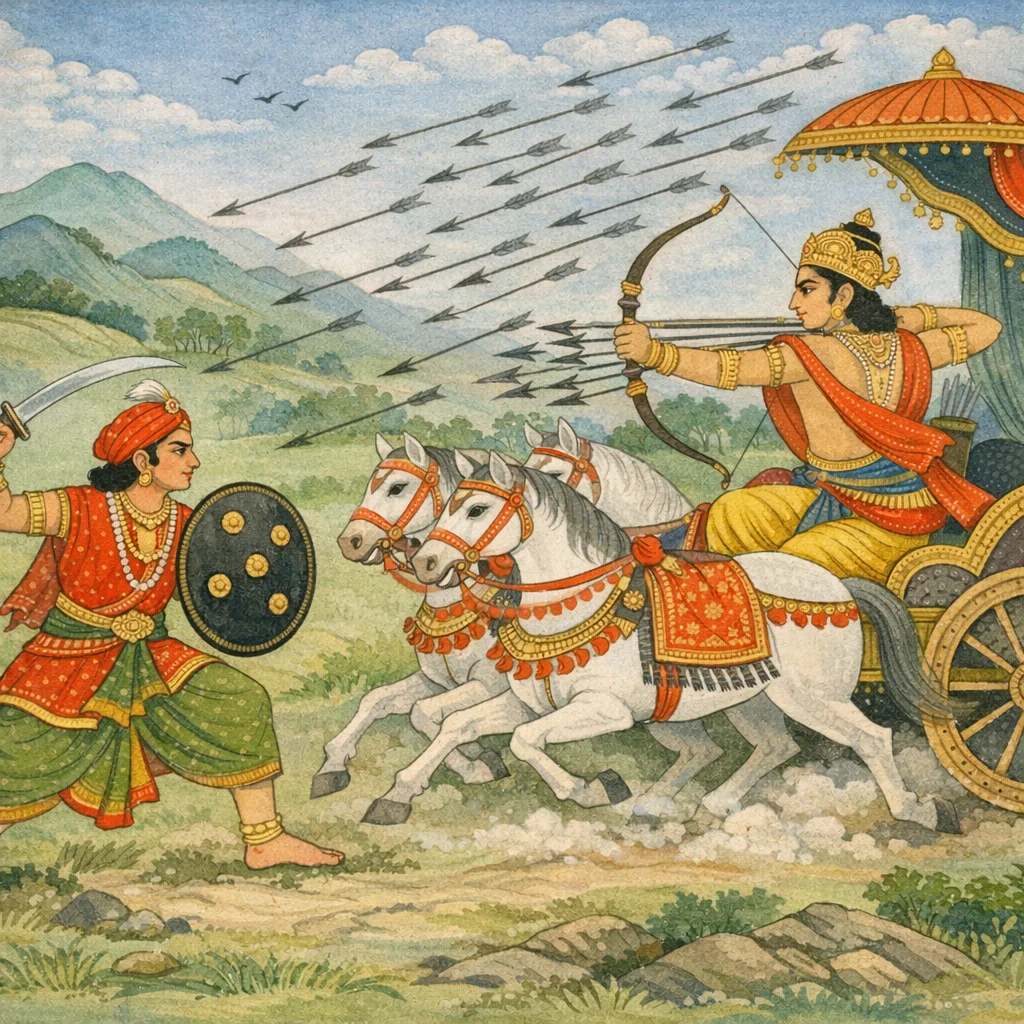
Chapter Arc: समुद्र-सी विशाल कौरव-वाहिनी में अचानक हलचल मचती है—माधव के सारथ्य में पार्थ का रथ जैसे विजय की ओर बिजली-सा बढ़ता है, और भय का कंपन सेना की पंक्तियों में दौड़ जाता है। → दुर्योधन अर्जुन के विक्रम को देखकर उतावला होकर अपने योद्धाओं को पुकारता है; उधर अनेक रथ-द्वैरथ खुलते हैं—द्रोण और विराट आमने-सामने आते हैं, और शिखण्डी अश्वत्थामा पर चढ़ दौड़ता है। बाणों की वर्षा में रथ, ध्वज, सारथि, घोड़े—सब लक्ष्य बनते हैं। → शिखण्डी और अश्वत्थामा का घोर द्वैरथ: शिखण्डी के घोड़े मारे जाते हैं, वह रथ से कूदकर तलवार-ढाल सँभालता है; प्रत्युत्तर में अश्वत्थामा कालानल-सम तेज बाणों से उसे आच्छादित कर ध्वज-रथ-आयुध तक काट गिराता है—रणभूमि में क्षण-क्षण पराजय और प्रतिशोध की लपटें उठती हैं। → कौरव-पक्ष भय और क्रोध—दोनों से संचालित होकर मोर्चे सँभालता है; पाण्डव-पक्ष भी तीखे बाणों से पीड़ित होकर भी विचलित नहीं होता। अनेक द्वंद्वों के बीच युद्ध का प्रवाह किसी एक निर्णायक परिणाम पर नहीं ठहरता, बल्कि अगले प्रहार के लिए और कठोर हो उठता है। → अश्वत्थामा के प्रचण्ड प्रहारों से शिखण्डी का संकट बढ़ता है और द्रोण-विराट का संग्राम फैलता जाता है—अगले क्षण किसका रथ टूटेगा, किसका पुत्र गिरेगा, यह अनिश्चितता युद्ध को अगले अध्याय की ओर धकेल देती है।
Shlokas
Verse 1
अफ्-४#-छकाल जा दव्यशीतितमो<ध्याय: श्रीकृष्ण और अर्जुनसे डरकर कौरवसेनामें भगदड़, द्रोणाचार्य और विराटका युद्ध, विराटपुत्र शंखका वध, शिखण्डी और अभश्चवत्थामाका युद्ध, सात्यकिके द्वारा अलम्बुषकी पराजय, धृष्टय्युम्नके द्वारा दुर्योधनकी हार तथा भीमसेन और कृतवर्माका युद्ध संजय उवाच तथा प्रवृत्ते संग्रामे निवृत्ते च सुशर्मणि । भग्नेषु चापि वीरेषु पाण्डवेन महात्मना,संजय कहते हैं--राजन्! इस प्रकार संग्राम आरम्भ होनेपर महामना पाण्डुनन्दन अर्जुनसे पराजित हो सुशर्मा युद्धभूमिसे दूर हो गया और अन्यान्य वीर भी भाग खड़े हुए
Sañjaya said: “O King, when the battle had thus begun, Suśarman—checked and turned back—fell away from the fight; and even other warriors, though brave, broke and fled when confronted by the great-souled Pāṇḍava.”
Verse 2
क्षुभ्यमाणे बले तूर्ण सागरप्रतिमे तव । प्रत्युद्याते च गाड़ेये त्वरितं विजयं प्रति,आपकी समुद्र-जैसी विशाल वाहिनीमें तुरंत ही हलचल मच गयी। उस समय गंगानन्दन भीष्मने शीघ्रतापूर्वक अर्जुनपर आक्रमण किया
Sañjaya said: When your army—vast like the ocean—was suddenly thrown into turmoil, and when the fierce onset was joined, Gaṅgā’s son Bhīṣma swiftly advanced, intent on victory, and launched his attack against Arjuna.
Verse 3
दृष्टवा दुर्योधनो राजा रणे पार्थस्य विक्रमम् । त्वरमाण: समभ्येत्य सर्वास्तानब्रवीन्नपान्,राजा दुर्योधनने रणभूमिमें अर्जुनका पराक्रम देखकर बड़ी उतावलीके साथ निकट जा उन समस्त नरेशोंसे कहा
Sañjaya said: Seeing in the battle the prowess of Pārtha (Arjuna), King Duryodhana, in great haste, approached and addressed all those kings—his allied rulers.
Verse 4
तेषां तु प्रमुखे शूंर सुशर्माणं महाबलम् | मध्ये सर्वस्य सैन्यस्य भृशं संहर्षयन्निव,उन नरेशोंके सम्मुख सारी सेनाके बीचमें शूरवीर महाबली सुशर्माको अत्यन्त हर्ष प्रदान करता हुआ-सा दुर्योधन यों बोला--
Sañjaya said: In the very forefront of those kings stood the mighty hero Suśarmā; and in the midst of the entire host, as though stirring up intense exhilaration and martial ardor, Duryodhana spoke—seeking to rouse his side for the coming clash.
Verse 5
एष भीष्म: शान्तनवो योद्धुकामो धनंजयम् । सर्वात्मना कुरुश्रेष्ठस्त्यक्त्वा जीवितमात्मन:,“वीरो! ये शान्तनुनन्दन कुरुश्रेष्ठ भीष्म अपना जीवन निछावर करके सम्पूर्ण हृदयसे अर्जुनके साथ युद्ध करना चाहते हैं
Sanjaya said: “Behold Bhishma, the son of Shantanu—foremost among the Kurus—who, desiring to fight Dhananjaya (Arjuna), is ready with his whole being, having cast aside concern for his own life. In this moment, Bhishma’s vow-bound valor and loyalty to his chosen duty stand revealed, even as he enters a war that pits kin against kin.”
Verse 6
त॑ प्रयान्तं रणे वीरं सर्वसैन्येन भारतम् । संयत्ता: समरे सर्वे पालयध्वं पितामहम्,'सारी सेनाके साथ युद्धके लिये यात्रा करते हुए मेरे वीर पितामह भरतनन्दन भीष्मकी आप सब लोग प्रयत्नपूर्वक रक्षा करें"
Sanjaya said: “As that heroic Bhārata—Bhīṣma, the grandsire—advances into battle accompanied by the entire army, all of you, fully armed and arrayed for combat, must strive to protect the Grandsire.”
Verse 7
बाढमित्येवमुक्त्वा तु तान्यनीकानि सर्वशः । नरेन्द्राणां महाराज समाजग्मु: पितामहम्,महाराज! “बहुत अच्छा” कहकर राजाओंकी वे सम्पूर्ण सेनाएँ पितामह भीष्मके पास गयीं
Sañjaya said: Having replied, “So be it,” all those battle-formations of the kings, O great king, then assembled around the Grandsire Bhīṣma—signifying their acceptance of command and their readiness to proceed under his leadership in the coming conflict.
Verse 8
ततः प्रयात: सहसा भीष्म: शान्तनवोडर्जुनम् | रणे भारतमायान्तमाससाद महाबल:,तदनन्तर शान्तनुनन्दन भीष्म युद्धभूमिमें सहसा अर्जुनके सामने गये। भरतवंशी भीष्मको आते देख महाबली अर्जुन उनके पास जा पहुँचे
Sañjaya said: Then Bhīṣma, the son of Śāntanu, suddenly advanced and confronted Arjuna on the battlefield. Seeing Bhīṣma approaching in the thick of war, the mighty Arjuna moved to meet him. The scene frames a grave ethical tension: revered elders and beloved kin stand opposed, yet each proceeds according to his pledged duty within the war’s harsh code.
Verse 9
महाश्वेताश्वयुक्तेन भीमवानरकेतुना । महता मेघनादेन रथेनातिविराजता,वे जिस रथपर आरूढ़ होकर आये थे, वह अत्यन्त शोभायमान था। उसमें श्वेतवर्णके विशाल घोड़े जुते हुए थे। उसपर भयंकर वानरसे उपलक्षित ध्वजा फहरा रही थी और उसके पहियोंसे मेघके समान गम्भीर शब्द हो रहा था
The chariot upon which Arjuna rode shone with surpassing splendor. Great white horses were yoked to it; above it streamed a banner marked by a fearsome ape, and from its wheels arose a deep roar like the rumbling of thunderclouds.
Verse 10
समरे सर्वसैन्यानामुपयान्तं धनंजयम् । अभवत् तुमुलो नादो भयाद् दृष्टवा किरीटिनम्,किरीटधारी अर्जुनको युद्धमें समीप आते देख भयके मारे समस्त सैनिकोंके मुँहसे भयानक हाहाकार प्रकट होने लगा
Sañjaya said: As Dhanañjaya (Arjuna), wearer of the diadem, advanced toward the battle, a tumultuous roar rose from all the armies—an outcry born of fear at the sight of the crowned warrior approaching.
Verse 11
अभीषुहस्तं कृष्णं च दृष्टवा55दित्यमिवापरम् । मध्यन्दिनगतं संख्ये न शेकुः प्रतिवीक्षितुम्,हाथमें बागडोर लिये मध्याह्नकालके दूसरे सूर्यके समान तेजस्वी श्रीकृष्णको युद्धभूमिमें उपस्थित देख कोई भी योद्धा उन्हें भर आँख देख भी न सके
Sañjaya said: Seeing Kṛṣṇa holding the reins, radiant like a second sun at midday upon the battlefield, the warriors could not bear to look at him straight on.
Verse 12
तथा शान्तनवं भीष्म श्वैताश्वं श्वेतकार्मुकम् । न शेकुः पाण्डवा द्रष्टूं श्वेत ग्रहमिवोदितम्,इसी प्रकार श्वेत घोड़े तथा श्वेत धनुषवाले शान्तनुनन्दन भीष्मको श्वेत ग्रहके समान उदित देख पाण्डवसैनिक उनसे आँख न मिला सके
Sañjaya said: In the same way, the Pāṇḍava warriors could not bear to look upon Bhīṣma, the son of Śantanu—mounted on white horses and wielding a white bow—when he rose before them like a bright white planet in the sky.
Verse 13
स सर्वतः परिवृतस्त्रिगर्ती: सुमहात्मभि: । भ्रातृभि: सह पुत्रैश्न तथान्यैश्व महारथै:,महामना त्रिगर्तोने अपने भाइयों, पुत्रों तथा अन्य महारथियोंके साथ उपस्थित होकर भीष्मको सब ओरसे घेर रखा था
Sañjaya said: Surrounded on all sides by the high-souled Trigartas—together with their brothers and sons, and with other great chariot-warriors as well—Bhīṣma was hemmed in.
Verse 14
भारद्वाजस्तु समरे मत्स्यं विव्याध पत्रिणा | ध्वजं चास्य शरेणाजौ धनुश्वैकेन चिच्छिदे,दूसरी ओर द्रोणाचार्यने मत्स्यराज विराटको युद्धमें एक बाणसे बींध डाला तथा एक बाणसे उनका ध्वज और एकसे धनुष काट डाला
Sañjaya said: In the thick of battle, Bhāradvāja (Droṇācārya) pierced the Matsya king (Virāṭa) with a feathered arrow; then, on that very battlefield, he severed Virāṭa’s banner with another shaft and cut his bow with a single arrow.
Verse 15
तदपास्य धनुश्छिन्नं विराटो वाहिनीपति: । अन्यदादत्त वेगेन धनुर्भारसहं दृढम्,सेनापति विराटने वह कटा हुआ धनुष फेंककर वेगपूर्वक दूसरे सुदृढ़ धनुषको हाथमें लिया, जो भार सहन करनेमें समर्थ था
Sañjaya said: Casting aside that bow which had been cut, Virāṭa, the commander of the host, swiftly seized another firm bow—one capable of bearing heavy strain. The scene underscores the warrior’s resolve: when a weapon fails, steadiness of purpose and readiness to continue one’s duty in battle must not falter.
Verse 16
शरांश्षाशीविषाकाराज्ज्वलितान् पन्नगानिव । द्रोणं त्रिभिश्व विव्याध चतुर्भिश्चास्य वाजिन:,उन्होंने उसके द्वारा प्रज्वलित सर्पोंकी भाँति विषैले नागोंकी-ती आकृतिवाले बाण छोड़कर तीनसे द्रोणाचार्यको और चार बाणोंसे उनके घोड़ोंको बींध डाला
Sañjaya said: He discharged blazing arrows, shaped like venomous serpents, and with three of them he pierced Droṇa; with four more he struck down Droṇa’s horses. The scene underscores the ruthless precision of battlefield skill, where even revered teachers are treated as targets amid the demands of war.
Verse 17
ध्वजमेकेन विव्याध सारथथिं चास्य पञ्चभि: | धनुरेकेषुणाविध्यत् तत्राक्रुध्यद् द्विजर्षभ:,फिर एक बाणसे ध्वजको, पाँच बाणोंसे सारथिको और एकसे धनुषको बींध डाला। इससे द्विजश्रेष्ठ द्रोणाचार्यको बड़ा क्रोध हुआ
Sañjaya said: With a single arrow he pierced the banner; with five he struck down his charioteer; and with one more he cut through the bow. At this, the bull among Brahmins—Droṇācārya—was inflamed with anger, for the warrior’s skill had turned the battle into a pointed moral challenge: prowess used to disable and humiliate, rather than merely to kill.
Verse 18
तस्य द्रोणो&वधीदश्वान् शरै: संनतपर्वभि: । अष्टाभिर्भरतश्रेष्ठ सूतमेकेन पत्रिणा,भरतश्रेष्ठ! फिर द्रोणने झुकी हुई गाँठवाले आठ बाणोंद्वारा विराटके घोड़ोंकोी और एक बाणसे सारथिको मार डाला
Sañjaya said: Then Droṇa slew his horses with eight arrows whose joints were bent, and with a single feathered shaft he struck down the charioteer—O best of the Bharatas. The report underscores the ruthless precision of battlefield skill, where even non-royal agents of war (horses and driver) become targets to disable a warrior’s capacity to fight.
Verse 19
स हताश्चादवप्लुत्य स्यन्दनाद्धतसारथि: । आरुरोह रथं तूर्ण पुत्रस्य रथिनां वर:,सारथि और घोड़ोंके मारे जानेपर रथियोंमें श्रेष्ठ विराट अपने रथसे तुरंत कूद पड़े और पुत्रके रथपर आरूढ़ हो गये
Sañjaya said: When his charioteer had been slain, Virāṭa—foremost among chariot-warriors—leapt down from his own chariot and, without hesitation, mounted his son’s chariot. In the midst of battle’s disorder, he chooses steadfast action and familial responsibility over despair, sustaining the fight despite sudden loss.
Verse 20
ततस्तु तौ पितापुत्रौ भारद्वाजं रथे स्थितौ । महता शरवर्षेण वारयामासतुर्बलात्,अब उन दोनों पिता-पुत्रोंने एक ही रथपर बैठकर महान् बाणवरष्कि द्वारा द्रोणाचार्यको बलपूर्वक आगे बढ़नेसे रोक दिया
Then those two—father and son—seated together in a single chariot, checked Bhāradvāja (Droṇācārya) by force, holding back his advance with a mighty shower of arrows.
Verse 21
भारद्वाजस्तत: क्रुद्ध/ शरमाशीविषोपमम् | चिक्षेप समरे तूर्ण शड़ प्रति जनेश्वर,जनेश्वर! तब द्रोणाचार्यने कुपित होकर युद्धभूमिमें विषधर सर्पके समान एक भयंकर बाण शंखपर शीघ्रतापूर्वक चलाया
Then Bhāradvāja’s son (Droṇa), angered, swiftly hurled in battle a dreadful arrow—like a venomous serpent—aimed at Śaṅkha, O lord of men.
Verse 22
स तस्य हृदयं भित्त्वा पीत्वा शोणितमाहवे । जगाम धरणीं बाणो लोठितार्द्रवरच्छद:,वह बाण शंखकी छाती छेदकर रणभूमिमें उसका रक्त पीकर धरतीमें समा गया। उसके श्रेष्ठ पंख लोहूमें भीगकर लाल हो रहे थे
Having pierced his heart and, in the fury of battle, as it were drunk his blood, the arrow sank into the earth. Its fine feathers were smeared and soaked, reddened by the gore.
Verse 23
स पपात रणे तूर्ण भारद्वाजशराहतः । धनुस्त्यक्त्वा शरांश्वैव पितुरेव समीपत:,द्रोणाचार्यके बाणोंसे घायल होकर शंख पिताके पास ही धनुष-बाण छोड़कर तुरंत ही रणभूमिमें गिर पड़ा
Struck down by the arrows of Bhāradvāja (Droṇācārya), he quickly fell on the battlefield. Casting aside his bow and arrows, he collapsed right near his father.
Verse 24
हतं तमात्मजं दृष्टवा विराट: प्राद्रवद् भयात् । उत्सृज्य समरे द्रोणं व्यात्ताननमिवान्तकम्,अपने पुत्रको मारा गया देख मुँह बाये हुए कालके समान भयंकर द्रोणाचार्यको समरभूमिमें छोड़कर विराट भयके मारे भाग गये
Seeing his own son slain, King Virāṭa fled in fear. Abandoning Droṇa on the battlefield—terrible like Death itself with gaping mouth—he ran away, overcome by panic.
Verse 25
भारद्वाजस्ततस्तूर्ण पाण्डवानां महाचमूम् । दारयामास समरे शतशो5थ सहस्रश:,तब द्रोणाचार्यने संग्रामभूमिमें तुरंत ही पाण्डवोंकी विशाल वाहिनीको विदीर्ण करना आरम्भ किया। सैकड़ों-हजारों योद्धा धराशायी हो गये
Sañjaya said: Then Bhāradvāja’s son (Droṇa) swiftly began to cleave through the Pāṇḍavas’ vast host in the battle. In that onslaught, warriors fell in their hundreds and even by the thousands—an image of war’s relentless momentum, where prowess and strategy eclipse compassion and the field becomes a proving-ground of kṣatriya duty and its terrible cost.
Verse 26
शिखण्डी तु महाराज द्रौणिमासाद्य संयुगे । आजलचघान भ्रुवोर्मध्ये नाराचैस्त्रिभिराशुगै:,महाराज! दूसरी ओर शिखण्डीने युद्धभूमिमें अश्वत्थामाके पास पहुँचकर तीन शीघ्रगामी नाराचोंद्वारा उसके भौंहोंके मध्यभागमें आघात किया
Sañjaya said: O King, Śikhaṇḍī, having come up to Droṇa’s son Aśvatthāman in the thick of battle, struck him between the eyebrows with three swift nārāca arrows—an episode that underscores the relentless, personal intensity of the Kurukṣetra war, where prowess and resolve drive warriors to seek decisive blows amid the larger struggle over kingship and dharma.
Verse 27
स बभौ रथशार्दूलो ललाटे संस्थितैस्त्रिभि: । शिखरै: काञउ्चनमयैर्मेरुस्त्रिभिरिवोच्छितै:,रथियोंमें श्रेष्ठ अश्वत्थामा ललाटमें लगे हुए उन तीनों बाणोंके द्वारा तीन ऊँचे सुवर्णमय शिखरोंसे युक्त मेरुपर्वतके समान शोभा पाने लगा
Sañjaya said: That tiger among chariot-warriors shone forth with three arrows fixed upon his forehead, appearing like Mount Meru crowned with three lofty peaks of gold. The image underscores how, amid the harshness of battle, even wounds become marks of conspicuous valor and steadfast endurance.
Verse 28
अश्वत्थामा ततः क्रुद्धो निमेषार्धाच्छिखण्डिन: । ध्वजं सूतमथो राजंस्तुरगानायुधानि च
Sañjaya said: Then Aśvatthāmā, inflamed with anger, in less than half a moment struck down Śikhaṇḍin’s banner, his charioteer, and—O King—his horses and weapons as well. The verse underscores the ruthless speed and totality with which wrath in battle seeks not merely to wound an opponent, but to dismantle the very supports that enable him to fight.
Verse 29
स हताश्वादवप्लुत्य रथाद् वै रथिनां वर:,रथियोंमें श्रेष्ठ शत्रुसंतापी शिखण्डी घोड़ोंके मारे जानेपर उस रथसे कूद पड़ा और बहुत तीखी एवं चमकीली तलवार और ढाल हाथमें लेकर कुपित हुए श्येन पक्षीकी भाँति सब ओर विचरने लगा
Sañjaya said: When his horses had been slain, Śikhaṇḍin—foremost among chariot-warriors and a tormentor of foes—leapt down from his chariot. Taking in hand a very sharp, gleaming sword and a shield, he moved about on every side like an enraged hawk, intent on continuing the fight despite the loss of his mount.
Verse 30
खड्गमादाय सुशितं विमलं च शरावरम् | श्येनवद् व्यचरत् क्रुद्ध/ शिखण्डी शत्रुतापन:,रथियोंमें श्रेष्ठ शत्रुसंतापी शिखण्डी घोड़ोंके मारे जानेपर उस रथसे कूद पड़ा और बहुत तीखी एवं चमकीली तलवार और ढाल हाथमें लेकर कुपित हुए श्येन पक्षीकी भाँति सब ओर विचरने लगा
Sañjaya said: Taking up a keen-edged sword and a spotless shield, Śikhaṇḍī—scorcher of foes—moved about in wrath like a hawk.
Verse 31
सखड््गस्य महाराज चरतस्तस्य संयुगे । नान्तरं दद्शे द्रौणिस्तदद्भुतमिवाभवत्,महाराज! तलवार लेकर युद्धमें विचरते हुए शिखण्डीका थोड़ा-सा भी छिठद्र अश्व॒त्थामाको नहीं दिखायी दिया। वह एक अद्भुत-सी बात हुई
Sañjaya said: “O King, as Śikhaṇḍin moved about the battlefield with sword in hand, Droṇa’s son Aśvatthāman could not perceive even the slightest opening in him. To behold such flawless vigilance in the midst of war seemed almost wondrous, O Mahārāja.”
Verse 32
ततः शरसहस्राणि बहूनि भरतर्षभ | प्रेषयामास समरे द्रौणि: परमकोपन:,भरतश्रेष्ठ) तब परम क्रोधी अश्वत्थामाने समरभूमिमें शिखण्डीपर कई हजार बाणोंकी वर्षा की
Sañjaya said: Then, O bull among the Bharatas, the son of Droṇa—seized by extreme wrath—sent forth in the battle many thousands of arrows, unleashing a fierce volley against his foe.
Verse 33
तामापतन्तीं समरे शरवृष्टिं सुदारुणाम् । असिना तीक्ष्णधारेण चिच्छेद बलिनां वर:,बलवानोंमें श्रेष्ठ शिखण्डीने समरभूमिमें होनेवाली उस अत्यन्त भयंकर बाणवर्षाको तीखी धारवाली तलवारसे काट डाला
Sañjaya said: On the battlefield, that fiercely descending and exceedingly dreadful shower of arrows was cut apart with a sharp-edged sword by the foremost of the mighty—Śikhaṇḍin.
Verse 34
ततोअस्य विमलं द्रौणि: शतचन्द्रं मनोरमम् । चर्माच्छिनदर्सि चास्य खण्डयामास संयुगे,तब अअभश्वत्थामाने सौ चन्द्राकार चिह्लोंसे सुशोभित शिखण्डीकी परम सुन्दर ढाल और चमकीली तलवारको युद्धस्थलमें टूक-टूक कर दिया
Sañjaya said: Then Drauṇi (Aśvatthāmā), in the midst of battle, shattered his opponent’s spotless and delightful shield—adorned with a hundred moon-like bosses—and also cut down his sword, breaking the weapons into pieces.
Verse 35
शितैस्तु बहुशो राजंस्तं च विव्याध पत्त्रिभि: । शिखण्डी तु तत: खड्गं खण्डितं तेन सायकै:,राजन! तत्पश्चात् पंखयुक्त तीखे बाणोंद्वारा शिखण्डीको भी बहुत घायल कर दिया। अश्व॒त्थामाद्वारा सायकोंकी मारसे खण्डित किये हुए उस खड्गको शिखण्डीने घुमाकर तुरंत ही उसके ऊपर चला दिया। वह खड्ग प्रज्वलित सर्प-सा प्रकाशित हो उठा। अपने ऊपर आते हुए प्रलयकालकी अग्निके समान तेजस्वी उस खड्गको अभ्वत्थामाने युद्धमें अपना हस्त-लाघव दिखाते हुए सहसा काट डाला। तत्पश्चात् बहुत-से लोहमय बाणोंद्वारा उसने शिखण्डीको भी घायल कर दिया
Sañjaya said: “O King, with many sharp, winged arrows he pierced him again and again. Then Śikhaṇḍī, seizing his sword damaged by those missiles, rushed forward to strike; the blade shone like a blazing serpent. But Aśvatthāmā, displaying swift dexterity of hand in battle, instantly cut it down, and thereafter grievously wounded Śikhaṇḍī too with many iron arrows.”
Verse 36
आविषध्य व्यसृजत् तूर्ण ज्वलन्तमिव पन्नगम् | तमापतन्तं सहसा कालानलसमप्रभम्,राजन! तत्पश्चात् पंखयुक्त तीखे बाणोंद्वारा शिखण्डीको भी बहुत घायल कर दिया। अश्व॒त्थामाद्वारा सायकोंकी मारसे खण्डित किये हुए उस खड्गको शिखण्डीने घुमाकर तुरंत ही उसके ऊपर चला दिया। वह खड्ग प्रज्वलित सर्प-सा प्रकाशित हो उठा। अपने ऊपर आते हुए प्रलयकालकी अग्निके समान तेजस्वी उस खड्गको अभ्वत्थामाने युद्धमें अपना हस्त-लाघव दिखाते हुए सहसा काट डाला। तत्पश्चात् बहुत-से लोहमय बाणोंद्वारा उसने शिखण्डीको भी घायल कर दिया
Sañjaya said: “Having aimed well, he swiftly hurled his weapon, blazing like a serpent. O King, as it rushed forward with sudden force, radiant like the fire of Time at the world’s end, Aśvatthāmā—displaying deftness of hand in battle—instantly cut it down. Thereafter, with many iron arrows, he grievously wounded Śikhaṇḍin as well.”
Verse 37
चिच्छेद समरे द्रौणिर्दर्शयन् पाणिलाघवम् । शिखण्डिनं च विव्याध शरैरबहुभिरायसै:,राजन! तत्पश्चात् पंखयुक्त तीखे बाणोंद्वारा शिखण्डीको भी बहुत घायल कर दिया। अश्व॒त्थामाद्वारा सायकोंकी मारसे खण्डित किये हुए उस खड्गको शिखण्डीने घुमाकर तुरंत ही उसके ऊपर चला दिया। वह खड्ग प्रज्वलित सर्प-सा प्रकाशित हो उठा। अपने ऊपर आते हुए प्रलयकालकी अग्निके समान तेजस्वी उस खड्गको अभ्वत्थामाने युद्धमें अपना हस्त-लाघव दिखाते हुए सहसा काट डाला। तत्पश्चात् बहुत-से लोहमय बाणोंद्वारा उसने शिखण्डीको भी घायल कर दिया
Sañjaya said: “In battle, Droṇa’s son (Aśvatthāmā), displaying swift dexterity of hand, cut it down; and then, O King, he pierced Śikhaṇḍin with many iron-tipped arrows.”
Verse 38
शिखण्डी तु भृशं राज॑स्ताड्यमान: शितै: शरै: । आरुरोह रथं तूर्ण माधवस्य महात्मन:,राजन! अभश्व॒त्थामाके तीखे बाणोंसे अत्यन्त घायल होकर शिखण्डी तुरंत ही महामना सात्यकिके रथपर चढ़ गया
Sañjaya said: “O King, Śikhaṇḍī, grievously struck and wounded by sharp arrows, quickly mounted the chariot of the noble Mādhava.”
Verse 39
सात्यकिश्चापि संक्रुद्धो राक्षसं क्रूरमाहवे । अलनम्बुषं शरैस्ती&णैरविव्याध बलिनां वर:,इधर बलवानोंमें श्रेष्ठ सात्यकिने भी अत्यन्त कुपित होकर अपने तीखे बाणोंद्वारा संग्रामभूमिमें क्रूर राक्षस अलम्बुषको बींध डाला
Sañjaya said: “Sātyaki too, inflamed with anger, in the thick of battle pierced the fierce rākṣasa Alambusha with sharp arrows. Thus the foremost among the strong met cruelty with decisive force on the battlefield, fulfilling the warrior’s dharma to protect his side.”
Verse 40
राक्षसेन्द्रस्ततस्तस्य धनुश्चिच्छेद भारत । अर्धचन्द्रेण समरे तं च विव्याध सायकै:,भारत! तब राक्षसराज अलम्बुषने रणक्षेत्रमें अर्धचन्द्राकार बाणके द्वारा सात्यकिके धनुषको काट दिया और अनेक सायकोंका प्रहार करके उन्हें भी घायल कर दिया
Sañjaya said: Then the lord of the Rākṣasas cut down his bow, O Bhārata, with a crescent-headed arrow in the thick of battle; and with a shower of shafts he struck him as well, wounding him.
Verse 41
मायां च राक्षसीं कृत्वा शरवर्षैरवाकिरत् । तत्राद्भुतमपश्याम शैनेयस्य पराक्रमम्,तत्पश्चात् उसने राक्षसी माया फैलाकर उनके ऊपर बाणोंकी वर्षा आरम्भ की। उस समय हमने सात्यकिका अद्भुत पराक्रम देखा
Sañjaya said: Having conjured a rākṣasa-like illusion, he showered them with volleys of arrows. There we witnessed the astonishing valor of Śaineya (Sātyaki).
Verse 42
असम्भ्रमस्तु समरे वध्यमान: शितै: शरै: । ऐन्द्रमस्त्रं च वार्ष्णेयो योजयामास भारत
Sañjaya said: Even while being struck in the battle by sharp arrows, the Vārṣṇeya (Kṛṣṇa) did not lose his composure. O Bhārata, he proceeded to employ the Indra-weapon (Aindra-astra).
Verse 43
तदस्त्रं भस्मसात् कृत्वा मायां तां राक्षसीं तदा,उस समय उस दिव्यास्त्रने उस राक्षसी मायाको तत्काल भस्म करके अलम्बुषके ऊपर सब ओरसे दूसरे-दूसरे बाणोंकी उसी प्रकार वर्षा आरम्भ की, जैसे वर्षा-ऋतुमें मेघ पर्वतपर जलकी धाराएँ गिराता है
Sañjaya said: Having reduced that rākṣasa-illusion to ashes with his divine missile, he at once began to shower Alambuṣa from every side with ever-new volleys of arrows—like a monsoon cloud pouring streams of water upon a mountain.
Verse 44
अलम्बुषं शरैरन्यैरभ्याकिरत सर्वत: । पर्वतं वारिधाराभि: प्रावषीव बलाहक:ः,उस समय उस दिव्यास्त्रने उस राक्षसी मायाको तत्काल भस्म करके अलम्बुषके ऊपर सब ओरसे दूसरे-दूसरे बाणोंकी उसी प्रकार वर्षा आरम्भ की, जैसे वर्षा-ऋतुमें मेघ पर्वतपर जलकी धाराएँ गिराता है
Sañjaya said: Then he showered Alambuṣa on every side with other arrows—just as, in the rainy season, a cloud pours down streams of water upon a mountain.
Verse 45
तत् तथा पीडित॑ं तेन माधवेन यशस्विना । प्रदुद्राव भयाद् रक्षस्त्यक्त्वा सात्यकिमाहवे,परमयशस्वी मधुवंशी सात्यकिके द्वारा इस प्रकार पीड़ित होनेपर वह राक्षस भयसे युद्धस्थलमें उन्हें छोड़कर भाग गया
Sañjaya said: Thus hard-pressed by the illustrious Mādhava, the rākṣasa, seized by fear, fled—abandoning Sātyaki on the battlefield.
Verse 46
तमजेय राक्षसेन्द्रं संख्ये मघवता अपि । शैनेय: प्राणदज्जित्वा योधानां तव पश्यताम्,जिसे इन्द्र भी युद्धमें हहा नहीं सकते थे, उसी राक्षसराज अलम्बुषको आपके योद्धाओंके देखते-देखते परास्त करके सात्यकि सिंहनाद करने लगे
Sañjaya said: Śaineya (Sātyaki), before the very eyes of your warriors, overcame in battle that king of Rākṣasas—Alambuṣa—who was deemed unconquerable even by Maghavat (Indra). Having won at the risk of his very life, Sātyaki then roared his lion-like cry, proclaiming his valor.
Verse 47
न्यहनत् तावकांश्चवापि सात्यकि: सत्यविक्रम: । निशितैर्बहुभिर्बाणिस्ते5द्रवन्त भयाद्दिता:,तत्पश्चात् सत्यपराक्रमी सात्यकिने अपने बहुसंख्यक तीखे बाणोंद्वारा आपके अन्य योद्धाओंको भी मारना आरम्भ किया। उस समय उनके भयसे पीड़ित हो वे सब योद्धा भागने लगे
Thereafter Sātyaki, of proven valor, began to strike down your other warriors as well with many keen arrows; tormented by fear of him, they all fled.
Verse 48
एतस्मिन्नेव काले तु द्रुपदस्यात्मजो बली । धृष्टद्युम्नो महाराज पुत्र तव जनेश्वरम्
Sañjaya said: “Just at that very moment, O great king, the mighty Dhṛṣṭadyumna, the powerful son of Drupada, confronted your son, the lord among men.”
Verse 49
छादयामास समरे शरै: संनतपर्वभि: । महाराज! इसी समय ट्रुपदके बलवान पुत्र धृष्टद्युम्नने आपके पुत्र राजा दुर्योधनको रणक्षेत्रमें झुकी हुई गाँठवाले बाणोंसे आच्छादित कर दिया ।। ४८ हू ।। स च्छाद्यमानो विशिखेैर्धद्युम्नेन भारत
Sañjaya said: In the thick of battle, Dhṛṣṭadyumna—the mighty son of Drupada—covered your son King Duryodhana with a shower of arrows, their joints bent down, so that on the battlefield he was as though veiled by shafts.
Verse 50
विव्यथे न च राजेन्द्र तव पुत्रो जनेश्वर | धृष्टद्युम्नं च समरे तूर्ण विव्याध पत्रिभि:
Sañjaya said: “O king, your son did not falter; in the thick of battle he swiftly pierced Dhṛṣṭadyumna with his arrows.”
Verse 51
षष्ट्या च त्रिंशता चैव तदद्भुतमिवा भवत् । भरतनन्दन! राजेन्द्र! जनेश्वर! धृष्टद्युम्नके बाणोंसे आच्छादित होनेपर भी आपके पुत्र दुर्योधनके मनमें व्यथा नहीं हुई। उसने युद्धस्थलमें धृष्टद्युम्नको तुरंत ही नब्बे बाणोंसे घायल कर दिया। वह एक अद्भुत-सी बात थी || ४९-५० ह ।। तस्य सेनापति: क्रुद्धो धनुश्चिच्छेद मारिष
Sanjaya said: “With sixty and thirty more—ninety in all—it seemed almost wondrous. O delight of the Bharatas, O king among kings, O lord of men: though Dhṛṣṭadyumna was covered with arrows, no anguish arose in your son Duryodhana’s mind. On the battlefield he swiftly struck Dhṛṣṭadyumna with ninety arrows. It was as if something extraordinary had occurred. Then Dhṛṣṭadyumna’s enraged commander cut his bow, O revered one.”
Verse 52
हयांश्व चतुर: शीघ्रं निजघान महाबल: । शरैश्वैनं सुनिशितै: क्षिप्रं विव्याध सप्तभि:
Sañjaya said: “The mighty warrior swiftly struck down the four horses; then, with seven razor-sharp arrows, he quickly pierced him as well.”
Verse 53
आर्य! तब महाबली पाण्डवसेनापतिने भी कुपित होकर दुर्योधनके धनुषको काट दिया और शीघ्रतापूर्वक उसके चारों घोड़ोंको भी मार डाला। तत्पश्चात् अत्यन्त तीखे सात बाणोंद्वारा तुरंत ही दुर्योधनको घायल कर दिया ।। सहताश्वान्महाबाहुरवप्लुत्य रथाद् बली । पदातिरसिमुद्यम्य प्राद्रवत् पार्षतं प्रति,घोड़े मारे जानेपर बलवान महाबाहु दुर्योधन अपने रथसे कूद पड़ा और तलवार उठाकर धृष्टद्युम्मनकी ओर पैदल ही दौड़ा
Sañjaya said: “O noble one, then the mighty commander of the Pāṇḍava host, enraged, cut down Duryodhana’s bow and swiftly slew his four horses. Thereafter, with seven exceedingly sharp arrows, he at once wounded Duryodhana. When his horses had been killed, the strong-armed, powerful Duryodhana leapt down from his chariot; on foot, raising his sword, he ran straight toward Dhṛṣṭadyumna, the son of Pṛṣata.”
Verse 54
शकुनिस्तं समभ्येत्य राजगृद्धी महाबल: । राजानं सर्वलोकस्य रथमारोपयत् स्वकम्,उस समय महाबली शकुनिने, जो राजाको बहुत चाहता था, निकट आकर सम्पूर्ण जगत्के अधिपति दुर्योधनको अपने रथपर चढ़ा लिया
Sañjaya said: “Then the mighty Śakuni—eager for royal advantage—approached and lifted Duryodhana, the king who claimed lordship over all the world, onto his own chariot.”
Verse 55
ततो नृपं पराजित्य पार्षत: परवीरहा । न्यहनत् तावकं सैन्यं वज़पाणिरिवासुरान्,तब शत्रुवीरोंका हनन करनेवाले धृष्टद्युम्नने राजा दुर्योधनको पराजित करके आपकी सेनाका उसी प्रकार विनाश आरम्भ किया, जैसे वज्रधारी इन्द्र असुरोंका विनाश करते हैं
Sañjaya said: Then Dhr̥ṣṭadyumna—the son of Pṛṣata, a slayer of enemy heroes—having defeated King Duryodhana, began to cut down your army, just as Indra, wielder of the thunderbolt, destroys the Asuras.
Verse 56
कृतवर्मा रणे भीम॑ शरैरार्च्छन्महारथ: । प्रच्छादयामास च तं महामेघो रविं यथा,महारथी कृतवर्माने रणमें भीमसेनको अपने बाणोंसे बहुत पीड़ित किया और महामेघ जैसे सूर्यको ढक लेता है, उसी प्रकार उसने भीमसेनको आच्छादित कर दिया
Sañjaya said: In the thick of battle, the great chariot-warrior Kṛtavarmā struck Bhīma with a shower of arrows, covering him over—just as a massive cloud veils the sun.
Verse 57
ततः प्रहस्य समरे भीमसेन: परंतप: । प्रेषयामास संक़ुद्ध: सायकान् कृतवर्मणे,तब शत्रुओंको संताप देनेवाले भीमसेनने युद्धमें हँसकर अत्यन्त क्रोधपूर्वक कृतवर्मापर अनेकों सायकों-का प्रहार किया
Sañjaya said: Then, in the midst of battle, Bhīmasena—the scorcher of foes—laughed aloud and, inflamed with fierce anger, launched a shower of arrows at Kṛtavarman.
Verse 58
तैर््मानो5तिरथ: सात्वत: सत्यकोविद: । नाकम्पत महाराज भीम॑ चार्च्छच्छितै: शरै:,महाराज! उन सायकोंसे अत्यन्त पीड़ित होनेपर भी अतिरथी एवं सत्यकोविद सात्वतवंशी कृतवर्मा विचलित नहीं हुआ। उसने भीमसेनको पुनः तीखे बाणोंसे पीड़ित किया
Sañjaya said: Though struck and sorely afflicted by those arrows, Kṛtavarmā—the Sātvata hero, a master of truth and of the warrior’s craft—did not waver, O King. Steady in the press of battle, he in turn pierced Bhīmasena again with sharp shafts.
Verse 59
तस्याश्चांश्वतुरो हत्वा भीमसेनो महारथ: । सारथिं पातयामास सध्वजं सुपरिष्कृतम्
Sañjaya said: After slaying his opponent’s horsemen, Bhīmasena—the great chariot-warrior—then struck down the charioteer as well, along with the chariot’s banner, though it was splendidly adorned.
Verse 60
फिर महारथी भीमसेनने उनके चारों घोड़ोंको मारकर ध्वजसहित सुसज्जित सारथिको भी काट गिराया ।। शरैर्बहुविधैश्नैनमाचिनोत् परवीरहा । शकलीकृतसर्वाड़ो हताश्व: प्रत्यद्श्यत,तत्पश्चात् शत्रुवीरोंका हनन करनेवाले भीमसेनने अनेक प्रकारके बाणोंसे कृतवमाके सारे शरीरको क्षत-विक्षत कर दिया। उसके घोड़े मारे जा चुके थे। उस समय भीमसेनके बाणोंसे उसका सारा शरीर छिन्न-भिन्न-सा दिखायी देता था
Sanjaya said: The slayer of enemy-champions, Bhimasena, swiftly covered him with many kinds of arrows. With his horses slain, his entire body appeared as though shattered into fragments—so thoroughly was he torn by Bhima’s shafts. The scene underscores the ruthless momentum of battle, where prowess and duty to one’s side drive warriors to relentless violence, even as the human cost becomes starkly visible.
Verse 61
हताश्वश्व ततस्तूर्ण वृषकस्य रथं ययौ । श्यालस्य ते महाराज तव पुत्रस्य पश्यत:,महाराज! तब घोड़ोंके मारे जानेपर कृतवर्मा आपके पुत्रके देखते-देखते तुरंत ही आपके साले वृषकके रथपर सवार हो गया
Sañjaya said: When his horses had been slain, Kṛtavarman quickly went to the chariot of Vṛṣaka—your brother-in-law, O King—doing so in full view of your son. The moment underscores battlefield pragmatism: preserving a warrior’s capacity to fight by immediately securing transport, even as kinship ties and the prince’s witness heighten the moral pressure of the scene.
Verse 62
भीमसेनो<पि संक्रुद्धस्तव सैन्यमुपाद्रवत् । निजघान च संक्रुद्धो दण्डपाणिरिवान्तक:,इधर भीमसेन भी अत्यन्त कुपित होकर आपकी सेनापर टूट पड़े और दण्डपाणि यमराजकी भाँति उसका संहार करने लगे
Sañjaya said: Bhīmasena too, inflamed with fierce anger, rushed upon your army. In his wrath he struck them down, like Antaka—Death itself—wielding the rod of punishment, bringing ruin upon the ranks before him.
Verse 81
इस प्रकार श्रीमह्या भारत भीष्मपर्वके अन्तर्गत भीष्मवधपर्वमें सातवें दिनका युद्धविषयक इकक््यासीवाँ अध्याय पूरा हुआ
Thus, in the revered Mahābhārata, within the Bhīṣma Parva—specifically in the section concerning the slaying of Bhīṣma—the eighty-first chapter, dealing with the events of battle on the seventh day, is concluded. The closing formula underscores the epic’s ethical framing of war: even amid violence, the narrative is carefully ordered, dated, and morally contextualized through the fate of Bhīṣma and the unfolding of dharma on the battlefield.
Verse 82
इति श्रीमहाभारते भीष्मपर्वणि भीष्मवधपर्वणि द्वैरथे द्ॉयशीतितमो<5ध्याय:
Thus ends the eighty-second chapter, titled “The Slaying of Bhīṣma,” within the Bhīṣma Parva of the Śrī Mahābhārata, in the section concerning the duel on chariots. This is a colophon marking the close of the chapter’s narration as reported by Sañjaya.
Verse 286
शरैरबहुभिराच्छिद्य पातयामास संयुगे । राजन्! तदनन्तर क्रोधमें भरे अश्वत्थामाने आधे निमेषमें बहुत-से बाणोंद्वारा शिखण्डीके ध्वज, सारथि, घोड़ों और आयुधोंको रणभूमिमें काट गिराया
Sañjaya said: “With many arrows he cut them down and made them fall in the thick of battle. O King, immediately thereafter, Ashvatthāmā—filled with wrath—within half a moment, by means of numerous shafts, struck down on the battlefield Śikhaṇḍin’s banner, charioteer, horses, and weapons.”
Verse 426
विजयाद्ू यदनुप्राप्तं माधवेन यशस्विना । भारत! वे समरभूमिमें तीखे बाणोंसे पीड़ित होनेपर भी घबराये नहीं। उन यशस्वी यदुकुलरत्न सात्यकिने अर्जुनसे जिसकी शिक्षा प्राप्त की थी, उस ऐन्द्रास्त्रका प्रयोग किया
Sanjaya said: O Bharata, having attained victory through the illustrious Madhava, they did not lose heart on the battlefield even when tormented by sharp arrows. Then the renowned Satyaki—jewel of the Yadu line—who had received instruction from Arjuna, employed the Aindra weapon (the missile of Indra).
Frequently Asked Questions
The dilemma is interpretive and ethical: whether catastrophic outcomes should be attributed primarily to ‘fate’ (daiva) or recognized as the matured consequence of earlier policy failures—especially the refusal to restrain Duryodhana and to heed well-wishing counsel that aimed to prevent escalation.
The chapter teaches that governance requires disciplined receptivity to hita-vacana (beneficial counsel) and that avoidable conflict, once chosen, yields predictable systemic loss; strategic events are narrated as visible karma-phala rather than isolated misfortune.
No explicit phalaśruti formula is presented here; the meta-commentary functions causally—Sañjaya’s reminder that earlier admonitions, ignored at the time, have ‘arrived’ as present consequence—positioning the chapter as an interpretive hinge between counsel and outcome.