Adhyaya 90
Adhyāya 90: Babhruvāhana’s Reception and the Commencement of Yudhiṣṭhira’s Aśvamedha
Upa-parva: Aśvamedha-dīkṣā and Kratu-pravṛtti (Ritual Initiation and Commencement Episode)
Vaiśaṃpāyana reports the formal reception of Babhruvāhana and accompanying royal women within the Pāṇḍava residence, emphasizing protocol (yathā-nyāyam), respectful greetings, and reciprocal gifting by Kuntī, Draupadī, Subhadrā, and other Kuru women. Babhruvāhana pays due respects to Dhṛtarāṣṭra, Yudhiṣṭhira, and the Pāṇḍavas, and is honored with embraces and substantial wealth. Kṛṣṇa, approached with deference, bestows an exceptional chariot with golden fittings and divine horses. On the third day, Vyāsa (son of Satyavatī) instructs Yudhiṣṭhira that the proper sacrificial time has arrived; he prescribes an Aśvamedha variant noted for abundant gold (bahusuvarṇaka) and urges a triple-scale dakṣiṇā. Yudhiṣṭhira undertakes dīkṣā and the great rite begins. The officiants perform the sequence without procedural fault—pravargya, abhiṣava, and the ordered savanas—while the administration ensures social welfare: Bhīma, by royal command, distributes food daily so that none are left destitute or hungry. The chapter details construction and ornamentation of yūpas (including devadāru and śleṣmātaka), golden decorative posts, golden bricks for the altar, and the garuḍa-shaped arrangement of the fire-structure. Assigned animals are arranged according to śāstra. The rite is depicted as cosmically attended—ṛṣis, gandharvas, siddhas, and expert musicians (e.g., Nārada, Tumburu) enhance the ceremonial atmosphere during ritual intervals.
Chapter Arc: युधिष्ठिर का अश्वमेध यज्ञ विधिपूर्वक सम्पन्न होता है—ब्राह्मण तृप्त, बन्धु-स्वजन संतुष्ट, दीन-दुःखी भी दान से तृप्त; तभी एक अद्भुत दृश्य उपस्थित होता है: यज्ञ-शाला में एक नेवला आता है, जिसका आधा शरीर सुवर्णमय है। → नेवला राजाओं और ऋत्विजों के सामने यज्ञ की महिमा पर प्रश्नचिह्न रख देता है—वह कहता है कि यह महान् अश्वमेध भी कुरुक्षेत्र-निवासी एक उज्छवृत्तिधारी (कण-बीनकर जीविका चलाने वाले) ब्राह्मण के ‘सेरभर सत्तू-दान’ के तुल्य नहीं। सभा में विस्मय और असहजता फैलती है; यज्ञ-विधि की पूर्णता (यथागम, यथान्याय) बताकर भी नेवले का दावा खंडित नहीं हो पाता। → नेवला अपना रहस्य खोलता है: एक समय अकाल/कृच्छ्र-काल में उस गरीब ब्राह्मण-परिवार ने अतिथि को अपने प्राणों के समान प्रिय सत्तू दान कर दिए; उन्हीं सत्तू के कुछ कणों के प्रभाव से नेवले का आधा शरीर सुवर्ण हो गया—पर युधिष्ठिर के अश्वमेध में लोटने पर भी शेष शरीर स्वर्ण नहीं हुआ। यह तुलना सभा के गर्व को तोड़ देती है और दान के ‘भाव’ को कर्मकाण्ड से ऊँचा स्थापित करती है। → कथा के भीतर कथा के रूप में उस ब्राह्मण-गृहस्थ का आदर्श उभरता है: भूख, कष्ट और पारिवारिक दारिद्र्य के बीच भी अतिथि-सत्कार और दान; ‘कृच्छूकाले’ शुद्ध हृदय से किया गया दान स्वर्ग-विजय का कारण बनता है। युधिष्ठिर के यज्ञ की विधि निर्दोष होते हुए भी नेवला संकेत देता है कि महत्ता का माप बाह्य वैभव नहीं, त्याग की तीव्रता और निष्कामता है।
Shlokas
Verse 1
नशा (0) आफजअन+- नवतितमो< ध्याय: युधिछिरके यज्ञमें एक नेवलेका उछ्छवृत्तिधारी ब्राह्मणके द्वारा किये गये सेरभर सत्तूदानकी महिमा उस अश्वमेधयज्ञसे भी बढ़कर बतलाना जनमेजय उवाच पितामहस्य मे यज्ञे धर्मराजस्य धीमत: । यदाश्चर्यमभूत् किंचित् तद् भवान् वक्तुमहति,जनमेजयने पूछा--ब्रह्मन! मेरे प्रपितामह बुद्धिमान् धर्मराज युथधिष्ठिरके यज्ञमें यदि कोई आश्चर्यजनक घटना हुई हो तो आप उसे बतानेकी कृपा करें
Janamejaya said: “O revered one, in the sacrificial rite of my forefather—the wise Dharmarāja (Yudhiṣṭhira)—if any remarkable or wondrous incident occurred, please be so kind as to relate it.”
Verse 2
वैशग्पायन उवाच श्रूयतां राजशार्दूल महदाश्चर्यमुत्तमम् । अश्वमेधे महायज्ञे निवृत्ते यदभूत् प्रभो,वैशम्पायनजीने कहा--नृपश्रेष्ठ! प्रभो! युधिष्ठिरका वह महान् अश्वमेध-यज्ञ जब पूरा हुआ, उसी समय एक बड़ी उत्तम किंतु महान् आश्वर्यमें डालनेवाली घटना घटित हुई, उसे बतलाता हूँ; सुनो
Vaiśaṃpāyana said: “Listen, O tiger among kings. I shall relate a supremely wondrous event. When the great Aśvamedha sacrifice had been duly completed, O lord, something extraordinary occurred.”
Verse 3
तर्पितिषु द्विजाग्रयेषु ज्ञातिसम्बन्धिबन्धुषु । दीनान्धकृपणे वापि तदा भरतसत्तम,भरतश्रेष्ठ] भारत! उस यज्ञमें श्रेष्ठ ब्राह्मणों, जातिवालों, सम्बन्धियों, बन्धु-बान्धवों, अन्धों तथा दीन-दरिद्रोंके तृप्त हो जानेपर जब युधिष्ठिरके महान् दानका चारों ओर शोर हो गया और धर्मराजके मस्तकपर फूलोंकी वर्षा होने लगी उसी समय वहाँ एक नेवला आया। अनघ! उसकी आँखें नीली थीं और उसके शरीरके एक ओरका भाग सोनेका था। पृथ्वीनाथ! उसने आते ही एक बार वज्रके समान भयंकर गर्जना की
Vaiśaṃpāyana said: When the foremost Brahmins had been satisfied, and likewise kinsmen, relations, and friends—indeed even the poor, the blind, and the destitute—then, O best of the Bharatas, at that very time (as the fame of Yudhiṣṭhira’s great gifts spread on all sides and flowers rained upon the king’s head), a mongoose arrived there. Blameless one, its eyes were blue, and one side of its body was golden. O lord of the earth, as soon as it came, it let out a single roar, terrible like a thunderbolt.
Verse 4
घुष्यमाणे महादाने दिक्षु सर्वासु भारत । पतत्सु पुष्पवर्षेषु धर्मराजस्य मूर्थनि,भरतश्रेष्ठ] भारत! उस यज्ञमें श्रेष्ठ ब्राह्मणों, जातिवालों, सम्बन्धियों, बन्धु-बान्धवों, अन्धों तथा दीन-दरिद्रोंके तृप्त हो जानेपर जब युधिष्ठिरके महान् दानका चारों ओर शोर हो गया और धर्मराजके मस्तकपर फूलोंकी वर्षा होने लगी उसी समय वहाँ एक नेवला आया। अनघ! उसकी आँखें नीली थीं और उसके शरीरके एक ओरका भाग सोनेका था। पृथ्वीनाथ! उसने आते ही एक बार वज्रके समान भयंकर गर्जना की
Vaiśaṃpāyana said: O Bhārata, as Dharmarāja’s great gift was being proclaimed in all directions and showers of flowers were falling upon his head—public acclaim for generosity and dharma—the scene was set for a moral test of what truly constitutes “great giving.”
Verse 5
नीलाक्षस्तत्र नकुलो रुक्मपार्श्वस्तदानघ । वज्जाशनिसमं नादममुज्चद् वसुधाधिप,भरतश्रेष्ठ] भारत! उस यज्ञमें श्रेष्ठ ब्राह्मणों, जातिवालों, सम्बन्धियों, बन्धु-बान्धवों, अन्धों तथा दीन-दरिद्रोंके तृप्त हो जानेपर जब युधिष्ठिरके महान् दानका चारों ओर शोर हो गया और धर्मराजके मस्तकपर फूलोंकी वर्षा होने लगी उसी समय वहाँ एक नेवला आया। अनघ! उसकी आँखें नीली थीं और उसके शरीरके एक ओरका भाग सोनेका था। पृथ्वीनाथ! उसने आते ही एक बार वज्रके समान भयंकर गर्जना की ५ 0७0 + 722 0नलम आह औँ! ज ७७० + न ++ (४ कि जे 4
Vaiśaṃpāyana said: “Then, O sinless one, there appeared a mongoose with blue eyes and one side of its body golden. O lord of the earth, as soon as it arrived, it let out a single roar—terrible, like a thunderbolt—at that sacrifice, just as the acclaim of Yudhiṣṭhira’s great gifts was spreading in all directions.”
Verse 6
सकृदुत्सृज्य तन्नादं त्रासयानो मृगद्धिजान् । मानुषं वचन प्राह धृष्टो बिलशयो महान्,बिलनिवासी उस धृष्ट एवं महान् नेवलेने एक बार वैसी गर्जना करके समस्त मृगों और पक्षियोंको भयभीत कर दिया और फिर मनुष्यकी भाषामें कहा--
Vaiśaṃpāyana said: Having once let out that roar, the bold and mighty creature who dwelt in a burrow terrified all the beasts and the birds; then, speaking in human speech, he addressed them. The episode shows that fear may be produced by mere display of power, yet true purpose is revealed only when speech and intention follow—hinting that strength without right intent is ethically incomplete.
Verse 7
सक्तुप्रस्थेन वो नायं यज्ञस्तुल्यो नराधिपा: । उज्छवृत्तेर्वदान्यस्य कुरुक्षेत्रनिवासिन:,“राजाओ! तुम्हारा यह यज्ञ कुरुक्षेत्रनिवासी एक उज्छवृत्तिधारी उदार ब्राह्मणके सेरभर सत्तू दान करनेके बराबर भी नहीं हुआ है”
Vaiśaṃpāyana said: “O kings, this sacrifice of yours is not equal even to the gift of a mere prastha of parched flour (saktu) given by a generous Brahmin who lived at Kurukṣetra and survived by gleaning. The measure of a rite is not its outward grandeur, but the purity of giving and the spirit of self-denial behind it.”
Verse 8
तस्य तद् वचन श्रुत्वा नकुलस्य विशाम्पते । विस्मयं परमं जम्मु: सर्वे ते ब्राह्मणर्षभा:,प्रजानाथ! नेवलेकी वह बात सुनकर समस्त श्रेष्ठ ब्राह्मणोंको बड़ा आश्चर्य हुआ
Vaiśaṃpāyana said: O lord of the people, when they heard that statement of Nakula, all those foremost Brahmins were seized with the greatest astonishment. The moment underscores how a righteous person’s unexpected words can unsettle even the learned, prompting reflection on what dharma requires in that situation.
Verse 9
ततः समेत्य नकुलं॑ पर्यपृच्छन्त ते द्विजा: । कुतस्त्वं समनुप्राप्तो यज्ञं साधुसमागमम्,तब वे सब ब्राह्मण उस नेवलेके पास जाकर उसे चारों ओरसे घेरकर पूछने लगे --“नकुल! इस यज्ञमें तो साधु पुरुषोंका ही समागम हुआ है, तुम कहाँसे आ गये?”
Then the brahmin sages gathered around Nakula and questioned him: “Nakula, from where have you come here? This sacrifice is an assembly of the righteous.”
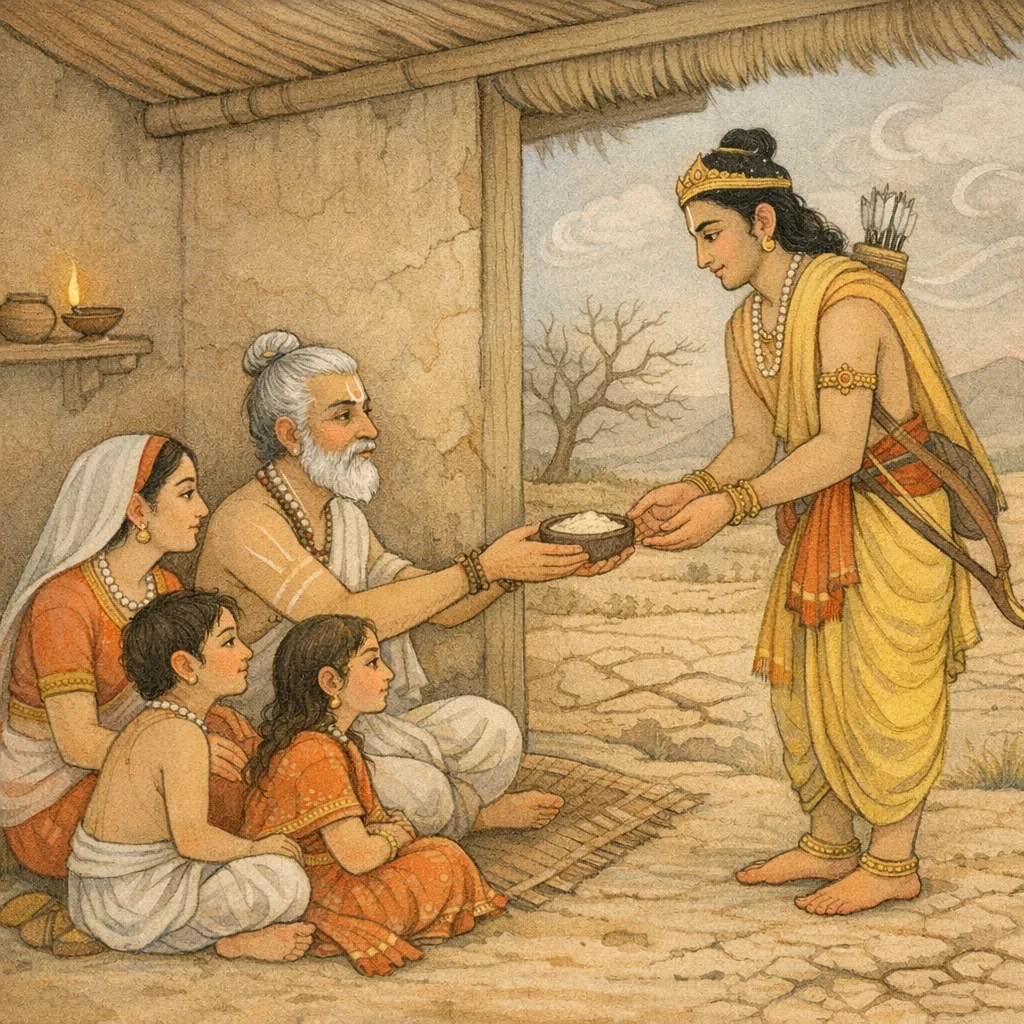
Verse 10
ई है पक $ ; न्् “बट है हे '्ि तार छः ०... ॥7! ऐ कद 7 सल्कष्ा- अल - | ५ पश्नन० | 2 (०० ! ५ 9 कि बल॑ परमं तुभ्यं कि श्रुत॑ किं परायणम् । कथं भवन्तं विद्याम यो नो यज्ञ विगर्हसे,“तुममें कौन-सा बल और कितना शास्त्रज्ञान है? तुम किसके सहारे रहते हो? हमें किस तरह तुम्हारा परिचय प्राप्त होगा? तुम कौन हो, जो हमारे इस यज्ञकी निन्दा करते हो?
They said: “What is your highest strength? What learning of sacred lore do you possess, and what refuge do you rely upon? How are we to know who you are—you who disparage our sacrifice?”
Verse 11
अविलुप्यागमं कृत्स्नं विविधैर्यज्ञियै: कृतम् । यथागमं यथान्यायं कर्तव्यं च तथा कृतम्,“हमने नाना प्रकारकी यज्ञ-सामग्री एकत्रित करके शास्त्रीय विधिकी अवहेलना न करते हुए इस यज्ञको पूर्ण किया है। इसमें शास्त्रसंगत और न्याययुक्त प्रत्येक कर्तव्य-कर्मका यथोचित पालन किया गया है
Vaiśaṃpāyana said: “Without transgressing the sacred injunctions in any respect, we have completed this rite with its many kinds of sacrificial requisites. In accordance with scripture and in accordance with justice, every duty that ought to be done has been duly performed.”
Verse 12
पूजा: पूजिताश्चात्र विधिवच्छास्त्रदर्शनात् । मन्त्राहुतिहुतश्वान्निर्दत्त देयममत्सरम्,“इसमें शास्त्रीय दृष्टिसे पूजनीय पुरुषोंकी विधिवत् पूजा की गयी है। अग्निमें मन्त्र पढ़कर आहुति दी गयी है और देनेयोग्य वस्तुओंका ईर्ष्यारहित होकर दान किया गया है
“Here, those worthy of honor according to the śāstras have been duly worshiped. Oblations have been offered into the fire with mantras, and what ought to be given has been given in charity without envy.”
Verse 13
तुष्टा द्विजातयश्चात्र दानैर्बहुविधैरपि । क्षत्रियाश्व सुयुद्धेन श्राद्धैश्षापि पितामहा:,'यहाँ नाना प्रकारके दानोंसे ब्राह्मणोंको, उत्तम युद्धके द्वारा क्षत्रियोंको, श्राद्धके द्वारा पितामहोंको, रक्षाके द्वारा वैश्योंको, सम्पूर्ण कामनाओंकी पूर्ति करके उत्तम स्त्रियोंको, दयासे शूद्रोंको, दानसे बची हुई वस्तुएँ देकर अन्य मनुष्योंको तथा राजाके शुद्ध बर्तावसे ज्ञाति एवं सम्बन्धियोंको संतुष्ट किया गया है। इसी प्रकार पवित्र हविष्यके द्वारा देवताओंको और रक्षाका भार लेकर शरणागतोंको प्रसन्न किया गया है
Vaiśaṃpāyana said: “Here, the twice-born were gratified through gifts of many kinds; the kṣatriyas through excellent battle; and the forefathers through śrāddha rites.”
Verse 14
पालनेन विशस्तुष्टा: कामैस्तुष्टा वरस्त्रिय: | अनुक्रोशैस्तथा शूद्रा दानशेषै: पृथग्जना:,'यहाँ नाना प्रकारके दानोंसे ब्राह्मणोंको, उत्तम युद्धके द्वारा क्षत्रियोंको, श्राद्धके द्वारा पितामहोंको, रक्षाके द्वारा वैश्योंको, सम्पूर्ण कामनाओंकी पूर्ति करके उत्तम स्त्रियोंको, दयासे शूद्रोंको, दानसे बची हुई वस्तुएँ देकर अन्य मनुष्योंको तथा राजाके शुद्ध बर्तावसे ज्ञाति एवं सम्बन्धियोंको संतुष्ट किया गया है। इसी प्रकार पवित्र हविष्यके द्वारा देवताओंको और रक्षाका भार लेकर शरणागतोंको प्रसन्न किया गया है
Vaiśaṃpāyana said: “By protection and good governance the distinguished people were satisfied; by the fulfillment of desires the noble women were satisfied; by compassion the Śūdras were satisfied; and by the remnants of gifts—what was left after charitable distribution—the common folk were satisfied.”
Verse 15
ज्ञातिसम्बन्धिनस्तुष्टा: शौचेन च तृपस्य नः । देवा हविर्भि: पुण्यैश्व रक्षणै: शरणागता:,'यहाँ नाना प्रकारके दानोंसे ब्राह्मणोंको, उत्तम युद्धके द्वारा क्षत्रियोंको, श्राद्धके द्वारा पितामहोंको, रक्षाके द्वारा वैश्योंको, सम्पूर्ण कामनाओंकी पूर्ति करके उत्तम स्त्रियोंको, दयासे शूद्रोंको, दानसे बची हुई वस्तुएँ देकर अन्य मनुष्योंको तथा राजाके शुद्ध बर्तावसे ज्ञाति एवं सम्बन्धियोंको संतुष्ट किया गया है। इसी प्रकार पवित्र हविष्यके द्वारा देवताओंको और रक्षाका भार लेकर शरणागतोंको प्रसन्न किया गया है
Vaiśaṃpāyana said: “Our kinsmen and relations have been satisfied through purity of conduct; the gods through sacred oblations; and those who sought refuge through the protection extended to them.”
Verse 16
यदत्र तथ्यं तद् ब्रूहि सत्यं सत्यं द्विजातिषु । यथाश्रुतं यथादृष्ट॑ पृष्टो ब्राह्मणकाम्पया,“यह सब होनेपर भी तुमने क्या देखा या सुना है, जिससे इस यज्ञपर आक्षेप करते हो? इन ब्राह्मणोंके निकट इनके इच्छानुसार पूछे जानेपर तुम सच-सच बताओ; क्योंकि तुम्हारी बातें विश्वासके योग्य जान पड़ती हैं। तुम स्वयं भी बुद्धिमान् दिखायी देते और दिव्यरूप धारण किये हुए हो। इस समय तुम्हारा ब्राह्मणोंक साथ समागम हुआ है, इसलिये तुम्हें हमारे प्रश्नका उत्तर अवश्य देना चाहिये”
Vaiśaṃpāyana said: “Speak here what is factual—truthfully, truthfully—before these twice-born. Tell, just as you have heard and just as you have seen, when you are questioned in accordance with the Brahmins’ wish.”
Verse 17
श्रद्धेयवाक्य: प्राज्ञस्त्वं दिव्यं रूपं बिभर्षि च | समागततश्न विप्रैस्त्वं तद् भवान् वक्तुमहति,“यह सब होनेपर भी तुमने क्या देखा या सुना है, जिससे इस यज्ञपर आक्षेप करते हो? इन ब्राह्मणोंके निकट इनके इच्छानुसार पूछे जानेपर तुम सच-सच बताओ; क्योंकि तुम्हारी बातें विश्वासके योग्य जान पड़ती हैं। तुम स्वयं भी बुद्धिमान् दिखायी देते और दिव्यरूप धारण किये हुए हो। इस समय तुम्हारा ब्राह्मणोंक साथ समागम हुआ है, इसलिये तुम्हें हमारे प्रश्नका उत्तर अवश्य देना चाहिये”
Vaiśaṃpāyana said: “Your words appear worthy of trust; you seem wise and you bear a divine form. Since you have now come into the company of these brāhmaṇas, you ought to answer. Even after all that has been done, what have you seen or heard on account of which you cast blame upon this sacrifice? When questioned here by these brāhmaṇas according to their wish, speak the truth plainly.”
Verse 18
इति पृष्टो द्विजैस्तै: स प्रहसन् नकुलो<ब्रवीत् । नैषा मृषा मया वाणी प्रोक्ता दर्पेण वा द्विजा:,उन ब्राह्मणोंके इस प्रकार पूछनेपर नेवलेने हँसकर कहा--“विप्रवृन्द! मैंने आपलोगोंसे मिथ्या अथवा घमंडमें आकर कोई बात नहीं कही है
When the brahmins questioned him in this manner, the Nakula (mongoose) replied with a smile: “O brahmins, the words I spoke were not false, nor were they uttered out of pride.”
Verse 19
यन्मयोक्तमिदं वाक््यं युष्माभिश्नाप्युपश्रुतम् । सन्तुप्रस्थेन वो नाय॑ यज्ञस्तुल्यो द्विजर्षभा:,“मैंने जो कहा है कि 'द्विजवरो! आपलोगोंका यह यज्ञ उख्छवृत्तिवाले ब्राह्मणोंके द्वारा किये हुए सेरभर सत्तूदानके बराबर भी नहीं है” इसे आपने ठीक-ठीक सुना है
This word that I spoke, and that you have heard clearly—namely: “O foremost of the twice-born! this sacrifice of yours is not equal even to the gift of sattu (parched meal) made by a brāhmaṇa who lives by austere means (uccavṛtti)”—you have heard it exactly as it was said.
Verse 20
इत्यवश्यं मयैतद् वो वक्तव्यं द्विजसत्तमा: । शृणुताव्यग्रमनस: शंसतो मे यथातथम्,'श्रेष्ठ ब्राह्णो! इसका कारण अवश्य आपलोगोंको बताने योग्य है। अब मैं यथार्थरूपसे जो कुछ कहता हूँ, उसे आप लोग शान्तचित्त होकर सुनें
Vaiśaṃpāyana said: “O best of the twice-born, it is indeed necessary that I tell you this reason. Now listen with minds free from distraction as I relate, truthfully and as it happened, what I have to say.”
Verse 21
अनुभूतं च दृष्टं च यन्मयाद्भुतमुत्तमम् | उज्छवृत्तेवदान्यस्य कुरुक्षेत्रनिवासिन:,“कुरक्षेत्रनिवासी उज्छवृत्तिधारी दानी ब्राह्मणके सम्बन्धमें मैंने जो कुछ देखा और अनुभव किया है, वह बड़ा ही उत्तम एवं अदभुत है”
Vaiśaṃpāyana said: “What I personally experienced and what I witnessed—an excellent and truly wondrous account—concerns a generous brāhmaṇa of austere livelihood who dwelt at Kurukṣetra.”
Verse 22
स्वर्ग येन द्विजा: प्राप्त: सभार्य: ससुतस्नुष: । यथा चार्थ शरीरस्य ममेदं काउ्चनीकृतम्,“ब्राह्मणो! उस दानके प्रभावसे पत्नी, पुत्र और पुत्रवधूसहित उन द्विजश्रेष्ठने जिस प्रकार स्वर्गलोकपर अधिकार पा लिया और वहाँ जिस तरह उन्होंने मेरा यह आधा शरीर सुवर्णमय कर दिया, वह प्रसंग बता रहा हूँ!
Vaiśaṁpāyana said: “O Brāhmaṇa, I shall relate the episode of how, through that act of giving, those excellent twice-born men—together with their wives, sons, and daughters-in-law—attained rightful access to heaven; and how, once there, they caused this half of my body to become golden. I will narrate it just as it happened.”
Verse 23
नकुल उवाच हन्त वो वर्तयिष्यामि दानस्य फलमुत्तमम् । न्यायलब्धस्य सूक्ष्मस्य विप्रदत्तस्य यद् द्विजा:,नकुल बोला--ब्राह्मणो! कुरुक्षेत्रनिवासी द्विजके द्वारा दिये गये न्यायोपार्जित थोड़े-से अन्नके दानका जो उत्तम फल देखनेमें आया है, उसे मैं आपलोगोंको बतलाता हूँ
Nakula said: “Come, I shall tell you of the highest fruit of giving—the noble result that was seen when a twice-born man dwelling at Kurukṣetra bestowed, as alms, a small portion of food earned by righteous means.”
Verse 24
धर्मक्षेत्रे कुरुक्षेत्र धर्मज्ञैर्बहुभिव॒ते | उज्छवृत्तिद्विज: कश्चित् कापोतिरभवत् तदा,कुछ दिनों पहलेकी बात है, धर्मक्षेत्र कुरुक्षेत्रमें, जहाँ बहुत-से धर्मज्ञ महात्मा रहा करते हैं, कोई ब्राह्मण रहते थे। वे उज्छवृत्तिसे अपना जीवन-निर्वाह करते थे। कबूतरके समान अन्नका दाना चुनकर लाते और उसीसे कुटुम्बका पालन करते थे
Nakula said: In Dharmakṣetra, Kurukṣetra—frequented by many sages and men learned in dharma—there once lived a certain brāhmaṇa who maintained himself by gleaning. Living on what was left over, he would pick up grains like a pigeon, and by that modest fare he supported his household.
Verse 25
सभार्य: सह पुत्रेण सस्नुषस्तपसि स्थित: । बभूव शुक््लवृत्त: स धर्मात्मा नियतेन्द्रिय:,वे अपनी स्त्री, पुत्र और पुत्रवधूके साथ रहकर तपस्यामें संलग्न थे। ब्राह्मणदेवता शुद्ध आचार-विचारसे रहनेवाले धर्मात्मा और जितेन्द्रिय थे
Living together with his wife, his son, and his daughter-in-law, he remained devoted to austerity. That brāhmaṇa, steadfast in pure conduct, was righteous in spirit and disciplined in his senses.
Verse 26
षष्ठे काले सदा विप्रो भुड्धक्ते तैः सह सुव्रत: । षष्ठे काले कदाचित् तु तस्याहारो न विद्यते
Nakula said: “At the sixth appointed time, the brāhmaṇa—steadfast in his vow—regularly ate the food set aside for the servants, together with them. Yet on one occasion, when that sixth time arrived, no food at all was available for him.”
Verse 27
कदाचिद् धर्मिणस्तस्य दुर्भिक्षे सति दारुणे,ब्राह्मणो! सुनो। एक समय वहाँ बड़ा भयंकर अकाल पड़ा। उन दिनों उन धर्मात्मा ब्राह्मणके पास अन्नका संग्रह तो था नहीं, खेतोंका अन्न भी सूख गया था। अतः वे सर्वथा निर्धन हो गये थे
Nakula said: Once, when a dreadful famine arose, that righteous brāhmaṇa found himself in extreme distress. With no stored grain and with the crops in the fields dried up, he became utterly impoverished—setting the stage for a moral test of endurance and dharma amid scarcity.
Verse 28
नाविद्यत तदा विप्रा: संचयस्तन्निबोधत । क्षीणौषधिसमावेशे द्रव्यहीनो5भवत् तदा,ब्राह्मणो! सुनो। एक समय वहाँ बड़ा भयंकर अकाल पड़ा। उन दिनों उन धर्मात्मा ब्राह्मणके पास अन्नका संग्रह तो था नहीं, खेतोंका अन्न भी सूख गया था। अतः वे सर्वथा निर्धन हो गये थे
Nakula said: “Understand this: at that time the brāhmaṇas had no stored provisions. When the herbs and crops had withered away, that brāhmaṇa became bereft of all resources, O son. Once, a great and dreadful famine struck there. In those days the righteous brāhmaṇa had no reserve of grain, and the produce of the fields had dried up; thus he became completely impoverished.”
Verse 29
काले काले<स्य सम्प्राप्ते नैव विद्येत भोजनम् | क्षुधापरिगता: सर्वे प्रातिष्ठन्त तदा तु ते
Nakula said: “When the appointed times came again and again, no food was to be found. Overcome by hunger, all of them then set out from that place, driven by necessity.”
Verse 30
उष्णार्तश्न क्षुधार्तश्न विप्रस्तपसि संस्थित:,क्षपयामास तं काल कृच्छ॒प्राणो द्विजोत्तम: । तपस्यामें लगे हुए वे ब्राह्मणदेवता गर्मी और भूख दोनोंसे कष्ट पा रहे थे। भूख और परिश्रमसे पीड़ित होनेपर भी वे उज्छ न पा सके। उन्हें अन्नका एक दाना भी नहीं मिला; अतः परिवारके सभी लोगोंके साथ उसी तरह भूखसे पीड़ित रहकर ही उन्होंने वह समय काटा। वे श्रेष्ठ ब्राह्मण बड़े कष्टसे अपने प्राणोंकी रक्षा करते थे
Nakula said: “The excellent Brahmin, established in austerity, was afflicted both by heat and by hunger. With his life sustained only with great difficulty, he endured and wore away that span of time—remaining steadfast in his vow despite deprivation, and bearing suffering without abandoning his discipline.”
Verse 31
उज्छमप्राप्तवानेव ब्राह्मण: क्षुच्छूमान्वित: । स तथैव क्षुधाविष्ट: सार्ध परिजनेन ह,क्षपयामास तं काल कृच्छ॒प्राणो द्विजोत्तम: । तपस्यामें लगे हुए वे ब्राह्मणदेवता गर्मी और भूख दोनोंसे कष्ट पा रहे थे। भूख और परिश्रमसे पीड़ित होनेपर भी वे उज्छ न पा सके। उन्हें अन्नका एक दाना भी नहीं मिला; अतः परिवारके सभी लोगोंके साथ उसी तरह भूखसे पीड़ित रहकर ही उन्होंने वह समय काटा। वे श्रेष्ठ ब्राह्मण बड़े कष्टसे अपने प्राणोंकी रक्षा करते थे
Nakula said: “The Brahmin, afflicted by both hunger and scorching heat, still failed to obtain even the smallest remnant of food. Though tormented by hunger and worn down by exertion, he found not a single grain. And so, together with all his dependents, he endured that period in the same state of deprivation, barely preserving life with great difficulty.”
Verse 32
।। अथ ष७्े गते काले यवप्रस्थमुपार्जयन्
Then, when the sixth period of time had passed, he set about obtaining yavaprastha—provisions of grain and sustenance—preparing what was needed in due season and with practical foresight.
Verse 33
यवप्रस्थं तु त॑ं सक्तूनकुर्वन्त तपस्विन: । कृतजप्याद्विकास्ते तु हुत्वा चाग्निंयथाविधि
Nakula said: “Those ascetics would prepare parched-grain flour (saktu) from that yavaprastha, and—having completed their recitations and other prescribed observances—would then offer oblations into the fire according to rule.”
Verse 34
कुडवं कुडवं सर्वे व्यभजन्त तपस्विन: । तदनन्तर एक दिन पुनः छठा काल आनेतक उन्होंने सेरभर जौका उपार्जन किया। उन तपस्वी ब्राह्मणोंने उस जौका सत्तू तैयार किया और जप तथा नैत्यिक नियम पूर्ण करके अग्निमें विधिपूर्वक आहुति देनेके पश्चात् वे सब लोग एक-एक कुडव अर्थात् एक-एक पाव सत्तू बाँटकर खानेके लिये उद्यत हुए ।। ३२-३३ $ ।। अथागच्छद् द्विज: कश्चिदतिथिभर्भुज्जतां तदा,वे भोजनके लिये अभी बैठे ही थे कि कोई ब्राह्मण अतिथि उनके यहाँ आ पहुँचा। उस अतिथिको आया देख वे मन-ही-मन बहुत प्रसन्न हुए। उस अतिथिको प्रणाम करके उन्होंने उससे कुशल-मंगल पूछा
Nakula said: The ascetic brāhmaṇas divided their scant measure of food—each receiving a single kuḍava. Then, on another day, they managed to gather only a little barley. From that barley they prepared sattū, roasted flour. Having completed their daily recitations (japa) and observances, and having duly offered oblations into the sacred fire, they were about to eat—each with his one kuḍava portion. Just as they had sat down for the meal, a brāhmaṇa guest (atithi) arrived at their dwelling. Seeing him, they felt inward joy; they bowed to him and asked after his welfare.
Verse 35
ते त॑ दृष्टवातिर्थि प्राप्तं प्रहष्टमनसो 5भन् । तेडभिवाद्य सुखप्रश्न॑ पृष्टया तमतिर्थिं तदा,वे भोजनके लिये अभी बैठे ही थे कि कोई ब्राह्मण अतिथि उनके यहाँ आ पहुँचा। उस अतिथिको आया देख वे मन-ही-मन बहुत प्रसन्न हुए। उस अतिथिको प्रणाम करके उन्होंने उससे कुशल-मंगल पूछा
Seeing that a guest had arrived, they became inwardly delighted. They respectfully greeted him, inquired after his well-being, and received him according to the duties of hospitality—placing dharma before their own meal and comfort.
Verse 36
विशुद्धमनसो दान्ता: श्रद्धादमसमन्विता: । अनसूयवो विक्रोधा: साधवो वीतमत्सरा:
Nakula said: “They are people of purified minds and disciplined conduct, endowed with faith and self-restraint. Free from fault-finding and anger, they are virtuous and have cast off envy.”
Verse 37
त्यक्तमानमदक्रोधा धर्मज्ञा द्विजसत्तमा: | स ब्रह्म॒चर्य गोत्र ते तस्य ख्यात्वा परस्परम्
Nakula said: “Those excellent brāhmaṇas, having cast aside pride, intoxication, and anger, and being knowers of dharma, recognized one another by their brahmacarya discipline and their lineage (gotra), and thus became mutually acquainted.”
Verse 38
कुटीं प्रवेशयामासु: क्षुधार्तमतिथिं तदा । ब्राह्मण-परिवारके सब लोग विशुद्धचित्त, जितेन्द्रिय, श्रद्धालु, मनको वशमें रखनेवाले, दोषदृष्टिसे रहित, क्रोधहीन, सज्जन, ईर्ष्यारहित और धर्मज्ञ थे। जन श्रेष्ठ ब्राह्मणोंने अभिमान, मद और क्रोधको सर्वथा त्याग दिया था। क्षुधासे कष्ट पाते हुए उस अतिथि ब्राह्मणको अपने ब्रह्मचर्य और गोत्रका परस्पर परिचय देते हुए वे कुटीमें ले गये || ३६-३७ ई || इदमर्घ्य च पाद्यं च बूसी चेयं तवानघ,तत्पश्चात् वहाँ उज्छवृत्तिवाले ब्राह्मणने कहा--'भगवन्! अनघ! आपके लिये ये अर्घ्य, पाद्य और आसन मौजूद हैं तथा न्यायपूर्वक उपार्जित किये हुए ये परम पवित्र सत्तू आपकी सेवामें प्रस्तुत हैं। द्विजश्रेष्ठ! मैंने प्रसन्नतापूर्वक इन्हें आपको अर्पण किया है। आप स्वीकार करें!
Then they led the hungry guest into the hermitage-hut. They said, “O blameless one, here are the offerings of welcome—arghya and water for washing the feet (pādya)—and here is a seat for you.” And in reverence they presented pure sattū, honestly obtained, as befits the rites of hospitality.
Verse 39
शुचय: सक्तवश्चेमे नियमोपार्जिता: प्रभो । प्रतिगृह्लीष्व भद्रं ते मया दत्ता द्विजर्षभ,तत्पश्चात् वहाँ उज्छवृत्तिवाले ब्राह्मणने कहा--'भगवन्! अनघ! आपके लिये ये अर्घ्य, पाद्य और आसन मौजूद हैं तथा न्यायपूर्वक उपार्जित किये हुए ये परम पवित्र सत्तू आपकी सेवामें प्रस्तुत हैं। द्विजश्रेष्ठ! मैंने प्रसन्नतापूर्वक इन्हें आपको अर्पण किया है। आप स्वीकार करें!
Nakula said: “O Lord, these are pure saktu—roasted barley-flour—honestly obtained through disciplined observances. Please accept them; may good be yours, O best of Brahmins, for they have been offered by me.”
Verse 40
इत्युक्त: प्रतिगृह्याथ सक्तूनां कुडवं द्विज: । भक्षयामास राजेन्द्र न च तुष्टिं जगाम स:,राजेन्द्र! ब्राह्यणके ऐसा कहनेपर अतिथिने एक पाव सत्तू लेकर खा लिया; परंतु उतनेसे वह तृप्त नहीं हुआ
Thus addressed, the brahmin accepted a kuḍava measure of saktu. He ate it, O best of kings, yet even after eating he did not attain satisfaction.
Verse 41
स उज्छवृत्तिस्तं प्रेक्ष्य क्षुधरापरिगतं द्विजम् । आहारं चिन्तयामास कथं तुष्टो भवेदिति,उस उज्छतवृत्तिवाले द्विजने देखा कि ब्राह्मण अतिथि तो अब भी भूखे ही रह गये हैं। तब वे उसके लिये आहारका चिन्तन करने लगे कि यह ब्राह्मण कैसे संतुष्ट हो?
That man of austere livelihood, seeing the twice-born guest still overcome by hunger and thirst, began to ponder what food might be found—how this brahmin could be satisfied.
Verse 42
तस्य भार्यत्रवीद् वाक्य मद्भागो दीयतामिति । गच्छत्वेष यथाकामं परितुष्टो द्विजोत्तम:,तब ब्राह्णकी पत्नीने कहा--'नाथ! यह मेरा भाग इन्हें दे दीजिये, जिससे ये ब्राह्मणदेवता इच्छानुसार तृप्तिलाभ करके यहाँसे पधारें'
Then his wife spoke: “Let my share be given to him.” May this best of Brahmins depart from here as he wishes, fully satisfied.
Verse 43
इति ब्रुवन्ती तां साध्वीं भार्या स द्विजसत्तम: । क्षुधापरिगतां ज्ञात्वा तान् सक्तून् नाभ्यनन्दत,अपनी पतिव्रता पत्नीकी यह बात सुनकर जन द्विजश्रेष्ठने उसे भूखी जानकर उसके दिये हुए सत्तूको लेनेकी इच्छा नहीं की
As his virtuous wife spoke thus, that foremost of Brahmins, realizing that she was overcome by hunger, did not consent to accept the saktu she offered.
Verse 44
आत्मानुमानतो विद्वान् स तु विप्रर्षभस्तदा । जानन वृद्धां क्षुधार्ता च श्रान्तां ग्लानां तपस्विनीम्
Nakula said: “That wise man, a bull among brāhmaṇas, judging by his own experience, then recognized the ascetic woman—aged, tormented by hunger, and worn out and faint. Seeing her condition, he understood her suffering and the moral urgency of responding with compassion and proper duty.”
Verse 45
अपि कीटपतड़ानां मृगाणां चैव शोभने
Nakula said: “O fair one, even among insects and birds, and likewise among the beasts of the wild…”
Verse 46
अनुकम्प्यो नर: पत्न्या पुष्टो रक्षित एव च,“जो पुरुष होकर भी स्त्रीके द्वारा अपना पालन-पोषण और संरक्षण करता है, वह मनुष्य दयाका पात्र है
Nakula says: “A man who is maintained and protected by his wife is truly an object of compassion.”
Verse 47
प्रपतेद् यशसो दीप्तात् स च लोकान् न चाप्नुयात् धर्मकामार्थकार्याणि शुश्रूषा कुलसंतति:
He would fall away from his shining fame, and he would not attain the worlds (of blessed reward). The proper undertakings of dharma, kāma, and artha are sustained by devoted service and by the continuance of one’s lineage.
Verse 48
नवेत्ति कर्मतो भायरिक्षणे यो5क्षम: पुमान्
Nakula said: “A man who is not competent to examine fear in terms of its causes and consequences in action does not truly understand it.”
Verse 49
इत्युक्ता सा ततः प्राह धर्मार्थो नौ समौ द्विज
Thus addressed, she replied: “O brāhmaṇa, for us dharma and artha stand on equal footing.”
Verse 50
सत्यं रतिश्न धर्मश्न स्वर्गश्न॒ गुणनिर्जित:,सस्त्रीणां पतिसमाधीन कांक्षितं च द्विजर्षभ । द्विजश्रेष्ठ! स्त्रियोंका सत्य, धर्म, रति, अपने गुणोंसे मिला हुआ स्वर्ग तथा उनकी सारी अभिलाषा पतिके ही अधीन है
Nakula said: “O bull among the twice-born, for women truthfulness, love, righteousness, and even heaven—won through their own virtues—along with whatever they desire, are understood to be dependent upon the husband.”
Verse 51
।। ऋतुर्मातुः पितुर्बीजं दैवतं परमं पति:
Nakula said: “The mother’s season (fertile time), the father’s seed, and the husband—who is the supreme divine authority for her—are the decisive factors in the begetting of offspring.”
Verse 52
पालनाद्धि पतिस्त्वं मे भर्तासि भरणाच्च मे
Nakula said: “Indeed, by protecting me you are my lord; and by sustaining me you are my husband.”
Verse 53
जरापरिगतो वृद्ध: क्षुधार्तो दुर्बलो भूशम्
Nakula said: “Worn down by old age, an aged man—tormented by hunger and weakened—lies upon the ground.”
Verse 54
इत्युक्त: स तया सक्तून् प्रगृहोदं वचो5ब्रवीत्
Thus addressed by her, he took up the saktu-offering and, with a respectful gesture of welcome, spoke words in reply—showing the courtesy and self-restraint expected in a righteous household even amid hardship.
Verse 55
द्विज सक्तूनिमान् भूय: प्रतिगृह्लीष्व सत्तम । पत्नीके ऐसा कहनेपर ब्राह्मणने सत्तू लेकर अतिथिसे कहा--'साधुपुरुषोंमें श्रेष्ठ ब्राह्मण! आप यह सत्तू भी पुनः ग्रहण कीजिये” ।। ५४ ई ।। स तान् प्रगृह भुक्त्वा च न तुष्टिमगमद् द्विज: । तमुञ्छवृत्तिरालक्ष्य ततश्चिन्तापरो5भवत्,अतिथि ब्राह्मण उस सत्तूको भी लेकर खा गया; किंतु संतुष्ट नहीं हुआ। यह देखकर उज्छवृत्तिवाले ब्राह्मणको बड़ी चिन्ता हुई
The brahmin took those provisions, ate them, and yet did not become satisfied. Seeing this, the householder who lived by gleaning (uñcha-vṛtti) was overcome with anxiety—his duty of hospitality had been performed to the limit of his means, yet the guest’s hunger remained, testing the ethical ideal of atithi-sevā (service to a guest).
Verse 56
पुत्र उवाच सक्तूनिमान् प्रगृह्य त्वं देहि विप्राय सत्तम । इत्येव सुकृतं मन्ये तस्मादेतत् करोम्यहम्,तब उनके पुत्रने कहा--सत्पुरुषोंमें श्रेष्ठ पिताजी! आप मेरे हिस्सेका यह सत्तू लेकर ब्राह्मणको दे दीजिये। मैं इसीमें पुण्य मानता हूँ, इसलिये ऐसा कर रहा हूँ
The son said: “Father, best among the virtuous, take this saktu—my own share—and give it to the brahmin. In this I see true merit; therefore I do so.”
Verse 57
भवान् हि परिपाल्यो मे सर्वदैव प्रयत्नतः । साधूनां काड्क्षितं यस्मात् पितुर्वद्धस्य पालनम्,मुझे सदा यत्नपूर्वक आपका पालन करना चाहिये; क्योंकि साधु पुरुष सदा इस बातकी अभिलाषा रखते हैं कि मैं अपने बूढ़े पिताका पालन-पोषण करूँ
“You must indeed be cared for by me at all times, with earnest effort; for the good and righteous ever desire that I should support and look after my aged father.” In this, the son affirms filial duty as a central expression of dharma—service to one’s parents, especially in their old age, is held up as a moral ideal praised by the virtuous.
Verse 58
पुत्रार्थो विहितो होष वार्धके परिपालनम् | श्रुतिरेषा हि विप्रषें त्रिषु लोकेषु शाश्वती,पुत्र होनेका यही फल है कि वह वृद्धावस्थामें पिताकी रक्षा करे। ब्रह्मर्षे! तीनों लोकोंमें यह सनातन श्रुति प्रसिद्ध है
The son said: “O venerable sage, the very purpose for which a son is enjoined is this—he should protect and care for his father in old age. O Brahmarṣi, this is an eternal Vedic teaching (śruti), renowned throughout the three worlds.”
Verse 59
प्राणधारणमात्रेण शकक्यं कर्तु तपस्त्वया । प्राणो हि परमो धर्म: स्थितो देहेषु देहिनाम्,प्राणधारणमात्रसे आप तप कर सकते हैं। देहधारियोंके शरीरोंमें स्थित हुआ प्राण ही परम धर्म है
The son said: “By merely sustaining your life-breath you are able to perform austerity. For the vital breath itself—abiding in the bodies of embodied beings—is the highest dharma.”
Verse 60
पितोवाच अपि वर्षसहस्त्री त्वं बाल एव मतो मम । उत्पाद्य पुत्र हि पिता कृतकृत्यो भवेत् सुतात्,पिताने कहा--बेटा! तुम हजार वर्षके हो जाओ तो भी हमारे लिये बालक ही हो। पिता पुत्रको जन्म देकर ही उससे अपनेको कृतकृत्य मानता है
The father said: “Even if you were to live for a thousand years, to me you would still be only a child. A father, indeed, becomes fulfilled—his duty accomplished—simply by bringing forth a son.”
Verse 61
बालानां क्षुद् बलवती जानाम्येतदहं प्रभो । वृद्धो5हं धारयिष्यामि त्वं बली भव पुत्रक,सामर्थ्यशाली पुत्र! मैं इस बातको अच्छी तरह जानता हूँ कि बच्चोंकी भूख बड़ी प्रबल होती है। मैं तो बूढ़ा हूँ। भूखे रहकर भी प्राण धारण कर सकता हूँ। तुम यह सत्तू खाकर बलवान् होओ--अपने प्राणोंकी रक्षा करो
The son said: “My lord, I know well that a child’s hunger is overpowering. I am old; I can endure fasting and still sustain my life. You, my child, eat this roasted barley-flour and become strong—protect your life.”
Verse 62
जीर्णेन वयसा पुत्र न मां क्षुद् बाधतेडपि च । दीर्घकालं तपस्तप्तं न मे मरणतो भयम्,बेटा! जीर्ण अवस्था हो जानेके कारण मुझे भूख अधिक कष्ट नहीं देती है। इसके सिवा मैं दीर्घकालतक तपस्या कर चुका हूँ; इसलिये अब मुझे मरनेका भय नहीं है
The son said: “My child, because I am worn with age, hunger does not trouble me much. Moreover, I have practiced austerity for a long time; therefore I have no fear of death.”
Verse 63
पुत्र बवाच अपत्यमस्मि ते पुंसस्त्राणात् पुत्र इति स्मृत: । आत्मा पुत्र: स्मृतस्तस्मात् त्राह्मात्मानमिहात्मना,पुत्र बोला--तात! मैं आपका पुत्र हूँ, पुरुषका त्राण करनेके कारण ही संतानको पुत्र कहा गया है। इसके सिवा पुत्र पिताका अपना ही आत्मा माना गया है; अतः आप अपने आत्मभूत पुत्रके द्वारा अपनी रक्षा कीजिये
The son said: “Father, I am your offspring. Because a son is held to be the protector (trāṇa) of a man, he is therefore called ‘putra’. Moreover, a son is regarded as the father’s very self; therefore, here and now, protect yourself through me—your own self in the form of your son.”
Verse 64
पितोवाच रूपेण सदृशस्त्वं मे शीलेन च दमेन च | परीक्षितश्न बहुधा सक्तूनादझि ते सुत,पिताने कहा--बेटा! तुम रूप, शील (सदाचार और सद्भाव) तथा इन्द्रियसंयमके द्वारा मेरे ही समान हो। तुम्हारे इन गुणोंकी मैंने अनेक बार परीक्षा कर ली है, अतः मैं तुम्हारा सत्तू लेता हूँ
The father said: “In appearance you are like me, and so too in conduct and in self-restraint. I have tested you in many ways; therefore, my son, today I accept your offering of saktu—roasted barley-flour.”
Verse 65
इत्युक्त्वा55दाय तान् सक्तून् प्रीतात्मा द्विजसत्तम: । प्रहसन्निव विप्राय स तस्मै प्रददौ तदा,यों कहकर श्रेष्ठ ब्राह्मणने प्रसन्नतापूर्वक वह सत्तू ले लिया और हँसते हुए-से उस ब्राह्मण अतिथिको परोस दिया
Having spoken thus, the best of Brahmins—his heart filled with gladness—took those morsels of saktu and, as if smiling, then served them to that Brahmin guest.
Verse 66
भुक्त्वा तानपि सक्तून् स नैव तुष्टो बभूव ह । उज्छवृत्तिस्तु धर्मात्मा बत्रीडामनुजगाम ह,वह सत्तू खाकर भी ब्राह्मण देवताका पेट न भरा। यह देखकर उज्छवृत्तिधारी धर्मात्मा ब्राह्मण बड़े संकोचमें पड़ गये
Even after eating those morsels of saktu, he still was not satisfied. Seeing this, the righteous Brahmin who lived by gleaning followed along, inwardly troubled and hesitant, anxious to uphold the duty of hospitality while the guest’s hunger remained unappeased.
Verse 67
त॑ं वै वधू: स्थिता साध्वी ब्राह्मणप्रियकाम्यया । सक्तूनादाय संदहृष्टा श्वशुरं वाक्यमब्रवीत्,उनकी पुत्रवधू भी बड़ी सुशीला थी। वह ब्राह्मणका प्रिय करनेकी इच्छासे उनके पास जा बड़ी प्रसन्नताके साथ अपने उन श्वशुरदेवसे बोली--
Then the daughter-in-law, a virtuous woman, standing there with the wish to please the brāhmaṇa, took the saktu and, delighted at heart, addressed her father-in-law with respectful words—
Verse 68
संतानात् तव संतान मम विप्र भविष्यति । सक्तूनिमानतिथये गृहीत्वा सम्प्रयच्छ मे,“विप्रवर! आपकी संतानसे मुझे संतान प्राप्त होगी; अतः आप मेरे परम पूज्य हैं। मेरे हिस्सेका यह सत्तू लेकर आप अतिथि देवताको अर्पित कीजिये
The son said: “O brāhmaṇa, through your offspring I shall obtain offspring; therefore you are worthy of my highest reverence. Take this portion of saktu that belongs to me and offer it to the guest, for honoring the guest is a sacred duty.”
Verse 69
तव प्रसादान्निर्वृत्ता मम लोका: किलाक्षया: । पुत्रेण तानवाप्रोति यत्र गत्वा न शोचति,“आपकी कृपासे मुझे अक्षय लोक प्राप्त हो गये। पुत्रके द्वारा मनुष्य उन लोकोंमें जाते हैं, जहाँ जाकर वह कभी शोकमें नहीं पड़ता
The son said: “By your gracious favor, I have indeed attained imperishable worlds. It is through a son that a person reaches those realms—having gone there, one does not fall into sorrow.”
Verse 70
धर्मद्या हि यथा त्रेता वल्नित्रेता तथैव च | तथैव पुत्रपौत्राणां स्वर्गस्त्रेता किलाक्षय:,'जैसे धर्म तथा उससे संयुक्त अर्थ और काम--ये तीनों स्वर्गके प्राप्ति करानेवाले हैं तथा जैसे आहवनीय, गार्हपत्य और दक्षिणाग्नि--ये तीनों स्वर्गके साधन हैं, उसी प्रकार पुत्र, पौत्र और प्रपौत्र--ये त्रिविध संतानें अक्षय स्वर्गकी प्राप्ति करानेवाली हैं
The son said: “Just as the triad beginning with dharma—dharma together with artha and kāma—serves as a threefold means leading to heaven, and just as the three sacred fires (Āhavanīya, Gārhapatya, and Dakṣiṇāgni) are likewise three instruments for attaining heaven, so too the threefold line of descendants—son, grandson, and great-grandson—is said to secure an imperishable heaven.”
Verse 71
पितृन् ऋणात् तारयति पुत्र इत्यनुशुश्रुम । पुत्रपौत्रैश्न नियतं साधुलोकानुपाश्षुते,“हमने सुना है कि पुत्र पिताको पितृ-ऋणसे छुटकारा दिला देता है। पुत्रों और पौत्रोंके द्वारा मनुष्य निश्चय ही श्रेष्ठ लोकोंमें जाते हैं!
The son said: “We have heard in the tradition that a son delivers his forefathers from the debt owed to the ancestors. Indeed, through sons and grandsons a person surely attains the worlds of the righteous.”
Verse 72
श्षशुर उवाच वातातपविशीर्णाज्ीं त्वां विवर्णा निरीक्ष्य वै । कर्षितों सुव्रताचारे क्षुधाविद्वलचेतसम्,श्वशुरने कहा--बेटी! हवा और धूपके मारे तुम्हारा सारा शरीर सूख रहा है--शिथिल होता जा रहा है। तुम्हारी कान्ति फीकी पड़ गयी है। उत्तम व्रत और आचारका पालन करनेवाली पुत्री! तुम बहुत दुर्बल हो गयी हो। क्षुधाके कष्टसे तुम्हारा चित्त अत्यन्त व्याकुल है। तुम्हें ऐसी अवस्थामें देखकर भी तुम्हारे हिस्सेका सत्तू कैसे ले लूँ। ऐसा करनेसे तो मैं धर्मकी हानि करनेवाला हो जाऊँगा। अत: कल्याणमय आचरण करनेवाली कल्याणि! तुम्हें ऐसी बात नहीं कहनी चाहिये
The father-in-law said: “Seeing you—your limbs worn down by wind and sun, your complexion faded, emaciated though you are a woman of excellent vows and conduct, and your mind distressed by the torment of hunger—I cannot bring myself to take even your share of the roasted barley flour. If I did so, I would become one who harms dharma. Therefore, O auspicious one whose conduct is for welfare, you should not speak in that way.”
Verse 73
कथं सक्तून् ग्रहीष्यामि भूत्वा धर्मोपघातक: । कल्याणवृत्ते कल्याणि नैवं त्वं वक्तुमहसि,श्वशुरने कहा--बेटी! हवा और धूपके मारे तुम्हारा सारा शरीर सूख रहा है--शिथिल होता जा रहा है। तुम्हारी कान्ति फीकी पड़ गयी है। उत्तम व्रत और आचारका पालन करनेवाली पुत्री! तुम बहुत दुर्बल हो गयी हो। क्षुधाके कष्टसे तुम्हारा चित्त अत्यन्त व्याकुल है। तुम्हें ऐसी अवस्थामें देखकर भी तुम्हारे हिस्सेका सत्तू कैसे ले लूँ। ऐसा करनेसे तो मैं धर्मकी हानि करनेवाला हो जाऊँगा। अत: कल्याणमय आचरण करनेवाली कल्याणि! तुम्हें ऐसी बात नहीं कहनी चाहिये
The father-in-law said: “How could I take the roasted barley-flour (sattu) from you and thereby become one who harms dharma? O auspicious one, whose conduct is noble and beneficent—this is not something you should say.”
Verse 74
षष्ठे काले व्रतवतीं शौचशीलतपो<न्विताम् । कृच्छ्वृत्तिं निराहारां द्रक्ष्यामि त्वां कथं शुभे,तुम प्रतिदिन शौच, सदाचार और तपस्यामें संलग्न रहकर छठे कालमें भोजन करनेका व्रत लिये हुए हो। शुभे! बड़ी कठिनाईसे तुम्हारी जीविका चलती है। आज सत्तू लेकर तुम्हें निराहार कैसे देख सकूँगा
The father-in-law said: “O auspicious one, you are devoted to a vow—eating only at the sixth time—steadfast in purity, good conduct, and austerity. Your livelihood is sustained only with great difficulty. How can I bear to see you today, with only parched flour (sattu) in hand, remaining without food?”
Verse 75
बाला क्षुधार्ता नारी च रक्ष्या त्वं सततं मया | उपवासपरिश्रान्ता त्वं हि बान्धवनन्दिनी,एक तो तुम अभी बालिका हो, दूसरे भूखसे पीड़ित हो रही हो, तीसरे नारी हो और चौथे उपवास करते-करते अत्यन्त दुबली हो गयी हो; अतः मुझे सदा तुम्हारी रक्षा करनी चाहिये; क्योंकि तुम अपनी सेवाओंद्वारा बान्धवजनोंको आनन्दित करनेवाली हो
“You are still a young girl, you are afflicted by hunger, you are a woman, and you have become utterly worn down by fasting. Therefore it is my constant duty to protect you, for you bring joy to the family through your devoted service.”
Verse 76
स्नुषोवाच गुरोर्मम गुरुस्त्वं वै यतो दैवतदैवतम् । देवातिदेवस्तस्मात् त्वं सक्तूनादत्स्व मे प्रभो,पुत्रवधू बोली--भगवन्! आप मेरे गुरुके भी गुरु, देवताओंके भी देवता और सामान्य देवताकी अपेक्षा भी अतिशय उत्कृष्ट देवता हैं, अतः मेरा दिया हुआ यह सत्तू स्वीकार कीजिये
The daughter-in-law said: “You are truly the guru even of my guru, for you are the God of gods. Indeed, you are the Supreme beyond the gods; therefore, O Lord, accept from me these roasted barley-flour provisions (sattu).”
Verse 77
देह: प्राणश्न धर्मश्न शुश्रूषार्थमिदं गुरो: । तव विप्र प्रसादेन लोकान् प्राप्स्यामहे शुभान्,मेरा यह शरीर, प्राण और धर्म--सब कुछ बड़ोंकी सेवाके लिये ही है। विप्रवर! आपके प्रसादसे मुझे उत्तम लोकोंकी प्राप्ति हो सकती है
“This body, this very life-breath, and even my dharma are meant for one purpose: the devoted service of elders and teachers. O best of brāhmaṇas, by your gracious favor we shall attain auspicious worlds.”
Verse 78
अवेक्ष्या इति कृत्वाहं दृढ्भक्तेति वा द्विज । चिन्त्या ममेयमिति वा सक्तूनादातुमहसि,अतः आप मुझे अपना दृढ़ भक्त, रक्षणीय और विचारणीय मानकर अतिथिको देनेके लिये यह सत्तू स्वीकार कीजिये
“O brāhmaṇa, whether you regard me as one who looks to you for help, or as your steadfast devotee, or as someone who deserves your thoughtful concern—please accept these roasted grains (sattu). Therefore, considering me your devoted dependent, worthy of protection and consideration, receive this sattu so that you may offer it to your guest.”
Verse 79
श्षशुर उवाच अनेन नित्यं साध्वी त्वं शीलवृत्तेन शोभसे । या त्वं धर्मव्रतोपेता गुरुवृत्तिमवेक्षसे,श्वशुरने कहा--बेटी! तुम सती-साथ्वी नारी हो और सदा ऐसे ही शील एवं सदाचारका पालन करनेसे तुम्हारी शोभा है। तुम धर्म तथा व्रतके आचरणमें संलग्न होकर सर्वदा गुरुजनोंकी सेवापर ही दृष्टि रखती हो; इसलिये बहू! मैं तुम्हें पुण्यसे वंचित न होने दूँगा। धर्मात्माओंमें श्रेष्ठ महाभागे! पुण्यात्माओंमें तुम्हारी गिनती करके मैं तुम्हारा दिया हुआ सत्तू अवश्य स्वीकार करूँगा
The father-in-law said: “By this conduct you shine always as a virtuous woman, adorned with good character and right behavior. Since you are devoted to dharma and sacred observances, and keep your attention fixed on the proper service and regard due to elders and teachers, I will not allow you to be deprived of merit. O fortunate one, counted among the righteous, I will certainly accept the sattu you have offered.”
Verse 80
तस्मात् सक्तून् ग्रहीष्यामि वधु नाहसि वज्चनाम् | गणयित्वा महाभागे त्वां हि धर्मभूतां वरे,श्वशुरने कहा--बेटी! तुम सती-साथ्वी नारी हो और सदा ऐसे ही शील एवं सदाचारका पालन करनेसे तुम्हारी शोभा है। तुम धर्म तथा व्रतके आचरणमें संलग्न होकर सर्वदा गुरुजनोंकी सेवापर ही दृष्टि रखती हो; इसलिये बहू! मैं तुम्हें पुण्यसे वंचित न होने दूँगा। धर्मात्माओंमें श्रेष्ठ महाभागे! पुण्यात्माओंमें तुम्हारी गिनती करके मैं तुम्हारा दिया हुआ सत्तू अवश्य स्वीकार करूँगा
The father-in-law said: “Therefore, daughter-in-law, I will accept these roasted barley-flour provisions. You do not deserve to be deprived or cheated. O fortunate one, counting you among the truly righteous and excellent women, I will indeed receive what you have offered—so that your merit is not lost.”
Verse 81
इत्युक्त्वा तानुपादाय सक्तून् प्रादाद् द्विजातये । ततस्तुष्टो5भवद् विप्रस्तस्य साधोर्महात्मन:,ऐसा कहकर ब्राह्मणने उसके हिस्सेका भी सत्तू लेकर अतिथिको दे दिया। इससे वह ब्राह्मण उन उज्छवृत्तिधारी साधु महात्मापर बहुत संतुष्ट हुआ
Having spoken thus, he took those parched-grain flour portions (saktū) and gave them to the twice-born guest. Thereupon the Brahmin became pleased—deeply satisfied with that virtuous, great-souled man.
Verse 82
प्रीतात्मा स तु तं वाक्यमिदमाह द्विजर्ष भम् । वाग्मी तदा द्विजश्रेष्ठो धर्म: पुरुषविग्रह:
With a heart filled with satisfaction, he then spoke these words to that bull among Brahmins. At that moment the eloquent best of the twice-born—Dharma himself, embodied in human form—addressed him.
Verse 83
वास्तवमें उस श्रेष्ठ द्विजके रूपमें मानव-विग्रहधारी साक्षात् धर्म ही वहाँ उपस्थित थे। वे प्रवचनकुशल धर्म संतुष्टचित्त होकर उन उज्छवृत्तिधारी श्रेष्ठ ब्राह्मणसे इस प्रकार बोले -- ८२ ॥। शुद्धेन तव दानेन न्यायोपात्तेन धर्मत: । यथाशक्ति विसूष्टेन प्रीतो5स्मि द्विजसत्तम । अहो दान घुष्यते ते स्वर्गे स्वर्गनिवासिभि:,द्विजश्रेष्ठी तुमने अपनी शक्तिके अनुसार धर्मपूर्वक जो न्यायोपार्जित शुद्ध अन्नका दान दिया है, इससे तुम्हारे ऊपर मैं बहुत प्रसन्न हूँ। अहो! स्वर्गलोकमें निवास करनेवाले देवता भी वहाँ तुम्हारे दानकी घोषणा करते हैं
Dharma himself, present there in human form under the guise of that eminent twice-born, said: “O best of Brahmins, I am pleased with you. For the gift you have given is pure—rightfully acquired, offered in accordance with dharma, and bestowed to the extent of your ability. Indeed, in heaven the very dwellers of heaven proclaim your charity.”
Verse 84
गगनात् पुष्पवर्ष च पश्येदं पतितं भुवि । सुर्िंदेवगन्धर्वा ये च देवपुर:सरा:
Look—this shower of flowers has fallen from the sky onto the earth. The gods, the celestial Gandharvas, and those divine beings who go before the gods—their attendants and heralds—are present, honoring this moment.
Verse 85
ब्रह्मर्षयो विमानस्था ब्रह्मलोकचराश्न ये
Those Brahmarṣis who ride in celestial aerial cars, and those who move freely in the realm of Brahmā…
Verse 86
पितृलोकगता: सर्वे तारिता: पितरस्त्वया
All the forefathers who had gone to the world of the Pitṛs have been delivered by you.
Verse 87
ब्रह्मचर्येण दानेन यज्ञेन तपसा तथा
By the discipline of celibate studentship, by generous giving, by sacrificial worship, and likewise by austerity…
Verse 88
श्रद्धया परया यस्त्वं तपश्चरसि सुव्रत
The father-in-law said: “Because you practice austerity with supreme faith, O you of excellent vows, …”
Verse 89
इस प्रकार श्रीमह्याभारत आश्वमेधिकपर्वके अन्तर्गत अनुगीतापर्वर्ें अश्वमेधकी समाप्तिविषयक नवासीवाँ अध्याय पूरा हुआ,सर्वमेतद्धि यस्मात् ते दत्त शुद्धेन चेतसा
Thus, in the Śrī Mahābhārata, within the Āśvamedhika Parvan and its Anugītā section, the eighty-ninth chapter—concerning the conclusion of the Aśvamedha-related account—comes to its full end. For all this has been imparted to you, because it was given with a purified and sincere mind.
Verse 90
क्षुधा निर्णुदति प्रज्ञां धर्मबुद्धि व्यपोहति,“भूख मनुष्यकी बुद्धिको चौपट कर देती है। धार्मिक विचारको मिटा देती है। क्षुधासे ज्ञान लुप्त हो जानेके कारण मनुष्य धीरज खो देता है। जो भूखको जीत लेता है, वह निश्चय ही स्वर्गपर विजय पाता है इति श्रीमहाभारते आश्वमेधिके पर्वणि अनुगीतापर्वणि नकुलाख्याने नवतितमो<ध्याय:
Hunger drives away discernment and erases one’s sense of dharma. When knowledge is obscured by hunger, a person loses steadiness and self-control. Therefore, one who conquers hunger is said to win a sure victory—attaining merit and the heavenly goal through mastery over bodily craving.
Verse 91
क्षुधापरिगतज्ञानो धृतिं त्यजति चैव ह । बुभुक्षां जयते यस्तु स स्वर्ग जयते ध्रुवम्,“भूख मनुष्यकी बुद्धिको चौपट कर देती है। धार्मिक विचारको मिटा देती है। क्षुधासे ज्ञान लुप्त हो जानेके कारण मनुष्य धीरज खो देता है। जो भूखको जीत लेता है, वह निश्चय ही स्वर्गपर विजय पाता है
One whose understanding is overwhelmed by hunger abandons steadfastness and loses moral resolve. But the person who conquers the craving of hunger surely wins heaven—meaning, he attains the highest good through self-mastery and endurance.
Verse 92
यदा दानरुचि: स्याद् वै तदा धर्मो न सीदति । अनवेक्ष्य सुतस्नेहं कलत्रस्नेहमेव च
When the inclination to give arises, then dharma does not decline. One should give without being held back by attachment to one’s children, nor even by attachment to one’s spouse.
Verse 93
द्रव्यागमो नृणां सूक्ष्म: पात्रे दानं ततः परम्,“मनुष्यके लिये सबसे पहले न्यायपूर्वक धनकी प्राप्तिका उपाय जानना ही सूक्ष्म विषय है। उस धनको सत्पात्रकी सेवामें अर्पण करना उससे भी श्रेष्ठ है। साधारण समयमें दान देनेकी अपेक्षा उत्तम समयपर दान देना और भी अच्छा है; किंतु श्रद्धाका महत्त्व कालसे भी बढ़कर है। स्वर्गका दरवाजा अत्यन्त सूक्ष्म है। मनुष्य मोहवश उसे देख नहीं पाते हैं
The father-in-law said: “For human beings, discerning the means of acquiring wealth justly is a subtle matter. Yet higher than that is to place that wealth in the service of a worthy recipient. Better than giving at an ordinary time is giving at an excellent time; but greater even than time is faith (śraddhā). The gate of heaven is exceedingly subtle—people, deluded by attachment, fail to perceive it.”
Verse 94
काल: परतरो दानाच्छुद्धा चैव ततः परा । स्वर्गद्वारं सुसूक्ष्मं हि नरै्मोहान्न दृश्यते,“मनुष्यके लिये सबसे पहले न्यायपूर्वक धनकी प्राप्तिका उपाय जानना ही सूक्ष्म विषय है। उस धनको सत्पात्रकी सेवामें अर्पण करना उससे भी श्रेष्ठ है। साधारण समयमें दान देनेकी अपेक्षा उत्तम समयपर दान देना और भी अच्छा है; किंतु श्रद्धाका महत्त्व कालसे भी बढ़कर है। स्वर्गका दरवाजा अत्यन्त सूक्ष्म है। मनुष्य मोहवश उसे देख नहीं पाते हैं
The father-in-law said: “Timeliness is superior even to the act of giving; and purity is higher still than that. The gate of heaven is exceedingly subtle—men, deluded by attachment and confusion, do not perceive it.”
Verse 95
स्वर्गार्गलं लोभबीजं रागगुप्तं दुरासदम् । त॑ तु पश्यन्ति पुरुषा जितक्रोधा जितेन्द्रिया:
“It is the bolt that bars the way to heaven, the seed of greed, hidden under attachment, and hard to overcome. Yet those men who have conquered anger and mastered their senses are able to perceive it clearly and thus guard themselves against it.”
Verse 96
सहस्रशक्तिश्न शतं शतशक्तिर्दशापि च
“A thousand-powered; a hundred; a hundred-powered; and even ten as well.”
Verse 97
रन्तिदेवो हि नृपतिरप: प्रादादकिंचन:
For King Rantideva, though possessing nothing for himself, gave away even water.
Verse 98
न धर्म: प्रीयते तात दानैर्दत्तैमहाफलै:
“Dear child, Dharma is not truly pleased merely by gifts—even when those gifts are lavish and yield great results.”
Verse 99
न्यायलब्धैर्यथा सूक्ष्मै: श्रद्धापूते: स तुष्यति । “तात! अन्यायपूर्वक प्राप्त हुए द्रव्यके द्वारा महान् फल देनेवाले बड़े-बड़े दान करनेसे धर्मको उतनी प्रसन्नता नहीं होती, जितनी न्यायोपार्जित थोड़े-से अन्नका भी श्रद्धापूर्वक दान करनेसे उन्हें प्रसन्नता होती है ।। ९८ $ ।। गोप्रदानसहस्राणि द्विजेभ्यो5दान्नगो नृप:
The father-in-law said: “My son, Dharma is not truly pleased by grand gifts that promise great merit when they are made from wealth obtained unjustly; rather, even a small offering of food honestly earned and given with sincere faith delights him more. The purity of one’s means and the giver’s reverence outweigh the size of the donation.”
Verse 100
एकां दत्त्वा स पारक््यां नरकं॑ समपद्यत । “राजा नृगने ब्राह्मणोंको हजारों गौएँ दान की थीं; किंतु एक ही गौ दूसरेकी दान कर दी, जिससे अन्यायत: प्राप्त द्रव्यका दान करनेके कारण उन्हें नरकमें जाना पड़ा ।। ९९६ || आत्ममांसप्रदानेन शिबिरौशीनरो नूप:
Having given away a single cow that belonged to another, he fell into hell. The passage recalls King Nṛga: though he had donated thousands of cows to brāhmaṇas, by mistakenly giving even one cow that was not rightfully his, he incurred the fault of gifting what was unjustly held and thus suffered a fall into hell—underscoring that purity of ownership and justice in giving are essential to dharma.
Verse 101
प्राप्प पुण्यकृताँललोकान् मोदते दिवि सुब्रत: । “उशीनरके पुत्र उत्तम व्रतका पालन करनेवाले राजा शिबि श्रद्धापूर्वक अपने शरीरका मांस देकर भी पुण्यात्माओंके लोकोंमें अर्थात् स्वर्गमें आनन्द भोगते हैं | १०० $ ।। विभवो न नृणां पुण्यं स्वशकक््त्या स्वर्जितं सताम्
Having attained the worlds of the righteous, the man of excellent vows rejoices in heaven. In the land of the Uśīnaras, King Śibi—steadfast in the highest observances—offered the flesh of his own body with reverent faith, and even so he enjoys delight among the realms of the virtuous, that is, in heaven. For prosperity itself is not a person’s merit; true merit is what the good win by their own strength of will and self-sacrifice.
Verse 102
न यज्ञैविविधैर्विप्र यथान्यायेन संचितै: । “विप्रवर! मनुष्योंके लिये धन ही पुण्यका हेतु नहीं है। साधु पुरुष अपनी शक्तिके अनुसार सुगमतापूर्वक पुण्यका अर्जन कर लेते हैं। न्यायपूर्वक संचित किये हुए अन्नके दानसे जैसा उत्तम फल प्राप्त होता है, वैसा नाना प्रकारके यज्ञोंका अनुष्ठान करनेसे भी नहीं सुलभ होता ।। १०१ ह || क्रोधाद् दानफलं हन्ति लोभात् स्वर्ग न गच्छति
The father-in-law said: “O brāhmaṇa, the highest good is not secured merely by performing many kinds of sacrifices. For human beings, wealth alone is not the sole cause of merit; the virtuous, according to their capacity, can readily gather merit. The excellent fruit obtained by giving food that has been acquired justly is not so easily attained even by undertaking various sacrifices. Moreover, anger destroys the fruit of charity, and through greed one does not reach heaven.”
Verse 103
न राजसूयैर्बहुभिरिष्टवा विपुलदक्षिणै:,“तुमने जो यह दानजनित फल प्राप्त किया है, इसकी समता प्रचुर दक्षिणावाले बहुसंख्यक राजसूय और अनेक अभश्वमेध-यज्ञोंद्वारा भी नहीं हो सकती। तुमने सेरभर सत्तूका दान करके अक्षय ब्रह्मलोकको जीत लिया है
The father-in-law said: “The merit you have gained from this act of giving cannot be matched even by performing many Rājasūya sacrifices endowed with lavish priestly fees, nor even by numerous Aśvamedha rites. By donating a mere measure of roasted barley-flour, you have won the imperishable world of Brahmā.”
Verse 104
नचाश्वमेधैर्बहुभि: फलं सममिदं तव । सक्तुप्रस्थेन विजितो ब्रह्मलोकस्त्वयाक्षय:,“तुमने जो यह दानजनित फल प्राप्त किया है, इसकी समता प्रचुर दक्षिणावाले बहुसंख्यक राजसूय और अनेक अभश्वमेध-यज्ञोंद्वारा भी नहीं हो सकती। तुमने सेरभर सत्तूका दान करके अक्षय ब्रह्मलोकको जीत लिया है
The father-in-law said: “The merit you have gained from this act of giving cannot be matched even by performing many Aśvamedha sacrifices. By donating merely a prastha-measure of roasted barley flour (saktu), you have won for yourself the imperishable world of Brahmā. This shows that the ethical worth of a gift lies not in its magnitude but in the giver’s sincerity, need, and self-restraint.”
Verse 105
विरजो ब्रह्मसदनं गच्छ विप्र यथासुखम् | सर्वेषां वो द्विजश्रेष्ठ दिव्यं यानमुपस्थितम्,“विप्रवर! अब तुम सुखपूर्वक रजोगुणरहित ब्रह्मलोकमें जाओ। द्विजश्रेष्ठी तुम सब लोगोंके लिये यह दिव्य विमान उपस्थित है
The father-in-law said: “O brāhmaṇa, go at your ease to the stainless abode of Brahmā, free from the taint of passion. O best of the twice-born, for all of you a divine aerial car now stands ready.”
Verse 106
आरोहत यथाकामं धर्मोडस्मि द्विज पश्य माम् | तारितो हि त्वया देहो लोके कीर्ति: स्थिरा च ते
“Mount up as you wish, O brāhmaṇa—behold me: I am Dharma. By you this body has indeed been delivered, and in the world your fame too shall remain steadfast.”
Verse 107
इत्युक्तवाक्ये धर्मे तु यानमारुह्ु स द्विज:
When Dharma had thus spoken these words, the twice-born man mounted the vehicle, in accordance with Dharma’s instruction.
Verse 108
तस्मिन् विप्रे गते स्वर्ग ससुते सस्नुषे तदा
When that brāhmaṇa had departed for heaven, then—together with his son and his daughter-in-law—the situation reached its fateful turning point, marking the aftermath of the sage’s passing and the moral weight of what followed in the household.
Verse 109
ततस्तु सक्तुगन्धेन क्लेदेन सलिलस्य च,तदनन्तर सत्तूकी गन्ध सूँघने, वहाँ गिरे हुए जलकी कीचसे सम्पर्क होने, वहाँ गिरे हुए दिव्य पुष्पोंको रौंदने और उन महात्मा ब्राह्मणके दान करते समय गिरे हुए अन्नके कणोंमें मन लगानेसे तथा उन उज्छवृत्तिधारी ब्राह्मणकी तपस्याके प्रभावसे मेरा मस्तक सोनेका हो गया
Then, through the fragrance of parched grain (sattū) and the dampness of water—by smelling that scent, by touching the mud formed from the water that had fallen there, by trampling the divine flowers that had dropped, and by fixing my mind upon the grains of food that fell while that great-souled brāhmaṇa was giving alms—together with the power of austerity (tapas) of that brāhmaṇa who lived by gleaning (uñchavṛtti), my head became golden.
Verse 110
दिव्यपुष्पविमर्दाश्व॒ साधोर्दानलवैश्व तै: । विप्रस्थ तपसा तस्य शिरो मे काउ्चनीकृतम्,तदनन्तर सत्तूकी गन्ध सूँघने, वहाँ गिरे हुए जलकी कीचसे सम्पर्क होने, वहाँ गिरे हुए दिव्य पुष्पोंको रौंदने और उन महात्मा ब्राह्मणके दान करते समय गिरे हुए अन्नके कणोंमें मन लगानेसे तथा उन उज्छवृत्तिधारी ब्राह्मणकी तपस्याके प्रभावसे मेरा मस्तक सोनेका हो गया
The father-in-law said: “By trampling the fallen divine flowers, by coming into contact with the mud made from the water that had fallen there, by fixing my mind upon the grains of food that had dropped while that holy brāhmaṇa was giving alms, and above all by the power of that brāhmaṇa ascetic’s austerity (tapas), my head was transformed into gold.”
Verse 111
तस्य सत्याभिसंधस्य सक्तुदानेन चैव ह । शरीरार्थ च मे विप्रा: शातकुम्भमयं कृतम्,विप्रवरो! उन सत्यप्रतिज्ञ ब्राह्मणके सत्तूदानसे मेरा यह आधा शरीर भी सुवर्णमय हो गया
“O brāhmaṇas, by the power of that man’s unwavering resolve to truth—and indeed by his gift of parched grain (sattū)—this very body of mine has, as it were, been made of pure gold (śātakumbha).”
Verse 112
पश्यतेमं सुविपुलं तपसा तस्य धीमत: । कथमेवंविध॑ स्याद् वै पार्श्रमन्न्यदिति द्विजा:,उन बुद्धिमान ब्राह्मणकी तपस्यासे मुझे जो यह महान् फल प्राप्त हुआ है, इसे आपलोग अपनी आँखों देख लीजिये। ब्राह्मणो! अब मैं इस चिन्तामें पड़ा कि मेरे शरीरका दूसरा पार्श्व भी कैसे ऐसा ही हो सकता है?
“Behold with your own eyes this vast result obtained through the austerity (tapas) of that wise man. O twice-born ones (dvija), I am now troubled by this thought: how might the other side of my body also become like this?”
Verse 113
तपोवनानि यज्ञांश्व॒ हृष्टो5भ्येमि पुन: पुनः । यज्ञ त्वहमिमं श्रुत्वा कुरुराजस्य धीमत:
“Delighted, I go again and again to the forest hermitages (tapovana) and to the sacrificial rites (yajña). Having heard of this sacrifice of the wise king of the Kurus, I too come here for the yajña.”
Verse 114
ततो मयोक्तं तद् वाक््यं प्रहस्य ब्राह्मणर्षभा:
Then, O best of Brahmins, they laughed and replied to the words I had spoken—treating my statement with amused dismissal rather than solemn acceptance.
Verse 115
सक्तुप्रस्थलवैस्तैरहि तदाहं काड्चनीकृत:
“With those handfuls of parched grain and those measures of food, I was then, as it were, turned into gold—made radiant and blessed.” In the speaker’s moral framing, even a small offering given in the right spirit becomes spiritually transformative, elevating the giver beyond material poverty into inner worth and merit.
Verse 116
वैशम्पायन उवाच इत्युक्त्वा नकुल: सर्वान् यज्ञे द्विजवरांस्तदा,वैशम्पायनजी कहते हैं--जनमेजय! यज्ञस्थलमें उन समस्त श्रेष्ठ ब्राह्मणोंसे ऐसा कहकर वह नेवला वहाँसे गायब हो गया और वे ब्राह्मण भी अपने-अपने घर चले गये
Vaiśampāyana said: Having spoken thus, Nakula then addressed all the foremost Brāhmaṇas present at the sacrifice. (In the narrative context of this episode, after the admonition is delivered, the wondrous creature disappears from the sacrificial ground, and the Brāhmaṇas disperse to their respective homes—underscoring that ritual grandeur is ethically hollow without genuine dharma and compassion.)
Verse 117
जगामादर्शन तेषां विप्रास्ते च ययुर्गृहान्,वैशम्पायनजी कहते हैं--जनमेजय! यज्ञस्थलमें उन समस्त श्रेष्ठ ब्राह्मणोंसे ऐसा कहकर वह नेवला वहाँसे गायब हो गया और वे ब्राह्मण भी अपने-अपने घर चले गये
Vaiśampāyana said: “O Janamejaya, having spoken thus in the sacrificial arena before all those eminent brāhmaṇas, the mongoose vanished from their sight; and the brāhmaṇas, too, departed to their respective homes.” The episode underscores how a pointed moral testimony can unsettle ritual pride: when the truth has been stated, the witness withdraws, leaving the assembly to reflect on the ethical substance behind the rite.
Verse 118
एतत् ते सर्वमाख्यातं मया परपुरंजय । यदाश्चर्यमभूत् तत्र वाजिमेथे महाक्रतो,शत्रुनगरीपर विजय पानेवाले जनमेजय! वहाँ अश्वमेध नामक महायज्ञमें जो आश्चर्यजनक घटना घटित हुई थी, वह सारा प्रसंग मैंने तुम्हें बता दिया
Vaiśampāyana said: O conqueror of enemy cities, I have now told you in full the entire account of that wondrous event that occurred there during the great rite of the Aśvamedha sacrifice.
Verse 119
न विस्मयस्ते नृपते यज्ञे कार्य: कथंचन । ऋषिकोटिसहस्त्राणि तपोभियें दिवं गता:,नरेश्वर! उस यज्ञके सम्बन्धमें ऐसी घटना सुनकर तुम्हें किसी प्रकार विस्मय नहीं करना चाहिये। सहस्रों कोटि ऐसे ऋषि हो गये हैं, जो यज्ञ न करके केवल तपस्याके ही बलसे दिव्य लोकको प्राप्त हो चुके हैं
Vaiśaṃpāyana said: “O king, you should not feel any astonishment at all regarding this sacrifice. Countless sages—by the power of austerity alone—have attained the heavenly worlds even without performing sacrifices.”
Verse 120
अद्रोह: सर्वभूतेषु संतोष: शीलमार्जवम् | तपो दमश्न सत्यं च प्रदानं चेति सम्मितम्,किसी भी प्राणीसे द्रोह न करना, मनमें संतोष रखना, शील और सदाचारका पालन करना, सबके प्रति सरलतापूर्ण बर्ताव करना, तपस्या करना, मन और इन्द्रियोंको संयममें रखना, सत्य बोलना और न्यायोपार्जित वस्तुका श्रद्धापूर्वक दान करना--इनमेंसे एक-एक गुण बड़े-बड़े यज्ञोंके समान हैं
Vaiśampāyana said: “Non-hostility toward all beings, contentment, good conduct, straightforwardness, austerity, self-restraint, truthfulness, and the faithful giving of what has been rightly earned—each of these virtues is held to be equal in merit to great sacrifices.”
Verse 263
भुदुक्तेडन्यस्मिन् कदाचित् स ष्े काले द्विजोत्तम: | वे उत्तम व्रतधारी द्विज सदा छठे कालमें अर्थात् तीन-तीन दिनपर ही स्त्री-पुत्र आदिके साथ भोजन किया करते थे। यदि किसी दिन उस समय भोजन न मिला तो दूसरा छठा काल आनेपर ही वे द्विजश्रेष्ठ अन्न ग्रहण करते थे
Nakula said: “Once, there was an excellent brahmin, a man of strict and noble vows. He had a fixed discipline: he would eat only at the ‘sixth time’—that is, once every three days—and even then he would take food together with his wife, children, and dependents. If on any occasion he did not obtain food at that appointed time, he would not eat earlier out of impatience or need; he would wait until the next sixth time and only then accept food.”
Verse 296
उज्छं तदा शुक्लपक्षे मध्यं तपति भास्करे । बारंबार छठा काल आता; किंतु उन्हें भोजन नहीं मिलता था। अतः वे सब-के-सब भूखे ही रह जाते थे। एक दिन ज्येष्ठके शुक्लपक्षमें दोपहरीके समय उस परिवारके सब लोग उज्छ लानेके लिये चले
Nakula said: “At that time, in the bright fortnight, when the Sun was scorching at midday, the sixth part of the day would come again and again; yet they did not obtain food. Therefore all of them remained hungry. One day, in the bright fortnight of Jyeṣṭha, at noon, the entire family set out to bring ujjha (a kind of wild grain/food).”
Verse 443
त्वगस्थिभूतां वेपन्ती ततो भारयामुवाच ह । उन दिद्वान् ब्राह्मणशिरोमणिने अपने ही अनुमानसे यह जान लिया कि यह मेरी वृद्धा स्त्री स्वयं भी क्षुधासे कष्ट पा रही है, थकी है और अत्यन्त दुर्बल हो गयी है। इस तपस्विनीके शरीरमें चमड़ेसे ढकी हुई हड्डियोंका ढाँचामात्र रह गया है और यह काँप रही है। उसकी अवस्थापर दृष्टिपात करके उन्होंने पत्नीसे कहा--
Seeing his wife reduced to little more than skin and bone, trembling under the strain, the learned brahmin—foremost among the wise—understood by his own inference that his aged spouse was herself afflicted by hunger, exhausted, and extremely weak. Observing her condition, he spoke to her—
Verse 473
दारेष्वधीनो धर्मश्न॒ पितृणामात्मनस्तथा | “वह उज्ज्वल कीर्तिसे भ्रष्ट हो जाता है और उसे उत्तम लोकोंकी प्राप्ति नहीं होती। धर्म, काम और अर्थ-सम्बन्धी कार्य, सेवा-शुश्रूषा तथा वंशपरम्पराकी रक्षा--ये सब स्त्रीके ही अधीन हैं। पितरोंका तथा अपना धर्म भी पत्नीके ही आश्रित है
Nakula says that a man’s dharma depends upon his wife: through her are sustained service and proper attendance in the household, the continuance and protection of the family line, and the orderly pursuit of dharma, kāma, and artha. Even the duties owed to one’s ancestors, as well as one’s own righteous standing, rest upon the support of the wife; without honoring this dependence, one falls from bright fame and does not attain the higher worlds.
Verse 486
अयशो महदाप्रोति नरकांश्रैव गच्छति । “जो पुरुष स्त्रीकी रक्षा करना अपना कर्तव्य नहीं मानता अथवा जो स्त्रीकी रक्षा करनेमें असमर्थ है, वह संसारमें महान् अपयशका भागी होता है और परलोकमें जानेपर उसे नरकोंमें गिरना पड़ता है”
Nakula declares that a man who does not regard the protection of women as his duty—or who proves incapable of protecting them—incurs great disgrace in this world and, after death, is destined to fall into the hells. The statement frames women’s protection as a binding obligation within dharma, with both social and otherworldly consequences for neglect.
Verse 493
सक्तुप्रस्थचतुर्भागं गृहाणेमं प्रसीद मे । पतिके ऐसा कहनेपर ब्राह्मणी बोली--'ब्रह्मन! हम दोनोंके धर्म और अर्थ समान हैं, अतः आप मुझपर प्रसन्न हों और मेरे हिस्सेका यह पावभर सत्तू ले लें (और लेकर इसे अतिथिको दे दें)
Nakula said: “Please accept this quarter-portion of a prastha of roasted barley flour (sattu). Be gracious to me.” In the ethical frame of the episode, the speaker offers even a meagre share with humility, treating hospitality and right conduct (dharma) as paramount despite scarcity.
Verse 513
भर्तुः प्रसादान्नारीणां रतिपुत्रफलं तथा । “माताका रज और पिताका वीर्य--इन दोनोंके मिलनेसे ही वंशपरम्परा चलती है। सत्रीके लिये पति ही सबसे बड़ा देवता है। नारियोंको जो रति और पुत्ररूप फलकी प्राप्ति होती है, वह पतिका ही प्रसाद है
Nakula said: “For women, the enjoyment of conjugal love and the fruit of offspring arise from the husband’s favor. It is through the union of the mother’s menstrual blood and the father’s semen that the lineage continues; therefore, for a woman, the husband is regarded as the highest deity.”
Verse 526
पुत्रप्रदानाद् वरदस्तस्मात् सक्तून् प्रयच्छ मे । आप पालन करनेके कारण मेरे पति, भरण-पोषण करनेसे भर्ता और पुत्र प्रदान करनेके कारण वरदाता हैं, इसलिये मेरे हिस्सेका सत्तू अतिथिदेवताको अर्पण कीजिये
Nakula said: “Because he grants the gift of a son, he is a benefactor; therefore, give me the roasted barley-flour (saktu) that is my share.” In context, the statement underscores the ethic that one’s household roles—protection, maintenance, and the begetting of offspring—create obligations of gratitude and rightful entitlement, and that offerings to a worthy guest (atithi) should be made in accordance with dharma and proper shares.
Verse 533
उपवासपरिश्रान्तो यदा त्वमपि कर्शित: । “आप भी तो जराजीर्ण, वृद्ध, क्षुधातुर, अत्यन्त दुर्बल, उपवाससे थके हुए और क्षीणकाय हो रहे हैं। (फिर आप जिस तरह भूखका कष्ट सहन करते हैं, उसी प्रकार मैं भी सह लूँगी)'
Nakula said: “When you too are worn out by fasting and have grown emaciated, it is plain that you are aged and weakened, afflicted by hunger and extreme debility. Therefore, as you endure the pain of hunger, so will I also bear it.”
Verse 843
स्तुवन्तो देवदूताश्न स्थिता दानेन विस्मिता: । “देखो, आकाशसे भूतलपर यह फूलोंकी वर्षा हो रही है। देवर्षि, देवता, गन्धर्व तथा और भी जो देवताओंके अग्रणी पुरुष हैं, वे और देवदूतगण तुम्हारे दानसे विस्मित हो तुम्हारी स्तुति करते हुए खड़े हैं
The divine messengers stand there in amazement at your gift, praising you. Behold—flowers are raining down from the sky to the earth; sages among the gods, the gods themselves, Gandharvas, and other foremost celestial beings, together with the divine envoys, are astonished by your generosity and remain present, offering hymns of praise.
Verse 856
काडुशक्षन्ते दर्शन तुभ्यं दिवं ब्रज द्विजर्षभ । द्विजश्रेष्ठ! ब्रह्मलोकमें विचरनेवाले जो ब्रह्मर्षिगण विमानोंमें रहते हैं, वे भी तुम्हारे दर्शनकी इच्छा रखते हैं; इसलिये तुम स्वर्गलोकमें चलो
The father-in-law said: “O bull among the twice-born, go to heaven. O best of Brahmins, even the Brahmarṣis who roam in the Brahma-world and dwell in celestial chariots long to behold you. Therefore, proceed to the heavenly realm.”
Verse 863
अनागताश्च बहव: सुबहूनि युगान्युत । “तुमने पितृलोकमें गये हुए अपने समस्त पितरोंका उद्धार कर दिया। अनेक युगोंतक भविष्यमें होनेवाली जो संतानें हैं, वे भी तुम्हारे पुण्य-प्रतापसे तर जायँगी”
The father-in-law said: “Many ages are still to come. By your deed you have redeemed all your ancestors who had gone to the world of the Fathers. And the descendants who will arise in future ages will also be carried across by the power and radiance of your merit.”
Verse 873
असंकरेण धर्मेण तस्माद् गच्छ दिवं द्विज । “अतः ब्रह्मन! तुम अपने ब्रह्मचर्य, दान, यज्ञ, तप तथा संकरतारहित धर्मके प्रभावसे स्वर्गलोकमें चलो
The father-in-law said: “Therefore, O twice-born one, go to heaven—by the power of a dharma that is free from mixture and corruption.”
Verse 883
तस्माद देवाश्न दानेन प्रीता ब्राह्मणसत्तम । “उत्तम व्रतका पालन करनेवाले ब्राह्मणशिरोमणे! तुम उत्तम श्रद्धाके साथ तपस्या करते हो; इसलिये देवता तुम्हारे दानसे अत्यन्त संतुष्ट हैं
Therefore, O best of brāhmaṇas, the gods are pleased by your gifts. O crest-jewel among brāhmaṇas, steadfast in the observance of excellent vows, you practice austerity with the highest faith; hence the deities are exceedingly satisfied with your generosity.
Verse 923
धर्ममेव गुरु ज्ञात्वा तृष्णा न गणिता त्वया । “जब मनुष्यमें दानविषयक रुचि जाग्रत् होती है, तब उसके धर्मका हास नहीं होता। तुमने पत्नीके प्रेम और पुत्रके स्नेहपर भी दृष्टिपात न करके धर्मको ही श्रेष्ठ माना है और उसके सामने भूख-प्यासको भी कुछ नहीं गिना है
The father-in-law said: “Recognizing dharma alone as the supreme authority, you did not count even thirst as anything. When a person’s inclination toward giving awakens, his dharma does not diminish. You have regarded dharma as higher than attachment to wife and affection for son, and for its sake you have treated hunger and thirst as negligible.”
Verse 956
ब्राह्मणास्तपसा युक्ता यथाशक्ति प्रदायिन: । “उस स्वर्गद्वारकी जो अर्गला (किल्ली) है, वह लोभरूपी बीजसे बनी हुई है। वह द्वार रागके द्वारा गुप्त है, इसीलिये उसके भीतर प्रवेश करना बहुत ही कठिन है। जो लोग क्रोधको जीत चुके हैं, इन्द्रियोंको वशमें कर चुके हैं, वे यथाशक्ति दान देनेवाले तपस्वी ब्राह्मण ही उस द्वारको देख पाते हैं
The father-in-law said: “Those Brahmins who are disciplined by austerity and who give in charity according to their capacity are the ones who can truly perceive the ‘gate of heaven.’ Its bolt is fashioned from the seed of greed, and the gate is concealed by attachment; therefore entry within is exceedingly difficult. Only ascetic Brahmins—who have conquered anger, mastered the senses, and give as they are able—can even behold that gate.”
Verse 966
दद्यादपश्च यः शक््त्या सर्वे तुल्यफला: स्मृता: । “श्रद्धापूर्वक दान देनेवाले मनुष्यमें यदि एक हजार देनेकी शक्ति हो तो वह सौका दान करे, सौ देनेकी शक्तिवाला दसका दान करे तथा जिसके पास कुछ न हो, वह यदि अपनी शक्तिके अनुसार जल ही दान कर दे तो इन सबका फल बराबर माना गया है
Whoever gives with faith according to his ability—if he has the power to give a thousand, let him give a hundred; if he can give a hundred, let him give ten; and if he has nothing, yet gives even water according to his capacity—of all these the fruit is remembered to be the same.
Verse 973
शुद्धेन मनसा विप्र नाकपृष्ठं ततो गत: । “विप्रवर! कहते हैं, राजा रन्तिदेवके पास जब कुछ भी नहीं रह गया, तब उन्होंने शुद्ध हृदयसे केवल जलका दान किया था। इससे वे स्वर्गलोकमें गये थे
O eminent brāhmaṇa, it is said that when King Rantideva had nothing left, he gave as alms only water with a pure heart. By that sincerity of giving, he attained the heavenly world.
Verse 1023
न्यायवृत्तिहि तपसा दानवित् स्वर्गमश्रुते । “मनुष्य क्रोधसे अपने दानके फलको नष्ट कर देता है। लोभके कारण वह स्वर्गमें नहीं जाने पाता। न्यायोपार्जित धनसे जीवन-निर्वाह करनेवाला और दानके महत्त्वको जाननेवाला पुरुष दान एवं तपस्याके द्वारा स्वर्गलोक प्राप्त कर लेता है
One who lives by righteous means, practices austerity, and understands the true worth of giving attains heaven. Anger can destroy the merit earned through charity, and greed can bar one from the heavenly goal; but a life sustained by justly acquired wealth, joined with generosity and self-discipline, leads to the higher world.
Verse 1066
सभार्य: सहपुत्रश्न सस्नुषश्न दिवं व्रज । “ब्रह्म! मेरी ओर देखो, मैं धर्म हूँ। तुम सब लोग अपनी इच्छाके अनुसार इस विमानपर चढ़ो। तुमने अपने इस शरीरका उद्धार कर दिया और लोकमें भी तुम्हारी अविचल कीर्ति बनी रहेगी। तुम पत्नी, पुत्र और पुत्रवधूके साथ स्वर्गलोकको जाओ'
The father-in-law said: “Go to heaven together with your wife, your son, and your daughter-in-law. O Brahmin, look toward me—I am Dharma. All of you may board this celestial chariot as you wish. You have redeemed this very body through righteous conduct, and in the world your steadfast fame will endure. Go, with wife, son, and daughter-in-law, to the realm of heaven.”
Verse 1073
सदार: ससुतश्रैव सस्नुषश्न दिवं गत: । धर्मके ऐसा कहनेपर वे उज्छवृत्तिवाले ब्राह्मण देवता अपनी पत्नी, पुत्र और पुत्रवधूके साथ विमानपर आरूढ़ हो स्वर्गलोकको चले गये
When this was spoken in the name of Dharma, the divine Brāhmaṇa, together with his wife, his son, and his daughter-in-law, departed for heaven. Those Brāhmaṇa-deities—whose conduct had been deemed fallen—mounted a celestial chariot and went to the world of the gods, showing that dharmic truth and moral recognition can restore honor and lead to exalted ends.
Verse 1083
भार्याचतुर्थे धर्मज्ञे ततो5हं नि:सृतो बिलात् । 'स्त्री, पुत्र और पुत्रवधूके साथ वे धर्मज्ञ ब्राह्मण जब स्वर्गलोकको चले गये, तब मैं अपनी बिलसे बाहर निकला
When that dharma-knowing brāhmaṇa—accompanied by his wife as the fourth member (along with his son and daughter-in-law)—departed for the heavenly world, I then emerged from my burrow.
Verse 1133
आशया परया प्राप्तो न चाहं काज्चनीकृतः । इसी उद्देश्यसे मैं बड़े हर्ष और उत्साहके साथ बारंबार अनेकानेक तपोवनों और यज्ञस्थलोंमें जाया-आया करता हूँ। परम बुद्धिमान् कुरुराज युधिष्ठिरके इस यज्ञका बड़ा भारी शोर सुनकर मैं बड़ी आशा लगाये यहाँ आया था; किंतु मेरा शरीर यहाँ सोनेका न हो सका
The speaker says: “I came here sustained by the highest hope, yet I have not been transformed into gold.” For this aim, with joy and ardor, I have gone again and again to many forests of austerity and many sacrificial grounds. Hearing the immense renown of this sacrifice of the supremely wise Kuru king Yudhiṣṭhira, I came here with great expectation; yet my body here could not become gold.
Verse 1146
सक्तुप्रस्थेन यज्ञोडयं सम्मितो नेति सर्वथा । ब्राह्मणशिरोमणियो! इसीसे मैंने हँ।कर कहा था कि यह यज्ञ ब्राह्मणके दिये हुए सेरभर सत्तूके बराबर भी नहीं है। सर्वथा ऐसी ही बात है
The father-in-law said: “This sacrifice cannot, in any way, be measured as equal even to a mere prastha of sattu—roasted barley flour. O crest-jewel among Brahmins, that is why I spoke with firm conviction: this grand rite is not even comparable to the small measure of sattu given by a Brahmin. Indeed, that is entirely the truth.”
Verse 1153
नहि यज्ञों महानेष सदृशस्तैर्मतो मम । क्योंकि उस समय सेरभर सत्तूमेंसे गिरे हुए कुछ कणोंके प्रभावसे मेरा आधा शरीर सुवर्णमय हो गया था; परंतु यह महान् यज्ञ भी मुझे वैसा न बना सका; अतः मेरे मतमें यह यज्ञ उन सेरभर सत्तूके कणोंके समान भी नहीं है
The father-in-law said: “This great sacrifice is not, in my judgment, comparable to those. For from the power of a few grains that fell from a measure of sattu—roasted barley flour—half of my body became golden; yet even this mighty sacrifice could not make me so. Therefore, in my view, this sacrifice is not equal even to those tiny particles of roasted flour.”
Verse 4536
स्त्रियो रक्ष्याश्न पोष्याश्न न त्वेवं वक्तुमहसि । 'शोभने! अपनी स्त्रीकी रक्षा और पालन-पोषण करना कीट-पतंग और पशुओंका भी कर्तव्य है; अतः तुम्हें ऐसी बात नहीं कहनी चाहिये
Nakula said: “Women are to be protected and supported; even insects and beasts are bound by this duty. Therefore you should not speak in this manner.”
Verse 8936
कृच्छूकाले ततः स्वर्गो विजित: कर्मणा त्वया । “इस प्राण-संकटके समय भी यह सब सत्तू तुमने शुद्ध हृदयसे दान किया है; इसलिये तुमने उस पुण्यकर्मके प्रभावसे स्वर्गलोकपर विजय प्राप्त कर ली है
The father-in-law said: “Even in this time of dire peril, you gave away all this sattu—roasted barley flour—with a pure heart. Therefore, by the power of that meritorious deed, you have conquered heaven itself.”
Frequently Asked Questions
The chapter frames post-war legitimacy as contingent on correct procedure and generosity: Yudhiṣṭhira must pursue purification and state renewal through a publicly accountable rite, ensuring gifts (dakṣiṇā) and welfare are not neglected amid political consolidation.
Timeliness and scale matter in dharmic governance: the rite should begin at the proper muhūrta, be executed by competent specialists, and be supported by ample dakṣiṇā—linking royal authority to disciplined obligation rather than personal preference.
While not a formal phalaśruti stanza, Vyāsa explicitly states the intended efficacy: completing multiple Aśvamedhas with abundant dakṣiṇā is presented as a means to diminish the moral residue of kin-slaying and to attain the purificatory completion (avabhṛtha) of the rite.