Adhyaya 4
Viśvāmitra-janma: Ṛcīka–Satyavatī–Gādhi and the Charu Exchange (विश्वामित्र-जन्म: ऋचीक–सत्यवती–गाधि वृत्तान्तः)
Upa-parva: Viśvāmitra-janma-vṛttānta (Genealogy and Birth-Account of Viśvāmitra)
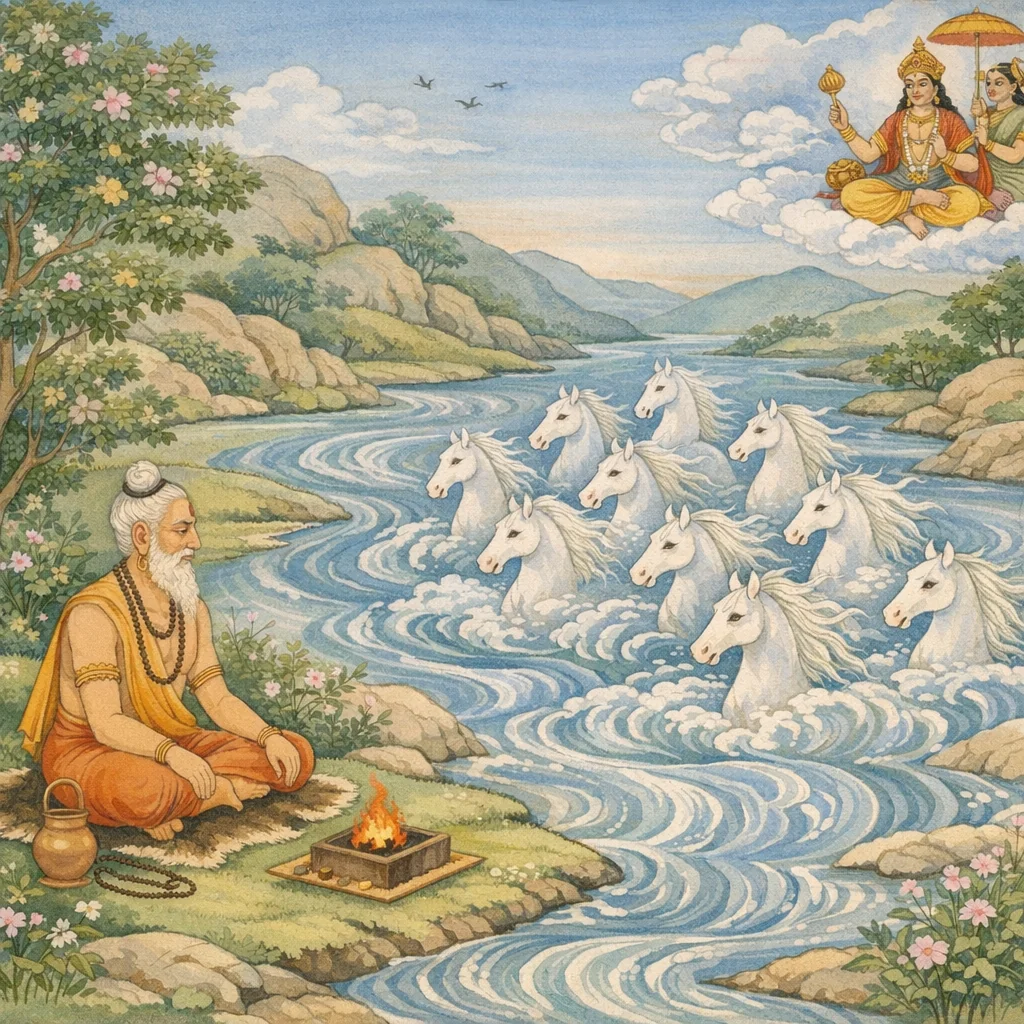
Bhīṣma begins by proposing a principled account of how Viśvāmitra attained brāhmaṇa status and brahmarṣi standing. He traces a Bharata-line genealogy culminating in Kuśika and his son Gādhi, who—while dwelling in a forest—has a daughter Satyavatī. The sage Ṛcīka (Cyavana’s son) seeks her hand; Gādhi refuses, judging him poor, and demands as bride-price a thousand swift horses of moonlike radiance with dark ears. Ṛcīka petitions Varuṇa, and the horses arise from the Gaṅgā at a site remembered as Aśvatīrtha; Gādhi, astonished and wary of curse, gives Satyavatī in marriage. Ṛcīka offers boons and prepares two mantra-purified charu portions and prescribes distinct tree-embrace rites for Satyavatī and her mother to produce a brāhmaṇa-ideal son and a kṣatriya-ideal son respectively. Due to maternal request, Satyavatī exchanges the charu and the tree-protocol, prompting Ṛcīka to explain the now-inverted outcomes: Satyavatī will bear a formidable kṣatriya son; her mother will bear a brāhmaṇa- श्रेष्ठ son. Satyavatī petitions that the kṣatriya ferocity shift to her grandson, and Ṛcīka assents; thus Satyavatī bears Jamadagni, while Gādhi’s wife bears Viśvāmitra, later attaining brahmarṣi status. The chapter closes by listing Viśvāmitra’s many descendants and reaffirming that his brahminhood is established through Ṛcīka’s brahmanic infusion and subsequent realization, with Bhīṣma inviting further questions to resolve doubts.
Chapter Arc: भीष्म युधिष्ठिर से कहते हैं कि वे विश्वामित्र के ब्राह्मणत्व-प्राप्ति और ब्रह्मर्षित्व के यथार्थ प्रसंग को क्रम से सुनें—एक क्षत्रिय का ऋषि-शिखर तक उठना स्वयं कथा का आकर्षण बन जाता है। → वंश-परंपरा और जन्म-कथा के साथ ऋचीक (भृगुवंशी) का प्रसंग उभरता है—वरुण से दिव्य अश्वों का वरदान, गंगा-जल से चन्द्रकान्ति वाले घोड़ों का प्रकट होना, और फिर विश्वामित्र के पुत्रों/वंशजों के नामों का विस्तार; यह सब संकेत देता है कि तप, मन्त्र-बल और दैवी अनुग्रह मिलकर ‘जन्म’ को भी अर्थ देते हैं। → ऋचीक द्वारा ‘परम ब्रह्मतेज’ का आधान—यह निर्णायक बिन्दु है जहाँ कथा स्पष्ट करती है कि विश्वामित्र का तेज केवल राजवंशीय नहीं, बल्कि सोम-सूर्य-अग्नि-सदृश आध्यात्मिक प्रभा से संयुक्त है; यहीं क्षत्रिय-देह में ब्रह्मर्षि-सम्भावना का शिखर उद्घाटित होता है। → भीष्म विश्वामित्र के जन्म-वृत्तान्त को समेटते हुए उनके पुत्रों को ‘ब्रह्मवादिन’ मुनि बताते हैं और वंश-परंपरा को स्थिर करते हैं—कथा का निष्कर्ष यह कि तप, संस्कार और ब्रह्मतेज मनुष्य की पहचान को रूपान्तरित कर सकते हैं। → विश्वामित्र-परंपरा के आगे के उपाख्यानों और उनके वंश में धर्म-आचरण/व्रत-परम्परा के विस्तृत फलितार्थ की ओर संकेत।
Shlokas
Verse 1
ऑपन--माजल बछ। जि चतुथों5 ध्याय: आजमीढके वंशका वर्णन तथा विश्वामित्रके जन्मकी कथा और उनके पुत्रोंके नाम भीष्म उवाच श्रूयतां पार्थ तत्त्वेन विश्वामित्रो यथा पुरा । ब्राह्मणत्वं गतस्तात ब्रद्यूर्षित्वं तथैव च
Bhishma said: “Listen, O Partha, to the truth of how Vishvamitra once, in ancient times, attained the state of a Brahmin—and likewise the rank of a Brahmarshi.”
Verse 2
भीष्मजीने कहा--तात! कुन्तीनन्दन! पूर्वकालमें विश्वामित्रजीने जिस प्रकार ब्राह्मणत्व तथा ब्रह्मर्षित्व प्राप्त किया, वह प्रसंग यथार्थरूपसे बता रहा हूँ, सुनो ।। भरतस्यान्वये चैवाजमीढो नाम पार्थिव: । बभूव भरतश्रेष्ठ यज्वा धर्मभूतां वर:,भरतवंशमें अजमीढ नामसे प्रसिद्ध एक राजा हो गये हैं। भरतश्रेष्ठ) वे राजा अजमीढ यज्ञकर्ता एवं धर्मात्माओंमें श्रेष्ठ थे
Bhishma said: “Dear one, son of Kunti! I shall relate to you, truthfully and in proper sequence, the episode of how, in ancient times, Vishvamitra attained the status of a Brahmin and then the rank of a Brahmarshi—listen. In the lineage of Bharata there arose a king named Ajmida; O best of the Bharatas, that king was a performer of sacrifices and foremost among the righteous.”
Verse 3
इस प्रकार श्रीमह्याभारत अनुशासनपर्वके अन्तर्गत दानधर्मपर्वनें विशज्वामित्रका उपाख्यानविषयक तीसरा अध्याय पूरा हुआ,तस्य पुत्रो महानासीज्जह्लुर्नाम नरेश्वर: । दुहितृत्वमनुप्राप्ता गड़ा यस्य महात्मन: उनके पुत्र महाराज जह्लु हुए, जिन महात्मा नरेशके समीप जाकर गंगाजी पुत्रीभावको प्राप्त हुई थीं
His son was the great king named Jahnu. To that noble ruler, the river Gaṅgā came to be regarded as a daughter—thus establishing a celebrated bond between the royal lineage and the sacred river.
Verse 4
तस्यात्मजस्तुल्यगुण: सिन्धुद्वीपो महायशा: । सिन्धुद्वीपाच्च राजर्षिबलाकाश्वो महाबल:,जह्के पुत्रका नाम सिन्धुद्वीप था, जो पिताके समान ही गुणवान् और महायशस्वी थे। सिन्धुद्वीपसे महाबली राजा बलाकाश्वका जन्म हुआ था इति श्रीमहाभारते अनुशासनपर्वणि दानधर्मपर्वणि विश्वामित्रोपाख्याने चतुर्थोडध्याय:
Bhīṣma said: “His son was Sindhudvīpa, renowned and endowed with virtues equal to his father’s. From Sindhudvīpa was born the royal sage Balākāśva, a king of great strength.”
Verse 5
वल्लभस्तस्य तनय: साक्षाद्धर्म इवापर: | कुशिकस्तस्य तनय: सहस्राक्षसमद्युति:,बलाकाश्च॒का पुत्र वललभनामसे प्रसिद्ध हुआ, जो साक्षात् दूसरे धर्मके समान था। वल्लभके पुत्र कुशिक हुए, जो इन्द्रके समान तेजस्वी थे
Bhishma said: “His son was Vallabha, who was like Dharma himself in another form. Vallabha’s son was Kuśika, radiant with a splendor comparable to that of the thousand-eyed Indra.”
Verse 6
कुशिकस्यात्मज: श्रीमान् गाधिनाम जनेश्वर: । अपुत्र: प्रसवेनार्थी वनवासमुपावसत्,कुशिकके पुत्र महाराज गाधि हुए, जो दीर्घकालतक पुत्रहीन रह गये। तब संतानकी इच्छासे पुण्यकर्म करनेके लिये वे वनमें रहने लगे
Bhīṣma said: There was a splendid king named Gādhi, the illustrious son of Kuśika. Long without a son and yearning for offspring, he undertook a life of forest-dwelling, practicing austerity and meritorious observances to obtain a child—showing the dharmic ideal that desire should be pursued through self-restraint and righteous effort rather than force or haste.
Verse 7
कन्या जज्ञे सुतात् तस्य वने निवसत: सतः । नाम्ना सत्यवती नाम रूपेणाप्रतिमा भुवि,वहाँ रहते समय सोमयाग करनेसे राजाके एक कन्या हुई, जिसका नाम सत्यवती था। भूतलपर कहीं भी उसके रूप और सौन्दर्यकी तुलना नहीं थी
Bhishma said: While that king was living in the forest, a daughter was born to him. She was named Satyavatī, and on the earth her beauty was without equal—an extraordinary presence that would later become pivotal in the unfolding of royal lineage and duty.
Verse 8
गीताप्रेस, गोरखपुर गा $/॥६८-0: ५4 शिव-पार्वती बालकको जिलानेकी प्रतिज्ञा भगवान् श्रीकृष्णके द्वारा उत्तराके मृत ह-ल-. हा पार्ववीजी भगवान् शडकरको शरीरधारिणी समस्त नदियोंका परिचय दे रही हैं | । / 8) ञ्क शा ५ गीताप्रेस, गोरखपुर युधिछ्ठिरका अपने आश्रित कुत्तेके लिये त्याग पुरुषोत्तम भगवान् विष्णु तां वच्रे भार्गव: श्रीमांक्ष्यवनस्यथात्मसम्भव: । ऋचीक इति विख्यातो विपुले तपसि स्थित:,उन दिनों च्यवनके पुत्र भृगुवंशी श्रीमान् ऋचीक विख्यात तपस्वी थे और बड़ी भारी तपस्यामें संलग्न रहते थे। उन्होंने राजा गाधिसे उस कन्याको माँगा
Bhīṣma said: In those days there was a venerable Bhārgava sage, the illustrious Ṛcīka—born as Cyavana’s own son—renowned by name and firmly established in extensive austerities. He sought that maiden in marriage, approaching King Gādhi for her hand.
Verse 9
सतां न प्रददौ तस्मै ऋचीकाय महात्मने । दरिद्र इति मत्वा वै गाधि: शत्रुनिबर्हण:,शत्रुसूदन_ गाधिने महात्मा ऋचीकको दरिद्र समझकर उन्हें अपनी कन्या नहीं दी
Bhīṣma said: Thinking the great sage Ṛcīka to be poor and therefore unworthy, King Gādhi—the crusher of enemies—did not give his daughter to that noble man.
Verse 10
प्रत्याख्याय पुनर्यातमब्रवीद् राजसत्तम: । शुल्कं॑ प्रदीयतां महां ततो वत्स्यसि मे सुताम्,उनके इनकार कर देनेपर जब महर्षि लौटने लगे तब नृपश्रेष्ठ गाधिने उनसे कहा --'महर्षे! मुझे शुल्क दीजिये, तब आप मेरी पुत्रीको विवाहद्वारा प्राप्त कर सकेंगे”
Bhīṣma said: When the sage, having been refused, began to depart again, King Gādhi—foremost among kings—addressed him: “Pay a great bride-price; then you shall obtain my daughter in marriage.”
Verse 11
ऋचीक उवाच कि प्रयच्छामि राजेन्द्र तुभ्यं शुल्कमहं नूप । दुहितुर्ब्रहयासंसक्तो माभूत् तत्र विचारणा,ऋचीकने पूछा--राजेन्द्र! मैं आपकी पुत्रीके लिये आपको क्या शुल्क दूँ? आप निस्संकोच होकर बताइये। नरेश्वर! इसमें आपको कोई अन्यथा विचार नहीं करना चाहिये
Ṛcīka said: “O best of kings, what bride-price shall I give you, O ruler, for your daughter? Speak without hesitation. Let there be no misgiving or second thought here on account of my being devoted to brahman—sacred discipline and spiritual pursuit.”
Verse 12
गाधिरुवाच चन्द्ररश्मिप्रकाशानां हयानां वातरंहसाम् | एकतः: श्यामकर्णानां सहस्रं देहि भार्गव,गाधिने कहा--भूगुनन्दन! आप मुझे शुल्करूपमें एक हजार ऐसे घोड़े ला दीजिये जो चन्द्रमाके समान कान्तिमान् और वायुके समान वेगवान् हों तथा जिनका एक-एक कान श्याम रंगका हो
Gādhi said: “O scion of the Bhṛgus, give me as bride-price a thousand horses—bright as moonbeams and swift as the wind—each with one ear of dark (śyāma) color.”
Verse 13
भीष्म उवाच ततः स भृगुशार्दूलक्ष्यवनस्यात्मज: प्रभु: । अब्रवीद् वरुणं देवमादित्यं पतिमम्भसाम्,भीष्मजी कहते हैं--राजन्! तब भृगुश्रेष्ठ च्यवनपुत्र शक्तिशाली महर्षि ऋचीकने जलके स्वामी अदितिनन्दन वरुणदेवके पास जाकर कहा--
Bhishma said: “Then that mighty sage—Ṛcīka, the tiger among the Bhṛgus, son of Cyavana—approached Varuṇa, the divine Āditya and lord of the waters, and addressed him.”
Verse 14
एकत: श्यामकर्णानां हयानां चन्द्रवर्चसाम् । सहसतरं वातवेगानां भिक्षे त्वां देवसत्तम,“देवशिरोमणे! मैं आपसे चन्द्रमाके समान कान्तिमान् तथा वायुके समान वेगवान् एक हजार ऐसे घोड़ोंकी भिक्षा माँगता हूँ जिनका एक ओरका कान श्याम रंगका हो”
“O best among the gods, I beg of you a thousand horses—moon-bright in radiance and swift as the wind—each marked by having one ear of dark (śyāma) color.”
Verse 15
तथेति वरुणो देव आदित्यो भृगुसत्तमम् | उवाच यत्र ते छन्दस्तत्रोत्थास्यन्ति वाजिन:,तब अदितिनन्दन वरुणदेवने उन भृगुश्रेष्ठ ऋच्चीकसे कहा--बहुत अच्छा, जहाँ आपकी इच्छा होगी, वहींसे इस तरहके घोड़े प्रकट हो जायँगे”
Bhīṣma said: Varuṇa, the divine Āditya, replied to Ṛcīka, the best of the Bhṛgus, “So be it. Wherever your intention is directed, from that very place horses will arise.”
Verse 16
ध्यातमात्रमचीकेन हयानां चन्द्रवर्चसाम् | गड्ाजलात् समुत्तस्थी सहस्नं विपुलौजसाम्,तदनन्तर ऋचीकके चिन्तन करते ही गंगाजीके जलसे चन्द्रमाके समान कान्तिवाले एक हजार तेजस्वी घोड़े प्रकट हो गये
Bhishma said: The moment Ṛcīka merely contemplated it, a thousand horses—radiant like the moon and endowed with great vigor—rose up from the waters of the river Gaṅgā. The episode proclaims the potency of disciplined thought and ascetic power: inner resolve and spiritual merit can bring forth tangible results without violence or coercion.
Verse 17
अदूरे कान्यकुब्जस्य गज्जायास्तीरमुत्तमम् । अश्वतीर्थ तदद्यापि मानवै: परिचक्ष्यते,कन्नौजके पास ही गंगाजीका वह उत्तम तट आज भी मानवोंद्वारा अश्वतीर्थ कहलाता है
Bhishma said: Not far from Kanyakubja lies an excellent bank of the river Gaṅgā. Even today people point it out and call it “Aśvatīrtha,” the Horse-ford—preserving the memory of a sacred place through name and tradition.
Verse 18
ततो वै गाधये तात सहस्र॑ं वाजिनां शुभम् | ऋचीक: प्रददौ प्रीत: शुल्कार्थ तपतां वर:,तात! तब तपस्वी मुनियोंमें श्रेष्ठ ऋचीक मुनिने प्रसन्न होकर शुल्कके लिये राजा गाधिको वे एक हजार सुन्दर घोड़े दे दिये
Bhishma said: Then, dear one, the foremost of ascetics, the sage Ṛcīka—pleased in heart—gave King Gādhi a thousand fine horses as the bride-price.
Verse 19
ततः स विस्मितो राजा गाधि: शापभयेन च । ददौ तां समलंकृत्य कन्यां भगुसुताय वै,तब आश्चर्यवचकित हुए राजा गाधिने शापके भयसे डरकर अपनी कन्याको वस्त्राभूषणोंसे विभूषित करके भूगुनन्दन ऋचीकको दे दिया
Then King Gādhi, astonished and also fearful of the curse, adorned his daughter with garments and ornaments and gave her in marriage to Ṛcīka, the son of Bhṛgu. The episode shows how dread of adharma and its consequences can drive a ruler to act swiftly to uphold social and moral order, even when events take an unexpected turn.
Verse 20
जग्राह विधिवत् पार्णिं तस्या ब्रह्मूर्षिसत्तम: | सा च त॑ं पतिमासाद्य पर हर्षमवाप ह,ब्रह्मर्षिशिरेमणि ऋचीकने उसका विधिवत् पाणिग्रहण किया। वैसे तेजस्वी पतिको पाकर उस कन्याको भी बड़ा हर्ष हुआ
Bhishma said: The foremost of Brahmarishis duly took her hand in the prescribed rite (pāṇigrahaṇa). And she too, having attained him as her husband, felt exceeding joy—finding in him a radiant and worthy spouse in accordance with dharma.
Verse 21
स तुतोष च ब्रद्यार्षिस्तस्या वृत्तेन भारत । छन््दयामास चैवैनां वरेण वरवर्णिनीम्,भरतनन्दन! अपनी पत्नीके सद्व्यवहारसे ब्रह्मर्षि बहुत संतुष्ट हुए। उन्होंने उस परम सुन्दरी पत्नीको मनोवांछित वर देनेकी इच्छा प्रकट की
Bhīṣma said: O Bhārata, the brahmarṣi was greatly pleased by her conduct. Delighted, he expressed his wish to grant that exquisitely beautiful woman a boon of her choosing—showing how virtuous behavior naturally invites goodwill and beneficence from the righteous.
Verse 22
मात्रे तत् सर्वमाचख्यौ सा कन्या राजसत्तम | अथ तामब्रवीन्माता सुतां किंचिदवाड्मुखी,नृपश्रेष्ठ तब उस राजकन्याने अपनी मातासे मुनिकी कही हुई सब बातें बतायीं। वह सुनकर उसकी माताने संकोचसे सिर नीचे करके पुत्रीसे कहा--
Bhīṣma said: O best of kings, that maiden related to her mother everything that had been spoken. Hearing it, the mother—somewhat abashed and with her face lowered—then spoke to her daughter.
Verse 23
ममापि पुत्रि भर्ता ते प्रसादं कर्तुमरहति । अपत्यस्य प्रदानेन समर्थश्न महातपा:,“बेटी! तुम्हारे पतिको पुत्र प्रदान करनेके लिये मुझपर भी कृपा करनी चाहिये, क्योंकि वे महान् तपस्वी और समर्थ हैं!
Bhīṣma said: “Daughter, your husband should also show me favor, for I too am capable of granting offspring. I am a great ascetic and possess the power to bestow a child.”
Verse 24
ततः सा त्वरितं गत्वा तत् सर्व प्रत्यवेदयत् । मातुश्चिकीर्षितं राजन्चीकस्तामथाब्रवीत्,राजन! तदनन्तर सत्यवतीने तुरंत जाकर माताकी वह सारी इच्छा ऋचीकसे निवेदन की। तब ऋचीकने उससे कहा--
Then she hurried away and reported everything in full. She conveyed to Ṛcīka, O king, what her mother intended to have done. Thereupon Ṛcīka addressed her—setting the stage for counsel on how desire and intention should be guided by right conduct and foresight.
Verse 25
गुणवन्तमपत्यं सा अचिराज्जनयिष्यति । मम प्रसादात् कल्याणि माभूत् ते प्रणयोडन्यूथा,“कल्याणि! मेरे प्रसादसे तुम्हारी माता शीघ्र ही गुणवान् पुत्रको जन्म देगी। तुम्हारा प्रेमपूर्ण अनुरोध असफल नहीं होगा
Bhishma said: “O auspicious one, by my favor your mother will soon give birth to a virtuous child. Let not your loving request prove fruitless.”
Verse 26
तव चैव गुणश्लाघी पुत्र उत्पत्स्यते महान् अस्मद्वंशकर: श्रीमान् सत्यमेतद् ब्रवीमि ते,“तुम्हारे गर्भसे भी एक अत्यन्त गुणवान् और महान् तेजस्वी पुत्र उत्पन्न होगा, जो हमारी वंशपरम्पराको चलायेगा। मैं तुमसे यह सच्ची बात कहता हूँ
Bhīṣma gave a truthful assurance: “From your womb will be born a son of outstanding virtues—great, radiant, and prosperous—who will carry forward our lineage. I tell you this in truth.”
Verse 27
ऋतुस्नाता च साशथ्रत्थं त्वं च वृक्षमुदुम्बरम् । परिष्वजेथा: कल्याणि तत एवमवाप्स्यथ:,“कल्याणि! तुम्हारी माता ऋतुस्नानके पश्चात् पीपलके वृक्षका आलिंगन करे और तुम गूलरके वृक्षका। इससे तुम दोनोंको अभीष्ट पुत्रकी प्राप्ति होगी
Bhīṣma said: “Auspicious lady, after your mother has taken the purificatory bath following her courses, let her embrace the aśvattha (pipal) tree, and you embrace the udumbara (cluster-fig) tree. Thus you both will obtain the son you desire.”
Verse 28
चरुद्वयमिदं चैव मन्त्रपूतं शुचिस्मिते । त्वंच सा चोपभुज्जीतं ततः पुत्राववाप्स्थथ:,“पवित्र मुसकानवाली देवि! मैंने ये दो मन्त्रपूत चरु तैयार किये हैं। इनमेंसे एकको तुम खा लो और दूसरेको तुम्हारी माता। इससे तुम दोनोंको पुत्र प्राप्त होंगे!
Bhīṣma said: “O lady of pure, radiant smile, I have prepared these two portions of caru—sacrificial rice—sanctified by mantra. You and she should partake of them; then the two of you will obtain sons.”
Verse 29
ततः सत्यवती हृष्टा मातरं प्रत्यभाषत । यदूचीकेन कथितं तच्चाचख्यौ चरुद्भधयम्,तब सत्यवतीने हर्षमग्न होकर ऋचीकने जो कुछ कहा था, वह सब अपनी माताको बताया और दोनोंके लिये तैयार किये हुए पृथक्ू-पृथक् चरुओंकी भी चर्चा की
Then Satyavatī, filled with joy, spoke to her mother. She related everything that Ṛcīka had told her, and also spoke of the two separate portions of the consecrated caru prepared for each of them.
Verse 30
तामुवाच ततो माता सुतां सत्यवतीं तदा । पुत्रि पूर्वोपपन्नाया: कुरुष्व वचनं मम,उस समय माताने अपनी पुत्री सत्यवतीसे कहा--“बेटी! माता होनेके कारण पहलेसे मेरा तुमपर अधिकार है; अतः तुम मेरी बात मानो”
Then the mother said to her daughter Satyavatī: “My child, by virtue of being your mother I have a prior claim upon you; therefore, comply with my request.”
Verse 31
भर्त्रा य एष दत्तस्ते चरु्मन्त्रपुरस्कृत: । एनं प्रयच्छ महां त्वं मदीयं त्वं गृहाण च,“तुम्हारे पतिने जो मन्त्रपूत चरु तुम्हारे लिये दिया है, वह तुम मुझे दे दो और मेरा चरु तुम ले लो
Bhishma said: “This consecrated oblation (caru), sanctified by mantras, which your husband has given you—please hand that to me. And take my own caru in exchange.”
Verse 32
व्यत्यासं वृक्षयोश्वापि करवाव शुचिस्मिते । यदि प्रमाणं वचनं मम मातुरनिन्दिते,“पवित्र हास्यवाली मेरी अच्छी बेटी! यदि तुम मेरी बात मानने योग्य समझो तो हमलोग वृक्षोंमें भी अदल-बदल कर लें"
Bhīṣma said: “O fair-smiling, blameless one, let us even exchange places between the two trees. If you deem my mother’s words to be authoritative and worthy of acceptance, then let it be so.”
Verse 33
स्वमपत्यं विशिष्ट हि सर्व इच्छत्यनाविलम् । व्यक्त भगवता चात्र कृतमेवं भविष्यति,“प्रायः सभी लोग अपने लिये निर्मल एवं सर्वगुणसम्पन्न श्रेष्ठ पुत्रकी इच्छा करते हैं। अवश्य ही भगवान् ऋचीकने भी चरु निर्माण करते समय ऐसा तारतम्य रखा होगा
Bhishma said: “Indeed, everyone desires for oneself an excellent child—pure in character and free from blemish. Therefore it is evident that, in this matter, the venerable sage must have arranged things in such a way that the intended outcome would surely come to pass.”
Verse 34
ततो मे त्वच्चरी भाव: पादपे च सुमध्यमे । कथं विशिष्टो भ्राता मे भवेदित्येव चिन्तय,'सुमध्यमे! इसीलिये तुम्हारे लिये नियत किये गये चरु और वृक्षमें मेरा अनुराग हुआ है। तुम भी यही चिन्तन करो कि मेरा भाई किसी तरह श्रेष्ठ गुणोंसे सम्पन्न हो”
Bhishma said: “Therefore, O fair-waisted lady, my affection has become fixed upon the sacrificial offering (caru) appointed for you and upon the tree as well. Reflect on this alone: ‘How may my brother become distinguished—endowed with superior qualities?’”
Verse 35
तथा च कृतवत्यौ ते माता सत्यवती च सा । अथ गर्भावनुप्राप्ते उभे ते वै युधिछ्ठिर,युधिष्ठिररे इस तरह सलाह करके सत्यवती और उसकी माताने उसी तरह उन दोनों वस्तुओंका अदल-बदलकर उपयोग किया। फिर तो वे दोनों गर्भवती हो गयीं
Bhishma said: “And so, acting exactly as advised, your mother and that Satyavatī did as instructed. Then, O Yudhiṣṭhira, in due course both of them conceived.”
Verse 36
दृष्टवा गर्भगनुप्राप्तां भार्या स च महानृषि: । उवाच तां सत्यवतीं दुर्मना भृगुसत्तम:
Bhīṣma said: Seeing that his wife had become pregnant, that great sage—the foremost among the Bhṛgus—spoke to Satyavatī with a troubled heart. The sight of the coming birth became the occasion for a grave, duty-laden conversation, where personal feeling and the demands of dharma stood poised to collide.
Verse 37
अपनी पत्नी सत्यवतीको गर्भवती अवस्थामें देखकर भृगुश्रेष्ठ महर्षि ऋचीकका मन खिन्न हो गया ।। व्यत्यासेनोपयुक्तस्ते चरुव्यक्त भविष्यति । व्यत्यास: पादपे चापि सुव्यक्तं ते कृत: शुभे,उन्होंने कहा--'शुभे! जान पड़ता है तुमने बदलकर चरुका उपयोग किया है। इसी तरह तुमलोगोंने वृक्षोंके आलिंगनमें भी उलट-फेर कर दिया है--ऐसा स्पष्ट प्रतीत हो रहा है
Bhīṣma said: Seeing his wife Satyavatī pregnant, the great sage Ṛcīka—the foremost among the Bhṛgus—was distressed at heart. He said, “O auspicious lady, it is evident that you have used the sacrificial porridge (caru) in a reversed manner. Likewise, you have clearly made an interchange even in the matter of embracing the trees.”
Verse 38
मया हि विश्व यद्ब्रह्मा त्वच्चरौ संनिवेशितम् । क्षत्रवीर्य च सकल॑ चरौ तस्या निवेशितम्,“मैंने तुम्हारे चरुमें सम्पूर्ण ब्रह्मतजका संनिवेश किया था और तुम्हारी माताके चसरुमें समस्त क्षत्रियोचित शक्तिकी स्थापना की थी”
Bhīṣma said: “I indeed placed the entirety of Brahmanic spiritual potency into your sacrificial oblation (caru), and into your mother’s oblation I established the full measure of Kshatriya valor. Thus, the intended qualities were deliberately infused through the rite.”
Verse 39
त्रैलोक्यविख्यातगुएणं त्वं विप्रं जनयिष्यसि । साच क्षत्रं विशिष्ट वै तत एतत् कृतं मया,“मैंने सोचा था कि तुम त्रिभुवनमें विख्यात गुणवाले ब्राह्मणको जन्म दोगी और तुम्हारी माता सर्वश्रेष्ठ क्षत्रियकी जननी होगी। इसीलिये मैंने दो तरहके चरुओंका निर्माण किया था
Bhīṣma said: “I had thought that you would give birth to a Brāhmaṇa renowned for his virtues throughout the three worlds, and that your mother would become the mother of an exceptional Kshatriya. Therefore I prepared two different portions of caru.”
Verse 40
व्यत्यासस्तु कृतो यस्मात् त्वया मात्रा च ते शुभे । तस्मात् सा ब्राह्मण श्रेष्ठ माता ते जनयिष्यति,'शुभे! तुमने और तुम्हारी माताने अदला-बदली कर ली है, इसलिये तुम्हारी माता श्रेष्ठ ब्राह्मणपुत्रको जन्म देगी और भटद्रे! तुम भयंकर कर्म करनेवाले क्षत्रियकी जननी होओगी। भाविनि! माताके स्नेहमें पड़कर तुमने यह अच्छा काम नहीं किया”
Bhīṣma said: “Since an exchange has been made by you and by your mother, O auspicious one, therefore your mother will give birth to an excellent Brāhmaṇa.”
Verse 41
क्षत्रियं तूग्रकर्माणं त्वं भद्रे जनयिष्यसि । नहि ते तत् कृतं साधु मातृस्नेहेन भाविनि,'शुभे! तुमने और तुम्हारी माताने अदला-बदली कर ली है, इसलिये तुम्हारी माता श्रेष्ठ ब्राह्मणपुत्रको जन्म देगी और भटद्रे! तुम भयंकर कर्म करनेवाले क्षत्रियकी जननी होओगी। भाविनि! माताके स्नेहमें पड़कर तुमने यह अच्छा काम नहीं किया”
Bhishma said: “O auspicious lady, you will give birth to a Kshatriya of fierce deeds. Because of your attachment to a mother’s affection, what you have done is not commendable. By the exchange you and your mother have made, your mother will bear the excellent son destined for a Brahmin, while you will become the mother of a warrior whose actions will be terrible.”
Verse 42
सा श्रुत्वा शोकसंतप्ता पपात वरवर्णिनी । भूमौ सत्यवती राजन् छिन्नेव रुचिरा लता,राजन्! पतिकी यह बात सुनकर सुन्दरी सत्यवती शोकसे संतप्त हो वृक्षसे कटी हुई मनोहर लताके समान मूर्च्छित होकर पृथ्वीपर गिर पड़ी
Bhishma said: Hearing those words, Satyavatī—fair and radiant—was scorched by grief. O King, she collapsed to the ground, like a lovely creeper cut from its support.
Verse 43
प्रतिलभ्य च सा संज्ञां शिरसा प्रणिपत्य च | उवाच भार्या भर्तरें गाधेयी भार्गवर्षभम्,थोड़ी देरमें जब उसे चेत हुआ, तब वह गाधिकुमारी अपने स्वामी भृूगुभूषण ऋचीकके चरणोंमें सिर रखकर प्रणामपूर्वक बोली--'ब्रह्मवेत्ताओंमें श्रेष्ठ ब्रह्मर्ष! मैं आपकी पत्नी हूँ, अतः आपसे कृपा-प्रसादकी भीख चाहती हूँ। आप ऐसी कृपा करें जिससे मेरे गर्भसे क्षत्रिय पुत्र उत्पन्न न हो
Regaining consciousness, she bowed her head and fell at her husband’s feet. Then Gādheyī, the daughter of Gādhi, addressed her lord Ṛcīka—the bull among the Bhṛgus—saying: “O best of knowers of Brahman, O brahmarṣi, I am your wife; therefore I beg your gracious favor. Show me such compassion that no Kṣatriya son may be born from my womb.”
Verse 44
प्रसादयन्त्यां भार्यायां मयि ब्रह्मविदां वर । प्रसादं कुरु विप्र्॒ें न मे स्यात् क्षत्रिय: सुत:,थोड़ी देरमें जब उसे चेत हुआ, तब वह गाधिकुमारी अपने स्वामी भृूगुभूषण ऋचीकके चरणोंमें सिर रखकर प्रणामपूर्वक बोली--'ब्रह्मवेत्ताओंमें श्रेष्ठ ब्रह्मर्ष! मैं आपकी पत्नी हूँ, अतः आपसे कृपा-प्रसादकी भीख चाहती हूँ। आप ऐसी कृपा करें जिससे मेरे गर्भसे क्षत्रिय पुत्र उत्पन्न न हो
Bhishma said: “O best among the knowers of Brahman, when your wife stands before you seeking your favor, grant me your grace, O foremost of Brahmins: let there not be born from my womb a son of the Kshatriya order.”
Verse 45
काम ममोग्रकर्मा वै पौत्रो भवितुमर्हति । नतु मे स्यात् सुतो ब्रद्म॒न्नेष मे दीयतां वर:,“मेरा पौत्र चाहे उग्रकर्मा क्षत्रियस्वभावका हो जाय; परंतु मेरा पुत्र वैसा न हो। ब्रह्मन! मुझे यही वर दीजिये”
Bhīṣma said: “Let my grandson, if it must be so, become a man of fierce deeds in the kṣatriya manner; but let not my own son be of that kind. O Brāhmaṇa, grant me this very boon.”
Verse 46
एवमस्त्विति होवाच स्वां भार्या सुमहातपा: । ततः सा जनयामास जगदरग्निं सुतं शुभम्,तब उन महातपस्वी ऋषिने अपनी पत्नीसे कहा, “अच्छा, ऐसा ही हो”। तदनन्तर सत्यवतीने जमदग्निनामक शुभगुणसम्पन्न पुत्रको जन्म दिया
Bhishma said: “So be it,” replied the great ascetic to his own wife. Thereafter she gave birth to a virtuous son named Jamadagni—thus continuing the line of austere sages and affirming the ethical ideal of disciplined household life aligned with dharma.
Verse 47
विश्वामित्रं चाजनयद् गाधिभार्या यशस्विनी । ऋषे: प्रसादाद् राजेन्द्र ब्रद्मर्षेब्रह्मयवादिनम्
Bhishma said: “O best of kings, Gādhi’s illustrious wife gave birth to Viśvāmitra. By the grace of a sage, he became a brahmarṣi and a true expounder of Brahman.”
Verse 48
राजेन्द्र! उन्हीं ब्रह्मर्षिकि कृपा-प्रसादसे गाधिकी यशस्विनी पत्नीने ब्रह्मवादी विश्वामित्रको उत्पन्न किया ।। ततो ब्राह्मणतां यातो विश्वामित्रो महातपा: | क्षत्रिय: सोडप्यथ तथा ब्रह्म॒ुवंशस्य कारक:,इसीलिये महातपस्वी विश्वामित्र क्षत्रिय होकर भी ब्राह्मणत्वको प्राप्त हो ब्राह्मणवंशके प्रवर्तक हुए
Bhishma said: “O lord of kings, by the gracious favor of the brahmarishis, Gādhi’s illustrious wife gave birth to Vishvamitra, a knower and speaker of Brahman. Thereafter, the great ascetic Vishvamitra—though born a Kshatriya—attained the status of a Brahmin and became a founder of a Brahmin lineage. Thus, this account teaches that spiritual attainment and right conduct can raise one beyond identity fixed by birth.”
Verse 49
तस्य पुत्रा महात्मानो ब्रह्मुवंशविवर्धना: । तपस्विनो ब्रह्म॒विदो गोत्रकर्तार एव च,उन ब्रह्मवेत्ता तपस्वीके महामनस्वी पुत्र भी ब्राह्मणवंशकी वृद्धि करनेवाले और गोत्रकर्ता हुए
Bhishma said: “His sons were great-souled men—ascetics and knowers of Brahman—who increased the lineage of the Brahmin tradition and became founders of clans (gotras) as well.”
Verse 50
मधुच्छन्दश्व भगवान् देवरातश्न वीर्यवान् | अक्षीणश्न शकुन्तश्न बश्रु: कालपथस्तथा,विश्वामित्रात्मजा: सर्वे मुनयो ब्रह्म॒वादिन: । भगवान् मधुच्छन्दा, शक्तिशाली देवरात, अक्षीण, शकुन्त, बभ्ु, कालपथ, विख्यात याज्ञवल्क्य, महाव्रती स्थूण, उलूक, यमदूत, सैन्धवायन ऋषि, भगवान् वल्गुजंघ, महर्षि गालव, वज्रमुनि, विख्यात सालंकायन, लीलाढ्य, नारद, कूर्चामुख, वादुलि, मुसल, वक्षोग्रीव, आड्ूप्रिक, नैकदृकू, शिलायूप, शित, शुचि, चक्रक, मारुतन्तव्य, वातघ्न, आश्वलायन, श्यामायन, गार्ग्य, जाबालि, सुश्रुत, कारीषि, संश्रुत्य, पर, पौरव, तन््तु, महर्षि कपिल, मुनिवर ताडकायन, उपगहन, आसुरायण ऋषि, मार्दमर्षि, हिरण्याक्ष, जंगारि, बाभ्रवायणि, भूति, विभूति, सूत, सुरकृत्ु, अरालि, नाचिक, चाम्पेय, उज्जयन, नवतत्तु, बकनख, सेयन, यति, अम्भोरुह, चारुमत्स्य, शिरीषी, गार्दभि, ऊर्जयोनि, उदापेक्षी और महर्षि नारदी--ये सभी विश्वामित्रके पुत्र एवं ब्रह्मयगादी ऋषि थे
Bhishma said: “Bhagavan Madhucchandas, the mighty Devarata, Akshina, Shakunta, Babhru, and Kalapatha—indeed all these sages, sons of Vishvamitra, were proclaimers of Brahman.”
Verse 51
याज्ञवल्क्यश्नल विख्यातस्तथा स्थूणो महाव्रत: । उलूको यमदूतश्न तथर्षि: सैन्धवायन:
Bhīṣma said: “Yājñavalkyaśnala is renowned; likewise Sthūṇa, a great observer of vows. Also Ulūka, the eater of Yama’s messengers; and the sage Saindhavāyana.”
Verse 52
वल्गुजड्घश्न भगवान् गालवश्व महानृषि: । ऋषिर्वज़्स्तथा ख्यात: सालंकायन एव च
Bhīṣma said: “There was the venerable sage Valgujaḍghaśna, and the great Ṛṣi named Gālavaśva. Another sage was famed by the name Vajra, and likewise (there was) Sālaṅkāyana as well.”
Verse 53
लीलाढ्यो नारदश्वैव तथा कूर्चामुख: स्मृत: । वादुलिमुसलश्नैव वक्षोग्रीवस्तथैव च
Bhīṣma said: “Also remembered are (the beings) named Līlāḍhya and Nārada, and likewise Kūrcāmukha; and also Vāduli-musala, and Vakṣogrīva as well.”
Verse 54
आंध्रिको नैकदृक् चैव शिलायूप: शित: शुचि: । चक्रको मारुतन्तव्यो वातघ्नो5थाश्वलायन:
Bhīṣma continued by listing further names and epithets—such as Āndhrika, Naikadṛk, Śilāyūpa, Śita, Śuci, Cakraka, Mārutantavya, Vātaghna, and Aśvalāyana—recognized designations within the tradition.
Verse 55
श्यामायनो<थ गार्ग्यश्व॒ जाबालि: सुश्रुतस्तथा । कारीषिरथ संभश्रुत्य: परपौरवतन्तव:
Bhīṣma said: “Then there were Śyāmāyana, Gārgyāśva, Jābāli, and Suśruta; also Kārīṣiratha, Saṃbhaśrutya, and those connected with the Parapaurava lineage.”
Verse 56
महानृषिश्व कपिलस्तथर्षिस्ताडकायन: । तथैव चोपगहनस्तथर्षिश्वासुरायण:
Bhīṣma said: “There was the great sage Kapila; likewise the sage Tāḍakāyana; and also Upagahana; and the sage Asurāyaṇa.”
Verse 57
मार्दमर्षिररिरिण्याक्षो जड़ारिबाश्रिवायणि: | भूतिर्विभूति: सूतश्न सुरकृत् तु तथैव च
Bhīṣma said: “(He is known by these names:) Mārdamarṣi, Aririṇyākṣa, Jaḍāribāśrivāyaṇi, Bhūti, Vibhūti, Sūtaśna, and likewise Surakṛt.”
Verse 58
अरालिननचिकश्रैव चाम्पेयोज्जयनौ तथा । नवतनन््तुर्बकनख: सेयनो यतिरेव च
Bhīṣma said: “So too were Arālinan, Acikśra, and likewise Cāmpeya and Ujjayana; also Navatanantu, Bakanakha, Seyana, and the ascetic Yati.”
Verse 59
अम्भोरुहश्चारुमत्स्य: शिरीषी चाथ गार्दभि: । ऊर्जयोनिरुदापेक्षी नारदी च महानृषि:
Bhīṣma said: “Ambhoruha, Cārumatsya, Śirīṣī, and also Gārdabhī; and Ūrjayoni, Rudāpekṣī, and Nāradi—these are great sages.”
Verse 60
तथैव क्षत्रियो राजन् विश्वामित्रो महातपा:
Bhīṣma said: “In the same way, O King, the great ascetic Viśvāmitra—though a kṣatriya by birth—(attained the highest spiritual stature).”
Verse 61
एतत् ते सर्वमाख्यातं तत्त्वेन भरतर्षभ
Bhīṣma said: “O bull among the Bharatas, I have now explained all this to you in full, in accordance with the truth.”
Verse 62
यत्र यत्र च संदेहो भूयस्ते राजसत्तम । तत्र तत्र च मां ब्रूहि च्छेत्तास्मि तव संशयम्,नृपश्रेष्ठट अब फिर तुम्हें जहाँ-जहाँ संदेह हो उस-उस विषयकी बात मुझसे पूछो। मैं तुम्हारे संशयका निवारण करूँगा
Bhīṣma said: “O best of kings, whenever and wherever a doubt arises in you, ask me about that very matter. I shall be the one to cut through your uncertainty.”
Verse 593
विश्वामित्रात्मजा: सर्वे मुनयो ब्रह्म॒वादिन: । भगवान् मधुच्छन्दा, शक्तिशाली देवरात, अक्षीण, शकुन्त, बभ्ु, कालपथ, विख्यात याज्ञवल्क्य, महाव्रती स्थूण, उलूक, यमदूत, सैन्धवायन ऋषि, भगवान् वल्गुजंघ, महर्षि गालव, वज्रमुनि, विख्यात सालंकायन, लीलाढ्य, नारद, कूर्चामुख, वादुलि, मुसल, वक्षोग्रीव, आड्ूप्रिक, नैकदृकू, शिलायूप, शित, शुचि, चक्रक, मारुतन्तव्य, वातघ्न, आश्वलायन, श्यामायन, गार्ग्य, जाबालि, सुश्रुत, कारीषि, संश्रुत्य, पर, पौरव, तन््तु, महर्षि कपिल, मुनिवर ताडकायन, उपगहन, आसुरायण ऋषि, मार्दमर्षि, हिरण्याक्ष, जंगारि, बाभ्रवायणि, भूति, विभूति, सूत, सुरकृत्ु, अरालि, नाचिक, चाम्पेय, उज्जयन, नवतत्तु, बकनख, सेयन, यति, अम्भोरुह, चारुमत्स्य, शिरीषी, गार्दभि, ऊर्जयोनि, उदापेक्षी और महर्षि नारदी--ये सभी विश्वामित्रके पुत्र एवं ब्रह्मयगादी ऋषि थे
Bhīṣma said: All these sages were sons of Viśvāmitra and were exponents of Brahman (brahmavādins). They included the venerable Madhucchandā, the powerful Devarāta, Akṣīṇa, Śakunta, Babhu, Kālapatha, the renowned Yājñavalkya, the great-vowed Sthūṇa, Ulūka, Yamadūta, the sage Saindhavāyana, the revered Valgujaṅgha, the great seer Gālava, Vajramuni, the famed Sālaṅkāyana, Līlāḍhya, Nārada, Kūrcāmukha, Vāduli, Musala, Vakṣogrīva, Āḍūprika, Naikadṛkū, Śilāyūpa, Śita, Śuci, Cakraka, Mārutantavya, Vātaghna, Āśvalāyana, Śyāmāyana, Gārgya, Jābāli, Suśruta, Kārīṣi, Saṃśrutya, Para, Paurava, Tantu, the great seer Kapila, the eminent muni Tāḍakāyana, Upagahana, the sage Āsurāyaṇa, Mārdamarṣi, Hiraṇyākṣa, Jaṅgāri, Bābhravāyaṇi, Bhūti, Vibhūti, Sūta, Surakṛtu, Arāli, Nācika, Cāmpeya, Ujjayana, Navatattu, Bakanakha, Seyana, Yati, Ambhoruha, Cārumatsya, Śirīṣī, Gārdabhi, Ūrjayoni, Udāpekṣī, and the great seer Nāradī.
Verse 603
ऋषचीकेनाहितं ब्रह्म परमेतद् युधिष्ठिर । राजा युधिष्ठिर! महातपस्वी विश्वामित्र यद्यपि क्षत्रिय थे तथापि ऋचीक मुनिने उनमें परम उत्कृष्ट ब्रह्मतजका आधान किया था
Bhishma said: “O Yudhishthira, this is the highest Brahmanic potency that was implanted by the sage Rishika. King Yudhishthira, although the great ascetic Vishvamitra was born a Kshatriya, the sage Richika nevertheless established in him the supreme radiance of Brahmanic spiritual power.”
Verse 616
विश्वामित्रस्थ वै जन्म सोमसूर्याग्नितेजस: । भरतश्रेष्ठ! इस प्रकार मैंने तुम्हें सोम, सूर्य और अग्निके समान तेजस्वी विश्वामित्रके जन्मका सारा वृत्तान्त यथार्थरूपसे बताया है
Bhishma said: “O best of the Bharatas, I have thus related to you, truthfully and in full, the entire account of the birth of Viśvāmitra—whose splendor was like that of Soma (the Moon), Sūrya (the Sun), and Agni (Fire).”
Frequently Asked Questions
The tension lies between prescribed ritual procedure (mantra-pūta charu and designated rites) and familial attachment (a mother’s request), showing how deviations—though compassionate—carry consequential reallocation of intended outcomes.
The chapter presents dharma as causally precise in matters of intention and rite, while also allowing mitigation through confession, supplication, and negotiated reallocation of consequences—without erasing that actions remain efficacious.
Yes: Bhīṣma explicitly claims a “tattvena” account of Viśvāmitra’s status and ends by inviting Yudhiṣṭhira to raise further doubts, marking the episode as an authoritative clarification within the instructional architecture.