Adhyaya 5
भृगुवंश-प्रस्तावना तथा पुलोमा–अग्नि-संवादः (Bhrigu Lineage Preface and the Pulomā–Agni Dialogue)
Upa-parva: Anukramaṇikā Upaparva (Genealogical and Indexing Frame)
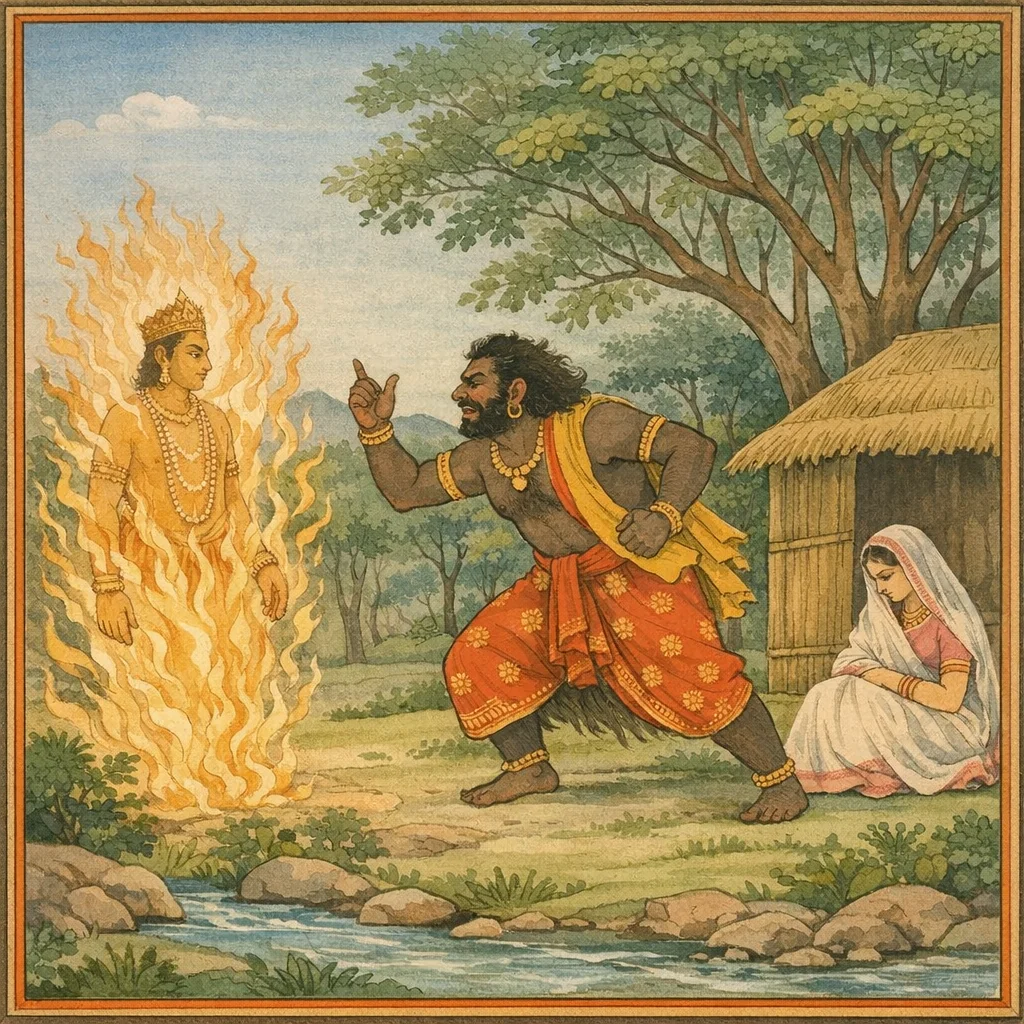
The chapter opens with Śaunaka questioning Sauti about whether he has fully learned the purāṇic corpus previously mastered by his father, establishing a pedagogical and archival tone. Sauti affirms the received tradition, referencing prior authorities, and begins a Bhārgava genealogy: Bhṛgu → Cyavana → Pramati → Ruru → Śunaka, describing Śunaka’s ascetic virtues and learning. Śaunaka then requests the specific account of how the sage became known as Cyavana. Sauti introduces Pulomā, Bhṛgu’s renowned wife, pregnant with Bhṛgu’s child. During Bhṛgu’s absence, a rākṣasa approaches the hermitage, is received with customary hospitality, becomes desirous of Pulomā, and seeks to abduct her. He interrogates Agni (Jātavedas), appealing to Agni’s identity as an all-seeing witness and insisting on truthful testimony about whether Pulomā is Bhṛgu’s wife, while claiming prior marital entitlement. Agni, distressed and fearful of both falsehood and Bhṛgu’s curse, responds hesitantly, indicating the truth-telling obligation under coercive circumstances and setting up the ethical consequences that follow in the larger episode.
Chapter Arc: नैमिषारण्य में शौनक ऋषि, सूत से कहते हैं कि पुराण में अनेक दिव्य वंश-कथाएँ हैं—पर वे सबसे पहले भृगुवंश का क्रम सुनना चाहते हैं। → सूत भृगुवंश की परंपरा (च्यवन–प्रमति–रुरु–शुनक) का संकेत देकर कथा को भृगु के आश्रम की ओर मोड़ते हैं, जहाँ दानव पुलोमा का आगमन होता है। वह अग्निदेव से प्रश्न करता है—यह स्त्री किसकी है? और अपने ‘पूर्व-अधिकार’ का दावा उठाता है। → अग्नि धर्म-संकट में पड़ते हैं: दानव के सामने सत्य बोलें तो भृगु का गृह-धर्म टूटेगा; असत्य बोलें तो सत्य-धर्म का हनन होगा। वे कहते हैं—“यह वही है; मैं झूठ नहीं बोल सकता; लोक में सत्य ही पूज्य है।” → अग्नि का सत्य-वचन दानव के दावे को बल देता है और कथा का परिणाम-मार्ग खुल जाता है—पुलोमा के अपहरण/विघ्न की आशंका निश्चित-सी हो उठती है। → सत्य सुनकर दानव अब क्या करेगा—क्या वह पुलोमा को बलपूर्वक ले जाएगा, और भृगु के आश्रम में कौन-सा अनिष्ट घटेगा?
Shlokas
Verse 1
/ ऑपनआक्रात बछ। अं क्ााज पञठ्चमो<ध्याय: भूगुके आश्रमपर पुलोमा दानवका आगमन और उसकी अग्निदेवके साथ बातचीत शौनक उवाच पुराणमखिलं तात पिता ते5धीतवान् पुरा । कच्चित् त्वमपि तत् सर्वमधीषे लौमहर्षणे,शौनकजीने कहा--तात लोमहर्षणकुमार! पूर्वकालमें आपके पिताने सब पुराणोंका अध्ययन किया था। क्या आपने भी उन सबका अध्ययन किया है? इति श्रीमहा भारते आदिपर्वणि पौलोमपर्वणि पुलोमाग्निसंवादे पठचमो<ध्याय: ।। ५ || इस प्रकार श्रीमह्ाभारत आदिपरववके अन्तर्गत पौलोमपर्वरें पुलोमा-अग्निसंवादविषयक पॉचवाँ अध्याय पूरा हुआ ॥/ ५ ॥ है अर छा | अकाल - बाल्यावस्थामें पुलोमा रो रही थी। उसके रोदनकी निवृत्तिके लिये पिताने डराते हुए कहा--'रे राक्षस! तू इसे पकड़ ले।” घरमें पुलोमा राक्षस पहलेसे ही छिपा हुआ था। उसने मन-ही-मन वरण कर लिया--“यह मेरी पत्नी है।' बात केवल इतनी ही थी। इसका अभिप्राय यह है कि हँसी-खेलमें भी या डाँटने-डपटनेके लिये भी बालकोंसे ऐसी बात नहीं कहनी चाहिये और राक्षसका नाम भी नहीं रखना चाहिये। षष्ठो 5 ध्याय: महर्षि च्यवनका जन्म, उनके तेजसे पुलोमा राक्षसका भस्म होना तथा भगुका अग्निदेवको शाप देना सौतिरुवाच अग्नेरथ वच: श्रुत्वा तद् रक्ष: प्रजहार ताम् । ब्रह्मन् वराहरूपेण मनोमारुतरंहसा
Śaunaka said: “Dear son of Lomaharṣaṇa, in former times your father studied the entire body of Purāṇic lore. Have you too studied all of it, O Laumaharṣaṇa?”
Verse 2
पुराणे हि कथा दिव्या आदिवंशाश्न धीमताम् | कथ्यन्ते ये पुरास्माभ्रि: श्रुतपूर्वा: पितुस्तव,पुराणमें दिव्य कथाएँ वर्णित हैं। परम बुद्धिमान् राजर्षियों और ब्रह्मर्षियोंके आदिवंश भी बताये गये हैं। जिनको पहले हमने आपके पिताके मुखसे सुना है
Śaunaka said: “Indeed, in the Purāṇa there are wondrous and sacred narratives; and the ancient lineages of the wise—those great royal sages and seers—are also recounted there. These are the very accounts that we heard long ago from your father’s own mouth.”
Verse 3
तत्र वंशमहं पूर्व श्रोतुमिच्छामि भार्गवम् | कथयस्व कथामेतां कल्या: सम श्रवणे तव,उनमेंसे प्रथम तो मैं भूगुवंशका ही वर्णन सुनना चाहता हूँ। अत: आप इसीसे सम्बन्ध रखनेवाली कथा कहिये। हम सब लोग आपकी कथा सुननेके लिये सर्वथा उद्यत हैं
“There, I wish first to hear the lineage of the Bhārgavas. Therefore, narrate that very account which pertains to them. We are all fully prepared and eager to listen to your recitation.”
Verse 4
सौतिर्वाच यदधीतं पुरा सम्यग द्विजश्रेष्ठेमहात्मभि: । वैशम्पायनवित्राग्र्यैस्तैश्ञापि कथितं यथा,सूतपुत्र उग्रश्रवाने कहा--भृगुनन्दन! वैशम्पायन आदि श्रेष्ठ ब्राह्मणों और महात्मा द्विजवरोंने पूर्वकालमें जो पुराण भलीभाँति पढ़ा था और उन विद्दवानोंने जिस प्रकार पुराणका वर्णन किया है, वह सब मुझे ज्ञात है
Sauti said: “Whatever sacred lore was thoroughly studied in ancient times by the foremost, high-souled Brahmins, and whatever was then recounted in that very manner by the eminent Brahmin Vaiśampāyana—of all that I am fully informed.”
Verse 5
यदधीतं च पित्रा मे सम्यक् चैव ततो मया । तावच्छूणुष्व यो देवै: सेन््द्रै: सर्षिमरुदूगणै:,मेरे पिताने जिस पुराणविद्याका भलीभाँति अध्ययन किया था, वह सब मैंने उन्हींके मुखसे पढ़ी और सुनी है। भूगुनन्दन! आप पहले उस सर्वश्रेष्ठ भुगुवंशका वर्णन सुनिये, जो देवता, इन्द्र, ऋषि और मरुदगणोंसे पूजित है। महामुने! आपके इस अत्यन्त दिव्य भार्गववंशका परिचय देता हूँ। यह परिचय अदभुत एवं युक्तियुक्त तो होगा ही, पुराणोंके आश्रयसे भी संयुक्त होगा। हमने सुना है कि स्वयम्भू ब्रह्माजीने वरुणके यज्ञमें महर्षि भगवान् भृगुको अग्निसे उत्पन्न किया था। भृगुके अत्यन्त प्रिय पुत्र च्यवन हुए, जिन्हें भार्गव भी कहते हैं
Śaunaka said: “Whatever sacred lore my father studied thoroughly, I in turn learned correctly from him. Now listen, O descendant of Bhṛgu, to that most excellent Bhṛgu lineage—revered by the gods, by Indra, by the ṛṣis, and by the hosts of the Maruts.”
Verse 6
पूजित: प्रवरो वंशो भार्गवो भगुनन्दन । इमं वंशमहं पूर्व भार्गव ते महामुने,मेरे पिताने जिस पुराणविद्याका भलीभाँति अध्ययन किया था, वह सब मैंने उन्हींके मुखसे पढ़ी और सुनी है। भूगुनन्दन! आप पहले उस सर्वश्रेष्ठ भुगुवंशका वर्णन सुनिये, जो देवता, इन्द्र, ऋषि और मरुदगणोंसे पूजित है। महामुने! आपके इस अत्यन्त दिव्य भार्गववंशका परिचय देता हूँ। यह परिचय अदभुत एवं युक्तियुक्त तो होगा ही, पुराणोंके आश्रयसे भी संयुक्त होगा। हमने सुना है कि स्वयम्भू ब्रह्माजीने वरुणके यज्ञमें महर्षि भगवान् भृगुको अग्निसे उत्पन्न किया था। भृगुके अत्यन्त प्रिय पुत्र च्यवन हुए, जिन्हें भार्गव भी कहते हैं
Śaunaka said: “O delight of Bhṛgu, the Bhārgava lineage is revered and foremost. O Bhārgava, great sage, I shall first recount to you this lineage.”
Verse 7
निगदामि यथा युक्त पुराणाश्रयसंयुतम् । भृगुर्महर्षिर्भगवान् ब्रह्मणा वै स्वयम्भुवा,मेरे पिताने जिस पुराणविद्याका भलीभाँति अध्ययन किया था, वह सब मैंने उन्हींके मुखसे पढ़ी और सुनी है। भूगुनन्दन! आप पहले उस सर्वश्रेष्ठ भुगुवंशका वर्णन सुनिये, जो देवता, इन्द्र, ऋषि और मरुदगणोंसे पूजित है। महामुने! आपके इस अत्यन्त दिव्य भार्गववंशका परिचय देता हूँ। यह परिचय अदभुत एवं युक्तियुक्त तो होगा ही, पुराणोंके आश्रयसे भी संयुक्त होगा। हमने सुना है कि स्वयम्भू ब्रह्माजीने वरुणके यज्ञमें महर्षि भगवान् भृगुको अग्निसे उत्पन्न किया था। भृगुके अत्यन्त प्रिय पुत्र च्यवन हुए, जिन्हें भार्गव भी कहते हैं
Śaunaka said: “I shall relate it in a fitting manner, grounded in the Purāṇic tradition. The blessed great seer Bhṛgu was indeed brought forth by the Self-born Brahmā.”
Verse 8
वरुणस्य क्रतौ जात: पावकादिति न: श्रुतम् । भूगो: सुदयित: पुत्रश्ष्यवनो नाम भार्गव:,मेरे पिताने जिस पुराणविद्याका भलीभाँति अध्ययन किया था, वह सब मैंने उन्हींके मुखसे पढ़ी और सुनी है। भूगुनन्दन! आप पहले उस सर्वश्रेष्ठ भुगुवंशका वर्णन सुनिये, जो देवता, इन्द्र, ऋषि और मरुदगणोंसे पूजित है। महामुने! आपके इस अत्यन्त दिव्य भार्गववंशका परिचय देता हूँ। यह परिचय अदभुत एवं युक्तियुक्त तो होगा ही, पुराणोंके आश्रयसे भी संयुक्त होगा। हमने सुना है कि स्वयम्भू ब्रह्माजीने वरुणके यज्ञमें महर्षि भगवान् भृगुको अग्निसे उत्पन्न किया था। भृगुके अत्यन्त प्रिय पुत्र च्यवन हुए, जिन्हें भार्गव भी कहते हैं
Śaunaka said: “We have heard that Bhṛgu was born from the Fire at Varuṇa’s sacrificial rite. Bhṛgu’s dearly beloved son was named Cyavana, a Bhārgava.”
Verse 9
च्यवनस्य च दायाद: प्रमतिर्नाम धार्मिक: । प्रमतेरप्यभूत् पुत्रो घृताच्यां रुरुरित्युत,च्यवनके पुत्रका नाम प्रमति था, जो बड़े धर्मात्मा हुए। प्रमतिके घृताची नामक अप्सराके गर्भसे रुरु नामक पुत्रका जन्म हुआ
Śaunaka said: “Cyavana had an heir named Pramati, a man devoted to dharma. And Pramati, through the Apsaras Ghṛtācī, had a son who came to be known as Ruru.”
Verse 10
रुरोरपि सुतो जज्ञे शुन॒को वेदपारग: । प्रमद्वरायां धर्मात्मा तव पूर्वपितामह:,रुरुके पुत्र शुनक थे, जिनका जन्म प्रमद्वराके गर्भसे हुआ था। शुनक वेदोंके पारंगत विद्वान् और धर्मात्मा थे। वे आपके पूर्व पितामह थे
From Ruru too a son was born—Śunaka, a master of the Vedas. Born of Pramadvarā, he was righteous in conduct; and he stands in your line as a forefather of earlier generations.
Verse 11
तपस्वी च यशस्वी च श्रुतवान् ब्रह्मवित्तम: | धार्मिक: सत्यवादी च नियतो नियताशन:,वे तपस्वी, यशस्वी, शास्त्रज्ञ तथा ब्रह्मवेत्ताओंमें श्रेष्ठ थे। धर्मात्मा, सत्यवादी और मन- इन्द्रियोंको वशमें रखनेवाले थे। उनका आहार-विहार नियमित एवं परिमित था
Śaunaka said: “He was an ascetic and also renowned; learned in sacred lore and foremost among knowers of Brahman. He was righteous and a speaker of truth, self-disciplined, and regulated in conduct—measured and restrained in his food (and way of life).”
Verse 12
शौनक उवाच सूतपुत्र यथा तस्य भार्गवस्य महात्मन: । च्यवनत्वं परिख्यातं तन््ममाचक्ष्व पृच्छत:,शौनकजी बोले--सूतपुत्र! मैं पूछता हूँ कि महात्मा भार्गवका नाम च्यवन कैसे प्रसिद्ध हुआ? यह मुझे बताइये
Śaunaka said: “O son of the Sūta, since you know the tradition, tell me—when I ask—how that great-souled Bhārgava came to be renowned by the name ‘Cyavana.’”
Verse 13
सौतिर्वाच भगो: सुदयिता भार्या पुलोमेत्यभिविश्रुता । तस्यां समभवद् गर्भो भृगुवीर्यसमुद्धव:ः,उग्रश्रवाजीने कहा--महामुने! भूगुकी पत्नीका नाम पुलोमा था। वह अपने पतिको बहुत ही प्यारी थी। उसके उदरमें भृगुजीके वीर्यसे उत्पन्न गर्भ पल रहा था
Sauti said: “Bhrigu’s dearly beloved wife, renowned by the name Pulomā, conceived a child—an embryo formed from the potency of Bhrigu’s seed.”
Verse 14
तस्मिन् गर्भेडथ सम्भूते पुलोमायां भृगूद्गवह । समये समशीलिन्यां धर्मपत्न्यां यशस्विन:,भृगुवंशशिरोमणे! पुलोमा यशस्वी भूगुकी अनुकूल शील-स्वभाववाली धर्मपत्नी थी। उसकी कुक्षिमें उस गर्भके प्रकट होनेपर एक समय धर्मात्माओंमें श्रेष्ठ भुगुजी स्नान करनेके लिये आश्रमसे बाहर निकले। उस समय एक राक्षस, जिसका नाम भी पुलोमा ही था, उनके आश्रमपर आया
Śaunaka said: “When that pregnancy had arisen in Pulomā—she being the virtuous, well-conducted, and illustrious wife of the foremost of the Bhṛgus—at a certain time the righteous Bhṛgu went out from the hermitage to bathe. Just then a rākṣasa, also named Puloma, came to the hermitage.”
Verse 15
अभिषेकाय निष्क्रान्ते भूगौ धर्मभृतां वरे । आश्रमं तस्य रक्षोडथ पुलोमाभ्याजगाम ह,भृगुवंशशिरोमणे! पुलोमा यशस्वी भूगुकी अनुकूल शील-स्वभाववाली धर्मपत्नी थी। उसकी कुक्षिमें उस गर्भके प्रकट होनेपर एक समय धर्मात्माओंमें श्रेष्ठ भुगुजी स्नान करनेके लिये आश्रमसे बाहर निकले। उस समय एक राक्षस, जिसका नाम भी पुलोमा ही था, उनके आश्रमपर आया
Śaunaka said: “When the sage Bhṛgu—foremost among the righteous—had gone out for his ritual bath, a rākṣasa named Pulomā came to his hermitage.”
Verse 16
त॑ प्रविश्याश्रमं दृष्टवा भुगोर्भार्यामनिन्दिताम् हृच्छयेन समाविष्टो विचेता: समपद्यत,आश्रममें प्रवेश करते ही उसकी दृष्टि महर्षि भूगुकी पतितव्रता पत्नीपर पड़ी और वह कामदेवके वशीभूत हो अपनी सुध-बुध खो बैठा
Entering the hermitage, he caught sight of Bhṛgu’s blameless wife. Overpowered by desire that seized his heart, he lost his composure and became bereft of clear awareness.
Verse 17
अभ्यागतं तु तद्रक्ष: पुलोमा चारुदर्शना । न्यमन्त्रयत वन्येन फलमूलादिना तदा,सुन्दरी पुलोमाने उस राक्षसको अभ्यागत अतिथि मानकर वनके फल-मूल आदिसे उसका सत्कार करनेके लिये उसे न्योता दिया
Śaunaka said: Then Pulomā, lovely to behold, regarded that rākṣasa as a guest who had arrived and, at that time, invited him to be honored with forest fare—fruits, roots, and the like.
Verse 18
तां तु रक्षस्तदा ब्रह्मन् हच्छयेनाभिपीडितम् । दृष्टवा दृष्टम भूद् राजन जिहीर्षुस्तामनिन्दिताम्,ब्रह्मन! वह राक्षस कामसे पीड़ित हो रहा था। उस समय उसने वहाँ पुलोमाको अकेली देख बड़े हर्षका अनुभव किया, क्योंकि वह सती-साध्वी पुलोमाको हर ले जाना चाहता था
Śaunaka said: “But then, O Brāhmaṇa, that rākṣasa—tormented by lust—caught sight of her. Seeing her, he was filled with delight, O King, for he desired to carry off that blameless, virtuous woman.”
Verse 19
जातमित्यब्रवीत् कार्य जिहीर्षुर्मुदित: शुभाम् । सा हि पूर्व वृता तेन पुलोम्ना तु शुचिस्मिता,मनमें उस शुभलक्षणा सतीके अपहरणकी इच्छा रखकर वह प्रसन्नतासे फ़ूल उठा और मन-ही-मन बोला, “मेरा तो काम बन गया।” पवित्र मुसकानवाली पुलोमाको पहले उस पुलोमा नामक राक्षसने वरण- किया था
Rejoicing and intent on abducting the auspicious lady, he said to himself, “My purpose is accomplished.” For that pure-smiling woman had formerly been chosen (as a bride) by the rākṣasa Puloman.
Verse 20
तां तु प्रादात् पिता पश्चाद् भृगवे शास्त्रवत्तदा । तस्य तत् किल्बिषं नित्यं हृदि वर्तति भार्गव,किंतु पीछे उसके पिताने शास्त्रविधिके अनुसार महर्षि भूगुके साथ उसका विवाह कर दिया। भृगुनन्दन! उसके पिताका वह अपराध राक्षसके हृदयमें सदा काँटे-सा कसकता रहता था
Afterwards, her father duly gave her in marriage to Bhṛgu, in accordance with the scriptural rule. O descendant of Bhṛgu, that wrongdoing of his remained ever present in his heart, continually pricking him with remorse.
Verse 21
इदमन्तरमित्येवं हर्तु चक्रे मनस्तदा । अथाग्निशरणेडपश्यज्ज्वलन्तं जातवेदसम्,यही अच्छा मौका है, ऐसा विचारकर उसने उस समय पुलोमाको हर ले जानेका पक्का निश्चय कर लिया। इतनेहीमें राक्षसने देखा, अग्निहोत्र-गृहमें अग्निदेव प्रज्वलित हो रहे हैं
Thinking, “This is the right interval,” he then firmly set his mind on abducting Pulomā. Just then the rākṣasa saw, in the fire-sanctuary, the god Agni blazing—Jātavedas, the witness of rites.
Verse 22
तमपृच्छत् ततो रक्ष: पावकं ज्वलितं तदा | शंस मे कस्य भार्येयमग्ने पृच्छे ऋतेन वै,तब पुलोमाने उस समय उस प्रज्वलित पावकसे पूछा--“अग्निदेव! मैं सत्यकी शपथ देकर पूछता हूँ, बताओ, यह किसकी पत्नी है?”
Then the rākṣasa questioned the blazing Fire: “Tell me—whose wife is this? O Agni, I ask you under the solemn bond of truth.”
Verse 23
मुखं त्वमसि देवानां वद पावक पृच्छते । मया हीयं वृता पूर्व भार्यार्थे वरवर्णिनी,“पावक! तुम देवताओंके मुख हो। अतः मेरे पूछनेपर ठीक-ठीक बताओ। पहले तो मैंने ही इस सुन्दरीको अपनी पत्नी बनानेके लिये वरण किया था
“You are the mouthpiece of the gods; therefore, O Pāvaka, speak truly in answer to my question. For it was I who first chose this fair-complexioned maiden to be my wife.”
Verse 24
पश्चादिमां पिता प्रादाद् भूगवेडनृतकारक: । सेयं यदि वरारोहा भृगोर्भार्या रहोगता,“किंतु बादमें असत्य व्यवहार करनेवाले इसके पिताने भूगुके साथ इसका विवाह कर दिया। यदि यह एकान्तमें मिली हुई सुन्दरी भृगुकी भार्या है तो वैसी बात सच-सच बता दो; क्योंकि मैं इसे इस आश्रमसे हर ले जाना चाहता हूँ। वह क्रोध आज मेरे हृदयको दग्ध-सा कर रहा है; इस सुमध्यमाको, जो पहले मेरी भार्या थी, भृगुने अन्यायपूर्वक हड़प लिया है!
Later, her father—one who acted deceitfully—gave her in marriage to Bhṛgu. If this high-born, beautiful woman whom I have found here in seclusion is indeed Bhṛgu’s wife, then tell me the truth plainly; for I intend to take her away from this hermitage. Anger burns within my heart: this slender-waisted woman, once my wife, has been unjustly seized by Bhṛgu.
Verse 25
तथा सत्यं समाख्याहि जिहीर्षाम्याश्रमादिमाम् | स मन्युस्तत्र हृदयं प्रदहन्निव तिष्ठति । मत्पूर्व भार्या यदिमां भगुराप सुमध्यमाम्,“किंतु बादमें असत्य व्यवहार करनेवाले इसके पिताने भूगुके साथ इसका विवाह कर दिया। यदि यह एकान्तमें मिली हुई सुन्दरी भृगुकी भार्या है तो वैसी बात सच-सच बता दो; क्योंकि मैं इसे इस आश्रमसे हर ले जाना चाहता हूँ। वह क्रोध आज मेरे हृदयको दग्ध-सा कर रहा है; इस सुमध्यमाको, जो पहले मेरी भार्या थी, भृगुने अन्यायपूर्वक हड़प लिया है!
“So tell me the truth plainly. I intend to carry this woman away from the hermitage. That anger remains there, as though burning my heart. This slender-waisted woman was formerly my wife, yet Bhṛgu has taken her.”
Verse 26
सौतिर्वाच एवं रक्षस्तमामन्त्रय ज्वलितं जातवेदसम् । शड्कमानं भृगोर्भार्या पुनः पुनरपृच्छत,उग्रश्रवाजी कहते हैं--इस प्रकार वह राक्षस भृगुकी पत्नीके प्रति, यह मेरी है या भगुकी--ऐसा संशय रखते हुए, प्रज्वलित अग्निको सम्बोधित करके बार-बार पूछने लगा --
Sauti said: Thus the rākṣasa, having addressed the blazing Agni (Jātavedas), repeatedly questioned him, while remaining in doubt about Bhṛgu’s wife—wondering again and again, “Is she mine, or is she Bhṛgu’s?”
Verse 27
त्वमग्ने सर्वभूतानामन्तश्नर॒सि नित्यदा । साक्षिवत् पुण्यपापेषु सत्य॑ ब्रूहि कवे वच:,“अग्निदेव! तुम सदा सब प्राणियोंके भीतर निवास करते हो। सर्वज्ञ अग्ने! तुम पुण्य और पापके विषयमें साक्षीकी भाँति स्थित रहते हो; अत: सच्ची बात बताओ
Śaunaka addressed Agni: “O Fire-god, you dwell constantly within all beings. As the all-knowing witness to merit and sin, speak the truth, O seer—declare what is real.”
Verse 28
मत्पूर्वापह्वता भार्या भूुगुणानृतकारिणा । सेयं यदि तथा मे त्वं सत्यमाख्यातुमहसि,“असत्य बर्ताव करनेवाले भृगुने, जो पहले मेरी ही थी, उस भार्याका अपहरण किया है। यदि यह वही है, तो वैसी बात ठीक-ठीक बता दो
Śaunaka said: “That wife who once belonged to me has been abducted by Bhṛgu, a doer of untruth. If this woman is indeed the same one, then you ought to tell me the truth exactly as it is.”
Verse 29
श्र॒त्वा त्वत्तो भुगोर्भाया हरिष्याम्याश्रमादिमाम् | जातवेद: पश्यतस्ते वद सत्यां गिरं मम,'सर्वज्ञ अग्निदेव! तुम्हारे मुखसे सब बातें सुनकर मैं भूगुकी इस भार्याको तुम्हारे देखते-देखते इस आश्रमसे हर ले जाऊँगा; इसलिये मुझसे सच्ची बात कहो”
“O Jātavedas (Agni), once I have heard everything from your mouth, I will carry off this wife of Bhṛgu from this āśrama—before your very eyes. Therefore, speak to me a truthful word.”
Verse 30
सौतिर्वाच तस्यैतद् वचन श्रुत्वा सप्तार्चिदु:खितो5भवत् । भीतो<नृताच्च शापाच्च भृगोरित्यब्रवीच्छनै:,उग्रश्रवाजी कहते हैं--राक्षसकी यह बात सुनकर ज्वालामयी सात जिहल्ठाओंवाले अग्निदेव बहुत दुःखी हुए। एक ओर वे झूठसे डरते थे तो दूसरी ओर भृगुके शापसे; अतः धीरेसे इस प्रकार बोले
Ugraśravas (Sauti) said: Hearing those words, Agni—the seven-flamed one—became deeply distressed. He was afraid on two sides: of speaking falsehood, and of the curse of Bhṛgu. Therefore, in a low and cautious voice, he began to reply.
Verse 31
अग्निनर्वाच त्वया वृता पुलोमेयं पूर्व दानवनन्दन । किन्त्वियं विधिना पूर्व मन्त्रवन्न वृता त्वया,अग्निदेव बोले--दानवनन्दन! इसमें संदेह नहीं कि पहले तुम्हींने इस पुलोमाका वरण किया था, किंतु विधिपूर्वक मन्त्रोच्चारण करते हुए इसके साथ तुमने विवाह नहीं किया था
Agni said: “O beloved son of the Dānava race, it is true that you had formerly chosen Pulomā. Yet you did not take her in marriage according to the prescribed rite—accompanied by the proper mantras and formal procedure.”
Verse 32
पित्रा तु भूगवे दत्ता पुलोमेयं यशस्विनी । ददाति न पिता तुभ्यं वरलोभान्महायशा:,पिताने तो यह यशस्विनी पुलोमा भृगुको ही दी है। तुम्हारे वरण करनेपर भी इसके महायशस्वी पिता तुम्हारे हाथमें इसे इसलिये नहीं देते थे कि उनके मनमें तुमसे श्रेष्ठ वर मिल जानेका लोभ था
Śaunaka said: “This illustrious Pulomā has indeed been given by her father to Bhṛgu. Yet, though you seek her hand, her highly renowned father does not formally give her to you, driven by the desire to obtain a more advantageous bridegroom.”
Verse 33
अथेमां वेददृष्टेन कर्मणा विधिपूर्वकम् । भायमिषिर्भगु: प्राप मां पुरस्कृत्य दानव,दानव! तदनन्तर महर्षि भृगुने मुझे साक्षी बनाकर वेदोक्त क्रियाद्वारा विधिपूर्वक इसका पाणिग्रहण किया था
Then, in strict accordance with the rite as taught in the Veda and performed by proper rule, the sage Bhagu approached me, placing me foremost as witness. After that, the great seer Bhṛgu, making me the attesting witness, duly carried out her marriage by the Vedic procedure.
Verse 34
सेयमित्यवगच्छामि नानृतं वक्तुमुत्सहे । नानृतं हि सदा लोके पूज्यते दानवोत्तम,यह वही है, ऐसा मैं जानता हूँ। इस विषयमें मैं झूठ नहीं बोल सकता। दानवश्रेष्ठ! लोकमें असत्यकी कभी पूजा नहीं होती है
I understand that it is indeed so. I do not have the heart to speak falsehood in this matter. For, O best of Dānavas, untruth is never worthy of honor in the world.
Frequently Asked Questions
Agni is pressured to disclose a truth that may enable harm (the rākṣasa’s abduction), while also fearing the moral and punitive consequences of untruth—an explicit conflict between satya as a rule and the duty to prevent wrongdoing.
The chapter models how dharma can be situationally complex: authoritative speech and testimony carry consequences, and ethical life often requires navigating collisions between universal norms (truth) and contextual responsibilities (protection and non-harm).
No explicit phalaśruti appears in this excerpt; the meta-commentary functions indirectly through the transmission frame—emphasizing disciplined learning, reliable narration, and the ethical weight of speech within the epic’s broader soteriological and moral architecture.