Adhyaya 18
Yayāti, Devayānī, Śarmiṣṭhā, and the Exchange of Youth: The Unsatisfied Nature of Desire
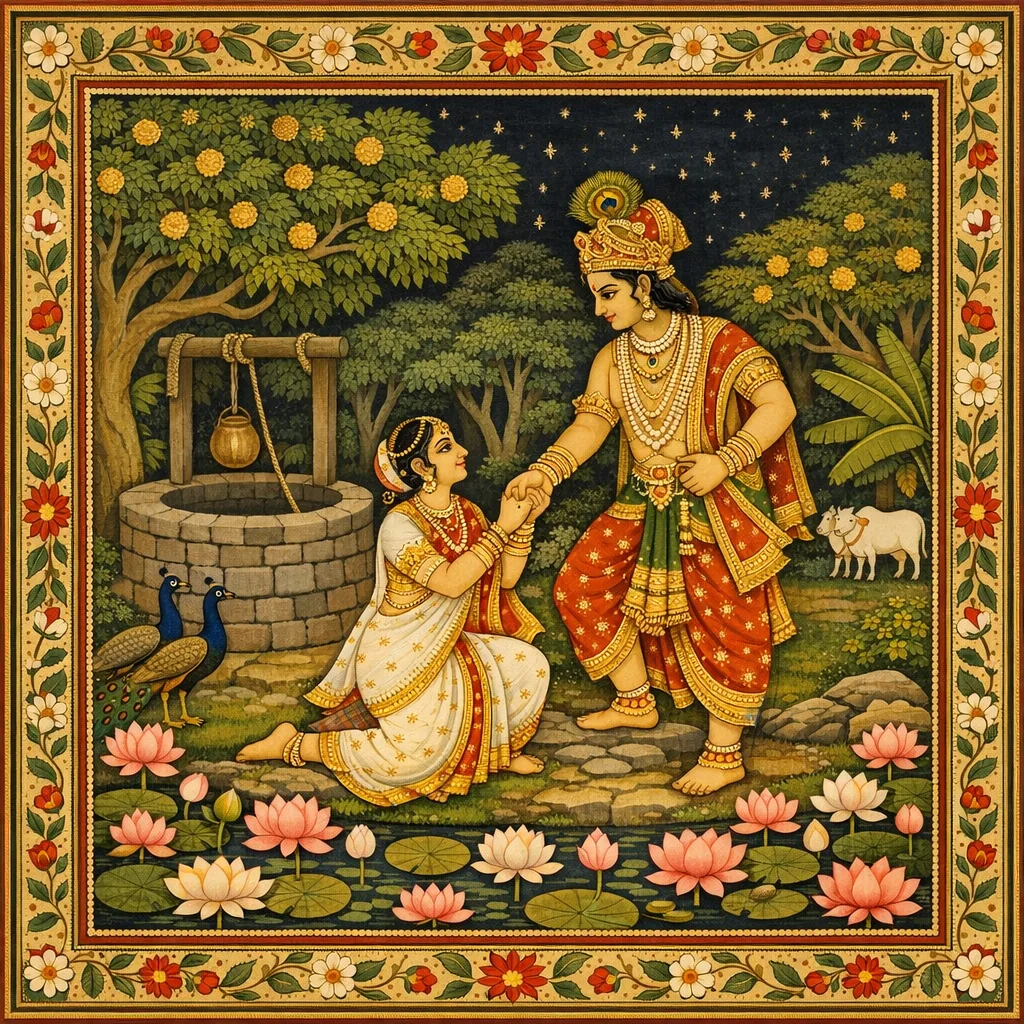
Continuing the Lunar dynasty vaṁśānucarita, Śukadeva introduces Nahuṣa’s sons and tells how Yati renounces the throne, so Yayāti rules. Nahuṣa’s downfall—cursed to become a python after offending Śacī—sets the lesson that sovereignty without self-restraint leads to degradation. The chapter then narrates the quarrel between Devayānī (daughter of Śukrācārya) and Śarmiṣṭhā (daughter of Vṛṣaparvā), ending in Devayānī’s humiliation in a well and her providential rescue by King Yayāti. Taking his hand as a marriage bond and bound by her prior curse (not to marry a brāhmaṇa), Devayānī insists on union; Yayāti agrees despite pratiloma concerns. Śukrācārya arranges the marriage with a strict warning that Yayāti must not cohabit with Śarmiṣṭhā, yet Yayāti later gives Śarmiṣṭhā a son, provoking Devayānī’s anger and Śukrācārya’s curse of premature old age. A conditional remedy is granted: Yayāti may exchange his old age with the youth of a willing person. Four sons refuse, but Pūru accepts, exemplifying filial dharma. Yayāti enjoys for a long time, performs sacrifices, and worships Vāsudeva, yet remains unsatisfied—preparing for his realization that kāma is inherently insatiable and that true fulfillment lies in turning to the Lord and renunciation.
Shlokas
Verse 1
श्रीशुक उवाच यतिर्ययाति: संयातिरायतिर्वियति: कृति: । षडिमे नहुषस्यासन्निन्द्रियाणीव देहिन: ॥ १ ॥
Śukadeva Gosvāmī said: O King Parīkṣit, just as the embodied soul has six senses, King Nahuṣa likewise had six sons—Yati, Yayāti, Saṁyāti, Āyāti, Viyāti, and Kṛti.
Verse 2
राज्यं नैच्छद् यति: पित्रा दत्तं तत्परिणामवित् । यत्र प्रविष्ट: पुरुष आत्मानं नावबुध्यते ॥ २ ॥
Yati did not accept the kingdom offered by his father, knowing its consequence: once one enters the post of king, one cannot truly grasp self-realization.
Verse 3
पितरि भ्रंशिते स्थानादिन्द्राण्या धर्षणाद्द्विजै: । प्रापितेऽजगरत्वं वै ययातिरभवन्नृप: ॥ ३ ॥
Because Nahuṣa offended Śacī, Indra’s wife, he fell from his position; cursed by saintly brāhmaṇas to become a python, he was degraded, and thus Yayāti became king.
Verse 4
चतसृष्वादिशद् दिक्षु भ्रातृन् भ्राता यवीयस: । कृतदारो जुगोपोर्वीं काव्यस्य वृषपर्वण: ॥ ४ ॥
Yayāti appointed his four younger brothers to rule the four directions. He himself married Devayānī, daughter of Śukrācārya, and Śarmiṣṭhā, daughter of Vṛṣaparvā, and ruled the entire earth.
Verse 5
श्रीराजोवाच ब्रह्मर्षिर्भगवान् काव्य: क्षत्रबन्धुश्च नाहुष: । राजन्यविप्रयो: कस्माद् विवाह: प्रतिलोमक: ॥ ५ ॥
Mahārāja Parīkṣit said: Kāvya (Śukrācārya) was a mighty brahmarṣi, and Yayāti, son of Nahuṣa, was a kṣatriya; how, then, did this pratiloma marriage between a kṣatriya and a brāhmaṇa occur?
Verse 6
श्रीशुक उवाच एकदा दानवेन्द्रस्य शर्मिष्ठा नाम कन्यका । सखीसहस्रसंयुक्ता गुरुपुत्र्या च भामिनी ॥ ६ ॥ देवयान्या पुरोद्याने पुष्पितद्रुमसङ्कुले । व्यचरत्कलगीतालिनलिनीपुलिनेऽबला ॥ ७ ॥
Śukadeva Gosvāmī said: One day Śarmiṣṭhā, daughter of the Dānava king Vṛṣaparvā—innocent yet quick-tempered—was strolling in the palace garden with Devayānī, daughter of Śukrācārya, and thousands of companions. The garden was filled with lotuses, flowering and fruit-bearing trees, and sweet-singing birds and bumblebees.
Verse 7
श्रीशुक उवाच एकदा दानवेन्द्रस्य शर्मिष्ठा नाम कन्यका । सखीसहस्रसंयुक्ता गुरुपुत्र्या च भामिनी ॥ ६ ॥ देवयान्या पुरोद्याने पुष्पितद्रुमसङ्कुले । व्यचरत्कलगीतालिनलिनीपुलिनेऽबला ॥ ७ ॥
Śrī Śukadeva Gosvāmī said: One day Śarmiṣṭhā, the daughter of the Dānava king Vṛṣaparvā—innocent yet quick to anger—was strolling in the palace garden with Devayānī, the daughter of Śukrācārya, accompanied by thousands of friends. The garden was filled with lotuses and trees laden with flowers and fruits, resounding with the sweet songs of birds and the humming of bees.
Verse 8
ता जलाशयमासाद्य कन्या: कमललोचना: । तीरे न्यस्य दुकूलानि विजह्रु: सिञ्चतीर्मिथ: ॥ ८ ॥
The lotus-eyed girls came to the bank of a reservoir and, eager to enjoy bathing, set their garments on the shore and began to sport, splashing water upon one another.
Verse 9
वीक्ष्य व्रजन्तं गिरिशं सह देव्या वृषस्थितम् । सहसोत्तीर्य वासांसि पर्यधुर्व्रीडिता: स्त्रिय: ॥ ९ ॥
While sporting in the water, the girls suddenly saw Girīśa, Lord Śiva, passing by with his wife Pārvatī, seated upon his bull. Ashamed of their nakedness, they quickly rose from the water and covered themselves with their garments.
Verse 10
शर्मिष्ठाजानती वासो गुरुपुत्र्या: समव्ययत् । स्वीयं मत्वा प्रकुपिता देवयानीदमब्रवीत् ॥ १० ॥
Śarmiṣṭhā unknowingly put on Devayānī’s dress, the garment of the guru’s daughter, thinking it her own. Devayānī, angered by this, spoke as follows.
Verse 11
अहो निरीक्ष्यतामस्या दास्या: कर्म ह्यसाम्प्रतम् । अस्मद्धार्यं धृतवती शुनीव हविरध्वरे ॥ ११ ॥
Oh, just behold the improper deed of this maidservant Śarmiṣṭhā! Casting aside all decorum, she has put on the garment meant for me—like a dog snatching ghee intended for the sacred sacrifice.
Verse 12
यैरिदं तपसा सृष्टं मुखं पुंस: परस्य ये । धार्यते यैरिह ज्योति: शिव: पन्था: प्रदर्शित: ॥ १२ ॥ यान् वन्दन्त्युपतिष्ठन्ते लोकनाथा: सुरेश्वरा: । भगवानपि विश्वात्मा पावन: श्रीनिकेतन: ॥ १३ ॥ वयं तत्रापि भृगव: शिष्योऽस्या न: पितासुर: । अस्मद्धार्यं धृतवती शूद्रो वेदमिवासती ॥ १४ ॥
We are among the qualified brāhmaṇas, who are accepted as the face of the Supreme Personality of Godhead. The brāhmaṇas have created the entire universe by their austerity, and they always keep the Absolute Truth within the core of their hearts. They have directed the path of good fortune, the path of Vedic civilization, and because they are the only worshipable objects within this world, they are offered prayers and worshiped even by the great demigods, the directors of the various planets, and even by the Supreme Personality of Godhead, the Supersoul, the supreme purifier, the husband of the goddess of fortune. And we are even more respectable because we are in the dynasty of Bhṛgu. Yet although this woman’s father, being among the demons, is our disciple, she has put on my dress, exactly like a śūdra taking charge of Vedic knowledge.
Verse 13
यैरिदं तपसा सृष्टं मुखं पुंस: परस्य ये । धार्यते यैरिह ज्योति: शिव: पन्था: प्रदर्शित: ॥ १२ ॥ यान् वन्दन्त्युपतिष्ठन्ते लोकनाथा: सुरेश्वरा: । भगवानपि विश्वात्मा पावन: श्रीनिकेतन: ॥ १३ ॥ वयं तत्रापि भृगव: शिष्योऽस्या न: पितासुर: । अस्मद्धार्यं धृतवती शूद्रो वेदमिवासती ॥ १४ ॥
We are among the qualified brāhmaṇas, who are accepted as the face of the Supreme Personality of Godhead. The brāhmaṇas have created the entire universe by their austerity, and they always keep the Absolute Truth within the core of their hearts. They have directed the path of good fortune, the path of Vedic civilization, and because they are the only worshipable objects within this world, they are offered prayers and worshiped even by the great demigods, the directors of the various planets, and even by the Supreme Personality of Godhead, the Supersoul, the supreme purifier, the husband of the goddess of fortune. And we are even more respectable because we are in the dynasty of Bhṛgu. Yet although this woman’s father, being among the demons, is our disciple, she has put on my dress, exactly like a śūdra taking charge of Vedic knowledge.
Verse 14
यैरिदं तपसा सृष्टं मुखं पुंस: परस्य ये । धार्यते यैरिह ज्योति: शिव: पन्था: प्रदर्शित: ॥ १२ ॥ यान् वन्दन्त्युपतिष्ठन्ते लोकनाथा: सुरेश्वरा: । भगवानपि विश्वात्मा पावन: श्रीनिकेतन: ॥ १३ ॥ वयं तत्रापि भृगव: शिष्योऽस्या न: पितासुर: । अस्मद्धार्यं धृतवती शूद्रो वेदमिवासती ॥ १४ ॥
We are among the qualified brāhmaṇas, who are accepted as the face of the Supreme Personality of Godhead. The brāhmaṇas have created the entire universe by their austerity, and they always keep the Absolute Truth within the core of their hearts. They have directed the path of good fortune, the path of Vedic civilization, and because they are the only worshipable objects within this world, they are offered prayers and worshiped even by the great demigods, the directors of the various planets, and even by the Supreme Personality of Godhead, the Supersoul, the supreme purifier, the husband of the goddess of fortune. And we are even more respectable because we are in the dynasty of Bhṛgu. Yet although this woman’s father, being among the demons, is our disciple, she has put on my dress, exactly like a śūdra taking charge of Vedic knowledge.
Verse 15
एवं क्षिपन्तीं शर्मिष्ठा गुरुपुत्रीमभाषत । रुषा श्वसन्त्युरङ्गीव धर्षिता दष्टदच्छदा ॥ १५ ॥
Śukadeva Gosvāmī said: When thus rebuked in cruel words, Śarmiṣṭhā was very angry. Breathing heavily like a serpent and biting her lower lip with her teeth, she spoke to the daughter of Śukrācārya as follows.
Verse 16
आत्मवृत्तमविज्ञाय कत्थसे बहु भिक्षुकि । किं न प्रतीक्षसेऽस्माकं गृहान् बलिभुजो यथा ॥ १६ ॥
You beggar, since you don’t understand your position, why should you unnecessarily talk so much? Don’t all of you wait at our house, depending on us for your livelihood like crows?
Verse 17
एवंविधै: सुपरुषै: क्षिप्त्वाचार्यसुतां सतीम् । शर्मिष्ठा प्राक्षिपत् कूपे वासश्चादाय मन्युना ॥ १७ ॥
With such harsh words, Śarmiṣṭhā rebuked Devayānī, the chaste daughter of Śukrācārya. In anger she seized Devayānī’s garments and cast her into a well.
Verse 18
तस्यां गतायां स्वगृहं ययातिर्मृगयां चरन् । प्राप्तो यदृच्छया कूपे जलार्थी तां ददर्श ह ॥ १८ ॥
After casting Devayānī into the well, Śarmiṣṭhā returned home. Meanwhile King Yayāti, roaming on a hunting excursion, came by chance to that well for water and saw Devayānī there.
Verse 19
दत्त्वा स्वमुत्तरं वासस्तस्यै राजा विवाससे । गृहीत्वा पाणिना पाणिमुज्जहार दयापर: ॥ १९ ॥
Seeing Devayānī unclothed in the well, the king at once gave her his upper cloth. Moved by compassion, he took her hand in his and lifted her out.
Verse 20
तं वीरमाहौशनसी प्रेमनिर्भरया गिरा । राजंस्त्वया गृहीतो मे पाणि: परपुरञ्जय ॥ २० ॥ हस्तग्राहोऽपरो मा भूद् गृहीतायास्त्वया हि मे । एष ईशकृतो वीर सम्बन्धो नौ न पौरुष: ॥ २१ ॥
With words brimming with love, Devayānī said: “O King, conqueror of hostile cities! By taking my hand, you have accepted me as your wife. Let no other touch my hand; O hero, this bond between us is ordained by the Lord, not wrought by human might.”
Verse 21
तं वीरमाहौशनसी प्रेमनिर्भरया गिरा । राजंस्त्वया गृहीतो मे पाणि: परपुरञ्जय ॥ २० ॥ हस्तग्राहोऽपरो मा भूद् गृहीतायास्त्वया हि मे । एष ईशकृतो वीर सम्बन्धो नौ न पौरुष: ॥ २१ ॥
With words brimming with love, Devayānī said: “O King, conqueror of hostile cities! By taking my hand, you have accepted me as your wife. Let no other touch my hand; O hero, this bond between us is ordained by the Lord, not wrought by human might.”}]}}
Verse 22
यदिदं कूपमग्नाया भवतो दर्शनं मम । न ब्राह्मणो मे भविता हस्तग्राहो महाभुज । कचस्य बार्हस्पत्यस्य शापाद् यमशपं पुरा ॥ २२ ॥
Because I fell into the well, I obtained your darśana; this is surely arranged by Providence. When I once cursed Kaca, the son of Bṛhaspati, he in turn cursed me, saying that I would not have a brāhmaṇa as my husband. Therefore, O mighty-armed one, I cannot become the wife of a brāhmaṇa.
Verse 23
ययातिरनभिप्रेतं दैवोपहृतमात्मन: । मनस्तु तद्गतं बुद्ध्वा प्रतिजग्राह तद्वच: ॥ २३ ॥
Because such a marriage is not sanctioned by the śāstras, King Yayāti did not favor it; yet, knowing it to be arranged by Providence and feeling his heart drawn to Devayānī’s beauty, he accepted her request.
Verse 24
गते राजनि सा धीरे तत्र स्म रुदती पितु: । न्यवेदयत्तत: सर्वमुक्तं शर्मिष्ठया कृतम् ॥ २४ ॥
Thereafter, when the learned king returned to his palace, Devayānī went home in tears and told her father, Śukrācārya, everything Śarmiṣṭhā had done—how she was thrown into the well and how the king saved her.
Verse 25
दुर्मना भगवान् काव्य: पौरोहित्यं विगर्हयन् । स्तुवन् वृत्तिं च कापोतीं दुहित्रा स ययौ पुरात् ॥ २५ ॥
Hearing this, Bhagavān Kāvyā (Śukrācārya) became greatly distressed. Condemning the livelihood of priesthood and praising uñcha-vṛtti—living by gathering leftover grains from the fields—he left home with his daughter.
Verse 26
वृषपर्वा तमाज्ञाय प्रत्यनीकविवक्षितम् । गुरुं प्रसादयन् मूर्ध्ना पादयो: पतित: पथि ॥ २६ ॥
King Vṛṣaparvā understood that Śukrācārya was coming to chastise or curse him. Therefore, before Śukrācārya reached his house, Vṛṣaparvā went out onto the road, fell with his head at his guru’s feet, and, checking his wrath, satisfied him.
Verse 27
क्षणार्धमन्युर्भगवान् शिष्यं व्याचष्ट भार्गव: । कामोऽस्या: क्रियतां राजन् नैनां त्यक्तुमिहोत्सहे ॥ २७ ॥
The powerful Bhārgava, Śukrācārya, was angry for a brief moment; then, being satisfied, he said to King Vṛṣaparvā: “O King, fulfill Devayānī’s desire. She is my daughter, and in this world I cannot abandon her or neglect her.”
Verse 28
तथेत्यवस्थिते प्राह देवयानी मनोगतम् । पित्रा दत्ता यतो यास्ये सानुगा यातु मामनु ॥ २८ ॥
Hearing Śukrācārya’s request, Vṛṣaparvā agreed, saying, “So be it,” and waited for Devayānī to speak. Devayānī then declared her wish: “When I am given in marriage by my father’s order, let my friend Śarmiṣṭhā go with me as my maidservant, along with her companions.”
Verse 29
पित्रादत्तादेवयान्यै शर्मिष्ठासानुगातदा । स्वानां तत् सङ्कटं वीक्ष्य तदर्थस्य च गौरवम् । देवयानीं पर्यचरत् स्त्रीसहस्रेण दासवत् ॥ २९ ॥
Vṛṣaparvā wisely understood that Śukrācārya’s displeasure would bring danger, and his pleasure would bring gain. Therefore he carried out the order: he gave his daughter Śarmiṣṭhā, with her companions, to Devayānī, and Śarmiṣṭhā served Devayānī like a slave, along with thousands of women.
Verse 30
नाहुषाय सुतां दत्त्वा सह शर्मिष्ठयोशना । तमाह राजञ्छर्मिष्ठामाधास्तल्पे न कर्हिचित् ॥ ३० ॥
When Śukrācārya gave Devayānī in marriage to Yayāti, the son of Nahūṣa, he sent Śarmiṣṭhā with her, but he warned the king: “O King, never allow this girl Śarmiṣṭhā to lie with you in your bed.”
Verse 31
विलोक्यौशनसीं राजञ्छर्मिष्ठा सुप्रजां क्वचित् । तमेव वव्रे रहसि सख्या: पतिमृतौ सती ॥ ३१ ॥
O King Parīkṣit, seeing Devayānī blessed with a fine son, Śarmiṣṭhā once, at a time fit for conception, approached King Yayāti—the husband of her friend—in a secluded place and entreated him: “Grant that I too may obtain a son.”
Verse 32
राजपुत्र्यार्थितोऽपत्ये धर्मं चावेक्ष्य धर्मवित् । स्मरञ्छुक्रवच: काले दिष्टमेवाभ्यपद्यत ॥ ३२ ॥
When Princess Śarmiṣṭhā begged King Yayāti for a son, the dharma-knowing king considered righteousness and consented. Though he remembered Śukrācārya’s warning, he took the union to be the will of the Supreme Lord and fulfilled her desire.
Verse 33
यदुं च तुर्वसुं चैव देवयानी व्यजायत । द्रुह्युं चानुं च पूरुं च शर्मिष्ठा वार्षपर्वणी ॥ ३३ ॥
Devayānī gave birth to Yadu and Turvasu, and Śarmiṣṭhā, the daughter of Vṛṣaparvā, gave birth to Druhyu, Anu, and Pūru.
Verse 34
गर्भसम्भवमासुर्या भर्तुर्विज्ञाय मानिनी । देवयानी पितुर्गेहं ययौ क्रोधविमूर्छिता ॥ ३४ ॥
When the proud Devayānī learned from others that Śarmiṣṭhā was pregnant by her husband, she became frantic with anger and departed for her father’s house.
Verse 35
प्रियामनुगत: कामी वचोभिरुपमन्त्रयन् । न प्रसादयितुं शेके पादसंवाहनादिभि: ॥ ३५ ॥
Lust-driven King Yayāti followed his beloved wife, tried to soothe her with pleasing words and services like massaging her feet, yet he could not pacify her by any means.
Verse 36
शुक्रस्तमाह कुपित: स्त्रीकामानृतपूरुष । त्वां जरा विशतां मन्द विरूपकरणी नृणाम् ॥ ३६ ॥
Śukrācārya, greatly angered, said: “You deceitful man, lusting after women—fool! May old age seize you, that which disfigures and cripples human beings.”
Verse 37
श्रीययातिरुवाच अतृप्तोऽस्म्यद्य कामानां ब्रह्मन् दुहितरि स्म ते । व्यत्यस्यतां यथाकामं वयसा योऽभिधास्यति ॥ ३७ ॥
King Yayāti said, “O learned, worshipable brāhmaṇa, I have not yet satisfied my lusty desires with your daughter.” Śukrācārya then replied, “You may exchange your old age with someone who will agree to transfer his youth to you.”
Verse 38
इति लब्धव्यवस्थान: पुत्रं ज्येष्ठमवोचत । यदो तात प्रतीच्छेमां जरां देहि निजं वय: ॥ ३८ ॥
When Yayāti received this benediction from Śukrācārya, he requested his eldest son: My dear son Yadu, please give me your youth in exchange for my old age and invalidity.
Verse 39
मातामहकृतां वत्स न तृप्तो विषयेष्वहम् । वयसा भवदीयेन रंस्ये कतिपया: समा: ॥ ३९ ॥
My dear son, I am not yet satisfied in my sexual desires. But if you are kind to me, you can take the old age given by your maternal grandfather, and I may take your youth so that I may enjoy life for a few years more.
Verse 40
श्रीयदुरुवाच नोत्सहे जरसा स्थातुमन्तरा प्राप्तया तव । अविदित्वा सुखं ग्राम्यं वैतृष्ण्यं नैति पूरुष: ॥ ४० ॥
Yadu replied: My dear father, you have already achieved old age, although you also were a young man. But I do not welcome your old age and invalidity, for unless one enjoys material happiness, one cannot attain renunciation.
Verse 41
तुर्वसुश्चोदित: पित्रा द्रुह्युश्चानुश्च भारत । प्रत्याचख्युरधर्मज्ञा ह्यनित्ये नित्यबुद्धय: ॥ ४१ ॥
O Mahārāja Parīkṣit, Yayāti similarly requested his sons Turvasu, Druhyu and Anu to exchange their youth for his old age, but because they were unaware of religious principles, they thought that their flickering youth was eternal, and therefore they refused to carry out their father’s order.
Verse 42
अपृच्छत् तनयं पूरुं वयसोनं गुणाधिकम् । न त्वमग्रजवद् वत्स मां प्रत्याख्यातुमर्हसि ॥ ४२ ॥
King Yayāti then requested Pūru, who was younger than these three brothers but more qualified, “My dear son, do not be disobedient like your elder brothers, for that is not your duty.”
Verse 43
श्रीपूरुरुवाच को नु लोके मनुष्येन्द्र पितुरात्मकृत: पुमान् । प्रतिकर्तुं क्षमो यस्य प्रसादाद् विन्दते परम् ॥ ४३ ॥
Pūru replied: O Your Majesty, who in this world can repay his debt to his father? By the mercy of one’s father, one gets the human form of life, which can enable one to become an associate of the Supreme Lord.
Verse 44
उत्तमश्चिन्तितं कुर्यात् प्रोक्तकारी तु मध्यम: । अधमोऽश्रद्धया कुर्यादकर्तोच्चरितं पितु: ॥ ४४ ॥
A son who acts by anticipating what his father wants him to do is first class, one who acts upon receiving his father’s order is second class, and one who executes his father’s order irreverently is third class. But a son who refuses his father’s order is like his father’s stool.
Verse 45
इति प्रमुदित: पूरु: प्रत्यगृह्णाज्जरां पितु: । सोऽपि तद्वयसा कामान् यथावज्जुजुषे नृप ॥ ४५ ॥
Śukadeva Gosvāmī said: In this way, O Mahārāja Parīkṣit, the son named Pūru was very pleased to accept the old age of his father, Yayāti, who took the youth of his son and enjoyed this material world as he required.
Verse 46
सप्तद्वीपपति: सम्यक् पितृवत् पालयन् प्रजा: । यथोपजोषं विषयाञ्जुजुषेऽव्याहतेन्द्रिय: ॥ ४६ ॥
Thereafter, King Yayāti became the ruler of the entire world, consisting of seven islands, and ruled the citizens exactly like a father. Because he had taken the youth of his son, his senses were unimpaired, and he enjoyed as much material happiness as he desired.
Verse 47
देवयान्यप्यनुदिनं मनोवाग्देहवस्तुभि: । प्रेयस: परमां प्रीतिमुवाह प्रेयसी रह: ॥ ४७ ॥
In secluded places, Devayānī day after day, with mind, speech, body, and many loving services, bestowed upon her dear husband the highest transcendental joy.
Verse 48
अयजद् यज्ञपुरुषं क्रतुभिर्भूरिदक्षिणै: । सर्वदेवमयं देवं सर्ववेदमयं हरिम् ॥ ४८ ॥
King Yayāti performed many sacrifices and bestowed abundant gifts upon the brāhmaṇas to please Hari, the Lord of sacrifice, who embodies all the devas and is the goal of all Vedic knowledge.
Verse 49
यस्मिन्निदं विरचितं व्योम्नीव जलदावलि: । नानेव भाति नाभाति स्वप्नमायामनोरथ: ॥ ४९ ॥
In Him, this cosmos is arranged like clouds held within the sky, and thus appears as manifold; but at annihilation all enters into Viṣṇu, and the varieties no longer manifest, like dream and māyā.
Verse 50
तमेव हृदि विन्यस्य वासुदेवं गुहाशयम् । नारायणमणीयांसं निराशीरयजत् प्रभुम् ॥ ५० ॥
Free from material desire, Mahārāja Yayāti worshiped the Supreme Lord by fixing Vāsudeva within his heart—Nārāyaṇa, dwelling in the heart’s cave, present everywhere yet unseen by material eyes.
Verse 51
एवं वर्षसहस्राणि मन:षष्ठैर्मन:सुखम् । विदधानोऽपि नातृप्यत् सार्वभौम: कदिन्द्रियै: ॥ ५१ ॥
Though Mahārāja Yayāti ruled the whole world and for a thousand years engaged his mind and five senses in material enjoyment, he could not become satisfied, for the senses are never satiated.
Frequently Asked Questions
Śukrācārya’s curse responds to a breach of trust and dharma: Yayāti accepted Devayānī under the condition that he would not share his bed with Śarmiṣṭhā, yet he later granted Śarmiṣṭhā a son. In Bhāgavata ethics, a king’s sensual impulse becomes especially culpable when it violates a guru’s instruction and destabilizes social and familial order. The curse dramatizes that unchecked kāma produces immediate spiritual and social consequences, even for powerful rulers.
The text frames the union as daiva-arranged (providential) and constrained by Devayānī’s prior curse that she would not have a brāhmaṇa husband. Yayāti hesitates because such a marriage is not the standard scriptural norm, but he accepts due to the circumstances and attraction. The narrative does not present pratiloma as an ideal; rather, it uses the irregularity to foreground moral tension—how desire, social duty, and divine arrangement can collide, producing karmic repercussions that propel spiritual instruction.
Pūru is Yayāti’s son through Śarmiṣṭhā. He is praised because he accepts his father’s old age in exchange for his own youth, embodying pitṛ-bhakti (devotion to the father) and dharmic obedience. His reasoning emphasizes that the human birth itself is received through the father and can lead to association with the Supreme Lord; thus service to the father is not mere sentiment but a sacred obligation. Pūru’s compliance also sets him up as the inheritor of the royal line’s prominence.
The chapter’s concluding thrust is that sensory enjoyment does not end desire; it multiplies it. Even with youth borrowed from Pūru, vast sovereignty, and abundant pleasures, Yayāti remains unsatisfied—illustrating the Bhāgavata principle that kāma is inherently insatiable and cannot be pacified by indulgence. The narrative prepares the reader for the turn toward vairāgya and devotion: real contentment arises when the senses and mind are redirected toward worship of Vāsudeva, the āśraya of all.