Adhyaya 25
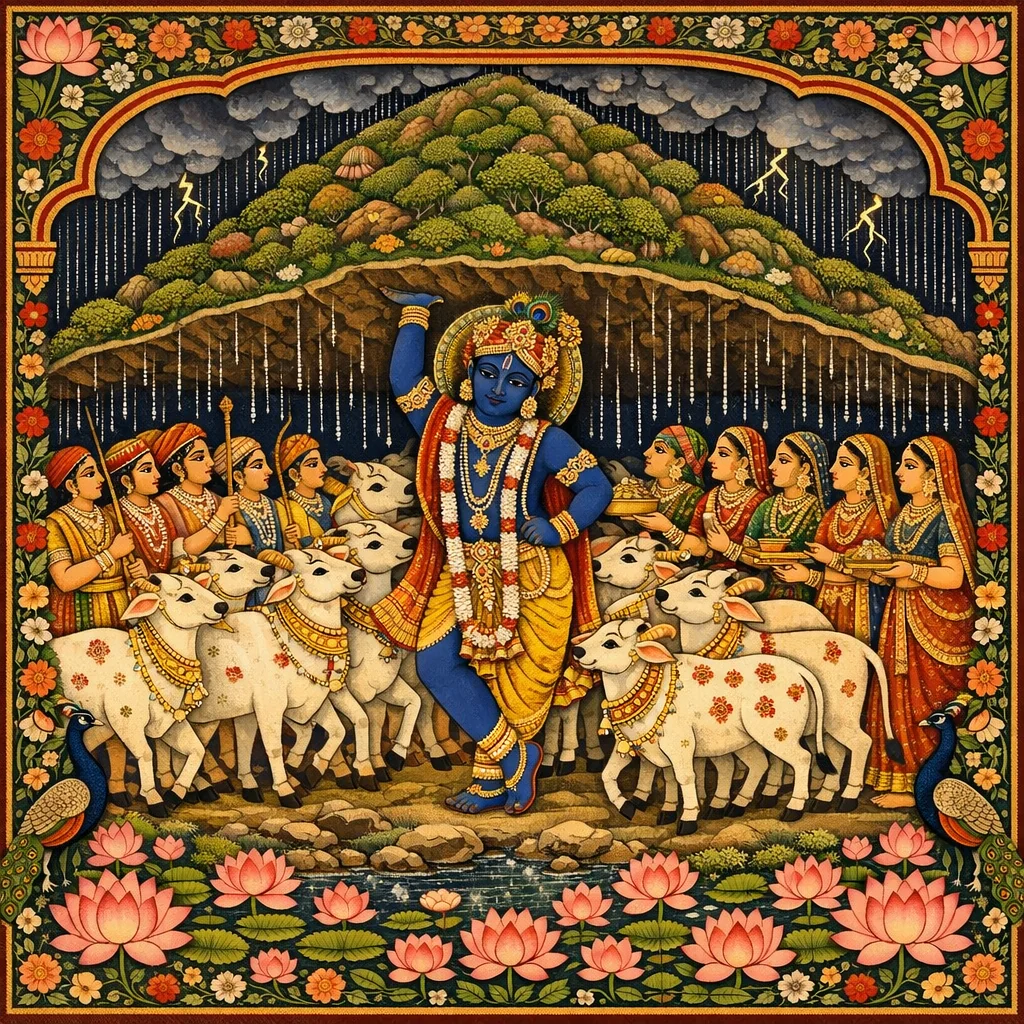
Govardhana-dhāraṇa: Kṛṣṇa Lifts Govardhana and Humbles Indra
After Vraja redirects its worship from Indra-yajña to Govardhana-pūjā, Indra takes it as an insult and, backed by ahamkāra, unleashes Sāṁvartaka clouds and violent winds to ruin Nanda’s settlement. As rain, hail, thunder, and floods overwhelm the land, the cows and Vrajavāsīs take exclusive shelter (śaraṇāgati) of Govinda. Kṛṣṇa perceives Indra’s pride as the root and resolves to protect His people while curbing deva-arrogance for Indra’s eventual good. Effortlessly lifting Govardhana Hill with one hand, He invites the entire community—people, animals, wagons, and priests—to live beneath it for seven days. Astonished, Indra withdraws the storm. When the sky clears, Kṛṣṇa sets the hill back in place; Vraja responds with embraces, blessings, and honorific rites, while celestial beings praise Him. The chapter turns toward Indra’s coming repentance and reconciliation, affirming Kṛṣṇa’s supreme lordship beyond administrative demigods.
Shlokas
Verse 1
श्रीशुक उवाच इन्द्रस्तदात्मन: पूजां विज्ञाय विहतां नृप । गोपेभ्य: कृष्णनाथेभ्यो नन्दादिभ्यश्चुकोप ह ॥ १ ॥
Śukadeva Gosvāmī said: O King Parīkṣit, when Indra realized that his worship had been set aside, he became furious with Nanda and the other gopas, who accepted Kṛṣṇa as their Lord.
Verse 2
गणं सांवर्तकं नाम मेघानां चान्तकारीणाम् । इन्द्र: प्रचोदयत् क्रुद्धो वाक्यं चाहेशमान्युत ॥ २ ॥
Angry Indra unleashed the clouds of universal destruction known as Sāṁvartaka, and, imagining himself the supreme controller, spoke as follows.
Verse 3
अहो श्रीमदमाहात्म्यं गोपानां काननौकसाम् । कृष्णं मर्त्यमुपाश्रित्य ये चक्रुर्देवहेलनम् ॥ ३ ॥
[Indra said:] Just see how prosperity has intoxicated these cowherd men of the forest! Taking shelter of Kṛṣṇa as if He were an ordinary mortal, they have offended the gods.
Verse 4
यथादृढै: कर्ममयै: क्रतुभिर्नामनौनिभै: । विद्यामान्वीक्षिकीं हित्वा तितीर्षन्ति भवार्णवम् ॥ ४ ॥
Their taking shelter of Kṛṣṇa is like the foolish attempt of those who abandon transcendental knowledge of the self and try to cross the ocean of saṁsāra in the false boats of fruit-seeking ritual sacrifices.
Verse 5
वाचालं बालिशं स्तब्धमज्ञं पण्डितमानिनम् । कृष्णं मर्त्यमुपाश्रित्य गोपा मे चक्रुरप्रियम् ॥ ५ ॥
By taking shelter of Kṛṣṇa—an ordinary mortal who is talkative, childish, stubborn, ignorant, yet imagines Himself a great scholar—the cowherd men have acted toward me with hostility and have done what is displeasing.
Verse 6
एषां श्रियावलिप्तानां कृष्णेनाध्मापितात्मनाम् । धुनुत श्रीमदस्तम्भं पशून् नयत सङ्क्षयम् ॥ ६ ॥
Their prosperity has made them drunk with pride, and Kṛṣṇa has puffed up their arrogance. Now go—shatter their haughty pride of opulence and drive their animals to destruction.
Verse 7
अहं चैरावतं नागमारुह्यानुव्रजे व्रजम् । मरुद्गणैर्महावेगैर्नन्दगोष्ठजिघांसया ॥ ७ ॥
I will follow you to Vraja, riding my elephant Airāvata and bringing the swift, mighty wind-gods, intent on destroying Nanda Mahārāja’s cowherd settlement.
Verse 8
श्रीशुक उवाच इत्थं मघवताज्ञप्ता मेघा निर्मुक्तबन्धना: । नन्दगोकुलमासारै: पीडयामासुरोजसा ॥ ८ ॥
Śukadeva Gosvāmī said: Thus, on Maghavā’s (Indra’s) order, the clouds of universal devastation—released untimely from their bonds—rushed to Nanda’s Gokula and began tormenting the people by forcefully pouring down torrents of rain.
Verse 9
विद्योतमाना विद्युद्भि: स्तनन्त: स्तनयित्नुभि: । तीव्रैर्मरुद्गणैर्नुन्ना ववृषुर्जलशर्करा: ॥ ९ ॥
Driven on by the fearsome wind-gods, the clouds flashed with lightning, roared with thunder, and rained down hailstones like hard pellets of water.
Verse 10
स्थूणास्थूला वर्षधारा मुञ्चत्स्वभ्रेष्वभीक्ष्णश: । जलौघै: प्लाव्यमाना भूर्नादृश्यत नतोन्नतम् ॥ १० ॥
The clouds poured down torrents of rain, thick like massive pillars, again and again. Floodwaters submerged the earth, and high ground could no longer be told from low.
Verse 11
अत्यासारातिवातेन पशवो जातवेपना: । गोपा गोप्यश्च शीतार्ता गोविन्दं शरणं ययु: ॥ ११ ॥
Lashed by excessive rain and fierce wind, the animals began to shiver. The gopas and gopīs, tormented by the cold, all went to Lord Govinda for shelter.
Verse 12
शिर: सुतांश्च कायेन प्रच्छाद्यासारपीडिता: । वेपमाना भगवत: पादमूलमुपाययु: ॥ १२ ॥
Trembling from the torment of the relentless downpour, and trying to shield their heads and calves with their own bodies, the cows came to the lotus feet of the Supreme Lord.
Verse 13
कृष्ण कृष्ण महाभाग त्वन्नाथं गोकुलं प्रभो । त्रातुमर्हसि देवान्न: कुपिताद् भक्तवत्सल ॥ १३ ॥
The gopas and gopīs cried out: “Kṛṣṇa, Kṛṣṇa, O most blessed Lord! Gokula depends on You alone. Save our cows from the wrath of angry Indra; O lover of Your devotees, protect us as well.”
Verse 14
शिलावर्षातिवातेन हन्यमानमचेतनम् । निरीक्ष्य भगवान् मेने कुपितेन्द्रकृतं हरि: ॥ १४ ॥
Seeing the people of Gokula rendered almost unconscious by the assault of hail and blasting wind, the Supreme Lord Hari understood that this was the work of angry Indra.
Verse 15
अपर्त्वत्युल्बणं वर्षमतिवातं शिलामयम् । स्वयागे विहतेऽस्माभिरिन्द्रो नाशाय वर्षति ॥ १५ ॥
[Śrī Kṛṣṇa said to Himself:] Because We have stopped his sacrifice, Indra is pouring down an unseasonable, ferocious rain, with violent winds and hail, to bring destruction.
Verse 16
तत्र प्रतिविधिं सम्यगात्मयोगेन साधये । लोकेशमानिनां मौढ्याद्धनिष्ये श्रीमदं तम: ॥ १६ ॥
By My mystic yogic power I will fully counteract this disturbance caused by Indra. Demigods like him, intoxicated by opulence, foolishly imagine themselves the lords of the universe; now I will destroy that darkness of ignorance.
Verse 17
न हि सद्भावयुक्तानां सुराणामीशविस्मय: । मत्तोऽसतां मानभङ्ग: प्रशमायोपकल्पते ॥ १७ ॥
Since the demigods are endowed with goodness, the delusion of thinking oneself the Lord should not truly overtake them. When I shatter the false prestige of those bereft of goodness, My aim is to bring them peace and relief.
Verse 18
तस्मान्मच्छरणं गोष्ठं मन्नाथं मत्परिग्रहम् । गोपाये स्वात्मयोगेन सोऽयं मे व्रत आहित: ॥ १८ ॥
Therefore I must protect the cowherd community by My transcendental yogic potency, for I am their shelter, I am their master, and they are truly My own family. After all, I have taken a vow to protect My devotees.
Verse 19
इत्युक्त्वैकेन हस्तेन कृत्वा गोवर्धनाचलम् । दधार लीलया विष्णुश्छत्राकमिव बालक: ॥ १९ ॥
Having said this, Lord Kṛṣṇa—Viṣṇu Himself—lifted Govardhana Hill with one hand and held it aloft in divine play, as easily as a child holds up a mushroom like an umbrella.
Verse 20
अथाह भगवान् गोपान्हेऽम्ब तात व्रजौकस: । यथोपजोषं विशत गिरिगर्तं सगोधना: ॥ २० ॥
The Lord then addressed the cowherds: “O Mother, O Father, O residents of Vraja—if you so desire, enter this mountain hollow now, together with your cows.”
Verse 21
न त्रास इह व: कार्यो मद्धस्ताद्रिनिपातनात् । वातवर्षभयेनालं तत्त्राणं विहितं हि व: ॥ २१ ॥
Have no fear that this mountain will fall from My hand. And do not fear the wind and rain, for your protection from these troubles has already been arranged.
Verse 22
तथा निर्विविशुर्गर्तं कृष्णाश्वासितमानस: । यथावकाशं सधना: सव्रजा: सोपजीविन: ॥ २२ ॥
Thus reassured by Lord Kṛṣṇa, their hearts grew calm, and all entered beneath the hill. There they found ample space for themselves, their cows, wagons, servants, priests, and the entire community of Vraja.
Verse 23
क्षुत्तृड्व्यथां सुखापेक्षां हित्वा तैर्व्रजवासिभि: । वीक्ष्यमाणो दधाराद्रिं सप्ताहं नाचलत् पदात् ॥ २३ ॥
Forgetting hunger and thirst and setting aside all thought of personal comfort, Lord Kṛṣṇa stood holding up the hill for seven days as the people of Vraja gazed upon Him, without moving from His place.
Verse 24
कृष्णयोगानुभावं तं निशम्येन्द्रोऽतिविस्मित: । निस्तम्भो भ्रष्टसङ्कल्प: स्वान्मेघान् सन्न्यवारयत् ॥ २४ ॥
When Indra beheld this display of Lord Kṛṣṇa’s yogic power, he was utterly astonished. His false pride brought low and his intentions thwarted, he ordered his clouds to desist.
Verse 25
खं व्यभ्रमुदितादित्यं वातवर्षं च दारुणम् । निशम्योपरतं गोपान् गोवर्धनधरोऽब्रवीत् ॥ २५ ॥
Seeing that the fierce wind and rain had ceased, the sky had cleared and the sun had risen, Lord Śrī Kṛṣṇa, lifter of Govardhana, spoke to the cowherd community.
Verse 26
निर्यात त्यजत त्रासं गोपा: सस्त्रीधनार्भका: । उपारतं वातवर्षं व्युदप्रायाश्च निम्नगा: ॥ २६ ॥
My dear cowherd men, go out with your wives, children and possessions, and give up your fear. The wind and rain have stopped, and the rivers’ high waters have subsided.
Verse 27
ततस्ते निर्ययुर्गोपा: स्वं स्वमादाय गोधनम् । शकटोढोपकरणं स्त्रीबालस्थविरा: शनै: ॥ २७ ॥
Then the cowherd men gathered their own cows, loaded their paraphernalia onto the wagons and went out, while the women, children and elderly followed gradually.
Verse 28
भगवानपि तं शैलं स्वस्थाने पूर्ववत् प्रभु: । पश्यतां सर्वभूतानां स्थापयामास लीलया ॥ २८ ॥
As all living beings watched, the Supreme Personality of Godhead set the hill down by His lila, placing it back in its original position as before.
Verse 29
तं प्रेमवेगान्निर्भृता व्रजौकसोयथा समीयु: परिरम्भणादिभि: । गोप्यश्च सस्नेहमपूजयन् मुदादध्यक्षताद्भिर्युयुजु: सदाशिष: ॥ २९ ॥
Overwhelmed by ecstatic love, all the residents of Vṛndāvana came forward to greet Śrī Kṛṣṇa according to their individual relationships with Him—some embraced Him, others bowed down, and so on. The gopīs honored Him with water mixed with yogurt and unbroken barleycorns, and they showered Him with auspicious blessings.
Verse 30
यशोदा रोहिणी नन्दो रामश्च बलिनां वर: । कृष्णमालिङ्ग्य युयुजुराशिष: स्नेहकातरा: ॥ ३० ॥
Mother Yaśodā, Mother Rohiṇī, Nanda Mahārāja, and Balarāma, the foremost of the strong, embraced Śrī Kṛṣṇa. Overwhelmed with affection, they bestowed their blessings upon Him.
Verse 31
दिवि देवगणा: सिद्धा: साध्या गन्धर्वचारणा: । तुष्टुवुर्मुमुचुस्तुष्टा: पुष्पवर्षाणि पार्थिव ॥ ३१ ॥
O King, in the heavens the demigods—along with the Siddhas, Sādhyas, Gandharvas, and Cāraṇas—joyfully praised Śrī Kṛṣṇa and, in great satisfaction, showered down flowers.
Verse 32
शङ्खदुन्दुभयो नेदुर्दिवि देवप्रचोदिता: । जगुर्गन्धर्वपतयस्तुम्बुरुप्रमुखा नृप ॥ ३२ ॥
My dear Parīkṣit, in heaven, urged on by the demigods, conchshells and kettledrums resounded, and the foremost Gandharvas, led by Tumburu, began to sing.
Verse 33
ततोऽनुरक्तै: पशुपै: परिश्रितोराजन् स्वगोष्ठं सबलोऽव्रजद्धरि: । तथाविधान्यस्य कृतानि गोपिकागायन्त्य ईयुर्मुदिता हृदिस्पृश: ॥ ३३ ॥
O King, then Hari, Śrī Kṛṣṇa, surrounded by His loving cowherd friends and accompanied by Balarāma, went to the place where He had been tending the cows. The gopīs returned home in joy, singing of His lifting Govardhana Hill and other heart-touching, glorious deeds.
Frequently Asked Questions
Indra believed Vraja’s abandonment of his sacrifice was a direct offense to the devas and to his own status as controller of rain. The text frames his response as mada (pride) arising from opulence and delegated power. The storm becomes a moral-theological test: when administrative authority forgets its dependence on Bhagavān, it turns punitive, and the Lord intervenes to protect devotees and correct the offender.
The narrative presents it as Bhagavān’s effortless līlā, performed by His transcendental potency (yoga-māyā), not as a feat requiring strain. Spiritually, it enacts poṣaṇa: the Lord becomes the literal shelter of surrendered devotees, demonstrating that the ultimate refuge is not ritual bargaining with cosmic administrators but direct dependence on the Supreme Person.
Sāṁvartaka refers to the catastrophic, dissolution-associated clouds typically connected with universal devastation. Indra’s deploying them “untimely” signals an abuse of cosmic resources. The detail intensifies Indra’s offense and highlights the disproportion between deva-wrath and the simple, affectionate life of Vraja.
Indra’s speech mocks the cowherds for ‘taking shelter’ of Kṛṣṇa, but the chapter reverses his claim: dependence on fruitive rituals as the primary means of safety is compared to a ‘false boat’ for crossing saṁsāra. The episode teaches that ritual has value when subordinate to bhakti, but becomes spiritually misleading when treated as independent of surrender to Bhagavān.
Their instinctive movement toward Kṛṣṇa illustrates mature śaraṇāgati: in crisis they rely on the Lord’s affection and protection rather than negotiating with fear-driven propitiation. This is a hallmark of Vraja-bhakti—relationship (sambandha) and trust override transactional religiosity.