Adhyaya 17
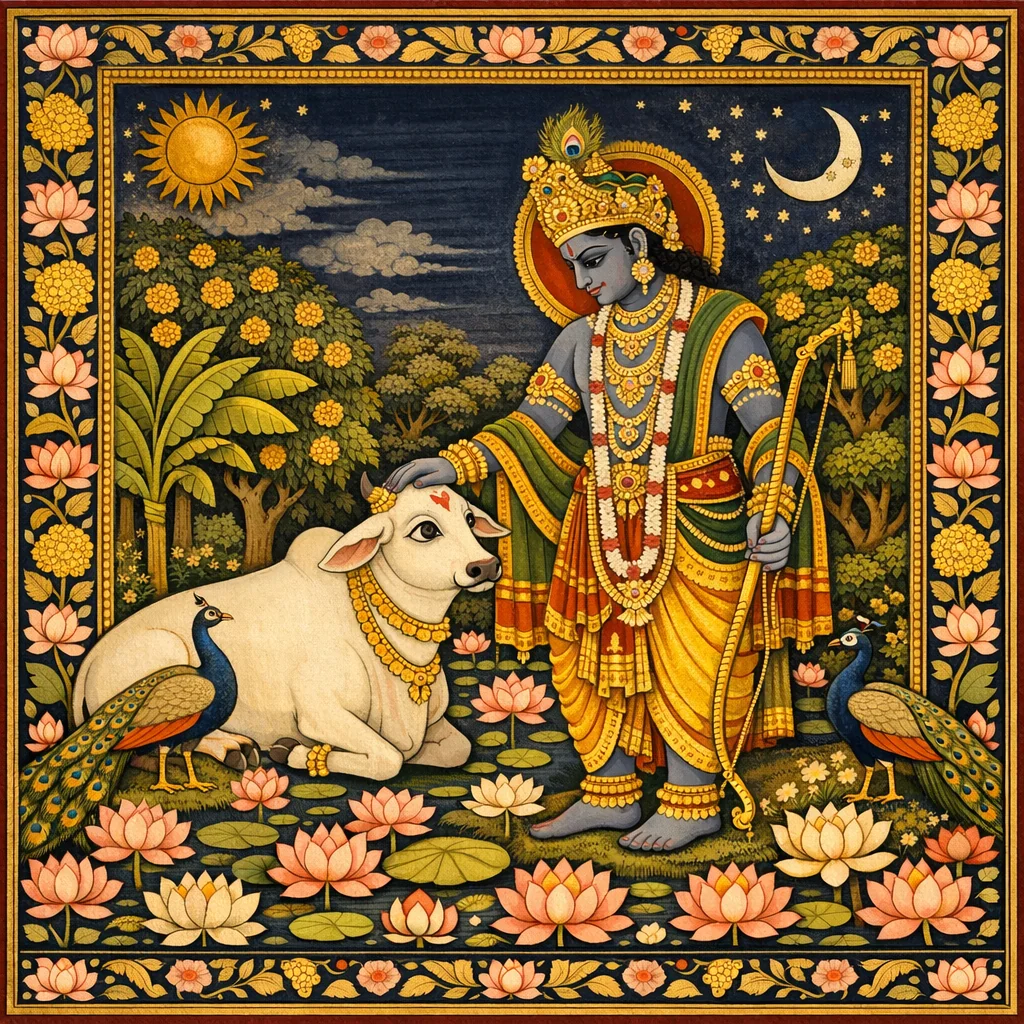
Pṛthu Pursues the Earth and the Earth Takes the Form of a Cow (Bhūmi as Gauḥ)
After bards and reciters praise King Pṛthu’s virtues, he honors every social order—brāhmaṇas, administrators, priests, citizens, and dependents—revealing the steadiness of a rājarṣi realm. Vidura then asks Maitreya for clear explanations: why Bhūmi (the Earth) takes the form of a cow, how the land was leveled, why Indra stole the sacrificial horse, and how Pṛthu reached his supreme destination after instruction from Sanat-kumāra. Maitreya continues the history: at Pṛthu’s enthronement a famine strikes, and the people approach him as a divinely empowered protector, begging for food and livelihood. Seeking the cause, Pṛthu angrily confronts the Earth for withholding grains. Terrified, Bhūmi flees through the cosmos as a cow, yet cannot escape. When she surrenders, she argues from dharma (nonviolence toward women), from cosmic dependence (the Earth as the boat bearing all beings), and from theology—recognizing Pṛthu as the Supreme Lord’s empowered presence, untouched by the guṇas. The chapter prepares the next step: not destruction, but a dhārmic remedy—properly “milking” the Earth so prosperity returns under righteous rule.
Shlokas
Verse 1
मैत्रेय उवाच एवं स भगवान् वैन्य: ख्यापितो गुणकर्मभि: । छन्दयामास तान् कामै: प्रतिपूज्याभिनन्द्य च ॥ १ ॥
Maitreya said: Thus Bhagavān Vainya (Pṛthu) was acclaimed through the recitation of his virtues and heroic deeds. In the end, Mahārāja Pṛthu duly worshiped and honored those bards, welcomed them with appreciation, and satisfied them with various gifts.
Verse 2
ब्राह्मणप्रमुखान् वर्णान् भृत्यामात्यपुरोधस: । पौराञ्जानपदान् श्रेणी: प्रकृती: समपूजयत् ॥ २ ॥
King Pṛthu satisfied and honored everyone—leaders of the brāhmaṇas and other orders, his servants, ministers, and priests, as well as citizens, countryfolk, people of other communities, guilds, admirers, and others—so that all became joyful.
Verse 3
विदुर उवाच कस्माद्दधार गोरूपं धरित्री बहुरूपिणी । यां दुदोह पृथुस्तत्र को वत्सो दोहनं च किम् ॥ ३ ॥
Vidura asked: O brāhmaṇa, since Mother Earth can assume many forms, why did she take the form of a cow? And when King Pṛthu milked her, who became the calf, what was the manner of milking, and what was the vessel that received the milk?
Verse 4
प्रकृत्या विषमा देवी कृता तेन समा कथम् । तस्य मेध्यं हयं देव: कस्य हेतोरपाहरत् ॥ ४ ॥
The earth’s surface is naturally uneven—high in some places and low in others. How did Mahārāja Pṛthu make it level? And for what reason did Indra, king of heaven, steal the consecrated horse meant for the sacrifice?
Verse 5
सनत्कुमाराद्भगवतो ब्रह्मन् ब्रह्मविदुत्तमात् । लब्ध्वा ज्ञानं सविज्ञानं राजर्षि: कां गतिं गत: ॥ ५ ॥
O brāhmaṇa, after receiving from Sanat-kumāra—the foremost knower of Vedic truth—knowledge together with its practical realization, what desired destination did the saintly King Pṛthu attain?
Verse 6
यच्चान्यदपि कृष्णस्य भवान् भगवत: प्रभो: । श्रव: सुश्रवस: पुण्यं पूर्वदेहकथाश्रयम् ॥ ६ ॥ भक्ताय मेऽनुरक्ताय तव चाधोक्षजस्य च । वक्तुमर्हसि योऽदुह्यद्वैन्यरूपेण गामिमाम् ॥ ७ ॥
You are a śaktyāveśa incarnation of the potencies of Lord Kṛṣṇa; therefore any narration of his deeds is most sweet to hear and bestows sacred good fortune, resting upon accounts of former lives. I am devoted to you and also to the Lord known as Adhokṣaja; so please recount all the histories of King Pṛthu, who, as the son of King Vena, milked this earth in the form of a cow.
Verse 7
यच्चान्यदपि कृष्णस्य भवान् भगवत: प्रभो: । श्रव: सुश्रवस: पुण्यं पूर्वदेहकथाश्रयम् ॥ ६ ॥ भक्ताय मेऽनुरक्ताय तव चाधोक्षजस्य च । वक्तुमर्हसि योऽदुह्यद्वैन्यरूपेण गामिमाम् ॥ ७ ॥
You are a śaktyāveśa incarnation of the potencies of Lord Kṛṣṇa; therefore any narration of his deeds is most sweet to hear and bestows sacred good fortune, resting upon accounts of former lives. I am devoted to you and also to the Lord known as Adhokṣaja; so please recount all the histories of King Pṛthu, who, as the son of King Vena, milked this earth in the form of a cow.
Verse 8
सूत उवाच चोदितो विदुरेणैवं वासुदेवकथां प्रति । प्रशस्य तं प्रीतमना मैत्रेय: प्रत्यभाषत ॥ ८ ॥
Sūta Gosvāmī continued: Thus urged by Vidura to hear narrations of Vāsudeva, Sūta praised him; and Maitreya, pleased at heart with Vidura, lauded him and then spoke as follows.
Verse 9
मैत्रेय उवाच यदाभिषिक्त: पृथुरङ्ग विप्रै-रामन्त्रितो जनतायाश्च पाल: । प्रजा निरन्ने क्षितिपृष्ठ एत्यक्षुत्क्षामदेहा: पतिमभ्यवोचन् ॥ ९ ॥
Maitreya said: Dear Vidura, when Pṛthu was anointed by the brāhmaṇas and sages and proclaimed the protector of the people, there was a scarcity of grain upon the earth. The citizens, emaciated by hunger, came before the king and told him their true condition.
Verse 10
वयं राजञ्जाठरेणाभितप्तायथाग्निना कोटरस्थेन वृक्षा: । त्वामद्य याता: शरणं शरण्यंय: साधितो वृत्तिकर: पतिर्न: ॥ १० ॥ तन्नो भवानीहतु रातवेऽन्नंक्षुधार्दितानां नरदेवदेव । यावन्न नङ्क्ष्यामह उज्झितोर्जावार्तापतिस्त्वं किल लोकपाल: ॥ ११ ॥
O King, as a tree with fire burning within its hollow trunk slowly dries up, so we are withering under the fire of hunger in our bellies. You are the refuge of the surrendered and have been appointed to arrange our livelihood; therefore we have come to you for protection.
Verse 11
वयं राजञ्जाठरेणाभितप्तायथाग्निना कोटरस्थेन वृक्षा: । त्वामद्य याता: शरणं शरण्यंय: साधितो वृत्तिकर: पतिर्न: ॥ १० ॥ तन्नो भवानीहतु रातवेऽन्नंक्षुधार्दितानां नरदेवदेव । यावन्न नङ्क्ष्यामह उज्झितोर्जावार्तापतिस्त्वं किल लोकपाल: ॥ ११ ॥
O Naradeva, king as good as a god, have mercy on us who are tormented by hunger: arrange the proper distribution of grains to satisfy us. Care for us before our strength is spent, for you are indeed the lord of our livelihood and the protector of the world.
Verse 12
मैत्रेय उवाच पृथु: प्रजानां करुणं निशम्य परिदेवितम् । दीर्घं दध्यौ कुरुश्रेष्ठ निमित्तं सोऽन्वपद्यत ॥ १२ ॥
Maitreya said: Hearing the citizens’ compassionate lament and seeing their pitiable condition, King Pṛthu pondered for a long time, seeking the underlying cause.
Verse 13
इति व्यवसितो बुद्ध्या प्रगृहीतशरासन: । सन्दधे विशिखं भूमे: क्रुद्धस्त्रिपुरहा यथा ॥ १३ ॥
Thus resolved, the King took up bow and arrow and, in anger, aimed at the earth—like Śiva, the slayer of Tripura, when he rises to destroy.
Verse 14
प्रवेपमाना धरणी निशाम्योदायुधं च तम् । गौ: सत्यपाद्रवद्भीता मृगीव मृगयुद्रुता ॥ १४ ॥
When the earth saw the King raise his weapons, she trembled in fear. Taking the form of a cow, she fled—like a doe that runs swiftly when pursued by a hunter.
Verse 15
तामन्वधावत्तद्वैन्य: कुपितोऽत्यरुणेक्षण: । शरं धनुषि सन्धाय यत्र यत्र पलायते ॥ १५ ॥
Seeing this, Mahārāja Pṛthu, the son of Vena, became fiercely angry; his eyes reddened like the rising sun at dawn. Fixing an arrow upon his bow, he pursued the earth in the form of a cow wherever she fled.
Verse 16
सा दिशो विदिशो देवी रोदसी चान्तरं तयो: । धावन्ती तत्र तत्रैनं ददर्शानूद्यतायुधम् ॥ १६ ॥
The goddess Earth, in the form of a cow, ran in all directions—through the quarters and even into the space between the heavenly worlds and the earth. Wherever she fled, she saw the King pursuing her with bow and arrows raised.
Verse 17
लोके नाविन्दत त्राणं वैन्यान्मृत्योरिव प्रजा: । त्रस्ता तदा निववृते हृदयेन विदूयता ॥ १७ ॥
Just as no one can escape the cruel hands of death, the earth in the form of a cow could not escape the son of Vena. At last, terrified and with a grief-stricken heart, she turned back in helplessness.
Verse 18
उवाच च महाभागं धर्मज्ञापन्नवत्सल । त्राहि मामपि भूतानां पालनेऽवस्थितो भवान् ॥ १८ ॥
Addressing the greatly fortunate King Pṛthu—knower of dharma and tender to those who surrender—she said, “Please save me as well. You are the protector of all living beings, and now you stand as the king of this planet.”
Verse 19
स त्वं जिघांससे कस्माद्दीनामकृतकिल्बिषाम् । अहनिष्यत्कथं योषां धर्मज्ञ इति यो मत: ॥ १९ ॥
The earth in the form of a cow continued her appeal: “I am poor and have committed no sin; why do you wish to kill me? You are esteemed as a knower of dharma—so why this envy toward me, and why such eagerness to slay a woman?”
Verse 20
प्रहरन्ति न वै स्त्रीषु कृताग:स्वपि जन्तव: । किमुत त्वद्विधा राजन् करुणा दीनवत्सला: ॥ २० ॥
Even if a woman commits a sin, no one should raise a hand against her. How much more, O King, for one like you—merciful, a protector, and affectionate to the poor.
Verse 21
मां विपाट्याजरां नावं यत्र विश्वं प्रतिष्ठितम् । आत्मानं च प्रजाश्चेमा: कथमम्भसि धास्यसि ॥ २१ ॥
My dear King, I am like a strong, unaging boat upon which the whole world is established. If you tear me apart, how will you save yourself and your subjects from drowning?
Verse 22
पृथुरुवाच वसुधे त्वां वधिष्यामि मच्छासनपराङ्मुखीम् । भागं बर्हिषि या वृङ्क्ते न तनोति च नो वसु ॥ २२ ॥
King Pṛthu replied: O Earth, you have turned away from my rule and disobeyed my orders. You accept your share in the yajñas, yet you do not produce sufficient grains; therefore I must punish you.
Verse 23
यवसं जग्ध्यनुदिनं नैव दोग्ध्यौधसं पय: । तस्यामेवं हि दुष्टायां दण्डो नात्र न शस्यते ॥ २३ ॥
Though you eat green grass every day, you do not fill your milk bag so we may use your milk. Since you deliberately commit offenses, you are not beyond punishment merely because you have assumed the form of a cow.
Verse 24
त्वं खल्वोषधिबीजानि प्राक् सृष्टानि स्वयम्भुवा । न मुञ्चस्यात्मरुद्धानि मामवज्ञाय मन्दधी: ॥ २४ ॥
The seeds of herbs and grains, created long ago by Brahmā, are hidden within you; yet, with dull intelligence, you disregard my order and do not release them.
Verse 25
अमूषां क्षुत्परीतानामार्तानां परिदेवितम् । शमयिष्यामि मद्बाणैर्भिन्नायास्तव मेदसा ॥ २५ ॥
Now, with the help of my arrows, I shall cut you to pieces and with your flesh satisfy the hunger-stricken citizens, who are now crying for want of grains. Thus I shall satisfy the crying citizens of my kingdom.
Verse 26
पुमान् योषिदुत क्लीब आत्मसम्भावनोऽधम: । भूतेषु निरनुक्रोशो नृपाणां तद्वधोऽवध: ॥ २६ ॥
Any cruel person — be he a man, woman or impotent eunuch — who is only interested in his personal maintenance and has no compassion for other living entities may be killed by the king. Such killing can never be considered actual killing.
Verse 27
त्वां स्तब्धां दुर्मदां नीत्वा मायागां तिलश: शरै: । आत्मयोगबलेनेमा धारयिष्याम्यहं प्रजा: ॥ २७ ॥
You are very much puffed up with pride and have become almost insane. Presently you have assumed the form of a cow by your mystic powers. Nonetheless I shall cut you into small pieces like grain, and I will uphold the entire population by my personal mystic powers.
Verse 28
एवं मन्युमयीं मूर्तिं कृतान्तमिव बिभ्रतम् । प्रणता प्राञ्जलि: प्राह मही सञ्जातवेपथु: ॥ २८ ॥
At this time Pṛthu Mahārāja became exactly like Yamarāja, and his whole body appeared very angry. In other words, he was anger personified. After hearing him, the planet earth began to tremble. She surrendered, and with folded hands began to speak as follows.
Verse 29
धरोवाच नम: परस्मै पुरुषाय मायया विन्यस्तनानातनवे गुणात्मने । नम: स्वरूपानुभवेन निर्धुत द्रव्यक्रियाकारकविभ्रमोर्मये ॥ २९ ॥
The planet earth spoke: My dear Lord, O Supreme Personality of Godhead, You are transcendental in Your position, and by Your material energy You have expanded Yourself in various forms and species of life through the interaction of the three modes of material nature. Unlike some other masters, You always remain in Your transcendental position and are not affected by the material creation, which is subject to different material interactions. Consequently You are not bewildered by material activities.
Verse 30
येनाहमात्मायतनं विनिर्मिता धात्रा यतोऽयं गुणसर्गसङ्ग्रह: । स एव मां हन्तुमुदायुध: स्वरा- डुपस्थितोऽन्यं शरणं कमाश्रये ॥ ३० ॥
The Earth said: O Lord, by Your own māyā You created this universe with the three guṇas and made me the resting place of all beings. You are wholly independent; yet now You stand before me with weapons, ready to slay me. Tell me—where shall I take shelter, and who can protect me?
Verse 31
य एतदादावसृजच्चराचरं स्वमाययात्माश्रययावितर्क्यया । तयैव सोऽयं किल गोप्तुमुद्यत: कथं नु मां धर्मपरो जिघांसति ॥ ३१ ॥
O Lord, in the beginning You created all moving and unmoving beings by Your inconceivable energy, resting in Yourself. By that same power You are now prepared to protect the creatures; You are the supreme guardian of dharma. Why then are You eager to kill me, though I stand in the form of a cow?
Verse 32
नूनं बतेशस्य समीहितं जनै- स्तन्मायया दुर्जययाकृतात्मभि: । न लक्ष्यते यस्त्वकरोदकारयद् योऽनेक एक: परतश्च ईश्वर: ॥ ३२ ॥
My Lord, though You are one, by Your inconceivable potencies You manifest in many forms. Through Brahmā You caused this universe to be created; thus You are directly the Supreme Personality of Godhead. Yet those covered by Your unconquerable māyā cannot perceive Your transcendental deeds.
Verse 33
सर्गादि योऽस्यानुरुणद्धि शक्तिभि- र्द्रव्यक्रियाकारकचेतनात्मभि: । तस्मै समुन्नद्धनिरुद्धशक्तये नम: परस्मै पुरुषाय वेधसे ॥ ३३ ॥
My Lord, by Your own potencies You are the primal cause of the elements, action, the instruments of action (the senses), the agents (the presiding devas), as well as mind, intelligence, and false ego—indeed, of everything. By Your energy this cosmos is manifested, maintained, and dissolved; at times it is seen, at times unmanifest. Therefore You are the Supreme Purusha, the cause of all causes. I offer You my reverent obeisances.
Verse 34
स वै भवानात्मविनिर्मितं जगद् भूतेन्द्रियान्त:करणात्मकं विभो । संस्थापयिष्यन्नज मां रसातला- दभ्युज्जहाराम्भस आदिसूकर: ॥ ३४ ॥
O Mighty Lord, this world is fashioned by You alone—as the elements, the senses, and the inner faculties. You are unborn. Once, as the primordial Varāha, You lifted me from the waters of Rasātala at the universe’s depths, to establish the world.
Verse 35
अपामुपस्थे मयि नाव्यवस्थिता: प्रजा भवानद्य रिरक्षिषु: किल । स वीरमूर्ति: समभूद्धराधरो यो मां पयस्युग्रशरो जिघांससि ॥ ३५ ॥
My Lord, once You rescued me from the waters and protected the beings; thus Your name became renowned as Dharādhara, the Sustainer of the earth. Yet now, as a mighty hero, You are about to slay me with sharpened arrows. Still, I am like a boat upon the water, keeping all things afloat.
Verse 36
नूनं जनैरीहितमीश्वराणा- मस्मद्विधैस्तद्गुणसर्गमायया । न ज्ञायते मोहितचित्तवर्त्मभि- स्तेभ्यो नमो वीरयशस्करेभ्य: ॥ ३६ ॥
My Lord, people like me—born of Your māyā made of the three guṇas—cannot know the purpose of the Supreme, for our minds move on the path of delusion. Even the deeds of Your devotees are hard to grasp, what then of Your divine līlās. Therefore I bow to those devotees who increase Your heroic fame.
Frequently Asked Questions
The cow-form communicates that nature is meant to nourish when approached through dharma: like a cow gives milk when properly cared for and milked with the right method, Bhūmi yields grains and prosperity when governance is righteous and yajña-based reciprocity is honored. The imagery also frames the king’s role: not exploitation, but disciplined stewardship that converts latent abundance into sustenance for all beings.
Pṛthu argues from kṣatriya duty: when a powerful agent withholds essential sustenance and causes suffering, the ruler must correct it—even by force—because protecting citizens is primary. The narrative teaches that punishment in dharma is not personal vengeance but restoration of order; yet it also prepares for a higher resolution where coercion yields to cooperation—Bhūmi’s surrender leads to a regulated ‘milking’ rather than destruction.
Vidura asks this here, but the detailed identifications unfold in the subsequent narration: different beings ‘milk’ the earth using various calves and vessels, symbolizing that resources manifest according to the consciousness, method, and purpose of the seeker. The Bhagavata’s point is that nature’s gifts are accessed through qualified instruments and rightful intent, not merely by force.
It establishes the Bhagavata model of kingship: the ruler is accountable for both livelihood and moral order. The citizens address Pṛthu as protector of the surrendered, implying that political authority is legitimate only when it alleviates suffering and organizes society so that food, work, and dharma are sustained.
Because Pṛthu functions as the Lord’s empowered manifestation (śaktyāveśa) to restore dharma. Her theological praise emphasizes Bhagavān’s transcendence—remaining untouched by the guṇas while directing creation, maintenance, and dissolution—thereby framing the episode not as mere mythic conflict but as a revelation of divine governance operating through a righteous king.