Adhyaya 12
Dhruva’s Benediction from Kuvera and His Ascension to Viṣṇuloka (Dhruvaloka)
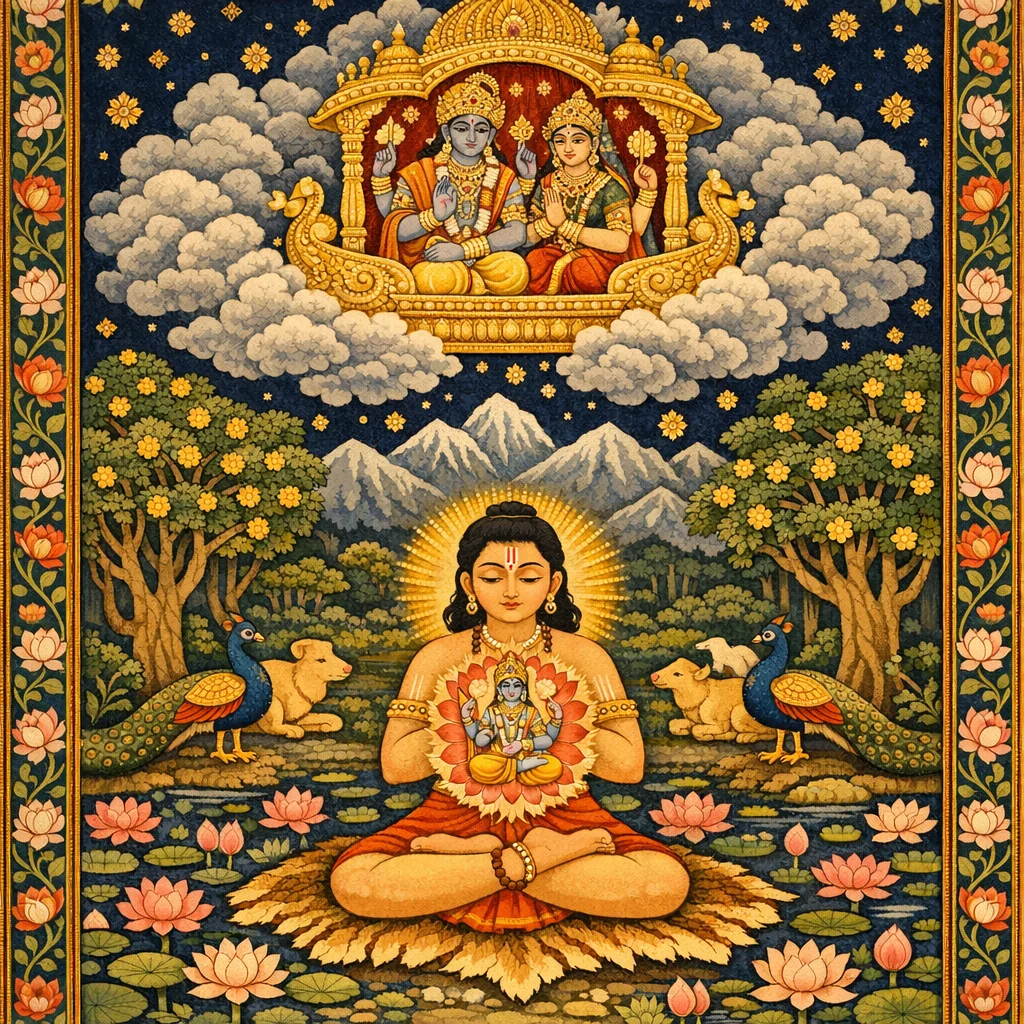
After Dhruva’s fierce retaliation against the Yakṣas, this chapter shifts from kṣatriya anger to Vaiṣṇava restraint: guided by counsel, Dhruva’s wrath subsides and Kuvera appears to bless him. Kuvera explains the conflict through the doctrine of kāla—time as the Lord’s instrument—showing that bodily misidentification of “I/you” is the root of saṁsāra. Dhruva chooses a purely devotional boon: unwavering faith and constant remembrance of Bhagavān, by which one crosses the ocean of nescience. The narrative moves from his righteous rule and sacrifice-centered household life to his growing realization that the world is like a māyā-dream, leading to renunciation and yogic absorption at Badarikāśrama. In trance, signs of liberation arise; Viṣṇu’s associates Nanda and Sunanda arrive with a divine airplane to take him to Viṣṇuloka, an attainment described as unprecedented. Dhruva conquers death, ensures passage for his mother Sunīti as well, passes beyond the saptarṣi-lokas, and culminates in the establishment of Dhruvaloka. The chapter ends with the śravaṇa-phala: hearing Dhruva-kathā grants purification, prosperity, and bhakti, especially when recited selflessly on auspicious days, setting up the later dynastic continuations centered on the Pracetās and further vaṁśānucarita.
Shlokas
Verse 1
मैत्रेय उवाच ध्रुवं निवृत्तं प्रतिबुद्ध्य वैशसा- दपेतमन्युं भगवान्धनेश्वर: । तत्रागतश्चारणयक्षकिन्नरै: संस्तूयमानो न्यवदत्कृताञ्जलिम् ॥ १ ॥
The great sage Maitreya said: Dear Vidura, Dhruva Mahārāja’s anger subsided, and he completely stopped killing the Yakṣas. Hearing this, Kuvera, the blessed lord of the treasury, appeared before Dhruva. As Yakṣas, Kinnaras, and Cāraṇas worshiped and praised him, he spoke to Dhruva, who stood with folded hands.
Verse 2
धनद उवाच भो भो: क्षत्रियदायाद परितुष्टोऽस्मि तेऽनघ । यत्त्वं पितामहादेशाद्वैरं दुस्त्यजमत्यज: ॥ २ ॥
Kuvera, the lord of the treasury, said: O sinless son of a kṣatriya, I am greatly pleased with you. By your grandfather’s instruction you have abandoned enmity, though it is so hard to give up; therefore I am very satisfied.
Verse 3
न भवानवधीद्यक्षान्न यक्षा भ्रातरं तव । काल एव हि भूतानां प्रभुरप्ययभावयो: ॥ ३ ॥
In truth, you have not killed the Yakṣas, nor have the Yakṣas killed your brother; for the ultimate cause of all beings’ creation and destruction is eternal Time (Kāla), a feature of the Supreme Lord.
Verse 4
अहं त्वमित्यपार्था धीरज्ञानात्पुरुषस्य हि । स्वाप्नीवाभात्यतद्ध्यानाद्यया बन्धविपर्ययौ ॥ ४ ॥
The mistaken notion of “I” and “you,” born of bodily identification, arises from ignorance. It appears like a dream’s illusion; and from it come bondage and the unending succession of birth and death.
Verse 5
तद्गच्छ ध्रुव भद्रं ते भगवन्तमधोक्षजम् । सर्वभूतात्मभावेन सर्वभूतात्मविग्रहम् ॥ ५ ॥
O Dhruva, come forward; may the Lord grant you auspiciousness. Bhagavān Adhokṣaja, beyond the reach of the senses, is the Paramātmā within all beings and the supreme shelter of all; therefore take refuge in His transcendental form and begin devotional service.
Verse 6
भजस्व भजनीयाङ्घ्रि मभवाय भवच्छिदम् । युक्तं विरहितं शक्त्या गुणमय्यात्ममायया ॥ ६ ॥
Therefore, fully worship the Lord whose feet are worthy of adoration; He alone cuts the bondage of saṁsāra. Though connected with His guṇa-made māyā-śakti, He remains aloof from her workings; everything in this world proceeds by His inconceivable power.
Verse 7
वृणीहि कामं नृप यन्मनोगतं मत्तस्त्वमौत्तानपदेऽविशङ्कित: । वरं वरार्होऽम्बुजनाभपादयो- रनन्तरं त्वां वयमङ्ग शुश्रुम ॥ ७ ॥
My dear King Dhruva, son of Uttānapāda, ask of me without hesitation whatever desire rests within your mind. We have heard that you are ever engaged in loving devotional service at the lotus feet of Bhagavān Padmanābha; therefore you are worthy to receive benedictions.
Verse 8
मैत्रेय उवाच स राजराजेन वराय चोदितो ध्रुवो महाभागवतो महामति: । हरौ स वव्रेऽचलितां स्मृतिं यया तरत्ययत्नेन दुरत्ययं तम: ॥ ८ ॥
Maitreya said: O Vidura, when Kuvera, king of the Yakṣas, urged him to accept a boon, Dhruva Mahārāja—an exalted mahā-bhāgavata and thoughtful king—begged for unflinching remembrance and faith in Hari; by this one easily crosses the darkness of nescience, so hard for others to traverse.
Verse 9
तस्य प्रीतेन मनसा तां दत्त्वैडविडस्तत: । पश्यतोऽन्तर्दधे सोऽपि स्वपुरं प्रत्यपद्यत ॥ ९ ॥
Kuvera, the son of Iḍaviḍā, was greatly pleased and gladly granted Dhruva the boon he desired. Then, before Dhruva’s very eyes, he disappeared, and Dhruva Mahārāja returned to his capital city.
Verse 10
अथायजत यज्ञेशं क्रतुभिर्भूरिदक्षिणै: । द्रव्यक्रियादेवतानां कर्म कर्मफलप्रदम् ॥ १० ॥
While he remained at home, Dhruva Mahārāja performed many great sacrifices, rich with gifts, to please Yajñeśa—the Lord and enjoyer of all sacrifices, Śrī Viṣṇu. Prescribed sacrifices are meant especially for Viṣṇu’s satisfaction; He is their goal and the giver of their results.
Verse 11
सर्वात्मन्यच्युतेऽसर्वे तीव्रौघां भक्तिमुद्वहन् । ददर्शात्मनि भूतेषु तमेवावस्थितं विभुम् ॥ ११ ॥
Dhruva Mahārāja bore an intense, unbroken devotion to Acyuta, the Soul of all and the support of everything. In that devotional service he saw the all-powerful Lord present within all beings, and all things situated in Him alone.
Verse 12
तमेवं शीलसम्पन्नं ब्रह्मण्यं दीनवत्सलम् । गोप्तारं धर्मसेतूनां मेनिरे पितरं प्रजा: ॥ १२ ॥
Dhruva Mahārāja was endowed with godly virtues: he honored the Lord’s devotees, showed compassion to the poor and innocent, and protected the pillars of dharma. Thus the citizens regarded him as their own direct father.
Verse 13
षट्त्रिंशद्वर्षसाहस्रं शशास क्षितिमण्डलम् । भोगै: पुण्यक्षयं कुर्वन्नभोगैरशुभक्षयम् ॥ १३ ॥
Dhruva Mahārāja ruled the earth for thirty-six thousand years. By enjoyment he exhausted the fruits of pious deeds, and by austerity and restraint he diminished inauspicious reactions.
Verse 14
एवं बहुसवं कालं महात्माविचलेन्द्रिय: । त्रिवर्गौपयिकं नीत्वा पुत्रायादान्नृपासनम् ॥ १४ ॥
Thus the great soul Dhruva Mahārāja, steady in self-control, passed many years properly fulfilling the three worldly aims—dharma, artha, and kāma. Thereafter he entrusted the royal throne to his son.
Verse 15
मन्यमान इदं विश्वं मायारचितमात्मनि । अविद्यारचितस्वप्नगन्धर्वनगरोपमम् ॥ १५ ॥
Dhruva Mahārāja realized that this universe is fashioned by the Supreme Lord’s external māyā and thus bewilders the living beings like a dream or a phantom city of the gandharvas.
Verse 16
आत्मस्त्र्यपत्यसुहृदो बलमृद्धकोश- मन्त:पुरं परिविहारभुवश्च रम्या: । भूमण्डलं जलधिमेखलमाकलय्य कालोपसृष्टमिति स प्रययौ विशालाम् ॥ १६ ॥
In the end, Dhruva Mahārāja deemed his body, wives, children, friends, army, opulent treasury, palaces, and pleasure-grounds to be creations of māyā. Knowing that even his earth-wide kingdom, bounded by the great oceans, lay under the sway of time, he renounced it and departed for the Himalayan forest of Badarikāśrama.
Verse 17
तस्यां विशुद्धकरण: शिववार्विगाह्य बद्ध्वासनं जितमरुन्मनसाहृताक्ष: । स्थूले दधार भगवत्प्रतिरूप एतद् ध्यायंस्तदव्यवहितो व्यसृजत्समाधौ ॥ १७ ॥
In Badarikāśrama, Dhruva Mahārāja purified his senses by bathing in crystal-clear sacred waters. Fixing his seat, he controlled the prāṇa by yogic discipline and withdrew the senses within. Then he focused his mind upon the Lord’s arcā-vigraha, the true replica of the Lord, and by such meditation entered perfect samādhi.
Verse 18
भक्तिं हरौ भगवति प्रवहन्नजस्र- मानन्दबाष्पकलया मुहुरर्द्यमान: । विक्लिद्यमानहृदय: पुलकाचिताङ्गो नात्मानमस्मरदसाविति मुक्तलिङ्ग: ॥ १८ ॥
As his bhakti to Hari flowed without cease, tears of transcendental bliss streamed from Dhruva Mahārāja’s eyes; his heart melted and his body thrilled with romāñca. Absorbed in devotional samādhi, he forgot bodily existence and at once became freed from material bondage.
Verse 19
स ददर्श विमानाग्र्यं नभसोऽवतरद् ध्रुव: । विभ्राजयद्दश दिशो राकापतिमिवोदितम् ॥ १९ ॥
As soon as the signs of liberation appeared, Dhruva beheld a most beautiful vimāna descending from the sky, like the radiant full moon coming down and illuminating all ten directions.
Verse 20
तत्रानु देवप्रवरौ चतुर्भुजौ श्यामौ किशोरावरुणाम्बुजेक्षणौ । स्थिताववष्टभ्य गदां सुवाससौ किरीटहाराङ्गदचारुकुण्डलौ ॥ २० ॥
There Dhruva Mahārāja beheld, within the celestial craft, two supremely beautiful attendants of Lord Viṣṇu. Four-armed and darkly lustrous, they were youthful, with eyes like reddish lotus blossoms. Holding clubs, they stood adorned in charming garments, with helmets, necklaces, bracelets, and splendid earrings.
Verse 21
विज्ञाय तावुत्तमगायकिङ्करा- वभ्युत्थित: साध्वसविस्मृतक्रम: । ननाम नामानि गृणन्मधुद्विष: पार्षत्प्रधानाविति संहताञ्जलि: ॥ २१ ॥
Recognizing them as exalted singers and direct servants of the Supreme Lord, Dhruva Mahārāja rose at once; yet, bewildered and hurried, he forgot the proper etiquette of reception. Thus he simply bowed with folded hands, chanting and glorifying the holy names of the Lord, the slayer of Madhu.
Verse 22
तं कृष्णपादाभिनिविष्टचेतसं बद्धाञ्जलिं प्रश्रयनम्रकन्धरम् । सुनन्दनन्दावुपसृत्य सस्मितं प्रत्यूचतु: पुष्करनाभसम्मतौ ॥ २२ ॥
Dhruva Mahārāja’s mind was ever fixed upon the lotus feet of Lord Kṛṣṇa, his heart filled with Kṛṣṇa alone. Standing with folded hands and bowed in humility, he was approached by the Lord’s confidential servants, Nanda and Sunanda, dear to Puṣkaranābha. Smiling with joy, they addressed him as follows.
Verse 23
सुनन्दनन्दावूचतु: भो भो राजन्सुभद्रं ते वाचं नोऽवहित: शृणु । य: पञ्चवर्षस्तपसा भवान्देवमतीतृपत् ॥ २३ ॥
Nanda and Sunanda said: “O King, may auspiciousness be yours. Hear our words with attentive mind. When you were but five years old, you performed severe austerities, and by them you greatly pleased the Supreme Personality of Godhead.”
Verse 24
तस्याखिलजगद्धातुरावां देवस्य शार्ङ्गिण: । पार्षदाविह सम्प्राप्तौ नेतुं त्वां भगवत्पदम् ॥ २४ ॥
We are emissaries of the Supreme Personality of Godhead, the creator of the entire universe, who bears in His hand the bow named Śārṅga. We have been specially commissioned to take you to Bhagavat-pada—the Lord’s abode, the spiritual world.
Verse 25
सुदुर्जयं विष्णुपदं जितं त्वया यत्सूरयोऽप्राप्य विचक्षते परम् । आतिष्ठ तच्चन्द्रदिवाकरादयो ग्रहर्क्षतारा: परियन्ति दक्षिणम् ॥ २५ ॥
To attain Viṣṇupada is most difficult, yet by your austerity you have conquered it. Even the great ṛṣis and the devas cannot reach that supreme abode; merely to behold it, the sun and moon, the planets, stars, and lunar mansions circumambulate it. Come now—you are welcome to go there.
Verse 26
अनास्थितं ते पितृभिरन्यैरप्यङ्ग कर्हिचित् । आतिष्ठ जगतां वन्द्यं तद्विष्णो: परमं पदम् ॥ २६ ॥
Dear King Dhruva, neither your forefathers nor anyone before has ever attained such a transcendental realm. Viṣṇuloka, where Lord Viṣṇu personally resides, is the highest of all and is worshipable to the inhabitants of every other world. Come with us and dwell there eternally.
Verse 27
एतद्विमानप्रवरमुत्तमश्लोकमौलिना । उपस्थापितमायुष्मन्नधिरोढुं त्वमर्हसि ॥ २७ ॥
O immortal one, this peerless airplane has been sent by Uttamaśloka, the Supreme Personality of Godhead, worshiped by chosen prayers and the chief of all living beings. You are truly worthy to board it.
Verse 28
मैत्रेय उवाच निशम्य वैकुण्ठनियोज्यमुख्ययो- र्मधुच्युतं वाचमुरुक्रमप्रिय: । कृताभिषेक: कृतनित्यमङ्गलो मुनीन् प्रणम्याशिषमभ्यवादयत् ॥ २८ ॥
The sage Maitreya said: Dhruva Mahārāja, most dear to the Lord, heard the sweet words of Vaikuṇṭha’s chief associates. He at once took his sacred bath, adorned himself suitably, and performed his daily spiritual duties. Then he bowed to the sages present and received their blessings.
Verse 29
परीत्याभ्यर्च्य धिष्ण्याग्र्यं पार्षदावभिवन्द्य च । इयेष तदधिष्ठातुं बिभ्रद्रूपं हिरण्मयम् ॥ २९ ॥
Before boarding, Dhruva Mahārāja worshiped that foremost airplane, circumambulated it, and offered obeisances to Viṣṇu’s associates. Meanwhile his form shone brilliantly, like molten gold. Thus he was fully prepared to ascend the transcendental plane.
Verse 30
तदोत्तानपद: पुत्रो ददर्शान्तकमागतम् । मृत्योर्मूर्ध्नि पदं दत्त्वा आरुरोहाद्भुतं गृहम् ॥ ३० ॥
Then Dhruva, the son of Uttānapāda, saw Death personified, Antaka, approaching. Untroubled, he placed his foot upon Death’s head and ascended the divine vimāna, vast as a house.
Verse 31
तदा दुन्दुभयो नेदुर्मृदङ्गपणवादय: । गन्धर्वमुख्या: प्रजगु: पेतु: कुसुमवृष्टय: ॥ ३१ ॥
At that time, dundubhi drums, mṛdaṅgas, and paṇavas resounded in the sky. The foremost Gandharvas sang, and the devas showered Dhruva Mahārāja with torrents of flowers.
Verse 32
स च स्वर्लोकमारोक्ष्यन् सुनीतिं जननीं ध्रुव: । अन्वस्मरदगं हित्वा दीनां यास्ये त्रिविष्टपम् ॥ ३२ ॥
As Dhruva sat in the transcendental vimāna, just about to depart, he remembered his poor mother, Sunīti. He thought, “How can I go alone to Vaikuṇṭha and leave my mother behind?”
Verse 33
इति व्यवसितं तस्य व्यवसाय सुरोत्तमौ । दर्शयामासतुर्देवीं पुरो यानेन गच्छतीम् ॥ ३३ ॥
Understanding Dhruva Mahārāja’s resolve, the exalted Vaikuṇṭha associates Nanda and Sunanda showed him that his mother, Sunīti, was proceeding ahead in another vimāna.
Verse 34
तत्र तत्र प्रशंसद्भि: पथि वैमानिकै: सुरै: । अवकीर्यमाणो ददृशे कुसुमै: क्रमशो ग्रहान् ॥ ३४ ॥
As Dhruva Mahārāja passed through space, he gradually beheld the planets. Along the way, the devas in their vimānas praised him and showered him with flowers like rain.
Verse 35
त्रिलोकीं देवयानेन सोऽतिव्रज्य मुनीनपि । परस्ताद्यद् ध्रुवगतिर्विष्णो: पदमथाभ्यगात् ॥ ३५ ॥
Dhruva Mahārāja, borne by the celestial conveyance, passed beyond the three worlds and even the realms of the saptarṣi sages; beyond that he attained the lotus feet of Lord Viṣṇu, the eternal abode of Dhruva’s unchanging destiny.
Verse 36
यद्भ्राजमानं स्वरुचैव सर्वतो लोकास्त्रयो ह्यनु विभ्राजन्त एते । यन्नाव्रजञ्जन्तुषु येऽननुग्रहा व्रजन्ति भद्राणि चरन्ति येऽनिशम् ॥ ३६ ॥
The Vaikuṇṭha planets are self-effulgent, and by their radiance alone the three worlds’ luminaries shine in reflection. Yet those without mercy toward living beings cannot reach them; only those who ceaselessly act for the welfare of all creatures attain Vaikuṇṭha.
Verse 37
शान्ता: समदृश: शुद्धा: सर्वभूतानुरञ्जना: । यान्त्यञ्जसाच्युतपदमच्युतप्रियबान्धवा: ॥ ३७ ॥
Those who are peaceful, even-minded, pure and cleansed, skilled in pleasing all living beings, and who keep friendship only with Acyuta’s beloved devotees—only they easily attain Acyuta’s abode, returning home, back to Godhead.
Verse 38
इत्युत्तानपद: पुत्रो ध्रुव: कृष्णपरायण: । अभूत्त्रयाणां लोकानां चूडामणिरिवामल: ॥ ३८ ॥
Thus Dhruva Mahārāja, the exalted son of Mahārāja Uttānapāda and wholly devoted to Kṛṣṇa, shone like a flawless crown-jewel at the summit of the three worlds.
Verse 39
गम्भीरवेगोऽनिमिषं ज्योतिषां चक्रमाहितम् । यस्मिन् भ्रमति कौरव्य मेढ्यामिव गवां गण: ॥ ३९ ॥
Saint Maitreya continued: Dear Vidura, scion of the Kurus, just as a herd of bulls circles a central post on the right, so all the luminaries in the universal sky, with grave force and speed, ceaselessly revolve around the abode of Dhruva Mahārāja.
Verse 40
महिमानं विलोक्यास्य नारदो भगवानृषि: । आतोद्यं वितुदञ्श्लोकान् सत्रेऽगायत्प्रचेतसाम् ॥ ४० ॥
Having beheld the glories of Dhruva Mahārāja, the great sage Nārada, plucking his vīṇā, went to the sacrificial arena of the Pracetās and joyfully sang the following three verses.
Verse 41
नारद उवाच नूनं सुनीते: पतिदेवताया- स्तप:प्रभावस्य सुतस्य तां गतिम् । दृष्ट्वाभ्युपायानपि वेदवादिनो नैवाधिगन्तुं प्रभवन्ति किं नृपा: ॥ ४१ ॥
Nārada said: By the power of his spiritual advancement and mighty austerity, Dhruva—the son of Sunīti, devoted to her husband as to a deity—attained an exalted destination that even the Veda-debaters, though knowing many means, cannot reach, what to speak of ordinary men.
Verse 42
य: पञ्चवर्षो गुरुदारवाक्शरै- र्भिन्नेन यातो हृदयेन दूयता । वनं मदादेशकरोऽजितं प्रभुं जिगाय तद्भक्तगुणै: पराजितम् ॥ ४२ ॥
Behold: Dhruva Mahārāja, only five years old, his heart pierced by the harsh arrows of his stepmother’s words, went to the forest in anguish. Under my direction he performed austerity and, though the Supreme Lord is unconquerable, he conquered Him by the distinctive virtues of the Lord’s devotees.
Verse 43
य: क्षत्रबन्धुर्भुवि तस्याधिरूढ- मन्वारुरुक्षेदपि वर्षपूगै: । प्रसाद्य वैकुण्ठमवाप तत्पदम् ॥ ४३ ॥ षट्पञ्चवर्षो यदहोभिरल्पै:
Even a mere kṣatrabandhu in this world cannot ascend to such a lofty station, though he perform austerities for many, many years. Yet Dhruva, having pleased the Lord of Vaikuṇṭha, attained that post at only five or six years of age, by austerity of but a few months—how astonishing!
Verse 44
मैत्रेय उवाच एतत्तेऽभिहितं सर्वं यत्पृष्टोऽहमिह त्वया । ध्रुवस्योद्दामयशसश्चरितं सम्मतं सताम् ॥ ४४ ॥
Maitreya said: My dear Vidura, everything you asked about the boundless fame and sacred character of Dhruva Mahārāja I have explained to you here in full. Great saints and devotees greatly delight in hearing the narrations of Dhruva Mahārāja.
Verse 45
धन्यं यशस्यमायुष्यं पुण्यं स्वस्त्ययनं महत् । स्वर्ग्यं ध्रौव्यं सौमनस्यं प्रशस्यमघमर्षणम् ॥ ४५ ॥
Hearing the sacred narration of Dhruva Mahārāja is blessed, bestowing wealth, fame, and increased longevity; it is supremely pious and greatly auspicious. By such hearing one may attain the heavenly worlds or even Dhruvaloka; the devas are pleased, and this glorious account has the power to destroy the reactions of sin.
Verse 46
श्रुत्वैतच्छ्रद्धयाभीक्ष्णमच्युतप्रियचेष्टितम् । भवेद्भक्तिर्भगवति यया स्यात्क्लेशसङ्क्षय: ॥ ४६ ॥
One who, with faith, repeatedly hears the deeds of Dhruva Mahārāja—so dear to Acyuta—and strives to understand his pure character, awakens pure bhakti to the Lord. By that devotion, the afflictions of material life are diminished.
Verse 47
महत्त्वमिच्छतां तीर्थं श्रोतु: शीलादयो गुणा: । यत्र तेजस्तदिच्छूनां मानो यत्र मनस्विनाम् ॥ ४७ ॥
Whoever hears this narration of Dhruva Mahārāja gains exalted virtues like his—good character and other noble qualities. For those who seek greatness, prowess, or influence, this is the sacred means, like a tīrtha; and for thoughtful persons who desire honor, this is the proper path.
Verse 48
प्रयत: कीर्तयेत्प्रात: समवाये द्विजन्मनाम् । सायं च पुण्यश्लोकस्य ध्रुवस्य चरितं महत् ॥ ४८ ॥
The great sage Maitreya advised that, with care and attentiveness, in the assembly of brāhmaṇas or other twice-born devotees, one should chant the glorious life and deeds of Dhruva Mahārāja both in the morning and in the evening.
Verse 49
पौर्णमास्यां सिनीवाल्यां द्वादश्यां श्रवणेऽथवा । दिनक्षये व्यतीपाते सङ्क्रमेऽर्कदिनेऽपि वा ॥ ४९ ॥ श्रावयेच्छ्रद्दधानानां तीर्थपादपदाश्रय: । नेच्छंस्तत्रात्मनात्मानं सन्तुष्ट इति सिध्यति ॥ ५० ॥
On the full-moon day, the new-moon day (amāvasyā), the dvādaśī after ekādaśī, when the Śravaṇa star appears, at the close of a tithi, on Vyatīpāta, at saṅkrānti, at month’s end, or on Sunday—one who has taken shelter of the Lord’s lotus feet should recite the great narration of Dhruva Mahārāja before faithful listeners, without accepting payment. When done without professional motive, both reciter and audience become satisfied and attain perfection.
Verse 50
पौर्णमास्यां सिनीवाल्यां द्वादश्यां श्रवणेऽथवा । दिनक्षये व्यतीपाते सङ्क्रमेऽर्कदिनेऽपि वा ॥ ४९ ॥ श्रावयेच्छ्रद्दधानानां तीर्थपादपदाश्रय: । नेच्छंस्तत्रात्मनात्मानं सन्तुष्ट इति सिध्यति ॥ ५० ॥
Those who have fully taken shelter of the Lord’s lotus feet should recite the narration of Dhruva Mahārāja without accepting payment. Such recitation is especially recommended on the full-moon or new-moon day, on Dvādaśī after Ekādaśī, when the Śravaṇa star appears, at the end of a tithi, during Vyatīpāta, at month’s end, or on Sunday, before a favorable audience. When done in this way, free from professional motive, both reciter and hearers attain perfection.
Verse 51
ज्ञानमज्ञाततत्त्वाय यो दद्यात्सत्पथेऽमृतम् । कृपालोर्दीननाथस्य देवास्तस्यानुगृह्णते ॥ ५१ ॥
The narration of Dhruva Mahārāja is sublime knowledge leading to immortality, for it can guide those ignorant of the Absolute Truth onto the true path. One who, out of transcendental compassion, gives this amṛta-like wisdom and accepts the duty of being a master and protector of the poor living beings naturally gains the favor and blessings of the devas.
Verse 52
इदं मया तेऽभिहितं कुरूद्वहध्रुवस्य विख्यातविशुद्धकर्मण: । हित्वार्भक: क्रीडनकानि मातु-र्गृहं च विष्णुं शरणं यो जगाम ॥ ५२ ॥
O Vidura, foremost of the Kurus, I have spoken to you of the world-renowned and supremely pure transcendental deeds of Dhruva Mahārāja. Even in childhood he cast aside toys and play, left the shelter of his mother’s home, and with grave determination took refuge in the Supreme Personality of Godhead, Viṣṇu. Therefore, dear Vidura, I now conclude this narration, for I have described all its details to you.
Frequently Asked Questions
Kuvera teaches that the ultimate cause of generation and annihilation is kāla—the time potency of the Supreme Lord. This does not deny moral responsibility at the human level, but it dissolves absolutized hatred by relocating final agency to Bhagavān’s governance, thereby curing the devotee’s tendency toward vengeance born of bodily identification.
Dhruva asks for unflinching faith and constant remembrance of the Supreme Personality of Godhead. The significance is theological and practical: rather than seeking wealth or dominion from the treasurer of the gods, Dhruva chooses smaraṇa-bhakti as the means to cross avidyā-sāgara (the ocean of nescience), demonstrating the devotee’s value hierarchy.
Nanda and Sunanda are confidential associates (parṣadas) of Lord Viṣṇu from Vaikuṇṭha. As divine emissaries, they authenticate Dhruva’s attainment and escort him to Viṣṇuloka, indicating that liberation is not merely an internal state but a relational entrance into the Lord’s personal realm.
When death personified approaches as Dhruva boards the divine airplane, Dhruva places his feet on death’s head and ascends. Symbolically, it depicts bhakti’s supremacy over fear and mortality: the devotee, sheltered in the Lord, transcends death’s jurisdiction and treats death as a threshold rather than an end.
The text links eligibility for Vaikuṇṭha with dayā (mercy) and welfare toward living beings. Since Vaikuṇṭha is the realm of pure devotion free from envy, cruelty and exploitation are disqualifying dispositions; compassion indicates purification and alignment with the Lord’s protective nature (poṣaṇa).
Recitation is recommended morning/evening and on auspicious lunar/astrological occasions (e.g., full/new moon, post-Ekādaśī, Śravaṇa nakṣatra), before a favorable audience, and without professional motive. Discouraging remuneration protects the act as bhakti (service) rather than commerce, preserving sincerity (niṣkāmatā) for both speaker and listener.