Adhyaya 8
Lakṣmī’s Emergence, Dhanvantari, and the Advent of Mohinī-mūrti
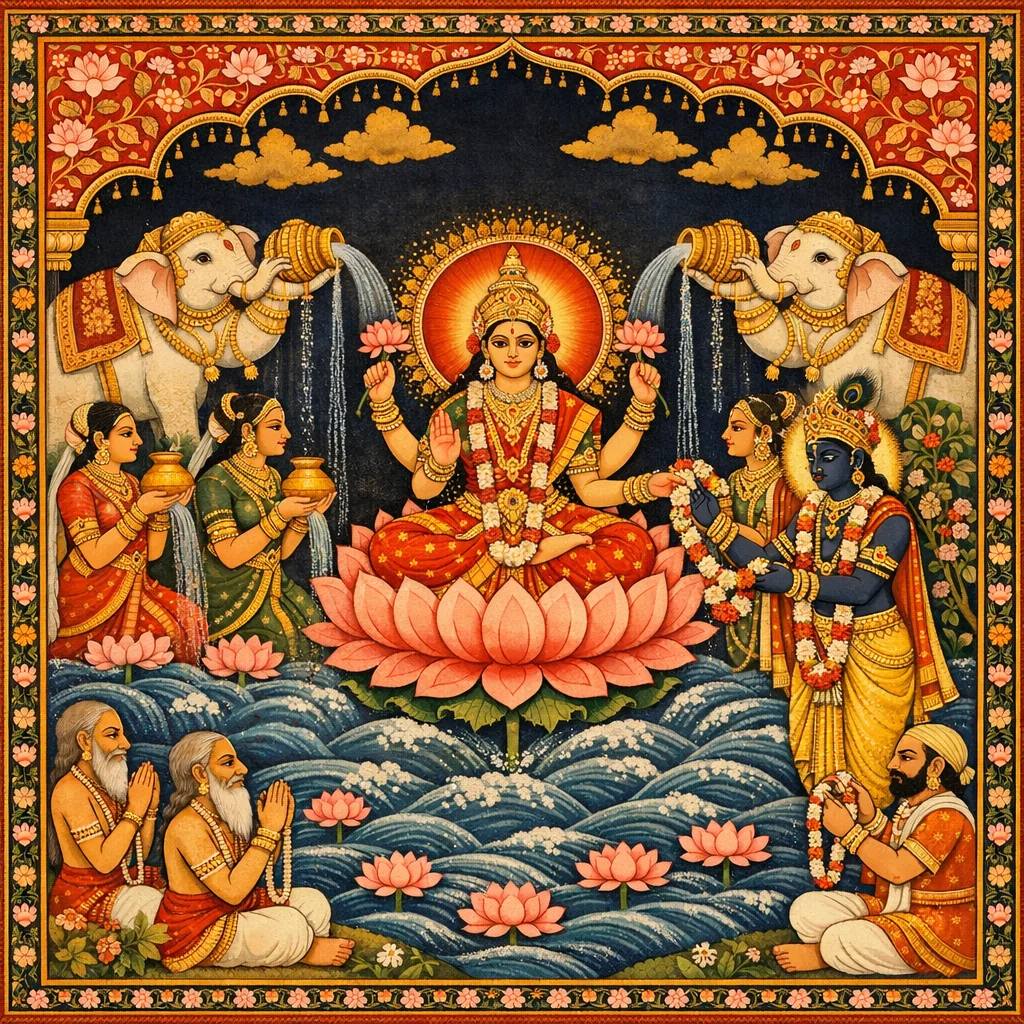
After Lord Śiva neutralizes the Hālāhala poison, the devas and asuras resume the churning of the Milk Ocean with renewed strength. Auspicious treasures arise in sequence: Surabhi for sacrificial ghee, Uccaiḥśravā and Airāvata, the elephants of the directions, celestial gems (Kaustubha, Padmarāga), the pārijāta flower, and apsarās. Then Lakṣmī (Ramā) appears and is enthroned through a cosmic abhiṣeka, with rivers, Earth, cows, seasons, sages, Gandharvas, and directional elephants honoring her consecration. Surveying devas, asuras, and all beings, Lakṣmī sees that none are flawless or fully independent, and so she chooses Mukunda, the self-sufficient Lord, garlanding Him—by her gracious glance the devas prosper, while the asuras grow despondent. Next Vāruṇī appears and is taken by the demons. Dhanvantari emerges bearing the amṛta-kumbha, which the asuras seize, and the devas surrender to Hari. Viṣṇu promises to bewilder the demons; they begin quarreling over the nectar, leading into the next chapter where Mohinī-mūrti’s līlā will arrange the distribution of amṛta and unfold further divine strategy.
Shlokas
Verse 1
श्रीशुक उवाच पीते गरे वृषाङ्केण प्रीतास्तेऽमरदानवा: । ममन्थुस्तरसा सिन्धुं हविर्धानी ततोऽभवत् ॥ १ ॥
Śukadeva Gosvāmī continued: When Śiva, marked by the bull, drank the poison, both devas and asuras were delighted and churned the ocean with renewed force; then a cow named Surabhi appeared.
Verse 2
तामग्निहोत्रीमृषयो जगृहुर्ब्रह्मवादिन: । यज्ञस्य देवयानस्य मेध्याय हविषे नृप ॥ २ ॥
O King Parīkṣit, the agnihotri sages, fully learned in Vedic rites, took charge of that Surabhi cow to obtain pure ghee for yajña oblations, by whose merit one ascends on the devayāna path to higher worlds, up to Brahmaloka.
Verse 3
तत उच्चै:श्रवा नाम हयोऽभूच्चन्द्रपाण्डुर: । तस्मिन्बलि: स्पृहां चक्रे नेन्द्र ईश्वरशिक्षया ॥ ३ ॥
Thereafter a horse named Uccaiḥśravā, white as the moon, was produced. Bali Mahārāja longed to possess it, and Indra did not object, having been previously instructed so by the Supreme Personality of Godhead.
Verse 4
तत ऐरावतो नाम वारणेन्द्रो विनिर्गत: । दन्तैश्चतुर्भि: श्वेताद्रेर्हरन्भगवतो महिम् ॥ ४ ॥
Next, from the churning arose the king of elephants named Airāvata. White in hue, with four tusks, he seemed to rival the glory of Mount Kailāsa, the radiant abode of Lord Śiva.
Verse 5
ऐरावणादयस्त्वष्टौ दिग् गजा अभवंस्तत: । अभ्रमुप्रभृतयोऽष्टौ च करिण्यस्त्वभवन्नृप ॥ ५ ॥
Thereafter, O King, eight mighty elephants of the directions were born, led by Airāvaṇa, able to move to any quarter. Eight she-elephants, led by Abhramu, also appeared.
Verse 6
कौस्तुभाख्यमभूद् रत्नं पद्मरागो महोदधे: । तस्मिन् मणौ स्पृहां चक्रे वक्षोऽलङ्करणे हरि: । ततोऽभवत् पारिजात: सुरलोकविभूषणम् । पूरयत्यर्थिनो योऽर्थै: शश्वद् भुवि यथा भवान् ॥ ६ ॥
Thereafter, from the great ocean arose the famed gems Kaustubha-maṇi and Padmarāga-maṇi. Desiring to adorn His chest, Lord Hari longed to possess them. Next appeared the pārijāta tree, the ornament of the heavenly realms. O King, as you fulfill the hopes of all who seek you on earth, so does the pārijāta ever grant the desires of all.
Verse 7
ततश्चाप्सरसो जाता निष्ककण्ठ्य: सुवासस: । रमण्य: स्वर्गिणां वल्गुगतिलीलावलोकनै: ॥ ७ ॥
Next appeared the Apsarās, adorned with golden ornaments and necklaces and clad in exquisite garments. With their slow, alluring gait and playful glances, they enchanted the inhabitants of heaven.
Verse 8
ततश्चाविरभूत् साक्षाच्छ्री रमा भगवत्परा । रञ्जयन्ती दिश: कान्त्या विद्युत् सौदामनी यथा ॥ ८ ॥
Then Śrī Ramā, the Goddess of Fortune, appeared directly, wholly devoted to the Supreme Bhagavān. With her radiance she delighted all directions, like a flash of divine electricity outshining lightning upon a gleaming white mountain.
Verse 9
तस्यां चक्रु: स्पृहां सर्वे ससुरासुरमानवा: । रूपौदार्यवयोवर्णमहिमाक्षिप्तचेतस: ॥ ९ ॥
Enchanted by her exquisite beauty—her graceful form, youth, complexion, and glory—all beings, demigods, demons, and humans alike, longed for her, for she is the very source of all opulences.
Verse 10
तस्या आसनमानिन्ये महेन्द्रो महदद्भुतम् । मूर्तिमत्य: सरिच्छ्रेष्ठा हेमकुम्भैर्जलं शुचि ॥ १० ॥
Indra, king of heaven, brought a wondrous and fitting seat for the goddess Lakṣmī. The foremost sacred rivers, such as the Gaṅgā and Yamunā, personified themselves and came bearing pure water in golden pots for Mother Lakṣmī.
Verse 11
आभिषेचनिका भूमिराहरत् सकलौषधी: । गाव: पञ्च पवित्राणि वसन्तो मधुमाधवौ ॥ ११ ॥
For the consecrating bath, the Earth herself, personified, gathered all healing herbs. The cows offered the five purifiers—milk, yogurt, ghee, cow urine, and cow dung—and Spring, personified, collected all that is produced in the months of Caitra and Vaiśākha.
Verse 12
ऋषय: कल्पयांचक्रुराभिषेकं यथाविधि । जगुर्भद्राणि गन्धर्वा नट्यश्च ननृतुर्जगु: ॥ १२ ॥
The great sages performed Lakṣmī’s bathing consecration exactly as enjoined in the sacred scriptures. The Gandharvas sang auspicious Vedic mantras, and the skilled dancers gracefully danced and sang the hymns authorized in the Vedas.
Verse 13
मेघा मृदङ्गपणवमुरजानकगोमुखान् । व्यनादयन् शङ्खवेणुवीणास्तुमुलनि:स्वनान् ॥ १३ ॥
The clouds, taking personified form, thundered upon drums—mṛdaṅgas, paṇavas, murajas, and ānakas. They also blew conchs and gomukha horns, and played flutes and stringed instruments; together their music rose in a mighty, tumultuous roar.
Verse 14
ततोऽभिषिषिचुर्देवीं श्रियं पद्मकरां सतीम् । दिगिभा: पूर्णकलशै: सूक्तवाक्यैर्द्विजेरितै: ॥ १४ ॥
Thereafter the great elephants of all directions brought full jars of Gaṅgā water and bathed the chaste Śrī Devī, Lakṣmī, lotus in hand. As learned brāhmaṇas chanted Vedic mantras, she shone with surpassing beauty, faithful only to Bhagavān Nārāyaṇa.
Verse 15
समुद्र: पीतकौशेयवाससी समुपाहरत् । वरुण: स्रजं वैजयन्तीं मधुना मत्तषट्पदाम् ॥ १५ ॥
The ocean offered yellow silken garments, both upper and lower. Varuṇa, lord of the waters, presented a Vaijayantī garland, encircled by six-legged bumblebees intoxicated with honey.
Verse 16
भूषणानि विचित्राणि विश्वकर्मा प्रजापति: । हारं सरस्वती पद्ममजो नागाश्च कुण्डले ॥ १६ ॥
Viśvakarmā, one of the prajāpatis, supplied many wondrous ornaments. Sarasvatī, goddess of learning, offered a necklace; Ajā (Brahmā) offered a lotus; and the residents of Nāgaloka offered earrings.
Verse 17
तत: कृतस्वस्त्ययनोत्पलस्रजं नदद्द्विरेफां परिगृह्य पाणिना । चचाल वक्त्रं सुकपोलकुण्डलं सव्रीडहासं दधती सुशोभनम् ॥ १७ ॥
Thereafter, honored by the auspicious svastyayana rite, Mother Lakṣmī began to move about, holding a lotus garland alive with the hum of bees. Smiling shyly, her cheeks adorned with earrings, her face appeared supremely beautiful.
Verse 18
स्तनद्वयं चातिकृशोदरी समं निरन्तरं चन्दनकुङ्कुमोक्षितम् । ततस्ततो नूपुरवल्गुशिञ्जितै- र्विसर्पती हेमलतेव सा बभौ ॥ १८ ॥
Her two breasts were symmetrical and beautifully set, anointed with sandal paste and dusted with kuṅkuma, and her waist was exceedingly slender. As she moved here and there, the sweet jingle of her anklebells made her appear like a golden creeper gliding along.
Verse 19
विलोकयन्ती निरवद्यमात्मन: पदं ध्रुवं चाव्यभिचारिसद्गुणम् । गन्धर्वसिद्धासुरयक्षचारण- त्रैपिष्टपेयादिषु नान्वविन्दत ॥ १९ ॥
Moving among the Gandharvas, Siddhas, asuras, Yakṣas, Cāraṇas and the denizens of heaven, Goddess Lakṣmī examined them with discerning eyes; yet she found no one who was naturally faultless, firmly established, and endowed with unwavering saintly virtues. Seeing some defect in all, she took shelter of none.
Verse 20
नूनं तपो यस्य न मन्युनिर्जयो ज्ञानं क्वचित् तच्च न सङ्गवर्जितम् । कश्चिन्महांस्तस्य न कामनिर्जय: स ईश्वर: किं परतोव्यपाश्रय: ॥ २० ॥
Surveying the assembly, Goddess Lakṣmī reflected: One may have performed great austerities, yet not conquered anger; another may possess knowledge, yet not be free from attachment; another may be exalted, yet unable to subdue lust. If even the great depend on something else, how can they be the Supreme Controller?
Verse 21
धर्म: क्वचित् तत्र न भूतसौहृदं त्याग: क्वचित् तत्र न मुक्तिकारणम् । वीर्यं न पुंसोऽस्त्यजवेगनिष्कृतं न हि द्वितीयो गुणसङ्गवर्जित: ॥ २१ ॥
One may know dharma in full, yet lack kindness toward all beings. In another there may be renunciation, yet it is not the cause of liberation. One may possess great prowess, yet cannot check the rush of time. Another may have abandoned attachment to the guṇas, yet cannot be compared to the Supreme Personality of Godhead. Thus no one is wholly free from nature’s modes.
Verse 22
क्वचिच्चिरायुर्न हि शीलमङ्गलं क्वचित् तदप्यस्ति न वेद्यमायुष: । यत्रोभयं कुत्र च सोऽप्यमङ्गल: सुमङ्गल: कश्च न काङ्क्षते हि माम् ॥ २२ ॥
One may have longevity yet lack auspicious conduct; another may be well-behaved and auspicious, yet his lifespan is uncertain. Even where both appear, some inauspicious habit remains—Lord Śiva, though deathless, dwells in cremation grounds and the like. And even those qualified in every way, if not devotees of the Supreme Personality of Godhead, do not desire me either.
Verse 23
एवं विमृश्याव्यभिचारिसद्गुणै- र्वरं निजैकाश्रयतयागुणाश्रयम् । वव्रे वरं सर्वगुणैरपेक्षितं रमा मुकुन्दं निरपेक्षमीप्सितम् ॥ २३ ॥
Thus, after thorough deliberation, Ramā (Goddess Lakṣmī) chose the supreme bridegroom endowed with unwavering saintly virtues, self-sufficient and the shelter of all qualities. She accepted Mukunda as her husband—though He is independent and has no need of her, He is most desirable, for He possesses all transcendental attributes and mystic opulences.
Verse 24
तस्यांसदेश उशतीं नवकञ्जमालां माद्यन्मधुव्रतवरूथगिरोपघुष्टाम् । तस्थौ निधाय निकटे तदुर: स्वधाम सव्रीडहासविकसन्नयनेन याता ॥ २४ ॥
Then Śrī, the goddess of fortune, approached Bhagavān, the Supreme Personality of Godhead, and placed upon His shoulders a garland of newly blossomed lotus flowers, surrounded by humming bees seeking honey. Hoping to gain her place upon the Lord’s chest, she stood by His side, smiling shyly with eyes bright and open.
Verse 25
तस्या: श्रियस्त्रिजगतो जनको जनन्या वक्षोनिवासमकरोत् परमं विभूते: । श्री: स्वा: प्रजा: सकरुणेन निरीक्षणेन यत्र स्थितैधयत साधिपतींस्त्रिलोकान् ॥ २५ ॥
Bhagavān is the father of the three worlds, and His chest is the supreme abode of Mother Lakṣmī, the mistress of all opulences. By her favorable and merciful glance, Goddess Lakṣmī increases the prosperity of the three worlds, along with their people, the prajāpatis, and the governing demigods.
Verse 26
शङ्खतूर्यमृदङ्गानां वादित्राणां पृथु: स्वन: । देवानुगानां सस्त्रीणां नृत्यतां गायतामभूत् ॥ २६ ॥
Then a broad, resounding music arose from conchshells, bugles, mṛdaṅgas, and other instruments. The residents of Gandharvaloka and Cāraṇaloka began to sing and dance together with their wives.
Verse 27
ब्रह्मरुद्राङ्गिरोमुख्या: सर्वे विश्वसृजो विभुम् । ईडिरेऽवितथैर्मन्त्रैस्तल्लिङ्गै: पुष्पवर्षिण: ॥ २७ ॥
Lord Brahmā, Lord Rudra (Śiva), the great sage Aṅgirā, and the other directors of universal order showered flowers and praised the all-powerful Lord. They chanted truthful mantras that proclaimed the transcendental glories of the Supreme Personality of Godhead.
Verse 28
श्रियावलोकिता देवा: सप्रजापतय: प्रजा: । शीलादिगुणसम्पन्ना लेभिरे निर्वृतिं पराम् ॥ २८ ॥
Blessed by Śrī Lakṣmī’s glance, all the demigods—together with the prajāpatis and their descendants—were at once enriched with noble conduct and transcendental qualities. Thus they attained the highest satisfaction.
Verse 29
नि:सत्त्वा लोलुपा राजन् निरुद्योगा गतत्रपा: । यदा चोपेक्षिता लक्ष्म्या बभूवुर्दैत्यदानवा: ॥ २९ ॥
O King, neglected by the goddess Lakṣmī, the Daityas and Dānavas became spiritless, greedy, inactive and shameless; thus they fell into depression, bewilderment and frustration.
Verse 30
अथासीद् वारुणी देवी कन्या कमललोचना । असुरा जगृहुस्तां वै हरेरनुमतेन ते ॥ ३० ॥
Next appeared the lotus-eyed goddess Vāruṇī as a young maiden; with the permission of Śrī Hari (Kṛṣṇa), the Asuras accepted her.
Verse 31
अथोदधेर्मथ्यमानात् काश्यपैरमृतार्थिभि: । उदतिष्ठन्महाराज पुरुष: परमाद्भुत: ॥ ३१ ॥
O King, thereafter, as the sons of Kaśyapa—demigods and Daityas alike—churned the Ocean of Milk for the sake of amṛta, a most wondrous male person arose.
Verse 32
दीर्घपीवरदोर्दण्ड: कम्बुग्रीवोऽरुणेक्षण: । श्यामलस्तरुण: स्रग्वी सर्वाभरणभूषित: ॥ ३२ ॥
He was powerfully built, with long, stout, strong arms; his neck, marked with three lines, resembled a conchshell; his eyes were reddish and his complexion dark. Youthful, he wore a flower garland and was adorned with ornaments all over.
Verse 33
पीतवासा महोरस्क: सुमृष्टमणिकुण्डल: । स्निग्धकुञ्चितकेशान्तसुभग: सिंहविक्रम: । अमृतापूर्णकलसं बिभ्रद् वलयभूषित: ॥ ३३ ॥
He wore yellow garments, had a broad chest, and bore brightly polished jeweled earrings. The tips of his hair were oiled and gently curled; he was handsome and lionlike in prowess. Adorned with bangles, he carried in his hand a jug filled to the brim with amṛta (nectar).
Verse 34
स वै भगवत: साक्षाद्विष्णोरंशांशसम्भव: । धन्वन्तरिरिति ख्यात आयुर्वेददृगिज्यभाक् ॥ ३४ ॥
He was Dhanvantari, a plenary portion of a plenary portion of Lord Viṣṇu Himself. He was supremely learned in Āyurveda, and as a deva he was entitled to receive a share in the sacrifices.
Verse 35
तमालोक्यासुरा: सर्वे कलसं चामृताभृतम् । लिप्सन्त: सर्ववस्तूनि कलसं तरसाहरन् ॥ ३५ ॥
Seeing Dhanvantari bearing the pot filled with amṛta, all the demons, craving the pot and its contents, at once seized it by force.
Verse 36
नीयमानेऽसुरैस्तस्मिन्कलसेऽमृतभाजने । विषण्णमनसो देवा हरिं शरणमाययु: ॥ ३६ ॥
When the demons carried off the pot, the vessel of amṛta, the demigods became downcast. Therefore they sought shelter at the lotus feet of the Supreme Lord, Hari.
Verse 37
इति तद्दैन्यमालोक्य भगवान्भृत्यकामकृत् । मा खिद्यत मिथोऽर्थं व: साधयिष्ये स्वमायया ॥ ३७ ॥
Seeing their dejection, the Supreme Lord—who fulfills the desires of His devotees—said, “Do not grieve. By My own māyā I shall bewilder the demons by stirring quarrel among them, and thus your wish to obtain the amṛta will be fulfilled.”
Verse 38
मिथ: कलिरभूत्तेषां तदर्थे तर्षचेतसाम् । अहं पूर्वमहं पूर्वं न त्वं न त्वमिति प्रभो ॥ ३८ ॥
O King, among the demons, whose hearts thirsted for the amṛta, a quarrel arose over it: “Me first, me first! Not you, not you!”
Verse 39
देवा: स्वं भागमर्हन्ति ये तुल्यायासहेतव: । सत्रयाग इवैतस्मिन्नेष धर्म: सनातन: ॥ ३९ ॥ इति स्वान्प्रत्यषेधन्वै दैतेया जातमत्सरा: । दुर्बला: प्रबलान् राजन्गृहीतकलसान् मुहु: ॥ ४० ॥
Some of the Daityas said, “The Devas too have labored equally in churning the Ocean of Milk; therefore, as in a satra-yajña, by the eternal dharma they are worthy of their share of the amṛta.” O King, thus the weaker demons again and again restrained the stronger ones who had seized the jars.
Verse 40
देवा: स्वं भागमर्हन्ति ये तुल्यायासहेतव: । सत्रयाग इवैतस्मिन्नेष धर्म: सनातन: ॥ ३९ ॥ इति स्वान्प्रत्यषेधन्वै दैतेया जातमत्सरा: । दुर्बला: प्रबलान् राजन्गृहीतकलसान् मुहु: ॥ ४० ॥
Some of the Daityas said, “The Devas are equal partners in the labor of churning the Ocean of Milk; therefore, as in a satra-yajña, by eternal dharma they have a rightful share of the amṛta.” O King, thus the weaker, envy-born demons repeatedly checked the stronger ones holding the jars.
Verse 41
एतस्मिन्नन्तरे विष्णु: सर्वोपायविदीश्वर: । योषिद्रूपमनिर्देश्यं दधार परमाद्भुतम् ॥ ४१ ॥ प्रेक्षणीयोत्पलश्यामं सर्वावयवसुन्दरम् । समानकर्णाभरणं सुकपोलोन्नसाननम् ॥ ४२ ॥ नवयौवननिर्वृत्तस्तनभारकृशोदरम् । मुखामोदानुरक्तालिझङ्कारोद्विग्नलोचनम् ॥ ४३ ॥ बिभ्रत् सुकेशभारेण मालामुत्फुल्लमल्लिकाम् । सुग्रीवकण्ठाभरणं सुभुजाङ्गदभूषितम् ॥ ४४ ॥ विरजाम्बरसंवीतनितम्बद्वीपशोभया । काञ्च्या प्रविलसद्वल्गुचलच्चरणनूपुरम् ॥ ४५ ॥ सव्रीडस्मितविक्षिप्तभ्रूविलासावलोकनै: । दैत्ययूथपचेत:सु काममुद्दीपयन् मुहु: ॥ ४६ ॥
Just then, Viṣṇu—the Lord who knows every stratagem—assumed an exceedingly wondrous, indescribable feminine form. That Mohinī was a vision to behold: dark-hued like a newly blossomed lotus, beautiful in every limb, with matching earrings, lovely cheeks, a raised nose, and a face radiant with youthful splendor.
Verse 42
एतस्मिन्नन्तरे विष्णु: सर्वोपायविदीश्वर: । योषिद्रूपमनिर्देश्यं दधार परमाद्भुतम् ॥ ४१ ॥ प्रेक्षणीयोत्पलश्यामं सर्वावयवसुन्दरम् । समानकर्णाभरणं सुकपोलोन्नसाननम् ॥ ४२ ॥ नवयौवननिर्वृत्तस्तनभारकृशोदरम् । मुखामोदानुरक्तालिझङ्कारोद्विग्नलोचनम् ॥ ४३ ॥ बिभ्रत् सुकेशभारेण मालामुत्फुल्लमल्लिकाम् । सुग्रीवकण्ठाभरणं सुभुजाङ्गदभूषितम् ॥ ४४ ॥ विरजाम्बरसंवीतनितम्बद्वीपशोभया । काञ्च्या प्रविलसद्वल्गुचलच्चरणनूपुरम् ॥ ४५ ॥ सव्रीडस्मितविक्षिप्तभ्रूविलासावलोकनै: । दैत्ययूथपचेत:सु काममुद्दीपयन् मुहु: ॥ ४६ ॥
Her youthful fullness of breast made her waist appear exceedingly slender. Drawn by the fragrance of her face and body, bumblebees hummed about her, and thus her eyes became restlessly moving.
Verse 43
एतस्मिन्नन्तरे विष्णु: सर्वोपायविदीश्वर: । योषिद्रूपमनिर्देश्यं दधार परमाद्भुतम् ॥ ४१ ॥ प्रेक्षणीयोत्पलश्यामं सर्वावयवसुन्दरम् । समानकर्णाभरणं सुकपोलोन्नसाननम् ॥ ४२ ॥ नवयौवननिर्वृत्तस्तनभारकृशोदरम् । मुखामोदानुरक्तालिझङ्कारोद्विग्नलोचनम् ॥ ४३ ॥ बिभ्रत् सुकेशभारेण मालामुत्फुल्लमल्लिकाम् । सुग्रीवकण्ठाभरणं सुभुजाङ्गदभूषितम् ॥ ४४ ॥ विरजाम्बरसंवीतनितम्बद्वीपशोभया । काञ्च्या प्रविलसद्वल्गुचलच्चरणनूपुरम् ॥ ४५ ॥ सव्रीडस्मितविक्षिप्तभ्रूविलासावलोकनै: । दैत्ययूथपचेत:सु काममुद्दीपयन् मुहु: ॥ ४६ ॥
She wore a garland of blossoming mallikā flowers upon her lovely mass of hair; her graceful neck was adorned with necklaces and jewels, and her arms with armlets. Draped in spotless garments, her hips shone like islands in an ocean of beauty, while her girdle and the tinkling anklets upon her moving feet made her all the more radiant. With shy smiles, playful brows, and sidelong glances, she again and again kindled desire within the hearts of the asura chiefs.
Verse 44
एतस्मिन्नन्तरे विष्णु: सर्वोपायविदीश्वर: । योषिद्रूपमनिर्देश्यं दधार परमाद्भुतम् ॥ ४१ ॥ प्रेक्षणीयोत्पलश्यामं सर्वावयवसुन्दरम् । समानकर्णाभरणं सुकपोलोन्नसाननम् ॥ ४२ ॥ नवयौवननिर्वृत्तस्तनभारकृशोदरम् । मुखामोदानुरक्तालिझङ्कारोद्विग्नलोचनम् ॥ ४३ ॥ बिभ्रत् सुकेशभारेण मालामुत्फुल्लमल्लिकाम् । सुग्रीवकण्ठाभरणं सुभुजाङ्गदभूषितम् ॥ ४४ ॥ विरजाम्बरसंवीतनितम्बद्वीपशोभया । काञ्च्या प्रविलसद्वल्गुचलच्चरणनूपुरम् ॥ ४५ ॥ सव्रीडस्मितविक्षिप्तभ्रूविलासावलोकनै: । दैत्ययूथपचेत:सु काममुद्दीपयन् मुहु: ॥ ४६ ॥
Her hair, which was extremely beautiful, was garlanded with mallikā flowers. Her attractively constructed neck was decorated with a necklace and other ornaments, Her arms were decorated with bangles.
Verse 45
एतस्मिन्नन्तरे विष्णु: सर्वोपायविदीश्वर: । योषिद्रूपमनिर्देश्यं दधार परमाद्भुतम् ॥ ४१ ॥ प्रेक्षणीयोत्पलश्यामं सर्वावयवसुन्दरम् । समानकर्णाभरणं सुकपोलोन्नसाननम् ॥ ४२ ॥ नवयौवननिर्वृत्तस्तनभारकृशोदरम् । मुखामोदानुरक्तालिझङ्कारोद्विग्नलोचनम् ॥ ४३ ॥ बिभ्रत् सुकेशभारेण मालामुत्फुल्लमल्लिकाम् । सुग्रीवकण्ठाभरणं सुभुजाङ्गदभूषितम् ॥ ४४ ॥ विरजाम्बरसंवीतनितम्बद्वीपशोभया । काञ्च्या प्रविलसद्वल्गुचलच्चरणनूपुरम् ॥ ४५ ॥ सव्रीडस्मितविक्षिप्तभ्रूविलासावलोकनै: । दैत्ययूथपचेत:सु काममुद्दीपयन् मुहु: ॥ ४६ ॥
Her body was covered with a clean sari, and Her breasts seemed like islands in an ocean of beauty. Her legs were decorated with ankle bells.
Verse 46
एतस्मिन्नन्तरे विष्णु: सर्वोपायविदीश्वर: । योषिद्रूपमनिर्देश्यं दधार परमाद्भुतम् ॥ ४१ ॥ प्रेक्षणीयोत्पलश्यामं सर्वावयवसुन्दरम् । समानकर्णाभरणं सुकपोलोन्नसाननम् ॥ ४२ ॥ नवयौवननिर्वृत्तस्तनभारकृशोदरम् । मुखामोदानुरक्तालिझङ्कारोद्विग्नलोचनम् ॥ ४३ ॥ बिभ्रत् सुकेशभारेण मालामुत्फुल्लमल्लिकाम् । सुग्रीवकण्ठाभरणं सुभुजाङ्गदभूषितम् ॥ ४४ ॥ विरजाम्बरसंवीतनितम्बद्वीपशोभया । काञ्च्या प्रविलसद्वल्गुचलच्चरणनूपुरम् ॥ ४५ ॥ सव्रीडस्मितविक्षिप्तभ्रूविलासावलोकनै: । दैत्ययूथपचेत:सु काममुद्दीपयन् मुहु: ॥ ४६ ॥
Because of the movements of Her eyebrows as She smiled with shyness and glanced over the demons, all the demons were saturated with lusty desires, and every one of them desired to possess Her.
Frequently Asked Questions
Lakṣmī’s deliberation highlights a Bhāgavata criterion: conditioned greatness is mixed with faults under the guṇas. Austerity may coexist with anger, knowledge with desire, power with subjection to kāla, and even longevity with inauspicious conduct. Since none are fully independent or completely pure, she chooses Mukunda, who is svatantra (independent), nirguṇa (transcendent to material modes), and the reservoir of all auspicious qualities.
The chapter depicts a universal consecration: sacred rivers bring waters, earth brings herbs, cows provide pañca-gavya, seasons provide auspicious produce, sages conduct rites, and celestial musicians chant Vedic mantras. Theologically it signifies that śrī (prosperity and auspicious order) is not random wealth but a sanctified, dharma-aligned potency that naturally rests on Viṣṇu’s chest and blesses administrators (devas) who serve cosmic order.
Dhanvantari is a plenary expansion (aṁśa) connected to Viṣṇu who appears carrying the amṛta-kumbha and is expert in bhaiṣajya-vidyā (medicine/Ayurveda). His emergence teaches that healing and longevity are ultimately divine endowments within yajña and cosmic administration; it also becomes the narrative pivot for the conflict over nectar.
Their quarrel arises from possessiveness and entitlement: after seizing the nectar by force, they cannot establish a stable principle of distribution. This internal fracture is precisely what Hari anticipates; it sets the stage for Mohinī-mūrti, through whom Viṣṇu uses yogamāyā to protect the devas and restore dharmic allocation.
Vāruṇī is a goddess associated with intoxicants and the governance of drunkards. The demons’ taking her, with the Lord’s permission, reflects their attraction to sense-enjoyment and diversion, contrasting with the devas’ focus on sacrificial order and foreshadowing how asuric impulses make them vulnerable to delusion when Mohinī appears.