Adhyaya 26
Chapter 26: Śoka-pratiṣedha, Hata-saṅkhyā, Gati-vibhāga, Pretakārya-ājñā (Restraint of Grief, Count of the Slain, Destinies, and Funerary Directives)
Upa-parva: Śoka-nivāraṇa and Pretakārya-vidhāna (Aftermath Counsel and Funerary Arrangements)
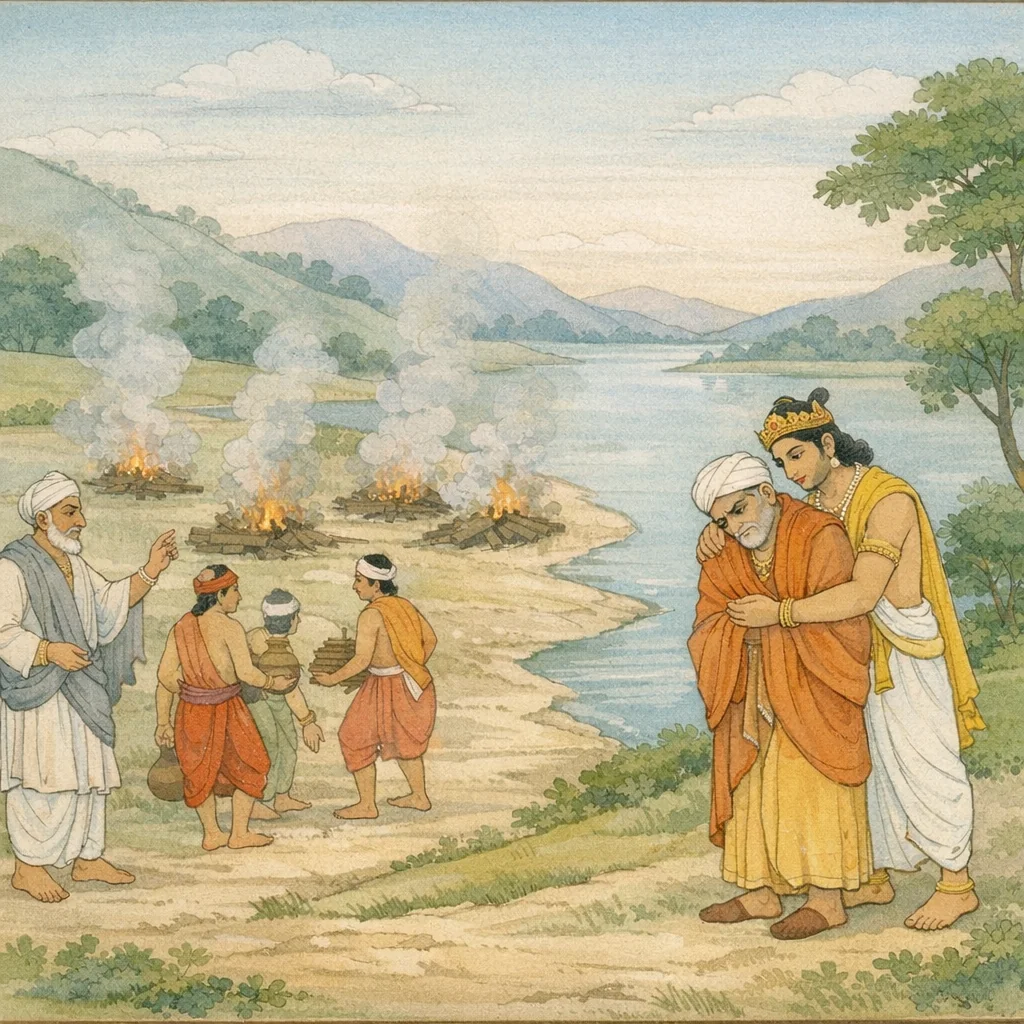
The chapter opens with Vāsudeva addressing Gāndhārī, urging her to rise from grief and asserting that the destruction of the Kurus is rooted in her own failure to restrain Duryodhana’s harmful conduct. He frames excessive mourning over the irrevocable as compounding suffering, and employs a socially-coded comparison of varṇa-linked aims to sharpen the critique of a princess oriented toward destruction. Vaiśaṃpāyana then reports Gāndhārī’s silence. Dhṛtarāṣṭra, suppressing confusion, questions Yudhiṣṭhira about the scale of losses; Yudhiṣṭhira provides a numerical accounting and, upon further inquiry, outlines differentiated post-mortem destinations based on mental disposition and battlefield behavior (joyful resolve, reluctant inevitability, supplication while fleeing, steadfast kṣatra-duty under wounding). Asked how he knows, Yudhiṣṭhira attributes his insight to prior tīrtha-travel and divine vision gained through contact with the sage Lomaśa. Dhṛtarāṣṭra then raises the practical-ethical problem of unclaimed bodies and proper cremation. Yudhiṣṭhira issues administrative orders to Sudharmā, Dhaumya, Saṃjaya, Vidura, Yuyutsu, and attendants to perform pretakārya comprehensively. The narrative details procurement of sandalwood, aguru, ghee, oils, fragrances, garments, and the construction of pyres. Named leaders and many others are cremated with rite; the night is described as filled with Vedic chant-sounds and women’s lamentation, while fires glow like covered celestial bodies. Finally, Vidura oversees cremation of the unclaimed in heaps by royal command, after which Yudhiṣṭhira proceeds with Dhṛtarāṣṭra toward the Gaṅgā.
Chapter Arc: अनुस्मृतिविद्या और दिव्यदृष्टि के प्रभाव से युधिष्ठिर के सामने युद्ध की विराट क्षति—मृतकों की संख्या, उनकी गति और अधूरे संस्कारों का भय—एक साथ उपस्थित हो उठता है। → शोक के बीच दोषारोपण की आग भड़कती है: धृतराष्ट्र के मन में यह पीड़ा कि सब कुछ उसके वंश पर टूटा, और प्रत्युत्तर में युधिष्ठिर का कठोर सत्य—दुर्योधन की ईर्ष्या, अहंकार और वृद्धों की आज्ञा-उल्लंघन ही इस विनाश का मूल था; बीती बातों पर विलाप से दुःख ही बढ़ता है। → युधिष्ठिर का निर्णायक कथन कि ‘मृत, नष्ट और अतीत’ पर शोक करने वाला दुगुना अनर्थ पाता है—और साथ ही यह स्वीकार कि अब धर्म का कार्य शेष है: जिनका कोई संस्कारकर्ता नहीं, उन अनाथ मृतकों के लिए भी सामूहिक दाह-संस्कार अनिवार्य है। → युधिष्ठिर राजाज्ञा देते हैं; विदुर के नेतृत्व में सहस्रों की संख्या में अनाथ शवों के ढेर एकत्र कर लकड़ियों से चिताएँ रची जाती हैं और सबका दाहकर्म कराया जाता है। युधिष्ठिर धृतराष्ट्र को आगे रखकर गंगा की ओर प्रस्थान करते हैं, ताकि शेष क्रियाएँ और शोक-शमन का क्रम आगे बढ़े। → गंगा-तट पर पहुँचकर शोकाकुल स्त्रियों और बचे हुए वृद्धों के साथ आगे कौन-सा संवाद/विधि होगी—यह अगले अध्याय के लिए खुला रह जाता है।
Shlokas
Verse 1
भीकम (2 अमान (श्राद्धपर्व) षड्विशो<ध्याय: प्राप्त अनुस्मृतिविद्या और दिव्यदृष्टिके प्रभावसे युधिष्ठिरका महाभारतसयुद्धमें मारे गये लोगोकी संख्या और गतिका वर्णन तथा युधिष्ठिरकी आज्ञासे सबका दाह-संस्कार श्रीभगवानुवाच उत्तिष्ीत्तिष्ठ गान्धारि मा च शोके मन: कृथा: । तवैव हापराधेन कुरवो निधनं गता:,श्रीभगवान् बोले--गान्धारी! उठो, उठो। शोकमें मनको न डुबाओ। तुम्हारे ही अपराधसे कौरवोंका विनाश हुआ है
The Blessed Lord said: “Rise, Gāndhārī—rise. Do not let your mind sink into grief. It is indeed through your own fault that the Kurus have gone to destruction.”
Verse 2
यत् त्वं पुत्रं दुरात्मानमीर्षुमत्यन्तमानिनम् । दुर्योधन पुरस्कृत्य दुष्कृतं साधु मन््यसे,तुम्हारा पुत्र दुर्योधन दुरात्मा, दूसरोंसे ईर्ष्या एवं जलन रखनेवाला और अत्यन्त अभिमानी था। दुष्कर्मपरायण, निष्ठुर, वैरका मूर्तिमान् स्वरूप और बड़े-बूढ़ोंकी आज्ञाका उल्लंघन करनेवाला था। तुमने उसको अगुआ बनाकर जो अपराध किया है, उसे कया तुम अच्छा समझती हो? अपने ही किये हुए दोषको यहाँ मुझपर कैसे लादना चाहती हो?
Vaiśampāyana said: “Your son—wicked at heart, consumed by envy, and exceedingly proud—was Duryodhana. Making him your leader and putting him in front, you committed wrongdoing; do you really regard that as good? How can you now try to shift the blame for your own fault onto me?”
Verse 3
निष्टरं वैरपुरुषं वृद्धानां शासनातिगम् । कथमात्मकृतं दोषं॑ मय्याधातुमिहेच्छसि,तुम्हारा पुत्र दुर्योधन दुरात्मा, दूसरोंसे ईर्ष्या एवं जलन रखनेवाला और अत्यन्त अभिमानी था। दुष्कर्मपरायण, निष्ठुर, वैरका मूर्तिमान् स्वरूप और बड़े-बूढ़ोंकी आज्ञाका उल्लंघन करनेवाला था। तुमने उसको अगुआ बनाकर जो अपराध किया है, उसे कया तुम अच्छा समझती हो? अपने ही किये हुए दोषको यहाँ मुझपर कैसे लादना चाहती हो?
Vaiśaṃpāyana said: “He was truly a cruel man, the very embodiment of enmity, and one who overstepped the commands of the elders. How can you wish, here and now, to place upon me the blame for a fault that was brought about by your own actions?”
Verse 4
मृतं वा यदि वा नष्ट योइतीतमनुशोचति । दुःखेन लभते दुःखं द्वावनर्थो प्रपद्यते,यदि कोई मनुष्य किसी मरे हुए सम्बन्धी, नष्ट हुई वस्तु अथवा बीती हुई बातके लिये शोक करता है तो वह एक दुःखसे दूसरे दुःखका भागी होता है, इस प्रकार वह दो अनर्थोको प्राप्त होता है
Vaiśampāyana said: If a person grieves for one who has died, for something that has been lost, or for what has already passed, he only gains sorrow through sorrow; thus he falls into a double misfortune—both the original loss and the added burden of grief.
Verse 5
तपोर्थीयं ब्राह्मणी धत्त गर्भ गौवोंढारं धावितारं तुरड्ी । शूद्रा दासं पशुपालं च वैश्या वधार्थीयं त्वद्विधा राजपुत्री,ब्राह्यणी तपके लिये, गाय बोझ ढोनेके लिये, घोड़ी वेगसे दौड़नेके लिये, शूद्रा सेवाके लिये, वैश्य-कन्या पशु-पालन करनेके लिये और तुम-जैसी राजपुत्री युद्धमें लड़कर मरनेके लिये पुत्र पैदा करती है
Vaiśampāyana said: “A brāhmaṇī conceives a child for the sake of austerity and sacred duty; a cow bears one meant to carry burdens; a mare bears one meant to run swiftly; a śūdrā bears a servant; a vaiśyā woman bears a herdsman. But a princess like you is said to conceive a son destined to die in battle.” The line frames birth and social role as bound to varṇa and function, and it casts royal motherhood in the harsh ethical light of kṣatriya-dharma—where lineage and protection of the realm are purchased at the cost of war and death.
Verse 6
वैशम्पायन उवाच तच्छुत्वा वासुदेवस्य पुनरुक्तं वचो5प्रियम् । तूष्णीं बभूव गान्धारी शोकव्याकुललोचना,वैशम्पायनजी कहते हैं--जनमेजय! श्रीकृष्णका दुबारा कहा हुआ वह अप्रिय वचन सुनकर गान्धारी चुप हो गयी। उसके नेत्र शोकसे व्याकुल हो उठे थे
Vaiśampāyana said: Hearing again that unwelcome statement of Vāsudeva, Gāndhārī fell silent, her eyes overwhelmed and unsettled by grief. The moment underscores how, after catastrophe, even truthful counsel can feel unbearable, and sorrow can suspend speech and judgment.
Verse 7
धृतराष्ट्रस्तु राजर्षिनिंगृह्याबुद्धिजं तम: । पर्यपृच्छत धर्मज्ञो धर्मराजं युधिष्ठिरम्,उस समय धर्मज्ञ राजर्षि धृतराष्ट्रने अज्ञानसे उत्पन्न होनेवाले शोक और मोहको रोककर धर्मराज युधिष्ठिरसे पूछा--
Vaiśampāyana said: Then Dhṛtarāṣṭra, the dharma-knowing royal sage, restraining the darkness of grief and delusion born of confused understanding, questioned Yudhiṣṭhira, the king devoted to dharma—seeking guidance amid the moral aftermath of the war.
Verse 8
जीवतां परिमाणज्ञ: सैन्यानामसि पाण्डव | हतानां यदि जानीषे परिमाणं वदस्व मे,'पाण्डुनन्दन! तुम जीवित सैनिकोंकी संख्याके जानकार तो हो ही। यदि मरे हुओंकी संख्या जानते हो तो मुझे बताओ
Vaiśampāyana said: “O Pāṇḍava, you are one who knows the measure of the armies that still live. If you also know the number of those who have been slain, tell me that count.”
Verse 9
युधिछिर उवाच दशायुतानामयुतं सहस्राणि च विंशति: । कोट्य: षष्टिश्न॒ षट् चैव हास्मिन् राजन् मृथे हता:,युधिष्ठिर बोले--राजन्! इस युद्धमें एक अरब, छाछठ करोड़, बीस हजार योद्धा मारे गये हैं
Yudhiṣṭhira said: “O King, in this battle there have been slain sixty-six crores, twenty thousand, and one ayuta added to ten ayutas.” (He states the staggering tally of the dead, underscoring the moral weight of victory and the grief that follows war.)
Verse 10
अलक्षितानां वीराणां सहस्राणि चतुर्दश । दश चान्यानि राजेन्द्र शतं षष्टिक्ष पडच च,राजेन्द्र! इनके अतिरिक्त चौबीस हजार एक सौ पैंसठ सैनिक लापता है
Yudhiṣṭhira said: “O best of kings, fourteen thousand valiant warriors are unaccounted for; and besides these, another one hundred and sixty-five (are missing).” In the aftermath of slaughter, he speaks with the sober responsibility of a ruler—counting the lost and acknowledging the human cost that war imposes on a kingdom.
Verse 11
धृतराष्ट उवाच युधिष्ठिर गतिं कां ते गता: पुरुषसत्तम । आचक्ष्व मे महाबाहो सर्वज्ञों हसि मे मत:
Dhṛtarāṣṭra said: “O Yudhiṣṭhira, best of men, what course and condition have you reached? Tell me, O mighty-armed one; in my view you are all-knowing.”
Verse 12
धृतराष्ट्रने पूछा--पुरुषप्रवर! महाबाहु युधिष्ठिर! तुम तो मुझे सर्वज्ञ जान पड़ते हो; अतः यह तो बताओ कि *वे मरे हुए सैनिक किस गतिको प्राप्त हुए हैं?' ।। युधिछ्िर उवाच यै्ुतानि शरीराणि हृष्टै: परमसंयुगे । देवराजसमाल्लॉकान् गतास्ते सत्यविक्रमा:
Yudhiṣṭhira said: “Those bodies that were slain in that supreme battle—by warriors exultant in combat—those heroes of true valor have gone to realms equal to those of the king of the gods.”
Verse 13
युधिष्ठिरने कहा--जिन लोगोंने इस महासमरमें बड़े हर्ष और उत्साहके साथ अपने शरीरोंकी आहुति दी है, वे सत्यपराक्रमी वीर देवराज इन्द्रके समान लोकोंमें गये हैं ।। ये त्वह्ृष्टेन मनसा मर्तव्यमिति भारत | युध्यमाना हता: संख्ये गन्धर्व: सह संगता:,भारत! जो अप्रसन्न मनसे मरनेका निश्चय करके रणक्षेत्रमें जूझते हुए मारे गये हैं, वे गन्धर्वोंके साथ जा मिले हैं
Yudhiṣṭhira said: “O Bhārata, those who entered the battle resolved to die with a joy-filled mind, and who were slain while fighting in the thick of combat—such men have gone to the realms of the Gandharvas. (By contrast, those who offered up their bodies in this great war with gladness and high ardor attain worlds like that of Indra.)”
Verse 14
ये च संग्रामभूमिष्ठा याचमाना: पराड्मुखा: । शस्त्रेण निधन प्राप्ता गतास्ते गुह्म॒कान् प्रति,जो संग्रामभूमिमें खड़े हो प्राणोंकी भीख माँगते हुए युद्धसे विमुख हो गये थे; उनमेंसे जो लोग शस्त्रद्वारा मारे गये हैं, वे गुह्दकलोकोंमें गये हैं
Yudhiṣṭhira said: “Those who stood upon the battlefield yet, begging for their very lives, turned away from the fight—such men, when they met death by weapons, have gone to the realms of the Guhmakas.”
Verse 15
पात्यमाना: परैयें तु हीयमाना निरायुधा: । ह्वीनिषेवा महात्मान: परानभिमुखा रणे,जिन महामनस्वी पुरुषोंको शत्रुओंने गिरा दिया था, जिनके पास युद्ध करनेका कोई साधन नहीं रह गया था, जो शस्त्रहीन हो गये थे और उस अवस्थामें भी लज्जाशील होनेके कारण जो रणभूमिमें निरन्तर शत्रुओंका सामना करते हुए ही तीखे अस्त्र-शस्त्रोंसे कट गये, वे क्षत्रियरर्मपरायण पुरुष ब्रह्मलोकमें गये हैं, इस विषयमें मेरा कोई दूसरा विचार नहीं है
Yudhiṣṭhira said: Those great-souled men who were struck down by their foes—bereft of strength and left without weapons—yet, out of a sense of shame and honor, kept facing the enemy on the battlefield, and in that very state were cut down by sharp missiles and weapons: such warriors, devoted to the kṣatriya code, have gone to Brahmaloka. Of this I hold no other view.
Verse 16
छिद्यमाना: शितै: शस्त्रै: क्षत्रधर्मपरायणा: । गतास्ते ब्रह्मसदनं न मे5त्रास्ति विचारणा,जिन महामनस्वी पुरुषोंको शत्रुओंने गिरा दिया था, जिनके पास युद्ध करनेका कोई साधन नहीं रह गया था, जो शस्त्रहीन हो गये थे और उस अवस्थामें भी लज्जाशील होनेके कारण जो रणभूमिमें निरन्तर शत्रुओंका सामना करते हुए ही तीखे अस्त्र-शस्त्रोंसे कट गये, वे क्षत्रियरर्मपरायण पुरुष ब्रह्मलोकमें गये हैं, इस विषयमें मेरा कोई दूसरा विचार नहीं है
Yudhiṣṭhira said: “Though they were being hewn down by keen weapons, steadfast in the dharma of the kṣatriya, they have gone to the abode of Brahmā. On this matter I have no other judgment.”
Verse 17
ये त्वत्र निहता राजन्नन्तरायो धन प्रति । यथाकथंचित् पुरुषास्ते गतास्तूत्तरान् कुरून्,राजन्! इनके सिवा, जो लोग इस युद्धकी सीमाके भीतर रहकर जिस किसी भी प्रकारसे मार डाले गये हैं, वे उत्तर कुरुदेशमें जन्म धारण करेंगे
Yudhiṣṭhira said: “O King, those who were slain here—within the bounds of this battlefield—by whatever means, were not hindered in their attainment of reward; they have gone to be born among the Northern Kurus. In this, the moral emphasis is that death in the sanctioned arena of a righteous war is believed to confer a higher posthumous destiny, irrespective of the particular manner of one’s fall.”
Verse 18
धघतराट्र उवाच केन ज्ञानबलेनैवं पुत्र पश्यसि सिद्धवत् | तन्मे वद महाबाहो श्रोतव्यं यदि वै मया
Dhṛtarāṣṭra said: “By what strength of knowledge do you, my son, see things in this way—as if they were already accomplished and certain? Tell me that, O mighty-armed one, if it is something that I ought to hear.”
Verse 19
धृतराष्ट्रने पूछा--बेटा! किस ज्ञानबलसे तुम इस तरह सिद्ध पुरुषोंके समान सब कुछ प्रत्यक्ष देख रहे हो। महाबाहो! यदि मेरे सुननेयोग्य हो तो बताओ ।। युधिछिर उवाच निदेशाद् भवतः पूर्व वने विचरता मया । तीर्थयात्राप्रसजड्रेन सम्प्राप्तोडयमनुग्रह:
Yudhiṣṭhira said: “Earlier, acting on your instruction, I wandered in the forest. Being devoted to pilgrimage and sacred journeys, I obtained this grace (anugraha).”
Verse 20
युधिष्ठिर बोले--महाराज! पहले आपकी आज्ञासे जब मैं वनमें विचरता था, उन्हीं दिनों तीर्थयात्राके प्रसंगसे मुझे एक महात्माका इस रूपमें अनुग्रह प्राप्त हुआ ।। देवर्षिलोंमशो दृष्टस्तत: प्राप्तो5स्म्यनुस्मृतिम् । दिव्यं चक्षुरपि प्राप्तं ज्ञानयोगेन वै पुरा,तीर्थयात्राके समय देवर्षि लोमशका दर्शन हुआ था। उन्हींसे मैंने यह अनुस्मृतिविद्या प्राप्त की थी। इसके सिवा, पूर्वकालमें ज्ञानयोगके प्रभावसे मुझे दिव्यदृष्टि भी प्राप्त हो गयी थी
Yudhiṣṭhira said: “O great king! Earlier, when—by your command—I was wandering in the forest, an occasion connected with pilgrimage brought me the grace of a great sage. I had the दर्शन of the divine seer Lomaśa, and from him I obtained the power of recollection (anusmṛti). Moreover, in former times, through the discipline of the yoga of knowledge, I also attained divine sight. Thus, what I speak is grounded in received spiritual instruction and inner vision, not in mere conjecture.”
Verse 21
धृतराष्ट्र रवाच अनाथानां जनानां च सनाथानां च भारत | कच्चित् तेषां शरीराणि धक्ष्यसे विधिपूर्वकम्,धृतराष्ट्रने पूछा--भारत! यहाँ जो अनाथ और सनाथ योद्धा मरे पड़े हैं, क्या तुम उनके शरीरोंका विधिपूर्वक दाह-संस्कार करा दोगे?
Dhṛtarāṣṭra said: “O Bhārata, these people lie dead here—some without protectors and some with protectors. Will you ensure that their bodies are cremated in due form, according to the prescribed rites?”
Verse 22
न येषामस्ति संस्कर्ता न च ये>त्राहिताग्नय: । वयं च कस्य कुर्याम बहुत्वात् तात कर्मणाम्,जिनका कोई संस्कार करनेवाला नहीं है तथा जो अन्निहोत्री नहीं रहे हैं, उनका भी प्रेतक्म तो करना ही होगा, तात! यहाँ तो बहुतोंके अन्त्येष्टि-कर्म करने हैं, हम किस- किसका करें?
Verse 23
यान् सुपर्णाश्च गृध्राश्न विकर्षन्ति यतस्तत: । तेषां तु कर्मणा लोका भविष्यन्ति युधिष्ठिर,युधिष्ठि!![ जिनकी लाशोंको गरुड़ और गीध इधर-उधर घसीट रहे हैं, उन्हें तो श्राद्धकर्मसे ही शुभलोक प्राप्त होंगे?
Yudhiṣṭhira said: “Those corpses which the suparṇas (great birds) and vultures drag about in every direction—will such fallen men attain auspicious worlds only through the performance of the funerary rites (śrāddha) done for them?”
Verse 24
वैशम्पायन उवाच एवमुक्तो महाराज कुन्तीपुत्रो युधिष्ठिर: । आदिदेश सुधर्माणं धौम्यं सूतं च संजयम्
Vaiśampāyana said: Thus addressed, King Yudhiṣṭhira, the son of Kuntī, issued instructions to Sudharmā, to Dhaumya, to the charioteer, and to Sañjaya—setting in motion the duties that remained in the wake of calamity, in accordance with propriety and righteous order.
Verse 25
विदुरं च महाबुद्धि युयुत्सुं चैव कौरवम् । इन्द्रसेनमुखांश्वैव भृत्यान् सूतांश्व॒ सर्वश:
Vaiśampāyana said: They also summoned Vidura of great intelligence, Yuyutsu the Kaurava, and likewise all the attendants and charioteers—beginning with Indrasena—so that every necessary person might be present for the grave duties that followed the war.
Verse 26
भवन्त: कारयन्त्वेषां प्रेतकार्याण्यशेषत: । यथा चानाथवत् किचिच्छरीरं न विनश्यति,इति श्रीमहा भारते स्त्रीपर्वणि श्राद्धपर्वणि कुरूणामौर्ध्वदेहिके षड्विंशो5ध्याय: ।। २६ ।। इस प्रकार श्रीमह्या भारत स्त्रीपर्वके अन्तर्गत श्राद्धपर्वमें कौरवोंका औवध्वदैहिक संस्कारविषयक छब्बीसवाँ अध्याय पूरा हुआ
Vaiśampāyana said: “Let you all see to it that every last rite for the departed is duly performed for them, so that no body is left to perish neglected, as though it had no protector.”
Verse 27
वैशम्पायनजी कहते हैं--महाराज! राजा धुृतराष्ट्रके ऐसा कहनेपर कुन्तीपुत्र युधिष्ठिरने सुधर्मा, धौम्य, सारथि संजय, परम बुद्धिमान् विदुर, कुरुवंशी युयुत्सु तथा इन्द्रसेन आदि सेवकों एवं सम्पूर्ण सूतोंको यह आज्ञा दी कि 'आपलोग इन सबके प्रेतकार्य सम्पन्न करावें। ऐसा न हो कि कोई भी लाश अनाथके समान नष्ट हो जाय” ।। शासनाद् धर्मराजस्य क्षत्ता सूतश्न संजय: । सुधर्मा धौम्यसहित इन्द्रसेनादयस्तथा
Vaiśampāyana said: “O King! When Dhṛtarāṣṭra had spoken thus, Kuntī’s son Yudhiṣṭhira issued an order to Sudharmā, Dhaumya, the charioteer Sañjaya, the supremely wise Vidura, the Kuru-born Yuyutsu, and to Indrasena and the other attendants, as well as to all the sūtas: ‘See that the funerary rites for all of them are duly performed. Let it not happen that even a single corpse is lost and destroyed like one without kin.’ At the command of Dharmarāja, Vidura, the sūta Sañjaya, Sudharmā together with Dhaumya, and Indrasena and the rest set about the task.”
Verse 28
चन्दनागुरुकाष्ठानि तथा कालीयकान्युत । घृतं तैलं च गन्धांश्व क्षौमाणि वसनानि च
Vaiśampāyana said: “They brought sandalwood and aloe-wood pieces, as well as kālīyaka (a prized aromatic paste); also ghee and oil, various fragrances, and fine linen and garments.” In the aftermath of war, the narrative turns from violence to rites of care—gathering pure, fragrant, and valuable materials to honor the dead with dignity and proper funerary observance.
Verse 29
समाहृत्य महाहाणि दारूणां चैव संजयान् । रथांश्व मृदितांस्तत्र नानाप्रहरणानि च
Vaiśaṃpāyana said: Having gathered together the great heaps of wood and the collected stores, and also the chariots and horses crushed there, along with weapons of many kinds—(they prepared the grim remnants of war for disposal). The scene underscores the ethical aftermath of battle: once violence has spent itself, society must confront the debris of destruction and restore order through necessary rites and practical measures.
Verse 30
चिता: कृत्वा प्रयत्नेन यथामुख्यान् नराधिपान् । दाहयामासुरव्यग्रा: शास्त्रदृष्टेन कर्मणा
Vaiśampāyana said: Having carefully prepared the funeral pyres, they cremated the foremost kings in due order, unhurried and composed, performing the rites exactly as prescribed by the sacred ordinances. The scene underscores a return to dharma after the chaos of war—honouring even fallen rulers through proper, disciplined funerary duty.
Verse 31
धर्मराजके आदेशसे विदुरजी, सारथि संजय, सुधर्मा, धौम्य तथा इन्द्रसेन आदिने चन्दन और अगुरुकी लकड़ी कालीयक, घी, तेल, सुगन्धित पदार्थ और बहुमूल्य रेशमी वस्त्र आदि वस्तुएँ एकत्र कीं, लकड़ियोंका संग्रह किया, टूटे हुए रथों तथा नाना प्रकारके अस्त्र- शस्त्रोंको भी एकत्र कर लिया। फिर उन सबके द्वारा प्रयत्नपूर्वक कई चिताएँ बनाकर जेठे- छोटेके क्रमसे सभी राजाओंका शास्त्रीय विधिके अनुसार उन्होंने शान्तभावसे दाह-संस्कार सम्पन्न कराया ।। दुर्योधनं च राजानं भ्रातृश्वास्य महारथान् | शल्यं शलं च राजानं भूरिश्रवसमेव च,राजा दुर्योधन, उनके निन्यानबे महारथी भाई, राजा शल्य, शल, भूरिश्रवा, राजा जयद्रथ, अभिमन्यु, दुःशासन-पुत्र लक्ष्मण, राजा धृष्टकेतु, बृहन्त, सोमदत्त, सौसे भी अधिक सूंजयवीर, राजा क्षेमधन्वा, विराट द्रपद, शिखण्डी, पांचालदेशीय द्रुपदपुत्र धृष्टद्युम्न, युधामन्यु, पराक्रमी उत्तमौजा, कोसलराज बृहद्वल, द्रौपदीके पाँचों पुत्र, सुबलपुत्र शकुनि, अचल, वृषक, राजा भगदत्त, पुत्रोंसहित अमर्षशील वैकर्तन कर्ण, महाधनुर्धर पाँचों केकयराजकुमार, महारथी त्रिगर्त, राक्षसराज घटोत्कच, बकके भाई राक्षसप्रवर अलम्बुष और राजा जलसंध--इनका तथा अन्य बहुतेरे सहस्रों भूपालोंका घीकी धारासे प्रज्वलित हुई अग्नियोंद्वारा उन लोगोंने दाह-कर्म कराया
Vaiśaṃpāyana said: Then they performed the cremation rites, in due order and with the calm restraint prescribed by sacred law, for the fallen kings. They consigned to the fire King Duryodhana, his brothers who were great chariot-warriors, King Śalya, King Śala, and Bhūriśravas as well—thus honoring even enemies with the final rites that dharma demands after the fury of war has passed.
Verse 32
जयद्रथं च राजानमभिमन्युं च भारत । दौ:शासनिं लक्ष्मणं च धृष्टकेतुं च पार्थिवम्,राजा दुर्योधन, उनके निन्यानबे महारथी भाई, राजा शल्य, शल, भूरिश्रवा, राजा जयद्रथ, अभिमन्यु, दुःशासन-पुत्र लक्ष्मण, राजा धृष्टकेतु, बृहन्त, सोमदत्त, सौसे भी अधिक सूंजयवीर, राजा क्षेमधन्वा, विराट द्रपद, शिखण्डी, पांचालदेशीय द्रुपदपुत्र धृष्टद्युम्न, युधामन्यु, पराक्रमी उत्तमौजा, कोसलराज बृहद्वल, द्रौपदीके पाँचों पुत्र, सुबलपुत्र शकुनि, अचल, वृषक, राजा भगदत्त, पुत्रोंसहित अमर्षशील वैकर्तन कर्ण, महाधनुर्धर पाँचों केकयराजकुमार, महारथी त्रिगर्त, राक्षसराज घटोत्कच, बकके भाई राक्षसप्रवर अलम्बुष और राजा जलसंध--इनका तथा अन्य बहुतेरे सहस्रों भूपालोंका घीकी धारासे प्रज्वलित हुई अग्नियोंद्वारा उन लोगोंने दाह-कर्म कराया
Vaiśampāyana said: “O Bhārata, (they performed the funeral rites) for King Jayadratha, for Abhimanyu, for Lakṣmaṇa the son of Duḥśāsana, and for King Dhṛṣṭaketu.” In the wider narration of this passage, the dead of the great war are named and their bodies are consigned to the flames—an act that underscores both the enormity of kṣatriya violence and the remaining obligation of dharma: to honor the fallen with proper rites even amid grief and devastation.
Verse 33
बृहन्तं सोमदत्तं च सृज्जयांश्व शताधिकान् । राजानं क्षेमधन्वानं विराटद्रुपदौ तथा,राजा दुर्योधन, उनके निन्यानबे महारथी भाई, राजा शल्य, शल, भूरिश्रवा, राजा जयद्रथ, अभिमन्यु, दुःशासन-पुत्र लक्ष्मण, राजा धृष्टकेतु, बृहन्त, सोमदत्त, सौसे भी अधिक सूंजयवीर, राजा क्षेमधन्वा, विराट द्रपद, शिखण्डी, पांचालदेशीय द्रुपदपुत्र धृष्टद्युम्न, युधामन्यु, पराक्रमी उत्तमौजा, कोसलराज बृहद्वल, द्रौपदीके पाँचों पुत्र, सुबलपुत्र शकुनि, अचल, वृषक, राजा भगदत्त, पुत्रोंसहित अमर्षशील वैकर्तन कर्ण, महाधनुर्धर पाँचों केकयराजकुमार, महारथी त्रिगर्त, राक्षसराज घटोत्कच, बकके भाई राक्षसप्रवर अलम्बुष और राजा जलसंध--इनका तथा अन्य बहुतेरे सहस्रों भूपालोंका घीकी धारासे प्रज्वलित हुई अग्नियोंद्वारा उन लोगोंने दाह-कर्म कराया
Vaiśampāyana said: They performed the funeral rites—cremations kindled with streams of ghee—for Bṛhanta and Somadatta, for more than a hundred Sṛñjayas, and for King Kṣemadhanvan, as well as for Virāṭa and Drupada. In the ethical atmosphere of the Strī-parvan, this catalogue of the fallen underscores the indiscriminate devastation of war and frames the women’s grief as a moral reckoning with kṣatriya violence and its consequences.
Verse 34
शिखण्डिनं च पाज्चाल्यं धृष्टय्युम्नं च पार्षतम् । युधामन्युं च विक्रान्तमुत्तमौजसमेव च,राजा दुर्योधन, उनके निन्यानबे महारथी भाई, राजा शल्य, शल, भूरिश्रवा, राजा जयद्रथ, अभिमन्यु, दुःशासन-पुत्र लक्ष्मण, राजा धृष्टकेतु, बृहन्त, सोमदत्त, सौसे भी अधिक सूंजयवीर, राजा क्षेमधन्वा, विराट द्रपद, शिखण्डी, पांचालदेशीय द्रुपदपुत्र धृष्टद्युम्न, युधामन्यु, पराक्रमी उत्तमौजा, कोसलराज बृहद्वल, द्रौपदीके पाँचों पुत्र, सुबलपुत्र शकुनि, अचल, वृषक, राजा भगदत्त, पुत्रोंसहित अमर्षशील वैकर्तन कर्ण, महाधनुर्धर पाँचों केकयराजकुमार, महारथी त्रिगर्त, राक्षसराज घटोत्कच, बकके भाई राक्षसप्रवर अलम्बुष और राजा जलसंध--इनका तथा अन्य बहुतेरे सहस्रों भूपालोंका घीकी धारासे प्रज्वलित हुई अग्नियोंद्वारा उन लोगोंने दाह-कर्म कराया
Vaiśampāyana said: They also performed the funerary rites—by fires kindled with streams of ghee—for Śikhaṇḍin, the Pāñcāla prince Dhṛṣṭadyumna (son of Pṛṣata), the valiant Yudhāmanyu, and Uttamaujā. In the wider account of this passage, the narrator lists many renowned kings and heroes from both sides who, after the catastrophic war, are consigned to the last rites—an act that restores a measure of dharmic order amid grief, acknowledging the shared mortality of friend and foe and the ethical necessity of honoring the dead.
Verse 35
कौसल्यं द्रौपदेयांश्व शकुनिं चापि सौबलम् | अचल वृषकं चैव भगदत्तं च पार्थिवम्,राजा दुर्योधन, उनके निन्यानबे महारथी भाई, राजा शल्य, शल, भूरिश्रवा, राजा जयद्रथ, अभिमन्यु, दुःशासन-पुत्र लक्ष्मण, राजा धृष्टकेतु, बृहन्त, सोमदत्त, सौसे भी अधिक सूंजयवीर, राजा क्षेमधन्वा, विराट द्रपद, शिखण्डी, पांचालदेशीय द्रुपदपुत्र धृष्टद्युम्न, युधामन्यु, पराक्रमी उत्तमौजा, कोसलराज बृहद्वल, द्रौपदीके पाँचों पुत्र, सुबलपुत्र शकुनि, अचल, वृषक, राजा भगदत्त, पुत्रोंसहित अमर्षशील वैकर्तन कर्ण, महाधनुर्धर पाँचों केकयराजकुमार, महारथी त्रिगर्त, राक्षसराज घटोत्कच, बकके भाई राक्षसप्रवर अलम्बुष और राजा जलसंध--इनका तथा अन्य बहुतेरे सहस्रों भूपालोंका घीकी धारासे प्रज्वलित हुई अग्नियोंद्वारा उन लोगोंने दाह-कर्म कराया
Vaiśampāyana said: They performed the funeral rites—by fires kindled with streams of ghee—for Kausalya, the sons of Draupadī, Śakuni the son of Subala, Acala and Vṛṣaka, and King Bhagadatta, along with many other rulers in their thousands. The passage underscores the grim moral aftermath of war: even the mighty, once celebrated in life, are reduced to names in the rites of cremation, and the survivors are bound by dharma to honor the dead despite enmity.
Verse 36
कर्ण वैकर्तनं चैव सहपुत्रममर्षणम् । केकयांश्व महेष्वासांस्त्रिगर्ताश्न महारथान्,राजा दुर्योधन, उनके निन्यानबे महारथी भाई, राजा शल्य, शल, भूरिश्रवा, राजा जयद्रथ, अभिमन्यु, दुःशासन-पुत्र लक्ष्मण, राजा धृष्टकेतु, बृहन्त, सोमदत्त, सौसे भी अधिक सूंजयवीर, राजा क्षेमधन्वा, विराट द्रपद, शिखण्डी, पांचालदेशीय द्रुपदपुत्र धृष्टद्युम्न, युधामन्यु, पराक्रमी उत्तमौजा, कोसलराज बृहद्वल, द्रौपदीके पाँचों पुत्र, सुबलपुत्र शकुनि, अचल, वृषक, राजा भगदत्त, पुत्रोंसहित अमर्षशील वैकर्तन कर्ण, महाधनुर्धर पाँचों केकयराजकुमार, महारथी त्रिगर्त, राक्षसराज घटोत्कच, बकके भाई राक्षसप्रवर अलम्बुष और राजा जलसंध--इनका तथा अन्य बहुतेरे सहस्रों भूपालोंका घीकी धारासे प्रज्वलित हुई अग्नियोंद्वारा उन लोगोंने दाह-कर्म कराया
Vaiśampāyana said: They performed the funeral rites—cremation by fires kindled with streams of ghee—for Karṇa Vaikartana together with his sons, for the mighty bowmen of Kekaya, for the great chariot-warriors of Trigarta, and likewise for many other kings in their thousands. The passage underscores the grim aftermath of war: even the most renowned heroes are reduced to names in a list of the dead, and the living are bound by dharma to complete the last rites with due honor, despite enmity and the immeasurable cost of violence.
Verse 37
घटोत्कचं राक्षसेन्द्रे बकभ्रातरमेव च । अलम्बुषं राक्षसेन्द्र जलसन्धं च पार्थिवम्,राजा दुर्योधन, उनके निन्यानबे महारथी भाई, राजा शल्य, शल, भूरिश्रवा, राजा जयद्रथ, अभिमन्यु, दुःशासन-पुत्र लक्ष्मण, राजा धृष्टकेतु, बृहन्त, सोमदत्त, सौसे भी अधिक सूंजयवीर, राजा क्षेमधन्वा, विराट द्रपद, शिखण्डी, पांचालदेशीय द्रुपदपुत्र धृष्टद्युम्न, युधामन्यु, पराक्रमी उत्तमौजा, कोसलराज बृहद्वल, द्रौपदीके पाँचों पुत्र, सुबलपुत्र शकुनि, अचल, वृषक, राजा भगदत्त, पुत्रोंसहित अमर्षशील वैकर्तन कर्ण, महाधनुर्धर पाँचों केकयराजकुमार, महारथी त्रिगर्त, राक्षसराज घटोत्कच, बकके भाई राक्षसप्रवर अलम्बुष और राजा जलसंध--इनका तथा अन्य बहुतेरे सहस्रों भूपालोंका घीकी धारासे प्रज्वलित हुई अग्नियोंद्वारा उन लोगोंने दाह-कर्म कराया
Vaiśaṃpāyana said: They performed the funeral rites—by fires kindled with streams of ghee—for Ghaṭotkaca, the lord of the Rākṣasas; for Alambuṣa, the foremost of Rākṣasas and brother of Baka; and for King Jalasandha—along with many other kings and warriors. The passage underscores the solemn duty of honoring the dead, even amid the aftermath of war, through the prescribed rites that restore dignity and order after violence.
Verse 38
एतांश्रान्यांश्व॒ सुबहून् पार्थिवांश्व सहस्रश: । घृतधाराहुतैर्दीप्तै: पावकैः समदाहयन्,राजा दुर्योधन, उनके निन्यानबे महारथी भाई, राजा शल्य, शल, भूरिश्रवा, राजा जयद्रथ, अभिमन्यु, दुःशासन-पुत्र लक्ष्मण, राजा धृष्टकेतु, बृहन्त, सोमदत्त, सौसे भी अधिक सूंजयवीर, राजा क्षेमधन्वा, विराट द्रपद, शिखण्डी, पांचालदेशीय द्रुपदपुत्र धृष्टद्युम्न, युधामन्यु, पराक्रमी उत्तमौजा, कोसलराज बृहद्वल, द्रौपदीके पाँचों पुत्र, सुबलपुत्र शकुनि, अचल, वृषक, राजा भगदत्त, पुत्रोंसहित अमर्षशील वैकर्तन कर्ण, महाधनुर्धर पाँचों केकयराजकुमार, महारथी त्रिगर्त, राक्षसराज घटोत्कच, बकके भाई राक्षसप्रवर अलम्बुष और राजा जलसंध--इनका तथा अन्य बहुतेरे सहस्रों भूपालोंका घीकी धारासे प्रज्वलित हुई अग्नियोंद्वारा उन लोगोंने दाह-कर्म कराया
Vaiśampāyana said: Thus, along with these and many other kings by the thousand, they performed the final rites—consigning them to blazing fires kindled with oblations poured in streams of ghee. The scene underscores the grim closure of war: even the mightiest are reduced to funeral flames, and the living are bound by dharma to honor the dead through proper cremation and ritual offering.
Verse 39
पितृमेधाश्व केषांचित् प्रावर्तनत महात्मनाम् | सामभि क्षाप्यगायन्त तेडन्वशोचन्त चापरै:,किन्हीं महामनस्वी वीरोंके लिये पितृमेध (श्राद्धकर्म) भी आरम्भ कर दिये गये। कुछ लोगोंने वहाँ सामगान किया तथा कितने ही मनुष्योंने वहाँ मरे हुए विभिन्न जनोंके लिये महान् शोक प्रकट किया
Vaiśampāyana said: For some of the great-souled heroes, the rites of pitṛmedha—funeral and śrāddha offerings for the departed—were set in motion. In that place, some performed Sāman chants, while others openly lamented and expressed profound grief for the many who had died.
Verse 40
साम्नामूचां च नादेन स्त्रीणां च रुदितस्वनै: । कश्मलं सर्वभूतानां निशायां समपद्यत,सामवेदीय मन्त्रों तथा ऋचाओंके घोष और स्त्रियोंके रोनेकी आवाजसे वहाँ रातमें सभी प्राणियोंको बड़ा कष्ट हुआ
Vaiśampāyana said: In the night, the combined sound of Sāman-chants and Vedic recitations, together with the wailing cries of the women, brought a heavy anguish upon all living beings. The scene conveys how ritual sound and human grief, when arising amid the aftermath of slaughter, do not soothe but instead deepen the shared suffering of the world.
Verse 41
ते विधूमा: प्रदीप्ताश्न दीप्यमानाश्व॒ पावका: । नभसीवान्वदृश्यन्त ग्रहास्तन्व भ्रसंवृता:,उस समय स्वल्प धूमयुक्त, प्रजजलित तथा जलायी जाती हुई चिताकी अग्नियाँ आकाश में सूक्ष्म बादलोंसे ढँके हुए ग्रहोंके समान दिखायी देती थीं
Vaiśaṃpāyana said: The funeral fires, though with only a little smoke, blazed and flared brightly; in the sky they appeared like the planets, veiled by thin clouds. The image underscores the vastness of the slaughter’s aftermath—countless pyres burning for the fallen—turning the heavens themselves into a mirror of grief and the heavy moral cost of war.
Verse 42
ये चाप्यनाथास्तत्रासन् नानादेशसमागता: । तांश्व सर्वान् समानाय्य राशीन् कृत्वा सहस्रश:,इसके बाद वहाँ अनेक देशोंसे आये हुए जो अनाथ लोग मारे गये, उन सबकी लाशोंको मँगवाकर उनके सहस्रों ढेर लगाये। फिर घी-तेलमें भिगोयी हुई बहुत-सी लकड़ियोंद्वारा स्थिरचित्तवाले लोगोंसे चिता बनाकर उन सबको विदुरजीने राजाकी आज्ञाके अनुसार दग्ध करवा दिया
Vaiśampāyana said: “And those who lay there without protectors—having come from many different lands—were all gathered together, and their bodies were piled up in thousands.”
Verse 43
चित्वा दारुभिर व्यग्रै: प्रभूते: स्नेहपाचितै: । दाहयामास तान् सर्वान् विदुरो राजशासनात्,इसके बाद वहाँ अनेक देशोंसे आये हुए जो अनाथ लोग मारे गये, उन सबकी लाशोंको मँगवाकर उनके सहस्रों ढेर लगाये। फिर घी-तेलमें भिगोयी हुई बहुत-सी लकड़ियोंद्वारा स्थिरचित्तवाले लोगोंसे चिता बनाकर उन सबको विदुरजीने राजाकी आज्ञाके अनुसार दग्ध करवा दिया
Vaiśampāyana said: Having gathered abundant firewood—readily arranged and well-soaked with oily fuel—Vidura, acting under the king’s command, had all of them cremated. The scene underscores the grim post-war duty of disposing of the dead with due order: even amid mass loss and social dislocation, the rites are carried out as a matter of royal responsibility and dharma.
Verse 44
कारयित्वा क्रियास्तेषां कुरुराजो युधिष्ठिर: । धृतराष्ट्रं पुरस्कृत्य गड्जामभिमुखो5गमत्,इस प्रकार उन सबका दाहकर्म कराकर कुरुराज युधिष्छिर धृतराष्ट्रको आगे करके गंगाजीकी ओर चले गये
Vaiśaṃpāyana said: After having the funerary rites performed for them, Yudhiṣṭhira—the king of the Kurus—set out toward the Gaṅgā, placing Dhṛtarāṣṭra at the forefront. The movement underscores a dharmic transition from the obligations of mourning and last rites to acts of purification and reconciliation in the aftermath of war.
Frequently Asked Questions
The dilemma is how to assign moral causality after catastrophe: whether grief justifies external blame, or whether responsibility includes the prior failure to restrain a destructive agent whose choices produced collective ruin.
The chapter teaches that mourning what is irreversible can deepen suffering, and that ethical clarity requires acknowledging enabling conditions of harm; restoration begins through disciplined speech, accurate reckoning, and dutiful rites performed without partiality.
No explicit phalaśruti is stated here; the meta-function is practical and ethical—linking knowledge (saṅkhyā and gati) to duty (pretakārya), demonstrating how dharma is re-entered through ritual order and administrative responsibility.