Adhyaya 25
स्त्री-विलापः — गान्धार्याः रणभूमिदर्शनं शापवचनं च (Battlefield Lament and Gāndhārī’s Curse)
Upa-parva: Strī-vilāpa (Lamentation of the Kuru Women) — Battlefield Survey and Gāndhārī’s Accusation
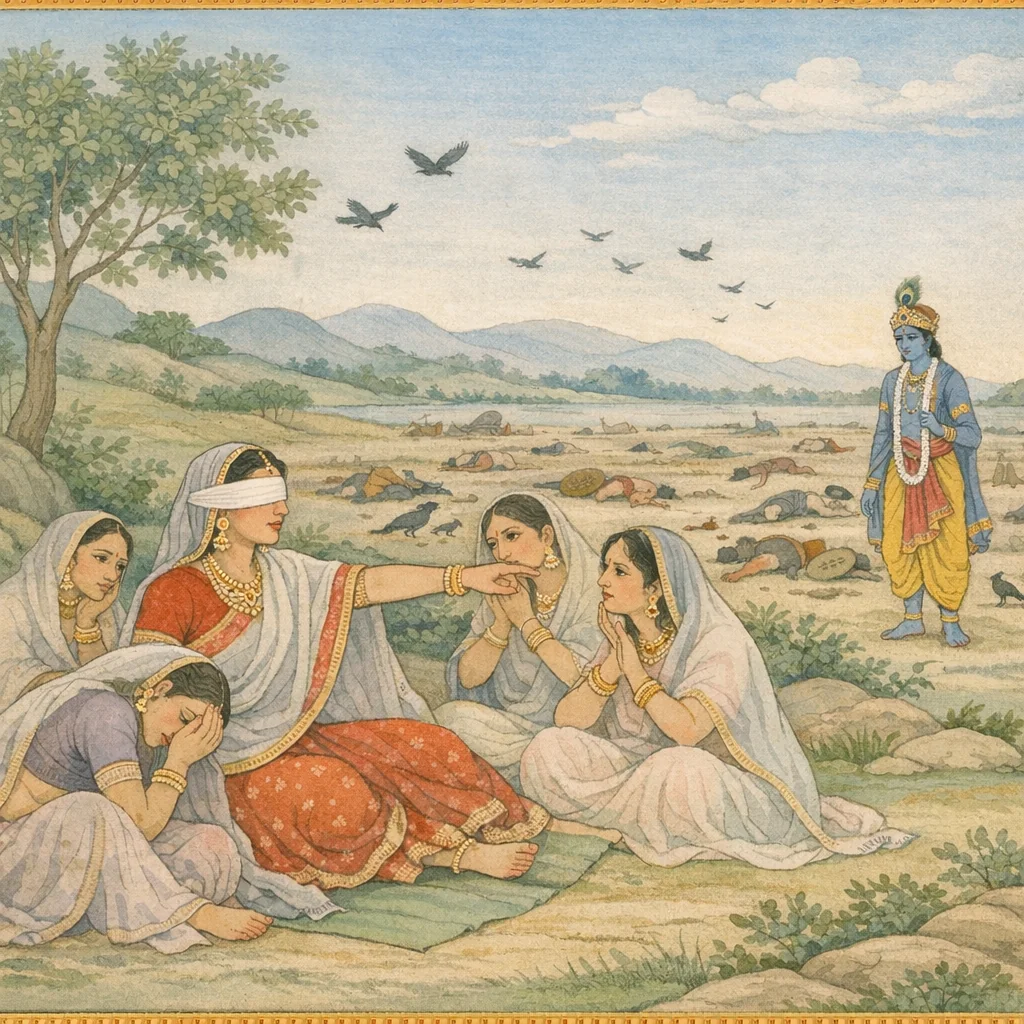
This chapter presents a two-part discourse. First, Gāndhārī, addressing Kṛṣṇa (Mādhava/Janārdana/Hṛṣīkeśa), surveys the battlefield and points out prominent fallen warriors and kings (e.g., Kāmboja, Kāliṅga, Jayatsena of Magadha, Bṛhadbala of Kosala, Drupada of Pāñcāla, Dhṛṣṭaketu of Cedi, and the Avanti brothers Vinda and Anuvinda). The narration emphasizes corporeal detail—weapon wounds, scattered ornaments, and the women’s lamentations—functioning as evidentiary testimony to the cost of strategic engagement. Second, Gāndhārī’s grief intensifies into anger: she questions why Kṛṣṇa, portrayed as capable and influential, allowed mutual destruction between Pāṇḍavas and Dhārtarāṣṭras. She then pronounces a curse that Kṛṣṇa will, in a specified time frame, lose his kin and meet an ignoble end, and that Yādava women will later grieve similarly. Kṛṣṇa responds with controlled acknowledgment, indicating the inevitability of the Yādavas’ internal collapse (mutual destruction), shifting the frame to daiva and the limits of external agency. The Pāṇḍavas react with distress, recognizing the gravity of the pronouncement.
Chapter Arc: रणभूमि में बिखरे शवों के बीच गान्धारी अपने पुत्रों और अन्य वीरों के मरे हुए शरीर देखती है; शोक का ज्वार उसे वाणी देता है और वह करुण विलाप आरम्भ करती है। → वह एक-एक करके वीरों के पतन का चित्र खींचती है—पत्नी द्वारा रक्तस्नात चन्दनचर्चित भुजाओं पर विलाप, युद्ध-वैभव का अब शून्य में बदल जाना, और द्रोण द्वारा द्रुपद-वध जैसे प्रसंगों को स्मरण कर कृष्ण से प्रश्न करती है कि यह विनाश क्यों और कैसे हुआ। → शोक क्रोध में बदलता है; गान्धारी श्रीकृष्ण को लक्ष्य कर यदुवंश-विनाश का शाप देती है—यह कहते हुए कि वृष्णिचक्र का संहार करने वाला उसके सिवा कोई नहीं होगा, और यादव परस्पर-कलह से नष्ट होंगे। → कृष्ण शाप को स्वीकार करते हैं—उसका प्रतिकार नहीं करते; पाण्डव यह सुनकर भीतर से भयभीत और जीवन के प्रति निराश हो उठते, क्योंकि धर्म-रक्षक कृष्ण पर भी नियति का विधान उतर आता है। → यदुवंश के भविष्य-विनाश की घोषणा के साथ कथा आगे के अनिवार्य परिणामों की ओर मुड़ती है—शाप कब और कैसे फलित होगा, यह आसन्न प्रश्न बनकर रह जाता है।
Shlokas
Verse 1
अपन बक। है २ >> पञ्चविशो< ध्याय: अन्यान्य वीरोंको मरा हुआ देखकर गान्धारीका शोकातुर होकर विलाप करना और क्रोधपूर्वक श्रीकृष्णको यदुवंशविनाशविषयक शाप देना गान्धायुवाच काम्बोजं पश्य दुर्धर्ष काम्बोजास्तरणोचितम् । शयानमृषभस्कन्ध॑ हत॑ पांसुषु माधव,गान्धारी बोलीं--माधव! जो काबुलके बने हुए मुलायम बिछौनोंपर सोनेके योग्य है, वह बैलके समान हृष्ट-पुष्ट कंधोंवाला दुर्जय वीर काम्बोजराज सुदक्षिण मरकर धूलमें पड़ा हुआ है
Gandhārī said: “Mādhava, look at this invincible Kāmboja king—fit to lie upon Kāmboja-made soft coverings—now lying slain in the dust, broad-shouldered like a bull. Thus the war’s ruin is made visible: those worthy of honor and comfort are reduced to lifeless bodies on the battlefield, and a mother’s grief turns into accusation and moral outrage.”
Verse 2
यस्य क्षतजसंदिग्धौ बाहू चन्दनभूषितौ । अवेक्ष्य करुणं भार्या विलपत्यतिदु:खिता,उसकी चन्दनचर्चित भुजाओंको रक्तमें सनी हुई देख उसकी पत्नी अत्यन्त दुःखी हो करुणाजनक विलाप कर रही है
Vaiśampāyana said: Seeing his arms—once adorned with sandalwood paste—now smeared with blood, his wife, overwhelmed by grief, laments in a heart-rending manner. The verse underscores the human cost of war: the beauty and dignity of the living body are abruptly transformed into signs of violence, and the bereaved are left to mourn.
Verse 3
इमौ तौ परिघप्रख्यौ बाहू शुभतलाड्गुली । ययोर्विवरमापन्नां न रतिर्मा पुराजहात्
Vaiśampāyana said: “These two arms, like iron clubs, with auspicious palms and fingers—when a gap came between them, my delight and love never left me, as it once did before.”
Verse 4
हतबन्धुरनाथा च वेपन्ती मधुरस्वरा,श्रीकृष्ण! अपने जीवनबन्धुके मारे जानेसे अनाथ हुई यह रानी काँपती हुई मधुर स्वरसे विलाप कर रही है। घामसे मुरझाती हुई नाना प्रकारकी पुष्पमालाओंके समान ये राज-रानियाँ धूपसे तप गयीं हैं, तो भी इनके शरीरोंको सौन्दर्य--श्री छोड़ नहीं रही है
Vaiśampāyana said: Bereft of her kinsmen and left without protection, the queen trembles and laments in a sweet, broken voice. O Śrī Kṛṣṇa, since her very life’s companion has been slain, she has become helpless. And those royal women—like many kinds of flower garlands that droop under heat—have been scorched by the sun; yet the radiance of beauty and royal grace has not abandoned their bodies. The passage underscores the moral cost of war: even amid devastation and widowhood, dignity and innate splendor persist, intensifying the pathos of loss.
Verse 5
आततपे क्लाम्यमानानां विविधानामिव स््रजाम् । क्लान्तानामपि नारीणां श्रीर्जहाति न वै तनू:,श्रीकृष्ण! अपने जीवनबन्धुके मारे जानेसे अनाथ हुई यह रानी काँपती हुई मधुर स्वरसे विलाप कर रही है। घामसे मुरझाती हुई नाना प्रकारकी पुष्पमालाओंके समान ये राज-रानियाँ धूपसे तप गयीं हैं, तो भी इनके शरीरोंको सौन्दर्य--श्री छोड़ नहीं रही है
Vaiśampāyana said: Like garlands of many kinds of flowers that droop and wither under the heat, the women were being scorched and exhausted; yet even in their weariness, beauty and royal radiance did not truly abandon their bodies. The scene underscores the cruel aftermath of war: bereavement and physical suffering do not erase innate dignity, and the survivors—especially the widowed queens—remain worthy of reverence rather than neglect.
Verse 6
शयानमभित: शूरं कालिज्ुं मधुसूदन । पश्य दीप्ताड्भदयुगप्रतिनद्धमहाभुजम्,मधुसूदन! देखो, पास ही वह शूरवीर कलिंगराज सो रहा है, जिसकी दोनों विशाल भुजाओंमें चमकीले अंगद (बाजूबन्द) बँधे हुए हैं
Vaiśampāyana said: “O Madhusūdana, look—nearby lies the heroic king of Kaliṅga, resting there, his mighty arms adorned with a pair of gleaming armlets.” In the grim aftermath of war, the verse draws attention to a fallen or exhausted warrior not with contempt but with a sober recognition of valor and the costly dignity of those caught in the conflict.
Verse 7
मागधानामधिपतिं जयत्सेनं जनार्दन | आवार्य सर्वतः पत्न्य: प्ररुदत्य: सुविह्दला:,जनार्दन! उधर मगधराज जयत्सेन पड़ा है, जिसे चारों ओरसे घेरकर उसकी पत्नियाँ अत्यन्त व्याकुल हो फूट-फ़ूटकर रो रही हैं
Vaiśampāyana said: O Janārdana, the king Jayatsena, lord of the Magadhas, lay fallen. His wives, surrounding him on every side, were utterly distraught and wept aloud in bitter grief—an image of war’s aftermath, where royal power collapses and the innocent bear the sharpest sorrow.
Verse 8
आसामायतलनेत्राणां सुस्वराणां जनार्दन । मन:श्रुतिहरो नादो मनो मोहयतीव मे,श्रीकृष्ण! मधुर स्वरवाली इन विशाललोचना रानियोंका मन और कानोंको मोह लेनेवाला आर्तनाद मेरे मनको मूर्च्छित-सा किये देता है
Vaiśampāyana said: “O Janārdana, the lamentation rising from these queens—wide-eyed and sweet-voiced—steals away both mind and hearing; it seems to bewilder my very mind.”
Verse 9
प्रकीर्णवस्त्राभरणा रुदत्य: शोककर्शिता: । स्वास्तीर्णशयनोपेता मागध्य: शेरते भुवि,इनके वस्त्र और आभूषण अस्त-व्यस्त हो रहे हैं। सुन्दर बिछौनोंसे युक्त शय्याओंपर शयन करनेके योग्य ये मगधदेशकी रानियाँ शोकसे व्याकुल हो रोती हुई भूमिपर लोट रही हैं
Vaiśampāyana said: The women of Magadha, their garments and ornaments disheveled, weep in anguish, wasted by grief. Though they are accustomed to well-spread beds and proper couches, they now lie upon the bare earth—an image of how war overturns dignity, comfort, and the ordinary order of life.
Verse 10
कोसलानामधिपतिं राजपुत्रं बृहदूबलम् । भर्तरें परिवार्यता: पृथक् प्ररुदिता: स्त्रिय:
Vaiśampāyana said: The women, gathering around their husband—Bṛhadūbala, the prince and lord of the Kośalas—began to weep, each apart in her own grief. The scene underscores the human cost of war: not only the fallen warrior, but the shattered household and the lonely, individual sorrow that follows public violence.
Verse 11
अपने पति कोसलनरेश राजकुमार बृहदबलको भी चारों ओरसे घेरकर उनकी रानियाँ अलग-अलग रो रही हैं ।। अस्य गात्रगतान् बाणान् कार्ष्णिबाहुबलार्पितान् । उद्धरन्त्यसुखाविष्टा मूर्च्छमाना: पुनः: पुन:,अभिमन्युके बाहुबलसे प्रेरित होकर कोसल-नरेशके अंगोमें धँसे हुए बाणोंको ये रानियाँ अत्यन्त दुःखी होकर निकालती हैं और बारंबार मूर्च्छित हो जाती हैं
Vaiśampāyana said: Overwhelmed by grief, the queens surrounding him repeatedly pull out the arrows lodged in his limbs—arrows driven in by the force of Kārṣṇi’s arm—yet again and again they faint. The scene underscores the human cost of war: even after a warrior falls, the suffering of those bound to him by duty and love continues, turning the battlefield’s violence into enduring domestic sorrow.
Verse 12
आसां सर्वानिवद्यानामातपेन परिश्रमात् | प्रम्लाननलिनाभानि भान्ति वक्त्राणि माधव,माधव! इन सर्वांगसुन्दरी राजमहिलाओंके सुन्दर मुख धूप और परिश्रमके कारण मुरझाये हुए कमलोंके समान प्रतीत होते हैं
Vaiśampāyana said: “O Mādhava, the faces of these royal ladies—faultless in every way—now appear like lotuses that have drooped and withered, worn down by the scorching sun and by exhaustion.”
Verse 13
द्रोणेन निहता: शूरा: शेरते रुचिराज्भदा: । धृष्टद्युम्नसुता: सर्वे शिशवो हेममालिन:,ये द्रोणाचार्यके मारे हुए धृष्टद्युम्नके सभी छोटे-छोटे शूरवीर बालक सो रहे हैं। इनकी भुजाओंमें सुन्दर अंगद और गलेमें सोनेके हार शोभा पाते हैं
Vaiśampāyana said: Slain by Droṇa, the young heroic sons of Dhṛṣṭadyumna lie there in death—still adorned with beautiful armlets and wearing garlands of gold. The verse underscores the bitter irony of war: even the innocent and youthful, ornamented for life and honor, are reduced to silent bodies, making the scene a moral indictment of unchecked violence and vengeance.
Verse 14
रथाग्न्यगारं चापार्चि:शरशक्तिगदेन्धनम् | द्रोणमासाद्य निर्दग्धा: शलभा इव पावकम्
Vaiśampāyana said: Reaching Droṇa—who was like a blazing fire-chamber of chariots, whose flames were arrows, spears, and maces as fuel—they were burned up, like moths rushing into a fire. The verse underscores the moral tragedy of war: valor and zeal, when driven into a superior destructive force, become self-consuming, and lives are squandered in the blaze of violence.
Verse 15
द्रोणाचार्य प्रचलित अग्निके समान थे, उनका रथ ही अग्निशाला था, धनुष ही उस अग्निकी लपट था, बाण, शक्ति और गदाएँ समिधाका काम दे रही थीं, धृष्टद्युम्नके पुत्र पतंगोंके समान उस द्रोणरूपी अग्निमें चलकर भस्म हो गये ।। तथैव निहता: शूरा: शेरते रुचिराड़दा: । द्रोणेनाभिमुखा: सर्वे भ्रातर: पजच केकया:,इसी प्रकार सुन्दर अंगदोंसे विभूषित पाँचों शूरवीर भाई केकय राजकुमार समरांगणमें सम्मुख होकर जूझ रहे थे। वे सब-के-सब आचार्य द्रोणके हाथसे मारे जाकर सो रहे हैं
Vaiśampāyana said: “So too those heroes, adorned with splendid armlets, now lie fallen. All five brothers—the Kekaya princes—had faced Droṇa directly on the battlefield; slain by the preceptor’s hand, they now lie motionless.” The verse underscores the grim impartiality of war: valor and noble ornaments do not shield one from death when the tide of adharma-driven slaughter has been unleashed.
Verse 16
तप्तकाञ्चनवर्माणस्तालध्वजरथव्रजा: । भासयन्ति महीं भासा ज्वलिता इव पावका:,इन सबके कवच तपाये हुए सुवर्णके बने हैं और इनके रथसमूह तालचिह्नलित ध्वजाओंसे सुशोभित हैं। ये राजकुमार अपनी प्रभासे प्रज्वलित अग्निके समान भूतलको प्रकाशित कर रहे हैं
Vaiśampāyana said: “Clad in armor of heated, gleaming gold, and moving in a host of chariots marked with palm-tree banners, they illumine the earth with their radiance—like fires blazing in full flame.”
Verse 17
द्रोणेन द्रुपदं संख्ये पश्य माधव पातितम् | महाद्विपमिवारण्ये सिंहेन महता हतम्
Vaiśampāyana said: “Behold, O Mādhava, Drupada struck down in the thick of battle by Droṇa—like a great elephant felled in the forest by a mighty lion.” The verse frames the fall of a king as both a stark image of martial power and a moral reminder of war’s irreversible ruin, where even the eminent are reduced to prey before fate and prowess.
Verse 18
माधव! देखो, युद्धस्थलमें ट्रोणाचार्यने जिन्हें मार गिराया था, वे राजा द्रुपद सो रहे हैं, मानो किसी वनमें विशाल सिंहके द्वारा कोई महान् गजराज मारा गया हो ।। पाज्चालराज्ञो विमलं पुण्डरीकाक्ष पाण्डुरम् । आततपपनत्र॑ समाभाति शरदीव निशाकर:,कमलनयन! पांचालराजका वह निर्मल श्वेत छत्र शरत्कालके चन्द्रमाकी भाँति सुशोभित हो रहा है
Vaiśampāyana said: “O Mādhava, look—on the battlefield lies King Drupada, struck down by Droṇa. He appears as though asleep, like a mighty lord of elephants felled by a great lion in the forest. And, O lotus-eyed one, the spotless white royal parasol of the king of Pāñcāla shines above him like the moon in the autumn season.”
Verse 19
एतास्तु द्रुपदं वृद्ध स्नुषा भार्याश्व दुःखिता: । दग्ध्वा गच्छन्ति पाउचाल्यं राजानमपसव्यतः,इन बूढ़े पांचालराज ट्रपदको इनकी दुःखी रानियाँ और पुत्रवधुएँ चितामें जलाकर इनकी प्रदक्षिणा करके जा रही हैं
Vaiśampāyana said: “These sorrow-stricken queens and daughters-in-law, having consigned the aged King Drupada to the funeral fire, now proceed, circumambulating the king of Pāñcāla in the reverse direction. The scene underscores the heavy burden of grief after war and the solemn, duty-bound rites performed for the dead.”
Verse 20
धृष्टकेतुं महात्मानं चेदिपुड़वमड़ना: | द्रोणेन निहतं शूरं हरन्ति हृतचेतस:,चेदिराज महामना शूरवीर धृष्टकेतुको जो द्रोणाचार्यके हाथसे मारा गया है, उसकी रानियाँ अचेत-सी होकर दाह-संस्कारके लिये ले जा रही हैं
Vaiśampāyana said: The women, their minds stunned by grief, were carrying away the heroic Dhṛṣṭaketu—great-souled, foremost among the Cedis—who had been slain by Droṇa, in order to perform his final rites. The scene underscores the human cost of war: even the fall of a righteous and valiant king becomes a burden borne by the bereaved, where honor and duty persist amid overwhelming sorrow.
Verse 21
द्रोणास्त्रमभिहत्यैष विमर्दे मधुसूदन । महेष्वासो हतः शेते नद्या हत इव द्रुम:,मधुसूदन! यह महाधनुर्धर वीर संग्राममें द्रोणाचार्यके अस्त्र-शस्त्रोंका नाश करके नदीके वेगसे कटे हुए वृक्षेके समान मरकर धराशायी हो गया
Vaiśampāyana said: “O Madhusūdana, in the press of battle this great archer, having struck down the weapon of Droṇa, now lies slain—like a tree felled by the force of a river’s current.” The verse underscores the tragic irony of war: even the most capable warriors, after moments of prowess, are reduced to lifeless bodies, and victory offers little moral consolation amid widespread ruin.
Verse 22
एष चेदिपति: शूरो धृष्टकेतुर्महारथ: । शेते विनिहत:ः संख्ये हत्वा शत्रूनू सहस्रशः,यह चेदिराज शूरवीर महारथी धृष्टकेतु सहस्रों शत्रुओंको मारकर मारा गया और रणशय्यापर सदाके लिये सो गया
Vaiśampāyana said: This heroic lord of Cedi, Dhṛṣṭaketu, a great chariot-warrior, lies slain on the battlefield. Having cut down enemies by the thousand, he has fallen and now rests upon the bed of war—an image that underscores both the terrible cost of righteous conflict and the fragility of worldly glory.
Verse 23
वितुद्यमानं विहगैस्तं भार्या: पर्युपासिता: । चेदिराजं हृषीकेश हतं सबलबान्धवम्,हृषीकेश! सेना और बन्धुओंसहित मारे गये इस चेदिराजको पक्षी चोंच मार रहे हैं और उसकी स्त्रियाँ उसे चारों ओरसे घेरकर बैठी हैं
Vaiśampāyana said: As birds pecked at him, his wives sat all around. O Hṛṣīkeśa, the king of Cedi lay slain—together with his army and his kinsmen—while his women kept vigil in grief. The scene underscores the pitiless aftermath of war: even royal power ends in vulnerability, and the burden of loss falls most heavily upon the innocent survivors.
Verse 24
दाशार्हपुत्र॒जं वीरं शयानं सत्यविक्रमम् | आरोप्याड्के रुदन्त्येताश्वेदिराजवराड़ना:
Vaiśaṃpāyana said: The noble women of the Śvedi king, lifting the heroic son of the Dāśārhas—who lay fallen, his valour proven true—placed him upon their laps and wept. The scene underscores the human cost of war: even the truly brave become objects of lament, and the victors and vanquished alike are bound to grief and duty toward the dead.
Verse 25
दशाहईकुलकी कन्या (श्रुतश्रवा)-के पुत्र शिशुपालका यह सत्यपराक्रमी वीर पुत्र रणभूमिमें सो रहा है और इसे अंकमें लेकर ये चेदिराजकी सुन्दरी रानियाँ रो रही हैं ।। अस्य पुत्र हृषीकेश सुवकत्रं चारुकुण्डलम् । द्रोणेन समरे पश्य निकृतं बहुधा शरै:,इति श्रीमहाभारते स्त्रीपर्वणि स्त्रीविलापपर्वणि गान्धारीशापदाने पञ्चविंशो<5 ध्याय: इस प्रकार श्रीमह्ाभारत स्त्रीपर्वके अन्तर्गत स्त्रीविलापपर्वमें गान्धारीका शापदानविषयक पचीसवाँ अध्याय पूरा हुआ
Vaiśampāyana said: “O Hṛṣīkeśa, look—this son of hers, with a handsome face and beautiful earrings, has been cut down in battle by Droṇa, pierced in many ways by arrows.” In the surrounding lament, the women of Cedi cradle the fallen youth and weep, making the battlefield’s aftermath a moral tableau of war’s cost: valor and lineage end in grief, and victory is shadowed by the suffering of the innocent.
Verse 26
हृषीकेश! देखो तो सही, इस धृष्टकेतुके सुन्दर मुख और मनोहर कुण्डलोंवाले पुत्रको द्रोणाचार्यने समरांगणमें अपने बाणोंद्वारा मारकर उसके अनेक टुकड़े कर डाले हैं ।। पितरं नूनमाजिस्थं युद्धयमानं परै: सह । नाजहात् पितरं वीरमद्यापि मधुसूदन
Vaiśampāyana said: “O Hṛṣīkeśa, look—Drona, on the battlefield, has slain with his arrows this son of Dhṛṣṭaketu, whose face was beautiful and whose earrings were charming, and has cut his body into many pieces. Surely, O Madhusūdana, even now he did not abandon his heroic father who stood in the thick of battle, fighting together against the foes.”
Verse 27
मधुसूदन! रणभूमिमें स्थित होकर शत्रुओंके साथ जूझनेवाले अपने पिताका साथ इसने कभी नहीं छोड़ा था, आज युद्धके बाद भी वह पिताको नहीं छोड़ सका है ।। एवं ममापि पुत्रस्य पुत्र: पितरमन्वगात् । दुर्योधनं महाबाहो लक्ष्मण: परवीरहा,महाबाहो! इसी प्रकार मेरे पुत्रके पुत्र शत्रुवीर-हन्ता लक्ष्मणने भी अपने पिता दुर्योधनका अनुसरण किया है
Vaiśampāyana said: “O Madhusūdana, while standing on the battlefield and grappling with the enemy, he never once separated from his father; and even now, after the war has ended, he has not been able to leave his father. In the same way, O mighty-armed one, my son’s son—Lakṣmaṇa, slayer of enemy-heroes—has followed his father Duryodhana.”
Verse 28
विन्दानुविन्दावावन्त्यौ पतितौ पश्य माधव । हिमान्ते पुप्पितो शालौ मरुता गलिताविव,माधव! जैसे ग्रीष्म-ऋतुमें हवाके वेगसे दो खिले हुए शालवृक्ष गिर गये हों, उसी प्रकार अवन्तीदेशके दोनों वीर राजपुत्र विन्द और अनुविन्द धराशायी हो गये हैं, इनपर दृष्टिपात करो
Verse 29
काज्चनाड्ुदवर्माणौ बाणखड््गधनुर्धरी । ऋषभप्रतिरूपाक्षौो शयानौ विमलखस्रजी,इन दोनोंने सोनेके कवच धारण किये हैं, बाण, खड्ग और धनुष लिये हैं तथा बैलके समान बड़ी-बड़ी आँखोंवाले ये दोनों वीर चमकीले हार पहने हुए सो रहे हैं
Vaiśampāyana said: “Those two heroes, clad in golden mail, bearing arrows, sword, and bow, with great bull-like eyes, lie asleep wearing spotless garlands.” The verse underscores the tragic irony of war: even the well-armed and splendidly adorned are subject to vulnerability and death, and outward martial glory cannot shield one from the moral and human cost that follows violence.
Verse 30
अवध्या: पाण्डवा: कृष्ण सर्व एव त्वया सह । ये मुक्ता द्रोणभीष्माभ्यां कर्णाद् वैकर्तनात् कृपात्,श्रीकृष्ण! तुम्हारे साथ ही ये समस्त पाण्डव अवध्य जान पड़ते हैं, जो कि द्रोण, भीष्म, वैकर्तन कर्ण, कृपाचार्य, दुर्योधन, द्रोणपुत्र अश्वत्थामा, सिंधुराज जयद्रथ, सोमदत्त, विकर्ण और शूरवीर कृतवर्माके हाथसे जीवित बच गये हैं
Vaiśampāyana said: “O Kṛṣṇa, the Pāṇḍavas—every one of them, together with you—seem beyond the reach of death; for they have escaped alive from Droṇa and Bhīṣma, from Karṇa the son of the charioteer, and from Kṛpa.”
Verse 31
दुर्योधनाद् द्रोणसुतात् सैन्धवाच्च जयद्रथात् । सोमदत्ताद् विकर्णाच्च शूराच्च कृतवर्मण:,श्रीकृष्ण! तुम्हारे साथ ही ये समस्त पाण्डव अवध्य जान पड़ते हैं, जो कि द्रोण, भीष्म, वैकर्तन कर्ण, कृपाचार्य, दुर्योधन, द्रोणपुत्र अश्वत्थामा, सिंधुराज जयद्रथ, सोमदत्त, विकर्ण और शूरवीर कृतवर्माके हाथसे जीवित बच गये हैं
Vaiśampāyana said: (They were spared) from Duryodhana, from Droṇa’s son (Aśvatthāmā), from the Sindhu king Jayadratha, from Somadatta, from Vikarṇa, and from the heroic Kṛtavarman. The sense is that, by Kṛṣṇa’s protection, the Pāṇḍavas proved ‘unassailable’—surviving even the onslaughts of these foremost Kaurava champions—underscoring both the ferocity of the war and the moral weight of divine guidance amid catastrophe.
Verse 32
ये हन्यु: शस्त्रवेगेन देवानपि नरर्षभा: । त इमे निहता: संख्ये पश्य कालस्य पर्ययम्,जो नरश्रेष्ठ अपने शस्त्रके वेगसे देवताओंको भी नष्ट कर सकते थे, वे ही ये युद्धमें मार डाले गये हैं; यह कालका उलट-फेर तो देखो
Vaiśampāyana said: “Those bull-like men who, by the sheer force of their weapons, could have slain even the gods—those very heroes now lie killed on the battlefield. Behold the reversal wrought by Time.”
Verse 33
नातिभारो<स्ति दैवस्य ध्रुवं माधव कश्नन । यदिमे निहता: शूरा: क्षत्रियै: क्षत्रियर्षभा:
Vaiśampāyana said: “Surely, O Mādhava, nothing is an excessive burden for Destiny. For these heroic bulls among kṣatriyas have been slain by kṣatriyas.”
Verse 34
माधव! निश्चय ही दैवके लिये कोई भी कार्य अधिक कठिन नहीं है; क्योंकि उसने क्षत्रियोंद्वारा ही इन शूरवीर क्षत्रियशिरोमणियोंका संहार कर डाला है ।। तदैव निहता: कृष्ण मम पुत्रास्तरस्विन: । यदैवाकृतकामस्त्वमुपप्लव्यं गत: पुन:,श्रीकृष्ण! मेरे वेगशाली पुत्र तो उसी दिन मार डाले गये, जब कि तुम अपूर्णमनोरथ होकर पुन: उपप्लव्यको लौट गये थे
Vaiśaṃpāyana said: “O Kṛṣṇa, my swift and valiant sons were slain that very day—on the very occasion when you, your purpose unfulfilled, returned again to Upaplavya. The course of events shows how inexorable destiny can be, bringing about the destruction of even the foremost warriors through the very agency of kṣatriyas themselves.”
Verse 35
शान्तनोश्रैव पुत्रेण प्राज्ञेन विदुरेण च । तदैवोक्तास्मि मा स्नेहं कुरुष्वात्मसुतेष्विति,मुझे तो शान्तनुनन्दन भीष्म तथा ज्ञानी विदुरने उसी दिन कह दिया था “कि अब तुम अपने पुत्रोंपर स्नेह न करो”
Vaiśampāyana said: “That very day, Bhīṣma—the son of Śāntanu—and the wise Vidura told me plainly: ‘Do not cling with affection to your own sons.’” The line underscores a hard ethical counsel: when one’s children have chosen an unrighteous course, blind parental attachment must not override discernment and duty.
Verse 36
कां गतिं तु गमिष्यामि त्वया हीना जनेश्वर । वह कहती है--'प्राणनाथ! सुन्दर हथेली और अंगुलियोंसे युक्त तथा परिघके समान मोटी ये वे ही दोनों भुजाएँ हैं, जिनके भीतर आप मुझे अंकमें भर लेते थे और उस अवस्थामें मुझे जो प्रसन्नता प्राप्त होती थी, उसने पहले कभी मेरा साथ नहीं छोड़ा था। जनेश्वर! अब आपके बिना मेरी क्या गति होगी?”,तयोहहिं दर्शन नैतन्मिथ्या भवितुम्हति । अचिरेणैव मे पुत्रा भस्मी भूता जनार्दन जनार्दन! उन दोनोंकी यह दृष्टि मिथ्या नहीं हो सकती थी; अतः थोड़े ही समयमें मेरे सारे पुत्र युद्धकी आगमें जलकर भस्म हो गये
Vaiśampāyana said: “O lord of men, what course—what refuge—shall I now attain, bereft of you? This vision of theirs could not possibly be false; therefore, in a very short time, all my sons were burned to ashes in the fire of war, O Janārdana.”
Verse 37
वैशम्पायन उवाच इत्युक्त्वा न्यपतद् भूमौ गान्धारी शोकमूर्च्छिता । दुःखोपहतविज्ञाना धैर्यमुत्सूज्य भारत,वैशम्पायनजी कहते हैं-- भारत! ऐसा कहकर शोकसे मूर्च्छित हुई गान्धारी धैर्य छोड़कर पृथ्वीपर गिर पड़ीं, दुःखसे उनकी विवेकशक्ति नष्ट हो गयी
Vaiśampāyana said: Having spoken thus, Gāndhārī—overwhelmed and fainting from grief—collapsed to the ground. O Bhārata, her discernment was shattered by sorrow, and she let go of all steadiness of mind. The verse underscores how catastrophic loss can overpower even the most disciplined resolve, revealing the human cost of the war beyond the battlefield.
Verse 38
ततः कोपपरीताज्जी पुत्रशोकपरिप्लुता । जगाम शौरिं दोषेण गान्धारी व्यथितेन्द्रिया,तदनन्तर उनके सारे अंगोंमें क्रोध व्याप्त हो गया। पुत्रशोकमें डूब जानेके कारण उनकी सारी इन्द्रियाँ व्याकुल हो उठीं। उस समय गान्धारीने सारा दोष श्रीकृष्णके ही माथे मढ़ दिया
Verse 39
गान्धायुवाच पाण्डवा धार्रराष्ट्राश्न दग्धा: कृष्ण परस्परम् । उपेक्षिता विनश्यन्तस्त्वया कस्माज्जनार्दन,गान्धारीने कहा--श्रीकृष्ण! जनार्दन! पाण्डव और धृतराष्ट्रके पुत्र आपसमें लड़कर भस्म हो गये। तुमने इन्हें नष्ट होते देखकर भी इनकी उपेक्षा कैसे कर दी?
Verse 40
शक्तेन बहुभृत्येन विपुले तिष्ठता बले । उभयत्र समर्थन श्रुतवाक्येन चैव ह,महाबाहु मधुसूदन! तुम शक्तिशाली थे। तुम्हारे पास बहुत-से सेवक और सैनिक थे। तुम महान् बलमें प्रतिष्ठित थे। दोनों पक्षोंसे अपनी बात मनवा लेनेकी सामर्थ्य तुममें मौजूद थी। तुमने वेद-शास्त्रों और महात्माओंकी बातें सुनी और जानी थीं। यह सब होते हुए भी तुमने स्वेच्छासे कुरुकुलके नाशकी उपेक्षा की--जानबूझकर इस वंशका विनाश होने दिया। यह तुम्हारा महान् दोष है, अतः तुम इसका फल प्राप्त करो
Vaiśampāyana said: “Though you were powerful, supported by many attendants and retainers, and firmly established in vast strength; though you were capable of making either side accept your counsel, and were one who had heard and understood the teachings of the Vedas, the śāstras, and the words of the wise—still, of your own will, you neglected to prevent the ruin of the Kuru line, knowingly allowing this dynasty to be destroyed. This is a grave fault in you; therefore, receive its consequence.”
Verse 41
इच्छतोपेक्षितो नाश: कुरूणां मधुसूदन । यस्मात् त्वया महाबाहो फलं॑ तस्मादवाप्लुहि,महाबाहु मधुसूदन! तुम शक्तिशाली थे। तुम्हारे पास बहुत-से सेवक और सैनिक थे। तुम महान् बलमें प्रतिष्ठित थे। दोनों पक्षोंसे अपनी बात मनवा लेनेकी सामर्थ्य तुममें मौजूद थी। तुमने वेद-शास्त्रों और महात्माओंकी बातें सुनी और जानी थीं। यह सब होते हुए भी तुमने स्वेच्छासे कुरुकुलके नाशकी उपेक्षा की--जानबूझकर इस वंशका विनाश होने दिया। यह तुम्हारा महान् दोष है, अतः तुम इसका फल प्राप्त करो
Vaiśampāyana said: “O Madhusūdana, O mighty-armed one—since the destruction of the Kurus was knowingly ignored and allowed by you, therefore receive the fruit of that deed.”
Verse 42
पतिशुश्रूषया यन्मे तप: किंचिदुपार्जितम् | तेन त्वां दुरवापेन शप्स्ये चक्रगदाधर,चक्र और गदा धारण करनेवाले केशव! मैंने पतिकी सेवासे जो कुछ भी तप प्राप्त किया है, उस दुर्लभ तपोबलसे तुम्हें शाप दे रही हूँ
Vaiśaṃpāyana said: “Whatever little ascetic merit I have gained through devoted service to my husband—by that hard-to-attain spiritual power I now pronounce a curse upon you, O Kṛṣṇa, bearer of the discus and the mace.”
Verse 43
यस्मात् परस्परं घ्नन्तो ज्ञातय: कुरुपाण्डवा: | उपेक्षितास्ते गोविन्द तस्माज्ज्ञातीन् वधिष्यसि,गोविन्द! तुमने आपसमें मारकाट मचाते हुए कुट॒म्बी कौरवों और पाण्डवोंकी उपेक्षा की है; इसलिये तुम अपने भाई-बन्धुओंका भी विनाश कर डालोगे
Vaiśampāyana said: “Because the Kuru and Pāṇḍava kinsmen were slaughtering one another, and you, Govinda, did not intervene to prevent it, you are held to have ‘overlooked’ your own relatives. Therefore, it is said, you too will come to destroy your own kinsmen.”
Verse 44
त्वमप्युपस्थिते वर्षे षट्त्रिंशे मधुसूदन । हतज्ञातिहतामात्यो हतपुत्रो वनेचर:,मधुसूदन! आजसे छत्तीसवाँ वर्ष उपस्थित होनेपर तुम्हारे कुटुम्बी, मनन््त्री और पुत्र सभी आपसमें लड़कर मर जायँगे। तुम सबसे अपरिचित और लोगोंकी आँखोंसे ओझल होकर अनाथके समान वनमें विचरोगे और किसी निन्दित उपायसे मृत्युको प्राप्त होओगे
Vaiśampāyana said: “You too, O Madhusūdana, when the thirty-sixth year arrives, will have your kinsmen slain and your ministers destroyed; your son will be dead. Then, unknown to all and hidden from people’s sight, you will wander in the forest like one without refuge, and you will meet death by a censured means.”
Verse 45
अनाथवददविज्ञातो लोकेष्वनभिलक्षित: । कुत्सितेनाभ्युपायेन निधनं समवाप्स्यसि,मधुसूदन! आजसे छत्तीसवाँ वर्ष उपस्थित होनेपर तुम्हारे कुटुम्बी, मनन््त्री और पुत्र सभी आपसमें लड़कर मर जायँगे। तुम सबसे अपरिचित और लोगोंकी आँखोंसे ओझल होकर अनाथके समान वनमें विचरोगे और किसी निन्दित उपायसे मृत्युको प्राप्त होओगे
Vaiśampāyana said: “Unrecognized, unnoticed among people, you will wander like one without refuge. O Madhusūdana, you will meet your end by a disgraceful means. When your thirty-sixth year arrives, your own kinsmen, ministers, and sons will turn upon one another and perish in mutual strife. Then, unknown to all and hidden from the eyes of the world, you will roam in the forest like an orphan and finally attain death through a condemned course.”
Verse 46
तवाप्येवं हतसुता निहतज्ञातिबान्धवा: । स्त्रिय: परिपतिष्यन्ति यथैता भरतस्त्रिय:,इन भरतवंशकी स्त्रियोंके समान तुम्हारे कुलकी स्त्रियाँ भी पुत्रों तथा भाई-बन्धुओंके मारे जानेपर इसी तरह सगे-सम्बन्धियोंकी लाशोंपर गिरेंगी
Vaiśampāyana said: “So too, in your own lineage, women—bereft of sons and with kinsmen and relatives slain—will collapse in the same manner, just as these women of the Bharata house have fallen upon the bodies of their loved ones.”
Verse 47
वैशम्पायन उवाच तच्छुत्वा वचन घोरं वासुदेवो महामना: । उवाच देवीं गान्धारीमीषदशभ्युत्स्मयन्निव,वैशम्पायनजी कहते हैं-राजन्! वह घोर वचन सुनकर महामनस्वी वसुदेवनन्दन श्रीकृष्णने कुछ मुसकराते हुए-से गान्धारीदेवीसे कहा--
Vaiśampāyana said: O King, hearing those dreadful words, the great-souled Vāsudeva (Kṛṣṇa) spoke to Queen Gāndhārī, as if with a slight, restrained smile—setting the stage for a grave exchange on responsibility, grief, and the moral aftermath of war.
Verse 48
जाने5हमेतदप्येवं चीर्ण चरसि क्षत्रिये | दैवादेव विनश्यन्ति वृष्णयो नात्र संशय:,'क्षत्राणी! मैं जानता हूँ, यह ऐसा ही होनेवाला है। तुम तो किये हुएको ही कर रही हो। इसमें संदेह नहीं कि वृष्णिवंशके यादव दैवसे ही नष्ट होंगे
Vaiśampāyana said: “I know this too—indeed it will happen just so. O kṣatriya lady, you are only carrying out what has already been wrought. There is no doubt here: by the force of destiny alone, the Vṛṣṇis will perish.”
Verse 49
संहर्ता वृष्णिचक्रस्य नान्यो मद् विद्यते शुभे | अवध्यास्ते नरैरन्यैरपि वा देवदानवै:
Vaiśampāyana said: “O auspicious lady, none other than I am known to be the destroyer of the Vṛṣṇi host. They cannot be slain by other men—nor even by gods or Dānavas. This points to a divinely ordained end: when a clan’s time has ripened, ordinary strength or even celestial power cannot alter the destined outcome.”
Verse 50
इत्युक्तवति दाशार्हें पाण्डवास्त्रस्तचेतस: । बभूवुर्भुशसंविग्ना निराशाश्चापि जीविते,श्रीकृष्णके ऐसा कहनेपर पाण्डव मन-ही-मन भयभीत हो उठे। उन्हें बड़ा उद्वेग हुआ। वे सब-के-सब अपने जीवनसे निराश हो गये
Vaiśampāyana said: When Dāśārha (Śrī Kṛṣṇa) had spoken thus, the Pāṇḍavas became inwardly terrified. Deeply shaken and overwhelmed with anguish, they all fell into despair even about their own survival. The verse underscores how moral shock and the weight of consequences can break even the steadfast, when the truth of suffering and responsibility is laid bare.
Verse 493
परस्परकृतं नाशमतः: प्राप्स्यन्ति यादवा: । 'शुभे! वृष्णिकुलका संहार करनेवाला मेरे सिवा दूसरा कोई नहीं है। यादव दूसरे मनुष्यों तथा देवताओं और दानवोंके लिये भी अवध्य हैं; अत: आपसमें ही लड़कर नष्ट होंगे!
Vaiśampāyana said: “Therefore the Yādavas will meet their destruction through deeds done to one another—perishing by mutual conflict.”
Frequently Asked Questions
Whether a capable mediator bears moral responsibility for non-intervention when foreseeing large-scale harm—especially when both sides are kin-linked and escalation is preventable through counsel or constraint.
The chapter juxtaposes human accountability with structural inevitability: ethical critique of preventable failure is voiced, while Kṛṣṇa’s reply frames certain outcomes as arising from internal causal chains that external force cannot indefinitely override.
Rather than a formal phalaśruti, the narrative uses Vaiśaṃpāyana’s framing and the Pāṇḍavas’ reaction to signal interpretive weight: the curse functions as a moral index, linking comprehension of grief and responsibility to the epic’s broader inquiry into order, consequence, and impermanence.