Adhyaya 80
ध्वजवर्णनम् | Dhvaja-varṇanam (Description of War Standards)
Upa-parva: Dhvajavarṇana (Banner and Standards Description Episode)
Dhṛtarāṣṭra requests Sañjaya to describe the many splendid banners of both the Pāṇḍava and Kaurava forces. Sañjaya begins a structured identification by form, color, and name, portraying the standards as flame-like and gold-adorned, with multi-colored pennants moving in the wind like dancers. He enumerates prominent emblems: Arjuna’s formidable monkey-standard with leonine features; Aśvatthāman’s lion-tailed mark shining like a young sun; Karṇa’s banner glittering with gold garlands; Kṛpa’s well-crafted bull emblem; Vṛṣasena’s jeweled golden peacock; Śalya’s auspicious golden ‘Sītā’ figure likened to a flame; Jayadratha’s boar emblem with golden netting; Bhūriśravas (Saumadatti) with a sacrificial post (yūpa) motif; and other royal standards with elephants and peacocks. The chapter then transitions from heraldic description to battlefield dynamics: the convergence of forces, the mounting roar, and Arjuna—driven by Kṛṣṇa—advancing with resolve, releasing volleys that render opponents hard to perceive amid dense missile exchanges, as both sides envelop each other.
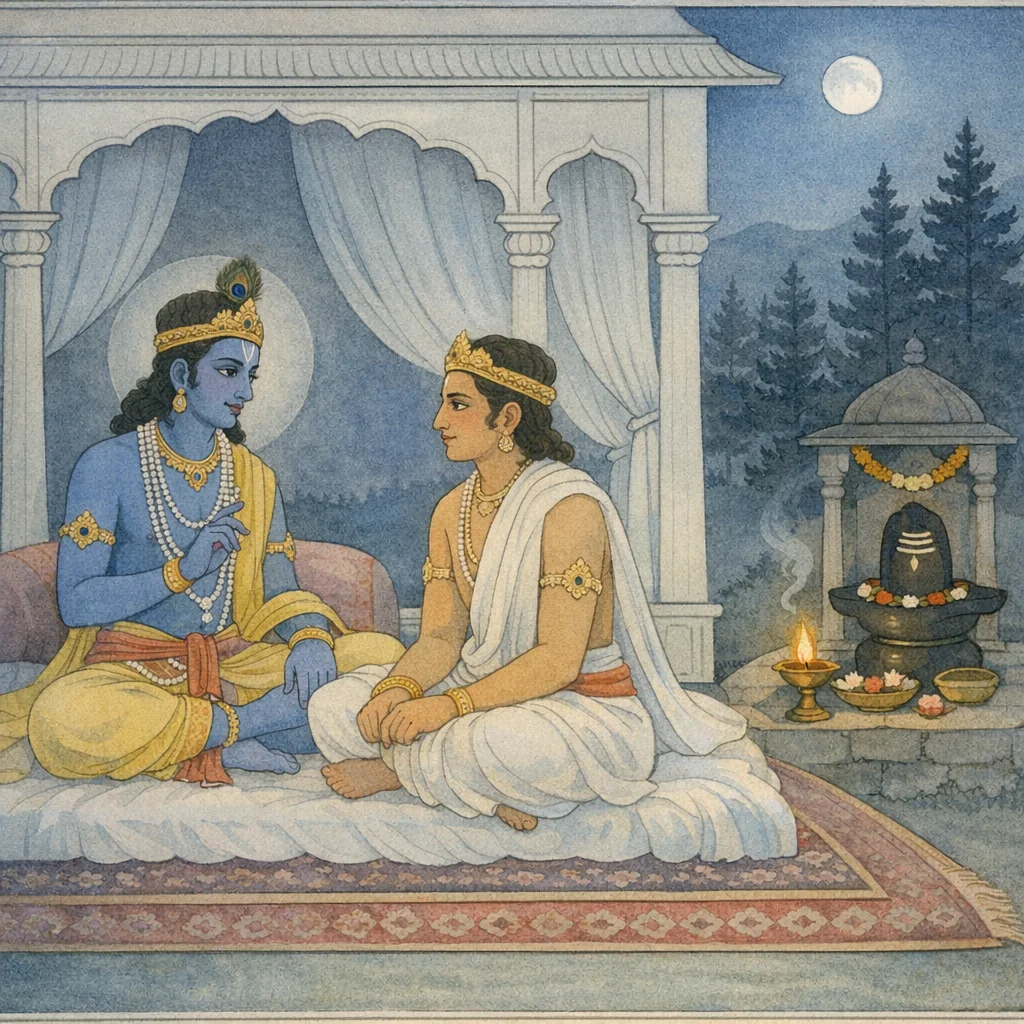
Chapter Arc: संजय धृतराष्ट्र को सुनाते हैं कि रात्रि में कमलनयन श्रीकृष्ण अर्जुन की विजय-प्रतिज्ञा को सिद्ध करने हेतु उसके भवन में प्रवेश करते हैं और शास्त्रोक्त विधि से त्र्यम्बक (शिव) का नैश बलि-पूजन आरम्भ होता है। → दर्भ-वैदूर्य-सम शय्या सजती है, गन्ध-माल्य से अलंकरण होता है; कृष्ण अर्जुन के मन के शोक-अमर्ष को लक्ष्य कर अगले दिन के लिए रथ-सज्जा, युद्ध-व्यवस्था और संकेत-ध्वनियों तक का निर्देश देते हैं—क्योंकि सूर्यास्त से पहले जयद्रथ-वध की प्रतिज्ञा ही कल के युद्ध का प्राण है। → कृष्ण का कठोर संकल्प उद्घोषित होता है—अर्जुनार्थे वे हाथी-घोड़े सहित समस्त शत्रुबल, कर्ण और दुर्योधन तक का संहार करने को तत्पर हैं; और शंख-पाञ्चजन्य के ऋषभ-स्वर तथा भैरव-नाद को ‘संकेत’ बनाकर दारुक को आदेश देते हैं कि उस कोलाहल को सुनते ही वेग से उनके पास पहुँचे। → रात्रि का अनुष्ठान और योजना-निर्धारण पूर्ण होता है: प्रातः शास्त्रविधि से उत्तम रथ सुसज्जित कर युद्धस्थल चलने का आदेश, तथा लक्ष्य स्पष्ट—दिनकर के अस्त होने से पहले जयद्रथ का वध। → उधर यह समाचार सुनकर दुर्योधन मंत्रियों सहित ऐसी मन्त्रणा करेगा कि संग्राम में अर्जुन जयद्रथ को मार न सके—कल का दिन प्रतिज्ञा बनाम प्रतिरोध का निर्णायक रण बनेगा।
Shlokas
Verse 1
(दाक्षिणात्य अधिक पाठके २३ “लोक मिलाकर कुल ४६३ *लोक हैं।) भीस्नआ+ज (2) आसमान एकोनाशीतितमो< ध्याय: श्रीकृष्णका अर्जुनकी विजयके लिये रात्रिमें भगवान शिवका किया करवाना, जागते हुए पाण्डव-सैनिकोंकी अर्जुनके लिये शुभाशंसा तथा अर्जुनकी सफलताके लिये श्रीकृष्णके दारुकके प्रति उत्साहभरे वचन संजय उवाच ततोअर्जुनस्य भवन प्रविश्याप्रतिमं विभु: । स्पृष्टवाम्भ: पुण्डरीकाक्ष: स्थण्डिले शुभलक्षणे
Sanjaya said: Then the mighty Lord, incomparable in splendor, entered Arjuna’s dwelling. The lotus-eyed Krishna, having touched water for purification, sat down upon an auspiciously marked earthen spot—composed and intent, as one who prepares for a sacred act amid the pressures of war.
Verse 3
संतस्तार शुभां शय्यां दर्भवैदूर्यसंनिभै: । ततो माल्येन विधिवल्लाजैर्गन्धै: सुमज्रलै: २ ।। अलंचकार तां शय्यां परिवार्यायुधोत्तमै: । ततः स्पृष्टोदके पार्थे विनीता: परिचारका:
Sañjaya said: They spread out a splendid couch, made to resemble darbha-grass and vaidūrya (cat’s-eye gem) in its sheen. Then, in due and proper manner, they adorned that couch with garlands and with choice, fragrant substances arranged in fine handfuls. Surrounding it with excellent weapons, they completed its decoration. Thereafter, when Pārtha had been ritually purified by touching water, the well-disciplined attendants stood ready for service—an image of ordered conduct and reverence maintained even amid the harshness of war.
Verse 4
दर्शयन्तो$न्तिके चक्रुर्नैंशं त्रैयम्बक॑ बलिम् । संजय कहते हैं--राजन्! तदनन्तर कमलनयन भगवान् श्रीकृष्णने अर्जुनके अनुपम भवनमें प्रवेश करके जलका स्पर्श किया और शुभ लक्षणोंसे युक्त वेदीपर वैदूर्यमणिके सदृश कुशोंकी सुन्दर शय्या बिछायी। तत्पश्चात् विधिपूर्वक परम मंगलकारी अक्षत, गन्ध एवं पुष्पमाला आदिसे उस शय्याको सजाया। उसके चारों ओर उत्तम आयुध रख दिये। इसके बाद जब अर्जुन आचमन कर चुके, तब विनीत (सुशिक्षित) परिचारकोंने उन्हें दिखाते हुए उनके निकट ही भगवान् शंकरका निशीथ-पूजन किया ।। १--३ ई || ततः प्रीतमना: पार्थो गन्धमाल्यैश्न माधवम्,तत्पश्चात् अर्जुनने प्रसन्नचित्त होकर श्रीकृष्णको गन्ध और मालाओंसे अलंकृत करके रात्रिका वह सारा उपहार उन्हींको समर्पित किया। तब मुसकराते हुए भगवान् गोविन्द अर्जुनसे बोले--
Sañjaya said: “O King, they performed, close at hand and in full view, the night-offering (bali) to Tryambaka (Śiva).” In the midst of war, the act underscores a disciplined turn to ritual propriety and divine guardianship—seeking auspiciousness and moral steadiness before perilous action.
Verse 5
अलंकृत्योपहारं त॑ नैशं तस्मै न्यवेदयत् । स्मयमानस्तु गोविन्द: फाल्गुन॑ प्रत्यभाषत,तत्पश्चात् अर्जुनने प्रसन्नचित्त होकर श्रीकृष्णको गन्ध और मालाओंसे अलंकृत करके रात्रिका वह सारा उपहार उन्हींको समर्पित किया। तब मुसकराते हुए भगवान् गोविन्द अर्जुनसे बोले--
Sañjaya said: Having adorned (Kṛṣṇa) with the night’s offerings—fragrances and garlands—Arjuna presented that entire gift to Him. Then Govinda, smiling, addressed Phālguna (Arjuna). The scene underscores a warrior’s humility and devotion even amid the harsh ethics of war: reverence and self-offering precede counsel and action.
Verse 6
सुप्यतां पार्थ भद्रें ते कल्याणाय व्रजाम्पहम् | स्थापयित्वा ततो द्वाःस्थान् 8 श्चात्तायुधान् नरान्
Sañjaya said: “Sleep, O Pārtha; may good befall you. I shall go forth for your welfare. Then, having stationed armed men at the doorway as guards, I will proceed.”
Verse 7
शिश्ये च शयने शुभ्रे बहुकृत्यं विचिन्तयन्,वहाँ बहुत-से कार्योंका चिन्तन करते हुए उन्होंने शुभ्र शय्यापर शयन किया। कमलनयन भगवान् श्रीकृष्ण सबके ईश्वरोंके भी ईश्वर हैं। उनका यश महान् है। वे विष्णुरूप गोविन्द अर्जुनका प्रिय करनेवाले हैं और सदा उनके कल्याणकी कामना रखते हैं। उन युक्तात्मा श्रीहरिने उत्तम योगका आश्रय ले अर्जुनके लिये वह सारा विधि-विधान सम्पन्न किया, जो उनके शोक और दुःखको दूर करनेवाला तथा तेज और कान्तिको बढ़ानेवाला था
Sañjaya said: Reflecting on many matters that still needed to be done, he lay down upon a bright, auspicious couch. The lotus-eyed Lord Śrī Kṛṣṇa—sovereign even over the rulers of all beings, of vast renown—Vişṇu-formed Govinda, ever dear to Arjuna and always intent on his welfare, then, with a disciplined mind and taking refuge in the highest Yoga, carried out for Arjuna the complete set of rites and arrangements that dispel grief and sorrow and that increase radiance and splendor.
Verse 8
पार्थाय सर्व भगवान् शोकदुःखापहं विधिम् । व्यदधात् पुण्डरीकाक्षस्तेजोद्युतिविवर्धनम्,वहाँ बहुत-से कार्योंका चिन्तन करते हुए उन्होंने शुभ्र शय्यापर शयन किया। कमलनयन भगवान् श्रीकृष्ण सबके ईश्वरोंके भी ईश्वर हैं। उनका यश महान् है। वे विष्णुरूप गोविन्द अर्जुनका प्रिय करनेवाले हैं और सदा उनके कल्याणकी कामना रखते हैं। उन युक्तात्मा श्रीहरिने उत्तम योगका आश्रय ले अर्जुनके लिये वह सारा विधि-विधान सम्पन्न किया, जो उनके शोक और दुःखको दूर करनेवाला तथा तेज और कान्तिको बढ़ानेवाला था
Sañjaya said: For Pārtha (Arjuna), the Blessed Lord—lotus-eyed Kṛṣṇa—arranged in full the prescribed rite and discipline that dispels grief and sorrow, and that increases strength, radiance, and splendor. In the midst of war’s strain, the Lord’s care is shown not merely in strategy but in restoring the warrior’s inner steadiness through sacred observance, so that duty may be borne without being crushed by anguish.
Verse 9
योगमास्थाय युक्तात्मा सर्वेषामीश्ररेश्वर: । श्रेयस्काम: पृथुयशा विष्णुर्जिष्णुप्रियंकर:,वहाँ बहुत-से कार्योंका चिन्तन करते हुए उन्होंने शुभ्र शय्यापर शयन किया। कमलनयन भगवान् श्रीकृष्ण सबके ईश्वरोंके भी ईश्वर हैं। उनका यश महान् है। वे विष्णुरूप गोविन्द अर्जुनका प्रिय करनेवाले हैं और सदा उनके कल्याणकी कामना रखते हैं। उन युक्तात्मा श्रीहरिने उत्तम योगका आश्रय ले अर्जुनके लिये वह सारा विधि-विधान सम्पन्न किया, जो उनके शोक और दुःखको दूर करनेवाला तथा तेज और कान्तिको बढ़ानेवाला था
Sañjaya said: Having resorted to yogic composure, the self-disciplined Lord—sovereign even over the rulers of all—ever intent on what is truly beneficial, of far-spread fame, Viṣṇu (Govinda), the one who brings delight to Jiṣṇu (Arjuna), undertook the proper sacred procedure for Arjuna’s sake—meant to dispel grief and sorrow and to increase his radiance and inner strength.
Verse 10
न पाण्डवानां शिबिरे कश्ित् सुष्वाप तां निशाम् । प्रजागर: सर्वजनं हााविवेश विशाम्पते,राजन्! उस रातमें पाण्डवोंके शिविरमें कोई नहीं सोया। सब लोगोंमें जागरणका आवेश हो गया था
Sañjaya said: In the Pāṇḍavas’ camp, no one slept that night. A surge of wakeful vigilance seized everyone, O lord of the people, O King—anxious, alert, and bracing themselves amid the moral weight and peril of war.
Verse 11
पुत्रशोकाभिततप्तेन प्रतिज्ञातो महात्मना । सहसा सिन्धुराजस्य वधो गाण्डीवधन्चना,सब लोग इसी चिन्तामें पड़े थे कि पुत्रशोकसे संतप्त हुए गाण्डीवधारी महामना अर्जुनने सहसा सिंधुराज जयद्रथके वधकी प्रतिज्ञा कर ली है। शत्रुवीरोंका संहार करनेवाले वे महाबाहु इन्द्रकुमार अपनी उस प्रतिज्ञाको कैसे सफल करेंगे?
Sanjaya said: “Burning with grief for his son, the great-souled Arjuna, wielder of the Gandiva, suddenly vowed to slay the king of Sindhu, Jayadratha. All were absorbed in this very anxiety: how will that mighty-armed son of Indra—destroyer of enemy heroes—bring his vow to fulfillment?”
Verse 12
तत् कथं नु महाबाहुर्वासवि: परवीरहा । प्रतिज्ञां सफलां कुर्यादेति ते समचिन्तयन्,सब लोग इसी चिन्तामें पड़े थे कि पुत्रशोकसे संतप्त हुए गाण्डीवधारी महामना अर्जुनने सहसा सिंधुराज जयद्रथके वधकी प्रतिज्ञा कर ली है। शत्रुवीरोंका संहार करनेवाले वे महाबाहु इन्द्रकुमार अपनी उस प्रतिज्ञाको कैसे सफल करेंगे?
Sanjaya said: "How, then, will the mighty-armed son of Indra—slayer of enemy heroes—make his vow come true?" Thus they all reflected, for Arjuna, the great-souled wielder of the Gāṇḍīva, burning with grief for his son, had suddenly vowed to kill Jayadratha, the king of Sindhu. They were absorbed in anxiety over how he would fulfill that pledge amid the press of war.
Verse 13
कष्ट हीदं व्यवसितं पाण्डवेन महात्मना । पुत्रशोकाभिततप्तेन प्रतिज्ञा महती कृता,महामना पाण्डवने यह बड़ा कष्टप्रद निश्चय किया है। उन्होंने पुत्रशोकसे संतप्त होकर बड़ी भारी प्रतिज्ञा कर ली है। उधर राजा जयद्रथका पराक्रम भी महान् है। तथापि अर्जुन अपनी उस प्रतिज्ञाको पूरी कर लेंगे; क्योंकि उनके भाई भी बड़े पराक्रमी हैं और उनके पास सेनाएँ भी बहुत हैं
Sanjaya said: “This is indeed a grievous resolve undertaken by the great-souled Pandava. Scorched by the anguish of his son’s death, he has made a mighty vow.”
Verse 14
सच राजा महावीर्य: पारयत्वर्जुन: स ताम् । भ्रातरश्चापि विक्रान्ता बहुलानि बलानि च,महामना पाण्डवने यह बड़ा कष्टप्रद निश्चय किया है। उन्होंने पुत्रशोकसे संतप्त होकर बड़ी भारी प्रतिज्ञा कर ली है। उधर राजा जयद्रथका पराक्रम भी महान् है। तथापि अर्जुन अपनी उस प्रतिज्ञाको पूरी कर लेंगे; क्योंकि उनके भाई भी बड़े पराक्रमी हैं और उनके पास सेनाएँ भी बहुत हैं
Sañjaya said: That king (Jayadratha) is indeed of great prowess; yet Arjuna will fulfill that vow. For his brothers too are valiant, and he has many forces at his side. In the shadow of grief and fierce resolve, the narrative stresses that a terrible pledge, once taken, must be carried through—supported by comradeship and collective strength amid the moral strain of war.
Verse 15
धृतराष्ट्रस्य पुत्रेण सर्व तस्मै निवेदितम् । स हत्वा सैन्धवं संख्ये पुनरेतु धनंजय:,धृतराष्ट्रपुत्र दुर्योधनने जयद्रथको सब बातें बता दी होंगी। अर्जुन युद्धमें सिंधुराज जयद्रथको मारकर पुन: सकुशल लौट आवें (यही हमारी शुभ कामना है)
Sañjaya said: “All this has been reported to him by Dhṛtarāṣṭra’s son. May Dhanañjaya (Arjuna), having slain the Sindhu-king (Jayadratha) in battle, return again in safety.” The line carries the tense moral atmosphere of the war: news is relayed through partisan channels, while even amid hostility a wish for safe return is voiced—revealing the human pull between duty in combat and concern for life.
Verse 16
जित्वा रिपुगणांश्वैव पारयत्वर्जुनो व्रतम् । श्वो5हत्वा सिन्धुराजं वै धूमकेतु प्रवेक्ष्यति,अर्जुन शत्रुओंको जीतकर अपना व्रत पूरा करें। यदि वे कल सिंधुराजको न मार सके तो अग्निमें प्रवेश कर जायँगे। कुन्तीकुमार धनंजय अपनी बात झूठी नहीं कर सकते। यदि अर्जुन मर गये तो धर्मपुत्र युधिष्ठिर कैसे राजा होंगे?
Sañjaya said: “Having overcome the host of enemies, let Arjuna fulfill his vow. If, tomorrow, he does not slay the king of Sindhu, he will indeed enter the blazing fire. Dhanañjaya, the son of Kuntī, cannot allow his spoken word to become false; and if Arjuna were to perish, how could Dharmaputra Yudhiṣṭhira ever become king?”
Verse 17
न हासावनृतं कर्तुमलं पार्थो धनंजय: । धर्मपुत्र: कथं राजा भविष्यति मृते$र्जुने,अर्जुन शत्रुओंको जीतकर अपना व्रत पूरा करें। यदि वे कल सिंधुराजको न मार सके तो अग्निमें प्रवेश कर जायँगे। कुन्तीकुमार धनंजय अपनी बात झूठी नहीं कर सकते। यदि अर्जुन मर गये तो धर्मपुत्र युधिष्ठिर कैसे राजा होंगे?
Sañjaya said: “That Pārtha, Dhanañjaya, is not capable of making his word false. If Arjuna were to die, how could Dharmaputra (Yudhiṣṭhira) ever become king?”
Verse 18
तस्मिन् हि विजय: कृत्स्न: पाण्डवेन समाहित: । यदि नोड<स्ति कृतं किज्चिद् यदि दत्त हुतं यदि
Sañjaya said: “In that Pāṇḍava, indeed, the whole of victory is firmly gathered and secured. Even if nothing has been done, even if nothing has been given in charity, even if no oblation has been offered…”
Verse 19
एवं कथयतां तेषां जयमाशंसतां प्रभो
Sañjaya said: “O lord, while they were speaking thus—confidently wishing for victory—(the events continued to unfold).”
Verse 20
तस्यां रजन्यां मध्ये तु प्रतिबुद्धो जनार्दन:
Sañjaya said: In the middle of that night, Janārdana (Kṛṣṇa) awoke—an awakening that signals alertness and timely action amid the moral darkness of war, where vigilance and right counsel become essential to uphold dharma.
Verse 21
अर्जुनेन प्रतिज्ञातमार्तेन हतबन्धुना
Sañjaya said: This was the vow made by Arjuna—made in anguish, after his kinsmen had been slain—binding him to a course of action driven by grief and duty amid the moral pressure of war.
Verse 22
तत्तु दुर्योधन: श्रुत्वा मन्सत्रिभिर्मन्त्रयिष्यति
Sañjaya said: Having heard that, Duryodhana will then take counsel with his ministers—seeking a course of action amid the pressures of war and the demands of kingship.
Verse 23
अक्षौहिण्यो हि ता: सर्वा रक्षिष्यन्ति जयद्रथम्
Sañjaya said: “Indeed, all those full battle-formations (akṣauhiṇīs) will be guarding Jayadratha.” The line underscores the Kaurava resolve to shield a single, strategically crucial warrior, even at the cost of vast forces—revealing how, in war, collective might is often bent to protect a chosen instrument of a larger design.
Verse 24
द्रोणश्न॒ सह पुत्रेण सर्वास्त्रविधिपारग: । “वे सारी अक्षौहिणी सेनाएँ जयद्रथकी रक्षा करेंगी तथा सम्पूर्ण अस्त्र-विधिके पारंगत विद्वान् द्रोणाचार्य भी अपने पुत्र अश्वत्थामाके साथ उसकी रक्षामें रहेंगे ।। २३ ई ।। एको वीर: सहस्राक्षो दैत्यदानवदर्पहा
Sañjaya said: “Droṇa too, together with his son, a master of every method and discipline of weaponry, will stand guard. And there is that single heroic warrior—mighty as the thousand-eyed Indra—who crushes the pride of Daityas and Dānavas.” The statement underscores how the Kaurava side concentrates elite protectors around a key objective, framing protection and prowess as decisive factors in the unfolding ethics of war.
Verse 25
सो हं श्वस्तत् करिष्यामि यथा कुन्तीसुतो<र्जुन:
Sañjaya said: “Indeed, tomorrow I shall act in such a way as Arjuna, the son of Kuntī, would act”—declaring an intention to meet the coming day’s crisis with the same resolve, discipline, and warrior-duty associated with Arjuna in the righteous struggle of the war.
Verse 26
न हि दारा न मित्राणि ज्ञातयो न च बान्धवा:
Sañjaya said: In this crisis, neither one’s wife nor one’s friends—neither kinsmen nor even close relations—can truly serve as a sure refuge. The verse underscores the hard ethical reality of war: when fate and duty press in, ordinary social supports often fail, and one must face consequences with clarity rather than dependence.
Verse 27
अनर्जुनमिमं लोकं मुहूर्तमपि दारुक
Sanjaya said: “O Dāruka, even for a single moment this world seems bereft of Arjuna.”
Verse 28
अहं विजित्य तान् सर्वान् सहसा सहयद्विपान्
Sañjaya said: “Having swiftly overcome them all—together with their elephants—I…” (He begins to report a rapid, forceful victory, emphasizing the overwhelming momentum of battle and the crushing of both warriors and their war-beasts, a hallmark of the escalating violence in Droṇa’s campaign.)
Verse 29
श्वो निरीक्षन्तु मे वीर्य त्रयो लोका महाहवे
Sañjaya said: “Let the three worlds behold my prowess tomorrow in the great battle.”
Verse 30
श्वो नरेन्द्रसहस्राणि राजपुत्रशतानि च
Sañjaya said: “Tomorrow, thousands of kings and hundreds of princes as well…”
Verse 31
श्वेस्तां चक्रप्रमथितां द्रक्ष्य्से नूपवाहिनीम्
Sañjaya said: “You will see that white (radiant) army-division, crushed and thrown into confusion by the wheel (of the chariot)—a force reduced to helplessness by the relentless momentum of battle.”
Verse 32
श्र: सदेवा: सगन्धर्वा: पिशाचोरगराक्षसा:
Sañjaya said: “Even the celestial hosts—together with the Gandharvas, and also the Piśācas, serpents, and Rākṣasas—[were involved/affected].” The line evokes the sense that the events on the battlefield had repercussions so vast and fearsome that beings from every realm, divine and uncanny alike, are drawn into the scene, underscoring the moral gravity and cosmic scale of the war.
Verse 33
यस्तं द्वेष्टि स मां द्वेष्टि यस्तं चानु स मामनु
Sañjaya said: “Whoever hates him, hates me; and whoever follows him, follows me as well.” The statement binds personal allegiance and enmity to the chosen leader, stressing that moral and political alignment in war is not neutral: one’s stance toward the principal figure becomes one’s stance toward his cause and companions.
Verse 34
यथा त्वं मे प्रभातायामस्यां निशि रथोत्तमम्
Sañjaya said: “Just as you described to me, in this very night that has now reached dawn, that excellent chariot…”
Verse 35
कल्पयित्वा यथाशास्त्रमादाय व्रज संयत: । “कल प्रातःकाल तुम शास्त्रविधिके अनुसार मेरे उत्तम रथको सुसज्जित करके सावधानीके साथ लेकर युद्धस्थलमें चलना ।। ३४ ई ।। गदां कौमोदकीं दिव्यां शक्ति चक्र धनु: शरान्,वैनतेयस्य वीरस्यथ समरे रथशोभिन: । 'सूत! कौमोदकी गदा, दिव्य शक्ति, चक्र, धनुष, बाण तथा अन्य सब आवश्यक सामग्रियोंको रथपर रखकर उसके पिछले भागमें समरांगणमें रथपर शोभा पानेवाले वीर विनतानन्दन गरुड़के चिह्नवाले ध्वजके लिये भी स्थान बना लेना
Sañjaya said: “Having arranged everything in accordance with the prescriptions of the martial manuals, take the chariot and proceed with restraint and care. Place upon it the divine Kaumodakī mace, the spear, the discus, the bow, the arrows, and all other necessary equipment; and also make room at the rear for the banner bearing the emblem of Vainateya (Garuḍa), so that the warrior’s chariot may shine in the battlefield.” The passage underscores disciplined preparation and adherence to proper procedure even amid the urgency of war, presenting order, self-control, and duty-bound readiness as ethical virtues in a violent context.
Verse 36
आरोप्य वै रथे सूत सर्वोपकरणानि च । स्थानं च कल्पयित्वाथ रथोपस्थे ध्वजस्य मे
Sañjaya said: “Having had the charioteer place upon the chariot all the necessary equipment, and then having arranged a proper place for me on the chariot-platform near the standard, …”
Verse 37
छत्र॑ जाम्बूनदैजलैरकींज्वलनसप्रभै:,युक्तान् वाजिवरान् यत्त: कवची तिष्ठ दारुक । “दारुक! साथ ही उसमें छत्र लगाकर अग्नि और सूर्यके समान प्रकाशित होनेवाले तथा विश्वकर्माके बनाये हुए दिव्य सुवर्णमय जालोंसे विभूषित मेरे चारों श्रेष्ठ घोड़ों--बलाहक, मेघपुष्प, शैब्य तथा सुग्रीवको जोत लेना और स्वयं भी कवच धारण करके तैयार रहना
Sañjaya said: “O Dāruka, fit the parasol and the divine golden netting of Jāmbūnada gold, blazing like fire and the sun. Harness my four excellent horses—Balāhaka, Meghapuṣpa, Śaibya, and Sugrīva—and you too, wearing armor, stand ready.” In the midst of war, the command stresses disciplined preparedness and the righteous execution of one’s assigned duty without delay.
Verse 38
विश्वकर्मकृतर्दिव्यैरश्वानपि विभूषितान् बलाहकं मेघपुष्पं शैब्यं सुग्रीवमेव च
Sañjaya said: “He had even the horses—divine and fashioned by Viśvakarman—adorned and harnessed: Balāhaka, Meghapuṣpa, Śaibya, and also Sugrīva.” In the war narrative, the verse highlights the extraordinary, almost superhuman preparedness and splendor of the warrior’s chariot-team, underscoring how martial power is amplified by divine craftsmanship and careful equipment—an ethical reminder that prowess in battle is not merely personal valor but also the result of resources, support, and deliberate preparation.
Verse 39
पाञ्चजन्यस्य निर्घोषमार्षभेणैव पूरितम्
Sañjaya said: “The thunderous blast of the conch Pāñcajanya filled the air, as though it were the very bellowing of a mighty bull.” In the war’s moral atmosphere, the sound functions as a public signal of resolve and intimidation—an audible proclamation that the combatants have crossed from counsel into irrevocable action.
Verse 40
एकाह्वाहममर्ष च सर्वदु:खानि चैव ह
Sañjaya said: “I endured the whole day’s provocation and resentment, and indeed all the sorrows as well.”
Verse 41
सर्वोपायैर्यतिष्यामि यथा बीभत्सुराहवे
Sañjaya said: “I will strive by every possible means, so that Bībhatsu (Arjuna) may be dealt with in the battle as intended.”
Verse 42
पश्यतां धार्तराष्ट्राणां हनिष्यति जयद्रथम् । “सभी उपायोंसे ऐसा प्रयत्न करूँगा, जिससे अर्जुन युद्धमें धृतराष्ट्रपुत्रोंक देखते-देखते जयद्रथको मार डालें ।। यस्य यस्य च बीभत्सुर्वधे यत्नं करिष्यति । आशंसे सारथे तत्र भवितास्य ध्रुवो जय:,'सारथे! कल अर्जुन जिस-जिस वीरके वधका प्रयत्न करेंगे, मैं आशा करता हूँ, वहाँ- वहाँ उनकी निश्चय ही विजय होगी”
Sanjaya said: “Before the very eyes of Dhritarashtra’s sons, he will slay Jayadratha. And whichever warrior Arjuna (Bibhatsu) strives to kill, O charioteer, I trust that there his victory will surely be certain.” In the moral atmosphere of the war, Sanjaya frames Arjuna’s resolve as an inevitable consequence of focused effort and righteous determination, while also underscoring the public, witnessed nature of the act—an answer to the Kauravas’ challenge and a fulfillment of a vowed duty.
Verse 43
दारुक उवाच जय एव ध्रुवस्तस्य कुत एव पराजय: । यस्य त्वं पुरुषव्याप्र सारथ्यमुपजग्मिवान्,दारुक बोला--पुरुषसिंह! आप जिनके सारथि बने हुए हैं, उनकी विजय तो निश्चित है ही। उनकी पराजय कैसे हो सकती है?
Dāruka said: “Victory for him is certain; how could defeat ever be possible? O tiger among men, for whom you have taken up the role of charioteer—his triumph is assured.”
Verse 44
एवं चैतत् करिष्यामि यथा मामनुशाससि । सुप्रभातामिमां रात्रिं जयाय विजयस्य हि,अर्जुनकी विजयके लिये कल सबेरे जो कुछ करनेकी आप मुझे आज्ञा देते हैं, उसे उसी रूपमें मैं अवश्य पूर्ण करूँगा
Dāruka said: “So shall I do exactly as you instruct me. May this night pass into a blessed dawn—for the sake of victory, indeed, for Arjuna’s triumph.”
Verse 66
दारुकानुगत: श्रीमान् विवेश शिबिरं स्वकम् | “कुन्तीकुमार! तुम्हारा कल्याण हो। अब शयन करो। मैं तुम्हारे कल्याण-साधनके लिये ही जा रहा हूँ" ऐसा कहकर वहाँ अस्त्र-शस्त्र लिये हुए मनुष्योंको द्वारपाल एवं रक्षक नियुक्त करके भगवान् श्रीकृष्ण दारुकके साथ अपने शिविरमें चले गये
Sañjaya said: Accompanied by Dāruka, the illustrious Lord entered his own camp. Addressing Kuntī’s son, he said, “May welfare be yours. Now take rest; I am going only to secure what is beneficial for you.” Having spoken thus, he stationed armed men there as gatekeepers and guards, and then Bhagavān Śrī Kṛṣṇa, together with Dāruka, went to his own camp.
Verse 78
इस प्रकार श्रीमह्ाभारत द्रोणपर्वके अन्तर्गत प्रतिज्ञापर्वमें सुभद्रा-विलापविषयक अठहत्तरवाँ अध्याय पूरा हुआ
Thus ends the seventy-eighth chapter of the Pratijñā-parvan within the Droṇa-parvan of the Śrī Mahābhārata, dealing with Subhadrā’s lament. The closing formula marks the completion of a section whose emotional focus is grief and remembrance amid the moral weight of war and vows.
Verse 79
इति श्रीमहाभारते द्रोणपर्वणि प्रतिज्ञापर्वणि कृष्णदारुकसम्भाषणे एकोनाशीतितमो<ध्याय:
Thus, in the Śrī Mahābhārata, within the Droṇa Parva—specifically the section known as the Pratijñā Parva—ends the eighty-ninth chapter, recounting the dialogue between Kṛṣṇa and Dāruka. The colophon frames the episode as a morally charged exchange set amid the pressures of war, where vows, duty, and strategic counsel shape the unfolding of events.
Verse 183
फलेन तस्य सर्वस्य सव्यसाची जयत्वरीन् । पाण्डुनन्दन युधिष्ठिरने अर्जुनपर ही सारा विजयका भार रख दिया। यदि हमलोगोंका किया हुआ कुछ भी सत्कर्म शेष हो, यदि हमने दान और होम किये हों तो हमारे उन सभी शुभकर्मोंके फलसे सव्यसाची अर्जुन अपने शत्रुओंपर विजय प्राप्त करें
Verse 193
कृच्छेण महता राजन् रजनी व्यत्यवर्तत । राजन! प्रभो! इस प्रकार बातें करते और अर्जुनकी विजय चाहते हुए उन सभी सैनिकोंकी वह रात्रि महान् कष्टसे बीती थी
Sañjaya said: O King, that night passed with great hardship, as the warriors spoke among themselves and longed for Arjuna’s victory—enduring the strain and uncertainty that war imposes even in the hours meant for rest.
Verse 203
स्मृत्वा प्रतिज्ञां पार्थस्य दारुक॑ प्रत्यभाषत । भगवान् श्रीकृष्ण उस रात्रिके मध्यकालमें जाग उठे और अर्जुनकी प्रतिज्ञाको स्मरण करके दारुकसे बोले--
Sañjaya said: Recalling Arjuna’s solemn vow, Dāruka spoke in response. In the middle of that night, the Blessed Śrī Kṛṣṇa awoke; and, remembering Arjuna’s pledge, he addressed Dāruka—signaling that a warrior’s promise, once given, must be guarded with vigilant resolve even amid exhaustion and peril.
Verse 216
जयद्रथं वधिष्यामि श्वोभूत इति दारुक । “दारुक! अपने पुत्र अभिमन्युके मारे जानेसे शोकार्त होकर अर्जुनने यह प्रतिज्ञा कर ली है कि मैं कल जयद्रथका वध कर डालूँगा'
Sañjaya said: “O Dāruka, ‘Tomorrow, when day breaks, I shall slay Jayadratha.’” Thus Arjuna, overwhelmed by grief at the killing of his son Abhimanyu, makes a solemn vow—binding his warrior-honor to a single act of retributive justice amid the moral pressure of war.
Verse 243
सो<पि त॑ नोत्सहेताजौ हन्तुं द्रोणेन रक्षितम् “त्रिलोकीके एकमात्र वीर हैं सहसखनेत्रधारी इन्द्र, जो दैत्यों और दानवोंके भी दर्पका दलन करनेवाले हैं; परंतु वे भी द्रोणाचार्यसे सुरक्षित जयद्रथको युद्धमें मार नहीं सकते
Sañjaya said: Even he would not be able, in battle, to slay the one protected by Droṇa. In the three worlds, Indra alone is famed as the peerless hero, the thousand-eyed lord who crushes the pride of Daityas and Dānavas; yet even he could not kill Jayadratha in war while Droṇācārya stands as his protector. The statement underscores how a master’s guardianship and battlefield formation can render even a notorious target effectively inviolable, shifting the moral weight from mere personal valor to the ethics of protection, duty, and strategic responsibility in war.
Verse 253
अप्राप्ते5स्तं दिनकरे हनिष्यति जयद्रथम् । “अतः मैं कल वह उद्योग करूँगा, जिससे कुन्तीपुत्र अर्जुन सूर्यदेवके अस्त होनेसे पहले जयद्रथको मार डालेंगे
Sañjaya said: “Before the sun has set, he will slay Jayadratha.” The statement underscores the urgency of Arjuna’s vowed duty in battle: the day’s remaining time becomes a moral and strategic boundary, where resolve, responsibility to comrades, and the consequences of failure converge.
Verse 266
कश्चिदन्य: प्रियतर: कुन्तीपुत्रान्ममार्जुनात् | “मुझे स्त्री, मित्र, कुटुम्बीजन, भाई-बन्धु तथा दूसरा कोई भी कुन्तीपुत्र अर्जुनसे अधिक प्रिय नहीं है
Sañjaya said: “Is there anyone else among Kuntī’s sons who is dearer to me than Arjuna?” The line underscores a personal hierarchy of affection and loyalty: even amid the moral strain of war, Arjuna stands as the foremost beloved, eclipsing other bonds and attachments.
Verse 276
उदीक्षितुं न शक्तो5हं भविता न च तत् तथा । “दारुक! मैं अर्जुनसे रहित इस संसारको दो घड़ी भी नहीं देख सकता। ऐसा हो ही नहीं सकता (कि मेरे रहते अर्जुनका कोई अनिष्ट हो)
Sañjaya said: “I am not able to endure watching this; nor can it truly be so—that any such calamity should befall Arjuna while I yet live.” The utterance conveys an intense, protective loyalty and a moral refusal to accept the possibility of harm to the righteous warrior amid the chaos of war.
Verse 283
अर्जुनार्थे हनिष्पामि सकर्णान् ससुयोधनान् । “मैं अर्जुनके लिये हाथी, घोड़े, कर्ण और दुर्योधनसहित उन समस्त शत्रुओंको जीतकर सहसा उनका संहार कर डालूँगा
Sañjaya said: “For Arjuna’s sake, I shall swiftly strike down and destroy all those enemies—along with Karṇa and Suyodhana.” The line conveys a vow of decisive violence framed as loyalty to Arjuna, highlighting how personal devotion and battlefield duty can intensify the resolve to annihilate opponents in war.
Verse 296
धनंजयार्थे समरे पराक्रान्तस्य दारुक । “दारुक! कलके महासमरमें तीनों लोक धनंजयके लिये युद्धमें पराक्रम प्रकट करते हुए मेरे बल और प्रभावको देखें
Sanjaya said: “O Dāruka! Behold my strength and splendor as I display valor in this great and dreadful battle, fighting for the sake of Dhanañjaya (Arjuna)—as though the three worlds themselves were mustered for him.”
Verse 303
साश्रृद्धिपरथान्याजौ विद्रविष्यामि दारुक । “दारुक! कल युद्धमें मैं सहस्नों राजाओं तथा सैकड़ों राजकुमारोंको उनके घोड़े, हाथी एवं रथोंसहित मार भगाऊँगा
Sañjaya said: “O Dāruka, today in battle I shall rout them—kings in their thousands and princes in their hundreds—together with their horses, elephants, and chariots.” The utterance conveys the fierce resolve and boastful confidence that often arises in the heat of war, where martial ambition can eclipse restraint and compassion.
Verse 313
मया क्ुद्धेन समरे पाण्डवार्थे निपातिताम् । “तुम कल देखोगे कि मैंने समरांगणमें कुपित होकर पाण्डुपुत्र अर्जुनके लिये सारी राजसेनाको चक्रसे चूर-चूर करके धरतीपर मार गिराया है
Sañjaya said: “In the battle, I—angered—have struck down (that host) for the sake of the Pāṇḍavas.” The line conveys the grim moral tension of war: wrath becomes the driving force, yet it is claimed to be in service of a chosen cause, showing how duty and partiality are invoked to justify lethal action.
Verse 323
ज्ञास्यन्ति लोका: सर्वे मां सुहृंदे सव्यसाचिन: । “कल देवता, गन्धर्व, पिशाच, नाग तथा राक्षस आदि समस्त लोक यह अच्छी तरह जान लेंगे कि मैं सव्यसाची अर्जुनका हितैषी मित्र हूँ
Sañjaya said: All beings in the worlds will come to know me as the well-wishing friend of Savyasācin (Arjuna). In the moral atmosphere of the war, this line underscores that true friendship is proven not by words but by steadfast support for what is right, even amid fearsome and supernatural witnesses.
Verse 333
इति संकल्प्यतां बुद्धया शरीरार्द्ध ममार्जुन: । “जो अर्जुनसे द्वेष करता है, वह मुझसे द्वेष करता है और जो अर्जुनका अनुगामी है, वह मेरा अनुगामी है, तुम अपनी बुद्धिसे यह निश्चय कर लो कि अर्जुन मेरा आधा शरीर है
Sañjaya said: “Let this be firmly resolved by your own understanding: Arjuna is half of my very body. Whoever bears hatred toward Arjuna bears hatred toward me; and whoever follows Arjuna follows me. Decide this clearly in your mind—Arjuna is my other half.”
Verse 363
वैनतेयस्य वीरस्यथ समरे रथशोभिन: । 'सूत! कौमोदकी गदा, दिव्य शक्ति, चक्र, धनुष, बाण तथा अन्य सब आवश्यक सामग्रियोंको रथपर रखकर उसके पिछले भागमें समरांगणमें रथपर शोभा पानेवाले वीर विनतानन्दन गरुड़के चिह्नवाले ध्वजके लिये भी स्थान बना लेना
Sañjaya said: “O charioteer, place upon the chariot the Kaumodakī mace, the divine spear, the discus, the bow, the arrows, and all other necessary equipment; and at the rear of the chariot make room as well for the banner marked with Garuḍa—the emblem of Vinatā’s son—so that the warrior may appear resplendent on the battlefield.”
Verse 383
युक्तान् वाजिवरान् यत्त: कवची तिष्ठ दारुक । “दारुक! साथ ही उसमें छत्र लगाकर अग्नि और सूर्यके समान प्रकाशित होनेवाले तथा विश्वकर्माके बनाये हुए दिव्य सुवर्णमय जालोंसे विभूषित मेरे चारों श्रेष्ठ घोड़ों--बलाहक, मेघपुष्प, शैब्य तथा सुग्रीवको जोत लेना और स्वयं भी कवच धारण करके तैयार रहना
Sañjaya said: “Dāruka, yoke the excellent horses at once, and stand ready wearing your armor.” The command conveys disciplined preparedness in the midst of war—swift action, protection of life through proper equipment, and the ethical seriousness of entering battle with alertness rather than recklessness.
Verse 393
श्रुत्वा च भैरवं नादमुपेयास्त्वं जवेन माम् | “पाज्चजन्य शंखका ऋषभ स्वरसे बजाया हुआ शब्द और भयंकर कोलाहल सुनते ही तुम बड़े वेगसे मेरे पास पहुँच जाना
Sañjaya said: “As soon as you hear the dreadful roar, come to me at once with all speed.” The line underscores the urgency and discipline required amid the chaos of war, where timely response and clear signals can preserve order and avert greater harm.
Verse 406
भ्रातुः पैतृष्वसेयस्य व्यपनेष्यामि दारुक | “दारुक! मैं अपनी बुआजीके पुत्र भाई अर्जुनके सारे दुःख और अमर्षको एक ही दिनमें दूर कर दूँगा
Sañjaya said: “O Dāruka, I shall remove, in a single day, the grief and smouldering resentment of my brother’s paternal cousin.”
Verse 2236
यथा जयद्रथं पार्थो न हन्यादिति संयुगे । “यह सब सुनकर दुर्योधन अपने मन्त्रियोंक साथ ऐसी मन्त्रणा करेगा” जिससे अर्जुन समरभूमिमें जयद्रथको मार न सकें
Sañjaya said: “So that Pārtha (Arjuna) may not slay Jayadratha in the battle.” Hearing all this, Duryodhana, together with his ministers, will devise such a counsel as to prevent Arjuna from killing Jayadratha on the field of war—an instance of strategy being used to obstruct a vowed act and to shield an ally, regardless of the justice of the cause.
Frequently Asked Questions
Rather than a single explicit dharma-sankat, the chapter frames an ethical tension indirectly: identity and prestige are displayed through symbols while combat rapidly intensifies, raising the implicit question of how reputation and duty operate when violence becomes impersonal and overwhelming.
The passage illustrates how symbols and perception shape human action: banners function as condensed narratives of identity, and the reported ‘seeing’ of war emphasizes that knowledge is mediated—through signs, testimony, and interpretation.
No explicit phalaśruti is stated here; its meta-function is archival and diagnostic—cataloging martial insignia and transitioning into the sensory density of battle to situate subsequent events within a recognizable field of actors.