Adhyaya 1
मैत्रेयप्रश्नः—पुराणसंहिताप्रतिज्ञा च (Maitreya’s Questions and Parāśara’s Resolve to Teach)
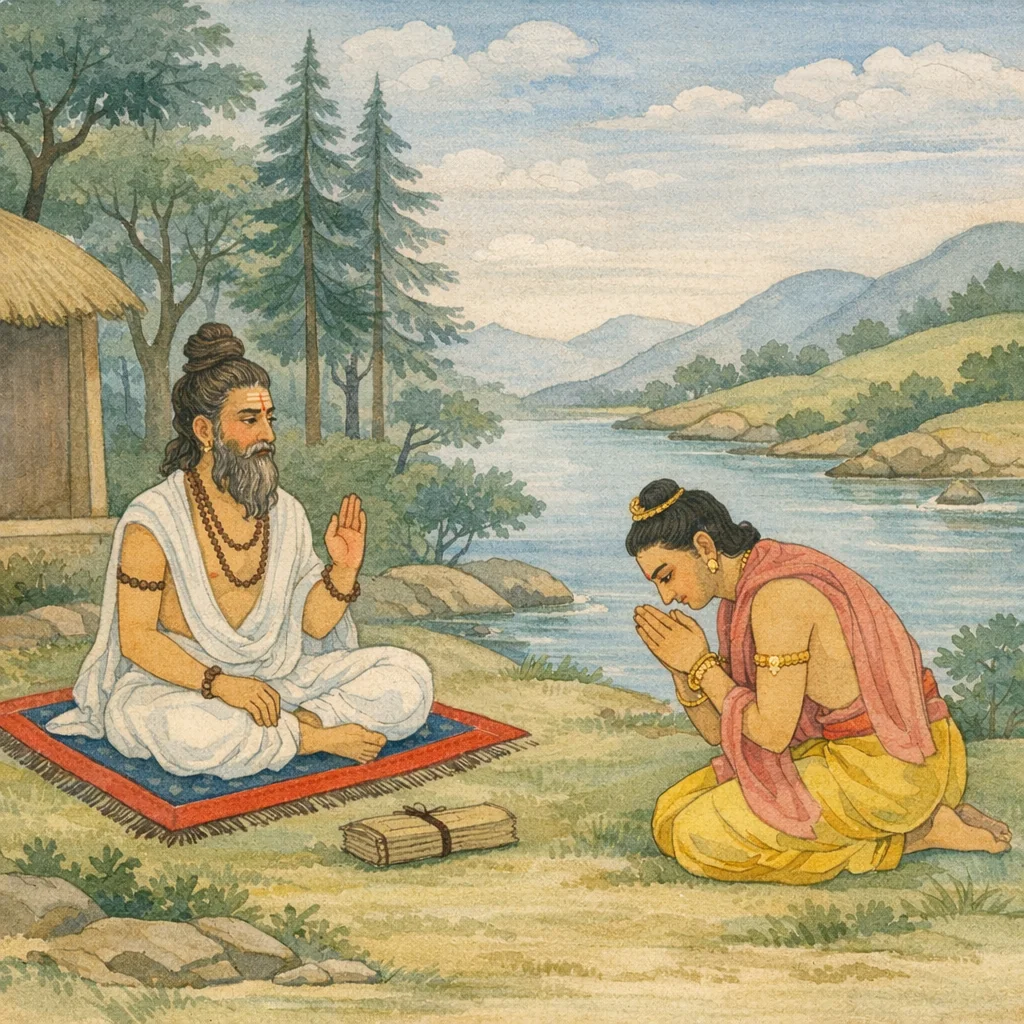
The chapter opens with Maitreya approaching Parāśara after his morning rites, offering reverent salutations and seeking a settled, integrated vision of truth. Maitreya asks wide-ranging questions on creation and dissolution (sarga/pralaya), the measures and structure of earth and the cosmos, the forms of the sun and heavenly bodies, kalpas and yugas, manvantaras and the Manus, royal and ṛṣi lineages and tales, Vyāsa’s arrangement of Vedic branches, and varṇāśrama-dharma. Parāśara affirms the fitness of the inquiry and recalls an earlier episode: on hearing that his father was slain by a rākṣasa, he began a destructive rite, but Vasiṣṭha restrained him with counsel on the law of karma, the absence of personal culpability, and the ruin of anger. Pleased, the elders (with the remembered arrival of Pulastya) grant boons that Parāśara will master the śāstras and become a compiler of Purāṇic knowledge. The chapter ends with Parāśara’s thesis: from Viṣṇu the world arises, in Him it abides, and He is both ruler and world.
Shlokas
Verse 1
पराशरं मुनिवरं कृतपूर्वाह्णिकक्रियम् मैत्रेयः परिपप्रच्छ प्रणिपत्याभिवाद्य च
Maitreya, having bowed down and offered reverent salutations, questioned the excellent sage Parāśara, who had already completed his morning rites.
Verse 2
त्वत्तो हि वेदाध्ययनम् अधीतम् अखिलं गुरो धर्मशास्त्राणि सर्वाणि वेदाङ्गानि यथाक्रमम्
From you, O revered Guru, I have learned in full the study of the Vedas, along with all the Dharma-śāstras and the Vedāṅgas in their proper order.
Verse 3
त्वत्प्रसादान् मुनिश्रेष्ठ माम् अन्ये नाकृतश्रमम् वक्ष्यन्ति सर्वशास्त्रेषु प्रायशो ये ऽपि विद्विषः
By your gracious favor, O best of sages, even though I have undertaken no arduous discipline, others will speak well of me in all the śāstras, even those mostly inclined to hostility.
Verse 4
सो ऽहम् इच्छामि धर्मज्ञ श्रोतुं त्वत्तो यथा जगत् बभूव भूयश् च यथा महाभाग भविष्यति
Therefore, O knower of dharma, I wish to hear from you how this universe came into being—and, O greatly fortunate one, how it shall come to be again in the future.
Verse 5
यन्मयं च जगद् ब्रह्मन् यतश् चैतच् चराचरम् लीनम् आसीद् यथा यत्र लयम् एष्यति यत्र च
O Brahman, that Reality of which the entire universe is constituted, by which this whole moving and unmoving creation exists; into which it was once dissolved—how and where—and likewise where and how it will again enter dissolution: declare all of that.
Verse 6
यत्प्रमाणानि भूतानि देवादीनां च संभवम् समुद्रपर्वतानां च संस्थानं च यथा भुवः
Tell me the measures of all beings, the origin of the gods and the rest, and the ordered disposition of oceans and mountains—how the earth itself is constituted.
Verse 7
सूर्यादीनां च संस्थानं प्रमाणं मुनिसत्तम देवादीनां तथा वंशान् मनून् मन्वन्तराणि च
O best of sages, describe the forms and measures of the Sun and the other heavenly bodies; and likewise recount the lineages of the gods and the rest, together with the Manus and the Manvantaras.
Verse 8
कल्पान् कल्पविकल्पांश् च चतुर्युगविकल्पितान् कल्पान्तस्य स्वरूपं च युगधर्मांश् च कृत्स्नशः
Teach me the kalpas and their variations, the divisions of the four yugas, the true nature of dissolution at a kalpa’s end, and fully the dharmas of each yuga.
Verse 9
देवर्षिपार्थिवानां च चरितं यन् महामुने वेदशाखाप्रणयनं यथावद् व्यासकर्तृकम्
O great sage, I wish to hear the sacred accounts of the divine seers and of kings, and also the proper arrangement of the branches of the Vedas, set forth in due order by Vyāsa.
Verse 10
धर्मांश् च ब्राह्मणादीनां तथा चाश्रमवासिनाम् श्रोतुम् इच्छाम्य् अहं सर्वं त्वत्तो वासिष्ठनन्दन
I desire to hear from you, O beloved descendant of Vasiṣṭha, the whole account of dharma—the duties of the Brāhmaṇas and the rest, and the disciplines of those who dwell in the āśramas.
Verse 11
ब्रह्मन् प्रसादप्रवणं कुरुष्व मयि मानसम् येनाहम् एतज् जानीयां त्वत्प्रसादान् महामुने
O Brahman, O great sage—turn my mind toward your gracious favor, so that by your blessing I may truly understand this teaching.
Verse 12
साधु मैत्रेय धर्मज्ञ स्मारितो ऽस्मि पुरातनम् पितुः पिता मे भगवान् वसिष्ठो यद् उवाच ह
Well spoken, Maitreya, knower of dharma—you have made me recall the ancient teaching, the very words once spoken by the venerable Vasiṣṭha, my father’s father.
Verse 13
विश्वामित्रप्रयुक्तेन रक्षसा भक्षितो मया श्रुतस् तातस् ततः क्रोधो मैत्रेयासीन् ममातुलः
I heard, dear one, that my father had been devoured by a rākṣasa set upon him through Viśvāmitra’s agency; and from that report, Maitreya, immeasurable wrath arose within me.
Verse 14
ततो ऽहं रक्षसां सत्रं विनाशाय समारभम् भस्मीकृताश् च शतशस् तस्मिन् सत्रे निशाचराः
Thereupon I undertook a sacrificial rite aimed at the destruction of the rākṣasas; and in that sacrifice, hundreds upon hundreds of those night-roaming beings were reduced to ashes.
Verse 15
ततः संक्षीयमाणेषु तेषु रक्षःस्व् अशेषतः माम् उवाच महाभागो वसिष्ठो ऽस्मत्पितामहः
Then, when those rākṣasas were being utterly diminished—worn down to nothing—the great and fortunate Vasiṣṭha, our grandsire, addressed me.
Verse 16
अलम् अत्यन्तकोपेन तात मन्युम् इमं जहि राक्षसा नापराध्यन्ते पितुस् ते विहितं तथा
Enough, dear child, of this overpowering wrath—cast away this anger. The Rākṣasas have committed no offense; they act only as your father ordained.
Verse 17
मूढानाम् एष भवति क्रोधो ज्ञानवतां कुतः हन्यते तात कः केन यतः स्वकृतभुक् पुमान्
Anger arises in the deluded—how could it belong to the truly wise? For who, dear one, is slain by whom, when every person inevitably experiences the fruits of his own deeds?
Verse 18
संचितस्यापि महता वत्स क्लेशेन मानवैः यशसस् तपसश् चैव क्रोधो नाशकरः परः
O dear one, even the great store of merit that human beings accumulate with much hardship—both their good fame and their austerity—anger is supremely capable of destroying it all.
Verse 19
स्वर्गापवर्गव्यासेधकारणं परमर्षयः वर्जयन्ति सदा क्रोधं तात मा तद्वशो भव
O dear one, the supreme seers always renounce anger, for it is the very cause that obstructs and destroys both heaven (svarga) and liberation (apavarga). Do not fall under its control.
Verse 20
अलं निशाचरैर् दग्धैर् दीनैर् अनपराधिभिः सत्रं ते विरमत्व् एतत् क्षमासारा हि साधवः
Enough—let this rite of yours cease. These night‑rangers stand before you scorched and wretched, yet guiltless; for the truly good are fashioned of forbearance, and forgiveness is their very essence.
Verse 21
एवं तातेन तेनाहम् अनुनीतो महात्मना उपसंहृतवान् सत्रं सद्यस् तद्वाक्यगौरवात्
Thus, gently urged by that great-souled elder, and out of reverence for the weight of his words, I immediately brought the sacrificial session to its close.
Verse 22
ततः प्रीतः स भगवान् वसिष्ठो मुनिसत्तमः संप्राप्तश् च तदा तत्र पुलस्त्यो ब्रह्मणः सुतः
Thereupon the revered Vasiṣṭha, best among sages, was filled with joy; and at that very time Pulastya, the son of Brahmā, arrived there as well.
Verse 23
पितामहेन दत्तार्घ्यः कृतासनपरिग्रहः माम् उवाच महाभागो मैत्रेय पुलहाग्रजः
Having received the arghya from my grandsire and taken the seat prepared for him, that greatly blessed one—Pulaha’s elder brother—addressed me: “O Maitreya …”
Verse 24
वैरे महति यद् वाक्याद् गुरोर् अस्याश्रिता क्षमा त्वया तस्मात् समस्तानि भवाञ् छास्त्राणि वेत्स्यति
Because, when great enmity arose, you took refuge in forgiveness at your guru’s counsel—therefore you shall come to know the entirety of the sacred śāstras.
Verse 25
संततेर् न ममोच्छेदः क्रुद्धेनापि यतः कृतः त्वया तस्मान् महाभाग ददाम्य् अन्यं महावरम्
Because you did not destroy my lineage even in anger, therefore, O greatly blessed one, I grant you yet another supreme boon.
Verse 26
पुराणसंहिताकर्ता भवान् वत्स भविष्यति देवतापारमार्थ्यं च यथावद् वेत्स्यते भवान्
O dear child, you shall become the compiler of the Purāṇic compendium; and you shall rightly and in full measure know the highest, ultimate truth concerning the Divine.
Verse 27
प्रवृत्ते च निवृत्ते च कर्मण्य् अस्तमला मतिः मत्प्रसादाद् असंदिग्धा तव वत्स भविष्यति
Whether in the path of worldly engagement and action, or in the path of withdrawal and renunciation, your understanding regarding karma will become stainless. By my grace, dear child, it will be free from doubt and firmly settled.
Verse 28
ततश् च भगवान् प्राह वसिष्ठो मे पितामहः पुलस्त्येन यद् उक्तं ते सर्वम् एतद् भविष्यति
Then the venerable sage spoke: “Vasiṣṭha—my grandsire—has declared that whatever Pulastya has spoken to you, all of that shall indeed come to pass.”
Verse 29
इति पूर्वं वसिष्ठेन पुलस्त्येन च धीमता यद् उक्तं तत् स्मृतिं यातं त्वत्प्रश्नाद् अखिलं मम
Thus, all that was formerly spoken by the sages Vasiṣṭha and the wise Pulastya has, through your questioning, returned wholly into my remembrance—every part of it, without remainder.
Verse 30
सो ऽहं वदाम्य् अशेषं ते मैत्रेय परिपृच्छते पुराणसंहितां सम्यक् तां निबोध यथातथम्
Therefore, O Maitreya, to you who have rightly inquired, I shall declare the Purāṇic compendium in full. Attend carefully, and understand it exactly as it truly is.
Verse 31
विष्णोः सकाशाद् उद्भूतं जगत् तत्रैव च स्थितम् स्थितिसंयमकर्तासौ जगतो ऽस्य जगच् च सः
From the very presence of Viṣṇu the universe arises, and in Him alone it abides. He ordains its continuance and its restraint (its dissolution and governance); He is the maker of this world—and He Himself is this world as well.
Frequently Asked Questions
Maitreya asks for a complete Purāṇic account: how the universe originates and dissolves, cosmic geography and measures, celestial forms, kalpa–yuga divisions, manvantaras and lineages, stories of ṛṣis and kings, Vyāsa’s Veda-branches, and varṇāśrama-dharma—seeking a unified highest understanding.
Vasiṣṭha’s counsel teaches that anger belongs to delusion, destroys tapas and merit, and that beings reap their own karma; therefore the innocent should not be punished. The sage’s restraint becomes the moral foundation for receiving and transmitting Purāṇic wisdom.
Parāśara concludes that the universe arises from Viṣṇu, abides in Viṣṇu, and is regulated and withdrawn by Him—identifying Viṣṇu as both the governor and the very substance of the world.