भोजन-आह्वान-प्रकरणम् — The Episode of Invitation and the Divine Feast
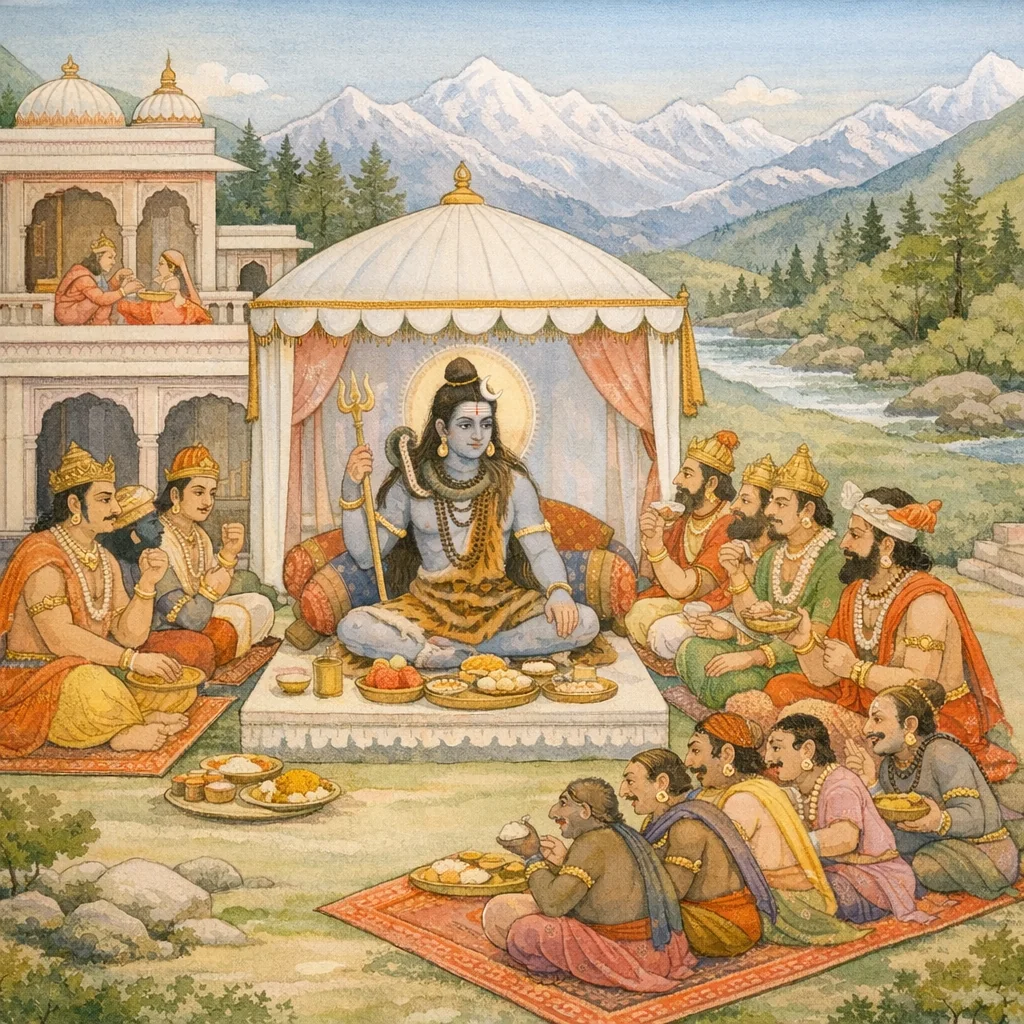
Adhyāya 52 portrays Himavān, foremost of mountains, preparing an elegant dining courtyard for a formal feast. He orders cleansing and plastering, adorns the place with fragrances and auspicious items, and sends invitations to the devas and other divine beings “with their lords.” Hearing the summons, the Lord (identified in the sample with Acyuta) arrives joyfully with gods and attendants. Himavān receives them according to proper rite (yathāvidhi), seats them appropriately within the residence, and serves diverse foods. A formal announcement granting permission to dine is then made, and the assembled gods eat while honoring Sadāśiva as foremost. The chapter highlights orderly communal dining in rows, cheerful conversation, and the distinct presence of Śiva’s gaṇas—Nandin, Bhṛṅgin, Vīrabhadra—along with the lokapālas and Indra, expressing cosmic hierarchy through hospitality, precedence, and shared consumption.
Shlokas
Verse 1
ब्रह्मोवाच । अथ शैलवरस्तात हिमवान्भाग्यसत्तमः । प्राङ्गणं रचयामास भोजनार्थं विचक्षणः
Brahmā said: Then Himavān—the best of mountains, O dear one, and most fortunate—being wise and discerning, arranged a courtyard (and preparations) for the purpose of a meal.
Verse 2
मार्जनं लेपनं सम्यक्कारयामास तस्य सः । स सुगन्धैरलञ्चक्रे नानावस्तुभिरादरात्
He had thorough cleansing and anointing performed properly; and with reverence he adorned him with fragrant substances and various articles.
Verse 3
अथ शैलस्सुरान्सर्वानन्यानपि च सेश्वरान् । भोजनायाह्वयामास पुत्रैश्शैलैः परैरपि
Then the Mountain, Himālaya, invited all the gods—and also the other celestial beings together with their presiding lords—to a ceremonial feast; and he invited them along with his sons, the other mountains as well.
Verse 4
शैलाह्वानमथाकर्ण्य स प्रभुस्साच्युतो मुने । सर्वैस्सुरादिभिस्तत्र भोजनाय ययौ मुदा
O sage, hearing the summons of Śaila (Himālaya), the mighty Lord Acyuta (Viṣṇu) went there in joy, accompanied by all the gods and other celestial beings, to partake of the feast.
Verse 5
गिरिः प्रभुं च सर्वांस्तान्सुसत्कृत्य यथाविधि । मुदोपवेशयामास सत्पीठेषु गृहान्तरे
Then Girirāja (Himālaya), having duly honored the Lord and all those present according to proper custom, joyfully seated them upon noble seats within the inner chambers of the palace.
Verse 6
नानासुभोज्यवस्तूनि परिविष्य च तत्पुनः । साञ्चलिर्भोजनायाज्ञां चक्रे विज्ञप्तिमानतः
After serving many kinds of excellent foods again and again, Sāñcali, with humble courtesy, gave the invitation and permission to begin the meal.
Verse 7
अथ सम्मानितास्तत्र देवा विष्णुपुरोगमाः । सदाशिवं पुरस्कृत्य बुभुजुस्सकलाश्च ते
Then, there—having been duly honored—the gods, led by Viṣṇu, placed Sadāśiva at the forefront; and all of them partook of the offerings together.
Verse 8
तदा सर्वे हि मिलिता ऐकपद्येन सर्वशः । पंक्तिभूताश्च बुभुजु र्विहसन्तः पृथक्पृथक्
Then all of them gathered together in one place from every side; and, seated in orderly rows, they partook of the meal—each in their own place—laughing joyfully.
Verse 9
नन्दिभृंगिवीरभद्रवीरभद्रगणाः पृथक् । बुभुजुस्ते महाभागाः कुतूहलसमन्विताः
Nandin, Bhṛṅgī, Vīrabhadra, and the hosts of Vīrabhadra, each in their own place, partook of the offerings. Those greatly fortunate attendants were filled with eager wonder.
Verse 10
देवास्सेन्द्रा लोकपाला नानाशोभासमन्विताः । बुभुजुस्ते महाभागा नानाहास्यरसैस्सह
The gods—together with Indra and the guardians of the worlds—adorned with manifold splendors, those most fortunate ones partook of the feast amid various delightful moods of laughter and joy.
Verse 11
सर्वे च मुनयो विप्रा भृग्वाद्या ऋषयस्तथा । बुभुजु प्रीतितस्सर्वे पृथक् पंक्तिगतास्तदा
Then all the sages and Brahmin seers—Bhṛgu and the other Ṛṣis as well—sat in separate rows and joyfully partook of the meal, all of them with heartfelt delight.
Verse 12
तथा चण्डीगणास्सर्वे बुभुजुः कृतभाजनाः । कुतूहलं प्रकुर्वन्तो नानाहास्यकरा मुदा
In the same way, all the hosts of Caṇḍī also ate, their portions having been prepared. With eager curiosity and many playful jests, they rejoiced in gladness.
Verse 13
एवन्ते भुक्तवन्तश्चाचम्य सर्वे मुदान्विताः । विश्रामार्थं गताः प्रीत्या विष्ण्वाद्यास्स्वस्वमाश्रमम्
Thus, having eaten to their satisfaction and then sipping water for purification, all of them—filled with joy—departed affectionately to their respective āśramas to rest, Viṣṇu and the others.
Verse 14
मेनाज्ञया स्त्रियस्साध्व्य श्शिवं सम्प्रार्थ्य भक्तितः । गेहे निवासयामासुर्वासाख्ये परमोत्सवे
O virtuous lady, by Menā’s command those women, having devoutly entreated Lord Śiva, caused Him to reside in the house during the supreme festival called Vāsā.
Verse 15
रत्नसिंहासने शम्भुर्मेनादत्ते मनोहरे । सन्निधाय मुदा युक्तो ददृशे वासमन्दिरम्
Śambhu, seated upon a captivating jeweled throne that had been given by Menā, joyfully drew near and beheld the dwelling-palace prepared for His abode.
Verse 16
रत्नप्रदीपशतकैर्ज्वलद्भिर्ज्वलितं श्रिया । रत्नपात्रघटाकीर्णं मुक्तामणिविराजितम्
It blazed with auspicious splendor, lit up by hundreds of radiant lamps made of jewels. It was filled with jewel-vessels and jars, and shone brilliantly with pearls and precious gems.
Verse 17
रत्नदर्प्पणशोभाढ्यं मण्डितं श्वेतचामरैः । मुक्तामणिसुमालाभिर्वेष्टितं परमर्द्धिमत्
It was resplendent with the beauty of jewel-like mirrors, adorned with white chowries, and encircled with garlands of pearls and gems—abounding in supreme splendor and prosperity.
Verse 18
अनूपमम्महादिव्यं विचित्रं सुमनोहरम् । चित्ताह्लादकरं नानारचनारचितस्थलम्
It was incomparable—supremely celestial, wondrous, and exceedingly enchanting; it gladdened the mind, and its grounds were fashioned with many kinds of artistic designs and arrangements.
Verse 19
शिवदत्तवरस्यैव प्रभावमतुलम्परम् । दर्शयन्तं समुल्लासि शिवलोकाभिधानकम्
Then it shone forth, revealing the unsurpassed and incomparable power of the boon granted by Śiva, that realm renowned as “Śivaloka”—radiant with supreme exaltation.
Verse 20
नानासुगन्धसद्द्रव्यैर्वासितं सुप्रकाशकम् । चन्दनागुरुसंयुक्तं पुष्पशय्यासमन्वितम्
It was perfumed with many kinds of fine, fragrant substances and shone with a splendid radiance. It was blended with sandal and agaru, and furnished with a bed of flowers.
Verse 21
नानाचित्रविचित्राढ्यं निर्मितं विश्वकर्म्मणा । रत्नेन्द्रसाररचितैराचितं हारकैर्वरैः
Fashioned by Viśvakarman, it was filled with many marvelous and varied designs, and it was adorned with excellent necklaces made from the finest essence of the lordly gems.
Verse 22
कुत्रचित्सुरनिर्माणं वैकुण्ठं सुमनोहरम् । कुत्रचिच्च ब्रह्मलोकं लोकपालपुरं क्वचित्
In some places there appeared Vaikuṇṭha, exquisitely enchanting and fashioned by the gods; in some places appeared Brahmaloka; and in some places, the cities of the Lokapālas, the guardian deities of the directions.
Verse 23
कैलासं कुत्रचिद्रम्यं कुत्रचिच्छक्रमन्दिरम् । कुत्रचिच्छिवलोकं च सर्वोपरि विराजितम्
Somewhere shines the delightful Kailāsa; elsewhere stands the palace of Śakra (Indra); and elsewhere is Śivaloka—resplendent above all, reigning supreme.
Verse 24
एतादृशगृहं सर्वदृष्टाश्चर्य्यं महेश्वरः । प्रशंसन् हिमशैलेशं परितुष्टो बभूव ह
Seeing such a dwelling—marvellous beyond anything ever witnessed—Mahādeva praised the lord of Himālaya and became fully pleased.
Verse 25
तत्रातिरमणीये च रत्नपर्य्यंक उत्तमे । अशयिष्ट मुदा युक्तो लीलया परमेश्वरः
There, in that exceedingly delightful place, upon an excellent jeweled couch, the Supreme Lord (Parameśvara) lay down—joyful in heart—sportively, in His divine līlā.
Verse 26
हिमाचलश्च स्वभ्रातॄन्भोजयामास कृत्स्नशः । सर्वानन्यांश्च सुप्रीत्या शेषकृत्यं चकार ह
Himācala (Himālaya) then fed all his own brothers fully; and with great affection he also honored all the others, and duly performed the remaining rites.
Verse 27
एवं कुर्वति शैलेशे स्वपति प्रेष्ठ ईश्वरे । व्यतीता रजनी सर्वा प्रातःकालो बभूव ह
While the Lady of the mountains (Pārvatī) was thus engaged in her observance, her beloved Lord Īśvara fell asleep. The entire night passed, and morning came to be.
Verse 28
अथ प्रभातकाले च धृत्युत्साहपरायणाः । नानाप्रकारवाद्यानि वादयाञ्चक्रिरे जनाः
Then, at daybreak, the people—steadfast and filled with zeal—began to play instruments of many kinds.
Verse 29
सर्वे सुरास्समुत्तस्थुर्विष्ण्वाद्यास्सुमुदान्विताः । स्वेष्टं संस्मृत्य देवेशं सज्जिभूतास्ससंभ्रमाः
Then all the gods—led by Viṣṇu—rose up together, filled with gladness. Remembering their own chosen Lord, Śiva, the Lord of the gods, they became prepared at once, with reverent eagerness and haste.
Verse 30
स्ववाहनानि सज्जानि कैलासङ्गन्तुमुत्सुकाः । कृत्वा सम्प्रेषयामासुर्धर्मं शिवसमीपतः
Eager to depart for Kailāsa, they made their own mounts ready and then dispatched Dharma from the very presence of Lord Śiva.
Verse 31
वासगेहमथागत्य धर्मो नारायणाज्ञया । उवाच शंकरं योगी योगीशं समयोचितम्
Then Dharma, arriving at the dwelling by Nārāyaṇa’s command, addressed Śaṅkara—the lord of yogins—speaking words fitting to the occasion.
Verse 32
धर्म उवाच । उत्तिष्ठोत्तिष्ठ भद्रन्ते भव नः प्रमथाधिप । जनावासं समागच्छ कृतार्थं कुरु तत्र तान्
Dharma said: “Rise, rise, O blessed one; be present for us, O Lord of the Pramathas. Come to the dwelling of the people, and there bring their aims to fulfillment.”
Verse 33
ब्रह्मोवाच । इति धर्मवचः श्रुत्वा विजहास महेश्वरः । ददर्श कृपया दृष्ट्या तल्पमुज्झाञ्चकार ह
Brahmā said: Hearing these words of Dharma, Mahādeva smiled. Then, casting a compassionate glance, the Great Lord left the couch and rose.
Verse 34
उवाच विहसन् धर्म त्वमग्रे गच्छ तत्र ह । अहमप्यागमिष्यामि द्रुतमेव न संशयः
Smiling, he said: “O Dharma, go there ahead first. I too shall come quickly—of this there is no doubt.”
Verse 35
ब्रह्मोवाच । इत्युक्तश्शंकरेणाथ जनावासं जगाम सः । स्वयङ्गन्तुमना आसीत्तत्र शम्भुरपि प्रभुः
Brahmā said: Thus addressed by Śaṅkara, he then went to the dwelling of the people. And the Lord Śambhu too, the sovereign Master, of his own accord, resolved to go there.
Verse 37
अथ शंम्भुर्भवाचारी प्रातःकृत्यं विधाय च । मेनामान्त्र्य कुध्रं च जनावासं जगाम सः
Then Śambhu, observing the conduct befitting His sacred vow, completed His morning rites; and after respectfully taking leave of Menā and also of Kudhrā, He departed for the dwelling-place of the people.
Verse 38
महोत्सवस्तदा चासीद्वेदध्वनिरभून्मुने । वाद्यानि वादयामासुर्जनाश्चातुर्विधानि च
O sage, at that time there was a great festival; the sound of Vedic recitation arose. People of all four varṇas played musical instruments as well.
Verse 39
शम्भुरागत्य स्वस्थानं ववन्दे च मुनींस्तदा । हरिं च मां भवाचारात् वन्दितोऽभूत्सुरादिभिः
Then Śambhu returned to His own abode and bowed to the sages. In accordance with proper sacred conduct, He also saluted Hari; and I too was duly revered by the devas and other celestial beings.
Verse 40
जयशब्दो बभूवाथ नमश्शब्दस्तथैव च । वेदध्वनिश्च शुभदो महाकोलाहलोऽभवत्
Then cries of “Victory!” arose, and likewise the sound of “Namaḥ!”; the auspicious resonance of the Vedas resounded, and a great, exalted tumult came to be.
Verse 52
इति श्रीशिवमहापुराणे द्वितीयायां रुद्रसंहितायां तृतीये पार्वतीखण्डे वरवर्गभोजनशिवशयनवर्णनं नाम द्विपञ्चाशत्तमोऽध्यायः
Thus, in the Śrī Śiva Mahāpurāṇa—within the Second section, the Rudra-saṃhitā, and in the Third division, the Pārvatī-khaṇḍa—ends the fifty-second chapter, entitled “The description of the feast for the bridegroom’s party and Śiva’s repose.”
Frequently Asked Questions
Himavān organizes and hosts a formal divine feast: he prepares the venue, invites the gods and their lords, receives them properly, seats them, serves many foods, and the assembly dines with Sadāśiva placed in highest honor.
The narrative encodes cosmic hierarchy and unity through social ritual: honoring Sadāśiva first signals Shaiva supremacy, while shared भोजन (food) and orderly seating dramatize harmony, dharma, and auspiciousness as lived theology.
Viṣṇu/Acyuta among the leading devas, Sadāśiva as the honored foremost, Indra and the lokapālas, and Śiva’s gaṇas—Nandin, Bhṛṅgin, Vīrabhadra and associated gaṇas—each participating distinctly in the communal meal.