तारकपीडितदेवशरणागतिḥ — The Devas Seek Refuge from Tāraka
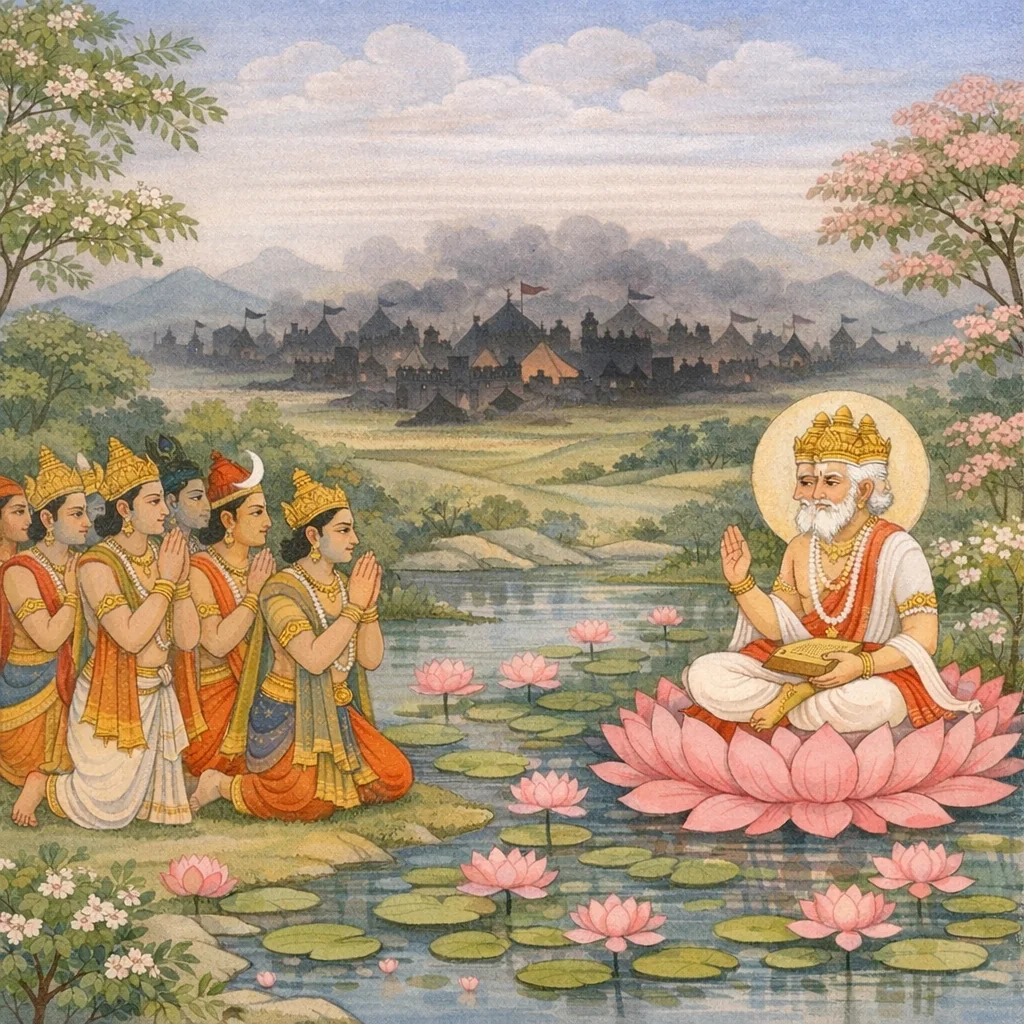
Adhyaya 16 begins with Brahmā describing a grave crisis: the devas (nirjaras) are harshly oppressed by the asura Tāraka, made bold by a boon. Seeking protection, they approach Prajāpati/Lokeśa and offer sincere praise (amarānuti), which Brahmā receives with satisfaction before inviting them to state their purpose. Bowed down and distressed, the devas report that Tāraka has forcibly driven them from their appointed stations and torments them day and night; even when they flee, they meet him everywhere. Their plight is shown to be systemic, for major deities and the dikpālas—Agni, Yama, Varuṇa, Nirṛti, Vāyu, and other guardians of the directions—have fallen under Tāraka’s domination. Shaped as a formal petition—stuti → divine acknowledgment → statement of affliction → listing of affected cosmic offices—the chapter frames the crisis as a disruption of loka-dharma and cosmic administration. It thus prepares the theological necessity of a Śiva-centered resolution (and, in the Pārvatīkhaṇḍa setting, the indispensability of Śakti and the destined birth), revealing the limits of ordinary divine power before boon-protected asuric tyranny.
Shlokas
Verse 1
ब्रह्मोवाच । अथ ते निर्जरास्सर्वे सुप्रणम्य प्रजेश्वरम् । तुष्टुवुः परया भक्त्या तारकेण प्रपीडिताः
Brahmā said: Then all the deathless gods, grievously oppressed by Tāraka, bowed low before the Lord of creatures and praised Him with supreme devotion.
Verse 2
अहं श्रुत्वामरनुतिं यथार्थां हृदयंगमा । सुप्रसन्नतरो भूत्वा प्रत्यवोचं दिवौकसः
Having heard the gods’ praise—true in meaning and touching to the heart—I became even more gracious and then replied to the dwellers of heaven.
Verse 3
स्वागतं स्वाधिकारा वै निर्विघ्नाः संति वस्तुतः । किमर्थमागता यूयमत्र सर्वे वदंतु मे
Welcome! You are indeed worthy and duly entitled; in truth, you are free from obstacles. For what purpose have you all come here? Tell me.
Verse 4
इति श्रुत्वा वचो मे ते नत्वा सर्वे दिवौकसः । मामूचुर्नतका दीनास्तारकेण प्रपीडिताः
Hearing these words of mine, all the gods bowed down; and, humbled and distressed—oppressed by Tāraka—they addressed me with folded hands.
Verse 5
देवा ऊचुः । लोकेश तारको दैत्यो वरेण तव दर्पित । निरस्यास्मान्हठात्स्थानान्यग्रहीन्नो बलात्स्वयम्
The gods said: “O Lord of the worlds, the demon Tāraka—made arrogant by the boon granted by You—has violently driven us from our rightful abodes and, by sheer force, has himself seized our stations.”
Verse 6
भवतः किमु न ज्ञातं दुःखं यन्नः उपस्थितम् । तद्दुःखं नाशय क्षिप्रं वयं ते शरणं गताः
Is the sorrow that has come upon us unknown to You? Swiftly destroy that suffering. We have come to You, taking refuge in You.
Verse 7
अहर्निशं बाधतेस्मान्यत्र तत्रास्थितान्स वै । पलायमानाः पश्यामो यत्र तत्रापि तारकम्
Day and night, wherever we stand, he harasses us there. Even when we flee, we still behold Tāraka—he appears there too, everywhere.
Verse 8
तारकान्नश्च यद्दुःखं संभूतं सकलेश्वर । तेन सर्वे वयं तात पीडिता विकला अति
O Sakaleśvara, Lord of all, the suffering that has arisen for us because of Tāraka—by that, dear one, all of us have been grievously afflicted and left utterly helpless.
Verse 9
अग्निर्यमोथ वरुणो निरृतिर्वायुरेव च । अन्ये दिक्पतयश्चापि सर्वे यद्वशगामिनः
Agni, Yama, Varuṇa, Nirṛti, and Vāyu—and indeed the other guardians of the directions as well—are all those who move under his control, governed by his will.
Verse 10
सर्वे मनुष्यधर्माणस्सर्वेः परिकरैर्युताः । सेवंते तं महादैत्यं न स्वतंत्राः कदाचन
All who are bound to the ways of worldly human conduct—together with all their attendants—serve that mighty demon, and are never independent at any time.
Verse 11
एवं तेनार्दिता देवा वशगास्तस्य सर्वदा । तदिच्छाकार्य्यनिरतास्सर्वे तस्यानुजीविनः
Thus, oppressed by him, the gods were ever brought under his control. All of them, intent only on fulfilling his will, lived dependent upon him.
Verse 12
यावत्यो वनितास्सर्वा ये चाप्यप्सरसां गणाः । सर्वांस्तानग्रहीद्दैत्यस्तारकोऽसौ महाबली
All the women there were, and even the hosts of Apsarases—every one of them—were seized by that mighty Daitya, Tāraka.
Verse 13
न यज्ञास्संप्रवर्तते न तपस्यंति तापसाः । दानधर्मादिकं किंचिन्न लोकेषु प्रवर्त्तते
Sacrificial rites no longer proceed in due order; ascetics do not undertake austerities. Even charity, righteous conduct, and similar sacred duties do not prevail anywhere in the worlds.
Verse 14
तस्य सेनापतिः क्रौंचो महापाप्यस्ति दानवः । स पातालतलं गत्वा बाधते त्वनिशं प्रजाः
His commander is Krauñca, a grievously sinful Dānava. Descending to Pātāla, he ceaselessly harasses the people.
Verse 15
तेन नस्तारकेणेदं सकलं भुवनत्रयम् । हृतं हठाज्जगद्धातः पापेनाकरुणात्मना
O Creator of the worlds, that sinful Tāraka—hard-hearted and devoid of compassion—has forcibly seized from us this entire triple universe.
Verse 16
इति श्रीशिवमहापुराणे द्वितीयायां रुद्रसंहितायां तृतीये पार्वतीखण्ड देवसांत्वनवर्णनं नाम षोडशोऽध्यायः
Thus ends the sixteenth chapter, called “The Description of Consoling the Devas,” in the Pārvatī-khaṇḍa (third section) of the Rudra Saṃhitā, within the Śrī Śiva Mahāpurāṇa.
Verse 17
त्वं नो गतिश्च शास्ता च धाता त्राता त्वमेव हि । वयं सर्वे तारकाख्यवह्नौ दग्धास्सुविह्वलाः
You alone are our refuge and our guide; You are the ruler, the sustainer, and the protector. We all have been scorched by the fire called Tāraka, and we are utterly shaken and distressed.
Verse 18
तेन क्रूरा उपाय नः सर्वे हतबलाः कृताः । विकारे सांनिपाते वा वीर्यवंत्यौषधानि च
By those cruel measures, all of us have been rendered powerless. Even potent medicinal herbs—whether for ordinary disorders or for complex, combined afflictions—have lost their effectiveness.
Verse 19
यत्रास्माकं जयाशा हि हरिचक्रे सुदर्शने । उत्कुंठितमभूत्तस्य कंठे पुष्पमिवार्पितम्
When our hope of victory came to rest upon Hari’s Sudarśana discus, it became agitated—like a flower placed upon the throat—unable to remain steady.
Verse 20
ब्रह्मोवाच । इत्येतद्वचनं श्रुत्वा निर्जराणामहं मुने । प्रत्यवोचं सुरान्सर्वांस्तत्कालसदृशं वचः
Brahmā said: O sage, having heard these words of the deathless gods, I at once replied to all the devas with a response suited to that very moment.
Verse 21
ब्रह्मोवाच । ममैव वचसा दैत्यस्तारकाख्यस्समेधितः । न मत्तस्तस्य हननं युज्यते हि दिवौकसः
Brahmā said: “Indeed, by my own utterance the demon named Tāraka has become empowered and has risen in might. Therefore it is not proper that his slaying should proceed from me, O dwellers of heaven.”
Verse 22
ततो नैव वधो योग्यो यतो वृद्धिमुपागतः । विष वृक्षोऽपि संवर्ध्य स्वयं छेत्तुमसांप्रतम्
Therefore his killing is not proper now, for he has already grown strong; even a poisonous tree, once allowed to flourish, cannot be cut down easily at will.
Verse 23
युष्माकं चाखिलं कार्यं कर्तुं योग्यो हि शंकरः । किन्तु स्वयं न शक्तो हि प्रतिकर्तुं प्रचो दितः
Śaṅkara is indeed capable of accomplishing every task of yours; yet, though urged, He does not act on His own accord to retaliate.
Verse 24
तारकाख्यस्तु पापेन स्वयमेष्यति संक्षयम् । यथा यूयं संविदध्वमुपदेशकरस्त्वहम्
“That one named Tāraka, by his own sin, will of himself come to ruin. Therefore, act in the manner you deem fit; I am here as one who gives counsel.”
Verse 25
न मया तारको वध्यो हरिणापि हरेण च । नान्येनापि सुरैर्वापि मद्वरात्सत्यमुच्यते
“Tāraka cannot be slain by me, nor by Hari (Viṣṇu), nor by Hara (Śiva); nor indeed by any other gods. By the boon I have granted, this is spoken as the truth.”
Verse 26
शिववीर्य्यसमुत्पन्नो यदि स्यात्तनयस्सुराः । स एव तारकाख्यस्य हंता दैत्यस्य नापरः
O Devas, if a son is born from the potency of Śiva, he alone will be the slayer of the demon named Tāraka—no one else can do so.
Verse 27
यमुपायमहं वच्मि तं कुरुध्वं सुरोत्तमाः । महादेवप्रसादेन सिद्धिमेष्यति स धुवम्
“I shall tell you the means—carry it out, O best of the gods. By the grace of Mahādeva, it will surely lead to success.”
Verse 28
सती दाक्षा यिणी पूर्वं त्यक्तदेहा तु याभवत् । सोत्पन्ना मेनकागर्भात्सा कथा विदिता हि वः
That Satī—Dakṣa’s daughter—who in former times abandoned her body, was then born again from the womb of Menakā. This account is indeed known to you.
Verse 29
तस्या अवश्यं गिरिशः करिष्यति कर ग्रहम् । तत्कुरुध्वमुपायं च तथापि त्रिदिवौकसः
Surely Girīśa (Lord Śiva), the Lord of the mountain, will take her hand in sacred marriage. Therefore, O dwellers of the three worlds, devise a fitting means so that this may come to pass.
Verse 30
तथा विदध्वं सुतरां तस्यां तु परियत्नतः । पार्वत्यां मेनकाजायां रेतः प्रतिनिपातने
Therefore do it accordingly—most certainly and with careful effort—so that the divine seed may be duly placed in Pārvatī, the daughter of Menakā.
Verse 31
तमूर्द्ध्वरेतसं शंभुं सैव प्रच्युतरेतसम् । कर्तुं समर्था नान्यास्ति तथा काप्यबला बलात्
Only she (Pārvatī) is capable of making Śambhu—whose vital energy is held upward in perfect continence—release that energy; no other woman, however forceful, has the power to do so.
Verse 32
सा सुता गिरिराजस्य सांप्रतं प्रौढयौवना । तपस्यते हिमगिरौ नित्यं संसेवते हरम्
That daughter of the King of Mountains—now in the fullness of youth—performs austerities upon the Himālaya, and continually attends upon Hara (Lord Śiva) with devoted service.
Verse 33
वाक्याद्धिमवतः कालीं स्वपितुर्हठतश्शिवा । सखीभ्यां सेवते सार्द्धं ध्यानस्थं परमेश्वरम्
At the command of Himavat, Śivā (Pārvatī) firmly awakened her mother Kālī; then, together with her two companions, she attended upon the Supreme Lord, Parameśvara, who was absorbed in meditation.
Verse 34
तामग्रतोऽर्च्चमानां वै त्रैलोक्ये वरवर्णिनीम् । ध्यानसक्तो महेशो हि मनसापि न हीयते
Even as that exquisitely radiant Lady—most beautiful in the three worlds—worshipped before Him, Maheśa remained absorbed in meditation; not even in mind did He withdraw from His inner contemplation.
Verse 35
भार्य्यां समीहेत यथा स कालीं चन्द्रशेखरः । तथा विधध्वं त्रिदशा न चिरादेव यत्नतः
O Devas, strive with earnest effort so that Chandrasekhara (Śiva, the moon-crested Lord) may desire Kālī as His wife; bring it about in that very way, and quickly.
Verse 36
स्थानं गत्वाथ दैत्यस्य तमहं तारकं ततः । निवारयिष्ये कुहठात्स्वस्थानं गच्छतामराः
Having gone to the place of that demon, I shall then restrain that Tāraka from his wicked obstinacy. O gods, return each of you to your own abode.
Verse 37
इत्युक्त्वाहं सुरान्शीघ्रं तारकाख्यासुरस्य वै । उपसंगम्य सुप्रीत्या समाभाष्येदमब्रवम्
Having spoken thus, I quickly approached the Devas and then went to Tāraka, the asura known as Tārakāsura. With a friendly heart, I greeted him courteously and spoke these words.
Verse 38
ब्रह्मोवाच । तेजोसारमिदं स्वर्गं राज्यं त्वं परिपासि नः । यदर्थं सुतपस्तप्तं वाञ्छसि त्वं ततोऽधिकम्
Brahmā said: “This heaven is the very essence of splendour, and you safeguard our sovereignty. For what purpose did you perform such severe austerity—do you desire something greater than even this?”
Verse 39
वरश्चाप्यवरो दत्तो न मया स्वर्गराज्यता । तस्मात्स्वर्गं परित्यज्य क्षितौ राज्यं समाचर
“A boon—indeed even a lesser one—has been granted by me, but not the sovereignty of heaven. Therefore, abandon heaven and duly rule your kingdom upon the earth.”
Verse 40
देवयोग्यानि तत्रैव कार्य्याणि निखिलान्यपि । भविष्यत्यरसुरश्रेष्ठ नात्र कार्य्या विचारणा
All the acts that are fitting for the devas should be performed there itself, in full. It shall surely come to pass, O best among asuras—there is no need for deliberation about this.
Verse 42
तारकोऽपि परित्यज्य स्वर्गं क्षितिमथाभ्यगात् । शोणिताख्य पुरे स्थित्वा सर्वराज्यं चकार सः
Even Tāraka, abandoning heaven, then came down to the earth. Taking up residence in the city called Śoṇitā, he established his dominion as a universal ruler.
Verse 43
देवास्सर्वेऽपि तच्छुत्वा मद्वाक्यं सुप्रणम्य माम् । शक्रस्थानं ययुः प्रीत्या शक्रेण सुस माहिताः
Hearing those words of mine, all the gods bowed to me with deep reverence. Then, with joy, they went to Indra’s abode, remaining well-composed and attentive under Indra’s guidance.
Verse 44
तत्र गत्वा मिलित्वा च विचार्य्य च परस्परम् । ते सर्वे मरुतः प्रीत्या मघवंतं वचोऽब्रुवन्
Having gone there, meeting together, and consulting among themselves, all those Maruts, pleased at heart, addressed Maghavant (Indra) with their words.
Verse 45
देवा ऊचुः । शम्भोर्य्यथा शिवायां वै रुचिजायेत कामतः । मघवंस्ते प्रकर्तव्यं ब्रह्मोक्तं सर्वमेव तत्
The gods said: “O Maghavan (Indra), so that Śambhu may, of his own desire, awaken a loving inclination toward Śivā (Pārvatī), you must carry out—completely—everything that Brahmā has enjoined.”
Verse 46
ब्रह्मोवाच । इत्येवं सर्ववृत्तांतं विनिवेद्य सुरेश्वरम् । जग्मुस्ते सर्वतो देवाः स्वं स्वं स्थानं मुदान्विताः
Brahmā said: “Thus, having reported the entire account to the Lord of the gods, those devas—gathered from all quarters—departed, joyfully returning each to his own abode.”
Frequently Asked Questions
The devas, oppressed and displaced by the boon-empowered asura Tāraka, approach the presiding authority (narrated by Brahmā) with praise and a formal plea for relief.
It signifies that the disruption is not local but cosmological: when dikpālas and regulatory deities fall under asuric control, loka-dharma and the ordered functioning of the universe are compromised.
The chapter highlights devotion (stuti), refuge (śaraṇāgati), and the necessity of a Śiva-centered remedy when ordinary divine governance is neutralized by boon-protection.