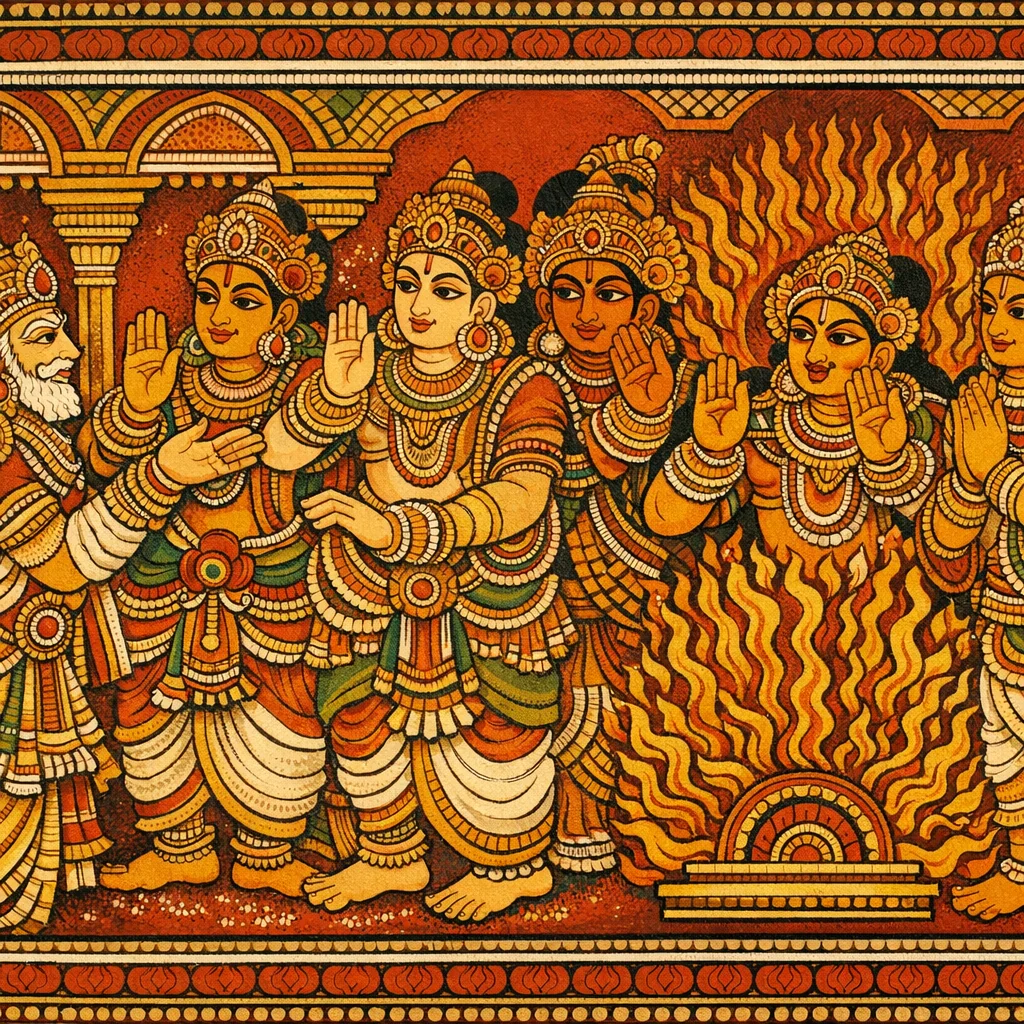
Adhyaya 33: Yayāti and His Sons: The Exchange of Youth and Old Age (Pūru’s Obedience and the Curse on Others)
ययाति-पुत्रसंवादः (यौवन-जराविनिमयः)
Speaker: Śaunaka, Yayāti, Yadu, Turvasu, Druhyu, Anu, Pūru
Śaunaka recounts that Yayāti, suddenly aged by Śukra’s curse, returns to his city and begs his eldest son Yadu to take upon himself Yayāti’s old age and pāpmān (sin-stain), so that Yayāti may enjoy life with Yadu’s youth for a thousand years. Yadu refuses and urges him to choose another son more aligned with dharma; Yayāti therefore curses Yadu with wicked offspring. Yayāti makes the same request to Turvasu; when Turvasu refuses, Yayāti curses his line to extinction and foretells degraded kingship amid inverted social conduct. He asks Druhyu next; on refusal, Yayāti curses his cherished desires to fail and predicts misery amid floods and cries for food. He then asks Anu; Anu refuses, speaking of senility and neglected rites, and Yayāti returns that very decay upon him, declaring that youth perishes under the fire of Time. Finally Yayāti asks Pūru; Pūru accepts at once, bears the old age, and gives his youth to Yayāti, and Yayāti blesses him with the boon that Pūru’s lineage will be prosperous and fulfilled in all aims.
Key Concepts
Shlokas in Adhyaya 33
Verse 1
*शौनक उवाच जरां प्राप्य ययातिस्तु स्वपुरं प्राप्य चैव हि पुत्रं ज्येष्ठं वरिष्ठं च यदुमित्यब्रवीद्द्विजः //
Śaunaka said: When Yayāti was overtaken by old age, he returned to his own city; and indeed he addressed his eldest and most eminent son, Yadu, O twice-born one.
Verse 2
*ययातिरुवाच जरा वली च मां तात पलितानि च पर्यगुः काव्यस्योशनसः शापान् न च तृप्तो ऽस्मि यौवने //
Yayāti said: “O dear one, old age and wrinkles have overtaken me, and grey hairs have spread over me—due to the curse of Kāvya Uśanas (Śukra). Yet I am not satisfied with youth.”
Verse 3
त्वं यदो प्रतिपद्यस्व पाप्मानं जरया सह यौवनेन त्वदीयेन चरेयं विषयानहम् //
O Yadu, when you take upon yourself sin together with old age, then with your youth—now belonging to me—may I enjoy the objects of the senses.
Verse 4
पूर्णे वर्षसहस्रे तु त्वदीयं यौवनं त्व् अहम् दत्त्वा सम्प्रतिपत्स्यामि पाप्मानं जरया सह //
When a thousand years are completed, I shall give back to you your youth; and I will then take upon myself the burden of sin together with old age.
Verse 5
*यदुरुवाच सितश्मश्रुधरो दीनो जरसा शिथिलीकृतः वलीसंततगात्रश्च दुर्दर्शो दुर्बलः कृशः //
Yadu spoke: bearing a white beard, dejected, loosened by old age; his body was covered with wrinkles, hard to look upon, weak, and emaciated.
Verse 6
अशक्तः कार्यकरणे परिभूतः स यौवने सहोपजीविभिश्चैव तज्जरां नाभिकामये //
If, even in youth, one is powerless to perform one’s duties and is scorned—especially by those who live upon one’s support—then one would not wish for that same old age to arrive.
Verse 7
सन्ति ते बहवः पुत्रा मत्तः प्रियतरा नृप जरां ग्रहीतुं धर्मज्ञ पुत्रमन्यं वृणीष्व वै //
O King, you have many sons dearer to you than I. Therefore, to take up the burden of old age—namely, the responsibility for your care and the kingdom—choose another son, one who is wise in dharma.
Verse 8
*ययातिरुवाच यस्त्वं मे हृदयाज्जातो वयः स्वं न प्रयच्छसि पापान्मातुलसम्बन्धाद् दुष्प्रजा ते भविष्यति //
Yayāti said: “You who were born from my very heart—if you do not grant me your own youth, then, because of the sinful connection with your maternal uncle’s line, you shall have wicked offspring.”
Verse 9
तुर्वसो प्रतिपद्यस्व पाप्मानं जरया सह यौवनेन चरेयं वै विषयांस्तव पुत्रक //
O Turvasu, accept this burden of sin along with old age; and with your youth, my son, I shall indeed enjoy the objects of sense.
Verse 10
पूर्णे वर्षसहस्रे नु पुनर्दास्यामि यौवनम् तथैव प्रतिपत्स्यामि पाप्मानं जरया सह //
When a full thousand years have passed, I shall grant youth again; and in the same manner I shall take upon myself the burden of sin, together with old age.
Verse 11
*तुर्वसुरुवाच न कामये जरां तात कामभोगप्रणाशिनीम् बलरूपान्तकरणीं बुद्धिमानविनाशिनीम् //
Turvasu said: “Father, I do not desire old age—she who destroys the enjoyments of desire, who brings strength and beauty to an end, and who ruins even a man’s intelligence.”
Verse 12
*ययातिरुवाच यस्त्वं मे हृदयाज्जातो वयः स्वं न प्रयच्छसि तस्मात्प्रजा समुच्छेदं तुर्वसो तव यास्यति //
Yayāti said: “You who were born from my very heart—since you do not grant me your own youth, therefore, O Turvasu, your line of descendants shall come to extinction.”
Verse 13
संकीर्णाश्चोरधर्मेषु प्रतिलोमचरेषु च पिशिताशिषु लोकेषु नूनं राजा भविष्यसि //
When society is muddled in the ways of thieves, when people live by inverted conduct, and when the world is filled with flesh-eaters—then, indeed, you will become a king.
Verse 14
गुरुदारप्रसक्तेषु तिर्यग्योनिरतेषु च पशुधर्मिषु म्लेच्छेषु पापेषु प्रभविष्यसि //
You will be born among those addicted to the wives of their teachers, among those given to animal births, among people who live by beast-like conduct, among mlecchas, and among the sinful.
Verse 15
*शौनक उवाच एवं स तुर्वसुं शप्त्वा ययातिः सुतमात्मनः शर्मिष्ठायाः सुतं ज्येष्ठं द्रुह्युं वचनमब्रवीत् //
Śaunaka said: Thus, after cursing Turvasu, King Yayāti addressed Druhyu—his eldest son born of Śarmiṣṭhā—and spoke these words.
Verse 16
*ययातिरुवाच द्रुह्यो त्वं प्रतिपद्यस्व वर्णरूपविनाशिनीम् जरां वर्षसहस्रं मे यौवनं स्वं प्रयच्छताम् //
Yayāti said: “O Druhyu, accept this old age that destroys complexion and beauty. For a thousand years, give me your own youth.”
Verse 17
पूर्णे वर्षसहस्रे तु ते प्रदास्यामि यौवनम् स्वं चादास्यामि भूयो ऽहं पाप्मानं जरया सह //
When a full thousand years have passed, I shall grant you youth again; and I shall once more take upon myself my sin—together with old age.
Verse 18
*द्रुह्युरुवाच न राज्यं न रथं नाश्वं जीर्णो भुङ्क्ते न च स्त्रियम् न रागश्चास्य भवति तज्जरां ते न कामये //
Druhyu said: “An aged man can enjoy neither a kingdom, nor chariots, nor horses; nor does he enjoy a woman. Desire no longer arises in him. Therefore, I do not wish for that old age of yours.”
Verse 19
*ययातिरुवाच यस्त्वं मे हृदयाज्जातो वयः स्वं न प्रयच्छसि तद्द्रुह्यो वै प्रियः कामो न ते सम्पत्स्यते क्वचित् //
Yayāti said: “You who were born from my very heart—if you do not grant me your own youth—then, O Druhyu, the desire you hold dear shall never succeed for you, anywhere.”
Verse 20
नौर् उपप्लवसंचारो यत्र नित्यं भविष्यति अराज्यभोजशब्दं त्वं तत्र प्राप्स्यसि सान्वयः //
Where the movement of boats amid the overwhelming flood becomes a constant occurrence, there you will encounter the cry, “O king, give us food!”—together with your people and dependents.
Verse 21
*ययातिरुवाच अनो त्वं प्रतिपद्यस्व पाप्मानं जरया सह एकं वर्षसहस्रं तु चरेयं यौवनेन ते //
Yayāti said: “O Anu, take upon yourself this sin together with my old age; and with your youth I shall live for a thousand years.”
Verse 22
*अनुर् उवाच जीर्णः शिशुरिवादत्ते काले ऽन्नमशुचिर्यथा न जुहोति च काले ऽग्निं तां जरां नाभिकामये //
Anu said: “Like an aged man who, like a child, takes food at improper times and, being impure, does not offer oblations into the fire at the proper time—such a senility (and decline) I do not desire.”
Verse 23
*ययातिरुवाच यस्त्वं मे हृदयाज्जातो वयः स्वं न प्रयच्छसि जरादोषस्त्वयोक्तो यस् तस्मात्त्वं प्रतिपद्यसे //
Yayāti said: “Though you were born from my very heart, you do not grant me your own youth. Therefore, the very affliction of old age that you have spoken of—may you yourself come to attain it.”
Verse 24
प्रजाश्च यौवनं प्राप्ता विनश्यन्ति ह्य् अनो तव अग्निप्रस्कन्दनगतस् त्वं चाप्येवं भविष्यसि //
Even your subjects, having reached youth, pass away, O Anu; so too will you—once you enter the onward course of the fire (of time and decay), you will likewise come to that end.
Verse 25
*ययातिरुवाच पूरो त्वं प्रतिपद्यस्व पाप्मानं जरया सह त्वं मे प्रियतरः पुत्रस् त्वं वरीयान् भविष्यसि //
Yayāti said: “O Pūru, accept this affliction—this burden together with old age. You are the dearest of my sons; you shall become the most excellent.”
Verse 26
जरा वली च मां तात पलितानि च पर्यगुः काव्यस्योशनसः शापान् न च तृप्तो ऽस्मि यौवने //
O dear son, old age and wrinkles have overtaken me, and gray hairs have spread over me. Yet I am not satisfied with youth—this has come upon me because of the curse of Kāvya Uśanas (Śukrācārya).
Verse 27
किंचित्कालं चरेयं वै विषयान्वयसा तव पूर्णे वर्षसहस्रे तु प्रतिदास्यामि यौवनम् स्वं चैव प्रतिपत्स्ये ऽहं पाप्मानं जरया सह //
“Let me, for a little while, pursue the enjoyments of the senses by means of your (youth). When a full thousand years are completed, I shall return your youth; and I myself will take back my own burden of sin, together with old age.”
Verse 28
*शौनक उवाच एवमुक्तः प्रत्युवाच पूरुः पितरमञ्जसा यथात्थ त्वं महाराज तत्करिष्यामि ते वचः //
Śaunaka said: Thus addressed, Pūru promptly replied to his father: “As you have spoken, O great king, I shall do exactly as you command.”
Verse 29
प्रतिपत्स्यामि ते राजन् पाप्मानं जरया सह गृहाण यौवनं मत्तश् चर कामान् यथेप्सितान् //
O King, I shall take upon myself your sin together with your old age; take my youth from me, and enjoy the pleasures you desire as you wish.
Verse 30
जरयाहं प्रतिच्छन्नो वयोरूपधरस्तव यौवनं भवते दत्त्वा चरिष्यामि यथेच्छया //
Covered by old age, I have assumed your form and your years; having bestowed my youth upon you, I shall live as I desire.
Verse 31
*ययातिरुवाच पूरो प्रीतो ऽस्मि ते वत्स वरं चेमं ददामि ते सर्वकामसमृद्धार्था भविष्यति तव प्रजा //
Yayāti said: “O Puru, my dear son, I am pleased with you. I grant you this boon: your lineage shall be prosperous, successful in its aims, and endowed with every desired blessing.”
Frequently Asked Questions
The chapter teaches that unchecked desire (kāma) and avoidance of responsibility have consequences, while dharmic obedience and self-sacrifice stabilize lineage and kingship. Yayāti’s craving for continued enjoyment leads him to seek an exchange of youth, and the sons’ responses become moral tests: refusal brings curses shaping their dynastic fate, whereas Pūru’s acceptance—taking on the burden of old age and pāpmān—earns a boon of prosperity for his descendants. The narrative frames political legitimacy as rooted in conduct (dharma) rather than mere birth order.
This adhyaya is primarily Genealogy and Rajadharma-oriented. It explains how Yayāti’s sons (Yadu, Turvasu, Druhyu, Anu, Pūru) become carriers of distinct dynastic outcomes through curse/boon, thereby mapping political succession and lineage hierarchy. Vastu or temple-architecture instructions are not the focus here; instead, the text emphasizes ethical statecraft themes—duty to elders, succession consequences, and the moral weight attached to kingship.
Śukrācārya’s curse is the causal trigger for Yayāti’s premature old age, providing the narrative justification for the unusual request to exchange youth. It also reinforces a puranic theme: actions and relationships with spiritual authorities produce tangible consequences, and royal life is governed by moral law (dharma) expressed through curse and boon.
Pūru becomes preeminent because he alone accepts Yayāti’s command without bargaining, taking on old age and sin so his father may regain youth. Yayāti then grants Pūru a boon that his lineage will be prosperous and successful in all aims, effectively establishing a dharmic basis for later dynastic centrality that overrides simple primogeniture.