Adhyaya 226
Karṇa’s Counsel on Śrī (Fortune) and the Proposed Display before the Exiled Pāṇḍavas (कर्णवचनम् / श्रीप्रदर्शन-प्रस्तावः)
Upa-parva: Dvaītavana-vihāra / Dvaītavana-saṃvāda (Episode around Dvaītavana Lake)
Vaiśaṃpāyana reports that, after hearing Dhṛtarāṣṭra’s remarks, Karṇa addresses Duryodhana at an opportune moment. Karṇa frames Duryodhana’s position as the outcome of personal prowess and successful domination: regional rulers from multiple directions are described as tribute-paying and awaiting instruction. He repeatedly invokes the motif of śrī (Lakṣmī/fortune), asserting that the radiance once associated with Yudhiṣṭhira at Indraprastha is now visibly ‘transferred’ to Duryodhana through strategic intelligence and political seizure. Karṇa then recommends an expedition toward the Dvaītavana area, not primarily for battle but for a deliberate contrast: the Kauravas, adorned and honored, versus the Pāṇḍavas in bark garments and hardship. The counsel intensifies the psychological dimension of conflict—pleasure derived from witnessing an adversary’s reduced condition is explicitly articulated as a distinct gratification beyond ordinary gains. The chapter closes with Karṇa and Śakuni falling silent after delivering this calculated rhetoric to the king, leaving the proposal poised for subsequent action.
Chapter Arc: मार्कण्डेय ऋषि जनमेजय/युधिष्ठिर के समक्ष आंगिरसोपाख्यान को आगे बढ़ाते हैं—सप्तर्षियों की पत्नियों के रूप में प्रकट हुई स्त्रियाँ कामाग्नि से दग्ध होकर स्वयं अग्नि के पास जाती हैं और उससे संगम की याचना करती हैं। → अग्नि प्रश्न करता है कि वे उसे कैसे पहचानती हैं और क्यों ऐसी कामार्त हैं; स्त्रियाँ अपनी पहचान (अंगिरा की पत्नी ‘शिवा’ आदि) बताकर आग्रह करती हैं कि यदि अग्नि ने स्वीकार न किया तो वे प्राण त्याग देंगी। काम, लज्जा, भय और देव-नियमों का द्वंद्व कथा को तीव्र करता है। → संगम के फलस्वरूप उत्पन्न तेज/शुक्र को एक शुभा स्त्री (कथा-परंपरा में गंगा/अग्नि-तेज की धारक) स्वर्ण-कुण्ड में शीघ्रता से स्थापित करती है; वहीं से कुमार/स्कन्द का प्राकट्य सुनिश्चित होता है—अग्नि-तेज का देहधारण निर्णायक क्षण बनता है। → कथा स्कन्द के पराक्रम की ओर मुड़ती है—पर्वत-प्रदेश, नदियों-झरनों और दुर्ग शैल-पृष्ठ की पृष्ठभूमि में स्कन्द के बाणों से क्रौञ्च पर्वत छिन्न-भिन्न होकर करुण आर्तनाद करता है; कुमार की अमित शक्ति और निर्भयता स्थापित होती है। → क्रौञ्च के विदीर्ण होने के बाद भी कुमार की उदीयमान शक्ति का विस्तार शेष रहता है—अगला प्रसंग यह संकेत देता है कि यह जन्म और पराक्रम देव-दानव-संघर्ष की बड़ी धुरी बनेगा।
Shlokas
Verse 1
हू... “5 (>9) #2<..# #25--7 पज्चविशर्त्याधिकद्विशततमो< ध्याय: स्वाहाका मुनिपत्नियोंके रूपोंमें अग्निके साथ समागम, स्कन्दकी उत्पत्ति तथा उनके द्वारा क्रौँंच आदि पर्वतोंका विदारण मार्कण्डेय उवाच शिवा भार्या त्वड्धिरस: शीलरूपगुणान्विता । तस्या: सा प्रथम रूप॑ कृत्वा देवी जनाधिप,मार्कण्डेयजी कहते हैं--नरेश्वर! अंगिराकी पत्नी शिवा शील, रूप और सदगुणोंसे सम्पन्न थी। सुन्दरी स्वाहादेवी पहले उसीका रूप धारण करके अग्निदेवके निकट गयी और उनसे इस प्रकार बोली--“अग्ने! मैं कामवेदनासे संतप्त हूँ, तुम मुझे अपने हृदयमें स्थान दो। यदि ऐसा नहीं करोगे तो यह निश्चय जान लो, मैं अपने प्राण त्याग दूँगी। हुताशन! मैं अंगिराकी पत्नी हूँ। मेरा नाम शिवा है। दूसरी ऋषि-पत्नियोंने सलाह करके एक निश्चयपर पहुँचकर मुझे यहाँ भेजा है”
Mārkaṇḍeya said: “O lord of men, Aṅgiras’s wife, Śivā, was endowed with good conduct, beauty, and noble qualities. Assuming her form first, the goddess Svāhā approached Agni.”
Verse 2
जगाम पावकाभ्याशं तं॑ं चोवाच वराड़ना । मामग्ने कामसंतप्तां त्वं कामयितुमरहसि,मार्कण्डेयजी कहते हैं--नरेश्वर! अंगिराकी पत्नी शिवा शील, रूप और सदगुणोंसे सम्पन्न थी। सुन्दरी स्वाहादेवी पहले उसीका रूप धारण करके अग्निदेवके निकट गयी और उनसे इस प्रकार बोली--“अग्ने! मैं कामवेदनासे संतप्त हूँ, तुम मुझे अपने हृदयमें स्थान दो। यदि ऐसा नहीं करोगे तो यह निश्चय जान लो, मैं अपने प्राण त्याग दूँगी। हुताशन! मैं अंगिराकी पत्नी हूँ। मेरा नाम शिवा है। दूसरी ऋषि-पत्नियोंने सलाह करके एक निश्चयपर पहुँचकर मुझे यहाँ भेजा है”
Mārkaṇḍeya said: Then that lovely woman went near the Fire-god and addressed him: “O Agni, I am scorched by the fever of desire; you ought to accept me and grant my longing.”
Verse 3
करिष्यसि न चेदेवं मृतां मामुपधारय । अहमज्ञिरसो भार्या शिवा नाम हुताशन । शिशक्रि: प्रहिता प्राप्ता मन्त्रयित्वा विनिश्चयम्,मार्कण्डेयजी कहते हैं--नरेश्वर! अंगिराकी पत्नी शिवा शील, रूप और सदगुणोंसे सम्पन्न थी। सुन्दरी स्वाहादेवी पहले उसीका रूप धारण करके अग्निदेवके निकट गयी और उनसे इस प्रकार बोली--“अग्ने! मैं कामवेदनासे संतप्त हूँ, तुम मुझे अपने हृदयमें स्थान दो। यदि ऐसा नहीं करोगे तो यह निश्चय जान लो, मैं अपने प्राण त्याग दूँगी। हुताशन! मैं अंगिराकी पत्नी हूँ। मेरा नाम शिवा है। दूसरी ऋषि-पत्नियोंने सलाह करके एक निश्चयपर पहुँचकर मुझे यहाँ भेजा है”
“If you will not do so, then know me to be as good as dead. O Hutāśana (Fire), I am the wife of Aṅgiras; my name is Śivā. Having deliberated and reached a firm decision, the wives of the seers have sent me here.”
Verse 4
अग्निरुवाच कथं मां त्वं विजानीषे कामारतमितरा: कथम् | यास्त्वया कीर्तिता: सर्वाः सप्तर्षीणां प्रिया: स्त्रिय:,अग्निने पूछा--देवि! तुम तथा दूसरी सप्तर्षियोंकी सभी प्यारी स्त्रियाँ, जिनके विषयमें अभी तुमने चर्चा की है, कैसे जानती हैं कि मैं तुमलोगोंके प्रति कामभावसे पीड़ित हूँ
Agni said: “How do you know that I am tormented by desire? And how do the others know? All those beloved wives of the Seven Sages whom you have just mentioned—how have they come to know that I am afflicted with passion toward you all?”
Verse 5
शिवोवाच अस्माकं वत्वं प्रियो नित्यं बिभीमस्तु वयं तव । त्वच्चित्तमिड्डितैर्जात्वा प्रेषितास्मि तवान्तिकम्,शिवा बोली--अग्निदेव! तुम हमें सदा ही प्रिय रहे हो; परंतु हमलोग तुमसे सदा डरती आ रही हैं। इन दिनों तुम्हारी चेष्टाओंसे मनकी बात जानकर मेरी सखियोंने मुझे तुम्हारे पास भेजा है। मैं समागमकी इच्छासे यहाँ आयी हूँ। तुम स्वतः प्राप्त हुए काम-सुखका शीघ्र उपभोग करो। हुताशन! वे भगिनीस्वरूपा सखियाँ मेरी राह देख रही हैं, अतः मैं शीघ्र चली जाऊँगी
Shiva said, “You have always been dear to us; yet we have long been afraid of you. Recently, having understood the intention in your mind from your gestures, my companions have sent me to you. I have come here desiring union. Quickly enjoy the pleasure of love that has come to you of itself. O Hutāśana (Fire), my sister-like friends are waiting for my return; therefore I must depart soon.”
Verse 6
मैथुनायेह सम्प्राप्ता काम॑ प्राप्तं द्रुतं चर । जामयो मां प्रतीक्षन्ते गमिष्यामि हुताशन,शिवा बोली--अग्निदेव! तुम हमें सदा ही प्रिय रहे हो; परंतु हमलोग तुमसे सदा डरती आ रही हैं। इन दिनों तुम्हारी चेष्टाओंसे मनकी बात जानकर मेरी सखियोंने मुझे तुम्हारे पास भेजा है। मैं समागमकी इच्छासे यहाँ आयी हूँ। तुम स्वतः प्राप्त हुए काम-सुखका शीघ्र उपभोग करो। हुताशन! वे भगिनीस्वरूपा सखियाँ मेरी राह देख रही हैं, अतः मैं शीघ्र चली जाऊँगी
Śivā said: “O Agnideva (Hutāśana)! You have always been dear to us, yet we have also always feared you. Now, understanding the desire in your mind through your recent advances, my companions have sent me to you. I have come here wishing for union; therefore, quickly enjoy the pleasure that has come to you of its own accord. O Hutāśana, my sister-like friends are waiting for me on the way, so I must depart soon.”
Verse 7
मार्कण्डेय उदाच ततो<ग्निरुपयेमे तां शिवां प्रीतिमुदायुतः । प्रीत्या देवी समायुक्ता शुक्र जग्राह पाणिना,मार्कण्डेयजी कहते हैं--राजन! तब अग्निदेवने प्रेम और प्रसन्नताके साथ उस शिवाको हृदयसे लगाया। (शिवाके रूपमें) “स्वाहा” देवीने प्रेमपूर्वक अग्निदेवसे समागम करके उनके वीर्यको हाथमें ले लिया
Mārkaṇḍeya said: Then Agni, filled with love and delight, took that auspicious lady as his consort and embraced her. United with him in affection, the goddess—(in the form of Svāhā)—received Agni’s seed in her hand.
Verse 8
अचिन्तयन्ममेदं ये रूप॑ द्रक्ष्यन्ति कानने । ते ब्राह्मणीनामनृतं दोषं॑ वक्ष्यन्ति पावक,तत्पश्चात् उसने कुछ सोचकर कहा--'अग्निकुलनन्दन!” जो लोग वनमें मेरे इस रूपको देखेंगे वे ब्राह्मण-पत्नियोंको झूठा दोष लगायेंगे
After reflecting, Mārkaṇḍeya said: “O Pāvaka (Agni), those who behold this form of mine in the forest will accuse the Brahmins’ wives of falsehood. Thus, an undeserved blame will fall upon them because of what is seen.”
Verse 9
तस्मादेतद् रक्ष्यमाणा गरुडी सम्भवाम्यहम् | वनान्निर्गमनं चैव सुखं मम भविष्यति,“अतः मैं इस रहस्यको गुप्त रखनेके लिये “गरुडी' पक्षिणीका रूप धारण कर लेती हूँ। इस प्रकार मेरा इस वनसे सुखपूर्वक निकलना सम्भव हो सकेगा”
Therefore, to keep this secret protected, I shall assume the form of Garuḍī, the female bird of Garuḍa’s kind. In this way, my departure from this forest will become possible for me, and it will be accomplished safely and with ease.
Verse 10
मार्कण्डेय उवाच सुपर्णी सा तदा भूत्वा निर्जगाम महावनात् | अपश्यत् पर्वतं श्वेतं शरस्तम्बै:ः सुसंवृतम्,मार्कण्डेयजी कहते हैं--राजन! ऐसा कहकर वह तत्काल गरुडीका रूप धारण करके उस महान् वनसे बाहर निकल गयी। आगे जानेपर उसने सरकंडोंके समूहसे आच्छादित श्वेतपर्वतके शिखरको देखा
Mārkaṇḍeya said: Having then assumed the form of Suparṇī (the bird Garuḍī), she at once departed from that great forest. Proceeding onward, she beheld a white mountain, well covered over with clusters of śara-reeds.
Verse 11
दृष्टीविषै: सप्तशीर्षैगुप्तं भोगिभिरद्धुतै: । रक्षोभिश्व पिशाचैश्व रौद्रैर्भूतगणैस्तथा
Mārkaṇḍeya said: “It was guarded by wondrous serpents with seven hoods whose very gaze was venomous; and it was also protected by fierce rākṣasas and piśācas, as well as by dreadful hosts of spirits.”
Verse 12
(नदीप्रस्रवणोपेत॑ं नानातरुसमाचितम् ।) सा तत्र सहसा गत्वा शैलपृष्ठं सुदुर्गमम्
Mārkaṇḍeya said: She then went there at once and reached a mountain ridge that was exceedingly difficult to access.
Verse 13
सप्तानामपि सा देवी सप्तर्षीणां महात्मनाम्,कुरुश्रेष्ठी उस देवीने सातों महात्मा सप्तर्षियोंकी पत्नियोंके समान रूप धारण करके अग्निदेवके साथ समागमकी इच्छा की थी; किंतु अरुन्धतीकी तपस्या तथा पति-शुश्रूषाके प्रभावसे वह उनका दिव्य रूप धारण न कर सकी, इसलिये छ: बार ही अग्निके वीर्यको वहाँ डालनेमें सफल हुई
Markandeya said: That goddess, assuming forms like the wives of the seven great sages, desired union with Agni. Yet the power of Arundhati’s austerity and her devoted service to her husband prevented the goddess from taking Arundhati’s divine likeness; therefore she succeeded only six times in causing Agni’s seed to be deposited there.
Verse 14
पत्नीसरूपतां कृत्वा कामयामास पावकम् | दिव्यरूपमरुन्धत्या: कर्तु न शकितं तया,कुरुश्रेष्ठी उस देवीने सातों महात्मा सप्तर्षियोंकी पत्नियोंके समान रूप धारण करके अग्निदेवके साथ समागमकी इच्छा की थी; किंतु अरुन्धतीकी तपस्या तथा पति-शुश्रूषाके प्रभावसे वह उनका दिव्य रूप धारण न कर सकी, इसलिये छ: बार ही अग्निके वीर्यको वहाँ डालनेमें सफल हुई
Mārkaṇḍeya said: Assuming the forms of the sages’ wives, she longed to unite with Agni. Yet she could not take on the divine form of Arundhatī, for Arundhatī’s tapas and devoted service to her husband made that form unattainable. Therefore she succeeded only six times in receiving and depositing Agni’s seed there—Arundhatī alone remaining beyond imitation through the power of her dharma.
Verse 15
तस्यास्तप:प्रभावेण भर्तृशुश्रूषणेन च । षट्कृत्वस्तत् तु निक्षिप्तमग्ने रेत: कुरूत्तम,कुरुश्रेष्ठी उस देवीने सातों महात्मा सप्तर्षियोंकी पत्नियोंके समान रूप धारण करके अग्निदेवके साथ समागमकी इच्छा की थी; किंतु अरुन्धतीकी तपस्या तथा पति-शुश्रूषाके प्रभावसे वह उनका दिव्य रूप धारण न कर सकी, इसलिये छ: बार ही अग्निके वीर्यको वहाँ डालनेमें सफल हुई
Mārkaṇḍeya said: “By the power of her austerity and by her devoted service to her husband, O best of the Kurus, Agni’s seed could be deposited there only six times.”
Verse 16
तस्मिन् कुण्डे प्रतिपदि कामिन्या स्वाहया तदा । तत् स्कन्न॑ तेजसा तत्र संवृतं जनयत् सुतम्,अग्निदेवकी कामना रखनेवाली स्वाहाने प्रतिपदाको उस कुण्डमें उनका वीर्य डाला था। स्कन्दित (स्खलित) हुए उस वीर्यने वहाँ एक तेजस्वी पुत्रको जन्म दिया। ऋषियोंने उसका बड़ा सम्मान किया। वह स्कन्दित होनेके कारण स्कन्द कहलाया। उसके छ: सिर, बारह कान, बारह नेत्र और बारह भुजाएँ थीं
Mārkaṇḍeya said: “In that sacred fire-pit, on the day of Pratipadā, Svāhā—moved by desire—deposited the seed. That spilled seed, enveloped and ripened there by its own fiery radiance, brought forth a son.”
Verse 17
ऋषिभि: पूजितं स्कन्नमनयत् स्कन्दतां तत: । षट्शिरा द्विगुणश्रोत्रो द्वादशाक्षिभुजक्रम:,अग्निदेवकी कामना रखनेवाली स्वाहाने प्रतिपदाको उस कुण्डमें उनका वीर्य डाला था। स्कन्दित (स्खलित) हुए उस वीर्यने वहाँ एक तेजस्वी पुत्रको जन्म दिया। ऋषियोंने उसका बड़ा सम्मान किया। वह स्कन्दित होनेके कारण स्कन्द कहलाया। उसके छ: सिर, बारह कान, बारह नेत्र और बारह भुजाएँ थीं
Mārkaṇḍeya said: The sages honored that spilled seed, and from that event he came to be known as Skanda. He was born with six heads, ears in double measure, and a wondrous array of twelve eyes and twelve arms—signs of extraordinary power and destiny.
Verse 18
/02.. ८८222 / 222 222 3 ४; ४22८, ८622... #/<:2 ८ रे 4 ८2. 22 “£ >> छ. 4८ द्ू८ट 2 - 2 से 56 222: ०० श्र 3 | छः “' ्् ट ४52 2, एकग्रीवैकजठर: कुमार: समपद्यत । द्वितीयायामभिव्यक्तस्तृतीयायां शिशुर्बभी,परंतु उस कुमारका कण्ठ और पेट एक-एक ही था। वह द्वितीयाको अभिव्यक्त हुआ और तृतीयाको शिशुरूपमें सुशोभित होने लगा
Markandeya said: “A boy came into being, having but a single neck and a single belly. In the second stage he became clearly manifest, and by the third he appeared as a well-formed infant.”
Verse 19
अड्जप्रत्यज्भसम्भूतश्नतुर्थ्यामभवद् गुह: । लोहिताभ्रेण महता संवृत: सह विद्युता
Mārkaṇḍeya said: “On the fourth day, a vast cavern came into being, formed from the gathered mass of that (dark) radiance. It was enveloped by a great red cloud, flashing with lightning.”
Verse 20
गृहीतं तु धनुस्तेन विपुलं लोमहर्षणम्,त्रिपुरनाशक भगवान् शिवने देवशत्रुओंका विनाश करनेवाले जिस विशाल तथा रोमाज्चकारी श्रेष्ठ धनुषको रख छोड़ा था उसे बलवान् स्कन्दने उठा लिया और बड़े जोरसे गर्जना की
Mārkaṇḍeya said: Then Skanda, mighty in strength, lifted up that vast, hair-raising bow—the very weapon by which the Blessed Lord Śiva, destroyer of Tripura, had once brought about the ruin of the enemies of the gods. Taking it in hand, Skanda let out a thunderous roar, signaling the rise of divine resolve against forces that threaten cosmic order.
Verse 21
न्यस्तं यत् त्रिपुरघ्नेन सुरारिविनिकृन्तनम् । तद् गृहीत्वा धनु: श्रेष्ठ ननाद बलवांस्तदा,त्रिपुरनाशक भगवान् शिवने देवशत्रुओंका विनाश करनेवाले जिस विशाल तथा रोमाज्चकारी श्रेष्ठ धनुषको रख छोड़ा था उसे बलवान् स्कन्दने उठा लिया और बड़े जोरसे गर्जना की
Mārkaṇḍeya said: That finest bow, which Tripuraghna—the slayer of Tripura and cutter-down of the gods’ foes—had laid aside, the mighty Skanda seized; and at that moment he made it resound with a ringing roar.
Verse 22
सम्मोहयतन्निवेमान् स त्रीललोकान् सचराचरान् । तस्य त॑ निनदं श्रुत्वा महामेघौघनि:स्वनम्,ये उस गर्जनाद्वारा चराचर प्राणियोंसहित इन तीनों लोकोंको मूर्छित-सा कर रहे थे। महान् मेघोंकी गम्भीर ध्वनिके समान उनकी उस गर्जनाको सुनकर चित्र और ऐरावत नामक दो महागज वहाँ दौड़े आये। कुमार स्कन्द सूर्यकी कान्तिके समान उद्धासित हो रहे थे। उन दोनों हाथियोंको आते देख उन अग्निकुमारने उन्हें दो हाथोंसे पकड़ लिया तथा एक हाथमें शक्ति और दूसरेमें अरुण शिखासे विभूषित और बलवानोंमें श्रेष्ठ एवं विशाल शरीरवाले एक समीपवर्ती कुक्कुट (मुर्गै)-को पकड़कर उन महाबाहु कुमारने भयंकर गर्जना की और (उन हाथी-मुर्गे आदिको लिये हुए) क्रीडा करने लगे
Mārkaṇḍeya said: He was stupefying these three worlds—together with all that moves and all that is still. Hearing his roar, deep as the rumbling of a vast mass of thunderclouds, the great elephants Citrā and Airāvata came rushing there. Skanda, blazing with the radiance of the sun, on seeing those two elephants approach, seized them with both hands; and taking up in one hand his śakti (spear) and in the other a nearby mighty cock, crested with ruddy plumes and foremost among the strong, the mighty-armed Kumāra let out a terrible roar and began to sport, bearing those creatures and weapons—displaying irresistible divine power that overwhelms the worlds.
Verse 23
उत्पेततुर्महानागौ चित्रश्नैरावतश्न ह । तावापतन्तौ सम्प्रेक्ष्य स बालोडर्कसमद्युति:,ये उस गर्जनाद्वारा चराचर प्राणियोंसहित इन तीनों लोकोंको मूर्छित-सा कर रहे थे। महान् मेघोंकी गम्भीर ध्वनिके समान उनकी उस गर्जनाको सुनकर चित्र और ऐरावत नामक दो महागज वहाँ दौड़े आये। कुमार स्कन्द सूर्यकी कान्तिके समान उद्धासित हो रहे थे। उन दोनों हाथियोंको आते देख उन अग्निकुमारने उन्हें दो हाथोंसे पकड़ लिया तथा एक हाथमें शक्ति और दूसरेमें अरुण शिखासे विभूषित और बलवानोंमें श्रेष्ठ एवं विशाल शरीरवाले एक समीपवर्ती कुक्कुट (मुर्गै)-को पकड़कर उन महाबाहु कुमारने भयंकर गर्जना की और (उन हाथी-मुर्गे आदिको लिये हुए) क्रीडा करने लगे
Mārkaṇḍeya said: Hearing that thunderous roar which seemed to stun the moving and unmoving beings across the three worlds, the two great elephants—Citra and Airāvata—came rushing there. The youthful Skanda shone with a brilliance like the sun. Seeing those two elephants charging in, the fire-born boy seized them with both hands; and taking up a śakti (spear) in one hand and, in the other, a nearby mighty cock—adorned with ruddy crest-flames and vast in body, foremost among the strong—he let out a fearsome roar and began to sport, holding them as if in play.
Verse 24
द्वाभ्यां गृहीत्वा पाणिभ्यां शक्ति चान्येन पाणिना । अपरेणाग्निदायादस्ताम्रचूडं भुजेन सः,ये उस गर्जनाद्वारा चराचर प्राणियोंसहित इन तीनों लोकोंको मूर्छित-सा कर रहे थे। महान् मेघोंकी गम्भीर ध्वनिके समान उनकी उस गर्जनाको सुनकर चित्र और ऐरावत नामक दो महागज वहाँ दौड़े आये। कुमार स्कन्द सूर्यकी कान्तिके समान उद्धासित हो रहे थे। उन दोनों हाथियोंको आते देख उन अग्निकुमारने उन्हें दो हाथोंसे पकड़ लिया तथा एक हाथमें शक्ति और दूसरेमें अरुण शिखासे विभूषित और बलवानोंमें श्रेष्ठ एवं विशाल शरीरवाले एक समीपवर्ती कुक्कुट (मुर्गै)-को पकड़कर उन महाबाहु कुमारने भयंकर गर्जना की और (उन हाथी-मुर्गे आदिको लिये हुए) क्रीडा करने लगे
Mārkaṇḍeya said: Skanda, the heir of Agni, seized the onrushing elephants with both hands; in another hand he held the spear, the śakti, and with the remaining arm he grasped the copper-crested one. The scene proclaims superhuman valor and divine mastery: power is displayed not for cruelty, but as a sign of celestial authority that subdues chaos and guards the cosmic order (dharma).
Verse 25
महाकायमुपश्लिष्टं कुक्कु्टं बलिनां वरम् गृहीत्वा व्यनदद् भीम॑ चिक्रीड च महाभुज:,ये उस गर्जनाद्वारा चराचर प्राणियोंसहित इन तीनों लोकोंको मूर्छित-सा कर रहे थे। महान् मेघोंकी गम्भीर ध्वनिके समान उनकी उस गर्जनाको सुनकर चित्र और ऐरावत नामक दो महागज वहाँ दौड़े आये। कुमार स्कन्द सूर्यकी कान्तिके समान उद्धासित हो रहे थे। उन दोनों हाथियोंको आते देख उन अग्निकुमारने उन्हें दो हाथोंसे पकड़ लिया तथा एक हाथमें शक्ति और दूसरेमें अरुण शिखासे विभूषित और बलवानोंमें श्रेष्ठ एवं विशाल शरीरवाले एक समीपवर्ती कुक्कुट (मुर्गै)-को पकड़कर उन महाबाहु कुमारने भयंकर गर्जना की और (उन हाथी-मुर्गे आदिको लिये हुए) क्रीडा करने लगे
Mārkaṇḍeya said: Seizing a huge cock pressed close—foremost among the strong—the great-armed one loosed a dreadful roar and began to sport. The scene shows superhuman prowess as play: not for cruelty, but as a manifestation of divine energy that overwhelms the three worlds and draws mighty beings toward it.
Verse 26
द्वाभ्यां भुजाभ्यां बलवान् गृहीत्वा शड्खमुत्तमम् । प्राध्यापयत भूतानां त्रासनं बलिनामपि,तत्पश्चात् उन बलवान वीरने दोनों हाथोंमें उत्तम शंख लेकर बजाया, जो बलवान् प्राणियोंको भी भयभीत कर देनेवाला था
Mārkaṇḍeya said: Then that mighty hero, grasping an excellent conch with both arms, blew it with force—its sound so terrifying that it struck fear even into powerful beings. The episode shows how sheer strength, when displayed, can unsettle others and alter a scene’s moral atmosphere, demanding restraint and right intention (dharma) from the strong.
Verse 27
द्वाभ्यां भुजाभ्यामाकाशं बहुशो निजघान ह । कीडन् भाति महासेनस्त्रीललोकान् वदनै: पिबन्,फिर वे दो भुजाओंसे आकाशको बार-बार पीटने लगे। इस प्रकार क्रीडा करते हुए कुमार महासेन ऐसे जान पड़ते थे मानो वे अपने मुखोंसे तीनों लोकोंको पी जायूँगे
Mārkaṇḍeya said: With his two arms he struck the sky again and again. Sporting thus, the child Mahāsena appeared as though he would drink up the three worlds with his mouths—an image of overwhelming, untamed divine power that inspires awe and cautions against judging greatness by ordinary measures.
Verse 28
पर्वताग्रेडप्रमेयात्मा रश्मिमानुदये यथा । स तस्य पर्वतस्याग्रे निषण्णो5द्भुतविक्रम:,अपरिमित आत्मबलसे सम्पन्न और अदभुत पराक्रमी स्कन्द पर्वतके शिखरपर उदयकालमें अंशुमाली सूर्यकी भाँति शोभा पा रहे थे। फिर वे उस पर्वतकी चोटीपर बैठ गये और अपने अनेक मुखोंद्वारा सम्पूर्ण दिशाओंकी ओर देखने लगे। भाँति-भाँतिकी वस्तुओंको देखकर वे अमेयात्मा स्कन्द पुनः: बालोचित कोलाहल करने लगे। उनकी इस गर्जनाको सुनकर बहुत-से प्राणी पृथ्वीपर गिर गये। फिर भयभीत और उद्विग्नचित्त होकर उन सबने उन्हींकी शरण ली
Mārkaṇḍeya said: Upon the mountain’s summit, Skanda—of immeasurable nature and wondrous prowess—shone like the radiant sun at dawn. Seated on the peak, he surveyed all directions with his many faces. Seeing the varied objects around him, the unfathomable Skanda again raised a childlike clamor; at the sound of his roar many creatures fell to the ground, and then, frightened and agitated, they sought refuge in him. The passage shows how overwhelming power can inspire fear, yet the same power becomes a shelter when approached with surrender rather than resistance.
Verse 29
व्यलोकयदमेयात्मा मुखैर्नानाविधैर्दिश: । स पश्यन् विविधान् भावांश्वकार निनदं पुन:,अपरिमित आत्मबलसे सम्पन्न और अदभुत पराक्रमी स्कन्द पर्वतके शिखरपर उदयकालमें अंशुमाली सूर्यकी भाँति शोभा पा रहे थे। फिर वे उस पर्वतकी चोटीपर बैठ गये और अपने अनेक मुखोंद्वारा सम्पूर्ण दिशाओंकी ओर देखने लगे। भाँति-भाँतिकी वस्तुओंको देखकर वे अमेयात्मा स्कन्द पुनः: बालोचित कोलाहल करने लगे। उनकी इस गर्जनाको सुनकर बहुत-से प्राणी पृथ्वीपर गिर गये। फिर भयभीत और उद्विग्नचित्त होकर उन सबने उन्हींकी शरण ली
Mārkaṇḍeya said: Skanda, whose inner power was beyond measure, looked out in every direction with his many faces. As he beheld the diverse states and beings around him, he again let out a loud, childlike roar—an awe-inspiring cry that shook the world.
Verse 30
तस्य तं निनदं श्रुत्वा न्यपतन् बहुधा जना: । भीताश्रोद्विग्नमनसस्तमेव शरणं ययु:,अपरिमित आत्मबलसे सम्पन्न और अदभुत पराक्रमी स्कन्द पर्वतके शिखरपर उदयकालमें अंशुमाली सूर्यकी भाँति शोभा पा रहे थे। फिर वे उस पर्वतकी चोटीपर बैठ गये और अपने अनेक मुखोंद्वारा सम्पूर्ण दिशाओंकी ओर देखने लगे। भाँति-भाँतिकी वस्तुओंको देखकर वे अमेयात्मा स्कन्द पुनः: बालोचित कोलाहल करने लगे। उनकी इस गर्जनाको सुनकर बहुत-से प्राणी पृथ्वीपर गिर गये। फिर भयभीत और उद्विग्नचित्त होकर उन सबने उन्हींकी शरण ली
Hearing that thunderous roar, many people fell down in various ways. Frightened and with minds shaken by anxiety, they went to him alone for refuge.
Verse 31
येतुतंसंश्रिता देवं नानावर्णास्तदा जना: | तानप्याहु: पारिषदान् ब्राह्मणा: सुमहाबलान्,उस समय जिन-जिन नाना वर्णवाले जीवोंने उन स्कन्ददेवकी शरण ली, उन सबको ब्राह्मणोंने उनका महाबलवान् पार्षद बताया है
Markandeya said: “At that time, whatever beings of diverse appearances took refuge in that divine Lord (Skanda), the Brahmins also declared them to be his attendants—mighty members of his retinue.”
Verse 32
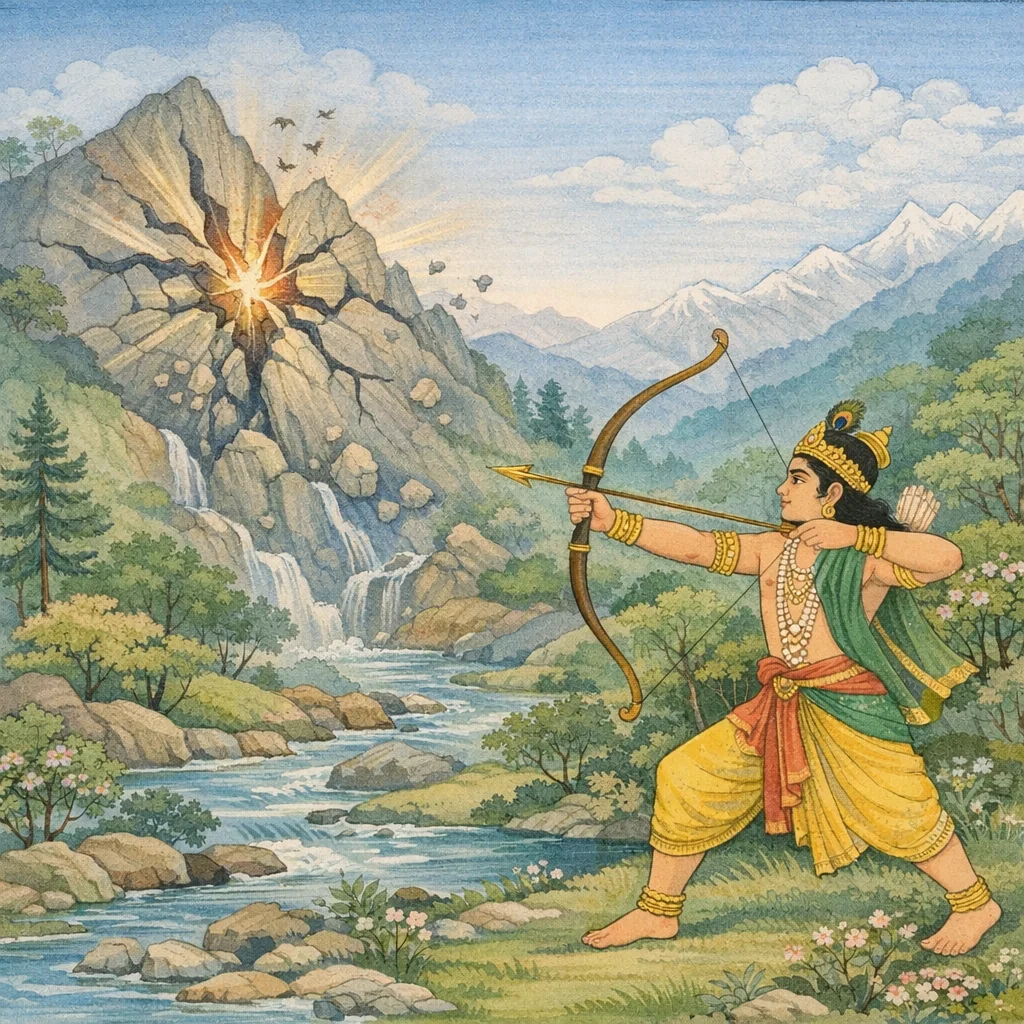
स तूत्थाय महाबाहुरुपसान्त्व्य च तान् जनान् | भधनुर्विकृष्य व्यसृजद् बाणान् श्वेते महागिरौ,उन महाबाहुने उठकर उन सब प्राणियोंको सान्त्वना दी और महापर्वत श्वेतपर खड़े खड़े धनुष खींचकर बाणोंकी वर्षा प्रारम्भ कर दी
Then the mighty-armed hero rose up; having soothed and reassured those beings, he stood upon the great white mountain and, drawing his bow to the full, began to release a shower of arrows.
Verse 33
बिभेद स शरै: शैलं क्रौज्चं हिमवत: सुतम् । तेन हंसाश्न गृध्राश्ष॒ मेरुं गच्छन्ति पर्वतम्,उन बाणोंद्वारा उन्होंने हिमालयके पुत्र क्रौज्च पर्वतको विदीर्ण कर दिया। उसी छिठ्रमें होकर हंस और गृध्र पक्षी मेरु पर्वतको जाते हैं
Mārkaṇḍeya said: With his arrows he split the mountain Krauñca, the son of Himavat. Through that cleft, swans and vultures pass on their way to Mount Meru.
Verse 34
स विशीर्णोडपतच्छैलो भृशमार्तस्वरान् रुवन् तस्मिन् निपतिते त्वन्ये नेदु: शैला भृशं तदा,स्कन्दके बाणोंसे छिन्न-भिन्न हो वह क्रौज्च पर्वत अत्यन्त आर्तनाद करता हुआ गिर पड़ा। उस समय उसके गिरनेपर दूसरे पर्वत भी जोर-जोरसे चीत्कार करने लगे
Markandeya said: “Shattered to pieces, that mountain fell, crying out with a grievous, anguished roar. And when it crashed down, the other mountains too raised loud cries in response.”
Verse 35
सतं नादं भृशार्तानां श्रुत्वापि बलिनां वर: । न प्राच्यवदमेयात्मा शक्तिमुद्यम्प चानदत्,बलवानोंमें श्रेष्ठ और अमित आत्मबलसे सम्पन्न कुमार उन अत्यन्त आर्त पर्वतोंके उस चीत्कारको सुनकर भी विचलित नहीं हुए, अपितु हाथसे शक्तिको उठाकर सिंहनाद करने लगे
Mārkaṇḍeya said: Hearing the loud cry of those in extreme distress, the prince—foremost among the strong—did not flinch. Possessed of immeasurable inner strength, he instead lifted his spear-weapon and roared aloud, meeting panic with steadfast courage and resolve.
Verse 36
सा तदा विमला शक्ति: क्षिप्ता तेन महात्मना । बिभेद शिखर घोर श्वेतस्य तरसा गिरे:,उन महात्माने उस समय अपनी चमचमाती हुई शक्ति चलायी और उसके द्वारा श्वेत गिरिके भयानक शिखरको बड़े वेगसे विदीर्ण कर डाला
Mārkaṇḍeya said: Then that radiant, stainless spear-weapon, hurled by the great-souled one, with tremendous force split apart the dreadful peak of Mount Śveta.
Verse 37
स तेनाभिहतो दीर्णो गिरि: श्वेतो5चलै: सह । उत्पपात महीं त्यक्त्वा भीतस्तस्मान्महात्मन:,इस प्रकार कार्तिकेयद्वारा शक्तिके आघातसे विदीर्ण होकर श्वेत पर्वत उन महात्माके भयसे डर गया और (दूसरे) पर्वतोंके साथ इस पृथ्वीको छोड़कर आकाशमें उड़ गया
Markandeya said: Struck by him, Mount Śveta was split asunder; and, terrified of that great-souled one, it abandoned the earth and leapt up into the sky together with other mountains.
Verse 38
ततः प्रव्यथिता भूमिवव््यशीर्यत समन्तत: । आर्ता स्कन्दं समासाद्य पुनर्बलवती बभौ,इससे पृथ्वीको बड़ी पीड़ा हुई। वह सब ओरसे फट गयी और पीड़ित हो कार्तिकेयजीकी ही शरणमें जानेपर पुन: बलवती हो शोभा पाने लगी
Then the Earth, violently shaken and distressed, split open on every side. In her anguish she sought refuge with Skanda; and upon reaching him, she regained her strength and became whole and radiant again.
Verse 39
पर्वताश्व नमस्कृत्य तमेव पृथिवीं गता: । अथैनमभजल्लोक: स्कन्दं शुक्लस्य पठचमीम्,तत्पश्चात् पर्वतोंने भी उन्हींके चरणोंमें मस्तक झुकाया और वे फिर पृथ्वीपर आ गये। तभीसे लोग प्रत्येक मासके शुक्लपक्षकी पञ्चमीको स्कन्ददेवका पूजन करने लगे
Mārkaṇḍeya said: Having bowed in reverence to Parvatāśva, they returned again to the earth. From that time onward, people began to worship Skanda on the fifth day (pañcamī) of the bright fortnight each month—establishing a recurring act of devotion that links gratitude and remembrance with regular religious observance.
Verse 116
राक्षसीभिश्न सम्पूर्णमनेकैश्न मृगद्धिजै: । सात सिरोंवाले अद्भुत नाग, जिनकी दृष्टिमें ही विष भरा था, उस पर्वतकी रक्षा करते थे। इनके सिवा राक्षस, पिशाच, भयानक भूतगण, राक्षसी-समुदाय तथा अनेक पशु- पक्षियोंसे भी वह पर्वत भरा हुआ था
Mārkaṇḍeya said: That mountain was crowded with rākṣasīs, and with many kinds of beasts and birds. Wondrous seven‑headed serpents—whose very gaze was laden with poison—stood guard over the mountain. Besides them, it teemed with rākṣasas, piśācas, terrifying hosts of spirits, bands of rākṣasīs, and diverse animals and birds. The scene underscores how peril can be woven into the very landscape, warning that one must approach the unknown with restraint, vigilance, and discernment rather than rashness.
Verse 193
लोहिताभ्रे सुमहति भाति सूर्य इवोदित: । चतुर्थीको वे कुमार स्कन्द सभी अंग-उपांगोंसे सम्पन्न हो गये। उस समय कुमार लाल रंगके विशाल बिजलीयुक्त बादलसे आच्छादित थे। अतः: अरुण रंगके मेघोंकी विशाल घटाके भीतर उदित हुए सूर्यकी भाँति प्रकाशित हो रहे थे
Mārkaṇḍeya said: “Within a vast, crimson cloud, he shone like the newly risen sun. On the fourth day, the youthful Skanda became fully formed, complete in every limb and subsidiary feature. At that time the boy was veiled by immense, lightning-laden red clouds; therefore he blazed forth like the sun emerging from the heart of a great mass of ruddy rain-clouds.”
Verse 224
इस प्रकार श्रीमहाभारत वनपर्वके अन्तर्गत मार्कण्डेयसमास्यापर्वमें आंगिरसोपाख्यानके प्रसंगर्ें स्कनन््दकी उत्पत्तिविषयक दो सौ चौबीसवाँ अध्याय पूरा हुआ
Thus ends the two-hundred and twenty-fourth chapter, concerning the birth of Skanda, within the Āṅgirasa episode of the Mārkaṇḍeya-samāsya section of the Vana Parva of the Śrī Mahābhārata. The narrator Mārkaṇḍeya marks the completion of this unit, framing the account as a sacred exemplum within the forest-book’s larger ethical and mythic instruction.
Verse 225
इति श्रीमहाभारते वनपर्वणि मार्कण्डेयसमास्यापर्वणि आंगिरसे कुमारोत्पत्तौ पज्चविंशत्यधिकद्धिशततमो<5ध्याय:
Thus, in the Śrī Mahābhārata, within the Vana Parva, in the section known as the Mārkaṇḍeya-samāsya Parva, in the episode concerning the birth of the son of the Āṅgirasa lineage, ends the two-hundred-and-twenty-fifth chapter (i.e., the 225th adhyāya).
Verse 1236
प्राक्षिपत् काज्चने कुण्डे शुक्रं सा त्वरिता शुभा | अनेकानेक नदी और झरने वहाँ बहते थे, तथा नाना प्रकारके वृक्ष उस पर्वतकी शोभा बढ़ाते थे। शुभस्वरूपा स्वाहा देवीने सहसा उस दुर्गग शैलशिखरपर जाकर एक सुवर्णमय कुण्डमें शीघ्रतापूर्वक उस शुक्र (वीर्य)-को डाल दिया
Auspicious Svāhā, in haste, went at once to that hard-to-reach rocky summit and swiftly poured the “śukra” (seed, virile essence) into a golden basin. There many rivers and waterfalls flowed, and trees of diverse kinds enhanced the mountain’s splendor.
Frequently Asked Questions
The tension lies between legitimate governance and the instrumental use of another’s suffering: Karṇa’s advice prioritizes reputational dominance and humiliation as strategy, raising questions about restraint, compassion, and righteous kingship.
The chapter illustrates how political authority is narrated as ‘radiance’ and publicly recognized fortune; it also suggests that perceived legitimacy can be constructed through spectacle, alliances, and tribute—independent of inner virtue.
No explicit phalaśruti appears here; the meta-function is contextual—this counsel serves as a narrative hinge that explains subsequent movements and the escalation of psychological and political pressure during exile.