Adhyaya 35
Ārjava, Satya, and the Virocana–Sudhanvan Exemplum (Udyoga-parva 35)
Upa-parva: Vidura-nīti (Counsel of Vidura) — Ethical Statecraft Discourses
The chapter opens with Dhṛtarāṣṭra requesting further dharma- and artha-aligned instruction, expressing sustained interest in Vidura’s ‘variegated’ counsel (1). Vidura prioritizes ethical straightforwardness (ārjava) over even universal pilgrimage-bathing, presenting moral conduct toward all beings as equal or superior to ritual purification (2). He urges the king to adopt ārjava specifically in relation to his sons, promising worldly fame (kīrti) and posthumous well-being (3–4). To illustrate truth’s governance value, Vidura introduces an ancient exemplum: Keśinī questions Virocana about the relative superiority of brāhmaṇas and daityas, prompting a confrontation with the brāhmaṇa Sudhanvan (5–12). Their dispute escalates into a wager of life, requiring adjudication by Prahrāda, who navigates conflicting roles as father and witness (13–23). Sudhanvan explains the severe social and moral costs of false speech, with graded consequences for lying about animals, cattle, horses, persons, and land—culminating in a prohibition against ‘land-lies’ (24–27). Prahrāda rules in favor of Sudhanvan, establishing brāhmaṇa superiority in this frame and compelling Virocana’s submission; Sudhanvan restores Virocana due to Prahrāda’s adherence to dharma (28–31). Vidura then applies the lesson directly: Dhṛtarāṣṭra should not speak untruth for territory and should avoid collective ruin driven by attachment to sons (32). The remainder compiles governance maxims: divine protection operates through discernment rather than coercive rescue (33); intention toward the good yields success (34); deceit abandons the deceiver at death (35); certain social conflicts and corrupt paths are to be avoided (36); unreliable witnesses are listed (37); misperformed ‘status-rituals’ bring fear (38); grave antisocial acts are enumerated (39–41). Ethical evaluation is framed through conduct under stress (42), and the erosive forces of age, death, anger, desire, and pride are noted (43). Prosperity is linked to auspiciousness, competence, discipline, and restraint (44). Eight illuminating virtues are enumerated (45–46), followed by a schematic of ‘heavenly indicators’ in human life and the four practices of the good (47–48). Institutional ethics is summarized: no true assembly without elders who speak dharma; no dharma without truth; no truth mixed with deceit (49). Further social qualities and causal moral psychology are stated: evil diminishes wisdom, merit increases it; envy and harshness lead to distress, while non-envy and good conduct lead to ease (50–55). The chapter concludes with pragmatic temporal planning for well-being across life stages (56–58), observations on misplaced praise and the fragility of ill-gotten wealth (59–60), the hierarchy of moral governance (teacher/king/Yama) (61), and cautions about tracing origins (62). It ends by recommending brāhmaṇa-honor, generosity, and integrity as stabilizers of kṣatriya rule, and by criticizing reliance on destructive counselors while urging paternal conduct toward the Pāṇḍavas (63–67).
Chapter Arc: हस्तिनापुर के राजसभा-परिसर में विदुर धृतराष्ट्र के सम्मुख नीति का द्वार खोलते हैं—शांति का मार्ग कहीं बाहर नहीं, भीतर की विद्या, तप और इन्द्रियनिग्रह में है। → विदुर दृष्टान्त के रूप में प्राचीन आख्यान उठाते हैं—हंसरूप में विचरते महर्षि दत्तात्रेय से साध्य देवों का प्रश्न, और कवि-हृदय की वह कसौटी कि अग्नि-सूर्य-सम तेज बाणों से विद्ध होकर भी वह अपने ‘सुकृत’ को पहचानता है। इसी के साथ विदुर धृतराष्ट्र को स्मरण कराते हैं कि द्यूत में द्रौपदी के जीते जाने पर उन्होंने पहले ही चेताया था, पर अंधा मोह और पुत्र-आसक्ति ने राजधर्म को दबा दिया। → विदुर का सीधा, राजोचित आग्रह—‘धार्तराष्ट्र पाण्डवों का पालन करें और पाण्डव आपके पुत्रों का’; कुरुवंश का ‘मेढ़ी-भूत’ स्तम्भ बनकर धृतराष्ट्र ही संधि करें, ताकि शत्रु बीच में दरार न खोजें और दुर्योधन को सत्य में स्थिर करें। → विदुर शांति का सूत्र स्पष्ट करते हैं: विद्या, तप, इन्द्रियनिग्रह और लोभ-त्याग के बिना शान्ति नहीं; सम्यक् अध्ययन, न्यायोचित युद्ध, पुण्यकर्म और सुतप्त तप का फल अंत में सुख है—अतः अभी संधि कर के कुल-यश और प्रजा-कल्याण की रक्षा की जाए। → धृतराष्ट्र के सामने अंतिम नैतिक मोड़ खड़ा है—क्या वे पुत्र-मोह से ऊपर उठकर पाण्डवों से संधि करेंगे, या दुर्योधन की हठधर्मिता को ही राज्य-नीति बना देंगे?
Shlokas
Verse 1
ऑपन-माज बछ। अफि्-"ऋा - यज्ञोपवीतहीन पिताका पुत्र, उपनयन-संस्कारका समय व्यतीत होनेपर भी यज्ञोपवीतरहित, विवाहित होनेपर भी यज्ञोपवीतहीन--ये तीन प्रकारके “व्रात्य' कहे गये हैं। षट्त्रिशो5्ध्याय: दत्तात्रेय और साध्यदेवताओंके संवादका उल्लेख करके महाकुलीन लोगोंका लक्षण बतलाते हुए विदुरका धृतराष्ट्रको समझाना विदुर उवाच अनत्रैवोदाहरन्तीममितिहासं पुरातनम् | आत्रेयस्य च संवाद साध्यानां चेति न: श्रुतम्,विदुरजी कहते हैं--राजन्! इस विषयमें लोग दत्तात्रेय और साध्यदेवताओंके संवादरूप इस प्राचीन इतिहासका उदाहरण दिया करते हैं; यह मेरा भी सुना हुआ है
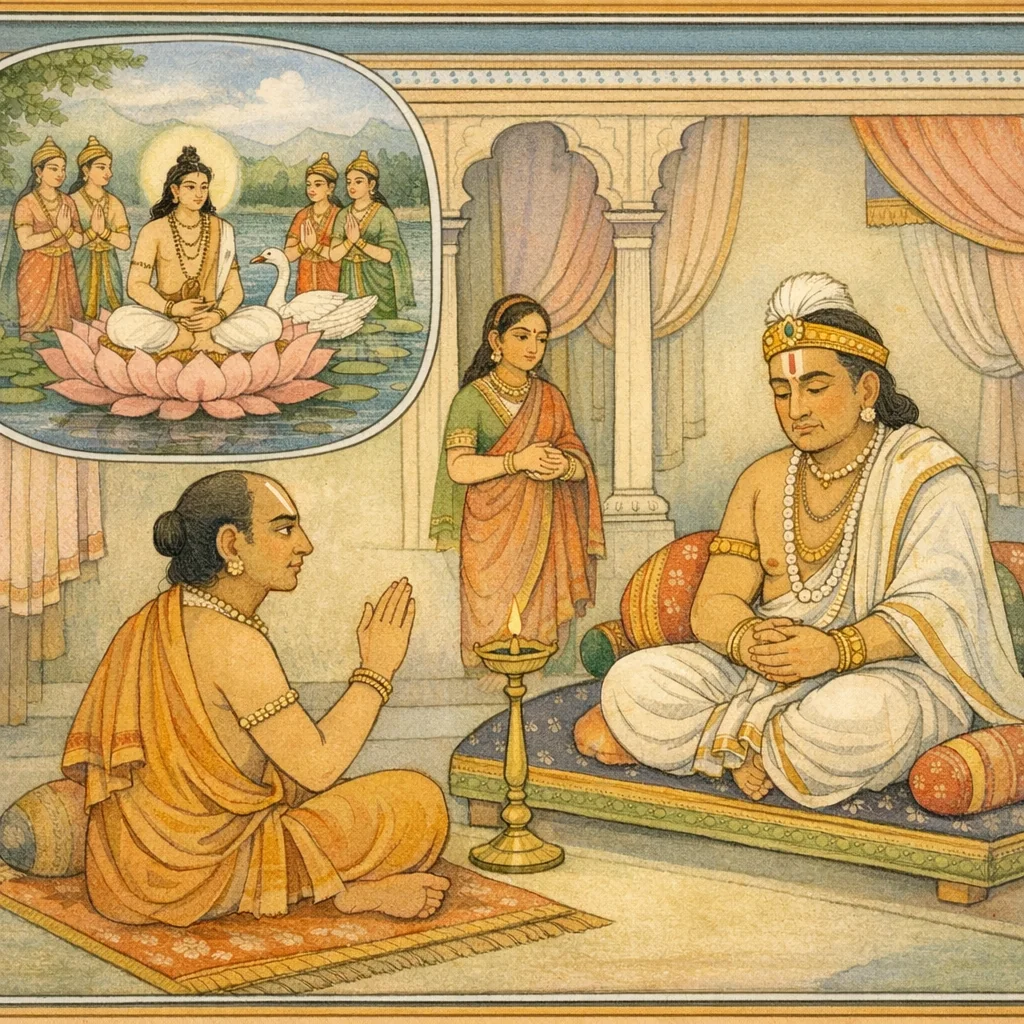
Vidura said: O King, in this very matter people cite an ancient traditional account as an illustration—the dialogue of Dattātreya (Ātreya) with the Sādhya deities. This is what we have heard handed down.
Verse 2
चरन्तं हंसरूपेण महर्षि संशितव्रतम् । साध्या देवा महाप्राज्ञं पर्यपृच्छन्त वै पुरा,प्राचीनकालकी बात है, उत्तम व्रतवाले महाबुद्धिमान् महर्षि दत्तात्रेयजी हंस (परमहंस)-रूपसे विचर रहे थे; उस समय साध्यदेवताओंने उनसे पूछा
Long ago, the great sage—firm in his austere vows—wandered in the form of a haṃsa (the emblematic ‘paramahaṃsa’). In that ancient time, the Sādhya gods approached that supremely wise one and questioned him, seeking guidance on right conduct and higher truth.
Verse 3
साध्या ऊचु. साध्या देवा वयमेते महर्षे दृष्टवा भवन्तं न शकनुमो<डनुमातुम् । श्रुतेन धीरो बुद्धिमांस्त्वं मतो नः काव्यां वाचं वक्तुमर्हस्युदाराम्,साध्य बोले--महर्षे! हम सब लोग साध्यदेवता हैं, केवल आपको देखकर हम आपके विषयमें कुछ अनुमान नहीं कर सकते। हमें तो आप शास्त्रज्ञानसे युक्त, धीर एवं बुद्धिमान् जान पड़ते हैं; अत: हमलोगोंको अपनी दिद्वत्तापूर्ण उदार वाणी सुनानेकी कृपा करें
The Sādhyas said: “O great seer, we are the Sādhya deities. Merely by seeing you, we are unable to judge who you truly are. Yet, from what we have heard, we regard you as learned in sacred lore, steadfast, and wise. Therefore, you ought to speak to us in a noble, refined, and instructive speech.”
Verse 4
प ५» | र्ज श्र ली <&ू >2#अर्ीटर या । 202 2 /| जा 2४ 225०.22/+ ८>5<-“+33 0 !--- जवां + हंस उवाच एतत् कार्यममरा: संभश्रुतं मे धृति: शर्म: सत्यधर्मनुवृत्ति: | ग्रन्थिंविनीय हृदयस्य सर्व प्रियाप्रिये चात्मसमं नयीत,परमहंसने कहा--साध्यदेवताओ! मैंने सुना है कि धैर्य-धारण, मनोनिग्रह तथा सत्य- धर्मोंका पालन ही कर्तव्य है; इसके द्वारा पुरुषको चाहिये कि हृदयकी सारी गाँठ खोलकर प्रिय और अप्रियको अपने आत्माके समान समझे
Haṃsa said: “O immortals, I have learned that one’s true duty is steadfastness, inner restraint, and faithful adherence to the dharmas of truth. By loosening every knot of the heart, a person should come to regard both the pleasant and the unpleasant as equal to one’s own self.”
Verse 5
आक्रुश्यमानो नाक्रोशेन्मन्युरेव तितिक्षतः । आक्रोष्टारं निर्दहति सुकृतं चास्य विन्दति,दूसरोंसे गाली सुनकर भी स्वयं उन्हें गाली न दे। (गालीको) सहन करनेवालेका रोका हुआ क्रोध ही गाली देनेवालेको जला डालता है और उसके पुण्यको भी ले लेता है
When abused, one should not abuse in return. For the person who endures, the anger held back becomes the very force that scorches the abuser—and it also draws away the abuser’s merit.
Verse 6
नाक्रोशी स्यान्नावमानी परस्य मित्रद्रोही नोत नीचोपसेवी । न चाभिमानी न च हीनवृत्तो रूक्षां वाचं रुषतीं वर्जयीत,दूसरोंको न तो गाली दे और न उनका अपमान करे, मित्रोंसे द्रोह तथा नीच पुरुषोंकी सेवा न करे, सदाचारसे हीन एवं अभिमानी न हो, रूखी तथा रोषभरी वाणीका परित्याग करे
One should neither abuse nor insult others; one should not betray friends, nor serve base men. One should not be arrogant or of degraded conduct, and should renounce harsh, anger-laden speech.
Verse 7
मर्माण्यस्थीनि हृदयं तथासून् रूक्षा वाचो निर्दहन्तीह पुंसाम् । तस्माद् वाचमुषती रूक्षरूपां धर्मारामो नित्यशो वर्जयीत,इस जगतमें रूखी बातें मनुष्योंके मर्मस्थान, हड्डी, हृदय तथा प्राणोंको दग्ध करती रहती हैं; इसलिये धर्मानुरागी पुरुष जलानेवाली रूखी बातोंका सदाके लिये परित्याग कर दे
Harsh words in this world scorch a person’s vital points, bones, heart, and even life-breath itself. Therefore, one who delights in dharma should always refrain from speech that is burning and rough in nature.
Verse 8
अरुन्तुदं परुषं रूक्षवा्चं वाक्कण्टकैर्वितुदन्तं मनुष्यान् । विद्यादलक्ष्मीकतमं जनानां मुखे निबद्धां निर्क्रतिं वै वहन्तम्,जिसकी वाणी रूखी और स्वभाव कठोर है, जो मर्मस्थानपर आघात करता और वाग्बाणोंसे मनुष्योंको पीड़ा पहुँचाता है, उसे ऐसा समझना चाहिये कि वह मनुष्योंमें महादरिद्र है और वह अपने मुखमें दरिद्रता अथवा मौतको बाँधे हुए ढो रहा है
One whose speech is rough and whose nature is harsh—who strikes at the vulnerable points and torments people with arrows of words—should be known as the most ill-fortuned among men, as though he carries poverty, or death itself, bound upon his mouth.
Verse 9
परश्रेदेनमभिविध्येत बाणै- भुशं सुतीक्ष्णैरनलार्कदी प्तै: । स विध्यमानो5प्यतिदह्यमानो विद्यात् कवि: सुकृतं मे दधाति,यदि दूसरा कोई इस मनुष्यको अग्नि और सूर्यके समान दग्ध करनेवाले अत्यन्त तीखे वाग्बाणोंसे बहुत चोट पहुँचावे तो वह विद्वान् पुरुष चोट खाकर अत्यन्त वेदना सहते हुए भी ऐसा समझे कि वह मेरे पुण्योंको पुष्ट कर रहा है
If another person were to strike this man repeatedly with verbal arrows—exceedingly sharp, blazing like fire and the sun—then the wise poet, though pierced and burning with pain, should understand: “He is adding to my store of merit.”
Verse 10
यदि सन्त॑ सेवति यद्यसन्तं तपस्विनं यदि वा स्तेनमेव । वासो यथा रड्रवशं प्रयाति तथा स तेषां वशमभ्युपैति,जैसे वस्त्र जिस रंगमें रँगा जाय, वैसा ही हो जाता है, उसी प्रकार यदि कोई सज्जन, असज्जन, तपस्वी अथवा चोरकी सेवा करता है तो वह उन्हींके वशमें हो जाता है--उसपर उन्हींका रंग चढ़ जाता है
Haṃsa said: Just as cloth takes on the color into which it is dyed, so too, if a person serves the good or the wicked—an ascetic or even a thief—he comes under their influence and is shaped by their character.
Verse 11
अतिवादं न प्रवदेन्न वादयेद् यो5नाहतः प्रतिहन्यान्न घातयेत् । हन्तुं च यो नेच्छति पापकं वै तस्मै देवा: स्पृहयन्त्यागताय,जो स्वयं किसीके प्रति बुरी बात नहीं कहता, दूसरोंसे भी नहीं कहलाता, बिना मार खाये स्वयं न तो किसीको मारता है और न दूसरोंसे ही मरवाता है, मार खाकर भी अपराधीको जो मारना नहीं चाहता, (स्वर्गमें) देवता भी उसके आगमनकी बाट जोहते रहते हैं
The Haṃsa said: One should not indulge in excessive or abusive speech, nor incite others to quarrel. If one has not been struck, one should not strike back, nor cause another to be struck. And even when wronged, the person who does not wish to kill the offender—such a one is so pure in restraint that even the gods long for his arrival in heaven.
Verse 12
अव्याह्तं व्याहवताच्छेय आहु: सत्यं वदेद् व्याहृतं तद् द्वितीयम् प्रियं वदेद् व्याह्ृतं तत् तृतीयं धर्म वदेद् व्याह्ृतं तच्चतुर्थम्,बोलनेसे न बोलना ही अच्छा बताया गया है, (यह वाणीकी प्रथम विशेषता है और यदि बोलना ही पड़े तो) सत्य बोलना वाणीकी दूसरी विशेषता है यानी मौनकी अपेक्षा भी अधिक लाभप्रद है। (सत्य और) प्रिय बोलना वाणीकी तीसरी विशेषता है। यदि सत्य और प्रियके साथ ही धर्मसम्मत भी कहा जाय, तो वह वचनकी चौथी विशेषता है। (इनमें उत्तरोत्तर श्रेष्ठता है)
The Haṃsa said: “They declare that not speaking is better than speaking. If one must speak, then speaking truth is the second best. Speaking what is both true and pleasing is the third. And speaking what is true, pleasing, and in accordance with dharma is the fourth.”
Verse 13
यादृशै: संनिविशते यादृशांश्वोपसेवते । यादृगिच्छेच्च भवितुं तादूगू भवति पूरुष:,मनुष्य जैसे लोगोंके साथ रहता है, जैसे लोगोंकी सेवा करता है और जैसा होना चाहता है, वैसा ही हो जाता है
A person becomes like the company he keeps: as he associates with certain people, serves and follows certain people, and as he inwardly wishes to become, so he gradually turns into that very kind of person.
Verse 14
यतो यतो निवर्तते ततस्ततो विमुच्यते । निवर्तनाद्धि सर्वतो न वेत्ति दुःखमण्वपि,मनुष्य जिन-जिन विषयोंसे मनको हटाता जाता है, उन-उनसे उसकी मुक्ति होती जाती है; इस प्रकार यदि सब ओरसे निवृत्ति हो जाय तो उसे लेशमात्र दुःखका भी कभी अनुभव नहीं होता
The Swan said: “From whatever objects a person turns the mind back, from those very objects one is progressively released. And when this turning-away becomes complete in every direction, one no longer experiences even the slightest trace of suffering.”
Verse 15
न जीयते चानुजिगीषते<न्यान् न वैरकृच्चाप्रतिघातकश्न । निन्दाप्रशंसासु समस्वभावो न शोचते हृष्पति नैव चायम्,जो न तो स्वयं किसीसे जीता जाता, न दूसरोंको जीतनेकी इच्छा करता है, न किसीके साथ वैर करता और न दूसरोंको चोट पहुँचाना चाहता है, जो निन्दा और प्रशंसामें समानभाव रखता है, वह हर्ष-शोकसे परे हो जाता है
The Haṃsa said: He is not conquered by others, nor does he seek to conquer anyone. He neither harbors enmity nor wishes to strike or injure another. Remaining of equal disposition amid blame and praise, such a person is not shaken by sorrow and does not exult in joy—he passes beyond both.
Verse 16
भावमिच्छति सर्वस्य नाभावे कुरुते मन: । सत्यवादी मृदुर्दान्तो यः स उत्तमपूरुष:,जो सबका कल्याण चाहता है, किसीके अकल्याण-की बात मनमें भी नहीं लाता, जो सत्यवादी, कोमल और जितेन्द्रिय है, वह उत्तम पुरुष माना गया है
The Hamsa says: He is called an excellent person who seeks the welfare of all, who does not even let his mind turn toward another’s harm, and who is truthful in speech, gentle in conduct, and self-controlled.
Verse 17
नानर्थक॑ सान्त्वयति प्रतिज्ञाय ददाति च । रन्ध्रं परस्थ जानाति य: स मध्यमपूरुष:,जो झूठी सान्त्वना नहीं देता, देनेकी प्रतिज्ञा करके दे ही देता है, दूसरोंके दोषोंको जानता है, वह मध्यम श्रेणीका पुरुष है
One who offers no empty consolation, who—having promised—truly gives, and who understands the vulnerabilities and faults found in others: such a person is regarded as a man of the middle rank.
Verse 18
दुःशासनस्तूपहतो 5$भिशस्तो नावर्तते मन्युवशात् कृतघ्न: । न कस्यचिन्मित्रमथो दुरात्मा कलाश्रैता अधमस्येह पुंस:,जिसका शासन अत्यन्त कठोर हो, जो अनेक दोषोंसे दूषित हो, कलंकित हो, जो क्रोधवश किसीकी बुराई करनेसे नहीं हटता हो, दूसरोंके किये हुए उपकारको नहीं मानता हो, जिसकी किसीके साथ मित्रता नहीं हो तथा जो दुरात्मा हो--ये अधम पुरुषके भेद हैं
The Swan said: “One like Duḥśāsana—violent and oppressive, censured and disgraced—does not desist from slander when driven by anger. Ungrateful for benefits received, friendless, and inwardly corrupt, he clings to base arts and crooked ways. These are the marks by which a vile man is known in this world.”
Verse 19
न श्रद्दधाति कल्याण परेभ्योडप्यात्मशड्कित: । निराकरोति मित्राणि यो वै सो5धमपूरुष:,जो अपने ही ऊपर संदेह होनेके कारण दूसरोंसे भी कल्याण होनेका विश्वास नहीं करता, मित्रोंको भी दूर रखता है, वह अवश्य ही अधम पुरुष है
The Haṃsa said: One who, doubting his own self, cannot even trust that good can come from others, and who pushes away his friends—such a person is surely base.
Verse 20
उत्तमानेव सेवेत प्राप्तकाले तु मध्यमान् । अधर्मांस्तु न सेवेत य इच्छेद् भूतिमात्मन:,जो अपनी एऐश्वर्यवृद्धि चाहता है, वह उत्तम पुरुषोंकी ही सेवा करे, समय आ पड़नेपर मध्यम पुरुषोंकी भी सेवा कर ले, परंतु अधम पुरुषोंकी सेवा कदापि न करे
One who seeks the growth of his own prosperity should serve only the best of men; when circumstances demand, he may also serve those of middling worth. But he should never attach himself in service to the unrighteous, for such association undermines true welfare and ethical standing.
Verse 21
प्राप्रोति वै वित्तमसद्वलेन नित्योत्थानात् प्रज्ञया पौरुषेण | न त्वेव सम्यग् लभते प्रशंसां न वृत्तमाप्रोति महाकुलानाम्,मनुष्य दुष्ट पुरुषोंके बलसे, निरन्तरके उद्योगसे, बुद्धिसे तथा पुरुषार्थसे धन भले ही प्राप्त कर ले; परंतु इससे उत्तम कुलीन पुरुषोंके सम्मान और सदाचारको वह पूर्णरूपसे कदापि नहीं प्राप्त कर सकता
The Swan said: A wicked man may indeed acquire wealth—by the strength of the unrighteous, by ceaseless exertion, by clever intelligence, and by sheer personal effort. Yet he does not truly win honorable praise, nor does he attain the refined conduct and moral standing that belong to the truly noble families.
Verse 22
धृतराष्ट्र उवाच महाकुले भ्य: स्पृहयन्ति देवा धर्मार्थनित्याश्व बहुश्रुताश्न । पृच्छामि त्वां विदुर प्रश्नमेत॑ भवन्ति वै कानि महाकुलानि,धृतराष्ट्रने कहा--विदुर! धर्म और अर्थके अनुष्ठानमें परायण एवं बहुश्रुत देवता भी उत्तम कुलमें उत्पन्न पुरुषोंकी इच्छा करते हैं। इसलिये मैं तुमसे यह प्रश्न करता हूँ कि महान् (उत्तम) कुलीन कौन हैं?
Dhṛtarāṣṭra said: Even the gods long for birth among great lineages—among those steadfast in dharma and artha and renowned for learning. Therefore, Vidura, I ask you this: which families are truly to be regarded as “great” and noble lineages?
Verse 23
विदुर उवाच तपो दमो ब्रह्मवित्तं विताना: पुण्या विवाहा: सततान्नदानम् | येष्वेवैते सप्त गुणा वसन्ति सम्यग्वृत्तास्तानि महाकुलानि,विदुरजी बोले--राजन्! जिनमें तप, इन्द्रियसंयम, वेदोंका स्वाध्याय, यज्ञ, पवित्र विवाह, सदा अन्नदान और सदाचार--ये सात गुण वर्तमान हैं, उन्हें महान् (उत्तम) कुलीन कहते हैं
Vidura said: O King, those families in which these seven virtues truly abide—ascetic discipline, self-restraint, knowledge of the Veda and Brahman, the maintaining of sacrificial rites, pure and lawful marriages, continual giving of food, and upright conduct—are rightly called great and noble lineages.
Verse 24
येषां हि वृत्तं व्यथते न योनि- श्षित्तप्रसादेन चरन्ति धर्मम् । ते कीर्तिमिच्छन्ति कुले विशिष्टां त्यक्तानृतास्तानि महाकुलानि,जिनका सदाचार शिथिल नहीं होता, जो अपने दोषोंसे माता-पिताको कष्ट नहीं पहुँचाते, प्रसन्नचित्तसे धर्मका आचरण करते हैं तथा असत्यका परित्याग कर अपने कुलकी विशेष कीर्ति चाहते हैं, वे ही महान् कुलीन हैं
Vidura says: Those whose good conduct does not slacken, who do not cause distress to their parents by their faults, who practice dharma with a serene and willing mind, and who abandon falsehood while seeking the distinctive good fame of their lineage—such families alone are truly great and noble.
Verse 25
अनिज्यया कुविवाहैरवेदस्योत्सादनेन च | कुलान्यकुलतां यान्ति धर्मस्यातिक्रमेण च,यज्ञ न होनेसे, निन्दित कुलमें विवाह करनेसे, वेदका त्याग और धर्मका उल्लंघन करनेसे उत्तम कुल भी अधम हो जाते हैं
Vidura warns that even families of high standing can fall into disgrace when they abandon sacred rites: neglecting sacrifice, contracting marriages into censured lineages, casting aside the Veda, and transgressing dharma.
Verse 26
देवद्रव्यविनाशेन ब्रह्मस्वहरणेन च । कुलान्यकुलतां यान्ति ब्राह्म॒णातिक्रमेण च,देवताओंके धनका नाश, ब्राह्मणके धनका अपहरण और ब्राह्मणोंकी मर्यादाका उल्लंघन करनेसे उत्तम कुल भी अधम हो जाते हैं
Vidura warns that the moral standing of even the noblest lineages collapses when sacred property is squandered, when a Brahmin’s wealth is seized, and when the dignity and boundaries due to Brahmins are violated.
Verse 27
ब्राह्मणानां परिभवात् परिवादाच्च भारत । कुलान्यकुलतां यान्ति न्न्यासापहरणेन च,भारत! ब्राह्मणोंक अनादर और निन्दासे तथा धरोहर रखी हुई वस्तुको छिपा लेनेसे अच्छे कुल भी निन्दनीय हो जाते हैं
Vidura said: “O Bhārata, by insulting Brahmins, by slander and malicious speech, and by misappropriating entrusted deposits, even families of good lineage fall into disgrace and come to be regarded as base. Such deeds corrode a house’s honor and undermine its standing in dharma.”
Verse 28
कुलानि समुपेतानि गोभि: पुरुषतो<र्थतः । कुलसंख्यां न गच्छन्ति यानि हीनानि वृत्तत:,गौओं, मनुष्यों और धनसे सम्पन्न होकर भी जो कुल सदाचारसे हीन हैं, वे अच्छे कुलोंकी गणनामें नहीं आ सकते
Vidura says: “Even if a family is well supplied with cattle, men, and wealth, it does not earn a place among truly noble lineages if it is deficient in right conduct. Without ethical discipline and good behavior, prosperity and numbers cannot confer genuine respectability.”
Verse 29
वृत्ततस्त्वविहीनानि कुलान्यल्पधनान्यपि । कुलसंख्यां च गच्छन्ति कर्षन्ति च महद् यश:,थोड़े धनवाले कुल भी यदि सदाचारसे सम्पन्न हैं तो वे अच्छे कुलोंकी गणनामें आ जाते हैं और महान् यश प्राप्त करते हैं
Vidura teaches that even families of modest means, if they are not lacking in right conduct, come to be counted among noble lineages and draw to themselves great renown. Wealth is secondary; character is what elevates a house and secures its lasting reputation.
Verse 30
वृत्तं यत्नेन संरक्षेद् वित्तमेति च याति च | अक्षीणो वित्तत: क्षीणो वृत्ततस्तु हतो हतः,सदाचारकी रक्षा यत्नपूर्वक करनी चाहिये; धन तो आता और जाता रहता है। धन क्षीण हो जानेपर भी सदाचारी मनुष्य क्षीण नहीं माना जाता; किंतु जो सदाचारसे भ्रष्ट हो गया, उसे तो नष्ट ही समझना चाहिये
Vidura advises that one must guard one’s righteous conduct with deliberate effort, for wealth continually comes and goes. A person is not truly diminished merely because wealth has dwindled; but one who has fallen away from good conduct is to be regarded as ruined indeed.
Verse 31
गोभि: पशुभिरश्वैश्व कृष्पा च सुसमृद्धया । कुलानि न प्ररोहन्ति यानि हीनानि वृत्तत:,जो कुल सदाचारसे हीन हैं, वे गौओं, पशुओं, घोड़ों तथा हरी-भरी खेतीसे सम्पन्न होनेपर भी उन्नति नहीं कर पाते
Vidura says: “Even if a family possesses cows, other livestock, horses, and richly flourishing agriculture, it does not truly rise or prosper if it is deficient in right conduct. Material abundance cannot compensate for the loss of ethical discipline and good character.”
Verse 32
मा न: कुले वैरकृत् कश्रिदस्तु राजामात्यो मा परस्वापहारी । मित्रद्रोही नैकतिको$नृती वा पूर्वाशी वा पितृदेवातिथिभ्य:,हमारे कुलमें कोई वैर करनेवाला न हो, दूसरोंके धनका अपहरण करनेवाला राजा अथवा मन्त्री न हो और मित्रद्रोही, कपटी तथा असत्यवादी न हो। इसी प्रकार माता-पिता, देवता एवं अतिथियों-को भोजन करानेसे पहले भोजन करनेवाला भी न हो
Vidura says: “Let there be no one in our lineage who foments enmity. Let there be no king or minister among us who steals another’s wealth. Let none be a betrayer of friends, a deceiver, or a speaker of falsehood; and let none eat before first offering food to parents, the gods, and guests.”
Verse 33
यश्न नो ब्राह्मणान् हन्याद् यश्न नो ब्राह्मणान् द्विषेत् । न नः स समितिं गच्छेद् यश्व नो निर्वपेत् पितृनू,हमलोगोंमेंसे जो ब्राह्मणोंकी हत्या कर, ब्राह्मणोंके साथ द्वेष करे तथा पितरोंको पिण्डदान एवं तर्पण न करे, वह हमारी सभामें न प्रवेश करे
Vidura declares: “Whoever among us would kill Brahmins, or harbor hatred toward Brahmins, and whoever would fail to offer the ancestral rites to the forefathers—such a person must not come into our assembly.”
Verse 34
तृणानि भूमिरुदकं वाक् चतुर्थी च सूनूता । सतामेतानि गेहेषु नोच्छिद्यन्ते कदाचन,तृणका आसन, पृथ्वी, जल और चौथी मीठी वाणी--सज्जनोंके घरमें इन चार चीजोंकी कभी कमी नहीं होती
Vidura teaches that in the household of the truly good, four simple gifts never run out: grass for a seat, earth as a place to rest, water for hospitality, and—fourth—sūnṛtā, sweet and truthful speech.
Verse 35
इस प्रकार श्रीमह्ाभारत उद्योगपर्वके अन्तर्गत प्रजागयरपर्वमें विदुर-नीतिवाक्यविषयक पैतीसवाँ अध्याय पूरा हुआ,श्रद्धया परया राजन्नुपनीतानि सत्कृतिम् । प्रवृत्तानि महाप्राज्ञ धर्मिणां पुण्यकर्मिणाम् महाप्राज्ञ राजन! पुण्यकर्म करनेवाले धर्मात्मा पुरुषोंके यहाँ ये (उपर्युक्त वस्तुएँ) बड़ी श्रद्धाके साथ सत्कारके लिये उपस्थित की जाती हैं
O King, these offerings—brought forward with the highest faith—are presented as acts of honour and hospitality in the homes of righteous men who perform meritorious deeds. O greatly wise ruler, such reverent reception and giving are upheld as the proper conduct of the dharmic.
Verse 36
सूक्ष्मोडपि भार नृपते स्यन्दनो वै शक्तो वोढुं न तथान्ये महीजा: । एवं युक्ता भारसहा भवन्ति महाकुलीना न तथान्ये मनुष्या:,नूपवर! रथ छोटा-सा होनेपर भी भार ढो सकता है, किंतु दूसरे काठ बड़े-बड़े होनेपर भी ऐसा नहीं कर सकते। इसी प्रकार उत्तम कुलमें उत्पन्न उत्साही पुरुष भार सह सकते हैं, दूसरे मनुष्य वैसे नहीं होते इति श्रीमहाभारते उद्योगपर्वणि प्रजागरपर्वणि विदुरहितवाक्ये षट्त्रिंशो ध्याय: ।। ३६ || इस प्रकार श्रीमह्ाभारत उद्योगपर्वके अन्तर्गत प्रजागरपर्वमें विदुर-हितवाक्यविषयक छत्तीसवाँ अध्याय पूरा हुआ
Vidura said: “O king, even a small chariot is capable of carrying a load, whereas other pieces of wood, though large, cannot do so in the same way. In the same manner, those born in noble families—when disciplined and properly trained—become able to bear heavy responsibilities; other men are not like that.”
Verse 37
न तम्मित्र॑ं यस्य कोपाद् बिभेति यद् वा मित्र शड़कितेनोपचर्यम् । यस्मिन् मित्रे पितरीवाश्वसीत तद् वै मित्र सड़तानीतराणि,जिसके कोपसे भयभीत होना पड़े तथा शंकित होकर जिसकी सेवा की जाय, वह मित्र नहीं है। मित्र तो वही है, जिसपर पिताकी भाँति विश्वास किया जा सके; दूसरे तो साथीमात्र हैं
Vidura says: He is not a true friend whose anger makes one afraid, or whom one must serve with suspicion. A friend is the one in whom one can rest trust as in a father; the rest are merely associates brought together by circumstance.
Verse 38
यः कक्षिदप्यसम्बद्धो मित्रभावेन वर्तते । स एव बन्धुस्तन्मित्रं सा गतिस्तत् परायणम्,पहलेसे कोई सम्बन्ध न होनेपर भी जो मित्रताका बर्ताव करे, वही बन्धु, वही मित्र, वही सहारा और वही आश्रय है
Vidura teaches that even a person who had no prior connection becomes one’s true kin if he behaves with genuine friendship. Such a friend alone is to be regarded as family, as a real companion, as one’s support in difficulty, and as the refuge on whom one may rely.
Verse 39
चलचित्तस्य वै पुंसो वृद्धाननुपसेवत: । पारिप्लवमतेर्नित्यमप्चुवो मित्रसंग्रह:,जिसका चित्त चंचल है, जो वृद्धोंकी सेवा नहीं करता, उस अनिश्चितमति पुरुषके लिये मित्रोंका संग्रह स्थायी नहीं होता
Vidura teaches that a person whose mind is fickle and who does not attend upon and learn from elders cannot keep friendships steady. For one of wavering judgment, even the making and maintaining of allies and friends remains unstable and unreliable.
Verse 40
चलचित्तमनात्मानमिन्द्रियाणां वशानुगम् | अर्था: समभिवर्तन्ते हंसा: शुष्क॑ सरो यथा,जैसे सूखे सरोवरके ऊपर ही हंस मँड़राकर रह जाते हैं, उसके भीतर नहीं प्रवेश करते, उसी प्रकार जिसका चित्त चंचल है, जो अज्ञानी और इन्द्रियोंका गुलाम है, अर्थ उसको त्याग देते हैं
Vidura says: Wealth and opportunities do not stay with a person whose mind is restless, who lacks self-mastery, and who follows the sway of the senses. Just as swans circle over a dried-up lake and do not enter it, so do material gains approach such a person only to abandon him—because inner discipline is absent.
Verse 41
अकस्मादेव कुप्यन्ति प्रसीदन्त्यनिमित्तत: । शीलमेतदसाधूनाम श्र पारिप्लवं यथा,दुष्ट पुरुषोंका स्वभाव मेघके समान चंचल होता है, वे सहसा क्रोध कर बैठते हैं और अकारण ही प्रसन्न हो जाते हैं
Vidura says: The wicked are fickle by nature, like a drifting cloud. They flare up in anger without warning and become pleased without any real cause. Such instability is the very mark of the unrighteous, and it makes them unreliable in counsel and conduct.
Verse 42
सत्कृताश्च कृतार्थाश्च मित्राणां न भवन्ति ये । तान् मृतानपि क्रव्यादा: कृतघ्नान् नोपभुज्जते
Vidura declares that those who, though honored and benefited, do not become true friends in return are guilty of ingratitude. Such thankless people are said to be so morally tainted that even carrion-eaters will not feed on them, though they be dead—an emphatic warning that betraying friendship and failing to repay kindness is a grave ethical fall.
Verse 43
जो मित्रोंसे सत्कार पाकर और उनकी सहायतासे कृतकार्य होकर भी उनके नहीं होते, ऐसे कृतघ्नोंके मरनेपर उनका मांस मांसभोजी जनन््तु भी नहीं खाते ।। अर्चयेदेव मित्राणि सति वासति वा धने । नानर्थयन् प्रजानाति मित्राणां सारफल्गुताम्
Vidura teaches that one should honor one’s friends when prosperity is present and wealth abides. A person who has never been brought low by misfortune does not truly understand the real strength and worth of friends—how they become the essential support when life turns adverse. Implicitly, ingratitude toward such friends is a grave ethical failure.
Verse 44
धन हो या न हो, मित्रोंसे कुछ भी न माँगते हुए उनका सत्कार तो करे ही। मित्रोंके सार-असारकी परीक्षा न करे ।। संतापाद् भ्रश्यते रूप॑ संतापाद् भ्रश्यते बलम् | संतापाद् भ्रश्यते ज्ञानं संतापाद् व्याधिमूच्छति,संताप (शोक)-से रूप नष्ट होता है, संतापसे बल नष्ट होता है, संतापसे ज्ञान नष्ट होता है और संतापसे मनुष्य रोगको प्राप्त होता है
Vidura teaches that whether one has wealth or not, one should still honor one’s friends without asking anything from them, and should not test them to weigh their worth. For grief and inner torment steadily consume a person: from distress beauty and composure fade, from distress strength fails, from distress discernment is lost, and from distress one finally falls into illness.
Verse 45
अनवाप्यं च शोकेन शरीरं चोपतप्यते । अमित्राश्ष प्रहष्यन्ति मा सम शोके मन: कृथा:,अभीष्ट वस्तु शोक करनेसे नहीं मिलती; उससे तो केवल शरीर संतप्त होता है और शत्रु प्रसन्न होते हैं। इसलिये आप मनमें शोक न करें
Vidura said: “By grieving, one does not obtain what is unattained; rather, the body is only scorched by sorrow, and one’s enemies rejoice. Therefore, do not let your mind sink into grief.”
Verse 46
पुनर्नरो प्रियते जायते च पुनर्नरो हीयते वर्धते च । पुनर्नरो याचति याच्यते च पुनर्नर: शोचति शोच्यते च,मनुष्य बार-बार मरता और जन्म लेता है, बार-बार क्षय और वृद्धिको प्राप्त होता है, बार-बार स्वयं दूसरेसे याचना करता है और दूसरे उससे याचना करते हैं तथा बारंबार वह दूसरोंके लिये शोक करता है और दूसरे उसके लिये शोक करते हैं
Vidura reflects on the revolving condition of human life: again and again a person dies and is born; again and again one declines and grows. Again and again one begs, and again and again one is begged from. Again and again one grieves for others, and again and again others grieve for him. The verse presses a sober ethical insight—since worldly states endlessly alternate, one should not cling to transient gains and losses but seek steadiness, restraint, and dharma.
Verse 47
सुखं च दुःखं च भवाभवौ च लाभालाभौ मरणं जीवितं च । पर्यायश: सर्वमेते स्पृशन्ति तस्माद् धीरो न च हृष्येन्न शोचेत्,सुख-दुःख, उत्पत्ति-विनाश, लाभ-हानि और जीवन-मरण--ये क्रमश: सबको प्राप्त होते रहते हैं; इसलिये धीर पुरुषको इनके लिये हर्ष और शोक नहीं करना चाहिये
Vidura teaches that pleasure and pain, coming-to-be and passing-away, gain and loss, life and death—these touch everyone in their turn. Therefore a steadfast person should neither exult nor grieve over them, but remain even-minded in the face of life’s changing conditions.
Verse 48
चलानि हीमानि षडिन्द्रियाणि तेषां यद् यद् वर्धते यत्र यत्र । ततस्ततः ख्रवते बुद्धिरस्य छिद्रोदकुम्भादिव नित्यमम्भ:,ये छः इन्द्रियाँ बहुत ही चंचल हैं; इनमेंसे जो-जो इन्द्रिय जिस-जिस विषयकी ओर बढ़ती है, वहाँ-वहाँ बुद्धि उसी प्रकार क्षीण होती है, जैसे फूटे घड़ेसे पानी सदा चू जाता है
Vidura says: The six senses are indeed fickle and ever-moving. Whichever sense grows strong and runs toward whatever object, the person’s discernment steadily drains away in that very direction—just as water continually leaks from a cracked water-pot. The ethical point is that unguarded sense-indulgence weakens judgment and self-mastery, which are essential for righteous conduct and sound counsel.
Verse 49
धृतराष्ट उवाच तनुरुद्धः शिखी राजा मिथ्योपचरितो मया । मन्दानां मम पुत्राणां युद्धेनानतं करिष्यति,धृतराष्ट्रने कहा--विदुर! सूक्ष्म धर्मसे बँधे हुए, शिखासे सुशोभित होनेवाले राजा युधिष्ठिरके साथ मैंने मिथ्या व्यवहार किया है; अतः वे युद्ध करके मेरे मूर्ख पुत्रोंका नाश कर डालेंगे
Dhṛtarāṣṭra said: “I have dealt falsely with that king—self-restrained and wearing the ascetic’s topknot. Therefore, he will bring my dull-witted sons to their end by war.”
Verse 50
नित्योद्विग्नमिदं सर्व नित्योद्विग्नमिदं मन: । यत् तत् पदमनुद्धिग्नं तन्मे वद महामते,महामते! यह सब कुछ सदा ही भयसे उद्विग्न है, मेरा यह मन भी भयसे उद्दिग्न है; इसलिये जो उद्वेगशून्य और शान्त पद (मार्ग) हो, वही मुझे बताओ
Dhṛtarāṣṭra said: “All this world is perpetually shaken by anxiety, and my own mind too is perpetually disturbed. Therefore, O wise one, tell me that state—indeed that path—which is free from agitation and grants peace.”
Verse 51
विदुर उवाच नान्यत्र विद्यातपसोनन्यत्रेन्द्रियनिग्रहात् नान्यत्र लोभसंत्यागाच्छान्तिं पश्यामि तेडनघ,विदुरजी बोले--पापशून्य नरेश! विद्या, तप, इन्द्रियनिग्रह और लोभत्यागके सिवा और कोई आपके लिये शान्तिका उपाय मैं नहीं देखता
Vidura said: “O sinless king, I see no other means for your peace except through learning and disciplined austerity, through restraint of the senses, and through the renunciation of greed.”
Verse 52
बुद्धया भयं प्रणुदति तपसा विन्दते महत् | गुरुशुश्रूषया ज्ञानं शान्तिं योगेन विन्दति,बुद्धिसे मनुष्य अपने भयको दूर करता है, तपस्यासे महत्पदको प्राप्त होता है, गुरुशुश्रूषासे ज्ञान और योगसे शान्ति पाता है
Vidura teaches that a person drives away fear through clear discernment; by austerity one attains a higher state; by devoted service to the teacher one gains true knowledge; and through disciplined yoga one finds inner peace. In the tense pre-war counsel of the Udyoga Parva, this verse presents a practical ladder of self-mastery as the basis of ethical steadiness.
Verse 53
अनश्रिता दानपुण्यं वेदपुण्यमनाश्रिता: । रागद्वेषविनिर्मुक्ता विचरन्तीह मोक्षिण:,मोक्षकी इच्छा रखनेवाले मनुष्य दानके पुण्यका आश्रय नहीं लेते, वेदके पुण्यका भी आश्रय नहीं लेते; किंतु निष्कामभावसे राग-द्वेषसे रहित हो इस लोकमें विचरते रहते हैं
Vidura says: Those who truly seek liberation do not lean on the merit of charity, nor do they depend on the merit gained from Vedic rites. Free from attachment and aversion, they move through this world with a desireless, unbound mind—living without clinging to reward as the basis of their conduct.
Verse 54
स्वधीतस्य सुयुद्धस्य सुकृतस्य च कर्मण: । तपसश्न् सुतप्तस्य तस्यान्ते सुखमेधते,सम्यक् अध्ययन, न्यायोचित युद्ध, पुण्यकर्म और अच्छी तरह की हुई तपस्याके अन्तमें सुखकी वृद्धि होती है
Vidura teaches that true happiness grows at the end of a life rightly lived: when one has studied well, fought only in a just and disciplined manner, performed meritorious deeds, and undertaken austerity with sincerity and steadiness. The verse frames happiness not as immediate pleasure, but as the mature fruit of dharma—earned through learning, righteous action, and self-restraint.
Verse 55
स्वास्तीर्णानि शयनानि प्रपन्ना न वै भिन्ना जातु निद्रां लभन्ते । न स्त्रीषु राजन् रतिमाप्रुवन्ति न मागधै: स्तूयमाना न सूतै:,राजन! आपसमें फूट रखनेवाले लोग अच्छे बिछौनोंसे युक्त पलंग पाकर भी कभी सुखकी नींद नहीं सोने पाते; उन्हें स्त्रियोंक पास रहकर तथा सूत-मागधोंद्वारा की हुई स्तुति सुनकर भी प्रसन्नता नहीं होती
Vidura says: O King, those who foster division among their own people do not obtain restful sleep, even when they have well-spread beds and luxurious couches. Neither the company of women nor the praises sung by bards—Māgadhas and Sūtas—can truly delight them; inner discord robs them of peace.
Verse 56
न वै भिन्ना जातु चरन्ति धर्म नवैसुखं प्राप्तुवन्तीह भिन्ना: । नवै भिजन्ना गौरवं प्राप्तुवन्ति न वै भिन्ना: प्रशमं रोचयन्ति,जो परस्पर भेदभाव रखते हैं, वे कभी धर्मका आचरण नहीं करते। वे सुख भी नहीं पाते। उन्हें गौरव नहीं प्राप्त होता तथा उन्हें शान्तिकी वार्ता भी नहीं सुहाती
Vidura says: Those who live in mutual division and factionalism never truly practice dharma. In this world they do not attain happiness; they do not gain honor or dignity; and even the very talk of peace is distasteful to them. The ethic is clear: harmony and shared purpose are prerequisites for righteous conduct, well-being, and the possibility of reconciliation.
Verse 57
न वै तेषां स्वदते पथ्यमुक्तं योगक्षेम॑ कल्पते नैव तेषाम् । भिन्नानां वै मनुजेन्द्र परायणं न विद्यते किंचिदन््यद् विनाशात्,हितकी बात भी कही जाय तो उन्हें अच्छी नहीं लगती। उनके योगक्षेमकी भी सिद्धि नहीं हो पाती। राजन! भेदभाववाले पुरुषोंकी विनाशके सिवा और कोई गति नहीं है
Vidura said: “Wholesome counsel does not please such people at all, and for them neither security nor well-being can be firmly established. O lord of men, for those who are divided by faction and mutual hostility, there is no other final course except ruin.”
Verse 58
सम्पन्न गोषु सम्भाव्यं सम्भाव॒य॑ ब्राह्मणे तप: । सम्भाव्यं॑ चापल स्त्रीषु सम्भाव्यं ज्ञातितो भसम्,जैसे गौओंमें दूध, ब्राह्मणमें तप और युवती स्त्रियोंमें चंचलताका होना अधिक सम्भाव है, उसी प्रकार अपने जाति-बन्धुओंसे भय होना भी सम्भव ही है
Vidura says: “Just as milk is naturally to be expected in well-kept cows, austerity in a brāhmaṇa, and fickleness in young women, so too it is only to be expected that danger and fear may arise even from one’s own kinsmen. The wise therefore remain vigilant and do not abandon prudence merely because of family ties.”
Verse 59
तन्तव:ः प्यायिता नित्यं तनवो बहुला: समा: । बहून् बहुत्वादायासान् सहन्तीत्युपमा सताम्,नित्य सींचकर बढ़ायी हुई पतली लताएँ बहुत होनेके कारण बहुत वर्षोतक नाना प्रकारके झोंके सहती हैं; यही बात सत्पुरुषोंके विषयमें भी समझनी चाहिये। (वे दुर्बल होनेपर भी सामूहिक शक्तिसे बलवान हो जाते हैं)
Vidura says: “Threads, though slender, when continually nourished and gathered in great number, endure many strains because of their multitude. This is an apt comparison for the virtuous: even if individually weak, by unity, steady support, and collective strength they become capable of bearing great pressures.”
Verse 60
धूमायन्ते व्यपेतानि ज्वलन्ति सहितानि च | धृतराष्ट्रोल्मुकानीव ज्ञातयो भरतर्षभ,भरतश्रेष्ठ धृतराष्ट्र! जलती हुई लकड़ियाँ अलग-अलग होनेपर धुआँ फेंकती हैं और एक साथ होनेपर प्रज्वलित हो उठती हैं। इसी प्रकार जातिबन्धु भी (आपसमें) फूट होनेपर दुःख उठाते और एकता होनेपर सुखी रहते हैं
Vidura says: “When firebrands are separated, they only smoke; when kept together, they blaze. In the same way, kinsmen—like the firebrands of Dhṛtarāṣṭra—suffer when divided, but flourish when united, O bull among the Bharatas.”
Verse 61
ब्राह्मणेषु च ये शूरा: स्त्रीषु ज्ञातिषु गोषु च वृन्तादिव फलं पक्वं धृतराष्ट्र पतन्ति ते,धृतराष्ट्र! जो लोग ब्राह्मणों, स्त्रियों, जातिवालों और गौओंपर ही शूरता प्रकट करते हैं, वे डंठलसे पके हुए फलोंकी भाँति नीचे गिरते हैं
Vidura warns Dhṛtarāṣṭra that those who display their ‘heroism’ only against the defenseless—Brahmins, women, their own kinsmen, and cattle—are not truly brave. Like ripe fruit that drops from its stalk, such men inevitably fall from honor, stability, and righteous standing.
Verse 62
महानप्येकजो वृक्षो बलवान् सुप्रतिष्ठित: । प्रसह एव वातेन सस्कन्धो मर्दितुं क्षणात्,यदि वृक्ष अकेला है तो वह बलवान, दृढ़मूल तथा बहुत बड़ा होनेपर भी एक ही क्षणमें आँधीके द्वारा बलपूर्वक शाखाओंसहित धराशायी किया जा सकता है
Vidura said: Even a great tree, if it stands alone—strong and firmly rooted—can still be violently crushed in a moment by a storm, branches and all. Thus, one who is isolated, however powerful, becomes vulnerable; strength is secured by support, alliance, and wise association.
Verse 63
अथ ये सहिता वृक्षा: सड्चश: सुप्रतिष्ठिता: । ते हि शीघ्रतमान् वातान् सहन्ते<न्योन्यसंश्रयात्,किंतु जो बहुत-से वृक्ष एक साथ रहकर समूहके रूपमें खड़े हैं, वे एक-दूसरेके सहारे बड़ी-से-बड़ी आँधीको भी सह सकते हैं
Vidura said: “But those trees which stand together in a well-rooted cluster can endure even the fiercest, fastest winds, because they support one another.” In ethical intent, the verse teaches that unity and mutual reliance make a community resilient against overwhelming peril—whereas isolation makes even the strong vulnerable.
Verse 64
एवं मनुष्यमप्येकं॑ गुणैरपि समन्वितम् । शवयं द्विषन्तो मन्यन्ते वायुर्द्रममिवैकजम्,इसी प्रकार समस्त गुणोंसे सम्पन्न मनुष्यको भी अकेले होनेपर शत्रु अपनी शक्तिके अंदर समझते हैं, जैसे अकेले वृक्षको वायु
Even a man who is endowed with virtues—if he stands alone—his enemies, hating him, deem him to be within their power, just as the wind overpowers a solitary tree.
Verse 65
अन्योन्यसमुपष्टम्भादन्योन्यापाश्रयेण च । ज्ञातय: सम्प्रवर्धन्ते सरसीवोत्पलान्युत,किंतु परस्पर मेल होनेसे और एकसे दूसरेको सहारा मिलनेसे जातिवाले लोग इस प्रकार वृद्धिको प्राप्त होते हैं, जैसे तालाबमें कमल
Vidura said: “Through mutual support and by depending upon one another, kinsmen truly flourish—just as lotuses grow and thrive in a lake. In the same way, a family or community increases in strength when its members uphold each other rather than stand apart.”
Verse 66
अवध्या ब्राह्मणा गावो ज्ञातय: शिशव: स्त्रिय: । येषां चान्नानि भुज्जीत ये च स्यु: शरणागता:,ब्राह्मण, गौ, कुटुम्बी, बालक, स्त्री, अन्नदाता और शरणागत-ये अवध्य होते हैं
Vidura declares that certain beings must never be harmed: Brahmins, cows, one’s own kinsfolk, children, and women. Likewise, those from whom one receives food and sustenance, and all who come seeking refuge, are to be treated as inviolable. In the ethical frame of the Udyoga Parva—where war is being weighed—this verse sets a clear boundary for righteous conduct: gratitude, protection of the vulnerable, and the duty to shelter the surrendered are non-negotiable restraints even amid political conflict.
Verse 67
न मनुष्ये गुण: कश्चिद् राजन् सधनतामृते । अनातुरत्वाद् भद्रं ते मृतकल्पा हि रोगिण:,राजन्! आपका कल्याण हो, मनुष्यमें धन और आरोग्यको छोड़कर दूसरा कोई गुण नहीं है; क्योंकि रोगी तो मुर्देके समान है
Vidura said: “O King, apart from possessing wealth and being free from illness, there is scarcely any ‘advantage’ in human life. For the sick are, in truth, like the dead. May it be well with you.”
Verse 68
अव्याधिजं कटुकं शीर्षरोगि पापानुबन्धं परुषं तीक्षणमुष्णम् । सतां पेयं यन्न पिबन्त्यसन्तो मन्युं महाराज पिब प्रशाम्य,महाराज! जो बिना रोगके उत्पन्न, कड़वा, सिरमें दर्द पैदा करनेवाला, पापसे सम्बद्ध, कठोर, तीखा और गरम है, जो सज्जनोंद्वारा पान करनेयोग्य है और जिसे दुर्जन नहीं पी सकते--उस क्रोधको आप पी जाइये और शान्त होइये
Vidura said: “O great king, drink in and swallow that anger—though it arises without any bodily illness, is bitter, brings headache, is bound up with sin, harsh, piercing, and hot. It is a draught fit for the good, and one that the wicked cannot drink. Consume it within yourself and become calm.”
Verse 69
रोगार्दिता न फलान्याद्रियन्ते न वै लभन्ते विषयेषु तत्त्वम् । दुःखोपेता रोगिणो नित्यमेव न बुध्यन्ते धनभोगान् न सौख्यम्,रोगसे पीड़ित मनुष्य मधुर फलोंका आदर नहीं करते, विषयोंमें भी उन्हें कुछ सुख या सार नहीं मिलता। रोगी सदा ही दुःखी रहते हैं; वे न तो धनसम्बधी भोगोंका और न सुखका ही अनुभव करते हैं
Vidura observes that those afflicted by illness take no delight even in sweet fruits, nor do they find any real essence in sense-objects. The sick live continually under the weight of suffering; they neither truly perceive the enjoyments that wealth can buy nor experience genuine happiness.
Verse 70
पुरा हरुक्तं नाकरोस्त्वं वचो मे द्यूते जितां द्रौपदीं प्रेक्ष्य राजन् । दुर्योधन वारयेत्यक्षवत्यां कितवत्वं पण्डिता वर्जयन्ति
Vidura said: “Formerly, O King, you did not act upon my counsel. Even after seeing Draupadī won in the gambling match, you did not restrain Duryodhana. The wise avoid the gambler’s vice, for it leads to ruin and disgrace.”
Verse 71
राजन! पहले जूएमें द्रौयदीको जीती गयी देखकर मैंने आपसे कहा था--“आप द्यूतक्रीड़ामें आसक्त दुर्योधनको रोकिये, विद्वानूलोग इस प्रवंचनाके लिये मना करते हैं।' किंतु आपने मेरा कहना नहीं माना ।। न तद् बल॑ यन्मृदुना विरुध्यते सूक्ष्मो धर्मस्तरसा सेवितव्य: । प्रध्वंसिनी क्रूरसमाहिता श्री- मृदुप्रौढा गच्छति पुत्रपौत्रान्,वह बल नहीं, जिसका मृदुल स्वभावके साथ विरोध हो; सूक्ष्म धर्मका शीघ्र ही सेवन करना चाहिये। क्रूरतापूर्वक उपार्जित लक्ष्मी नश्वर होती है, यदि वह मृदुलतापूर्वक बढ़ायी गयी हो तो पुत्र-पौत्रों-तनक स्थिर रहती है
Vidura reminds the king that when Draupadī was won in the dice-game, he had warned him to restrain Duryodhana, for the wise condemn such deceit. Yet the king did not heed him. Vidura then states an ethical principle: that is not true strength which stands opposed to gentleness; subtle dharma must be embraced promptly and carefully. Wealth amassed through cruelty is ruinous and short-lived, whereas prosperity nurtured through mildness and maturity endures, passing on to one’s sons and grandsons.
Verse 72
धार्तराष्ट्रा: पाण्डवान् पालयन्तु पाण्डो: सुतास्तव पुत्रांश्न पान्तु । एकारिमित्रा: कुरवो होककार्या जीवन्तु राजन् सुखिन: समृद्धा:,राजन्! आपके पुत्र पाण्डवोंकी रक्षा करें और पाण्डुके पुत्र आपके पुत्रोंकी रक्षा करें। सभी कौरव एक-दूसरेके शत्रुको शत्रु और मित्रको मित्र समझें। सबका एक ही कर्तव्य हो, सभी सुखी और समृद्धिशाली होकर जीवन व्यतीत करें
Vidura urges the king toward reconciliation: “Let the sons of Dhṛtarāṣṭra protect the Pāṇḍavas, and let the sons of Pāṇḍu protect your sons. Let all the Kurus stand as one—sharing the same friends and the same enemies—and let there be a single common duty among them. Thus, O King, may they live together, happy and prosperous.”
Verse 73
मेढी भूत: कौरवाणां त्वमद्य त्वय्याधीनं कुरुकूलमाजमीढ । पार्थान् बालान् वनवासप्रतप्तान् गोपायस्व स्वं यशस्तात रक्षन्,अजमीढकुलनन्दन! इस समय आप ही कौरवोंके आधारस्तम्भ हैं, कुरुवंश आपके ही अधीन है। तात! कुन्तीके पुत्र अभी बालक हैं और वनवाससे बहुत कष्ट पा चुके हैं; इस समय उनका पालन करके अपने यशकी रक्षा कीजिये
Vidura said: “Today you are the very pillar on which the Kauravas rest; O descendant of Ajamīḍha, the Kuru lineage depends upon you. The sons of Pṛthā are still young and have been scorched by the hardships of exile—protect them now, dear one, and in doing so safeguard your own good name, O delight of Ajamīḍha’s line.”
Verse 74
संधत्स्व त्वं कौरव पाण्डुपुत्रै- मा तेडन्तरं रिपव: प्रार्थयन्तु । सत्ये स्थितास्ते नरदेव सर्वे दुर्योधनं स्थापय त्वं नरेन्द्र,कुरुराज! आप पाण्डवोंसे संधि कर लें, जिससे शत्रुओंको आपका छिद्र देखनेका अवसर न मिले। नरदेव! समस्त पाण्डव सत्यपर डटे हुए हैं; अब आप अपने पुत्र दुर्योधनको रोकिये
Vidura urges the Kuru king to make peace with the sons of Pāṇḍu, so that enemies may not find an opening in his house. He emphasizes that the Pāṇḍavas stand firmly upon truth, and therefore the king should restrain Duryodhana—choosing reconciliation and dharma over pride that invites ruin.
Frequently Asked Questions
The central dilemma is whether a ruler may employ untruth or evasive conduct to secure territory and factional advantage; the chapter argues that such expediency corrodes legitimacy and produces cascading harm.
Ārjava and satya are presented as higher-order stabilizers of political life: straightforward integrity toward kin and subjects preserves reputation, clarifies judgment, and aligns artha with dharma.
While not a formal phalaśruti, the chapter explicitly links ethical conduct to outcomes: worldly kīrti and posthumous well-being (including ‘svarga’ language) are framed as consequences of sustained integrity and truthfulness.