Adhyaya 33
उद्योगपर्व — अध्याय 33: धृतराष्ट्र-विदुर संवादः (विदुरनीतिः)
Upa-parva: Vidura-Nīti (Counsel to Dhṛtarāṣṭra) — Udyoga Parva Context
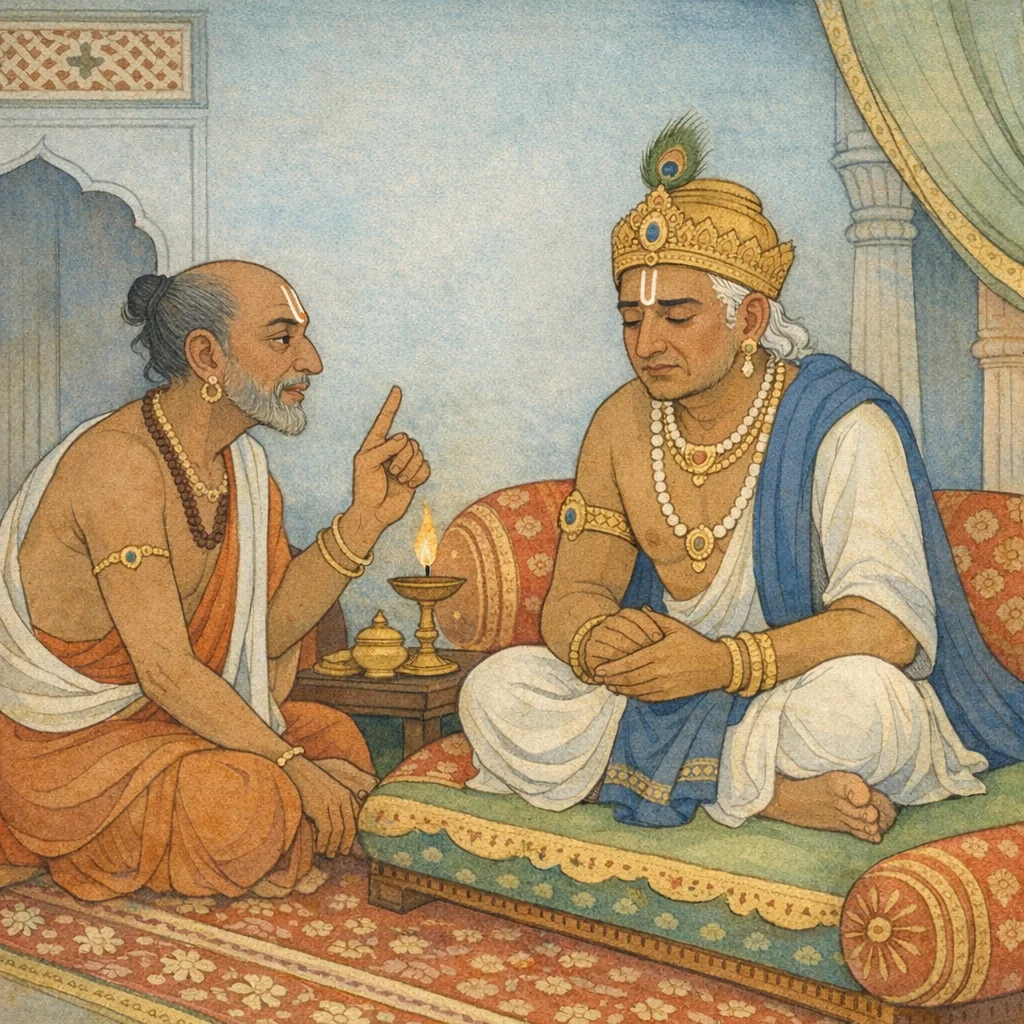
Vaiśaṃpāyana narrates Dhṛtarāṣṭra’s summons of Vidura through the palace doorkeeper, establishing court procedure and Dhṛtarāṣṭra’s readiness to receive counsel. Dhṛtarāṣṭra reports that Saṃjaya has returned after reproaching him and will speak in the assembly the next day; uncertainty about that speech produces insomnia and somatic agitation. Vidura begins with diagnostic counsel, asking whether the king is afflicted by major moral faults (e.g., coveting others’ wealth), then proceeds into an extended niti catalogue. The chapter defines the paṇḍita through behavioral markers: discernment, restraint from anger and pride, confidentiality, steadiness under heat/cold, fear/pleasure, prosperity/adversity, and prioritization of dharma and artha over kāma. In contrast, it profiles the mūḍha through impulsive speech, misplaced alliances, procrastination, and envy. Vidura enumerates governance hazards (vices, leaks of counsel, mismanagement of resources), prescribes durable virtues (truth, generosity, non-sloth, non-envy, forbearance, firmness), and frames leadership as measured discipline combined with compassion. The discourse culminates in a direct political-ethical recommendation: Dhṛtarāṣṭra should provide the Pāṇḍavas their due share of sovereignty, aligning state stability with justice and kinship responsibility.
Chapter Arc: धृतराष्ट्र अनिष्ट की आशंका से व्याकुल होकर विदुर को बुलाते हैं और कहते हैं—‘कवे-तने! अजातशत्रु युधिष्ठिर के हित में जो पथ्य और श्रेयस्कर हो, वही मुझे यथावत् समझाओ।’ → विदुर ‘अपृष्ट’ होकर भी हितवचन कहने के धर्म का उद्घोष करते हैं—प्रिय-अप्रिय, शुभ-अशुभ से परे जाकर वही बोलना चाहिए जिससे श्रोता का पराभव न हो। फिर वे राजधर्म, इन्द्रिय-निग्रह, दण्ड-नीति, और वाणी की मर्यादा का क्रमशः प्रतिपादन करते हैं, यह दिखाते हुए कि काम-क्रोध जैसे दो ‘महामत्स्य’ बुद्धि को जाल में फँसी मछलियों की तरह लूट लेते हैं। → विदुर का निर्णायक उपदेश: युधिष्ठिर ही राजलक्षणों से सम्पन्न, त्रैलोक्य-राज्य के योग्य, और धृतराष्ट्र का आज्ञाकारी शिष्य-सदृश है; वह करुणा और अनृशंस्य से प्रेरित होकर धृतराष्ट्र के कारण अनेक क्लेश सह रहा है—अतः उसी के साथ न्याय करना ही राज्य और कुल का श्रेय है। → अध्याय का अंत विदुर के नीति-वचन को एक स्पष्ट दिशा देता है—राजा को धैर्यवान, परीक्ष्य-कारी, इन्द्रियजयी, और सुभाषित-वाणी वाला बनकर निर्णय करना चाहिए; अन्यथा दुर्भाषित और विकार राज्य को अनर्थ में ले जाते हैं। → विदुरनीति का प्रवाह यहीं से आरम्भ होकर आगे के अध्यायों में और तीक्ष्ण होकर धृतराष्ट्र के मोह, दुर्योधन की हठ, तथा राज्य-धर्म के निर्णायक प्रश्नों की ओर बढ़ता है।
Shlokas
Verse 1
[दाक्षिणात्य अधिक पाठके ६ श्लोक मिलाकर कुल १२९ “लोक हैं।] हि. 770 8 2 बक। न मा * इस ३३ वें अध्यायसे प्रारम्भ होकर ४० वें अध्यायतक “विदुरनीति' है। > यहाँ 'उपास्ते” के स्थानपर “उपासते” यह प्रयोग आर्ष समझना चाहिये। - मुहूर्त शब्दका अर्थ दो घड़ी होता है। एक घड़ी २४ मिनटकी मानी जाती है। चतुस्त्रिं5 ध्याय: धृतराष्ट्रके प्रति विदुरजीके नीतियुक्त वचन धृतराष्ट उवाच जाग्रतो दहयमानस्य यत् कार्यमनुपश्यसि । तद् ब्रूहि त्वं हि नस्तात धर्मार्थकुशलो हासि,धृतराष्ट्र बोले--तात! मैं चिन्तासे जलता हुआ अभीतक जाग रहा हूँ; तुम मेरे करनेयोग्य जो कार्य समझो, उसे बताओ; क्योंकि हमलोगोंमें तुम्हीं धर्म और अर्थके ज्ञानमें निपुण हो
Dhṛtarāṣṭra said: “Dear one, I have remained awake until now, burning with anxious thought. Tell me what course of action you judge should be done; for among us you are the one truly skilled in understanding dharma and artha.”
Verse 2
त्वं मां यथावद् विदुर प्रशाधि प्रज्ञापूर्व सर्वमजातशत्रो: | यन्मन्यसे पथ्यमदीनसत्त्व श्रेयस्करं ब्रूहि तद् वै कुरूणाम्,उदारचित्त विदुर! तुम अपनी बुद्धिसे विचारकर मुझे ठीक-ठीक उपदेश करो। जो बात युधिष्ठिरके लिये हितकर और कौरवोंके लिये कल्याणकारी समझो, वह सब अवश्य बताओ
Dhṛtarāṣṭra said: “Vidura, instruct me properly and in full, with your wisdom. Tell me whatever you judge to be wholesome for Ajātaśatru (Yudhiṣṭhira) and truly conducive to the welfare of the Kurus. O noble-minded Vidura, speak what leads to the highest good.”
Verse 3
पापाशड्की पापमेवानुपश्यन् पृच्छामि त्वां व्याकुलेनात्मनाहम् । कवे तने ब्रूहि सर्व यथाव- न्मनीषितं सर्वमजातशत्रो:,विद्वन! मेरे मनमें अनिष्टकी आशंका बनी रहती है, इसलिये मैं सर्वत्र अनिष्ट ही देखता हूँ, अतः व्याकुल हृदयसे मैं तुमसे पूछ रहा हँ--अजातशत्रु युधिष्ठिर क्या चाहते हैं, सो सब ठीक-ठीक बताओ
Dhṛtarāṣṭra said: “Haunted by fear of sin and therefore seeing evil everywhere, I question you with a troubled heart. O poet, O son, tell me everything exactly as it is—tell me in full what Ajātaśatru (Yudhiṣṭhira), in his considered mind, truly intends.”
Verse 4
विदुर उवाच शुभं वा यदि वा पापं द्वेष्यं वा यदि वा प्रियम् । अपृष्टस्तस्य तद् ब्रूयाद् यस्य नेच्छेत् पराभवम्,विदुरजीने कहा--राजन्! मनुष्यको चाहिये कि वह जिसकी पराजय नहीं चाहता, उसको बिना पूछे भी अच्छी अथवा बुरी, कल्याण करनेवाली या अनिष्ट करनेवाली--जो भी बात हो, बता दे
Vidura said: “O King, whether the matter be auspicious or sinful, whether it be unpleasant to hear or dear to hear—one should tell it even unasked to that person whose downfall one does not wish.”
Verse 5
तस्माद् वक्ष्यामि ते राजन हित॑ं यत् स्यात् कुरून् प्रति । वच: श्रेयस्करं धर्म्य ब्रुवतस्तन्निबोध मे
Therefore, O King, I shall tell you what would be beneficial with regard to the Kurus. Listen attentively to my words as I speak—words that are conducive to true welfare and grounded in dharma.
Verse 6
इसलिये राजन्! जिससे समस्त कौरवोंका हित हो, मैं वही बात आपसे कहूँगा। मैं जो कल्याणकारी एवं धर्मयुक्त वचन कह रहा हूँ, उन्हें आप ध्यान देकर सुनें ।। मिथ्योपेतानि कर्माणि सिध्येयुर्यानि भारत । अनुपायप्रयुक्तानि मा सम तेषु मन: कृथा:,भारत! असत् उपायों (अन्यायपूर्वक युद्ध एवं द्यूत) आदिका प्रयोग करके जो कपटपूर्ण कार्य सिद्ध होते हैं, उनमें आप मन मत लगाइये
Therefore, O King, I shall tell you only what will truly serve the welfare of all the Kauravas. Listen attentively to these words of mine, which are beneficial and grounded in dharma. O Bharata, do not set your mind on achievements gained through deceit—works that succeed by wrongful, improper means. Do not be drawn toward such ends, even if they appear to ‘work’ for a time.
Verse 7
तथैव योगविहितं यत् तु कर्म न सिध्यति । उपाययुक्त मेधावी न तत्र ग्लपयेन्मन:,इसी प्रकार अच्छे उपायोंका उपयोग करके सावधानीके साथ किया गया कोई कर्म यदि सफल न हो तो बुद्धिमान् पुरुषको उसके लिये मनमें ग्लानि नहीं करनी चाहिये
Vidura says: Even when a task is undertaken in accordance with disciplined counsel and proper method, it may still fail to reach completion. If a wise person has applied sound means with care, he should not let his mind sink into self-reproach over that outcome.
Verse 8
अनुबन्धानपेक्षेत सानुबन्धेषु कर्मसु । सम्प्रधार्य च कुर्वीत न वेगेन समाचरेत्,किसी प्रयोजनसे किये गये कर्मोमें पहले प्रयोजनको समझ लेना चाहिये। खूब सोच- विचारकर काम करना चाहिये, जल्दबाजीसे किसी कामका आरम्भ नहीं करना चाहिये
Vidura advises that in any undertaking one should first consider its consequences and connected outcomes. After careful deliberation one should act; one should not begin a task in haste or under the impulse of speed.
Verse 9
अनुबन्ध॑ च सम्प्रेक्ष्य विपाकं॑ चैव कर्मणाम् । उत्थानमात्मनश्वैव धीर: कुर्वीत वा न वा,धीर मनुष्यको उचित है कि पहले कर्मोंका प्रयोजन, परिणाम तथा अपनी उन्नतिका विचार करके फिर काम आरम्भ करे या न करे
Vidura says: A wise person should first examine the purpose and connected consequences of an undertaking, the ripening results of actions, and one’s own capacity for self-advancement; only then should one decide whether to proceed with the work or refrain.
Verse 10
यः प्रमाणं न जानाति स्थाने वृद्धौँ तथा क्षये । कोशे जनपदे दण्डे न स राज्येडवतिषछते,जो राजा स्थिति, लाभ, हानि, खजाना, देश तथा दण्ड आदिकी मात्राको नहीं जानता, वह राज्यपर स्थिर नहीं रह सकता
Vidura says: A king who does not understand proper measure and proportion—what is fitting in stability, in growth, and in decline; in the treasury, in the realm and its people, and in the use of punishment—cannot remain firmly established in sovereignty. Ethical rule requires calibrated judgment: knowing when to conserve, when to expand, and when to restrain through just discipline.
Verse 11
यस्त्वेतानि प्रमाणानि यथोक्तान्यनुपश्यति । युक्तो धर्मार्थयोज्ञनि स राज्यमधिगच्छति,जो इनके प्रमाणोंको उपर्युक्त प्रकारसे ठीक-ठीक जानता है तथा धर्म और अर्थके ज्ञानमें दत्तचित्त रहता है, वह राज्यको प्राप्त करता है
Vidura says: “He who examines these standards of judgment exactly as they have been stated, and who remains steadily devoted to discerning and applying dharma and artha, becomes fit to attain sovereignty.”
Verse 12
न राज्यं प्राप्तमित्येव वर्तितव्यमसाम्प्रतम् । श्रियं हविनयो हन्ति जरा रूपमिवोत्तमम्
Vidura says: “One should not go on living with the thought, ‘I have not obtained the kingdom.’ Such undisciplined lack of humility destroys prosperity, just as old age ruins even the finest beauty.”
Verse 13
“अब तो राज्य प्राप्त ही हो गया'--ऐसा समझ-कर अनुचित बर्ताव नहीं करना चाहिये। उद्ण्डता सम्पत्तिको उसी प्रकार नष्ट कर देती है, जैसे सुन्दर रूपको बुढ़ापा ।। भक्ष्योत्तमप्रतिच्छन्न॑ मत्स्यो बडिशमायसम् | लोभाभिपाती ग्रसते नानुबन्धमवेक्षते,जैसे मछली बढ़िया खाद्य वस्तुसे ढकी हुई लोहेकी काँटीको लोभमें पड़कर निगल जाती है, उससे होनेवाले परिणामपर विचार नहीं करती (अतएव मर जाती है)
Vidura said: One should not behave improperly on the assumption, “Now the kingdom is already secured.” Arrogant excess destroys prosperity just as old age destroys beauty. Like a fish that, driven by greed, swallows an iron hook concealed beneath the finest bait and does not consider the consequence, a person blinded by gain rushes into ruin by ignoring what follows from his act.
Verse 14
यच्छव्यं ग्रसितु ग्रस्यं ग्रस्तं परिणमेच्च यत् । हितं च परिणामे यत् तदाद्यं भूतिमिच्छता,अत: अपनी उन्नति चाहनेवाले पुरुषको वही वस्तु खानी (या ग्रहण करनी) चाहिये, (जो परिणाममें अनिष्टकर न हो अर्थात) जो खानेयोग्य हो तथा खायी जा सके, खाने (या ग्रहण करने)-पर पच सके और पच जानेपर हितकारी हो
Vidura says: One who seeks prosperity should accept only that which is truly fit to be taken—something that can be consumed, can be digested after being taken, and, once digested, turns out to be beneficial. In other words, a wise person chooses only what yields wholesome results in the end, not what merely appears attractive at first.
Verse 15
वनस्पतेरपक्वानि फलानि प्रचिनोति यः । स नाप्रोति रसं तेभ्यो बीजं चास्य विनश्यति,जो पेड़से कच्चे फलोंको तोड़ता है, वह उन फलोंसे रस तो पाता नहीं, परंतु उस वृक्षके बीजका नाश हो जाता है
Vidura said: “Whoever plucks a tree’s unripe fruits gains no true juice from them; instead he harms the very source—the seed is ruined. So too, greedy action taken before its time yields no real benefit and destroys future prosperity.”
Verse 16
यस्तु पक््वमुपादत्ते काले परिणतं फलम् | फलाद् रसं स लभते बीजाच्चैव फलं पुन:,परंतु जो समयपर पके हुए फलको ग्रहण करता है, वह फलसे रस पाता है और उस बीजसे पुनः फल प्राप्त करता है
Vidura says: “The one who takes a fruit only when it has ripened in due season gains its sweetness from the fruit—and from its seed, in time, gains fruit again. This teaches timely action and patient restraint: act at the proper moment, and you gain now while securing what comes later.”
Verse 17
यथा मधु समादत्ते रक्षन् पुष्पाणि षट्पद:ः । तद्वदर्थान् मनुष्येभ्य आदद्यादविहिंसया,जैसे भौंरा फूलोंकी रक्षा करता हुआ ही उनके मधुका ग्रहण करता है, उसी प्रकार राजा भी प्रजाजनोंको कष्ट दिये बिना ही उनसे धन ले
Vidura said: “Just as a bee gathers honey while safeguarding the flowers, so too should a king collect wealth from his people without harming them—taking revenue in a way that causes no distress or injury.”
Verse 18
पुष्पं पुष्पं विचिन्वीत मूलच्छेदं॑ न कारयेत् । मालाकार इवारामे न यथाड्रारकारक:,जैसे माली बगीचेमें एक-एक फूल तोड़ता है, उसकी जड़ नहीं काटता, उसी प्रकार राजा प्रजाकी रक्षापूर्वक उनसे कर ले। कोयला बनानेवालेकी तरह जड़से नहीं काटे
Vidura advises that a ruler should draw revenue from the people with restraint and protection: like a gardener in an orchard who plucks flowers one by one without cutting the plant at its root. He must not act like a charcoal-burner, who fells the tree from the root for immediate gain—thereby destroying the very source of future prosperity.
Verse 19
किन्नु मे स्यादिदं कृत्वा किन्नु मे स्यादकुर्वतः । इति कर्माणि संचिन्त्य कुर्याद् वा पुरुषो न वा,इसे करनेसे मेरा क्या लाभ होगा और न करनेसे क्या हानि होगी--इस प्रकार कर्मोंके विषयमें भलीभाँति विचार करके फिर मनुष्य (कर्म) करे या न करे
Vidura says: “What will be gained by my doing this, and what will be lost by my not doing it?” Having carefully reflected in this way upon one’s actions, a person should then decide whether to act or to refrain—choosing with deliberation rather than impulse.
Verse 20
अनारशभ्या भवन्त्यर्था: केचिन्नित्यं तथागता: । कृत: पुरुषकारो हि भवेद् येषु निरर्थक:,कुछ ऐसे व्यर्थ कार्य हैं, जो नित्य अप्राप्त होनेके कारण आरम्भ करनेयोग्य नहीं होते; क्योंकि उनके लिये किया हुआ पुरुषार्थ भी व्यर्थ हो जाता है
Vidura says: Some aims are, by their very nature, unattainable at all times; therefore they are not fit to be undertaken. For in such cases, even earnest human effort—though sincerely applied—ends up fruitless. The wise, discerning what can and cannot be achieved, do not squander resolve on what yields no real good.
Verse 21
प्रसादो निष्फलो यस्य क्रोधश्चापि निरर्थक: । न तं भर्तारमिच्छन्ति षण्ढं पतिमिव स्त्रिय:,जिसकी प्रसन्नताका कोई फल नहीं और क्रोध भी व्यर्थ है, उसको प्रजा स्वामी बनाना नहीं चाहती--जैसे स्त्री नपुंसकको पति नहीं बनाना चाहती
Vidura says: A ruler whose favor yields no real benefit and whose anger has no real consequence is not desired as a lord by his people—just as women do not choose an impotent man as a husband. The ethical point is that authority must be meaningful: reward should encourage virtue and service, and punishment should restrain wrongdoing; otherwise kingship becomes empty and contemptible.
Verse 22
कांश्रचिदर्थान् नर: प्राज्ञो लघुमूलान् महाफलान् । क्षिप्रमारभते कर्तु न विध्नयति तादृशान्,जिनका मूल (साधन) छोटा और फल महान हो, बुद्धिमान् पुरुष उनको शीघ्र ही आरम्भ कर देता है; वैसे कामोंमें वह विघ्न नहीं आने देता
Vidura teaches that a wise person quickly undertakes those aims whose means are small yet whose results are great, and he does not allow such undertakings to be obstructed. The ethical point is practical discernment: choose high-yield righteous goals and protect them from delay, negligence, and avoidable impediments.
Verse 23
ऋणजु पश्यति य: सर्व चक्षुषानुपिबन्निव | आसीनमपि तूष्णीकमनुरज्यन्ति तं प्रजा:
Vidura says: The one who looks upon everyone with a kindly, obliging gaze—as though drinking them in with his eyes—wins the people’s affection; even if he merely sits in silence, the subjects become devoted to him. The verse highlights how inner disposition and benevolent regard, more than loud speech or display, naturally draw public trust and loyalty—an ethical lesson in leadership and social harmony.
Verse 24
जो राजा इस प्रकार प्रेमके साथ कोमल दृष्टिसे देखता है, मानो आँखोंसे पीना चाहता है, वह चुपचाप बैठा भी रहे, तो भी प्रजा उससे अनुराग रखती है ।। सुपुष्पित: स्यादफल: फलित: स्याद् दुरारुह: । अपक्व: पक्वसंकाशो न तु शीर्येत कहिचित्,राजा वृक्षकी भाँति अच्छी तरह फूलने (प्रसन्न रहने) पर भी फलसे खाली रहे (अधिक देनेवाला न हो)। यदि फलसे युक्त (देनेवाला) हो तो भी जिसपर चढ़ा न जा सके, ऐसा (पहुँचके बाहर) होकर रहे। कच्चा (कम शक्तिवाला) होनेपर भी पके (शक्तिसम्पन्न)-की भाँति अपनेको प्रकट करे। ऐसा करनेसे वह नष्ट नहीं होता
Vidura says: A king who looks upon his people with gentle, affectionate eyes—as though he would drink them in with his gaze—wins their devotion even if he sits in silence. Yet a ruler must also be like a tree: he may be in full blossom and still not be laden with fruit (not overly giving); if he does bear fruit, he should be hard to climb (not easily approached or exploited); and even when unripe in strength, he should present himself as ripe (project firmness and competence). By such measured conduct, a king does not come to ruin.
Verse 25
चक्षुषा मनसा वाचा कर्मणा च चतुर्विधम् | प्रसादयति यो लोक॑ तं लोको<नुप्रसीदति,जो राजा नेत्र, मन, वाणी और कर्म--इन चारोंसे प्रजाको प्रसन्न करता है, उसीसे प्रजा प्रसन्न रहती है
Vidura says: The king who wins the people’s goodwill in four ways—by his gaze, by his mind and intentions, by his speech, and by his deeds—finds that the people, in turn, remain well-disposed toward him. Ethical rule is reciprocal: inner attitude and outward conduct together create public trust and loyalty.
Verse 26
यस्मात् त्रस्यन्ति भूतानि मृगव्याधान्मृगा इव । सागरान्तामपि महीं लब्ध्वा स परिहीयते,जैसे व्याधसे हरिन भयभीत होते हैं, उसी प्रकार जिससे समस्त प्राणी डरते हैं, वह समुद्रपर्यन्त पृथ्वीका राज्य पाकर भी प्रजाजनोंके द्वारा त्याग दिया जाता है
Vidura says: The man from whom all creatures recoil in fear—like deer terrified of a hunter—will be abandoned by his own subjects, even if he has obtained sovereignty over the whole earth bounded by the sea. Rule founded on terror destroys legitimacy and invites desertion, however vast the kingdom may be.
Verse 27
पितृपैतामहं राज्यं प्राप्तवान् स्वेन कर्मणा । वायुरभ्रमिवासाद्य भ्रंशयत्यनये स्थित:,अन्यायमें स्थित हुआ राजा बाप-दादोंका राज्य पाकर भी अपने कर्मोंसे उसे इस तरह भ्रष्ट कर देता है, जैसे हवा बादलको छिज्न-भिन्न कर देती है
Vidura said: “Even after obtaining the ancestral kingdom through his own efforts, a king who stands in unrighteousness ruins it—just as the wind, striking a cloud, breaks it apart and scatters it.”
Verse 28
धर्ममाचरतो राज्ञ: सद्धिश्नरितमादित: । वसुधा वसुसम्पूर्णा वर्धते भूतिवर्धिनी,परम्परासे सज्जन पुरुषोंद्वारा किये हुए धर्मका आचरण करनेवाले राजाके राज्यकी पृथ्वी धन-धान्यसे पूर्ण होकर उन्नतिको प्राप्त होती है और उसके ऐश्वर्यको बढ़ाती है
Vidura says: When a king practices dharma—following from the beginning the well-established conduct upheld by the virtuous—his realm’s earth becomes filled with wealth and grain. Such a kingdom steadily prospers, and the king’s fortune and sovereignty are strengthened.
Verse 29
अथ संत्यजतो धर्ममधर्म चानुतिष्ठत: । प्रतिसंवेष्टते भूमिरग्नौ चर्माहितं यथा,जो राजा धर्मको छोड़ता और अधर्मका अनुष्ठान करता है, उसकी राज्यभूमि आगपर रखे हुए चमड़ेकी भाँति संकुचित हो जाती है
Vidura said: When a king abandons dharma and instead practices adharma, the very land of his kingdom contracts and withers—like a hide shriveling when laid upon fire. Unrighteous rule does not merely stain the ruler; it diminishes the realm itself, eroding prosperity, stability, and the people’s welfare.
Verse 30
य एव यत्न: क्रियते परराष्ट्रविमर्दने । स एव यत्न: कर्तव्य: स्वराष्ट्रपरिपालने,दूसरे राष्ट्रोंका नाश करनेके लिये जिस प्रकारका प्रयत्न किया जाता है, उसी प्रकारकी तत्परता अपने राज्यकी रक्षाके लिये करनी चाहिये
Vidura says: The same determined effort that people expend to crush another kingdom should instead be applied—equally and without slackening—to the protection and good governance of one’s own realm. The counsel redirects ambition from aggression toward responsible stewardship, implying that true statecraft lies in safeguarding what is entrusted to you rather than seeking glory through harming others.
Verse 31
धर्मेण राज्यं विन्देत धर्मेण परिपालयेत् । धर्ममूलां श्रियं प्राप्प न जहाति न हीयते,धर्मसे ही राज्य प्राप्त करे और धर्मसे ही उसकी रक्षा करे; क्योंकि धर्ममूलक राज्यलक्ष्मीको पाकर न तो राजा उसे छोड़ता है और न वही राजाको छोड़ती है
Vidura teaches that a king should obtain sovereignty through righteousness and protect it through righteousness. For when prosperity and royal fortune are rooted in dharma, the ruler neither abandons that fortune nor is he abandoned by it; power secured by justice endures, while power gained otherwise is unstable.
Verse 32
अप्युन्मत्तात् प्रलपतो बालाच्च परिजल्पत: । सर्वत: सारमादद्यादश्मभ्य इव काउ्चनम्,निरर्थक बोलनेवाले, पागल तथा बकवाद करनेवाले बच्चेसे भी सब ओरसे उसी भाँति सार बात ग्रहण करनी चाहिये, जैसे पत्थरोंमेंसे सोना लिया जाता है
Vidura teaches that one should be able to gather what is truly valuable from any source: even from a madman speaking incoherently or from a child chattering meaninglessly. A wise person extracts the essence from every side, just as gold is obtained from stones.
Verse 33
सुव्याहृतानि सूक्तानि सुकृतानि ततस्तत: । संचिन्वन् धीर आसीत शिलाहारी शिलं यथा,जैसे शिलोज्छवृत्तिसे जीविका चलानेवाला अनाज-का एक-एक दाना चुगता रहता है, उसी प्रकार धीर पुरुषको जहाँ-तहाँसे भावपूर्ण वचनों, सूक्तियों और सत्कर्मोका संग्रह करते रहना चाहिये
Vidura says: “Well-spoken sayings, wise maxims, and noble deeds—gather them from wherever they may be found. A steadfast person should keep collecting such treasures, just as one who lives by picking grains from stony ground gathers them one by one.”
Verse 34
गन्धेन गाव: पश्यन्ति वेद: पश्यन्ति ब्राह्मणा: । चारै: पश्यन्ति राजानश्नक्षुभ्यामितरे जना:,इति श्रीमहाभारते उद्योगपर्वणि प्रजागरपर्वणि विदुरनीतिवाक्ये चतुस्त्रिंशो 5 ध्याय: इस प्रकार श्रीमह्ााभारत उद्योगपर्वके अन्तर्गत प्रजागरपर्वमें विदुर-नीतिवाक्यविषयक चौंतीसवाँ अध्याय पूरा हुआ
Vidura says: “Cows perceive by scent; Brahmins perceive through the Vedas. Kings perceive through their spies and intelligence networks; other people perceive with their eyes.” In this counsel, Vidura highlights that each class relies on its proper instrument of knowledge, and that rulers, in particular, must see the world through informed inquiry rather than mere appearance.
Verse 35
गौएँ गन्धसे, ब्राह्मणलोग वेदोंसे, राजा गुप्तचरोंसे और अन्य साधारण लोग आँखोंसे देखा करते हैं ।। भूयांसं लभते क्लेशं या गौर्भवति दुर्दुहा । अथ या सुदुहा राजन नैव तां वितुदन्त्यपि,राजन्! जो गाय बड़ी कठिनाईसे दुहने देती है, वह बहुत क्लेश उठाती है; किंतु जो आसानीसे दूध देती है, उसे लोग कष्ट नहीं देते
Vidura said: Cows are known by their scent, brahmins by the Vedas, a king by his secret agents, and ordinary people by what the eyes can see. The cow that yields milk only with difficulty brings great trouble upon herself; but the cow that is easily milked is not tormented at all. In ethical terms, Vidura warns that harshness and resistance invite coercion and suffering, while gentleness and cooperation tend to avert needless violence—an admonition to rulers and parties on the brink of conflict.
Verse 36
यदतप्तं प्रणमति न तत् संतापयन्त्यपि । यच्च स्वयं नतं दारु न तत् संनमयन्त्यपि,जो धातु बिना गरम किये मुड़ जाते हैं, उन्हें आगमें नहीं तपाते। जो काठ स्वयं झुका होता है, उसे कोई झुकानेका प्रयत्न नहीं करता
Vidura observes that what bends without being heated is not subjected to further heating; and wood that is already bent of its own accord is not forced to bend again. Ethically, he implies that a person who yields willingly to good counsel needs no harsh pressure—severity is meant for the stubborn, not for the already compliant.
Verse 37
एतयोपमया धीर: संनमेत बलीयसे । इन्द्राय स प्रणमते नमते यो बलीयसे,इस दृष्टान्तके अनुसार बुद्धिमान् पुरुषको अधिक बलवानके सामने झुक जाना चाहिये; जो अधिक बलवानके सामने झुकता है, वह मानो इन्द्रको प्रणाम करता है
By this analogy, a wise person should bow before one who is stronger. For whoever bends in humility before the more powerful is, in effect, offering reverence to Indra—honouring the principle of superior strength and authority rather than courting needless conflict.
Verse 38
पर्जन्यनाथा: पशवो राजानो मन्त्रिबान्धवा: | पतयो बान्धवा: स्त्रीणां ब्राह्मणा वेदबान्धवा:,पशुओंके रक्षक या स्वामी हैं बादल, राजाओंके सहायक हैं मन्त्री, स्त्रियोंके बन्धु (रक्षक) हैं पति और ब्राह्मणोंके बान्धव हैं वेद
Vidura teaches by analogy that every being or social group has a proper support and protector: cattle depend on rain, kings are upheld by their ministers, women are safeguarded by their husbands, and brahmins are sustained by the Vedas. The ethical point is that dharma is preserved when each relies on its rightful foundation and when those supports faithfully discharge their duty.
Verse 39
सत्येन रक्ष्यते धर्मो विद्या योगेन रक्ष्यते । मृजया रक्ष्यते रूप॑ कुल वृत्तेन रक्ष्यते,सत्यसे धर्मकी रक्षा होती है, योगसे विद्या सुरक्षित होती है, सफाईसे (सुन्दर) रूपकी रक्षा होती है और सदाचारसे कुलकी रक्षा होती है
Vidura said: Dharma is safeguarded by truthfulness; learning is safeguarded by disciplined practice (yoga). Beauty is preserved by cleanliness and careful grooming, and a family line is preserved by good conduct and established right living. In this counsel, Vidura frames personal and social stability as the result of inner integrity and sustained self-discipline rather than mere status or power.
Verse 40
मानेन रक्ष्यते धान्यमश्चान् रक्षत्यनुक्रम: । अभीक्ष्णदर्शनं गाश्च स्त्रियो रक्ष्या: कुचैलत:,भलीभाँति सँभालकर रखनेसे नाजकी रक्षा होती है, फेरनेसे घोड़े सुरक्षित रहते हैं, बारंबार देख-भाल करनेसे गौओंकी तथा मैले वस्त्रोंसे स्त्रियोंकी रक्षा होती है
Vidura teaches that different things are preserved by different kinds of care: grain is safeguarded by proper measuring and respectful handling; horses remain safe and serviceable through orderly regimen and disciplined management; cattle are protected by frequent inspection; and women are to be protected from the dangers associated with filthy garments and unclean surroundings.
Verse 41
न कुल वृत्तहीनस्य प्रमाणमिति मे मति: । अन्तेष्वपि हि जातानां वृत्तमेव विशिष्यते,मेरा ऐसा विचार है कि सदाचारसे हीन मनुष्यका केवल ऊँचा कुल मान्य नहीं हो सकता; क्योंकि नीच कुलमें उत्पन्न मनुष्यका भी सदाचार श्रेष्ठ माना जाता है
Vidura said: “In my view, mere high birth is no true credential for a person who lacks right conduct. For even among those born in the lowest conditions, it is conduct alone that stands out as superior.”
Verse 42
य ईर्षु: परवित्तेषु रूपे वीर्ये कुलान्वये । सुखसौ भाग्यसत्कारे तस्य व्याधिरनन्तक:ः,जो दूसरोंके धन, रूप, पराक्रम, कुलीनता, सुख, सौभाग्य और सम्मानपर डाह करता है, उसका यह रोग असाध्य है
Vidura says: The person who is jealous of others’ wealth, beauty, valor, noble lineage, happiness, good fortune, and the honor they receive—this jealousy is a disease for him, and it is incurable.
Verse 43
अकार्यकरणाद् भीत: कार्याणां च विवर्जनात् | अकाले मन्त्रभेदाच्च येन माद्येन्न तत् पिबेत्,न करनेयोग्य काम करनेसे, करनेयोग्य काममें प्रमाद करनेसे तथा कार्यसिद्धि होनेके पहले ही मन्त्र प्रकट हो जानेसे डरना चाहिये और जिससे नशा चढ़े, ऐसी मादक वस्तु नहीं पीनी चाहिये
One should fear doing what ought not to be done, fear negligence in what ought to be done, and fear the premature disclosure of counsel before the work is accomplished; and one should not drink what intoxicates.
Verse 44
विद्यामदो धनमदस्तृतीयोडभिजनो मद: । मदा एते5वलिप्तानामेत एव सतां दमा:,विद्याका मद, धनका मद और तीसरा ऊँचे कुलका मद है। ये घमंडी पुरुषोंके लिये तो मद हैं, परंतु ये (विद्या, धन और कुलीनता) ही सज्जन पुरुषोंके लिये दमके साधन हैं
Vidura said: “Pride in learning, pride in wealth, and thirdly pride in noble birth—these become intoxicating vanities for the arrogant. Yet the very same things—learning, wealth, and high lineage—serve as instruments of self-restraint and disciplined conduct in the hands of the virtuous.”
Verse 45
असन्तो< भ्यर्थिता: सद्धिः क्वचित्कार्ये कदाचन । मन्यन्ते सन््तमात्मानमसन्तमपि विश्रुतम्,कभी किसी कार्यमें सज्जनोंद्वारा प्रार्थित होनेपर दुष्टलोग अपनेको प्रसिद्ध दुष्ट जानते हुए भी सज्जन मानने लगते हैं
Vidura says: Sometimes, when the wicked are entreated by good people for some purpose, they begin to regard themselves as virtuous—even though they are not virtuous and are widely known as such. The verse warns that a request from the righteous can inflate the self-image of the unrighteous, who may mistake being sought for being worthy.
Verse 46
गतिरात्मवतां सन्त: सन््त एव सतां गति: । असतां च गति: सन््तो न त्वसन्त: सतां गति:,मनस्वी पुरुषोंको सहारा देनेवाले संत हैं; संतोंके भी सहारे संत ही हैं, दुष्टोंकी भी सहारा देनेवाले संत हैं, पर दुष्टलोग संतोंको सहारा नहीं देते
Vidura says: The refuge of the self-controlled is the good; and for the good, only the good are their refuge. Even for the wicked, it is the good who become a refuge; but the wicked are never a refuge for the good.
Verse 47
जिता सभा वस्त्रवता मिष्टाशा गोमता जिता । अध्वा जितो यानवता सर्व शीलवता जितम्,अच्छे वस्त्रवाला सभाको जीतता (अपना प्रभाव जमा लेता) है; जिसके पास गौ है, वह (दूध, घी, मक्खन, खोवा आदि पदार्थोके आस्वादनसे) मीठे स्वादकी आकांक्षाको जीत लेता है, सवारीसे चलनेवाला मार्गको जीत लेता (तय कर लेता) है और शीलस्वभाववाला पुरुष सबपर विजय पा लेता है
Vidura says: A well-dressed person wins acceptance in an assembly; one who possesses cattle overcomes the craving for sweet and rich tastes; one who has a vehicle conquers the road (by making the journey easy); and a person of good conduct conquers all. The teaching highlights how external resources can remove specific obstacles, but it is character—śīla—that brings the highest and most universal victory.
Verse 48
शीलं प्रधान पुरुषे तद् यस्येह प्रणश्यति । न तस्य जीवितेनार्थो न धनेन न बन्धुभि:,पुरुषमें शील ही प्रधान है; जिसका वही नष्ट हो जाता है, इस संसारमें उसका जीवन, धन और बन्धुओंसे कोई प्रयोजन सिद्ध नहीं होता
Vidura says that a person’s foremost treasure is good character. If, in this world, that character is destroyed, then life itself becomes pointless for him—wealth and even relatives cannot truly serve any meaningful end.
Verse 49
आढ्यानां मांसपरमं मध्यानां गोरसोत्तरम् तैलोत्तरं दरिद्राणां भोजनं भरतर्षभ,भरतश्रेष्ठ। धनोन्मत्त (तामस स्वभाववाले) पुरुषोंके भोजनमें मांसकी, मध्यम श्रेणीवालोंके भोजनमें गोरसकी तथा दरिद्रोंक भोजनमें तेलकी प्रधानता होती है
Vidura said: “O bull among the Bharatas, O best of the Bharatas: among the wealthy, food tends to be dominated by meat; among those of middling means, by the produce of the cow (milk and its preparations); and among the poor, by oil. Thus the fare of men reflects their station and the impulses that drive them.”
Verse 50
सम्पन्नतरमेवान्नं दरिद्रा भुज्जते सदा । क्षुत् स्वादुतां जनयति सा चाढ्येषु सुदुर्लभा,दरिद्र पुरुष सदा स्वादिष्ट भोजन ही करते हैं; क्योंकि भूख उनके भोजनमें (विशेष) स्वाद उत्पन्न कर देती है और वह भूख धनियोंके लिये सर्वथा दुर्लभ है
Vidura said: “The poor, in truth, always eat their food as though it were most excellent. Hunger itself creates relish and sweetness in what they eat—and that kind of hunger is exceedingly rare among the wealthy.”
Verse 51
प्रायेण श्रीमतां लोके भोक्तुं शक्तिर्न विद्यते जीर्यन्त्यपि हि काष्ठानि दरिद्राणां महीपते,राजन! संसारमें धनियोंको प्रायः भोजनको पचानेकी शक्ति नहीं होती, किंतु दरिद्रोंके पेटमें काठ भी पच जाते हैं
Vidura observes that, in this world, the wealthy often lack the inner capacity to digest and truly enjoy what they consume; whereas the poor, O king, can digest even what is as hard as wood.
Verse 52
अवृत्तिर्भयमन्त्यानां मध्यानां मरणाद् भयम् । उत्तमानां तु मर्त्यानामवमानात् परं भयम्,अधम पुरुषोंको जीविका न होनेसे भय लगता है, मध्यम श्रेणीके मनुष्योंको मृत्युसे भय होता है; परंतु उत्तम पुरुषोंको अपमानसे ही महान् भय होता है
Vidura teaches that fear takes different forms according to one’s moral and social standing: the lowest are terrified by the loss of livelihood, the middling fear death itself, but the truly noble among mortals fear dishonour above all—because for them integrity and reputation grounded in dharma are dearer than life.
Verse 53
ऐश्वर्यमदपापिष्ठा मदा: पानमदादय: । ऐश्वर्यमदमत्तो हि नापतित्वा विबुध्यते,यों तो (मादक वस्तुओंके) पीनेका नशा आदि भी नशा ही है, किंतु ऐश्वर्यका नशा तो बहुत ही बुरा है; क्योंकि ऐश्वर्यके मदसे मतवाला पुरुष भ्रष्ट हुए बिना होशमें नहीं आता
Vidura said: “Among all forms of intoxication—such as the drunkenness that comes from drinking—none is more sinful than the intoxication of power and prosperity. For a man made reckless by the pride of sovereignty does not come to his senses until he has fallen into ruin.”
Verse 54
इन्द्रियैरिन्द्रियार्थेषु वर्तमानैरनिग्रहै: । तैरयं ताप्यते लोको नक्षत्राणि ग्रहैरिव,वशमें न होनेके कारण विषयोंमें रमनेवाली इन्द्रियोंसे यह संसार उसी भाँति कष्ट पाता है, जैसे सूर्य आदि ग्रहोंसे नक्षत्र तिरस्कृत हो जाते हैं
Vidura says: When the senses, unrestrained, keep moving among their objects, they scorch the world. In the same way that the planets (like the Sun and others) outshine and eclipse the stars, uncontrolled sense-impulses overpower what is subtle and good in a person and bring suffering to life.
Verse 55
यो जित: पञठ्चवर्गेण सहजेनात्मकर्षिणा । आपदस्तस्य वर्धन्ते शुक्लपक्ष इवोडुराट्,जो मनुष्य जीवोंको वशमें करनेवाली सहज पाँच इन्द्रियोंसे जीत लिया गया, उसकी आपत्तियाँ शुक्लपक्षके चन्द्रमाकी भाँति बढ़ती हैं
Vidura said: The one who is conquered by the innate company of the five senses that drag the self outward—his calamities keep increasing, just as the moon waxes in the bright fortnight.
Verse 56
अविजित्य य आत्मानममात्यान् विजिगीषते । अमित्रान् वाजितामात्य: सोडवश: परिहीयते,इन्द्रियोंसहित मनको जीते बिना ही जो मन्त्रियोंको जीतनेकी इच्छा करता है या मन्त्रियोंको अपने अधीन किये बिना शत्रुको जीतना चाहता है, उस अजितेन्द्रिय पुरुषको सब लोग त्याग देते हैं
Vidura said: One who has not first conquered himself, yet seeks to subdue his ministers—or who, without having his ministers under control, wishes to conquer his enemies—such a man, lacking mastery over his senses and inner discipline, is abandoned and comes to ruin, helpless.
Verse 57
आत्मानमेव प्रथम द्वेष्यरूपेण यो जयेत् । ततोअमात्यानमित्रांश्व न मोघं विजिगीषते,जो पहले इन्द्रियोंसहित मनको ही शत्रु समझकर जीत लेता है, उसके बाद यदि वह मन्त्रियों तथा शत्रुओंको जीतनेकी इच्छा करे तो उसे सफलता मिलती है
Vidura said: Whoever first conquers his own self—treating the mind and senses as the primary enemy—then, if he seeks to overcome ministers who mislead and hostile foes, his striving is not wasted; it bears success.
Verse 58
वश्येन्द्रियं जितात्मानं धृतदण्डं विकारिषु | परीक्ष्य कारिणं धीरमत्यन्तं श्रीनिषेवते,इन्द्रियों तथा मनको जीतनेवाले, अपराधियोंको दण्ड देनेवाले और जाँच-परखकर काम करनेवाले धीर पुरुषकी लक्ष्मी अत्यन्त सेवा करती है
Vidura said: Prosperity (Śrī) attends with unwavering devotion to the steadfast man who has brought his senses under control, conquered himself, punishes offenders when required, and acts only after careful examination.
Verse 59
रथ: शरीरं पुरुषस्य राज- न्नात्मा नियन्तेन्द्रियाण्यस्य चाश्वा: | तैरप्रमत्त: कुशली सदश्नै- दन्ति: सुखं याति रथीव धीर:,राजन! मनुष्यका शरीर रथ है, बुद्धि सारथि है और इन्द्रियाँ इसके घोड़े हैं। इनको वशमें करके सावधान रहनेवाला चतुर एवं धीर पुरुष काबूमें किये हुए घोड़ोंसे रथीकी भाँति सुखपूर्वक संसारपथका अतिक्रमण करता है
Vidura said: “O King, a man’s body is like a chariot; the self within is its lord, the intellect is the charioteer, and the senses are its horses. One who is vigilant, skilled, and disciplined—keeping these horses well-controlled—travels the road of the world in safety and happiness, like a steady driver guiding a well-reined chariot.”
Verse 60
एतान्यनिगृहीतानि व्यापादयितुमप्यलम् । अविधेया इवादान्ता हया: पथि कुसारथिम्,शिक्षा न पाये हुए तथा काबूमें न आनेवाले घोड़े जैसे मूर्ख सारथिको मार्गमें मार गिराते हैं, वैसे ही ये इन्द्रियाँ वशमें न रहनेपर पुरुषको मार डालनेमें भी समर्थ होती हैं
Vidura says: These senses, when left unrestrained, are powerful enough even to destroy a man. Just as untrained, ungovernable horses on the road can throw down and kill an incompetent charioteer, so too do the senses, when not brought under control, bring a person to ruin.
Verse 61
अनर्थमर्थतः पश्यन्नर्थ चैवाप्यनर्थत: । इन्द्रियेरजितैर्बाल: सुदुःखं मनन््यते सुखम्,इन्द्रियोंको वशमें न रखनेके कारण अर्थको अनर्थ और अनर्थको अर्थ समझकर अज्ञानी पुरुष बहुत बड़े दुःखको भी सुख मान बैठता है
Vidura says: A foolish person, whose senses are not mastered, mistakes what is harmful for what is beneficial, and what is truly beneficial for what is harmful; thus he comes to regard even intense suffering as happiness—because his ungoverned senses distort his judgment.
Verse 62
धर्मार्थो यः परित्यज्य स्यादिन्द्रियवशानुग: । श्रीप्राणधनदारेभ्य: क्षिप्रं स परिहीयते,जो धर्म और अर्थका परित्याग करके इन्द्रियोंके वशमें हो जाता है, वह शीघ्र ही ऐश्वर्य, प्राण, धन तथा स्त्रीसे भी हाथ धो बैठता है
Vidura warns that a person who abandons dharma and artha and becomes a follower of the senses quickly falls away from every support of life: prosperity and status, vitality itself, wealth, and even one’s spouse.
Verse 63
अर्थनामीश्वरो यः स्यादिन्द्रियाणामनी श्वर: । इन्द्रियाणामनैश्वयदिदश्वर्याद् भ्रश्यते हि सः,जो अधिक धनका स्वामी होकर भी इन्द्रियोॉंपर अधिकार नहीं रखता, वह इन्द्रियोंको वशमें न रखनेके कारण ही एऐश्वर्यसे भ्रष्ट हो जाता है
Vidura says: Even if a man is the master of wealth, if he is not master of his senses, then precisely because he lacks control over the senses he falls away from his prosperity and power. Material lordship without self-mastery is unstable and ends in ruin.
Verse 64
आत्मना55त्मानमन्विच्छेन्मनोबुद्धीन्द्रियैर्यतै: । आत्मा होवात्मनो बन्धुरात्मैव रिपुरात्मन:,मन, बुद्धि और इन्द्रियोंको अपने अधीनकर अपनेसे ही अपने आत्माको जाननेकी इच्छा करे; क्योंकि आत्मा ही अपना बन्धु और आत्मा ही अपना शत्रु है
Vidura advises that one should seek to understand one’s own Self by bringing the mind, intellect, and senses under discipline. For the same inner self becomes one’s truest ally when mastered, and the very same self becomes one’s enemy when left uncontrolled.
Verse 65
बन्धुरात्मा55त्मनस्तस्य येनैवात्मा55त्मना जित: । स एव नियतो बन्धु: स एवानियतो रिपु:,जिसने स्वयं अपने आत्माको ही जीत लिया है, उसका आत्मा ही उसका बन्धु है। वही आत्मा जीता गया होनेपर सच्चा बन्धु और वही न जीता हुआ होनेपर शत्रु है
Vidura teaches that a person’s truest ally is one’s own self—when mastered through self-discipline. That very self, if left ungoverned and unconquered, becomes an enemy, driving one toward ruin through uncontrolled impulses.
Verse 66
क्षुद्राक्षेगेव जालेन झषावपिहितावुरू । कामश्न राजन् क्रोधश्व तौ प्रज्ञानं विलुम्पत:,राजन! जिस प्रकार सूक्ष्म छेदवाले जालमें फँसी हुई दो बड़ी-बड़ी मछलियाँ मिलकर जालको काट डालती हैं, उसी प्रकार ये काम और क्रोध--दोनों विवेकको लुप्त कर देते हैं
Vidura warns the king that desire and anger together rob a person of discernment. Just as two large fish caught in a net with tiny openings struggle and tear the net apart, so too do kāma (craving) and krodha (wrath) overwhelm the mind and destroy clear judgment—leading rulers and households alike toward ruinous decisions.
Verse 67
समवेक्ष्येह धर्मार्थी सम्भारान् योडधिगच्छति । स वै सम्भूतसम्भार: सततं सुखमेधते,जो इस जगतमें धर्म तथा अर्थका विचार करके विजयसाधन-सामग्रीका संग्रह करता है, वही उस सामग्रीसे युक्त होनेके कारण सदा सुखपूर्वक समृद्धिशाली होता रहता है
Vidura says: One who, in this world, carefully considers dharma and artha and then acquires the resources and preparations that lead to success—such a person, being well-equipped, continually prospers and lives in lasting well-being.
Verse 68
यः पज्चाभ्यन्तराउ्छत्रूनविजित्य मनोमयान् । जिगीषति रिपूनन्यान् रिपवो5भिभवन्ति तम्,जो चित्तके विकारभूत पाँच इन्द्रियरूपी भीतरी शत्रुओंको जीते बिना ही दूसरे शत्रुओंको जीतना चाहता है, उसे शत्रु पराजित कर देते हैं
Vidura says: Whoever, without first conquering the five inner enemies born of the mind, seeks to defeat external foes—such a person is instead overcome by those very enemies. The ethical point is that self-mastery over the senses and inner impulses is the true prerequisite for victory and stability in worldly conflict.
Verse 69
दृश्यन्ते हि महात्मानो बध्यमाना: स्वकर्मभि: । इन्द्रियाणामनीशत्वाद् राजानो राज्यवि श्रमै:,इन्द्रियोंपर अधिकार न होनेके कारण बड़े-बड़े साधु भी अपने कर्मोंसे तथा राजालोग राज्यके भोग-विलासोंसे बँधे रहते हैं
For we do see that even great-souled men become bound by the consequences of their own actions; and kings, lacking mastery over their senses, are held fast by the pleasures and indulgences of sovereignty.
Verse 70
असंत्यागात् पापकृतामपापां- स्तुल्यो दण्ड: स्पृशते मिश्रभावात् | शुष्केणाद दहाते मिश्रभावात् तस्मात् पापै: सह सन्धिं न कुर्यात्,पापाचारी दुष्टोंका त्याग न करके उनके साथ मिले रहनेसे निरपराध सज्जनोंको भी उन (पापियों)-के समान ही दण्ड प्राप्त होता है, जैसे सूखी लकड़ीमें मिल जानेसे गीली भी जल जाती है; इसलिये दुष्ट पुरुषोंक साथ कभी मेल न करे
Vidura says: If one does not abandon those who commit sin, then through association and mixture with them even the innocent are touched by the same punishment. Just as wet wood, when mixed with dry, is burned along with it, so one should never make alliance or close association with the wicked.
Verse 71
निजानुत्पतत: शत्रून्ू पजच पउठ्चप्रयोजनान् । यो मोहान्न निगृह्नाति तमापद् ग्रसते नरम्,जो पाँच विषयोंकी ओर दौड़नेवाले अपने पाँच इन्द्रियरूपी शत्रुओंको मोहके कारण वशमें नहीं करता, उस मनुष्यको विपत्ति ग्रस लेती है
Vidura says: The five sense-faculties, ever rushing outward toward their five respective objects, are like a man’s own inner enemies. Whoever, through delusion, does not restrain these enemies is inevitably seized by calamity—his lack of self-mastery becomes the doorway through which misfortune enters.
Verse 72
अनसूया<<्जवं शौचं संतोष: प्रियवादिता | दम: सत्यमनायासो न भवन्न्ति दुरात्मनाम्,गुणोंमें दोष न देखना, सरलता, पवित्रता, संतोष, प्रिय वचन बोलना, इन्द्रियदमन, सत्यभाषण तथा सरलता--ये गुण दुरात्मा पुरुषोंमें नहीं होते
Vidura says: The virtues of being free from fault-finding, possessing straightforwardness, maintaining purity, remaining content, speaking pleasing words, restraining the senses, speaking truth, and acting without crooked effort—these do not arise in men of wicked nature. In ethical terms, the truly corrupt person lacks the inner disposition that supports dharma, even if outwardly he may imitate it.
Verse 73
आत्मज्ञानमसंरम्भस्तितिक्षा धर्मनित्यता | वाक् चैव गुप्ता दानं॑ च नैतान्यन्त्येषु भारत,भारत! आत्मज्ञान, अक्रोध, सहनशीलता, धर्म-परायणता, वचनकी रक्षा तथा दान--ये गुण अधम पुरुषोंमें नहीं होते
Vidura said: Self-knowledge, freedom from rash anger, forbearance, steadfast constancy in dharma, guarded speech, and generosity—these virtues are not found among base-minded men, O Bhārata.
Verse 74
आक्रोशपरिवादाभ्यां विहिंसन्त्यबुधा बुधान् । वक्ता पापमुपादत्ते क्षममाणो विमुच्यते,मूर्ख मनुष्य विद्वानोंको गाली और निन्दासे कष्ट पहुँचाते हैं। गाली देनेवाला पापका भागी होता है और क्षमा करनेवाला पापसे मुक्त हो जाता है
Vidura teaches that the foolish wound the wise through abuse and slander. The one who hurls such words takes on sin, while the one who endures and forgives is released from that sin—showing that restraint and forbearance are marks of true wisdom and dharma.
Verse 75
हिंसा बलमसाधूनां राज्ञां दण्डविधिबलम् | शुश्रूषा तु बल॑ स्त्रीणां क्षमा गुणवतां बलम्,दुष्ट पुरुषोंका बल है हिंसा, राजाओंका बल है दण्ड देना, स्त्रियोंका बल है सेवा और गुणवानोंका बल है क्षमा
Vidura said: For the wicked, strength takes the form of violence; for kings, strength lies in the rightful administration of punishment. For women, strength is devoted service; and for the virtuous, strength is forgiveness.
Verse 76
वाक्संयमो हि नृपते सुदुष्करतमो मत: । अर्थवच्च विचित्र च न शक््यं बहु भाषितुम्,राजन! वाणीका पूर्ण संयम तो बहुत कठिन माना ही गया है; परंतु विशेष अर्थयुक्त और चमत्कारपूर्ण वाणी भी अधिक नहीं बोली जा सकती (इसलिये अत्यन्त दुष्कर होनेपर भी वाणीका संयम करना ही उचित है)
O King, complete restraint of speech is held to be the most difficult. And even words that are meaningful and wondrous in expression cannot be spoken in excess; therefore, though it is hard, it is right to govern one’s tongue in accordance with dharma.
Verse 77
अभ्यावहति कल्याणं विविधं वाक् सुभाषिता | सैव दुर्भाषिता राजन्ननर्थायोपपद्यते,राजन! मधुर शब्दोंमें कही हुई बात अनेक प्रकारसे कल्याण करती है; किंतु वही यदि कट शब्दोंमें कही जाय तो महान् अनर्थका कारण बन जाती है
Vidura said: “O King, speech that is well-spoken brings many kinds of welfare and benefit. But that very same message, when expressed in harsh and ill-chosen words, becomes a cause of great harm.”
Verse 78
रोहते सायकैर्िंद्ध वनं परशुना हतम् । वाचा दुरुक्तं बीभत्सं न संरोहति वाक्क्षतम्,बाणोंसे बिंधा हुआ तथा फरसेसे काटा हुआ वन भी अंकुरित हो जाता है; किंतु कट वचन कहकर वाणीसे किया हुआ भयानक घाव नहीं भरता
Vidura said: “A forest, even when pierced by arrows and cut down with an axe, can sprout again. But the dreadful wound inflicted by harsh, ill-spoken words does not heal.”
Verse 79
कर्णिनालीकनाराचान् निर्हरन्ति शरीरत: । वाक्शल्यस्तु न निर्हर्तु शक्यो हृदिशयो हि सः
Vidura says: Barbed arrows and iron-tipped shafts can be pulled out from the body; but the thorn of cruel speech cannot be extracted, for it lodges in the heart. The teaching is that verbal injury leaves a deeper, more enduring wound than physical harm, and therefore restraint in speech is a central demand of dharma.
Verse 80
कर्णि, नालीक और नाराच नामक बाणोंको शरीरसे निकाल सकते हैं, परंतु कटु वचनरूपी बाण नहीं निकाला जा सकता; क्योंकि वह हृदयके भीतर धँस जाता है ।। वाक्सायका वदनान्निष्पतन्ति यैराहत: शोचति रात्र्यहानि । परस्य नामर्मसु ते पतन्ति तान् पण्डितो नावसूजेत् परेभ्य:,कट वचनरूपी बाण मुखसे निकलकर दूसरोंके मर्मस्थानपर ही चोट करते हैं; उनसे आहत मनुष्य रात-दिन घुलता रहता है। अतः विद्वान पुरुष दूसरोंपर उनका प्रयोग न करे
Vidura said: One may draw from the body arrows such as the karṇī, nālīka, and nārāca; but the arrow made of harsh speech cannot be drawn out, for it sinks deep within the heart. Word-arrows fly forth from the mouth; struck by them, a person grieves by night and by day. They fall upon another’s vital, sensitive points—therefore a wise man should not hurl such speech at others.
Verse 81
यस्मै देवा: प्रयच्छन्ति पुरुषाय पराभवम् | बुद्धि तस्पापकर्षन्ति सोडवाचीनानि पश्यति,देवतालोग जिसे पराजय देते हैं, उसकी बुद्धिको पहले ही हर लेते हैं; इससे वह नीच कर्मोंपर ही अधिक दृष्टि रखता है
Vidura said: When the gods ordain defeat for a man, they first draw away his discernment. Deprived of right judgment, he fixes his gaze on what is base and unworthy, and thus moves toward ruin through ignoble choices.
Verse 82
बुद्धी कलुषभूतायां विनाशे प्रत्युपस्थिते । अनयो नयसंकाशो हृदयान्नापसर्पति,विनाशकाल उपस्थित होनेपर बुद्धि मलिन हो जाती है; फिर तो न्यायके समान प्रतीत होनेवाला अन्याय हृदयसे बाहर नहीं निकलता
Vidura says: When destruction draws near, the intellect becomes tainted and confused. Then wrongdoing—wearing the appearance of sound policy and justice—does not withdraw from the heart; it clings there as if it were right.
Verse 83
सेय॑ बुद्धि: परीता ते पुत्राणां भरतर्षभ । पाण्डवानां विरोधेन न चैनानवबुध्यसे,भरतश्रेष्ठ) आपके पुत्रोंकी वह बुद्धि पाण्डवोंके प्रति विरोधसे व्याप्त हो गयी है; आप इन्हें पहचान नहीं रहे हैं
Vidura said: O bull among the Bharatas, your sons’ judgment has become wholly clouded by hostility toward the Pāṇḍavas; and because of that, you do not truly recognize what they are becoming. The warning is ethical as well as political: enmity distorts discernment, and a ruler who cannot see his own kin clearly is led toward adharma and ruin.
Verse 84
राजा लक्षणसम्पन्नस्त्रैलोक्यस्यापि यो भवेत् | शिष्यस्ते शासिता सोडस्तु धृतराष्ट्र युधिष्ठिर:
Vidura says: “O Dhṛtarāṣṭra, even if a king were endowed with every royal mark and fit to rule the three worlds, he must still accept discipline. Yudhiṣṭhira is your pupil—one who can be guided and governed; therefore, restrain yourself and rule by counsel rather than by blind attachment.”
Verse 85
महाराज धुतराष्ट्र!् जो राजलक्षणोंसे सम्पन्न होनेके कारण त्रिभुवनका भी राजा हो सकता है, वह आपका आज्ञाकारी युधिष्ठिर ही इस पृथ्वीका शासक होनेयोग्य है ।। अतीत्य सर्वान् पुत्रांस्ते भागधेयपुरस्कृत: । तेजसा प्रज्ञया चैव युक्तो धर्मार्थतत्त्ववित्,वह धर्म तथा अर्थके तत्त्वको जाननेवाला, तेज और बुद्धिसे युक्त, पूर्ण सौभाग्यशाली तथा आपके सभी पुत्रोंसे बढ़-चढ़कर है
Vidura said: “O King Dhṛtarāṣṭra, the one who, being endowed with the true marks of kingship, could rule even the three worlds—he is Yudhiṣṭhira, obedient to your command, and he alone is fit to govern this earth. Surpassing all your sons, he is foremost in fortune; joined with splendor and discernment, he understands the real principles of dharma and artha.”
Verse 86
अनुक्रोशादानृशंस्याद् यो$सौ धर्मभृतां वर: । गौरवात् तव राजेन्द्र बहून् क्लेशांस्तितिक्षति,राजेन्द्र! धर्मधारियोंमें श्रेष्ठ युधिष्ठिर दया, सौम्यभाव तथा आपके प्रति गौरव-बुद्धिके कारण बहुत कष्ट सह रहा है
Vidura said: “Out of compassion and gentle non-cruelty, that Yudhiṣṭhira—foremost among the upholders of dharma—endures many hardships, O king, because of the reverence he bears toward you. His restraint is not weakness, but a deliberate ethical forbearance grounded in duty and respect.”
Frequently Asked Questions
Dhṛtarāṣṭra’s conflict between attachment-driven political choices and the obligation to enact justice and stability—intensified by fear of Saṃjaya’s forthcoming public message.
Wise leadership is defined by self-mastery, truthful and measured speech, confidentiality in counsel, and prioritizing dharma and artha over impulsive desire; these traits prevent personal anxiety from becoming state disorder.
No formal phalaśruti is stated; the chapter instead embeds pragmatic ‘results’ language—linking virtues like truth, restraint, and secrecy of counsel to social trust, political stability, and avoidance of ruin.