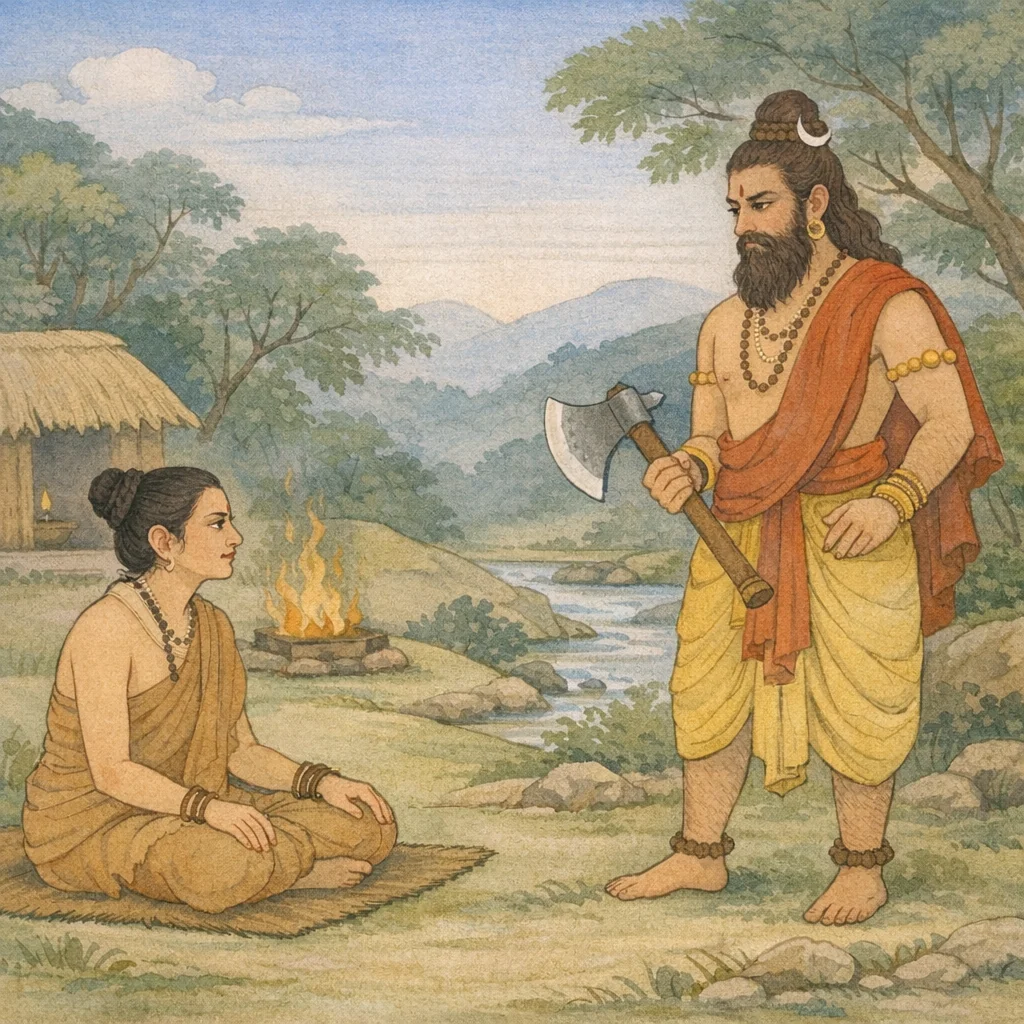
Adhyaya 176
अम्बाया रामजामदग्न्यशरणगमनम् (Ambā Seeks Refuge with Rāma Jāmadagnya)
Upa-parva: Ambopākhyāna (Ambā Episode) — Bhārgava–Bhīṣma Context
Chapter 176 presents a structured counsel-and-petition sequence. Akṛtavraṇa asks Ambā to clarify which of two painful remedies she seeks: compelling Śālva to accept her through Rāma’s prompting, or having Bhīṣma confronted and defeated by Rāma. Ambā explains that Bhīṣma removed her without recognizing her prior intention toward Śālva; when she approached Śālva, he refused her, suspecting impropriety. She therefore identifies Bhīṣma as the causal root of her distress and requests corrective action, including the possibility of Bhīṣma’s defeat or destruction. The narration then shifts to Bhīṣma’s voice as time passes and Paraśurāma arrives with ascetic insignia and martial arms, is honored by Sṛñjaya, and is briefed on Ambā’s case. Ambā formally takes refuge, weeping and describing her suffering. Paraśurāma, moved by compassion, decides to send a dharmic message to Bhīṣma demanding compliance; if refused, he declares readiness to enforce his directive through martial power, while also noting Śālva as an alternative if Ambā’s intent changes. The chapter’s thematic center is adjudication: assigning responsibility, selecting a remedy, and invoking a supra-royal authority to resolve an injury produced by contested kṣātra norms.
Chapter Arc: वन-निर्जन में तपस्विनी अम्बा अपने भीतर के दो दुःखों—अपमान और अधूरे प्रतिशोध—को लेकर अकृतव्रण/होत्रवाहन के सामने अपना मार्ग पूछती है: किसे लक्ष्य बनाऊँ, किससे प्रतिकार करूँ? → अकृतव्रण उसे विकल्पों की कठोर गणना सुनाता है—यदि शाल्व को पति मानना है तो उसी से आग्रह कर; यदि भीष्म से प्रतिकार चाहती है तो परशुराम जैसे महाबली को साध; पर हर राह में लोक-लज्जा, राजधर्म और पुरुष-प्रतिष्ठा की दीवारें खड़ी हैं। अम्बा अपना सत्य खोलती है: भीष्म ने अनजाने में उसका हरण किया, पर अब उसका मन शाल्व में नहीं; और भीष्म उसके जीवन-विनाश का कारण बन चुका है। → अम्बा का प्रतिज्ञा-स्वर फूट पड़ता है—भीष्म के कारण जो दशा हुई, उसी क्षण से हृदय में एक ही संकल्प जल रहा है: ‘महाव्रती भीष्म का वध।’ वह परशुराम से विनती नहीं, आदेश-सा आग्रह करती है: जैसे इन्द्र ने वृत्र का वध किया, वैसे ही आप भीष्म को मारें। → परशुराम अम्बा की बात सुनकर अर्थ-निश्चय करते हैं—उसकी पीड़ा और लक्ष्य स्पष्ट हो जाता है; प्रतिशोध का मार्ग अब ‘धर्म-आवरण’ में युद्ध की ओर मुड़ता है। अध्याय अम्बा की याचना/प्रतिज्ञा को स्थापित कर देता है, जिससे आगे की घटनाएँ अनिवार्य बनती हैं। → परशुराम क्या सचमुच भीष्म के विरुद्ध शस्त्र उठाएँगे—और गुरु-शिष्य/क्षत्रधर्म की यह गाँठ किस तरह खुलेगी?
Shlokas
Verse 1
अपन < बक। है २ >> सप्तसप्तत्याधिेकशततमो< ध्याय: अकृतव्रण और परशुरामजीकी अम्बासे बातचीत अकृतव्रण उवाच दुःखद्वयमिदं भद्गरे कतरस्य चिकीर्षसि । प्रतिकर्तव्यमबले तत् त्वं वत्से वदस्व मे,अकृतब्रणने कहा--भट्रे! तुम्हें दुःख देनेवाले दो कारण (भीष्म और शाल्व) उपस्थित हैं। वत्से! तुम इन दोनोंमेंसे किससे बदला लेनेकी इच्छा रखती हो? यह मुझे बताओ
Akṛtavraṇa said: “O noble lady, two sources of grief confront you. Against which of the two do you wish to seek redress? O helpless one, dear child—tell me whom you intend to answer, so that the response may be directed rightly.”
Verse 2
यदि सौभपतिर्भद्रे नियोक्तव्यो मतस्तव । नियोक्ष्यति महात्मा स रामस्त्वद्धितकाम्यया,भद्रे! यदि तुम्हारा यह विचार हो कि सौभपति शाल्वराजको ही विवाहके लिये विवश करना चाहिये तो महात्मा परशुराम तुम्हारे हितकी इच्छासे शाल्वराजको अवश्य इस कार्यमें नियुक्त करेंगे
“O noble lady, if it is your judgment that Saubhapati, King Śālva, must be compelled to accept the marriage, then the great-souled Rāma (Paraśurāma), seeking your welfare, will surely press King Śālva into that very act.”
Verse 3
अथापगेयं भीष्म त्वं रामेणेच्छसि धीमता । रणे विनिर्जिति द्रष्टं कुर्यात् तदपि भार्गव:,अथवा यदि तुम गंगानन्दन भीष्मको बुद्धिमान् परशुरामजीके द्वारा युद्धमें पराजित देखना चाहती हो तो वे महात्मा भार्गव यह भी कर सकते हैं
“Or if you wish to see Bhīṣma, son of the Gaṅgā, defeated in battle by the wise Rāma (Paraśurāma), then that great Bhārgava is capable of doing even that.”
Verse 4
सृञ्जयस्य वच: श्रुत्वा तव चैव शुचिस्मिते । यदत्र ते भृशं कार्य तदद्यैव विचिन्त्यताम्,शुचिस्मिते! सृंजयवंशी राजा होत्रवाहनकी बात सुनकर और अपना विचार प्रकट करके जो कार्य तुम्हें अत्यन्त आवश्यक प्रतीत हो उसका आज ही विचार कर लो
Akṛtavraṇa said: “Having heard Sṛñjaya’s words, and also your own, O fair-smiling lady, reflect this very day on what, in this situation, seems most urgently necessary for you to do.”
Verse 5
अम्बोवाच अपनीतास्मि भीष्मेण भगवन्नविजानता । नाभिजानाति मे भीष्मो ब्रह्मन् शाल्वगतं मन:,अम्बा बोली--भगवन्! भीष्म बिना जाने-बूझे मुझे हर लाये थे। ब्रह्मन्! उन्हें इस बातका पता नहीं था कि मेरा मन शाल्वमें अनुरक्त है
Ambā said: “Revered sir, Bhīṣma carried me away without knowing the truth. O Brāhmaṇa, Bhīṣma did not realize that my heart had already gone to Śālva.”
Verse 6
एतद् विचार्य मनसा भवानेतद् विनिश्चयम् । विचिनोतु यथान्यायं विधान क्रियतां तथा,इस बातपर मन-ही-मन विचार करके आप ही कुछ निश्चय करें और जो न्यायसंगत प्रतीत हो, वही कार्य करें
Having reflected on this within your own mind, you yourself should arrive at a firm decision. Let the course of action then be carried out exactly in the manner that appears just and in accordance with right conduct.
Verse 7
भीष्मे वा कुरुशार्टूले शाल्वराजे5थवा पुन: । उभयोरेव वा ब्रह्मन् युक्ते यत् तत् समाचर,ब्रह्मन! कुरुश्रेष्ठ भीष्मके साथ अथवा शाल्वराजके साथ अथवा दोनोंके ही साथ जो उचित बर्ताव हो, वह करें
Akṛtavraṇa said: “O Brāhmaṇa, whether it concerns Bhīṣma—the tiger among the Kurus—or again the king of Śālva, or even both together, do precisely what is fitting and proper in the circumstances.”
Verse 8
निवेदितं मया होतद् दुःखमूलं यथातथम् । विधान तत्र भगवन् कर्तुमर्हसि युक्तित:,मैंने अपने दुःखके इस मूल कारणको यथार्थरूपसे निवेदन कर दिया। भगवन्| अब आप अपनी युक्तिसे ही इस विषयमें न््यायोचित कार्य करें
I have truthfully laid before you the very root of my sorrow, just as it is. O revered one, you ought now to determine—by sound reasoning—the course of action here that is just and proper.
Verse 9
अकृतव्रण उवाच उपपन्नमिदं भद्रे यदेवं वरवर्णिनि । धर्म प्रति वचो ब्रूया: शृणु चेद॑ वचो मम,अकृतब्रण बोले--भट्रे! तुम जो इस प्रकार धर्मानुकूल बात कहती हो, यही तुम्हारे लिये उचित है। वरवर्णिनि! अब मेरी यह बात सुनो
Akṛtavraṇa said: “O noble lady, what you have spoken in this manner is fitting and well-grounded. O fair-complexioned one, since your words are directed toward dharma, now listen to what I have to say.”
Verse 10
यदि त्वामापगेयो वै न नयेद् गजसाह्दयम् | शाल्वस्त्वां शिरसा भीरु गृह्नीयाद् रामचोदित:,भीरु! यदि गंगानन्दन भीष्म तुम्हें हस्तिनापुर न ले जाते तो राजा शास्त्र परशुरामजीके कहनेपर तुम्हें आदरपूर्वक स्वीकार कर लेता
Akṛtavraṇa said: “If Āpageya (Bhīṣma), the son of the Gaṅgā, had not taken you to Gajasāhvaya (Hastināpura), then King Śālva—urged on by Rāma (Paraśurāma)—would have accepted you with bowed head, O timid one.”
Verse 11
तेन त्वं निर्जिता भद्रे यस्मान्नीतासि भाविनि । संशय: शाल्वराजस्य तेन त्वयि सुमध्यमे,परंतु भद्रे! भीष्म तुम्हें जीतकर अपने साथ ले गये। भाविनि! सुमध्यमे! यही कारण है कि शाल्वराजके मनमें तुम्हारे प्रति संशय उत्पन्न हो गया है
Therefore, O noble lady, you were overcome and carried away by him. O future queen, O slender-waisted one—because of that very act, suspicion has arisen in the mind of King Śālva regarding you.
Verse 12
भीष्म: पुरुषमानी च जितकाशी तथैव च । तस्मात् प्रतिक्रिया युक्ता भीष्मे कारयितुं तव,भीष्मको अपने पुरुषार्थका अभिमान है और वे इस समय अपनी विजयसे उललसित हो रहे हैं। अत: भीष्मसे ही बदला लेना तुम्हारे लिये उचित होगा
Akṛtavraṇa said: “Bhīṣma is proud of his manly prowess, and at present he exults in his victory. Therefore, it is fitting for you to have retaliation carried out against Bhīṣma himself.”
Verse 13
अम्बोवाच ममाप्येष सदा ब्रह्मन् हदि कामो$भिवर्तते । घातयेयं यदि रणे भीष्ममित्येव नित्यदा,अम्बा बोली--ब्रह्मन! मेरे मनमें भी सदा यह इच्छा बनी रहती है कि मैं युद्धमें भीष्मका वध करा दूँ। महाबाहो! आप भीष्मको या शाल्वराजको जिसे भी दोषी समझते हों, उसीको दण्ड दीजिये, जिसके कारण मैं अत्यन्त दुःखमें पड़ गयी हूँ
Ambā said: “O Brahmin, this desire continually rises within my heart as well—that in battle I should bring about Bhīṣma’s death. I remain fixed on this resolve at all times.”
Verse 14
भीष्म वा शाल्वराजं वा यं वा दोषेण गच्छसि । प्रशाधि त॑ं महाबाहो यत्कृते5हं सुदुःखिता,अम्बा बोली--ब्रह्मन! मेरे मनमें भी सदा यह इच्छा बनी रहती है कि मैं युद्धमें भीष्मका वध करा दूँ। महाबाहो! आप भीष्मको या शाल्वराजको जिसे भी दोषी समझते हों, उसीको दण्ड दीजिये, जिसके कारण मैं अत्यन्त दुःखमें पड़ गयी हूँ
Whether it is Bhīṣma or the king of Śālva—whomever you judge to be at fault—punish him, O mighty-armed one, for it is because of him that I have fallen into extreme misery.
Verse 15
भीष्म उवाच एवं कथयतामेव तेषां स दिवसो गत: । रात्रिश्न भरतश्रेष्ठ सुखशीतोष्णमारुता,भीष्मजी कहते हैं--भरतश्रेष्ठ! इस प्रकार बातचीत करते हुए उन सब लोगोंका वह दिन बीत गया। सुखदायिनी सरदी, गरमी और हवासे युक्त रात भी समाप्त हो गयी
Bhishma said: “O best of the Bharatas, while they were still engaged in such conversation, that day passed away. And the night too went by—pleasant, tempered with coolness and warmth, and stirred by gentle breezes.”
Verse 16
ततो राम: प्रादुरासीत् प्रज्वलन्निव तेजसा । शिष्यै: परिवृतो राजन् जटाचीरधरो मुनि:,राजन! तदनन्तर अपने शिष्योंसे घिरे हुए जटावल्कलधारी मुनिवर परशुरामजी वहाँ प्रकट हुए। वे अपने तेजके कारण प्रज्वलित-से हो रहे थे
Then Paraśurāma appeared, blazing as if on fire with his own spiritual radiance. O King, the sage—wearing matted locks and bark-garments—arrived surrounded by his disciples.
Verse 17
धनुष्पाणिरदीनात्मा खड्गं बिश्रत् परश्वधी । विरजा राजशार्दूल सृञ्जयं सो<भ्ययान्नपम्,नृपश्रेष्ठट उनके हृदयमें दीनताका नाम नहीं था। उन्होंने अपने हाथोंमें धनुष, खड्ग और फरसा ले रखे थे। उनके हृदयसे रजोगुण दूर हो गया था, वे राजा सूंजयके निकट आये
Bhishma said: With bow in hand and a spirit untouched by dejection, bearing a sword and an axe, and with the dust of passion (rajas) cleansed away, that tiger among kings approached King Sṛñjaya.
Verse 18
ततस्तं तापसा दृष्टवा स च राजा महातपा: । तस्थु: प्राउजजलयो राजन् सा च कन्या तपस्विनी,राजन! उन्हें देखकर वे तपस्वी मुनि, महातपस्वी नरेश तथा वह तपस्विनी राजकन्या --ये सब-के-सब हाथ जोड़कर खड़े हो गये
Then, on seeing him, the ascetic sages, that great-austerity king, and the princess devoted to penance all stood with hands joined in reverence, O King.
Verse 19
पूजयामासुरव्यग्रा मधुपर्केण भार्गवम् | अर्चितश्न यथान्यायं निषसाद सहैव तै:,फिर उन्होंने स्वस्थचित्त होकर मधुपर्कद्वारा भार्गव परशुरामजीका पूजन किया। विधिपूर्वक पूजित होनेपर वे उन्हींके साथ वहाँ बैठे
With minds free from agitation, they honored Bhārgava Paraśurāma by offering the traditional madhuparka. When he had been duly worshipped according to proper rite, he sat down there together with them.
Verse 20
ततः पूर्वव्यतीतानि कथयन्तौ सम तावुभौ । आसातां जामदग्न्यश्न सृञ्जयश्चैव भारत,भारत! तत्पश्चात् परशुरामजी और सूंजय (होत्रवाहन) दोनों मित्र पहलेकी बीती बातें कहते हुए एक जगह बैठ गये
Then, O Bhārata, those two—Paraśurāma, the son of Jamadagni, and Sṛñjaya—sat together in one place, speaking evenly with one another and recounting matters that had occurred in the past.
Verse 21
तथा कथान्ते राजर्षिभिगुश्रेष्ठ महाबलम् । उवाच मधुरं काले रामं वचनमर्थवत्,बातचीतके अन्तमें राजर्षि होत्रवाहनने महाबली भृगुश्रेष्ठ परशुरामजीसे मधुर वाणीमें उस समय यह अर्थयुक्त वचन कहा--
Thus, at the close of the discussion, the royal sage Hotravāhana addressed Rāma (Paraśurāma), the mighty foremost of the Bhṛgus, and at the proper moment, in a gentle tone, spoke words weighty with meaning—counsel meant to guide conduct rather than merely to win an argument.
Verse 22
रामेयं मम दौहित्री काशिराजसुता प्रभो । अस्या: शृणु यथातत्त्वं कार्य कार्यविशारद,“कार्यसाधनकुशल प्रभो! परशुराम! यह मेरी पुत्रीकी पुत्री काशिराजकी कन्या है। इसका कुछ कार्य है, उसे आप इसीके मुँहसे ठीक-ठीक सुन लें”
Bhīṣma said: “O lord Paraśurāma, skilled in accomplishing tasks—this maiden is my daughter’s daughter, the princess of the King of Kāśī. She has a matter to be done; hear it directly from her, exactly as it truly is.”
Verse 23
परम कथ्यतां चेति तां राम: प्रत्यभाषत । ततः: साभ्यगमद् रामं ज्वलन्तमिव पावकम्,“बहुत अच्छा, कहो बेटी' इस प्रकार उस कन्याको जब परशुरामजीने प्रेरित किया; तब वह प्रज्वलित अग्निके समान तेजस्वी परशुरामजीके पास आयी और उनके कल्याणकारी चरणोंको सिरसे प्रणाम करके कमलदलके समान सुशोभित होनेवाले दोनों हाथोंसे उनका स्पर्श करती हुई सामने खड़ी हो गयी
“Then speak what is most important,” said Rāma (Paraśurāma) in reply to her. Thereupon the maiden approached Rāma, who blazed like a fire—coming forward with reverence to place her plea before a powerful elder, in the hope that right counsel and righteous action would follow.
Verse 24
ततो5भिवाद्य चरणौ रामस्य शिरसा शुभौ | स्पृष्टवा पद्मदलाभाभ्यां पाणिभ्यामग्रत: स्थिता,“बहुत अच्छा, कहो बेटी' इस प्रकार उस कन्याको जब परशुरामजीने प्रेरित किया; तब वह प्रज्वलित अग्निके समान तेजस्वी परशुरामजीके पास आयी और उनके कल्याणकारी चरणोंको सिरसे प्रणाम करके कमलदलके समान सुशोभित होनेवाले दोनों हाथोंसे उनका स्पर्श करती हुई सामने खड़ी हो गयी
Then, having bowed with her head to the auspicious feet of Rāma (Paraśurāma), she touched them with both hands, lovely as lotus-petals, and stood before him. The scene underscores the traditional ethic of reverence toward a teacher and elder: even amid inner turmoil and impending conflict, she approaches with disciplined humility and proper conduct.
Verse 25
रुरोद सा शोकवती बाष्पव्याकुललोचना । प्रपेदे शरणं चैव शरण्यं भूगुनन्दनम्,उसके नेत्रोंमें आँसू भर आये। वह शोकसे आतुर होकर रोने लगी और सबको शरण देनेवाले भूगुनन्दन परशुरामजीकी शरणमें गयी
Bhīṣma said: Overcome with grief, she wept; her eyes were clouded and shaken with tears. Seeking refuge, she approached Bhṛgu’s illustrious descendant—Paraśurāma—who is famed as a protector of those who surrender. The verse underscores the ethical impulse, in the face of suffering, to seek lawful protection and guidance from a recognized guardian rather than to act from despair or vengeance.
Verse 26
राम उवाच यथा त्वं सृञ्जयस्यास्य तथा मे त्वं नृपात्मजे । ब्रूहि यत् ते मनोदुःखं करिष्ये वचनं तव,परशुरामजी बोले--राजकुमारी! जैसे तू इन संजयकी दौहित्री है, उसी प्रकार मेरी भी है। तेरे मनमें जो दुःख है, उसे बता। मैं तेरे कथनानुसार सब कार्य करूँगा
Rāma said: “Princess, just as you are the granddaughter of this Sṛñjaya, so too are you mine. Tell me what sorrow weighs upon your mind; I shall act in accordance with your words.”
Verse 27
अम्बोवाच भगवउ्शरणं त्वाद्य प्रपन्नास्मि महाव्रतम् । शोकपड्कार्णवान्मग्नां घोरादुद्धर मां विभो,अम्बा बोली--भगवन्! आप महान् व्रतधारी हैं। आज मैं आपकी शरणमें आयी हूँ। प्रभो! इस भयंकर शोकसागरमें डूबनेसे मुझे बचाइये
Ambā said: “O Blessed Lord, you are steadfast in great vows. Today I take refuge in you. I am sinking in a dreadful ocean of grief—O all-powerful one, lift me out and save me.”
Verse 28
भीष्म उवाच तस्याश्च दृष्टवा रूपं च वपुश्चाभिनवं पुन: । सौकुमार्य परं चैव रामश्रिन्तापरो&$भवत्,भीष्मजी कहते हैं--राजन्! उसके सुन्दर रूप, नूतन (तरुण) शरीर तथा अत्यन्त सुकुमारताको देखकर परशुरामजी चिन्तामें पड़ गये कि न जाने यह क्या कहेगी? उसके प्रति दयाभावसे परिपूर्ण हो भूगुकुलभूषण परशुराम बहुत देरतक उसीके विषयमें चिन्ता करते रहे
Bhishma said: “O King, when Rāma (Paraśurāma) saw her beauty and her fresh youthful form, and noticed her extreme delicacy, he became anxious, wondering what she might say. Filled with compassion toward her, Paraśurāma—the ornament of the Bhṛgu lineage—remained for a long time absorbed in thought about her.”
Verse 29
किमियं वक्ष्यतीत्येवं विममर्श भगूद्वह: । इति दध्यौ चिरं राम: कृपयाभिपरिप्लुत:,भीष्मजी कहते हैं--राजन्! उसके सुन्दर रूप, नूतन (तरुण) शरीर तथा अत्यन्त सुकुमारताको देखकर परशुरामजी चिन्तामें पड़ गये कि न जाने यह क्या कहेगी? उसके प्रति दयाभावसे परिपूर्ण हो भूगुकुलभूषण परशुराम बहुत देरतक उसीके विषयमें चिन्ता करते रहे
Bhīṣma said: “O King, Paraśurāma—the foremost among the Bhṛgus—fell into reflection: ‘What will she say?’ Overflowing with compassion toward her, Rāma (Paraśurāma) pondered for a long time about her situation.”
Verse 30
कथ्यतामिति सा भूयो रामेणोक्ता शुचिस्मिता । सर्वमेव यथातत्त्वं कथयामास भार्गवे,तदनन्तर परशुरामजीके पुनः यह कहनेपर कि तुम अपनी बात कहो, पवित्र मुसकानवाली अम्बाने उनसे अपना सब वृत्तान्त ठीक-ठीक बता दिया
Bhishma said: When Rama (Parashurama) again told her, “Speak,” Amba—smiling with pure composure—recounted to the Bhargava the entire account exactly as it had happened.
Verse 31
तच्छुत्वा जामदग्न्यस्तु राजपुत्रया वचस्तदा । उवाच तां वरारोहां निश्षित्यार्थविनिश्चयम्,राजकुमारी अम्बाका यह कथन सुनकर जमदग्निनन्दन परशुरामने क्या करना है, इसका निश्चय करके उस सुन्दर अंगोंवाली राजकुमारीसे कहा
Hearing the princess’s words, Jamadagni’s son Paraśurāma made a firm decision as to what must be done. Having settled the matter, he spoke to that noble, graceful princess, setting the course of action according to what he judged to be right.
Verse 32
राम उवाच प्रेषयिष्यामि भीष्माय कुरुश्रेष्ठाय भाविनि । करिष्यति वचो महां श्रुत्वा च स नराधिप:,परशुरामजी बोले--भाविनि! मैं तुझे कुरुश्रेष्ठ भीष्मके पास भेजूँगा। नरपति भीष्म सुनते ही मेरी आज्ञाका पालन करेगा
Rāma (Paraśurāma) said: “O noble lady, I shall send you to Bhīṣma, the foremost of the Kurus. That great king, upon hearing my word, will carry out my command.”
Verse 33
न चेत् करिष्यति वचो मयोक्तं जाह्नवीसुत: । थक्ष्याम्यहं रणे भद्रे सामात्यं शस्त्रतेजसा,भद्रे! यदि गंगानन्दन भीष्म मेरी बात नहीं मानेगा तो मैं युद्धमें अस्त्र-शस्त्रोंके तेजसे मन्त्रियोंसहित उसे भस्म कर डालूँगा
Rāma said: “If the son of the Jāhnavī (Bhīṣma) will not carry out the command I have spoken, then, O noble lady, in battle I shall reduce him—together with his ministers and supporters—to ashes by the blazing power of my weapons.”
Verse 34
अथवा ते मतिस्तत्र राजपुत्रि न वर्तते । यावच्छाल्वपतिं वीर॑ योजयाम्यत्र कर्मणि,अथवा राजकुमारी! यदि वहाँ जानेका तेरा विचार न हो तो मैं वीर शाल्वराजको ही पहले इस कार्यमें नियुक्त करूँ: (उसके साथ तेरा ब्याह करा दूँ)
“Or, O princess, if your resolve is not set on going there, then I shall first appoint the valiant king of Śālva to this undertaking—meaning, I will arrange your marriage with him.”
Verse 35
अम्बोवाच विसर्जिताहं भीष्मेण श्रुत्वैव भूगुनन्दन । शाल्वराजगतं भावं मम पूर्व मनीषितम्,अम्बा बोली--भृगुनन्दन! शाल्वराजमें मेरा अनुराग है और मैं पहलेसे ही उन्हें पाना चाहती हूँ। यह सुनते ही भीष्मने मुझे विदा कर दिया था
Ambā said: “O descendant of Bhṛgu, as soon as Bhīṣma heard that my heart had already gone to King Śālva—whom I had long intended to choose—he released me.”
Verse 36
सौभराजमुपेत्याहमवोचं दुर्वचं वच: । नच मां प्रत्यगृह्लात् स चारित््यपरिशड्कितः,तब सौभराजके पास जाकर मैंने उनसे ऐसी बातें कहीं जिन्हें अपने मुँहसे कहना स्त्रीजातिके लिये अत्यन्त दुष्कर होता है; परंतु मेरे चरित्रपर संदेह हो जानेके कारण उसने मुझे स्वीकार नहीं किया
I went to the king of Saubha and spoke words that are exceedingly hard for a woman to utter from her own lips. Yet, because he suspected my chastity, he would not accept me.
Verse 37
एतत् सर्व विनिश्चित्य स्वबुद्धया भगुनन्दन । यदत्रौपयिकं कार्य तच्चिन्तयितुमरहसि,भुगुनन्दन! इन सब बातोंपर बुद्धिपूर्वक विचार करके जो उचित प्रतीत हो, उसी कार्यकी ओर आप ध्यान दें
O delight of the Bhṛgu line, having decisively examined all this with your own discernment, reflect on what course of action is truly appropriate and beneficial here, and then turn yourself to that very duty.
Verse 38
मम तु व्यसनस्यास्य भीष्मो मूलं महाव्रत: । येनाहं वशमानीता समुत्क्षिप्प बलात् तदा,मेरी इस विपत्तिका मूल कारण महान् व्रतधारी भीष्म है, जिसने उस समय बलपूर्वक मुझे उठाकर रथपर रख लिया और इस प्रकार मुझे वशमें करके वह हस्तिनापुर ले आया
The root cause of this calamity of mine is Bhīṣma, the great vow-keeper. For it was he who, at that time, forcibly seized me, lifted me onto his chariot, brought me under his control, and carried me away to Hastināpura.
Verse 39
भीष्मं जहि महाबाहो यत्कृते दृःखमीदृशम् । प्राप्ताहं भगुशार्दूल चराम्यप्रियमुत्तमम्,महाबाहु भृगुसिंह! आप भीष्मको ही मार डालिये, जिसके कारण मुझे ऐसा दुःख प्राप्त हुआ है और मैं इस प्रकार विवश होकर अत्यन्त अप्रिय आचरणमें प्रवृत्त हुई हूँ
O mighty-armed one, slay Bhīṣma—for because of him I have come to such suffering. O tiger among the Bhṛgus, I am driven to act in a manner most unwelcome and contrary to what is right for me.
Verse 40
स हि लुब्धश्न नीचश्व जितकाशी च भार्गव | तस्मात् प्रतिक्रिया कर्तु युक्ता तस्मै त्वयानघ,निष्पाप भार्गव! भीष्म लोभी, नीच और विजयोल्लाससे परिपूर्ण है; अतः आपको उसीसे बदला लेना उचित है
O sinless Bhārgava, he is greedy and base, exulting as though he has already won. Therefore it is fitting for you to undertake a counter-action against him.
Verse 41
एष मे क्रियमाणाया भारतेन तदा विभो । अभवद्धृदि संकल्पो घातयेयं महाव्रतम्,प्रभो! भरतवंशी भीष्मने जबसे मुझे इस दशामें डाल दिया है, तबसे मेरे हृदयमें यही संकल्प उठता है कि मैं उस महान् व्रतधारीका वध करा दूँ
O mighty lord, since that scion of Bharata brought me to this condition, a resolve has arisen in my heart: “I shall have that great vow-bound man slain.”
Verse 42
तस्मात् काम॑ ममाद्येमं राम सम्पादयानघ । जहि भीष्म महाबाहो यथा वृत्र पुरंदर:
Therefore, O blameless Rāma, fulfill this desire of mine today. O mighty-armed one, strike down Bhīṣma, just as Purandara (Indra) slew Vṛtra.
Verse 176
इस प्रकार श्रीमह्ाभारत उद्योगपर्वके अन्तर्गत अम्बोपाख्यानपर्वमें अग्बा- होत्रवाहनसंवादविषयक एक सौ छिह्वत्तरवाँ अध्याय पूरा हुआ
Thus ends the one hundred and seventy-sixth chapter of the Ambā-Upākhyāna section within the Udyoga Parva of the Śrī Mahābhārata, dealing with the dialogue between Ambā and Hotravāhana.
Verse 177
निष्पाप महाबाहु राम! आज आप मेरी इसी कामनाको पूर्ण कीजिये। जैसे इन्द्रने वृत्रासुरका वध किया था, उसी प्रकार आप भी भीष्मको मार डालिये ।। इति श्रीमहाभारते उद्योगपर्वणि अम्बोपाख्यानपर्वणि रामाम्बासंवादे सप्तसप्तत्यधिकशततमो<्ध्याय:
Amba implores: “O sinless, mighty-armed Rāma, fulfill this one desire of mine today. Just as Indra slew Vṛtrāsura, so you too must strike down Bhīṣma.” Thus ends the one hundred and seventy-sixth chapter—the dialogue of Rāma and Ambā—within the Ambā-Upākhyāna of the Udyoga Parva in the Śrī Mahābhārata.
Frequently Asked Questions
Whether corrective justice should be pursued by compelling a socially valid marriage outcome (Śālva’s acceptance) or by targeting the initiating agent (Bhīṣma) as accountable for the chain of harm—balancing custom, consent, and reputational constraints.
Injury created under public norms still demands reasoned adjudication: responsibility must be traced to causes, remedies must be proportionate, and authority is invoked not merely for power but to restore a defensible moral order.
No explicit phalaśruti appears in the provided passage; the chapter functions primarily as narrative-ethical documentation, emphasizing procedural dharma (petition, deliberation, and enforcement) rather than promising recitational merit.