Adhyaya 332
नरनारायण-नारदसंवादः (Nara-Nārāyaṇa–Nārada Discourse on Vision, Elements, and Entry into Vāsudeva)
Upa-parva: Mokṣa-dharma (Liberation Teachings) — Nara-Nārāyaṇa and Nārada Episode
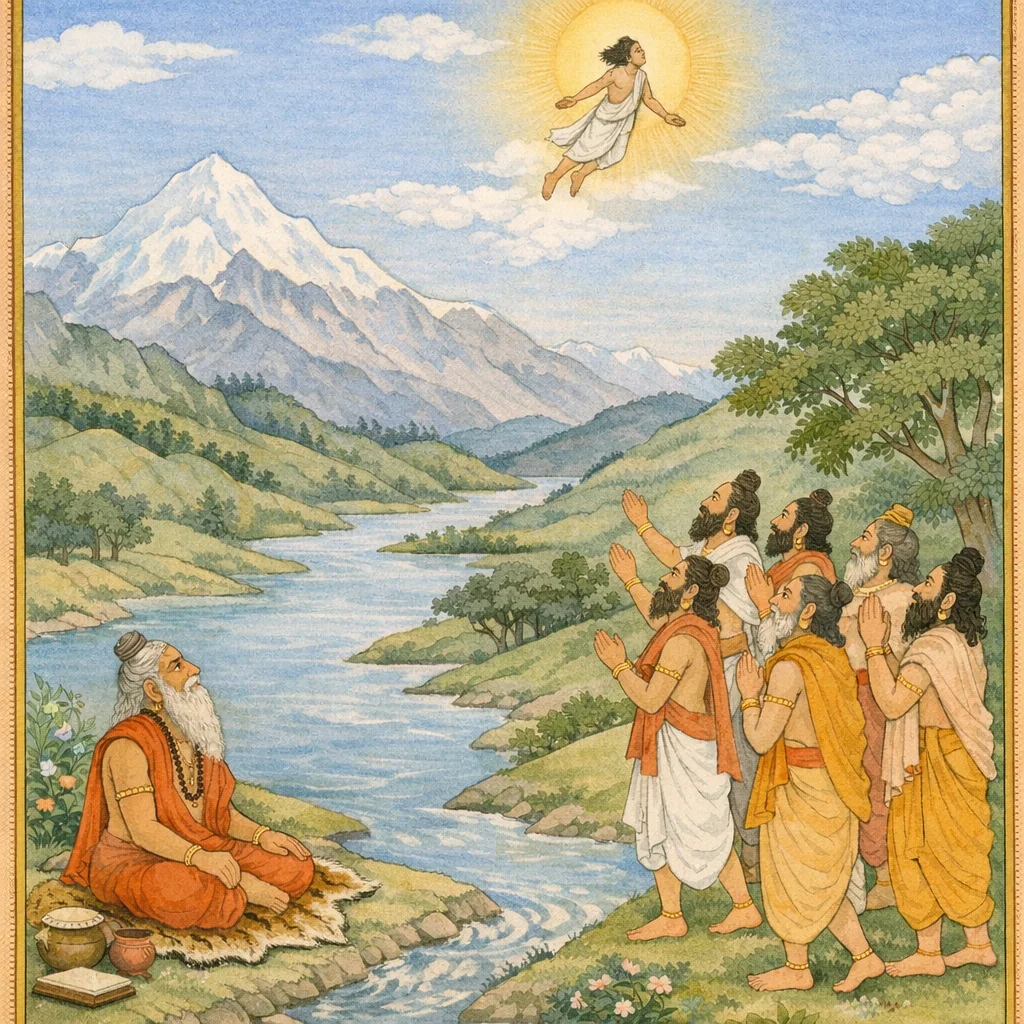
Nara and Nārāyaṇa affirm to Nārada that he is uniquely favored to have directly seen the supreme Lord, who is described as avyaktayoni (of unmanifest origin) and inherently difficult to behold even for exalted beings. They state that no one is dearer to the Lord than devotees, explaining the logic of divine self-disclosure. The discourse then presents a derivational schema: from the Lord arise kṣamā associated with earth, rasa associated with water and liquidity, tejas that empowers the sun’s radiance, sparśa that empowers wind’s motion, śabda that supports space, and manas associated with the moon’s luminous capacity. A named locus, characterized as ‘ṣaḍ-bhūtotpādaka’ and ‘veda-saṃjñita,’ is mentioned as a sacred station where the Lord (havyakavyabhuk) abides with knowledge as companion. For purified beings free of moral taint, the sun is described as a ‘gateway’; they become subtle, pass through solar brilliance, and proceed through stages identified with Aniruddha, then Pradyumna, then Saṃkarṣaṇa (with Sāṃkhya and Bhāgavata associates), finally entering the Paramātman—Vāsudeva—known as the all-abode kṣetrajña beyond the three guṇas. The chapter concludes with Vaiśaṃpāyana noting that Nārada, reverential and devoted, resumed intense tapas, recited Nārāyaṇa-focused mantras for a thousand divine years, and worshiped the Lord along with Nara-Nārāyaṇa at their āśrama.
Chapter Arc: नारदजी शुकदेव से कर्मफल-प्राप्ति में जीव की परतन्त्रता का रहस्य खोलते हैं—मनुष्य यत्न करे, फिर भी फल का विधान सूक्ष्म और अनिश्चित-सा क्यों दिखता है। → उपदेश तीखा होता जाता है: स्वभाव से यत्न आवश्यक है, क्योंकि जरा-मरण-रोग और शारीरिक-मानसिक पीड़ाएँ बाणों की तरह देह-मन को बेधती हैं; परन्तु गर्भाधान जैसे कर्म में भी कभी फल होता है, कभी नहीं—यह उदाहरण बताता है कि केवल प्रयत्न ही सर्वशक्तिमान नहीं। → शुकदेव भीतर से निर्णय कर लेते हैं—जहाँ आत्मा को शम (शान्ति) मिले, जहाँ अक्षय-अव्यय स्थिति हो, वहीं जाना है; इसलिए वे दीप्ततेज आदित्य-मण्डल में प्रवेश को ही श्रेष्ठ मानते हैं और देह त्यागकर सूर्यलोक की ओर ऊर्ध्वगमन का संकल्प प्रकट करते हैं। → वे दिशाओं, पर्वतों, लोकों को मानो विदा कहकर ऋषियों के साथ सूर्यदेव के असह्य तेज में प्रवेश हेतु निकल पड़ते हैं; अंततः पिता को पीछे छोड़कर सिद्ध-सेवित कैलास-शिखर की ओर प्रस्थान का वर्णन अध्याय को पूर्णता देता है। → शुकदेव का यह ऊर्ध्वगमन—देह-सीमा के पार—अब उन्हें किस लोक-स्थिति में स्थिर करेगा और पिता-शिष्य-परम्परा पर इसका क्या प्रभाव पड़ेगा, यह आगे की कथा के लिए द्वार खोल देता है।
Shlokas
Verse 1
अपन का बा | अप्-#-राल जा एकत्रिशर्दाधिकत्रिशततमो< ध्याय: नारदजीका शुकदेवको कर्मफल-प्राप्तिमें परतन्त्रताविषयक उपदेश तथा शुकदेवजीका सूर्यलोकमें जानेका निश्चय नारद उवाच सुखदुः:खविपर्यासो यदा समनुपद्यते । नैनं प्रज्ञा सुनीतं वा त्रायते नापि पौरुषम्,नारदजी कहते हैं--शुकदेव! जब मनुष्य सुखको दुःख और दुःखको सुख समझने लगता है, उस समय बुद्धि, उत्तम नीति और पुरुषार्थ भी उसकी रक्षा नहीं कर पाता
Nārada said: “O Śukadeva, when a person’s understanding becomes inverted—taking pleasure for pain and pain for pleasure—then neither discernment, nor sound ethical guidance, nor even personal effort can protect him from the consequences.”
Verse 2
स्वभावाद् यत्नमातिषछेद् यत्नवान् नावसीदति । जरामरणरोगेभ्य: प्रियमात्मानमुद्धरेत्,अतः मनुष्यको स्वभावत: ज्ञानप्राप्तिके लिये यत्न करना चाहिये; क्योंकि यत्न करनेवाला पुरुष कभी दु:खमें नहीं पड़ता। आत्मा सबसे बढ़कर प्रिय है; अतः जरा, मृत्यु और रोगोंके कष्टसे उसका उद्धार करे
Nārada said: By one’s very nature, one should undertake earnest effort; for the person who strives does not sink into misery. Since the self is dearest of all, one should rescue oneself from the afflictions of old age, death, and disease—through disciplined endeavor and the pursuit of true understanding.
Verse 3
रुजन्ति हि शरीराणि रोगा: शारीरमानसा: । सायका इव तीक्ष्णाग्रा: प्रयुक्ता दृढ्धन्विभि:,शारीरिक और मानसिक रोग सुदृढ़ धनुष धारण करनेवाले वीर पुरुषोंके छोड़े हुए तीक्ष्ण बाणोंके समान शरीरको पीड़ा देते हैं
Nārada said: Bodily and mental diseases indeed torment living bodies, piercing them like sharp-pointed arrows loosed by warriors who wield strong bows.
Verse 4
व्यथितस्य विधित्साभिस्ताम्यतो जीवितैषिण: । अवशस्य विनाशाय शरीरमपकृष्यते,तृष्णासे व्यथित, दुखी एवं विवश होकर जीनेकी इच्छा रखनेवाले मनुष्यका शरीर विनाशकी ओर ही खिंचता चला जाता है
Nārada said: For one who is tormented—harassed by cravings and restless impulses—who languishes yet still clings to life, the body, helplessly, is dragged onward toward destruction.
Verse 5
स्रवन्ति न निवर्तन्ते स्रोतांसि सरितामिव । आयुरादाय मर्त्यानां रात्यहानि पुनः पुन:,जैसे नदियोंका प्रवाह आगेकी ओर ही बढ़ता चला जाता है, पीछेकी ओर नहीं लौटता, उसी प्रकार रात और दिन भी मनुष्योंकी आयुका अपहरण करते हुए बारंबार आते और बीतते चले जाते हैं
Nārada said: “Just as the currents of rivers flow onward and never turn back, so too do night and day repeatedly come and pass away—each time carrying off a portion of mortals’ lifespan.”
Verse 6
व्यत्ययो हायमत्यन्तं पक्षयो: शुक्लकृष्णयो: । जातान् मर्त्यान् जरयति निमेषान् नावतिष्ठते,शुक्ल और कृष्ण--दोनों पक्षोंका निरन्तर होनेवाला यह परिवर्तन मनुष्योंको जराजीर्ण कर रहा है। यह कुछ क्षणके लिये भी विश्राम नहीं लेता है
Narada said: “This ceaseless alternation of the bright and dark fortnights never truly stops. By its unbroken turning, it wears down all who are born as mortals, aging them without granting even a moment’s rest.”
Verse 7
सुखदुःखानि भूतानामजरो जरयत्यसौ । आदित्यो ह्ास्तमभ्येति पुन: पुनरुदेति च,सूर्य प्रतिदिन अस्त होते और फिर उदय होते हैं। वे स्वयं अजर होकर भी प्रतिदिन प्राणियोंके सुख और दुःखको जीर्ण करते रहते हैं
Narada said: “Though himself undecaying, he causes the joys and sorrows of living beings to wear away. The Sun repeatedly sets and repeatedly rises again.”
Verse 8
अदृष्टपूर्वानादाय भावानपरिशड्कितान् । इष्टानिष्टान् मनुष्याणामस्तं गच्छन्ति रात्रय:,ये रात्रियाँ मनुष्योंक लिये कितनी ही अपूर्व तथा असम्भावित प्रिय-अप्रिय घटनाएँ लिये आती और चली जाती हैं
Nārada said: Nights pass on to their setting, bringing to human beings events never seen before and never anticipated—some desired, some undesired.
Verse 9
योडयमिच्छेद् यथाकामं कामानां तदवाप्रुयात् यदि स्यान्न पराधीनं पुरुषस्य क्रियाफलम्,यदि जीवके किये हुए कर्मोंका फल पराधीन न होता तो जो जिस वस्तुकी इच्छा करता, वह अपनी उसी कामनाको रुचिके अनुसार प्राप्त कर लेता
Nārada said: If the fruit of a person’s actions were not dependent on factors beyond his control, then whoever desired any object would obtain that very object exactly as he wished.
Verse 10
संयताश्च हि दक्षाश्ष मतिमन्तश्ष मानवा: | दृश्यन्ते निष्फला: संतः प्रहीणा: सर्वकर्मभि:
Nārada said: Indeed, even men who are self-controlled, capable, and intelligent are seen to become fruitless—though they remain virtuous—when all their undertakings abandon them.
Verse 11
बड़े-बड़े संयमी, बुद्धिमान् और चतुर मनुष्य भी समस्त कर्मोंसे श्रान््त होकर असफल होते देखे जाते हैं |। अपरे बालिशा: सन््तो निर्गुणा: पुरुषाधमा: । आशीर्भिरिष्यसंयुक्ता दृश्यन्ते सर्वकामिन:,किंतु दूसरे मूर्ख, गुणहीन और अधम मनुष्य भी किसीका आशीर्वाद न मिलनेपर भी सम्पूर्ण कामनाओंसे सम्पन्न दिखायी देते हैं
Nārada said: Even great men—self-controlled, intelligent, and skilled—are seen to grow weary of all their efforts and yet meet with failure. On the other hand, some foolish, meritless, and base persons are seen to possess every desired enjoyment, as though endowed with blessings.
Verse 12
भूतानामपर: कश्रिद्धिंसायां सततोत्थित: । वज्चनायां च लोकस्य स सुखेष्वेव जीर्यते,कोई-कोई मनुष्य तो सदा प्राणियोंकी हिंसामें ही लगा रहता है और सब लोगोंको धोखा दिया करता है, तो भी वह सुख ही भोगते-भोगते बूढ़ा होता है
Nārada said: There is another kind of person who is constantly intent on harming living beings and who also deceives the world. Yet he grows old while continuing to enjoy pleasures—seemingly prospering despite his cruelty and fraud.
Verse 13
अचेष्टमानमासीनं श्री: कज्चिदुपतिष्ठते । वश्चित् कर्मानुसृत्यान्यो न प्राप्पमधिगच्छति,कितने ही ऐसे हैं, जो कोई काम न करके चुपचाप बैठे रहते हैं, फिर भी लक्ष्मी उनके पास अपने-आप पहुँच जाती है और कुछ लोग काम करके भी अपनी प्राप्य वस्तुको उपलब्ध नहीं कर पाते
Narada said: Sometimes prosperity (Śrī) comes and stands beside a man who sits inactive and makes no effort at all; while another, though he follows the path of action and exerts himself, fails to attain what ought to be attainable. The teaching is that worldly outcomes do not always match visible effort; therefore act rightly, without arrogance in success or despair in failure.
Verse 14
अपराध॑ समाचक्ष्व पुरुषस्य स्वभावतः: । शुक्रमन्यत्र सम्भूतं पुनरन्यत्र गच्छति,इसमें स्वभावत: पुरुषका ही अपराध (प्रारब्ध-दोष) समझो। वीर्य अन्यत्र उत्पन्न होता है और संतानोत्पादनके लिये अन्यत्र जाता है
Narada said: “Recognize this as the man’s own fault, arising from his very nature and destiny. The generative seed is produced in one place, yet it goes elsewhere for the begetting of offspring.”
Verse 15
तस्य योनौ प्रयुक्तस्य गर्भो भवति वा न वा । आम्रपुष्पोपमा यस्य निवृत्तिरुपलभ्यते,कभी तो वह योनिमें पहुँचकर गर्भ धारण करानेमें समर्थ होता है और कभी नहीं होता तथा कभी-कभी आमके बौरके समान वह व्यर्थ ही झर जाता है
Narada said: “When that (seed) is deposited in the womb, sometimes conception occurs and sometimes it does not. And sometimes, like the blossom of a mango, it is seen to fall away in vain—its course ending without fruition.”
Verse 16
केषाज्चित् पुत्रकामानामनुसंतानमिच्छताम् । सिद्धौ प्रयतमानानां न चाण्डमुपजायते,कुछ लोग पुत्रकी इच्छा रखते हैं और उस पुत्रके भी संतान चाहते हैं तथा इसकी सिद्धिके लिये सब प्रकारसे प्रयत्न करते हैं, तो भी उनके एक अंडा भी उत्पन्न नहीं होता
Nārada said: “There are some who long for sons, and even desire a continuing line of descendants through those sons. Though they strive in every way to achieve this, not even a single embryo comes into being for them.”
Verse 17
गर्भाच्चोद्विजमानानां क्रुद्धादाशीविषादिव । आयुष्मान् जायते पुत्र: कथं प्रेत इवाभवत्,बहुत-से मनुष्य बच्चा पैदा होनेसे उसी तरह डरते हैं, जैसे क्रोधमें भरे हुए विषधर सर्पसे लोग भयभीत रहते हैं, तथापि उनके यहाँ दीर्घजीवी पुत्र उत्पन्न होता है और क्या मजाल है कि वह कभी किसी तरह रोग आदिसे मृतकतुल्य हो सके
Nārada said: “Though many people shrink in fear at the very prospect of conception and childbirth—like men terrified of a wrathful venomous serpent—still a long-lived son is born to them. How, then, could he ever become ‘like a dead man,’ as if struck down by illness or misfortune?”
Verse 18
देवानिष्टवा तपस्तप्त्वा कृपणै: पुत्रगृद्धिभि: । दश मासान् परिधृता जायन्ते कुलपांसना:
Nārada said: “After worshipping the gods and performing austerities, those pitiable people—driven by a greedy craving for sons—carry the pregnancy for ten months, and yet what is born are the ‘soilers of the family’: offspring who bring disgrace and moral ruin to their lineage.”
Verse 19
पुत्रकी अभिलाषा रखनेवाले दीन स्त्री-पुरुषोंद्वारा देवताओंकी पूजा और तपस्या करके दस मासतक गर्भ धारण किया जाता है तथापि उनके कुलांगार पुत्र उत्पन्न होते हैं ।। अपरे धनधान्यानि भोगांश्व पितृसंचितान् | विपुलानभिजायन्ते लब्धास्तैरेव मड़लै:,तथा बहुत-से ऐसे हैं, जो आमोद-प्रमोदमें ही जन्म धारण करके पिताके संचित किये हुए अपार धनधान्य एवं विपुल भोगोंके अधिकारी होते हैं
Nārada said: “On the other hand, many are born amid ease and enjoyment, and, without striving, become heirs to vast stores of wealth and grain and to abundant pleasures accumulated by their fathers.”
Verse 20
अन्योन्यं समभिप्रेत्य मैथुनस्य समागमे । उपद्रव इवाविष्टो योनिं गर्भ: प्रपद्यते,पति-पत्नीकी पारस्परिक इच्छाके अनुसार मैथुनके लिये जब उनका समागम होता है, उस समय किसी उपद्रवके समान गर्भ योनिमें प्रवेश करता है
Nārada said: “When husband and wife come together for intercourse with mutual consent, the embryo enters the womb—seizing it as though driven by an overpowering impulse, like a sudden disturbance.”
Verse 21
शीघ्रं परशरीराणि च्छिन्नबीजं शरीरिणम् | प्राणिनं प्राणसंरोधे मांसश्लेष्मविवेष्टितम्
Narada said: “Swiftly do other bodies perish; and the embodied being, whose ‘seed’ has been cut off, is a living creature held in the restraint of breath—wrapped about with flesh and phlegm.”
Verse 22
जिसका स्थूल शरीर क्षीण हो गया है तथा जो कफ और मांसमय शरीरसे घिरा हुआ है, उस देहधारी प्राणीको मृत्युके बाद शीघ्र ही दूसरे शरीर उपलब्ध हो जाते हैं ।। निर्दग्धं परदेहेडपि परदेहं चलाचलम् । विनश्यन्तं विनाशान्ते नावि नावमिवाहितम्,जैसे एक नौकाके भग्न होनेपर उसपर बैठे हुए लोगोंको उतारनेके लिये दूसरी नाव प्रस्तुत रहती है, उसी प्रकार एक शरीरसे मृत्युको प्राप्त होते हुए जीवको लक्ष्य करके मृत्युके बाद उसके कर्मफल-भोगके लिये दूसरा नाशवान् शरीर उपस्थित कर दिया जाता है
Narada said: “Even when a body has been burned, another body—moving or unmoving—is made ready for the embodied being. At the very end of one body’s destruction, a new perishable body is provided for the experience of the fruits of past actions, just as, when one boat breaks, another boat is brought to carry those who were aboard.”
Verse 23
सड्रत्या जठरे न्यस्तं रेतोबिन्दुमचेतनम् । केन यत्नेन जीवन्तं गर्भ त्वमिह पश्यसि,शुकदेव! पुरुष स्त्रीके साथ समागम करके उसके उदरमें जिस अचेतन शुक्रबिन्दुको स्थापित करता है, वही गर्भरूपमें परिणत होता है। फिर वह गर्भ किस यत्नसे यहाँ जीवित रहता है, क्या तुम कभी इसपर विचार करते हो?
Nārada said: “When an insentient drop of semen is placed in a woman’s womb, by what effort does it become a living embryo? O Śukadeva, do you ever reflect on how that embryo here is sustained in life?”
Verse 24
अन्नपानानि जीर्यन्ते यत्र भक्षाश्न भक्षिता: | तस्मिन्नेवोदरे गर्भ: कि नान्नमिव जीर्यते
Nārada said: “Food and drink are digested in the very place where the eater consumes what is eaten. In that same belly a fetus resides—why is it not digested like ordinary food?”
Verse 25
जहाँ खाये हुए अन्न और जल पच जाते हैं तथा सभी तरहके भक्ष्य पदार्थ जीर्ण हो जाते हैं, उसी पेटमें पड़ा हुआ गर्भ अन्नके समान क्यों नहीं पच जाता है ।। गर्भ मूत्रपुरीषाणां स्वभावनियता गति: । धारणे वा विसर्गे वा न कर्ता विद्यते वश:,गर्भमें मल और मूत्रके धारण करने या त्यागमें कोई स्वभावनियत गति है; किंतु कोई स्वाधीन कर्ता नहीं है। कुछ गर्भ माताके पेटसे गिर जाते हैं, कुछ जन्म लेते हैं और कितनोंकी ही जन्म लेनेके बाद मृत्यु हो जाती है
Nārada asks: In the very belly where eaten food and water are digested and every kind of edible substance is broken down, why is the embryo lying there not digested like food? He then states that the embryo’s course—its relation to the retention and discharge of urine and feces—follows a fixed natural order; in the processes of holding or releasing, there is no independent agent fully in control. Some embryos fall from the womb, some are born, and many die even after birth—showing the limits of personal mastery and the dominance of nature’s law over embodied life.
Verse 26
स्रवन्ति हुदराद् गर्भा जायमानास्तथा परे | आगमेन तथान्येषां विनाश उपपद्यते,गर्भमें मल और मूत्रके धारण करने या त्यागमें कोई स्वभावनियत गति है; किंतु कोई स्वाधीन कर्ता नहीं है। कुछ गर्भ माताके पेटसे गिर जाते हैं, कुछ जन्म लेते हैं और कितनोंकी ही जन्म लेनेके बाद मृत्यु हो जाती है
Narada said: “Some embryos slip out from the womb; others are born; and for still others, destruction (death) comes about soon after birth, in due course. In all this there is a fixed, natural process of coming and going, but no independent agent who can claim absolute control.”
Verse 27
एतस्माद् योनिसम्बन्धाद् यो जीवन परिमुच्यते । प्रजां च लभते काज्चित् पुनर्दधन्द्ेषु सज्जति
Narada said: From this bond of birth and lineage, whoever becomes free while still living attains a certain progeny (or sphere of beings); yet, once again, he becomes attached among those who are being placed (i.e., embodied/established anew).
Verse 28
इस योनि-सम्बन्धसे कोई सकुशल जीता हुआ बाहर निकल आता है, तब कोई संतानको प्राप्त होता है और पुनः परस्परके सम्बन्धमें संलग्न हो जाता है ।। स तस्य सहजातस्य सप्तमीं नवमीं दशाम् । प्राप्तुवन्ति तत: पजच न भवन्ति गतायुष:,अनादिकालसे साथ उत्पन्न होनेवाले शरीरके साथ जीवात्मा अपना सम्बन्ध स्थापित कर लेता है। इस शरीरकी गर्भवास, जन्म, बाल्य, कौमार, पौगण्ड, यौवन, वृद्धत्व, जरा, प्राणरोध और नाश--ये दस दशाएँ होती हैं। इनमेंसे सातवीं और नवीं दशाको भी शरीरगत पाँचों भूत ही प्राप्त होते हैं, आत्मा नहीं। आयु समाप्त होनेपर शरीरकी नवीं दशामें पहुँचनेपर ये पाँच भूत नहीं रहते। अर्थात् दसवीं दशाको प्राप्त हो जाते हैं
Narada said: From this entanglement of embodied existence, someone may emerge alive and well; then, obtaining offspring, he again becomes caught in mutual attachments and relations. The living Self, having from beginningless time associated itself with the body that is born along with it, passes through the body’s successive conditions—confinement in the womb, birth, childhood, boyhood, adolescence, youth, old age, senescence, the stopping of the vital breath, and destruction. In the seventh and ninth conditions it is the five material elements of the body that undergo these changes, not the Self; and when the allotted lifespan is exhausted, those elements no longer remain in the ninth condition, meaning the body proceeds to the tenth—its dissolution.
Verse 29
नाभ्युत्थाने मनुष्याणां योगा: स्युर्नात्र संशय: । व्याधिभिश्व विमथ्यन्ते व्याधै: क्षुद्रमूगा इव,जैसे व्याध छोटे मृगोंको कष्ट पहुँचाते हैं, उसी प्रकार जब नाना प्रकारके रोग मनुष्योंको मथ डालते हैं, तब उनमें उठने-बैठनेकी भी शक्ति नहीं रह जाती, इसमें संशय नहीं है
There is no doubt that people may lose even the strength to rise. When many kinds of disease churn and crush them, they are tormented like small beasts harried by hunters.
Verse 30
व्याधिभिमथ्यमानानां त्यजतां विपुलं धनम् | वेदनां नापकर्षन्ति यतमानाश्षिकित्सका:
Nārada said: “Even when people, crushed by disease, give up vast wealth, the physicians—though striving with all their effort—often cannot draw away their pain.”
Verse 31
रोगोंसे पीड़ित हुए मनुष्य वैद्योंको बहुत-सा धन देते हैं और वैद्यलोग रोग दूर करनेकी बहुत चेष्टा करते हैं, तो भी उन रोगियोंकी पीड़ा दूर नहीं कर पाते हैं ।। ते चातिनिपुणा वैद्या: कुशला: सम्भूतौषधा: । व्याधिभि: परिकृष्यन्ते मृगा व्याधैरिवार्दिता:,बहुत-सी ओषधियोंका संग्रह करनेवाले चिकित्सामें कुशल चतुर वैद्य भी व्याधोंके मारे हुए मृगोंकी भाँति रोगोंके शिकार हो जाते हैं
Nārada said: People afflicted by disease give physicians great wealth, and the physicians strive hard to drive the illness away; yet they cannot remove the sufferers’ pain. Even physicians of exceptional skill—adept in treatment and well stocked with medicines—are themselves dragged down by diseases, like deer struck down by hunters.
Verse 32
ते पिबन्त: कषायांश्र सर्पीषि विविधानि च । दृश्यन्ते जरया भग्ना नगा नागैरिवोत्तमै:,वे तरह-तरहके काढ़े और नाना प्रकारके घी पीते रहते हैं, तो भी बड़े-बड़े हाथी जैसे वृक्षोंको झुका देते हैं, वैसे ही वृद्धावस्था उनकी कमर टेढ़ी कर देती है; यह देखा जाता है
Narada said: “Even while they keep drinking astringent decoctions and many kinds of clarified butter, they are still seen broken by old age—like great mountains bent and shattered by mighty elephants. Thus, despite remedies and nourishment, senescence inevitably bows the body and reveals the limits of human control.”
Verse 33
के वा भुवि चिकित्सन्ते रोगार्तान् मृगपक्षिण: । श्वापदानि दरिद्रांक्ष प्रायो नार्ता भवन्ति ते
Nārada said: “Who on earth treats the sick and suffering among beasts and birds? Yet the scavenging creatures, O poor-eyed one, are for the most part not afflicted—there is hardly any sickness among them.”
Verse 34
इस पृथ्वीपर मृग, पक्षी, हिंसक पशु और दरिद्र मनुष्योंको जब रोग सताता है, तब कौन उनकी चिकित्सा करने जाते हैं? किंतु प्राय: उन्हें रोग होता ही नहीं है ।। घोरानपि दुराधर्षान् नृपतीनुग्रतेजस: । आक्रम्याददते रोगा: पशून् पशुगणा इव,परन्तु बड़े-बड़े पशु जैसे छोटे पशुओंपर आक्रमण करके उन्हें दबा देते हैं, उसी प्रकार प्रचण्ड तेजवाले, घोर एवं दुर्धर्ष राजाओंपर भी बहुत-से रोग आक्रमण करके उन्हें अपने वशमें कर लेते हैं
Nārada said: “Even fierce and seemingly unassailable kings, blazing with formidable energy, are attacked by diseases and brought under their power—just as great beasts overpower smaller animals by assaulting and subduing them. Thus no worldly strength, rank, or might grants immunity from suffering; one should cultivate humility, restraint, and dharma rather than pride in power.”
Verse 35
इति लोकमनाक्रन्दं मोहशोकपरिप्लुतम् । स्रोतसा सहसा<$5क्षिप्तं ह्वियमाणं बलीयसा,इस प्रकार सब लोग भवसागरके प्रबल प्रवाहमें सहसा पड़कर इधर-उधर बहते हुए मोह और शोकमें डूब रहे हैं और आर्तनादतक नहीं कर पाते हैं
Thus the world, unable even to cry out, is overwhelmed by delusion and grief—suddenly hurled into the current and, being swept along by a stronger force, carried away helplessly.
Verse 36
न धनेन न राज्येन नोग्रेण तपसा तथा । स्वभावमतिवर्तन्ते ये नियुक्ता: शरीरिण:,विधाताके द्वारा कर्मफल-भोगमें नियुक्त हुए देहधारी मनुष्य धन, राज्य तथा कठोर तपस्याके प्रभावसे प्रकृतिका उल्लंघन नहीं कर सकते
Nārada said: “Those embodied beings who are appointed by the Ordainer to undergo the experience of the fruits of their deeds cannot overstep their own nature—neither by wealth, nor by sovereignty, nor even by severe austerities.”
Verse 37
न म्रियेरन् न जीर्येरन् सर्वे स्यु:सर्वकामिन: । नाप्रियं प्रति पश्येयुरुत्थानस्य फले सति,यदि प्रयत्नका फल अपने हाथमें होता तो मनुष्य न तो बूढ़े होते और न मरते ही। सबकी समस्त कामनाएँ पूरी हो जातीं और किसीको अप्रिय नहीं देखना पड़ता
Narada said: “If the fruit of one’s exertion were entirely in one’s own hands, then people would neither grow old nor die. Everyone would obtain every desired object, and no one would ever have to encounter anything unpleasant.”
Verse 38
उपर्युपरि लोकस्य सर्वो गन्तुं समीहते । यतते च यथाशक्ति न च तद् वर्तते तथा,सब लोग लोकोंके ऊपर-से-ऊपर स्थानमें जाना चाहते हैं और यथाशक्ति इसके लिये चेष्टा भी करते हैं; किंतु वैसा करनेमें समर्थ नहीं होते
Nārada said: “Everyone longs to ascend to ever higher worlds. Each strives for it according to his capacity, yet things do not turn out in that very way—one is not able to achieve it merely by wishing and exerting oneself.”
Verse 39
ऐश्वर्यमदमत्तांश्ष मत्तान् मद्यमदेन च | अप्रमत्ता: शठान् शूरा विक्रान्ता: पर्युपासते
Narada said: “Those who are intoxicated by power and those who are drunk with wine are carefully watched and managed by the vigilant—by the cunning, the brave, and the bold—who wait upon them only to exploit their heedlessness.”
Verse 40
प्रमादरहित पराक्रमी शूरवीर भी ऐश्वर्य तथा मदिराके मदसे उन्मत्त रहनेवाले शठ मनुष्योंकी सेवा करते हैं ।। क्लेशा: परिनिवर्तन्ते केषाज्चिदसमीक्षिता: । स्वं स्वं च पुनरन्येषां न किंचिदधिगम्यते,कितने ही लोगोंके क्लेश ध्यान दिये बिना ही निवृत्त हो जाते हैं तथा दूसरोंको अपने ही धनमेंसे समयपर कुछ भी नहीं मिलता
Nārada said: Even vigilant, valiant heroes—men of prowess—sometimes end up serving deceitful people who are intoxicated by power and wealth, and maddened by drink. And in the world, some people’s troubles subside without anyone even noticing; yet others receive nothing at the proper time even from what is rightfully their own, because their resources are diverted to others.
Verse 41
महच्च फलवैषम्यं दृश्यते कर्मसंधिषु । वहन्ति शिबिकामन्ये यान्त्यन्ये शिबिकागता:,कर्मोके फलमें भी बड़ी भारी विषमता देखनेमें आती है। कुछ लोग पालकी ढोते हैं और दूसरे लोग उसी पालकीमें बैठकर चलते हैं
Nārada said: “A great inequality of results is seen in the outcomes of actions. Some people bear the palanquin, while others travel seated within that very palanquin.”
Verse 42
सर्वेषामृद्धिकामानामन्ये रथपुर:सरा: । मनुष्याश्ष गतस्त्रीका: शतशो विविधस्त्रिय:,सभी मनुष्य धन और समृद्धि चाहते हैं; परंतु उनमेंसे थोड़े-से ही ऐसे लोग होते हैं, जो रथपर चढ़कर चलते हैं। कितने ही पुरुष स्त्रीरहित हैं और सैकड़ों मनुष्य कई स्त्रियोंवाले हैं
Nārada said: “All people desire wealth and prosperity; yet only a few move about in the forefront, riding in chariots. Many men live without wives, while hundreds of men have many wives of different kinds.”
Verse 43
द्वद्धारामेषु भूतेषु गच्छन्त्येकेकशो नरा: । इदमन्यत् पद पश्य मात्र मोहं करिष्यसि,सभी प्राणी सुख-दुःख आदि द्वद्धोंमें रम रहे हैं। मनुष्य उनमेंसे एक-एकका अनुभव करते हैं अर्थात् किसीको सुखका अनुभव होता है, किसीको दुःखका। यह जो ब्रह्म नामक वस्तु है, इसे सबसे भिन्न एवं विलक्षण समझो। इसके विषयमें तुम्हें मोहग्रस्त नहीं होना चाहिये
Nārada said: “Among living beings who delight in the play of opposites—pleasure and pain and the like—people pass through them one by one, each experiencing a particular pair in turn. But behold that other ‘state’ which is distinct from all this. Do not let delusion arise in you regarding it.”
Verse 44
त्यज धर्ममधर्म च उभे सत्यानृते त्यज । उभे सत्यानृते त्यक्त्वा येन त्यजसि तं॑ त्यज,धर्म और अधर्मको छोड़ो। सत्य और असत्य दोनोंका त्याग करो। सत्य और असत्य दोनोंका त्याग करके जिससे त्याग करते हो, उस अहंकारको भी त्याग दो
Nārada said: “Abandon both dharma and adharma; abandon both truth and untruth. Having renounced both truth and untruth, renounce even that by which you renounce—let go of the very ‘I’ (ego) that claims the act of renunciation.”
Verse 45
एतत् ते परमं गुह्ममाख्यातमृषिसत्तम । येन देवा: परित्यज्य मर्त्यलोकं॑ दिवं गता:,मुनिश्रेष्ठ! यह मैंने तुमसे परम गूढ़ बात बतलायी है, जिससे देवतालोग मर्त्यलोक छोड़कर स्वर्गलोकको चले गये
Nārada said: “O best of sages, I have disclosed to you this supreme and most secret teaching—by the power of which the gods, abandoning the mortal world, attained the heavenly realm.”
Verse 46
नारदस्य वच:ः श्रुत्वा शुक: परमबुद्धिमान् । संचिन्त्य मनसा धीरो निश्ष॒यं नाध्यगच्छत,नारदजीकी बात सुनकर परम बुद्धिमान् और धीरचित्त शुकदेवजीने मन-ही-मन बहुत विचार किया; किंतु सहसा वे किसी निश्चयपर न पहुँच सके
Having heard Nārada’s words, Śuka—supremely intelligent and steady-minded—reflected deeply within himself; yet he could not at once arrive at a settled conclusion.
Verse 47
पुत्रदारैर्महान् क्लेशो विद्याम्नाये महान् श्रम: । कि नु स्याच्छाश्व॒तं स्थानमल्पक्लेशं महोदयम्,वे सोचने लगे, स्त्री-पुत्रोंके झमेलेमें पड़नेसे महान् क्लेश होगा। विद्याभ्यासमें भी बहुत अधिक परिश्रम है। कौन-सा ऐसा उपाय है, जिससे सनातन पद प्राप्त हो जाय। उस साधनमें क्लेश तो थोड़ा हो, किन्तु अभ्युदय महान् हो
Nārada said: “Great is the distress that comes from entanglement with wife and children; and great, too, is the toil involved in the pursuit and transmission of learning. What, then, is that means by which one may attain the eternal state—where the hardship is small, yet the spiritual uplift and true prosperity are great?”
Verse 48
ततो मुहुर्त संचिन्त्य निश्चितां गतिमात्मन: । परावरज्ञो धर्मस्य परां नै:श्रेयसीं गतिम्,तदनन्तर उन्होंने दो घड़ीतक अपनी निश्चित गतिके विषयमें विचार किया; फिर भूत और भविष्यके ज्ञाता शुकदेवजीको अपने धर्मकी कल्याणमयी परम गतिका निश्चय हो गया
Then, after reflecting for a short while on the course he had resolved for himself, he—knower of the higher and the lower, and of the ways of dharma—arrived at a firm decision regarding the supreme, welfare-bestowing path that leads to final good. The verse highlights deliberate self-examination and the choosing of dharma’s highest end over lesser aims.
Verse 49
कथं त्वहमसंश्लिष्टो गच्छेयं गतिमुत्तमाम् | नावर्तेयं यथा भूयो योनिसंकरसागरे,फिर वे सोचने लगे, मैं सब प्रकारकी उपाधियोंसे मुक्त होकर किस प्रकार उस उत्तम गतिको प्राप्त करूँ, जहाँसे फिर इस संसार-सागरमें आना न पड़े
Narada said: “How may I, unattached and unentangled, attain the highest state—so that I do not return again to this ocean of worldly becoming, the sea of mixed and repeated births?”
Verse 50
परं भावं हि काडुक्षामि यत्र नावर्तते पुन: । सर्वसड्भान् परित्यज्य निश्चितो मनसा गतिम्,जहाँ जानेपर जीवकी पुनरावृत्ति नहीं होती, मैं उसी परमभावको प्राप्त करना चाहता हूँ। सब प्रकारकी आसक्तियोंका परित्याग करके मैंने मनके द्वारा उत्तम गति प्राप्त करनेका निश्चय किया है
Narada said: “I long for that supreme state from which there is no return again. Renouncing every attachment, I have resolved in my mind to attain the highest course—liberation beyond repeated birth.”
Verse 51
तत्र यास्यामि यत्रात्मा शमं मेडथधिगमिष्यति । अक्षयश्चाव्ययश्रैव यत्र स्थास्यामि शाश्वत:,अब मैं वहीं जाऊँगा, जहाँ मेरे आत्माको शान्ति मिलेगी तथा जहाँ मैं अक्षय, अविनाशी और सनातनरूपसे स्थित रहूँगा
Nārada said: “I shall go to that place where my inner self will attain peace and clear understanding; where I shall abide forever—imperishable, undecaying, and eternal.”
Verse 52
न तु योगमृते शक्या प्राप्तुं सा परमा गति: । अवबन्धो हि बुद्धस्य कर्मभिनोपपद्यते,परंतु योगके बिना उस परम गतिको नहीं प्राप्त किया जा सकता। बुद्धिमानका कर्मोंके निकृष्ट बन्धनसे बँँधा रहना उचित नहीं है
Nārada said: “That supreme goal cannot be attained without yoga. For a truly awakened and discerning person, it is not fitting to remain bound by actions and their inferior fetters.”
Verse 53
तस्माद् योगं समास्थाय त्यक्त्वा गृहकलेवरम् । वायुभूत: प्रवेक्ष्यामि तेजोराशिं दिवाकरम्,अतः मैं योगका आश्रय ले इस देह-गेहका परित्याग करके वायुरूप हो तेजोराशिमय सूर्यमण्डलमें प्रवेश करूँगा
Therefore, taking refuge in yoga, I shall abandon this dwelling of the body and, becoming like the wind, enter the Sun—an orb amassed of blazing radiance.
Verse 54
न होष क्षयतां याति सोम: सुरगणैर्यथा । कम्पितः पतते भूमिं पुनश्चैवाधिरोहति,देवतालोग चन्द्रमाका अमृत पीकर जिस प्रकार उसे क्षीण कर देते हैं, उस प्रकार सूर्यदेवका क्षय नहीं होता। धूममार्गसे चन्द्रमण्डलमें गया हुआ जीव कर्मभोग समाप्त होनेपर कम्पित हो फिर इस पृथ्वीपर गिर पड़ता है। इसी प्रकार नूतन कर्मफल भोगनेके लिये वह पुन: चन्द्रलोकमें जाता है (सारांश यह कि चन्द्रलोकमें जानेवालेको आवागमनसे छुटकारा नहीं मिलता है)
Narada said: “The Sun does not suffer diminution in the way the Moon is made to wane by the hosts of gods. Likewise, a being who has gone to the lunar sphere by the path of smoke, when the enjoyment of his karmic merit is exhausted, trembles and falls back to the earth; and again, in order to experience the fruits of newly acquired actions, he ascends once more. Thus, one who reaches the Moon is not freed from the cycle of coming and going.”
Verse 55
क्षीयते हि सदा सोम: पुनश्चनैवाभिपूर्यते । नेच्छाम्येवं विदित्वैते ह्वासवृद्धी पुनः पुन:,इसके सिवा चन्द्रमा सदा घटता-बढ़ता रहता है। उसकी हास-वृद्धिका क्रम कभी टूटता नहीं है। इन सब बातोंको जानकर मुझे चन्द्रलोकमें जाने या हास-वृद्धिके चक््करमें पड़नेकी इच्छा नहीं होती है
Nārada said: “Indeed Soma (the Moon) is always waning, and again it is filled anew. Knowing this recurring cycle of diminution and increase, I do not desire to go to the lunar world, nor to be caught again and again in that very round of waxing and waning.”
Verse 56
रविस्तु संतापयते लोकान् रश्मिभिरुल्बणै: । सर्वतस्तेज आदत्ते नित्यमक्षयमण्डल:,सूर्यदेव अपनी प्रचण्ड किरणोंसे समस्त जगत्को संतप्त करते हैं। वे सब जगहसे तेजको स्वयं ग्रहण करते हैं (उनके तेजका कभी हास नहीं होता); इसलिये उनका मण्डल सदा अक्षय बना रहता है
Nārada said: “The Sun scorches the worlds with his fierce rays. From every quarter he continually draws in radiance; his orb never diminishes, and therefore his solar disk remains ever undiminished.”
Verse 57
अतो मे रोचते गन्तुमादित्यं दीप्ततेजसम् । अत्र वत्स्यामि दुर्धर्षो नि:ःशड्केनान्तरात्मना,अतः उद्दीप्त तेजवाले आदित्यमण्डलमें जाना ही मुझे अच्छा जान पड़ता है। इसमें मैं निर्भीकचित्त होकर निवास करूँगा। किसीके लिये भी मेरा पराभव करना कठिन होगा
Therefore it pleases me to depart for the Sun, whose radiance is blazing. There I shall dwell with an untroubled, fearless heart; I will be hard to assail, and difficult for anyone to overcome.
Verse 58
सूर्यस्य सदने चाहं निक्षिप्येदं कलेवरम् । ऋषिभि: सह यास्यामि सौरं तेजो5तिदुःसहम्
Nārada said: “Having laid down this body in the abode of the Sun, I shall depart together with the sages, entering the solar radiance—an energy exceedingly difficult to endure.”
Verse 59
इस शरीरको सूर्यलोकमें छोड़कर मैं ऋषियोंके साथ सूर्यदेवके अत्यन्त दुःसह तेजमें प्रवेश कर जाऊँगा ।। आपूच्छामि नगान् नागान् गिरिमुर्वी दिशो दिवम् । देवदानवगन्धर्वान् पिशाचोरगराक्षसान्,इसके लिये मैं नग-नाग, पर्वत, पृथ्वी, दिशा, द्युलोक, देव, दानव, गन्धर्व, पिशाच, सर्प और राक्षसोंसे आज्ञा माँगता हूँ
Nārada said: “Leaving this body in the realm of the Sun, I shall, together with the seers, enter the Sun-god’s utterly unbearable radiance. Therefore I take leave—seeking permission and bidding farewell—to mountains and serpents, to the great peak and the earth, to the directions and the heavens, and to gods, Dānavas, Gandharvas, Piśācas, serpentine beings, and Rākṣasas.”
Verse 60
लोकेषु सर्वभूतानि प्रवेक्ष्यामि न संशय: । पश्यन्तु योगवीर्य मे सर्वे देवा: सहर्षिभि:,आज मैं निःसन्देह जगत्के सम्पूर्ण भूतोंमें प्रवेश करूँगा। समस्त देवता और ऋषि मेरी योगशक्तिका प्रभाव देखें
Nārada said: “Without any doubt, I shall enter into all beings throughout the worlds. Let all the gods, together with the ṛṣis, behold the power of my yoga.”
Verse 61
अथानुज्ञाप्य तमृषिं नारदं लोकविश्रुतम् तस्मादनुज्ञां सम्प्राप्प जगाम पितरं प्रति,ऐसा निश्चय करके शुकदेवजीने विश्वविख्यात देवर्षि नारदजीसे आज्ञा माँगी। उनसे आज्ञा लेकर वे अपने पिता व्यासजीके पास गये
Having respectfully sought leave of that sage Nārada, renowned throughout the worlds, Śukadeva obtained his permission and then departed to go to his father, Vyāsa.
Verse 62
सो5भिवाद्य महात्मानं कृष्णद्वैपायनं मुनिम् | शुकः प्रदक्षिणं कृत्वा कृष्णमापृष्टवान् मुनिम्,वहाँ अपने पिता महात्मा श्रीकृष्णद्वैपायन मुनिको प्रणाम करके शुकदेवजीने उनकी प्रदक्षिणा की और उनसे जानेके लिये आज्ञा माँगी
Having respectfully saluted the great-souled sage Kṛṣṇa Dvaipāyana (Vyāsa), Śuka circumambulated him in reverence and then sought the sage’s permission to depart.
Verse 63
श्रुत्वा चर्षिस्तद् वचनं शुकस्य प्रीतो महात्मा पुनराह चैनम् | भो भो पुत्र स्थीयतां तावदद्य यावच्चक्षु: प्रीणयामि त्वदर्थे,शुकदेवकी यह बात सुनकर अत्यन्त प्रसन्न हुए महात्मा व्यासने उनसे कहा--“बेटा! बेटा! आज यहीं रहो, जिससे तुम्हें जी-भर निहारकर अपने नेत्रोंको तृप्त कर लूँ”
Hearing the sage Śuka’s words, the great-souled Vyāsa was filled with joy and spoke to him again: “O son, O son—stay here today for a while, so that I may gaze upon you to my heart’s content and satisfy my eyes for your sake.”
Verse 64
निरपेक्ष: शुको भूत्वा नि:स्नेहो मुक्तसंशय: । मोक्षमेवानुसंचिन्त्य गमनाय मनो दथे,परंतु शुकदेवजी स्नेहका बन्धन तोड़कर निरपेक्ष हो गये थे। तत्त्वके विषयमें उन्हें कोई संशय नहीं रह गया था; अतः बारंबार मोक्षका ही चिन्तन करते हुए उन्होंने वहाँसे जानेका ही विचार किया
But Śuka had become indifferent and unattached, free from all doubt. Thinking again and again only of mokṣa, his mind resolved upon departing from that place.
Verse 65
पितरं सम्परित्यज्य जगाम मुनिसत्तम: | कैलासपृष्ठं विपुलं सिद्धसंघनिषेवितम्
Nārada said: Having completely renounced his father, the foremost of sages departed for the broad heights of Mount Kailāsa, a region frequented and served by hosts of Siddhas.
Verse 330
इस प्रकार श्रीमह्याभारत शान्तिपर्वके अन्तर्गत मोक्षधर्मपर्वमें शुकदेवका ऊर्ध्वगमनविषयक तीन सौ तीसवाँ अध्याय पूरा हुआ
Thus ends the three-hundred-and-thirtieth chapter of the Mokṣadharma section within the Śānti Parva of the revered Mahābhārata, describing Śukadeva’s ascent.
Verse 331
पिताको वहीं छोड़कर मुनिश्रेष्ठ शुकदेव सिद्ध समुदायसे सेवित विशाल कैलासशिखरपर चले गये ।। इति श्रीमहाभारते शान्तिपर्वणि मोक्षधर्मपर्वणि शुकाभिगमने एकत्रिशदधिकत्रिशततमो<5ध्याय:
Nārada said: Leaving his father there, the foremost sage Śukadeva set out for the vast summit of Mount Kailāsa, a lofty peak attended and honored by a host of Siddhas. Thus ends, in the Śānti Parva of the Mahābhārata, within the Mokṣa-dharma section, the chapter on the approach/meeting concerning Śuka.
Frequently Asked Questions
The chapter resolves the tension between the supreme being’s inaccessibility (durdarśa) and the possibility of direct encounter by asserting that devotion and purification enable divine self-disclosure.
A graded model of liberation is taught: disciplined mind and devotion lead beyond guṇa-conditioned existence, culminating in realization/entry into Vāsudeva as the all-pervading kṣetrajña.
Rather than a formal phalaśruti, the closing narrative functions as practice-validation: Nārada’s prolonged tapas and mantra-recitation at the āśrama exemplify the sustained discipline implied by the teaching.