Adhyaya 219
Śakra–Namuci-saṃvāda: Śoka-nivāraṇa and Daiva-vicāra (Indra and Namuci on grief, composure, and inevitability)
Upa-parva: Mokṣadharma Parva (within Śānti-parva)
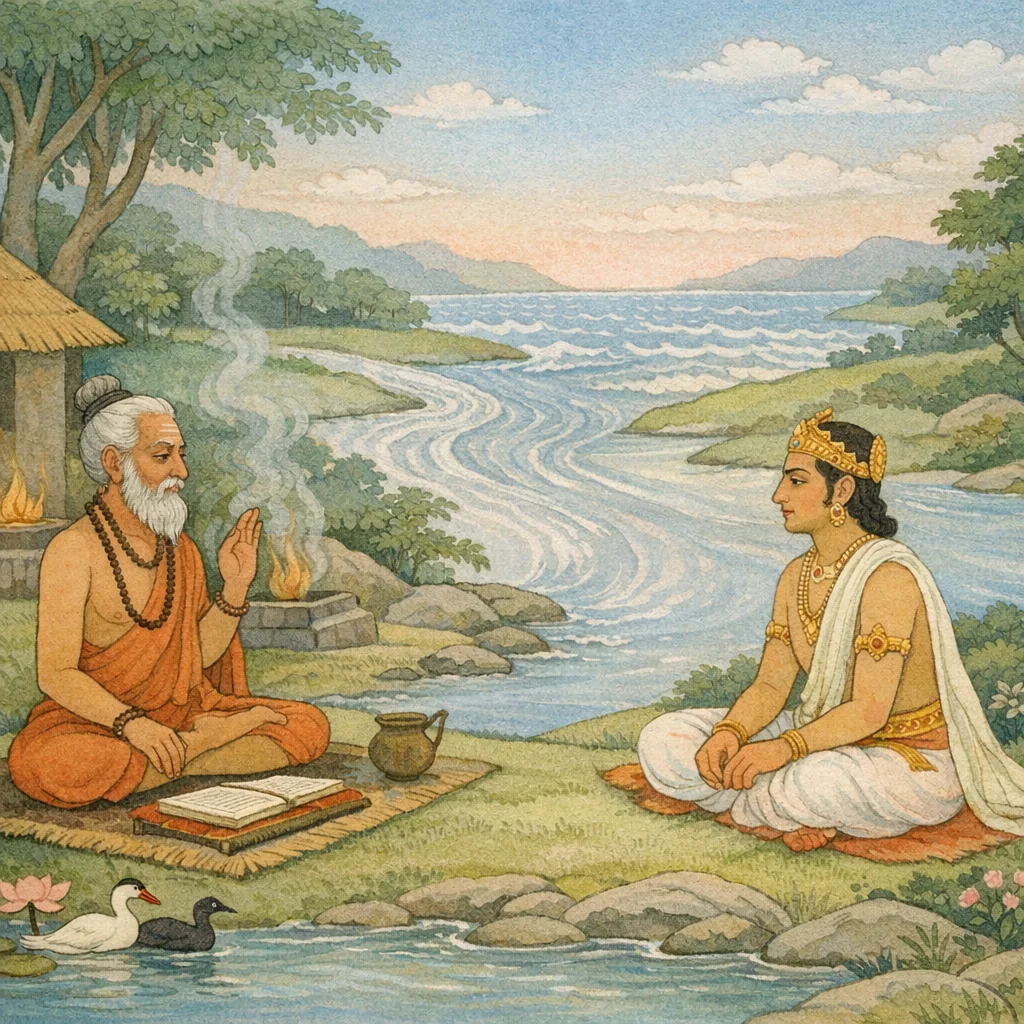
Bhīṣma introduces an ancient itihāsa to Yudhiṣṭhira: Śakra (Puraṃdara/Indra) addresses Namuci, who is bound, displaced, and under hostile control, asking why he does or does not grieve. Namuci replies with a diagnostic of grief: sorrow cannot recover what is lost, it harms the body, and it gives adversaries satisfaction; therefore it is strategically and ethically unhelpful. He recommends mental redirection—deliberately contemplating what is wholesome (kalyāṇa) to settle the mind—asserting that as attention stabilizes, practical aims become clearer. The chapter then expands into a doctrine of governance by a single ‘Śāstā’ (cosmic regulator): embodied beings are guided even from the womb; outcomes unfold as they must, and rebirth-residence occurs where the ordainer places one, not where one prefers. Namuci articulates a tension between knowing the better and failing to enact it, attributing human motion to an appointed course (‘yathā niyukto’smi tathā vahāmi’). The text praises the paṇḍita’s emotional non-reactivity—neither elated by success nor collapsed by adversity—likened to Himālaya’s immovability. It concludes that understanding this totality yields competence in both pleasure and pain, a form of inner sovereignty surpassing external wealth.
Chapter Arc: भीष्म युधिष्ठिर को जनक–पञ्चशिख संवाद का सूत्र पकड़ाते हैं—‘जन्म के गर्भवास-जन्य क्लेश को देख कर देह-वैराग्य (जातिनिर्वेद) कैसे जागता है’—और राजा जनक का तीखा प्रश्न उठता है: यदि मृत्यु के बाद कोई संज्ञा ही नहीं, तो ज्ञान-अज्ञान का प्रयोजन क्या? → जनक ‘उच्छेद’ (मृत्यु के साथ सर्वनाश) की शंका को आगे बढ़ाते हैं—यदि सब कुछ कट जाता है तो प्रमत्त-अप्रमत्त में भेद क्या? पञ्चशिख इन्द्रिय-समूह, चित्त और गुणों की पृथक्-प्रवृत्ति का विश्लेषण करते हैं: श्रवण-त्वक्-जिह्वा-नेत्र-नासिका और उनके विषय-गुण चित्त के आगे-आगे चलते हैं; देह-इन्द्रिय-मन का यह ‘समाहार’ कर्म में परस्पर आश्रित होकर भी मूलतः असंग है। → निर्णायक बोध यह उभरता है कि जो ‘गुण-समाहार’ (देह-इन्द्रिय-चित्त) को ही आत्मा मानता है, वह असम्यग्दर्शन से अनन्त दुःख में पड़ता है; और जैसे नदियाँ समुद्र में मिलकर नाम-रूप खो देती हैं, वैसे ही सत्त्व-क्षय/अहंभाव-क्षय में व्यक्तित्व का आग्रह गल जाता है—यहीं मोक्ष-निश्चय का शिखर है। → पञ्चशिख के भाष्य को सुनकर जनक सम्यक् दृष्टि से निःशेष अर्थ का निरीक्षण करते हैं; शोक-रहित होकर परमसुख में विहार करते हैं—भीष्म इसे ‘अमृतपद’ की उपलब्धि कहते हैं। → भीष्म आगे संकेत करते हैं कि ‘पूर्वकाल में जिस उद्देश्य से (अग्नि/वल्वलि-प्रसंग द्वारा) मिथिला का प्रसंग उठाया गया था, वह अब सुनो’—अर्थात अगले खंड में किसी पुरातन दृष्टान्त/कथा-प्रवेश का द्वार खुलता है।
Shlokas
Verse 1
क्ा-...0.:--. ०-2 ३. जन्मके समय गर्भवास आदिके कारण जो कष्ट होता है, उसपर विचार करके शरीरसे वैराग्य होना “जातिनिर्वेद' है। २. कर्मजनित क्लेश--नाना योनियोंकी प्राप्ति एवं नरकादि यातनाका विचार करके पाप तथा काम्य-कर्मोंसे विरत होना “कर्मनिर्वेद' है। ३. इस जगत्की छोटी-से-छोटी वस्तुओंसे लेकर ब्रह्मतोकतकके भोगोंकी क्षणभंगुरता और दुःखरूपताका विचार करके सब ओरसे विरक्त होना 'सर्वनिर्वेद” कहलाता है। > जाति कहते हैं जन्मको। जैसे गुड़ या महुवे आदिसे अनेक द्रव्योंके संयोगद्वारा जो मद्य तैयार किया जाता है, उसमें उपादानकी अपेक्षा विलक्षण मादकशक्तिका जन्म हो जाता है, उसी प्रकार पृथ्वी, जल, तेज और वायु--इन चार द्रव्योंके संयोगसे इस शरीरमें ही जीव चैतन्य प्रकट हो जाता है। जैसे जड मनसे अजड स्मृति उत्पन्न होती है, उसी प्रकार जड शरीरसे चेतन जीवकी उत्पत्ति हो जाती है। जैसे अयस्कान्तमणि (चुम्बक) जड होकर भी लोहको खींच लेती है, उसी प्रकार जड शरीर भी इन्द्रियोंका संचालन और नियन्त्रण कर लेता है; अतः आत्मा उससे भिन्न नहीं है। जैसे सूर्यकान्तमणि शीतल होकर भी सूर्यकी किरणोंके संयोगसे आग प्रकट करने लगती है, उसी प्रकार वीर्य शीतल होकर भी रस और रक्तके संयोगसे जठरानलका आविष्कार करता है और जैसे जलसे उत्पन्न हुआ बडवानल जलको ही भक्षण करता है, उसी प्रकार वीर्यसे उत्पन्न हुआ यह शरीर स्वयं भी वीर्यका आधान एवं धारण करता है। अत: शरीरसे भिन्न आत्माकी सत्ता माननेकी कोई आवश्यकता नहीं है। एकोनविशर्त्याधिकॉद्विशततमो< ध्याय: पंचशिखके द्वारा मोक्षतत्त्वका विवेचन एवं भगवान विष्णुद्वारा मिथिलानरेश जनकवंशी जनदेवकी परीक्षा और उनके लिये वरप्रदान भीष्म उवाच जनको जनदेवस्तु ज्ञापित: परमर्षिणा । पुनरेवानुपप्रच्छ साम्पराये भवाभवौ,भीष्मजी कहते हैं--राजन्! महर्षि पंचशिखके इस प्रकार उपदेश देनेपर जनदेव जनककने पुनः उनसे मृत्युके पश्चात् आत्माकी सत्ता या विनाशके विषयमें प्रश्न किया
Bhishma said: King Janaka—also known as Janadeva—having been instructed by the great sage, again questioned him about what happens after death: whether the self continues to exist or comes to an end. The inquiry presses toward the ethical stakes of liberation-teaching: if there is survival beyond death, one must account for consequences and release; if there is annihilation, one must still explain the meaning of renunciation and right conduct.
Verse 2
जनक उवाच भगवन् यदि न प्रेत्य संज्ञा भवति कस्यचित् | एवं सति किमज्ञानं ज्ञानं वा कि करिष्यति,जनकने पूछा--भगवन्! यदि मृत्युके पश्चात् किसीकी कोई विशेष संज्ञा नहीं रह जाती तो उस स्थितिमें अज्ञान अथवा ज्ञान क्या करेगा?
Janaka said: “Blessed one, if after death no individual retains any distinct awareness or identity, then in such a situation what could ignorance or even knowledge accomplish?”
Verse 3
सर्वमुच्छेदनिष्ठं स्थात् पश्य चैतद् द्विजोत्तम | अप्रमत्त: प्रमत्तो वा कि विशेषं करिष्यति,द्विजश्रेष्ठ) देखिये, मनुष्यकी मृत्युके साथ-साथ उसका सारा साधन नष्ट हो जाता है; फिर वह पहलेसे सावधान हो या असावधान, क्या विशेष लाभ उठा सकेगा?
Janaka said: “O best of Brahmins, consider this: everything ends in destruction. At the moment of death, all a person’s means and acquisitions are cut off. Then what special advantage can one gain—whether one lived carefully and alert, or carelessly and distracted?”
Verse 4
असंसर्गो हि भूतेषु संसग्गों वा विनाशिषु । कस्मै क्रियेत कल्प्येत निश्चय: को<त्र तत्त्वतः,मृत्यु होनेके पश्चात् जीवात्माका विनाशशील पञ्चमहाभूतोंसे कोई संसर्ग रहता है या नहीं? यदि रहता है तो किसलिये रहता है? इस विषयमें यथार्थरूपसे क्या निश्चय किया जा सकता है?
After death, does the living Self retain any association with the perishable five great elements, or does it not? If it does, for what reason does it remain? And in this matter, what certainty can truly be established in accordance with reality?
Verse 5
भीष्म उवाच तमसा हि प्रतिच्छन्न॑ विभ्रान्तमिव चातुरम् । पुन: प्रशमयन् वाक्यै: कवि: पठचशिखोडब्रवीत्,भीष्मजी कहते हैं--राजन्! राजा जनककी बुद्धिको अज्ञानान्धकारसे आच्छादित तथा आत्माके नाशकी सम्भावनासे भ्रान्त एवं व्याकुल जानकर ज्ञानी महात्मा पंचशिख उन्हें मधुर वचनोंद्वारा शान्त करते हुए-से बोले--
Bhishma said: “O king, seeing the wise King Janaka as though shrouded in the darkness of ignorance—confused and inwardly troubled, as if deluded about the fate of the Self—the sage Panchashikha again soothed him with gentle words, and then spoke.”
Verse 6
उच्छेदनिष्ठा नेहास्ति भावनिष्ठा न विद्यते । अयं हापि समाहार: शरीरेन्द्रियचेतसाम् । वर्तते पृथगन्योन्यमप्यपाश्रित्य कर्मसु,“राजन! मृत्युके पश्चात् आत्माका न तो नाश होता है और न वह किसी विशेष आकारमें ही परिणत होता है। यह जो प्रत्यक्ष दिखायी देनेवाला संघात है, यह भी शरीर, इन्द्रिय और मनका समूहमात्र है। यद्यपि ये सब पृथक्-पृथक् हैं तो भी एक-दूसरेका आश्रय लेकर कर्मामें प्रवृत्त होते हैं
“O king, here there is no finality in annihilation, nor is there any finality in mere becoming. Even this visible ‘person’ is only a composite of body, senses, and mind. Though distinct, they act by mutually depending on one another in works. After death the Self is not destroyed, nor does it merely turn into some fixed, particular form.”
Verse 7
धातव: पज्च भूतेषु खं वायुज्योतिषो धरा । ते स्वभावेन तिष्ठन्ति वियुज्यन्ते स्वभावत:,प्राणियोंके शरीरमें उपादानके रूपमें आकाश, वायु, अग्नि, जल और पृथ्वी--ये पाँच धातु हैं। ये स्वभावसे ही एकत्र होते और विलग हो जाते हैं
“In living beings, the five elemental constituents—space, wind, fire, water, and earth—are the material bases. By their own nature they come together and remain, and by that same nature they separate again.”
Verse 8
आकाशोवायुरूष्मा च स्नेहो यश्चापि पार्थिव: । एष पजञ्चसमाहार: शरीरमपि नैकधा,आकाश, वायु, अग्नि, जल और पृथ्वी--इन पाँच तत्त्वोंके समाहारसे ही अनेक प्रकारके शरीरोंका निर्माण हुआ है
“Space, wind, heat (fire), moisture (water), and the earthly element (earth)—from the aggregation of these five constituents, bodies arise in many different forms.”
Verse 9
ज्ञानमूष्मा च वायुश्च त्रिविध: कार्यसंग्रह: । इन्द्रियाणीन्द्रियार्थाश्व॒ स््वभावश्लेतना मन: । प्राणापानौ विकारश्न धातवश्चात्र निःसृता:,शरीरमें ज्ञान (बुद्धि), ऊष्मा (जठरानल) तथा वायु (प्राण)--इनका समुदाय समस्त कर्मोका संग्राहक-गण है; क्योंकि इन्हींसे इन्द्रिय, इन्द्रियोंक विषय, स्वभाव, चेतना, मन, प्राण, अपान, विकार और धातु प्रकट हुए हैं
Bhīṣma said: “Knowledge (the discerning intellect), inner heat (the digestive fire), and vital wind (prāṇa) form a threefold aggregate that gathers and sustains all activity. From these arise the senses and their objects, one’s innate disposition, consciousness, the mind, the in-breath and out-breath, the bodily modifications, and the constituent elements. Thus the workings of embodied life are rooted in this fundamental triad.”
Verse 10
श्रवर्णं स्पर्शनं जिह्दा दृष्टिनासा तथैव च । इन्द्रियाणीति पज्चैते चित्तपूर्व गता गुणा:,श्रवण, त्वचा, जिह्ठा, नेत्र और नासिका--ये पाँच ज्ञानेन्द्रियाँ हैं। शब्द आदि गुण चित्तसे संयुक्त होकर इन इन्द्रियोंके विषय होते हैं
Bhīṣma said: “Hearing, touch, the tongue, sight, and the nose—these are the five sense-faculties. The qualities such as sound and the rest, first taken up by the mind, become the objects experienced through these senses—showing that sense-experience is shaped by the mind’s prior engagement and direction.”
Verse 11
तत्र विज्ञानसंयुक्ता त्रिविधा चेतना ध्रुवा । सुखदु:खेति यामाहुरदुः:खामसुखेति च,विज्ञानयुक्त चेतना (विषयोंकी उपादेयता, हेयता और उपेक्षणीयताके कारण) निश्चय ही तीन प्रकारकी होती है। उसे अदु:खा, असुखा और सुख-दुःखा कहते हैं
Bhīṣma said: “In this matter, consciousness when conjoined with discriminative knowledge is firmly of three kinds. The wise describe it as (1) that which experiences pleasure and pain, (2) that which is free from pain, and (3) that which is without pleasure—thus distinguishing the mind’s responses according to what is to be accepted, rejected, or set aside.”
Verse 12
शब्द: स्पर्श च रूप॑ं च रसो गन्धश्न मूर्तय: । एते ह्यामरणात् पञज्च षड्गुणा ज्ञानसिद्धये,शब्द, स्पर्श, रूप, रस, गन्ध तथा मूर्त द्रव्य--ये छः गुण जीवकी मृत्युके पहलेतक इन्द्रियजन्य ज्ञानके साधक होते हैं (इनके साथ इन्द्रियोंका संयोग होनेपर ही भिन्न-भिन्न विषयोंका ज्ञान होता है)
Bhīṣma said: “Sound, touch, form, taste, smell, and material embodiment—these are the qualities that serve as the means by which sensory knowledge is accomplished, operating for a living being up to the moment of death. Only when the senses come into contact with these qualities does distinct cognition of the various objects arise.”
Verse 13
तेषु कर्मविसर्गश्न सर्वतत्त्वार्थनिश्चय:ः । तमाहु: परम॑ शुक्र बुद्धिरित्यव्ययं महत्,श्रोत्र आदि इन्द्रियोंमें उनके विषयोंका विसर्जन (त्याग) करनेसे सम्पूर्ण तत्त्वोंके यथार्थ निश्चयरूप मोक्षकी प्राप्ति होती है। उस तत्त्वनिश्चयको अत्यन्त निर्मल उत्तम ज्ञान और अविनाशी महान् ब्रह्मपद कहते हैं
Bhīṣma explains that when one relinquishes the outward flow of action—especially the mind’s engagement with the sense-organs and their objects—there arises a decisive, accurate discernment of the meaning of all principles (tattvas). That settled certainty is called the supremely pure, highest knowledge; it is also termed the imperishable, great Reality—Buddhi in its highest sense, the Brahman-state that leads to liberation.
Verse 14
इमं गुणसमाहारमात्म भावेन पश्यत: । असम्यग्दर्शनैर्द:खमनन्तं नोपशाम्यति,जो लोग गुणोंके संघातरूप इस शरीरको ही आत्मा समझ लेते हैं, उन्हें मिथ्या ज्ञानके कारण अनन्त दु:खोंकी प्राप्ति होती है और उनकी परम्परा कभी शान्त नहीं होती
Bhishma said: For those who, under the guise of self-understanding, behold this body—only a conglomerate of qualities (guṇas)—as the very Self, suffering becomes endless. Their vision is warped by wrong knowledge; their pain does not subside, and their cycle of distress finds no peace.
Verse 15
अनात्मेति च यद् दृष्टं तेनाहं न ममेत्यपि । वर्तते किमधिष्ठानात् प्रसक्ता दुः:खसंसृति:,इसके विपरीत जिनकी दृष्टिमें यह दृश्य प्रपंच अनात्मा सिद्ध हो चुका है, उनकी इसके प्रति न ममता होती है न अहंता, फिर उन्हें दुःखपरम्परा कैसे प्राप्त हो; उन दुःखोंके लिये आधार ही क्या रह जाता है?
But for one who has seen that what is perceived is not the Self, there arises neither “I” nor “mine” toward it. Then from what support could the cycle of suffering take hold and continue? What basis would remain for those sorrows?
Verse 16
अत्र सम्यग्वधो नाम त्यागशास्त्रमनुत्तमम् । शृणु यत् तव मोक्षाय भाष्यमाणं भविष्यति,अब मैं उस परम उत्तम सांख्यशास्त्रका वर्णन करता हूँ, जिसका नाम है सम्यग्वध (सम्यग्रूपेण दुःखोंका नाश करनेवाला)। उसमें त्यागकी प्रधानता है। तुम ध्यान देकर सुनो। उसका उपदेश तुम्हारे लिये मोक्षदायक होगा
Bhīṣma said: “Here I shall set forth the unsurpassed teaching of renunciation, known as ‘Samyagvadha’—the complete ‘slaying’ of suffering through right understanding and letting go. Listen with full attention: what I am about to explain is intended to lead you toward liberation.”
Verse 17
त्याग एव हि सर्वेषां युक्तानामपि कर्मणाम् | नित्यं मिथ्याविनीतानां क्लेशो दुः:खवहो मतः,जो लोग मुक्तिके लिये प्रयत्नशील हों, उन सबको चाहिये कि सम्पूर्ण कर्मोमें अहंता, ममता, आसक्ति और कामनाका त्याग करे। जो इनका त्याग किये बिना ही विनीत (शाम, दम आदि साधनोंमें तत्पर) होनेका झूठा दावा करते हैं, उन्हें अविद्या आदि दुःखदायी क्लेश प्राप्त होते हैं
Bhishma said: Renunciation alone is the true completion of all actions, even for those who are disciplined and engaged in proper practice. But for those who continually claim humility and self-control falsely—without giving up egoism, possessiveness, attachment, and desire—there arises affliction, which is held to be a bearer of suffering.
Verse 18
द्रव्यत्यागे तु कर्माणि भोगत्यागे व्रतान्यपि । सुखत्यागे तपो योगं सर्वत्यागे समापना,शास्त्रोंमें द्रव्यका त्याग करनेके लिये यज्ञ आदि कर्म, भोगका त्याग करनेके लिये व्रत, दैहिक सुखोंके त्यागके लिये तप और सब कुछ (अहंता, ममता, आसक्ति, कामना आदि) त्याग देनेके लिये योगके अनुष्ठानकी आज्ञा दी गयी है। यही त्यागकी चरम सीमा है
Bhīṣma said: For renouncing wealth, the scriptures prescribe ritual actions such as sacrifices; for renouncing enjoyments, they prescribe vows; for renouncing bodily pleasures, they prescribe austerity; and for renouncing everything—egoism, possessiveness, attachment, and craving—they prescribe the discipline of Yoga. This is taught as the culminating limit of renunciation.
Verse 19
तस्य मार्गोडयमद्दैध: सर्वत्यागस्य दर्शित: । विप्रहाणाय दुःखस्य दुर्गतिस्त्वन्यथा भवेत्,सर्वस्व-त्यागका यह एकमात्र मार्ग ही दुःखोंसे छुटकारा पानेके लिये उत्तम बताया गया है, इसके विपरीत आचरण करनेवालोंको दुर्गति भोगनी पड़ती है
This is the unwavering path that has been shown for complete renunciation. It is declared to be the best means for casting off sorrow; but for one who acts otherwise, a wretched fate is said to follow.
Verse 20
पज्चज्ञानेन्द्रियाण्युक्त्वा मन:षष्ठानि चेतसि । बलषष्ठानि वक्ष्यामि पञ्चकर्मेन्द्रियाणि तु,बुद्धिमें स्थित मनसहित पाँच ज्ञानेन्द्रियोंका वर्णन करके अब पाँच कर्मेन्द्रियोंका वर्णन करूँगा। जिनके साथ प्राणशक्ति छठी बतायी गयी है
Bhīṣma said: “Having described the five organs of knowledge—together with the mind as the sixth within the inner consciousness—I shall now describe the five organs of action, of which vital power (prāṇa) is taught as the sixth. Thus one should understand how perception and action are governed from within, and how self-mastery depends on rightly ordering these faculties.”
Verse 21
हस्तौ कर्मेन्द्रियं ज्ेयमथ पादौ गतीन्द्रियम् । प्रजनानन्दयो: शेफो निसर्ग पायुरिन्द्रियम्,दोनों हाथोंको काम करनेवाली इन्द्रिय जानना चाहिये, दोनों पैर चलने-फिरनेका काम करनेवाली इन्द्रिय हैं। लिंग संतानोत्पादन एवं मैथुनजनित आनन्दकी प्राप्ति करनेके लिये है। गुदनामक इन्द्रियका कार्य मल-त्याग करना है
Bhishma said: Know the two hands as the organ of action, and the two feet as the organ that enables movement. The penis serves for procreation and for the pleasure arising from sexual union; and the anus is the organ whose natural function is the evacuation of excrement.
Verse 22
वाक् च शब्दविशेषार्थमिति पज्चान्वितं विदु: । एवमेकादशैतानि बुद्धया55शु विसृजेन्मन:,वाक्-इन्द्रिय शब्दविशेषका उच्चारण करनेके लिये है। इस प्रकार पाँच कर्मन्द्रियोंको पाँच विषयोंसे युक्त माना गया है। मनसहित एकादश इन्द्रियोंके विषयोंका बुद्धिके द्वारा शीघ्र त्याग कर देना चाहिये
Bhīṣma said: Speech exists for the specific purpose of articulating sound and its distinctions; thus the five organs of action are understood to be conjoined with their five respective objects. In this way, the mind—together with the eleven faculties—should swiftly relinquish their objects through the discerning power of intellect, turning away from sense-engagement toward inner restraint.
Verse 23
कर्णो शब्दक्ष॒ चित्तं च त्रयः श्रवणसंग्रहे । तथा स्पर्शे तथा रूपे तथैव रसगन्धयो:,श्रवण-कालमें श्रोत्ररूपी इन्द्रिय, शब्दरूपी विषय और चित्तरूपी कर्ता--इन तीनोंका संयोग होता है, इसी प्रकार स्पर्श, रूप, रस तथा गन्धके अनुभव-कालमें भी इन्द्रिय, विषय एवं मनका संयोग अपेक्षित है
Bhishma explains that every act of perception requires a threefold conjunction: the sense-organ, its object, and the mind. In hearing, the ear, sound, and the mind must come together; likewise, in the experience of touch, form, taste, and smell, perception arises only when the relevant faculty meets its object with the mind’s participation. The ethical implication is that experience and action are not merely external events but depend upon inner attention, making self-mastery and mindful restraint central to dharma.
Verse 24
एवं पज्चत्रिका होते गुणास्तदुपलब्धये । येनायं त्रिविधो भाव: पर्यायात् समुपस्थित:,इस प्रकार ये तीन-तीनके पाँच समुदाय हैं, ये सब गुण कहे गये हैं। इनसे शब्दादि विषयोंका ग्रहण होता है, जिससे ये कर्ता, कर्म और करणरूपी त्रिविध भाव बारी-बारीसे उपस्थित होते हैं
Thus there are five sets of three; they are called “qualities” (guṇas) because through them the objects such as sound are apprehended. By their operation, the threefold complex—agent, action, and instrument—arises in succession, becoming manifest one after another.
Verse 25
साच्चिको राजसशक्षापि तामसक्षापि ते त्रयः । त्रिविधा वेदना येषु प्रसूता: सर्वसाधना:,इनमेंसे एक-एकके सातच्चिक, राजस और तामस तीन-तीन भेद होते हैं। उनसे प्राप्त होनेवाले अनुभव भी तीन प्रकारके ही हैं। जो हर्ष, प्रीति आदि सभी भावोंके साधक हैं
Bhīṣma said: “These three are of three kinds—sāttvika, rājasika, and tāmasika. The experiences (feelings and perceptions) that arise through them are likewise threefold, and from them are generated the various inner states that become the means for all pursuits—such as joy, affection, and related dispositions.”
Verse 26
प्रहर्ष: प्रीतिरानन्द: सुखं संशान्तचित्तता । अकुततश्रित् कुतश्चिद् वा चिन्तित: सात््विको गुण:,हर्ष, प्रीति, आनन्द, सुख और चित्तकी शान्ति-ये सब भाव बिना किसी कारणके स्वतः हों या कारणवश (भक्ति, ज्ञान, वैराग्य, सत्संग आदिके कारण) हों, सात्विक गुण माने गये हैं
Bhīṣma said: “Exultation, affection, bliss, happiness, and the calming of the mind—these states, whether arising of themselves without cause or arising from some cause—are regarded as sāttvika qualities (of sattva).”
Verse 27
अतुष्टि: परितापश्च शोको लोभस्तथा<क्षमा | लिज्जानि रजसस्तानि दृश्यन्ते हेत्वहेतुत:
Bhīṣma said: “Discontent, inner torment, grief, greed, and also intolerance—these are the marks of rajas. They are seen arising sometimes from a clear cause and sometimes without any apparent cause.”
Verse 28
असंतोष, संताप, शोक, लोभ और असहनशीलता--ये किसी कारणसे हों या अकारण -रजोगुणके चिह्न हैं |। अविवेकस्तथा मोह: प्रमाद: स्वप्नतन्द्रिता । कथंचिदपि वर्तन्ते विविधास्तामसा गुणा:
Bhīṣma said: “Discontent, inner torment, grief, greed, and intolerance—whether arising with a cause or without one—are the marks of rajas. Likewise, lack of discernment, delusion, heedlessness, and the drowsiness of sleep: in various ways these tāmasika tendencies keep manifesting, even without clear reason.”
Verse 29
अविवेक, मोह, प्रमाद, स्वप्न और आलस्य--ये किसी तरह भी क्यों न हों, तमोगुणके ही विविध रूप हैं ।। अत्र यत् प्रीतिसंयुक्ते काये मनसि वा भवेत् । वर्तते सात््विको भाव इत्यपेक्षेत तत् तथा,इनमें जो शरीर या मनमें प्रीतिके संयोगसे उदित हो, वह सातक््चिक भाव है और उसको सत्त्वगुणकी वृद्धि जाननी चाहिये
Bhishma explains that lack of discernment, delusion, heedlessness, sleep, and laziness—however they may appear—are all merely different manifestations of tamas, the quality of darkness and inertia. By contrast, whatever state arises in the body or the mind when joined with gladness and inner satisfaction should be regarded as a sāttvika disposition; it is to be understood as an increase of sattva, the quality of clarity.
Verse 30
यत् त्वसंतोषसंयुक्तमप्रीतिकरमात्मन: । प्रवृत्त रज इत्येवं ततस्तदपि चिन्तयेत्,जो अपने लिये असंतोषजनक एवं अप्रीतिकर हो, उसको रजोगुणकी प्रवृत्ति एवं अभिवृद्धि समझनी चाहिये
Bhīṣma said: “Whatever a person finds bound up with dissatisfaction and producing no inner gladness for oneself should be understood as the stirring and increase of rajas (the passion-driven quality). Therefore one should reflect upon that as such.”
Verse 31
अथ यन्मोहसंयुक्तं काये मनसि वा भवेत् | अप्रतर्क्यमविज्ञेयं तमस्तदुपधारयेत्,शरीर या मनमें जो अतर्क्य, अज्ञेय एवं मोह-संयुक्त भाव प्रादुर्भूत हो, उसको तमोगुणजनित जानना चाहिये
Bhishma said: Whatever state arises in the body or in the mind that is bound up with delusion—beyond reasoning and not truly knowable—one should recognize that as born of tamas (the quality of darkness and inertia).
Verse 32
श्रीत्रं व्योमाश्रितं भूतं शब्द: श्रोत्रं समाश्रित: । नोभयं शब्दविज्ञाने विज्ञानस्येतरस्य वा,शब्दका आधार श्रोत्रेन्द्रिय है और श्रोत्रेन्द्रियका आधार आकाश है; अतः वह आकाशरूप ही है। ऐसी स्थितिमें शब्दका अनुभव करते समय आकाश और श्रोत्र--ये दोनों ही ज्ञान अथवा अज्ञानके विषय नहीं होते हैं-
Bhishma said: The organ of hearing is grounded in space (ākāśa), and sound is grounded in the ear. Therefore, in the very act of cognizing sound, neither of these two—space and the ear—becomes an object of knowledge or of ignorance; they function as the supporting conditions rather than as what is grasped. The teaching points toward discerning the difference between the instrument and its support on the one hand, and the perceived object on the other, so that one does not mistake the basis of experience for the content of experience.
Verse 33
एवं त्वक्चक्षुषी जिह्नला नासिका चेति पठचमी । स्पर्शे रूपे रसे गन्धे तानि चेतो मनश्न॒ तत्,इसी प्रकार त्वचा, नेत्र, जिह्ला और नासिका भी क्रमशः स्पर्श, रूप, रस और गन्धके आश्रय तथा अपने आधारभूत महाभूतोंके स्वरूप हैं। इन सबका कारण मन है, इसलिये ये सब-के-सब मनःस्वरूप हैं
Bhishma explains that the skin, the eyes, the tongue, and the nose—making five in all—are each grounded in their respective fields of experience: touch, form, taste, and smell. Yet their common root is the mind; therefore, all these sense-faculties are ultimately to be understood as dependent on, and shaped by, the mind itself.
Verse 34
स्वकर्मयुगपद्धावो दशस्वेतेषु तिष्ठति । चित्तमेकादशं विद्धि बुद्धिद्धादिशमी भवेत्,इन दसों इन्द्रियोंमें अपने-अपने विषयोंको एक साथ भी ग्रहण करनेकी शक्ति होती है। ग्यारहवाँ मन और बारहवीं बुद्धि--इनको इन्द्रियोंका सहायक समझना चाहिये
Bhishma said: “These ten faculties (the senses) each abide in their own functions and, acting together, can simultaneously apprehend their respective objects. Know the mind to be the eleventh, and the intellect to be the twelfth—these two should be understood as the aids and governors of the senses.”
Verse 35
तेषामयुगपद्धाव उच्छेदो नास्ति तामसे । आस्थितो युगपद्धावो व्यवहार: स लौकिक:,तमोगुणजनित सुषुप्तिकालमें अपने कारणमें विलीन हो जानेसे इन्द्रियाँ विषयोंका ग्रहण नहीं कर सकतीं, किंतु उनका नाश नहीं होता है। उनमें जो अपने विषयोंको एक साथ ग्रहण करनेकी शक्ति है, वह लौकिक व्यवहारमें ही दिखायी देती है (सुषुप्तिकालमें नहीं)
Bhishma said: “In the state dominated by darkness (tamas)—such as deep sleep—there is no destruction of the faculties even though they do not operate to apprehend their objects, for they withdraw into their cause. The capacity for simultaneous apprehension is established only in ordinary worldly functioning; it is not manifest in the sleep-state.”
Verse 36
इन्द्रियाण्यपि सूक्ष्माणि दृष्ट््वा पूर्वश्रुतागमात् । चिन्तयन्नानुपर्येति त्रिभिरेवान्वितो गुणै:,पहले जाग्रत-अवस्थाके देखने-सुनने आदिके द्वारा पूर्ववासनावश शब्द आदि विषयोंकी प्राप्ति होनेसे स्वप्नदर्शी पुरुष सूक्ष्म ग्यारह इन्द्रियोंको देखकर विषयसंगकी भावना करता हुआ सत्त्व आदि तीनों गुणोंसे युक्त हो शरीरके भीतर ही इच्छानुसार घूमता रहता है
Bhīṣma said: “By the authority of teachings heard before, the dream-experiencer discerns even the subtle sense-faculties. While imagining and brooding over objects of sense, he moves about within the body itself as he wills, accompanied by the three guṇas—sattva, rajas, and tamas.”
Verse 37
यत् तमोपहतं चित्तमाशु संहारम ध्रुवम् । करोत्युपरमं काये तदाहुस्तामसं बुधा:,सुषुप्तिकालमें जब चित्त तमोगुणसे अभिभूत होकर अपने प्रवृत्ति और प्रकाश- स्वभावका शीघ्र ही संहार करके थोड़ी देरके लिये इन्द्रियोंके व्यापारको बंद कर देता है, उस समय शरीरमें जो सुखकी प्रतीति होती है, उसे विद्वान् पुरुष तामस सुख कहते हैं
Bhishma said: “When, in deep sleep, the mind is overpowered by darkness (tamas), it quickly and inevitably withdraws—extinguishing its activity and awareness—and for a short while stops the functioning of the senses within the body. The pleasant feeling then experienced is what the wise call ‘tamasic happiness’: comfort born of stupefaction and sleep-like inertia, not of clarity or virtue.”
Verse 38
यद् यदागमसंयुक्त न कृच्छुमनुपश्यति । अथ तत्राप्युपादत्ते तमोडव्यक्तमिवानृतम्,सुषुप्तिकालमें स्वप्नदर्शी पुरुष उपस्थित दुःखको प्रत्यक्षकी भाँति अनुभव नहीं करता है। इसलिये वह सुषुप्तिकालमें भी तमोगुणयुक्त मिथ्या सुखका अनुभव करता है
Bhīṣma said: “Whatever state is conjoined with the impressions of past experience, a person does not perceive its hardship as hardship. Even there, he takes up a kind of false contentment—obscured by tamas and indistinct, as though unmanifest. Thus, like a dreamer who does not apprehend suffering as plainly real, one in deep sleep still undergoes a tamas-born, illusory ‘happiness’.”
Verse 39
एवमेष प्रसंख्यात: स्वकर्मप्रत्ययो गुण: । कथज्चिद् वर्तते सम्यक् केषांचिद् वा निवर्तते,इस प्रकार अपने कर्मके अनुसार गुणकी प्राप्तिके विषयमें कहा गया है। अज्ञानियोंके ये गुण सम्यक्रूपेण प्रवृत्त होते हैं और ज्ञानियोंके निवृत्त हो जाते हैं
Bhishma said: “Thus has this quality been explained as arising in accordance with one’s own actions. In some persons it functions in a proper, active way; in others it withdraws and ceases—especially where true knowledge has arisen.”
Verse 40
एतदाहुः समाहार क्षेत्रमध्यात्मचिन्तका: । स्थितो मनसि यो भाव: स वै क्षेत्रज्ञ उच्यते,अध्यात्मतत्त्वका चिन्तन करनेवाले विद्वान् इस शरीर और इन्द्रियोंके संघातको क्षेत्र कहते हैं और मनमें जो चेतन सत्ता स्थित है, वही क्षेत्रज्ञ (जीवात्मा) कहलाता है
Bhishma said: Those who contemplate the truths of the inner Self declare that the aggregate—this body together with the senses—is the ‘field’ (kṣetra). The conscious principle that abides within the mind, the inner awareness that knows and illumines experience, is called the ‘knower of the field’ (kṣetrajña), the individual self.
Verse 41
एवं सति क उच्छेद: शाश्वतो वा कथं भवेत् । स्वभावाद् वर्तमानेषु सर्वभूतेषु हेतुत:,ऐसी अवस्थामें आत्माका विनाश कैसे हो सकता है? अथवा हेतुपूर्वक प्रकृतिके अनुसार प्रवृत्त पउ्चमहाभूतोंसे उसका शाश्वत संसर्ग भी कैसे रह सकता है?
Bhīṣma said: “If this is so, how could there be any real annihilation (of the self)? And how, on the other hand, could there be an eternal, unbroken association with the elements? For all beings act according to their own nature, and their operations proceed through causes.”
Verse 42
यथार्णवगता नद्यो व्यक्तीर्जदगति नाम च | नदाश्न ता नियच्छन्ति तादृश: सत्त्वसंक्षय:,जैसे नद और नदियाँ समुद्रमें मिलकर अपने नाम और व्यक्तित्व (रूप) को त्याग देती हैं तथा जैसे बड़े-बड़े नद छोटी-छोटी नदियोंको अपनेमें विलीन कर लेते हैं, उसी प्रकार जीवात्मा परमात्मामें विलीन हो जाता है। यही मोक्ष है
Bhīṣma said: “Just as rivers, on reaching the ocean, relinquish their separate identity—name and distinct form—and just as great rivers absorb the smaller streams into themselves, so too the individual self, when its limiting conditions are exhausted, becomes merged in the Supreme Self. This dissolution of separateness is liberation.”
Verse 43
एवं सति कुतः संज्ञा प्रेत्यभावे पुनर्भवेत् । प्रतिसम्मिश्रिते जीवेडगृह्ममाणे च सर्वतः,जीवके ब्रह्ममें विलीन हो जानेपर उसके नाम-रूपका किसी प्रकार भी ग्रहण नहीं हो सकता। ऐसी दशामें मृत्युके पश्चात् जीवकी संज्ञा कैसे रहेगी?
Bhīṣma said: “If this is so, how could any individual identity remain after death, or arise again? When the living self becomes completely intermingled (with its source) and is grasped on all sides—when the jīva dissolves into Brahman—its name and form cannot be apprehended in any way. In such a condition, how could there be any continuing designation of the self after death?”
Verse 44
इमां च यो वेद विमोक्षबुद्धि- मात्मानमन्विच्छति चाप्रमत्त: । न लिप्यते कर्मफलैरनिष्टै: पत्रं बिसस्येव जलेन सिक्तम्,जो इस मोक्षविद्याको जानता है और सावधानीके साथ आत्मतत्त्वका अनुसंधान करता है, वह जलसे कमलके पत्तेकी भाँति कर्मके अनिष्ट फलोंसे कभी लिप्त नहीं होता
Whoever knows this wisdom of liberation and, with a mind intent on release, seeks the Self without negligence, is not stained by the unwanted fruits of action—like a lotus leaf, though sprinkled with water, is not soaked.
Verse 45
दृढेहिं पाशैर्बहुभिविंमुक्त: प्रजानिमित्तैरपि दैवतैश्न । यदा हासौ सुखदुःखे जहाति मुक्तस्तदाग्र्यां गतिमेत्यलिज्र:,किंतु संतानोंके प्रति आसक्तिके कारण और भिन्न-भिन्न देवताओंकी प्रसन्नताके लिये अज्ञानियोंद्वारा जो सकाम कर्म किये जाते हैं, ये सब मनुष्यके लिये नाना प्रकारके सुदृढ़ बन्धन हैं। जब वह इन बन्धनोंसे छूटकर सुख-दुःखकी चिन्ता छोड़ देता है, उस समय सूक्ष्म शरीरके अभिमानका त्याग करके सर्वश्रेष्ठ गति प्राप्त कर लेता है
Bhīṣma said: “A person is bound by many firm nooses—attachments centered on progeny and also acts performed to please various deities with desire for results. When, freed from these bonds, one abandons anxiety over pleasure and pain, then—casting off identification with the subtle body—one attains the highest state, beyond all marks.”
Verse 46
श्रुतिप्रमाणागममड़लै श्व शेते जरामृत्युभयादभीत: । क्षीणे च पुण्ये विगते च पापे ततो निमित्ते च फले विनष्टे । अलेपमाकाशमलिड्मेव- मास्थाय पश्यन्ति महत्यसक्ता:,श्रुति-प्रतिपादित प्रमाणोंका विचार और शास्त्रमें बताये हुए मंगलमय साधनोंका अनुष्ठान करनेसे मनुष्य जरा और मृत्युके भयसे रहित होकर सुखसे सोता है। जब पुण्य और पापका क्षय तथा उनसे मिलनेवाले सुख-दुःख आदि फलोंका नाश हो जाता है, उस समय सम्पूर्ण पदार्थोमें सर्वथा आसक्तिसे रहित पुरुष आकाशके समान निर्लेप और निर्गुण परमात्मामें स्थित हुए उसका साक्षात्कार कर लेते हैं
Bhishma said: By reflecting on the authoritative testimony of the Veda and by practicing the auspicious disciplines taught in the śāstras, a person becomes free from the fear of old age and death and rests in peace. When merit and demerit are exhausted, and with them the resultant pleasures and pains also perish—when the very causal conditions and their fruits have dissolved—then those who are wholly unattached to all things abide in the Supreme Self, stainless like the sky, and directly behold Him.
Verse 47
यथोर्णनाभि: परिवर्तमान- स्तन्तुक्षये तिष्ठति पात्यमान: । तथा विमुक्तः प्रजहाति दु:खं विध्वंसते लोष्ट इवाद्रिमृच्छन्,जैसे मकड़ी जाला तानकर उसपर चक्कर लगाती रहती है; किंतु उन जालोंका नाश हो जानेपर एक स्थानपर स्थित हो जाती है, उसी प्रकार अविद्याके वशीभूत हो नीचे गिरनेवाला जीव कर्मजालमें पड़कर भटकता रहता है और उससे छूटनेपर दुःखसे रहित हो जाता है। जैसे पर्वतपर फेंका हुआ मिट्टीका ढेला उससे टकराकर चूर-चूर हो जाता है, उसी प्रकार उसके सम्पूर्ण दुःखोंका विध्वंस हो जाता है
Bhīṣma said: “Just as a spider, having spread its web, keeps moving about upon it, yet when the threads are exhausted it comes to rest in one place, so too the being—once freed—abandons sorrow. And as a clod of earth hurled against a mountain is shattered on impact, so are all his sufferings utterly destroyed.”
Verse 48
यथा रुरु: शृड्रमथो पुराणं हित्वा त्वचं वाप्युरगो यथा च । विहाय गच्छत्यनवेक्षमाण- स्तथा विमुक्तो विजहाति दुःखम्,जैसे रुकुनामक मृग अपने पुराने सींगको और साँप अपनी केंचुलको त्यागकर उसकी ओर देखे बिना ही चल देता है, उसी प्रकार ममता और अभिमानसे रहित हुआ पुरुष संसार-बन्धनसे मुक्त हो अपने सम्पूर्ण दुःखोंको दूर कर देता है
Bhīṣma said: Just as the ruru-deer casts off its old horn, and just as a serpent sheds its slough and moves on without looking back at it, so too a person who has become free—released from possessiveness and ego—abandons sorrow, leaving behind the bonds of worldly existence.
Verse 49
द्रुमं यथा वाप्युदके पतन्त- मुत्सृज्य पक्षी निपतत्यसक्त: । तथा हासौ सुखदु:खे विहाय मुक्त: परार्घ्या गतिमेत्यलिड्र:,जिस प्रकार पक्षी वृक्षको जलमें गिरते देख उसमें आसक्ति छोड़कर वृक्षका परित्याग करके उड़ जाता है, उसी प्रकार मुक्त पुरुष सुख और दु:ःख--दोनोंका त्याग करके सूक्ष्म शरीरसे रहित हो उत्तम गतिको प्राप्त होता है
Bhishma said: Just as a bird, seeing a tree fall into a pond, abandons attachment and leaves that tree behind, so too the liberated person relinquishes both pleasure and pain; freed from all marks of embodied identity, he attains the highest state.
Verse 50
भीष्म उवाच अपि च भवति मैथिलेन गीत॑ नगरमुपाहितमग्निनाभिवीक्ष्य । न खलु मम हि दह्दातेअत्र किंचित् स्वयमिदमाह किल सम भूमिपाल:,भीष्मजी कहते हैं--राजन्! स्वयं आचार्य पंचशिखके बताये हुए इस अमृतमय ज्ञानोपदेशको सुनकर राजा जनक एक निश्चित सिद्धान्तपर पहुँच गये और सारी बातोंपर विचार करके शोकरहित हो बड़े सुखसे रहने लगे; फिर तो उनकी स्थिति ही कुछ और हो गयी। एक बार उन मिथिलानरेश राजा जनकने मिथिला-नगरीको आगसे जलती देखकर स्वयं यह उदगार प्रकट किया था कि इस नगरके जलनेसे मेरा कुछ भी नहीं जलता है
Bhishma said: “Moreover, there is this well-known utterance of the king of Mithilā. Seeing his city set ablaze by fire, he declared: ‘In truth, nothing of mine is being burned here.’ Thus, that ruler spoke—illustrating the stance of inner non-attachment even amid outward loss.”
Verse 51
इदममृतपदं निशम्य राजा स्वयमिह पज्चशिखेन भाष्यमाणम् | निखिलमभिसमीक्ष्य निनश्षितार्थ: परमसुखी विजहार वीतशोक:ः,भीष्मजी कहते हैं--राजन्! स्वयं आचार्य पंचशिखके बताये हुए इस अमृतमय ज्ञानोपदेशको सुनकर राजा जनक एक निश्चित सिद्धान्तपर पहुँच गये और सारी बातोंपर विचार करके शोकरहित हो बड़े सुखसे रहने लगे; फिर तो उनकी स्थिति ही कुछ और हो गयी। एक बार उन मिथिलानरेश राजा जनकने मिथिला-नगरीको आगसे जलती देखकर स्वयं यह उदगार प्रकट किया था कि इस नगरके जलनेसे मेरा कुछ भी नहीं जलता है
Bhishma said: O King, having personally heard here this deathless teaching as it was expounded by the teacher Panchashikha, King Janaka examined the matter in its entirety, arrived at a settled conviction, and—free from grief—lived in the highest ease. His inner state became altogether different. On one occasion, when the ruler of Mithila, King Janaka, saw the city of Mithila burning in a fire, he uttered the famous declaration that even if the city burns, nothing of his truly is burned—signifying his non-attachment and inner freedom.
Verse 52
इमं हि यः पठति विमोक्षनिश्चयं महीपते सततमवेक्षते तथा । उपद्रवान् नानुभवत्यदु:खित: प्रमुच्यते कपिलमिवैत्य मैथिल:,राजन! यहाँ जो मोक्षतत्त्वका निर्णय किया गया है, उसका जो पुरुष सदा स्वाध्याय और चिन्तन करता रहता है, उसे उपद्रवोंका कष्ट नहीं भोगना पड़ता। दुःख तो उसके पास कभी फटकने नहीं पाते हैं तथा जिस प्रकार राजा जनक कपिलमतावलम्बी पंचशिखके समागमसे इस ज्ञानको पाकर मुक्त हो गये थे, उसी प्रकार वह भी मोक्ष प्राप्त कर लेता है
Bhishma said: O king, the man who repeatedly studies and steadily contemplates this settled teaching on liberation does not suffer the assaults of adversity; remaining untroubled, sorrow cannot gain a foothold in him. Just as the Maithila king Janaka attained freedom by approaching Kapila and through association with Pañcaśikha, so too does such a seeker obtain mokṣa.
Verse 219
(श्रूयतां नृपशार्दूल यदर्थ दीपिता पुरा । वल्वलिना दीपिता सा तु तन्मे शूणु महामते ।। नृपश्रेष्ठ) महामते! पूर्वकालमें जिस उद्देश्यसे अग्निद्वारा मिथिलानगरी जलायी गयी, उसे बताता हूँ, सुनो ।। जनको जनदेवस्तु कर्माण्याधाय चात्मनि | सर्वभावमनुप्राप्य भावेन विचचार सः ।। जनकवंशी राजा जनदेव परमात्मामें कर्मोंको स्थापित करके सर्वात्मताको प्राप्त होकर उसी भावसे सर्वत्र विचरण करते थे ।। यजन् ददंस्तथा जुद्दधन् पालयन् पृथिवीमिमाम् | अध्यात्मविन्महाप्राज्ञस्तन्मयत्वेन निष्ठित: ।। महाप्राज्ञ जनक अध्यात्मतत्त्वके ज्ञाता होनेके कारण निष्कामभावसे यज्ञ, दान, होम और पृथ्वीका पालन करते हुए भी उस अध्यात्मज्ञानमें ही तन््मय रहते थे ।। स तस्य हृदि संकल्पं ज्ञातुमैच्छत् स्वयं प्रभु: । सर्वलोकाधिपस्तत्र द्विजरूपेण संयुत: ।। मिथिलायां महाबुद्धिव्व्यलीक॑ किंचिदाचरन् | स गृहीत्वा द्विजश्रेष्ठैर्न॒पाय प्रतिवेदित: ।। अपराध समुद्दिश्य तं राजा प्रत्यभाषत ।। एक समय सम्पूर्ण लोकोंके अधिपति साक्षात् भगवान् नारायणने राजा जनकके मनोभावकी परीक्षा लेनेका विचार किया; अतः वे ब्राह्मणरूपसे वहाँ आये। उन परम बुद्धिमान् श्रीहरिने मिथिलानगरीमें कुछ प्रतिकूल आचरण किया। तब वहाँके श्रेष्ठ द्विजोंने उन्हें पकड़कर राजाको सौंप दिया। ब्राह्मणके अपराधको लक्ष्य करके राजाने उनसे इस प्रकार कहा ।। जनक उवाच नत्वां ब्राह्मण दण्डेन नियोक्ष्यामि कथंचन । मम राज्याद् विनिर्गच्छ यावत् सीमा भुवो मम ।। जनकने कहा--ब्राह्मण! मैं तुम्हें किसी प्रकार दण्ड नहीं दूँगा, तुम मेरे राज्यसे, जहाँतक मेरी राज्यभूमिकी सीमा है, उससे बाहर निकल जाओ ।। इत्युक्त: स तथा तेन मैथिलेन द्विजोत्तम: । अब्रवीतू् त॑ महात्मानं राजानं मन्त्रिभिवृतम् ।। मिथिलानरेशके ऐसा कहनेपर उन श्रेष्ठ ब्राह्मणने मन्त्रियोंसे घिरे हुए उन महात्मा राजा जनकसे इस प्रकार कहा-- ।। त्वमेवं पद्मनाभस्य नित्यं पक्षपदाहित: । अहो सिद्धार्थरूपो5सि गमिष्ये स्वस्ति ते<स्तु वै ।। “महाराज! आप सदा पद्मनाभ भगवान् नारायणके चरणोंमें अनुराग रखनेवाले और उन्हींके शरणागत हैं। अहो! आप कृतार्थरूप हैं, आपका कल्याण हो! अब मैं चला जाऊँगा' ।। इत्युक्त्वा प्रययौ विप्रस्तज्जिज्ञासुरद्धिजोत्तम: । अदहच्चाग्निना तस्य मिथिलां भगवान् स्वयम् ।। ऐसा कहकर वे ब्राह्मण वहाँसे चल दिये। जाते-जाते राजाकी परीक्षा लेनेके लिये उन श्रेष्ठ ब्राह्यणरूपधारी भगवान् श्रीहरिने स्वयं ही मिथिलानगरीमें आग लगा दी ।। प्रदीप्यमानां मिथिलां दृष्टवा राजा न कम्पित: । जनै: स परिपृष्टस्तु वाक्यमेतदुवाच ह ।। मिथिलाको जलती हुई देखकर राजा तनिक भी विचलित नहीं हुए। लोगोंके पूछनेपर उन्होंने उनसे यह बात कही-- ।। अनन्तं बत मे वित्तं भाव्यं मे नास्ति किंचन । मिथिलायां प्रदीप्तायां न मे किंचन दहाते ।। “मेरे पास आत्मज्ञानरूप अनन्त धन है; अतः अब मेरे लिये कुछ भी प्राप्त करना शेष नहीं है, इस मिथिला-नगरीके जल जानेपर भी मेरा कुछ नहीं जलता है ।। तदस्य भाषमाणस्य श्र॒त्वा श्र॒ुत्वा हृदि स्थितम् । पुन: संजीवयामास मिथिलां तां द्विजोत्तम: ।। राजा जनकके इस प्रकार कहनेपर उन द्विजश्रेष्ठने भी उनकी बात सुनी और उनके मनोभावको समझा; फिर उन्होंने मिथिलानगरीको पूर्ववत् सजीव एवं दाह-रहित कर दिया ।। आत्मानं दर्शयामास वरं चास्मै ददौ पुन: । धर्मे तिष्तु सदभावो बुद्धिस्ते$र्थे नराधिप ।। सत्ये तिष्ठस्व निर्विण्ण: स्वस्ति ते5स्तु व्रजाम्पहम् । साथ ही उन्होंने राजाको अपने साक्षात् स्वरूपका दर्शन कराया और उन्हें वर देते हुए पुनः: कहा--“नरेश्वर! तुम्हारा मन सदभावपूर्वक धर्ममें लगा रहे और बुद्धि तत्त्वज्ञानमें परिनिष्ठित हो। सदा विषयोंसे विरक्त रहकर तुम सत्यके मार्गपर डटे रहो। तुम्हारा कल्याण हो। अब मैं जाता हूँ ।। इत्युक्त्वा भगवांश्वैनं तत्रैवान्तरधीयत । एतत् ते कथितं राजन् कि भूय: श्रोतुमिच्छसि ।।) उनसे ऐसा कहकर भगवान् श्रीहरि वहीं अन्तर्धान हो गये। राजन! यह प्रसंग तुम्हें सुना दिया। अब और क्या सुनना चाहते हो? ।। इति श्रीमहाभारते शान्तिपर्वणि मोक्षधर्मपर्वणि पञजचशिखवाक्यं नाम एकोनविंशत्यधिकद्वधिशततमो<5ध्याय:
Janaka said: “Listen, tiger among kings, to the reason for which Mithilā was once set ablaze—set ablaze by Valvala. Hear it from me, O great-minded one. In the Janaka line there was a king named Janadeva. Having placed all actions within the Self, and having attained the vision of the one Reality in all beings, he moved through the world established in that very awareness. Though he performed sacrifices, gave gifts, offered oblations, and protected the earth, he remained absorbed in inner knowledge, acting without possessiveness. The Lord, ruler of all worlds, wished to know the intention in his heart. Taking the form of a brāhmaṇa, He came to Mithilā and deliberately behaved in a way that appeared improper. The foremost brāhmaṇas seized him and presented him to the king. Pointing to the alleged offense, the king addressed him: ‘Brāhmaṇa, I will not punish you in any way. Leave my kingdom—go beyond the boundary of my realm.’ Thus spoken to, the brāhmaṇa replied to that great-souled king, surrounded by ministers: ‘You are ever devoted to Padmanābha, resting at His feet. Truly you are fulfilled. May you be well; I shall depart.’ Having said this, the brāhmaṇa—indeed the Lord Himself, testing him—went away and then set Mithilā on fire. Seeing Mithilā burning, the king did not tremble. When the people questioned him, he said: ‘My wealth is endless—the wealth of Self-knowledge. Nothing remains for me to gain. Though Mithilā burns, nothing of mine is burned.’ Hearing these words and understanding what was settled in his heart, the “brāhmaṇa” restored Mithilā to life and safety. He revealed His true form to the king and granted him a boon, saying: ‘Stand firm in dharma with a pure intention; let your intellect be steady in truth and in the highest meaning. Remain dispassionate, established in truth. May you be well; I depart.’ Having spoken thus, the Lord vanished there itself. ‘King, this has been told to you—what more do you wish to hear?’
Frequently Asked Questions
Whether grief is a justified response to loss of status and constraint, or an avoidable mental disturbance; Namuci argues that grief is non-instrumental, physically corrosive, and socially disadvantageous, thus to be regulated.
To consciously redirect attention away from agitating thoughts and contemplate what is ‘hṛdya’ and ‘kalyāṇa’ (wholesome and heart-settling), cultivating equanimity so that one can act without being driven by distress.
Yes: it frames experience as unfolding under a single cosmic ‘Śāstā,’ critiques the belief ‘I am the doer’ as a source of distress, and presents acceptance of what must occur as a safeguard against delusion.