Adhyaya 27
कर्णस्य दानप्रतिज्ञा–शल्योपदेश–वाक्ययुद्धम् (Karna’s Gift-Vows, Shalya’s Counsel, and the Battle of Words)
Upa-parva: Karṇa–Śalya Saṃvāda (Rhetorical Contest and Counsel Episode)
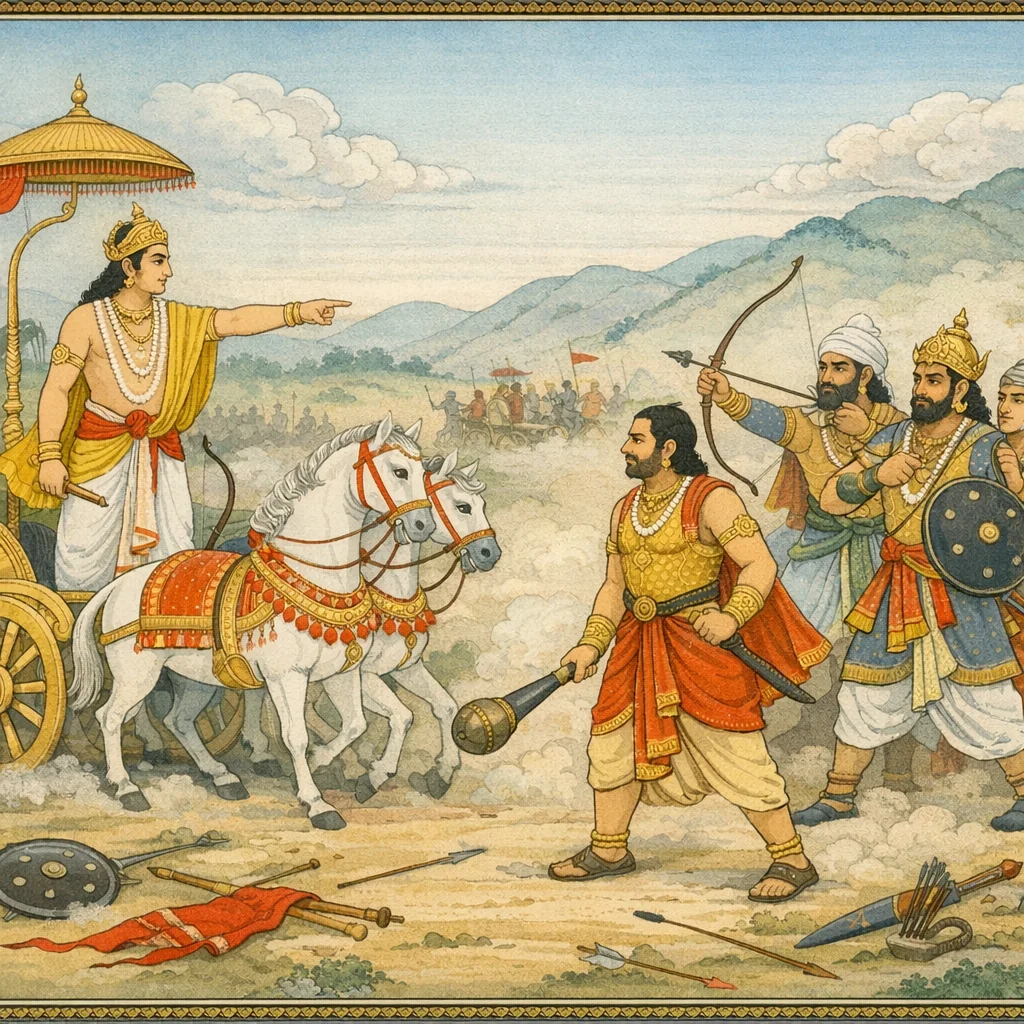
Saṃjaya reports that as Karṇa advances he repeatedly asks, upon seeing each Pāṇḍava, to be shown Arjuna (śvetavāhana). Karṇa publicly offers a graded series of boons—wealth, jeweled carts, golden elephants and cattle, adorned women, large numbers of horses, chariots, and elephants—framing the sighting of Arjuna (and later Kṛṣṇa–Arjuna together) as a prize-worthy disclosure. The Kaurava camp responds with drums, instruments, and collective exhilaration. Śalya then rebukes Karṇa’s overconfidence, warning against imprudent gifting and unrealistic aims, using layered similes to portray Karṇa as mismatched against Arjuna (e.g., jackal vs lion, hare vs elephant), and urging a more guarded approach. Karṇa answers by reaffirming his intent, rejecting intimidation, and asserting his knowledge of both his own and Arjuna’s capacities; he introduces a special arrow reserved for Arjuna or Kṛṣṇa and escalates into harsh invective against Śalya and the Madra people via proverbial gāthās. The chapter ends with Karṇa threatening violence if Śalya repeats such speech, while maintaining his determination to fight.
Chapter Arc: रणभूमि में धर्मराज युधिष्ठिर के सामने दुर्योधन सहसा आ पड़ता है; युधिष्ठिर उसे रोकते हुए ‘तिष्ठ’ कहकर चुनौती देता है और क्षण भर में युद्ध का केंद्र एक ही रथ-द्वंद्व बन जाता है। → दुर्योधन क्रोध से भरकर युधिष्ठिर को तीखे बाणों से बेधता है और सारथि पर भी प्रहार करता है। इसी बीच पंचाल कौरवों से सर्वत्र भिड़ जाते हैं—पैदल, घोड़े, हाथी, रथ—सब स्तरों पर टकराव फैलकर घोर संमिश्र युद्ध बन जाता है; नाराचों से महाबली गज गिरते हैं और पंक्तियाँ टूटती-बिखरती हैं। → युद्ध की पहचान मिट जाती है—बाणों से व्याकुल योद्धा अपने-पराये में भेद नहीं कर पाते; कहीं रथयुद्ध, कहीं हाथियों का संहार, और फिर मुष्टियुद्ध, केशग्रहण तथा बाहुयुद्ध तक उतर आता है। संकट में पड़े ‘नराधिप’ (दुर्योधन) की रक्षा हेतु कर्ण, अश्वत्थामा और कृपाचार्य युधिष्ठिर के सम्मुख सहसा आ खड़े होते हैं—एक क्षण में द्वंद्व बहु-वीर संग्राम में बदल जाता है। → दिन का दृश्य उन्मत्त कोलाहल में डूबता है—दोनों सेनाएँ अव्यवस्था और भ्रम से ग्रस्त होकर एक-दूसरे को ही नहीं, अनजाने में अपने पक्ष को भी क्षति पहुँचाती हैं; राजाओं की ‘जयगृद्धि’ युद्ध को और निर्दय बनाती है। अध्याय का अंत संशप्तकों की पराजय-विषयक संकेत के साथ इस व्यापक संहार-चित्र को स्थिर करता है। → कर्ण–अश्वत्थामा–कृप के हस्तक्षेप के बाद युधिष्ठिर के सामने अब कौन-सा निर्णायक प्रहार होगा, और दुर्योधन की रक्षा किस मूल्य पर टिकेगी—यह अगले अध्याय की देहरी पर छोड़ दिया जाता है।
Shlokas
Verse 1
इस प्रकार श्रीमह्याभारत कर्णपर्वमें संशप्तकोंकी पराजयविषयक सत्ताईसवाँ अध्याय पूरा हुआ ॥/ २७ ॥। नशा (0) आज अत +> अष्टाविशोश् ध्याय: युधिष्ठिर और दुर्योधनका युद्ध, दुर्योधनकी पराजय तथा उभयपक्षकी सेनाओंका अमर्यादित भयंकर संग्राम संजय उवाच युधिष्ठिरं महाराज विसृजन्तं शरान् बहुन् । स्वयं दुर्योधनो राजा प्रत्यगृह्लनादभीतवत्,संजय कहते हैं--महाराज! बहुत-से बाणोंकी वर्षा करते हुए युधिष्ठिरका स्वयं राजा दुर्योधनने एक निर्भीक वीरकी भाँति सामना किया
Sañjaya said: O King, as Yudhiṣṭhira kept releasing a great multitude of arrows, King Duryodhana himself met him head-on, receiving the attack like a fearless warrior. The scene sets royal duty and personal valor within the harsh ethics of battlefield confrontation.
Verse 2
तमापतन्तं सहसा तव पुत्र महारथम् | धर्मराजो द्रुतं विद्ध्वा तिष्ठ तिछेति चाब्रवीत्,सहसा आते हुए आपके महारथी पुत्रको धर्मराज युधिष्ठिरने तुरंत ही घायल करके कहा--'अरे! खड़ा रह, खड़ा रह”
Sañjaya said: As your son—the great chariot-warrior—came rushing in with sudden force, Dharmarāja Yudhiṣṭhira swiftly struck and wounded him, and then called out, “Stand! Stand!”—a challenge that made the clash a direct test of valor and restraint amid the chaos of war.
Verse 3
सतुतंप्रतिविव्याध नवभिर्निशितै: शरै: । सारथिं चास्य भल््लेन भृशं क्रुद्धोभ्यताडयत्,इससे दुर्योधनको बड़ा क्रोध हुआ। उसने युधिष्ठिरको नौ तीखे बाणोंसे बेधकर बदला चुकाया और उनके सारथिपर भी एक भल्लका प्रहार किया
Sañjaya said: Enraged, he retaliated by piercing him with nine razor-sharp arrows, and in his fury he struck the charioteer hard with a bhalla as well. The episode shows how, in the heat of battle, krodha (wrath) drives swift retribution and can spill over even onto those who merely serve, revealing the moral peril of anger amid the demands of war.
Verse 4
ततो युधिष्छिरो राजन् स्वर्णपुड्खाजञ्छिलीमुखान् । दुर्योधनाय चिक्षेप त्रयोदश शिलाशितान्,राजन! तब युधिष्ठिरने सानपर चढ़ाकर तेज किये हुए सुवर्णमय पंखवाले तेरह बाण दुर्योधनपर चलाये
Sañjaya said: Then, O King, Yudhiṣṭhira shot at Duryodhana thirteen arrows—stone-whetted and keen—fitted with golden fletching. The act signals the grim resolve of righteous kingship forced into battle: even one committed to dharma must employ disciplined violence when the war has become unavoidable.
Verse 5
चतुर्भिश्चतुरो वाहांस्तस्य हत्वा महारथ: । पजञ्चमेन शिर: कायात् सारथेश्व समाक्षिपत्,महारथी युधिष्ठिरने उनमेंसे चार बाणोंद्वारा दुर्योधनके चारों घोड़ोंको मारकर पॉाँचवेंसे उसके सारथिका भी मस्तक धड़से काट गिराया
Sañjaya said: The great chariot-warrior struck down Duryodhana’s four horses with four arrows; then, with a fifth, he severed the charioteer’s head from the body and cast it down. The scene underscores the ruthless precision of battlefield skill, where tactical necessity and the erosion of restraint move side by side amid the collapse of dharmic order in war.
Verse 6
षष्ठेन तु ध्वजं राज्ञ: सप्तमेन तु कार्मुकम् । अष्टमेन तथा खड्गं पातयामास भूतले,फिर छठे बाणसे राजा दुर्योधनके ध्वजको, सातवेंसे उसके धनुषको और आठवेंसे उसकी तलवारको भी पृथ्वीपर गिरा दिया
Sañjaya said: With the sixth arrow he struck down the king’s banner; with the seventh he felled his bow; and with the eighth he caused his sword as well to drop to the ground. In the moral texture of the battle, this is a display of superior skill aimed at stripping an opponent of the visible signs and instruments of power—humbling him and reducing his capacity to fight—rather than merely seeking a swift kill.
Verse 7
हताश्चात्तु रथात्तस्मादवप्लुत्य सुतस्तव
Sañjaya said: “Your son, having been struck down and losing heart, leapt down from that chariot.”
Verse 8
तं तु कृच्छूगतं दृष्टवा कर्णद्रीणिकृपादय:
Sañjaya said: Seeing him fallen into dire straits, Karṇa, Dṛṇika, Kṛpa, and the others (turned their attention toward him), moved by the urgency of the moment on the battlefield.
Verse 9
अथ पाण्डुसुता: सर्वे परिवार्य युधिष्ठिरम्
Sañjaya said: Then all the sons of Pāṇḍu gathered around Yudhiṣṭhira, closing in about him in solidarity and protection—an image of fraternal duty amid the moral strain of war.
Verse 10
ततस्तूर्यसहस्राणि प्रावाद्यन्त महामृथे
Then, amid that great clash of arms, thousands of war-instruments were sounded, heightening the tumult of battle and signaling the fierce resolve of the combatants as the conflict surged onward.
Verse 11
यत्रा भ्यगच्छन् समरे पञ्चाला: कौरवै: सह,उस युद्धमें समस्त पांचाल कौरवोंके साथ भिड़ गये। पैदल पैदलोंके, हाथी हाथियोंके, रथी रथियोंके और घुड़सवार घुड़सवारोंके साथ युद्ध करने लगे
Sañjaya said: There, in that battle, the Pañcālas closed in and engaged the Kauravas. Foot-soldiers fought foot-soldiers, elephants met elephants, chariot-warriors clashed with chariot-warriors, and horsemen battled horsemen—each arm of the army confronting its counterpart as the war tightened into direct, ordered combat.
Verse 12
नरा नरै: समाजम्मुर्वारणा वरवारणै: । रथाश्र रथिग्रि: सार्थ हयाश्व हयसादिभि:,उस युद्धमें समस्त पांचाल कौरवोंके साथ भिड़ गये। पैदल पैदलोंके, हाथी हाथियोंके, रथी रथियोंके और घुड़सवार घुड़सवारोंके साथ युद्ध करने लगे
Sañjaya said: In that battle, the foot-soldiers closed with foot-soldiers, the elephants with opposing elephants, the chariot-warriors with chariot-warriors, and the horsemen with horsemen. Thus the armies met in like-for-like combat, each class of fighter engaging its counterpart in the ordered yet ruthless economy of war.
Verse 13
दन्द्धान्यासन् महाराज प्रेक्षणीयानि संयुगे । विविधान्यप्यचिन्त्यानि शस्त्रवन्त्युत्तमानि च,महाराज! उस रणभूमिमें होनेवाले नाना प्रकारके अचिन्तनीय, शस्त्रयुक्त तथा उत्तम द्न्द्ययुद्ध देखने ही योग्य थे
Sañjaya said: “O King, on that battlefield there were many kinds of duel-combats—spectacles fit to be witnessed in war—varied and even unimaginable, furnished with weapons and of the highest order.”
Verse 14
ते शूरा: समरे सर्वे चित्र॑ं लघु च सुष्ठु च अयुध्यन्त महावेगा: परस्परवधैषिण:,वे महान् वेगशाली समस्त शूरवीर समरांगणमें एक-दूसरेके वधकी इच्छासे विचित्र, शीघ्रतापूर्ण तथा सुन्दर रीतिसे युद्ध करने लगे
Sañjaya said: All those heroes, mighty in speed and force, began to fight on the battlefield—striking in varied patterns, swift and well-executed—each driven by the desire to slay the other.
Verse 15
अन्योन्यं समरे जष्नुर्योधव्रतमनुछिता: । नहि ते समरं चक्र: पृष्ठठो वै कथठ्चन,वे वीर योद्धाके व्रतका पालन करते हुए युद्धस्थलमें एक-दूसरेको मारते थे। उन्होंने किसी तरह भी युद्धमें पीठ नहीं दिखायी
Sañjaya said: Observing the warrior’s code without deviation, they struck one another down on the battlefield. At no point did they turn their backs in the fight; in no manner did those heroes resort to retreat.
Verse 16
मुहूर्तमेव तद् युद्धमासीन्म धुरदर्शनम् । तत उन्मत्तवद् राजन् निर्मर्यादमवर्तत,राजन! दो ही घड़ीतक वह युद्ध देखनेमें मधुर जान पड़ा। फिर तो वहाँ उन्मत्तके समान मर्यादाशून्य बर्ताव होने लगा
Sañjaya said: “O King, for only a brief while that battle appeared pleasing to behold. Thereafter, O King, it turned into something like madness—conduct without restraint or boundary prevailed.”
Verse 17
रथी नागं समासाद्य दारयन् निशितै: शरै: । प्रेषयामास कालाय शरै: संनतपर्वभि:,रथी हाथीका सामना करके झुकी हुई गाँठवाले तीखे बाणोंद्वारा उसे विदीर्ण करते हुए कालके गालमें भेजने लगे
Sañjaya said: The chariot-warrior closed in upon the elephant and, rending it with razor-sharp arrows—arrows whose joints were bent—kept sending it into the very jaws of Death.
Verse 18
नागा हयान् समासाद्य विक्षिपन्तो बहून् रणे । दारयामासुरत्युग्रं तत्र तत्र तदा तदा,हाथी बहुत-से घोड़ोंको पकड़-पकड़कर रणभूमिमें इधर-उधर फेंकने और विदीर्ण करने लगे। उससे वहाँ उस समय बड़ा भयंकर दृश्य उपस्थित हो गया
Sañjaya said: The elephants, closing in upon the horses, seized many of them on the battlefield and hurled them about in different directions, crushing and tearing them apart again and again, here and there. By this, at that moment, the scene there became exceedingly dreadful.
Verse 19
हयारोहाश्व बहव: परिवार्य गजोत्तमान् | तलशब्दरवांश्वक्रु: सम्पतन्तस्ततस्तत:,बहुत-से घुड़सवार उत्तम गजराजोंको चारों ओरसे घेरकर इधर-उधर दौड़ने और ताली पीटने लगे। इससे जब वे विशालकाय हाथी दौड़ने और भागने लगते, तब वे घुड़सवार अगल-बगलसे और पीछेकी ओरसे उनपर बाणोंकी चोट करते थे
Sañjaya said: Many horsemen, surrounding the finest of elephants, rushed about here and there, raising loud clapping and tumult. Startled by the din, the huge elephants began to run and scatter; then the riders struck them with arrows from the flanks and from behind—an image of war’s calculated cruelty, where noise, panic, and pursuit are used to break even the mightiest forces.
Verse 20
धावमानांस्ततस्तांस्तु द्रवमाणान् महागजान् । पार्श्वतः पृष्ठतश्चैव निजघ्नु्हयसादिन:,बहुत-से घुड़सवार उत्तम गजराजोंको चारों ओरसे घेरकर इधर-उधर दौड़ने और ताली पीटने लगे। इससे जब वे विशालकाय हाथी दौड़ने और भागने लगते, तब वे घुड़सवार अगल-बगलसे और पीछेकी ओरसे उनपर बाणोंकी चोट करते थे
Sañjaya said: Then the horsemen struck down those great elephants as they ran about in confusion and fled—assailing them from the flanks and from behind. The scene underscores the ruthless tactics of battle, where panic in war-beasts is exploited to break an army’s strength, regardless of the suffering inflicted.
Verse 21
विद्राव्य च बहूनश्वान् नागा राजन् मदोत्कटा: । विषाणैश्वापरे जघ्नुर्ममृदुश्चापरे भूशम्,राजन! कितने ही मदोन्मत्त हाथी भी बहुत-से घोड़ोंको खदेड़कर उन्हें दाँतोंसे दबाकर मार डालते अथवा वेगपूर्वक पैरोंसे कुचल डालते थे
Sañjaya said: O King, many rut-maddened elephants routed great numbers of horses; some slew them by goring and crushing with their tusks, while others trampled them down with the force of their charge. The scene underscores the war’s brutal momentum, where strength and frenzy overwhelm living beings, and the battlefield becomes a place where creatures are driven into violence beyond moral choice.
Verse 22
साशअ्चारोहांश्व तुरगान् विषाणैर्विव्यधू रुषा । अपरे चिक्षिपुर्वेगात् प्रगृह्मातिबलास्तदा,कितने ही हाथियोंने रोषमें भरकर सवारोंसहित घोड़ोंको अपने दाँतोंसे विदीर्ण कर डाला तथा कुछ अत्यन्त बलवान् गजराजोंने उन घोड़ोंको पकड़कर वेगपूर्वक दूर फेंक दिया
Sañjaya said: Many elephants, filled with wrath, ripped apart horses together with their riders by gashing them with their tusks; and some elephant-lords of tremendous strength seized those horses and hurled them far away with violent force.
Verse 23
पादातैराहता नागा विवरेषु समन्ततः । चक्कुरार्तस्वरं घोरें दुद्र॒ुवुश्ष दिशो दश,प्रहारका अवसर मिलनेपर पैदल सैनिक भी चारों ओरसे हाथियोंको गहरी चोट पहुँचाते और वे घोर आर्तनाद करते हुए सम्पूर्ण दिशाओंकी ओर भाग जाते थे
Sañjaya said: Struck by the foot-soldiers on every side—especially at vulnerable gaps—the elephants, crying out with dreadful, pained trumpeting, fled in all ten directions. The scene underscores how, in the chaos of war, even mighty forces collapse when their weak points are exploited, and suffering spreads indiscriminately across the battlefield.
Verse 24
पदातीनां तु सहसा प्रद्गुतानां महाहवे । उत्सृज्याभरणं तूर्णमवप्लुत्य रणाजिरे,पैदल सैनिक युद्धस्थलमें अपने आभूषण त्यागकर तुरंत उछल-उछलकर बड़े वेगसे भागने लगे। उस समय सहसा भागते हुए उन पैदलोंके उन विचित्र आभूषणोंको अपने ऊपर प्रहार होनेमें निमित्त मानकर हाथी उन्हें सूँड़से उठा लेते और फिर दाँतोंसे दबाकर फोड़ डालते थे
Sañjaya said: In that great battle, the foot-soldiers suddenly broke into flight. Casting off their ornaments, they leapt about and rushed away across the field. Those strange ornaments, abandoned in panic, became a cause of further harm: the elephants, taking them as occasions for striking, would lift the fleeing men with their trunks and then crush and shatter them between their tusks—showing how fear and disorder in war turn even one’s own possessions into instruments of ruin.
Verse 25
निमित्तं मन्यमानास्तु परिणाम्य महागजा: । जग्हुर्बिभिदुश्वैव चित्राण्याभरणानि च,पैदल सैनिक युद्धस्थलमें अपने आभूषण त्यागकर तुरंत उछल-उछलकर बड़े वेगसे भागने लगे। उस समय सहसा भागते हुए उन पैदलोंके उन विचित्र आभूषणोंको अपने ऊपर प्रहार होनेमें निमित्त मानकर हाथी उन्हें सूँड़से उठा लेते और फिर दाँतोंसे दबाकर फोड़ डालते थे
Sañjaya said: Taking it as an ominous sign, the great elephants, turning back, seized and crushed the soldiers’ ornate ornaments as well—snatching them up and breaking them—amid the panic of men fleeing the battlefield. The scene underscores how, in the chaos of war, fear and superstition mingle with brute force, and even objects of pride become tokens of dread and destruction.
Verse 26
तांस्तु तत्र प्रसक्तान् वै परिवार्य पदातय: । हस्त्यारोहान् निजघ्नुस्ते महावेगा बलोत्कटा:,इस प्रकार आभूषणोंमें उलझे हुए उन हाथियों और उनके सवारोंको चारों ओरसे घेरकर महान् वेगशाली तथा बलोन्मत्त पैदल योद्धा मार डालते थे
Sañjaya said: There, the foot-soldiers—fierce with strength and moving with great speed—surrounded those who had become entangled and then struck down the elephant-riders. The scene underscores the ruthless momentum of battle, where tactical advantage and confusion can swiftly turn into slaughter, eclipsing any space for restraint.
Verse 27
अपरे हस्तिभिहस्तै: खं विक्षिप्ता महाहवे । निपतन्तो विषाणाग्रैर्भुशं विद्धा: सुशिक्षितै:,कितने ही पैदल सैनिक उस महासमरमें सुशिक्षित हाथियोंकी सूँड्रोंसे आकाशमें फेंक दिये जाते और उधरसे गिरते समय उन हाथियोंके दन्ताग्रभागोंद्वारा अत्यन्त विदीर्ण कर दिये जाते थे
Verse 28
अपरे सहसा गृह विषाणैरेव सूदिता: । सेनान्तरं समासाद्य केचित् तत्र महागजै:,कितने ही योद्धा हाथियोंद्वारा पकड़े जाकर उनके दाँतोंसे ही मार डाले गये। महाराज! बहुत-से विशालकाय गजराज सेनाके भीतर घुसकर कितने ही पैदलोंको सहसा पकड़कर उनके शरीरोंको बारंबार पटक-झटककर चूर-चूर कर देते और कितनोंको व्यजनोंके समान घुमाकर युद्धमें मार डालते थे इति श्रीमहा भारते कर्णपर्वणि संकुलयुद्धे अष्टाविंशो 5ध्याय:
Sañjaya said: Others, seized in an instant, were crushed to death by the very tusks. Some, after the great elephants forced their way into the midst of the army, were slain there—trampled, gored, and broken—showing how, in the frenzy of battle, living beings are reduced to helpless victims of brute force, and how war swiftly overwhelms restraint and compassion.
Verse 29
क्षुण्णगात्रा महाराज विक्षिप्य च पुन: पुनः । अपरे व्यजनानीव विकश्राम्य निहता मृथे,कितने ही योद्धा हाथियोंद्वारा पकड़े जाकर उनके दाँतोंसे ही मार डाले गये। महाराज! बहुत-से विशालकाय गजराज सेनाके भीतर घुसकर कितने ही पैदलोंको सहसा पकड़कर उनके शरीरोंको बारंबार पटक-झटककर चूर-चूर कर देते और कितनोंको व्यजनोंके समान घुमाकर युद्धमें मार डालते थे
Sañjaya said: O King, some warriors, their limbs crushed, were seized and flung again and again; others were whirled about like hand-fans and slain on the battlefield. Many gigantic lordly elephants burst into the army, suddenly snatching up foot-soldiers, dashing and shaking their bodies repeatedly until they were smashed to pieces, and killing others by spinning them like fans amid the fight.
Verse 30
पुर:सराक्ष नागानामपरेषां विशाम्पते । शरीराण्यतिविद्धानि तत्र तत्र रणाजिरे,प्रजानाथ! जो हाथियोंके आगे चलनेवाले पैदल थे, वे दूसरे पक्षके हाथियोंके शरीरोंको जहाँ-तहाँ रणभूमिमें अत्यन्त घायल कर देते थे
Sañjaya said: O lord of the people, the foot-soldiers who marched in front of the elephants struck the bodies of the opposing elephants again and again on the battlefield, piercing and grievously wounding them in many places.
Verse 31
प्रतिमानेषु कुम्भेषु दन्तवेष्टेषु चापरे । निगृहीता भृशं नागा: प्रासतोमरशक्तिभि:,कहीं-कहीं पैदल सैनिक प्रास, तोमर और शक्तिद्वारा शत्रुपक्षके हाथियोंके दोनों दाँतोंके बीचके स्थानमें, कुम्भस्थलमें और ओठोंके ऊपर प्रहार करके उन्हें अत्यन्त काबूमें कर लेते थे
In some places, the foot-soldiers, with prāsa-spears, tomara-javelins, and śakti-lances, struck the enemy elephants between the two tusks, upon the frontal boss (kumbha), and above the lip, and thus brought them under harsh control.
Verse 32
निगृहा च गजा: केचित् पार्श्रस्थैर्भशदारुणै: । रथाश्व॒सादिभिस्तत्र सम्भिन्ना न्यपतन् भुवि,कितने ही हाथियोंको अवरुद्ध करके पार्श्चभागमें खड़े हुए अत्यन्त भयंकर रथी और घुड़सवार उन्हें बाणोंसे विदीर्ण कर डालते, जिससे वे हाथी वहीं पृथ्वीपर गिर जाते थे
Sañjaya said: Some elephants, once checked and hemmed in, were then pierced through by exceedingly dreadful chariot-warriors and horsemen stationed on their flanks. Torn apart by volleys of arrows, those elephants collapsed there upon the earth.
Verse 33
सहसा सादिनस्तत्र तोमरेण महामृधे । भूमावमृदनन् वेगेन सरचर्माणं पदातिनम्,उस महासमरमें कितने ही हाथीसवार सहसा तोमरका प्रहार करके ढालसहित पैदल योद्धाको गिराकर उसे वेगपूर्वक धरतीपर रौंद डालते थे
Sañjaya said: In that great and furious battle, many elephant-riders suddenly struck with tomara-javelins; they brought down a foot-soldier together with his shield and, with swift force, trampled him into the earth.
Verse 34
तथा सावरणान कांक्षित्तत्र तत्र विशाम्पते । रथान् नागा: समासाद्य परिगृह्य॒ च मारिष,पर्वतस्येव शिखरं वज्रुग्णं महीतले | माननीय नरेश! उस घोर एवं भयानक युद्धमें कितने ही हाथी निकट आकर अपनी सूँड्रोंस कुछ आवरणयुक्त रथोंको पकड़ लेते और उन्हें वेगपूर्वक खींचकर सहसा दूर फेंक देते थे। फिर वे महाबली हाथी भी नाराचोंसे मारे जाकर वज्रके तोड़े हुए पर्वत-शिखरकी भाँति पृथ्वीपर गिर पड़ते थे
Sañjaya said: “O lord of the people, in that dreadful battle the elephants, coming up close again and again, would seize the covered chariots with their trunks and, with a sudden rush, drag and fling them away. Yet even those mighty elephants, struck down by sharp arrows, would collapse upon the earth like a mountain-peak shattered by a thunderbolt (vajra).”
Verse 35
व्याक्षिपन् सहसा तत्र घोररूपे भयानके । नाराचै्निहताश्लापि गजा:ः पेतुर्महाबला:
Sañjaya said: “In that dreadful, terrifying scene, confusion erupted at once; even the mighty elephants, struck by sharp iron arrows, collapsed to the ground.”
Verse 36
योधा योधान् समासाद्य मुष्टिभिव्यहनन् युधि
Sañjaya said: “Closing in upon the opposing warriors, the fighter struck them down in the thick of battle with his bare fists.”
Verse 37
उद्यम्य च भुजावन्यो निक्षिप्पय च महीतले
Sañjaya said: “Another warrior raised his arms and then cast himself down upon the ground.”
Verse 38
पततश्चापरो राजन् विजहारासिना शिर:
Sañjaya said: “O King, as he was falling, the other warrior, with his sword, cleanly severed off his head.”
Verse 39
मुष्टियुद्धं महच्चासीद् योधानां तत्र भारत
Sañjaya said: O Bhārata, there took place there a great contest of fist-fighting among the warriors.
Verse 40
समासक्तस्य चान्येन अविज्ञातस्तथापर:
Sañjaya said: When one is deeply engaged, he is not recognized by another; likewise, the other too remains unrecognized.
Verse 41
जहार समरे प्राणान् नानाशस्त्रैरनेकथा । कोई-कोई योद्धा दूसरेके साथ उलझे हुए सैनिकसे स्वयं अपरिचित रहकर नाना प्रकारके अनेक अस्त्र-शस्त्रोंद्वारा युद्धमें उसके प्राण हर लेता था || ४० $ ।। संसक्तेषु च योधेषु वर्तमाने च संकुले
Sañjaya said: In the press of battle, lives were taken in many ways by many kinds of weapons. When warriors were locked together and the fighting had become a confused mêlée, some combatant—unable to recognize the other amid the crush—would strike with diverse missiles and arms and thus deprive him of life.
Verse 42
शोणितै: सिच्यमानानि शस्त्राणि कवचानि च
Sañjaya said: “Weapons and coats of mail were being drenched with blood.”
Verse 43
एवमेतन्महद् युद्ध दारुणे शस्त्रसंकुलम्
Sañjaya said: “So it is indeed—this great battle has become dreadful, crowded on every side with weapons.”
Verse 44
उन्मत्तगज्जप्रतिमं शब्देनापूरयज्जगत् । इस प्रकार अस्त्र-शस्त्रोंसे परिपूर्ण यह महाभयानक युद्ध बढ़ी हुई गंगाके समान जगत्को कोलाहलसे परिपूर्ण कर रहा था ।। ४३ $ || नैव स्वे न परे राजन् विज्ञायन्ते शरातुरा:
Sañjaya said: “Like a maddened elephant, it filled the world with its roar. O King, in that dreadful battle—crowded with missiles and weapons and surging like a swollen Gaṅgā—the din overwhelmed everything; those struck by arrows could no longer be distinguished as ‘our own’ or ‘the enemy.’”
Verse 45
स्वान् स्वे जघ्नुर्महाराज परांश्वैव समागतान्
Sañjaya said: O great king, in that clash the warriors struck down their own men within their respective ranks, and they also slew the opposing fighters who had come together for battle—so confused and ruthless had the fighting become.
Verse 46
रथैर्भग्नैर्महाराज वारणैश्न निपातितै:,राजेन्द्र! टूटे हुए रथों, धराशायी हुए हाथियों, मरकर गिरे हुए घोड़ों और गिराये गये पैदल सैनिकोंसे क्षणभरमें यह पृथ्वी ऐसी हो गयी कि वहाँ चलना-फिरना असम्भव हो गया
Sanjaya said: “O great king, with chariots shattered, elephants brought down, horses fallen dead, and foot-soldiers struck and strewn upon the ground, this earth in a single moment became so clogged with the wreckage of war that movement there was no longer possible.”
Verse 47
हयैश्न पतितैस्तत्र नरैश्न विनिपातितै: । अगम्यरूपा पृथिवी क्षणेन समपद्यत,राजेन्द्र! टूटे हुए रथों, धराशायी हुए हाथियों, मरकर गिरे हुए घोड़ों और गिराये गये पैदल सैनिकोंसे क्षणभरमें यह पृथ्वी ऐसी हो गयी कि वहाँ चलना-फिरना असम्भव हो गया
Sañjaya said: “O king, in that place the earth, strewn with fallen horses and with men struck down and hurled to the ground, became in an instant so obstructed and dreadful in aspect that movement across it was virtually impossible.”
Verse 48
क्षणेनासीन्महीपाल क्षतजैधिप्रवर्तिनी । पञ्चालानहनत् कर्णस्त्रिगर्ताश्न धनंजय:,भूपाल! क्षणभरमें वहाँ भूतलपर खूनकी नदी बह चली। कर्णने पंचालोंका और अर्जुनने त्रिगर्तोंका संहार कर डाला
Sañjaya said: O king, in a moment the ground was set flowing like a river with torrents of blood. Karṇa cut down the Pañcālas, while Dhanañjaya (Arjuna) slaughtered the Trigartas—an image of war’s swift, indiscriminate devastation, where prowess and duty on the battlefield eclipse ordinary moral restraints.
Verse 49
भीमसेन: कुरून् राजन हस्त्यनीकं च सर्वश: । एवमेष क्षयो वृत्त: कुरुपाण्डवसेनयो: । अपराल्लि गते सूर्य काड्क्षतां विपुलं यश:,राजन! भीमसेनने कौरवों तथा आपकी गजसेनाको सर्वथा नष्ट कर दिया। इस प्रकार सूर्यदेवके अपराह्नकालमें जाते-जाते कौरव और पाण्डव दोनों सेनाओंमें महान् यशकी अभिलाषा रखनेवाले वीरोंका यह विनाश-कार्य सम्पन्न हुआ
Sañjaya said: “O King, Bhīmasena utterly destroyed the Kurus and your elephant-corps. Thus, as the sun moved into the late afternoon, this great slaughter was brought about among the Kuru and Pāṇḍava armies—warriors on both sides driven by the desire for vast renown.”
Verse 66
पज्चभिर्नुपतिं चापि धर्मराजो<र्दयद् भृशम् । तदनन्तर पाँच बाणोंसे धर्मराजने राजा दुर्योधनको भी गहरी चोट पहुँचायी
Sañjaya said: With five arrows, Dharmarāja (Yudhiṣṭhira) struck the king as well, piercing him severely. Immediately thereafter, with another five shafts, Dharmarāja inflicted a deep wound even upon King Duryodhana—an act that, though born of war’s necessity, underscores the grim tension between royal duty and the violence demanded by battle.
Verse 76
उत्तमं व्यसन प्राप्तो भूमावेवावतिष्ठत । उस अश्वहीन रथसे कूदकर आपका पुत्र भारी संकटमें पड़नेपर भी वहाँ पृथ्वीपर ही खड़ा रहा (युद्ध छोड़कर भागा नहीं)
Sañjaya said: Having fallen into the gravest calamity, your son still stood his ground upon the earth. Though his chariot was left without horses and he was pressed by extreme danger, he did not turn away or flee from the battle—showing steadfastness in the face of crisis.
Verse 83
अभ्यवर्तन्त सहसा परीप्सन्तो नराधिपम् । उसे संकटमें पड़ा देख कर्ण, अश्वत्थामा तथा कृपाचार्य आदि वीर अपने राजाकी रक्षा चाहते हुए सहसा युधिष्ठिरके सामने आ पहुँचे
Sañjaya said: Seeing the king caught in peril, Karṇa, Aśvatthāmā, Kṛpācārya, and other warriors—eager to protect their sovereign—rushed at once to confront Yudhiṣṭhira. The moment underscores the battlefield ethic of loyalty to one’s ruler and comrades, even amid a collapsing situation.
Verse 96
अन्वयु: समरे राजंस्ततो युद्धमवर्तत । राजन! तत्पश्चात् समस्त पाण्डव भी युधिष्ठिरको सब ओरसे घेरकर उनका अनुसरण करने लगे; फिर तो दोनों दलोंमें भारी युद्ध छिड़ गया
Sañjaya said: “O King, they pressed forward on the battlefield, and then the fighting surged again. After that, all the Pāṇḍavas surrounded Yudhiṣṭhira from every side and followed close behind him; and thus a fierce battle erupted between the two armies.” The verse underscores the protective duty of comrades in war—shielding the righteous leader—while also showing how quickly collective resolve can intensify violence once pursuit and encirclement begin.
Verse 106
ततः किलकिलाशब्दा: प्रादुरासन् महीपते । भूपाल! तदनन्तर उस महासमरमें सहस्रों बाजे बजने लगे और वहाँ किलकिलाहटकी आवाज गूँज उठी
Sañjaya said: “Then, O king, a loud clamor of jubilant cries suddenly arose. Immediately thereafter, in that great battle, thousands of instruments began to resound, and the field echoed with tumultuous shouts.”
Verse 353
पर्वतस्येव शिखरं वज्रुग्णं महीतले | माननीय नरेश! उस घोर एवं भयानक युद्धमें कितने ही हाथी निकट आकर अपनी सूँड्रोंस कुछ आवरणयुक्त रथोंको पकड़ लेते और उन्हें वेगपूर्वक खींचकर सहसा दूर फेंक देते थे। फिर वे महाबली हाथी भी नाराचोंसे मारे जाकर वज्रके तोड़े हुए पर्वत-शिखरकी भाँति पृथ्वीपर गिर पड़ते थे
Sañjaya said: “O revered king, in that dreadful and terrifying battle many elephants would come close, seize armoured chariots with their trunks, and with force drag them and suddenly hurl them far away. Yet even those mighty elephants, struck down by sharp arrows, fell to the earth like mountain-peaks shattered by a thunderbolt.”
Verse 366
केशेष्वन्योन्यमाक्षिप्य चिह्षिपुर्बिभिदुश्च ह । बहुत-से पैदल योद्धा दूसरे योद्धाओंको निकट पाकर युद्धस्थलमें उनपर मुक््कोंसे प्रहार करने लगते थे। कितने ही एक-दूसरेकी चुटिया पकड़कर परस्पर झटकते-फेंकते और एक- दूसरेको घायल करते थे
Sañjaya said: In that close-pressed melee, some warriors seized one another by the hair and dragged each other about; they struck and wounded each other as well. The scene shows how, when weapons and distance fail, battle collapses into raw bodily violence—an image of war’s moral descent, where anger and survival overpower restraint and the codes of honorable combat.
Verse 373
पदा चोर: समाक्रम्य स्फुरतो5पाहरच्छिर: । दूसरा योद्धा अपनी दोनों भुजाओंको उठाकर उनके द्वारा शत्रुको पृथ्वीपर पटक देता और एक पैरसे उसकी छातीको दबाकर उसके छटपटाते रहनेपर भी उसका सिर काट लेता था
Sañjaya said: Trampling the foe underfoot, the warrior pressed him down; and even as the enemy writhed, he struck off his head. The scene underscores the pitiless momentum of battle, where skill and ferocity eclipse ordinary restraints, revealing how war can drive men beyond humane limits.
Verse 386
जीवतश्न तथैवान्य: शस्त्र काये न्यमज्जयत् । राजन! दूसरा सैनिक किसी गिरते हुए योद्धाका सिर अपनी तलवारसे काट लेता था और कोई जीवित शत्रुके ही शरीरमें अपना शस्त्र घुसेड़ देता था
Sañjaya said: “And just so, O King, another warrior drove his weapon deep into the body of an enemy who was still alive.” The scene underscores the battle’s relentless ferocity, where the ordinary restraints of compassion are eclipsed by the immediate demands of combat and survival.
Verse 413
कबन्धान्युत्थितानि स्यु: शतशो5थ सहस्रश: । इस प्रकार जब सभी योद्धा युद्धमें लगे थे और तुमुल संग्राम चल रहा था, उस समय सैकड़ों और हजारों कबन्ध (धड़) उठ खड़े हुए थे
Sañjaya said: In that tumult of battle, as all the warriors were fully engaged, hundreds—indeed thousands—of headless trunks rose up, a grim sign of the war’s unchecked violence and the terrible cost paid by embodied life when dharma is eclipsed by fury.
Verse 423
महारागानुरक्तानि वस्त्राणीव चकाशिरे | खूनसे भीगे हुए शस्त्र और कवच गाढ़े रंगमें रँगे हुए वस्त्रोंक॒ समान सुशोभित होते थे
Sañjaya said: The weapons and armor, drenched in blood, gleamed as though they were garments deeply dyed in rich crimson—an image that heightens the grim splendor of battle and underscores how war can make even instruments of harm appear deceptively beautiful.
Verse 443
योद्धव्यमिति युध्यन्ते राजानो जयगृद्धिनः । राजन! बाणोंकी चोटसे व्याकुल हुए अपने और पराये योद्धा पहचानमें नहीं आते थे। विजयकी अभिलाषा रखनेवाले राजालोग--'युद्ध करना अपना कर्तव्य है” यह समझकर जूझ रहे थे
Sanjaya said: “The kings, hungry for victory, fought on, convinced that ‘to fight is our duty.’ O King, struck and shaken by the blows of arrows, warriors—whether one’s own or the enemy’s—could no longer be recognized. Yet those rulers, intent on triumph, continued to grapple in battle, taking warfare itself to be their appointed obligation.”
Verse 453
उभयो: सेनयोरवरिव्याकुलं समपद्यत | महाराज! सामने आये हुए अपने और शत्रुपक्षके योद्धाओंको भी अपने ही पक्षके लोग मार डालते थे। दोनों सेनाओंके वीर मर्यादाशून्य युद्धमें प्रवृत्त हो गये थे
Sañjaya said: O King, both armies fell into utter confusion amid the press of enemies. In the chaos, even warriors who stood plainly before them—whether of their own side or the opposing side—were struck down by their own men. Thus the heroes of both hosts plunged into a lawless battle, where restraint and the recognized bounds of conduct had collapsed.
Verse 3936
तथा केशग्रहश्चोग्रो बाहुयुद्धं च भैरवम् । भारत! वहाँ योद्धाओंमें बहुत बड़ा मुष्टियुद्ध हो रहा था। साथ ही भयंकर केशग्रहण और भयानक बाहुयुद्ध भी चालू था
Sañjaya said: “O Bhārata, there the warriors were locked in a great contest of fists. Along with it, there arose fierce hair-grappling and dreadful wrestling by the arms—combat so close that it stripped the battle of distance and dignity, revealing the raw, brutal face of war.”
Frequently Asked Questions
The dilemma is the tension between vow-driven heroism and prudent restraint: whether public confidence and lavish promises (dāna) serve dharma and strategy, or become ethically and tactically hazardous when detached from discernment (including the critique of apātra-dāna).
Speech is portrayed as consequential action: counsel, boasting, and insult can steer collective morale and personal decision-making. The chapter underscores the need for discernment in generosity and in responding to criticism, especially under high-stakes pressure.
No explicit phalaśruti is stated here; the chapter functions as pragmatic and ethical meta-commentary through dialogue—showing how rhetoric, counsel, and self-conception shape conduct within the broader arc toward decisive confrontation.