Adhyaya 201
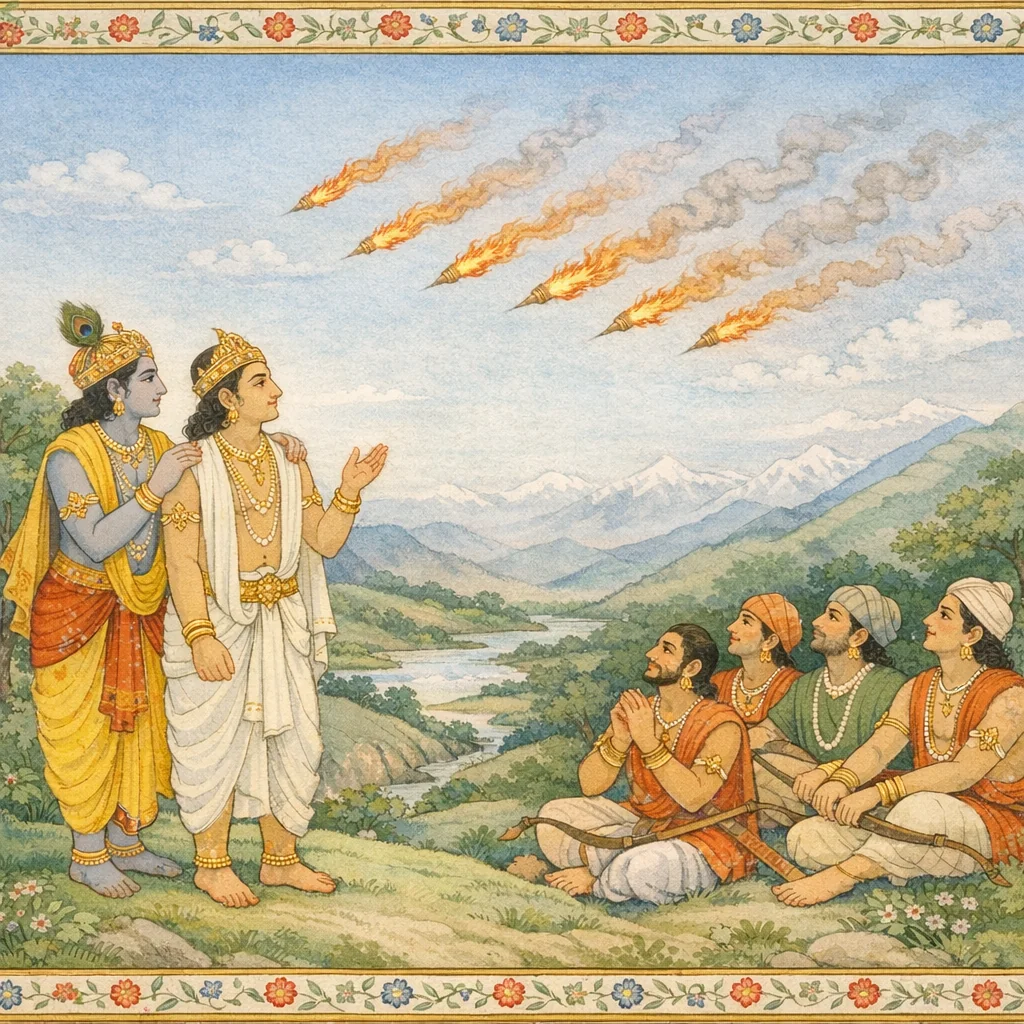
Chapter Arc: रणभूमि में द्रोणपुत्र अश्वत्थामा उन्मत्त वेग से शत्रु-सैन्य को भल्लों से काटता हुआ शवों के पर्वत-से ढेर लगा देता है; उसी क्षण वह नारायणास्त्र के प्रयोग का संकल्प कर युद्ध का स्वरूप ही बदल देता है। → नारायणास्त्र सर्वत्र फैलता है; उसके तेज से पाण्डव-सेना का बल क्षीण होने लगता है और धर्मपुत्र युधिष्ठिर भय व खेद से भर उठते हैं। भीमसेन जैसे महाबली भी उस दिव्यास्त्र की ज्वालामय बाण-वृष्टि में घिरते दिखते हैं; पाण्डव-पक्ष में हाहाकार मचता है। → श्रीकृष्ण उपाय बताते हैं—अस्त्रों का त्याग, शस्त्र नीचे रखना, विनयपूर्वक स्थिर रहना; जैसे ही पाण्डव-सेना शस्त्र छोड़ती है, नारायणास्त्र का प्रचण्ड वेग शान्त होने लगता है और अश्वत्थामा का संहार-उन्माद निष्फल पड़ता है। → पाण्डव-सेना कृष्ण-वचन से बच जाती है; युधिष्ठिर का त्रास उतरता है और युद्ध में यह स्पष्ट हो जाता है कि दिव्यास्त्र के सामने अहंकार नहीं, समर्पण ही रक्षा है। अश्वत्थामा की क्रूरता और पाण्डवों की विवेकशीलता का तीखा विरोध उभरता है। → अस्त्र-शमन के बाद भी रण की आग बुझती नहीं—अश्वत्थामा का क्रोध और प्रतिशोध-भाव आगे किस पर टूटेगा, यह अनिश्चित रह जाता है।
Shlokas
Verse 1
ऑपनआ कराता छा अकाल नवनवरत्याधिकशततमो< ध्याय: अश्वत्थामाके द्वारा नारायणास्त्रका प्रयोग, राजा युधिष्ठिरका खेद, भगवान् श्रीकृष्णके बताये हुए उपायसे सैनिकोंकी रक्षा, भीमसेनका वीरोचित उद्गार और उनपर उस अस्त्रका प्रबल आक्रमण संजय उवाच ततः स कदन चक्रे रिपूर्णां द्रोणनन्दन: । युगान्ते सर्वभूतानां कालसृष्ट इवान्तक:,संजय कहते हैं--राजन्! तदनन्तर द्रोणकुमार अभश्वत्थामाने प्रलयकालमें कालसे प्रेरित हो समस्त प्राणियोंका संहार करनेवाले यमराजके समान शत्रुओंका विनाश आरम्भ किया इस प्रकार श्रीमहाभारत द्रोणपर्वके अन्तर्गत नारायणास््रगोक्षपर्वमें पाण्डव-सेनाका अस्त्र- त्यागविषयक एक सौ निन्यानबेवाँ अध्याय पूरा हुआ ॥/ १९९ ॥। (दाक्षिणात्य अधिक पाठके ४ ३ लोक मिलाकर कुल ६७३ श्लोक हैं।) भीस्न्ह+ज (2) आमने द्विशततमो<्ध्याय: श्रीकृष्णका भीमसेनको रथसे उतारकर नारायणास्त्रको शान्त करना, अभश्वत्थामाका उसके पुन: प्रयोगमें अपनी असमर्थता बताना तथा अभ्रृत्थामाद्वारा धृष्टद्युम्नकी पराजय, सात्यकिका दुर्योधन, कृपाचार्य, कृतवर्मा, कर्ण और वृषसेन--इन छ: महारथियोंको भगा देना फिर अश्वत्थामाद्वारा मालव, पौरव और चेदिदेशके युवराजका वध एवं भीम और अभ्रृत्थामाका घोर युद्ध तथा पाण्डव- सेनाका पलायन संजय उवाच भीमसेनं समाकीर्ण दृष्ट्वास्त्रेण धनंजय: । तेजस: प्रतिघातार्थ वारुणेन समावृणोत्
Sañjaya said: Then Droṇa’s son, Aśvatthāman, began a dreadful slaughter of the enemy host. Like Death itself—set in motion by Time at the end of an age—he commenced the destruction of living beings.
Verse 2
ध्वजद्रुमं शस्त्रशुड्रंं हतनागमहाशिलम् । अश्वकिम्पुरुषाकीर्ण शरासनलतावृतम्,उसने शत्रु-सैनिकोंको भल्लोंसे मार-मारकर उनकी लाशोंका पहाड़-जैसा ढेर लगा दिया। ध्वजाएँ उस पहाड़के वृक्ष, शस्त्र उसके शिखर और मारे गये हाथी उसकी बड़ी-बड़ी शिलाओंके समान थे। घोड़े मानो उस पर्वतपर निवास करनेवाले किम्पुरुष थे। धनुष लताओंके समान फैलकर उसपर छाये हुए थे। मांसभक्षी जीव-जन्तु मानो वहाँ चहचहानेवाले पक्षी थे और भूतोंके समुदाय उसपर विहार करनेवाले यक्ष जान पड़ते थे
Sañjaya said: “The battlefield appeared like a mountain: its trees were the standards and banners, its peaks were weapons, and its great boulders were the huge bodies of slain elephants. It was crowded with horses like kimpuruṣas dwelling on that mountain, and it was overgrown and covered with bows and bow-strings like spreading creepers.”
Verse 3
क्रव्यादपक्षिसंघुष्ट भूतयक्षगणाकुलम् । निहत्य शात्रवान् भल्लै: सोडचिनोदू देहपर्वतम्,उसने शत्रु-सैनिकोंको भल्लोंसे मार-मारकर उनकी लाशोंका पहाड़-जैसा ढेर लगा दिया। ध्वजाएँ उस पहाड़के वृक्ष, शस्त्र उसके शिखर और मारे गये हाथी उसकी बड़ी-बड़ी शिलाओंके समान थे। घोड़े मानो उस पर्वतपर निवास करनेवाले किम्पुरुष थे। धनुष लताओंके समान फैलकर उसपर छाये हुए थे। मांसभक्षी जीव-जन्तु मानो वहाँ चहचहानेवाले पक्षी थे और भूतोंके समुदाय उसपर विहार करनेवाले यक्ष जान पड़ते थे
Sañjaya said: Having slain the hostile warriors with sharp arrows, he heaped up a mountain-like pile of bodies. That dreadful mound seemed alive with the cries of flesh-eating birds; it appeared crowded with hosts of bhūtas and yakṣas.
Verse 4
ततो वेगेन महता विनद्य स नरर्षभ: । प्रतिज्ञां आ्रावयामास पुनरेव तवात्मजम्,नरश्रेष्ठ अश्वत्थामाने फिर बड़े वेगसे गर्जना करके आपके पुत्रको पुनः अपनी प्रतिज्ञा सुनायी
Sañjaya said: Then, roaring aloud with great speed and force, that bull among men made your son hear his vow once again.
Verse 5
यस्माद् युध्यन्तमाचार्य धर्मकञ्चुकमास्थित: । मुज्च शस्त्रमिति प्राह कुन्तीपुत्रो युधिष्ठिर:
Sañjaya said: Seeing the Teacher engaged in battle while still clad in the “armor” of righteousness, Kuntī’s son Yudhiṣṭhira called out, “Lay down your weapon.”
Verse 6
तस्मात् सम्पश्यतस्तस्य द्रावयिष्यामि वाहिनीम् । विद्राव्य सर्वान् हन्तास्मि जाल्मं पाउ्चाल्यमेव तु
Sañjaya said: “Therefore, while he looks on, I shall put his army to flight. Having scattered them all, I will then slay that vile Pañcāla alone.”
Verse 7
'धर्मका चोला पहने हुए कुन्तीपुत्र युधिष्ठिरने युद्धपरायण आचार्यसे “शस्त्र त्याग दीजिये” ऐसा कहा था और शस्त्र रखवा दिया; इसलिये मैं उसके देखते-देखते उनकी सारी सेनाको खदेड़ दूँगा और समस्त सैनिकोंको भगाकर उस नीच पांचालपुत्रको मार डालूँगा ।। सवनितान् हनिष्यामि यदि योत्स्यन्ति मां रणे । सत्यं ते प्रतिजानामि परिवर्तय वाहिनीम्,“यदि ये रणभूमिमें मेरे साथ युद्ध करेंगे तो मैं इन सबका वध कर डालूँगा, यह मैं तुमसे सच्ची प्रतिज्ञा करके कहता हूँ। अतः तुम अपनी सेनाको लौटाओ'
Sañjaya said: “Since Kunti’s son Yudhishthira, wearing the cloak of righteousness, told the battle-minded preceptor, ‘Lay down your weapons,’ and had his weapons set aside, therefore—before his very eyes—I shall drive off his entire army. I will rout all the soldiers and, after putting them to flight, I will slay that base son of Panchala. If they choose to fight me on the battlefield, I will kill them all—this I truly vow to you. Therefore, turn back your forces.”
Verse 8
तच्छुत्वा तव पुत्रस्तु वाहिनी पर्यवर्तयत् | सिंहनादेन महता व्यपोहा[ सुमहद् भयम्,यह सुनकर आपके पुत्रने महान् सिंहनादके द्वारा अपनी सेनाका भारी भय दूर करके फिर उसे लौटाया
Sañjaya said: Hearing that, your son rallied the army and turned it back; with a mighty lion-roar he dispelled the great fear that had seized the troops.
Verse 9
ततः समागमो राजन् कुरुपाण्डवसेनयो: । पुनरेवाभवत् तीव्र: पूर्णसागरयोरिव
Sañjaya said: Then, O King, the armies of the Kurus and the Pāṇḍavas met once more; and again the clash became fierce—like the surging encounter of two oceans when they are full.
Verse 10
राजन! फिर भरे हुए दो महासागरोंके समान कौरव-पाण्डव-सेनाओंमें घोर संग्राम आरम्भ हो गया ।। संरब्धा हि स्थिरी भूता द्रोणपुत्रेण कौरवा: | उदग्रा: पाण्डुपञज्चाला द्रोणस्यथ निधनेन च,द्रोणपुत्रसे आश्वासन पाकर कौरव-सैनिक स्थिर हो युद्धके लिये रोष और उत्साहमें भर गये थे। उधर द्रोणाचार्यके मारे जानेसे पाण्डव और पांचाल वीर पहलेसे ही उद्धत हो रहे थे
Sañjaya said: O King, once again a dreadful battle began between the armies of the Kauravas and the Pandavas, like the clash of two brimming great oceans. The Kauravas, reassured by Drona’s son, became steady and resolute, filled with wrath and renewed ardor for combat. On the other side, the Pandavas and the Panchalas, already fierce, grew even more impetuous upon the death of Drona.
Verse 11
तेषां परमहृष्टानां जयमात्मनि पश्यताम् | संरब्धानां महावेग: प्रादुरासीद् विशाम्पते,प्रजानाथ! वे अत्यन्त हर्षोत्फुल्ल होकर अपनी ही विजय देख रहे थे। रोषावेषमें भरे हुए उन सैनिकोंका महान् वेग प्रकट हुआ
Sañjaya said: “As they exulted in the highest joy, seeing victory as already their own, a tremendous surge of force arose among those warriors, inflamed with wrath—O lord of the people, O protector of subjects.”
Verse 12
यथा शिलोच्चये शैल: सागरे सागरो यथा । प्रतिहन्येत राजेन्द्र तथा55सन् कुरुपाण्डवा:,राजेन्द्र! जैसे एक पहाड़ दूसरे पहाड़से टकरा जाय तथा एक समुद्र दूसरे समुद्रसे टक्कर ले, वही अवस्था कौरव-पाण्डव योद्धाओंकी भी थी
Sañjaya said: “O king, just as one mountain crashes against another on a rocky height, and as one ocean surges to meet another, so did the Kurus and the Pāṇḍavas collide—an encounter of equal force, vastness, and unyielding resolve.”
Verse 13
तत: शड्खसहस्राणि भेरीणामयुतानि च । अवादयन्त संहृष्टा: कुरुपाण्डवसैनिका:,तदनन्तर हर्षमग्न हुए कौरव-पाण्डव-सैनिक सहस्रों शंख और हजारों रणभेरियाँ बजाने लगे
Sañjaya said: Then, exultant with sudden joy, the soldiers of both the Kurus and the Pāṇḍavas sounded thousands of conches and tens of thousands of war-drums.
Verse 14
यथा निर्मथ्यमानस्य सागरस्य तु निःस्वनः । अभवत् तव सैन्यस्य सुमहानद्भुतोपम:,जैसे मथे जाते हुए समुद्रका महान् शब्द सब ओर गूँज उठा था, उसी प्रकार आपकी सेनाका महान् कोलाहल भी अद्भुत एवं अनुपम था
Sañjaya said: Just as, when the ocean is being churned, a vast roar rises and resounds on every side, so too did an immense, wondrous, and unparalleled tumult arise from your army.
Verse 15
प्रादुश्चक्रे ततो द्रौणिरस्त्रं नारायणं तदा । अभिसंधाय पाण्डूनां पञ्चालानां च वाहिनीम्,तत्पश्चात् द्रोणपुत्र अश्वत्थामाने पाण्डवों और पांचालोंकी सेनाको लक्ष्य करके नारायणास्त्र प्रकट किया। उससे आकाशमें हजारों बाण प्रकट हुए। उन सबके अग्रभाग प्रज्वलित हो रहे थे। वे सभी बाण प्रज्वलित मुखवाले सर्पोंके समान आकर पाण्डव- सैनिकोंका विनाश करनेको उद्यत थे
Sañjaya said: Then Drauṇi (Aśvatthāman), at that moment, brought forth the Nārāyaṇa weapon. Aiming it at the armies of the Pāṇḍavas and the Pāñcālas, he unleashed it—an escalation that turns the battlefield into a test of restraint as much as of strength, for such divine missiles threaten indiscriminate ruin and demand ethical response rather than mere counter-violence.
Verse 16
प्रादुरासंस्ततो बाणा दीप्ताग्रा: खे सहस्रश: । पाण्डवान् क्षपयिष्यन्तो दीप्तास्था: पन्नगा इव,तत्पश्चात् द्रोणपुत्र अश्वत्थामाने पाण्डवों और पांचालोंकी सेनाको लक्ष्य करके नारायणास्त्र प्रकट किया। उससे आकाशमें हजारों बाण प्रकट हुए। उन सबके अग्रभाग प्रज्वलित हो रहे थे। वे सभी बाण प्रज्वलित मुखवाले सर्पोंके समान आकर पाण्डव- सैनिकोंका विनाश करनेको उद्यत थे
Sañjaya said: Then, suddenly, thousands of arrows appeared in the sky, their tips blazing. Like fire-mouthed serpents, they rushed forth intent on destroying the Pāṇḍavas’ warriors—an ominous manifestation of irresistible force unleashed in the frenzy of war.
Verse 17
0 ते दिश:ः खं च सैन्यं च समावृण्वन् महाहवे । मुहूर्ताद् भास्करस्येव लोके राजन् गभस्तय:,राजन! जैसे दो ही घड़ीमें सूर्यकी किरणें सारे संसारमें फैल जाती हैं, उसी प्रकार उस महासमरमें वे बाण सम्पूर्ण दिशाओं, आकाश और समस्त सेनाओंमें छा गये
Sañjaya said: In that great battle, those shafts spread out and covered the directions, the sky, and the armies—just as, O King, within a brief moment the sun’s rays pervade the whole world. The image underscores how swiftly and overwhelmingly human violence can expand once unleashed on the battlefield.
Verse 18
तथापरे द्योतमाना ज्योतींषीवामलाम्बरे | प्रादुरासन् महाराज कार्ष्णायसमया गुडा:
Sañjaya said: “And then, O great king, other forms appeared—gleaming like stars in a spotless sky—dark, iron-hued masses suddenly manifesting. The scene signaled an ominous turn, as if nature itself displayed portents amid the violence of war.”
Verse 19
महाराज! इसी प्रकार वहाँ निर्मल आकाशमें प्रकाशित होनेवाले ज्योतिर्मय ग्रह- नक्षत्रोंके समान काले लोहेके चलते हुए गोले भी प्रकट हो-होकर गिरने लगे ।। चतुश्चक्रा द्विचक्राश्च शतघ्न्यो बहुला गदा: । चक्राणि च क्षुरान्तानि मण्डलानीव भास्वत:,फिर चार या दो पहियोंवाली शतध्नियाँ (तोपें), बहुत-सी गदाएँ तथा जिनके प्रान्तभागमें छुरे लगे हुए थे, ऐसे सूर्यमण्डलके समान कितने ही चक्र प्रकट होने लगे
Sañjaya said: O King, in that place, as though in the clear sky luminous planets and constellations were shining, so too dark iron spheres, moving of themselves, kept appearing and falling down. Four-wheeled and two-wheeled śataghnīs, many maces, and numerous discus-weapons whose rims were edged with blades manifested—radiant like the circles of the sun—signaling the dreadful, almost otherworldly intensification of the battle’s violence.
Verse 20
शस्त्राकृतिभिराकीर्णमतीव पुरुषर्षभ । दृष्टवान्तरिक्षमाविग्ना: पाण्डुपाउ्चालसृज्जया:,पुरुषश्रेष्ठ] उस समय आकाशको विभिन्न शस्त्रोंक आकारवाले पदार्थोंसे अत्यन्त व्याप्त हुआ-सा देख पाण्डव, पांचाल और सूंजय योद्धा उद्विग्न हो उठे
Sañjaya said: O bull among men, when the Pāṇḍavas, the Pāñcālas, and the Sṛñjayas saw the sky as though utterly filled with forms shaped like weapons, they were shaken with anxiety. The very heavens appearing weapon-laden signals the moral terror of war—where fear spreads not only through armies but through the world itself, as violence seems to overtake even the natural order.
Verse 22
अभश्रत्थामाके द्वारा पाण्डव-सेनापर नारायणास्त्रका प्रयोग जनेश्वर! पाण्डव-महारथी जैसे-जैसे युद्ध करते थे, वैसे-ही-वैसे उस अस्त्रका वेग बढ़ता जाता था ।। वध्यमानास्तदास्त्रेण तेन नारायणेन वै | दहाुमानानलेनेव सर्वतो<भ्यर्दिता रणे,उस नारायणास्त्रसे घायल हुए सैनिक रणभूमिमें ऐसे पीड़ित हुए मानो सब ओरसे आगमें झुलस रहे हों
Sañjaya said: “O lord of men, when Aśvatthāmā unleashed the Nārāyaṇa-weapon against the Pāṇḍava host, its onrush kept intensifying in exact proportion to how fiercely the Pāṇḍava great chariot-warriors continued to fight. Struck by that Nārāyaṇa-weapon, the soldiers on the battlefield were tormented on every side, as though they were being scorched by fire.”
Verse 23
यथा यथा हायुध्यन्त पाण्डवानां महारथा: । तथा तथा तदस्त्र॑ वै व्यवर्धत जनाधिप,यथा हि शिशिरापाये दहेत् कक्ष हुताशन: । तथा तदस्त्रं पाण्डूनां ददाह ध्वजिनीं प्रभो प्रभो! जैसे सर्दी बीतनेपर गर्मीमें लगी हुई आग सूखे काठ या जंगलको जला डाले, उसी प्रकार वह अस्त्र पाण्डव-सेनाको भस्म करने लगा
Sañjaya said: “O king, as the great chariot-warriors of the Pāṇḍavas fought on and on, that weapon kept increasing in force. Just as, when winter has passed, a fire kindled in the heat burns up dry brushwood and thickets, so that weapon, O lord, began to consume the Pāṇḍava host.”
Verse 24
आपूर्यमाणेनास्त्रेण सैन्ये क्षीयति च प्रभो । जगाम परम॑ त्रासं धर्मपुत्रो युधिष्ठिर:,राजन्! जब वह अस्त्र सब ओर व्याप्त हो गया और उसके द्वारा पाण्डव-सेना क्षीण होने लगी, तब धर्मपुत्र युधिष्ठिरको बड़ा भय हुआ
Sañjaya said: “O lord, as that weapon spread everywhere and the army was being worn down by it, Dharma’s son Yudhiṣṭhira was seized by extreme fear.”
Verse 25
द्रवमाणं तु तत् सैन्यं दृष्टवा विगतचेतनम् । मध्यस्थतां च पार्थस्य धर्मपुत्रो5ब्रवीदिदम्,उन्होंने अपनी उस सेनाको जब अचेत होकर भागती और दुन्तीपुत्र अर्जुनको तटस्थभावसे खड़ा देखा, तब इस प्रकार कहा--
Sañjaya said: Seeing that army fleeing in panic, as if bereft of sense, and noticing Pārtha (Arjuna), the son of Pāṇḍu, standing aloof and neutral, Dharmaputra (Yudhiṣṭhira) spoke these words.
Verse 26
धृष्टद्युम्न पलायस्व सह पाज्चालसेनया । सात्यके त्वं च गच्छस्व वृष्ण्यन्धकवृतों गृहान्,*धृष्टद्युम्न! तुम पांचालोंकी सेनाके साथ भाग जाओ। सात्यके! तुम भी वृष्णिवंशी और अन्धकवंशी वीरोंको साथ लेकर घर चले जाओ
Sañjaya said: “Dhṛṣṭadyumna, withdraw at once—flee together with the Pāñcāla army. And you too, Sātyaki, depart for home, escorted by the heroes of the Vṛṣṇis and the Andhakas.”
Verse 27
वासुदेवो5पि धर्मात्मा करिष्यत्यात्मन: क्षमम् | श्रेयो हपदिशत्येष लोकस्य किमुतात्मन:,“धर्मात्मा भगवान् श्रीकृष्ण भी अपने लिये जो उचित समझेंगे, करेंगे। ये सारे जगत्को कल्याणका उपदेश देते हैं, फिर अपना भला क्यों नहीं करेंगे?
Sañjaya said: “Vāsudeva too is righteous at heart; he will do what is fitting for himself. He instructs the whole world in what is truly beneficial—how then would he not secure his own good as well?”
Verse 28
संग्रामस्तु न कर्तव्य: सर्वसैन्यान् ब्रवीमि व: । अहं हि सह सोदर्य: प्रवेक्ष्य हव्यवाहनम्,“मैं तुम सभी सैनिकोंसे कह रहा हूँ, कोई भी युद्ध न करे। अब मैं भाइयोंके साथ अग्निमें प्रवेश कर जाऊँगा
Sañjaya said: “No battle should be fought. I say this to all the troops. For my part, together with my brothers, I shall enter the fire.”
Verse 29
भीष्पद्रोणार्णवं तीर्त्वा संग्रामे भीरुदुस्तरे । विमज्जिष्यामि सलिले सगणो द्रौणिगोष्पदे,“कायरोंके लिये दुस्तर संग्राममें भीष्म और द्रोणाचार्यरूपी महासागरको पार करके मैं सगे-सम्बन्धियोंके साथ अश्वत्थामारूपी गायकी खुरीके जलमें डूब जाऊँगा
Sañjaya said: “Having crossed, in this battle so hard for the fearful to traverse, the vast ocean that is Bhīṣma and Droṇa, I shall then—together with my followers—sink in the water that is but a cow’s hoofprint, namely Aśvatthāmā.”
Verse 30
काम: सम्पद्यतामस्य बी भत्सोराशु मां प्रति । कल्याणवृत्तिराचार्यो मया युधि निपातित:
Sañjaya said: “May the desire of this Bībhatsu (Arjuna) be swiftly fulfilled with regard to me: for the noble-minded teacher has been struck down by me in battle.”
Verse 31
“अर्जुनकी मेरे प्रति जो शुभ कामना है, वह शीघ्र पूरी हो जानी चाहिये; क्योंकि सदा अपने कल्याणमें संलग्न रहनेवाले आचार्यको मैंने युद्धमें मरवा दिया है ।। येन बाल: स सौभद्रो युद्धानामविशारद: । समर्थरबहुभि: क्रूरै्ातितो नाभिपालित:,“जिन्होंने युद्धकौशलसे रहित बालक सुभद्राकुमारको क्रूर स्वभाववाले बहुसंख्यक शक्तिशाली महारथियोंद्वारा मरवा दिया और उसकी रक्षा नहीं की
Sañjaya said: “May Arjuna’s benevolent wish concerning me be fulfilled quickly; for I have caused the death, in battle, of the Teacher who was ever intent upon his own welfare. Indeed, that young son of Subhadra—still unskilled in the ways of war—was struck down by many capable and ruthless warriors, and he was not protected.”
Verse 32
येनाविन्लुवता प्रश्न॑ तथा कृष्णा सभां गता । उपेक्षिता सपुत्रेण दासभावं नियच्छती,'पुत्रसहित जिन्होंने सभामें लायी गयी द्रौपदीके प्रश्नका उत्तर न देकर उसके प्रति उपेक्षा दिखायी, उस समय वह बेचारी हमारे दासभावके निवारणका प्रयत्न कर रही थी
Sañjaya said: When Draupadī (Kṛṣṇā) was brought into the royal assembly, her question was left unanswered; and by him—together with his son—she was treated with disregard. In that moment, the helpless queen was striving to ward off the condition of slavery being imposed upon her.
Verse 33
(रक्षणे च महान् यत्न: सैन्धवस्य कृतो युधि । अर्जुनस्य विघातार्थ प्रतिज्ञा येन रक्षिता ।। “जिन्होंने अर्जुनके विनाशके लिये युद्धमें सिंधुराजकी रक्षाके निमित्त महान प्रयत्न किया और अपनी प्रतिज्ञा रखी। व्यूहद्वारि वयं चैव धृता येन जिगीषव: । वारितं च महत् सैन्यं प्रविशत् तद् यथाबलम् ।।) “हमलोग विजयकी अभिलाषासे आगे बढ़ना चाहते थे; किंतु जिन्होंने हमें व्यूहके दरवाजेपर रोक रखा था, यथाशक्ति उसके भीतर प्रवेश करनेकी चेष्टामें लगी हुई हमारी विशाल सेनाको भी जिन्होंने रोक ही दिया था। जिधघांसुर्धारराष्ट्रश्न श्रान्तेष्वश्वेषु फाल्गुनम् । कवचेन तथा गुप्तो रक्षार्थ सैन्धवस्यथ च,'अर्जुनके घोड़े जब थक गये थे और धृष्टराष्ट्रपुत्र दुर्योधन जब अर्जुनके वधकी इच्छासे उनपर आक्रमण कर रहा था, उस समय जिन्होंने उसकी तथा सिंधुराजकी रक्षाके लिये उसे दिव्य कवच्द्धारा सुरक्षित कर दिया था
Sanjaya said: In the battle, he exerted great effort to protect the king of Sindhu (Jayadratha), and by doing so he upheld his vow aimed at bringing about Arjuna’s destruction. When we, eager for victory, sought to press forward, he held us at the very gate of the battle-formation and even checked our vast army as it tried, with all its strength, to force its way inside. And when Arjuna’s horses were exhausted and the son of Dhritarashtra (Duryodhana), intent on killing Arjuna, attacked him, he shielded him with armor—both to safeguard Duryodhana and to ensure the protection of Jayadratha.
Verse 34
येन ब्रह्मास्त्रविदुषा पज्चाला: सत्यजिन्मुखा: । कुर्वाणा मज्जये यत्नं समूला विनिपातिता:,ब्रह्मासत्रको जाननेवाले जिन आचार्यदेवने मेरी विजयके लिये प्रयत्न करनेवाले सत्यजित् आदि पांचालवीरोंको समूल नष्ट कर दिया
Sañjaya said: By him—the knower of the Brahmāstra—the Pāñcāla warriors headed by Satyajit, who were striving to secure my victory, were struck down and destroyed to the very root.
Verse 35
येन प्रव्राज्यमानाश्न राज्याद् वयमधर्मतः । निवार्यमाणा नु वयं नानुयातास्तदेषिण:
Sañjaya said: “By whose agency we were unrighteously driven out from the kingdom, and though we were being restrained, did we not still follow—seeking that very end?”
Verse 36
“जब कौरव अधर्मपूर्वक हमें राज्यसे निर्वासित कर रहे थे, तब जिन्होंने हमें रोकने (शान्त करने)-की ही चेष्टा की थी; किंतु उनका हित चाहनेवाले हमलोगोंका उस समय उन्होंने साथ नहीं दिया था ।। यो5सावत्यन्तमस्मासु कुर्वाण: सौहृदं परम् । हतस्तदर्थ मरणं गमिष्यामि सबान्धव:,“जो (इस प्रकार) हमलोगोंपर अत्यन्त स्नेह करनेवाले थे वे द्रोणाचार्य मारे गये हैं; अतः: उनके लिये अपने भाइयोंसहित मैं भी मर जाऊँगा”
Sanjaya said: “When the Kauravas were driving us from the kingdom by unrighteous means, there were those who tried only to restrain and pacify the situation; yet, though we sought their welfare, they did not stand with us then. Now that Drona—who showed us the highest friendship and deep affection—has been slain, I too will go to death for his sake, together with my kinsmen.”
Verse 37
एवं ब्रुवति कौन्तेये दाशा्हस्त्वरितस्तत: । निवार्य सैन्यं बाहुभ्यामिदं वचनमब्रवीत्,जब कुन्तीनन्दन युधिष्ठिर इस प्रकार कह रहे थे, उसी समय दशार्हकुलभूषण भगवान् श्रीकृष्णने तुरंत ही अपनी दोनों भुजाओंके संकेतसे सारी सेनाको रोककर इस प्रकार कहा --
Sañjaya said: While Kuntī’s son (Yudhiṣṭhira) was speaking thus, swift-acting Kṛṣṇa—the glory of the Dāśārha line—at once checked the entire army with gestures of both his arms, and then spoke these words.
Verse 38
शीघ्र॑ न््यस्यत शस्त्राणि वाहेभ्यश्षावरोहत । एष योगोऊत्र विहित: प्रतिषेधे महात्मना
Sañjaya said: “Quickly lay down your weapons; dismount from your mounts and vehicles. This is the proper course ordained here—an injunction laid down by a great-souled authority—for restraint and the calming of the clash.”
Verse 39
'योद्धाओ! अपने अस्त्र-शस्त्र शीघ्र नीचे डाल दो और सवारियोंसे उतर जाओ। परमात्मा नारायणने इस अस्त्रके निवारणके लिये यही उपाय निश्चित किया है ।। दविपाश्वस्यन्दने भ्यक्ष क्षितिं सर्वेडवरोहत । एवमेतन्न वो हन्यादस्त्र भूमौ निरायुधान्,“तुम सब लोग हाथी, घोड़े और रथोंसे उतरकर पृथ्वीपर आ जाओ। इस प्रकार भूमिपर निहत्थे खड़े हुए तुमलोगोंको यह अस्त्र नहीं मार सकेगा
Sañjaya said: “O warriors, quickly cast down your weapons and dismount. The Supreme Lord Nārāyaṇa has ordained this very means to counter this missile. All of you—get down from elephants, horses, and chariots and come onto the earth. Thus, standing on the ground unarmed, this weapon will not be able to strike you.”
Verse 40
यथा यथा हि युध्यन्ते योधा ह्ास्त्रमिदं प्रति । तथा तथा भवन््त्येते कौरवा बलवत्तरा:,“हमारे योद्धा जैसे-जैसे इस अस्त्रके विरुद्ध युद्ध करते हैं, वैसे-ही-वैसे ये कौरव अत्यन्त प्रबल होते जा रहे हैं!
Sañjaya said: “As our warriors engage again and again against this weapon, so too do these Kauravas become ever more powerful.”
Verse 41
निक्षेप्स्यन्ति च शस्त्राणि वाहनेभ्यो5वरुहाू ये । (ये5ज्जलिं कुर्वते वीरा नमन्ति च विवाहना: ।) तान्नैतदस्त्रं संग्रामे निहनिष्यति मानवान्,“जो लोग अपने वाहनोंसे उतरकर हथियार नीचे डाल देंगे और जो वीर वाहनरहित हो इसके सामने हाथ जोड़कर नमस्कार करेंगे, उन मनुष्योंको संग्रामभूमिमें यह अस्त्र नहीं मारेगा
Sañjaya said: “Those who dismount from their vehicles and lay down their weapons, and those valiant men who, standing without mounts, fold their hands in reverence and bow—this weapon will not strike down such persons on the battlefield.”
Verse 42
ये त्वेतत्प्रतियोत्स्यन्ति मनसापीह केचन । निहनिष्यति तान् सर्वान् रसातलगतानपि,“जो कोई मनसे भी इस अस्त्रका सामना करेंगे, वे रसातलमें चले गये हों तो भी यह अस्त्र वहाँ पहुँचकर उन सबको मार डालेगा”
Sañjaya said: “But whoever here, even in thought alone, would attempt to oppose this weapon—this missile will reach them and slay them all, even if they have gone down to Rasātala.”
Verse 43
ते वचस्तस्य तच्छुत्वा वासुदेवस्य भारत । ईषु: सर्वे समुत्स्रष्ठं मनोभि: करणेन च,भारत! भगवान् वासुदेवका यह वचन सुनकर सब योद्धाओंने अन्यान्य इन्द्रियों तथा मनसे भी अस्त्रको त्याग देनेका विचार कर लिया
Sañjaya said: O Bhārata, having heard those words of Vāsudeva, all the warriors resolved to cast away their missiles—renouncing violence not only by physical action but also in mind and through the senses.
Verse 44
तत उत्स्रष्टकामांस्तानस्त्राण्यालक्ष्य पाण्डव: | भीमसेनोडब्रवीद् राजन्निदं संहर्षयन् वच:,राजन्! तब उन सबको अस्त्र त्यागनेके लिये उद्यत हुआ देख पाण्डुनन्दन भीमसेनने उनमें हर्ष और उत्साह पैदा करते हुए इस प्रकार कहा--
Seeing those warriors poised to cast aside their weapons, the Pāṇḍava Bhīmasena, O King, spoke words meant to rouse their spirits—stirring them from hesitation into renewed courage and resolve.
Verse 45
न कथंचन शस्त्राणि मोक्तव्यानीह केनचित् । अहमावारयिष्यामि द्रोणपुत्रास्त्रमाशुगै:,“किसी भी वीरको किसी तरह भी अपने हथियार नहीं डालने चाहिये। मैं अपने शीघ्रगामी बाणोंद्वारा द्रोणपुत्रके अस्त्रका निवारण करूँगा
Sañjaya said: “In no circumstance should any warrior here cast aside his weapons. I shall counter the weapon of Droṇa’s son with my swift-flying arrows.”
Verse 46
गदयाप्यनया गुर्व्या हेमविग्रहया रणे । कालवत् प्रहरिष्यामि द्रौणेरस्त्र विशातयन्,“इस सुवर्णमयी भारी गदासे रणभूमिमें द्रोणपुत्रके अस्त्रोंको चूर-चूर करनेके लिये मैं कालके समान प्रहार करूँगा
Sañjaya said: “Even with this massive, gold-bodied mace on the battlefield, I shall strike like Death itself, shattering the weapons of Droṇa’s son.”
Verse 47
नहि मे विक्रमे तुल्य: कश्चिदस्ति पुमानिह | यथैव सवितुस्तुल्यं ज्योतिरन्यन्न विद्यते,“इस संसारमें मेरे पराक्रमकी समानता करनेवाला दूसरा कोई पुरुष नहीं है। ठीक वैसे ही, जैसे सूर्यके समान दूसरा कोई ज्योतिर्मय ग्रह नहीं है
Sañjaya said: “In this world there is no man equal to me in prowess. Just as no other luminous body is equal to the Sun, so too none matches my valor.”
Verse 48
पश्यतेमौ हि मे बाहू नागराजकरोपमौ | समर्थो पर्वतस्यापि शैशिरस्य निपातने,“गजराजके शुण्डोंके समान मोटी मेरी इन भुजाओंको देखो तो सही, ये हिमालयपर्वतको भी धराशायी करनेमें समर्थ हैं
Sañjaya said: “Behold these two arms of mine, thick and powerful like the arms of the king of serpents. They are strong enough even to bring down a mountain in the winter season.”
Verse 49
नागायुतसमप्राणो हाहमेको नरेष्विह । शक्रो यथाप्रतिद्वन्द्ो दिवि देवेषु विश्रुतः,'यहाँके मनुष्योंमें एक मैं ही ऐसा हूँ, जिसमें दस हजार हाथियोंके समान बल है। जैसे स्वर्गलोक और देवताओंमें केवल इन्द्र ही ऐसे हैं, जिनका दूसरा कोई प्रतिद्वन्द्दी योद्धा नहीं है
“Among the men here, I alone possess the strength of ten thousand elephants. Just as in heaven among the gods only Indra (Śakra) is famed as a warrior without a rival, so am I.”
Verse 50
अद्य पश्यत मे वीर्य बाह्दो: पीनांसयोर्युधि । ज्वलमानस्य दीप्तस्य द्रौणेरस्त्रस्य वारणे,“आज युद्धस्थलमें मोटे कंधेवाली मेरी इन दोनों भुजाओंका बल देखो कि ये किस प्रकार अश्वत्थामाके प्रज्वलित एवं दीप्तिमान् अस्त्रके निवारणमें समर्थ होती हैं
Sañjaya said: “Today, behold the strength of my two arms—broad-shouldered and mighty—in the midst of battle: how they are able to ward off the blazing, radiant weapon of Aśvatthāman, the son of Droṇa.”
Verse 51
यदि नारायणास्त्रस्य प्रतियोद्धा न विद्यते । अद्यैतत् प्रतियोत्स्यामि पश्यत्सु कुरुपाण्डुषु,“यदि इस नारायणास्त्रका सामना करनेवाला दूसरा कोई योद्धा अबतक नहीं हुआ है, तो आज मैं कौरवों और पाण्डवोंके देखते-देखते इसका सामना करूँगा
Sañjaya said: “If no warrior has yet been found who can stand against the Nārāyaṇa-weapon, then today—before the very eyes of both the Kurus and the Pāṇḍavas—I shall face it.”
Verse 52
अर्जुनार्जुन बीभत्सो न न्यस्यं गाण्डिवं त्वया । शशाड्कस्येव ते पड़को नैर्मल्यं पातयिष्यति,“अर्जुन! अर्जुन! वीभत्सो! कहीं तुम भी न अपने गाण्डीव धनुषको नीचे डाल देना; नहीं तो तुममें भी चन्द्रमाके समान कलंक लग जायगा और वह तुम्हारी निर्मलताको नष्ट कर देगा”
Sañjaya said: “Arjuna—Arjuna! O Bībhatsa! Do not let your Gāṇḍīva bow fall from your hands. If you lay it down, a stain will cling to you like the blemish upon the moon, and that blot will cast down your purity—your hard-won moral clarity and warrior-honour.”
Verse 53
अजुन उवाच भीम नारायणास्त्रे मे गोषु च ब्राह्मणेषु च । एतेषु गाण्डिवं न्यस्यमेतद्धि व्रतमुत्तमम्,अर्जुन बोले--भैया भीमसेन! नारायणास्त्र, गौ और ब्राह्मण--इनके समक्ष गाण्डीव धनुषको नीचे डाल दिया जाय; यही मेरा उत्तम व्रत है
Arjuna said: “Brother Bhima, when the Nārāyaṇa weapon is in play—and in the presence of cows and brāhmaṇas—I will lay down the Gāṇḍīva bow. This indeed is my highest vow.”
Verse 54
एवमुक्तस्ततो भीमो द्रोणपुत्रमरिंदमम् । अभ्ययान्मेघघोषेण रथेनादित्यवर्चसा,अर्जुनके ऐसा कहनेपर भीमसेन अकेले ही सूर्यके समान तेजस्वी तथा मेघगर्जनाके समान गम्भीर घोष करनेवाले रथके द्वारा शत्रुदमन द्रोणपुत्रका सामना करनेके लिये चल दिये
Thus addressed, Bhīma then advanced to confront Droṇa’s son, the subduer of foes. Alone, he drove forward in a chariot whose roar was like thunderclouds and whose splendor shone like the sun—answering Arjuna’s words with immediate, resolute action amid the demands of righteous warfare.
Verse 55
(कम्पयन् मेदिनीं सर्वा त्रासयंश्व॒ चमूं तव । शड्खशब्दं महत् कृत्वा भुजशब्दं च पाण्डव: ।। पाण्डुपुत्र भीम बड़े जोरसे शंख बजाकर और भुजाओंद्वारा ताल ठोंककर सारी पृथ्वीको कँपाते और आपकी सेनाको भयभीत करते हुए चले। तस्य शड्ूखस्वनं श्रुत्वा बाहुशब्दं च तावका: । समन्तात् कोष्ठकीकृत्य शरब्रातैरवाकिरन् ।।) उनकी शंखध्वनि तथा भुजाओंद्वारा ताल ठोंकनेका शब्द सुनकर आपके सैनिकोंने उन्हें चारों ओरसे घेर लिया और उनपर बाणोंकी वर्षा आरम्भ कर दी। स एनमिषुजालेन लघुत्वाच्छीघ्रविक्रम: । निमेषमात्रेणासाद्य कुन्तीपुत्रो5भ्यवाकिरत्,शीघ्रतापूर्वक पराक्रम प्रकट करनेवाले कुन्तीकुमार भीमसेनने पलक मारते-मारते अश्वत्थामाके पास पहुँचकर बड़ी फुर्तीसे अपने बाणोंका जाल-सा बिछाते हुए उसे ढक दिया
Shaking the whole earth and striking terror into your army, the Pāṇḍava raised a mighty blast on his conch and a resounding clamor of his arms. Hearing that conch-roar and the thunder of his arm-strikes, your warriors surrounded him on all sides and showered him with volleys of arrows. But the son of Kuntī—swift in movement and quick in valor—reached his foe in the space of a blink and, with a rapid spread of shafts like a net, covered him over.
Verse 56
ततो द्रौणि: प्रहस्यैनं द्रवन्तमभिभाष्य च । अवाकिर्त प्रदीप्ताग्रै: शरैस्तैरभिमन्त्रितै:,तब अअभ्रवत्थामाने धावा करनेवाले भीमसेनसे हँसकर बात की और उनपर नारायणास्त्रसे अभिमन्त्रित प्रज्वलित अग्रभागवाले बाणोंकी झड़ी लगा दी
Then Droṇi (Aśvatthāmā), laughing, addressed him as he ran, and showered him with those consecrated arrows whose tips blazed—arrows empowered by the Nārāyaṇāstra.
Verse 57
पन्नगैरिव दीप्तास्यैर्वमद्धिज्वलनं रणे | अवकीर्णो5भवत् पार्थ: स्फुलिज्जैरिव काउ्चनै:,रणभूमिमें वे बाण प्रज्वलित मुखवाले सर्पोके समान आग उगल रहे थे; कुन्तीकुमार भीम उनसे ढक गये, मानो उनके ऊपर स्वर्णमयी चिनगारियाँ पड़ रही हों
On the battlefield, the arrows—like blazing-mouthed serpents—seemed to spew fire. Pārtha (Arjuna) was covered over by them, as though showers of golden sparks were falling upon him, conveying both the terror and the relentless intensity of righteous war.
Verse 58
तस्य रूपमभूद् राजन् भीमसेनस्य संयुगे । खटद्योतैरावृतस्येव पर्वतस्य दिनक्षये,राजन्! उस समय युद्धस्थलमें भीमसेनका रूप संध्याके समय जुगुनुओंसे भरे हुए पर्वतके समान प्रतीत हो रहा था
O King, in that battle Bhīmasena’s appearance became like a mountain at day’s end, as though covered with swarms of fireflies—an image that heightens the awe of his warlike energy and the ominous twilight mood of the field.
Verse 59
तदस्त्रं द्रोणपुत्रस्य तस्मिन् प्रतिसमस्यति । अवर्धत महाराज यथाग्निरनिलोद्धत:,महाराज! भीमसेन जब द्रोणपुत्रके उस अस्त्रके सामने बाण मारने लगे, तब वह हवाका सहारा पाकर धधक उठनेवाली आगके समान प्रचण्ड वेगसे बढ़ने लगा
O King, when that weapon of Droṇa’s son was met with counter-missiles, it did not subside; rather, it swelled in force—like fire that, fanned by the wind, blazes all the more. The scene underscores a grim ethic of war: reckless escalation through weapon-against-weapon can magnify destruction instead of restraining it.
Verse 60
विवर्धमानमालक्ष्य तदस्त्रं भीमविक्रमम् | पाण्डुसैन्यमृते भीम॑ सुमहद् भयमाविशत्,उस अस्त्रको बढ़ते देख भयंकर पराक्रमी भीमसेनको छोड़कर शेष सारी पाण्डव- सेनापर महान् भय छा गया
Seeing that formidable weapon growing ever more powerful, a great terror seized the Pāṇḍava army—everyone except Bhīma, whose dreadful valor did not waver.
Verse 61
ततः शस्त्राणि ते सर्वे समुत्सूज्य महीतले । अवारोहन रथेभ्यश्न हस्त्यश्रेभ्यश्व सर्वश:,तब वे समस्त सैनिक अपने अस्त्र-शस्त्रोंकोी धरतीपर डालकर रथ, हाथी और घोड़े आदि सभी वाहनोंसे उतर गये
Then all those warriors, casting down their weapons upon the ground, dismounted entirely—getting down from their chariots, elephants, and horses.
Verse 62
तेषु निक्षिप्तशस्त्रेषु वाहनेभ्यश्ष्युतेषु च तदस्त्रवीर्य विपुलं भीममूर्धन्यथापतत्,उनके हथियार डाल देने और वाहनोंसे उतर जानेपर उस अस्त्रकी विशाल शक्ति केवल भीमसेनके माथेपर आ पड़ी
When those warriors had cast aside their weapons and had descended from their vehicles, the immense force of that missile nevertheless fell upon Bhīmasena’s head—showing how, once released, a weapon’s power can strike with relentless inevitability amid the chaos of war.
Verse 63
हाहाकृतानि भूतानि पाण्डवाश्न विशेषतः । भीमसेनमपश्यन्त तेजसा संवृतं तथा,तब सभी प्राणी विशेषत: पाण्डव हाहाकार कर उठे। उन्होंने देखा, भीमसेन उस अस्त्रके तेजसे आच्छादित हो गये हैं
All beings raised a cry of alarm—especially the Pāṇḍavas—when they saw Bhīmasena, as it were, enveloped and obscured by the blazing energy of that weapon.
Verse 198
इस प्रकार श्रीमह्ाभारत द्रोणपर्वके अन्तर्गत नारायणास्त्रमोक्षपर्वमें धृष्टदुम्न और सात्यकिका क्रोधविषयक एक सौ अद्ठदानबेवाँ अध्याय पूरा हुआ
Thus ends the one hundred and ninety-eighth chapter of the Drona Parva of the Śrī Mahābhārata, within the section on the discharge of the Nārāyaṇa weapon—dealing with the wrath of Dhṛṣṭadyumna and Sātyaki.
Verse 199
इति श्रीमहाभारते द्रोणपर्वणि नारायणास्त्रमोक्षपर्वणि पाण्डवसैन्यास्त्रत्यागे नवनवत्यधिकशततमो< ध्याय:
Thus, in the Śrī Mahābhārata, within the Droṇa Parva—specifically in the section on the discharge of the Nārāyaṇa weapon—ends the chapter describing the Pāṇḍava army’s laying down of weapons.