Adhyaya 125
Droṇa-parva Adhyāya 125: Duryodhana’s despair and vow after Jayadratha’s fall (जयद्रथवधे दुर्योधनविलापः)
Upa-parva: Jayadratha-vadha-anantara-vilāpa (Aftermath of Jayadratha’s fall; Duryodhana’s lament to Droṇa)
Saṃjaya reports that upon Jayadratha’s defeat, Duryodhana becomes tearful, dejected, and strategically demoralized, judging that no warrior—Droṇa, Karṇa, Aśvatthāman, or Kṛpa—can stand before an enraged Arjuna. He interprets Arjuna’s victory as decisive: the Kaurava force appears effectively broken, lacking any protector even of Indra-like capability. Duryodhana then addresses Droṇa directly, recounting prior losses (including Bhīṣma’s fall) and describing the momentum of opposing fighters. He frames the deaths of allied rulers as a consequence of his own flawed conduct and ambition, expressing shame and a sense of indebtedness to those who fought for his cause. He lists additional fallen allies and questions the value of continued life without them. The chapter closes with a forceful vow: he will either decisively strike the Pāṇḍavas and their associates in battle or seek death to join the fallen, requesting the teacher’s assent for the course ahead.
Chapter Arc: संजय धृतराष्ट्र को बताता है कि द्रोण-पर्व के इस अध्याय में सात्यकि और दुःशासन का घोर संग्राम छिड़ता है—जहाँ एक ओर यदुवंशी की तीव्रता है, दूसरी ओर कौरव-राजकुमार का उन्मत्त प्रतिशोध। → दुःशासन विशाल रथ-समूह और बाण-वृष्टि से सात्यकि को चारों ओर से ढँक देता है; फिर भी सात्यकि मैनाक पर्वत-सा अडिग रहता है। सात्यकि प्रत्युत्तर में अग्रिम पंक्ति पर प्रहार कर पाँच सौ प्रमुख योद्धाओं को गिराता है, और दुःशासन के वक्ष पर झुकी गाँठवाले बाणों से चोट करता है। दोनों पक्ष बार-बार धनुष बदलते, बाणों से आच्छादन करते, सिंहनाद करते हुए युद्ध को और उग्र बनाते हैं। → दुःशासन दूसरे धनुष से सात्यकि को घायल कर सिंह-नाद करता है; सात्यकि क्रुद्ध होकर अग्निशिखा-से बाणों की वर्षा करता है और दुःशासन को जाल में फँसी देह-सा बाणों से आच्छादित कर देता है—क्षण भर को कौरव-पंक्ति का साहस डगमगाता है। → युद्ध निर्णायक अंत तक नहीं पहुँचता; दोनों वीर बार-बार एक-दूसरे को बींधते हैं—दुःशासन बीस बाणों से सात्यकि को प्रतिविद्ध करता है, और सात्यकि भी प्रत्याघात में उसे मोहित-सा कर देता है। पराजित कौरव सैनिक भयभीत होकर द्रोणाचार्य के रथ के पास ऐसे सिमटते हैं जैसे गरुड़-भय से सर्प बिलों में घुस जाएँ—युद्ध का केंद्र द्रोण की ओर खिंचता है। → सात्यकि-दुःशासन का द्वंद्व अधूरा रहकर भीषण रूप लेता है—अब प्रश्न यह है कि द्रोण के निकट सिमटती कौरव-सेना को कौन संभालेगा, और यह द्वंद्व किस ओर निर्णायक झुकाव देगा।
Shlokas
Verse 1
(दाक्षिणात्य अधिक पाठका ई श्लोक मिलाकर कुल ७३ ३ “लोक हैं।) ऑपन-माज बक। डे त्रयोविशर्त्याधेकशततमो< ध्याय: सात्यकिका घोर युद्ध और दुःशासनकी पराजय संजय उवाच ततो दुःशासनो राजन् शैनेयं समुपाद्रवत् । किरन् शतसहस्त्राणि पर्जन्य इव वृष्टिमान्,संजय कहते हैं--राजन्! तदनन्तर दुःशासनने वर्षा करनेवाले मेघके समान लाखों बाण बिखेरते हुए वहाँ शिनिपौत्र सात्यकिपर धावा कर दिया
Sanjaya said: O King, thereafter Duhshasana charged at Shainiputra Satyaki, scattering hundreds of thousands of arrows, like a rain-bearing cloud pouring down its shower. The scene intensifies the moral tension of the war: fury and excess are displayed as martial prowess, while the listener is invited to weigh such violence against the demands of dharma.
Verse 2
स विद्ध्वा सात्यकिं षष्ट्या तथा षोडशभि: शरै: | नाकम्पयत् स्थितं युद्धे मैनाकमिव पर्वतम्,वह पहले साठ फिर सोलह बाणोंसे बींधकर भी युद्धमें मैनाक पर्वतकी भाँति अविचलभावसे खड़े हुए सात्यकिको कम्पित न कर सका
Sañjaya said: Though he pierced Sātyaki first with sixty arrows and then with sixteen more, he could not shake him in battle; Sātyaki stood unmoved, like Mount Maināka—steadfast under assault, embodying unbroken resolve amid the violence of war.
Verse 3
तं॑ तु दःशासन: शूर: सायकैरावृणोद् भृशम् । रथव्रातेन महता नानादेशोद्धवेन च,शूरवीर दुःशासनने नाना देशोंसे प्राप्त हुए विशाल रथसमूहके द्वारा तथा बाणोंकी वर्षसे भी सात्यकिको अत्यन्त आवृत कर लिया
Sañjaya said: The valiant Duḥśāsana then fiercely enveloped him with volleys of arrows; and with a great mass of chariots—drawn from many regions—he hemmed Sātyaki in on every side. The scene underscores how, in the frenzy of war, collective force and weapon-storms are used to overwhelm a single warrior, tightening the moral pressure of combat where courage is tested amid encirclement and relentless assault.
Verse 4
सर्वतो भरतश्रेष्ठ विसृजन् सायकान् बहून् । पर्जन्य इव घोषेण नादयन् वै दिशो दश,भरतश्रेष्ठ)! उसने मेघके समान अपनी गम्भीर गर्जनासे दसों दिशाओंको निनादित करते हुए चारों ओरसे बहुत-से बाणोंकी वर्षा की
Sañjaya said: “O best of the Bharatas, releasing many arrows in every direction, he made the ten quarters resound with his deep roar, like a rain-cloud—pouring a storm of shafts all around.”
Verse 5
तमापतन्तमालोक्य सात्यकि: कौरवं रणे | अभिद्र॒ुत्य महाबाहुश्छादयामास सायकै:,कुरुवंशी दुःशासनको रणक्षेत्रमें आक्रमण करते देख महाबाहु सात्यकिने उसपर धावा करके अपने बाणोंद्वारा उसे आच्छादित कर दिया
Sañjaya said: Seeing the Kaurava rushing forward in the battle, the mighty-armed Sātyaki swiftly charged at him and covered him with a shower of arrows. In the ethical frame of the epic, this is protective valor in war—meeting aggression with disciplined force to check an advancing foe.
Verse 6
ते छाद्यमाना बाणौघैर्द:शासनपुरोगमा: । प्राद्रवन् समरे भीतास्तव सैन्यस्य पश्यत:,वे दुःशासन आदि योद्धा सात्यकिके बाण-समूहोंसे आच्छादित होनेपर समरभूमिमें भयभीत हो उठे और आपकी सारी सेनाके देखते-देखते भागने लगे
Sañjaya said: Covered by torrents of arrows, with Duḥśāsana at their head, your warriors—terrified on the battlefield—broke ranks and fled, even as your entire army looked on.
Verse 7
तेषु द्रवत्सु राजेन्द्र पुत्रो द:ःशासनस्तव | तस्थौ व्यपेतभी राजन् सात्यकिं चार्दयच्छरै:,राजेन्द्र! उनके भागनेपर भी आपका पुत्र दुःशासन वहीं निर्भय खड़ा रहा। उसने सात्यकिको अपने बाणोंसे पीड़ित कर दिया
Sañjaya said: “O king, even as those warriors fled, your son Duḥśāsana stood his ground, fearless. Then, O ruler, he harried Sātyaki, afflicting him with a shower of arrows.”
Verse 8
चतुर्भिवाजिनस्तस्य सारथिं च त्रिभि: शरै: | सात्यकिं च शतेनाजौ विद्ध्वा नादं मुमोच स:,उसने चार बाणोंसे उसके घोड़ोंको, तीनसे सारथिको और सौ बाणोंसे स्वयं सात्यकिको युद्धभूमिमें घायल करके बड़े जोरसे गर्जना की
Sañjaya said: In the thick of battle, he pierced that warrior’s horses with four arrows, the charioteer with three, and Sātyaki himself with a hundred shafts; having thus struck them on the field, he let out a thunderous war-cry.
Verse 9
ततः क्रुद्धो महाराज माधवस्तस्य संयुगे | रथं सूतं ध्वजं तं च चक्रेडदृश्यमजिद्दागैः,महाराज! तब मधुवंशी सात्यकिने समरांगणमें कुपित होकर दुःशासनके रथ, सारथि और ध्वजको अपने बाणोंद्वारा अदृश्य कर दिया
Sañjaya said: Then, O King, Mādhava (Sātyaki), enraged in that battle, struck with his arrows so fiercely that he made Duḥśāsana’s chariot—together with its charioteer and banner—vanish from sight.
Verse 10
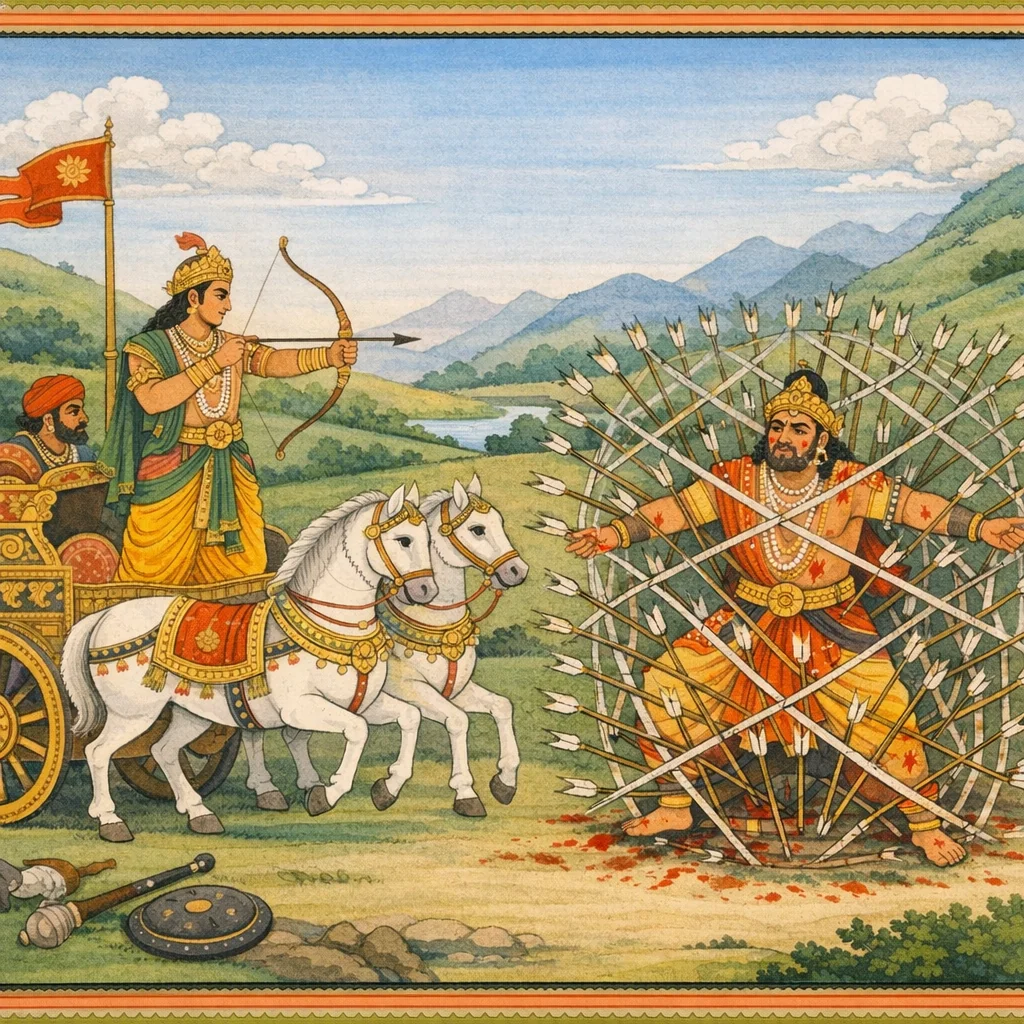
स तु दुःशासनं शूरं सायकैरावृणोद् भृशम् । सशड्कं समनुप्राप्तमूर्णनाभिरिवोर्णया
Sañjaya said: He then fiercely covered the valiant Duḥśāsana with a shower of arrows—enveloping him as a spider wraps up a creature that has come within reach, binding it in its web.
Verse 11
दृष्टवा दुःशासनं राजा तथा शरशताचितम्
Sañjaya said: Seeing Duḥśāsana—covered and heaped with hundreds of arrows—the king was struck by the grim reality of war’s consequences, for the sight of a fallen kinsman laid bare the moral cost of rage and wrongdoing on the battlefield.
Verse 12
तेडगच्छन् युयुधानस्य समीपं क्रूरकर्मण:
Sañjaya said: They moved toward the vicinity of Yuyudhāna, a warrior of fierce deeds—closing in with hostile intent amid the brutal momentum of battle.
Verse 13
ते तु तं रथवंशेन महता पर्यवारयन्
Sañjaya said: But they, using a great barricade of chariots, surrounded him on all sides—coordinated warfare meant to contain a single warrior through collective force rather than single combat.
Verse 14
स्थिरां कृत्वा मतिं युद्धे भूत्वा संशप्तका मिथ: । उन्होंने युद्धके लिये दृढ़ निश्चय करके परस्पर शपथ ग्रहण करनेके अनन्तर विशाल रथसेनाके द्वारा उन्हें घेर लिया ।। १३ ई ।। तेषां प्रपततां युद्धे शरवर्षाणि मुड्चताम्
Sañjaya said: Having made their resolve firm for battle, and having become ‘Saṁśaptakas’ by taking a mutual vow, they surrounded them with a vast formation of chariots. As they charged into the fight, they released showers of arrows. The passage highlights the grim ethic of wartime vows: steadfastness and collective oath can become instruments of relentless violence when yoked to enmity and ambition.
Verse 15
योधान् पञ्चशतान् मुख्यानग्रयानीके व्यपोथयत् । तब सात्यकिने युद्धमें बाण-वर्षा करते हुए आक्रमण करनेवाले पाँच सौ प्रमुख योद्धाओंको सेनाके मुहानेपर मार गिराया ।। १४ $ ।। तेडपतन् निहतास्तूर्ण शिनिप्रवरसायकै:
Sañjaya said: At the very front of the battle-array, he struck down five hundred foremost warriors. Then, as Sātyaki advanced in the fight, showering arrows, five hundred leading fighters who rushed to attack him were felled at the mouth of the army. They dropped swiftly, slain by the excellent missiles of the best of the Śinis.
Verse 16
नागैश्न बहुधा चिलिन्नैर्ध्वजैश्वेव विशाम्पते
Sañjaya said: “O lord of men, the field lay strewn in many places with severed elephants and with standards cut down—signs of the battle’s relentless force and the fall of outward emblems of power amid the ruin of war.”
Verse 17
हयैश्व कनकापीडै: पतितैस्तत्र मेदिनी । शैनेयशरसंकृत्तै: शोणितौघपरिप्लुतै:
Sañjaya said: There the earth was strewn with fallen horses, their golden head-ornaments cast down; and it was flooded by torrents of blood from those cut down by the arrows of Śaineya—an image of war’s ruin, where splendor and life alike are reduced to the same dust, warning how violence overwhelms all worldly display.
Verse 18
अशोभत महाराज किंशुकैरिव पुष्पितै: । महाराज! प्रजापालक नरेश! उस समय गिरे हुए गजराजों, अनेक टुकड़ोंमें कटी हुई ध्वजाओं तथा धरतीपर पड़े हुए, सोनेकी कलंगियोंसे सुशोभित घोड़ोंसे, जो सात्यकिके बाणोंसे क्षत-विक्षत होकर खूनसे लथपथ हो रहे थे, आच्छादित हुई यह पृथ्वी वैसी ही शोभा पा रही थी, मानो वह लाल फूलोंसे भरे हुए पलाशके वृक्षोंद्वारा ढक गयी हो || १६-१७ $ ।। ते वध्यमाना: समरे युयुधानेन तावका:
Sañjaya said: “O King, the earth then appeared splendid, as though covered with blossoming kiṃśuka (palāśa) trees. For your warriors, being struck down in battle by Yuyudhāna (Sātyaki), lay scattered amid fallen lordly elephants, banners cut into many pieces, and horses adorned with golden head-ornaments—torn by his arrows and drenched in blood.”
Verse 19
ततस्ते पर्यवर्तन्त सर्वे द्रोणरथं प्रति
Sañjaya said: Thereupon, all of them turned back and wheeled around toward Droṇa’s chariot.
Verse 20
हत्वा पञज्चशतान् योधान् शरैराशीविषोपमै:
Sañjaya said: Having slain five hundred warriors with arrows like venomous serpents, he left the battlefield strewn with the fallen.
Verse 21
त॑ प्रयान्तं नरश्रेष्ठं पुत्रो दःशासनस्तव
Sañjaya said: As that best of men was departing, your son Duḥśāsana also moved in response.
Verse 22
सतुतंप्रतिविव्याध पञज्चभिरनिशितै: शरै:
Sañjaya said: He then struck the charioteer with five keen, unerring arrows.
Verse 23
सात्यकिं तु महाराज प्रहसन्निव भारत
Sañjaya said: “But Sātyaki, O great king, appeared as though smiling—O descendant of Bharata.”
Verse 24
शैनेयस्तव पुत्र तु हत्वा पडचभिराशुगै:
Sañjaya said: Śaineya, having slain your son with five swift arrows, pressed the attack.
Verse 25
ततो दुःशासन: क्रुद्धो वृष्णिवीराय गच्छते
Sañjaya said: Then Duḥśāsana, inflamed with anger, advanced toward the Vṛṣṇi hero.
Verse 26
तां तु शक्ति तदा घोरां तव पुत्रस्य सात्यकि:
Sañjaya said: Then Sātyaki confronted that dreadful spear-weapon belonging to your son—an ominous moment in the battle where lethal force and personal enmity converge, testing resolve and the warrior’s duty amid escalating violence.
Verse 27
अथान्यद् धनुरादाय पुत्रस्तव जनेश्वर
Sañjaya said: Then, O lord of men, your son took up another bow—signaling a renewed resolve to continue the fight despite the strain and reversals of battle, and showing how, in war, determination can harden into relentless persistence.
Verse 28
सात्यकिस्तु रणे क्रुद्धो मोहयित्वा सुतं तव
Sañjaya said: In the thick of battle, Sātyaki—angered—bewildered your son, throwing him into confusion through his martial skill and stratagem.
Verse 29
सर्वायसैस्तीक्षणवक्त्रै: पुनर्विव्याध चाष्टभि:
Sañjaya said: Again he pierced him with eight all-iron arrows, sharp-pointed and fierce-mouthed—an act that underscores how the battle had descended into relentless, repeated wounding rather than restraint or reconciliation.
Verse 30
सात्वतो5पि महाराज तं॑ विव्याध स्तनान्तरे
Sañjaya said: O King, even the Sātvata warrior struck him, piercing him in the region between the breasts. The narration underscores the relentless momentum of battle, where even renowned heroes are reduced to vulnerable bodies, and where skill and resolve—rather than status—decide the immediate turn of events.
Verse 31
त्रिभिरेव महा भाग: शरै: संनतपर्वभि: | महाराज! इधर महाभाग सात्यकिने भी झुकी हुई गाँठवाले तीन बाणोंद्वारा दुःशासनकी छातीमें चोट पहुँचायी ।। ततो<स्य वाहान् निशितै: शरैर्जघ्ने महारथ:
Sañjaya said: O King, with only three arrows—each with well-bent, knotted joints—the illustrious warrior struck Duḥśāsana on the chest. Thereafter that great chariot-warrior, with keen shafts, began to strike down his horses as well.
Verse 32
सारथिं च सुसंक़्रुद्ध: शरै: संनतपर्वभि: । इसके बाद महारथी युयुधानने अत्यन्त कुपित हो पैने बाणोंसे उसके चारों घोड़ोंको मार डाला। फिर झुकी हुई गाँठवाले बाणोंसे सारथिको भी यमलोक पहुँचा दिया ।। धनुरेकेन भल्लेन हस्तावापं च पठचभि:,तदनन्तर महान् अस्त्रवेत्ता सात्यकिने एक भल्लसे दुःशासनका धनुष, पाँचसे उसके दस्ताने तथा दो भल्लोंसे उसकी ध्वजा एवं रथशक्तिके भी टुकड़े-टुकड़े कर दिये। इतना ही नहीं, उन्होंने तीखे बाणोंद्वारा उसके दोनों पारश्वचरक्षकोंको भी मार डाला
Sañjaya said: Enraged, he struck the charioteer with arrows whose joints were bent. Then the great chariot-warrior Yuyudhāna (Sātyaki), in extreme fury, slew the enemy’s four horses with sharp shafts; and again, with bent-jointed arrows, he sent the charioteer to the realm of Yama. Thereafter, that master of weapons, Sātyaki, with a single broad-headed arrow cut down Duḥśāsana’s bow; with five he shattered his hand-guards; and with two more broad-headed shafts he broke to pieces his banner and the spear fixed to the chariot. Not stopping there, he also killed the two flank-guards protecting Duḥśāsana’s sides with keen arrows.
Verse 33
ध्वजं च रथशक्ति च भल्लाभ्यां परमास्त्रवित् | चिच्छेद विशिखैस्ती क्ष्णस्तथो भौ पार्ष्णिसारथी,तदनन्तर महान् अस्त्रवेत्ता सात्यकिने एक भल्लसे दुःशासनका धनुष, पाँचसे उसके दस्ताने तथा दो भल्लोंसे उसकी ध्वजा एवं रथशक्तिके भी टुकड़े-टुकड़े कर दिये। इतना ही नहीं, उन्होंने तीखे बाणोंद्वारा उसके दोनों पारश्वचरक्षकोंको भी मार डाला
Sañjaya said: The supreme master of missiles, with two bhalla arrows, severed both the banner and the ratha-śakti (the spear kept for use from the chariot). Then, with sharp shafts, he also cut down the two flank-guards of the chariot.
Verse 34
सच्छिन्नधन्वा विरथो हताश्वचो हतसारथि: । त्रिगर्तसेनापतिना स्वरथेनापवाहितः,धनुष कट जानेपर रथ, घोड़े और सारथिसे हीन हुए दुःशासनको त्रिगर्त-सेनापतिने अपने रथपर बिठाकर वहाँसे दूर हटा दिया
Sañjaya said: Duhśāsana—his bow cut down, his chariot lost, his horses slain, and his charioteer killed—was carried away from that place by the Trigarta commander, who took him onto his own chariot and withdrew him from the fight.
Verse 35
तमभिद्र॒त्य शैनेयो मुहूर्तमिव भारत । न जघान महाबाहुर्भीमसेनवच: स्मरन्,भारत! उस समय महाबाहु सात्यकिने लगभग दो घड़ीतक दुःशासनका पीछा किया; परंतु भीमसेनकी बात याद आ जानेसे उसका वध नहीं किया
Sañjaya said: O Bhārata, having charged after him, Śaineya pursued for what seemed like a brief while; yet that mighty-armed warrior did not strike him down, for he remembered Bhīmasena’s words.
Verse 36
भीमसेनेन तु वध: सुतानां तव भारत । प्रतिज्ञात: सभामध्ये सर्वेषामेव संयुगे
Sañjaya said: O Bhārata (Dhṛtarāṣṭra), Bhīmasena had vowed in the royal assembly, before all, to slay your sons; and that vow was to be fulfilled in battle.
Verse 37
भरतनन्दन! भीमसेनने सभामें सबके सामने ही युद्धस्थलमें आपके पुत्रोंका वध करनेकी प्रतिज्ञा की थी ।। ततो दुःशासनं जित्वा सात्यकि: संयुगे प्रभो । जगाम त्वरितो राजन् येन यातो धनंजय:,राजन! प्रभो! इस प्रकार समरांगणमें दुःशासनपर विजय पाकर सात्यकि तत्काल ही उसी मार्गपर चल दिये, जिससे अर्जुन गये थे
Sañjaya said: O descendant of Bharata, Bhīmasena had vowed openly in the assembly, before all, that he would slay your sons on the battlefield. Thereafter, having overcome Duhshasana in the fight, Satyaki—O lord—hurried on, O king, along the very route by which Dhananjaya (Arjuna) had gone.
Verse 103
त्वरन् समावृणोद् बाणैर्द:शासनममित्रजित् | इतना ही नहीं, उन्होंने शूरवीर दुःशासनको अपने बाणोंसे अत्यन्त आच्छादित कर दिया। जैसे मकड़ी अपने जालेसे किसी जीवको लपेट देती है, उसी प्रकार शंकितभावसे पास आये हुए दुःशासनको शत्रुविजयी सात्यकिने बड़ी उतावलीके साथ अपने बाणोंद्वारा आवृत कर लिया
Sañjaya said: Hastening, the foe-conquering warrior completely covered Duḥśāsana with a shower of arrows.
Verse 116
त्रिगर्ताश्नोदयामास युयुधानरथं प्रति । इस प्रकार दुःशासनको सैकड़ों बाणोंसे ढका हुआ देख राजा दुर्योधनने त्रिगर्तोंको युयुधानके रथपर आक्रमण करनेकी आज्ञा दी
Sañjaya said: The Trigartas surged forward with their battle-cry and advanced against the chariot of Yuyudhāna. Seeing Duḥśāsana covered over with hundreds of arrows, King Duryodhana commanded the Trigartas to assault Yuyudhāna’s chariot.
Verse 122
इस प्रकार श्रीमहाभारत द्रोणपर्वके अन्तर्गत जयद्रथवधपर्वमें सात्यकिका प्रवेश और द्रोणाचार्यका पराक्रमविषयक एक सौ बाईसवाँ अध्याय पूरा हुआ
Sañjaya said: Thus, in the Śrī Mahābhārata, within the Droṇa Parva—specifically in the section concerning the slaying of Jayadratha—the one hundred and twenty-second chapter concludes, describing Sātyaki’s entry into the battle and the prowess of Droṇācārya.
Verse 123
इति श्रीमहाभारते द्रोणपर्वणि जयद्रथवधपर्वणि सात्यकिप्रवेशे दःशासनपराजये त्रयोविंशत्यधिकशततमो<ध्याय:
Thus, in the Śrī Mahābhārata, within the Droṇa Parva—specifically in the section on the slaying of Jayadratha—ends the one-hundred-and-twenty-third chapter, whose theme is Sātyaki’s entry into the battle formation and the defeat of Duḥśāsana. This colophon sets the episode within the war’s larger moral struggle, where valor and loyalty stand against cruelty and adharma.
Verse 126
त्रिगर्तानां त्रिसाहस्रा रथा युद्धविशारदा: । वे त्रिगर्तोंके तीन हजार रथी, जो युद्धमें कुशल थे, कठोर कर्म करनेवाले युयुधानके समीप गये
Sañjaya said: Three thousand chariot-warriors of the Trigartas, skilled in battle, advanced toward Yuyudhāna—an image of ordered martial force pressing upon a single famed fighter, as prowess and resolve drive the action amid the war’s ethical tragedy.
Verse 156
महामारुतवेगेन भग्ना इव नगाद् द्रुमा: । जैसे आँधीके वेगसे टूटे हुए वृक्ष पर्वतसे नीचे गिरते हैं, उसी प्रकार शिनिश्रेष्ठ सात्यकिके बाणोंसे मारे गये वे त्रिगर्त योद्धा तुरंत ही धराशायी हो गये
Sañjaya said: As trees, driven by the rush of a mighty gale, seem shattered and hurled down from a mountain, so the Trigarta warriors, struck by the arrows of Sātyaki—the foremost of the Śinis—were instantly felled to the earth. The image shows how, in battle’s frenzy, even proud fighters collapse when overmatched, and it recalls the fragility of embodied strength amid violence driven by adharma.
Verse 186
त्रातारं नाध्यगच्छन्त पड़कमग्ना इव द्विपा: । जैसे कीचड़में फँसे हुए हाथियोंको कोई रक्षक नहीं मिलता है, उसी प्रकार समरांगणमें युयुधानकी मार खाते हुए आपके सैनिक कोई रक्षक न पा सके
Sañjaya said: Your soldiers, struck down by Yuyudhāna on the battlefield, found no protector—like elephants sunk in mire who find no rescuer. The image underscores the collapse of support and leadership amid war’s chaos, where courage without refuge turns into helplessness.
Verse 196
भयात् पतगराजस्य गर्तानीव महोरगा: । जैसे बड़े-बड़े सर्प गरुड़के भयसे बिलोंमें घुस जाते हैं, उसी प्रकार आपके वे सभी पराजित सैनिक द्रोणाचार्यके रथके पास इकट्ठे हो गये
Sañjaya said: “Out of fear of the king of birds (Garuḍa), great serpents slip into their holes; in the same way, all your defeated soldiers, shaken and seeking refuge, gathered close to Droṇācārya’s chariot.”
Verse 203
प्रायात् स शनकैर्वीरो धनंजयरथं प्रति । विषधर सर्पके समान भयंकर बाणोंद्वारा पाँच सौ योद्धाओंका संहार करके वीर सात्यकि धीरे-धीरे धनंजयके रथकी ओर बढ़ने लगे
Sañjaya said: After cutting down five hundred warriors with dreadful arrows, like a venom-bearing serpent, the valiant Sātyaki advanced steadily toward the chariot of Dhanañjaya (Arjuna). The scene underscores the grim momentum of battle—heroism expressed through relentless martial skill, yet set within the morally weighty cost of mass slaughter in war.
Verse 216
विव्याध नवभिस्तूर्ण शरै: संनतपर्वभि: । उस समय आपके पुत्र दुःशासनने वहाँसे जाते हुए नरश्रेष्ठ सात्यकिको झुकी हुई गाँठवाले नौ बाणोंद्वारा शीघ्र ही बींध डाला
Sañjaya said: As he was moving away from that place, Duḥśāsana swiftly pierced Sātyaki—the foremost of men—with nine arrows whose joints were bent, intensifying the relentless violence of the battle.
Verse 226
रुक्मपुड्खैर्महेष्वासो गार्ध्रपत्रैरजिद्ागै: । तब महाथनुर्थर सात्यकिने भी सोनेके पुंख तथा गीधकी पाँखवाले पाँच तीखे और सीधे जानेवाले बाणोंद्वारा दुशासनको वेधकर बदला चुकाया
Sanjaya said: Then the great archer, wielding a mighty bow, repaid the injury by piercing Duḥśāsana with five sharp, straight-flying arrows—golden-shafted and feathered with vulture plumes. In the moral atmosphere of the war, this act is framed as retribution within the warrior code: a measured answering of violence with violence, driven by loyalty to comrades rather than personal gain.
Verse 233
दुःशासनस्सत्रिभिवविद्ध्वा पुनर्विव्याध पठ्चभि: । भरतवंशी महाराज! इसके बाद दुःशासनने हँसते हुए-से ही वहाँ तीन बाणोंद्वारा सात्यकिको घायल करके पुनः पाँच बाणोंसे बींध डाला
Sañjaya said: O great king of the Bharata line, Duḥśāsana—almost as if laughing—wounded Sātyaki there with three arrows, and then pierced him again with five more. The scene underscores the hardening of hearts in war, where cruelty and mockery can accompany violence, even against a renowned warrior.
Verse 243
धनुश्नास्य रणे छित्त्वा विस्मयन्नर्जुनं ययौ । तब शिनिपौत्र सात्यकि पाँच बाणोंसे आपके पुत्रको रणक्षेत्रमें घायल करके उसका धनुष काटकर मुसकराते हुए वहाँसे अर्जुनकी ओर चल दिये
Sañjaya said: Having cut down his bow in the midst of battle—astonishing Arjuna—Sātyaki, the grandson of Śini, struck your son with five arrows on the battlefield, severed his bow, and then, smiling with confident composure, moved from there toward Arjuna. The moment underscores the warrior’s duty executed with skill and restraint: decisive force without needless cruelty, aimed at turning the tide of the fight rather than indulging in vengeance.
Verse 253
सर्वपारशवीं शक्तिं विससर्ज जिघांसया । तदनन्तर दुःशासनने वहाँसे जाते हुए वृष्णिवीर सात्यकिपर कुपित हो उन्हें मार डालनेकी इच्छासे सम्पूर्णतः लोहेकी बनी हुई शक्ति चलायी
Sañjaya said: With the intent to kill, he hurled the iron spear-weapon known as the Pāraśavī Śakti. In the rush of battle, as Sātyaki—the Vṛṣṇi hero—moved on after striking down Duḥśāsana, his foe, enraged, launched that weapon at him, driven by the desire to slay.
Verse 263
चिच्छेद शतधा राजन् निशितै: कड्कपत्रिभि: | राजन्! आपके पुत्रकी उस भयंकर शक्तिको उस समय सात्यकिने कंकपत्रयुक्त तीखे बाणोंद्वारा सौ टुकड़ोंमें खण्डित कर दिया
Sañjaya said: O King, at that moment Sātyaki, with razor-sharp arrows fletched with heron-feathers, cut your son’s dreadful missile into a hundred pieces.
Verse 273
सात्यकिं च शरैरविंद्ध्वा सिंहनादं ननर्द ह । जनेश्वर! तत्पश्चात् आपके पुत्रने दूसरा धनुष लेकर सात्यकिको अपने बाणोंद्वारा घायल करके सिंहके समान गर्जना की
Sañjaya said: Having struck Sātyaki with arrows, he let out a lion-like roar. O lord of men, thereafter your son took up another bow and again wounded Sātyaki with his shafts, roaring like a lion.
Verse 283
शरैरग्निशिखाकारैराजघान स्तनान्तरे । त्रिभिरेव महाभाग: शरै: संनतपर्वभि: । इससे महाभाग सात्यकिने समरांगणमें कुपित होकर आपके पुत्रको मोहित करते हुए झुकी हुई गाँठवाले अग्निकी लपटोंके समान प्रज्वलित तीन बाणोंद्वारा उसकी छातीमें गहरी चोट पहुँचायी
Sañjaya said: With arrows shaped like tongues of fire, the illustrious warrior struck him in the middle of the chest—indeed, with just three arrows whose joints were bent. Thus, in the fury of battle, Sātyaki bewildered your son and dealt him a deep, searing wound, as if branding him with flame.
Verse 2936
दुःशासनस्तु विंशत्या सात्यकिं प्रत्यविध्यत । फिर लोहेके बने हुए तीखी धारवाले आठ बाणोंसे उसे पुनः: घायल कर दिया। तब दुःशासनने भी बीस बाण मारकर सात्यकिको क्षत-विक्षत कर दिया
Sañjaya said: Duḥśāsana, in the fury of battle, struck Sātyaki with twenty arrows. The exchange reflects the relentless escalation of violence on the battlefield, where valor and vengeance drive warriors to answer injury with injury.
Frequently Asked Questions
The ethical pressure arises from leadership responsibility: Duryodhana recognizes that allies died pursuing his objective, forcing a reckoning between personal ambition, duty to supporters, and the moral cost of continuing escalation.
The chapter implies that strategic competence must be paired with moral clarity: grief, pride, and misjudgment can distort policy, while a ruler’s choices create downstream obligations to allies and to social order.
No explicit phalaśruti is presented here; the chapter functions as narrative-ethical documentation, using lament and vow as a lens on causality, accountability, and the psychological dynamics of war-leadership.