Adhyaya 89
अर्जुनदुःखहेतुप्रश्नः — Inquiry into the cause of Arjuna’s recurring hardship (Book 14, Chapter 89)
Upa-parva: Āśvamedha-anuyātra (Episode: Inquiry into Arjuna’s persistent hardship and his return to the yajña-camp)
Yudhiṣṭhira addresses Kṛṣṇa with appreciative acknowledgement of prior speech and raises a focused concern: he has heard of Arjuna’s repeated engagements and perceives that, despite Arjuna’s intelligence and excellence, he remains persistently deprived of ease. Yudhiṣṭhira privately reflects on Arjuna’s body as bearing auspicious marks, asking whether any inauspicious sign could explain repeated hardship. Kṛṣṇa pauses in contemplation and replies clinically that he perceives no inauspicious feature except an overgrowth/thickness at Arjuna’s calves (piṇḍikā), by which Arjuna is continually burdened in long journeys; he finds no other cause. Yudhiṣṭhira accepts the assessment. Draupadī reacts with a sideways, mildly jealous glance toward Kṛṣṇa, who receives her affection, emphasizing his intimate friendship with Arjuna. The assembly—Pāṇḍavas, Kurus, and Yādavas—rejoices in hearing varied accounts of Arjuna. A messenger announces Arjuna’s arrival; Yudhiṣṭhira, moved to tears of joy, rewards the bearer of good news. Public acclamation rises, praising Arjuna’s achievement in conducting the sacrificial horse across the earth and returning safely, portraying the feat as rare even among earlier kings. Arjuna enters the sacrificial enclosure, and the elders and leaders go out to receive him; he pays respects, embraces Kṛṣṇa, and rests. The chapter closes by introducing Babhruvāhana arriving with his mothers to the Kurus and entering Kuntī’s residence.
Chapter Arc: वैशम्पायन यज्ञ-भूमि का द्वार खोलते हैं—अश्वमेध का विधिवत् अनुष्ठान आरम्भ हो चुका है; युधिष्ठिर के सामने अब विजय का नहीं, ‘यज्ञ-पूर्णता’ और ‘दान-पूर्णता’ का कठिन धर्म खड़ा है। → याजक अश्व का संस्कार करते हैं, वपा-उद्धरण आदि शास्त्रोक्त क्रियाएँ होती हैं; राजाओं का सत्कार, विदाई और दक्षिणा-वितरण का विराट आयोजन फैलता जाता है। दान की मात्रा ‘पृथ्वी-मूल्य’ सुवर्ण तक पहुँचती है—इतना कि व्यवस्था, न्याय और संतोष बनाए रखना स्वयं एक परीक्षा बन जाता है। → द्वैपायन व्यास ब्राह्मणों के मध्य युधिष्ठिर की प्रशंसा करते हुए उसके यज्ञ, दान और धर्म-स्थैर्य को प्रतिष्ठित करते हैं; उसी क्षण दान का चरम दृश्य उभरता है—अनन्त-सा सुवर्णराशि ऋत्विजों द्वारा ब्राह्मणों में बाँटी जाती है और यज्ञ की कीर्ति दिशाओं में फैलती है। → युधिष्ठिर भाइयों सहित ‘धूतपाप’ और ‘जितस्वर्ग’ भाव से प्रसन्न होता है; बभ्रुवाहन जैसे अतिथिराज को बुलाकर विपुल धन देकर सम्मानपूर्वक विदा किया जाता है; श्रीकृष्ण, बलदेव, प्रद्युम्न आदि का यथाविधि पूजन कर उन्हें भी प्रस्थान कराया जाता है। → घोषणा दिन-रात गूँजती रहती है—‘जिसकी जैसी इच्छा हो, वही वस्तु दी जाए’—और यह संकेत छोड़ती है कि यज्ञ-समृद्धि के बाद भी लोक-आकांक्षाओं का प्रवाह थमता नहीं, आगे नई कथाएँ और नई कसौटियाँ प्रतीक्षा में हैं।
Shlokas
Verse 1
पम्प छा अर: एकोननवतितमो< ध्याय: युधिष्ठिरका ब्राह्मणोंको दक्षिणा देना और राजाओंको भेंट देकर विदा करना वैशम्पायन उवाच श्रपयित्वा पशूनन्यान् विधिवद् द्विजसत्तमा: । त॑ तुरडूं यथाशास्त्रमालभन्त द्विजातय:,वैशम्पायनजी कहते हैं--जनमेजय! उन श्रेष्ठ ब्राह्मणोंने अन्यान्य पशुओंका विधिपूर्वक श्रपण करके उस अश्वका भी शास्त्रीय विधिके अनुसार आलभन किया
Vaiśampāyana said: “O Janamejaya, those foremost Brāhmaṇas, having duly prepared the other sacrificial animals according to rule, then performed the prescribed ritual act upon that horse as well, exactly as the śāstra enjoins.”
Verse 2
ततः संश्रप्य तुरगं विधिवद् याजकास्तदा । उपसंवेशयन् राजंस्ततस्तां द्रुपदात्मजाम्
Vaiśampāyana said: Then, having duly consecrated the sacrificial horse according to the prescribed rites, the officiating priests seated the king in his proper place; thereafter they seated Draupadī, the daughter of Drupada, beside him.
Verse 3
उद्धृत्य तु वपां तस्य यथाशास्त्र द्विजातय:
Vaiśampāyana said: Having duly removed its omentum in accordance with the ritual injunctions, the twice-born priests proceeded as prescribed, careful to follow the śāstra in every act of the sacrifice.
Verse 4
त॑ वपाधूमगन्ध॑ तु धर्मराज: सहानुजै:
Vaiśampāyana said: Then Dharmarāja (Yudhiṣṭhira), together with his younger brothers, perceived the smell of the smoke rising from the sacrificial fat—an omen that the rite was proceeding according to rule and a reminder that royal power must be exercised under the discipline of dharma.
Verse 5
शिष्टान्यड्रानि यान्यासंस्तस्याश्चस्य नराधिप
Vaiśampāyana said: “O king, the distinguished mountains that belonged to her, and also those that belonged to him…”
Verse 6
संस्थाप्यैवं तस्य राज्ञस्तं यज्ञ शक्रतेजस:
Vaiśaṃpāyana said: Having thus duly established and arranged that sacrificial rite for the king—one radiant with the splendor of Indra—the proceedings were set in proper order, befitting royal duty and sacred law.
Verse 7
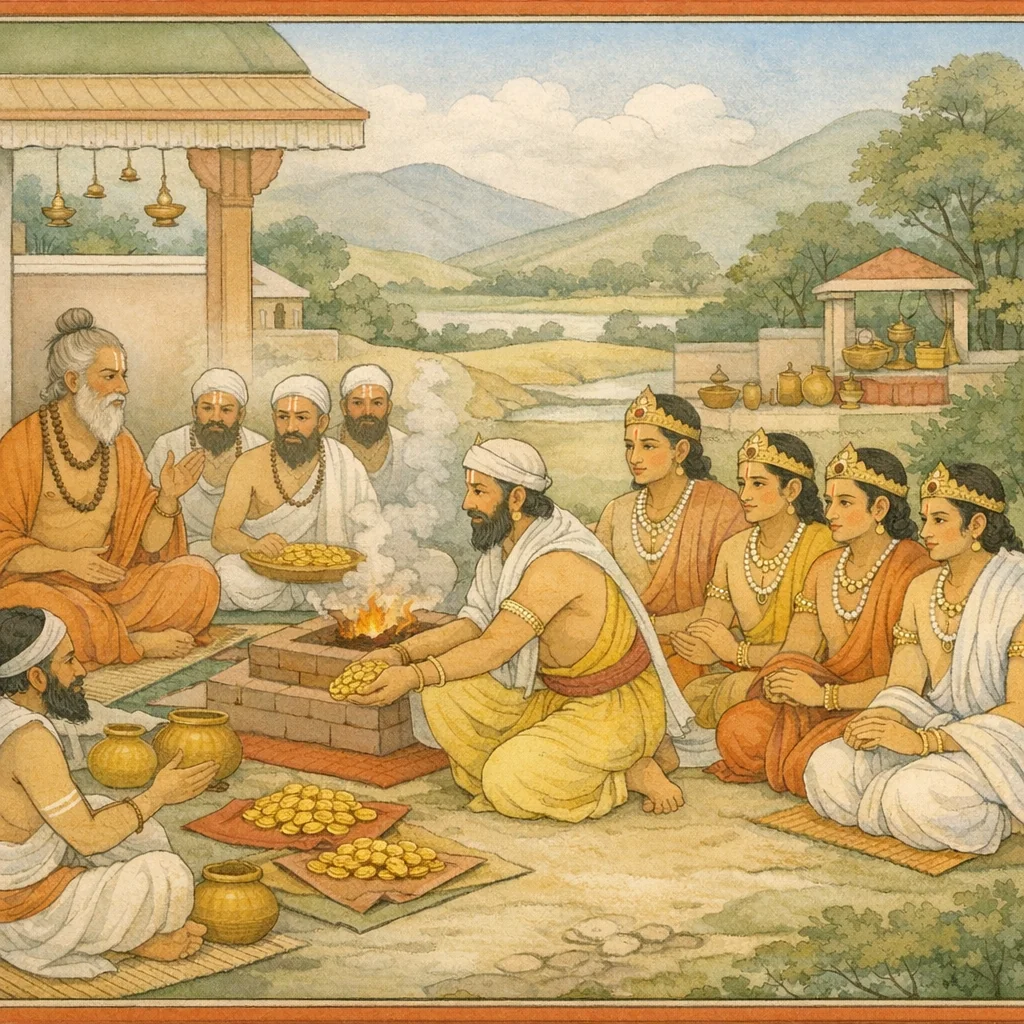
ततो युधिष्छिर: प्रादाद् ब्राह्मणेभ्ये यथाविधि
Then Yudhiṣṭhira, following the prescribed rites, made the proper gifts to the Brahmins—acting in accordance with dharma and the established ritual order.
Verse 8
प्रतिगृह्म धरां राजन् व्यास: सत्यवतीसुत:
Vaiśaṃpāyana said: “O King, having accepted the earth (the gift of land), Vyāsa—the son of Satyavatī—proceeded accordingly.” The line underscores the ethical weight of accepting a royal gift: once received, it binds the recipient to act with integrity and restraint, especially when the giver is a ruler and the recipient a revered sage.
Verse 9
वसुधा भवतत्त्वेषा संन्यस्ता राजसत्तम
Vaiśaṃpāyana said: “O best of kings, this earth—true to its own nature—has been entrusted (placed in your charge).”
Verse 10
युधिष्ठिरस्तु तान् विप्रान् प्रत्युवाच महामना:
Vaiśampāyana said: Then the noble-minded Yudhiṣṭhira replied to those brāhmaṇa sages—responding with the measured dignity and ethical responsibility expected of a righteous king.
Verse 11
भ्रातृभि: सहितो धीमान् मध्ये राज्ञां महात्मनाम् तब महामनस्वी नरेशोंके बीचमें भाइयोंसहित बुद्धिमान् महामना युधिष्ठिरने उन ब्राह्मणोंसे कहा-- ।। १० ह || अश्वमेधे महायज्ञे पृथिवी दक्षिणा स्मृता
Vaiśampāyana said: Then the wise and large-hearted king Yudhiṣṭhira, standing among the great-souled kings and accompanied by his brothers, addressed those brāhmaṇas. In the great Aśvamedha sacrifice, it is traditionally held that the earth itself is the dakṣiṇā, the sacrificial fee.
Verse 12
अर्जुनेन जिता चेयमृत्विग्भ्य: प्रापिता मया । बन॑ प्रवेक्ष्ये विप्राग्रया विभजध्व॑ महीमिमाम्
Vaiśampāyana said: “This land has been conquered by Arjuna and has been delivered by me to the officiating priests. I shall now enter the forest; O foremost of brāhmaṇas, apportion this earth among yourselves.”
Verse 13
चतुर्धा पृथिवीं कृत्वा चातुर्होत्रप्रमाणत: । नाहमादातुमिच्छामि ब्रह्म॒स्वं द्विजसत्तमा:
Vaiśampāyana said: “Even if the earth were divided into four parts according to the measure of the fourfold sacrificial priesthood, I do not wish to take brahmasva—what belongs to the brāhmaṇas, O best of the twice-born.”
Verse 14
इदं नित्यं मनो विप्रा भ्रातृणां चैव मे सदा । “विप्रवरो! अश्वमेध नामक महायज्ञमें पृथ्वीकी दक्षिणा देनेका विधान है; अतः अर्जुनके द्वारा जीती हुई यह सारी पृथ्वी मैंने ऋत्विजोंको दे दी है। अब मैं वनमें चला जाऊँगा। आपलोग चातुर्होत्र यज्ञके प्रमाणानुसार पृथ्वीके चार भाग करके इसे आपसमें बाँट लें। द्विजश्रेष्ठगण! मैं ब्राह्मणोंका धन लेना नहीं चाहता। ब्राह्मणो! मेरे भाइयोंका भी सदा ऐसा ही विचार रहता है” ॥| ११--१३ ह ।। इत्युक्तवति तस्मिंस्तु भ्रातरो द्रौपदी च सा
Vaiśampāyana said: “O brāhmaṇas, this resolve is constant in my mind, and likewise always in the minds of my brothers: ‘O best of brāhmaṇas, in the great sacrifice called the Aśvamedha, the prescribed sacrificial fee is the gift of the earth. Therefore I have given to the officiating priests this entire earth won by Arjuna. Now I shall depart for the forest. According to the authority of the Cāturhotra rite, divide the earth into four parts and apportion it among yourselves. O foremost twice-born, I do not wish to take wealth that belongs to brāhmaṇas. O brāhmaṇas, my brothers too always hold the same intention.’ When he had spoken thus, his brothers and Draupadī…
Verse 15
ततोअन्तरिक्षे वागासीत् साधु साध्विति भारत
Then, from the mid-air, a voice was heard, crying, “Well done! Well done, O Bhārata!”
Verse 16
द्वैपायनस्तथा कृष्ण: पुनरेव युधिछ्िरम्
Vaiśampāyana said: Then Dvaipāyana and Kṛṣṇa once again approached Yudhiṣṭhira—returning to him to continue their counsel and guidance after the great events, when righteous rule and moral steadfastness must be reaffirmed.
Verse 17
दत्तैषा भवता महां तां ते प्रतिददाम्पहम्
Vaiśampāyana said: “That great gift has indeed been bestowed by you; I, in turn, give it back to you.”
Verse 18
ततोअब्रवीद् वासुदेवो धर्मराजं युधिष्ठिरम्
Then Vāsudeva addressed Yudhiṣṭhira, the king devoted to dharma—signaling a moment when righteous rule and moral responsibility were to be clarified through counsel.
Verse 19
इत्युक्त: स कुरुश्रेष्ठ: प्रीतात्मा भ्रातृभि: सह
Thus addressed, that foremost of the Kurus—his heart filled with gladness—remained together with his brothers, receiving the words with satisfaction and concord.
Verse 20
न करिष्यति तल्लोके ककश्षिदन्यो नराधिप:
Vaiśampāyana said: “In this world, no other king will accomplish that deed.”
Verse 21
प्रतिगृह तु तद् रत्नं कृष्णद्वैपायनो मुनि:
Vaiśampāyana said: “Let the sage Kṛṣṇa-Dvaipāyana accept that precious gift.” The line affirms the dharmic propriety of offering and receiving worthy gifts—honoring spiritual authority and placing wealth in hands aligned with dharma.
Verse 22
धरण्या निष्क्रयं दत्त्वा तद्धिरण्यं युधिछिर:
Vaiśampāyana said: Having paid the earth’s redemption-price, Yudhiṣṭhira then gave away that very gold—signaling that wealth acquired even for a solemn rite is to be purified through rightful giving and used for dharmic ends rather than personal possession.
Verse 23
ऋच्विजस्तमपर्यन्तं सुवर्णनिचयं तथा,ब्राह्मणोंके लेनेके बाद जो धन वहाँ पड़ा रह गया, उसे क्षत्रिय, वैश्य, शूद्र तथा म्लेच्छ जातिके लोग उठा ले गये
Vaiśampāyana said: The officiating priests received an immeasurable heap of gold. After the Brāhmaṇas had taken what was due to them, whatever wealth still remained there was then carried away by people of other social groups—Kṣatriyas, Vaiśyas, Śūdras, and even those regarded as mlecchas. The scene underscores the primacy of rightful ritual remuneration and the social reality that surplus, once the prescribed claim is satisfied, becomes subject to general appropriation.
Verse 24
यज्ञवाटे च यत् किंचिद् हिरण्यं सविभूषणम्,यज्ञशालामें भी जो कुछ सुवर्ण या सोनेके आभूषण, तोरण, यूप, घड़े, बर्तन और इंटें थीं, उन सबको भी युधिष्ठिरकी आज्ञा लेकर ब्राह्मणोंने आपसमें बाँट लिया
Vaiśampāyana said: Whatever gold and gold ornaments were present in the sacrificial enclosure were, with King Yudhiṣṭhira’s permission, divided among the Brāhmaṇas. The scene underscores the ethic of yajña as a public act of dharma, where wealth gathered for the rite is not hoarded but redistributed as dakṣiṇā in an orderly and sanctioned manner.
Verse 25
तोरणानि च यूपांश्व घटान् पात्रीस्तथेष्टका: । युधिष्टिरा भ्यनुज्ञाता: सर्व तद् व्यभजन् द्विजा:,यज्ञशालामें भी जो कुछ सुवर्ण या सोनेके आभूषण, तोरण, यूप, घड़े, बर्तन और इंटें थीं, उन सबको भी युधिष्ठिरकी आज्ञा लेकर ब्राह्मणोंने आपसमें बाँट लिया
Vaiśampāyana said: With Yudhiṣṭhira’s permission, the Brahmins apportioned among themselves everything there—festal arches, sacrificial posts, jars, vessels, and even the bricks—whatever remained in the sacrificial hall. The scene underscores the king’s dutiful sanctioning of gifts and the orderly distribution of ritual wealth after the rite, reflecting generosity governed by propriety rather than personal hoarding.
Verse 26
कलाभिस्तिसूभी राजन् यथाविधि मनस्विनीम् । राजन! तत्पश्चात् याजकोंने विधिपूर्वक अश्वका श्रपण करके उसके समीप मन्त्र, द्रव्य और श्रद्धा--इन तीन कलाओंसे युक्त मनस्विनी द्रौपदीको शास्त्रोक्त विधिके अनुसार बैठाया,अनन्तरं द्विजातिभ्य: क्षत्रिया जह्ििरे वसु । तथा विट्शूद्रसंघाश्व तथान्ये म्लेच्छजातय:
Vaiśampāyana said: “O king, in due form the resolute Draupadī was set in place, endowed with the three ‘arts’—mantra, proper offerings, and faith. Thereafter the officiating priests, having duly cooked the sacrificial portions of the horse and arranging everything near it according to scriptural rule, seated the high-minded Draupadī as prescribed. Then wealth was distributed: the Kṣatriyas received gifts after the twice-born, and likewise groups of Vaiśyas and Śūdras, and also other communities regarded as mleccha by birth.”
Verse 27
ततस्ते ब्राह्मणा: सर्वे मुदिता जग्मुरालयान् । तर्पिता वसुना तेन धर्मराजेन धीमता,तदनन्तर सब ब्राह्मण प्रसन्नतापूर्वक अपने घरोंको गये। बुद्धिमान् धर्मराज युधिष्ठिरने उन सबको उस धनके द्वारा पूर्णतः तृप्त कर दिया था
Then all those brāhmaṇas, delighted at heart, departed for their homes. The wise Dharmarāja (Yudhiṣṭhira), by means of that wealth, had fully satisfied and gratified them—thus completing his duty of generous giving in a manner consonant with dharma.
Verse 28
स्वमंशं भगवान् व्यास: कुन्त्यै साक्षाद्धि मानत: । प्रददौ तस्य महतो हिरण्यस्य महाद्युति:,उस महान सुवर्णराशिमेंसे महातेजस्वी भगवान् व्यासने जो अपना भाग प्राप्त किया था, उसे उन्होंने बड़े आदरके साथ कुन्तीको भेंट कर दिया
Vaiśampāyana said: The illustrious sage Vyāsa, having received his own rightful share of that great heap of gold, personally presented it to Kuntī with due honor.
Verse 29
श्वशुरात् प्रीतिदायं त॑ं प्राप्प सा प्रीतमानसा । चकार पुण्यकं तेन सुमहत् संघश: पृथा,श्वशुरकी ओरसे प्रेमपूर्वक मिले हुए उस धनको पाकर कुन्तीदेवी मन-ही-मन बहुत प्रसन्न हुई और उसके द्वारा उन्होंने बड़े-बड़े सामूहिक पुण्य-कार्य किये
Vaiśampāyana said: Receiving from her father-in-law that gift given in affection, Kuntī (Pṛthā) became inwardly delighted. Using that wealth, she arranged very great meritorious works on a collective scale—acts of charity and religious giving performed for the welfare of many.
Verse 30
गत्वा त्ववभृथं राजा विपाप्मा भ्रातृभि: सह । सभाज्यमान: शुशुभे महेन्द्रस्त्रिदशैरिव,यज्ञके अन्तमें अवभूथस्नान करके पापरहित हुए राजा युधिष्ठिर अपने भाइयोंसे सम्मानित हो इस प्रकार शोभा पाने लगे, जैसे देवताओंसे पूजित देवराज इन्द्र सुशोभित होते हैं
Vaiśampāyana said: Having gone to the avabhṛtha (the concluding ceremonial bath of the sacrifice), the king became purified of sin. Honoured and celebrated together with his brothers, Yudhiṣṭhira shone with splendour—like great Indra, radiant when revered by the gods.
Verse 31
महाराज! वहाँ आये हुए समस्त भूपालोंसे घिरे हुए पाण्डवलोग ऐसी शोभा पा रहे थे, मानो तारोंसे घिरे हुए ग्रह सुशोभित हों
Vaiśampāyana said: O great king, there, surrounded by all the assembled rulers, the Pāṇḍavas shone with a special splendor—like the planets, beautifully adorned when encircled by the stars.
Verse 32
राजभ्योडपि ततः प्रादाद् रत्नानि विविधानि च । गजानश्चानलंकारान् स्त्रियो वासांसि काउ्चनम्,तदनन्तर पाण्डवोंने यज्ञमें आये हुए राजाओंको भी तरह-तरहके रत्न, हाथी, घोड़े, आभूषण, स्त्रियाँ, वस्त्र और सुवर्ण भेंट किये
Vaiśampāyana said: Thereafter, he bestowed upon the assembled kings various kinds of precious gems—along with elephants, horses, ornaments, women attendants, garments, and gold.
Verse 33
पाण्डवाश्व महीपालै: समेतैरभिसंवृता: । अशोभनत महाराज ग्रहास्तारागणैरिव,तद् धनौघमपर्यन्तं पार्थ: पार्थिवमण्डले । विसृजन् शुशुभे राजन् यथा वैश्रवणस्तथा राजन! उस अनन्त धनराशिको भूपालमण्डलमें बाँटते हुए कुन्तीकुमार युधिष्छिर कुबेरके समान शोभा पाते थे
Vaiśampāyana said: O king, the Pāṇḍavas, surrounded by the assembled rulers, appeared splendid—like the planets amid the host of stars. And Yudhiṣṭhira, Kuntī’s son, as he distributed that boundless heap of wealth among the circle of kings, shone like Vaiśravaṇa (Kubera).
Verse 34
आनीय च तथा वीरं राजानं बभ्रुवाहनम् । प्रदाय विपुलं वित्त गृहान् प्रास्थापयत् तदा,तत्पश्चात् वीर राजा बभ्रुवाहनको अपने पास बुलाकर राजाने उसे बहुत-सा धन देकर विदा किया
Vaiśampāyana said: Then, having summoned the heroic king Babhruvāhana, he bestowed abundant wealth upon him and, at that time, sent him back to his home.
Verse 35
दुःशलायाश्च त॑ पौत्रं बालकं॑ भरतर्षभ । स्वराज्ये5थ पितुर्धीमान् स्वसु: प्रीत्या न्न्यवेशयत्,भरतश्रेष्ठ] अपनी बहिन दुःशलाकी प्रसन्नताके लिये बुद्धिमान् युधिष्ठिरने उसके बालक पौत्रको पिताके राज्यपर अभिषिक्त कर दिया
Vaiśampāyana said: O bull among the Bharatas, the wise Yudhiṣṭhira, wishing to please his sister Duḥśalā, installed her young grandson in his father’s own kingdom, consecrating him to rule.
Verse 36
श्रपयामासुरव्यग्रा विधिवद् भरतर्षभ । भरतश्रेष्ठ! इसके बाद ब्राह्मणोंने शान्तचित्त होकर उस अश्वकी चर्बी निकाली और उसका विधिपूर्वक श्रपण करना आरम्भ किया,नृपतींश्वैव तान् सर्वान् सुविभक्तान् सुपूजितान् | प्रस्थापयामास वशी कुरुराजो युधिष्ठिर: जितेन्द्रिय कुरुराज युधिष्ठिरने सब राजाओंको अच्छी तरह धन दिया और उनका विशेष सत्कार करके उन्हें विदा कर दिया
Vaiśaṃpāyana said: “O bull among the Bharatas, the Brahmins—calm and unhurried—extracted the horse’s fat and began to cook it according to the prescribed rite. Then Yudhiṣṭhira, the self-controlled king of the Kurus, having distributed gifts properly and honored all those kings with special respect, formally sent them on their way.”
Verse 37
गोविन्द च महात्मानं बलदेवं महाबलम् । तथान्यान् वृष्णिवीरांश्व प्रद्युम्नाद्यान् सहस्रश:,महाराज! इसके बाद महात्मा भगवान् श्रीकृष्ण, महाबली बलदेव तथा प्रद्युम्म आदि अन्यान्य सहस्रों वृष्णिवीरोंकी विधिवत् पूजा करके भाइयोंसहित शत्रुदमन महातेजस्वी राजा युधिष्ठिरने उन सबको विदा किया
Vaiśampāyana said: Then King Yudhiṣṭhira—radiant in splendor and a subduer of foes—having duly honored Govinda (Śrī Kṛṣṇa), the great-souled and mighty Baladeva, and likewise thousands of other Vṛṣṇi heroes beginning with Pradyumna, respectfully took leave of them and sent them off, together with his brothers. The episode underscores royal dharma expressed as gratitude, reverence to the righteous, and proper hospitality toward allies and elders after the completion of sacred duties.
Verse 38
पूजयित्वा महाराज यथाविधि महाद्युति: । भ्रातृभि: सहितो राजा प्रास्थापयदरिंदम:,महाराज! इसके बाद महात्मा भगवान् श्रीकृष्ण, महाबली बलदेव तथा प्रद्युम्म आदि अन्यान्य सहस्रों वृष्णिवीरोंकी विधिवत् पूजा करके भाइयोंसहित शत्रुदमन महातेजस्वी राजा युधिष्ठिरने उन सबको विदा किया
Vaiśampāyana said: O King, after duly honoring them according to proper rite, the radiant king—accompanied by his brothers—formally sent them forth. In ethical tone, the verse highlights royal dharma expressed through correct hospitality, reverence to worthy guests, and orderly leave-taking after worshipful reception.
Verse 39
एवं बभूव यज्ञ: स धर्मराजस्य धीमत: । बद्धन्नधनरत्नौघ: सुरामैरेयसागर:,इस प्रकार बुद्धिमान् धर्मराज युधिष्ठिरका वह यज्ञ पूर्ण हुआ। उसमें अन्न, धन और रत्नोंके ढेर लगे हुए थे। देवताओंके मनमें अतिशय कामना उत्पन्न करनेवाली वस्तुओंका सागर लहराता था। कितने ही ऐसे तालाब थे, जिनमें घीकी कीचड़ जमी हुई थी और अन्नके तो पहाड़ ही खड़े थे। भरतभूषण! रससे भरी कीचड़रहित नदियाँ बहती थीं
Vaiśampāyana said: Thus was completed the sacrifice of the wise Dharmarāja. It stood heaped with stores of grain, wealth, and torrents of jewels—like an ocean of intoxicating delights that would stir even the gods’ desire. The scene proclaims royal responsibility: prosperity is gathered not for private indulgence but displayed and distributed through a public rite that affirms order, generosity, and dharma after the devastations of war.
Verse 40
सर्पि:पड्का हृदा यत्र बभूवुश्चान्नपर्वता: । रसालाकर्दमा नद्यो बभूवुर्भरतर्षभ,इस प्रकार बुद्धिमान् धर्मराज युधिष्ठिरका वह यज्ञ पूर्ण हुआ। उसमें अन्न, धन और रत्नोंके ढेर लगे हुए थे। देवताओंके मनमें अतिशय कामना उत्पन्न करनेवाली वस्तुओंका सागर लहराता था। कितने ही ऐसे तालाब थे, जिनमें घीकी कीचड़ जमी हुई थी और अन्नके तो पहाड़ ही खड़े थे। भरतभूषण! रससे भरी कीचड़रहित नदियाँ बहती थीं
Vaiśampāyana said: “O bull among the Bharatas, in that sacrifice there were ponds whose mire was ghee, and there stood mountains of food. Rivers flowed with rich, sweet essence, free from muddy silt.” Thus the wise Dharmarāja Yudhiṣṭhira’s rite reached completion, displaying abundance offered and distributed in a way meant to delight the gods and sustain all who came—an image of royal duty fulfilled through generosity rather than hoarding.
Verse 41
न व | / |! ( ४ 5 ॥ भक्ष्यखाण्डवरागाणां क्रियतां भुज्यतां तथा । पशूनां बध्यतां चैव नान््तं ददृशिरे जना:,(पीपल और सोंठ मिलाकर जो मूँगका जूस तैयार किया जाता है, उसे “खाण्डव' कहते हैं। उसीमें शक्कर मिला हुआ हो तो वह “खाण्डवराग” कहा जाता है।) भक्ष्य-भोज्य पदार्थ और खाण्डवराग कितनी मात्रामें बनाये और खाये जाते हैं तथा कितने पशु वहाँ बाँधे हुए थे, इसकी कोई सीमा वहाँके लोगोंको नहीं दिखायी देती थी
Vaiśampāyana said: Foods and the sweet drink called khāṇḍava-rāga were being prepared and consumed in such abundance that people could see no limit to it; likewise, they could perceive no end to the number of animals that were being bound there. The scene underscores the overwhelming scale of royal hospitality and ritual provision, while also drawing attention to the ethical weight of animal-binding within sacrificial contexts.
Verse 42
मत्तप्रमत्तमुदितं सुप्रीतयुवतीजनम् । मृदज्रशड्खनादैश्व मनोरमम भूत् तदा,उस यज्ञके भीतर आये हुए सब लोग मत्त-प्रमत्त और आनन्द विभोर हो रहे थे। युवतियाँ बड़ी प्रसन्नताके साथ वहाँ विचरण करती थीं। मृदंगों और शंखोंकी ध्वनियोंसे उस यज्ञशालाकी मनोरमता और भी बढ़ गयी थी
Vaiśampāyana said: At that time, everyone who had entered the sacrificial enclosure was exhilarated—almost intoxicated with joy—and uplifted in spirit. Groups of young women moved about there with great delight. And with the resonant sounds of drums and conches, the beauty and festive charm of that yajña-hall became even more enchanting.
Verse 43
उपाजिघ्रद् यथाशास्त्र सर्वपापापहं तदा । भाइयोंसहित धर्मराज युधिष्ठिरने शास्त्रकी आज्ञाके अनुसार उस चर्बीके धूमकी गन्ध सूँघी, जो समस्त पापोंका नाश करनेवाली थी,दीयतां भुज्यतां चेष्टं दिवारात्रमवारितम् | त॑ महोत्सवसंकाशं हृष्टपुष्टजनाकुलम्
Vaiśampāyana said: Then Dharmarāja Yudhiṣṭhira, together with his brothers, inhaled—according to scriptural rule—the smoke’s fragrance, believed to remove all sins. “Let gifts be given; let the desired foods be eaten—day and night, without restraint.” That scene resembled a great festival, crowded with people who were joyful and well-nourished.
Verse 44
वर्षित्वा धनधाराभि: कामै रत्नै रसैस्तथा । विपाप्मा भरतश्रेष्ठ: कृतार्थ: प्राविशत् पुरम्,भरतश्रेष्ठ राजा युधिष्ठिरने उस यज्ञमें धनकी मूसलाधार वर्षा की। सब प्रकारकी कामनाओं, रत्नों और रसोंकी भी वर्षा की। इस प्रकार पापरहित और कृतार्थ होकर उन्होंने अपने नगरमें प्रवेश किया
Vaiśampāyana said: Having caused a torrential shower of wealth, and likewise a shower of all desired enjoyments, jewels, and choice delicacies, the sinless Yudhiṣṭhira—the best of the Bharatas—fulfilled in purpose, entered his city. The verse underscores the king’s ethical ideal: prosperity is distributed as a public act of dharma, and the completion of the sacrifice is marked not by personal gain but by generous, orderly return to civic life.
Verse 53
तान्यग्नौ जुहु॒वुर्धीरा: समस्ता: षोडशर्त्विज: । नरेश्वर! उस अश्वके जो शेष अंग थे, उनको धीर स्वभाववाले समस्त सोलह ऋत्विजोंने अग्निमें होम कर दिया
Vaiśampāyana said: O king, the steadfast sixteen officiating priests offered into the sacred fire all the remaining parts of that sacrificial horse. Thus the rite was completed in due order, with disciplined minds and exact observance, affirming the king’s responsibility to uphold dharma through properly conducted sacrifice.
Verse 66
व्यास: सशिष्यो भगवान् वर्धयामास तं नृपम् । इस प्रकार इन्द्रके समान तेजस्वी राजा युधिष्ठिरके उस यज्ञको समाप्त करके शिष्योंसहित भगवान् व्यासने उन्हें बधाई दी--अभ्युदयसूचक आशीर्वाद दिया
Vaiśampāyana said: When King Yudhiṣṭhira—radiant like Indra—had brought his Aśvamedha sacrifice to completion, the venerable sage Vyāsa, accompanied by his disciples, honored the king and increased his joy and prestige by offering auspicious blessings. The moment underscores that righteous kingship is affirmed not merely by power, but by the dharma-aligned fulfillment of sacred duty and the benediction of the wise.
Verse 76
कोटी: सहस््र॑ निष्काणां व्यासाय तु वसुंधराम् । इसके बाद युधिष्ठिरने सब ब्राह्मणोंको विधिपूर्वक एक हजार करोड़ (एक खर्व) स्वर्णमुद्राएँ दक्षिणामें देकर व्यासजीको सम्पूर्ण पृथ्वी दान कर दी
Vaiśampāyana said: Yudhiṣṭhira, having duly honored all the brāhmaṇas according to prescribed rites, bestowed as sacrificial fee a vast sum—one thousand crores (a kharva) of gold coins—and then, as the highest act of renunciation and reverence, gifted the entire earth to Vyāsa. The episode underscores the ethical ideal that royal power and wealth are trusts to be relinquished in service of dharma and in gratitude to the sage who preserves and transmits sacred knowledge.
Verse 86
अब्रवीद् भरतश्रेष्ठ॑ धर्मराजं युधिष्ठिरम् । राजन! सत्यवतीनन्दन व्यासने उस भूमिदानको ग्रहण करके भरतश्रेष्ठ धर्मराज युधिष्ठिससे कहा--
Vaiśampāyana said: Having accepted that gift of land, Vyāsa—the son of Satyavatī—addressed King Yudhiṣṭhira, the foremost of the Bharatas and upholder of dharma. The scene frames a morally charged exchange: a righteous king offers, a venerable sage receives, and instruction is poised to follow, grounding royal generosity in ethical order rather than mere display.
Verse 88
इस प्रकार श्रीमह्याभारत आश्वमेधिकपर्वके अन्तर्गत अनुगीतापर्वमें अश्वमेधयज्ञका आरम्भविषयक अठासीवाँ अध्याय पूरा हुआ
Thus ends the eighty-eighth chapter in the Anugītā section of the Aśvamedhika Parva of the revered Mahābhārata, dealing with the commencement of the Aśvamedha sacrifice. The narrator marks a formal closure, signaling a transition from discourse to the ritual and political act meant to re-establish order and sovereignty after the devastation of war.
Verse 89
इति श्रीमहाभारते आश्वमेधिके पर्वणि अनुगीतापर्वणि अश्वमेधसमाप्तौ एकोननवतितमो<ध्याय:
Thus, in the revered Mahābhārata, within the Āśvamedhika Parva—specifically the Anugītā sub-section—this marks the conclusion of the Aśvamedha sacrifice and the close of the eighty-ninth chapter. The narrator signals a formal completion of the rite and the narrative unit, emphasizing closure, order, and the restoration of dharmic kingship after the devastation of war.
Verse 96
निष्क्रयो दीयतां महां ब्राह्मणा हि धनार्थिन: । “नृपश्रेष्ठ! तुम्हारी दी हुई इस पृथ्वीको मैं पुनः तुम्हारे ही अधिकारमें छोड़ता हूँ। तुम मुझे इसका मूल्य दे दो; क्योंकि ब्राह्मण धनके ही इच्छुक होते हैं (राज्यके नहीं)”
Vaiśampāyana said: “Let a great ransom (price) be paid, for brāhmaṇas seek wealth. O best of kings, I return this earth that you have given and place it again under your authority. Give me its value, because brāhmaṇas desire wealth—not dominion.”
Verse 143
एवमेतदिति प्राहुस्तदभूल्लोमहर्षणम् । उनके ऐसा कहनेपर भीमसेन आदि भाइयों और द्रौपदीने एक स्वरसे कहा--'हाँ, महाराजका कहना ठीक है।” इस महान् त्यागकी बात सुनकर सबके रोंगटे खड़े हो गये
“So it is,” they replied; and the moment became one that raised gooseflesh. Even after he had spoken thus, Bhīmasena and the other brothers, together with Draupadī, answered in one voice, “Yes—what the king says is right.” Hearing this account of such great renunciation, everyone’s hair stood on end, struck with awe at the ethical weight of the sacrifice.
Verse 156
तथैव द्विजसंघानां शंसतां विबभौ स्वन: । भारत! उस समय आकाशवाणी हुई--'पाण्डवो! तुमने बहुत अच्छा निश्चय किया। तुम्हें धन्यवाद!” इसी प्रकार पाण्डवोंके सत्साहसकी प्रशंसा करते हुए ब्राह्मण-समूहोंका भी शब्द वहाँ स्पष्ट सुनायी दे रहा था
Vaiśaṃpāyana said: “Just so, the clear sound of groups of brāhmaṇas praising them also resounded there. At that very time a heavenly voice was heard: ‘O Pāṇḍavas, you have made a most excellent resolve; our gratitude to you!’ Thus, both divine approval and the benedictions of the learned publicly affirmed the Pāṇḍavas’ righteous courage and intention.”
Verse 163
प्रोवाच मध्ये विप्राणामिदं सम्पूजयन् मुनि: । तब मुनिवर द्वैपायनकृष्णने पुनः ब्राह्मणोंके बीचमें युधिष्ठिरकी प्रशंसा करते हुए कहा --
Vaiśampāyana said: While honoring the Brahmins in their midst, the sage spoke these words. Then the foremost of sages, Kṛṣṇa Dvaipāyana (Vyāsa), once again addressed the assembly of Brahmins, praising Yudhiṣṭhira—thereby reaffirming the ethical stature of the king before the learned and the sacred community.
Verse 173
हिरण्यं दीयतामेभ्यो ब्राह्मणेभ्यो धरास्तु ते । “राजन! तुमने तो यह पृथ्वी मुझे दे ही दी। अब मैं अपनी ओरसे इसे वापस करता हूँ। तुम इन ब्राह्मणोंको सुवर्ण दे दो और पृथ्वी तुम्हारे ही अधिकारमें रह जाय”
Vaiśampāyana said: “Let gold be given to these brāhmaṇas; let the earth remain yours. O King, you have already granted this earth to me—now, of my own accord, I return it to you. Give these brāhmaṇas gold, and let sovereignty over the land stay in your hands.”
Verse 186
यथा55ह भगवान् व्यासस्तथा त्वं कर्तुमहसि । तब भगवान् श्रीकृष्णने धर्मराज युधिष्ठिर्से कहा--“धर्मराज! भगवान् व्यास जैसा कहते हैं, वैसा ही तुम्हें करना चाहिये”
Vaiśaṃpāyana said: “As the venerable Vyāsa has spoken, so you ought to act.” Then Śrī Kṛṣṇa addressed Dharmarāja Yudhiṣṭhira: “O king devoted to dharma, you must do exactly as Bhagavān Vyāsa instructs.”
Verse 196
कोटिकोटिकृतां प्रादाद् दक्षिणां त्रिगुणां क्रतो: । यह सुनकर कुरुश्रेष्ठ युधिष्ठिर भाइयोंसहित बहुत प्रसन्न हुए और प्रत्येक ब्राह्मणोंको उन्होंने यज्ञके लिये एक-एक करोड़की तिगुनी दक्षिणा दी
Vaiśampāyana said: He bestowed a sacrificial fee (dakṣiṇā) amounting to crores upon crores, tripled in keeping with the rite. Hearing of this, O best of the Kurus, Yudhiṣṭhira—delighted along with his brothers—gave to each brāhmaṇa, for the sacrifice, a dakṣiṇā threefold of one crore.
Verse 203
यत् कृतं कुरुराजेन मरुत्तस्यानुकुर्वता । महाराज मरुत्तके मार्गका अनुसरण करनेवाले राजा युधिष्ठिरने उस समय जैसा महान् त्याग किया था, वैसा इस संसारमें दूसरा कोई राजा नहीं कर सकेगा
Vaiśampāyana said: What was done by the Kuru king, emulating Marutta—following the path of the great King Marutta—such a magnificent act of renunciation as King Yudhiṣṭhira performed at that time, no other king in this world will be able to accomplish.
Verse 213
ऋषच्विग्भ्य: प्रददौ विद्वांश्षतुर्धा व्यभजंश्व ते । विद्वान् महर्षि व्यासने वह सुवर्णराशि लेकर ब्राह्मणोंको दे दी और उन्होंने चार भाग करके उसे आपसमें बाँट लिया
Vaiśampāyana said: The wise one bestowed the heap of gold upon the ṛṣis and the officiating priests; and they, in turn, divided it among themselves into four shares.
Verse 226
धूतपापो जितस्वर्गों मुमुदे भ्रातृभि: सह । इस प्रकार पृथ्वीके मूल्यके रूपमें वह सुवर्ण देकर राजा युधिष्ठिर अपने भाइयोंसहित बहुत प्रसन्न हुए। उनके सारे पाप धुल गये और उन्होंने स्वर्गपर अधिकार प्राप्त कर लिया
Vaiśampāyana said: Having had his sins washed away and having secured the right to heaven, King Yudhiṣṭhira rejoiced together with his brothers. By giving that gold as the price of the earth, he felt deep satisfaction.
Verse 233
व्यभजन्त द्विजातिभ्यो यथोत्साहं यथासुखम् । उस अनन्त सुवर्णराशिको पाकर ऋत्विजोंने बड़े उत्साह और आनन्दके साथ उसे ब्राह्मणोंको बाँट दिया
Vaiśampāyana said: With zeal and gladness befitting the occasion, they distributed the wealth among the twice-born (dvija), the Brahmins—giving according to their capacity and with willing generosity. The scene proclaims the ethic of yajña: offerings are not hoarded, but joyfully and orderly returned to those worthy to receive.
Verse 433
कथयन्ति सम पुरुषा नानादेशनिवासिन: । “जिसकी जैसी इच्छा हो, उसको वही वस्तु दी जाय। सबको इच्छानुसार भोजन कराया जाय'--यह घोषणा दिन-रात जारी रहती थी--कभी बंद नहीं होती थी। हृष्ट-पुष्ट मनुष्योंसे भरे हुए उस यज्ञ-महोत्सवकी चर्चा नाना देशोंके निवासी मनुष्य बहुत दिनोंतक करते रहे
Vaiśampāyana said: People from many lands kept speaking of it. A proclamation ran day and night without pause: “Whatever each person desires, let that very thing be given. Let everyone be fed according to their wish.” For a long time, travelers and residents from diverse regions continued to recount the fame of that sacrificial festival, crowded with joyful and well-nourished people—royal duty made visible as open-handed hospitality and care for all.
Frequently Asked Questions
The dilemma concerns interpretive responsibility: whether persistent hardship in a virtuous agent should be read as moral fault, fate, or a concrete cause—prompting Yudhiṣṭhira to seek an evidence-based explanation rather than insinuation or blame.
The chapter models disciplined compassion: honor merit, inquire carefully into suffering, and prefer proximate, observable causes when available—thereby aligning ethical judgment with restraint and clarity.
No explicit phalaśruti is stated here; the chapter’s function is connective and interpretive—linking personal welfare inquiry, communal recognition, and ritual-political continuity within the Aśvamedha frame.