Adhyaya 86
Suvarṇa-dāna: Kārttikeya’s Origin and the Defeat of Tāraka (सुवर्णदान-प्रसङ्गे कार्त्तिकेय-उत्पत्ति तथा तारकवधः)
Upa-parva: Dāna-dharma (Suvarṇa-dāna and the Kārttikeya–Tāraka exemplum)
Yudhiṣṭhira asks Bhīṣma to restate, with full detail, how the dānava Tāraka—earlier characterized as difficult to overcome—ultimately attains death, and how this relates to the previously stated rationale for suvarṇa’s origin and merit in gifting. Bhīṣma recounts that, when the devas and ṛṣis face crisis, the Kṛttikās are urged toward a protective maternal role. Agni’s potent tejas is borne by six Kṛttikās, who, unable to find ease due to its intensity, deliver the embryo together; the sixfold locus becomes unified and is received by the Earth near Kāntīpura, then grows in a divine śaravaṇa (reed-bed). The child is identified as Kārttikeya/Skanda/Guha, described with multiple faces and arms, and is celebrated by devas, ṛṣis, and gandharvas. Various beings offer emblems and companions (including the peacock and other gifts), establishing his martial and royal iconography. As Skanda matures, Tāraka attempts various means to overcome him but fails; the devas appoint Skanda as senāpati, and he kills Tāraka with an unfailing śakti, restoring Indra’s sovereignty. The chapter concludes by linking suvarṇa’s auspiciousness to Kārttikeya’s innate association with Agni’s brilliance, and by citing a precedent (Vasiṣṭha’s narration to Rāma) where suvarṇa-dāna leads to purification and an elevated celestial attainment.
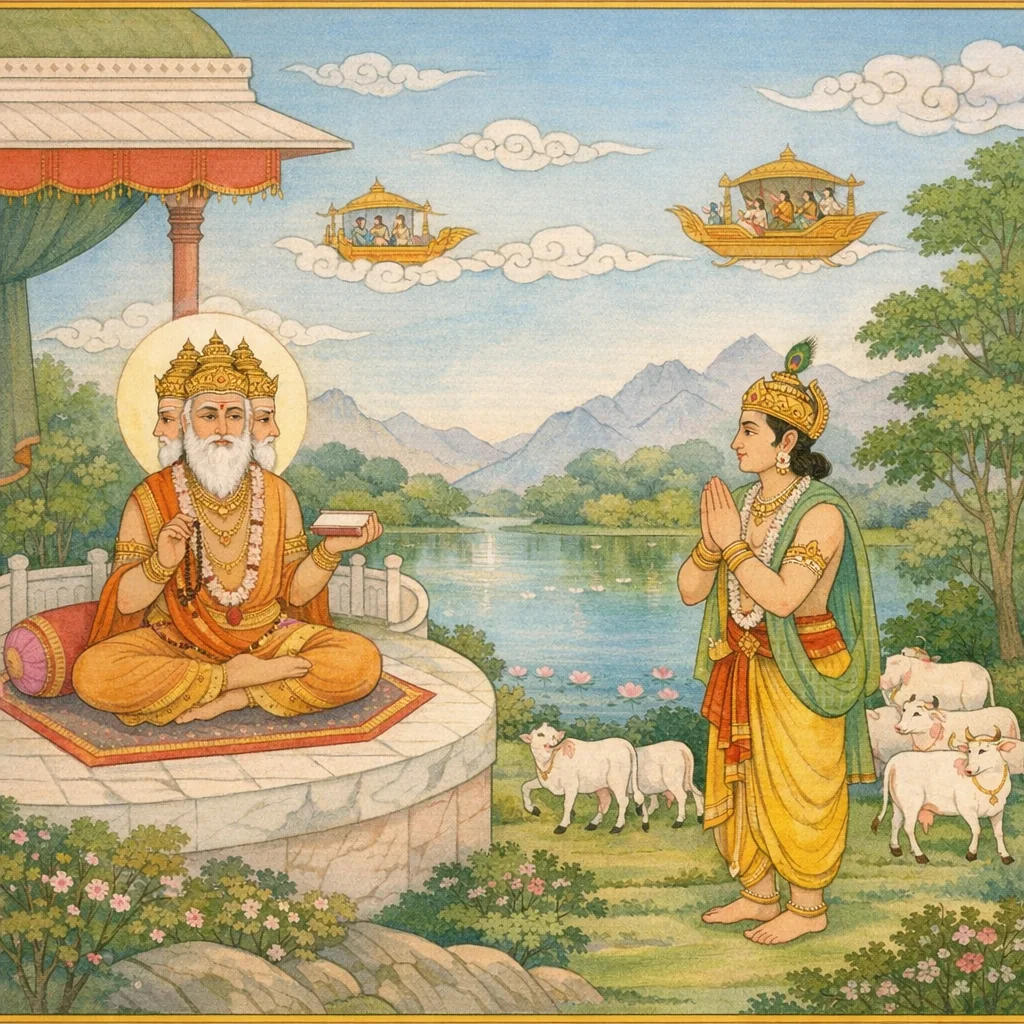
Chapter Arc: भीष्म युधिष्ठिर को गोदान की महिमा का द्वार खोलते हैं—यज्ञ का प्राण दधि-घृत है और उसका मूल गौ है; अतः समस्त दानों में गोदान सर्वोपरि है। → वर्णन क्रमशः लौकिक उपयोग से दैवी उत्कर्ष की ओर चढ़ता है: गौएँ पयस् और हवि से प्रजा का धारण करती हैं, उनके पुत्र (बैल) कृषि का आधार हैं, और इसी से अन्न-बीज की उत्पत्ति तथा समाज-धर्म का प्रवाह चलता है; फिर भीष्म इन्द्र को संबोधित ब्रह्मा-कथन के माध्यम से गोलोक और सुरभि-गौओं के दिव्य लोक का विस्तार करते हैं। → गोलोक का चरम चित्र उभरता है—सहस्राक्ष इन्द्र के लिए वह लोक ‘सर्वकामसमन्वित’ है, जहाँ मृत्यु, जरा और दाह का प्रवेश नहीं; दिव्य वन-भवन और इच्छानुसार चलने वाले विमान हैं, और वहाँ अशुभ-दुर्भाग्य का नाम नहीं। → भीष्म निष्कर्ष बाँधते हैं कि विविध दान, तीर्थसेवन, तप, इन्द्रियसंयम और पुण्यकर्म से गोलोक की प्राप्ति संभव है; पर इन सबमें गोसेवा-गोदान का विशेष प्रशस्त्य है क्योंकि वही यज्ञ, अन्न और जीवन-धारण की जड़ है।
Shlokas
Verse 1
ऑपन-आक्षात बछ। अं क्ाज तग्रय्शीतितमो<ध्याय: ब्रह्माजीका इन्द्रसे गोलोक और गौओंका उत्कर्ष बताना और गौओंको वरदान देना भीष्म उवाच येचगां सम्प्रयच्छन्ति हुतशिष्टाशिनश्न ये । तेषां सत्राणि यज्ञाश्न नित्यमेव युधिष्ठिर,भीष्मजी कहते हैं--युधिष्ठिर! जो मनुष्य सदा यज्ञशिष्ट अन्नका भोजन और गोदान करते हैं उन्हें प्रतेदिन अन्नदान और यज्ञ करनेका फल मिलता है
Bhishma said: “Yudhishthira, those who give cows in charity and those who live on the remnants of sacrificial offerings continually obtain the merit of sacrificial sessions and rites. Their daily conduct becomes, in effect, a perpetual sacrifice, sustaining personal purity and the welfare of others.”
Verse 2
ऋते दधि घृतेनेह न यज्ञ: सम्प्रवर्तते । तेन यज्ञस्य यज्ञत्वमतो मूलं च कथ्यते,दही और गोघृतके बिना यज्ञ नहीं होता। उन्हींसे यज्ञका यज्ञत्व सफल होता है। अतः गौओंको यज्ञका मूल कहते हैं
Bhīṣma said: “In this world, a sacrifice cannot properly proceed without curd and ghee. Through them a rite truly becomes a ‘yajña’—a complete sacrificial act. Therefore they are spoken of as the very root of sacrifice.”
Verse 3
दानानामपि सर्वेषां गवां दान प्रशस्यते । गाव: श्रेष्ठा: पवित्राश्न॒ पावन होतदुत्तमम्,सब प्रकारके दानोंमें गोदान ही उत्तम माना जाता है; इसलिये गौएँ श्रेष्ठ, पवित्र तथा परम पावन हैं
Bhīṣma says that among all forms of charity, the gifting of cows is especially praised. Cows are therefore regarded as foremost and pure, and their gift is held to be supremely purifying—an offering esteemed as excellent for sustaining sacred rites and righteous living.
Verse 4
पुष्ट्यर्थमेता: सेवेत शान्त्यर्थमपि चैव ह | पयोदधिघृतं चासां सर्वपापप्रमोचनम्,मनुष्यको अपने शरीरकी पुष्टि तथा सब प्रकारके विघ्नोंकी शान्तिके लिये भी गौओंका सेवन करना चाहिये। इनके दूध, दही और घी सब पापोंसे छुड़ानेवाले हैं
Bhishma said: “One should attend upon and make use of these cows for the nourishment of the body and also for the pacification of all kinds of obstacles and disturbances. Their milk, curd, and ghee are said to be liberating from every sin—thus supporting a life aligned with purity and dharma.”
Verse 5
गावस्तेज: परं प्रोक्तमिह लोके परत्र च । न गोभ्य: परमं किंचित् पवित्र भरतर्षभ,भरतश्रेष्ठ! गौएँ इहलोक और परलोकमें भी महान् तेजोरूप मानी गयी हैं। गौओंसे बढ़कर पवित्र कोई वस्तु नहीं है
Bhishma said: “Cows are declared to be the supreme radiance—both in this world and in the world beyond. O bull among the Bharatas, there is nothing more purifying than cows.”
Verse 6
अत्राप्युदाहरन्तीममितिहासं पुरातनम् । पितामहस्य संवादमिन्द्रस्य च युधिष्ठिर,युधिष्ठिर! इस विषयमें विद्वान् पुरुष इन्द्र और ब्रह्माजीके इस प्राचीन इतिहासका उदाहरण दिया करते हैं
Bhīṣma said: “Here too, O Yudhiṣṭhira, the learned cite an ancient precedent—an old sacred narrative—namely the dialogue between Pitāmaha (Brahmā) and Indra, as an illustrative example for this matter.”
Verse 7
पराभूतेषु दैत्येषु शक्रस्त्रिभुवने श्वर: । प्रजा: समुदिता: सर्वा: सत्यधर्मपरायणा:,पूर्वकालमें देवताओंद्वारा दैत्योंके परास्त हो जानेपर जब इन्द्र तीनों लोकोंके अधीश्वर हुए तब समस्त प्रजा मिलकर बड़ी प्रसन्नताके साथ सत्य और धर्ममें तत्पर रहने लगी
Bhīṣma said: When, in former times, the Dānavas had been defeated by the gods and Śakra (Indra) became the sovereign of the three worlds, all the people gathered together in gladness and devoted themselves to truth and righteousness.
Verse 8
अथर्षय: सगन्धर्वा: किन्नरोरगराक्षसा: । देवासुरसुपर्णाश्न प्रजानां पतयस्तथा,कुन्तीनन्दन! तदनन्तर एक दिन जब ऋषि, गन्धर्व, किन्नर, नाग, राक्षस, देवता, असुर, गरुड़ और प्रजापतिगण ब्रह्माजीकी सेवामें उपस्थित थे, नारद, पर्वत, विश्वावसु, हाहा और हूृहू नामक गन्धर्व जब दिव्य तान छेड़कर गाते हुए वहाँ उन भगवान् ब्रह्माजीकी उपासना करते थे, वायुदेव दिव्य पुष्पोंकी सुगन्न्ध लेकर बह रहे थे, पृथक्ू-पृथक् ऋतुएँ भी उत्तम सौरभसे युक्त दिव्य पुष्प भेंट कर रही थीं, देवताओंका समाज जुटा था, समस्त प्राणियोंका समागम हो रहा था, दिव्य वाद्योंकी मनोरम ध्वनि गूँज रही थी तथा दिव्यांगनाओं और चारणोंसे वह समुदाय घिरा हुआ था, उसी समय देवराज इन्द्रने देवेश्वर ब्रह्माजीको प्रणाम करके पूछा---
Bhīṣma said: “Then, O son of Kuntī, the sages—together with Gandharvas, Kinnaras, Nāgas, Rākṣasas, the gods, the Asuras, the Suparṇas (Garuḍa’s kind), and also the lords of creatures (Prajāpatis)—were present.”
Verse 9
पर्युपासन्त कौन्तेय कदाचिद् वै पितामहम् । नारद: पर्वतश्चैव विश्वावसुर्हहाहुहू:,कुन्तीनन्दन! तदनन्तर एक दिन जब ऋषि, गन्धर्व, किन्नर, नाग, राक्षस, देवता, असुर, गरुड़ और प्रजापतिगण ब्रह्माजीकी सेवामें उपस्थित थे, नारद, पर्वत, विश्वावसु, हाहा और हूृहू नामक गन्धर्व जब दिव्य तान छेड़कर गाते हुए वहाँ उन भगवान् ब्रह्माजीकी उपासना करते थे, वायुदेव दिव्य पुष्पोंकी सुगन्न्ध लेकर बह रहे थे, पृथक्ू-पृथक् ऋतुएँ भी उत्तम सौरभसे युक्त दिव्य पुष्प भेंट कर रही थीं, देवताओंका समाज जुटा था, समस्त प्राणियोंका समागम हो रहा था, दिव्य वाद्योंकी मनोरम ध्वनि गूँज रही थी तथा दिव्यांगनाओं और चारणोंसे वह समुदाय घिरा हुआ था, उसी समय देवराज इन्द्रने देवेश्वर ब्रह्माजीको प्रणाम करके पूछा---
Bhīṣma said: “O son of Kuntī, once upon a time they were attending upon the Grandsire (Brahmā). Nārada and Parvata, and the Gandharvas Viśvāvasu, Hahā, and Huhū were there, worshipping him with divine song.”
Verse 10
दिव्यतानेषु गायन्त: पर्युपासन्त त॑ प्रभुम् तत्र दिव्यानि पुष्पाणि प्रावहत् पवनस्तदा,कुन्तीनन्दन! तदनन्तर एक दिन जब ऋषि, गन्धर्व, किन्नर, नाग, राक्षस, देवता, असुर, गरुड़ और प्रजापतिगण ब्रह्माजीकी सेवामें उपस्थित थे, नारद, पर्वत, विश्वावसु, हाहा और हूृहू नामक गन्धर्व जब दिव्य तान छेड़कर गाते हुए वहाँ उन भगवान् ब्रह्माजीकी उपासना करते थे, वायुदेव दिव्य पुष्पोंकी सुगन्न्ध लेकर बह रहे थे, पृथक्ू-पृथक् ऋतुएँ भी उत्तम सौरभसे युक्त दिव्य पुष्प भेंट कर रही थीं, देवताओंका समाज जुटा था, समस्त प्राणियोंका समागम हो रहा था, दिव्य वाद्योंकी मनोरम ध्वनि गूँज रही थी तथा दिव्यांगनाओं और चारणोंसे वह समुदाय घिरा हुआ था, उसी समय देवराज इन्द्रने देवेश्वर ब्रह्माजीको प्रणाम करके पूछा---
Bhishma said: “Singing in celestial modes, they worshipped that Lord. At that time, the Wind-god wafted divine flowers there.” The scene evokes a sacred assembly where devotion is expressed through refined music and offerings, suggesting that true reverence is marked by harmony, beauty, and ordered worship rather than mere display.
Verse 11
आजहुर्ऋतवश्चापि सुगन्धीनि पृथक् पृथक् । तस्मिन् देवसमावाये सर्वभूतसमागमे,कुन्तीनन्दन! तदनन्तर एक दिन जब ऋषि, गन्धर्व, किन्नर, नाग, राक्षस, देवता, असुर, गरुड़ और प्रजापतिगण ब्रह्माजीकी सेवामें उपस्थित थे, नारद, पर्वत, विश्वावसु, हाहा और हूृहू नामक गन्धर्व जब दिव्य तान छेड़कर गाते हुए वहाँ उन भगवान् ब्रह्माजीकी उपासना करते थे, वायुदेव दिव्य पुष्पोंकी सुगन्न्ध लेकर बह रहे थे, पृथक्ू-पृथक् ऋतुएँ भी उत्तम सौरभसे युक्त दिव्य पुष्प भेंट कर रही थीं, देवताओंका समाज जुटा था, समस्त प्राणियोंका समागम हो रहा था, दिव्य वाद्योंकी मनोरम ध्वनि गूँज रही थी तथा दिव्यांगनाओं और चारणोंसे वह समुदाय घिरा हुआ था, उसी समय देवराज इन्द्रने देवेश्वर ब्रह्माजीको प्रणाम करके पूछा---
Bhīṣma said: “Even the seasons, each in its own distinct manner, offered fragrant gifts. In that grand convocation of the gods—where all beings had assembled, O son of Kuntī—(the celestial gathering was filled with auspicious offerings and reverent attendance).”
Verse 12
दिव्यवादित्रसंघुष्टे दिव्यस्त्रीचारणावृते । इन्द्र: पप्रच्छ देवेशमभिवाद्य प्रणम्य च,कुन्तीनन्दन! तदनन्तर एक दिन जब ऋषि, गन्धर्व, किन्नर, नाग, राक्षस, देवता, असुर, गरुड़ और प्रजापतिगण ब्रह्माजीकी सेवामें उपस्थित थे, नारद, पर्वत, विश्वावसु, हाहा और हूृहू नामक गन्धर्व जब दिव्य तान छेड़कर गाते हुए वहाँ उन भगवान् ब्रह्माजीकी उपासना करते थे, वायुदेव दिव्य पुष्पोंकी सुगन्न्ध लेकर बह रहे थे, पृथक्ू-पृथक् ऋतुएँ भी उत्तम सौरभसे युक्त दिव्य पुष्प भेंट कर रही थीं, देवताओंका समाज जुटा था, समस्त प्राणियोंका समागम हो रहा था, दिव्य वाद्योंकी मनोरम ध्वनि गूँज रही थी तथा दिव्यांगनाओं और चारणोंसे वह समुदाय घिरा हुआ था, उसी समय देवराज इन्द्रने देवेश्वर ब्रह्माजीको प्रणाम करके पूछा---
Bhishma said: In that celestial assembly—resounding with divine instruments and surrounded by heavenly maidens and the Cāraṇas—Indra approached the Lord of the gods. Having first offered reverent salutations and bowed down, Indra then put his question to him. The scene underscores that even the highest ruler among the gods seeks guidance through humility, proper conduct, and deference to spiritual authority.
Verse 13
देवानां भगवन् कस्माल्लोकेशानां पितामह । उपरिष्टाद् गवां लोक एतदिच्छामि वेदितुम्
Bhīṣma said: “O Blessed Lord, O Grandfather of the worlds and of the gods—why is the world (realm) of cows placed above (others)? This is what I wish to understand.”
Verse 14
“भगवन्! पितामह! गोलोक समस्त देवताओं और लोकपालोंके ऊपर क्यों है? मैं इसे जानना चाहता हूँ ।। कि तपो ब्रह्म॒चर्य वा गोभि: कृतमिहेश्वर | देवानामुपरिष्टाद् यद् वसन्त्यरजस: सुखम्,'प्रभो! गौओंने यहाँ किस तपस्याका अनुष्ठान अथवा ब्रह्मचर्यका पालन किया है, जिससे वे रजोगुणसे रहित होकर देवताओंसे भी ऊपर स्थानमें सुखपूर्वक निवास करती हैं?
Bhishma said: “O venerable one, O Grandsire! Why is Goloka situated above all the gods and the guardians of the worlds? I wish to understand this. O Lord, what austerity or vow of celibate discipline did the cows perform here, by which—free from the dust of passion—they dwell happily in a realm even higher than the gods?”
Verse 15
ततः प्रोवाच ब्रह्मा तं शक्रं बलनिषूदनम् । अवज्ञातास्त्वया नित्यं गावो बलनिषूदन,तब ब्रह्माजीने बलसूदन इन्द्रसे कहा--“बलासुरका विनाश करनेवाले देवेन्द्र! तुमने सदा गौओंकी अवहेलना की है। प्रभो! इसीलिये तुम इनका माहात्म्य नहीं जानते। सुरश्रेष्ठ! गौओंका महान् प्रभाव और माहात्म्य मैं बताता हूँ, सुनो
Then Brahmā addressed Śakra (Indra), the slayer of Bala: “O Bala’s destroyer, you have continually shown disregard for the cows. Therefore you do not truly know their greatness. O best of the gods, listen as I explain the mighty power and sacred majesty of the cow.”
Verse 16
तेन त्वमासां माहात्म्यं वेत्सि शृणु यत् प्रभो । गवां प्रभाव परमं माहात्म्यं च सुरर्षभ,तब ब्रह्माजीने बलसूदन इन्द्रसे कहा--“बलासुरका विनाश करनेवाले देवेन्द्र! तुमने सदा गौओंकी अवहेलना की है। प्रभो! इसीलिये तुम इनका माहात्म्य नहीं जानते। सुरश्रेष्ठ! गौओंका महान् प्रभाव और माहात्म्य मैं बताता हूँ, सुनो
“Therefore, O lord, you do not truly know the greatness of these cows. Listen, O master. O best among the gods, I shall tell you the supreme power and sacred majesty of the cows.”
Verse 17
यज्ञांगं कथिता गावो यज्ञ एव च वासव । एताभिश्न विना यज्ञो न वर्तेत कथंचन,“वासव! गौओंको यज्ञका अंग और साक्षात् यज्ञरूप बतलाया गया है; क्योंकि इनके दूध, दही और घीके बिना यज्ञ किसी तरह सम्पन्न नहीं हो सकता
“O Vāsava (Indra), cows are declared to be an essential limb of sacrifice—indeed, sacrifice itself—because without them no yajña can proceed in any way.”
Verse 18
धारयन्ति प्रजाश्नैव पयसा हविषा तथा । एतासां तनयाश्वापि कृषियोगमुपासते
“They sustain the people indeed—by milk, and likewise by offerings fit for sacrifice. And the sons of these cows, too, take to the discipline of agriculture.”
Verse 19
ततो यज्ञा: प्रवर्तन्ते हव्यं कव्यं च सर्वश:,“उन्हींसे यज्ञ सम्पन्न होते और हव्य-कव्यका भी सर्वथा निर्वाह होता है। सुरेश्वर! इन्हीं गौओंसे दूध, दही और घी प्राप्त होते हैं। ये गौएँ बड़ी पवित्र होती हैं। बैल भूख-प्याससे पीड़ित होकर भी नाना प्रकारके बोझ ढोते रहते हैं
“From them the sacrifices proceed, and in every way the offerings to the gods (havya) and to the ancestors (kavya) are duly maintained.”
Verse 20
पयोदधिधघृतं चैव पुण्याश्चैता: सुराधिप । वहन्ति विविधान् भारान् क्षुत्तष्णापरिपीडिता:,“उन्हींसे यज्ञ सम्पन्न होते और हव्य-कव्यका भी सर्वथा निर्वाह होता है। सुरेश्वर! इन्हीं गौओंसे दूध, दही और घी प्राप्त होते हैं। ये गौएँ बड़ी पवित्र होती हैं। बैल भूख-प्याससे पीड़ित होकर भी नाना प्रकारके बोझ ढोते रहते हैं
Bhishma said: “O lord of the gods, from these cows come milk, curd, and ghee; they are indeed holy. Even when tormented by hunger and thirst, the oxen continue to carry burdens of many kinds.”
Verse 21
मुनींश्व धारयन्तीह प्रजाश्वैवापि कर्मणा । वासवाकूटवाहिन्य: कर्मणा सुकृतेन च,“इस प्रकार गौएँ अपने कर्मसे ऋषियों तथा प्रजाओंका पालन करती रहती हैं। वासव! इनके व्यवहारमें माया नहीं होती। ये सदा सत्कर्ममें ही लगी रहती हैं
Bhishma said: “Here, by their very deeds, the cows sustain both the sages and the people. O Vāsava (Indra), there is no deceit in their conduct; through righteous action and meritorious works they remain continually engaged in what is good.”
Verse 22
उपरिष्टात् ततो5स्माकं वसन्त्येता: सदैव हि । एवं ते कारणं शक्र निवासकृतमद्य वै,“इसीसे ये गौएँ हम सब लोगोंके ऊपर स्थानमें निवास करती हैं। शक्र! तुम्हारे प्रश्नके अनुसार मैंने यह बात बतायी कि गौएँ देवताओंके भी ऊपर स्थानमें क्यों निवास करती हैं। शतक्रतु इन्द्र! इसके सिवा ये गौएँ वरदान भी प्राप्त कर चुकी हैं और प्रसन्न होनेपर दूसरोंको वर देनेकी भी शक्ति रखती हैं
Bhishma said: “Therefore, these cows dwell forever in a station above us. Thus, O Śakra, in accordance with your question, I have explained the reason why the cows reside even above the gods. Moreover, O Śatakratu Indra, beyond this they have also obtained boons, and when pleased they possess the power to grant boons to others.”
Verse 23
गवां देवोपरिष्टाद्धि समाख्यातं शतक्रतो । एता हि वरदत्ताश्न वरदाक्षापि वासव,“इसीसे ये गौएँ हम सब लोगोंके ऊपर स्थानमें निवास करती हैं। शक्र! तुम्हारे प्रश्नके अनुसार मैंने यह बात बतायी कि गौएँ देवताओंके भी ऊपर स्थानमें क्यों निवास करती हैं। शतक्रतु इन्द्र! इसके सिवा ये गौएँ वरदान भी प्राप्त कर चुकी हैं और प्रसन्न होनेपर दूसरोंको वर देनेकी भी शक्ति रखती हैं
Bhishma said: “O Shatakratu (Indra), it has been declared that the cows dwell in a station even above the gods. In keeping with your question, I have explained why the cows abide in a realm higher than the deities. Moreover, O Vasava, these cows have themselves received boons, and when pleased they also possess the power to grant boons to others.”
Verse 24
सुरभ्य: पुण्यकर्मिण्य: पावना: शुभलक्षणा: । यदर्थ गां गताश्चैव सुरभ्य: सुरसत्तम
Bhīṣma said: “The Surabhī cows are doers of merit, purifying in their very nature, and marked by auspicious signs. O best of the gods, for what purpose have these Surabhīs come here, bringing the cow (as their concern)?”
Verse 25
पुरा देवयुगे तात देवेन्द्रेषु महात्मसु
Bhīṣma said: “In ancient times, dear one, in the divine age—when the great-souled gods and Indra-like lords were present…”
Verse 26
त्रींललोकाननुशासत्सु विष्णौ गर्भत्वमागते । अदित्यास्तप्यमानायास्तपो घोर सुदुश्चरम्
Bhīṣma said: “When Viṣṇu, the ruler and guide of the three worlds, had entered the state of being in the womb, Aditi undertook a fierce and exceedingly difficult austerity, enduring intense self-discipline for the sake of that divine purpose.”
Verse 27
पुत्रार्थममरश्रेष्ठ पादेनैकेन नित्यदा । तां तु दृष्टवा महादेवीं तप्यमानां महत्तप:
Bhīṣma said: “O best of the immortals, for the sake of obtaining a son, she would constantly stand upon a single foot. Seeing that great goddess engaged in such intense austerity, (he too was moved by the power of her tapas).”
Verse 28
दक्षस्य दुहिता देवी सुरभी नाम नामतः । अतप्यत तपो घोरें हृष्टा धर्मपरायणा
Bhīṣma said: “Dakṣa’s daughter, the goddess named Surabhī, undertook severe austerities. Joyful in spirit and steadfastly devoted to dharma, she practiced intense penance—presented as an ethical ideal of disciplined self-restraint aligned with righteousness.”
Verse 29
“तात! पहले सत्ययुगमें जब महामना देवेश्वरगण तीनों लोकोंपर शासन करते थे और अमरश्रेष्ठ] जब देवी अदिति पुत्रके लिये नित्य एक पैरसे खड़ी रहकर अत्यन्त घोर एवं दुष्कर तपस्या करती थी और उस तपस्यासे संतुष्ट होकर साक्षात् भगवान् विष्णु ही उनके गर्भमें पदार्पण करनेवाले थे उन्हीं दिनोंकी बात है, महादेवी अदितिको महान् तप करती देख दक्षकी धर्मपरायणा पुत्री सुरभी देवीने बड़े हर्षक साथ घोर तपस्या आस्मभ की ।। २५ --२८ || कैलासशिखरे रम्ये देवगन्धर्वसेविते । व्यतिष्ठदेकपादेन परमं योगमास्थिता,“कैलासके रमणीय शिखरपर जहाँ देवता और गन्धर्व सदा विराजते रहते हैं, वहाँ वह उत्तम योगका आश्रय ले ग्यारह हजार वर्षोतक एक पैरसे खड़ी रही। उसकी तपस्यासे देवता, ऋषि और बड़े-बड़े नाग भी संतप्त हो उठे
Bhishma said: On the lovely summit of Mount Kailāsa—frequented by gods and Gandharvas—she stood on a single foot, established in the highest discipline of yoga. By that severe austerity, even the gods, sages, and mighty Nāgas were distressed, for her concentrated tapas shook the worlds and compelled divine attention.
Verse 30
दशवर्षसहस्राणि दशवर्षशतानि च । संतप्तास्तपसा तस्या देवा: सर्षिमहोरगा:,“कैलासके रमणीय शिखरपर जहाँ देवता और गन्धर्व सदा विराजते रहते हैं, वहाँ वह उत्तम योगका आश्रय ले ग्यारह हजार वर्षोतक एक पैरसे खड़ी रही। उसकी तपस्यासे देवता, ऋषि और बड़े-बड़े नाग भी संतप्त हो उठे
For ten thousand years, and for ten hundreds of years besides, she burned in austerity; and by the heat of her tapas the gods, the ṛṣis, and even the mighty nāgas were sorely troubled. Upon the fair summit of Kailāsa—where devas and gandharvas ever abide—she took refuge in the highest yoga and stood upon a single foot for eleven thousand years; and through her penance the gods, sages, and great serpents were set aflame with unrest.
Verse 31
तत्र गत्वा मया सार्ध पर्युपासन्त तां शुभाम् । अथाहमनब्रुवं तत्र देवीं तां तपसान्विताम्,“वे सब लोग मेरे साथ ही उस शुभलक्षणा तपस्विनी सुरभी देवीके पास जाकर खड़े हुए। तब मैंने वहाँ उससे कहा--
They all went there with me and stood beside that auspicious one, attending upon her with reverence. Then, in that very place, I addressed the goddess Surabhī, endowed with austerity, and began my speech thus:
Verse 32
किमर्थ तप्यसे देवि तपो घोरमनिन्दिते । प्रीतस्ते5हं महाभागे तपसानेन शो भने,'सती-साथ्वी देवी! तुम किसलिये यह घोर तपस्या करती हो? शोभने! महाभागे! मैं तुम्हारी इस तपस्यासे बहुत संतुष्ट हूँ। देवि! तुम इच्छानुसार वर माँगो।” पुरंदर! इस तरह मैंने सुरभीको वर माँगनेके लिये प्रेरित किया
Bhīṣma said: “O Goddess, blameless one—why do you afflict yourself with such severe austerity? O splendid, greatly fortunate lady, I am well pleased with you because of this penance. O Devi, ask for a boon according to your desire.” Thus, O Purandara, I urged Surabhī to ask for a boon.
Verse 33
वरयस्व वरं देवि दातास्मीति पुरंदर,'सती-साथ्वी देवी! तुम किसलिये यह घोर तपस्या करती हो? शोभने! महाभागे! मैं तुम्हारी इस तपस्यासे बहुत संतुष्ट हूँ। देवि! तुम इच्छानुसार वर माँगो।” पुरंदर! इस तरह मैंने सुरभीको वर माँगनेके लिये प्रेरित किया
Purandara (Indra) said: “Choose a boon, O Goddess; I am ready to grant it. O virtuous and chaste lady, why do you undertake such severe austerity? O radiant one, O greatly fortunate one, I am deeply pleased with your penance. O Goddess, ask for any boon you desire.” Thus, O Purandara, I urged Surabhī to request a boon.
Verse 34
युरभ्युवाच वरेण भगवन् महां कृतं लोकपितामह । एष एव वरो मेडद्य यत् प्रीतोडसि ममानघ,सुरभीने कहा--भगवन्! निष्पाप लोकपितामह! मुझे वर लेनेकी कोई आवश्यकता नहीं है। मेरे लिये तो सबसे बड़ा वर यही है कि आज आप मुझपर प्रसन्न हो गये हैं
Surabhī said: “O Blessed Lord, O sinless Grandfather of the worlds! I have no need to ask for any boon. For me, the greatest boon is this alone—that today you are pleased with me, O faultless one.”
Verse 35
ब्रह्मोवाच तामेवं ब्रुवतीं देवीं सुरभिं त्रिदशेश्वर । प्रत्यब्रुवं यद् देवेन्द्र तच्निबोध शचीपते,ब्रह्माजीने कहा--देवेश्वर! देवेन्द्र! शचीपते! जब सुरभी ऐसी बात कहने लगी तब मैंने उसे जो उत्तर दिया, वह सुनो
Brahmā said: “O lord of the thirty-three gods! O Devendra, consort of Śacī! When the goddess Surabhī spoke in this manner, I replied to her. Listen to that reply.”
Verse 36
चल हक पका हा मट दहा ? कक पक जे (4. 3-3... अलोभकाम्यया देवि तपसा च शुभानने । प्रसन्नो5हं वरं तस्मादमरत्वं ददामि ते,(मैंने कहा--) देवि! शुभानने! तुमने लोभ और कामनाको त्याग दिया है। तुम्हारी इस निष्काम तपस्यासे मैं बहुत प्रसन्न हूँ; अतः तुम्हें अमरत्वका वरदान देता हूँ
“O goddess, O fair-faced one, you have renounced greed and self-seeking desire. Pleased by this austerity of yours, performed without craving for reward, I therefore grant you a boon: immortality.”
Verse 37
त्रयाणामपि लोकानामुपरिष्टान्निवत्स्यसि । मत्प्रसादाच्च विख्यातो गोलोक: सम्भविष्यति,तुम मेरी कृपासे तीनों लोकोंके ऊपर निवास करोगी और तुम्हारा वह धाम “गोलोक' नामसे विख्यात होगा
By my grace you shall dwell above all the three worlds, and that abode of yours will become renowned by the name “Goloka.”
Verse 38
मानुषेषु च कुर्वाणा: प्रजा: कर्म शुभास्तव । निवत्स्यन्ति महाभागे सर्वा दुहितरश्न ते,महाभागे! तुम्हारी सभी शुभ संतानें--समस्त पुत्र और कन्याएँ मानवलोकमें उपयुक्त कर्म करती हुई निवास करेंगी
O greatly fortunate one, all your virtuous offspring—your sons and your daughters—will dwell among humankind, performing deeds that are fitting and auspicious.
Verse 39
मनसा चिन्तिता भोगास्त्वया वै दिव्यमानुषा: । यच्च स्वर्गे सुखं देवि तत् ते सम्पत्स्यते शुभे,देवि! शुभे! तुम अपने मनसे जिन दिव्य अथवा मानवी भोगोंका चिन्तन करोगी तथा जो स्वर्गीय सुख होगा, वे सभी तुम्हें स्वतः प्राप्त होते रहेंगे
“O goddess, O auspicious one—whatever enjoyments, whether divine or human, you conceive in your mind, and whatever happiness exists in heaven, all that will come to you of itself and continue to be attained by you.”
Verse 40
तस्या लोका: सहस्राक्ष सर्वकामसमन्विता: । न तत्र क्रमते मृत्युर्न जरा न च पावक:,सहस्राक्ष! सुरभीके निवासभूत गोलोकमें सबकी सम्पूर्ण कामनाएँ पूर्ण होती हैं। वहाँ मृत्यु और बुढ़ापाका आक्रमण नहीं होता है। अग्निका भी जोर नहीं चलता
Bhīṣma said: “O Sahasrākṣa (Indra), her worlds are endowed with the fulfillment of every desire. There, death does not gain entry, nor does old age; even fire has no power. Thus is described that stainless realm of blessedness—an ethical reward-state where merit culminates in freedom from decay and harm.”
Verse 41
नदैवं नाशुभं किंचिद् विद्यते तत्र वासव | तत्र दिव्यान्यरण्यानि दिव्यानि भवनानि च
Bhīṣma said: “O Vāsava (Indra), in that realm there is nothing that is fated as misfortune, nor anything inauspicious at all. There are celestial forests there, and celestial dwellings as well.”
Verse 42
ब्रह्म॒चर्येण तपसा यत्नेन च दमेन च,शक््य: समासादयितुं गोलोकः: पुष्करेक्षण । कमलनयन इन्द्र! ब्रह्मचर्य, तपस्या, यत्न, इन्द्रियसंयम, नाना प्रकारके दान, पुण्य, तीर्थसेवन, महान् तप और अन्यान्य शुभ कर्मोंके अनुष्ठानसे ही गोलोककी प्राप्ति हो सकती है
Bhīṣma said: “O lotus-eyed one, Goloka can be attained only through disciplined brahmacarya, austerity, sustained effort, and self-restraint. Such a supreme state is reached not by mere desire but by the steady practice of virtuous observances—control of the senses, meritorious giving, pilgrimage, great tapas, and other auspicious deeds.”
Verse 43
दानैश्न विविधै: पुण्यैस्तथा तीर्थानुसेवनात् । तपसा महता चैव सुकृतेन च कर्मणा
Bhīṣma said: By making many kinds of meritorious gifts, by devotedly resorting to sacred pilgrimage-places, by undertaking great austerities, and by performing righteous deeds—one accumulates spiritual merit and advances on the path of dharma.
Verse 44
एतत् ते सर्वमाख्यातं मया शक्रानुपृच्छते,असुरसूदन शक्र! इस प्रकार तुम्हारे पूछनेके अनुसार मैंने सारी बातें बतलायी हैं। अब तुम्हें गौओंका कभी तिरस्कार नहीं करना चाहिये
Bhīṣma said: “In response to your inquiry, O Śakra, slayer of the Asuras, I have explained everything to you in full. Therefore, you should never show contempt for cows.”
Verse 45
न ते परिभव: कार्यो गवामसुरसूदन,असुरसूदन शक्र! इस प्रकार तुम्हारे पूछनेके अनुसार मैंने सारी बातें बतलायी हैं। अब तुम्हें गौओंका कभी तिरस्कार नहीं करना चाहिये
Bhīṣma said: “O slayer of the Asuras—O Śakra (Indra)—you must never show contempt toward cows. Thus, in accordance with your question, I have related everything in full. Therefore, you should never again disparage cows.”
Verse 46
भीष्म उवाच एतच्छूत्वा सहस्राक्ष: पूजयामास नित्यदा । गाश्षक्रे बहुमानं च तासु नित्यं युधिष्ठिर,भीष्मजी कहते हैं--युधिष्ठिर! ब्रह्माजीका यह कथन सुनकर सहस्र नेत्रधारी इन्द्र प्रतिदिन गौओंकी पूजा करने लगे। उन्होंने उनके प्रति बहुत सम्मान प्रकट किया
Bhīṣma said: “O Yudhishthira, having heard this statement of Brahmā, Indra of the thousand eyes began to worship the cows every day. He continually showed them great reverence.”
Verse 47
एतत् ते सर्वमाख्यातं पावनं च महाद्युते । पवित्र परमं चापि गवां माहात्म्यमुत्तमम्,महाद्युते! यह सब मैंने तुमसे गौओंका परम पावन, परम पवित्र और अत्यन्त उत्तम माहात्म्य कहा है
Bhīṣma said: “O radiant one, I have now told you everything—this purifying and supremely sacred account of the cows, their highest and most excellent greatness.”
Verse 48
कीर्तितं पुरुषव्याप्र सर्वपापविमोचनम् | य इदं कथयेन्नित्यं ब्राह्मणेभ्य:ः समाहित:,पुरुषसिंह! यदि इसका कीर्तन किया जाय तो यह समस्त पापोंसे छुटकारा दिलानेवाला है। जो एकाग्रचित्त हो सदा यज्ञ और श्राद्धमें हव्य और कव्य अर्पण करते समय ब्राह्मणोंको यह प्रसंग सुनायेगा, उसका दिया हुआ (हव्य और कव्य) समस्त कामनाओंको पूर्ण करनेवाला और अक्षय होकर पितरोंको प्राप्त होगा
Bhīṣma said: “O tiger among men, this has been proclaimed as a means that releases one from all sins. Whoever, with a collected and focused mind, regularly recounts this sacred account to Brahmins—especially at the time of offering oblations in sacrifice and of presenting the havya and kavya in śrāddha—will have his offerings become unfailing and fruitful: they will fulfill all rightful wishes and, being imperishable in merit, will truly reach the ancestors.”
Verse 49
हव्यकव्येषु यज्ञेषु पितृकार्येषु चैव ह । सार्वकामिकमक्षय्यं पितृंस्तस्योपतिष्ठते,पुरुषसिंह! यदि इसका कीर्तन किया जाय तो यह समस्त पापोंसे छुटकारा दिलानेवाला है। जो एकाग्रचित्त हो सदा यज्ञ और श्राद्धमें हव्य और कव्य अर्पण करते समय ब्राह्मणोंको यह प्रसंग सुनायेगा, उसका दिया हुआ (हव्य और कव्य) समस्त कामनाओंको पूर्ण करनेवाला और अक्षय होकर पितरोंको प्राप्त होगा
Bhīṣma said: “O lion among men, in sacrifices where oblations (havya) and offerings for the ancestors (kavya) are made, and in all rites performed for the Pitṛs, this act of recitation and remembrance becomes universally wish-fulfilling and inexhaustible. The offerings made with such focused devotion reach the ancestors as an undiminishing benefit, capable of fulfilling all rightful desires.”
Verse 50
गोषु भक्तश्न लभते यद् यदिच्छति मानव: । स्त्रियोडपि भक्ता या गोषु ताश्व काममवाप्रुयु:,गोभक्त मनुष्य जिस-जिस वस्तुकी इच्छा करता है, वह सब उसे प्राप्त होती है। स्त्रियोंमें भी जो गौओंकी भक्ता हैं, वे मनोवाञ्छित कामनाएँ प्राप्त कर लेती हैं
Bhishma said: A person devoted to cows, living by honoring them, gains whatever he desires. Even women who are devoted to cows attain their wished-for aims.
Verse 51
पुत्रार्थी लभते पुत्र॑ कन्यार्थी तामवाप्लनुयात् धनार्थी लभते वित्तं धर्मार्थी धर्ममाप्तुयात्,पुत्रार्थी मनुष्य पुत्र पाता है और कन्यार्थी कन््या। धन चाहनेवालेको धन और धर्म चाहनेवालेको धर्म प्राप्त होता है
Bhishma said: One who seeks a son obtains a son; one who seeks a daughter obtains her. One who seeks wealth gains wealth; and one who seeks dharma attains dharma.
Verse 52
विद्यार्थी चाप्तुयाद् विद्यां सुखार्थी प्राप्तुयात् सुखम् । न किंचिद् दुर्लभं चैव गवां भक्तस्य भारत,विद्यार्थी विद्या पाता है और सुखार्थी सुख। भारत! गोभक्तके लिये यहाँ कुछ भी दुर्लभ नहीं है
Bhishma said: A seeker of learning obtains knowledge, and a seeker of happiness obtains happiness. O Bharata, for one devoted to the cow, nothing here is truly hard to attain.
Verse 82
इस प्रकार श्रीमह्या भारत अनुशासनपरव्वके अन्तर्गत दानधर्मपर्वमें लक्ष्मी और गौओंका संवादनामक बयासीवाँ अध्याय पूरा हुआ
Thus ends the eighty-second chapter, titled “The Dialogue of Lakṣmī and the Cows,” within the Dāna-dharma section of the Anuśāsana Parva of the sacred Mahābhārata.
Verse 83
इति श्रीमहा भारते अनुशासनपर्वणि दानधर्मपर्वणि गोलोकवर्णने त्रय्शीतितमो<5ध्याय:
Thus ends the eighty-third chapter in the Anuśāsana Parva of the Śrī Mahābhārata, within the section on the dharma of gifts (dāna-dharma), specifically in the description of Goloka.
Verse 186
जनयन्ति च धान्यानि बीजानि विविधानि च । “ये अपने दूध-घीसे प्रजाका भी पालन-पोषण करती हैं। इनके पुत्र (बैल) खेतीके काम आते तथा नाना प्रकारके धान्य एवं बीज उत्पन्न करते हैं
Bhīṣma said: “They also bring forth grains and many kinds of seeds.”
Verse 243
तच्च मे शृणु कारत्स्न्येन वदतो बलसूदन । 'सुरभी गौएँ पुण्यकर्म करनेवाली और शुभ-लक्षणा होती हैं। सुरश्रेष्ठ! बलसूदन! वे जिस उद्देश्यसे पृथ्वीपर गयी हैं, उसको भी मैं पूर्णरूपसे बता रहा हूँ, सुनो
Bhishma said: “Listen to me fully, O Balasūdana, as I speak. The Surabhī cows are auspicious in their marks and are agents of meritorious action. O best among the gods, O slayer of Bala—hear also in complete detail the very purpose for which they came down to the earth.”
Verse 416
विमानानि सुयुक्तानि कामगानि च वासव । वासव! वहाँ न कोई दुर्भाग्य है और न अशुभ। वहाँ दिव्य वन, दिव्य भवन तथा परम सुन्दर एवं इच्छानुसार विचरनेवाले विमान मौजूद हैं
Bhishma said: “O Vāsava (Indra)! There, no misfortune and no inauspiciousness exists. There are celestial groves and celestial mansions, and exceedingly beautiful aerial chariots that move according to one’s wish.”
Verse 433
शक््य: समासादयितुं गोलोकः: पुष्करेक्षण । कमलनयन इन्द्र! ब्रह्मचर्य, तपस्या, यत्न, इन्द्रियसंयम, नाना प्रकारके दान, पुण्य, तीर्थसेवन, महान् तप और अन्यान्य शुभ कर्मोंके अनुष्ठानसे ही गोलोककी प्राप्ति हो सकती है
Bhishma said: “O lotus-eyed one, O Indra-like lord! Goloka can indeed be attained—but only through disciplined spiritual practice: celibate restraint, austerity, sustained effort, control of the senses, many forms of charitable giving, the accumulation of merit, pilgrimage and service at sacred places, great penance, and the faithful performance of other auspicious duties. By such conduct alone does one reach Goloka.”
Frequently Asked Questions
The interpretive problem is reconciling Tāraka’s reputed near-invulnerability with his eventual defeat; the chapter resolves this by locating the outcome in divinely sanctioned leadership (Skanda as senāpati) and in the emergence of a countervailing power aligned with cosmic order.
Suvarṇa is framed not merely as wealth but as condensed tejas associated with Agni and Kārttikeya; gifting it, when performed with discipline and right intention, is presented as a meritorious act that supports purification and social-religious continuity.
Yes: the closing reference to Rāma receiving Vasiṣṭha’s account and attaining release from faults through giving suvarṇa functions as a phalaśruti-style validation, presenting suvarṇa-dāna as yielding purification and a high, difficult-to-attain celestial station.